वोकैबुलरीज

इंग्लिश वोकैबुलरी डिस्कवर, लर्न और मास्टर करें

noun
/ˈaʊtˌbreɪk/
अचानक प्रकोप (achanak prakop)

a sudden start or occurrence of something unpleasant, like disease or violence

"There was an outbreak of flu in the city."

"शहर में फ्लू का प्रकोप हो गया था।" (Shahar mein flu ka prakop ho gaya tha.)
noun
/ˈaʊtbɜːrst/
अचानक क्रोध या भावना का विस्फोट (achanak krodh ya bhavna ka visphot)

a sudden release of strong emotion or activity

"She had an angry outburst during the meeting."

"उसने बैठक के दौरान गुस्से में एक अचानक प्रतिक्रिया दी।" (Usne baithak ke dauran gusse mein ek achanak pratikriya di.)
noun
/ˈaʊtkæst/
परित्यक्त व्यक्ति (parityakt vyakti)

a person who is rejected or excluded from society or a group

"He felt like an outcast at school."

"उसे स्कूल में एक परित्यक्त व्यक्ति जैसा महसूस हुआ।" (Use school mein ek parityakt vyakti jaisa mehsoos hua.)
noun
/ˈaʊtkʌm/
परिणाम (parinaam)

the result or consequence of an action or situation

"The outcome of the project was beyond expectations."

"प्रोजेक्ट का परिणाम अपेक्षाओं से परे था।" (Project ka parinaam apekshaon se pare tha.)
noun
/ˈaʊtˌkraɪ/
विरोध (virodh)

A strong expression of public anger or disapproval.

"The decision sparked an outcry among the citizens."

"निर्णय ने नागरिकों के बीच विरोध को जन्म दिया।" (Nirnay ne nagrikon ke beech virodh ko janm diya.)
adjective
/ˌfæʃ.ənd/
अप्रचलित (aprachalit)

obsolete; no longer current

"This computer software is completely outdated."

"यह कंप्यूटर सॉफ़्टवेयर पूरी तरह से आउटडेटेड है।" (yah computer software poori tarah se outdated hai.)
verb
/ˌaʊtˈduː/
अधिक करना (adhik karna)

To do better than someone else; to surpass.

"She always tries to outdo her classmates in exams."

"वह हमेशा परीक्षा में अपने सहपाठियों को अधिक करने की कोशिश करती है।" (Wah hamesha pareeksha mein apne sahpathiyon ko adhik karne ki koshish karti hai.)
adjective
/ˈaʊtdɔːr/
बाहरी (baahri)

situated, existing, or done outside a building

"We planned an outdoor picnic for the weekend."

"हमने सप्ताहांत के लिए एक बाहरी पिकनिक की योजना बनाई।" (Hamne saptahant ke liye ek baahri picnic ki yojana banai.)
adverb; noun
/ˌaʊtˈdɔːrz/
बाहर; खुला वातावरण (bahar; khula vatavaran)

outside a building; the natural environment outside

"We spent the whole afternoon outdoors enjoying the fresh air."

"हमने पूरी दोपहर बाहर ताज़ी हवा का आनंद लेते हुए बिताई।" (humne poori dopahar bahar taazi hawa ka anand lete hue bitai)
adjective
/ˈaʊtər/
बाहरी (baahri)

situated on or toward the outside; external

"The outer layer of the jacket is waterproof."

"जैकेट की बाहरी परत जलरोधक है।" (Jacket ki baahri parat jalrodhak hai.)
noun
/ˈaʊtˌfɪt/
पोशाक (poshak)

A set of clothes worn together, often for a particular occasion.

"She wore a beautiful outfit to the party."

"उसने पार्टी में एक सुंदर पोशाक पहनी।" (Usne party mein ek sundar poshak pehni.)
adjective
/ˈaʊtˌɡoʊɪŋ/
मिलनसार (milanasar)

Friendly and sociable; inclined to mix with others.

"He is an outgoing person who loves meeting new people."

"वह एक मिलनसार व्यक्ति है जो नए लोगों से मिलना पसंद करता है।" (Wah ek milansar vyakti hai jo naye logon se milna pasand karta hai.)
noun
/ˈaʊtˌɡroʊθ/
उपोत्पत्ति (upotpatti)

something that grows out of something else; a natural development or result

"The new policy was an outgrowth of years of debate."

"नई नीति वर्षों की बहस का एक उपोत्पत्ति थी।" (Nayi neeti varsho ki bahas ka ek upotpatti thi.)
noun
/ˈaʊtɪŋ/
सैर (sair)

a short trip or excursion, often for leisure or enjoyment

"They had a lovely outing at the beach last weekend."

"उन्होंने पिछले सप्ताहांत समुद्र तट पर एक शानदार सैर की।" (Unhone pichhle saptahant samudra tat par ek shandar sair ki.)
adjective
/ˌaʊtˈlændɪʃ/
अजीब (ajeeb)

Looking or sounding bizarre or unfamiliar; strange.

"He wore an outlandish costume to the festival."

"उसने त्योहार में एक अजीब वस्त्र पहना था।" (Usne tyohar mein ek ajeeb vastra pehna tha.)
verb
/aʊtˈlæst/
अधिक समय तक टिके रहना (adhik samay tak tike rehna)

to continue longer than; to endure beyond someone or something else

"The old castle has outlasted many generations."

"पुराना किला कई पीढ़ियों से अधिक समय तक टिक चुका है।" (Purana kila kai pidiyon se adhik samay tak tik chuka hai.)
noun, verb
/ˈaʊtlɔː/
अवैध व्यक्ति, अवैध करना (avaidh vyakti, avaidh karna)

as a noun: a person who breaks the law and lives outside its protection; as a verb: to make something illegal

"The government decided to outlaw the harmful practice."

"सरकार ने हानिकारक प्रैक्टिस को अवैध बनाने का निर्णय लिया।" (Sarkar ne hanikarak prctis ko avaidh banane ka nirnay liya.)
noun
/ˈaʊtlet/
निकासी मार्ग (nikasi marg)

a means by which something is released, expressed, or distributed

"Art is a great outlet for emotions."

"कला भावनाओं के लिए एक बेहतरीन निकासी मार्ग है।" (Kala bhavnaon ke liye ek behatarin nikasi marg hai.)
noun, verb
/ˈaʊtlaɪn/
आउटलाइन, रूपरेखा (outline, rooprekha)

a general description or plan that gives the main ideas without details; to describe something briefly or highlight main points

"The teacher asked us to outline our research project before writing the report."

"शिक्षक ने हमें रिपोर्ट लिखने से पहले हमारे रिसर्च प्रोजेक्ट का आउटलाइन बनाने को कहा।" (Shikshak ne humein report likhne se pehle hamare research project ka outline banane ko kaha.)
verb
/aʊtˈlɪv/
अधिक समय तक जीवित रहना (adhik samay tak jeevit rehna)

to live longer than someone or something else

"She outlived all her siblings."

"वह अपने सभी भाई-बहनों से ज्यादा जीती रही।" (Wah apne sabhi bhai-behno se zyada jeeti rahi.)
noun
/ˈaʊtlʊk/
दृष्टिकोण, पूर्वानुमान (drishtikon, purvanuman)

a person's general attitude or view; a forecast or prospect

"The economic outlook for the year is positive."

"साल के लिए आर्थिक दृष्टिकोण सकारात्मक है।" (Saala ke liye aarthik drishtikon sakaratmak hai.)
verb
/ˌaʊtməˈnuːvər/
चतुराई से हराना (chaturai se haraana)

to gain an advantage over an opponent by skillful or clever action

"The smaller company managed to outmaneuver its larger rival."

"छोटी कंपनी ने अपने बड़े प्रतिद्वंदी को चतुराई से हराया।" (Chhoti company ne apne bade pratidvandi ko chaturai se haraaya.)
adjective
/aʊtˈmoʊdɪd/
पुराना (purana)

No longer in fashion or useful; outdated.

"That old computer is completely outmoded."

"वह पुराना कंप्यूटर पूरी तरह से आउटमोडेड है।" (vah purana computer puri tarah se outmoded hai.)
noun
/ˈaʊtpoʊst/
आउटपोस्ट (outpost)

A small military camp or position at some distance from the main force, used especially as a guard.

"The soldiers were stationed at a remote outpost."

"सैनिकों को एक दूरदराज़ आउटपोस्ट पर तैनात किया गया था।" (sainiko ko ek durdaraaz outpost par tainaat kiya gaya tha.)
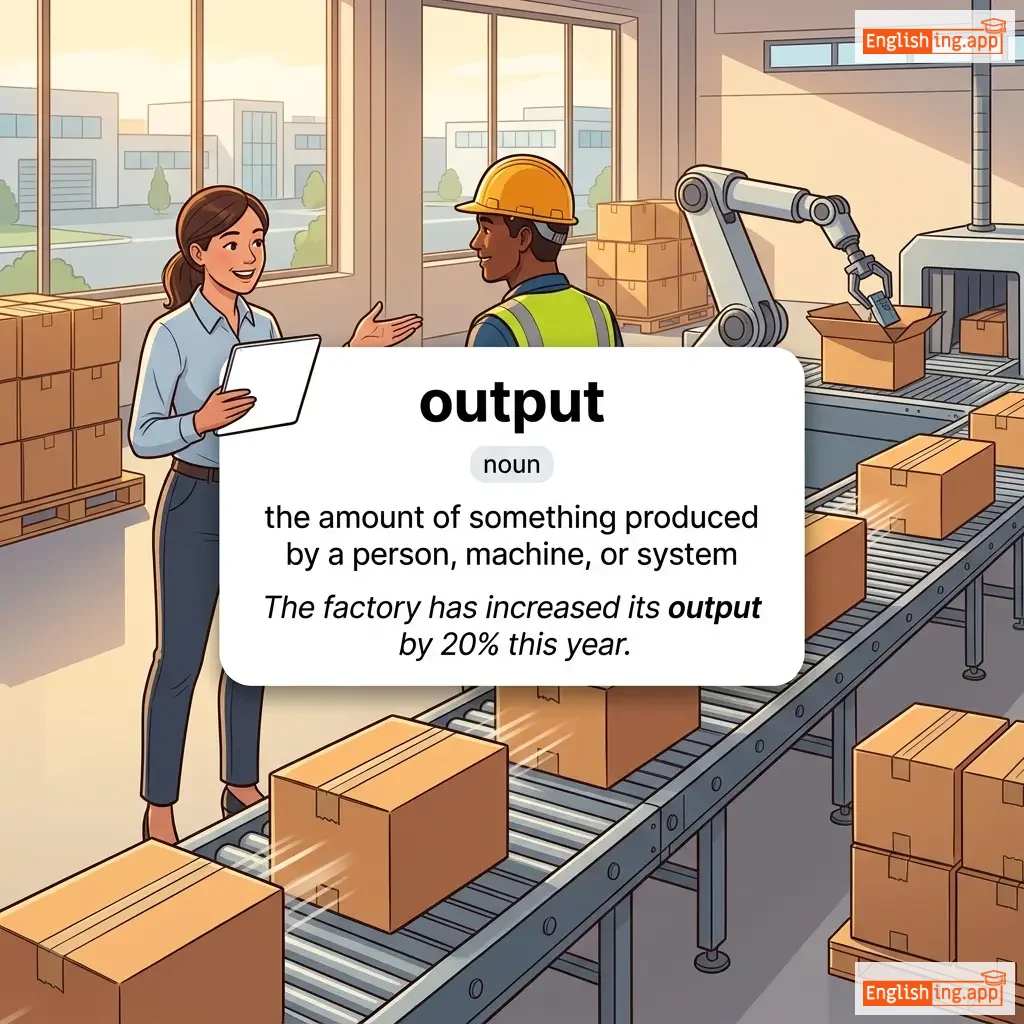
output definition card — visual illustration of the meaning
noun
/ˈaʊtpʊt/
उत्पादन (utpadan)

the amount of something produced by a person, machine, or system

"The factory has increased its output by 20% this year."

"फैक्ट्री ने इस साल अपनी उत्पादन को 20% बढ़ा लिया है।" (Factory ne is saal apni utpadan ko 20% badha liya hai.)
noun/verb
/ˈaʊtreɪdʒ/
आक्रोश (aakrosh)

A strong feeling of anger and shock; to arouse anger or shock.

"The unfair decision caused public outrage."

"अन्यायपूर्ण निर्णय ने सार्वजनिक आक्रोश उत्पन्न किया।" (anyayapoorn nirnay ne samajik aakrosh utpann kiya.)
adjective
/aʊtˈreɪdʒəs/
अत्यधिक अन्यायपूर्ण (atyadhik anyayapurn)

Shockingly bad or excessive; very unusual or amusing.

"The comedian told an outrageous joke."

"कॉमेडियन ने एक अत्यधिक मजेदार मजाक सुनाया।" (comedian ne ek atyadhik mazedar mazaak sunaya.)
noun
/ˈaʊtriːtʃ/
सहायता विस्तार (sahayata vistar)

The act of providing services or support to people who might not otherwise have access to them.

"The charity launched a new outreach program for the homeless."

"चैरिटी ने बेघर लोगों के लिए एक नया सहायता विस्तार कार्यक्रम शुरू किया।" (charity ne begar logon ke liye ek naya sahayata vistar karyakram shuru kiya.)
noun
/ˈoʊ.vər spɪl/
अतिवृष्टि (ativrishti)

the overflow of liquid from a container; excess that cannot be contained

"The overspill from the river flooded nearby farms."

"नदी से ओवरस्पिल ने नजदीकी खेतों को बाढ़ में डुबो दिया।" (nadi se overspill ne najdeeki kheton ko baadh mein dubo diya.)
noun
/ˈoʊvərlɔːrd/
प्रभु (prabhu)

A ruler, master, or person of great power and authority over others.

"The peasants were forced to pay taxes to their overlord."

"किसानों को उनके प्रभु को कर देने के लिए मजबूर किया गया था।" (Kisano ko unke prabhu ko kar dene ke liye majboor kiya gaya tha.)
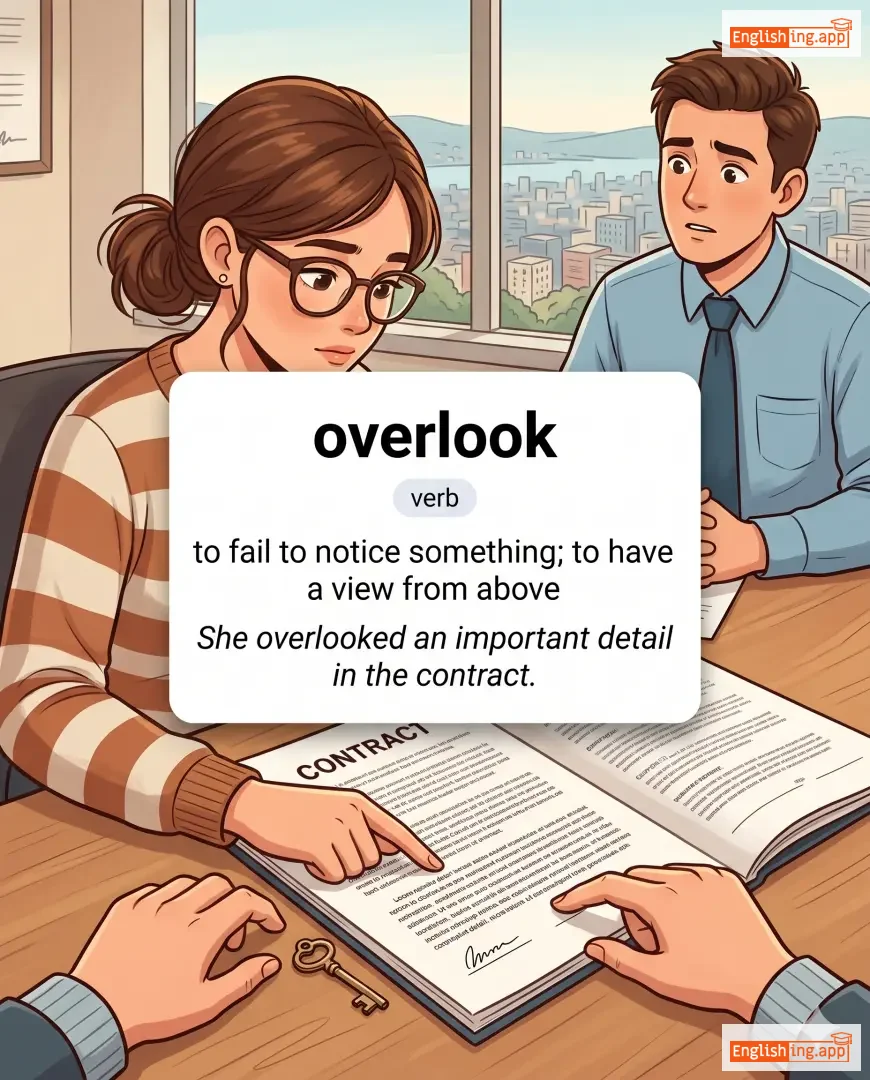
overlook definition card — visual illustration of the meaning
verb
/ˌoʊvərˈlʊk/
अवगणना करना / नजरअंदाज करना (avganana karna / nazarandaaz karna)

to fail to notice something; to have a view from above

"She overlooked an important detail in the contract."

"वह अनुबंध में एक महत्वपूर्ण विवरण को ओवरलुक कर गई।" (Vah anubandh mein ek mahatvapurn vivaran ko overlook kar gayi.)
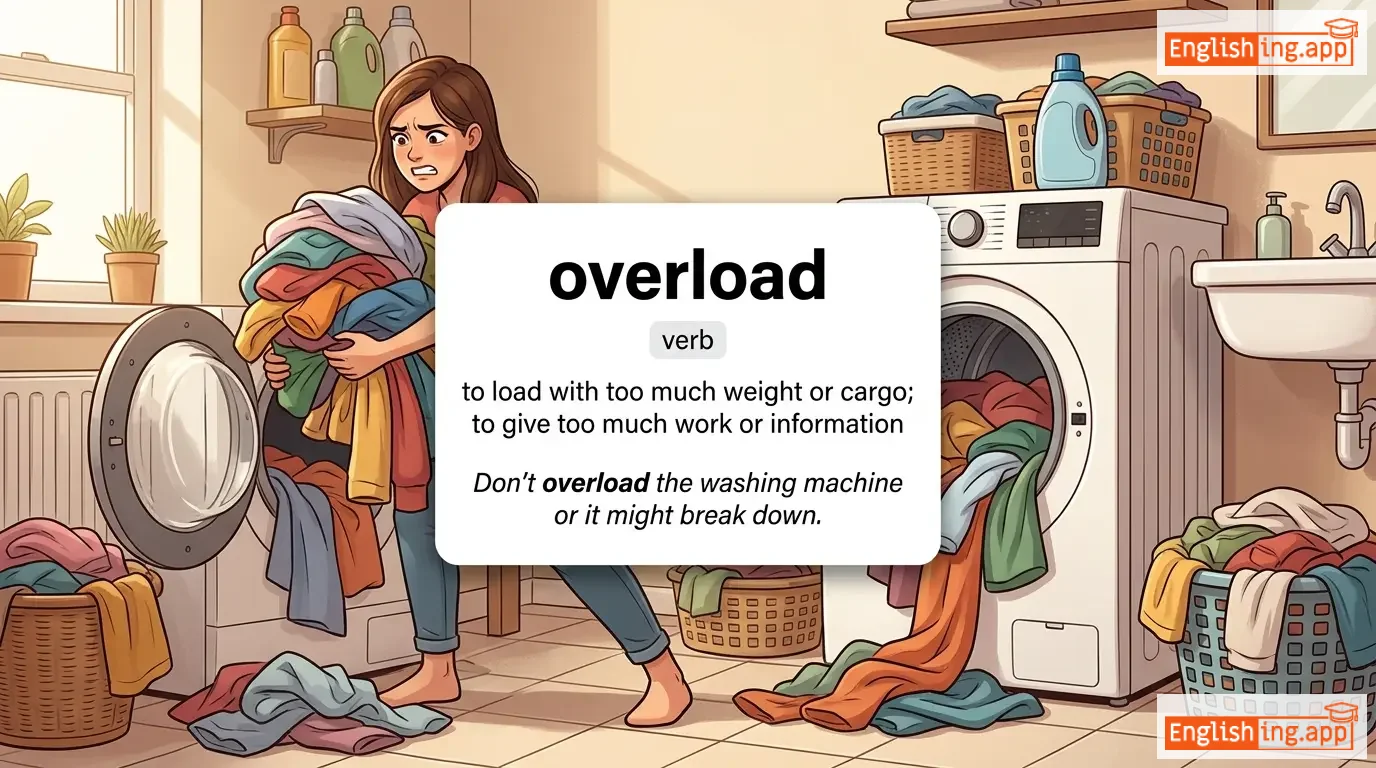
overload definition card — visual illustration of the meaning
verb
/ˌoʊvərˈloʊd/
अत्यधिक लोड करना (atyadhik load karna)

to load with too much weight or cargo; to give too much work or information

"Don't overload the washing machine or it might break down."

"वाशिंग मशीन में अत्यधिक लोड मत डालें, नहीं तो यह खराब हो सकता है।" (Washing machine mein atyadhik load mat daalen, nahin to yah kharaab ho sakta hai।)
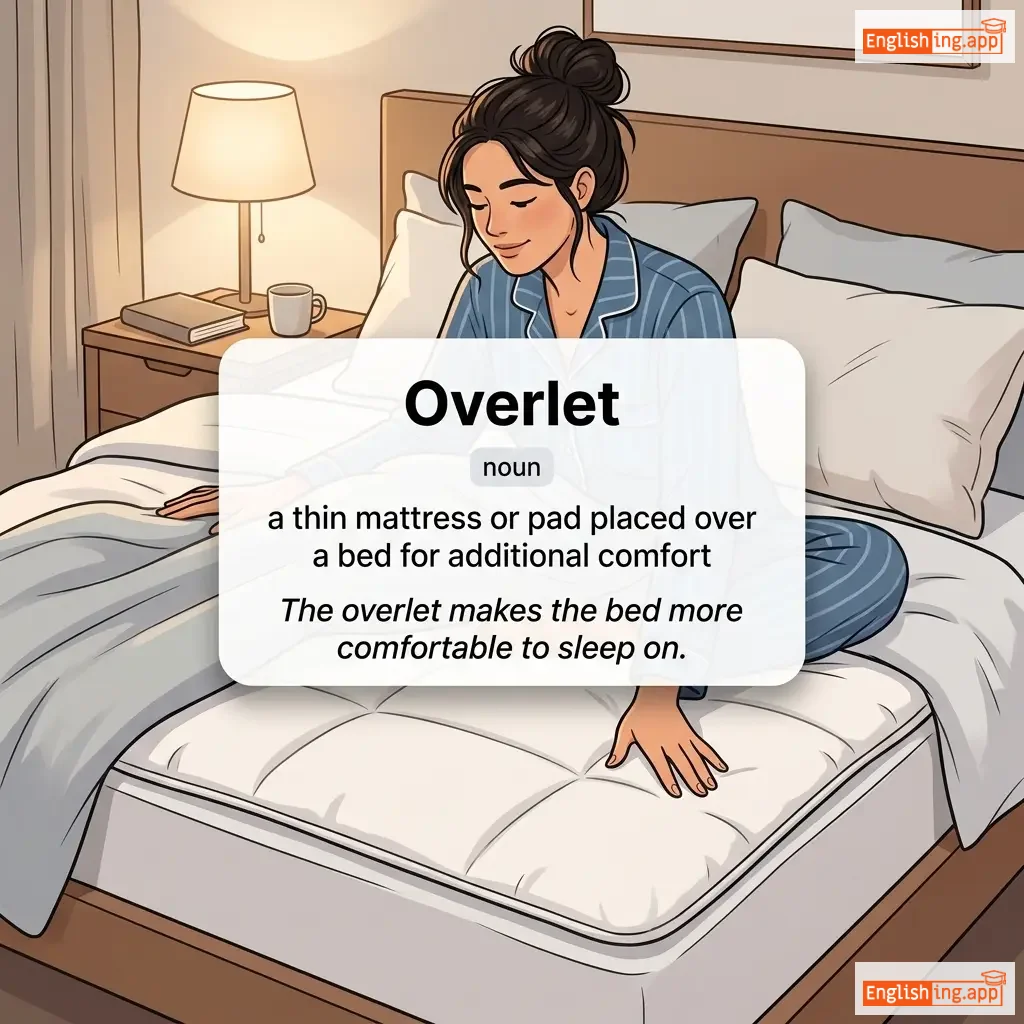
Overlet definition card — visual illustration of the meaning
noun
/ˈoʊ.vər.let/
गद्दा (gadda)

a thin mattress or pad placed over a bed for additional comfort

"The overlet makes the bed more comfortable to sleep on."

"ओवरलेट बिस्तर को सोने के लिए और अधिक आरामदायक बनाता है।" (Overlet bistar ko sone ke liye aur adhik aaramdayak banata hai)
verb
/ˌoʊvərˈliːp/
कूद कर पार होना (kood kar paar hona)

To jump over something; to omit or disregard something.

"He managed to overleap the fence easily."

"वह आसानी से बाड़ को कूद कर पार कर गया।" (Vah aasani se baad ko kood kar paar kar gaya.)
noun/verb
/ˌoʊvərˈlæp/
ओवरलैप (overlap)

To extend over and cover partly; an area where things coincide.

"The two meetings overlap by an hour."

"दो बैठकें एक घंटे तक ओवरलैप होती हैं।" (Do baithakein ek ghante tak overlap hoti hain.)
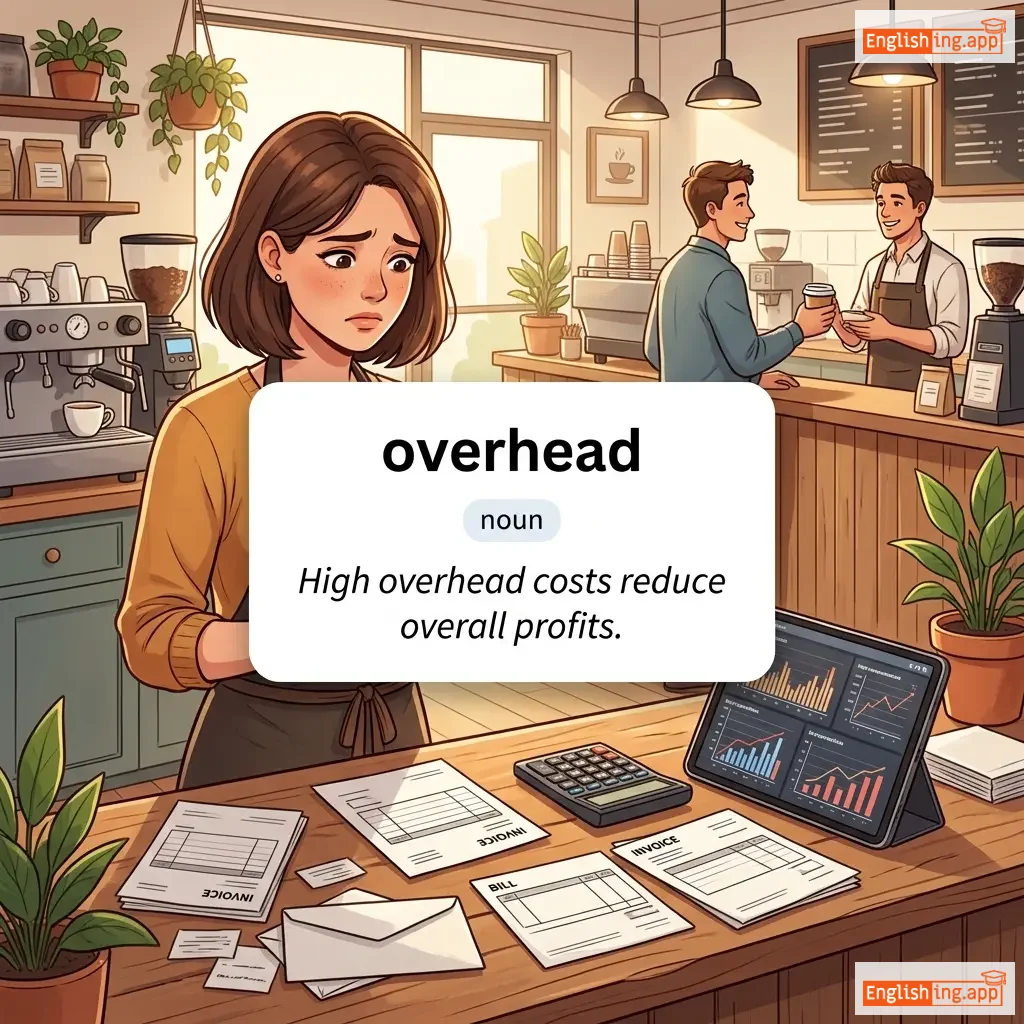
overhead definition card — visual illustration of the meaning
noun
ˈəʊ.və.hed
निरंतर व्यापार खर्च जो सीधे उत्पाद या सेवा से संबंधित नहीं होते हैं (nirantar vyapar kharch jo sidhe utpad ya seva se sambandhit nahin hote hain)

Ongoing business expenses not directly attributable to creating a product or service.

"High overhead costs reduce overall profits."

"उच्च ओवरहेड लागत कुल मुनाफे को कम कर देती हैं।" (Ucch overhead lagat kul munafe ko kam kar deti hain.)
verb
/ˈoʊvərˌhɔːl/
संपूर्ण सुधार (sampurn sudhaar)

to examine thoroughly and repair or improve something that is worn or ineffective

"The company decided to overhaul its outdated computer system."

"कंपनी ने अपने पुराने कंप्यूटर सिस्टम को ओवरहाल करने का निर्णय लिया।" (Company ne apne purane computer system ko overhauling karne ka nirnay liya.)
noun/verb
/ˈoʊvərˌhæŋ/
झूलता हुआ हिस्सा (jhoolta hua hissa)

To extend outward and hang over something; a projecting part.

"The roof overhang provides shade in the summer."

"छत का झूलता हुआ हिस्सा गर्मियों में छाया प्रदान करता है।" (Chhat ka jhoolta hua hissa garmiyon mein chhaya pradan karta hai.)
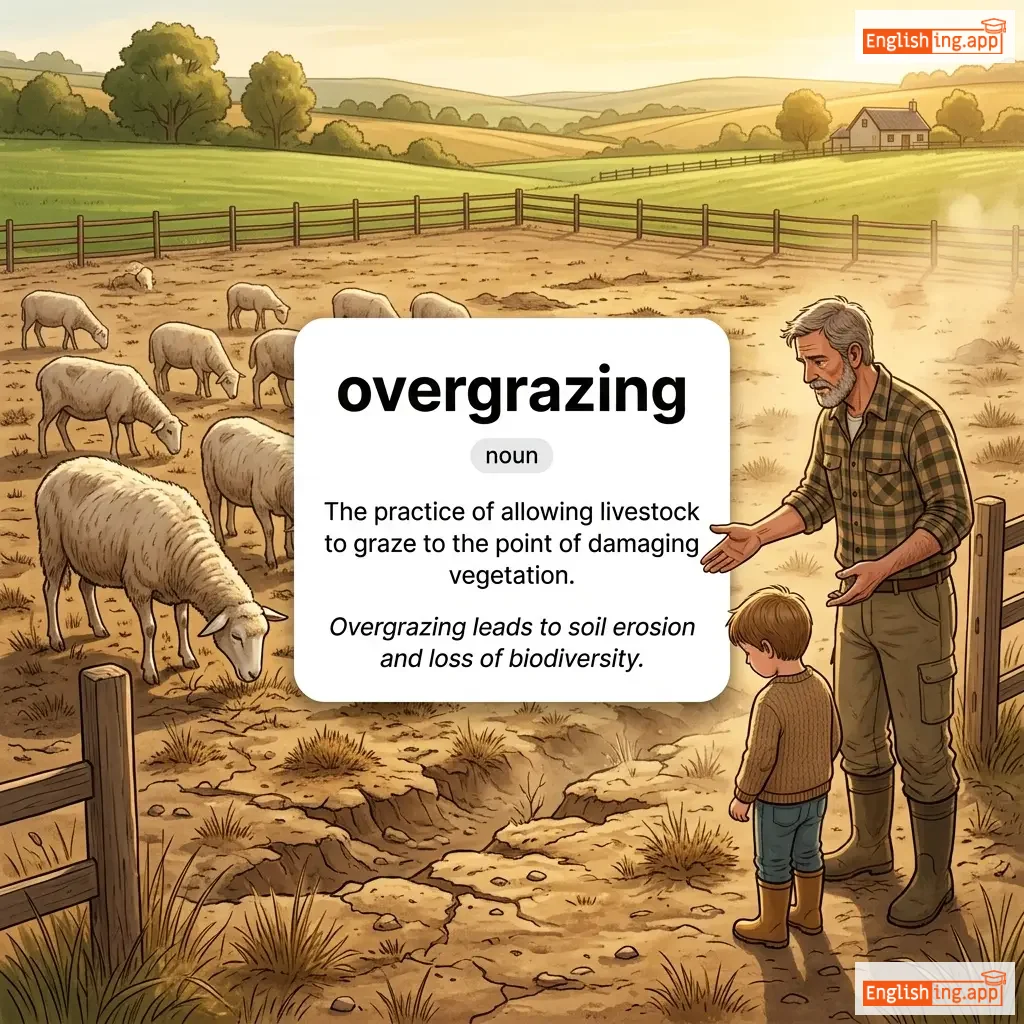
overgrazing definition card — visual illustration of the meaning
noun
ˌoʊ.vɚˈɡreɪ.zɪŋ
अत्यधिक चराई (atyadhik charai)

The practice of allowing livestock to graze to the point of damaging vegetation.

"Overgrazing leads to soil erosion and loss of biodiversity."

"अत्यधिक चराई से मृदा अपरदन और जैव विविधता की हानि होती है।" (Atyadhik charai se mrida apardan aur jaiv vividhata ki hani hoti hai.)
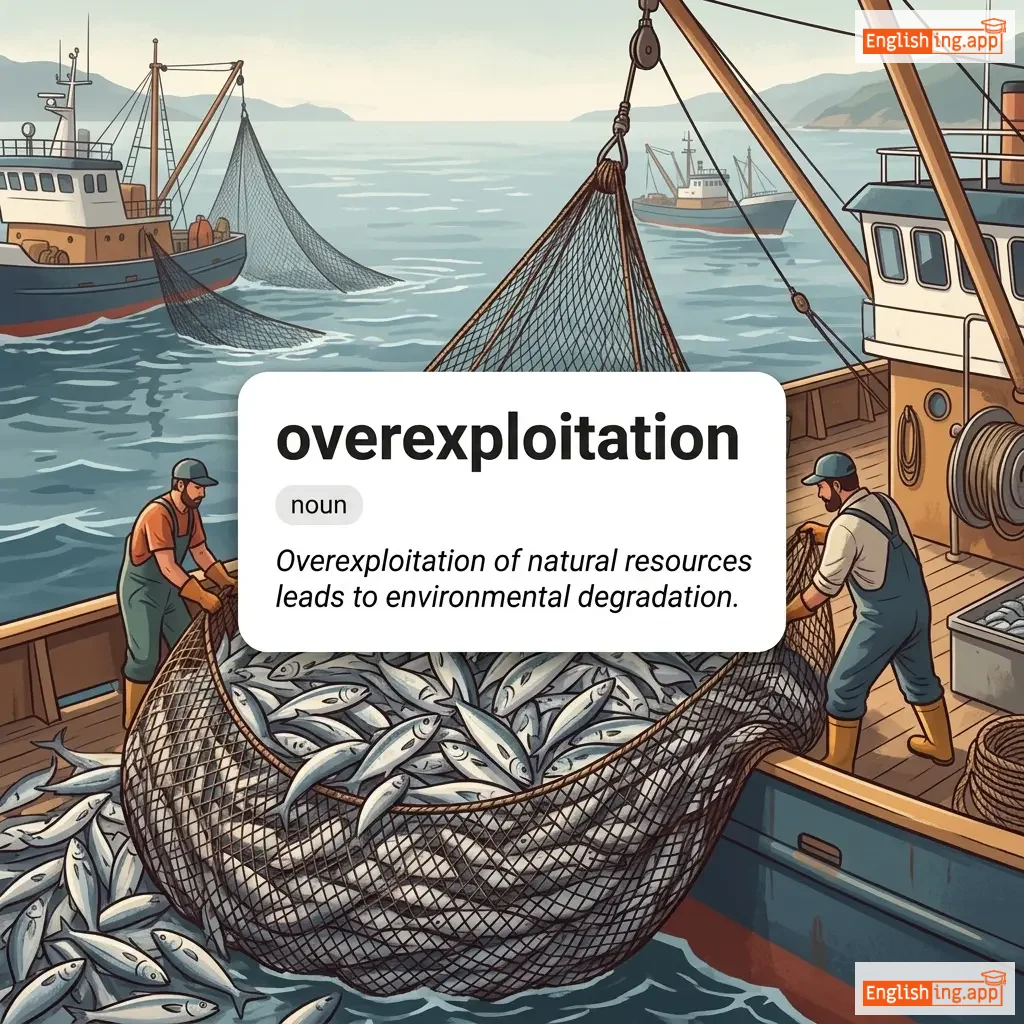
overexploitation definition card — visual illustration of the meaning
noun
/ˌəʊvərɪksˌplɔɪˈteɪʃən/
अत्यधिक शोषण (atyadhik shoshan)

The unsustainable use of natural resources at a rate that exceeds their ability to regenerate, leading to depletion and environmental degradation.

"Overexploitation of natural resources leads to environmental degradation."

"प्राकृतिक संसाधनों का अत्यधिक शोषण पर्यावरणीय गिरावट की ओर ले जाता है।" (Prakritik sansadhanon ka atyadhik shoshan paryavarniya girawat ki aur le jata hai.)
verb
/ˌoʊvərˈiːt/
खुशी (khushi)

To eat more food than the body needs.

"She tends to overeat when she is stressed."

"जब उसने पुरस्कार प्राप्त किया, तो वह अपनी खुशी छिपा नहीं सकी।" (Jab usne puraskar prapt kiya, to vah apni khushi chhupa nahi sake.)
noun/verb
/ˈoʊvərˌdoʊs/
अत्यधिक मात्रा (atyadhik matra)

An excessive and dangerous amount of a drug; to take too much of a substance.

"He was rushed to the hospital after a drug overdose."

"वह एक ड्रग ओवरडोज़ के बाद अस्पताल पहुंचा था।" (Vah ek drug overdose ke baad aspataal pahunchaa tha.)
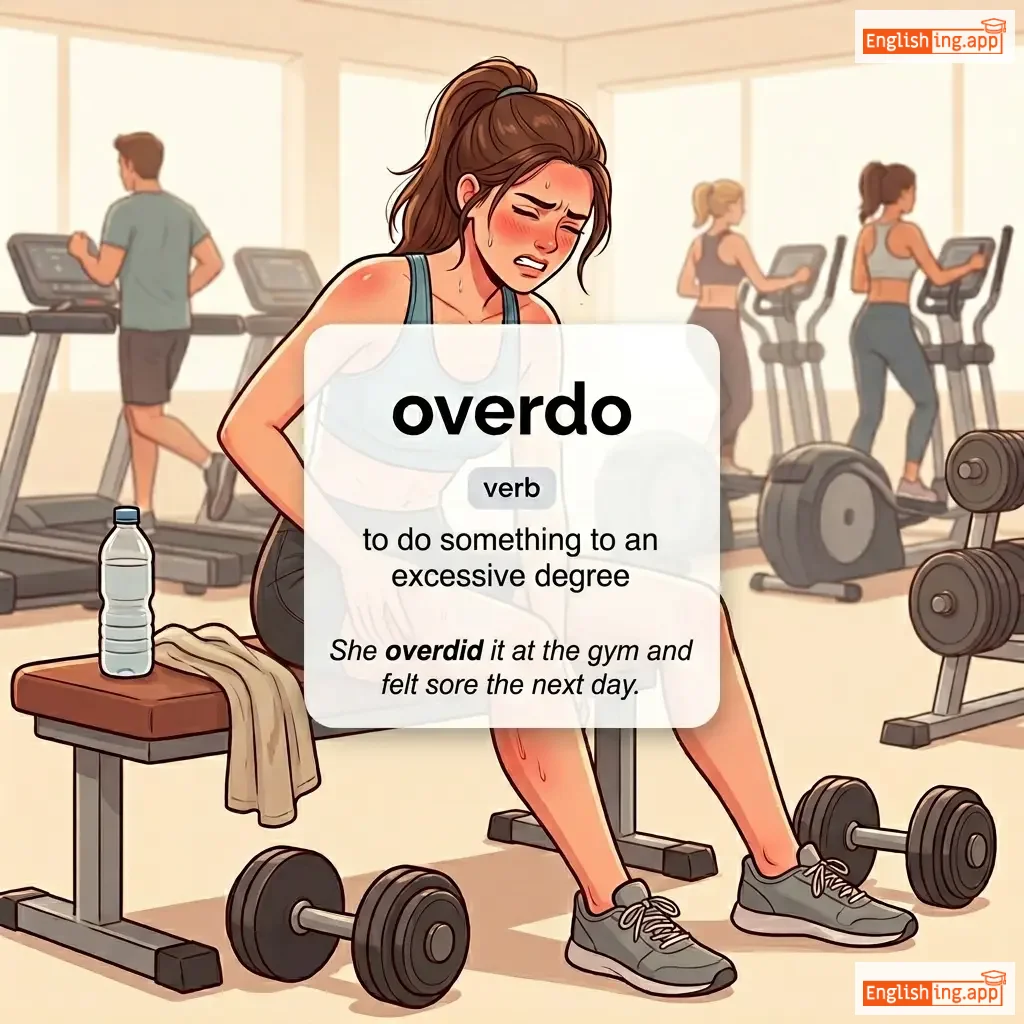
overdo definition card — visual illustration of the meaning
verb
/ˌoʊvərˈduː/
अत्यधिक करना (atyadhik karna)

to do something to an excessive degree

"She overdid it at the gym and felt sore the next day."

"उसने जिम में बहुत ज़्यादा कर दिया और अगले दिन दर्द महसूस किया।" (Usne jim mein bahut zyada kar diya aur agle din dard mehsoos kiya.)
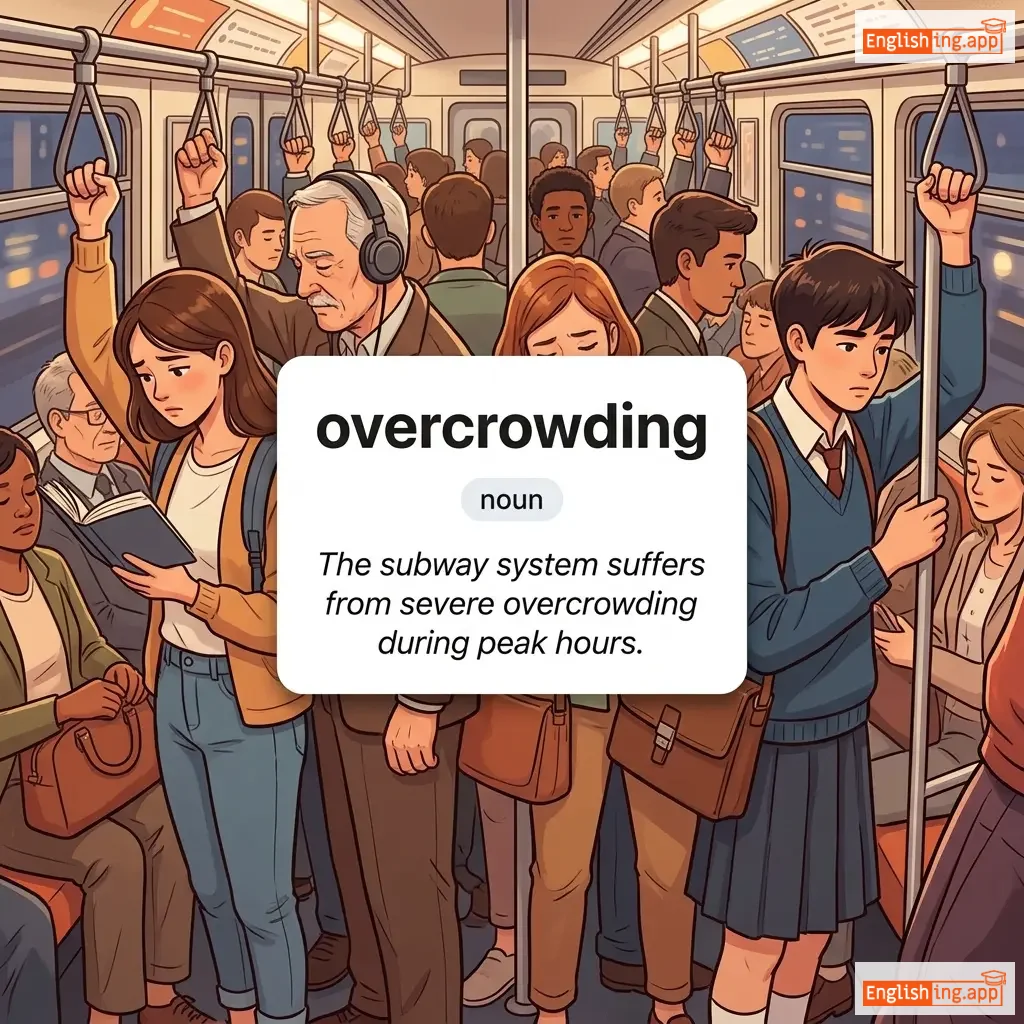
overcrowding definition card — visual illustration of the meaning
noun
/ˌoʊ.vɚˈkraʊ.dɪŋ/
अधिक भीड़ या पैक स्थिति (adhik bhir ya paek sthiti)

Excessive crowd or packed condition, having more people or vehicles in a place than the approved capacity.

"The subway system suffers from severe overcrowding during peak hours."

"सबवे सिस्टम पीक आवर्स के दौरान गंभीर ओवरक्राउडिंग से जूझता है।" (Sabwe system peak hours ke dauran gambhir overcrowding se jujhta hai.)
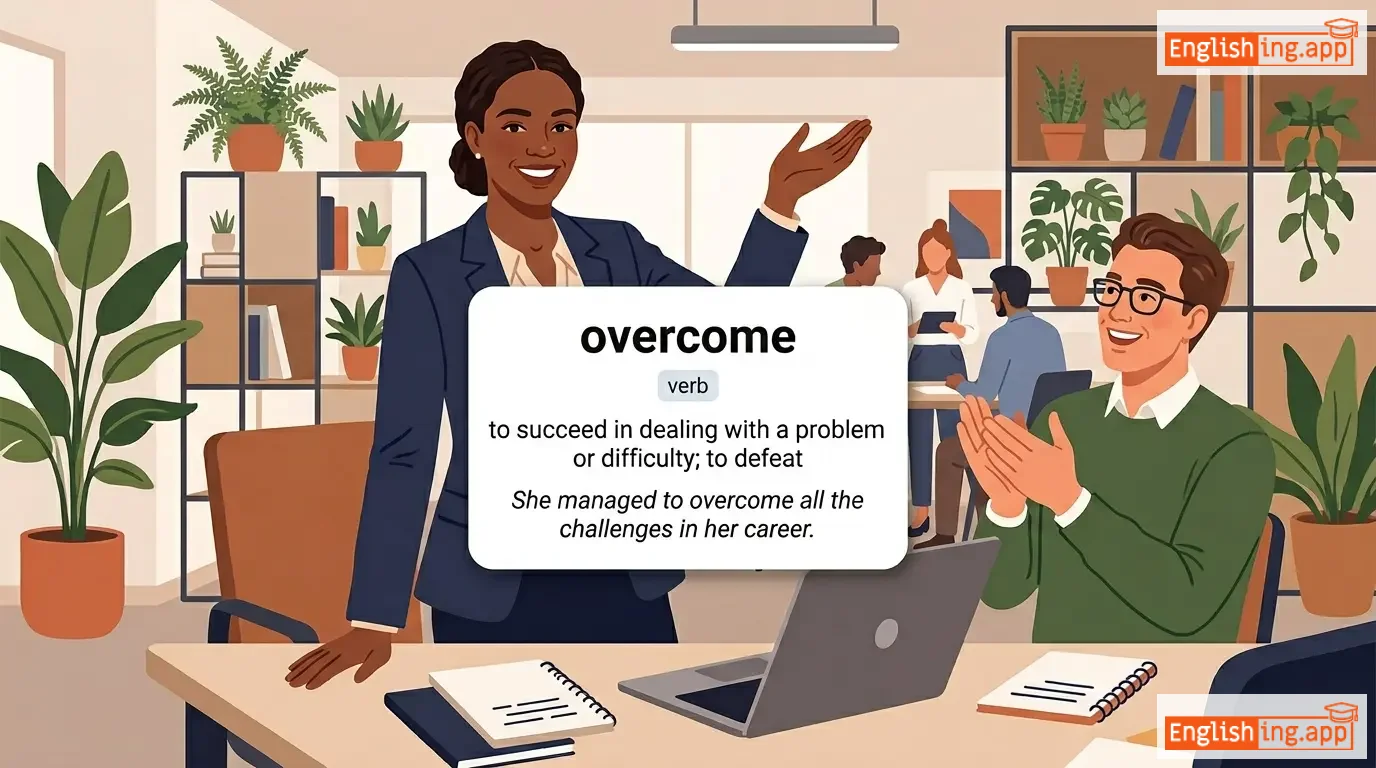
overcome definition card — visual illustration of the meaning
verb
/ˌoʊvərˈkʌm/
जीतना (jeetna)

to succeed in dealing with a problem or difficulty; to defeat

"She managed to overcome all the challenges in her career."

"उसने अपनी करियर की सभी चुनौतियों को पार कर लिया।" (Usne apni career ki sabhi chunautiyon ko paar kar liya.)
adjective
/ˌoʊvərˈbloʊn/
अतिरंजित (atiranjit)

excessively exaggerated or inflated

"The controversy was overblown by the media."

"विवाद को मीडिया द्वारा अतिरंजित किया गया था।" (Vivad ko media dwara atiranjit kiya gaya tha.)
adjective
/ˌoʊvərˈbɛrɪŋ/
अत्याचारी (atyachari)

unpleasantly or arrogantly domineering

"His overbearing attitude made everyone uncomfortable."

"उसका अत्याचारी व्यवहार सबको असहज कर देता था।" (Uska atyachari vyavhaar sabko asahaj kar deta tha.)
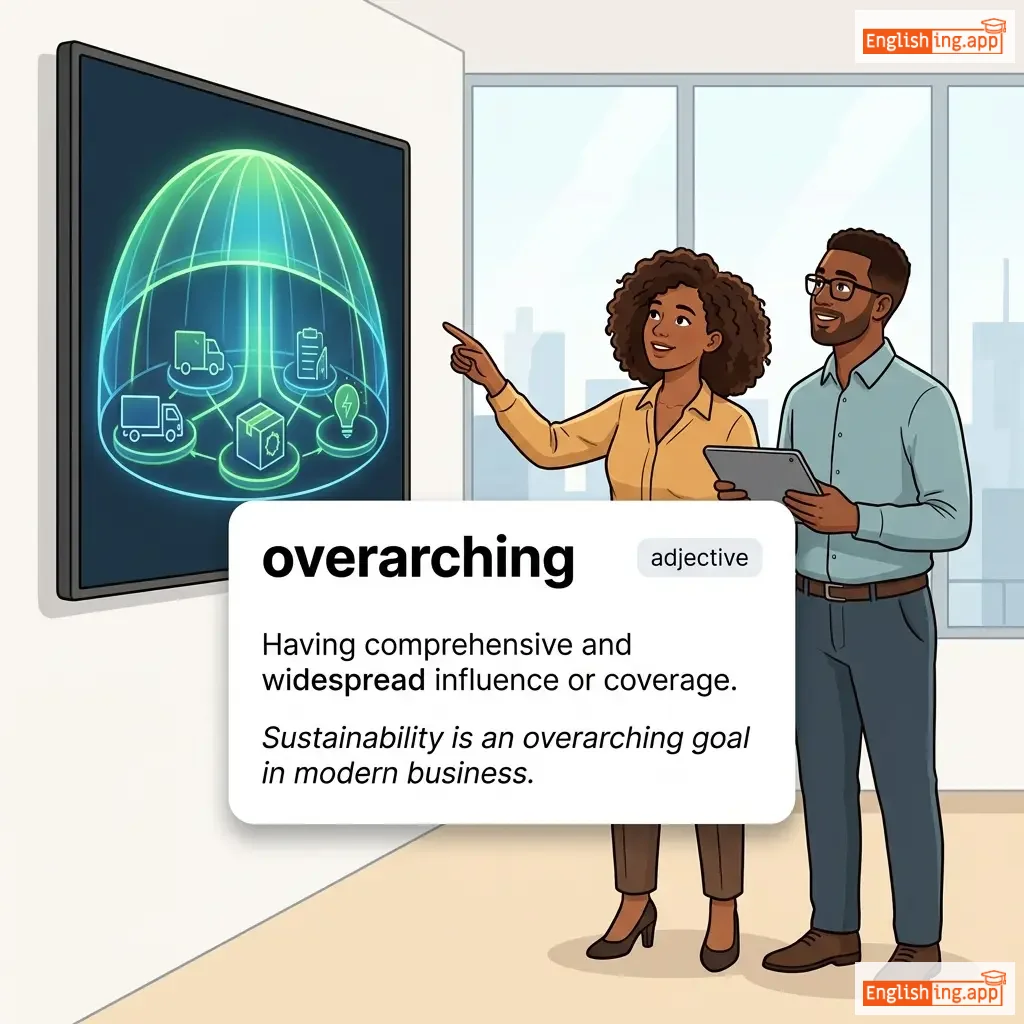
overarching definition card — visual illustration of the meaning
adjective
/ˌoʊ.vɚˈɑːr.tʃɪŋ/
व्यापक या समग्र (vyapak ya samagr)

Having comprehensive and widespread influence or coverage.

"Sustainability is an overarching goal in modern business."

"आधुनिक व्यापार में स्थिरता एक व्यापक लक्ष्य है।" (Aadhunik vyavhaar mein sthirata ek vyapak lakshya hai.)
adjective, adverb
/ˈoʊvərɔːl/
कुल मिलाकर (kul milakar)

in general or as a whole

"Overall, the project has been successful."

"कुल मिलाकर, परियोजना सफल रही है।" (Kul milakar, pariyojna safal rahi hai.)
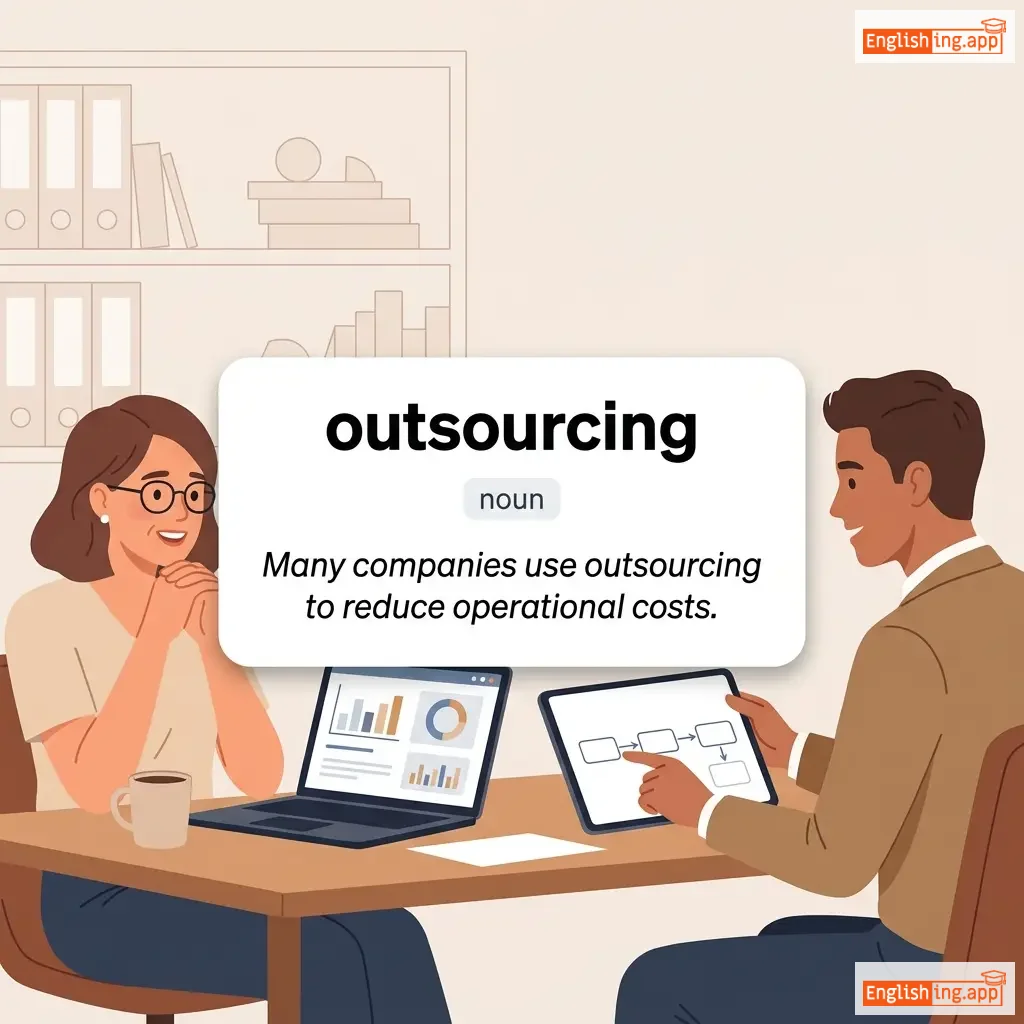
outsourcing definition card — visual illustration of the meaning
noun
ˈaʊt.sɔː.sɪŋ
आउटसोर्सिंग (outsourcing)

The practice of having certain job functions done outside a company instead of having an in-house department or employee handle them.

"Many companies use outsourcing to reduce operational costs."

"कई कंपनियां संचालन लागत को कम करने के लिए आउटसोर्सिंग का उपयोग करती हैं।" (Kai companyan sancharan lagat ko kam karne ke liye outsourcing ka upyog karti hain.)