वोकैबुलरीज

इंग्लिश वोकैबुलरी डिस्कवर, लर्न और मास्टर करें

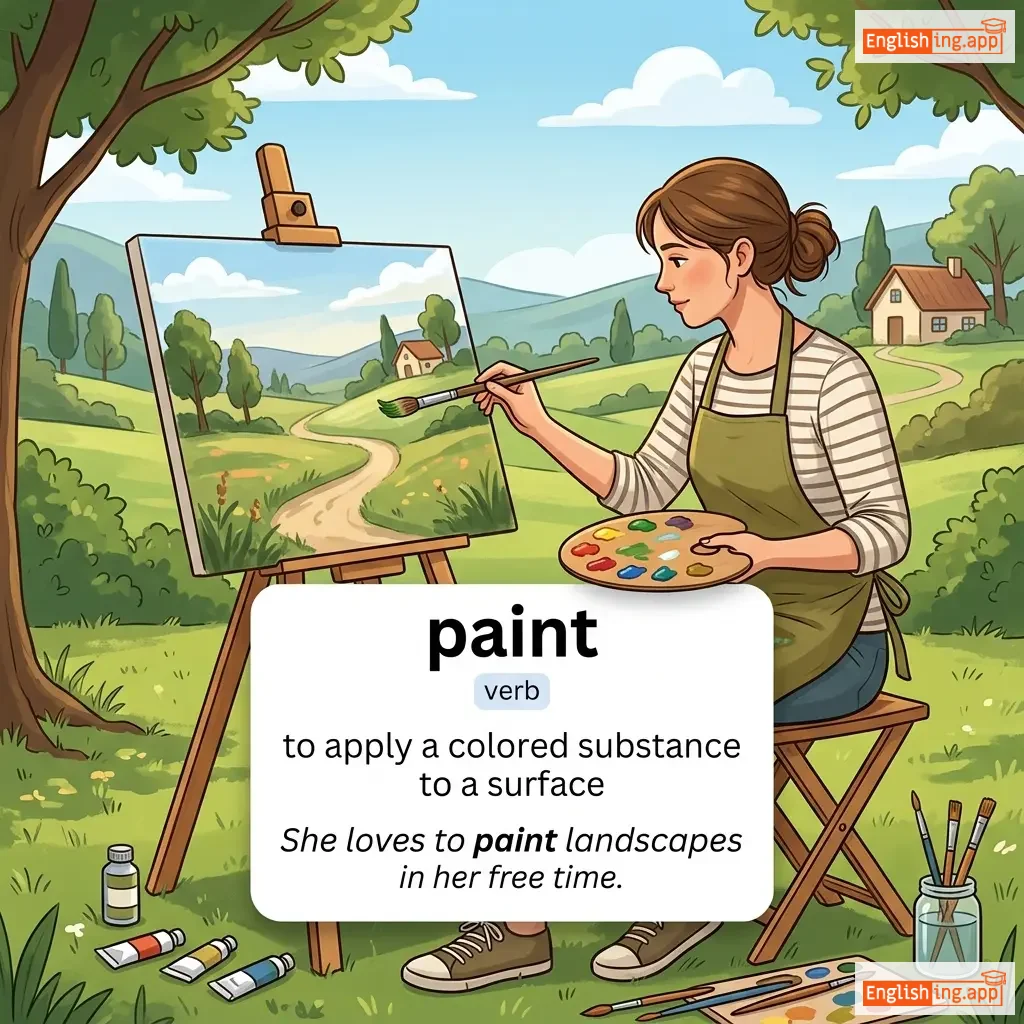
paint definition card — visual illustration of the meaning
verb
/peɪnt/
चित्रित करना (chitrit karna)

to apply a colored substance to a surface

"She loves to paint landscapes in her free time."

"वह अपने फ्री टाइम में लैंडस्केप पेंट करना पसंद करती है।" (Vah apne free time mein landscape paint karna pasand karti hai.)
Painter definition card — visual illustration of the meaning
noun
/ˈpeɪn.tər/
चित्रकार (chitrakar)

a person who paints pictures, or paints walls, buildings, etc.

"The painter spent hours working on the portrait."

"चित्रकार ने पोर्ट्रेट पर काम करने में घंटों बिता दिए।" (Chitrakar ne portrait par kaam karne mein ghanton bita diye.)
noun
/ˈpeɪntɪŋ/
चित्रकला (chitrakala)

a picture or design made using paint

"The painting on the wall was created by a famous artist."

"दीवार पर पेंटिंग एक प्रसिद्ध कलाकार द्वारा बनाई गई थी।" (Deewar par painting ek prasiddh kalakar dwara banayi gayi thi.)
noun
/per/
जोड़ा (joda)

two things of the same kind that are used together

"She wore a matching pair of shoes."

"उसने मैचिंग जोड़ा जूते पहने।" (Usne matching joda jute pehne.)
noun
/ˈpælɪs/
महल (mahal)

a large and impressive building that is the official home of a king, queen, or other ruler

"The royal family lives in a magnificent palace."

"रॉयल परिवार एक शानदार महल में रहता है।" (Royal parivar ek shandar mahal mein rehta hai.)
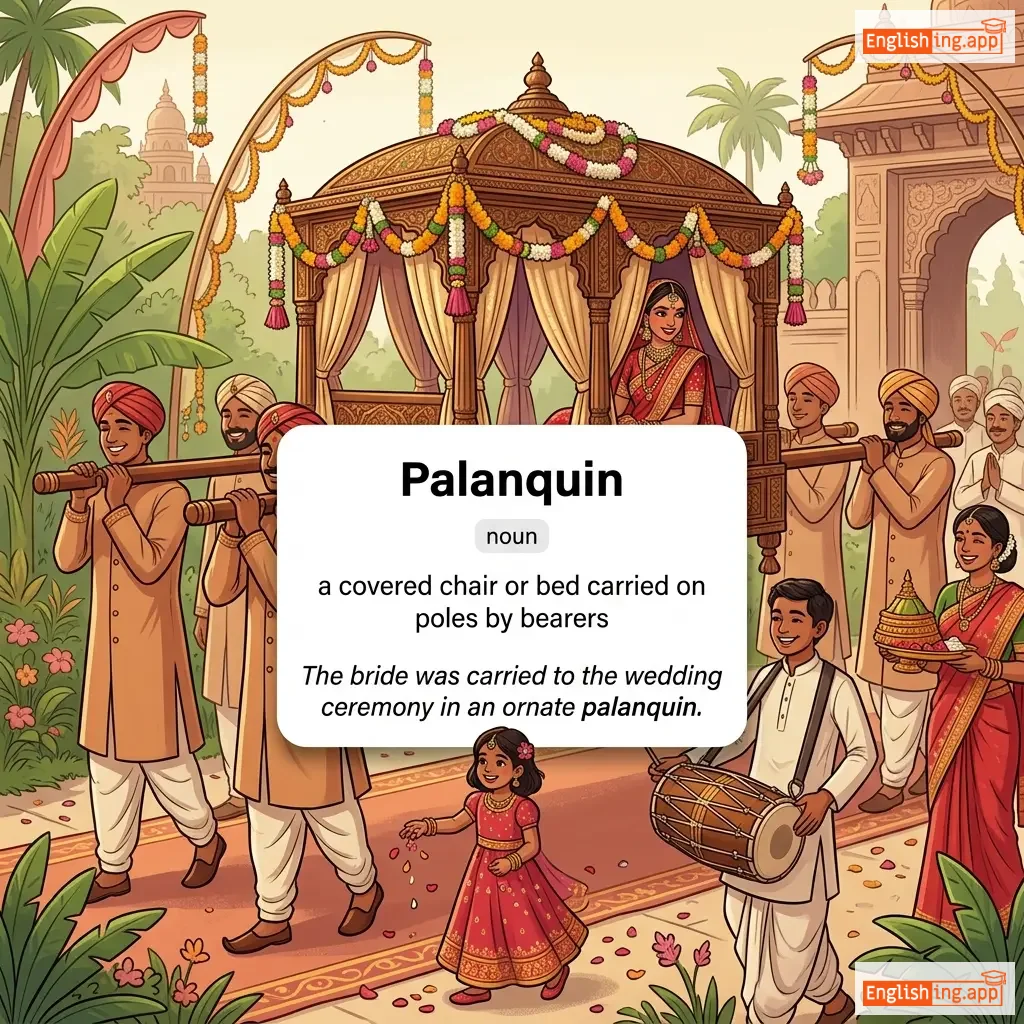
Palanquin definition card — visual illustration of the meaning
noun
/ˌpæl.ənˈkiːn/
पालकी (paalki)

a covered chair or bed carried on poles by bearers

"The bride was carried to the wedding ceremony in an ornate palanquin."

"दुल्हन को शादी के समारोह में एक भव्य पलांकिन में ले जाया गया।" (dulhan ko shaadi ke samaroah mein ek bhavya paalakin mein le jaya gaya.)
adjective
/ˈpæl.ə.tə.bəl/
स्वादिष्ट (swadisht)

pleasant or acceptable to the taste, mind, or feelings

"The meal was simple but quite palatable."

"खाना साधारण था लेकिन बहुत स्वादिष्ट था।" (Khana sadharan tha lekin bahut swadisht tha.)
Palatable meat definition card — visual illustration of the meaning
noun
/ˈpæl.ə.tə.bəl miːt/
स्वादिष्ट मांस (swadisht maans)

Meat that is pleasant to taste; appetizing meat dish

"The chef prepared palatable meat dishes for the dinner party."

"शेफ ने डिनर पार्टी के लिए स्वादिष्ट मांस व्यंजन तैयार किए।" (shef ne dinner party ke liye swadisht maans vyajan tayar kiye.)
noun
/ˈpæl.ət/
स्वाद ग्रहन क्षमता / तालु (swad grahan kshamata / taalu)

the roof of the mouth; a person's appreciation of taste and flavor

"She has a refined palate for fine wines."

"उसकी शानदार मदिरा के लिए एक परिष्कृत तालु है।" (Uski shandaar madira ke liye ek parishkrit taalu hai.)
adjective
/pəˈleɪ.ʃəl/
महल जैसा (mahal jaisa)

resembling a palace in being spacious and splendid

"They stayed in a palatial hotel during their vacation."

"वे अपनी छुट्टियों के दौरान एक महल जैसे होटल में रुके थे।" (Ve apni chhuttiyon ke dauran ek mahal jaisa hotel mein ruke the.)
noun
/pəˈlæv.ər/
बेमतलब चर्चा / हंगामा (bematlab charcha / hangama)

prolonged and idle discussion; fuss or unnecessary talk

"After much palaver, they finally agreed on the plan."

"काफी बेमतलब चर्चा के बाद, वे आखिरकार योजना पर सहमत हो गए।" (Kaafi bematlab charcha ke baad, ve aakhirkaar yojna par sahmat ho gaye.)
👩‍🦰

Pale (पेल)

adjective
/peɪl/
फीका (fika)

having a light or dull color, especially when compared with something else

"She looked pale after the long illness."

"लंबी बीमारी के बाद वह फीकी दिख रही थी।" (Lambi bimari ke baad vah fiki dikh rahi thi.)
noun
/ˌpeɪ.li.ɒnˈtɒl.ə.dʒi/
पैलियोन्टोलॉजी (paleontology)

the branch of science concerned with fossil animals and plants

"She decided to study paleontology at university."

"उसने विश्वविद्यालय में पैलियोन्टोलॉजी अध्ययन करने का निर्णय लिया।" (Usne vishwavidyalay mein paleontology adhyayan karne ka nirnay liya.)
adjective
/pælɛˈstɪnɪən/
पैलेस्टिनियन (palestinian)

relating to Palestine or its people

"The Palestinian people have a rich cultural heritage."

"फिलिस्तीनी लोगों का एक समृद्ध सांस्कृतिक धरोहर है।" (filisteeni logon ka ek samriddh sanskritik dharohar hai.)
noun
/ˈpælət/
पैलेट (pailet)

a thin board or surface on which an artist sets and mixes colors; also a range of colors used in art or design

"The artist mixed vibrant shades on her palette before starting the painting."

"कलाकार ने पेंटिंग शुरू करने से पहले अपनी पैलेट पर जीवंत रंगों को मिलाया।" (Kalakar ne painting shuru karne se pehle apni pailet par jeevant rangon ko milaya.)
noun
/ˈpælɪmpsɛst/
पुनःलिखित पाण्डुलिपि (punahlikhit pandulipi)

a manuscript or document that has been written over but still bears traces of earlier writing; something reused or altered but still retaining traces of its earlier form

"The ancient manuscript was a palimpsest, showing faint traces of previous texts beneath the new writing."

"प्राचीन पाण्डुलिपि एक पॅलिम्प्सेस्ट थी, जिसमें नई लेखनी के नीचे पुराने लेखन के हल्के निशान थे।" (Prachin pandulipi ek palimpsest thi, jismein nayi lekhani ke neeche purane lekhan ke halke nishan the.)
noun
/ˈpælɪˌnoʊd/
क्षमा प्रार्थनापत्र (kshama prarthanapatra)

a poem or statement in which the writer retracts something said in an earlier work

"The poet wrote a palinode to apologize for his earlier harsh words."

"कवि ने अपनी पहले की कठोर शब्दों के लिए क्षमा प्रार्थनापत्र लिखा।" (Kavi ne apni pehle ki kathor shabdon ke liye kshama prarthanapatra likha.)
verb, noun
/pɔːl/
उबाऊ, कफिन पर चढ़ने वाला कपड़ा (ubau, kafin par chadhne wala kapda)

to lose strength or interest; to become dull or tiresome; also a cloth spread over a coffin

"The excitement of the festival began to pall after several days."

"त्योहार की उत्तेजना कुछ दिनों बाद मद्धम हो गई।" (tyohar ki uttejana kuch dinon baad maddham ho gayi.)
verb
/ˈpælieɪt/
उपशामित करना (upshamit karna)

to make a disease, symptoms, or problem less severe without removing the cause

"The doctor prescribed medicine to palliate the patient's pain."

"डॉक्टर ने रोगी के दर्द को कम करने के लिए दवाइयाँ दीं।" (Doktor ne rogi ke dard ko kam karne ke liye davaiyan din.)
verb
/pɑːrs/
व्याकरण विश्लेषण करना (vyakaran vishleshan karna)

to analyze a sentence or text grammatically or logically

"The software can parse large amounts of text data efficiently."

"सॉफ़्टवेयर बड़े पैमाने पर टेक्स्ट डेटा को कुशलता से पार्स कर सकता है।" (Software bade paimane par text data ko kushalta se parse kar sakta hai.)
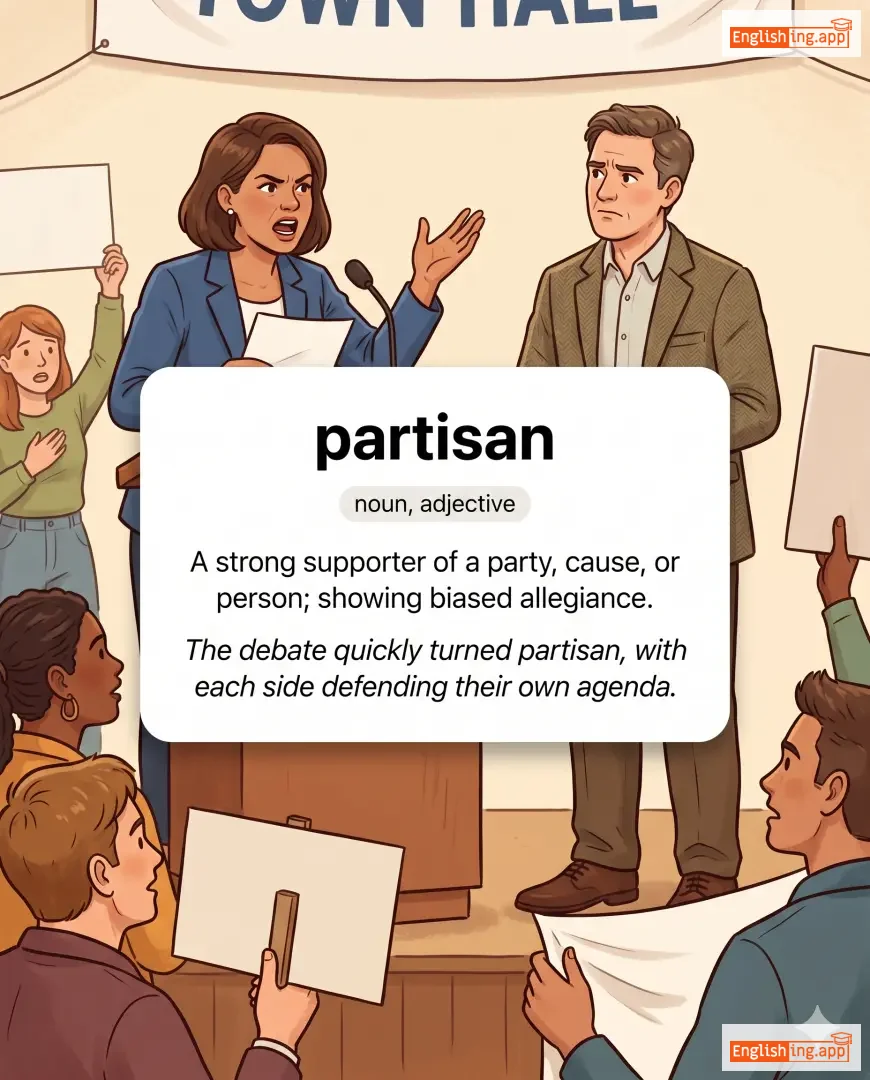
partisan definition card — visual illustration of the meaning
noun, adjective
/ˈpɑːrtɪzən/
पार्टी समर्थक (party samarthak)

A strong supporter of a party, cause, or person; showing biased allegiance.

"The debate quickly turned partisan, with each side defending their own agenda."

"विवाद जल्दी ही पार्टी परक हो गया, हर पक्ष अपनी खुद की एजेण्डा का बचाव कर रहा था।" (Vivad jaldi hi party park ho gaya, har paksh apni khud ki agenda ka bachav kar raha tha.)
adverb
/pɑːrˈtɪkjʊləli/
विशेष रूप से (vishesh roop se)

to a higher degree than is usual or expected

"She is particularly fond of Italian food."

"वह खासतौर पर इतालवी भोजन पसंद करती है।" (Woh khas taur par Italian bhojan pasand karti hai.)
verb
/pərˈtɪkjələrˌaɪz/
विशेष रूप से वर्णन करना (vishesh roop se varnan karna)

to mention or describe something in detail

"The witness was asked to particularize the events of that night."

"गवाह से उस रात की घटनाओं को विस्तार से बताने के लिए कहा गया था।" (Gawah se us raat ki ghatnaon ko vistaar se batane ke liye kaha gaya tha.)
adjective
/pərˈtɪk.jʊ.lər/
विशेष (vishes)

specific or special; distinct from others

"He is very particular about his diet."

"वह अपनी डाइट के बारे में बहुत खास है।" (Vah apni diet ke baare mein bahut khaas hai.)
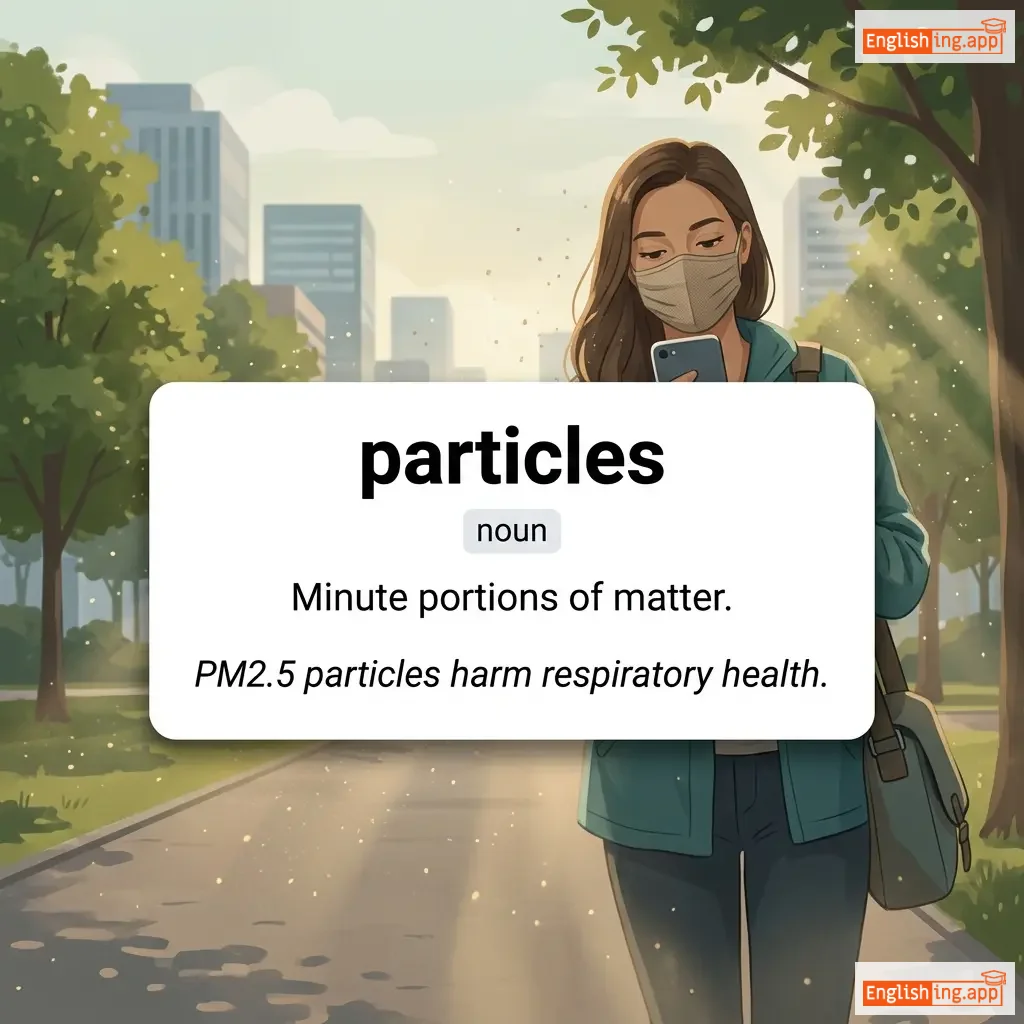
particles definition card — visual illustration of the meaning
noun
/ˈpɑː.tɪ.klz/
कण (kan)

Minute portions of matter.

"PM2.5 particles harm respiratory health."

"PM2.5 कण श्वसन स्वास्थ्य को नुकसान पहुँचाते हैं।" (PM2.5 kan shwasan swasthya ko nuksan pahuchate hain.)
noun
/ˈpɑːrtɪkəl/
कणिका (kanika)

a very small piece or amount of something

"Dust particles floated in the air near the window."

"धूल के कण हवा में खिड़की के पास तैर रहे थे।" (Dhul ke kan hawa mein khidki ke paas tair rahe the.)
noun
/pɑːrˌtɪsɪˈpeɪʃən/
भागीदारी (bhagedari)

the action of taking part in something

"Her participation in the competition was commendable."

"प्रतियोगिता में उसकी भागीदारी सराहनीय थी।" (Pratiyogita mein uski bhagedari sarahniya thi.)
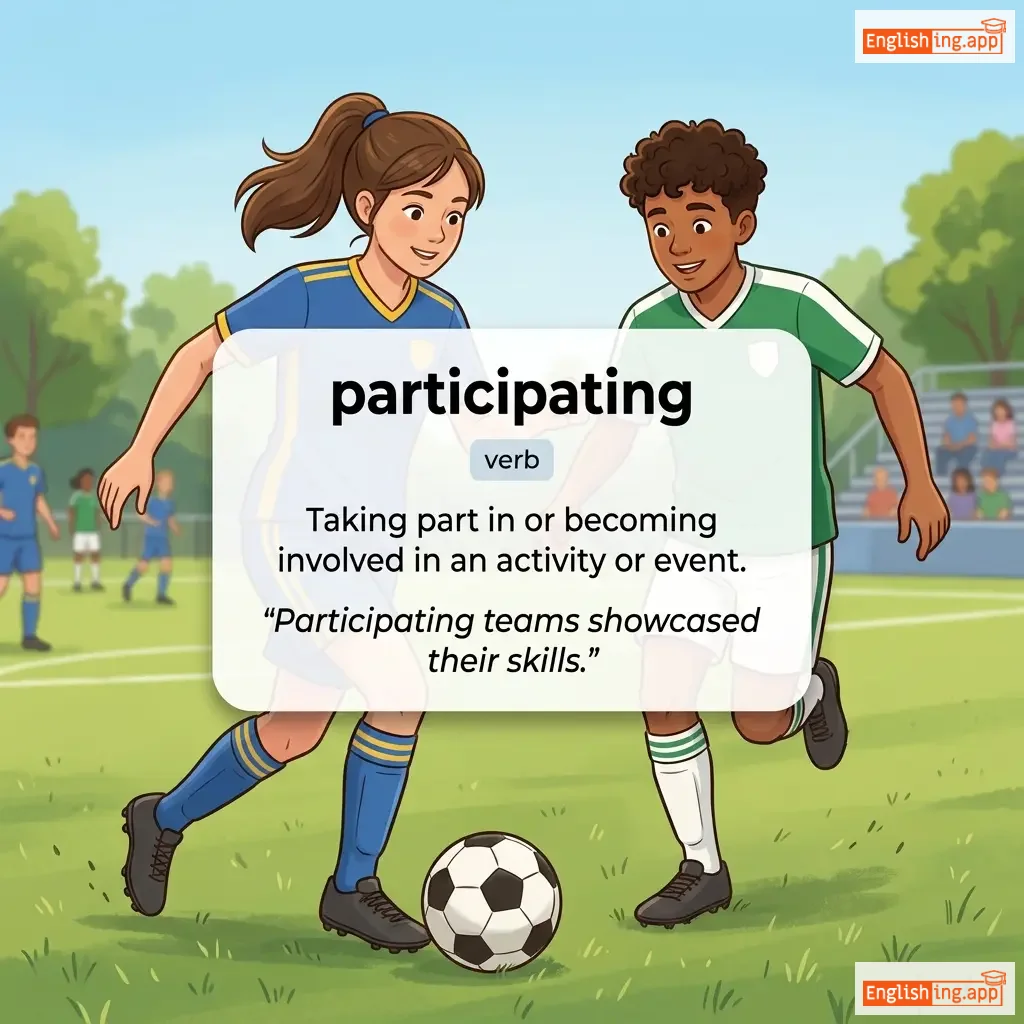
participating definition card — visual illustration of the meaning
verb
pɑːˈtɪs.ɪ.peɪ.tɪŋ
भाग लेना (bhag lena)

Taking part in or becoming involved in an activity or event.

"Participating teams showcased their skills."

"भाग लेने वाली टीमों ने अपनी क्षमताएं दिखाईं।" (Bhag lene wali teemon ne apni kshamataayein dikhayi.)
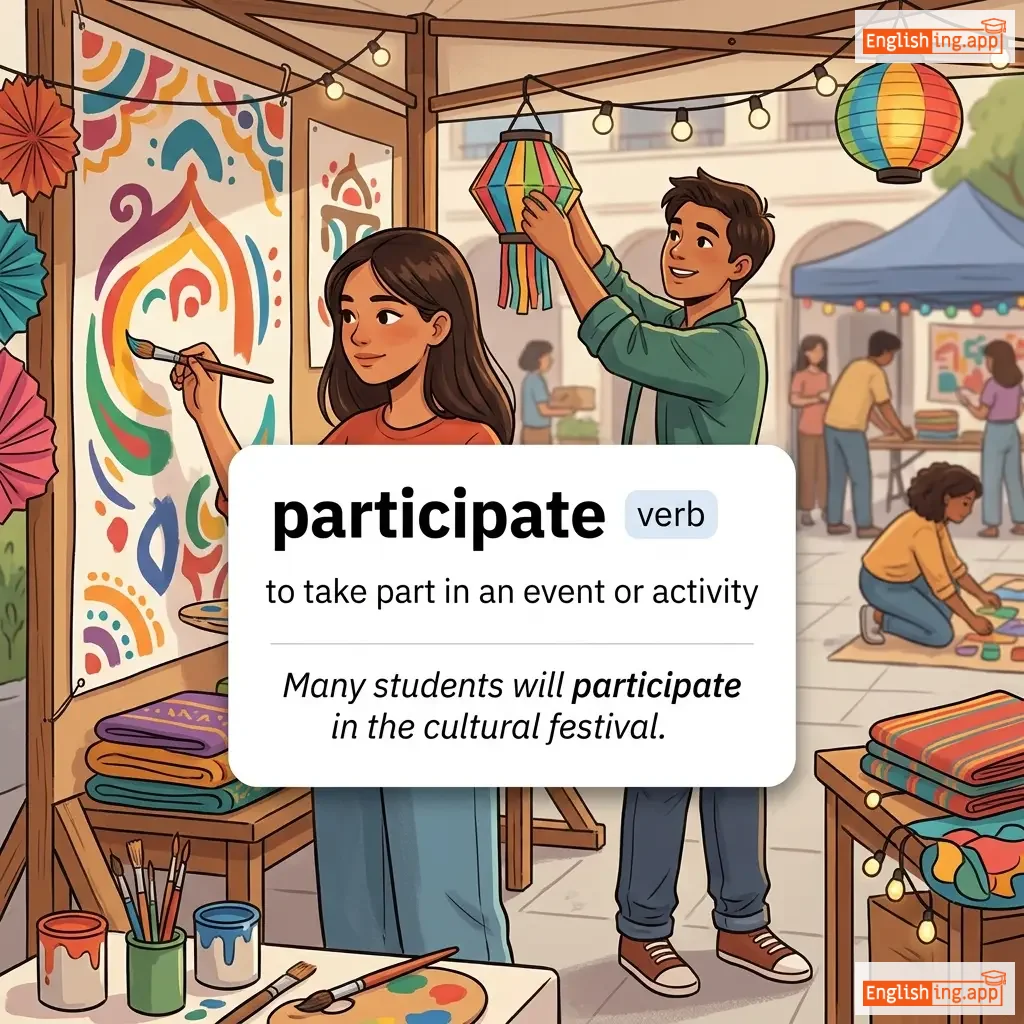
participate definition card — visual illustration of the meaning
verb
/pɑːrˈtɪsɪpeɪt/
भाग लेना (bhag lena)

to take part in an event or activity

"Many students will participate in the cultural festival."

"कई छात्र सांस्कृतिक महोत्सव में भाग लेंगे।" (Kai chhatr sanskritik mahotsav mein bhag lenge.)
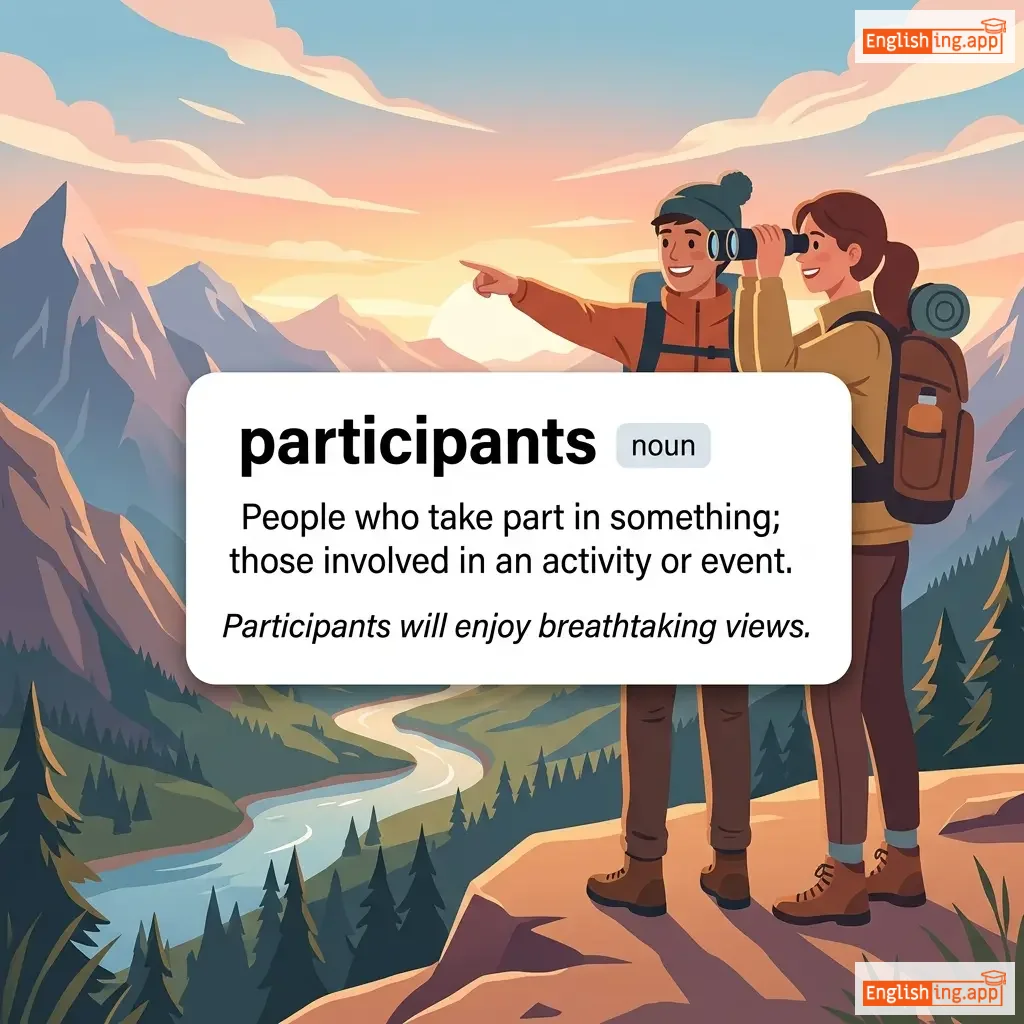
participants definition card — visual illustration of the meaning
noun
pɑːˈtɪs.ɪ.pənts
प्रतिभागी (pratibhagi)

People who take part in something; those involved in an activity or event.

"Participants will enjoy breathtaking views."

"प्रतिभागी breath-taking दृश्य का आनंद लेंगे।" (Pratibhagi breathtaking drishya ka anand lenge.)
noun
/pɑːrˈtɪsɪpənt/
भागीदार (bhagidar)

a person who takes part in an event or activity

"Each participant received a certificate after the workshop."

"प्रत्येक भागीदार को कार्यशाला के बाद प्रमाणपत्र प्राप्त हुआ।" (Pratyek bhagidar ko karyashala ke baad pramanpatra prapt hua.)
adjective
/ˈpɑːrtəbl/
विभाज्य (vibhajya)

capable of being divided or separated

"The estate was partible among the heirs."

"जमीन को उत्तराधिकारियों के बीच विभाज्य किया गया था।" (Jameen ko uttoradhikariyon ke beech vibhajya kiya gaya tha.)
adverb
/ˈpɑːrʃəli/
आंशिक रूप से (aanshik roop se)

to some extent but not completely

"The project was partially completed before the deadline."

"प्रोजेक्ट को समय सीमा से पहले आंशिक रूप से पूरा किया गया था।" (Project ko samay seema se pehle aanshik roop se poora kiya gaya tha.)
noun
/ˌpɑːrʃiˈæləti/
पक्षपातीपन (pakshapatipan)

an unfair preference or bias toward one side or person

"The judge was criticized for showing partiality in the case."

"न्यायाधीश को मामले में पक्षपाती होने के लिए आलोचना की गई।" (Nyayadhish ko mamle mein pakshapati hone ke liye alochna ki gayi.)
adjective
/ˈpɑːrʃəl/
आंशिक, पक्षपाती (anshik, pakshapati)

existing only in part; biased toward one side

"The report gave a partial view of the situation."

"रिपोर्ट ने स्थिति का एक आंशिक दृश्य दिया।" (Report ne sthiti ka ek anshik drishya diya.)
adjective
/ˈpɑːt taɪm/
आंशिक समय (aanshik samay)

working for only part of the usual working day or week

"She works part-time as a waitress."

"वह पार्ट-टाइम वेट्रेस के रूप में काम करती है।" (Vah part-time waitress ke roop mein kaam karti hai.)
noun
/pɑːrt/
हिस्सा (hissa)

a piece or segment of something

"She gave me a part of her chocolate."

"उसने मुझे अपने चॉकलेट का एक हिस्सा दिया।" (Usne mujhe apne chocolate ka ek hissa diya.)
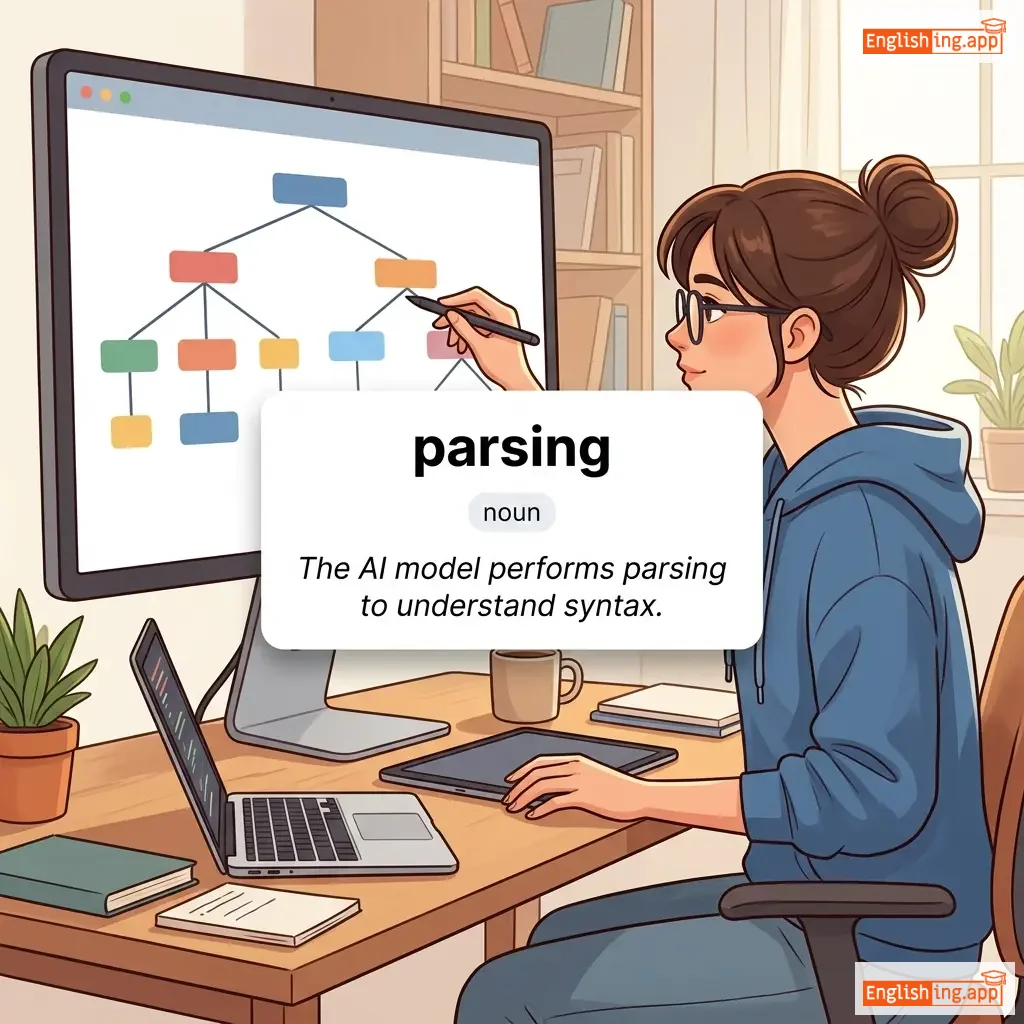
parsing definition card — visual illustration of the meaning
noun
ˈpɑː.sɪŋ
वाक्य संरचना का विश्लेषण (parsing)

The process of analyzing sentence structure to understand grammatical relationships.

"The AI model performs parsing to understand syntax."

"एआई मॉडल सिंटैक्स समझने के लिए पार्सिंग करता है।" (AI model syntax samajhne ke liye parsing karta hai.)
noun
/ˈpɑːrsɪmoʊni/
कंजूसी (kanjoosi)

extreme unwillingness to spend money or use resources

"His parsimony was evident in the way he avoided any unnecessary expenses."

"उसकी कंजूसी इस बात से स्पष्ट थी कि वह किसी भी अनावश्यक खर्च से बचता था।" (Uski kanjoosi is baat se spasht thi ki vah kisi bhi anavashyak kharch se bachta tha.)
adjective
/ˌpɑːrsɪˈmoʊniəs/
कंजूस (kanjoos)

unwilling to spend money or use resources; stingy

"The company was too parsimonious to invest in better equipment."

"कंपनी बेहतर उपकरण में निवेश करने के लिए बहुत कंजूस थी।" (Kampani behtar upkaran mein nivesh karne ke liye bahut kanjoos thi.)
noun
/ˈpɑːrləns/
भाषा प्रयोग (bhasha prayog)

a particular way of speaking or using words, common to a group

"In legal parlance, the term has a different meaning."

"कानूनी भाषा में, इस शब्द का अर्थ अलग है।" (Kanooni bhasha mein, is shabd ka arth alag hai.)
adjective
/ˈpɑːrləs/
संकटपूर्ण (parlas)

Full of danger or risk; precarious.

"The company is in a parlous financial state."

"कंपनी एक संकटग्रस्त वित्तीय स्थिति में है।" (Company ek sankatgrast vittiya sthiti mein hai.)
noun
/ˈpɑːrlər/
बैठने का कमरा, दुकान (parlor)

A sitting room in a private house, or a shop providing specified services.

"They welcomed the guests into the front parlor."

"उन्होंने मेहमानों का स्वागत फ्रंट पार्लर में किया।" (Unhone mehmanon ka swagat front parlor mein kiya.)
adjective
/ˌpɑːrləˈmɛntri/
संसदीय (sansadiya)

relating to a parliament or its members; relating to a system of government with parliamentary authority

"The country follows a parliamentary form of government."

"देश संसदीय शासन प्रणाली का पालन करता है।" (desh sansadiya shasan pranali ka palan karta hai)
noun
/ˈpɑːrləmənt/
संसद (sansad)

the highest legislative body in a country

"The bill was passed in parliament after a long debate."

"बिल संसद में लंबी बहस के बाद पास हुआ।" (Bil sansad mein lambi bahas ke baad paas hua.)
noun, verb
/ˈpɑːrli/
बातचीत (baatcheet)

a discussion between opposing sides, especially to negotiate terms

"The generals met to parley over the terms of surrender."

"जनरलों ने आत्मसमर्पण की शर्तों पर बातचीत करने के लिए मुलाकात की।" (Janralon ne aatmasamarpan ki sharton par baatcheet karne ke liye mulaqat ki.)
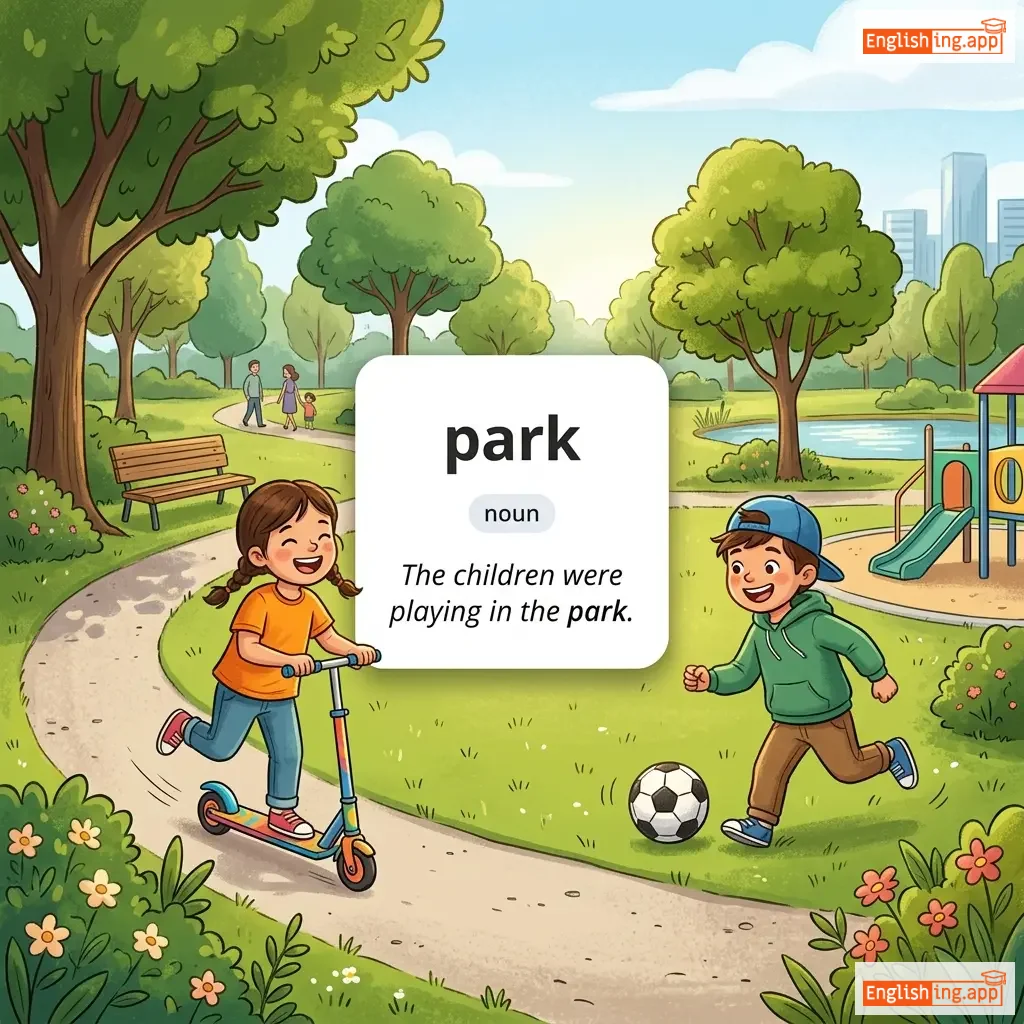
park definition card — visual illustration of the meaning
noun
/pɑːrk/
पार्क (park)

a large public area of land with grass, trees, and paths, where people can walk or relax

"The children were playing in the park."

"बच्चे पार्क में खेल रहे थे।" (Bachche park mein khel rahe the.)
adjective
/pəˈrɪʒən/
पेरिस से संबंधित (peris se sambandhit)

relating to Paris or its people

"She wore a Parisian style dress at the party."

"उसने पार्टी में पेरिसियन स्टाइल की ड्रेस पहनी थी।" (Usne party mein parisian style ki dress pehni thi.)
noun
/ˈpærɪti/
समानता (samaanta)

the state or condition of being equal, especially in status or pay

"The campaign aims to achieve pay parity between men and women."

"अभियान का उद्देश्य पुरुषों और महिलाओं के बीच वेतन समानता प्राप्त करना है।" (Abhiyaan ka uddeshya purushon aur mahilaon ke beech vetan samaanta prapt karna hai.)
adjective
/pəˈroʊkiəl/
संकीर्ण (parokial)

Having a limited or narrow outlook; relating to a parish.

"His parochial view prevented him from understanding global issues."

"उसका संकीर्ण दृष्टिकोण उसे वैश्विक मुद्दों को समझने से रोकता था।" (Uska sankeern drishtikon use vaishwik muddon ko samjhne se rokta tha.)