語彙集

英単語辞書 | 単語の意味、定義、例文

adjective
/pəˈrɛntəl/
親に関連する (oya ni kanren suru)

relating to a parent or parents; characteristic of a mother or father

"Parental guidance is important for a child's development."

"子供の成長には親のガイダンスが重要です。" (Kodomo no seichō ni wa oya no gaidansu ga jūyō desu.)
noun
/ˈpɛrəntɪdʒ/
家系 (kakei)

The identity and origins of one's parents; descent or lineage.

"Her noble parentage gave her access to the royal court."
"彼女の高貴な家系は、彼女に王室へのアクセスを与えた。" (Kanojo no kōkina kakei wa, kanojo ni ōshitsu e no akusesu o ataeta.)
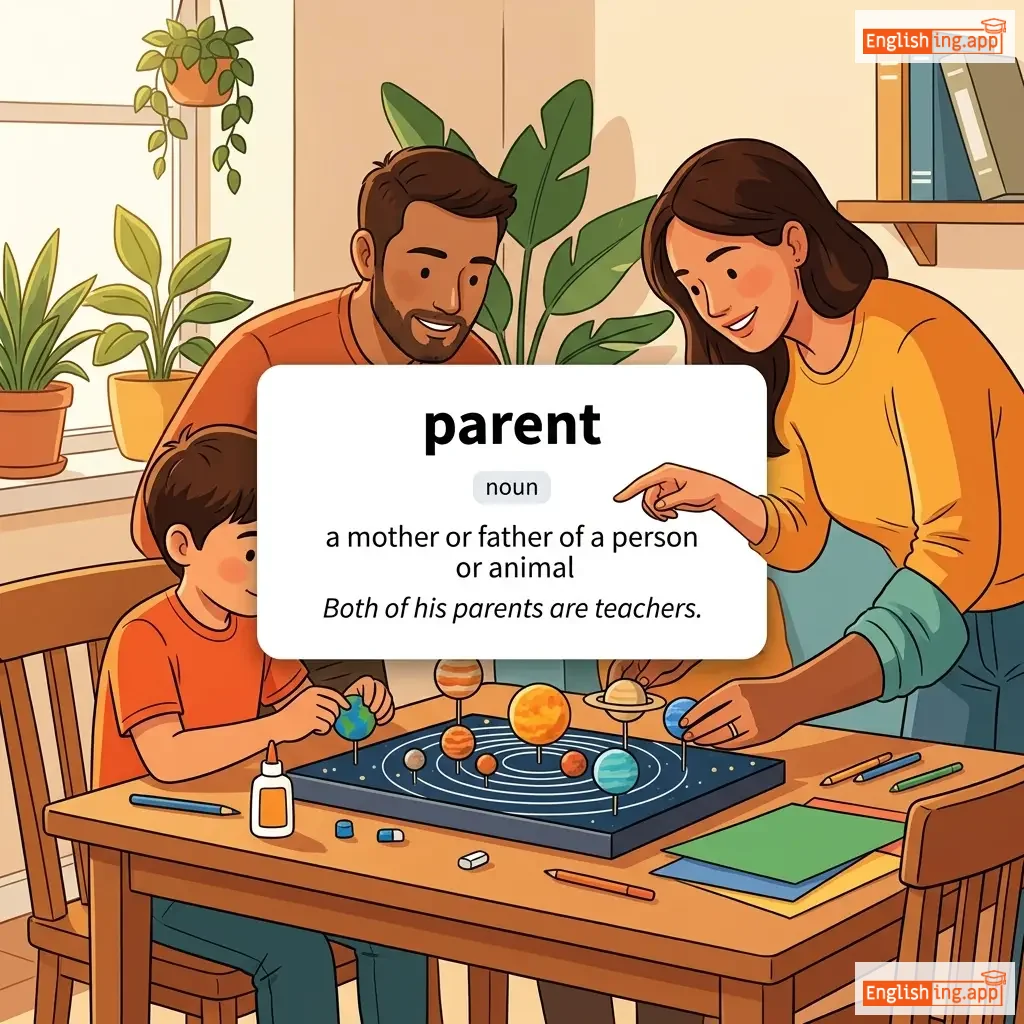
parent definition card — visual illustration of the meaning
noun
/ˈpɛərənt/
(oya)

a mother or father of a person or animal

"Both of his parents are teachers."

"彼の両親は教師です。" (Kare no ryōshin wa kyōshi desu.)
noun
/ˌpærəˈɡɔːrɪk/
アヘンを含む薬 (ahen wo fukumu kusuri)

a medicine containing opium, once used to relieve pain and diarrhea

"Doctors once prescribed paregoric to treat diarrhea in children."

"医師はかつて子供の下痢を治療するためにパレゴリックを処方していた。" (Ishi wa katsute kodomo no geri wo chiryo suru tame ni paregoric wo shohou shite ita.)
verb
/per/
皮をむく (kawa wo muku)

to cut away the outer covering or reduce something gradually

"She pared the apple before eating it."

"彼女はリンゴを食べる前に皮をむいた。" (Kanojo wa ringo wo taberu mae ni kawa wo muita.)
adjective
/ˈpɑːr.dən.ə.bəl/
許容可能な (kyoryo kanno na)

able to be forgiven; excusable

"His mistake was pardonable given the difficult circumstances."

"彼の誤りは許容可能でした、困難な状況を考慮すると。" (kare no ayamari wa kyoryo kanou deshita, konnan na joukyou o kouryo suru to.)
noun
/ˈpɑr.dən/
許し; 謝罪; (yurushi)

forgiveness; the action of forgiving or being forgiven for an error or offense

"I beg your pardon for interrupting the meeting."

"会議を中断したことをお詫び申し上げます。" (kaigi o chudan shita koto o owabi moushiagemasu.)
noun
/ˈpɑːrtʃmənt/
羊皮紙 (yōhishi)

a thin material made from animal skin, used in the past for writing

"The ancient manuscript was written on parchment."

"古代の写本は羊皮紙に書かれていました。" (Kodai no shahon wa yōhishi ni kakarete imashita.)
adjective
/pɑːrtʃt/
極度に喉が渇いた (kyokudo ni nodo ga kawaita)

extremely dry, especially because of heat or thirst

"After walking in the desert, he was parched with thirst."

"砂漠を歩いた後、彼は極度に喉が渇いていた。" (Sabaku o aruita ato, kare wa kyokudo ni nodo ga kawaita.)
verb
/pɑːrtʃ/
乾かす (kawakasu)

to make something extremely dry, especially by exposure to heat

"The scorching sun began to parch the fields."

"焼けつくような太陽が畑を乾かし始めました。" (Yaketukuyouna taiyou ga hatake o kawakashi hajimemashita.)
noun
/ˈpɑr.səl/
小包; 土地の一区画 (kobako; tochi no ikuka)

an object or collection of objects wrapped in paper for carrying or sending by mail; a piece of land

"The postman delivered a parcel to our door."
"郵便配達員が私たちのドアに小包を届けました。" (Yubin haitatsuin ga watashitachi no doa ni kobako o todokemashita.)
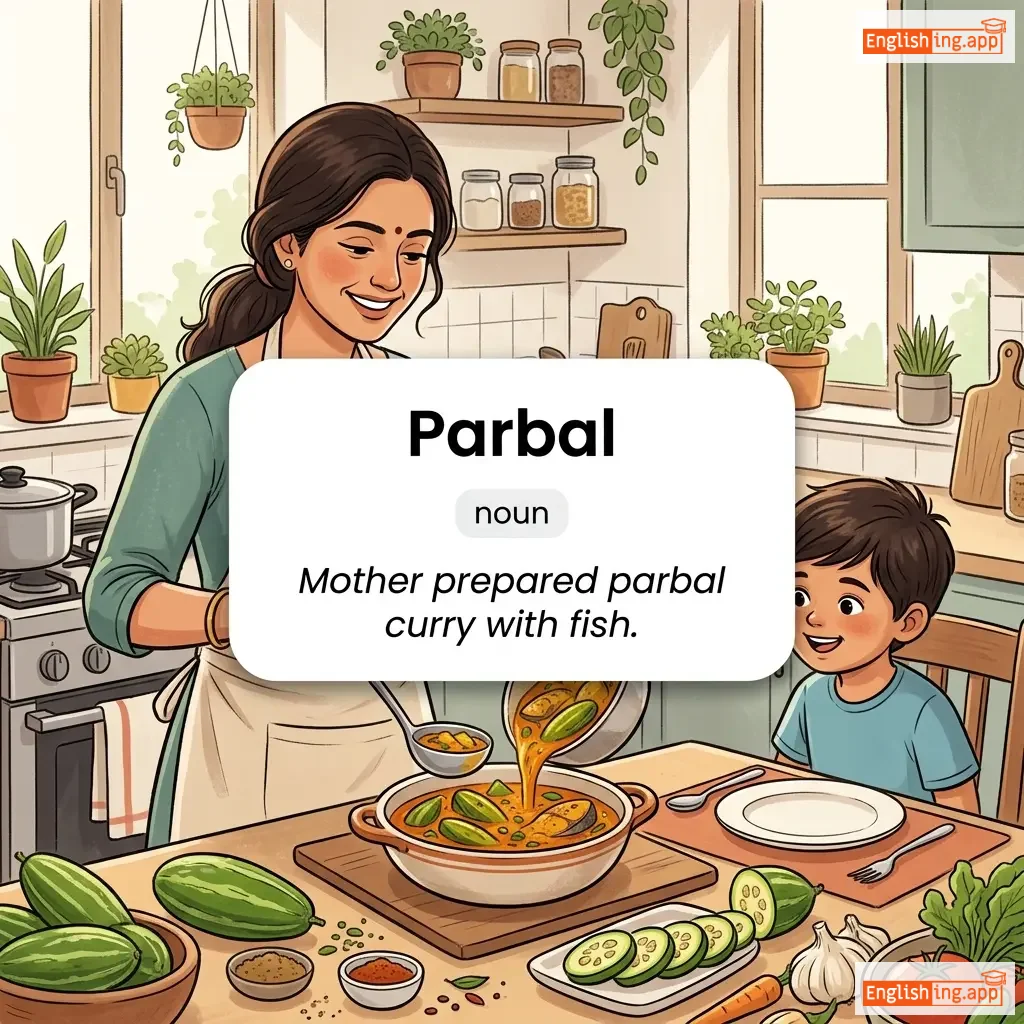
Parbal definition card — visual illustration of the meaning
noun
/ˈpɑr.bəl/
尖ったウリ (togatta uri)

A green vegetable also known as pointed gourd, commonly used in South Asian cuisine

"Mother prepared parbal curry with fish."

"母は魚と一緒に尖ったウリのカレーを作りました。" (Haha wa sakana to issho ni togattta uri no karē o tsukurimashita)
noun
/ˈpærəsaɪt/
寄生虫 (kiseichū)

An organism that lives in or on another organism and benefits at the host’s expense.

"The parasite weakened the tree by feeding on its nutrients."

"寄生虫は栄養を吸収して木を弱らせました。" (Kiseichū wa eiyō o kyūshū shite ki o yowarasemashita.)
verb
/ˈpærəfreɪz/
幸福 (kōfuku)

To express the meaning of something using different words, often to make it clearer.

"The teacher asked the students to paraphrase the poem in their own words."

"彼女は賞を受け取ったとき、自分の幸せを隠せなかった。" (Kanojo wa shō o uketotta toki, jibun no kōfuku o kakusenakatta.)
noun
/ˌpærəfəˈneɪliə/
道具一式 (dougu isshiki)

Miscellaneous articles, especially equipment needed for a particular activity.

"The fisherman carried all his fishing paraphernalia in a large box."

"漁師はすべての釣り道具を大きな箱に入れて運びました。" (Ryoushi wa subete no tsuri dougu o ookina hako ni irete hakobimashita.)
adjective
/ˈpær.ə.nɔɪd/
他人に対して不合理な恐怖や疑いを持つこと (tanin ni taishite fugōri na kyōfu ya utagai o motsu koto)

having an unreasonable fear or suspicion of others

"She became paranoid after hearing strange noises outside."

"彼女は外で奇妙な音を聞いた後、パラノイアになった。" (Kanojo wa soto de kimyō na oto o kiita ato, paranoya ni natta.)
noun
/ˈpærəpɛt/
防護壁 (bougobari)

A low protective wall along the edge of a roof, balcony, or bridge.

"The soldier hid behind the parapet for protection."
"兵士は防護壁の後ろに隠れて安全を守りました。" (Heishi wa bougobari no ushiro ni kakurete anzen o mamorimashita.)
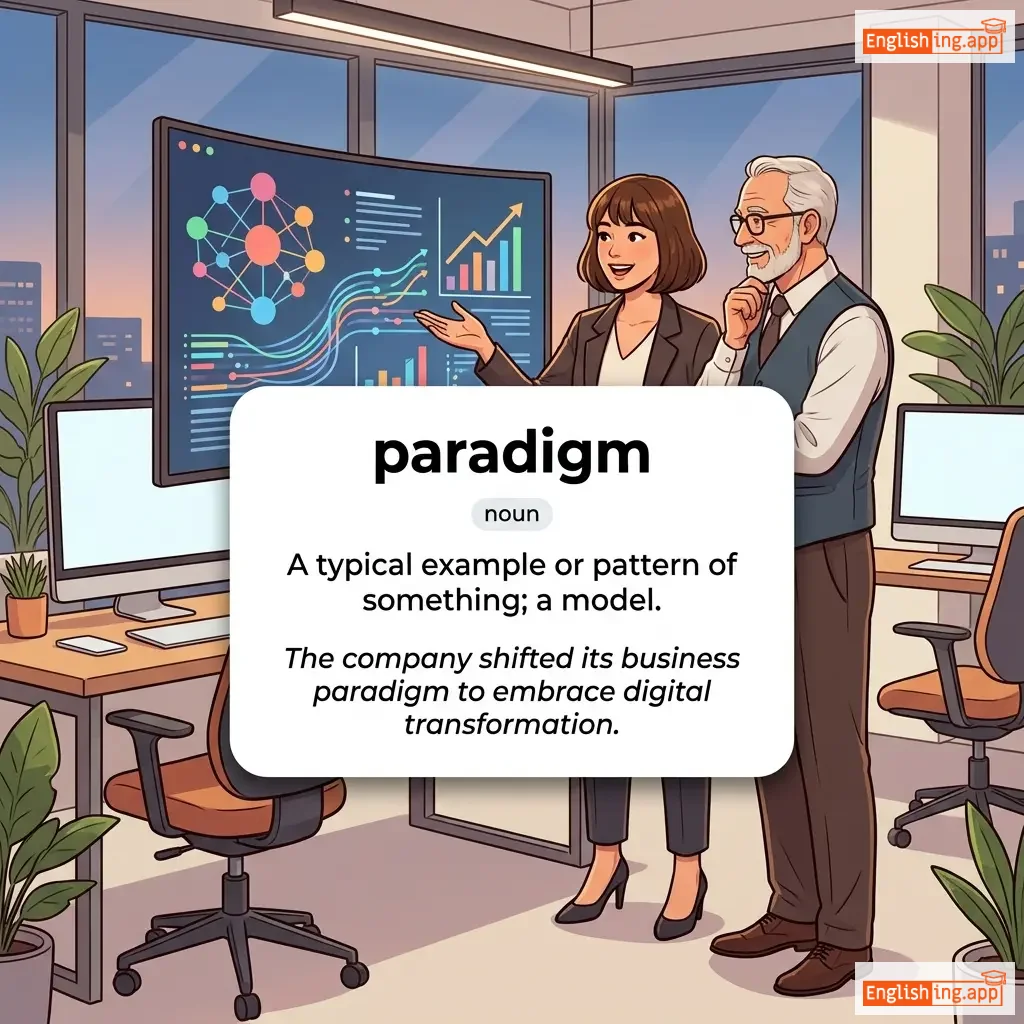
paradigm definition card — visual illustration of the meaning
noun
/ˈpærədaɪm/
モデル (moderu)

A typical example or pattern of something; a model.

"The company shifted its business paradigm to embrace digital transformation."

"その企業はデジタルトランスフォーメーションを受け入れるためにビジネスモデルを変更しました。" (Sono kigyō wa dejitaru toransufōmēshon o ukeireru tame ni bijinesu moderu o henkō shimashita.)
adjective
/ˌpærəˈdɪɡmətɪk/
典型的な (tenkeiteki na)

Serving as a typical example or model of something.

"Her success story is paradigmatic of the opportunities education can provide."

"彼女の成功物語は、教育が提供できる機会の典型的な例です。" (Kanojo no seikō monogatari wa, kyōiku ga teikyō dekiru kikai no tenkeiteki na rei desu.)
noun
/ˈpærədaɪs/
楽園 (rakuen)

An ideal or perfect place of happiness; often thought of as heaven.

"The tropical island felt like a true paradise."

"その熱帯の島はまるで本当の楽園のように感じました。" (Sono nettai no shima wa marude hontō no rakuen no yō ni kanjimashita.)
paradox definition card — visual illustration of the meaning
noun
/ˈpærədɒks/
逆説 (gyakusetsu)

A statement or situation that seems contradictory but may reveal a deeper truth.

"It is a paradox that computers make our lives easier but also more stressful."

"コンピュータが私たちの生活をより簡単にする一方で、ストレスも増加させるという逆説があります。" (Konpyūta ga watashitachi no seikatsu o yori kantan ni suru ippō de, sutoresu mo zōka saseru to iu gyakusetsu ga arimasu.)
adjective
/ˌpærəˈdɒksɪkəl/
逆説的 (gyakusetsuteki)

Seemingly contradictory or opposed to common sense, yet possibly true.

"It is paradoxical that standing is often more tiring than walking."
"立っていることが歩くことよりも疲れるのは逆説的です。" (Tatte iru koto ga aruku koto yori mo tsukareru no wa gyakusetsuteki desu.)
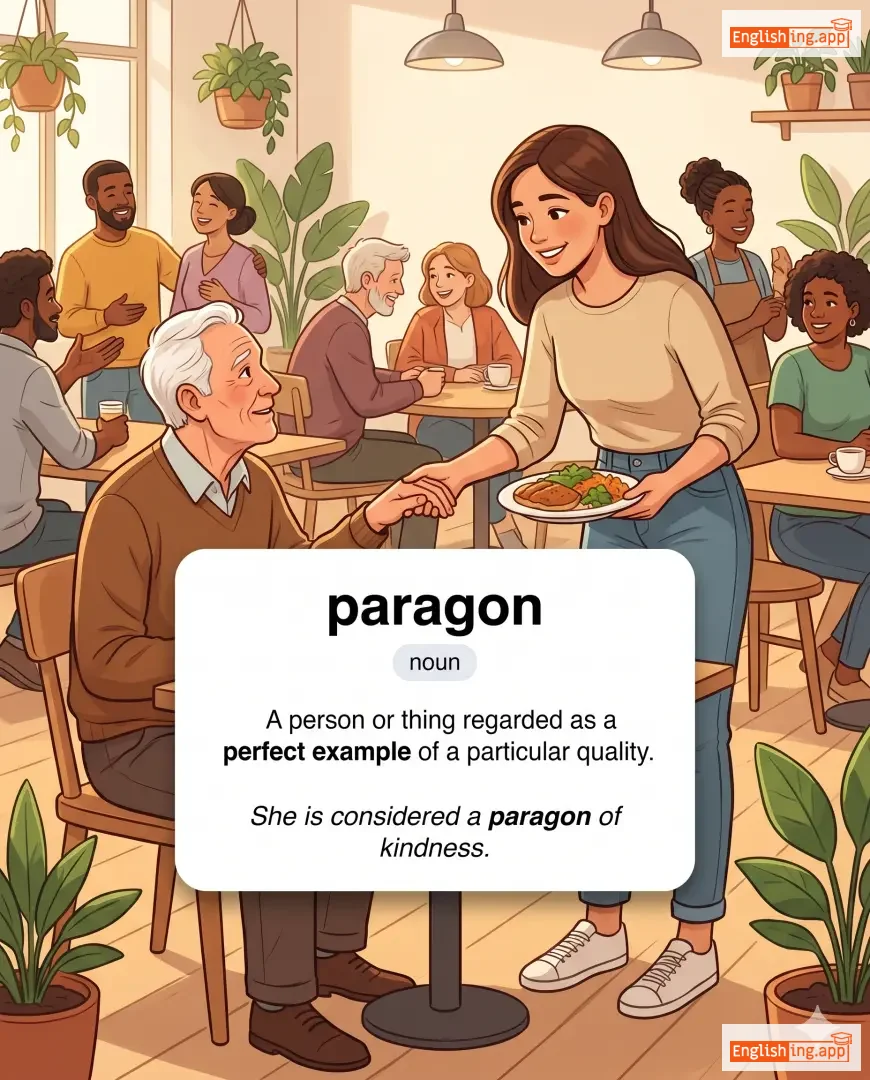
paragon definition card — visual illustration of the meaning
noun
/ˈpærəɡɒn/
模範 (mohan)

A person or thing regarded as a perfect example of a particular quality.

"She is considered a paragon of kindness."
"彼女は親切の模範と見なされています。" (Kanojo wa shinsetsu no mohan to minasareteimasu.)
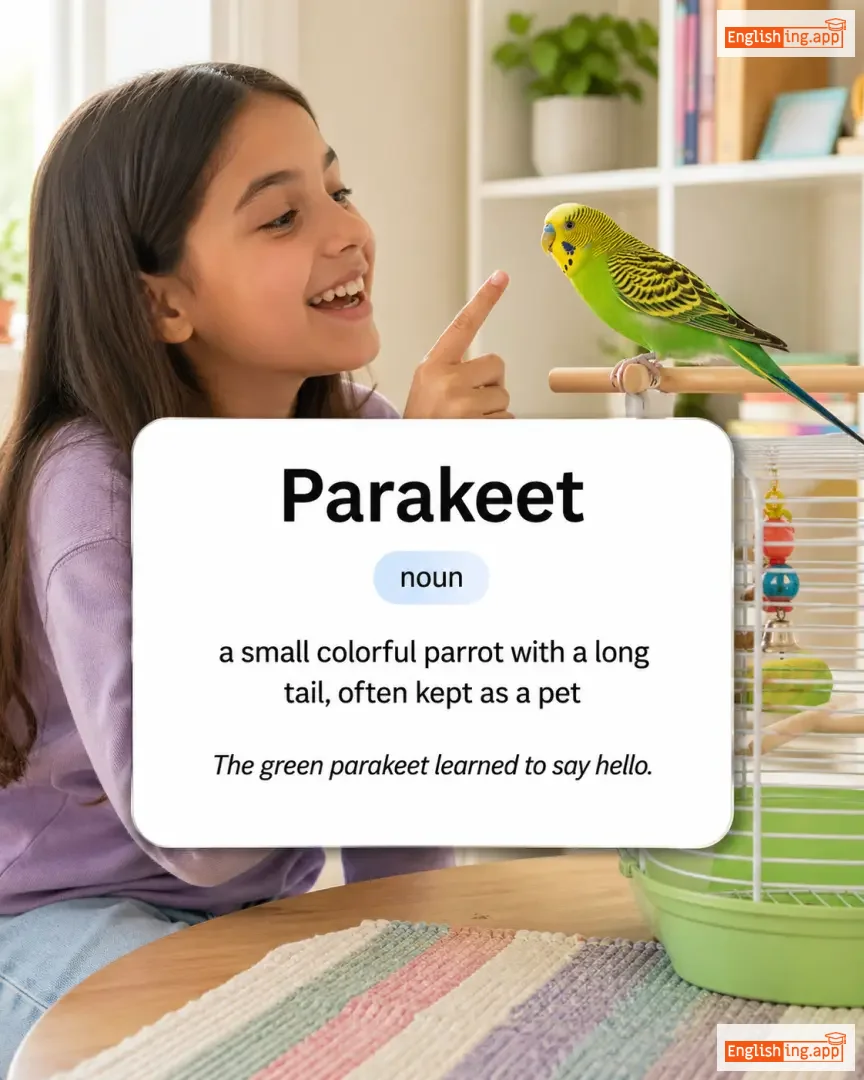
Parakeet definition card — visual illustration of the meaning
noun
/ˈpær.ə.kiːt/
インコ (inko)

a small colorful parrot with a long tail, often kept as a pet

"The green parakeet learned to say hello."
"緑色のインコはこんにちはを言うことを学びました。" (Midori-iro no inko wa konnichiwa wo iu koto wo manabimashita.)
noun, adjective, verb
/ˈpærəˌlɛl/

Lines, objects, or events that are side by side and never meet; similarity or comparison.

"The road runs parallel to the railway."

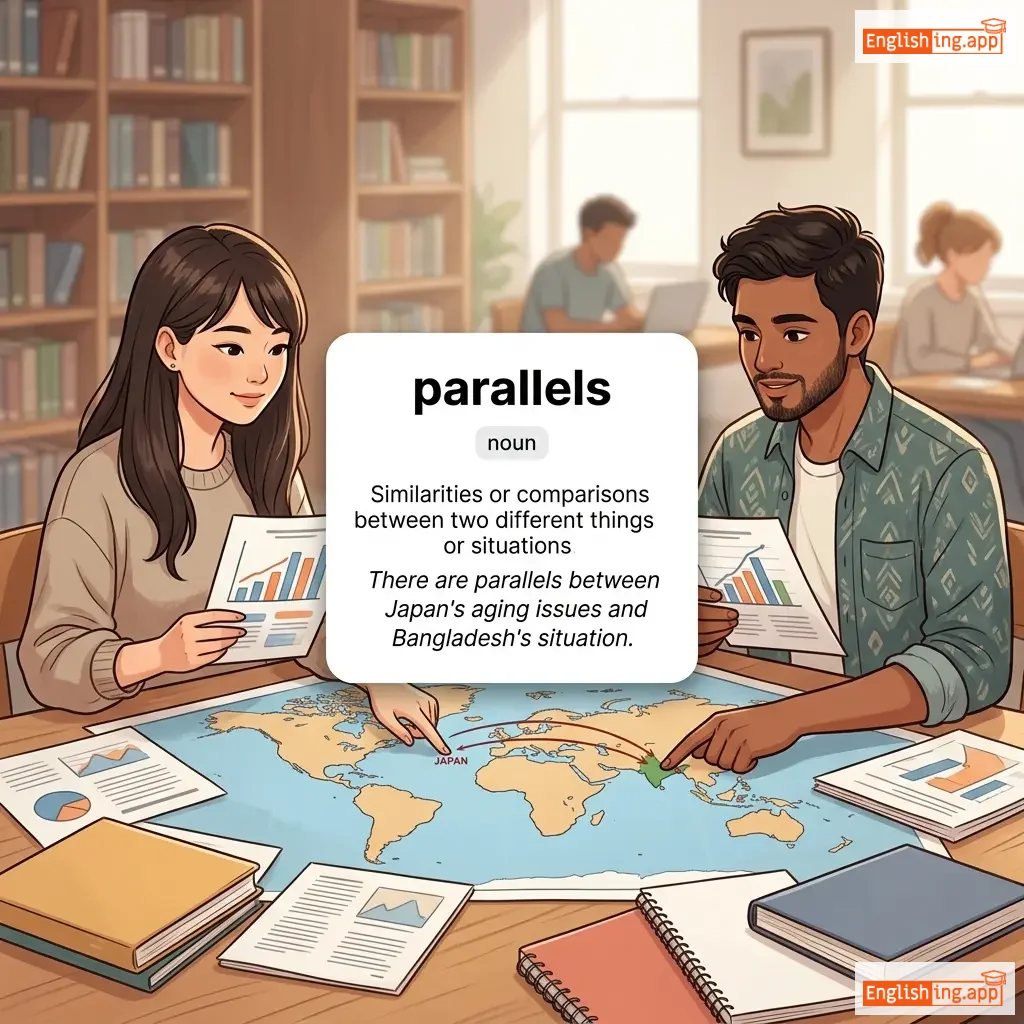
parallels definition card — visual illustration of the meaning
noun
ˈpærəˌlɛlz
類似点 (ruijiten)

Similarities or comparisons between two different things or situations

"There are parallels between Japan's aging issues and Bangladesh's situation."

"日本の高齢化問題とバングラデシュの状況にはパラレルが存在します。" (Nihon no koureika mondai to Banguradeshu no joukyou ni wa pararelu ga sonzai shimasu.)
noun
/pəˈræləsɪs/
麻痺 (mabi)

Loss of the ability to move in part or most of the body, typically as a result of illness or injury.

"The accident left him with partial paralysis."

"事故で部分的な麻痺が残りました。" (Jiko de bubun-tekina mabi ga nokorimashita.)
verb
/ˈpærəlaɪz/
麻痺させる (mahi saseru)

to cause someone or something to lose the ability to move or function normally

"The sudden shock seemed to paralyze him."

"突然の衝撃が彼を麻痺させたようだった。" (Totsuzen no shōgeki ga kare o mahi saseta yō datta.)
noun
/pəˈræmɪtər/
パラメーター (parametaa)

a limit, boundary, or measurable factor that defines or determines something

"We need to set clear parameters for this project."

"このプロジェクトのために明確なパラメーターを設定する必要があります。" (Kono purojekuto no tame ni meikaku na parametaa o settei suru hitsuyou ga arimasu.)
adjective
/ˈpærəmaʊnt/
最も重要な (mottomo jūyōna)

more important than anything else; supreme

"Safety is of paramount importance in this factory."

"この工場では安全が最も重要です。" (Kono kōjō dewa anzen ga mottomo jūyō desu.)
noun
/ˈpærəmʊr/
愛人 (aijin)

a lover, especially an illicit one

"The secret paramour was finally revealed."

"秘密の愛人はついに明らかにされました。" (Himitsu no aijin wa tsuini akiraka ni saremashita.)
noun
/ˌpærəˈnɔɪə/
人々があなたに害を与えようとしているか、常にあなたを監視しているという非合理的で持続的な感覚 (hitobito ga anata ni gai o atae yō to shite iru ka, jō ni anata o kanshi shite iru to iu higariteki de jizokuteki na kankaku)

an irrational and persistent feeling that people are 'out to get you' or are constantly watching you

"His constant paranoia made it hard for him to trust anyone."

"彼の絶え間ないパラノイアは、誰も信じることを難しくさせていた。" (Kare no tae manai paranoia wa, dare mo shinjiru koto o muzukashiku sasete ita.)
noun
/ˌpærəˈnɔɪæk/
パラノイア的な人 (paranoia-tekina hito)

A person who suffers from paranoia or exhibits extreme, irrational distrust and suspicion.

"The paranoiac refused to leave his house, fearing everyone was against him."

"そのパラノイア的な人は、みんなが自分に反対していると恐れて家を出ることを拒んだ。" (Sono paranoia-tekina hito wa, minna ga jibun ni hantai shite iru to osorete ie o deru koto o kobanda.)
noun
/ˈpærəˌlɛlɪzəm/
平行主義 (heikou shugi)

The state of being parallel or similar; in literature, the use of components in a sentence that are grammatically the same or similar in construction.

"The writer used parallelism to give rhythm to his prose."

"作家は自分の文章にリズムを与えるために平行主義を使用しました。" (Sakka wa jibun no bunshou ni rizumu wo ataeru tame ni heikou shugi wo shiyou shimashita.)
👩‍🎓

Nun (ナン)

noun
/nʌn/
修道女 (shūdōjo)

a woman who has taken vows in a religious order and lives in a convent

"The nun taught at the local Catholic school."

"その修道女は地元のカトリック学校で教えていました。" (Sono shūdōjo wa jimoto no katorikku gakkō de oshiete imashita.)
noun
/njuːˈmɪzmətɪst/
貨幣学者 (kaheigakusha)

A person who studies or collects coins, paper currency, and medals.

"The numismatist displayed his rare coin collection at the exhibition."

"貨幣学者は展示会で彼の希少なコインコレクションを展示しました" (Kaheigakusha wa tenjikai de kare no kishō na koin korekushon o tenji shimashita)
adjective
/ˌnjuːmɪzˈmætɪk/
貨幣学の (kaheigaku no)

relating to the study or collection of coins, currency, and medals

"He has a numismatic collection of rare coins from around the world."

"彼は世界中からの珍しいコインの収集を持っています。" (Kare wa sekai jū kara no mezurashī koin no shūshū o motteimasu.)
adjective
/ˈnjuːmɪnəs/
神秘的 (shinpiteki)

having a strong spiritual or mysterious quality

"The temple had a numinous atmosphere that inspired awe."

"その寺院は畏敬の念を抱かせる神秘的な雰囲気を持っていました。" (Sono jiin wa ikei no nen o idakaseru shinpiteki na fun'iki o motte imashita.)
adjective
/ˈnjuːmərəs/
多数 (tasū)

existing in large numbers; many

"There are numerous opportunities for growth in this field."

"この分野には成長のための多くの機会があります。" (Kono bunya ni wa seichō no tame no ōku no kikai ga arimasu.)
adjective
/njuːˈmɛrɪkəl/
数値的 (suuchiteki)

relating to or expressed in numbers

"The report provides numerical data on population growth."

"その報告書は人口増加に関する数値データを提供しています。" (Sono houkokusho wa jinkou zouka ni kansuru suuchiteki deeta o teikyou shiteimasu.)
noun
/ˌnjuːməˈreɪʃən/
数え方 (kazoekata)

the action or process of counting or assigning numbers

"The teacher explained the basics of numeration to the students."

"先生は学生たちに数え方の基本を説明しました。" (Sensei wa gakusei tachi ni kazoekata no kihon wo setsumei shimashita.)
adjective
/ˈnjuː.mər.ə.bəl/
数えられる; 計算可能な (kazoerareru; keisannoukanou)

capable of being counted; countable

"The stars in the sky are not numerable."

"空の星は数えられません。" (Sora no hoshi wa kazoeraremasen.)
verb
/nʌdʒ/
肘で軽く押す (hiji de karuku osu)

To push someone gently, usually with your elbow, in order to attract attention.

"She nudged him to be quiet during the meeting."

"会議中、彼女は彼を静かにさせるために軽く肘で押した。" (Kaigi-chū, kanojo wa kare o shizuka ni saseru tame ni karuku hiji de oshita.)
verb
/ˈnuːkliˌeɪt/
核形成 (kakukousei)

to form into a nucleus or bring together into a central part

"The droplets began to nucleate around tiny particles in the air."
"水滴は空気中の小さな粒子の周りで核を形成し始めました。" (Suiteki wa kūkī-chū no chiisana ryūshi no mawari de kaku wo keisei shihajimemashita.)
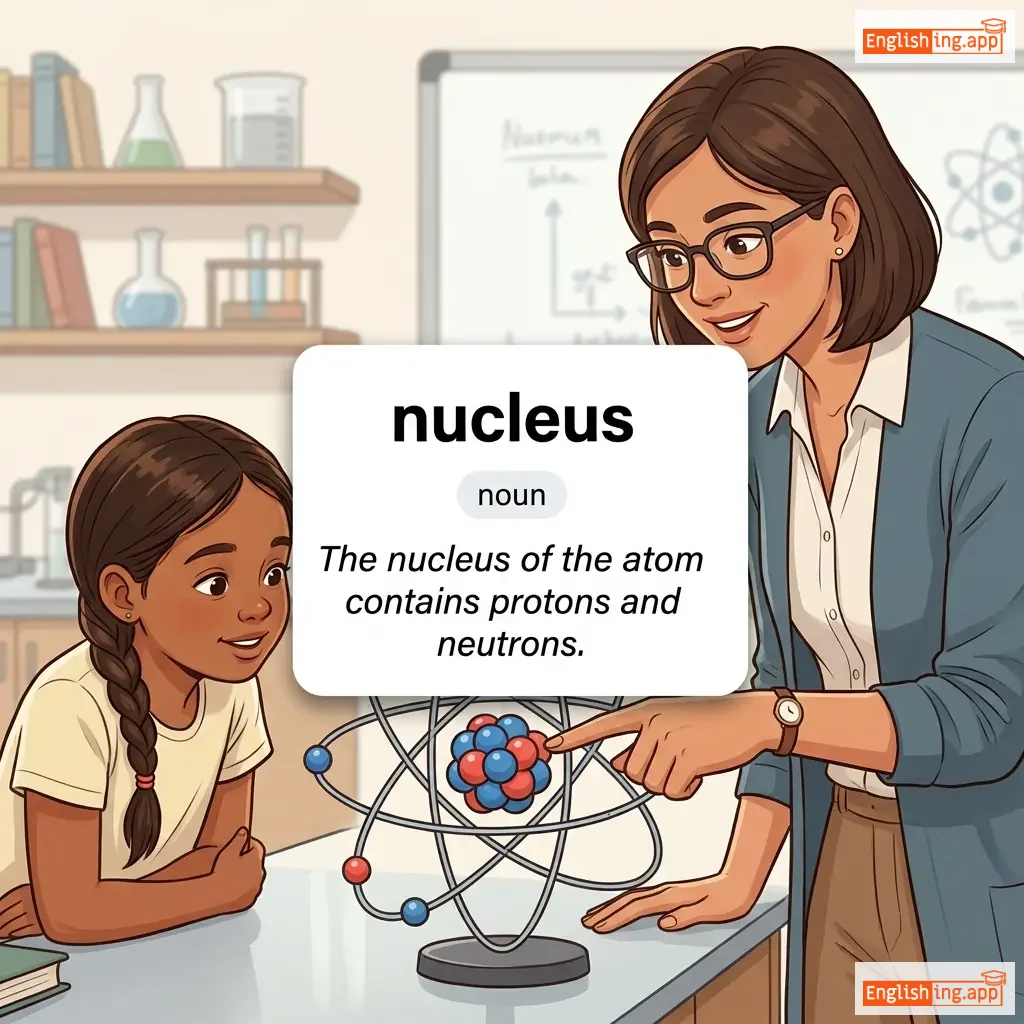
nucleus definition card — visual illustration of the meaning
noun
/ˈnjuː.kli.əs/
原子核 (genshikaku)

The central and most important part of something, forming the basis for its activity and growth; in biology, the central part of a cell.

"The nucleus of the atom contains protons and neutrons."

"原子核には陽子と中性子が含まれています。" (Genshikaku ni wa yōshi to chūseishi ga fukumaれています。)
adjective
/nuːd/
ヌード (nūdo)

Wearing no clothes; naked.

"The artist painted a nude model."

"アーティストはヌードモデルを描きました。" (Ātisuto wa nūdo moderu o kakimashita.)
noun
/ˈnjuː.səns/
迷惑 (meiwaku)

A person, thing, or situation that causes inconvenience or annoyance.

"The loud construction noise was a nuisance to the neighbors."

"大きな建設の騒音は近隣住民にとって迷惑でした。" (Ookina kensetsu no souon wa kinrin juumin ni totte meiwaku deshita.)
nullify definition card — visual illustration of the meaning
verb
/ˈnʌlɪfaɪ/

to make legally null and void; to cancel or invalidate

"The contract was nullified due to fraud."

noun
/ˈnʌmbər/
番号 (bangou)

a mathematical value used to count, measure, or label

"She gave me her phone number."
"彼女は私に自分の電話番号を教えてくれました。" (Kanojo wa watashi ni jibun no denwa bangou o oshiete kuremashita.)
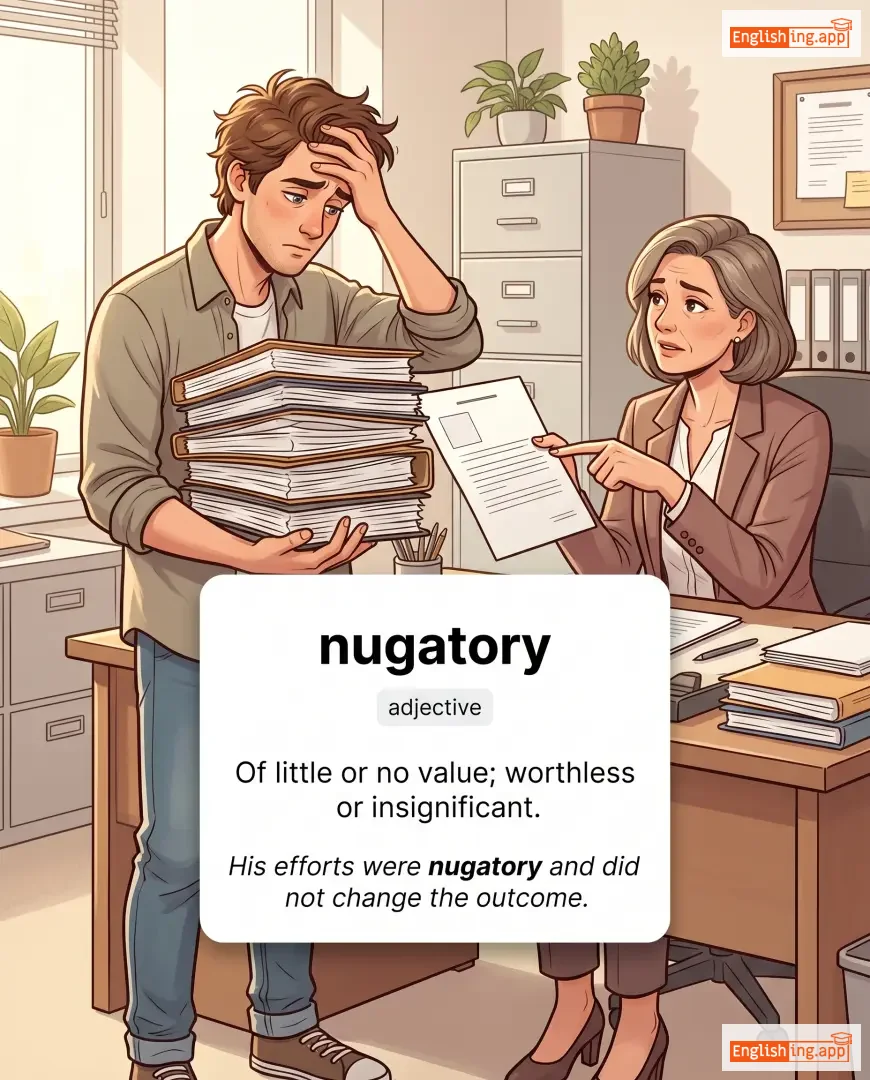
nugatory definition card — visual illustration of the meaning
adjective
/ˈnjuː.ɡə.tɔːr.i/
無価値 (mukachi)

Of little or no value; worthless or insignificant.

"His efforts were nugatory and did not change the outcome."

"彼の努力は無価値で、結果を変えることはなかった。" (Kare no doryoku wa mukachi de, kekka o kaeru koto wa nakatta.)