語彙集

英単語辞書 | 単語の意味、定義、例文

noun
/ˈnoʊvə/
ノヴァ (突然明るさが増加し、その後元の状態にゆっくり戻る星) (nova)

A star showing a sudden large increase in brightness and then slowly returning to its original state

"Astronomers observed a bright nova in the sky."

"天文学者たちは空に明るいノヴァを観測しました。" (Tenmongakusha-tachi wa sora ni akarui nova o kansoku shimashita.)
noun/adjective
/ˈnɒvəl/
小説 / 新しい (shousetsu / atarashii)

A long fictional narrative; also something new or unusual.

"She spent the weekend reading a historical novel."

"彼女は週末に歴史小説を読んで過ごしました。" (Kanojo wa shuumatsu ni rekishi shousetsu o yonde sugoshimashita.)
noun
/ˈnɒvəlɪst/
小説家 (shousetsuka)

a person who writes novels

"The novelist spent years writing his new book."

"その小説家は新しい本を書くために何年も費やしました。" (Sono shousetsuka wa atarashī hon o kaku tame ni nannen mo tsuiyashimashita.)
noun
/ˌnɒvəˈlɛt/
小説 (shōsetsu)

A short novel or long short story.

"The author published a novellette as a preview of her upcoming series."

"作者は彼女の次のシリーズのプレビューとして小説を発表しました。" (Sakusha wa kanojo no tsugi no shirīzu no purabyū to shite shōsetsu o happyō shimashita.)
novelty definition card — visual illustration of the meaning
noun
/ˈnɒvəlti/
新奇 (shinki)

The quality of being new, original, or unusual.

"The novelty of the new gadget quickly wore off."

"新しいガジェットの新奇さはすぐに消えてしまった。" (Atarashī gajetto no shinki sa wa sugu ni kiete shimatta.)
noun
/noʊˈvɛmbər/
11月 (juuichigatsu)

the eleventh month of the year in the Gregorian calendar

"November is often cool and quiet before winter begins."

"11月は冬が始まる前で、涼しく静かなことが多い。" (juuichigatsu wa fuyu ga hajimaru mae de suzushiku shizuka na koto ga ooi)
noun
/ˈnɒvɪs/
初心者 (shoshinsha)

A person new to or inexperienced in a field or activity.

"He is still a novice at playing the guitar."

"彼はまだギターを弾く初心者です。" (Kare wa mada gitā o hiku shoshinsha desu.)
now definition card — visual illustration of the meaning
adverb
/naʊ/
(ima)

at the present moment or time

"I am studying now."

"私は今勉強しています。" (Watashi wa ima benkyou shiteimasu.)
adverb
/ˈnaʊədeɪz/
今どき; 現在 (imadoki; genzai)

at the present time; in these times

"Now-a-days, people prefer online shopping."

"現在、人々はオンラインショッピングを好む。" (Genzai, hitobito wa onrain shoppingu o konomu.)
adverb
/ˈnaʊədeɪz/
最近 (saikin)

At the present time; in contrast with the past.

"Nowadays, many people prefer shopping online."

"最近、多くの人々がオンラインショッピングを好むようになった。" (Saikin, ooku no hitobito ga onrain shoppingu o konomu you ni natta.)
adverb
/ˈnoʊˌwɛr/
どこにも (doko nimo)

in or to no place; not anywhere

"The missing keys were nowhere to be found."

"失われた鍵はどこにも見つかりませんでした。" (Ushinawareta kagi wa doko ni mo mitsukarimasen deshita.)
adjective
/ˈnɑːkʃəs/
有害な (yūgaina)

harmful, poisonous, or very unpleasant

"The factory released noxious fumes into the air."

"工場は空気中に有害な煙を放出した。" (Kōjō wa kūkijū ni yūgaina kemuri o hōshutsu shita.)
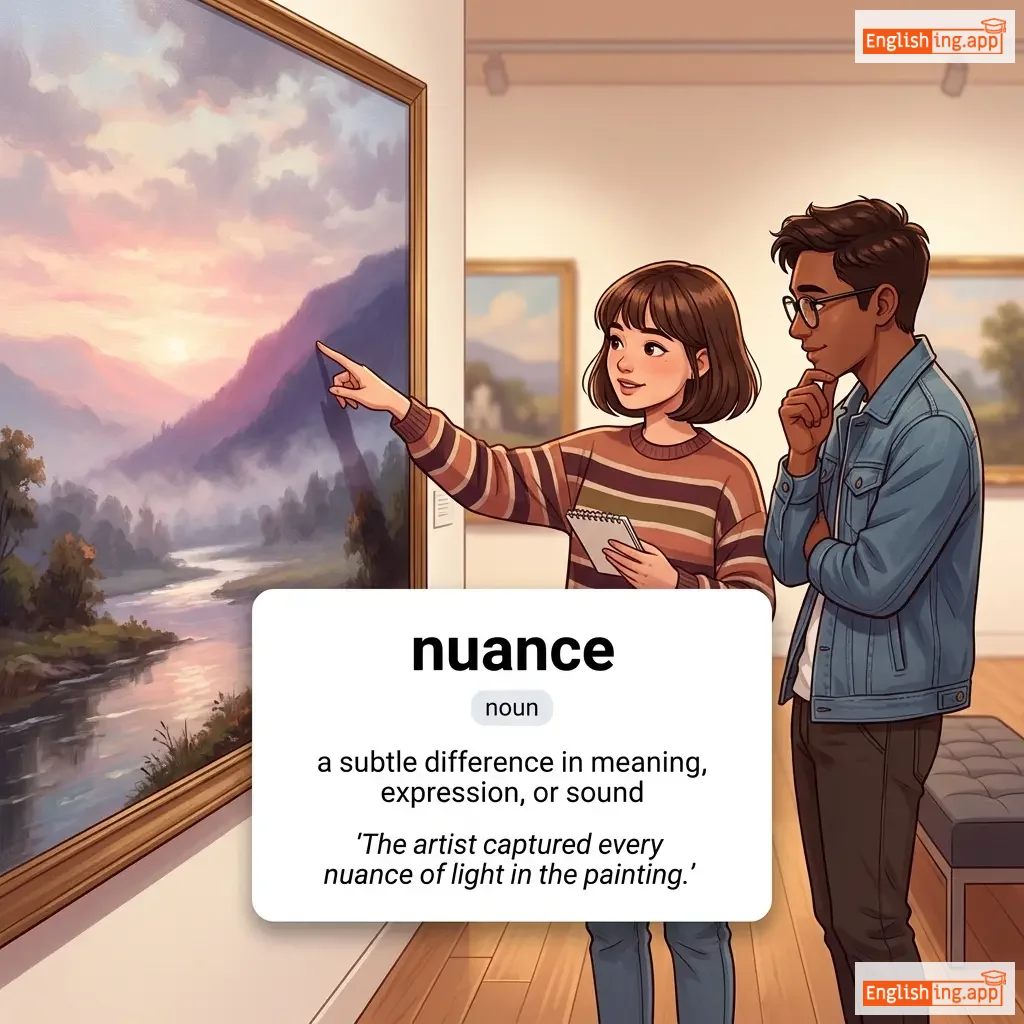
nuance definition card — visual illustration of the meaning
noun
/ˈnuːˌɑːns/

a subtle difference in meaning, expression, or sound

"The artist captured every nuance of light in the painting."

adjective
ˈnuː.ɑːnst
微妙な違いのある (bimyōna chigai no aru)

Characterized by subtle shades of meaning or expression; having or characterized by subtle and often appealingly complex qualities.

"His argument was nuanced and well-structured."

"彼の議論は微妙でよく組み立てられていた。" (Kare no giron wa bimyō de yoku kumitaterarete ita.)
adjective
/ˈnjuːbaɪl/
未婚女性 (mikon josei)

of a young woman, sexually mature and suitable for marriage

"The village was celebrating the festival with its nubile maidens dancing."

"村はその未婚女性たちが踊る祭りを祝っていました。" (Mura wa sono mikon josei-tachi ga odoru matsuri o iwatte imashita.)
adjective
/ˈnuːkliər/
原子力 (genshiryoku)

relating to the nucleus of an atom or to nuclear energy

"The country is developing nuclear energy."

"その国は原子力エネルギーを開発しています。" (Sono kuni wa genshiryoku enerugī o kaihatsu shiteimasu.)
verb
/ˈnuːkliˌeɪt/
核形成 (kakukousei)

to form into a nucleus or bring together into a central part

"The droplets began to nucleate around tiny particles in the air."
"水滴は空気中の小さな粒子の周りで核を形成し始めました。" (Suiteki wa kūkī-chū no chiisana ryūshi no mawari de kaku wo keisei shihajimemashita.)
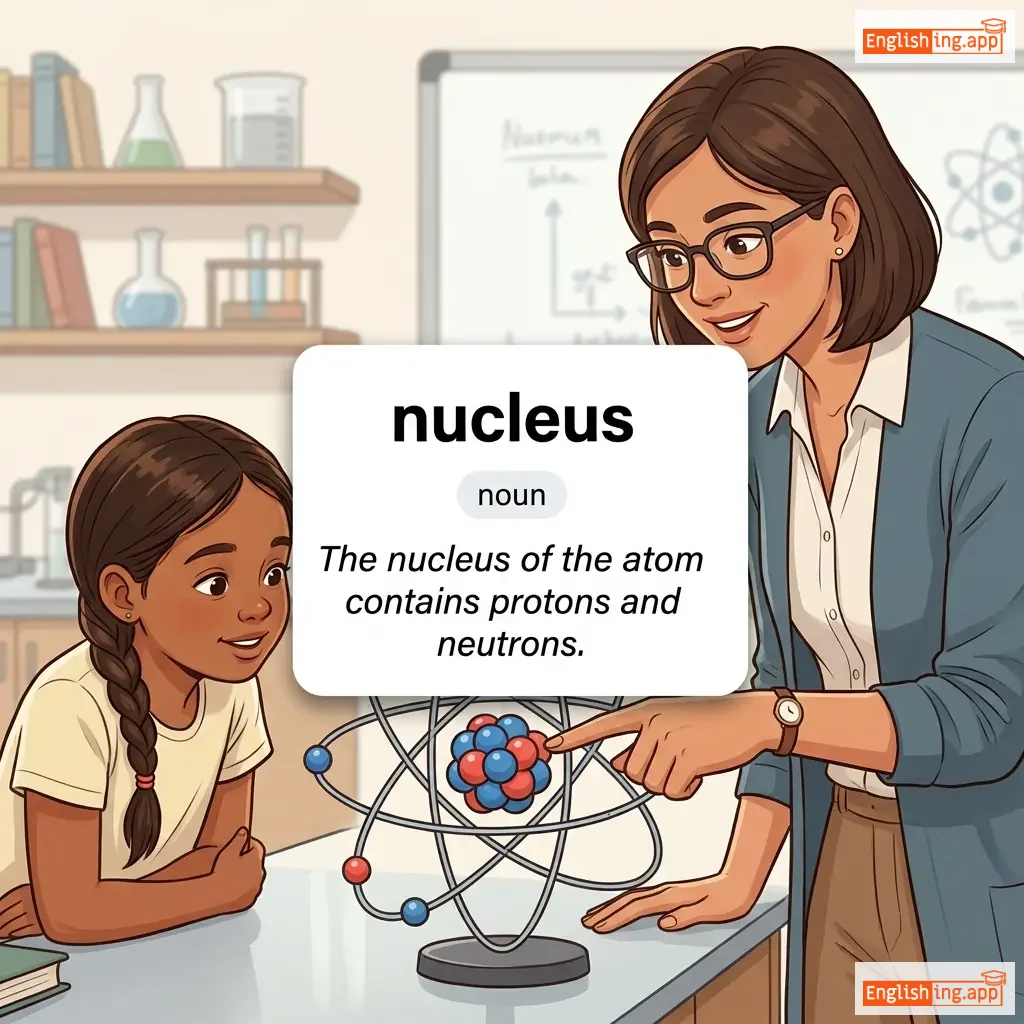
nucleus definition card — visual illustration of the meaning
noun
/ˈnjuː.kli.əs/
原子核 (genshikaku)

The central and most important part of something, forming the basis for its activity and growth; in biology, the central part of a cell.

"The nucleus of the atom contains protons and neutrons."

"原子核には陽子と中性子が含まれています。" (Genshikaku ni wa yōshi to chūseishi ga fukumaれています。)
adjective
/nuːd/
ヌード (nūdo)

Wearing no clothes; naked.

"The artist painted a nude model."

"アーティストはヌードモデルを描きました。" (Ātisuto wa nūdo moderu o kakimashita.)
verb
/nʌdʒ/
肘で軽く押す (hiji de karuku osu)

To push someone gently, usually with your elbow, in order to attract attention.

"She nudged him to be quiet during the meeting."
"会議中、彼女は彼を静かにさせるために軽く肘で押した。" (Kaigi-chū, kanojo wa kare o shizuka ni saseru tame ni karuku hiji de oshita.)
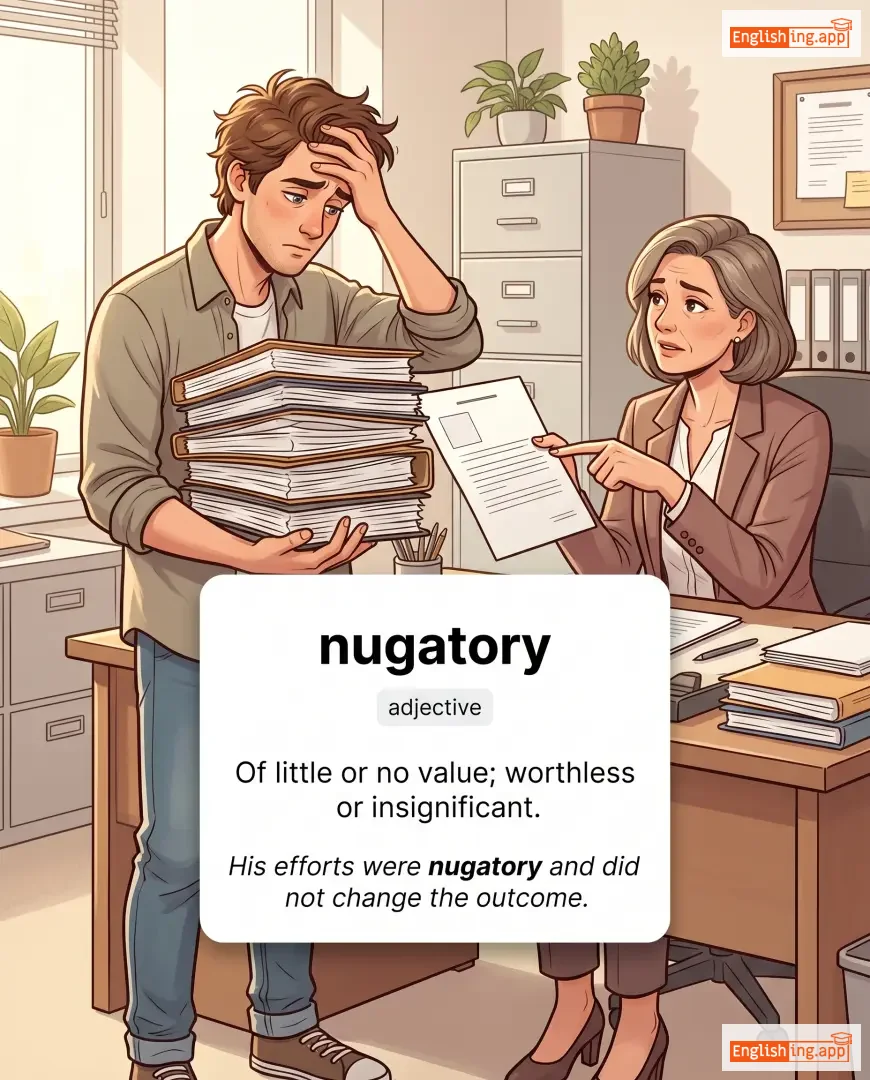
nugatory definition card — visual illustration of the meaning
adjective
/ˈnjuː.ɡə.tɔːr.i/
無価値 (mukachi)

Of little or no value; worthless or insignificant.

"His efforts were nugatory and did not change the outcome."

"彼の努力は無価値で、結果を変えることはなかった。" (Kare no doryoku wa mukachi de, kekka o kaeru koto wa nakatta.)
noun
/ˈnjuː.səns/
迷惑 (meiwaku)

A person, thing, or situation that causes inconvenience or annoyance.

"The loud construction noise was a nuisance to the neighbors."

"大きな建設の騒音は近隣住民にとって迷惑でした。" (Ookina kensetsu no souon wa kinrin juumin ni totte meiwaku deshita.)
nullify definition card — visual illustration of the meaning
verb
/ˈnʌlɪfaɪ/

to make legally null and void; to cancel or invalidate

"The contract was nullified due to fraud."

noun
/ˈnʌmbər/
番号 (bangou)

a mathematical value used to count, measure, or label

"She gave me her phone number."

"彼女は私に自分の電話番号を教えてくれました。" (Kanojo wa watashi ni jibun no denwa bangou o oshiete kuremashita.)
adjective
/ˈnjuː.mər.ə.bəl/
数えられる; 計算可能な (kazoerareru; keisannoukanou)

capable of being counted; countable

"The stars in the sky are not numerable."

"空の星は数えられません。" (Sora no hoshi wa kazoeraremasen.)
noun
/ˌnjuːməˈreɪʃən/
数え方 (kazoekata)

the action or process of counting or assigning numbers

"The teacher explained the basics of numeration to the students."

"先生は学生たちに数え方の基本を説明しました。" (Sensei wa gakusei tachi ni kazoekata no kihon wo setsumei shimashita.)
adjective
/njuːˈmɛrɪkəl/
数値的 (suuchiteki)

relating to or expressed in numbers

"The report provides numerical data on population growth."

"その報告書は人口増加に関する数値データを提供しています。" (Sono houkokusho wa jinkou zouka ni kansuru suuchiteki deeta o teikyou shiteimasu.)
adjective
/ˈnjuːmərəs/
多数 (tasū)

existing in large numbers; many

"There are numerous opportunities for growth in this field."

"この分野には成長のための多くの機会があります。" (Kono bunya ni wa seichō no tame no ōku no kikai ga arimasu.)
adjective
/ˈnjuːmɪnəs/
神秘的 (shinpiteki)

having a strong spiritual or mysterious quality

"The temple had a numinous atmosphere that inspired awe."

"その寺院は畏敬の念を抱かせる神秘的な雰囲気を持っていました。" (Sono jiin wa ikei no nen o idakaseru shinpiteki na fun'iki o motte imashita.)
adjective
/ˌnjuːmɪzˈmætɪk/
貨幣学の (kaheigaku no)

relating to the study or collection of coins, currency, and medals

"He has a numismatic collection of rare coins from around the world."

"彼は世界中からの珍しいコインの収集を持っています。" (Kare wa sekai jū kara no mezurashī koin no shūshū o motteimasu.)
noun
/njuːˈmɪzmətɪst/
貨幣学者 (kaheigakusha)

A person who studies or collects coins, paper currency, and medals.

"The numismatist displayed his rare coin collection at the exhibition."

"貨幣学者は展示会で彼の希少なコインコレクションを展示しました" (Kaheigakusha wa tenjikai de kare no kishō na koin korekushon o tenji shimashita)
👩‍🎓

Nun (ナン)

noun
/nʌn/
修道女 (shūdōjo)

a woman who has taken vows in a religious order and lives in a convent

"The nun taught at the local Catholic school."

"その修道女は地元のカトリック学校で教えていました。" (Sono shūdōjo wa jimoto no katorikku gakkō de oshiete imashita.)
noun
/ˈnʌnəri/
修道院 (shūdōin)

A convent or building where nuns live and work.

"She decided to join the nunnery to devote her life to spiritual practice."

"彼女は精神的な実践に人生を捧げるために修道院に参加することを決めました。" (Kanojo wa seishinteki na jissen ni jinsei o sasageru tame ni shūdōin ni sanka suru koto o kimemashita.)
adjective
/ˈnʌpʃəl/
結婚式の (kekkonshiki no)

Relating to marriage or weddings.

"The couple prepared for their nuptial ceremony with great joy."

"そのカップルは喜びと共に結婚式の準備をしました。" (Sono kappuru wa yorokobi to tomo ni kekkonshiki no junbi o shimashita.)
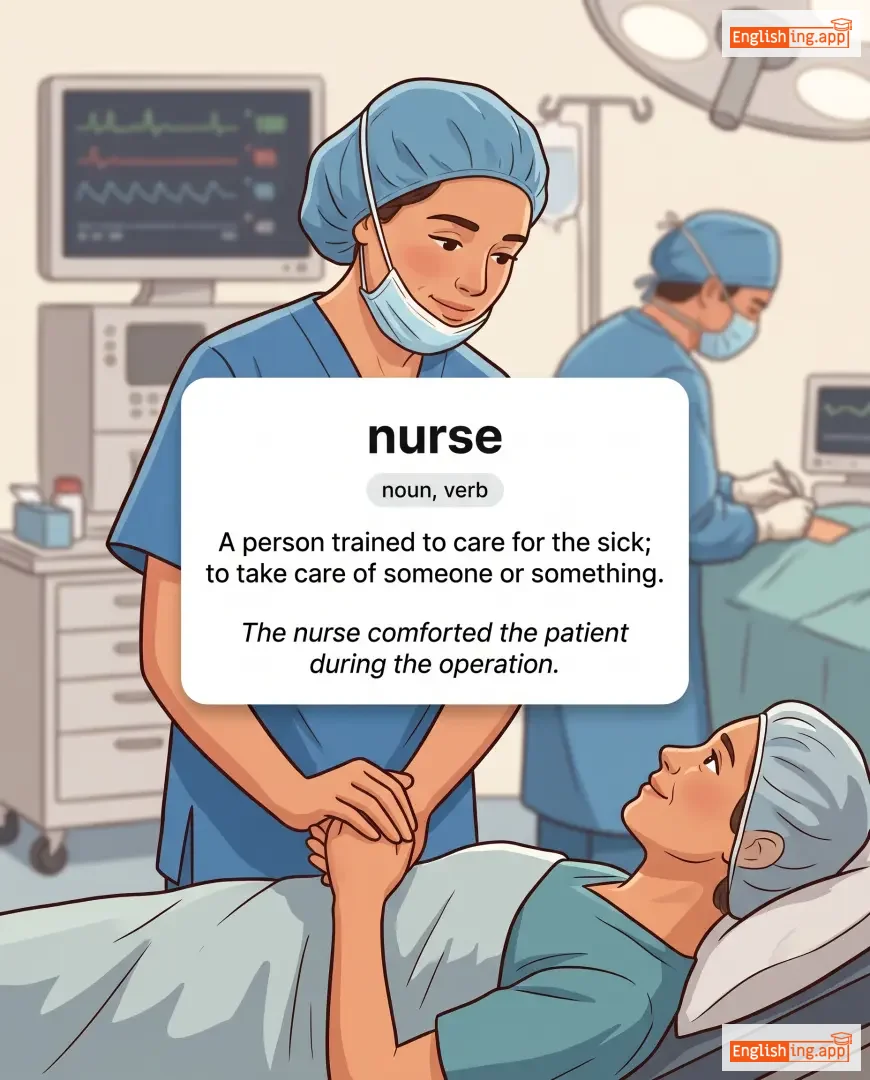
nurse definition card — visual illustration of the meaning
👩‍⚕️

nurse

noun, verb
/nɜːrs/

A person trained to care for the sick; to take care of someone or something.

"The nurse comforted the patient during the operation."

noun
/ˈnɜːrsəri/
保育園 (hoikuen)

a room or place where young children are cared for

"She works in a nursery, taking care of infants."

"彼女は保育園で働いており、赤ちゃんの世話をしています。" (Kanojo wa hoikuen de hataraite ori, akachan no sewa o shiteimasu.)
noun
/ˈnɜːrsɪŋ/
看護 (kango)

the profession or practice of caring for the sick or injured

"She is studying nursing to become a healthcare professional."

"彼女は医療専門職になるために看護学を学んでいます。" (Kanojo wa iryou senmon-shoku ni naru tame ni kangogaku o manandeimasu.)
verb, noun
/ˈnɜːrtʃər/
育てる (sodateru)

To care for and encourage the growth or development of someone or something.

"Parents should nurture their children's talents."
"親は子供たちの才能を育てるべきです。" (Oya wa kodomotachi no sainō o sodateru beki desu.)
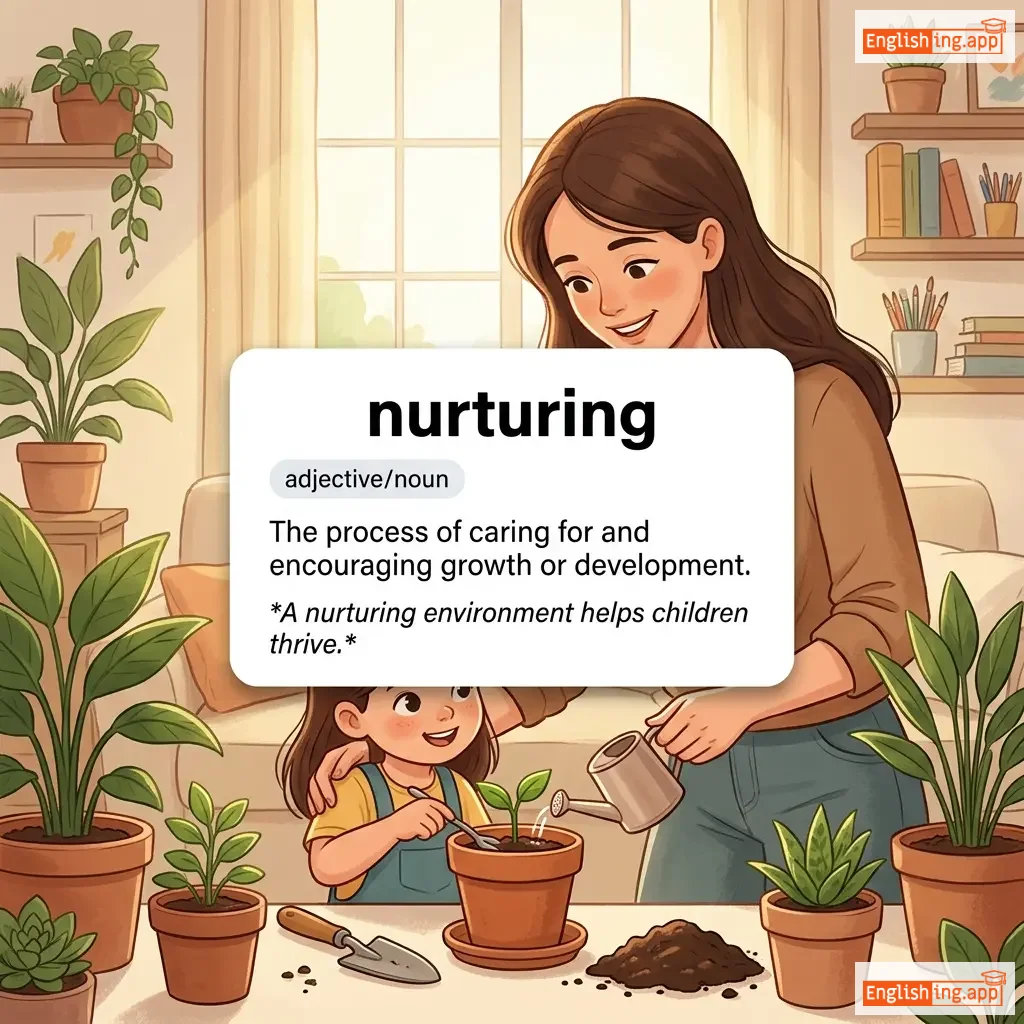
nurturing definition card — visual illustration of the meaning
adjective/noun
/ˈnɜːr.tʃɚ.ɪŋ/
養育, 促進, 発展 (youiku, sokushin, hatten)

The process of caring for and encouraging growth or development.

"A nurturing environment helps children thrive."

"ナーチャリング環境は子供たちが成長するのを助けます。" (Naacharingu kankyou wa kodomotachi ga seichou suru no o tasukemasu.)
noun
/nʌt/
ナッツ (nattsu)

a hard-shelled fruit that contains a seed, or a small metal piece used in machinery

"She ate a peanut, which is a type of nut."

"彼女はピーナッツを食べました、それはナッツの一種です。" (Kanojo wa pīnattsu wo tabemashita, sore wa nattsu no isshu desu.)
Nut meg definition card — visual illustration of the meaning
noun
/ˈnʌt.meg/
ナツメグ (natsumegu)

a spice made from the seed of the fruit of an evergreen tree, used in cooking and baking

"The recipe called for a teaspoon of ground nutmeg to flavor the custard."
"レシピにはカスタードに風味を加えるために、小さじ1杯のナツメグが必要でした。" (Reshipi ni wa kasutādo ni fūmi o kuwaeru tame ni, chīsaji 1-pai no natsumegu ga hitsuyō deshita.)
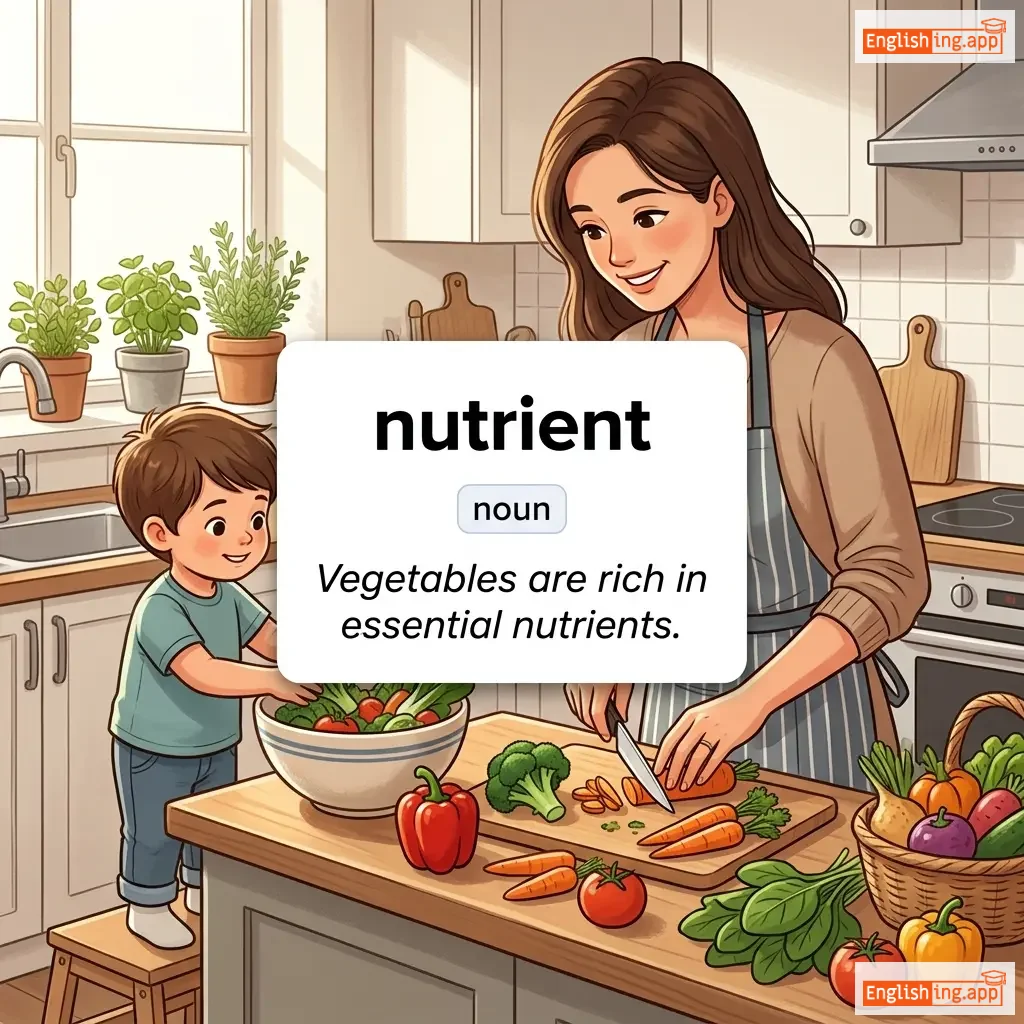
nutrient definition card — visual illustration of the meaning
noun
/ˈnjuː.tri.ənt/
栄養素 (eiyouso)

A substance that provides nourishment essential for growth and the maintenance of life.

"Vegetables are rich in essential nutrients."
"野菜は重要な栄養素が豊富です。" (Yasai wa juuyou na eiyouso ga houfu desu.)
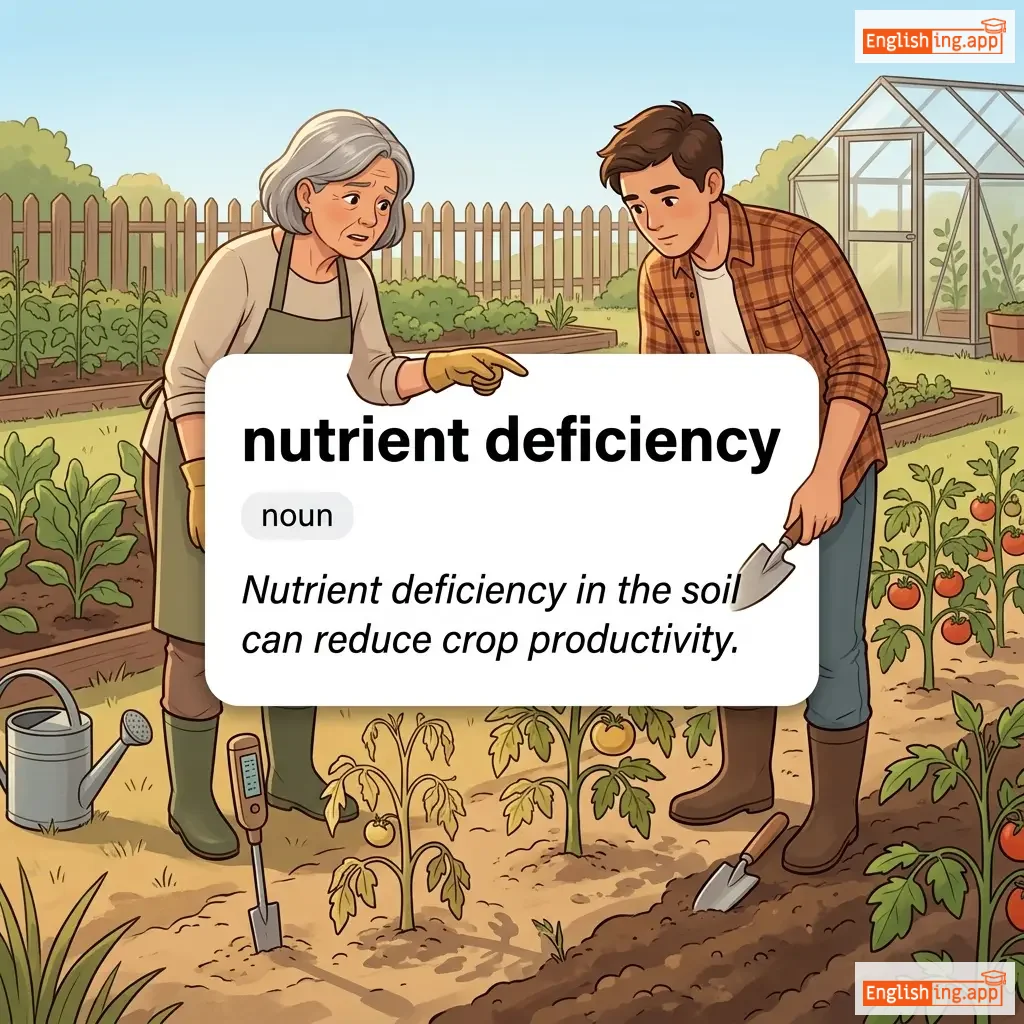
nutrient deficiency definition card — visual illustration of the meaning
noun
/ˈnjuːtrɪənt dɪˈfɪʃənsi/
栄養不足 (eiyou fusoku)

A lack of essential nutrients required for healthy plant growth, which can result in poor crop development, reduced yields, and increased susceptibility to diseases.

"Nutrient deficiency in the soil can reduce crop productivity."
"土壌中の栄養不足は作物の生産性を減少させる可能性があります。" (Dojouchuu no eiyou fusoku wa sakumotsu no seisansei o genshou saseru kanousei ga arimasu.)
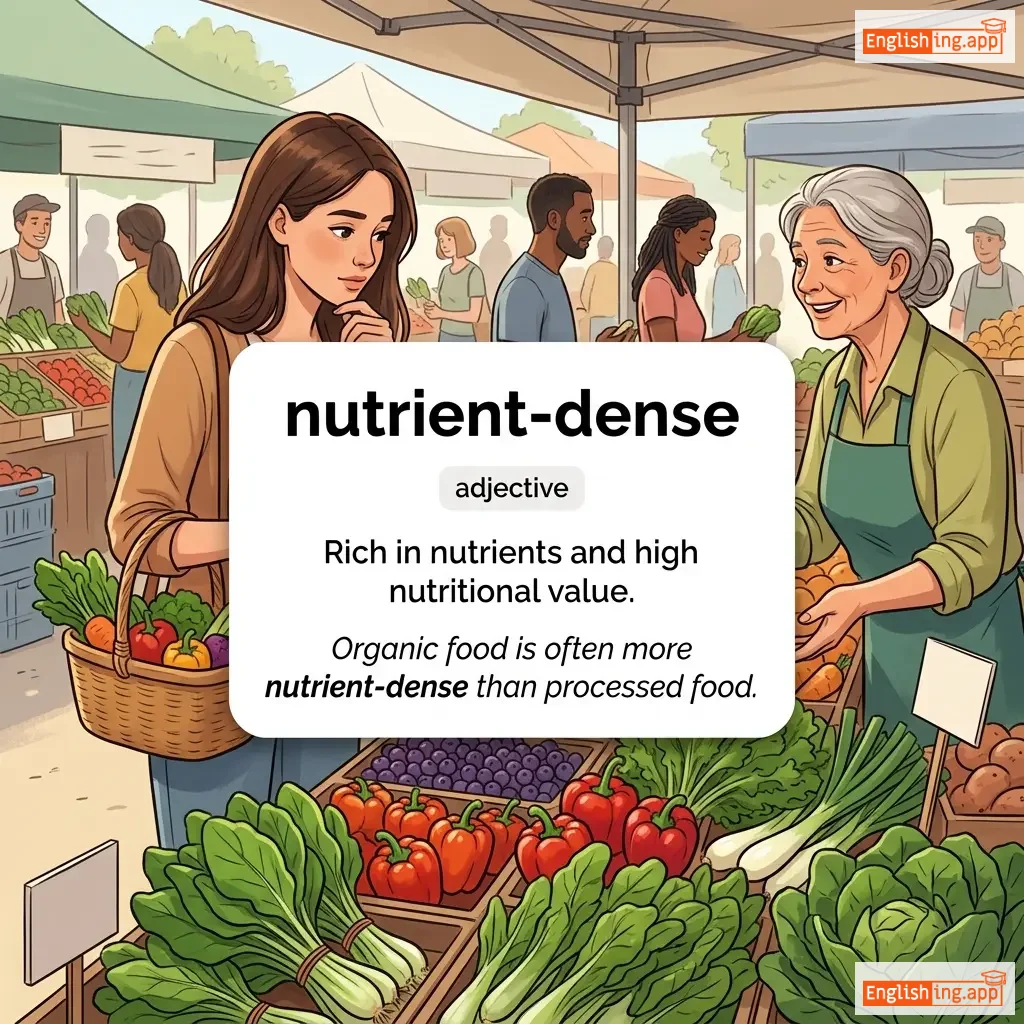
nutrient-dense definition card — visual illustration of the meaning
adjective
/ˈnjuː.tri.ənt dɛns/
栄養価が高い (eiyouka ga takai)

Rich in nutrients and high nutritional value.

"Organic food is often more nutrient-dense than processed food."

"オーガニック食品は、加工食品よりも栄養価が高いことがよくあります。" (Ooganikku shokuhin wa, kousaku shokuhin yori mo eiyouka ga takai koto ga yoku arimasu.)
noun
/ˈnjuː.trɪ.mənt/
栄養 (eiyou)

Something that nourishes; sustenance or food.

"The soil provides nutriment to the plants."

"土壌は植物に栄養を提供します。" (Dojou wa shokubutsu ni eiyou wo teikyou shimasu.)
noun
/njuːˈtrɪʃ.ən/
栄養 (eiyou)

The process of providing or obtaining the food necessary for health and growth.

"Good nutrition is vital for a healthy life."

"良い栄養は健康的な生活にとって重要です。" (Yoi eiyou wa kenkou-teki na seikatsu ni totte juuyou desu.)
adjective
/njuːˈtrɪʃ.əs/
栄養のある (eiyou no aru)

Providing nourishment; health-giving.

"Milk is a nutritious drink for children."
"牛乳は子供にとって栄養のある飲み物です。" (Gyunyu wa kodomo ni totte eiyou no aru nomimono desu.)
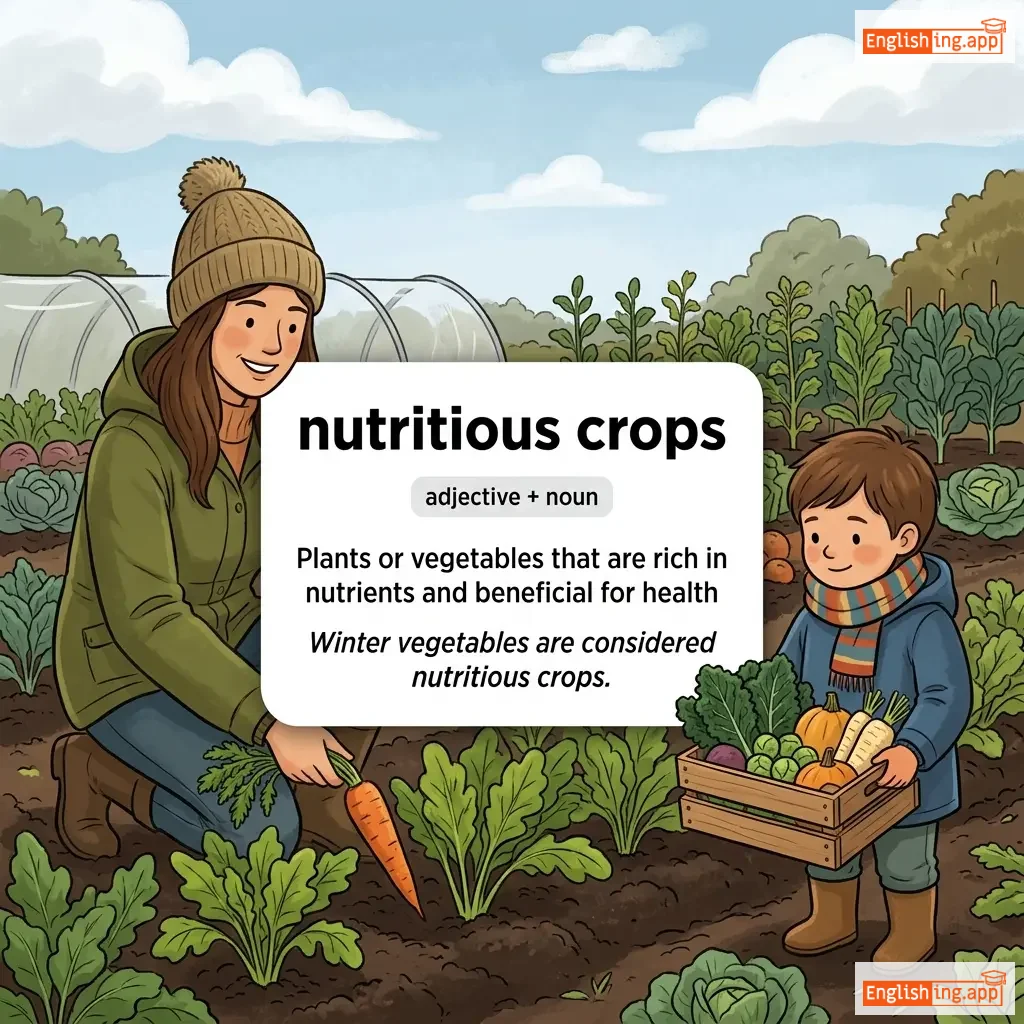
nutritious crops definition card — visual illustration of the meaning
adjective + noun
njuˈtrɪʃəs krɒps
栄養豊富な作物 (eiyou houfu na sakumotsu)

Plants or vegetables that are rich in nutrients and beneficial for health

"Winter vegetables are considered nutritious crops."

"冬の野菜は栄養価の高い作物と見なされています。" (Fuyu no yasai wa eiyouka no takai sakumotsu to minasareteimasu.)
adjective, verb
/əbˈskjʊr/
不明確 (fumeikaku)

Not clearly expressed or understood; to make something difficult to see or understand.

"The meaning of the poem was obscure to most readers."

"詩の意味はほとんどの読者には不明確でした。" (Shi no imi wa hotondo no dokusha ni wa fumeikaku deshita.)
noun
/ˈɒbsɪkwiːz/
葬儀儀式 (sōgi gishiki)

Funeral rites or ceremonies.

"The obsequies for the late leader drew thousands of mourners."

"故リーダーの葬儀儀式には、数千人の弔問客が集まりました。" (Ko rīdā no sōgi gishiki ni wa, sūsen-nin no chōmonkyaku ga atsumarimashita.)