語彙集

英単語辞書 | 単語の意味、定義、例文

noun
/niːs/
(mei)

the daughter of one's brother or sister

"My niece is studying at the university this year."
"私の姪は今年大学で勉強しています。" (watashi no mei wa kotoshi daigaku de benkyo shiteimasu)
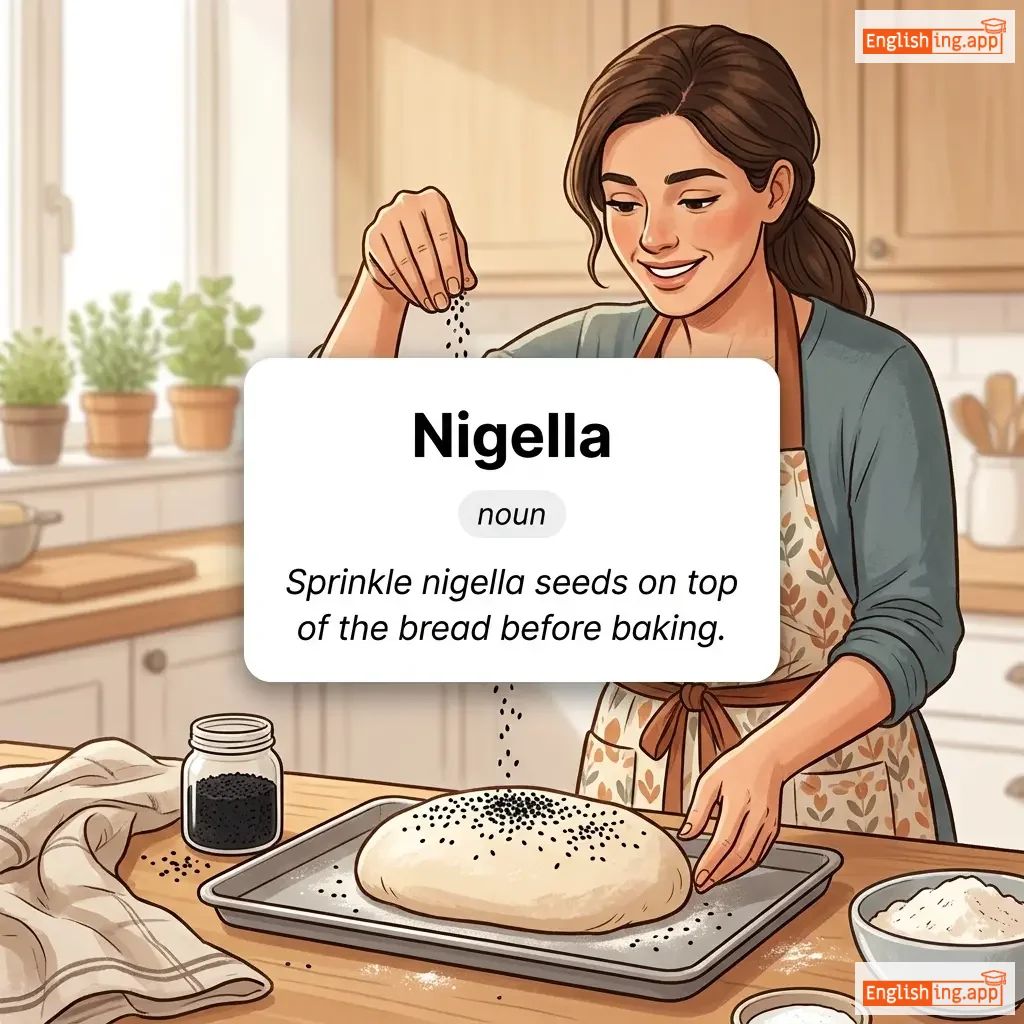
Nigella definition card — visual illustration of the meaning
noun
/naɪˈdʒel.ə/
ブラッククミン (burakku kumin)

small black seeds with a nutty, slightly bitter flavor, also known as black cumin or black seed

"Sprinkle nigella seeds on top of the bread before baking."

"パンの上にブラッククミンの種を振りかけてから焼きます。" (Pan no ue ni burakku kumin no tane wo furikakete kara yakimasu.)
adjective
/ˈnɪɡərdli/
ケチ (kechi)

unwilling to spend or give; stingy or miserly

"He was too niggardly to leave a decent tip."
"彼はまともなチップを置くにはあまりにケチだった。" (Kare wa matomona chippu o oku ni wa amari ni kechi datta.)
verb
/ˈnɪɡəl/

to cause slight but persistent annoyance, discomfort, or worry

"A small doubt niggled at her mind."

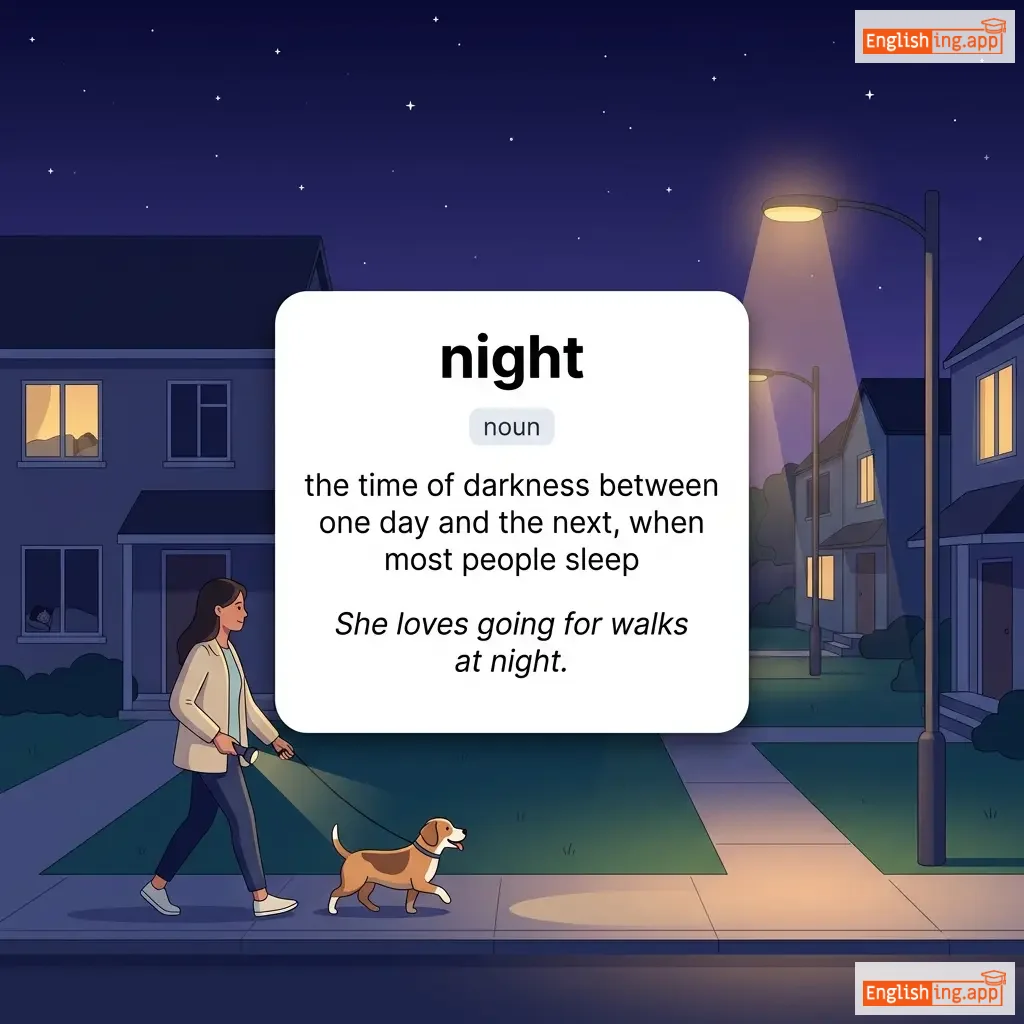
night definition card — visual illustration of the meaning
noun
/naɪt/
(yoru)

the time of darkness between one day and the next, when most people sleep

"She loves going for walks at night."
"彼女は夜に散歩するのが好きです。" (Kanojo wa yoru ni sanpo suru no ga suki desu.)
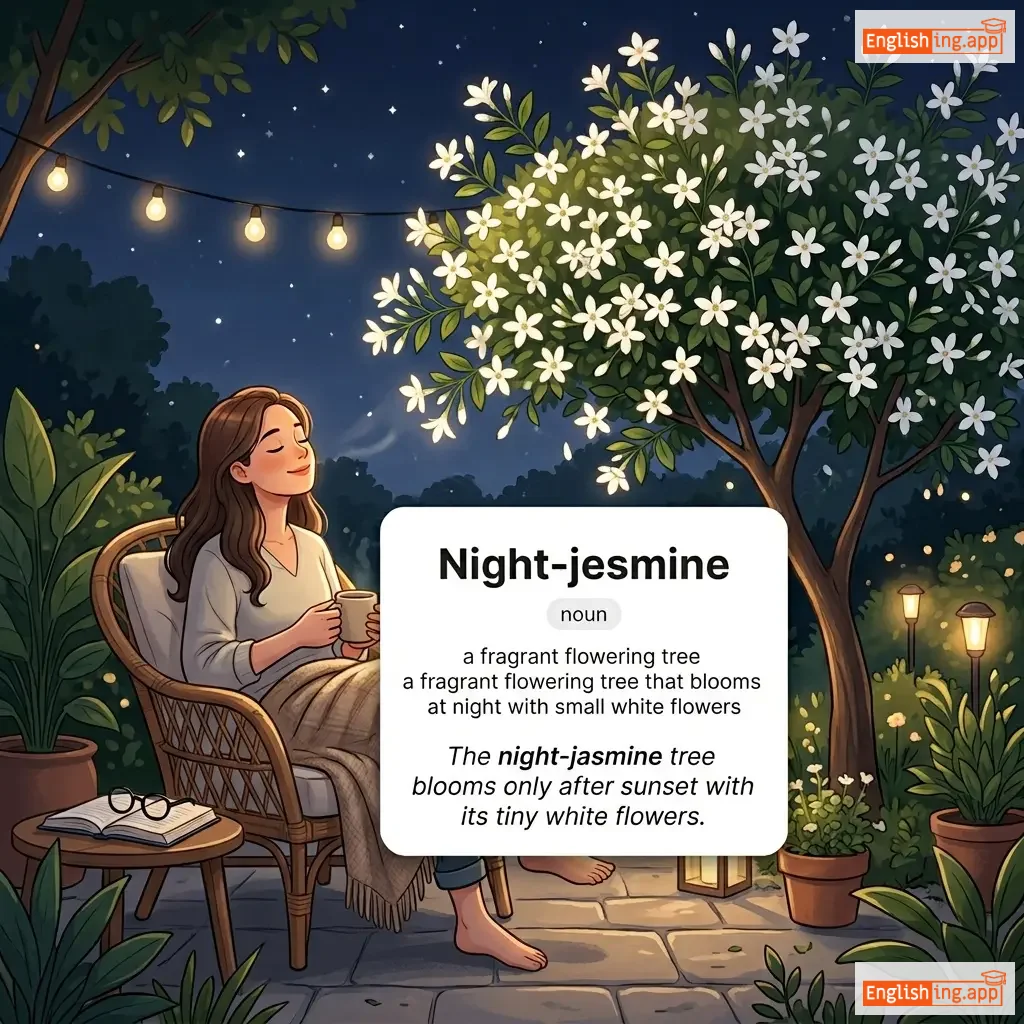
Night-jesmine definition card — visual illustration of the meaning
noun
/naɪt ˈdʒæz.mɪn/
夜香木 (yakouboku)

a fragrant flowering tree that blooms at night with small white flowers

"The night-jasmine tree blooms only after sunset with its tiny white flowers."
"夜香木の木は日没後に小さな白い花を咲かせます。" (yakouboku no ki wa nichibotsugo ni chiisana shiroi hana o sakasemasu.)
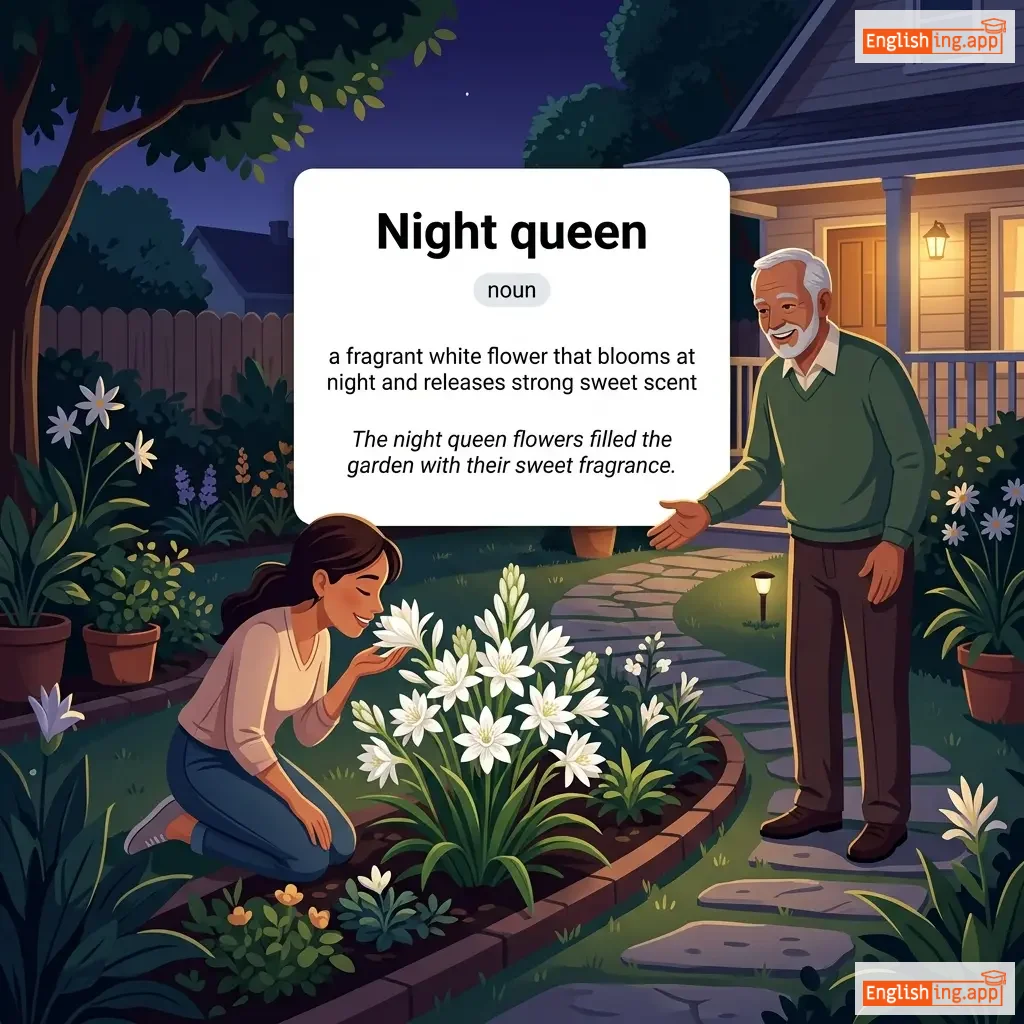
Night queen definition card — visual illustration of the meaning
noun
/naɪt kwiːn/
月下香 (gekka kou)

a fragrant white flower that blooms at night and releases strong sweet scent

"The night queen flowers filled the garden with their sweet fragrance."

"月下香の花が甘い香りで庭を満たしました。" (gekka kou no hana ga amai kaori de niwa o mitashimashita)
noun
/ˈnaɪt.fɔːl/
夜の始まり (yoru no hajimari)

the time when night begins; dusk

"They decided to return home before nightfall."
"彼らは夜の始まり前に家に帰ることに決めました。" (Karera wa yoru no hajimari mae ni ie ni kaeru koto ni kimemashita.)
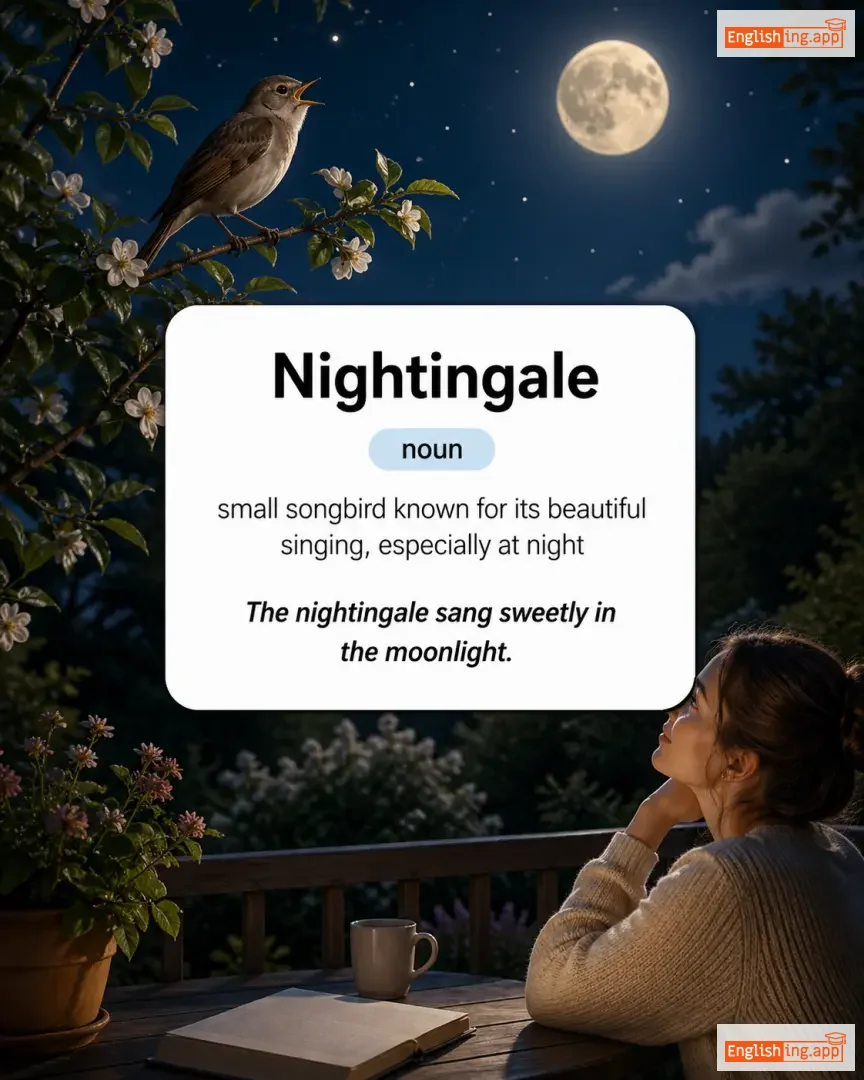
Nightingale definition card — visual illustration of the meaning
noun
/ˈnaɪ.tɪŋ.ɡeɪl/
ナイチンゲール (naichingeeru)

small songbird known for its beautiful singing, especially at night

"The nightingale sang sweetly in the moonlight."

"ナイチンゲールは月明かりの中で甘美に歌った。" (naichingeeru wa tsukiakari no naka de kanbi ni utatta)
noun
/ˈnaɪtˌmɛər/

a frightening or unpleasant dream; a very distressing experience.

"Last night, she had a terrifying nightmare."

noun
/ˈnaɪɪˌlɪzəm/
虚無主義 (kyomu shugi)

The rejection of all religious and moral principles, often in the belief that life is meaningless.

"The philosopher was criticized for promoting nihilism."

"哲学者はニヒリズムを推進したとして批判されました。" (Tetsugakusha wa nihirizumu o suishin shita to shite hihan saremashita.)
noun
/ˈnaɪəlɪst/
ニヒリスト (nihiristo)

A person who rejects all religious and moral principles, often believing that life is meaningless.

"He was called a nihilist for rejecting all social norms."

"彼はすべての社会的規範を拒否したため、ニヒリストと呼ばれました。" (Kare wa subete no shakaiteki kihon o kyohi shita tame, nihiristo to yobaremashita.)
noun
/nɪl/
ゼロ (zero)

Nothing; zero.

"The score remained nil after the first half."

"前半戦が終わった後、スコアはゼロのままだった。" (Zenhan-sen ga owatta ato, sukō wa zero no mamadatta.)
adjective
/ˈnɪmbəl/
素早い (subayai)

Quick and light in movement or thought.

"The dancer’s nimble steps impressed the audience."

"ダンサーの素早いステップが観客を感動させた。" (Dansā no subayai suteppu ga kankyaku o kandō saseta.)
noun
/naɪn/
(kyuu)

the number that is one more than eight

"She has nine books in her collection."

"彼女はコレクションに9冊の本を持っています。" (Kanojo wa korekushon ni kyuu-satsu no hon o motteimasu.)
noun
/ˈnɪn.i/
バカ (baka)

a silly or foolish person; someone who lacks common sense

"Don't be such a ninny, use your brain!"

"そんなバカなことをするな、頭を使え!" (sonna baka na koto o suru na, atama o tsukae!)
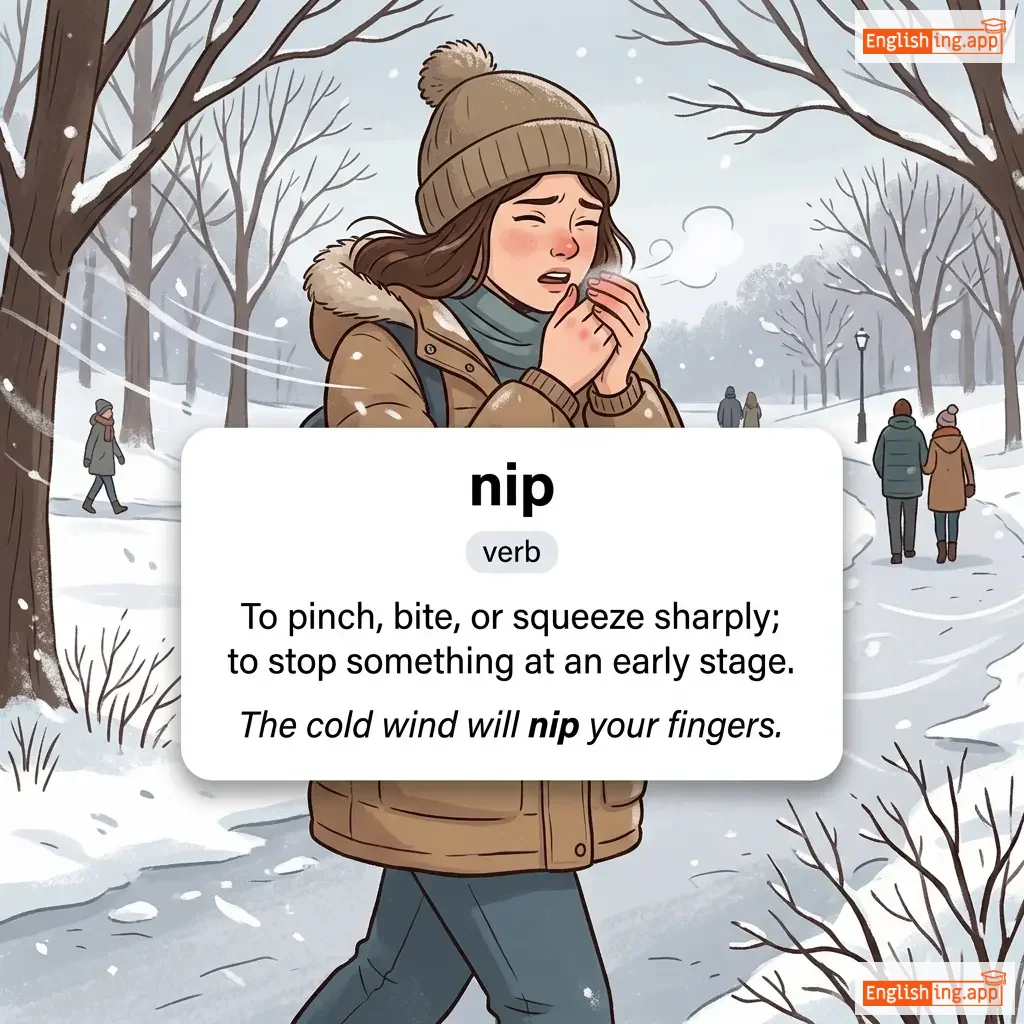
nip definition card — visual illustration of the meaning
verb
/nɪp/
つねる (tsuneru)

To pinch, bite, or squeeze sharply; to stop something at an early stage.

"The cold wind will nip your fingers."

"冷たい風があなたの指をつまむでしょう。" (Tsumetai kaze ga anata no yubi o tsumamu deshō.)
adjective
/ˈnɪp.i/
寒い; ひんやり; 動きが速くて敏捷 (samui; hinyari; ugoki ga hayakute binshou)

cold; chilly; quick and agile in movement

"It's quite nippy outside today, you should wear a jacket."
"今日は外がかなり寒いので、ジャケットを着るべきです。" (Kyou wa soto ga kanari samui node, jaketto wo kiru beki desu.)
🕉️

nirvana

noun
/nɪərˈvɑːnə/

A state of perfect happiness, peace, and freedom from suffering; in Buddhism, the ultimate goal of liberation.

"Meditation helps some people seek nirvana in their lives."

noun
/nɪt/
シラミの卵 (shirami no tamago)

The egg or young form of a louse or other parasitic insect.

"The teacher noticed nits in the child’s hair."

"先生は子供の髪の毛にシラミの卵を見つけました。" (Sensei wa kodomo no kami no ke ni shirami no tamago o mitsukemashita.)
verb
/ˈnɪtˌpɪk/

To find and criticize small or unimportant faults in someone or something.

"She tends to nitpick about every little detail."

adverb
/noʊ/
いいえ (iie)

used to give a negative response or to show disagreement

"She said no to the invitation."

"彼女は招待状を断った。" (Kanojo wa shoutaijou o kotowatta.)
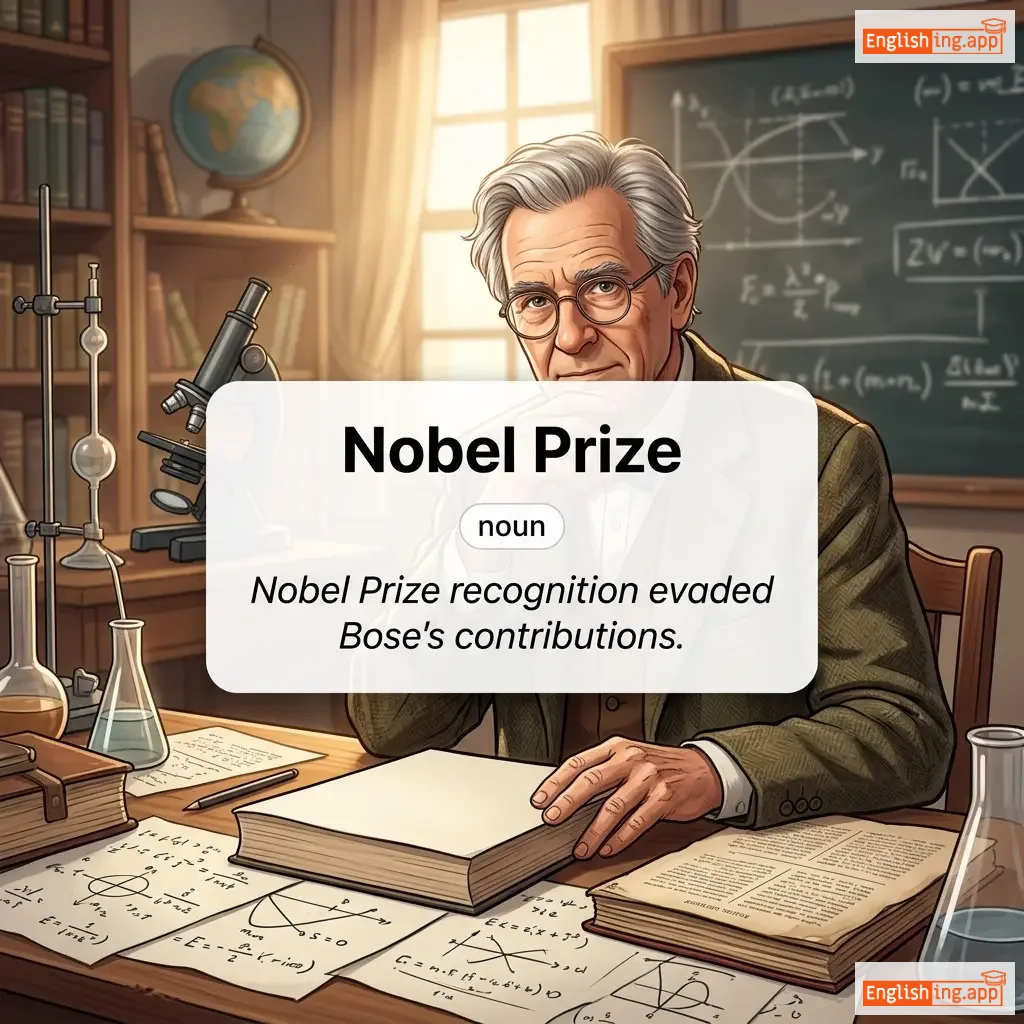
Nobel Prize definition card — visual illustration of the meaning
noun
noʊˈbel praɪz
ノーベル賞 (noberu shou)

Any of six international prizes awarded annually for outstanding work in physics, chemistry, physiology or medicine, literature, economics, and the promotion of peace.

"Nobel Prize recognition evaded Bose's contributions."

"Nobel Prize recognition did not apply to Bose's contributions." (noberu shou no hyouka wa boosu no kouken ni wa oyobanakatta)
noun
/nəʊˈbɪləti/
高貴 (kouki)

the quality of being noble in character or the group of people belonging to the aristocracy

"The king praised her for her nobility and courage."
"王は彼女の高貴さと勇気を称賛しました。" (Ō wa kanojo no kōkisa to yūki o shōsan shimashita.)
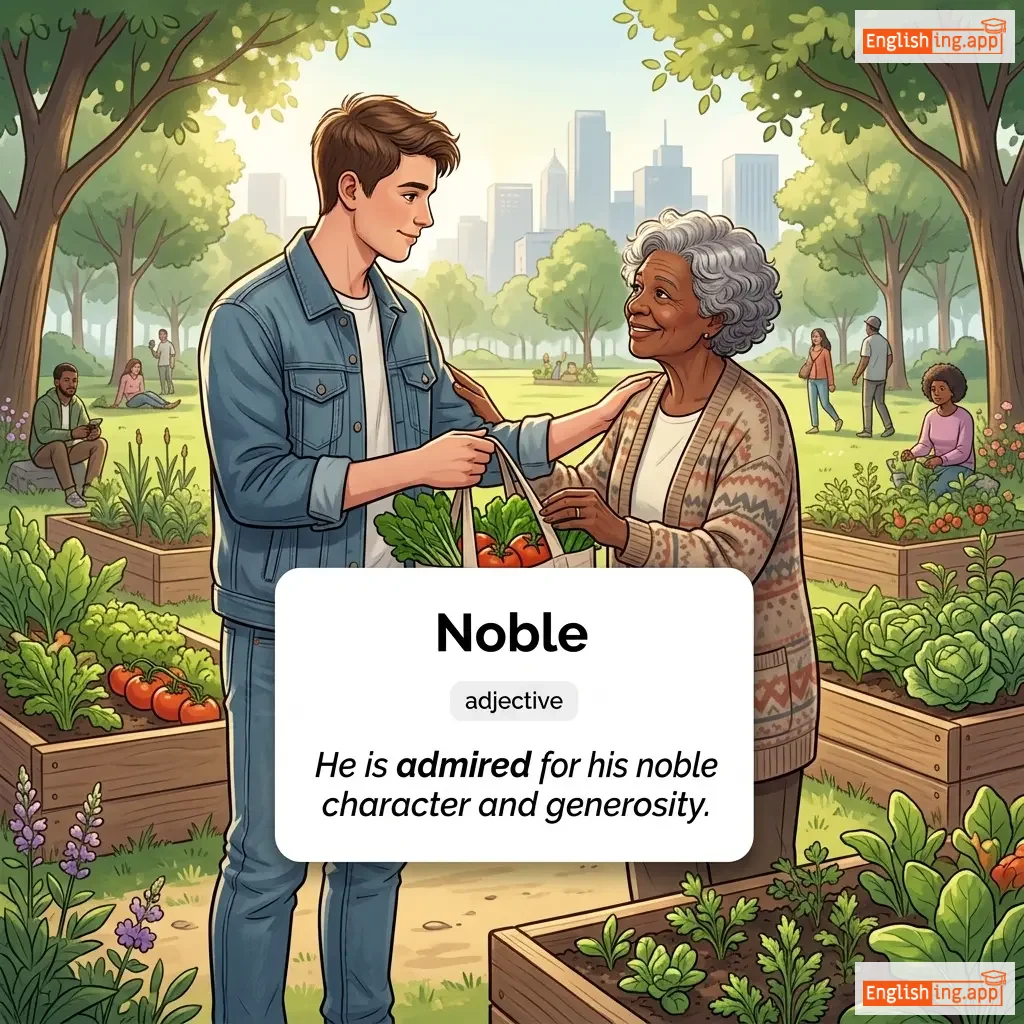
Noble definition card — visual illustration of the meaning
adjective
/ˈnoʊbəl/
高貴な性格や高い道徳的原則を示す、または高い社会的地位を持つ (Kōkina seikaku ya takai dōtoku-teki gensoku o shimesu, mata wa takai shakai-teki chii o motsu)

Having or showing fine personal qualities, high moral principles, or being of high social rank.

"He is admired for his noble character and generosity."

"彼はその高貴な性格と寛大さで賞賛されています。" (Kare wa sono kōkina seikaku to kandaisa de shōsan sareteimasu.)
pronoun
/ˈnoʊˌbɑːdi/
誰もいない (dare mo inai)

no person; not anyone

"Nobody came to the party."

"誰もパーティに来なかった。" (Dare mo pāti ni konakatta.)
adjective
/nɒkˈtɜːrnəl/
夜行性 (yakousei)

Active at night and sleeping during the day.

"Owls are nocturnal animals that hunt at night."

"フクロウは夜行性の動物で、夜に狩りをします。" (Fukurou wa yakousei no doubutsu de, yoru ni kari wo shimasu.)
⚔️

Norman

noun
/ˈnɔːrmən/

A member of a people of mixed Scandinavian and Frankish origin who settled in Normandy, or relating to their culture.

"The Normans conquered England in 1066."

verb
/ˌnɒnˈplʌst/
困惑した (konwaku shita)

Past tense of nonplus; surprised and confused.

"She was completely nonplused by his sudden decision."

"彼女は彼の突然の決断に完全に困惑していました。" (Kanojo wa kare no totsuzen no ketsudan ni kanzen ni konwaku shite imashita.)
verb
/ˌnɒnˈplʌst/
困惑 (konwaku)

Past tense of nonplus; surprised and unsure how to react.

"He stood nonplussed at the strange remark."

"彼は奇妙なコメントに困惑して立ち尽くしていた。" (Kare wa kimyou na komento ni konwaku shite tachitsukushite ita.)
adjective
/ˌnɒnˈprɒfɪt/
非営利団体 (hi eiri dantai)

an organization that does not aim to make a profit, often serving a social or charitable purpose.

"She works for a nonprofit organization that helps children."

"彼女は子供たちを助ける非営利団体で働いています。" (Kanojo wa kodomotachi wo tasukeru hi eiri dantai de hataraiteimasu.)
noun
/ˈnɒnsəns/
ナンセンス (nansensu)

Words or ideas that have no meaning or make no sense.

"His explanation was pure nonsense."

"彼の説明は完全にナンセンスだった。" (kare no setsumei wa kanzen ni nansensu datta.)
adjective
/ˌnɒnˈtrɪviəl/
非自明 (hi jimmyo)

Not simple or easy; requiring effort or significant thought.

"Solving the equation turned out to be a nontrivial task."
"方程式を解くことは非自明な作業であることが分かりました。" (Hōteishiki o toku koto wa hi jimmyo na sagyō de aru koto ga wakarimashita.)
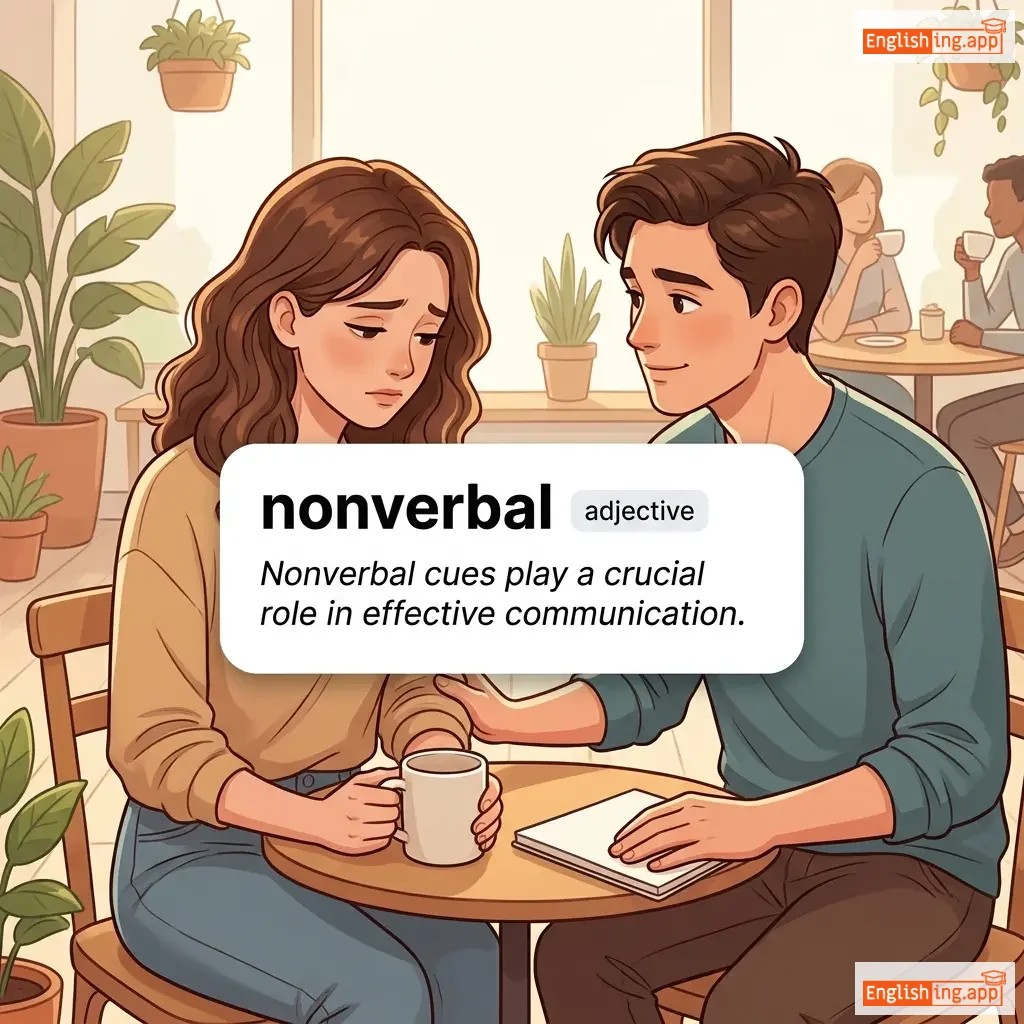
nonverbal definition card — visual illustration of the meaning
adjective
ˌnɒnˈvɜːr.bəl
非言語 (higengo)

Communication using body language, facial expressions, or gestures instead of words

"Nonverbal cues play a crucial role in effective communication."

"非言語の合図は効果的なコミュニケーションにおいて重要な役割を果たします。" (Higengo no aizu wa kouka-tekina komyunikeeshon ni oite juuyou na yakuwari o hatashimasu.)
noun (plural)
/ˈnuːdəlz/
(men)

long, thin strips of dough made from flour, water, or eggs, cooked and eaten as food

"She cooked noodles with vegetables for dinner."

"彼女は夕食に野菜入りの麺を作った。" (kanojo wa yuushoku ni yasai iri no men o tsukutta)
noun
/nuːn/
正午 (shōgo)

12 o'clock in the daytime; midday

"The meeting will start at noon."

"会議は正午に始まります。" (Kaigi wa shōgo ni hajimarimasu.)
noun
/nuːs/
ひも (himo)

A loop with a running knot, used especially for trapping or hanging.

"The cowboy tied a noose to catch the wild horse."

"カウボーイは野生の馬を捕まえるためにヌースを結んだ。" (Kaubōi wa yasei no uma wo tsukamaeru tame ni noosu wo musunda.)
🚫➡️🚫

nor (ノア)

conjunction
/nɔːr/
またはない (mata wa nai)

used to introduce a negative clause after a negative statement

"He didn't call, nor did he send a message."

"彼は電話をかけなかったし、メッセージも送らなかった。" (Kare wa denwa o kakenakatta shi, messeeji mo okurakanakatta.)
noun
/nɔːrm/
規範 (kihan)

An accepted standard or a usual practice.

"Wearing uniforms is the norm in many schools."
"多くの学校で制服を着ることが規範です。" (Ooku no gakkou de seifuku o kiru koto ga kihan desu.)
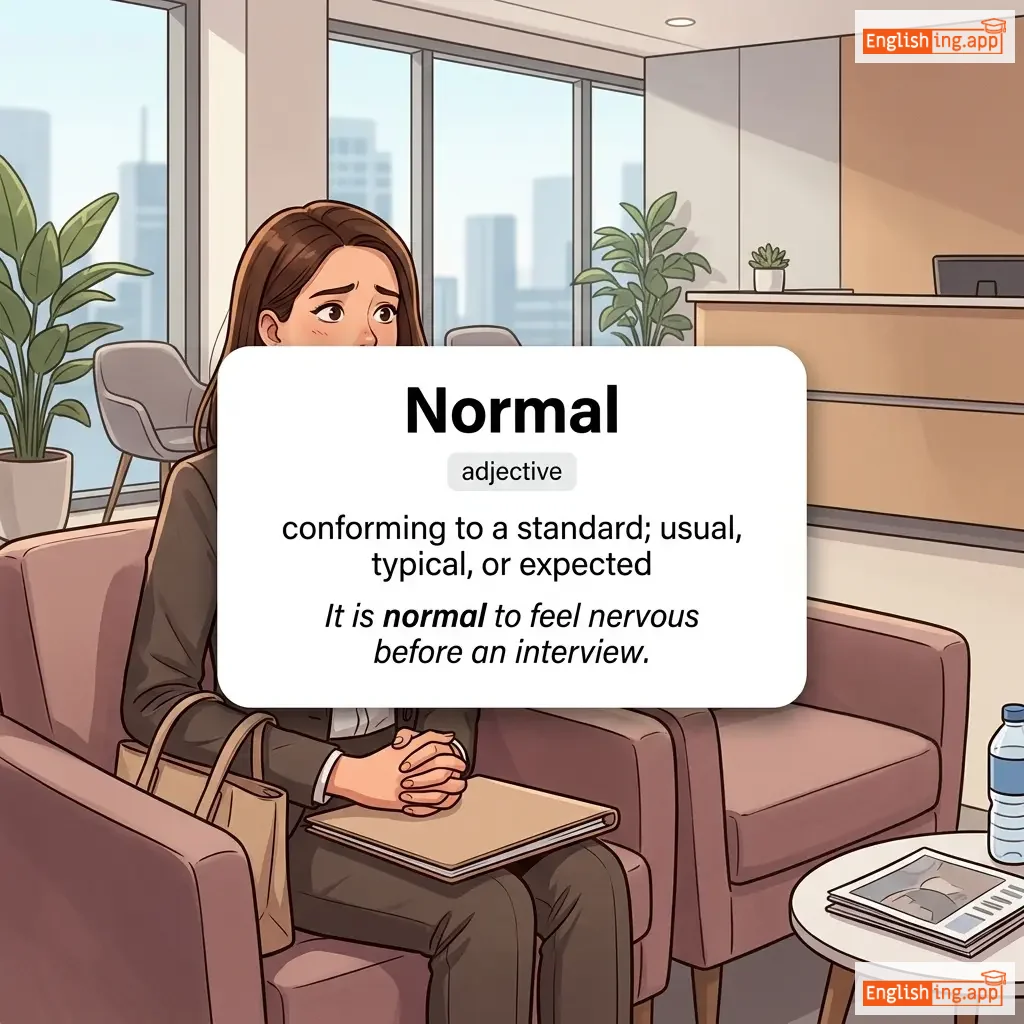
Normal definition card — visual illustration of the meaning
adjective
/ˈnɔː.məl/
正常 (seijou)

conforming to a standard; usual, typical, or expected

"It is normal to feel nervous before an interview."

"面接前に緊張するのは正常です。" (Mensetsu mae ni kinchou suru no wa seijou desu.)
noun
/ˈnɔːrməlsi/
正常 (seijou)

The condition of being normal; a return to usual or expected conditions.

"After the flood, the town struggled to regain a sense of normalcy."

"洪水の後、町は正常な状態を取り戻すために奮闘しました。" (Kousui no ato, machi wa seijou na joutai o torimodosu tame ni funtou shimashita.)
verb
/ˈnɔːrməlaɪz/
正常化する (seijouka suru)

to bring something back to a normal or standard condition; to make something conform to a standard

"The government took steps to normalize relations with neighboring countries."

"政府は関係を正常化するための措置を取った。" (seifu wa kankei o seijouka suru tame no sochi o totta)
adverb
/ˈnɔːməli/
通常 (tsūjō)

in a usual or expected way

"I normally wake up at 7 AM."
"私は通常午前7時に起きます。" (Watashi wa tsūjō gozen 7-ji ni okimasu.)
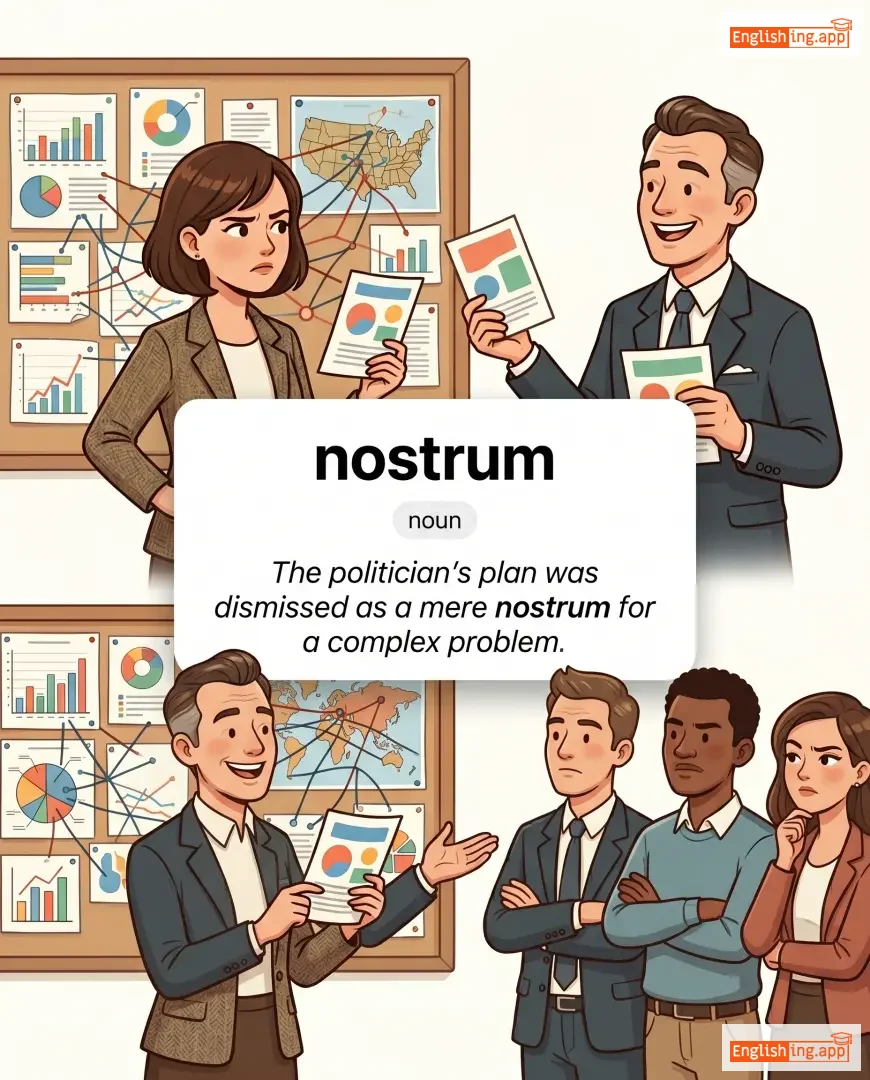
nostrum definition card — visual illustration of the meaning
noun
/ˈnɑːstrəm/
効果のない薬 (kouka no nai kusuri)

a medicine or remedy, especially one that is not considered effective; a questionable solution

"The politician’s plan was dismissed as a mere nostrum for a complex problem."

"政治家の計画は、複雑な問題に対する単なる効果のない薬として退けられました。" (Seijika no keikaku wa, fukuzatsu na mondai ni taisuru tannaru kouka no nai kusuri toshite shirizokemashita.)
noun
/ˈnoʊzˌɡeɪ/
花束 (hanataba)

a small bunch of flowers, typically given as a gift or carried for decoration

"She carried a nosegay of fresh roses to the ceremony."
"彼女は式典に新鮮なバラの花束を持って行った。" (Kanojo wa shikiten ni shinsen na bara no hanataba o motte itta.)
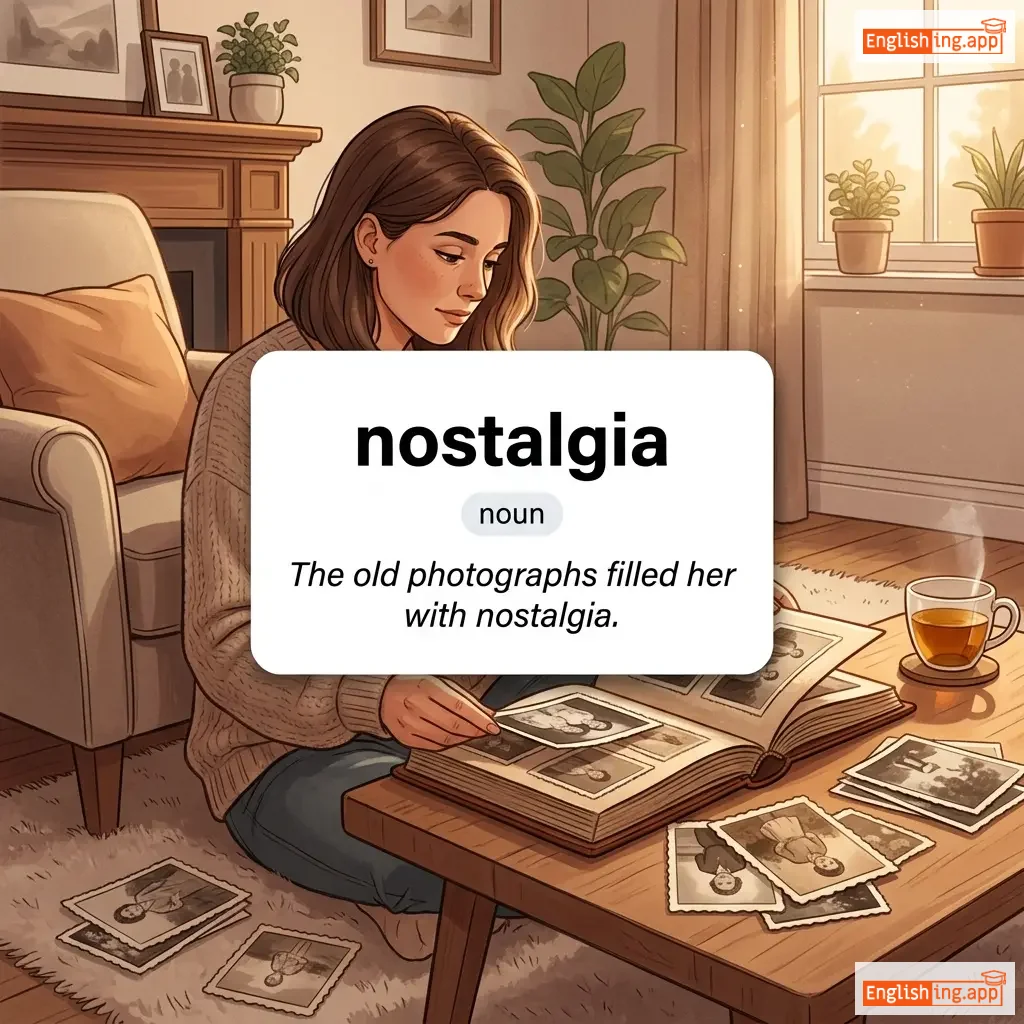
nostalgia definition card — visual illustration of the meaning
noun
/nəˈstældʒə/
ノスタルジア (nosutarujia)

a sentimental longing for the past, often for a period or place with happy memories

"The old photographs filled her with nostalgia."

"古い写真は彼女をノスタルジアで満たしました。" (Furui shashin wa kanojo o nosutarujia de mitashimashita.)
noun
/ˈnɒs.trɪl/
鼻孔 (bikou)

either of the two openings in the nose through which air passes

"The doctor checked each nostril for any blockage."

"医師は鼻孔のそれぞれをブロックがないか調べました。" (Ishi wa bikou no sorezore wo burokkuga naika shirabemashita.)
adjective
/ˈnoʊtəbl/
顕著な (kenchona)

worthy of attention or notice; remarkable

"She made a notable contribution to the project."

"彼女はプロジェクトに顕著な貢献をしました。" (Kanojo wa purojekuto ni kenchona kouken o shimashita.)
adverb
/ˈnoʊtəbli/
目立って (medatte)

used to indicate something worthy of attention or significant

"She is notably talented in painting."
"彼女は絵画で際立って才能があります。" (Kanojo wa kaiga de medatte sainou ga arimasu.)
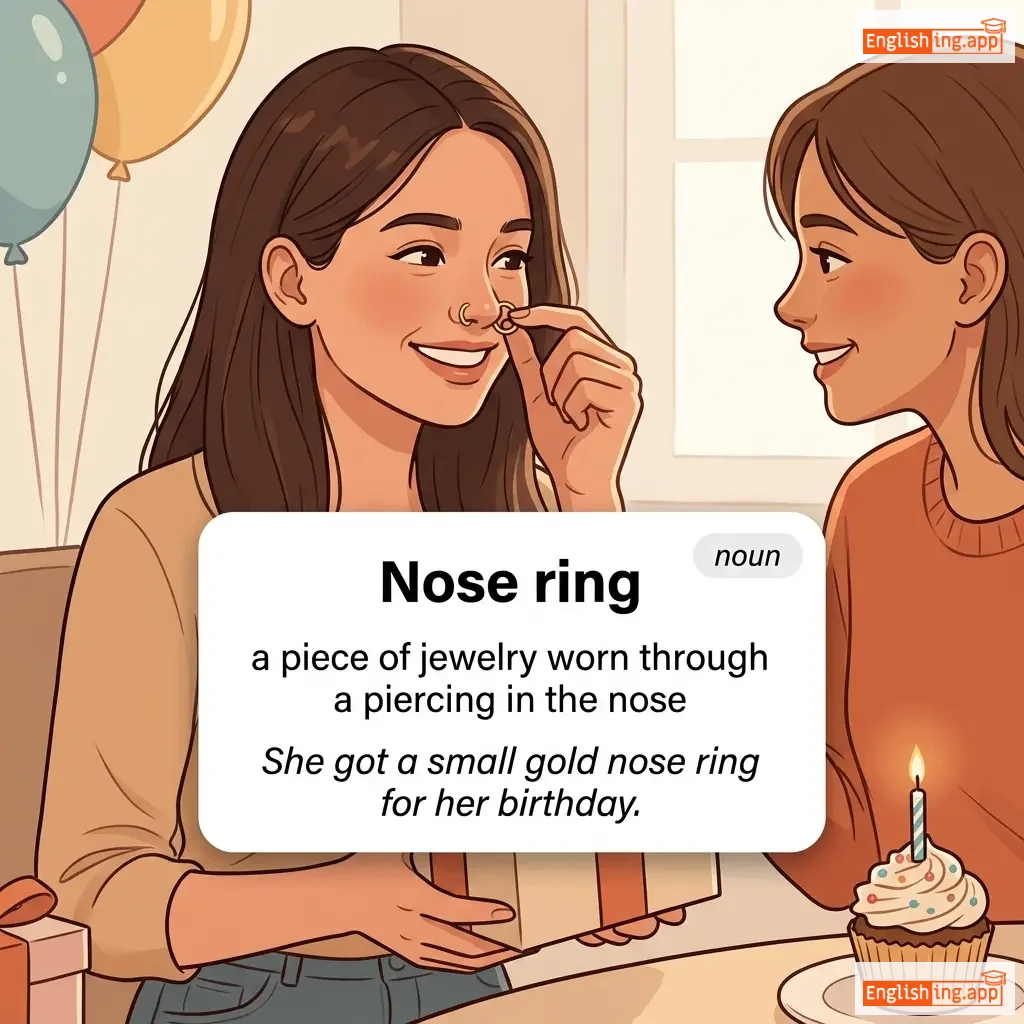
Nose ring definition card — visual illustration of the meaning
noun
/noʊz rɪŋ/
鼻リング (hana ringu)

a piece of jewelry worn through a piercing in the nose

"She got a small gold nose ring for her birthday."

"彼女は誕生日に小さな金の鼻リングをもらった。" (Kanojo wa tanjōbi ni chīsana kin no hana ringu o moratta.)