Словари

Словарь английского языка | Значения слов, определения и примеры

noun
/niːs/
племянница (plemyannitsa)

the daughter of one's brother or sister

"My niece is studying at the university this year."
"Моя племянница учится в университете в этом году." (Moya plemyannitsa uchitsya v universitete v etom godu)
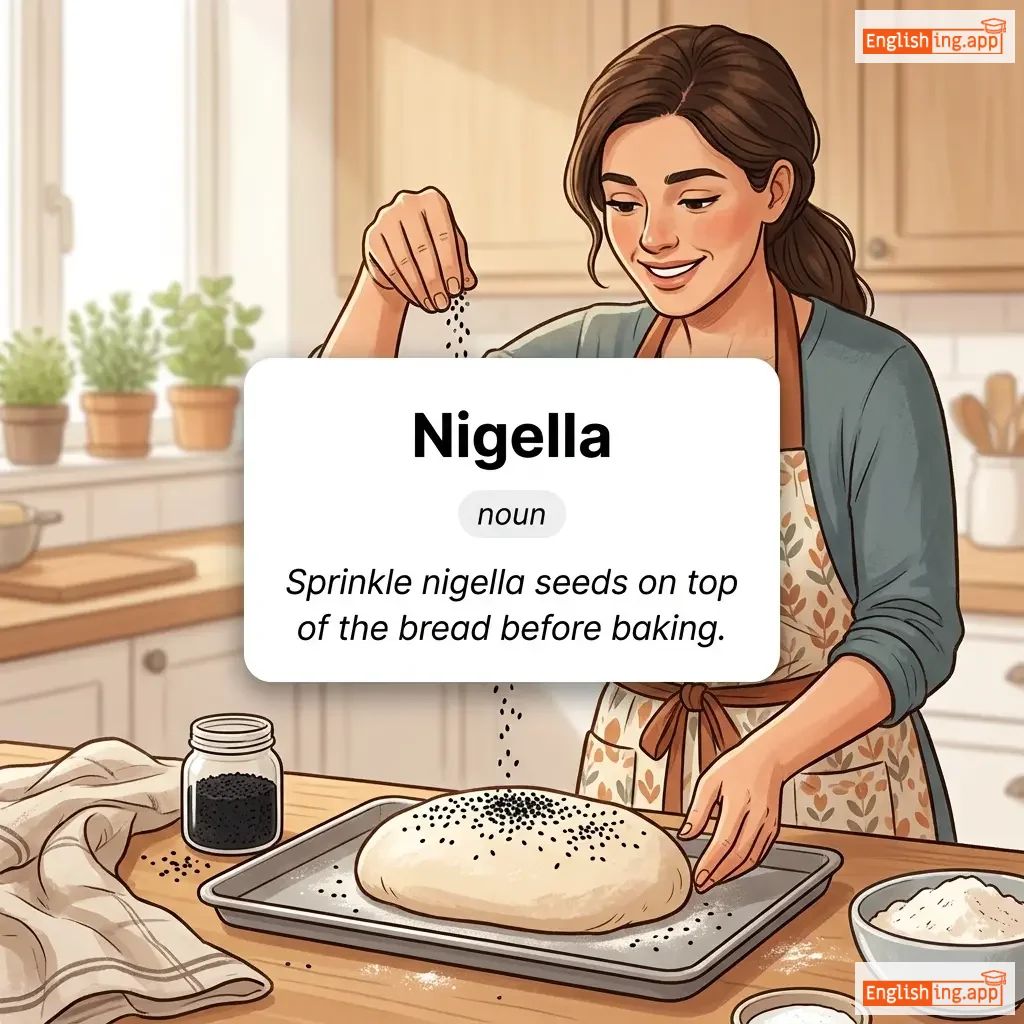
Nigella definition card — visual illustration of the meaning
noun
/naɪˈdʒel.ə/
черный тмин (chernyy tmin)

small black seeds with a nutty, slightly bitter flavor, also known as black cumin or black seed

"Sprinkle nigella seeds on top of the bread before baking."

"Посыпьте семена черного тмина на хлеб перед выпечкой." (Posyp'te semena chernogo tmina na khleb pered vypechkoj.)
adjective
/ˈnɪɡərdli/
скупой (skupoy)

unwilling to spend or give; stingy or miserly

"He was too niggardly to leave a decent tip."

"Он был слишком скуп, чтобы оставить нормальный чай." (On byl slishkom skup, chtoby ostavit' normal'nyy chay.)
verb
/ˈnɪɡəl/

to cause slight but persistent annoyance, discomfort, or worry

"A small doubt niggled at her mind."
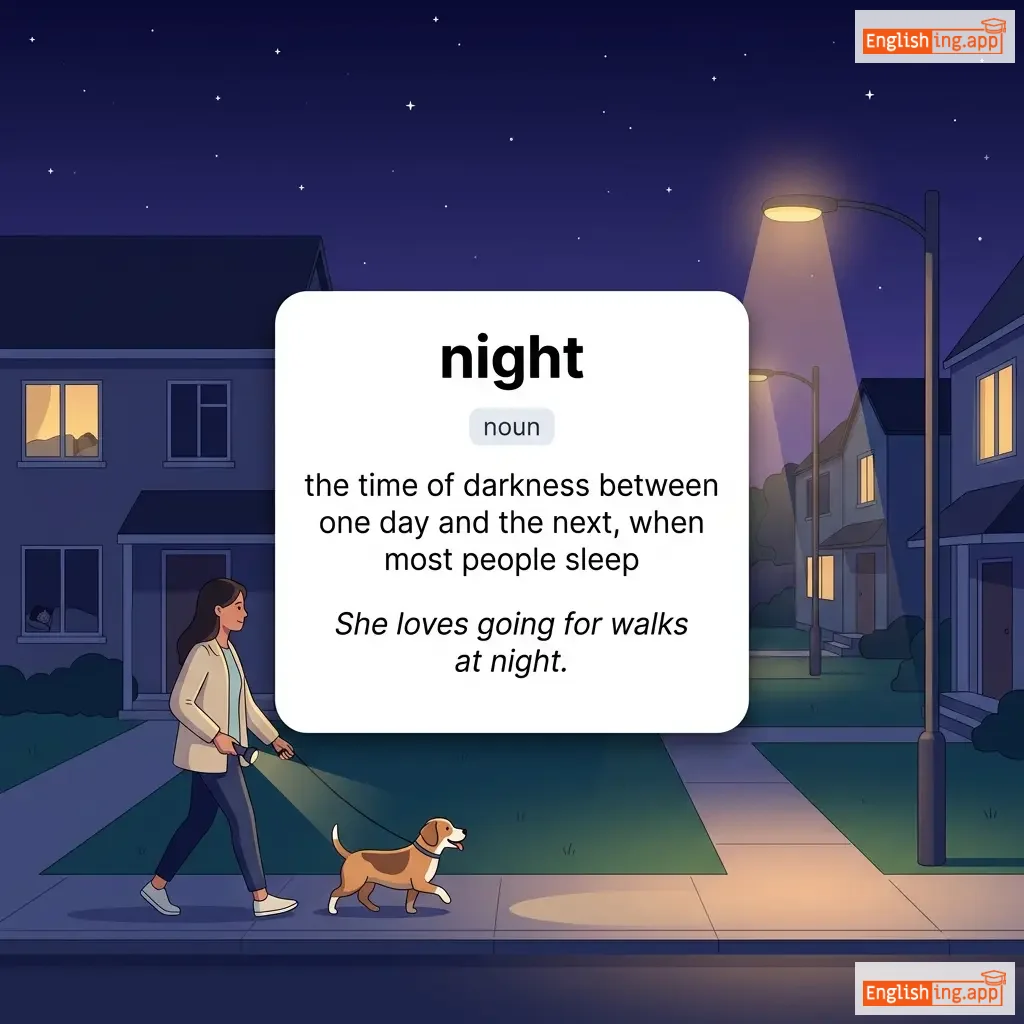
night definition card — visual illustration of the meaning
noun
/naɪt/
ночь (noch)

the time of darkness between one day and the next, when most people sleep

"She loves going for walks at night."
"Ей нравится гулять ночью." (Ey nravitsya gulyat' noch'yu.)
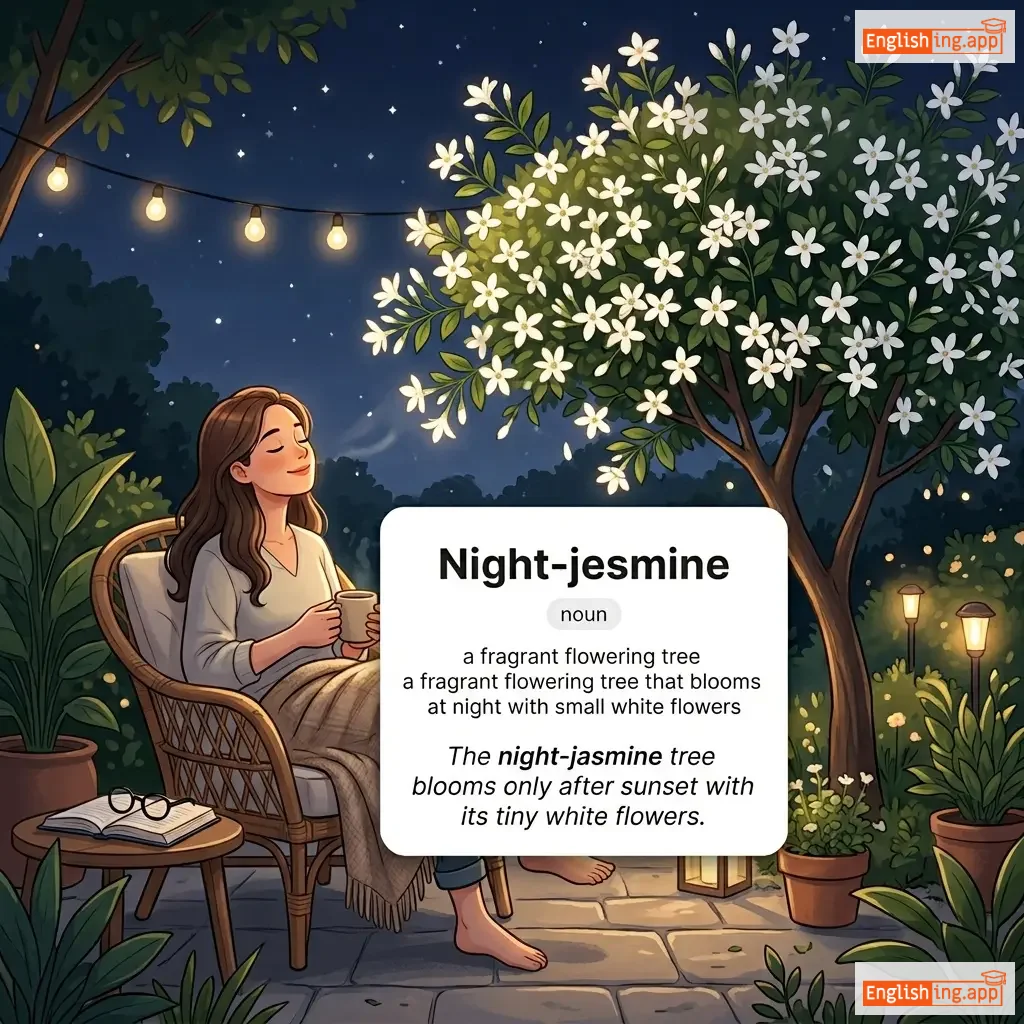
Night-jesmine definition card — visual illustration of the meaning
noun
/naɪt ˈdʒæz.mɪn/
ночной жасмин (nochnoy zhasmin)

a fragrant flowering tree that blooms at night with small white flowers

"The night-jasmine tree blooms only after sunset with its tiny white flowers."
"Дерево ночного жасмина цветет только после заката своими маленькими белыми цветами." (derevo nochnogo zhasmina tsvetet tolko posle zakata svoimi malen'kimi belymi tsvetami.)
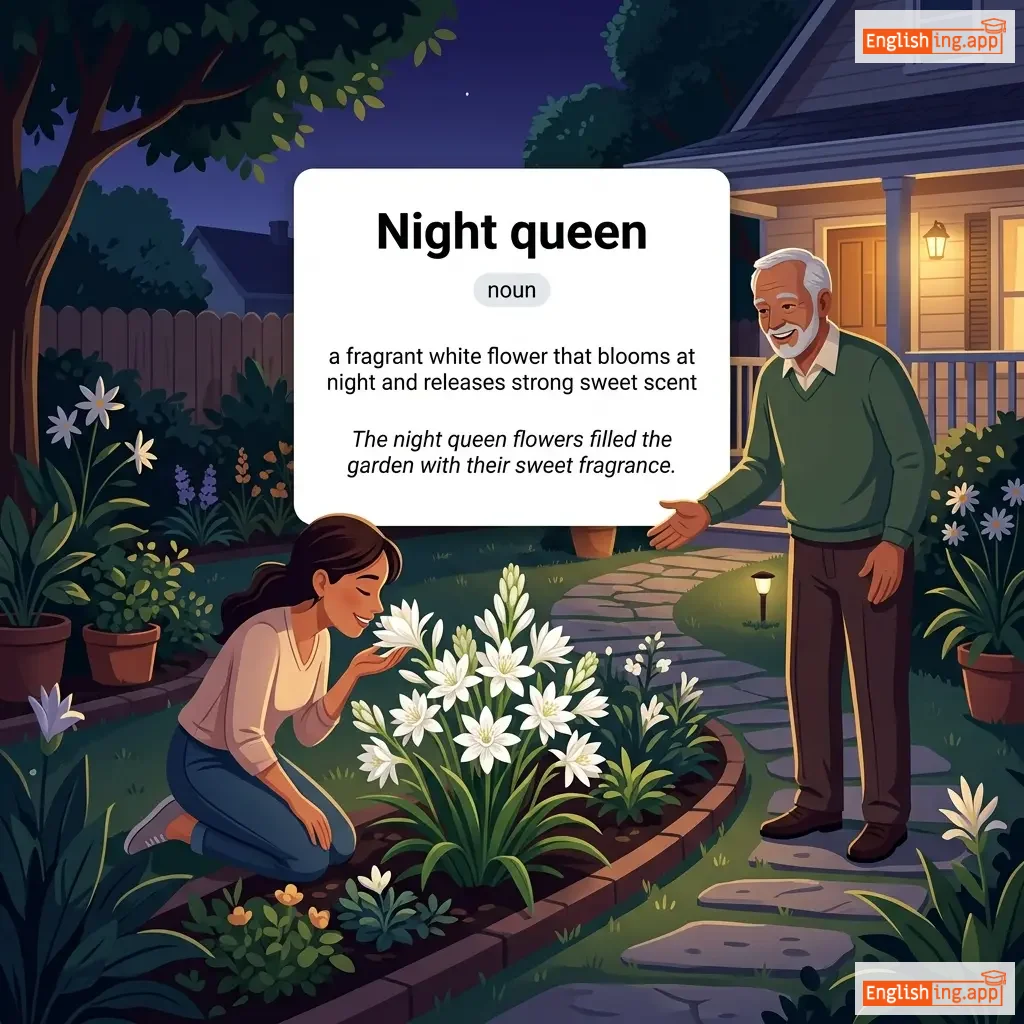
Night queen definition card — visual illustration of the meaning
noun
/naɪt kwiːn/
царица ночи (tsaritsa nochi)

a fragrant white flower that blooms at night and releases strong sweet scent

"The night queen flowers filled the garden with their sweet fragrance."

"Цветы царицы ночи наполнили сад своим сладким ароматом." (tsvety tsaritsy nochi napolnili sad svoim sladkim aromatom)
noun
/ˈnaɪt.fɔːl/
сумерки (sumyerki)

the time when night begins; dusk

"They decided to return home before nightfall."
"Они решили вернуться домой до наступления сумерек." (Oni reshili vernut'sya domoy do nastupleniya sumerek.)
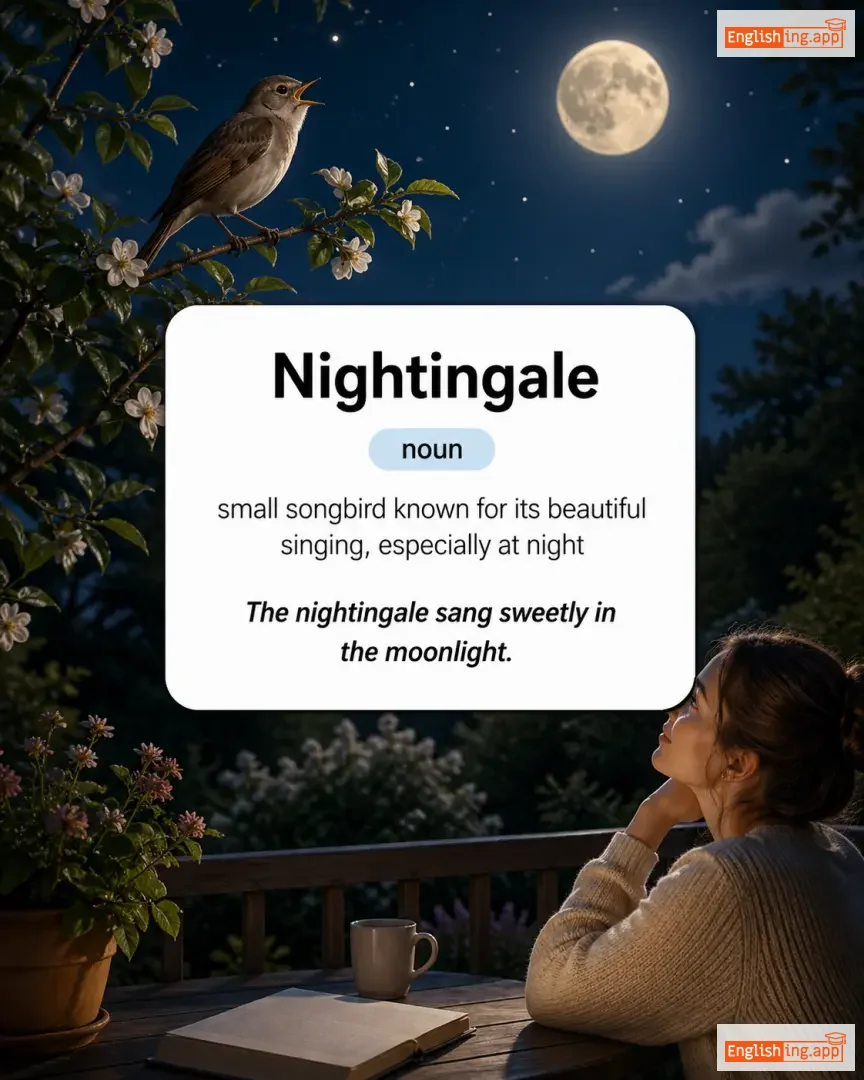
Nightingale definition card — visual illustration of the meaning
noun
/ˈnaɪ.tɪŋ.ɡeɪl/
соловей (solovey)

small songbird known for its beautiful singing, especially at night

"The nightingale sang sweetly in the moonlight."

"Соловей пел сладко в лунном свете." (Solovey pel sladko v lunom svete)
noun
/ˈnaɪtˌmɛər/

a frightening or unpleasant dream; a very distressing experience.

"Last night, she had a terrifying nightmare."

noun
/ˈnaɪɪˌlɪzəm/
нихилизм (nihilizm)

The rejection of all religious and moral principles, often in the belief that life is meaningless.

"The philosopher was criticized for promoting nihilism."

"Философа раскритиковали за продвижение нигилизма." (Filosofa raskritikovali za prodvizhenie nigilizma.)
noun
/ˈnaɪəlɪst/
нигилист (nigilist)

A person who rejects all religious and moral principles, often believing that life is meaningless.

"He was called a nihilist for rejecting all social norms."

"Его называли нигилистом за отказ от всех социальных норм." (Ego nazyvali nigilistom za otkaz ot vsekh sotsial'nykh norm.)
noun
/nɪl/
ноль (nol)

Nothing; zero.

"The score remained nil after the first half."

"Счёт остался ноль после первого тайма." (Schyot ostalsya nol' posle pervogo tayma.)
adjective
/ˈnɪmbəl/
проворный (provorniy)

Quick and light in movement or thought.

"The dancer’s nimble steps impressed the audience."

"Ловкие шаги танцовщицы впечатлили зрителей." (Lovkie shagi tantsovščitsy vpečatlili zriteley.)
noun
/naɪn/
девять (devyat)

the number that is one more than eight

"She has nine books in her collection."

"У нее девять книг в коллекции." (U nee devyat knig v kollektsii.)
noun
/ˈnɪn.i/
тупица (tupitsa)

a silly or foolish person; someone who lacks common sense

"Don't be such a ninny, use your brain!"
"Не будь таким тупицей, используй свой мозг!" (Ne bud' takim tupitsey, ispol'zuy svoy mozg!)
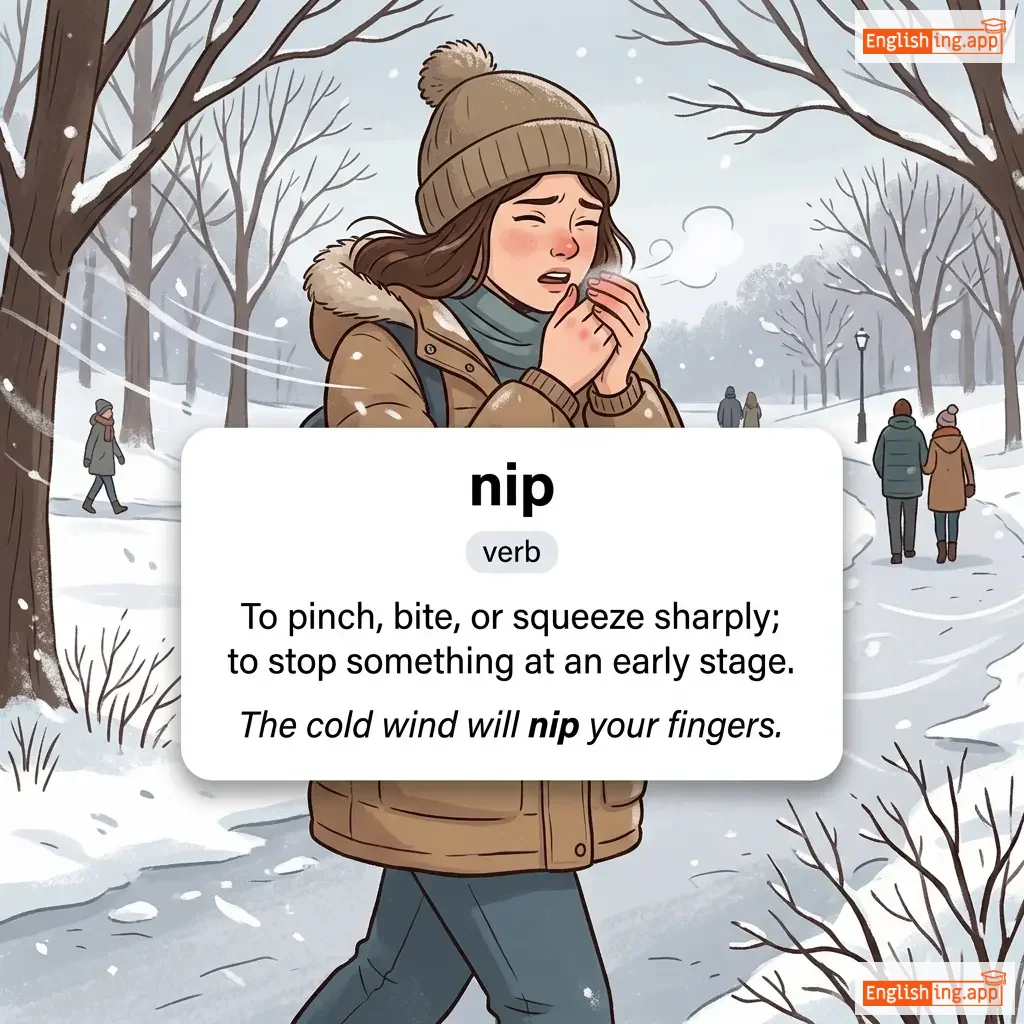
nip definition card — visual illustration of the meaning
verb
/nɪp/
щипать (shchipat')

To pinch, bite, or squeeze sharply; to stop something at an early stage.

"The cold wind will nip your fingers."

"Холодный ветер ущипнет твои пальцы." (Kholodnyi veter uschipnet tvoi pal'tsy.)
adjective
/ˈnɪp.i/
холодно; прохладно; быстро и ловко в движении (kholodno; prokhladno; bystro i lovko v dvizhanii)

cold; chilly; quick and agile in movement

"It's quite nippy outside today, you should wear a jacket."

"На улице довольно холодно сегодня, тебе стоит надеть куртку." (Na ulice dovol'no kholodno segodnya, tebe stoit nadet' kurtku.)
🕉️

nirvana

noun
/nɪərˈvɑːnə/

A state of perfect happiness, peace, and freedom from suffering; in Buddhism, the ultimate goal of liberation.

"Meditation helps some people seek nirvana in their lives."

noun
/nɪt/
яйцо вшей (yaytso vshay)

The egg or young form of a louse or other parasitic insect.

"The teacher noticed nits in the child’s hair."

"Учитель заметил яйца вшей в волосах ребенка." (Uchitel' zametil yaytsa vshey v volosakh rebenka.)
verb
/ˈnɪtˌpɪk/

To find and criticize small or unimportant faults in someone or something.

"She tends to nitpick about every little detail."

adverb
/noʊ/
нет (net)

used to give a negative response or to show disagreement

"She said no to the invitation."
"Она сказала нет приглашению." (Ona skazala net priglasheniyu.)
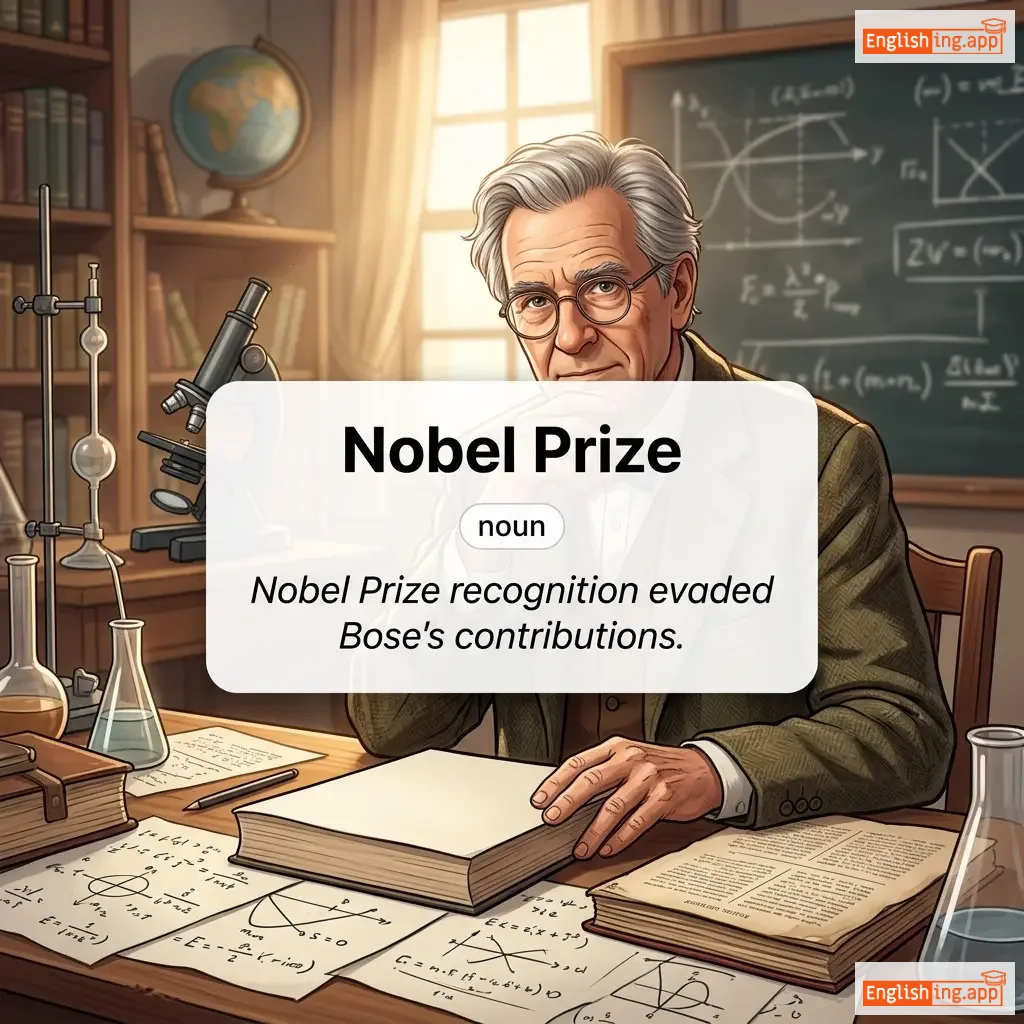
Nobel Prize definition card — visual illustration of the meaning
noun
noʊˈbel praɪz
Нобелевская премия (Nobelevskaya premiya)

Any of six international prizes awarded annually for outstanding work in physics, chemistry, physiology or medicine, literature, economics, and the promotion of peace.

"Nobel Prize recognition evaded Bose's contributions."

"Признание Нобелевской премии избегало вкладов Бозе." (Priznanie Nobelievskoi premii izbegalo vkladov Boze.)
noun
/nəʊˈbɪləti/
благородство (blagorodstvo)

the quality of being noble in character or the group of people belonging to the aristocracy

"The king praised her for her nobility and courage."

"Царь похвалил её за её благородство и мужество." (Tsar' pokhvalil yeyo za yeye blagorodstvo i muzhestrvo.)
Noble definition card — visual illustration of the meaning
adjective
/ˈnoʊbəl/
обладающий или демонстрирующий высокие личные качества, высокие моральные принципы или высокий социальный статус (obladayushchij ili demontiruyushchij vysokie lichnye kachestva, vysokie moral'nye printsipy ili vysokij sotsial'nyj status)

Having or showing fine personal qualities, high moral principles, or being of high social rank.

"He is admired for his noble character and generosity."

"Его восхищают за его благородный характер и щедрость." (Ego voskhishchayut za ego blagonorodnyj kharakter i shchedrost'.)
pronoun
/ˈnoʊˌbɑːdi/
никто (nikto)

no person; not anyone

"Nobody came to the party."

"Никто не пришел на вечеринку." (Nikto ne prishel na vecherinku.)
adjective
/nɒkˈtɜːrnəl/
ночной (nochnoy)

Active at night and sleeping during the day.

"Owls are nocturnal animals that hunt at night."

"Совы — ночные животные, которые охотятся ночью." (Sovy — nochnye zhivotnye, kotorye okhotyatsya nochyu.)
⚔️

Norman

noun
/ˈnɔːrmən/

A member of a people of mixed Scandinavian and Frankish origin who settled in Normandy, or relating to their culture.

"The Normans conquered England in 1066."

verb
/ˌnɒnˈplʌst/
озадаченная (ozadachennaya)

Past tense of nonplus; surprised and confused.

"She was completely nonplused by his sudden decision."

"Она была полностью озадачена его неожиданным решением." (Ona byla polnost'yu ozadachennaya yevo neozhidannym resheniyem.)
verb
/ˌnɒnˈplʌst/
озадаченный (ozadachenny)

Past tense of nonplus; surprised and unsure how to react.

"He stood nonplussed at the strange remark."

"Он стоял озадаченный перед странным замечанием." (On stoyal ozadachennyy pered strannym zamechaniyem.)
adjective
/ˌnɒnˈprɒfɪt/
некоммерческая организация (nekommiercheskaya organizatsiya)

an organization that does not aim to make a profit, often serving a social or charitable purpose.

"She works for a nonprofit organization that helps children."

"Она работает в некоммерческой организации, которая помогает детям." (Ona rabotayet v nekommiercheskoy organizatsii, kotoraya pomogayet detyam.)
noun
/ˈnɒnsəns/
чепуха (chepukha)

Words or ideas that have no meaning or make no sense.

"His explanation was pure nonsense."

"Его объяснение было чистой чепухой." (Ego obyasnenie bylo chistoy chepukhoy.)
adjective
/ˌnɒnˈtrɪviəl/
нетривиальный (netrivial'nyy)

Not simple or easy; requiring effort or significant thought.

"Solving the equation turned out to be a nontrivial task."
"Решение уравнения оказалось нетривиальной задачей." (Reshenie uravneniya okazyvalos' netrivial'noy zadachey.)
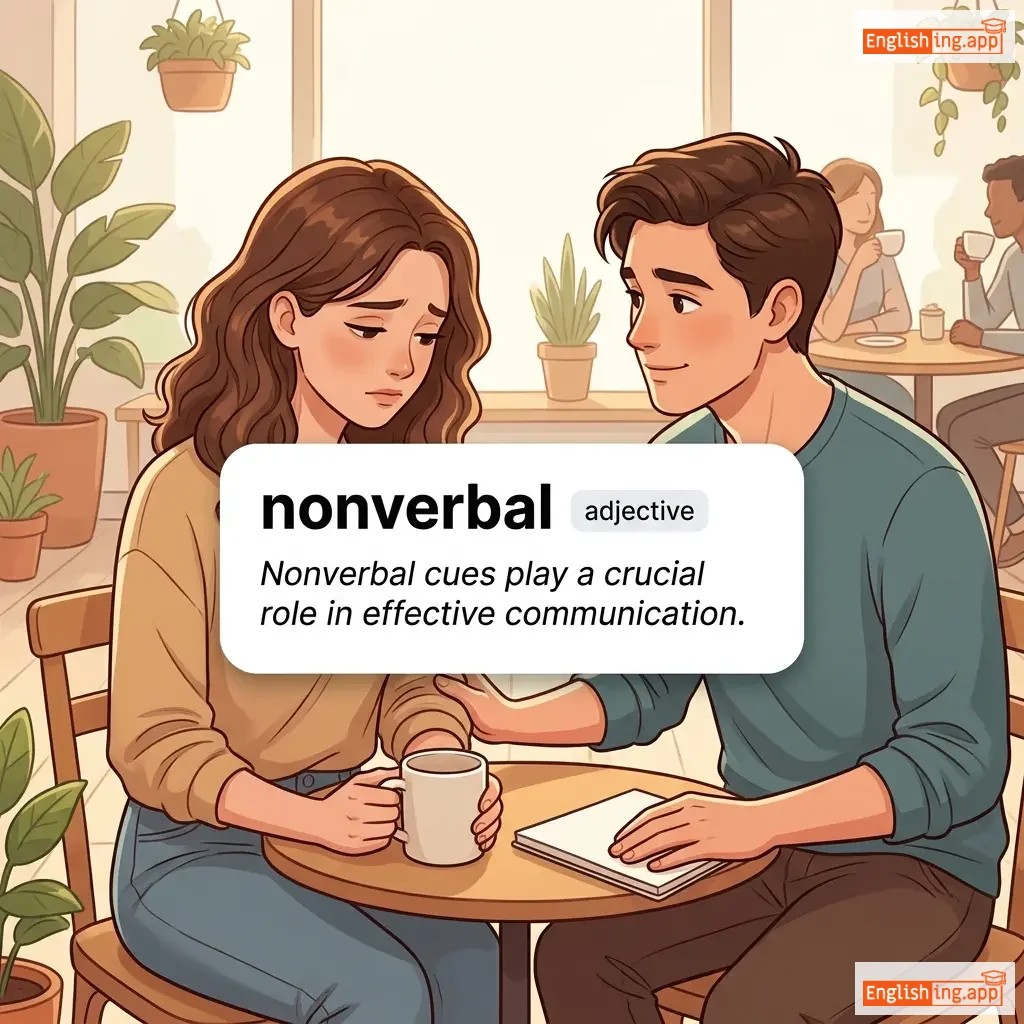
nonverbal definition card — visual illustration of the meaning
adjective
ˌnɒnˈvɜːr.bəl
невербальный (neverbal'nyi)

Communication using body language, facial expressions, or gestures instead of words

"Nonverbal cues play a crucial role in effective communication."

"Невербальные сигналы играют важную роль в эффективной коммуникации." (Neverbal'nye signaly igrayut vazhnuyu rol' v effektivnoy kommunikatsii.)
noun (plural)
/ˈnuːdəlz/
лапша (lapsha)

long, thin strips of dough made from flour, water, or eggs, cooked and eaten as food

"She cooked noodles with vegetables for dinner."

"Она приготовила лапшу с овощами на ужин." (ona prigotovila lapshu s ovoshchami na uzhin)
noun
/nuːn/
полдень (polden)

12 o'clock in the daytime; midday

"The meeting will start at noon."

"Встреча начнется в полдень." (Vstrecha nachnyotsya v polden.)
noun
/nuːs/
петля (petlya)

A loop with a running knot, used especially for trapping or hanging.

"The cowboy tied a noose to catch the wild horse."

"Ковбой завязал петлю, чтобы поймать дикого коня." (Kovboy zavyazal petlyu, chtoby poymat' dikogo konya.)
🚫➡️🚫

nor (нор)

conjunction
/nɔːr/
ни (ni)

used to introduce a negative clause after a negative statement

"He didn't call, nor did he send a message."

"Он не позвонил, ни не отправил сообщение." (On ne pozvonil, ni ne otpravil soobshchenie.)
noun
/nɔːrm/
норма (norma)

An accepted standard or a usual practice.

"Wearing uniforms is the norm in many schools."
"Ношение формы — это норма во многих школах." (Nosheniye formy — eto norma vo mnogikh shkolakh.)
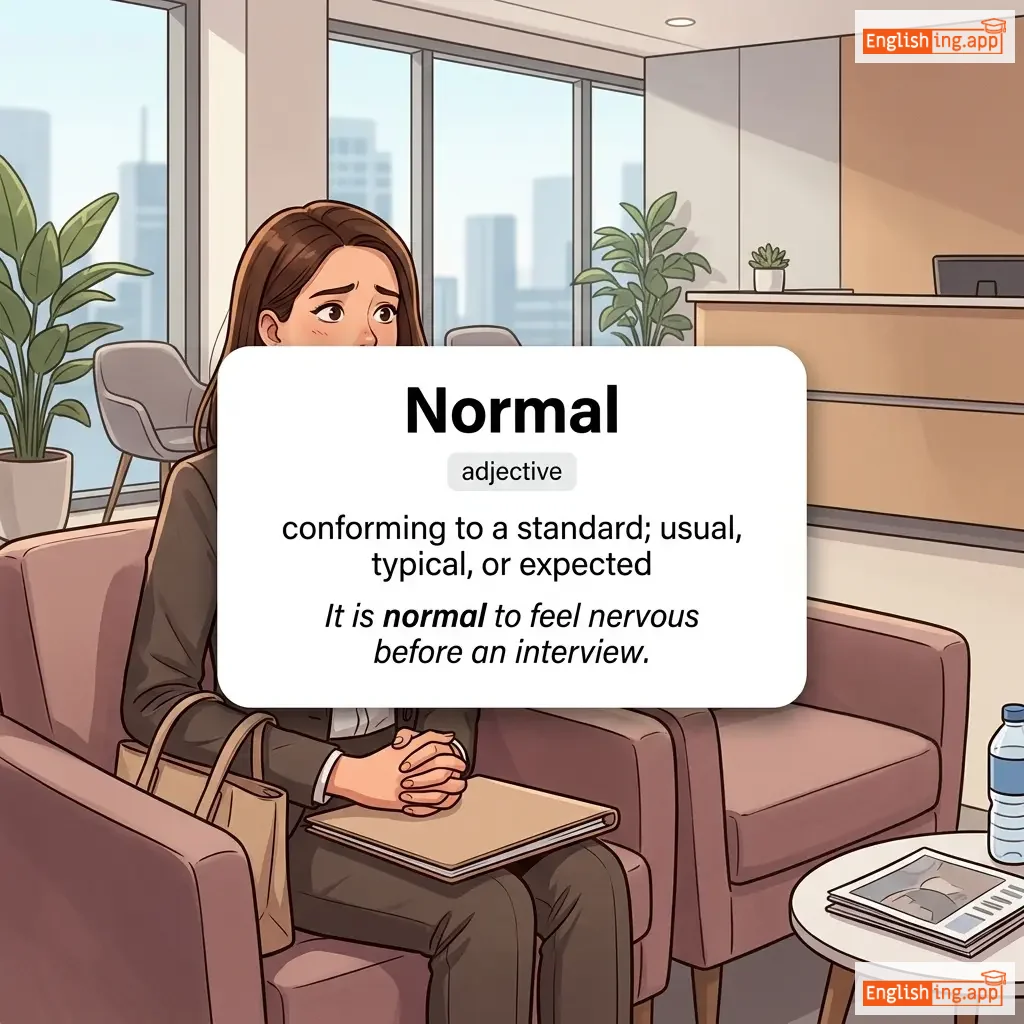
Normal definition card — visual illustration of the meaning
adjective
/ˈnɔː.məl/
нормальный (normal'nyy)

conforming to a standard; usual, typical, or expected

"It is normal to feel nervous before an interview."

"Это нормально чувствовать нервозность перед интервью." (Eto normal'no chuvstvovat' nervoznost' pered interview.)
noun
/ˈnɔːrməlsi/
нормальность (normal'nost')

The condition of being normal; a return to usual or expected conditions.

"After the flood, the town struggled to regain a sense of normalcy."

"После наводнения город пытался восстановить ощущение нормальности." (Posle navodneniya gorod pytalsya vosstanovit' oshchushchenie normal'nosti.)
verb
/ˈnɔːrməlaɪz/
нормализовать (normalizovat)

to bring something back to a normal or standard condition; to make something conform to a standard

"The government took steps to normalize relations with neighboring countries."

"Правительство предприняло шаги для нормализации отношений с соседними странами." (Pravitelstvo predprinyalo shagi dlya normalizatsii otnosheniy s sosednimi stranami)
adverb
/ˈnɔːməli/
обычно (obychno)

in a usual or expected way

"I normally wake up at 7 AM."
"Я обычно просыпаюсь в 7 утра." (Ya obychno prosypayus' v 7 utra.)
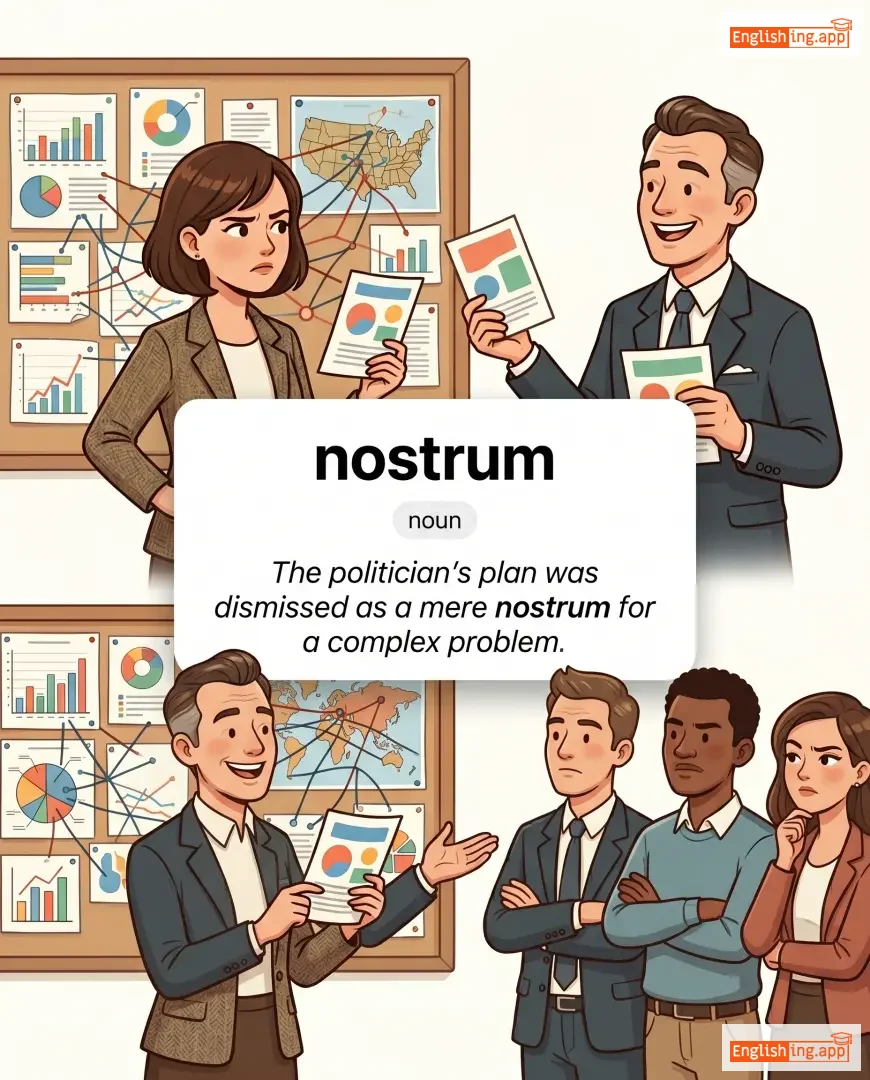
nostrum definition card — visual illustration of the meaning
noun
/ˈnɑːstrəm/
неэффективное средство (neeffektivnoe sredstvo)

a medicine or remedy, especially one that is not considered effective; a questionable solution

"The politician’s plan was dismissed as a mere nostrum for a complex problem."

"План политика был отклонён как простое средство для сложной проблемы." (Plan politika byl otklonyon kak prostoie sredstvo dlya slozhnoi problemy.)
noun
/ˈnoʊzˌɡeɪ/
букет цветов (buket tsvetov)

a small bunch of flowers, typically given as a gift or carried for decoration

"She carried a nosegay of fresh roses to the ceremony."
"Она принесла букет свежих роз на церемонию." (Ona prinesla buket svezhikh roz na tseremoniyu.)
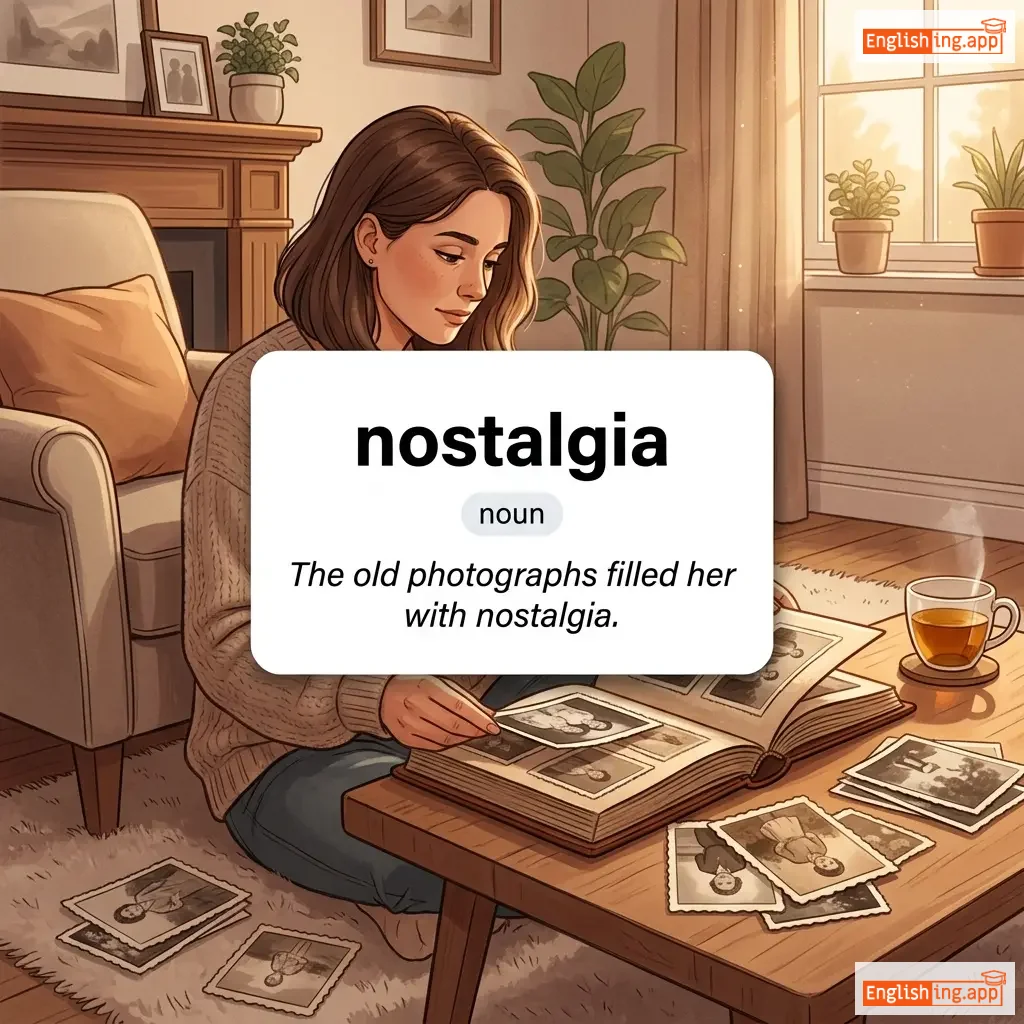
nostalgia definition card — visual illustration of the meaning
noun
/nəˈstældʒə/
ностальгия (nostalgiya)

a sentimental longing for the past, often for a period or place with happy memories

"The old photographs filled her with nostalgia."

"Старые фотографии наполнили её ностальгией." (Staryye fotografii napolnili yeye nostal'giey.)
noun
/ˈnɒs.trɪl/
носовой ход (nosovoy khod)

either of the two openings in the nose through which air passes

"The doctor checked each nostril for any blockage."

"Доктор проверил каждое носовое отверстие на наличие блокировок." (Doktor proveril kazhdoe nosovoye otverstye na nalichiye blokirovok.)
adjective
/ˈnoʊtəbl/
значительный (znachitel'nyj)

worthy of attention or notice; remarkable

"She made a notable contribution to the project."

"Она сделала значительный вклад в проект." (Ona sdelala znachitel'nyj vklad v proyekt.)
adverb
/ˈnoʊtəbli/
заметно (zametno)

used to indicate something worthy of attention or significant

"She is notably talented in painting."
"Она чрезвычайно талантлива в живописи." (Ona chrezvychayno talantliva v zhivopisi.)
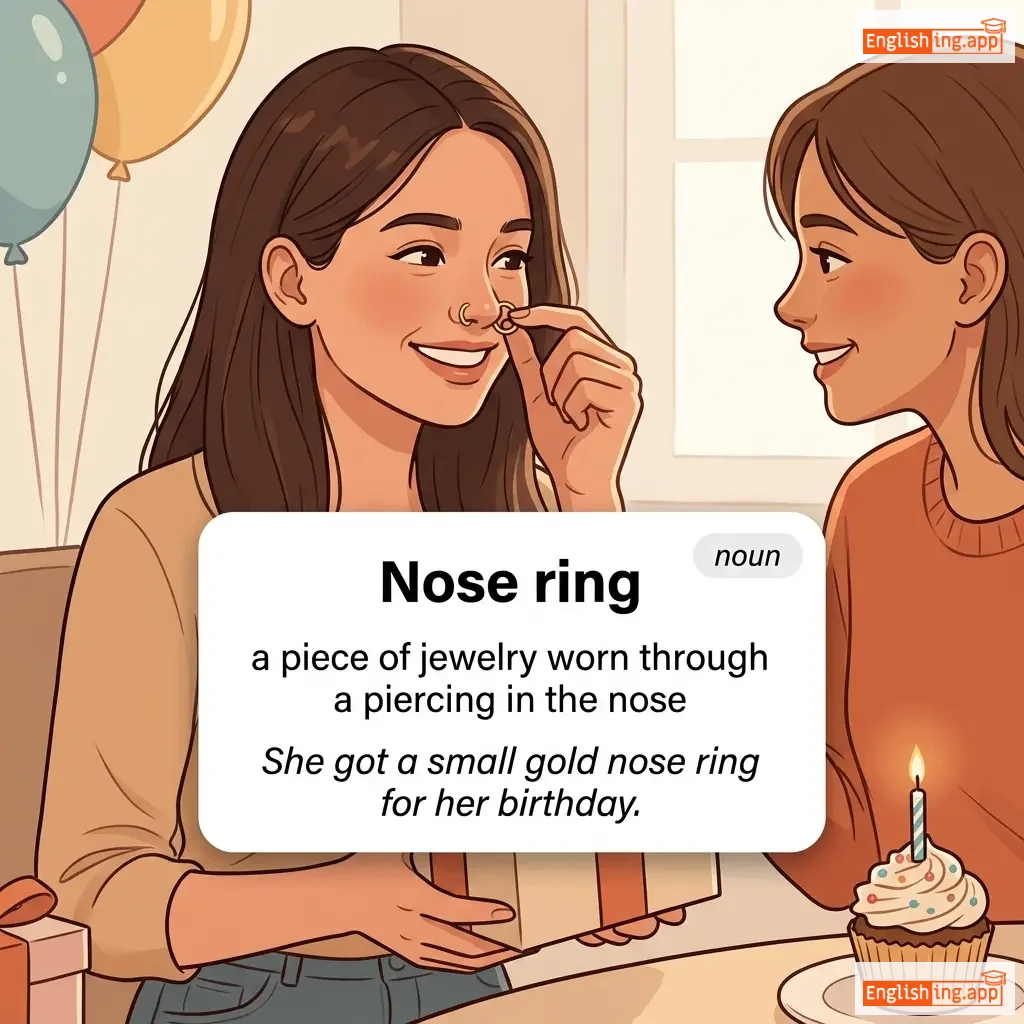
Nose ring definition card — visual illustration of the meaning
noun
/noʊz rɪŋ/
кольцо для носа (kol'tso dlya nosa)

a piece of jewelry worn through a piercing in the nose

"She got a small gold nose ring for her birthday."

"Она получила маленькое золотое кольцо для носа на свой день рождения." (Ona poluchila malen'koye zolotoye kol'tso dlya nosa na svoy den' rozhdeniya.)