वोकैबुलरीज

इंग्लिश वोकैबुलरी डिस्कवर, लर्न और मास्टर करें

noun
/niːs/
भतीजी (bhatiji)

the daughter of one's brother or sister

"My niece is studying at the university this year."

"मेरी भतीजी इस साल विश्वविद्यालय में पढ़ रही है।" (meri bhatiji is saal vishwavidyalaya mein padh rahi hai)
Nigella definition card — visual illustration of the meaning
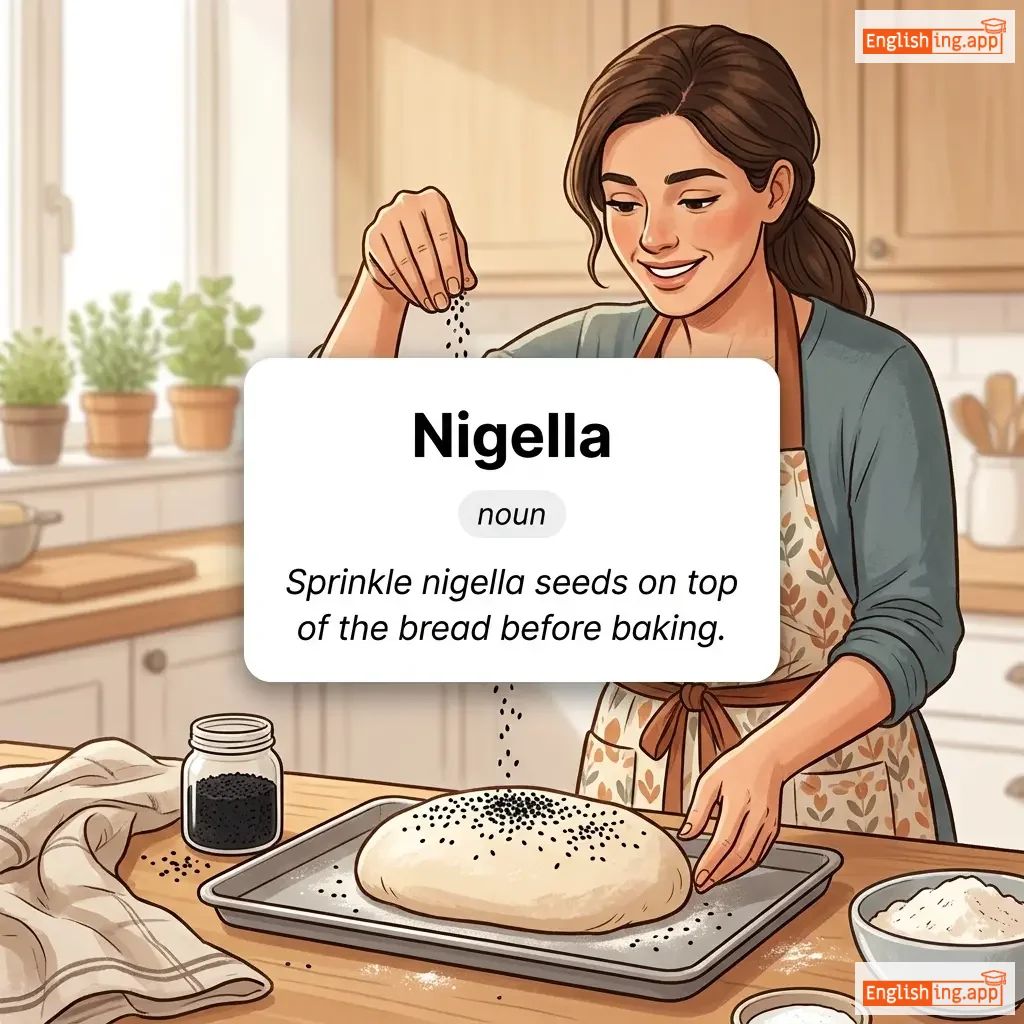
noun
/naɪˈdʒel.ə/
कलौंजी (kalonji)

small black seeds with a nutty, slightly bitter flavor, also known as black cumin or black seed

"Sprinkle nigella seeds on top of the bread before baking."

"ब्रेड पर बेकिंग से पहले कलौंजी के बीज छिड़कें।" (bred par baking se pehle kalonji ke beej chhidkhen.)
adjective
/ˈnɪɡərdli/
कंजूस (kanjoos)

unwilling to spend or give; stingy or miserly

"He was too niggardly to leave a decent tip."

"वह अच्छा टिप छोड़ने के लिए बहुत कंजूस था।" (Wah accha tip chhodne ke liye bahut kanjoos tha.)
verb
/ˈnɪɡəl/
छोटे लेकिन लगातार असुविधा या परेशानी उत्पन्न करना (chhote lekin lagataar asuvidha ya pareshani utpann karna)

to cause slight but persistent annoyance, discomfort, or worry

"A small doubt niggled at her mind."

"एक छोटा संदेह उसके मन को परेशान कर रहा था।" (Ek chhota sandeh uske man ko pareshan kar raha tha.)
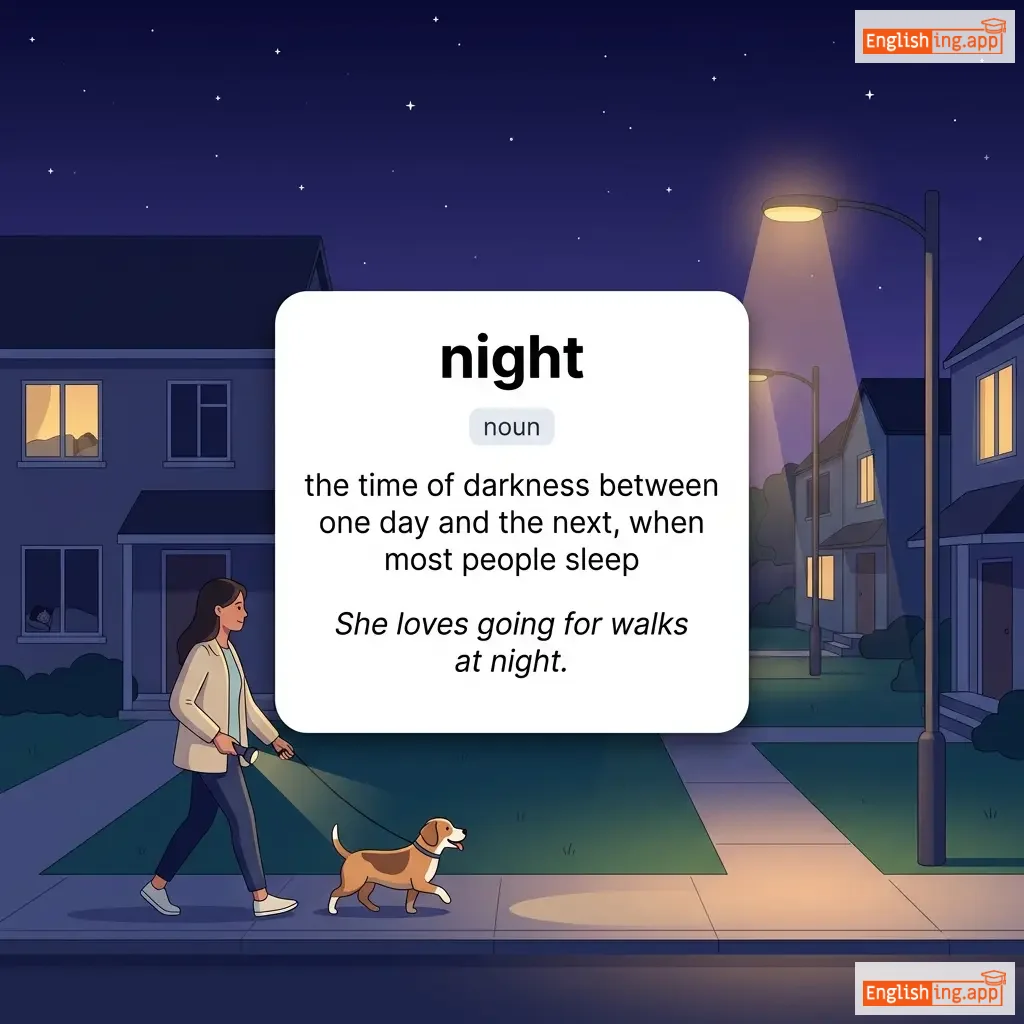
night definition card — visual illustration of the meaning
noun
/naɪt/
रात्रि (ratri)

the time of darkness between one day and the next, when most people sleep

"She loves going for walks at night."

"वह रात को चलने जाना पसंद करती है।" (Wah raat ko chalne jana pasand karti hai.)
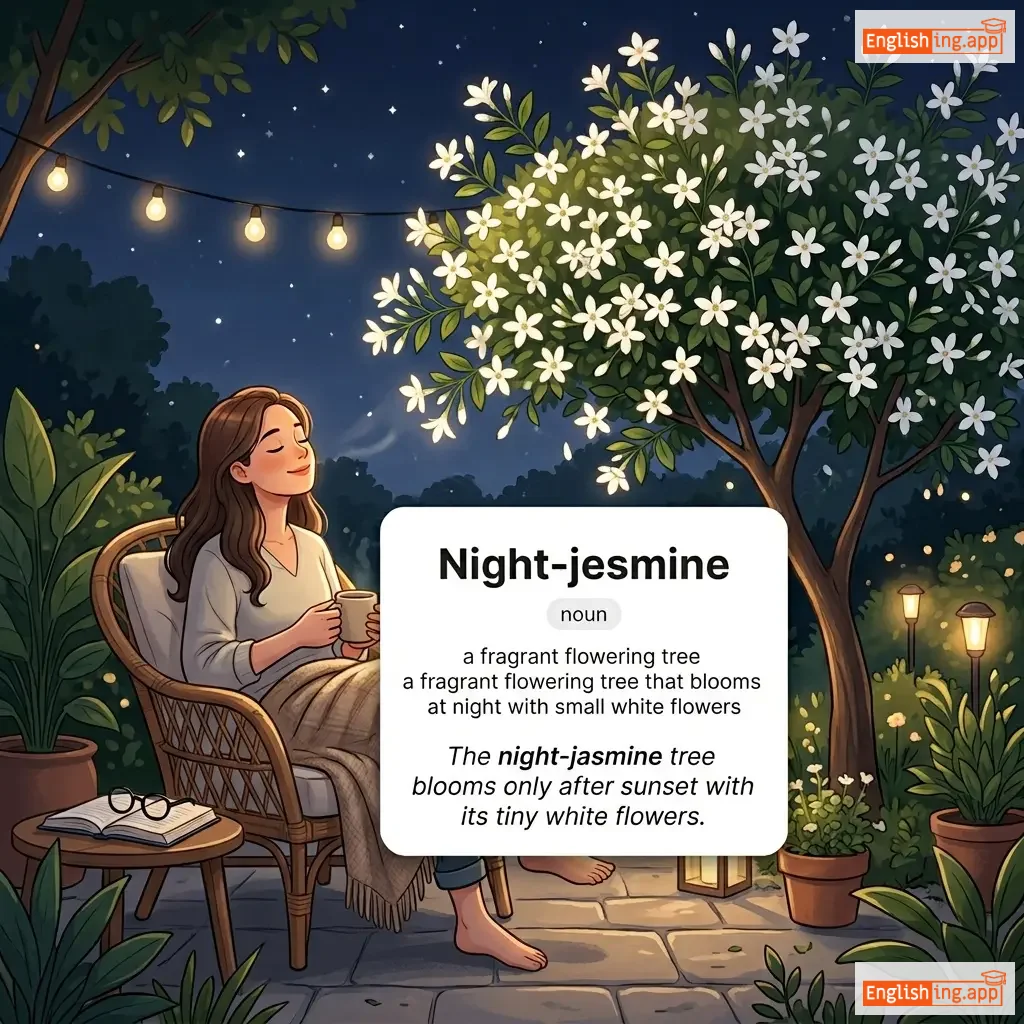
Night-jesmine definition card — visual illustration of the meaning
noun
/naɪt ˈdʒæz.mɪn/
रात की रानी (raat ki rani)

a fragrant flowering tree that blooms at night with small white flowers

"The night-jasmine tree blooms only after sunset with its tiny white flowers."

"रात की रानी का पेड़ केवल सूर्यास्त के बाद अपने छोटे सफेद फूलों के साथ खिलता है।" (raat ki rani ka ped keval suryast ke baad apne chhote safed phoolon ke sath khilta hai.)
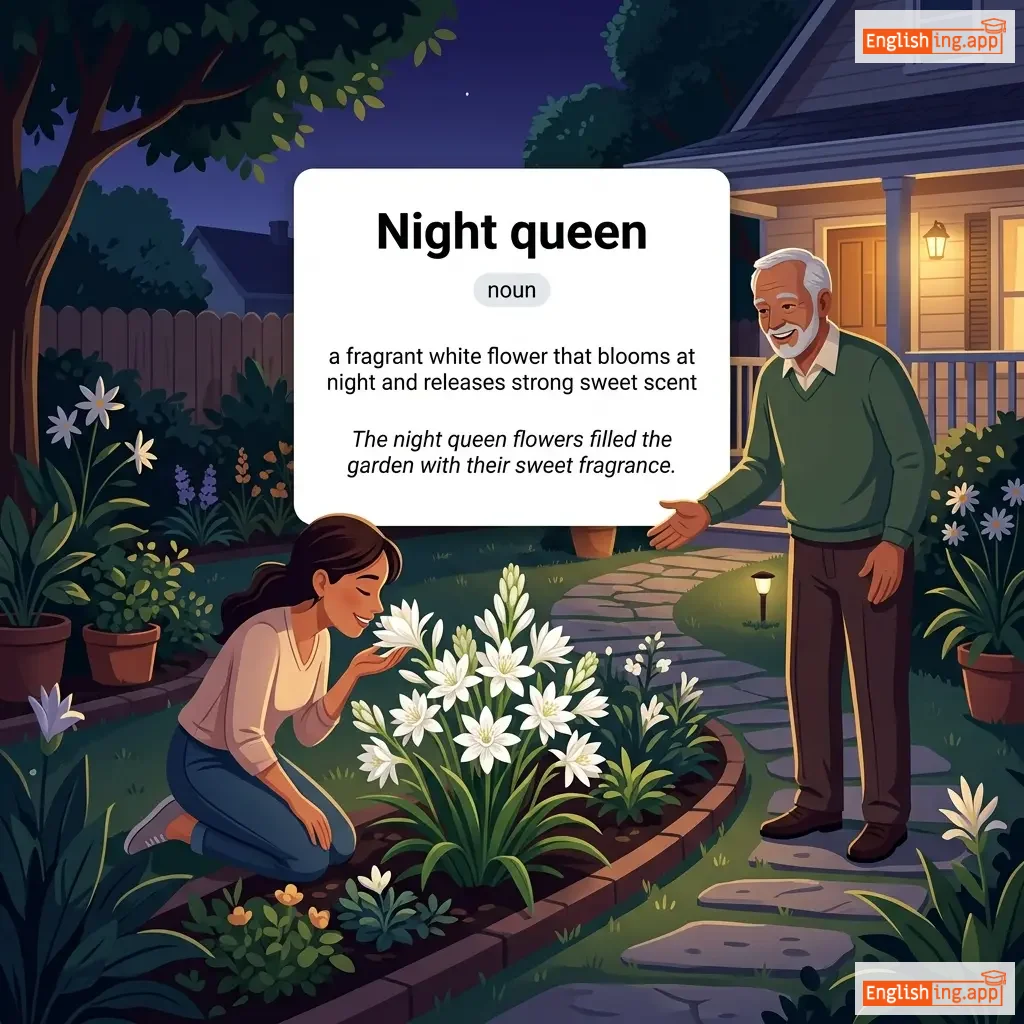
Night queen definition card — visual illustration of the meaning
noun
/naɪt kwiːn/
रजनीगंधा (rajnigandha)

a fragrant white flower that blooms at night and releases strong sweet scent

"The night queen flowers filled the garden with their sweet fragrance."

"रजनीगंधा के फूलों ने अपनी मीठी सुगंध से बगीचे को भर दिया।" (rajnigandha ke phoolon ne apni meethi sugandh se bagiche ko bhar diya)
noun
/ˈnaɪt.fɔːl/
रात्रि का समय (raatri ka samay)

the time when night begins; dusk

"They decided to return home before nightfall."

"उन्होंने रात होने से पहले घर लौटने का निर्णय लिया।" (unhone raat hone se pehle ghar lautne ka nirnay liya.)
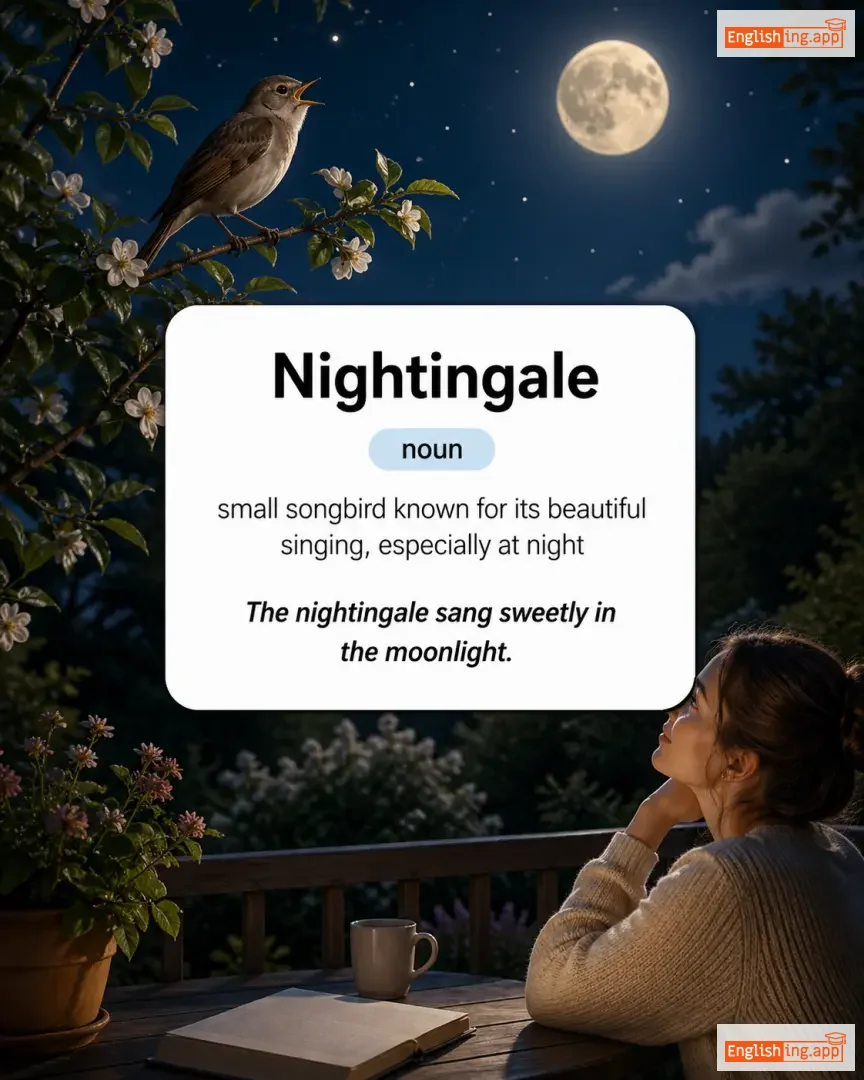
Nightingale definition card — visual illustration of the meaning
noun
/ˈnaɪ.tɪŋ.ɡeɪl/
नाइटिंगेल (naightingel)

small songbird known for its beautiful singing, especially at night

"The nightingale sang sweetly in the moonlight."

"नाइटिंगेल चाँदनी में मीठा गा रहा था।" (naightingel chandani mein meetha ga raha tha)
noun
/ˈnaɪtˌmɛər/
बुरा सपना (bura sapna)

a frightening or unpleasant dream; a very distressing experience.

"Last night, she had a terrifying nightmare."

"कल रात, उसने एक डरावना बुरा सपना देखा।" (Kal raat, usne ek darawna bura sapna dekha.)
noun
/ˈnaɪɪˌlɪzəm/
निराशावाद (nirashavad)

The rejection of all religious and moral principles, often in the belief that life is meaningless.

"The philosopher was criticized for promoting nihilism."

"दार्शनिक को निहिलिज़्म को बढ़ावा देने के लिए आलोचना की गई।" (Darshanik ko nihilism ko badhawa dene ke liye alochana ki gayi.)
noun
/ˈnaɪəlɪst/
निराशावादी (nirashavadi)

A person who rejects all religious and moral principles, often believing that life is meaningless.

"He was called a nihilist for rejecting all social norms."

"उसे सभी सामाजिक मानदंडों को नकारने के कारण निराशावादी कहा गया था।" (Use sabhi samajik maan-dandon ko nakarne ke karan nirashavadi kaha gaya tha.)
noun
/nɪl/
शून्य (shunya)

Nothing; zero.

"The score remained nil after the first half."

"पहले हाफ के बाद स्कोर शून्य रहा।" (Pehle half ke baad score shunya raha.)
adjective
/ˈnɪmbəl/
चंचल (chanchal)

Quick and light in movement or thought.

"The dancer’s nimble steps impressed the audience."

"नर्तकी के चंचल कदमों ने दर्शकों को प्रभावित किया।" (Nartaki ke chanchal kadmo ne darshako ko prabhavit kiya.)
noun
/naɪn/
नौ (nau)

the number that is one more than eight

"She has nine books in her collection."

"उसके पास अपनी संग्रह में नौ किताबें हैं।" (Uske paas apni sangrah mein nau kitabein hain.)
noun
/ˈnɪn.i/
मूर्ख (moorkh)

a silly or foolish person; someone who lacks common sense

"Don't be such a ninny, use your brain!"

"ऐसी मूर्खता मत दिखाओ, अपना दिमाग इस्तेमाल करो!" (aisi moorkhta mat dikhao, apna dimaag istemaal karo!)
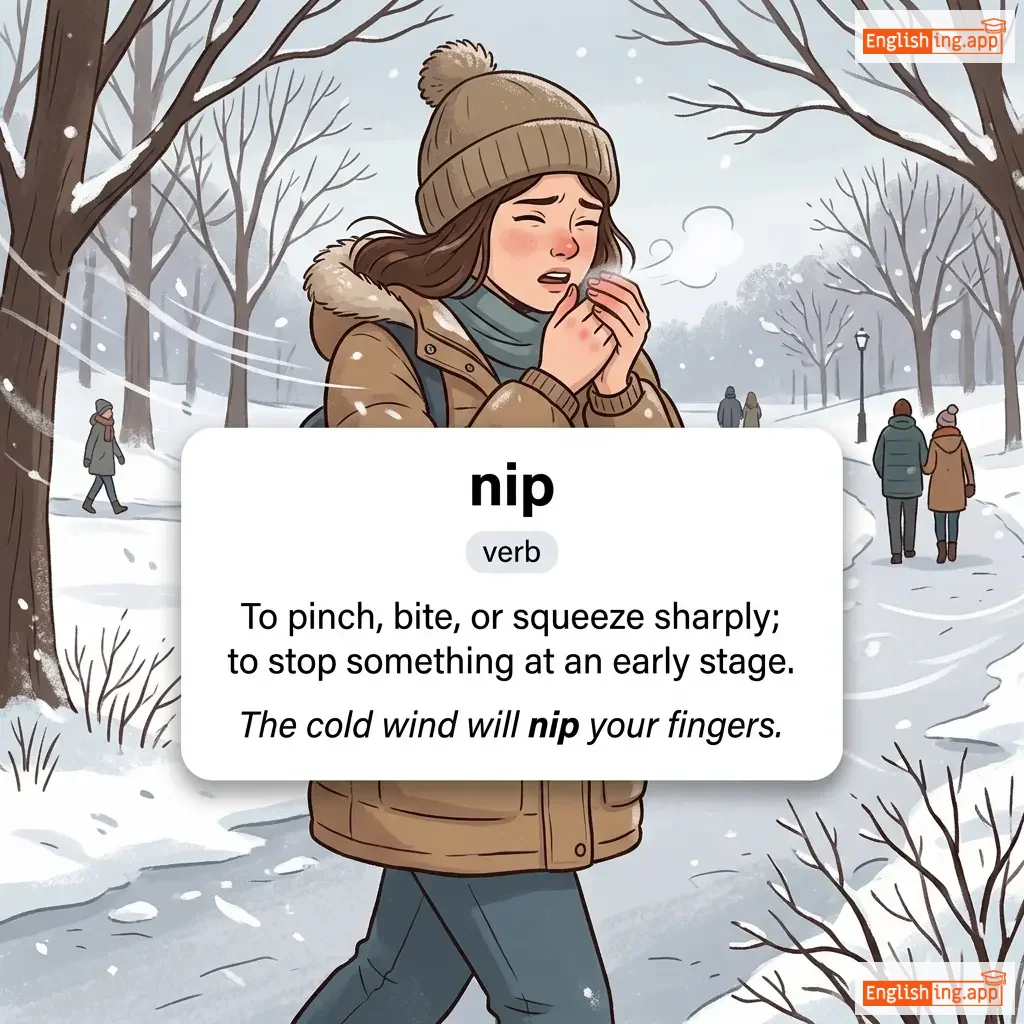
nip definition card — visual illustration of the meaning
verb
/nɪp/
चिमटी काटना (chimti katna)

To pinch, bite, or squeeze sharply; to stop something at an early stage.

"The cold wind will nip your fingers."

"ठंडी हवा तुम्हारी अंगुलियों को चिमटी काटेगी।" (Thandi hawa tumhari anguliyon ko chimti kategi.)
adjective
/ˈnɪp.i/
ठंडा; ठिठुरता; तेज और चपल गति में (thanda; thithurta; tez aur chapal gati mein)

cold; chilly; quick and agile in movement

"It's quite nippy outside today, you should wear a jacket."

"आज बाहर ठंडा है, आपको जैकेट पहननी चाहिए।" (aaj baahar thanda hai, aapko jacket pehanni chahiye.)
noun
/nɪərˈvɑːnə/
निर्वाण (nirvaan)

A state of perfect happiness, peace, and freedom from suffering; in Buddhism, the ultimate goal of liberation.

"Meditation helps some people seek nirvana in their lives."

"ध्यान कुछ लोगों को उनके जीवन में निर्वाण की खोज करने में मदद करता है।" (dhyaan kuch logon ko unke jeevan mein nirvaan ki khoj karne mein madad karta hai)
noun
/nɪt/
जूँ का अंडा (joo ka anda)

The egg or young form of a louse or other parasitic insect.

"The teacher noticed nits in the child’s hair."

"शिक्षक ने बच्चे के बालों में जूँ का अंडा देखा।" (Shikshak ne bachche ke balon mein joo ka anda dekha.)
verb
/ˈnɪtˌpɪk/
छोटी गलती निकालना (chhoti galti nikalna)

To find and criticize small or unimportant faults in someone or something.

"She tends to nitpick about every little detail."

"वह हर छोटी बात पर निटपिक करने की आदत रखती है।" (Woh har chhoti baat par nitpick karne ki aadat rakhti hai.)
adverb
/noʊ/
ना (na)

used to give a negative response or to show disagreement

"She said no to the invitation."

"उसने निमंत्रण को ना कहा।" (Usne nimantran ko na kaha.)
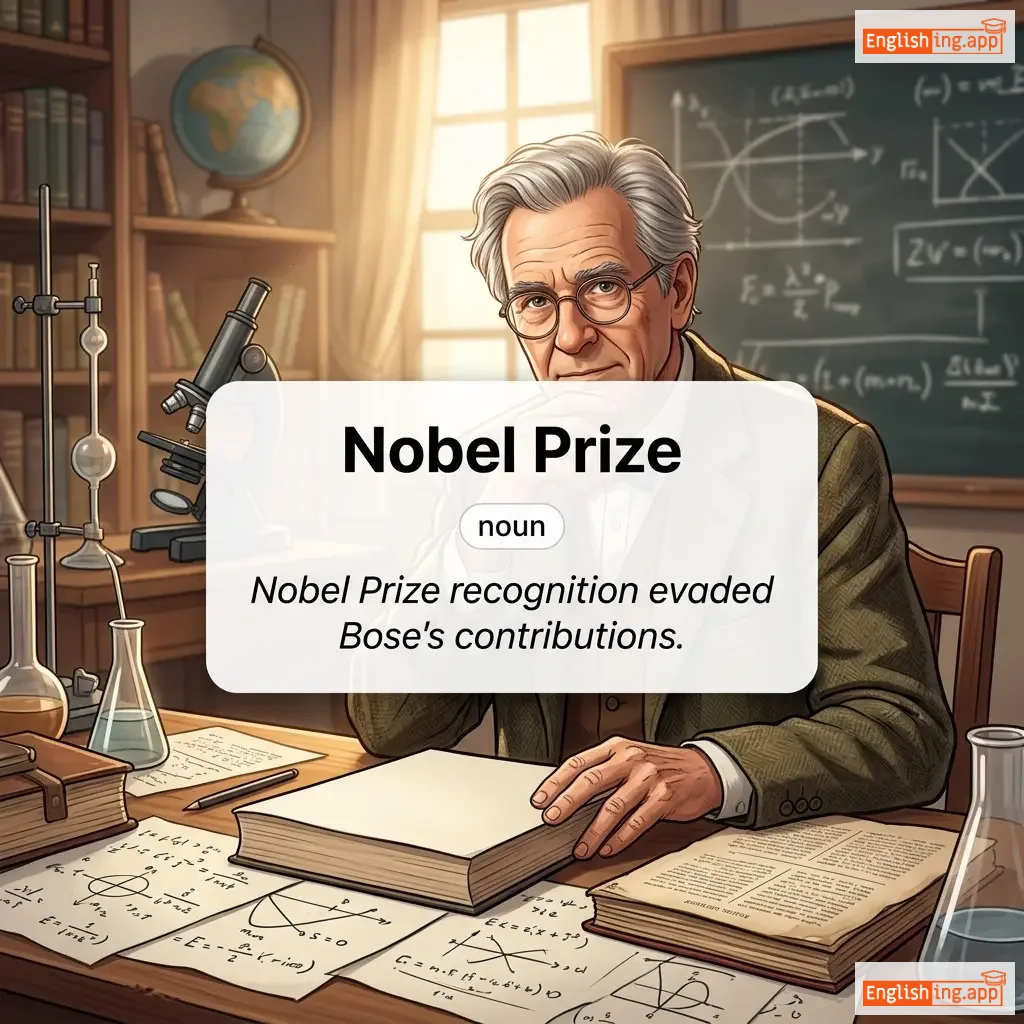
Nobel Prize definition card — visual illustration of the meaning
noun
noʊˈbel praɪz
नोबेल पुरस्कार (Nobel puraskar)

Any of six international prizes awarded annually for outstanding work in physics, chemistry, physiology or medicine, literature, economics, and the promotion of peace.

"Nobel Prize recognition evaded Bose's contributions."

"नोबेल पुरस्कार बोस के योगदान को नहीं मिली।" (Nobel puraskar Bos ke yogdan ko nahi mili.)
noun
/nəʊˈbɪləti/
उच्चता (uchchata)

the quality of being noble in character or the group of people belonging to the aristocracy

"The king praised her for her nobility and courage."

"राजा ने उसकी उच्चता और साहस के लिए उसकी सराहना की।" (raja ne uski uchchata aur sahas ke liye uski sarahna ki.)
Noble definition card — visual illustration of the meaning
adjective
/ˈnoʊbəl/
उच्च या श्रेष्ठ व्यक्तित्व, उच्च नैतिक सिद्धांतों को दिखाने वाला, या उच्च सामाजिक स्थिति वाला (ucch ya shreshth vyaktitva, ucch naitik siddhanton ko dikhane wala, ya ucch samajik sthiti wala)

Having or showing fine personal qualities, high moral principles, or being of high social rank.

"He is admired for his noble character and generosity."

"उसे उसके उच्च चरित्र और उदारता के लिए सराहा जाता है।" (Use uske uchch charitra aur udarta ke liye saraha jata hai.)
pronoun
/ˈnoʊˌbɑːdi/
कोई नहीं (koi nahin)

no person; not anyone

"Nobody came to the party."

"कोई पार्टी में नहीं आया।" (Koi party mein nahin aaya.)
adjective
/nɒkˈtɜːrnəl/
रात्रिचर (ratrichar)

Active at night and sleeping during the day.

"Owls are nocturnal animals that hunt at night."

"उल्लू रात्रिचर जानवर हैं जो रात में शिकार करते हैं।" (Ullu raatichar janwar hain jo raat mein shikar karte hain.)
noun
/ˈnɔːrmən/
नॉर्मन (norman)

A member of a people of mixed Scandinavian and Frankish origin who settled in Normandy, or relating to their culture.

"The Normans conquered England in 1066."

"1066 में नॉर्मन लोगों ने इंग्लैंड पर कब्जा कर लिया।" (one thousand sixty six me Norman logon ne England par kabza kar liya)
verb
/ˌnɒnˈplʌst/
हैरान और उलझा हुआ (hairan aur uljha hua)

Past tense of nonplus; surprised and confused.

"She was completely nonplused by his sudden decision."

"वह उसके अचानक फैसले से पूरी तरह से ननप्लस्ड थी।" (vah uske achanak faisle se poori tarah se nonplused thi.)
verb
/ˌnɒnˈplʌst/
हैरान (hairaan)

Past tense of nonplus; surprised and unsure how to react.

"He stood nonplussed at the strange remark."

"वह अजीब टिप्पणी पर हैरान खड़ा था।" (vah ajeeb tippani par hairaan khada tha.)
adjective
/ˌnɒnˈprɒfɪt/
गैरलाभकारी (gairlaabhkaari)

an organization that does not aim to make a profit, often serving a social or charitable purpose.

"She works for a nonprofit organization that helps children."

"वह एक गैरलाभकारी संगठन के लिए काम करती है जो बच्चों की मदद करता है।" (Vah ek gairlaabhkaari sangathan ke liye kaam karti hai jo bachon ki madad karta hai.)
noun
/ˈnɒnsəns/
बकवास (bakwaas)

Words or ideas that have no meaning or make no sense.

"His explanation was pure nonsense."

"उसकी व्याख्या पूरी तरह से बकवास थी।" (uski vyakhya poori tarah se bakwaas thi.)
adjective
/ˌnɒnˈtrɪviəl/
जटिल (jatil)

Not simple or easy; requiring effort or significant thought.

"Solving the equation turned out to be a nontrivial task."

"समीकरण हल करना एक जटिल कार्य साबित हुआ।" (Samikaran hal karna ek jatil kaary sabit hua.)
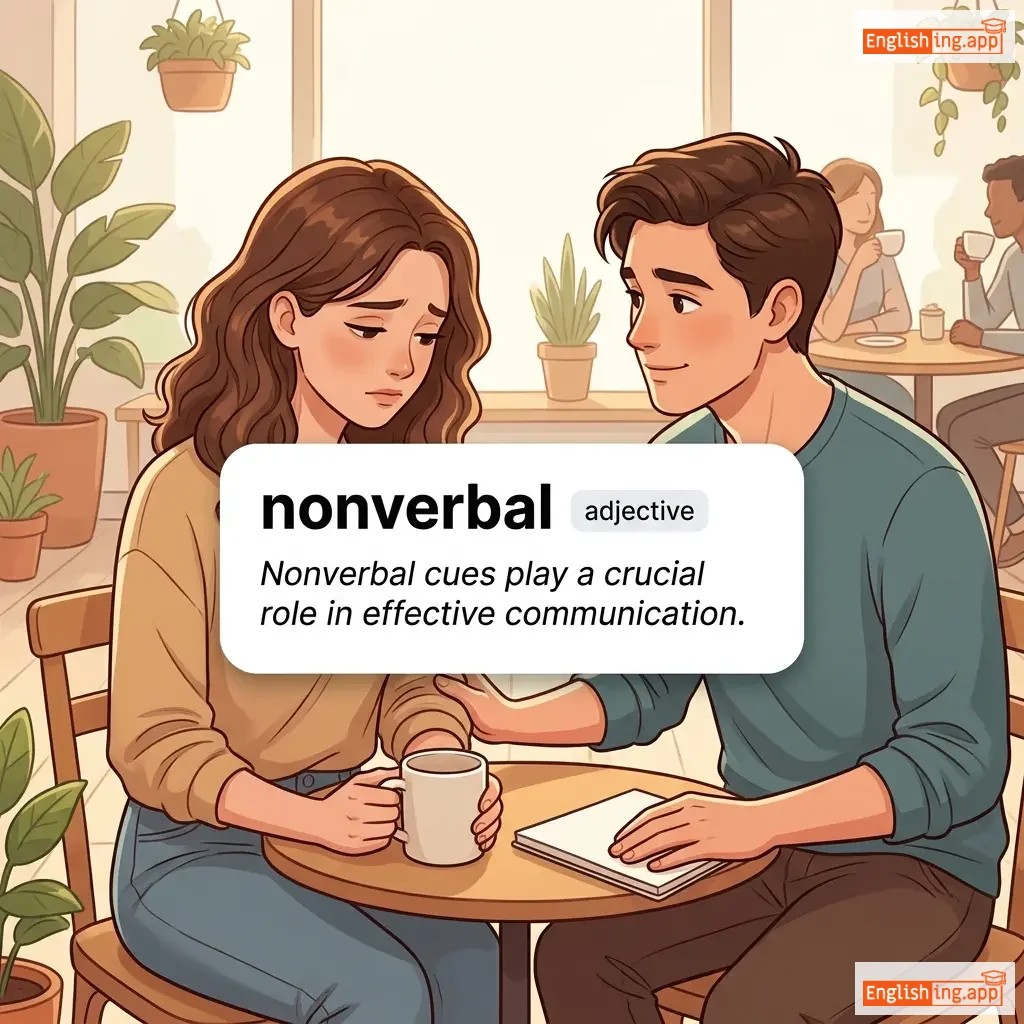
nonverbal definition card — visual illustration of the meaning
adjective
ˌnɒnˈvɜːr.bəl
गैर-मौखिक (gair-maukik)

Communication using body language, facial expressions, or gestures instead of words

"Nonverbal cues play a crucial role in effective communication."

"गैर-मौखिक संकेत प्रभावी संचार में महत्वपूर्ण भूमिका निभाते हैं।" (Gair-maukik sanket prabhavi sanchar mein mahatvapurn bhumika nibhate hain.)
noun (plural)
/ˈnuːdəlz/
नूडल्स (noodals)

long, thin strips of dough made from flour, water, or eggs, cooked and eaten as food

"She cooked noodles with vegetables for dinner."

"उसने रात के खाने में सब्ज़ियों के साथ नूडल्स बनाए।" (usne raat ke khane mein sabziyon ke saath noodals banae)
noun
/nuːn/
दोपहर (dopahar)

12 o'clock in the daytime; midday

"The meeting will start at noon."

"बैठक दोपहर बारह बजे शुरू होगी।" (baithak dopahar barah baje shuru hogi.)
noun
/nuːs/
फाँसी का फंदा (fansi ka funda)

A loop with a running knot, used especially for trapping or hanging.

"The cowboy tied a noose to catch the wild horse."

"काउबॉय ने जंगली घोड़े को पकड़ने के लिए एक नूस बांध दी।" (Cowboy ne jangli ghode ko pakadne ke liye ek noose bandh di.)
🚫➡️🚫

nor (नॉर)

conjunction
/nɔːr/
या नहीं (ya nahin)

used to introduce a negative clause after a negative statement

"He didn't call, nor did he send a message."

"उसने कॉल नहीं किया, और न ही उसने कोई संदेश भेजा।" (Usne kol nahin kiya, aur na hi usne koi sandesh bheja.)
noun
/nɔːrm/
मानक (maanak)

An accepted standard or a usual practice.

"Wearing uniforms is the norm in many schools."

"कई स्कूलों में यूनिफार्म पहनना मानक है।" (Kai schoolon mein uniform pehnna maanak hai.)
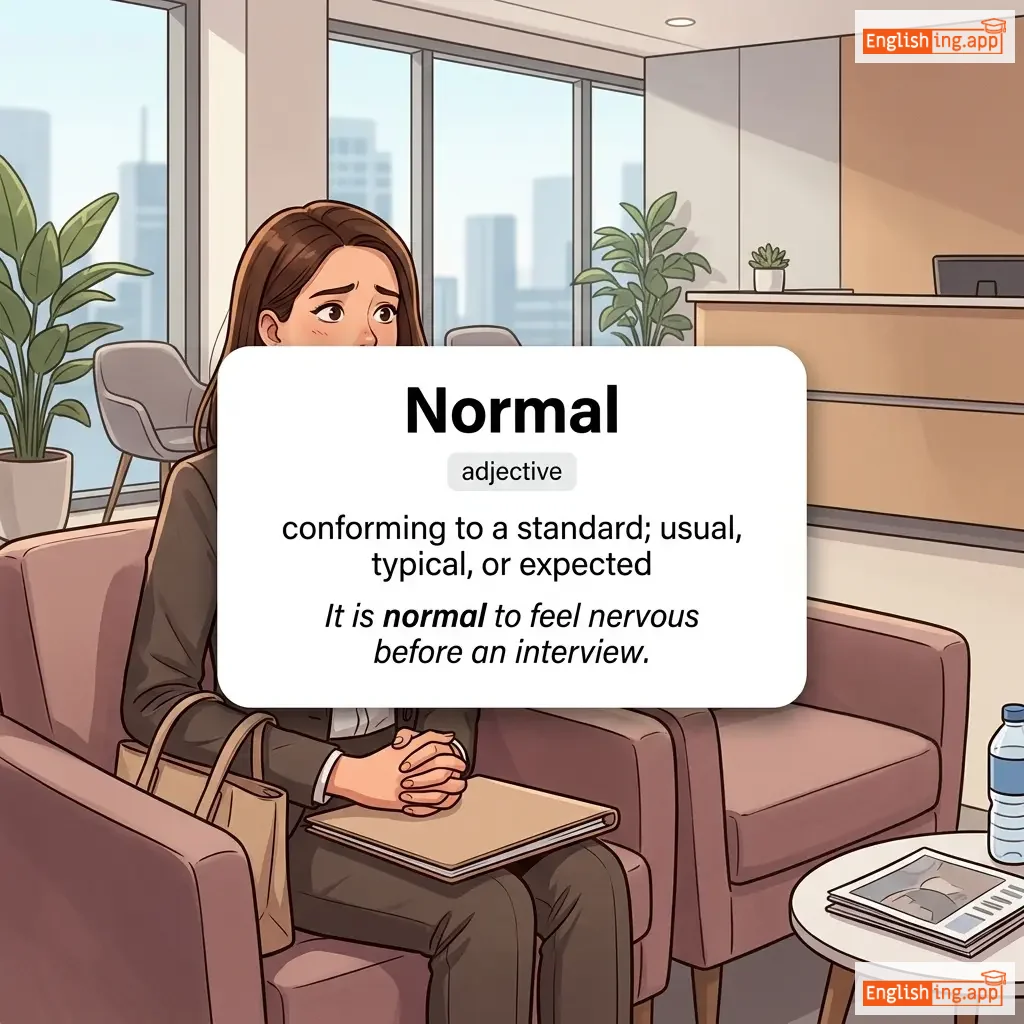
Normal definition card — visual illustration of the meaning
adjective
/ˈnɔː.məl/
सामान्य (samaanya)

conforming to a standard; usual, typical, or expected

"It is normal to feel nervous before an interview."

"इंटरव्यू से पहले नर्वस महसूस करना सामान्य है।" (interview se pehle nervous mahsus karna samaanya hai.)
noun
/ˈnɔːrməlsi/
सामान्य स्थिति (saamanya sthiti)

The condition of being normal; a return to usual or expected conditions.

"After the flood, the town struggled to regain a sense of normalcy."

"बाढ़ के बाद, शहर ने सामान्य स्थिति हासिल करने के लिए संघर्ष किया।" (Badh ke baad, shahar ne saamanya sthiti haasil karne ke liye sangharsh kiya.)
verb
/ˈnɔːrməlaɪz/
सामान्य बनाना (samanya banana)

to bring something back to a normal or standard condition; to make something conform to a standard

"The government took steps to normalize relations with neighboring countries."

"सरकार ने पड़ोसी देशों के साथ संबंध सामान्य करने के कदम उठाए।" (sarkar ne padosi deshon ke sath sambandh samanya karne ke kadam uthaye)
adverb
/ˈnɔːməli/
सामान्य रूप से (saamanya roop se)

in a usual or expected way

"I normally wake up at 7 AM."

"मैं सामान्य रूप से सुबह 7 बजे उठता हूँ।" (Main saamanya roop se subah 7 baje uthta hoon.)
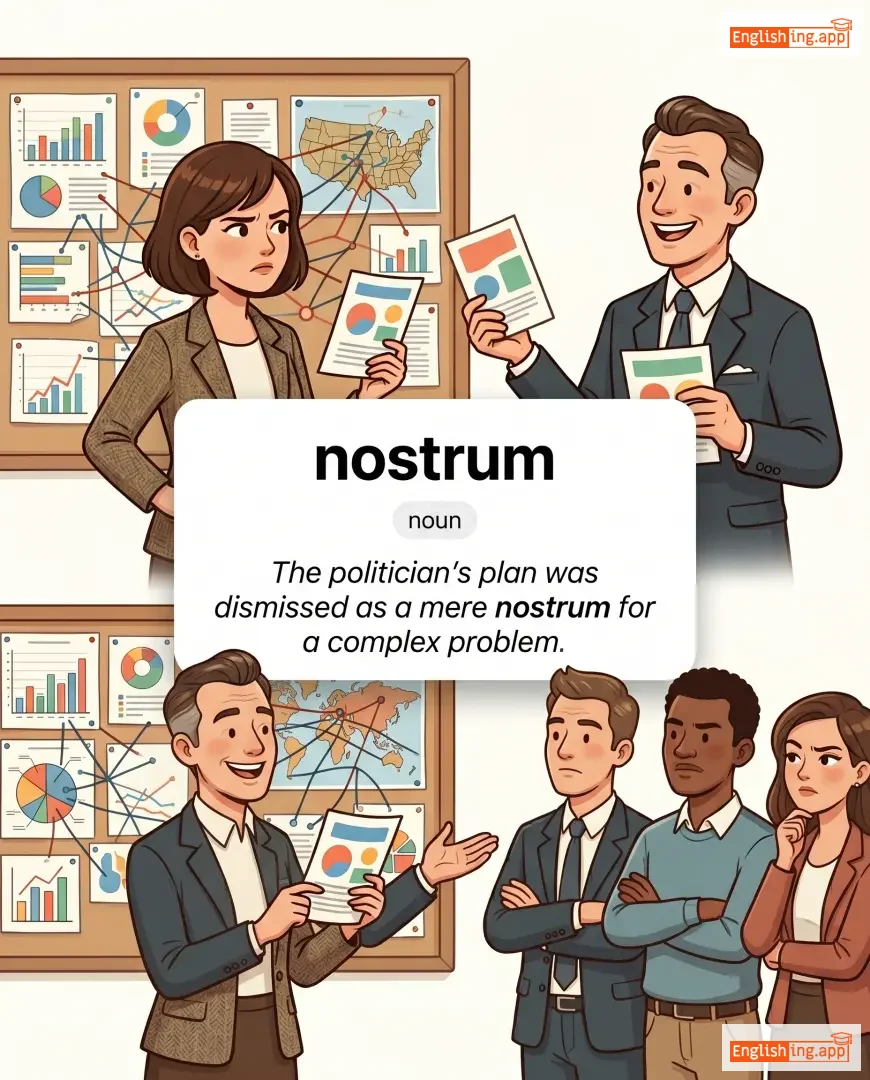
nostrum definition card — visual illustration of the meaning
noun
/ˈnɑːstrəm/
अप्रभावी दवा (aprabhaavi dawa)

a medicine or remedy, especially one that is not considered effective; a questionable solution

"The politician’s plan was dismissed as a mere nostrum for a complex problem."

"राजनीतिक नेता की योजना को एक जटिल समस्या के लिए केवल एक अप्रभावी दवा के रूप में खारिज कर दिया गया।" (Raajneetik neta ki yojna ko ek jatil samasya ke liye keval ek aprabhaavi dawa ke roop mein kharij kar diya gaya.)
noun
/ˈnoʊzˌɡeɪ/
फूलों का गुच्छा (phoolon ka guchcha)

a small bunch of flowers, typically given as a gift or carried for decoration

"She carried a nosegay of fresh roses to the ceremony."

"उसने समारोह में ताजे गुलाबों का एक गुच्छा लिया था।" (Usne samaaroh mein taaje gulaabon ka ek guchcha liya tha.)
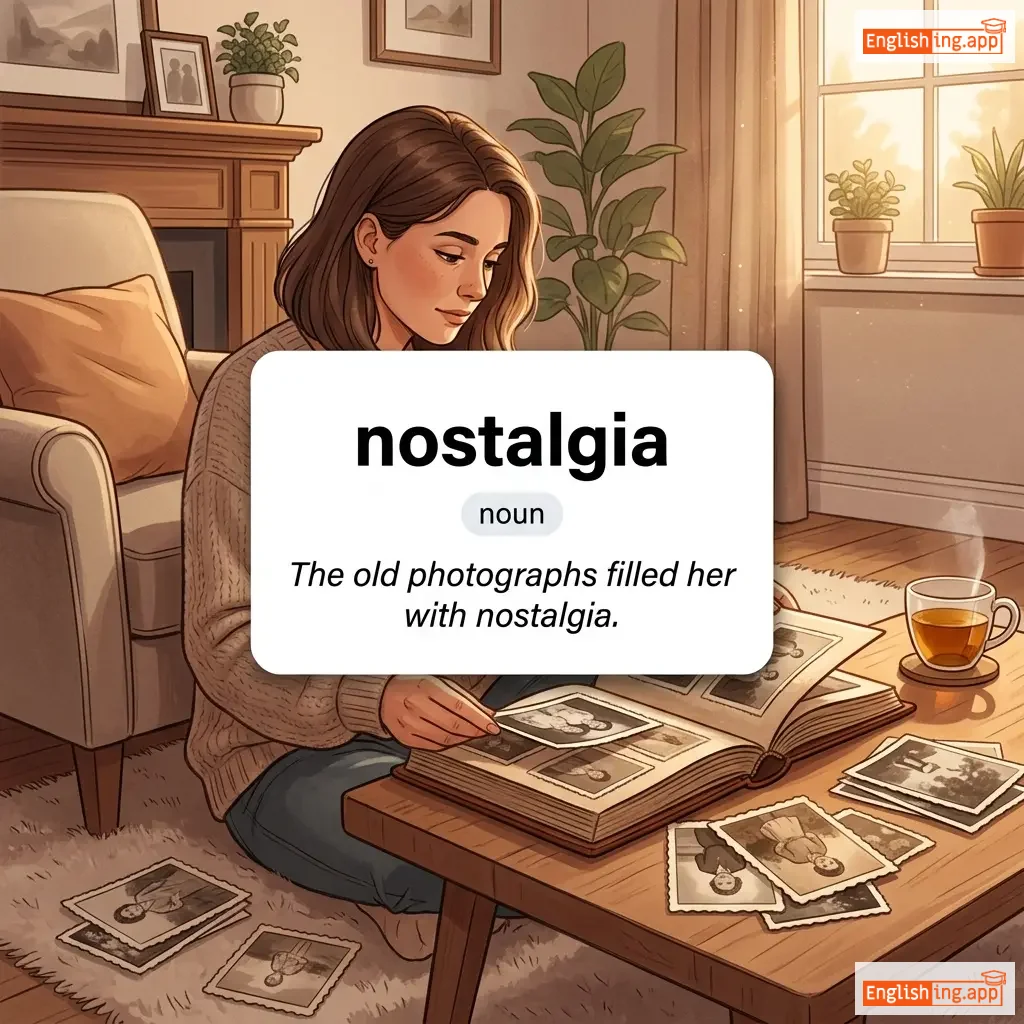
nostalgia definition card — visual illustration of the meaning
noun
/nəˈstældʒə/
अतीत की यादें (ateet ki yaadein)

a sentimental longing for the past, often for a period or place with happy memories

"The old photographs filled her with nostalgia."

"पुरानी तस्वीरों ने उसे नॉस्टेल्जिया से भर दिया।" (Purani tasveeron ne use nostalgia se bhar diya.)
noun
/ˈnɒs.trɪl/
नथुना (nathuna)

either of the two openings in the nose through which air passes

"The doctor checked each nostril for any blockage."

"डॉक्टर ने किसी भी अवरोध के लिए प्रत्येक नथुने की जांच की।" (doktar ne kisi bhi avrodh ke liye pratyek nathune ki jaanch ki.)
adjective
/ˈnoʊtəbl/
महत्वपूर्ण (mahatvapoorn)

worthy of attention or notice; remarkable

"She made a notable contribution to the project."

"उसने परियोजना में एक महत्वपूर्ण योगदान दिया।" (Usne pariyojana mein ek mahatvapoorn yogdan diya.)
adverb
/ˈnoʊtəbli/
विशेष रूप से (vishes roop se)

used to indicate something worthy of attention or significant

"She is notably talented in painting."

"वह पेंटिंग में नोटेबली प्रतिभाशाली है।" (Vah painting mein notebly pratibhashali hai.)
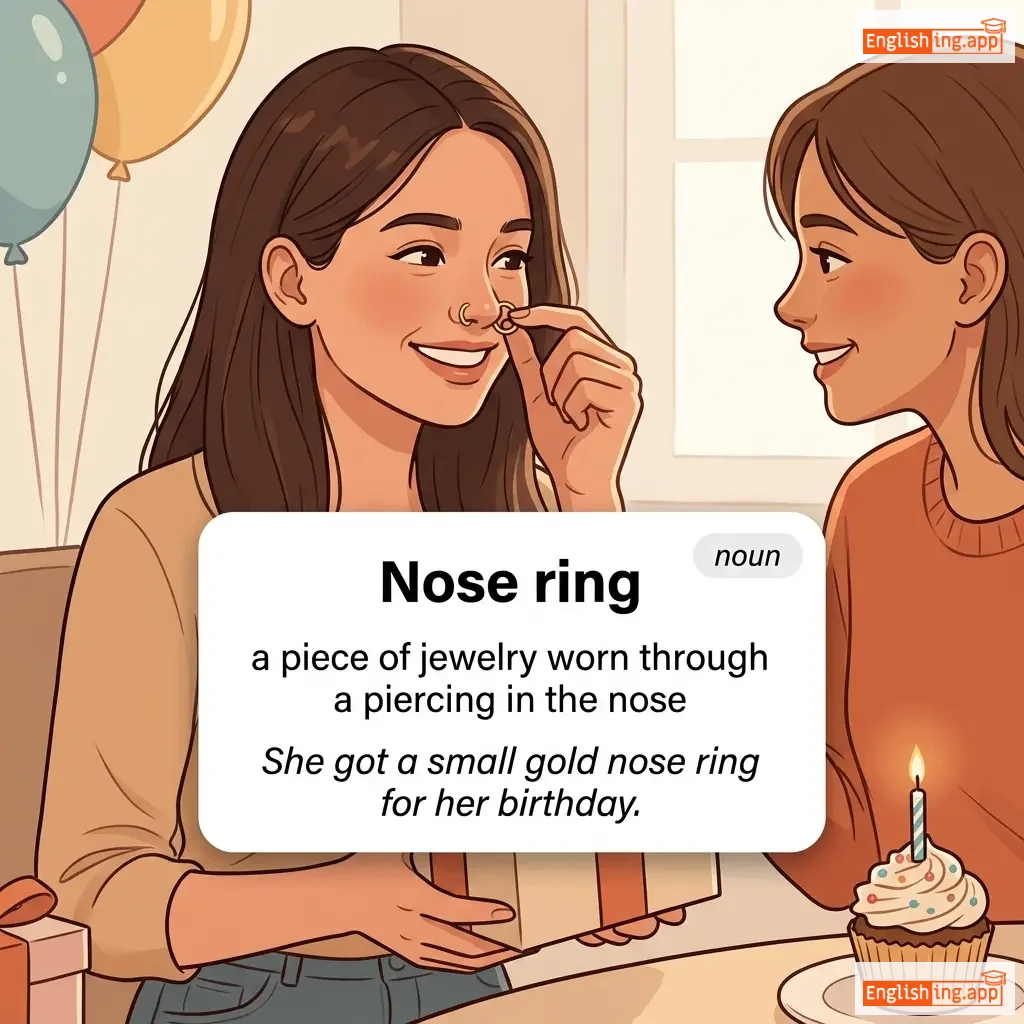
Nose ring definition card — visual illustration of the meaning
noun
/noʊz rɪŋ/
नाक की अंगूठी (nak ki angoothi)

a piece of jewelry worn through a piercing in the nose

"She got a small gold nose ring for her birthday."

"उसने अपनी जन्मदिन के लिए एक छोटी सोने की नथ ली।" (Usne apni janmadin ke liye ek chhoti sone ki nath li.)