Vocabularios

Descubra, aprenda y domine el vocabulario en inglés

noun
/niːs/
sobrina (sobrina)

the daughter of one's brother or sister

"My niece is studying at the university this year."

"Mi sobrina está estudiando en la universidad este año." (Mi sobrina esta estudiando en la universidad este ano)
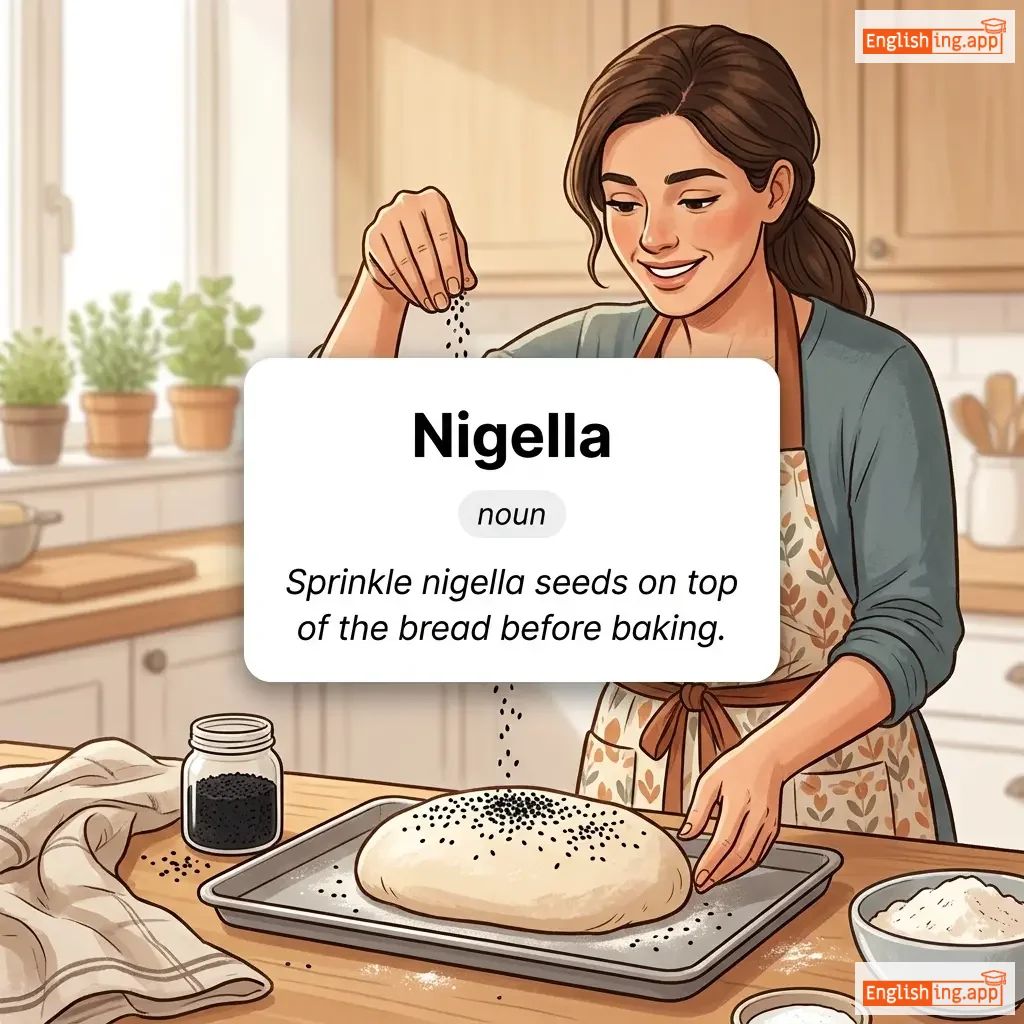
Nigella definition card — visual illustration of the meaning
noun
/naɪˈdʒel.ə/
comino negro (comino negro)

small black seeds with a nutty, slightly bitter flavor, also known as black cumin or black seed

"Sprinkle nigella seeds on top of the bread before baking."

"Espolvorea semillas de comino negro encima del pan antes de hornear." (Espolvorea semillas de comino negro encima del pan antes de hornear.)
adjective
/ˈnɪɡərdli/
tacaño (tacano)

unwilling to spend or give; stingy or miserly

"He was too niggardly to leave a decent tip."

"Él era demasiado tacaño para dejar una propina decente." (El era demasiado tacano para dejar una propina decente.)
verb
/ˈnɪɡəl/
molestar levemente pero de forma persistente (molestar levemente pero de forma persistente)

to cause slight but persistent annoyance, discomfort, or worry

"A small doubt niggled at her mind."

"Una pequeña duda la molestaba en su mente." (Una pequeña duda la molestaba en su mente.)
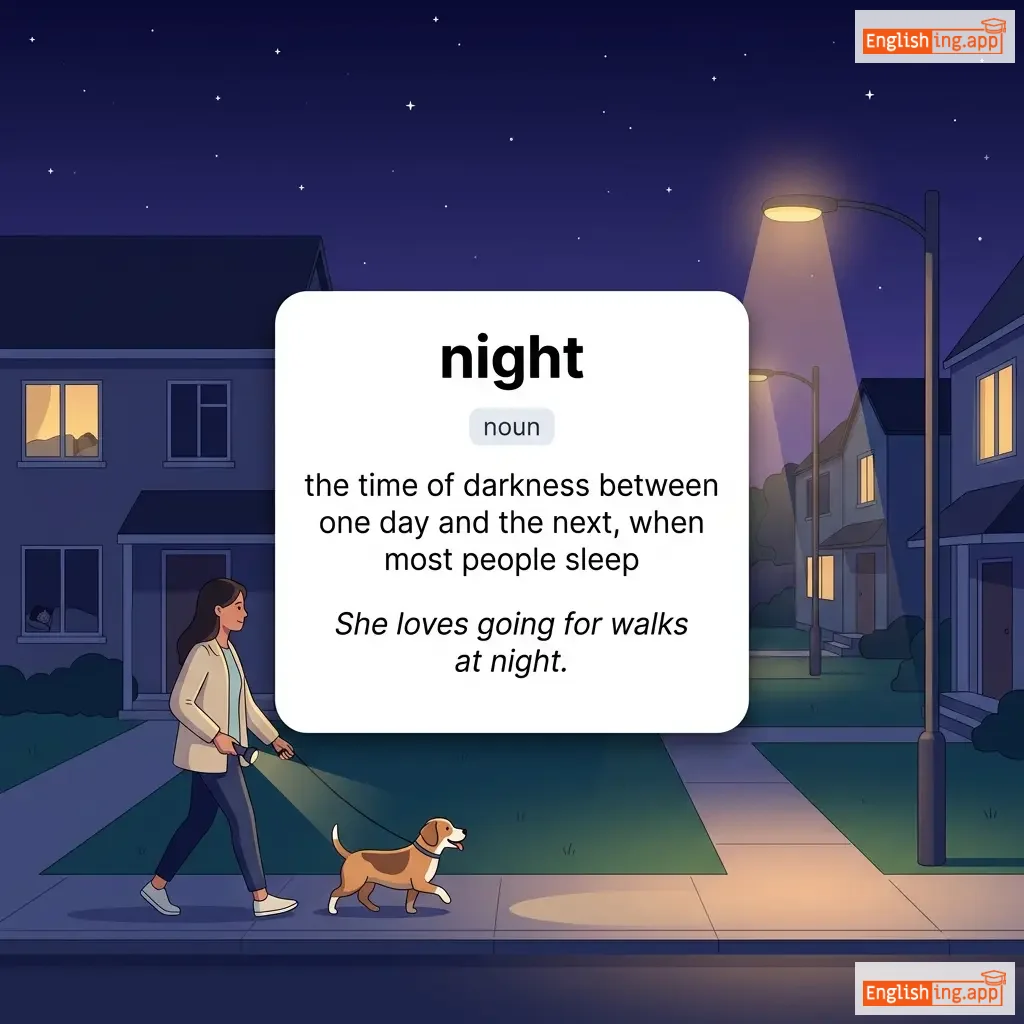
night definition card — visual illustration of the meaning
noun
/naɪt/
noche (noche)

the time of darkness between one day and the next, when most people sleep

"She loves going for walks at night."

"A ella le encanta caminar por la noche." (A ella le encanta caminar por la noche.)
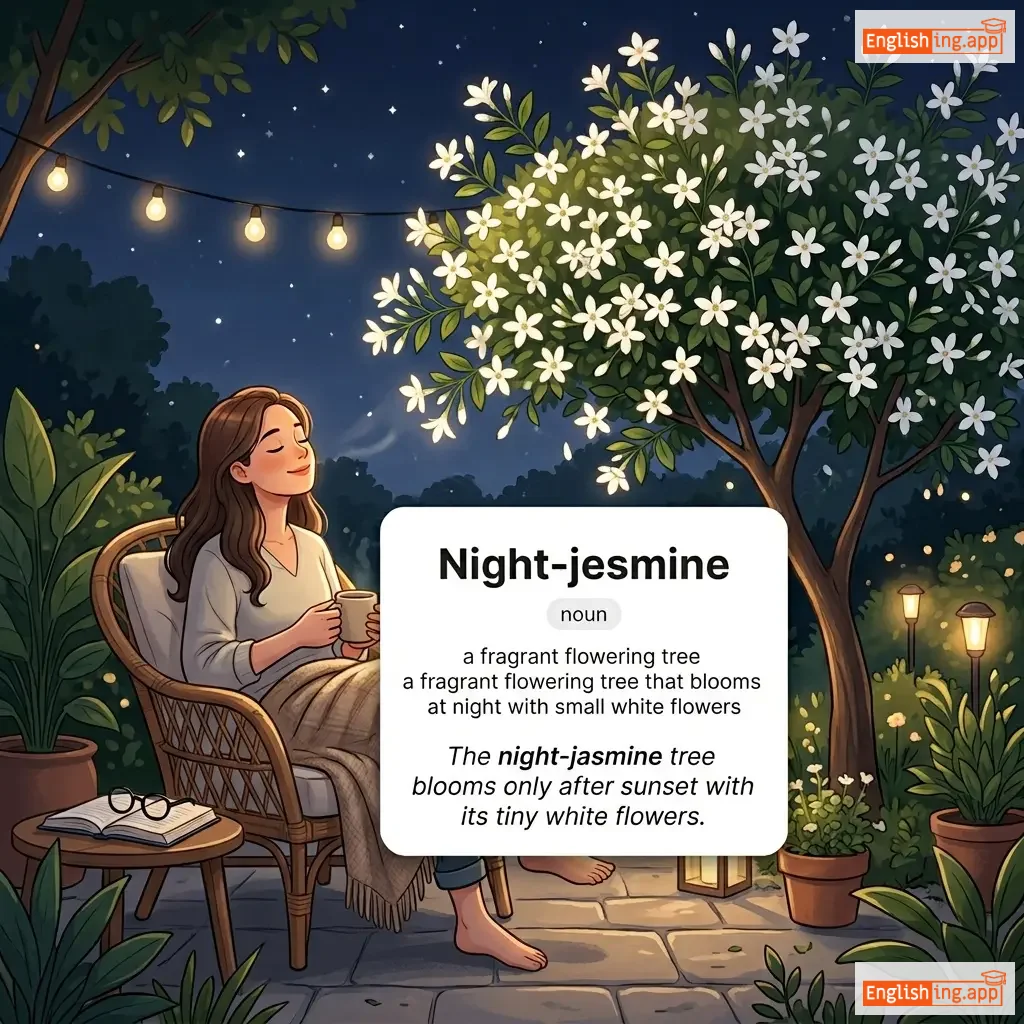
Night-jesmine definition card — visual illustration of the meaning
noun
/naɪt ˈdʒæz.mɪn/
jazmín nocturno (jazmin nocturno)

a fragrant flowering tree that blooms at night with small white flowers

"The night-jasmine tree blooms only after sunset with its tiny white flowers."

"El árbol de jazmín nocturno florece solo después del atardecer con sus pequeñas flores blancas." (el arbol de jazmin nocturno florese solo despues del atardeser kon sus pequenas flores blancas.)
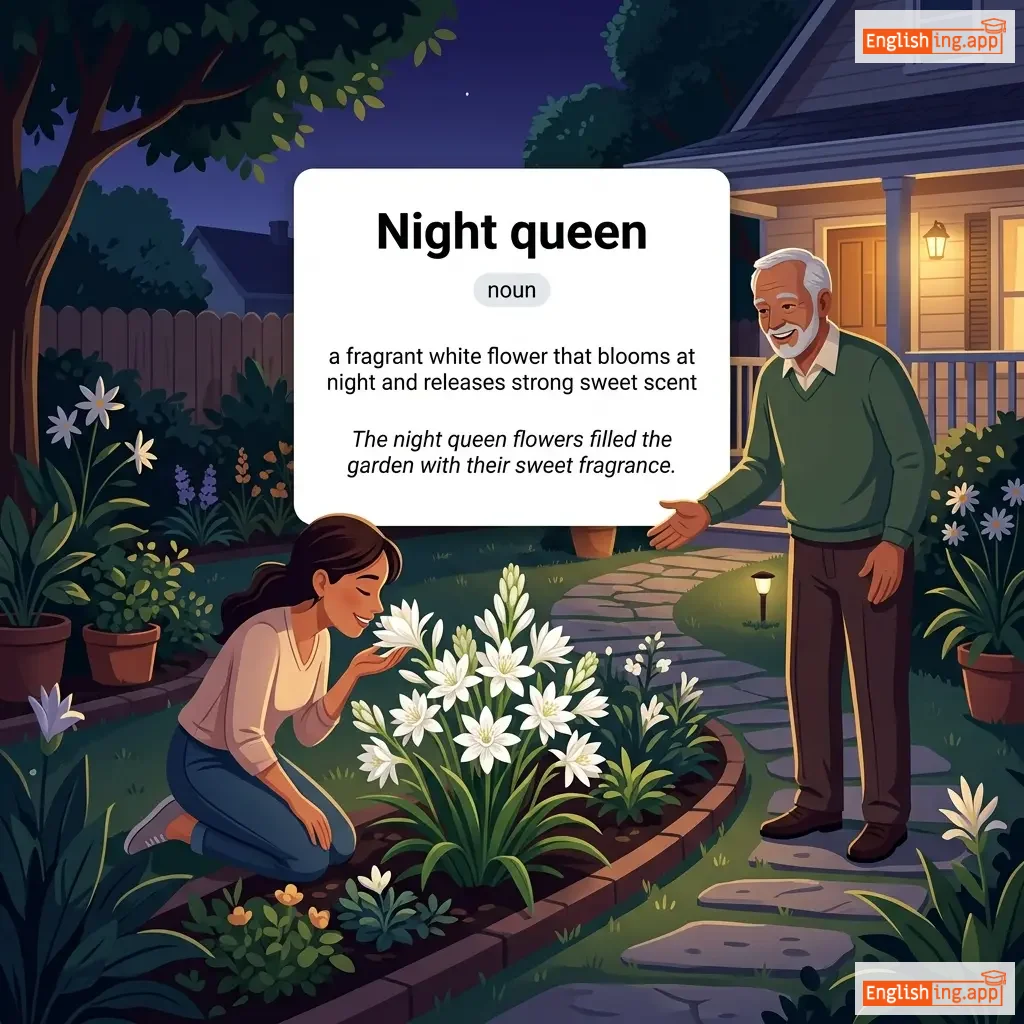
Night queen definition card — visual illustration of the meaning
noun
/naɪt kwiːn/
reina de la noche (reina de la noche)

a fragrant white flower that blooms at night and releases strong sweet scent

"The night queen flowers filled the garden with their sweet fragrance."

"Las flores de la reina de la noche llenaron el jardín con su dulce fragancia." (las flores de la reina de la noche yenaron el jardin kon su dulce fragansia)
noun
/ˈnaɪt.fɔːl/
caída de la noche (caida de la noche)

the time when night begins; dusk

"They decided to return home before nightfall."

"Decidieron regresar a casa antes de la caída de la noche." (Decidieron regresar a casa antes de la caida de la noche.)
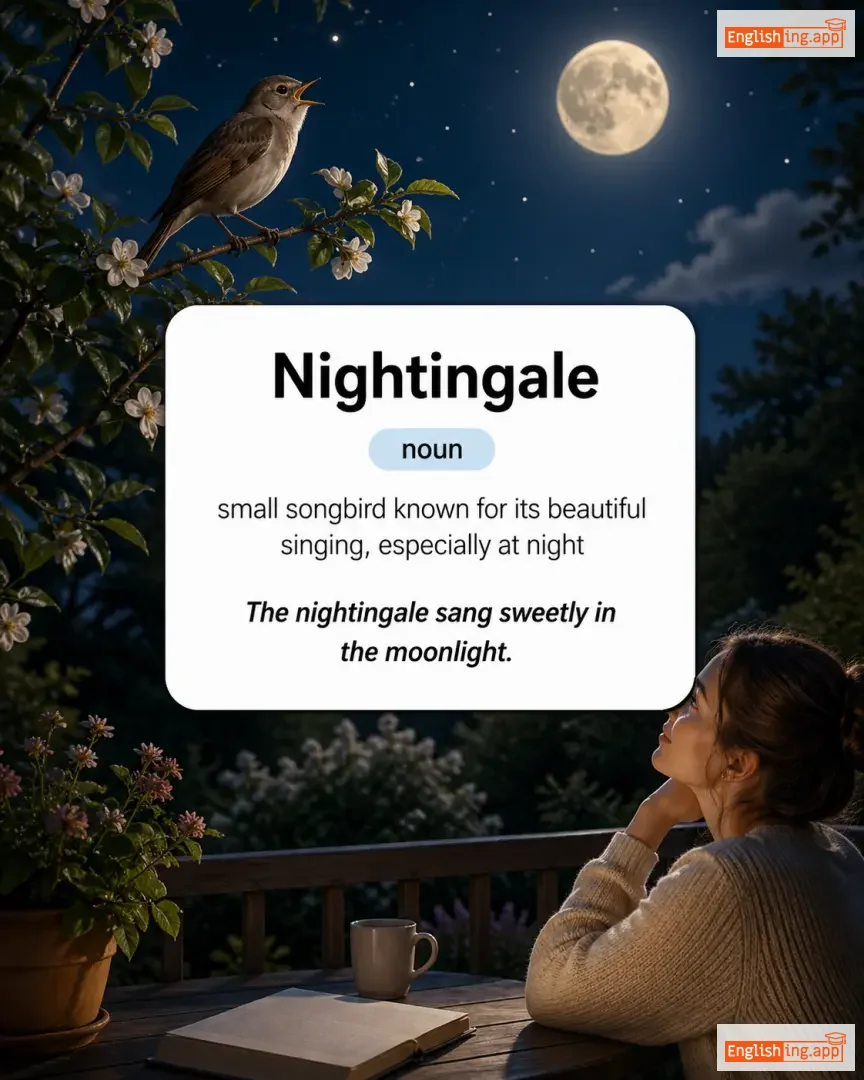
Nightingale definition card — visual illustration of the meaning
noun
/ˈnaɪ.tɪŋ.ɡeɪl/
ruiseñor (ruiseñor)

small songbird known for its beautiful singing, especially at night

"The nightingale sang sweetly in the moonlight."

"El ruiseñor cantó dulcemente bajo la luz de la luna." (El ruisenor cato dulcemente bajo la luz de la luna)
noun
/ˈnaɪtˌmɛər/
pesadilla (pesadilla)

a frightening or unpleasant dream; a very distressing experience.

"Last night, she had a terrifying nightmare."

"La noche pasada, tuvo una pesadilla aterradora." (La noche pasada, tuvo una pesadilla aterradora.)
noun
/ˈnaɪɪˌlɪzəm/
nihilismo (nihilismo)

The rejection of all religious and moral principles, often in the belief that life is meaningless.

"The philosopher was criticized for promoting nihilism."

"El filósofo fue criticado por promover el nihilismo." (El filosofo fue criticado por promover el nihilismo.)
noun
/ˈnaɪəlɪst/
nihilista (nihilista)

A person who rejects all religious and moral principles, often believing that life is meaningless.

"He was called a nihilist for rejecting all social norms."

"Se le llamó nihilista por rechazar todas las normas sociales." (Se le llamó nihilista por rechazar todas las normas sociales.)
0️⃣

Nil (nil)

noun
/nɪl/
cero (cero)

Nothing; zero.

"The score remained nil after the first half."

"El marcador permaneció en cero después del primer tiempo." (El marcador permaneció en cero después del primer tiempo.)
adjective
/ˈnɪmbəl/
ágil (agil)

Quick and light in movement or thought.

"The dancer’s nimble steps impressed the audience."

"Los ágiles pasos de la bailarina impresionaron al público." (Los agiles pasos de la bailarina impresionaron al público.)
noun
/naɪn/
nueve (nueve)

the number that is one more than eight

"She has nine books in her collection."

"Ella tiene nueve libros en su colección." (Ella tiene nueve libros en su coleccion.)
noun
/ˈnɪn.i/
tonto (tonto)

a silly or foolish person; someone who lacks common sense

"Don't be such a ninny, use your brain!"

"¡No seas tan tonto, usa tu cerebro!" (¡No seas tan tonto, usa tu cerebro!)
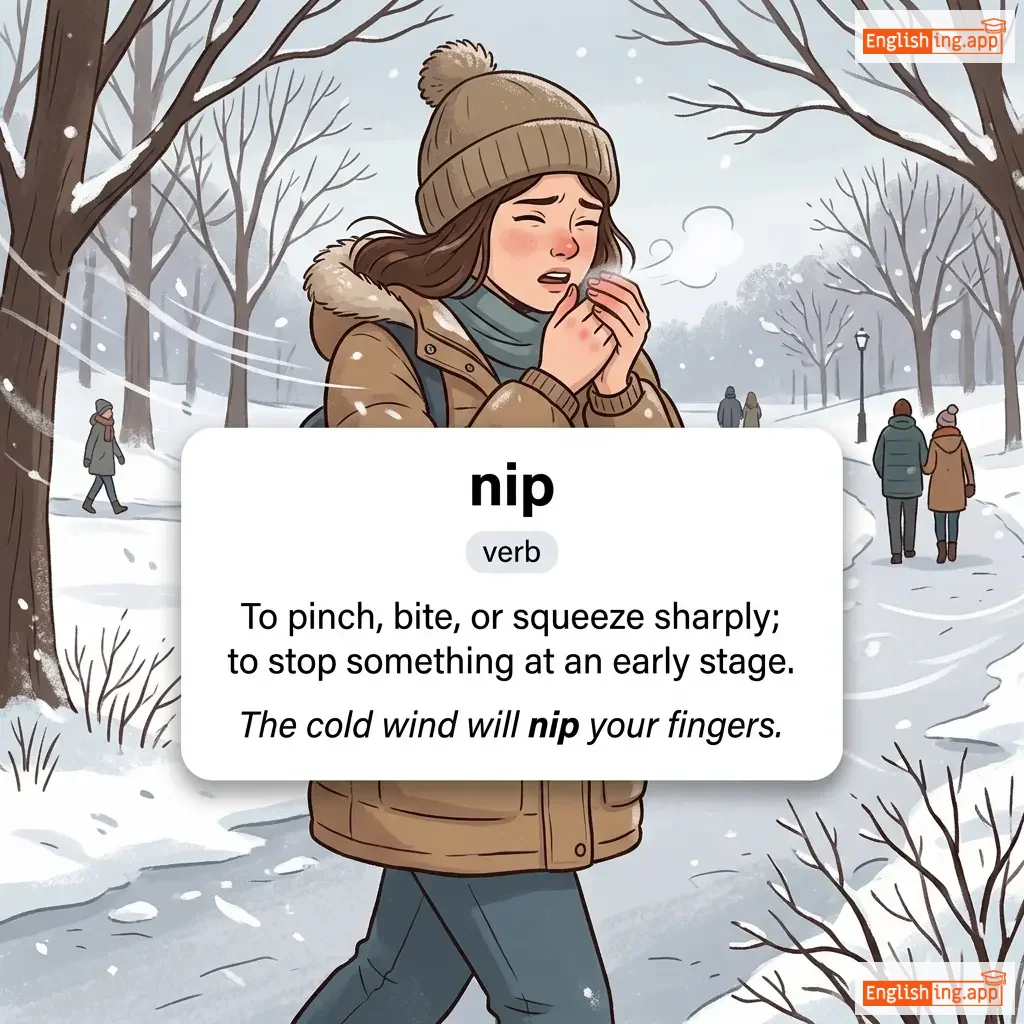
nip definition card — visual illustration of the meaning
verb
/nɪp/
pellizcar (pellizcar)

To pinch, bite, or squeeze sharply; to stop something at an early stage.

"The cold wind will nip your fingers."

"El viento frío pellizcará tus dedos." (El viento frío pellizcará tus dedos.)
adjective
/ˈnɪp.i/
frío; helado; rápido y ágil en movimiento (frio; helado; rapido y agil en movimiento)

cold; chilly; quick and agile in movement

"It's quite nippy outside today, you should wear a jacket."

"Hace bastante frío afuera hoy, deberías llevar una chaqueta." (Hace bastante frio afuera hoy, deberias llevar una chaqueta.)
noun
/nɪərˈvɑːnə/
nirvana (nirvana)

A state of perfect happiness, peace, and freedom from suffering; in Buddhism, the ultimate goal of liberation.

"Meditation helps some people seek nirvana in their lives."

"La meditacion ayuda a algunas personas a buscar el nirvana en sus vidas." (La meditacion ayuda a algunas personas a buscar el nirvana en sus vidas)
noun
/nɪt/
huevo de piojo (huevo de piojo)

The egg or young form of a louse or other parasitic insect.

"The teacher noticed nits in the child’s hair."

"El maestro notó huevos de piojo en el cabello del niño." (El maestro notó huevos de piojo en el cabello del niño.)
verb
/ˈnɪtˌpɪk/
criticar cosas pequeñas (kritikar kosas pequenas)

To find and criticize small or unimportant faults in someone or something.

"She tends to nitpick about every little detail."

"Ella tiende a criticar cada pequeño detalle." (Ella tiende a criticar cada pequeno detalle.)
adverb
/noʊ/
no (no)

used to give a negative response or to show disagreement

"She said no to the invitation."

"Ella dijo no a la invitación." (Ella dijo no a la invitación.)
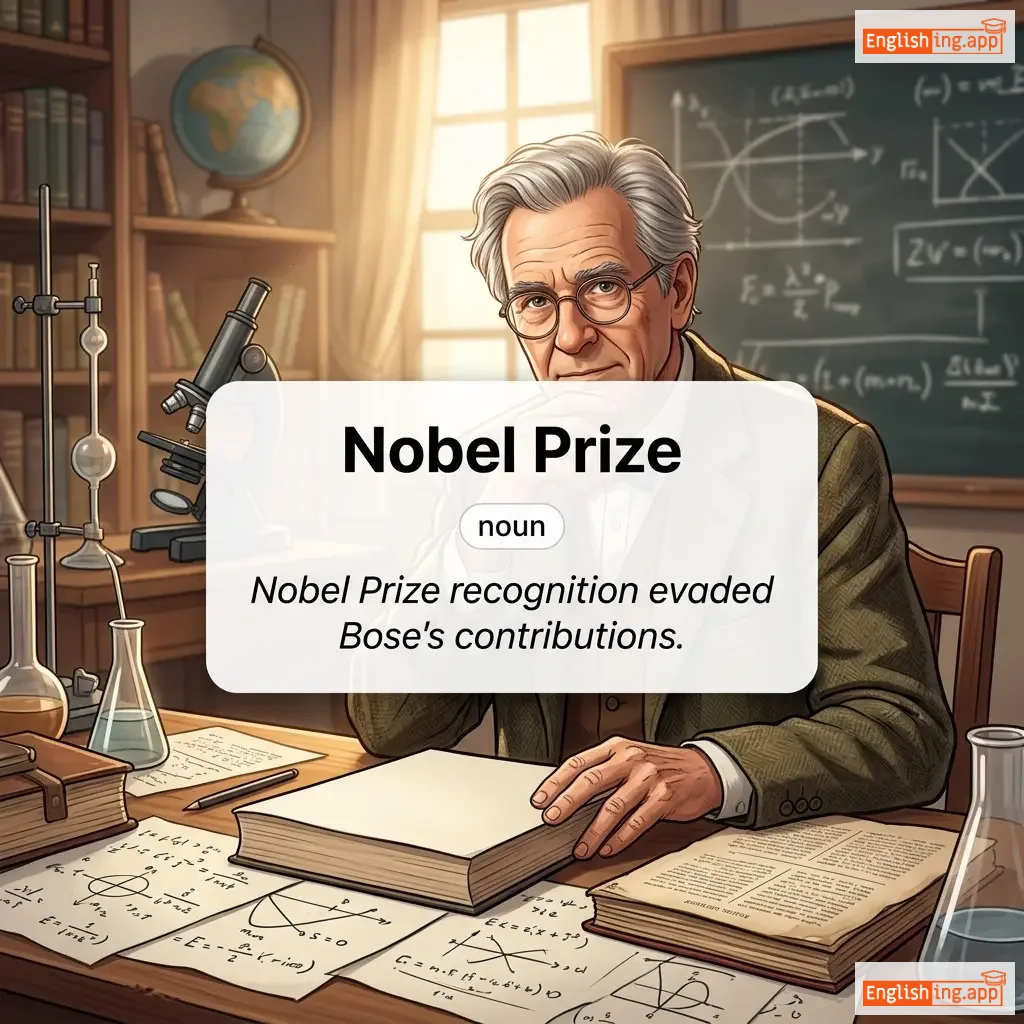
Nobel Prize definition card — visual illustration of the meaning
noun
noʊˈbel praɪz
Premio Nobel (Premio Nobel)

Any of six international prizes awarded annually for outstanding work in physics, chemistry, physiology or medicine, literature, economics, and the promotion of peace.

"Nobel Prize recognition evaded Bose's contributions."

"El reconocimiento del Premio Nobel evadió las contribuciones de Bose." (El reconocimiento del Premio Nobel evadió las contribuciones de Bose.)
noun
/nəʊˈbɪləti/
nobleza (nobleza)

the quality of being noble in character or the group of people belonging to the aristocracy

"The king praised her for her nobility and courage."

"El rey elogió su nobleza y coraje." (El rey elogió su nobleza y coraje.)
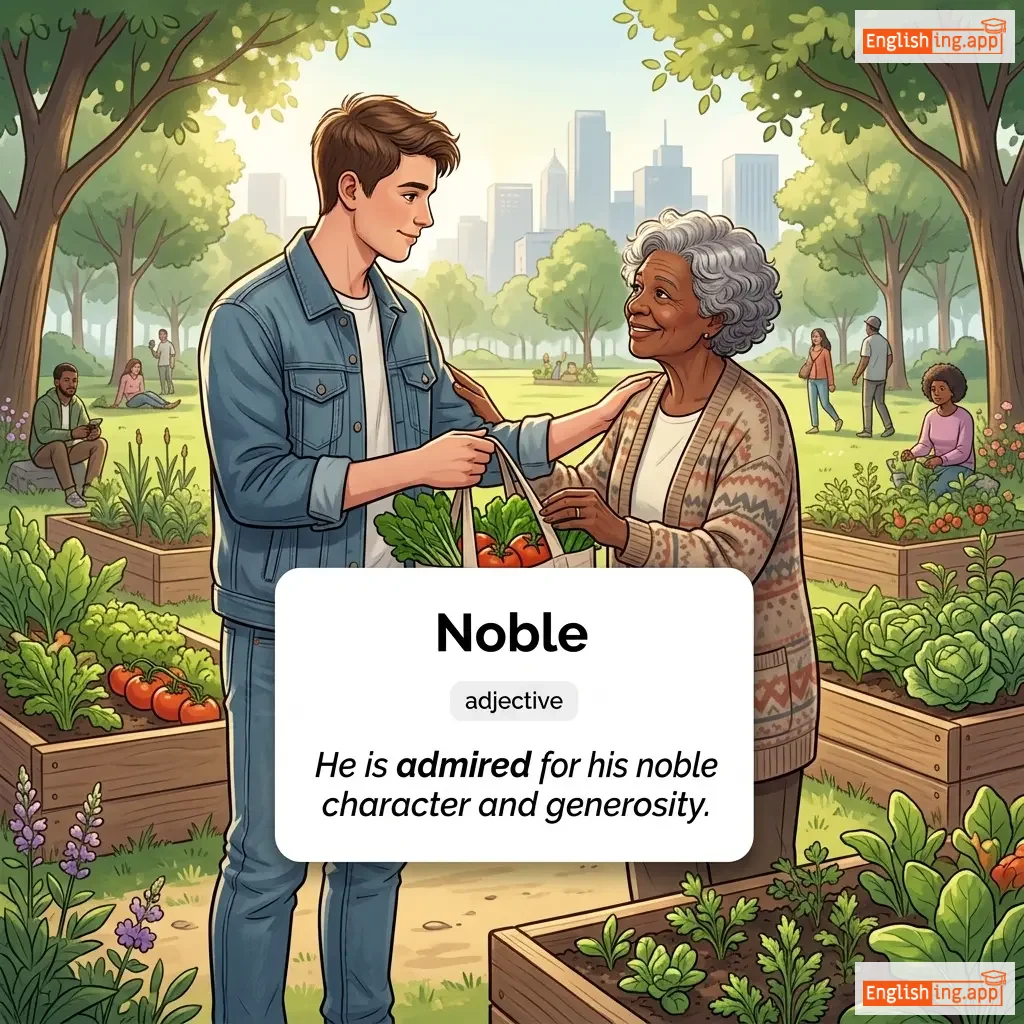
Noble definition card — visual illustration of the meaning
adjective
/ˈnoʊbəl/
de alto rango o distinción, que muestra cualidades personales finas o principios morales altos (de alto rango o distincion, que muestra cualidades personales finas o principios morales altos)

Having or showing fine personal qualities, high moral principles, or being of high social rank.

"He is admired for his noble character and generosity."

"Es admirado por su carácter noble y generosidad." (Es admirado por su caracter noble y generosidad.)
🙅‍♂️

nobody (nobody)

pronoun
/ˈnoʊˌbɑːdi/
nadie (nadie)

no person; not anyone

"Nobody came to the party."

"Nadie vino a la fiesta." (Nadie vino a la fiesta.)
adjective
/nɒkˈtɜːrnəl/
nocturno (nocturno)

Active at night and sleeping during the day.

"Owls are nocturnal animals that hunt at night."

"Los búhos son animales nocturnos que cazan de noche." (Los buhos son animales nocturnos que cazan de noche.)
noun
/ˈnɔːrmən/
normando (norman)

A member of a people of mixed Scandinavian and Frankish origin who settled in Normandy, or relating to their culture.

"The Normans conquered England in 1066."

"Los normandos conquistaron Inglaterra en 1066." (los normandos conquistaron inglaterra en mil sesenta y seis)
verb
/ˌnɒnˈplʌst/
perplejo (perplejo)

Past tense of nonplus; surprised and confused.

"She was completely nonplused by his sudden decision."

"Ella estaba completamente perpleja por su decisión repentina." (Ella estaba completamente perpleja por su decisión repentina.)
verb
/ˌnɒnˈplʌst/
desconcertado (desconcertado)

Past tense of nonplus; surprised and unsure how to react.

"He stood nonplussed at the strange remark."

"Se quedó desconcertado por el comentario extraño." (Se quedó desconcertado por el comentario extraño.)
adjective
/ˌnɒnˈprɒfɪt/
sin fines de lucro (sin fines de lucro)

an organization that does not aim to make a profit, often serving a social or charitable purpose.

"She works for a nonprofit organization that helps children."

"Ella trabaja para una organización sin fines de lucro que ayuda a los niños." (Ella trabaja para una organizacion sin fines de lucro que ayuda a los niños.)
noun
/ˈnɒnsəns/
tonterías (tonterias)

Words or ideas that have no meaning or make no sense.

"His explanation was pure nonsense."

"Su explicación era pura tontería." (Su explicacion era pura tonteria.)
adjective
/ˌnɒnˈtrɪviəl/
no trivial (no trivial)

Not simple or easy; requiring effort or significant thought.

"Solving the equation turned out to be a nontrivial task."

"Resolver la ecuación resultó ser una tarea no trivial." (Resolver la ecuación resultó ser una tarea no trivial.)
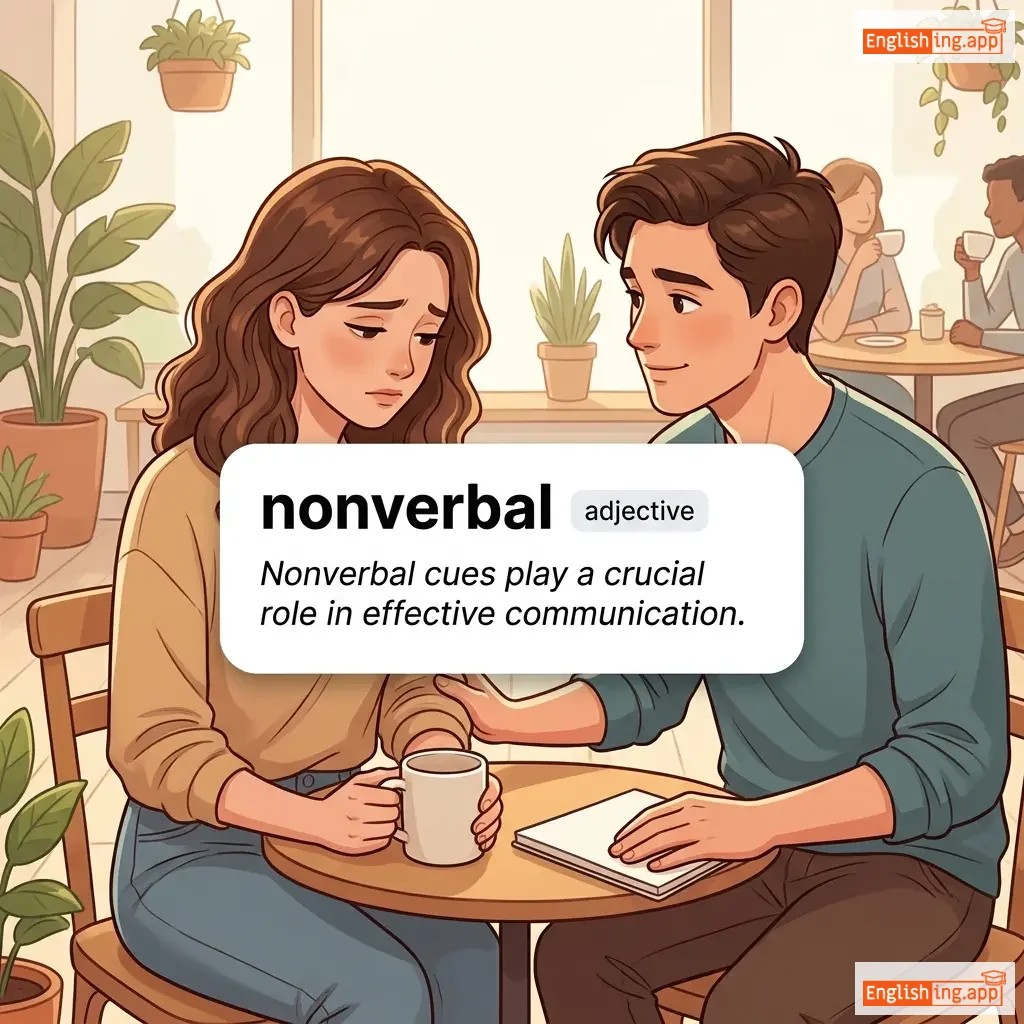
nonverbal definition card — visual illustration of the meaning
adjective
ˌnɒnˈvɜːr.bəl
no verbal (no verbal)

Communication using body language, facial expressions, or gestures instead of words

"Nonverbal cues play a crucial role in effective communication."

"Las señales no verbales juegan un papel crucial en la comunicación efectiva." (Las señales no verbales juegan un papel crucial en la comunicación efectiva.)
noun (plural)
/ˈnuːdəlz/
fideos (fideos)

long, thin strips of dough made from flour, water, or eggs, cooked and eaten as food

"She cooked noodles with vegetables for dinner."

"Ella cocinó fideos con verduras para la cena." (ella cocino fideos con verduras para la cena)
noun
/nuːn/
mediodía (mediodia)

12 o'clock in the daytime; midday

"The meeting will start at noon."

"La reunión comenzará a mediodía." (La reunion comenzara a mediodia.)
noun
/nuːs/
lazo (lazo)

A loop with a running knot, used especially for trapping or hanging.

"The cowboy tied a noose to catch the wild horse."

"El vaquero ató un lazo para atrapar al caballo salvaje." (El vaquero ato un lazo para atrapar al caballo salvaje.)
🚫➡️🚫

nor (nor)

conjunction
/nɔːr/
ni (ni)

used to introduce a negative clause after a negative statement

"He didn't call, nor did he send a message."

"Él no llamó, ni envió un mensaje." (El no llamo, ni envió un mensaje.)
noun
/nɔːrm/
norma (norma)

An accepted standard or a usual practice.

"Wearing uniforms is the norm in many schools."

"Usar uniformes es la norma en muchas escuelas." (Usar uniformes es la norma en muchas escuelas.)
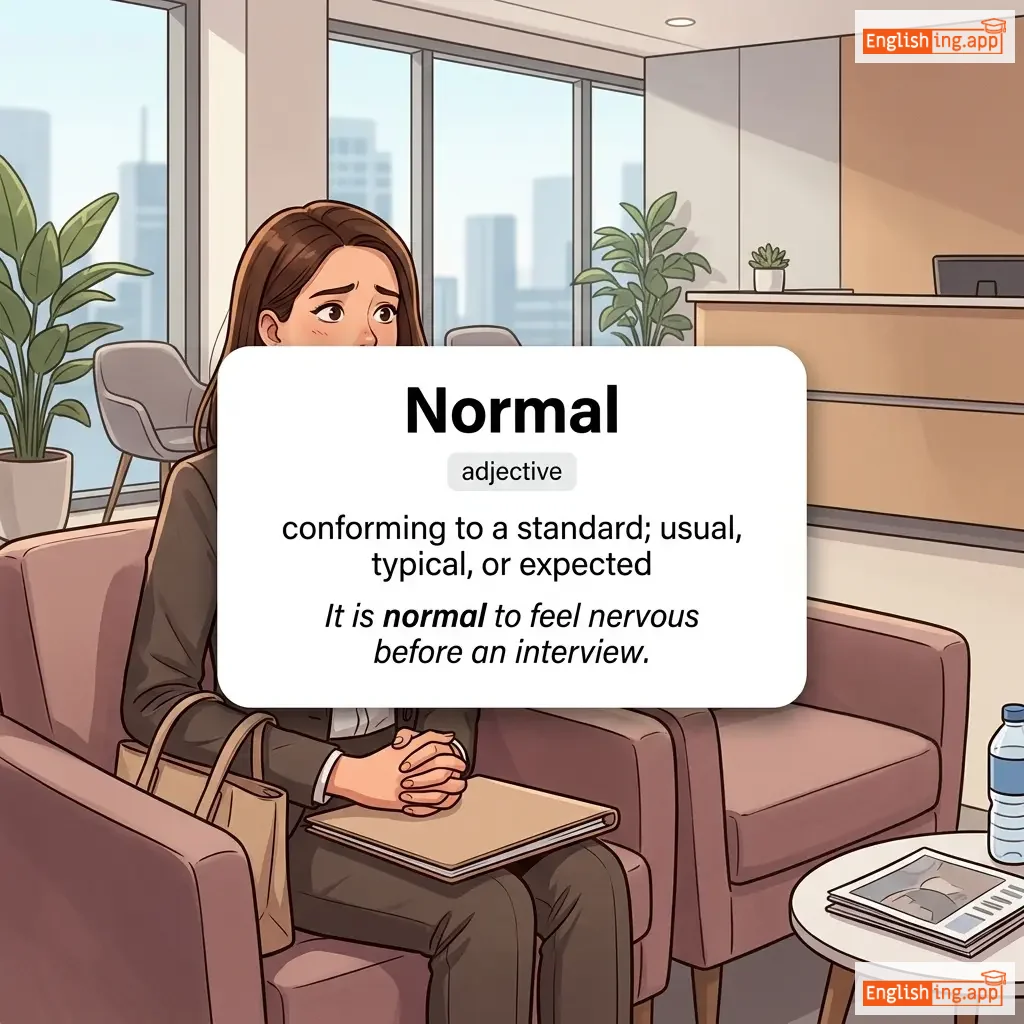
Normal definition card — visual illustration of the meaning
adjective
/ˈnɔː.məl/
normal (normal)

conforming to a standard; usual, typical, or expected

"It is normal to feel nervous before an interview."

"Es normal sentirse nervioso antes de una entrevista." (Es normal sentirse nervioso antes de una entrevista.)
noun
/ˈnɔːrməlsi/
normalidad (normalidad)

The condition of being normal; a return to usual or expected conditions.

"After the flood, the town struggled to regain a sense of normalcy."

"Después de la inundación, la ciudad luchó por recuperar un sentido de normalidad." (Después de la inundación, la ciudad luchó por recuperar un sentido de normalidad.)
verb
/ˈnɔːrməlaɪz/
normalizar (normalizar)

to bring something back to a normal or standard condition; to make something conform to a standard

"The government took steps to normalize relations with neighboring countries."

"El gobierno tomó medidas para normalizar las relaciones con países vecinos." (El gobierno tomo medidas para normalizar las relaciones con paises vecinos)
adverb
/ˈnɔːməli/
normalmente (normalmente)

in a usual or expected way

"I normally wake up at 7 AM."

"Normalmente me despierto a las 7 AM." (Normalmente me despierto a las 7 AM.)
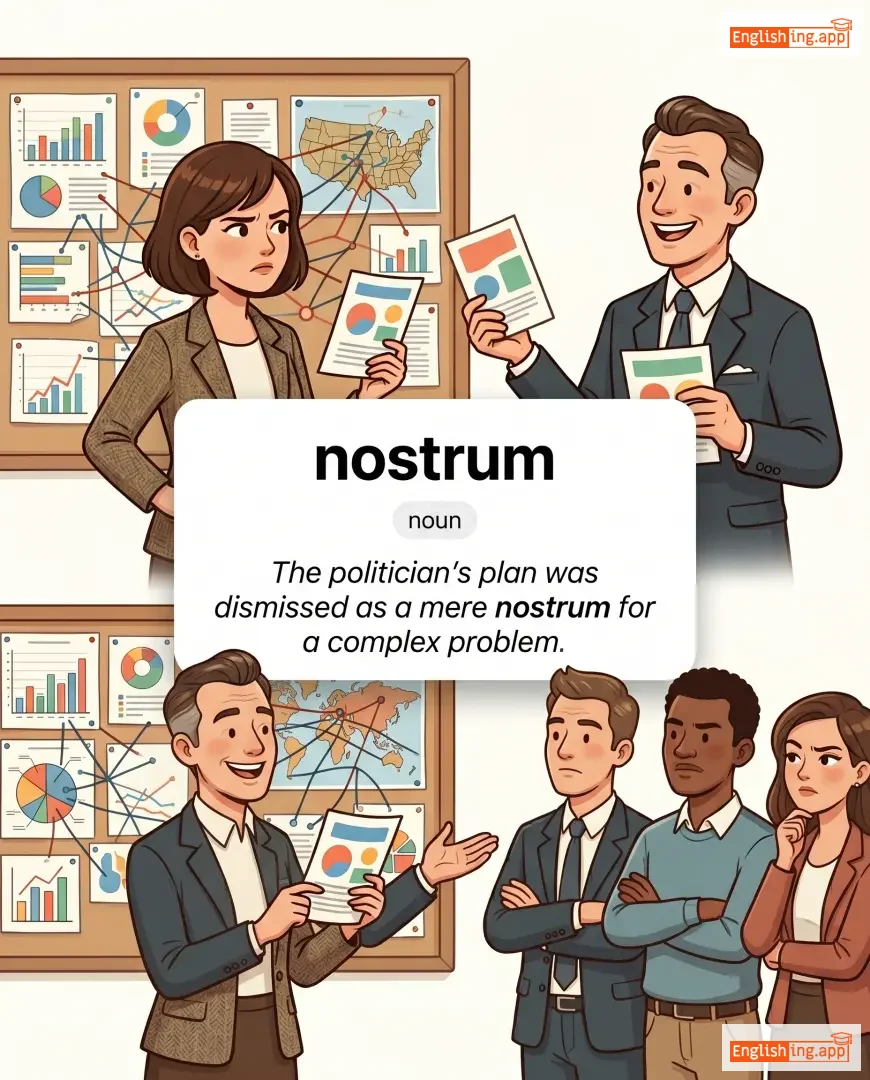
nostrum definition card — visual illustration of the meaning
noun
/ˈnɑːstrəm/
medicina ineficaz (medicina ineficaz)

a medicine or remedy, especially one that is not considered effective; a questionable solution

"The politician’s plan was dismissed as a mere nostrum for a complex problem."

"El plan del político fue desestimado como un simple remedio para un problema complejo." (El plan del político fue desestimado como un simple remedio para un problema complejo.)
noun
/ˈnoʊzˌɡeɪ/
ramillete de flores (ramillete de flores)

a small bunch of flowers, typically given as a gift or carried for decoration

"She carried a nosegay of fresh roses to the ceremony."

"Ella llevaba un ramillete de rosas frescas a la ceremonia." (Ella llevaba un ramillete de rosas frescas a la ceremonia.)
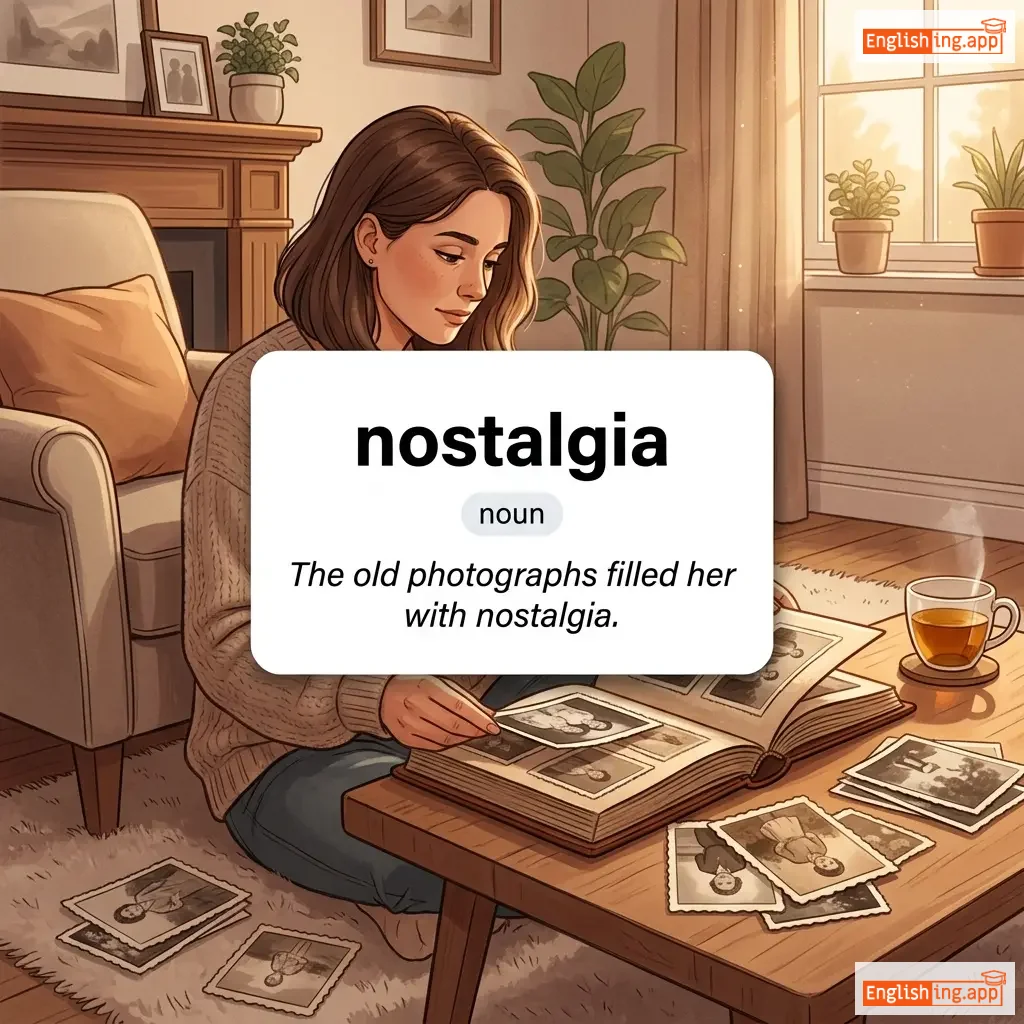
nostalgia definition card — visual illustration of the meaning
noun
/nəˈstældʒə/
nostalgia (nostalgia)

a sentimental longing for the past, often for a period or place with happy memories

"The old photographs filled her with nostalgia."

"Las viejas fotografías la llenaron de nostalgia." (Las viejas fotografias la llenaron de nostalgia.)
noun
/ˈnɒs.trɪl/
fosa nasal (fosa nasal)

either of the two openings in the nose through which air passes

"The doctor checked each nostril for any blockage."

"El doctor revisó cada fosa nasal en busca de cualquier obstrucción." (El doctor revisó cada fosa nasal en busca de cualquier obstrucción.)
adjective
/ˈnoʊtəbl/
notable (notable)

worthy of attention or notice; remarkable

"She made a notable contribution to the project."

"Ella hizo una contribución notable al proyecto." (Ella hizo una contribución notable al proyecto.)
adverb
/ˈnoʊtəbli/
notablemente (notablemente)

used to indicate something worthy of attention or significant

"She is notably talented in painting."

"Ella es notablemente talentosa en la pintura." (Ella es notablemente talentosa en la pintura.)
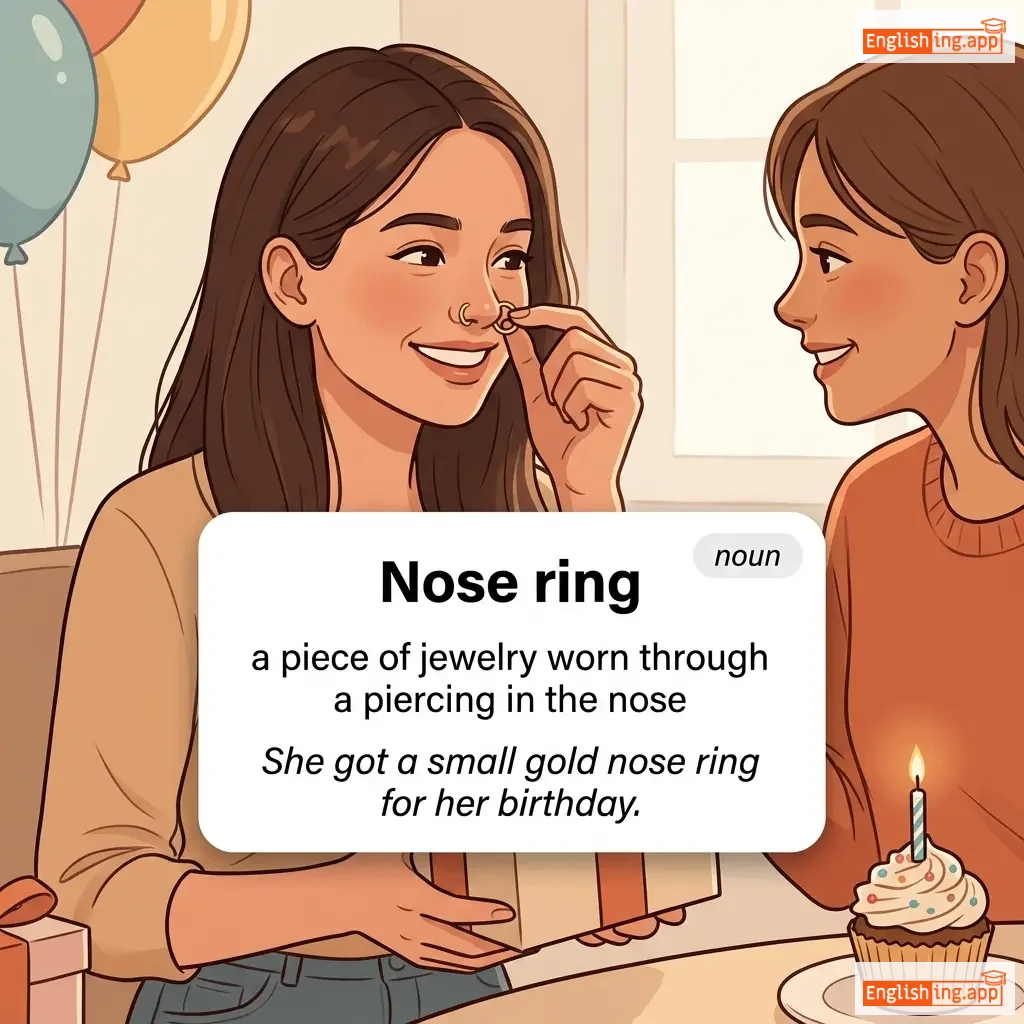
Nose ring definition card — visual illustration of the meaning
noun
/noʊz rɪŋ/
anillo de nariz (anillo de nariz)

a piece of jewelry worn through a piercing in the nose

"She got a small gold nose ring for her birthday."

"Ella consiguió un pequeño anillo de oro para su cumpleaños." (Ella consiguió un pequeño anillo de oro para su cumpleaños.)