Vocabularios

Descubra, aprenda y domine el vocabulario en inglés

noun
/ˈɒrɪndʒ/
naranja (naranja)

a fruit that is typically round and orange in color

"She ate an orange for breakfast."

"Ella comió una naranja para el desayuno." (Ella comió una naranja para el desayuno.)
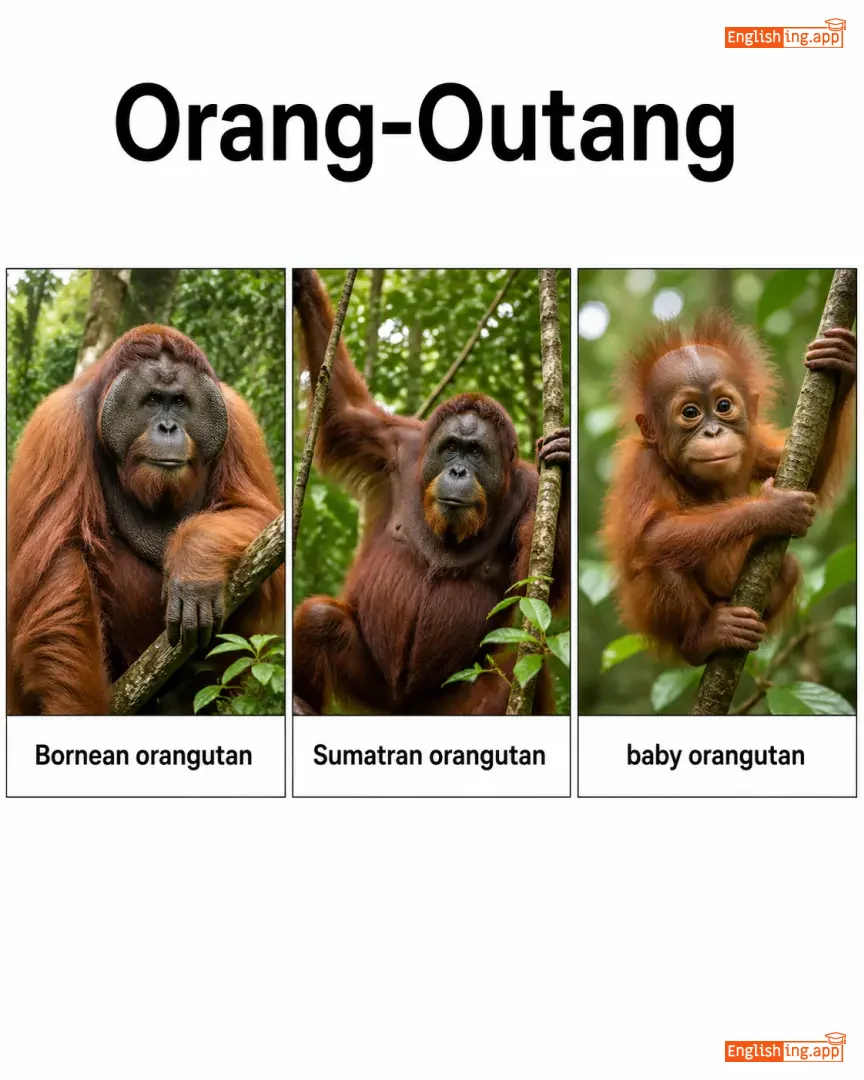
Orang-Outang definition card — visual illustration of the meaning
noun
/ɔːˈræŋ.ʊˌtæŋ/
orangután (orangutan)

a large arboreal ape with long reddish hair, long arms, and hooked hands and feet, native to Borneo and Sumatra

"The orangutan swings gracefully through the forest canopy."

"El orangután se balancea graciosamente a través del dosel del bosque." (El orangutan se balancea graciosamente a traves del dosel del bosque.)
adjective
/ˈɔːrəl/
oral (oral)

Spoken rather than written; relating to the mouth

"The student had to give an oral presentation."

"El estudiante tuvo que dar una presentación oral." (El estudiante tuvo que dar una presentacion oral.)
adjective
/əˈrækjələr/
oracular (oracular)

Resembling an oracle; giving wise, mysterious, or prophetic statements

"Her oracular words left the audience deep in thought."

"Sus palabras oraculares dejaron a la audiencia profundamente pensativa." (Sus palabras oraculares dejaron a la audiencia profundamente pensativa.)
noun
/ˈɒrəkəl/
felicidad (felicidad)

A person or source considered to provide wise and insightful advice or prophecy.

"In ancient Greece, people visited the oracle at Delphi for guidance."

"Ella no pudo esconder su felicidad cuando recibió el premio." (Ella no pudo esconder su felicidad cuando recibio el premio.)
conjunction
/ɔːr/
o (o)

used to link alternatives

"You can have tea or coffee."

"Puedes tomar té o café." (Puedes tomar té o café.)
noun
/ˈəʊpəs/
obra creativa (obra creativa)

A creative work, especially a large and important piece of music or art.

"The composer considered the symphony his greatest opus."

"El compositor consideró la sinfonía su mayor obra creativa." (El compositor consideró la sinfonía su mayor obra creativa.)
adjective
/ˈɒpjʊlənt/
opulento (opulento)

Ostentatiously rich, luxurious, or lavish.

"They hosted an opulent wedding with gold decorations."

"Organizaron una boda opulenta con decoraciones doradas." (Organizaron una boda opulenta con decoraciones doradas.)
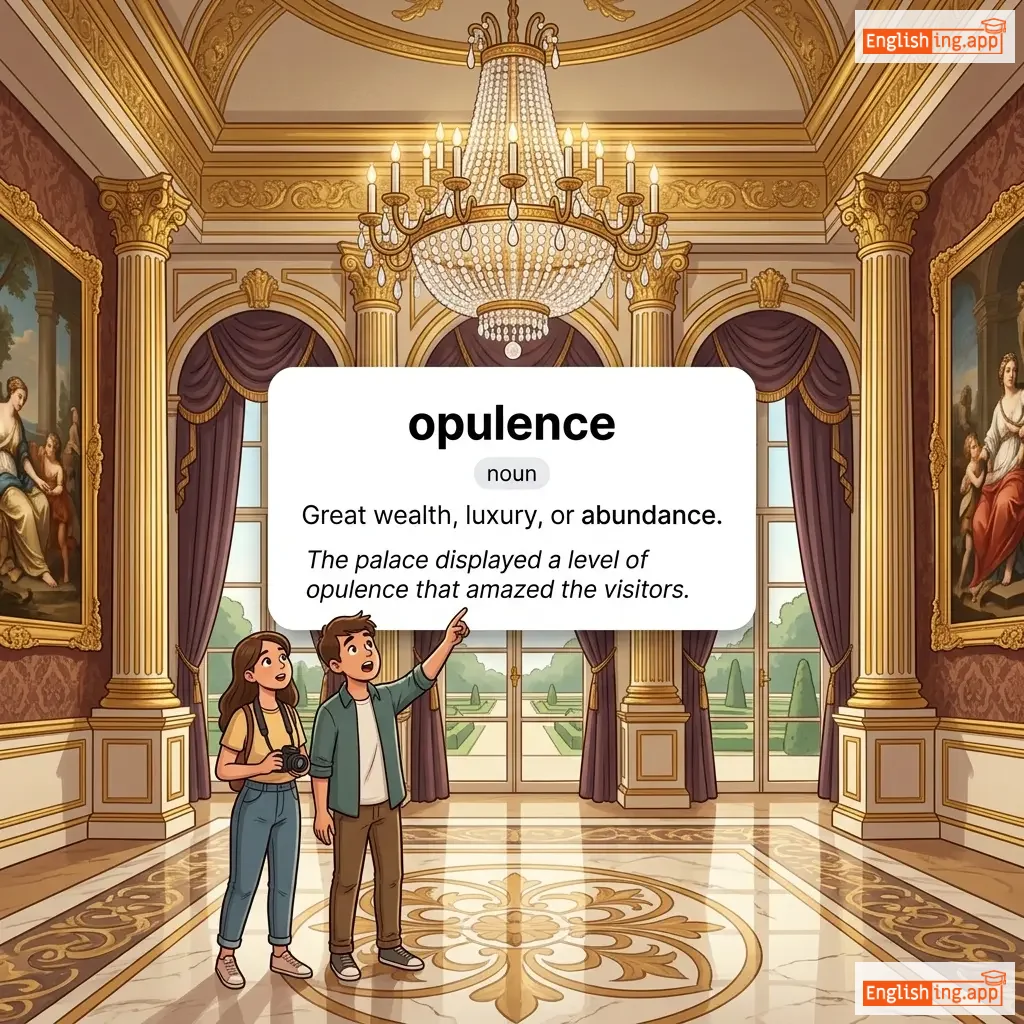
opulence definition card — visual illustration of the meaning
noun
/ˈɒpjʊləns/
opulencia (opulencia)

Great wealth, luxury, or abundance.

"The palace displayed a level of opulence that amazed the visitors."

"El palacio mostró un nivel de opulencia que asombró a los visitantes." (El palacio mostró un nivel de opulencia que asombró a los visitantes.)
noun
/ɒpˈtɒmətri/
optometría (optometria)

The practice or profession of examining the eyes and prescribing corrective lenses.

"She studied optometry at the university to become an eye specialist."

"Estudió optometría en la universidad para convertirse en especialista en ojos." (Estudio optometria en la universidad para convertirse en especialista en ojos.)
noun
/ɒpˈtɒmɪtrɪst/
optometrista (optometrista)

A healthcare professional who examines eyes and prescribes corrective lenses.

"The optometrist prescribed new glasses for her."

"El optometrista le recetó nuevos anteojos." (El optometrista le recetó nuevos anteojos.)
adjective
/ˈɒpʃənəl/
opcional (opcional)

Not required; left to personal choice.

"The dress code for the party is optional."

"El código de vestimenta para la fiesta es opcional." (El codigo de vestimenta para la fiesta es opcional.)
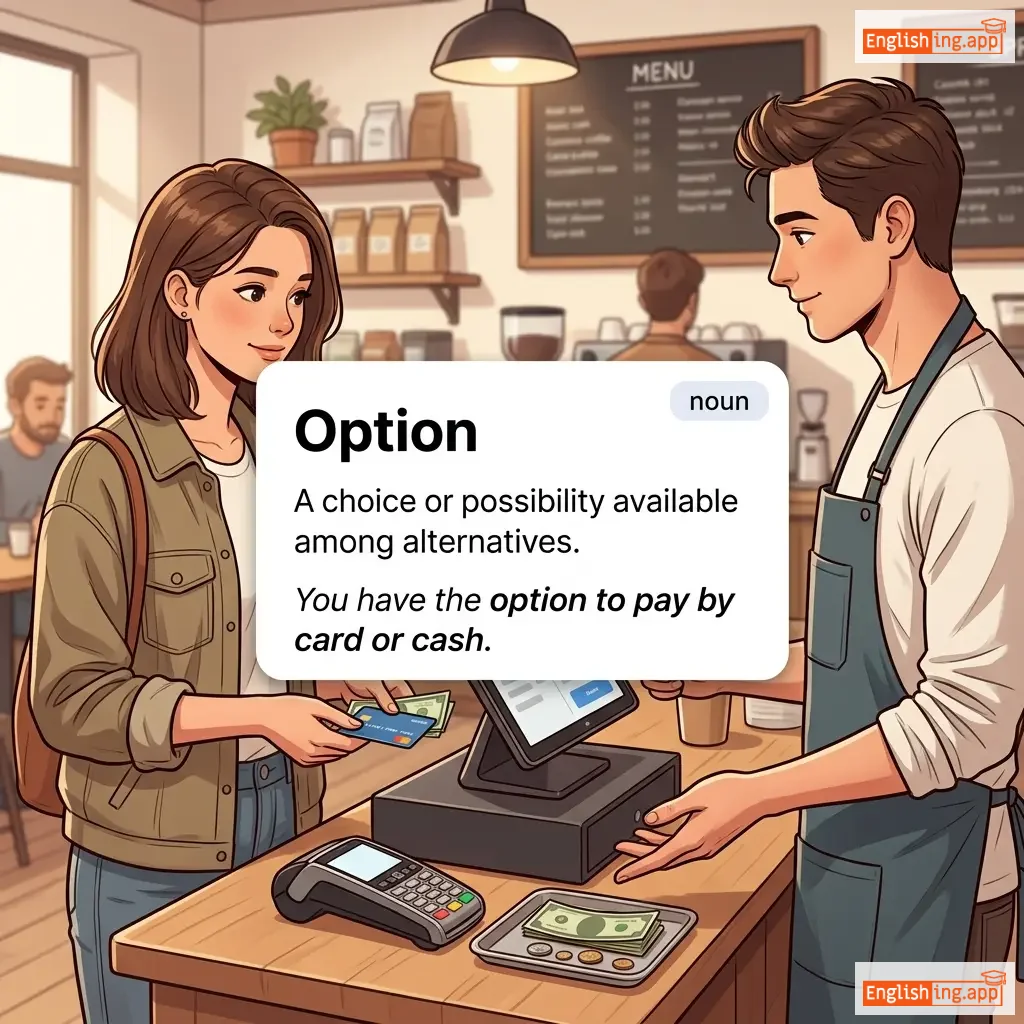
Option definition card — visual illustration of the meaning
noun
/ˈɒpʃən/
opción (opcion)

A choice or possibility available among alternatives.

"You have the option to pay by card or cash."

"Tienes la opción de pagar con tarjeta o en efectivo." (Tienes la opcion de pagar con tarjeta o en efectivo.)
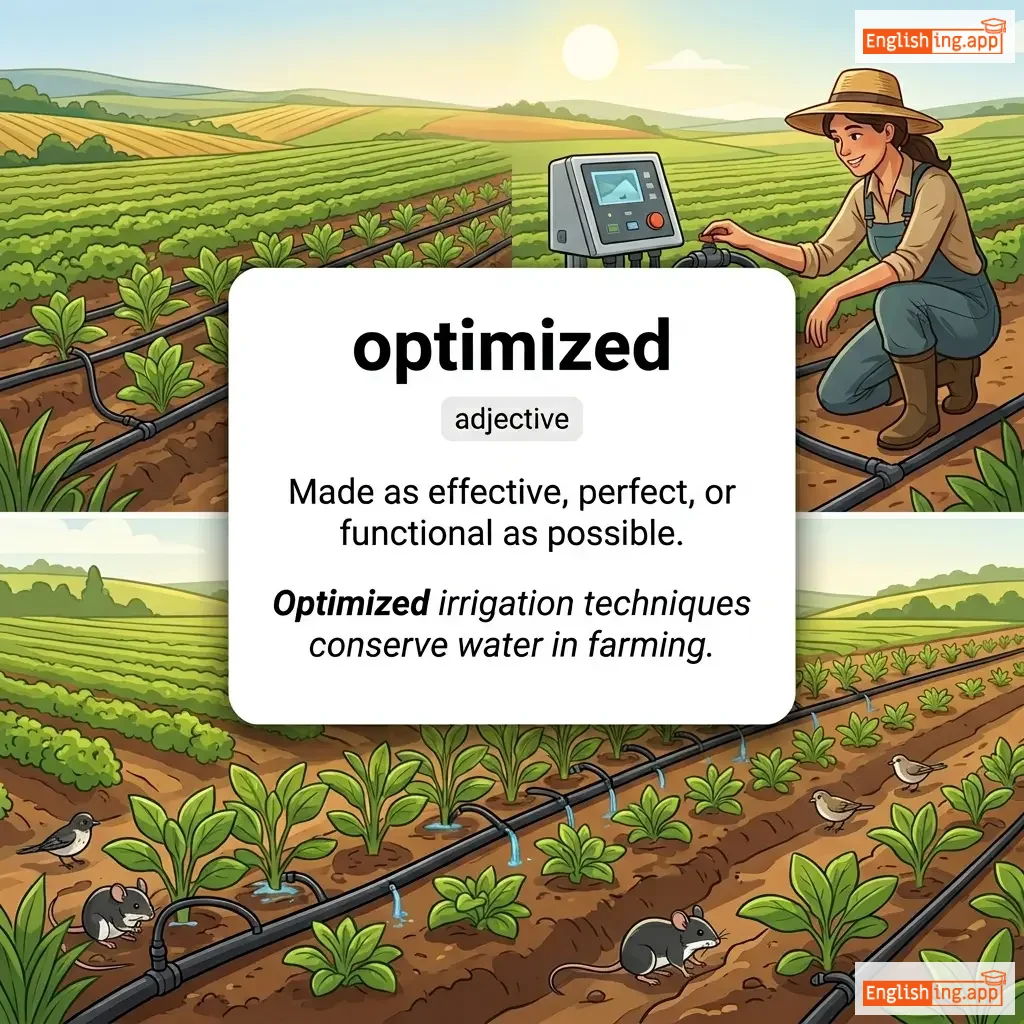
optimized definition card — visual illustration of the meaning
adjective
/ˈɒp.tɪ.maɪzd/
optimizado (optimizado)

Made as effective, perfect, or functional as possible.

"Optimized irrigation techniques conserve water in farming."

"Las técnicas de riego optimizadas conservan agua en la agricultura." (Las tecnicas de riego optimizadas conservan agua en la agricultura.)
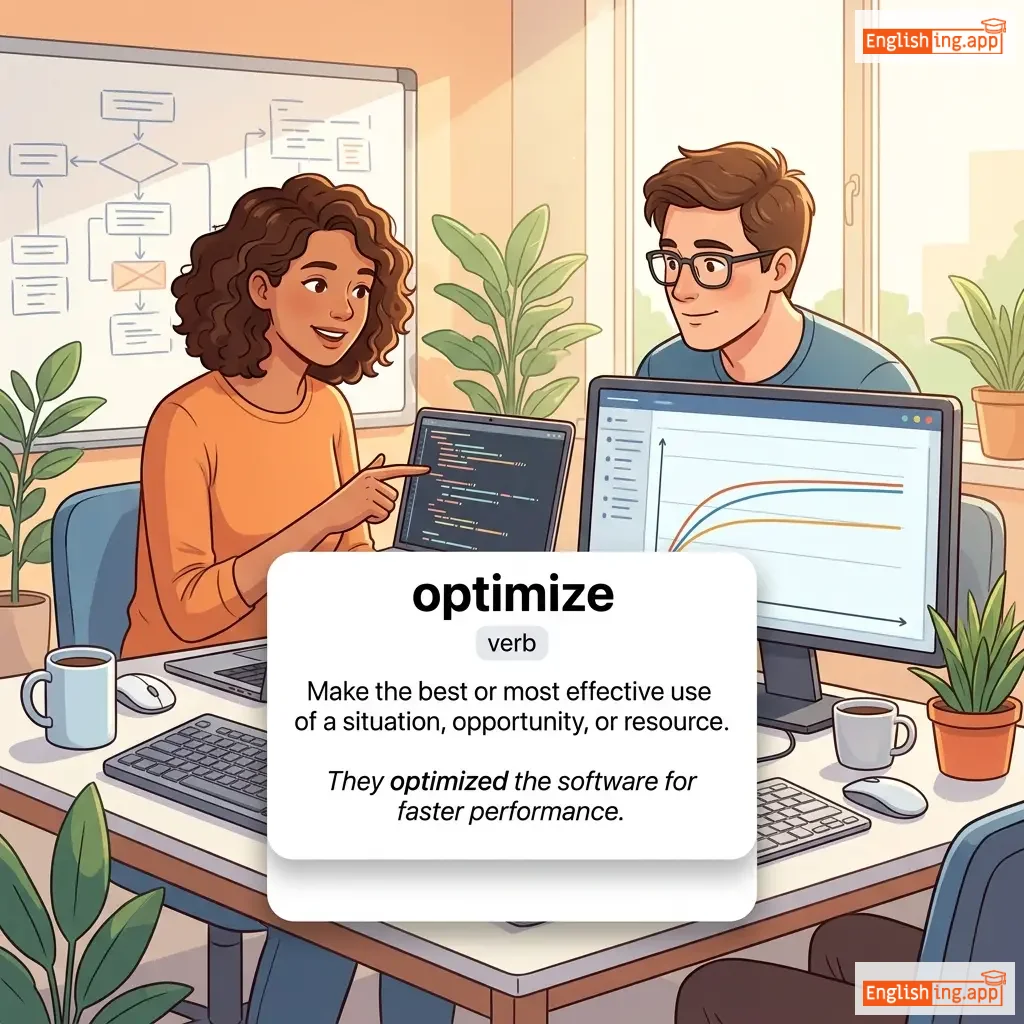
optimize definition card — visual illustration of the meaning
verb
ˈɒptɪmaɪz
optimizar, mejorar (optimizar, mejorar)

Make the best or most effective use of a situation, opportunity, or resource.

"They optimized the software for faster performance."

"Optimizaban el software para un mejor rendimiento." (Optimizaban el software para un mejor rendimiento.)
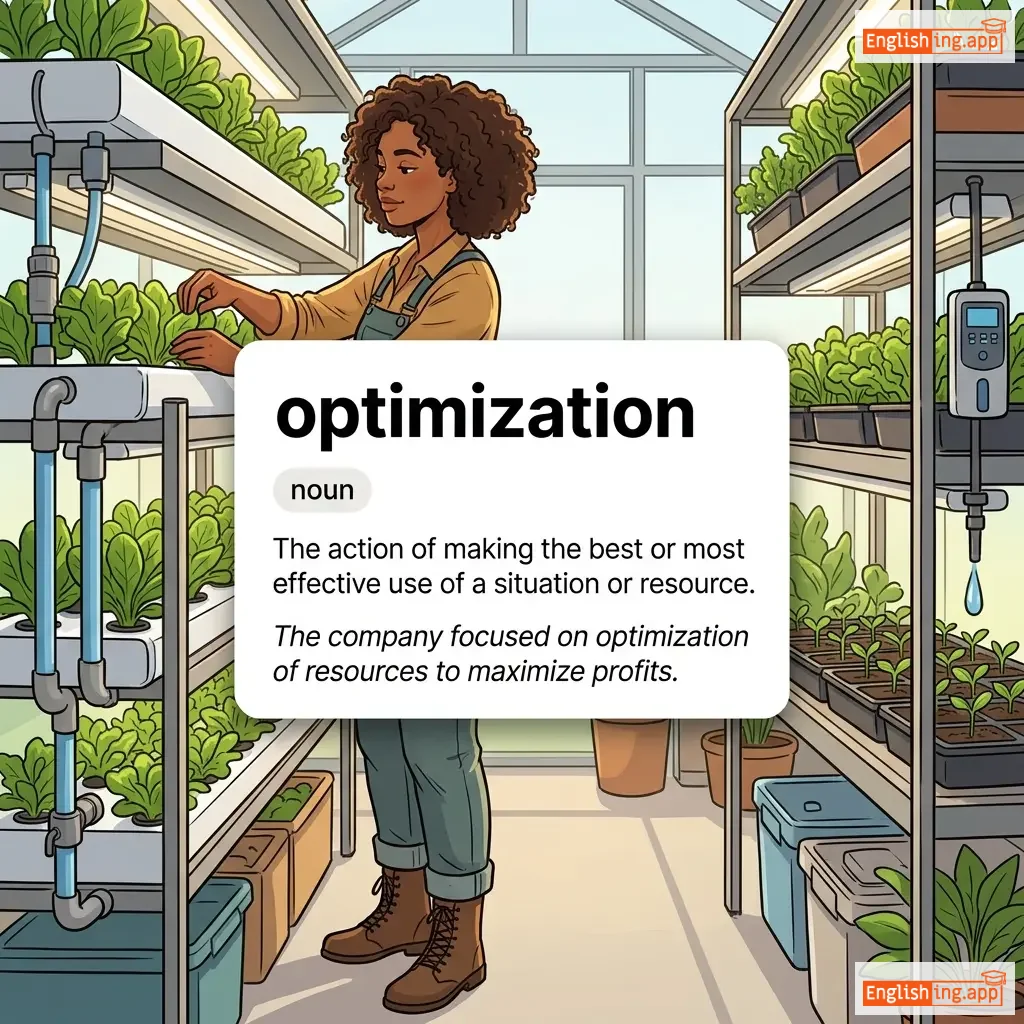
optimization definition card — visual illustration of the meaning
noun
ˌɒp.tɪ.mɪˈzeɪ.ʃən
optimización (optimizacion)

The action of making the best or most effective use of a situation or resource.

"The company focused on optimization of resources to maximize profits."

"La empresa se centró en la optimización de los recursos para maximizar los beneficios." (La empresa se centro en la optimizacion de los recursos para maximizar los beneficios.)
adjective
/ˌɑːp.təˈmɪs.tɪk/
optimista (optimista)

hopeful and confident about the future

"She is optimistic about the success of her new project."

"Ella está optimista acerca del éxito de su nuevo proyecto." (Ella está optimista acerca del éxito de su nuevo proyecto.)
noun
/ˈɒptɪmɪst/
optimista (optimist)

A person who tends to be hopeful and confident about the future or the success of something.

"Even in tough times, she remained an optimist."

"Incluso en tiempos difíciles, ella siguió siendo una optimista." (Incluso en tiempos dificiles ella siguio siendo una optimista)
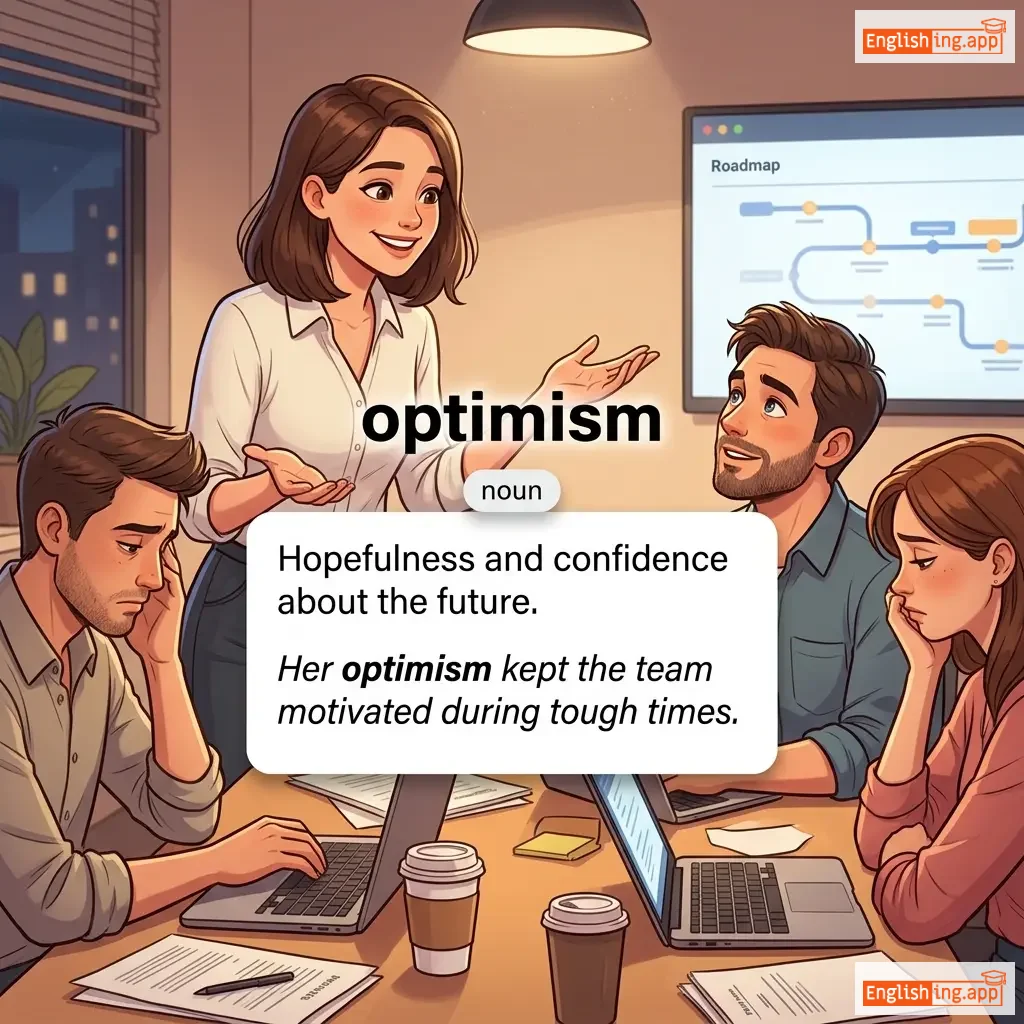
optimism definition card — visual illustration of the meaning
noun
/ˈɒptɪmɪzəm/
optimismo (optimismo)

Hopefulness and confidence about the future.

"Her optimism kept the team motivated during tough times."

"Su optimismo mantuvo al equipo motivado durante tiempos difíciles." (Su optimismo mantuvo al equipo motivado durante tiempos difíciles.)
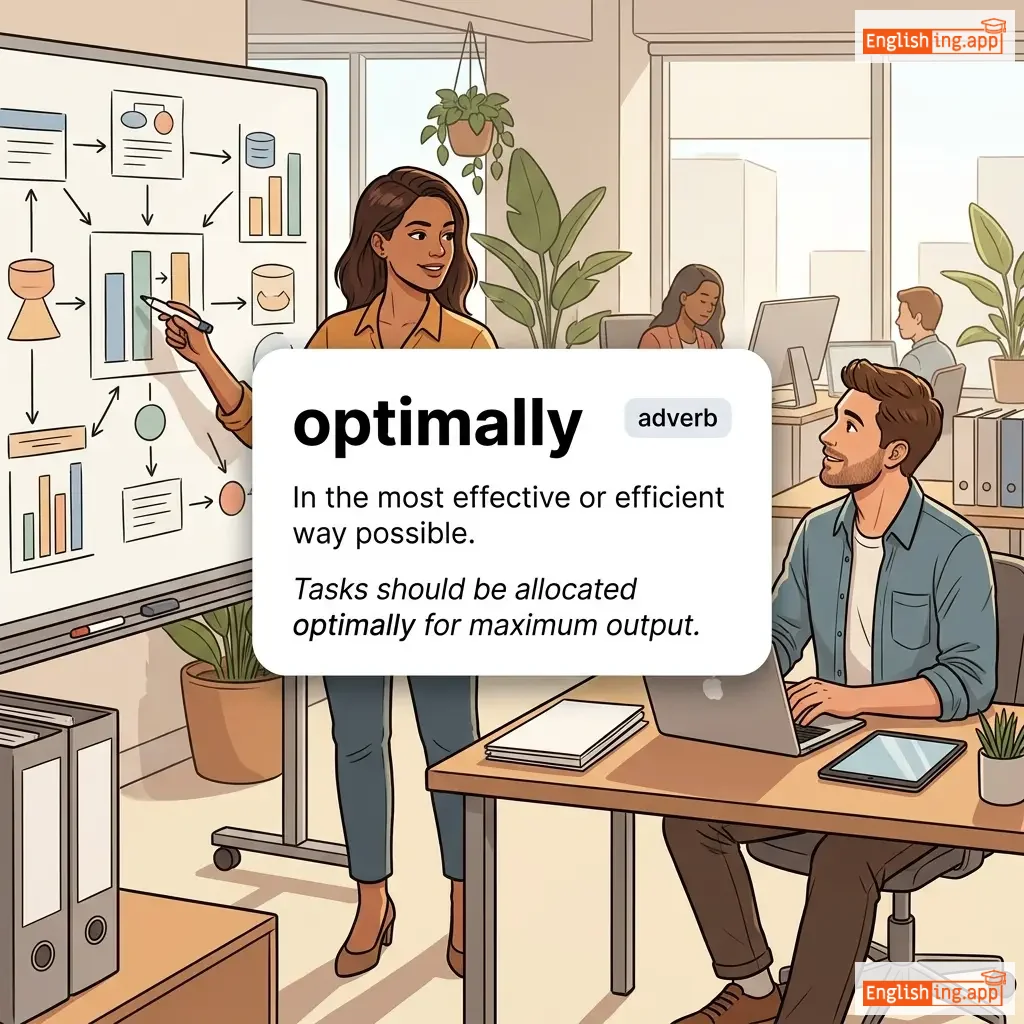
optimally definition card — visual illustration of the meaning
adverb
/ˈɒp.tɪ.məl.i/
de manera óptima (de manera optima)

In the most effective or efficient way possible.

"Tasks should be allocated optimally for maximum output."

"Las tareas deben asignarse de manera óptima para obtener el máximo rendimiento." (Las tareas deben asignarse de manera optima para obtener el maximo rendimiento.)
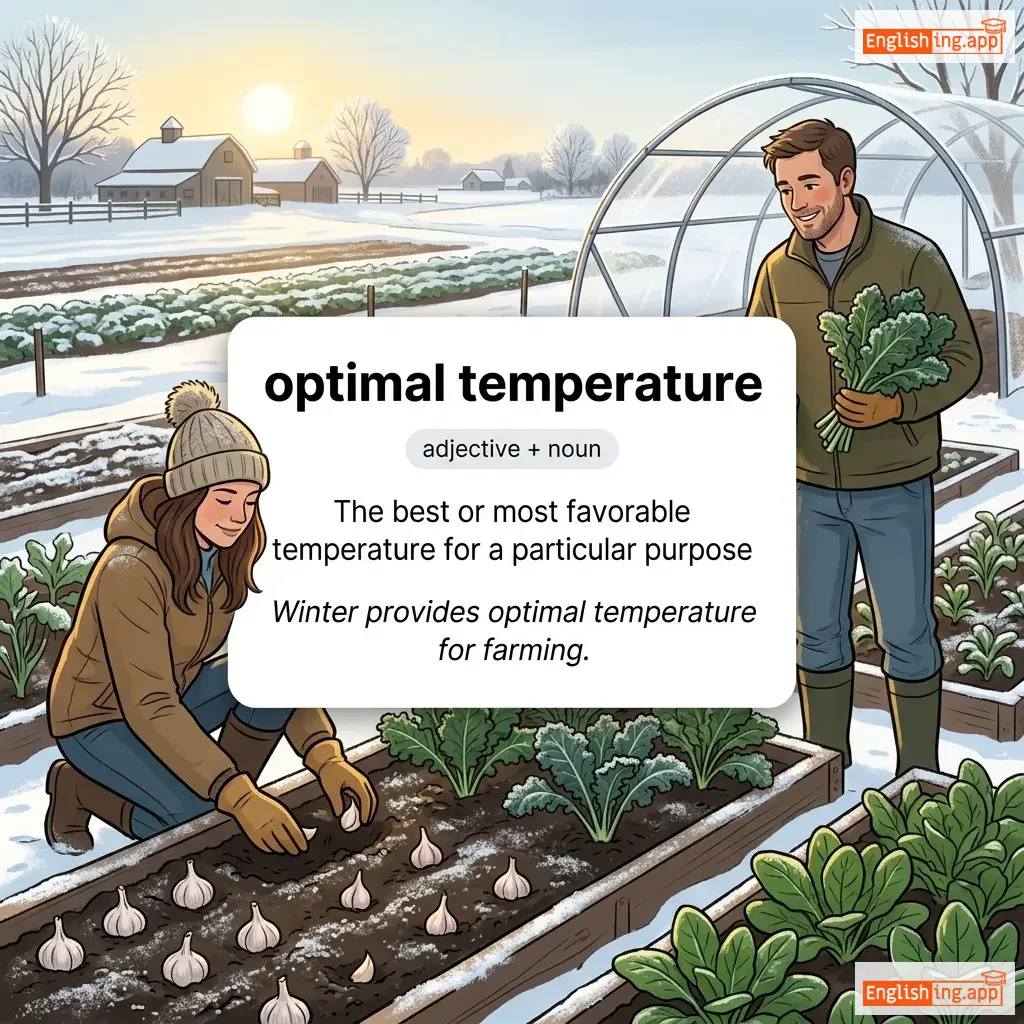
optimal temperature definition card — visual illustration of the meaning
adjective + noun
ˈɒptɪməl ˈtempərətʃər
temperatura óptima (temperatura optima)

The best or most favorable temperature for a particular purpose

"Winter provides optimal temperature for farming."

"El invierno proporciona la temperatura óptima para la agricultura." (El invierno proporciona la temperatura óptima para la agricultura.)
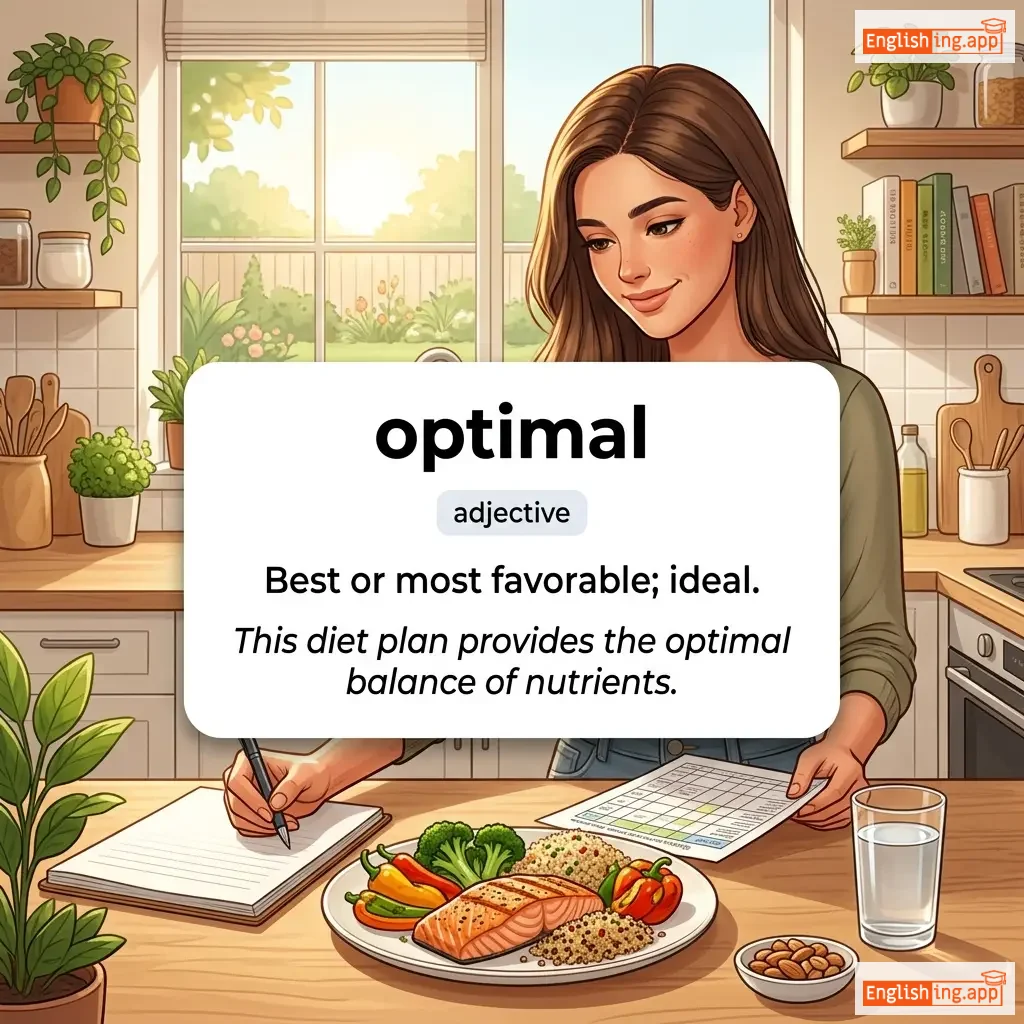
optimal definition card — visual illustration of the meaning
adjective
/ˈɒptɪməl/
óptimo (optimo)

Best or most favorable; ideal.

"This diet plan provides the optimal balance of nutrients."

"Este plan de dieta proporciona el equilibrio óptimo de nutrientes." (Este plan de dieta proporciona el equilibrio optimo de nutrientes.)
noun
/ˈɒptɪks/
óptica (optica)

The branch of physics dealing with light and vision.

"She studied optics to understand how lenses work."

"Ella estudió óptica para entender cómo funcionan las lentes." (Ella estudio optica para entender como funcionan las lentes.)
noun
/ˌɑːpərˈtuːnɪzəm/
oportunismo (oportunismo)

The practice of taking advantage of opportunities regardless of principles or ethics.

"His decision was driven by opportunism, not values."

"Su decisión fue impulsada por el oportunismo, no por los valores." (Su decision fue impulsada por el oportunismo, no por los valores.)
noun
/ˈoʊpənɪŋ/
apertura (apertura)

an act or instance of beginning something

"The opening of the new store was a huge success."

"La apertura de la nueva tienda fue un gran éxito." (La apertura de la nueva tienda fue un gran éxito.)
adverb
/ˈəʊpənli/
abiertamente (abiertamente)

in a way that is not secret or hidden

"He spoke openly about his past mistakes."

"Él habló abiertamente sobre sus errores pasados." (Él habló abiertamente sobre sus errores pasados.)
noun
/ˈɒpərə/
ópera (opera)

a dramatic performance in which the actors sing most of their lines

"We watched a beautiful opera at the theater last night."

"Vimos una hermosa ópera en el teatro anoche." (Vimos una hermosa opera en el teatro anoche.)
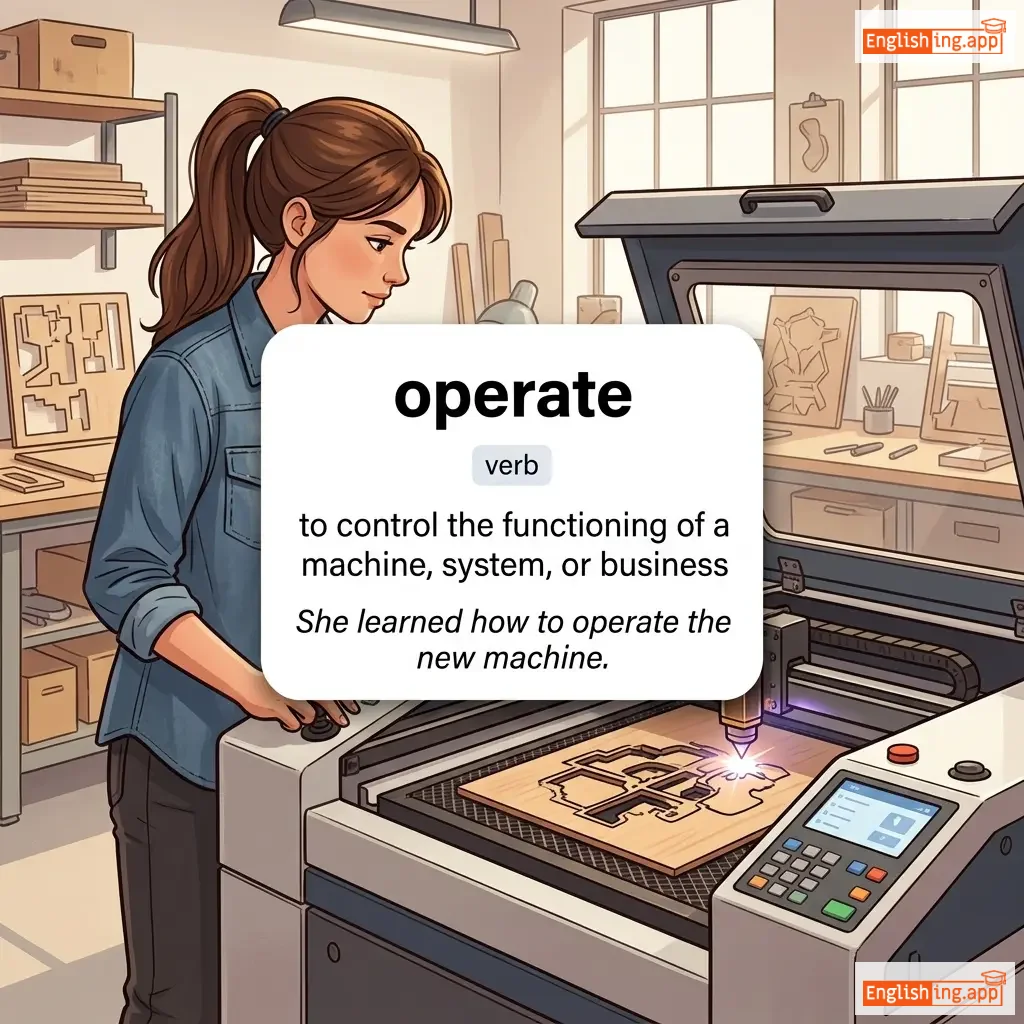
operate definition card — visual illustration of the meaning
verb
/ˈɑːpəˌreɪt/
operar (operar)

to control the functioning of a machine, system, or business

"She learned how to operate the new machine."

"Ella aprendió a operar la nueva máquina." (Ella aprendo a operar la nueva maquina.)
verb
/ˈɒpəreɪtɪŋ/
operando (operando)

to control or manage the functioning of something

"The company has been operating in this market for five years."

"La compañía ha estado operando en este mercado durante cinco años." (La compañia ha estado operando en este mercado durante cinco años.)
noun
/ˌɒpəˈreɪʃən/
operación (operacion)

an act or process of functioning or operating

"The hospital performed a successful operation."

"El hospital realizó una operación exitosa." (El hospital realizo una operacion exitosa.)
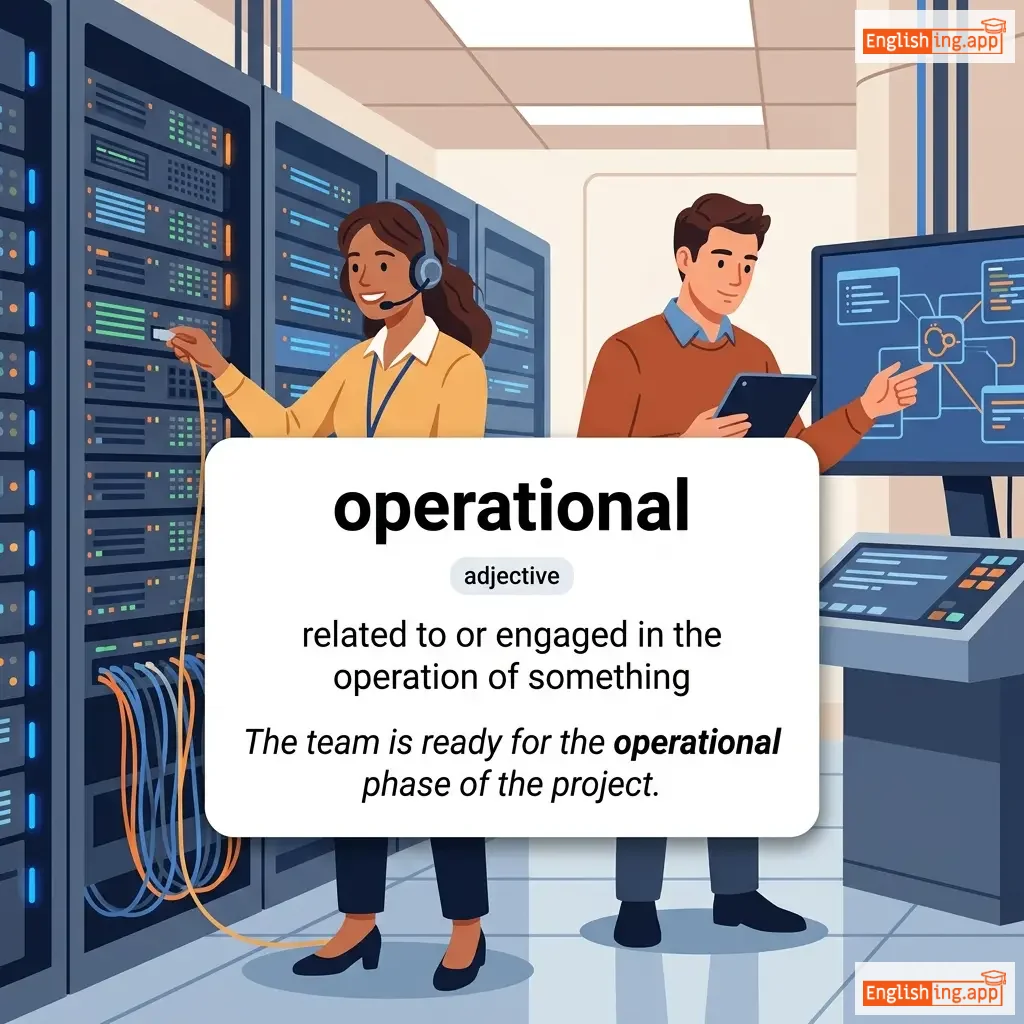
operational definition card — visual illustration of the meaning
adjective
/ˌɒpəˈreɪʃənl/
operacional (operational)

related to or engaged in the operation of something

"The team is ready for the operational phase of the project."

"El equipo está listo para la fase operacional del proyecto." (El equipo esta listo para la fase operacional del proyecto.)
adjective
/ˈɒpərətɪv/
operativo (operativo)

functioning, having effect, or relating to a secret agent or worker

"The new law is now operative across the country."

"La nueva ley ya está operativa en todo el país." (La nueva ley ya está operativa en todo el país.)
noun
/ˈɒpəreɪtər/
operador (operador)

a person who operates equipment, a business, or controls something

"The machine operator ensured that everything ran smoothly."

"El operador de la máquina se aseguró de que todo funcionara sin problemas." (El operador de la máquina se aseguró de que todo funcionara sin problemas.)
noun
/ˌɒpəˈrɛtə/
ópera ligera (opera ligera)

a short opera with light and humorous themes

"The theater staged a famous operetta by Gilbert and Sullivan."

"El teatro presentó una famosa opereta de Gilbert y Sullivan." (El teatro presentó una famosa opereta de Gilbert y Sullivan.)
noun
/ˈoʊpiət/
opiáceo (opiate)

a drug containing opium or its derivatives, used to relieve pain or cause sleep

"The doctor prescribed an opiate to relieve the patient's pain."

"El médico recetó un opiáceo para aliviar el dolor del paciente." (El medico receto un opiaceo para aliviar el dolor del paciente.)
verb
/oʊˈpaɪn/
expresar una opinión (expresar una opinion)

to express an opinion or belief

"The professor opined that the policy would fail."

"El profesor opinó que la política fracasaría." (El profesor opino que la politica fracasaria.)
noun
/əˈpɪnjən/
opinión (opinion)

A belief, judgment, or viewpoint about something, not necessarily based on fact.

"Everyone is entitled to their own opinion."

"Todos tienen derecho a su propia opinión." (Todos tienen derecho a su propia opinion.)
noun
/əˈpoʊnənt/
felicidad (felicidad)

A person who competes against or disagrees with another.

"The boxer defeated his opponent in the final round."

"Ella no pudo ocultar su felicidad cuando recibió el premio." (Ella no pudo ocultar su felicidad cuando recibio el premio.)
adjective
/ˌɑːpərˈtuːn/
momento oportuno (momento oportuno)

Happening at a suitable or convenient time.

"She arrived at an opportune moment to help."

"Llegó en un momento oportuno para ayudar." (Llegó en un momento oportuno para ayudar.)
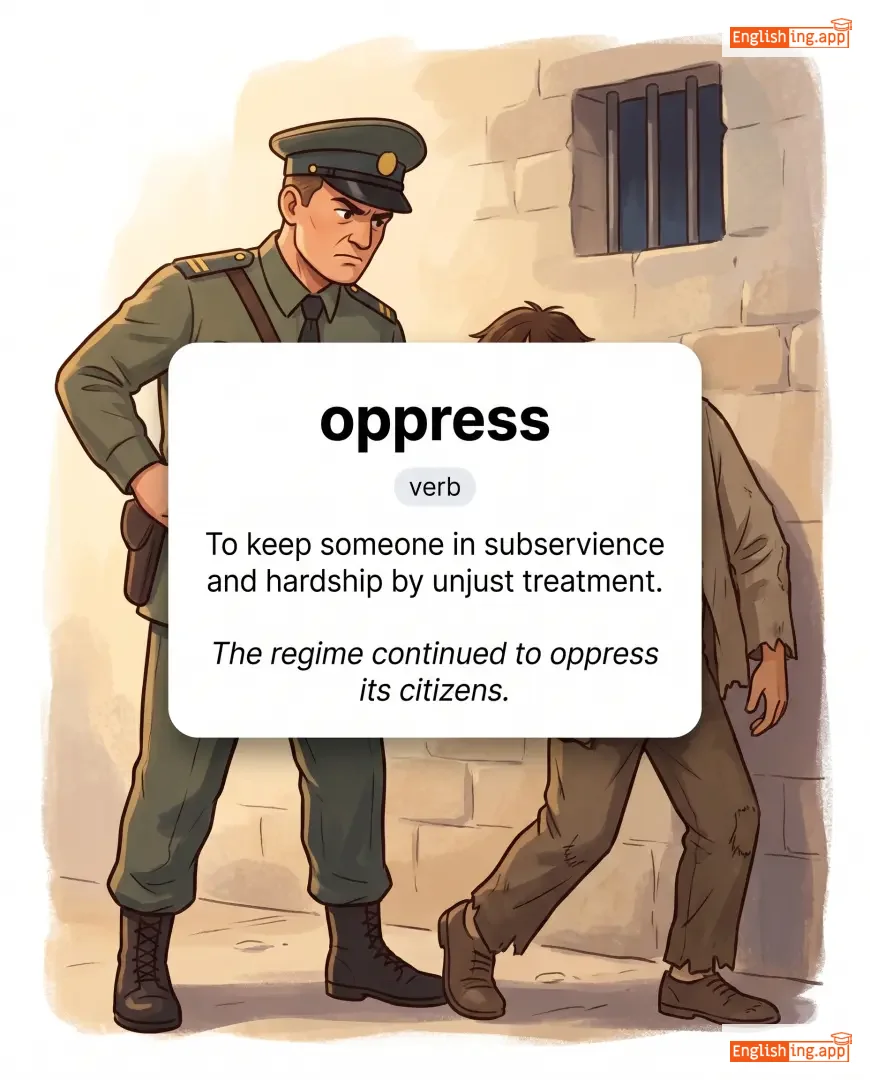
oppress definition card — visual illustration of the meaning
verb
/əˈprɛs/
oprimir (oprimir)

To keep someone in subservience and hardship by unjust treatment.

"The regime continued to oppress its citizens."

"El régimen continuó oprimiendo a sus ciudadanos." (El régimen continuó oprimiendo a sus ciudadanos.)
adjective
/ˈɒptɪkəl/
óptico (optico)

related to or used in seeing or sight

"The optical illusion fooled everyone at the exhibition."

"La ilusión óptica engañó a todos en la exposición." (La ilusion optica engano a todos en la exposicion.)
adjective
/ˈɒptɪk/
óptico (optico)

Relating to the eye or vision.

"The optic nerve carries signals from the eye to the brain."

"El nervio óptico lleva señales desde el ojo al cerebro." (El nervio optico lleva señales desde el ojo al cerebro.)
verb
/ɒpt/
elegir (elegir)

to choose or decide to do something instead of something else

"Many students opt to study abroad for better opportunities."

"Muchos estudiantes optan por estudiar en el extranjero para tener mejores oportunidades." (Muchos estudiantes optan por estudiar en el extranjero para tener mejores oportunidades.)
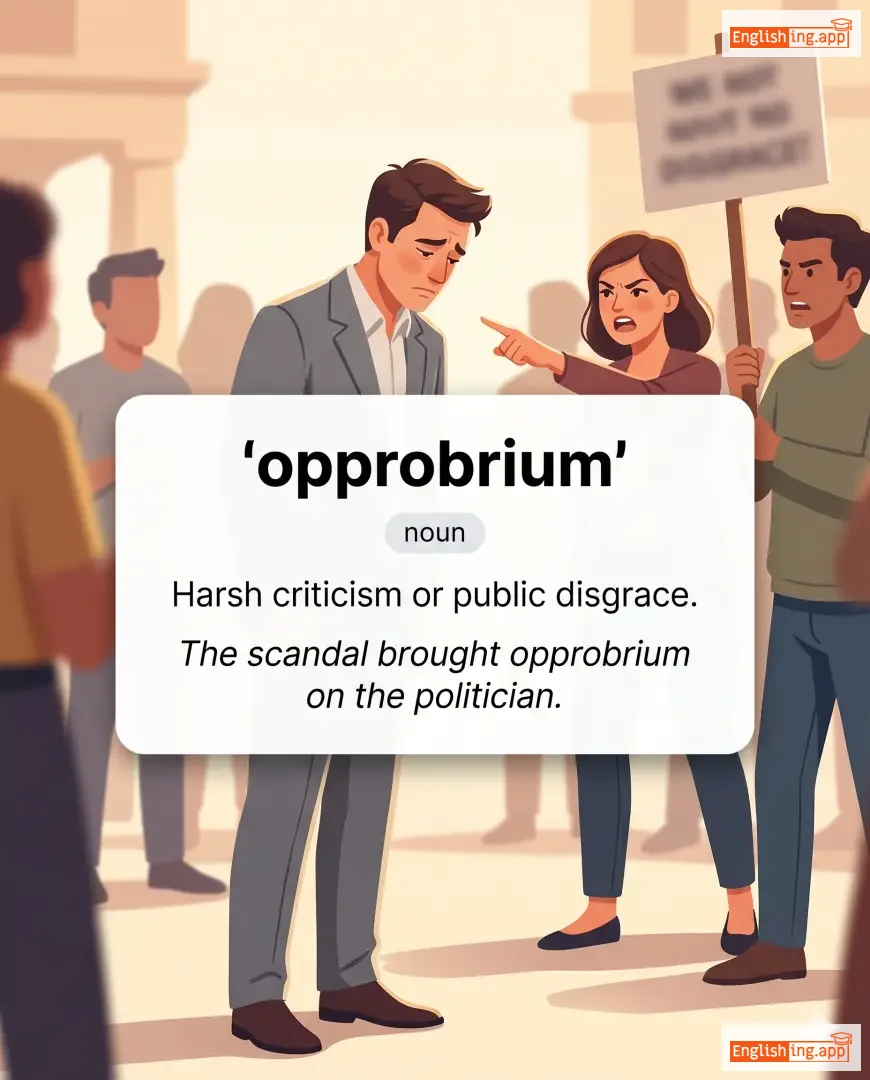
opprobrium definition card — visual illustration of the meaning
noun
/əˈprəʊ.bri.əm/
desprecio, oprobio (desprecio, oprobio)

Harsh criticism or public disgrace.

"The scandal brought opprobrium on the politician."

"El escándalo trajo desprecio al político." (El escándalo trajo desprecio al político.)
adjective
/əˈprəʊ.bri.əs/
despectivo (despectivo)

Expressing strong criticism or scorn.

"He made opprobrious remarks about his opponent."

"Él hizo comentarios despectivos sobre su oponente." (El hizo comentarios despectivos sobre su oponente.)
adjective
/əˈprɛs.ɪv/
opresivo (opresivo)

Harsh and authoritarian; overwhelming; causing distress; tyrannical;

"The oppressive heat made it difficult to work outside during the summer."

"El calor opresivo dificultaba trabajar afuera durante el verano." (El calor opresivo dificultaba trabajar afuera durante el verano.)
noun
/əˈpreʃ.ən/
opresión; abuso; tiranía; (opresion; abuso; tirania;)

cruel or unjust treatment or exercise of authority; the state of being subject to harsh treatment

"The people fought against political oppression."

"La gente luchó contra la opresión política." (La gente luchó contra la opresión política.)
opportunities definition card — visual illustration of the meaning
noun
ˌɒpəˈtjuːnɪtiz
oportunidades (oportunidades)

A set of circumstances that makes it possible to do something.

"Investing in emerging markets provides new opportunities."

"Invertir en mercados emergentes ofrece nuevas oportunidades." (Invertir en mercados emergentes ofrece nuevas oportunidades.)
noun
/ˌɒp.əˈtjuː.nə.ti/
oportunidad (oportunidad)

A favorable chance or set of circumstances that makes it possible to do something.

"She seized the opportunity to study abroad."

"Ella aprovechó la oportunidad de estudiar en el extranjero." (Ella aprovechó la oportunidad de estudiar en el extranjero.)
verb
/əˈpəʊz/
oponerse (oponerse)

to disagree with or fight against something

"He opposed the new policy at the meeting."

"Él se opuso a la nueva política en la reunión." (Él se opuso a la nueva política en la reunión.)