Vocabulaires

Découvrez, apprenez et maîtrisez le vocabulaire anglais

noun
/ˈɒrɪndʒ/
orange (orange)

a fruit that is typically round and orange in color

"She ate an orange for breakfast."

"Elle a mangé une orange pour le petit-déjeuner." (Elle a mangé une orange pour le petit-déjeuner.)
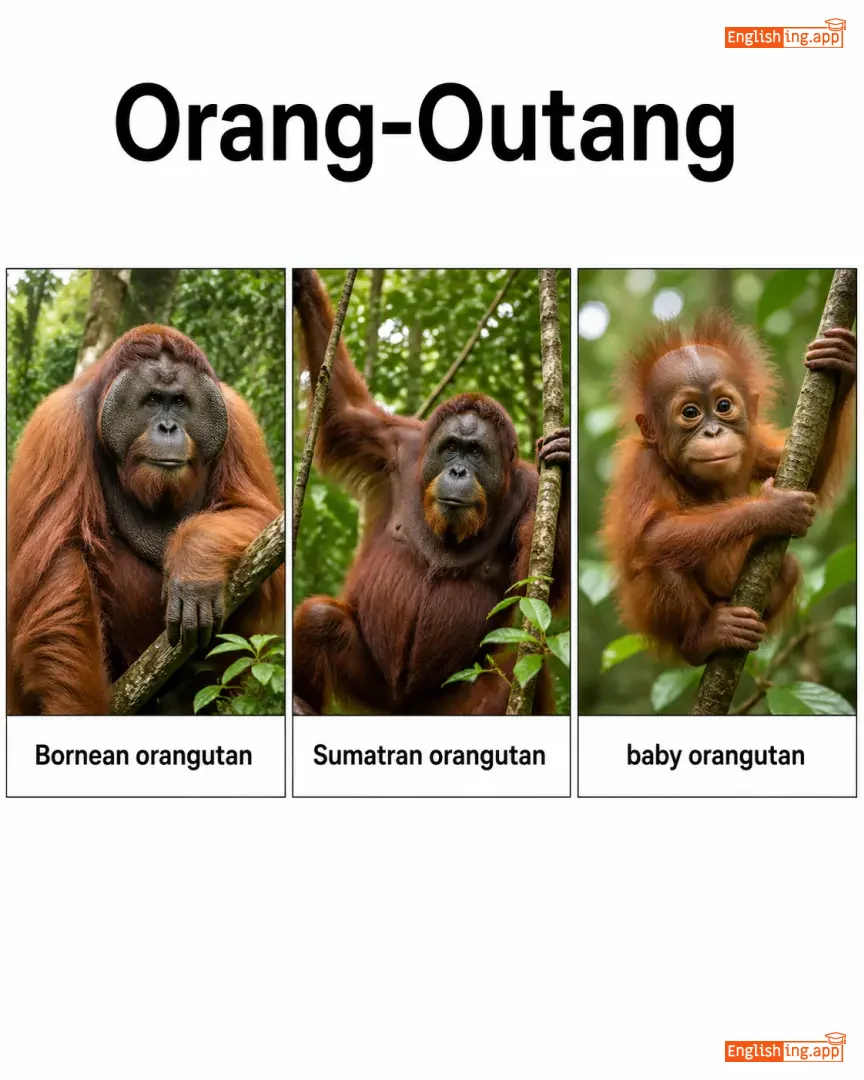
Orang-Outang definition card — visual illustration of the meaning
noun
/ɔːˈræŋ.ʊˌtæŋ/
orang-outang (orang-outang)

a large arboreal ape with long reddish hair, long arms, and hooked hands and feet, native to Borneo and Sumatra

"The orangutan swings gracefully through the forest canopy."

"L'orang-outang se balance gracieusement à travers la canopée de la forêt." (L'orang-outang se balance gracieusement a travers la canopee de la foret.)
adjective
/ˈɔːrəl/
oral (oral)

Spoken rather than written; relating to the mouth

"The student had to give an oral presentation."

"L'étudiant a dû faire une présentation orale." (L'etudiant a du faire une presentation orale.)
adjective
/əˈrækjələr/
oraculaire (oraculaire)

Resembling an oracle; giving wise, mysterious, or prophetic statements

"Her oracular words left the audience deep in thought."

"Ses paroles oraculaires ont laissé l'audience profondément pensive." (Ses paroles oraculaires ont laissé l'audience profondément pensive.)
noun
/ˈɒrəkəl/
bonheur (bonheur)

A person or source considered to provide wise and insightful advice or prophecy.

"In ancient Greece, people visited the oracle at Delphi for guidance."

"Elle ne pouvait pas cacher son bonheur lorsqu'elle a reçu le prix." (Elle ne pouvait pas cacher son bonheur lorsqu'elle a recu le prix.)
conjunction
/ɔːr/
ou (ou)

used to link alternatives

"You can have tea or coffee."

"Vous pouvez prendre du thé ou du café." (Vous pouvez prendre du thé ou du café.)
noun
/ˈəʊpəs/
œuvre créative (oeuvre creative)

A creative work, especially a large and important piece of music or art.

"The composer considered the symphony his greatest opus."

"Le compositeur considérait la symphonie comme sa plus grande œuvre créative." (Le compositeur considérait la symphonie comme sa plus grande œuvre créative.)
adjective
/ˈɒpjʊlənt/
opulent (opulent)

Ostentatiously rich, luxurious, or lavish.

"They hosted an opulent wedding with gold decorations."

"Ils ont organisé un mariage opulent avec des décorations dorées." (Ils ont organisé un mariage opulent avec des décorations dorées.)
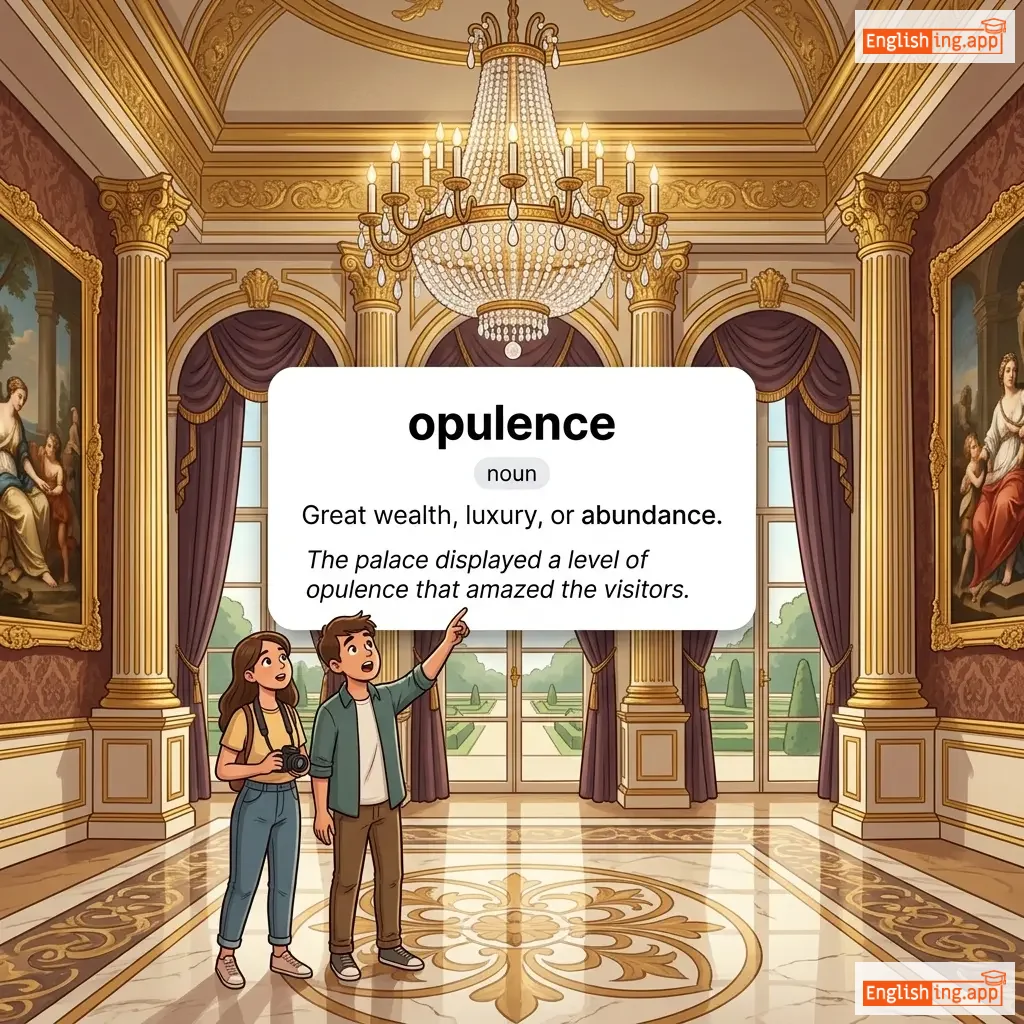
opulence definition card — visual illustration of the meaning
noun
/ˈɒpjʊləns/
opulence (opulence)

Great wealth, luxury, or abundance.

"The palace displayed a level of opulence that amazed the visitors."

"Le palais affichait un niveau d'opulence qui a émerveillé les visiteurs." (Le palais affichait un niveau d'opulence qui a émerveillé les visiteurs.)
noun
/ɒpˈtɒmətri/
optométrie (optometrie)

The practice or profession of examining the eyes and prescribing corrective lenses.

"She studied optometry at the university to become an eye specialist."

"Elle a étudié l'optométrie à l'université pour devenir spécialiste des yeux." (Elle a étudié l'optométrie à l'université pour devenir spécialiste des yeux.)
noun
/ɒpˈtɒmɪtrɪst/
optométriste (optometriste)

A healthcare professional who examines eyes and prescribes corrective lenses.

"The optometrist prescribed new glasses for her."

"L'optométriste a prescrit de nouvelles lunettes pour elle." (L'optométriste a prescrit de nouvelles lunettes pour elle.)
adjective
/ˈɒpʃənəl/
facultatif (facultatif)

Not required; left to personal choice.

"The dress code for the party is optional."

"Le code vestimentaire pour la fête est facultatif." (Le code vestimentaire pour la fête est facultatif.)
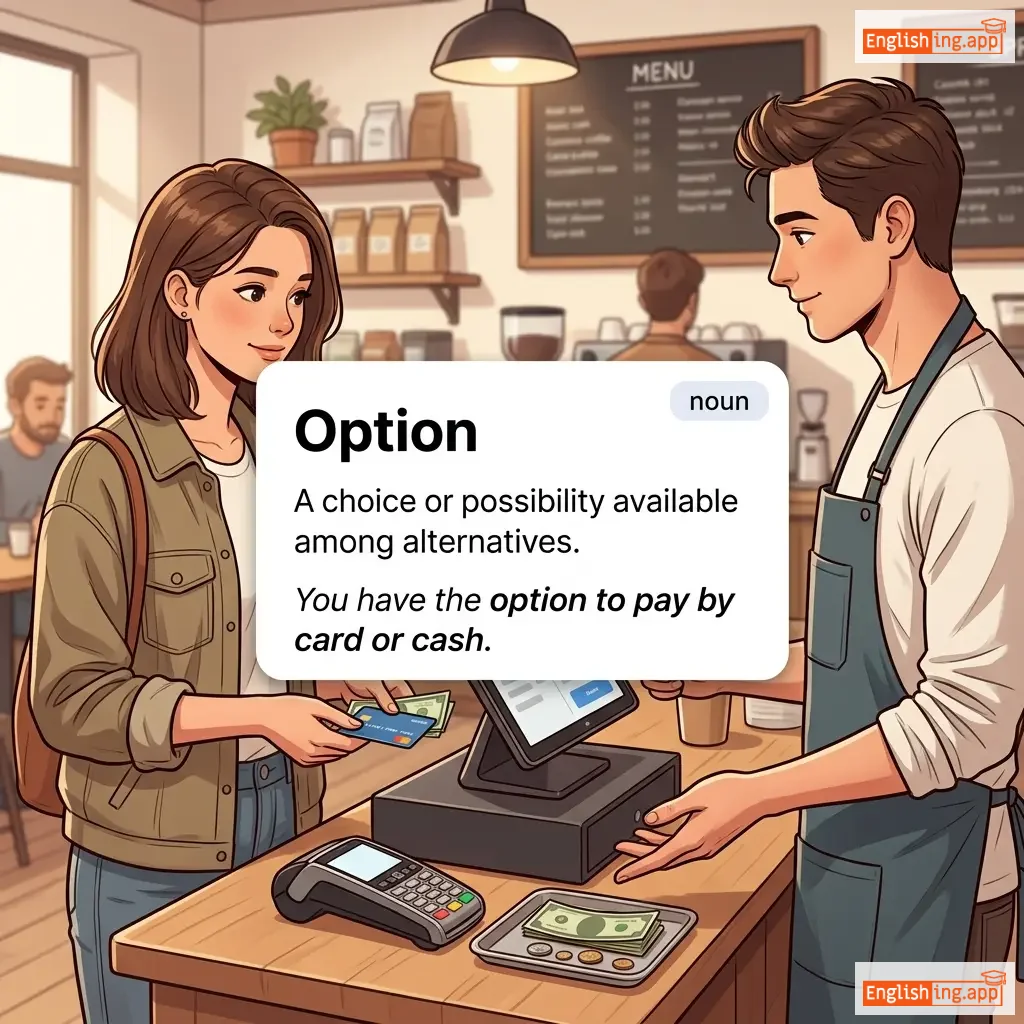
Option definition card — visual illustration of the meaning
noun
/ˈɒpʃən/
option (option)

A choice or possibility available among alternatives.

"You have the option to pay by card or cash."

"Vous avez l'option de payer par carte ou en espèces." (Vous avez l'option de payer par carte ou en especes.)
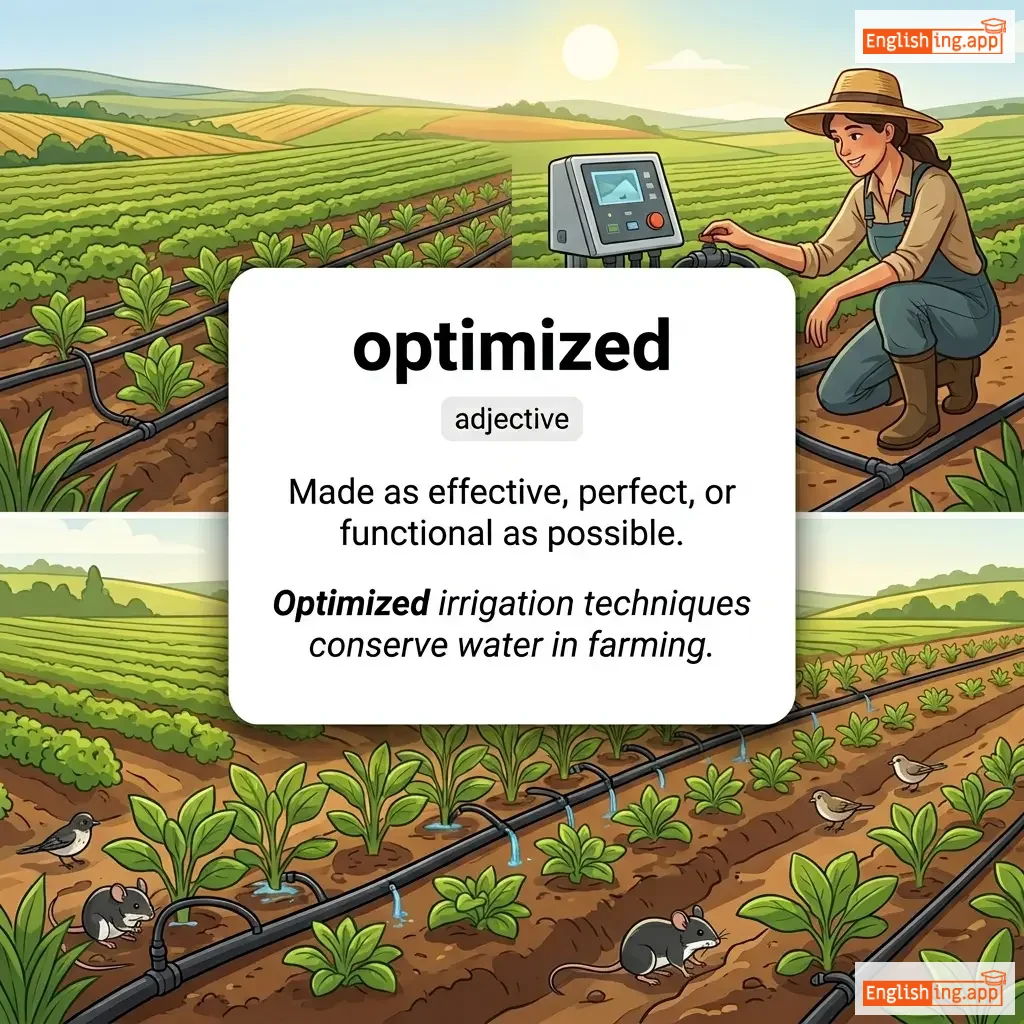
optimized definition card — visual illustration of the meaning
adjective
/ˈɒp.tɪ.maɪzd/
optimisé (optimize)

Made as effective, perfect, or functional as possible.

"Optimized irrigation techniques conserve water in farming."

"Des techniques d'irrigation optimisées permettent d'économiser l'eau dans l'agriculture." (Des techniques dirrigation optimisees permettent deconomiser leau dans lagriculture.)
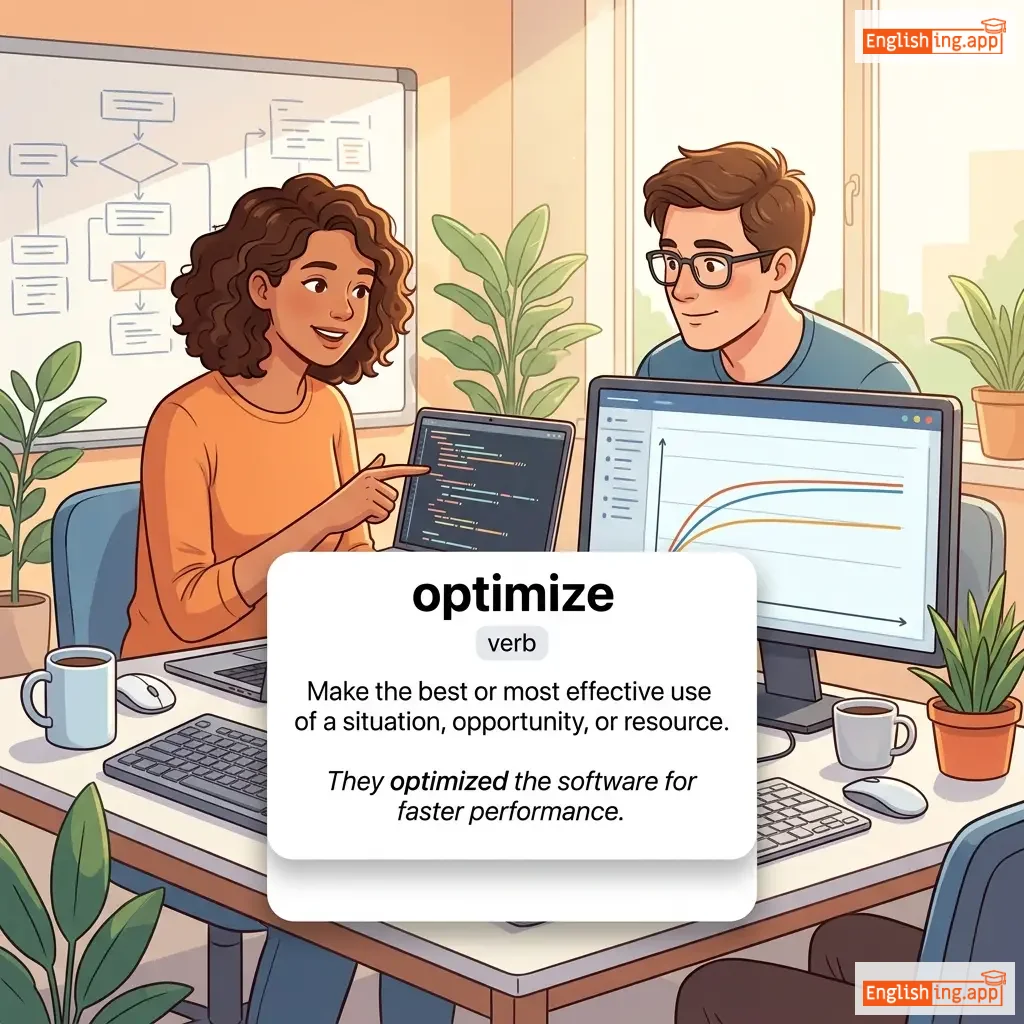
optimize definition card — visual illustration of the meaning
verb
ˈɒptɪmaɪz
optimiser, améliorer (optimiser, améliorer)

Make the best or most effective use of a situation, opportunity, or resource.

"They optimized the software for faster performance."

"Ils ont optimisé le logiciel pour de meilleures performances." (Ils ont optimisé le logiciel pour de meilleures performances.)
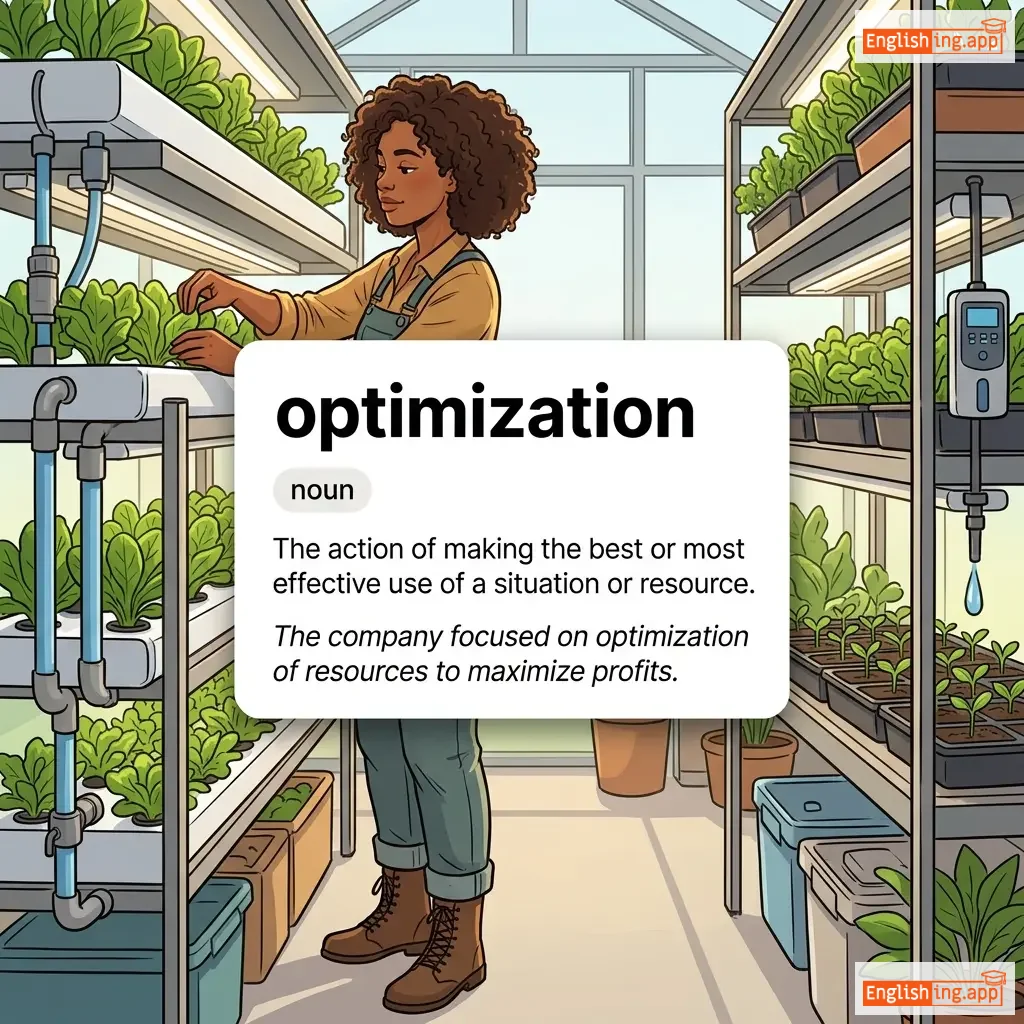
optimization definition card — visual illustration of the meaning
noun
ˌɒp.tɪ.mɪˈzeɪ.ʃən
optimisation (optimisation)

The action of making the best or most effective use of a situation or resource.

"The company focused on optimization of resources to maximize profits."

"L'entreprise s'est concentrée sur l'optimisation des ressources pour maximiser les bénéfices." (L'entreprise s'est concentree sur l'optimisation des ressources pour maximiser les benefices.)
adjective
/ˌɑːp.təˈmɪs.tɪk/
optimiste (optimiste)

hopeful and confident about the future

"She is optimistic about the success of her new project."

"Elle est optimiste quant au succès de son nouveau projet." (Elle est optimiste quant au succès de son nouveau projet.)
noun
/ˈɒptɪmɪst/
optimiste (optimiste)

A person who tends to be hopeful and confident about the future or the success of something.

"Even in tough times, she remained an optimist."

"Même dans les moments difficiles, elle est restée optimiste." (Meme dans les moments difficiles elle est restee optimiste)
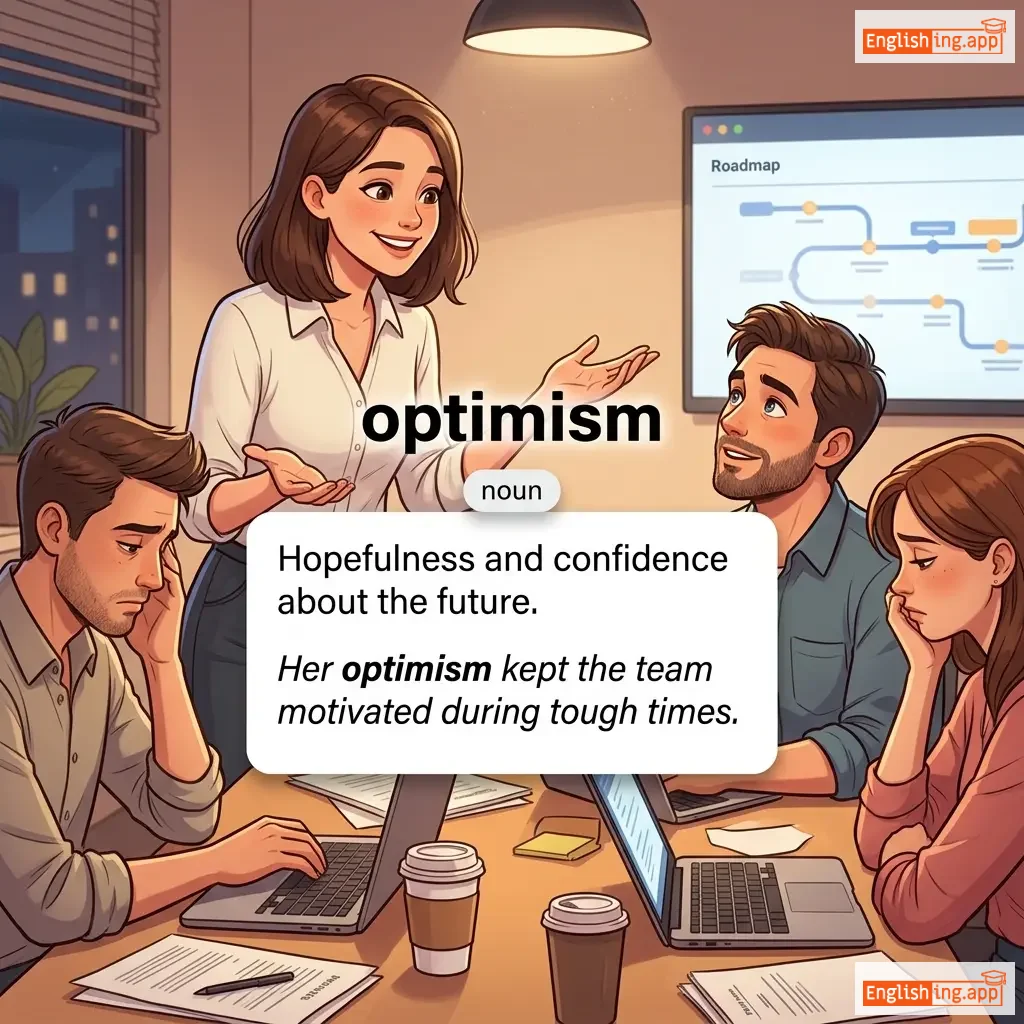
optimism definition card — visual illustration of the meaning
noun
/ˈɒptɪmɪzəm/
optimisme (optimisme)

Hopefulness and confidence about the future.

"Her optimism kept the team motivated during tough times."

"Son optimisme a motivé l'équipe pendant les moments difficiles." (Son optimisme a motivé l'équipe pendant les moments difficiles.)
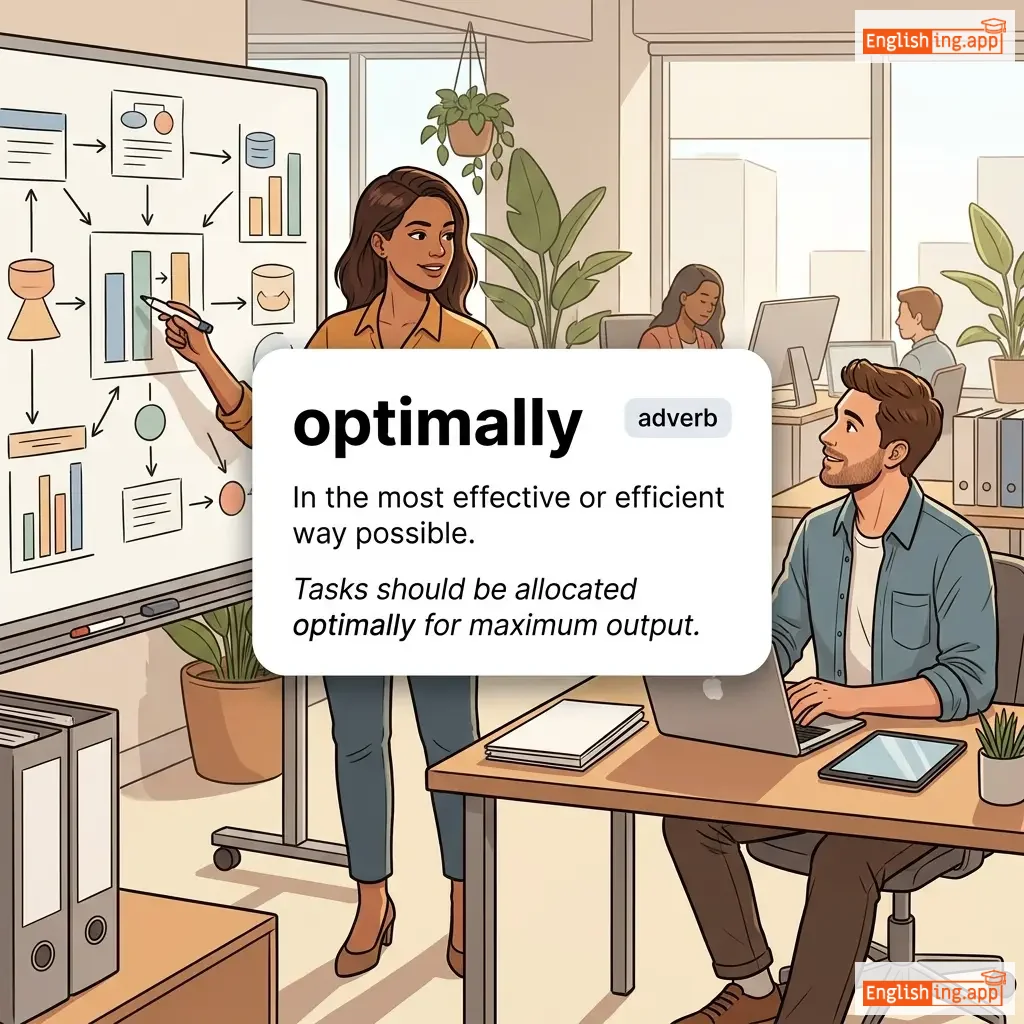
optimally definition card — visual illustration of the meaning
adverb
/ˈɒp.tɪ.məl.i/
de manière optimale (de maniere optimale)

In the most effective or efficient way possible.

"Tasks should be allocated optimally for maximum output."

"Les tâches doivent être attribuées de manière optimale pour un rendement maximal." (Les taches doivent etre attribuees de maniere optimale pour un rendement maximal.)
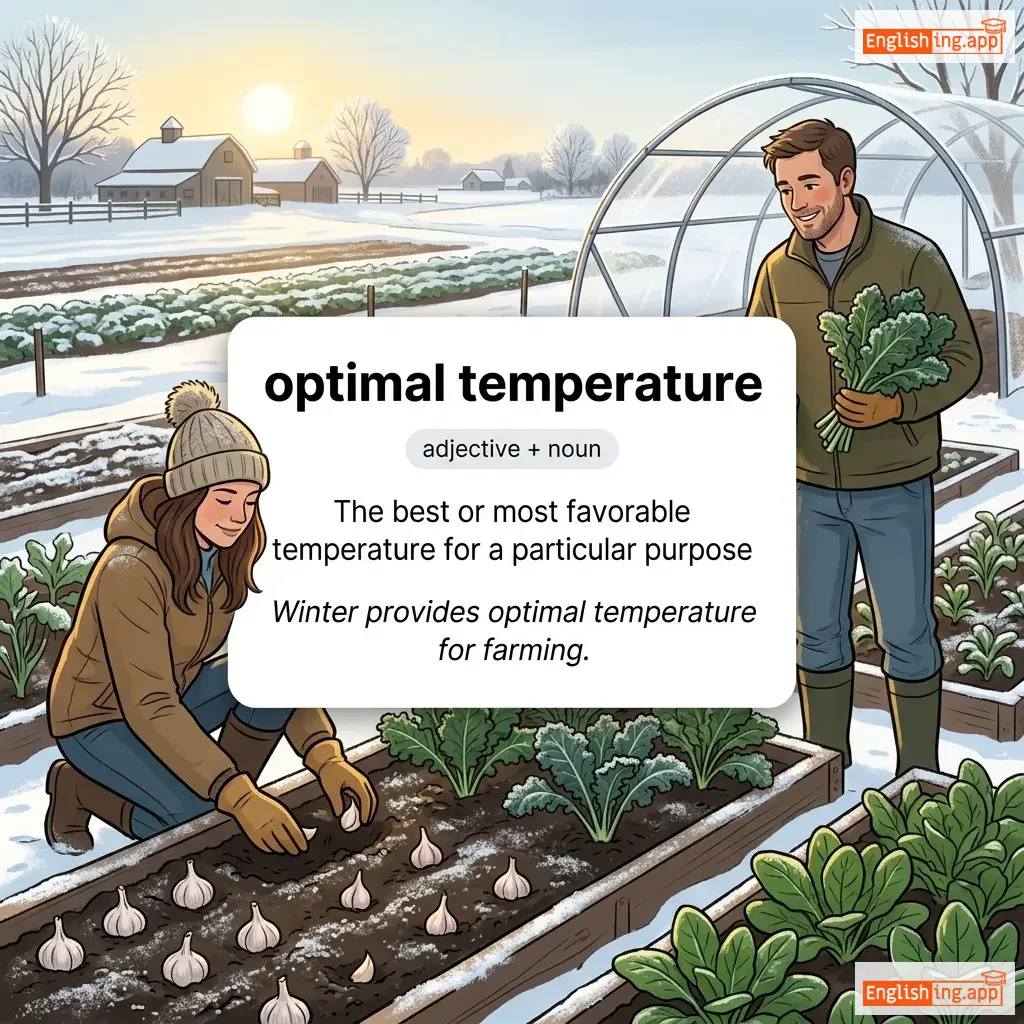
optimal temperature definition card — visual illustration of the meaning
adjective + noun
ˈɒptɪməl ˈtempərətʃər
température optimale (temperature optimale)

The best or most favorable temperature for a particular purpose

"Winter provides optimal temperature for farming."

"L'hiver fournit la température optimale pour l'agriculture." (L'hiver fournit la température optimale pour l'agriculture.)
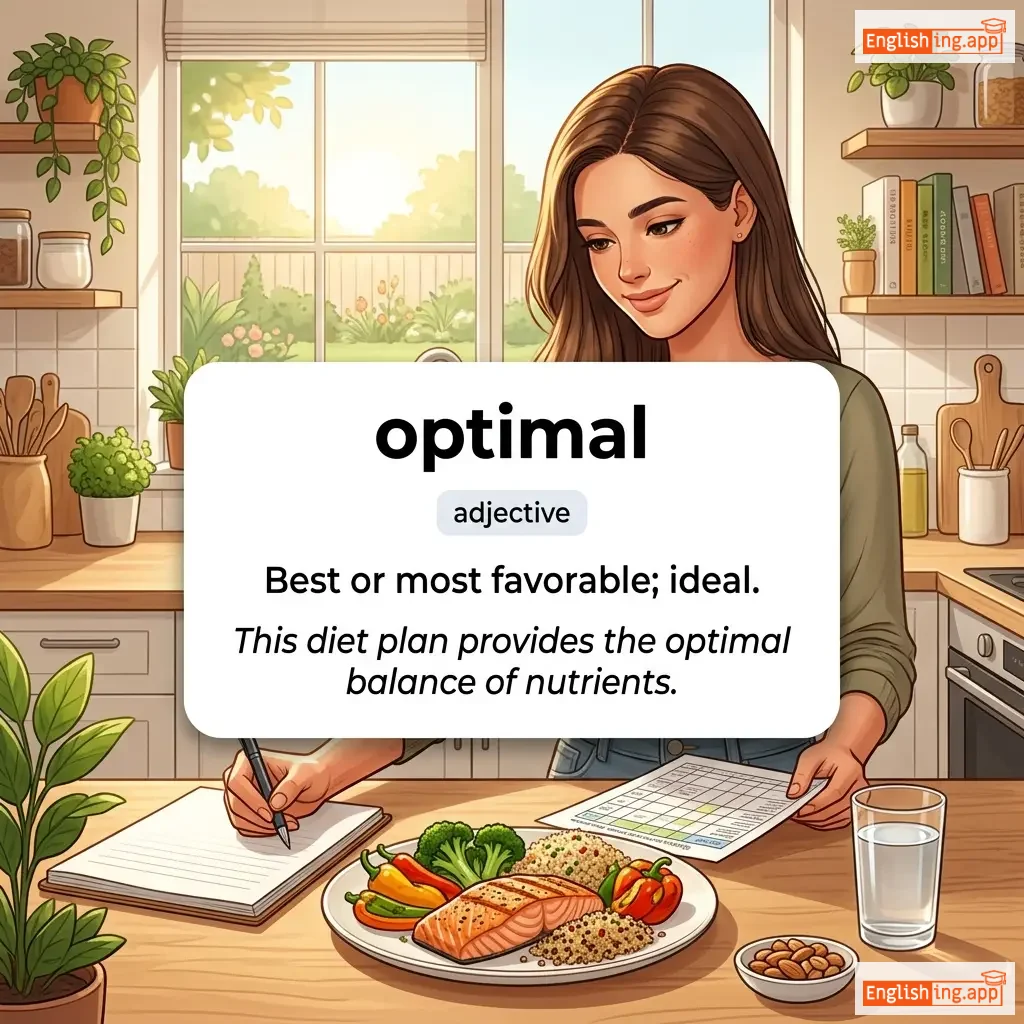
optimal definition card — visual illustration of the meaning
adjective
/ˈɒptɪməl/
optimal (optimal)

Best or most favorable; ideal.

"This diet plan provides the optimal balance of nutrients."

"Ce plan alimentaire offre l'équilibre optimal des nutriments." (Ce plan alimentaire offre l'equilibre optimal des nutriments.)
noun
/ˈɒptɪks/
optique (optik)

The branch of physics dealing with light and vision.

"She studied optics to understand how lenses work."

"Elle a étudié l'optique pour comprendre comment fonctionnent les lentilles." (Elle a etudie l'optique pour comprendre comment fonctionnent les lentilles.)
noun
/ˌɑːpərˈtuːnɪzəm/
opportunisme (opportunisme)

The practice of taking advantage of opportunities regardless of principles or ethics.

"His decision was driven by opportunism, not values."

"Sa décision a été motivée par l'opportunisme, pas par des valeurs." (Sa decision a ete motivee par l'opportunisme, pas par des valeurs.)
noun
/ˈoʊpənɪŋ/
ouverture (ouverture)

an act or instance of beginning something

"The opening of the new store was a huge success."

"L'ouverture du nouveau magasin a été un grand succès." (L'ouverture du nouveau magasin a été un grand succès.)
adverb
/ˈəʊpənli/
ouvertement (ouvertement)

in a way that is not secret or hidden

"He spoke openly about his past mistakes."

"Il a parlé ouvertement de ses erreurs passées." (Il a parlé ouvertement de ses erreurs passées.)
noun
/ˈɒpərə/
opéra (opera)

a dramatic performance in which the actors sing most of their lines

"We watched a beautiful opera at the theater last night."

"Nous avons regardé un bel opéra au théâtre hier soir." (Nous avons regarde un bel opera au theatre hier soir.)
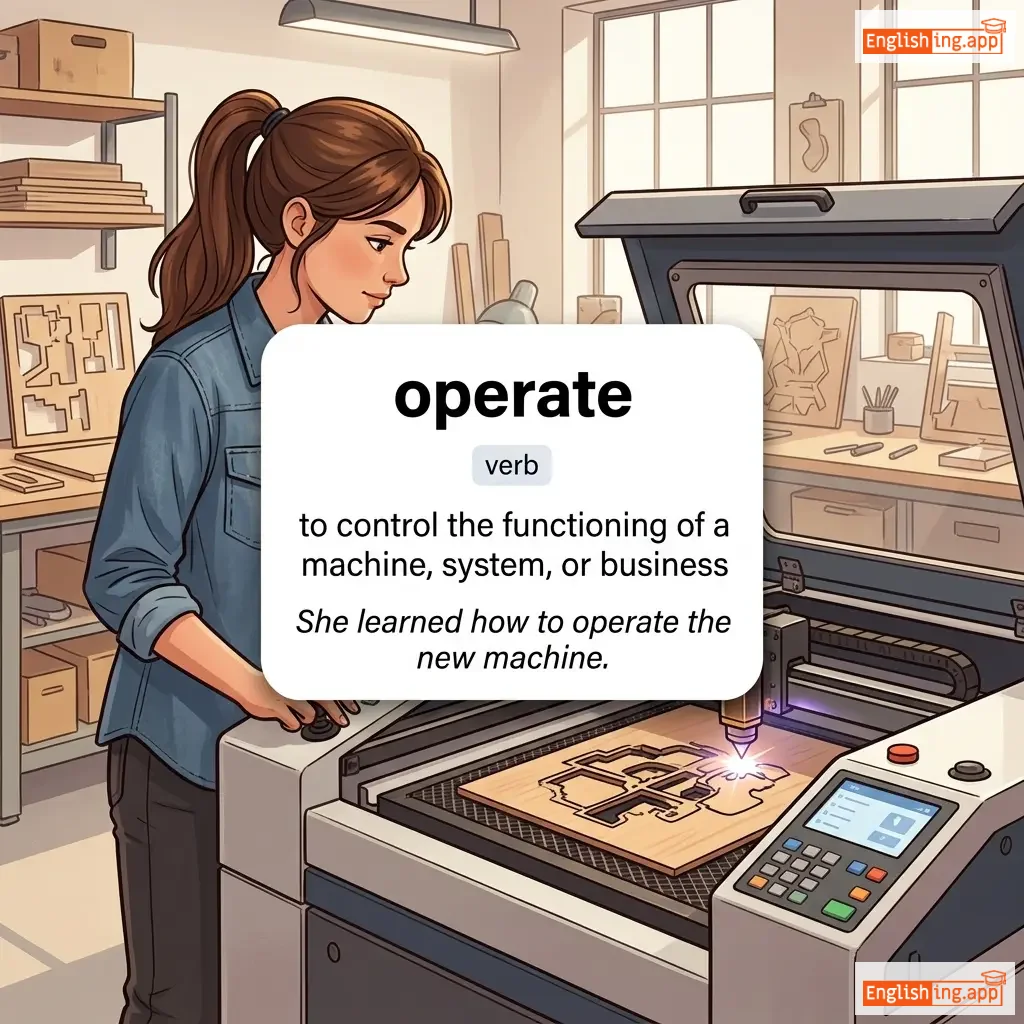
operate definition card — visual illustration of the meaning
verb
/ˈɑːpəˌreɪt/
opérer (operer)

to control the functioning of a machine, system, or business

"She learned how to operate the new machine."

"Elle a appris à opérer la nouvelle machine." (Elle a appris a operer la nouvelle machine.)
verb
/ˈɒpəreɪtɪŋ/
opérant (operant)

to control or manage the functioning of something

"The company has been operating in this market for five years."

"L'entreprise opère sur ce marché depuis cinq ans." (L'entreprise oper sur ce marche depuis cinq ans.)
noun
/ˌɒpəˈreɪʃən/
opération (operation)

an act or process of functioning or operating

"The hospital performed a successful operation."

"L'hôpital a effectué une opération réussie." (L'hopital a effectue une operation reussie.)
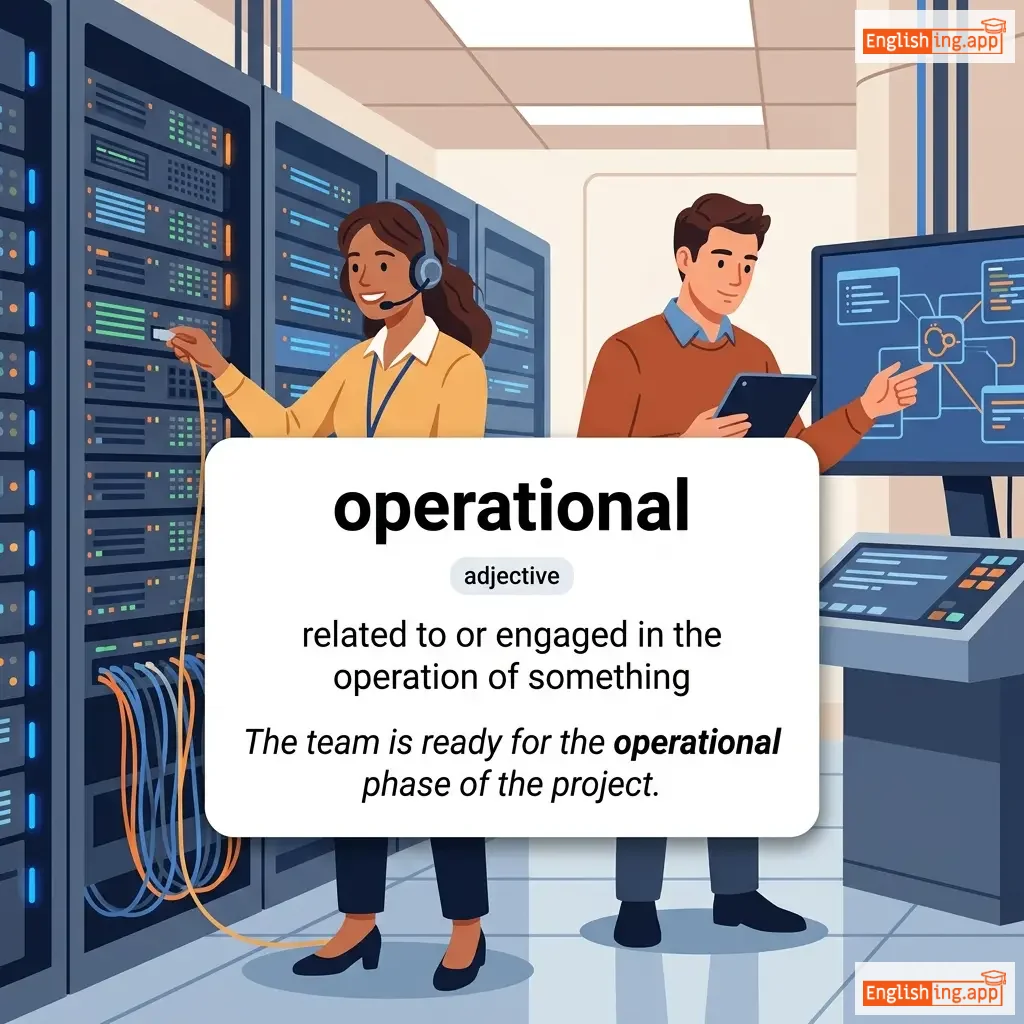
operational definition card — visual illustration of the meaning
adjective
/ˌɒpəˈreɪʃənl/
opérationnel (operational)

related to or engaged in the operation of something

"The team is ready for the operational phase of the project."

"L'équipe est prête pour la phase opérationnelle du projet." (L'equipe est prete pour la phase operationnelle du projet.)
adjective
/ˈɒpərətɪv/
opératif (operatif)

functioning, having effect, or relating to a secret agent or worker

"The new law is now operative across the country."

"La nouvelle loi est maintenant opérationnelle dans tout le pays." (La nouvelle loi est maintenant opérationnelle dans tout le pays.)
noun
/ˈɒpəreɪtər/
opérateur (operateur)

a person who operates equipment, a business, or controls something

"The machine operator ensured that everything ran smoothly."

"L'opérateur de la machine s'est assuré que tout fonctionnait correctement." (L'operateur de la machine s'est assure que tout fonctionnait correctement.)
noun
/ˌɒpəˈrɛtə/
opéra léger (opera léger)

a short opera with light and humorous themes

"The theater staged a famous operetta by Gilbert and Sullivan."

"Le théâtre a présenté une célèbre opérette de Gilbert et Sullivan." (Le théâtre a présenté une célèbre opérette de Gilbert et Sullivan.)
noun
/ˈoʊpiət/
opiacé (opyase)

a drug containing opium or its derivatives, used to relieve pain or cause sleep

"The doctor prescribed an opiate to relieve the patient's pain."

"Le docteur a prescrit un opiacé pour soulager la douleur du patient." (Le docteur a prescrit un opiace pour soulager la douleur du patient.)
verb
/oʊˈpaɪn/
exprimer une opinion (exprimer une opinion)

to express an opinion or belief

"The professor opined that the policy would fail."

"Le professeur a exprimé que la politique échouerait." (Le professeur a exprime que la politique echouerait.)
noun
/əˈpɪnjən/
opinion (opinion)

A belief, judgment, or viewpoint about something, not necessarily based on fact.

"Everyone is entitled to their own opinion."

"Chacun a droit à sa propre opinion." (Chacun a droit à sa propre opinion.)
noun
/əˈpoʊnənt/
bonheur (bonheur)

A person who competes against or disagrees with another.

"The boxer defeated his opponent in the final round."

"Elle ne pouvait pas cacher son bonheur lorsqu'elle a reçu le prix." (Elle ne pouvait pas cacher son bonheur lorsqu'elle a recu le prix.)
adjective
/ˌɑːpərˈtuːn/
moment opportun (moment opportun)

Happening at a suitable or convenient time.

"She arrived at an opportune moment to help."

"Elle est arrivée à un moment opportun pour aider." (Elle est arrivée à un moment opportun pour aider.)
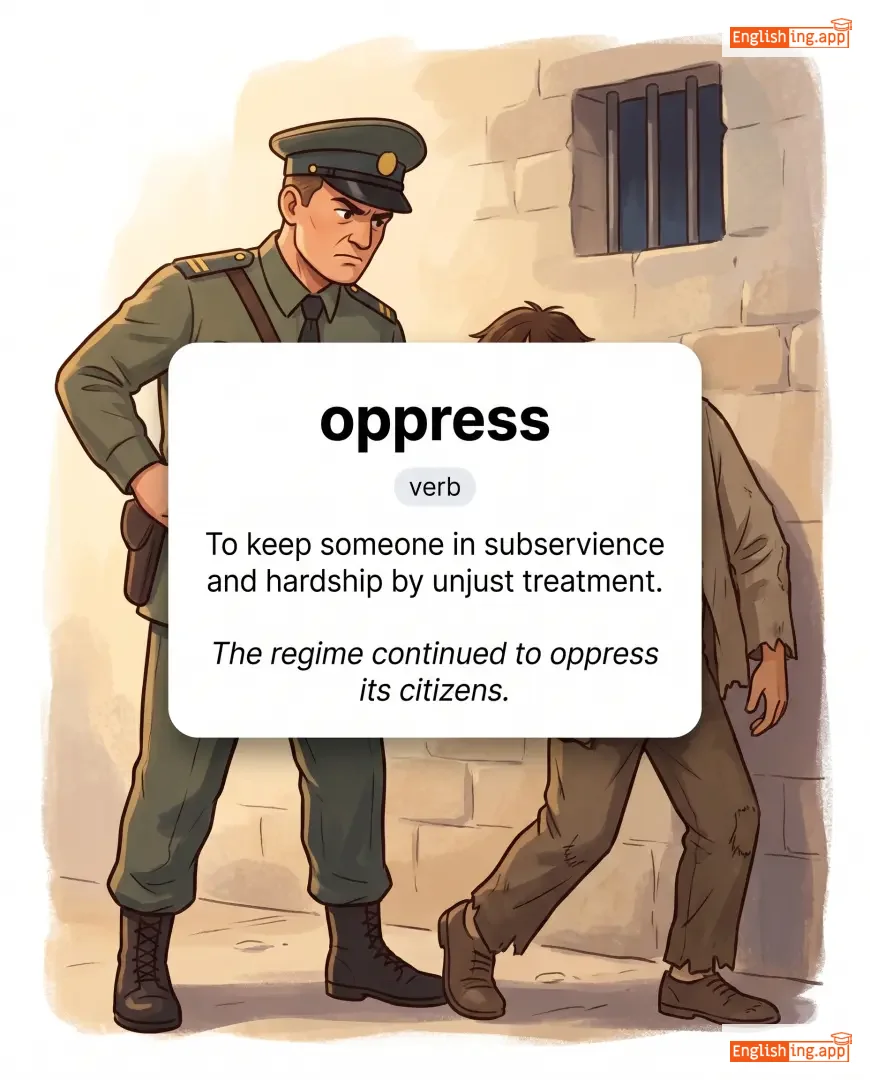
oppress definition card — visual illustration of the meaning
verb
/əˈprɛs/
opprimer (opprimer)

To keep someone in subservience and hardship by unjust treatment.

"The regime continued to oppress its citizens."

"Le régime a continué d'opprimer ses citoyens." (Le régime a continué d'opprimer ses citoyens.)
adjective
/ˈɒptɪkəl/
optique (optik)

related to or used in seeing or sight

"The optical illusion fooled everyone at the exhibition."

"L'illusion optique a trompé tout le monde lors de l'exposition." (L'illusion optique a trompe tout le monde lors de l'exposition.)
adjective
/ˈɒptɪk/
optique (optik)

Relating to the eye or vision.

"The optic nerve carries signals from the eye to the brain."

"Le nerf optique transporte les signaux de l'œil au cerveau." (Le nerf optique transporte les signaux de l'œil au cerveau.)
verb
/ɒpt/
choisir (choisir)

to choose or decide to do something instead of something else

"Many students opt to study abroad for better opportunities."

"De nombreux étudiants choisissent d'étudier à l'étranger pour de meilleures opportunités." (De nombreux étudiants choisissent d'étudier à l'étranger pour de meilleures opportunités.)
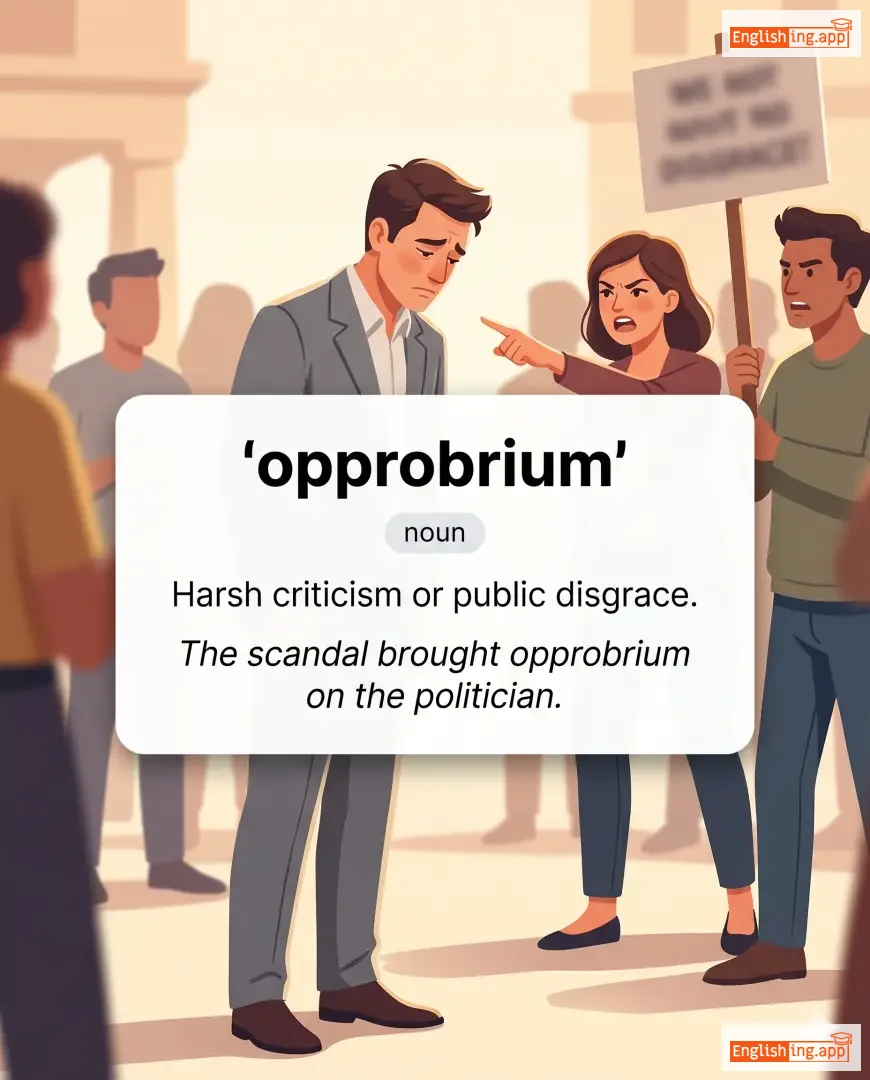
opprobrium definition card — visual illustration of the meaning
noun
/əˈprəʊ.bri.əm/
opprobre, déshonneur (opprobre, deshonneur)

Harsh criticism or public disgrace.

"The scandal brought opprobrium on the politician."

"Le scandale a apporté l'opprobre au politicien." (Le scandale a apporte l'opprobre au politicien.)
adjective
/əˈprəʊ.bri.əs/
désobligeant (desobligeant)

Expressing strong criticism or scorn.

"He made opprobrious remarks about his opponent."

"Il a fait des remarques désobligeantes sur son adversaire." (Il a fait des remarques desobligeantes sur son adversaire.)
adjective
/əˈprɛs.ɪv/
oppressif (opressif)

Harsh and authoritarian; overwhelming; causing distress; tyrannical;

"The oppressive heat made it difficult to work outside during the summer."

"La chaleur oppressante rendait difficile de travailler à l'extérieur pendant l'été." (La chaleur oppressante rendait difficile de travailler à l'extérieur pendant l'été.)
noun
/əˈpreʃ.ən/
oppression; abus; tyrannie; (opression; abus; tyrannie;)

cruel or unjust treatment or exercise of authority; the state of being subject to harsh treatment

"The people fought against political oppression."

"Les gens ont lutté contre l'oppression politique." (Les gens ont lutté contre l'oppression politique.)
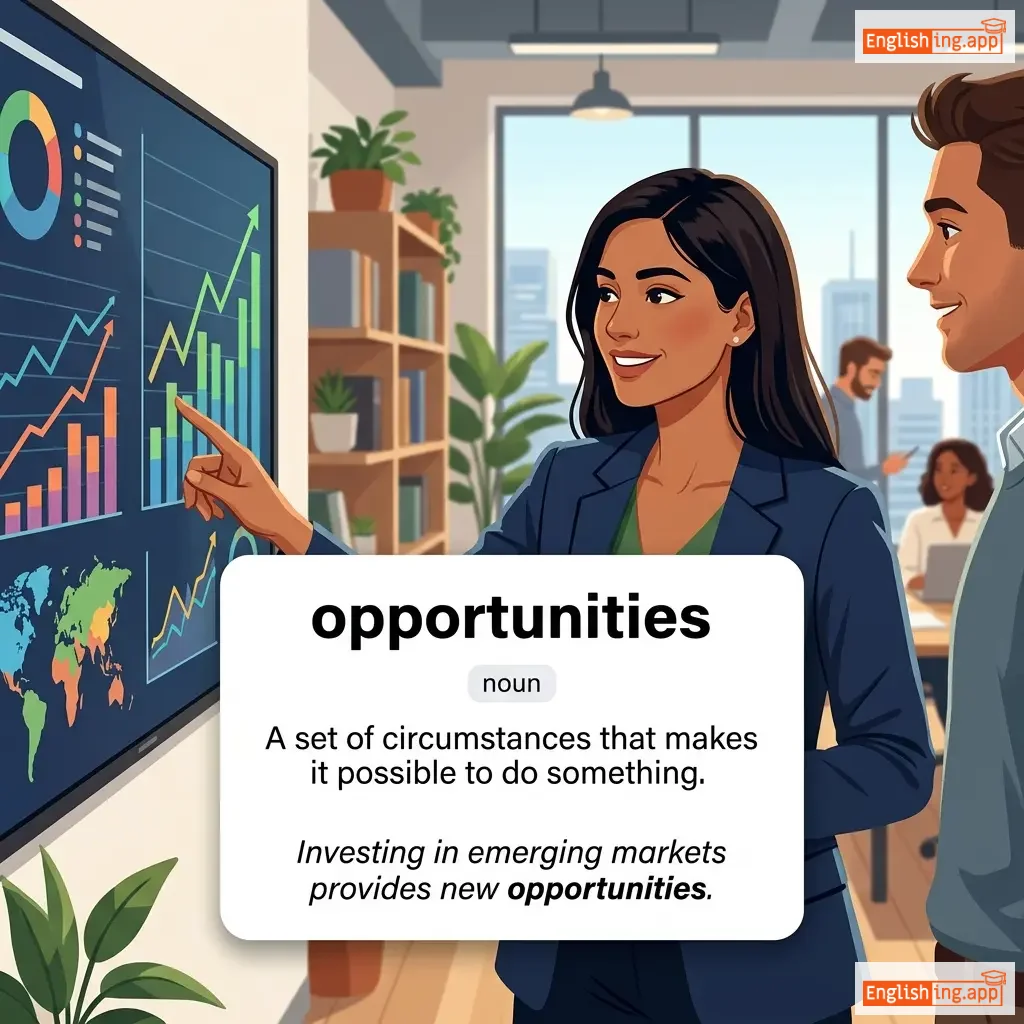
opportunities definition card — visual illustration of the meaning
noun
ˌɒpəˈtjuːnɪtiz
opportunités (opportunites)

A set of circumstances that makes it possible to do something.

"Investing in emerging markets provides new opportunities."

"Investir dans les marchés émergents offre de nouvelles opportunités." (Investir dans les marchés émergents offre de nouvelles opportunités.)
noun
/ˌɒp.əˈtjuː.nə.ti/
opportunité (opportunite)

A favorable chance or set of circumstances that makes it possible to do something.

"She seized the opportunity to study abroad."

"Elle a saisi l'opportunité d'étudier à l'étranger." (Elle a saisi l'opportunité d'étudier à l'étranger.)
verb
/əˈpəʊz/
s'opposer (s'opposer)

to disagree with or fight against something

"He opposed the new policy at the meeting."

"Il s'est opposé à la nouvelle politique lors de la réunion." (Il s'est opposé à la nouvelle politique lors de la réunion.)