词汇表

英语词汇词典 | 单词含义、定义和示例

noun
/ˈɒrɪndʒ/
橙子 (chéngzi)

a fruit that is typically round and orange in color

"She ate an orange for breakfast."
"她早餐吃了一个橙子。" (Tā zǎocān chīle yī gè chéngzi.)
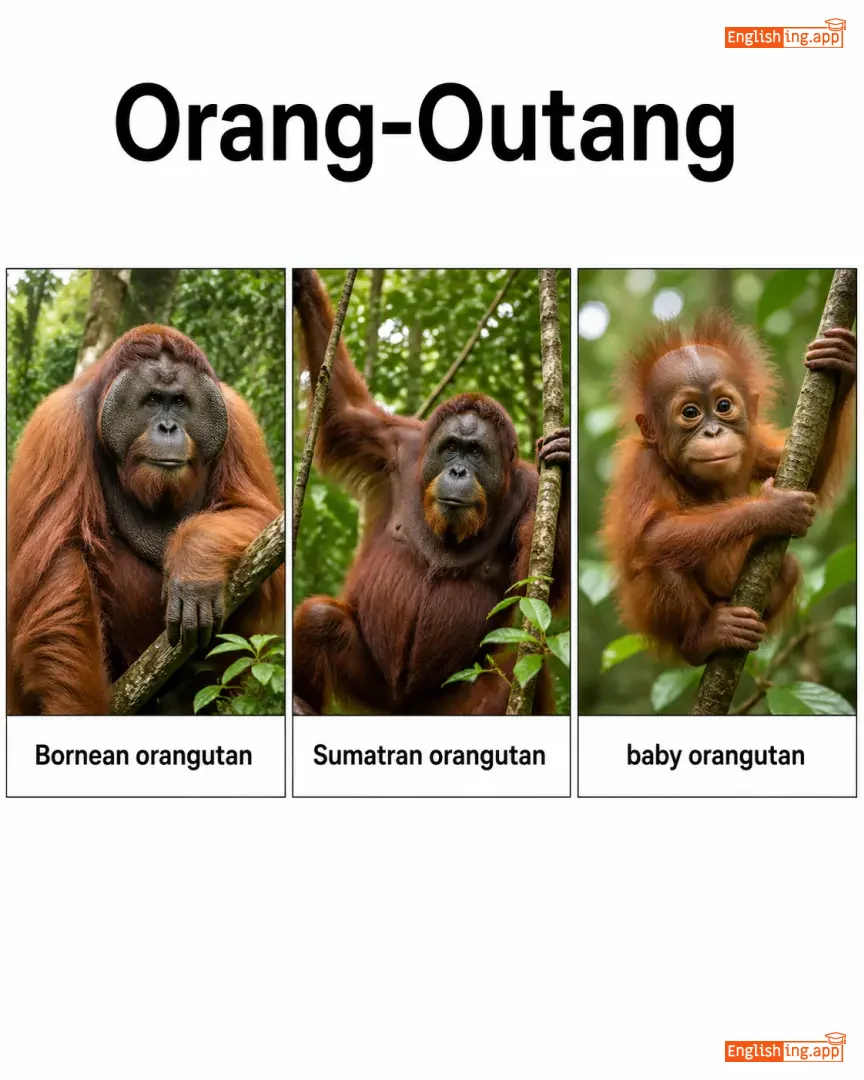
Orang-Outang definition card — visual illustration of the meaning
noun
/ɔːˈræŋ.ʊˌtæŋ/
猩猩 (xīngxing)

a large arboreal ape with long reddish hair, long arms, and hooked hands and feet, native to Borneo and Sumatra

"The orangutan swings gracefully through the forest canopy."

"猩猩优雅地穿越森林的树冠。" (Xīngxing yōuyǎ de chuānyuè sēnlín de shùguān.)
adjective
/ˈɔːrəl/
口头的 (kǒutóu de)

Spoken rather than written; relating to the mouth

"The student had to give an oral presentation."

"学生必须做口头报告。" (Xuéshēng bìxū zuò kǒutóu bào gào.)
adjective
/əˈrækjələr/
神谕的 (shényù de)

Resembling an oracle; giving wise, mysterious, or prophetic statements

"Her oracular words left the audience deep in thought."

"她的神谕般的话让观众陷入了深思。" (Tā de shényù bān de huà ràng guānzhòng xiànrùle shēnsī.)
noun
/ˈɒrəkəl/
幸福 (xìngfú)

A person or source considered to provide wise and insightful advice or prophecy.

"In ancient Greece, people visited the oracle at Delphi for guidance."

"当她获得奖项时,她无法掩饰自己的幸福。" (Dāng tā huòde jiǎngxiàng shí, tā wúfǎ yǎnshì zìjǐ de xìngfú.)
conjunction
/ɔːr/
(huò)

used to link alternatives

"You can have tea or coffee."

"你可以喝茶或咖啡。" (Nǐ kěyǐ hē chá huò kāfēi.)
noun
/ˈəʊpəs/
创作作品 (chuangzuo zuopin)

A creative work, especially a large and important piece of music or art.

"The composer considered the symphony his greatest opus."

"作曲家认为交响曲是他最大的创作作品。" (Zuòqǔjiā rènwéi jiāoxiǎngqǔ shì tā zuìdà de chuàngzuò zuòpǐn.)
adjective
/ˈɒpjʊlənt/
奢华的 (shēhuá de)

Ostentatiously rich, luxurious, or lavish.

"They hosted an opulent wedding with gold decorations."
"他们举办了一场奢华的婚礼,装饰有金色装饰品。" (Tāmen jǔbànle yīchǎng shēhuá de hūnlǐ, zhuāngshì yǒu jīnsè zhuāngshìpǐn.)
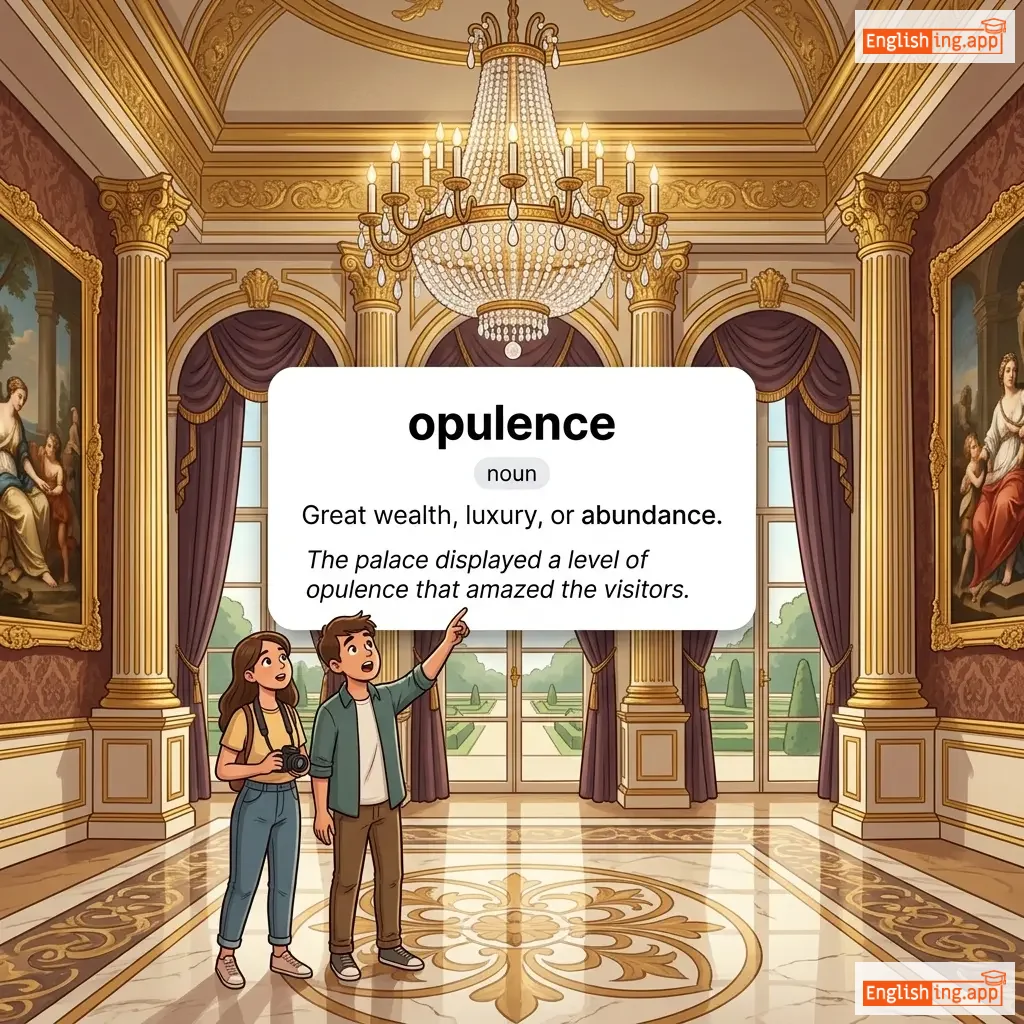
opulence definition card — visual illustration of the meaning
noun
/ˈɒpjʊləns/
奢华 (shēhuá)

Great wealth, luxury, or abundance.

"The palace displayed a level of opulence that amazed the visitors."

"宫殿展示了一个令人惊讶的奢华水平。" (Gōngdiàn zhǎnshìle yīgè lìng rén jīngyà de shēhuá shuǐpíng.)
noun
/ɒpˈtɒmətri/
验光学 (yànguāngxué)

The practice or profession of examining the eyes and prescribing corrective lenses.

"She studied optometry at the university to become an eye specialist."

"她在大学学习验光学,成为一名眼科专家。" (Tā zài dàxué xuéxí yànguāngxué, chéngwéi yī míng yǎnkē zhuānjiā.)
noun
/ɒpˈtɒmɪtrɪst/
眼科验光师 (yǎnkē yànguāng shī)

A healthcare professional who examines eyes and prescribes corrective lenses.

"The optometrist prescribed new glasses for her."

"眼科验光师为她开了新的眼镜。" (Yǎnkē yànguāng shī wèi tā kāile xīn de yǎnjìng.)
adjective
/ˈɒpʃənəl/
可选的 (kě xuǎn de)

Not required; left to personal choice.

"The dress code for the party is optional."
"聚会的着装要求是可选的。" (Jùhuì de zhuózhuāng yāoqiú shì kě xuǎn de.)
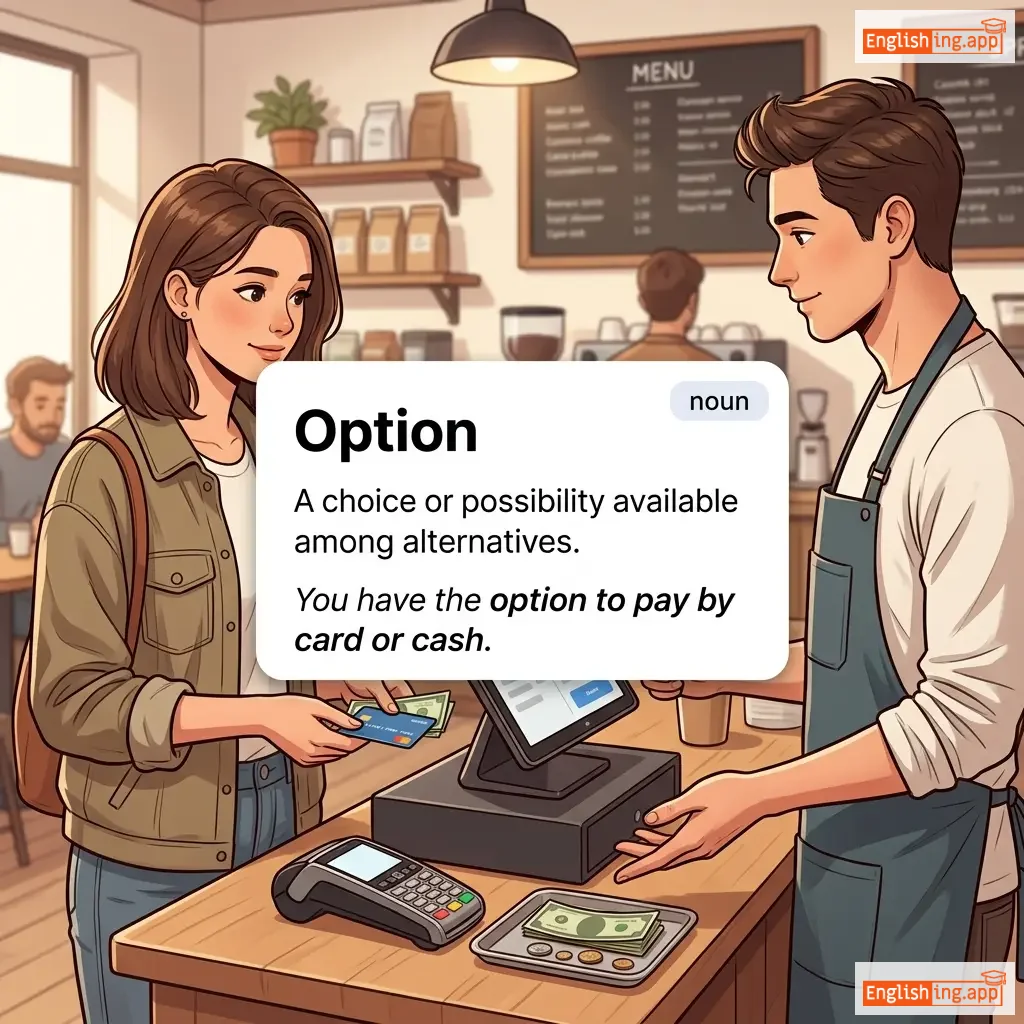
Option definition card — visual illustration of the meaning
noun
/ˈɒpʃən/
选择 (xuǎnzé)

A choice or possibility available among alternatives.

"You have the option to pay by card or cash."
"你可以选择用卡或现金付款。" (Nǐ kěyǐ xuǎnzé yòng kǎ huò xiànjīn fùkuǎn.)
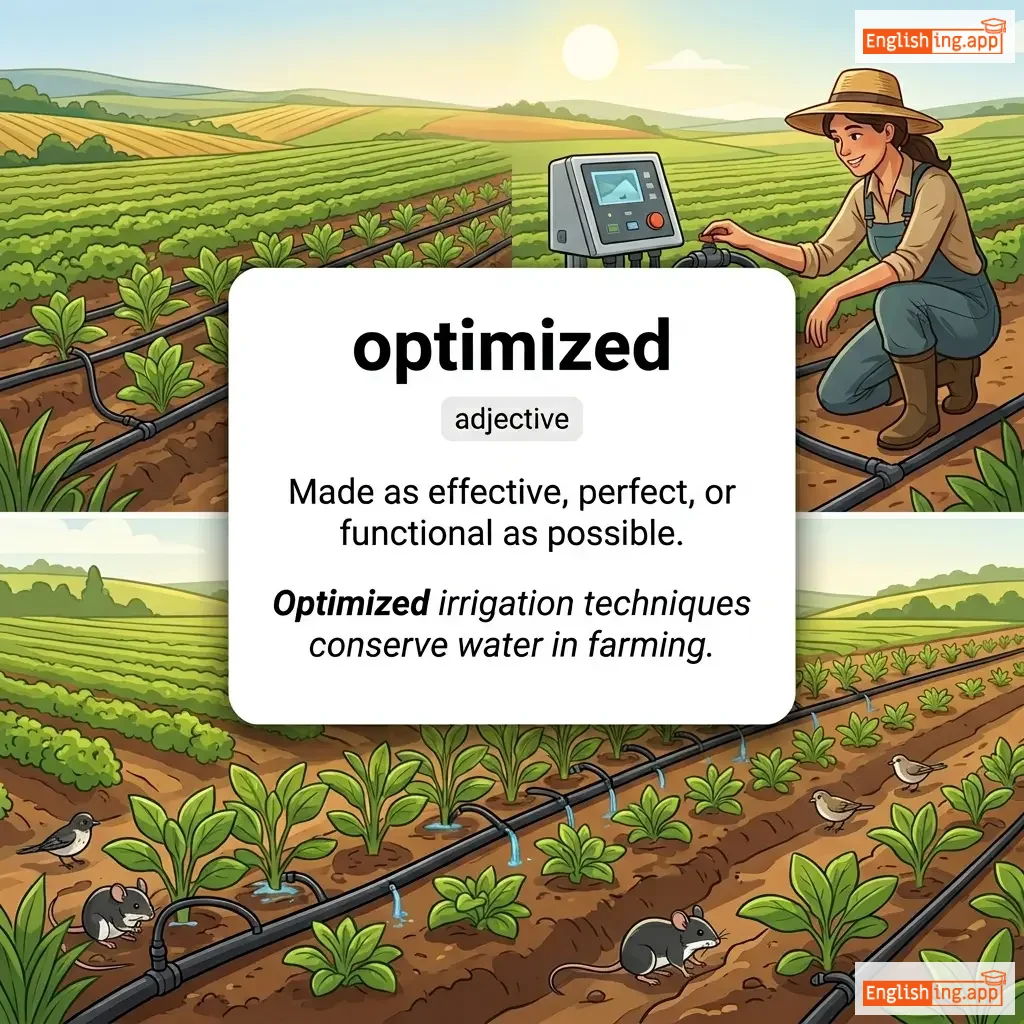
optimized definition card — visual illustration of the meaning
adjective
/ˈɒp.tɪ.maɪzd/
优化的 (optimaizd)

Made as effective, perfect, or functional as possible.

"Optimized irrigation techniques conserve water in farming."
"优化的灌溉技术在农业中节水。" (you hua de guan gai ji shu zai nong ye zhong jie shui)
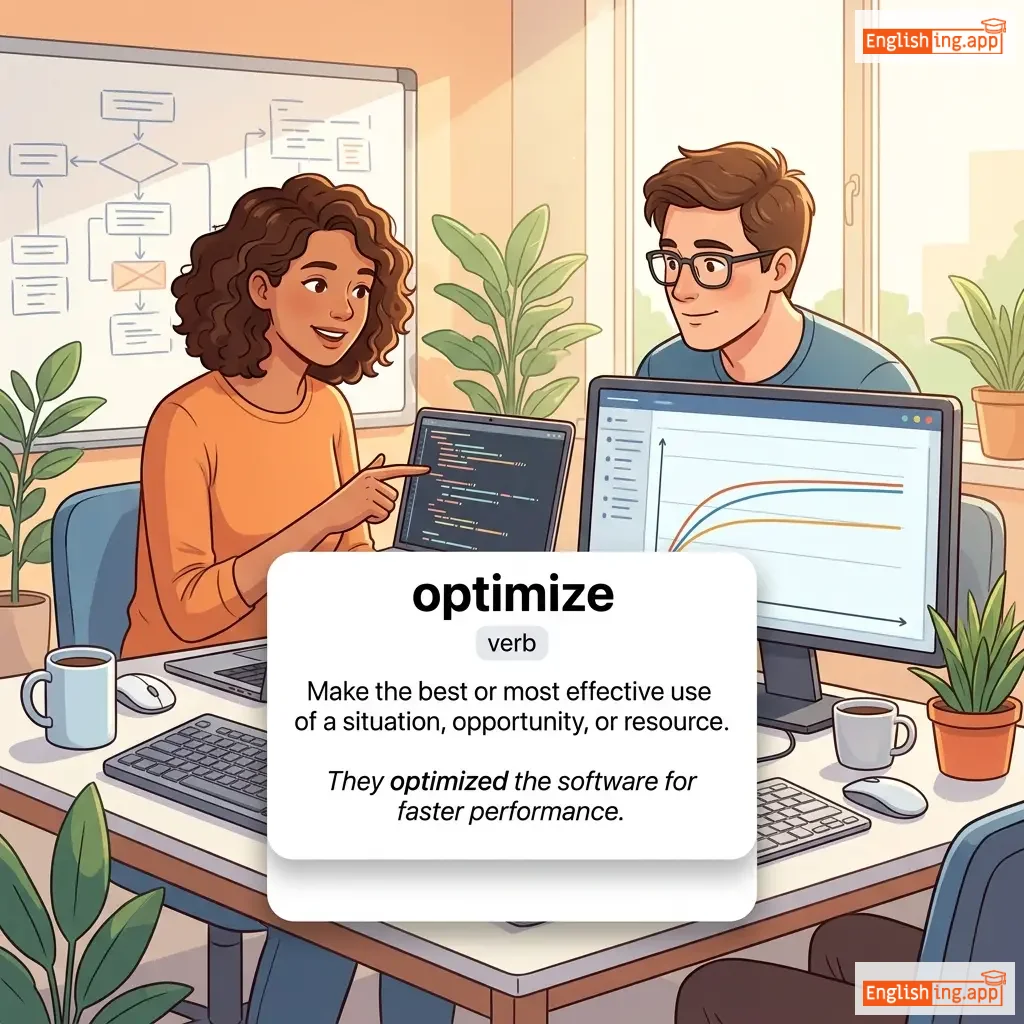
optimize definition card — visual illustration of the meaning
verb
ˈɒptɪmaɪz
优化, 改善 (youhua, gaishan)

Make the best or most effective use of a situation, opportunity, or resource.

"They optimized the software for faster performance."
"他们优化了软件,以提高性能。" (Tāmen yōuhuàle ruǎnjiàn, yǐ tígāo xìngnéng.)
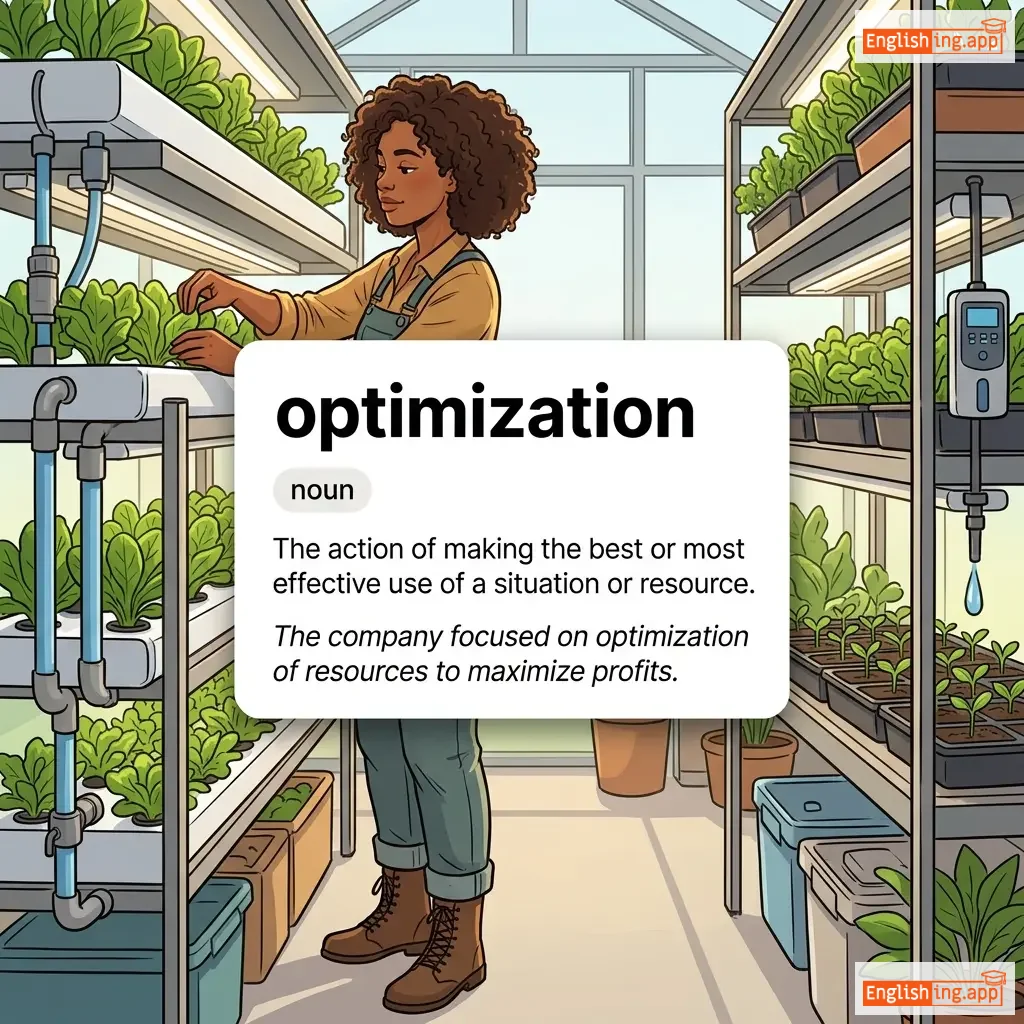
optimization definition card — visual illustration of the meaning
noun
ˌɒp.tɪ.mɪˈzeɪ.ʃən
优化 (youhua)

The action of making the best or most effective use of a situation or resource.

"The company focused on optimization of resources to maximize profits."

"公司专注于资源的优化,以最大化利润。" (Gongsi zhuanzhu yu ziyuan de youhua, yi zui da hua lirun.)
adjective
/ˌɑːp.təˈmɪs.tɪk/
乐观的 (lèguān de)

hopeful and confident about the future

"She is optimistic about the success of her new project."
"她对新项目的成功持乐观态度。" (Tā duì xīn xiàngmù de chénggōng chí lèguān tàidù.)
noun
/ˈɒptɪmɪst/

A person who tends to be hopeful and confident about the future or the success of something.

"Even in tough times, she remained an optimist."

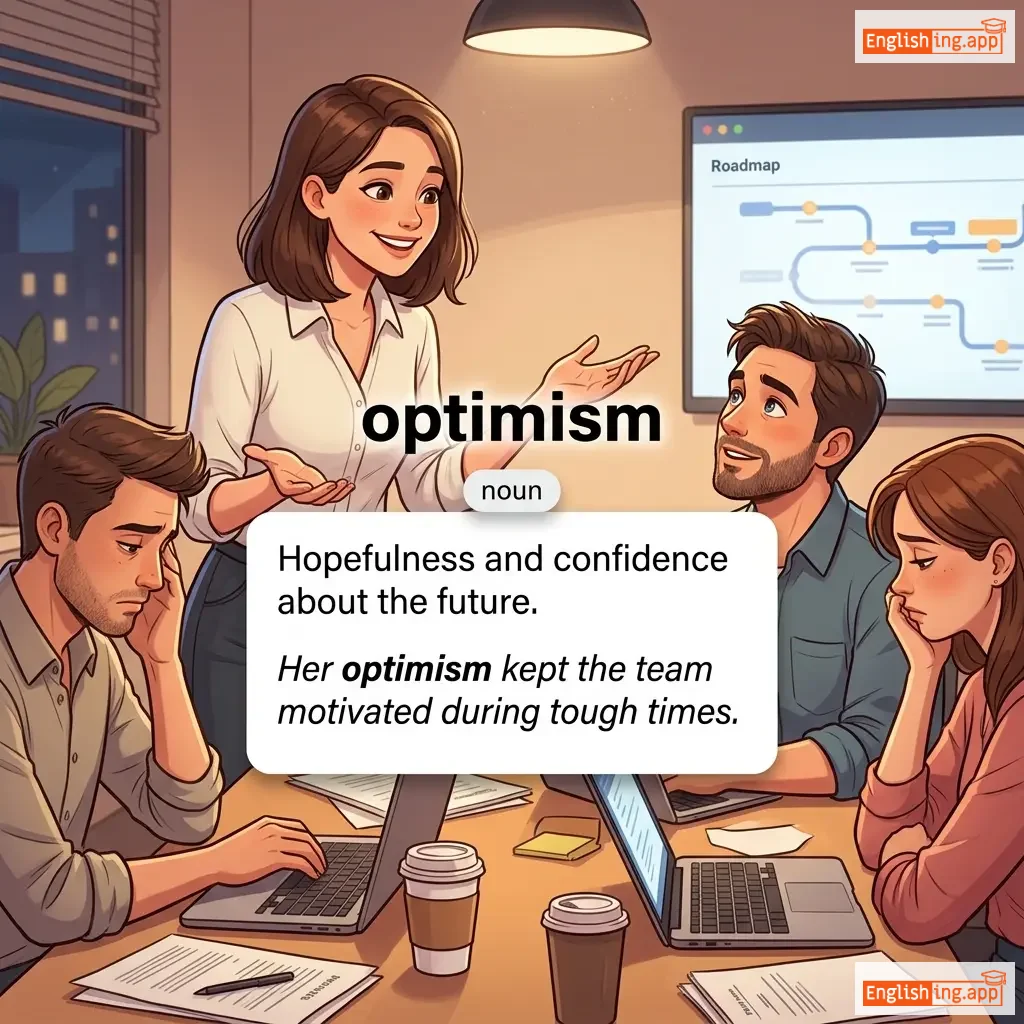
optimism definition card — visual illustration of the meaning
noun
/ˈɒptɪmɪzəm/
乐观 (leguan)

Hopefulness and confidence about the future.

"Her optimism kept the team motivated during tough times."
"她的乐观让团队在困难时刻保持动力。" (Tā de leguan ràng tuánduì zài kùnnán shíkè bǎochí dònglì.)
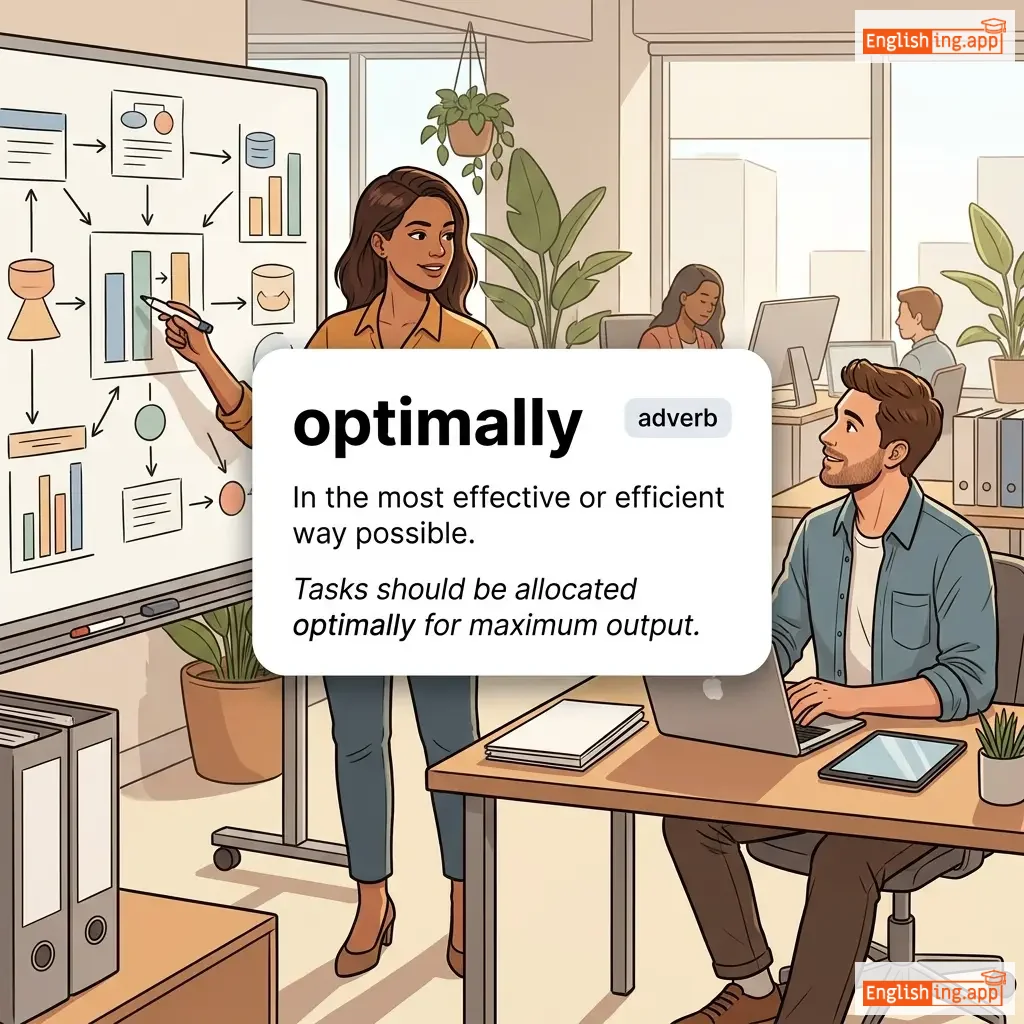
optimally definition card — visual illustration of the meaning
adverb
/ˈɒp.tɪ.məl.i/
最优地 (zuì yōu de)

In the most effective or efficient way possible.

"Tasks should be allocated optimally for maximum output."
"任务应当最优地分配,以实现最大产出。" (Rènwu yīngdāng zuì yōu de fēnpèi, yǐ shíxiàn zuìdà chǎnchū.)
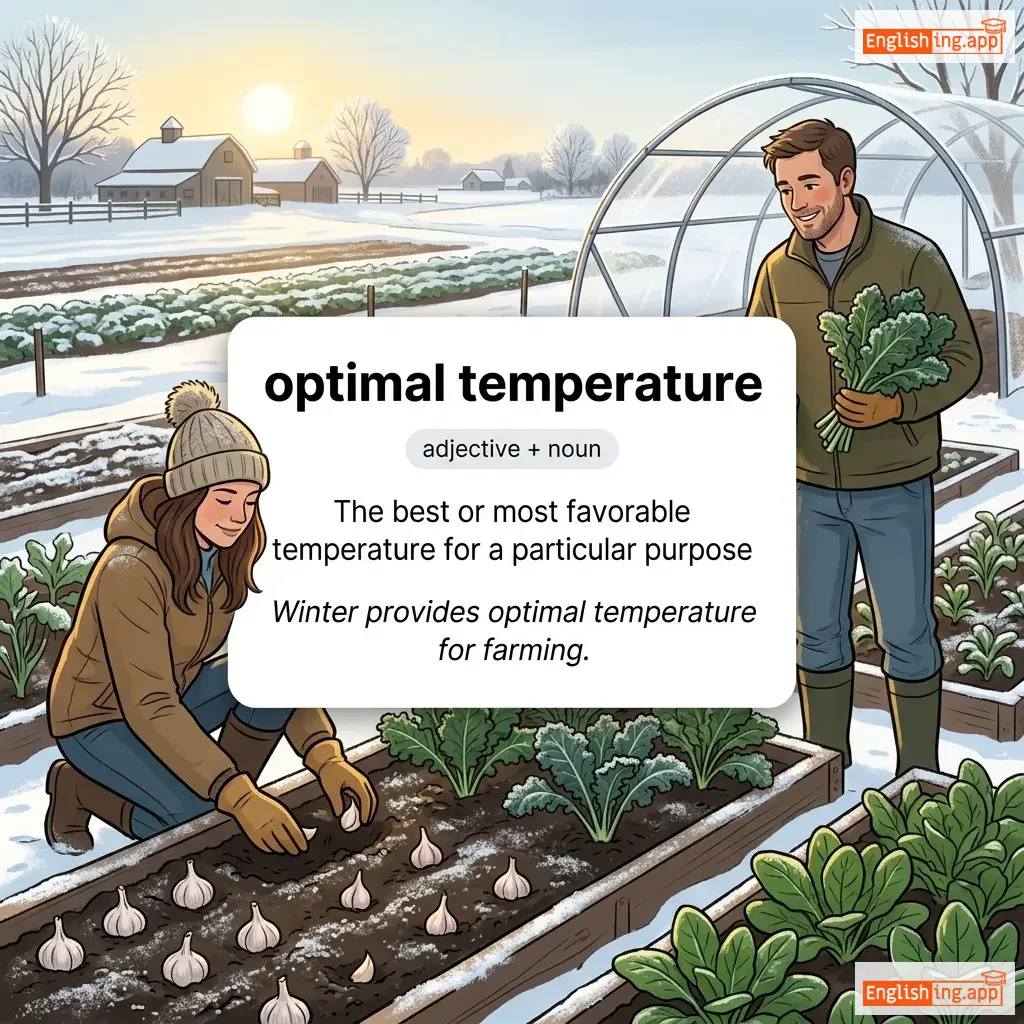
optimal temperature definition card — visual illustration of the meaning
adjective + noun
ˈɒptɪməl ˈtempərətʃər
最佳温度 (zuì jiā wēn dù)

The best or most favorable temperature for a particular purpose

"Winter provides optimal temperature for farming."

"冬天提供了农业的最佳温度。" (Dōngtiān tígōngle nóngyè de zuì jiā wēn dù.)
optimal definition card — visual illustration of the meaning
adjective
/ˈɒptɪməl/
最优 (zuiyou)

Best or most favorable; ideal.

"This diet plan provides the optimal balance of nutrients."

"这个饮食计划提供最佳的营养平衡。" (Zhege yinshi jihua tigong zuihao de yingyang pingheng.)
noun
/ˈɒptɪks/
光学 (guāngxué)

The branch of physics dealing with light and vision.

"She studied optics to understand how lenses work."

"她学习了光学,以了解镜头是如何工作的。" (Tā xuéxíle guāngxué, yǐ liǎojiě jìngtóu shì rúhé gōngzuò de.)
noun
/ˌɑːpərˈtuːnɪzəm/
机会主义 (jihui zhuyi)

The practice of taking advantage of opportunities regardless of principles or ethics.

"His decision was driven by opportunism, not values."

"他的决定是由机会主义驱动的,而不是由价值观驱动的。" (Ta de jue ding shi you jihui zhuyi qudong de, er bu shi you jiazhi guan qudong de.)
noun
/ˈoʊpənɪŋ/
开幕 (kaimu)

an act or instance of beginning something

"The opening of the new store was a huge success."

"新店的开业是一个巨大的成功。" (Xīn diàn de kāiyè shì yīgè jùdà de chénggōng.)
adverb
/ˈəʊpənli/
公开地 (gōngkāi de)

in a way that is not secret or hidden

"He spoke openly about his past mistakes."

"他公开地谈论了他的过去错误。" (Tā gōngkāi de tánlùnle tā de guòqù cuòwù.)
noun
/ˈɒpərə/
歌剧 (geju)

a dramatic performance in which the actors sing most of their lines

"We watched a beautiful opera at the theater last night."
"我们昨晚在剧院观看了一场美丽的歌剧。" (Wǒmen zuówǎn zài jùyuàn guānkànle yī chǎng měilì de gējù.)
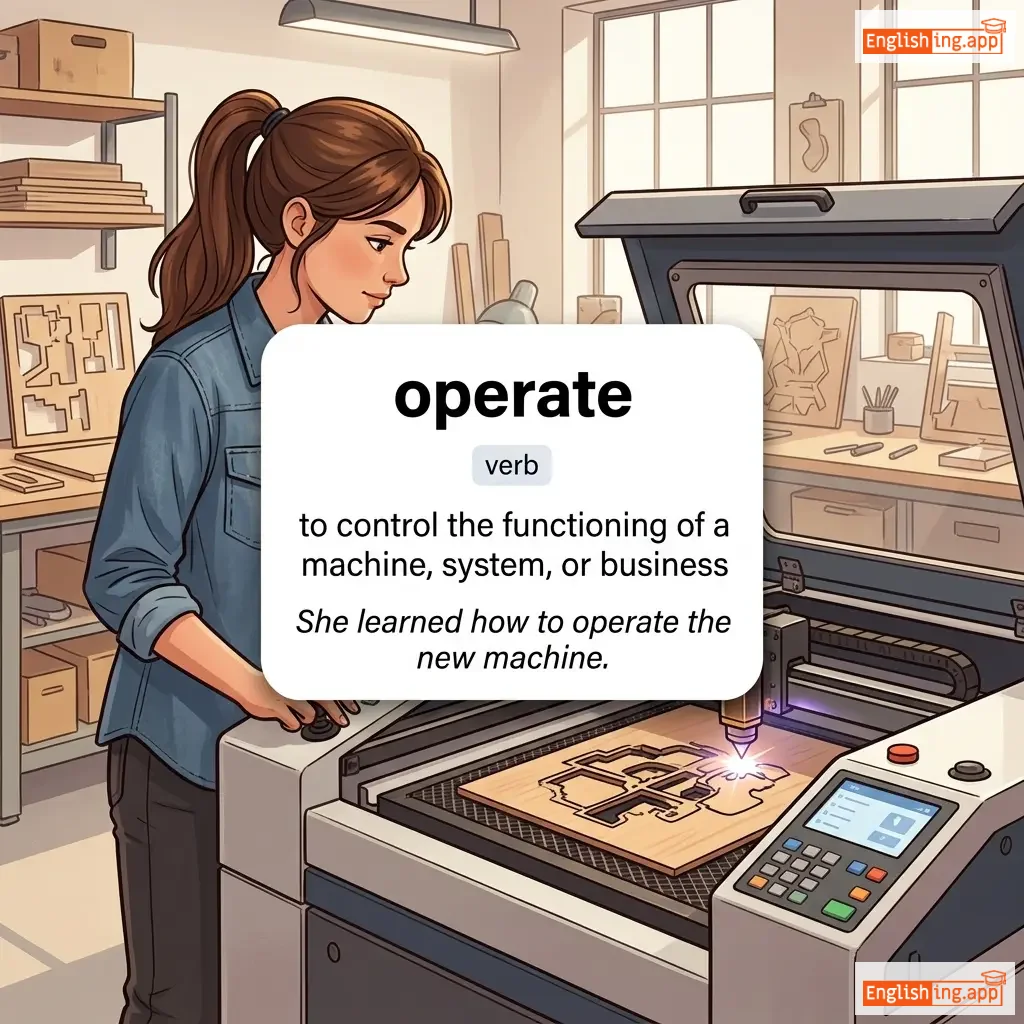
operate definition card — visual illustration of the meaning
verb
/ˈɑːpəˌreɪt/
操作 (caozuo)

to control the functioning of a machine, system, or business

"She learned how to operate the new machine."

"她学会了如何操作这台新机器。" (Ta xuehui le ruhe caozuo zhe tai xin jiqi.)
verb
/ˈɒpəreɪtɪŋ/
操作 (caozuo)

to control or manage the functioning of something

"The company has been operating in this market for five years."

"公司已经在这个市场运营了五年。" (Gongsi yijing zai zhege shichang yunying le wu nian.)
noun
/ˌɒpəˈreɪʃən/
手术 (shǒushù)

an act or process of functioning or operating

"The hospital performed a successful operation."
"医院进行了成功的手术。" (Yīyuàn jìnxíngle chénggōng de shǒushù.)
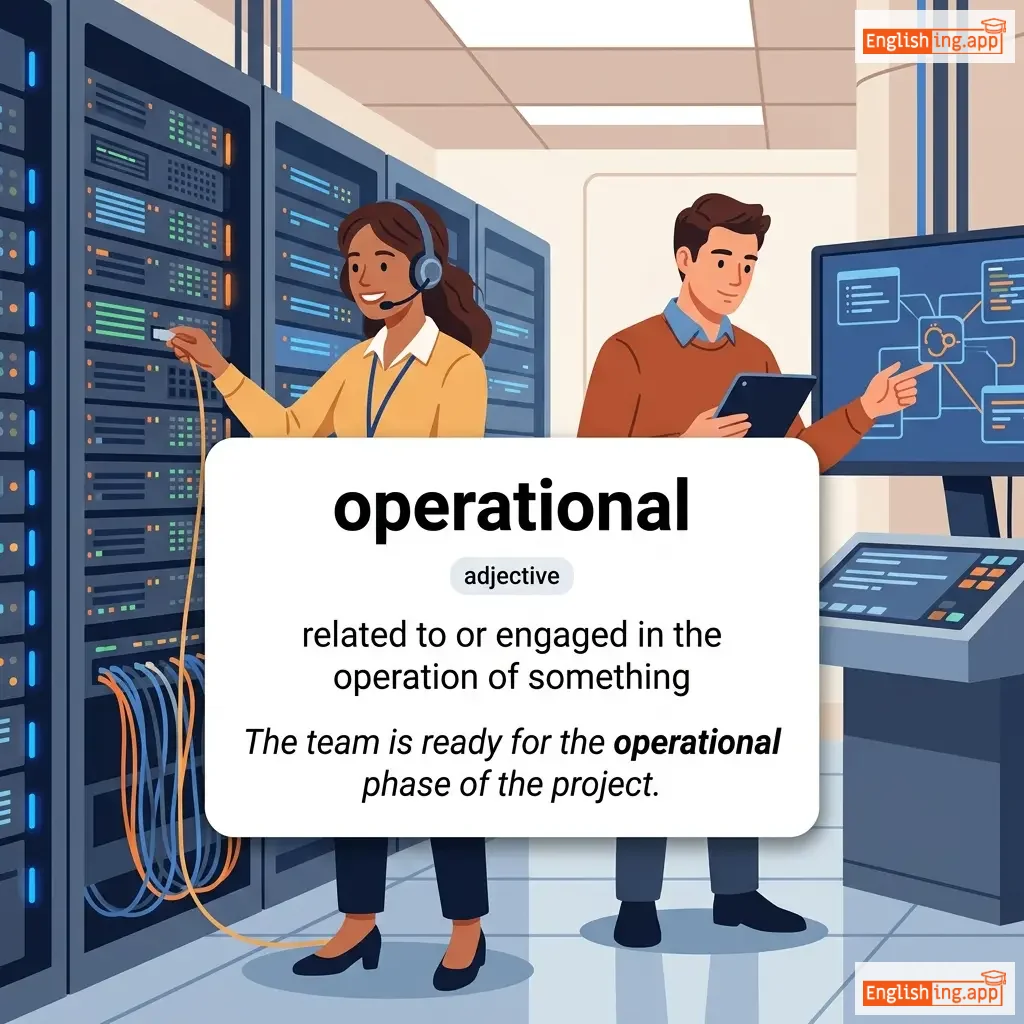
operational definition card — visual illustration of the meaning
adjective
/ˌɒpəˈreɪʃənl/
操作的 (caozuode)

related to or engaged in the operation of something

"The team is ready for the operational phase of the project."

"团队已准备好进入项目的操作阶段。" (Tuan dui yi zhunbei hao jinru xiangmu de caozuo jie duan.)
adjective
/ˈɒpərətɪv/
有效的 (youxiao de)

functioning, having effect, or relating to a secret agent or worker

"The new law is now operative across the country."

"新法律现在在全国范围内生效。" (Xīn fǎlǜ xiànzài zài quánguó fànwéi nèi shēngxiào.)
noun
/ˈɒpəreɪtər/
操作员 (caozuo yuan)

a person who operates equipment, a business, or controls something

"The machine operator ensured that everything ran smoothly."

"机器操作员确保一切顺利运行。" (Jiqi caozuoyuan quebao yiqie shunli yunxing.)
noun
/ˌɒpəˈrɛtə/
轻歌剧 (qīng gē jù)

a short opera with light and humorous themes

"The theater staged a famous operetta by Gilbert and Sullivan."

"剧院上演了吉尔伯特与沙利文的著名轻歌剧。" (Jùyuàn shàngyǎnle Jí'ěrbótè yǔ Shālìwén de zhùmíng qīng gē jù.)
noun
/ˈoʊpiət/

a drug containing opium or its derivatives, used to relieve pain or cause sleep

"The doctor prescribed an opiate to relieve the patient's pain."

verb
/oʊˈpaɪn/
表达意见 (biaoda yijian)

to express an opinion or belief

"The professor opined that the policy would fail."

"教授认为政策会失败。" (Jiaoshou renwei zhengce hui shibai.)
noun
/əˈpɪnjən/
意见 (yìjiàn)

A belief, judgment, or viewpoint about something, not necessarily based on fact.

"Everyone is entitled to their own opinion."

"每个人都有权发表自己的意见。" (měi gè rén dōu yǒu quán fābiǎo zìjǐ de yìjiàn.)
noun
/əˈpoʊnənt/
幸福 (xìng fú)

A person who competes against or disagrees with another.

"The boxer defeated his opponent in the final round."

"当她获得奖项时,她无法隐藏自己的幸福。" (dāng tā huò dé jiǎng xiàng shí, tā wú fǎ yǐn cáng zì jǐ de xìng fú.)
adjective
/ˌɑːpərˈtuːn/
合适的时刻 (heshi de shike)

Happening at a suitable or convenient time.

"She arrived at an opportune moment to help."

"她在合适的时刻到达,准备帮助。" (Ta zai heshi de shike daoda, zhunbei bangzhu.)
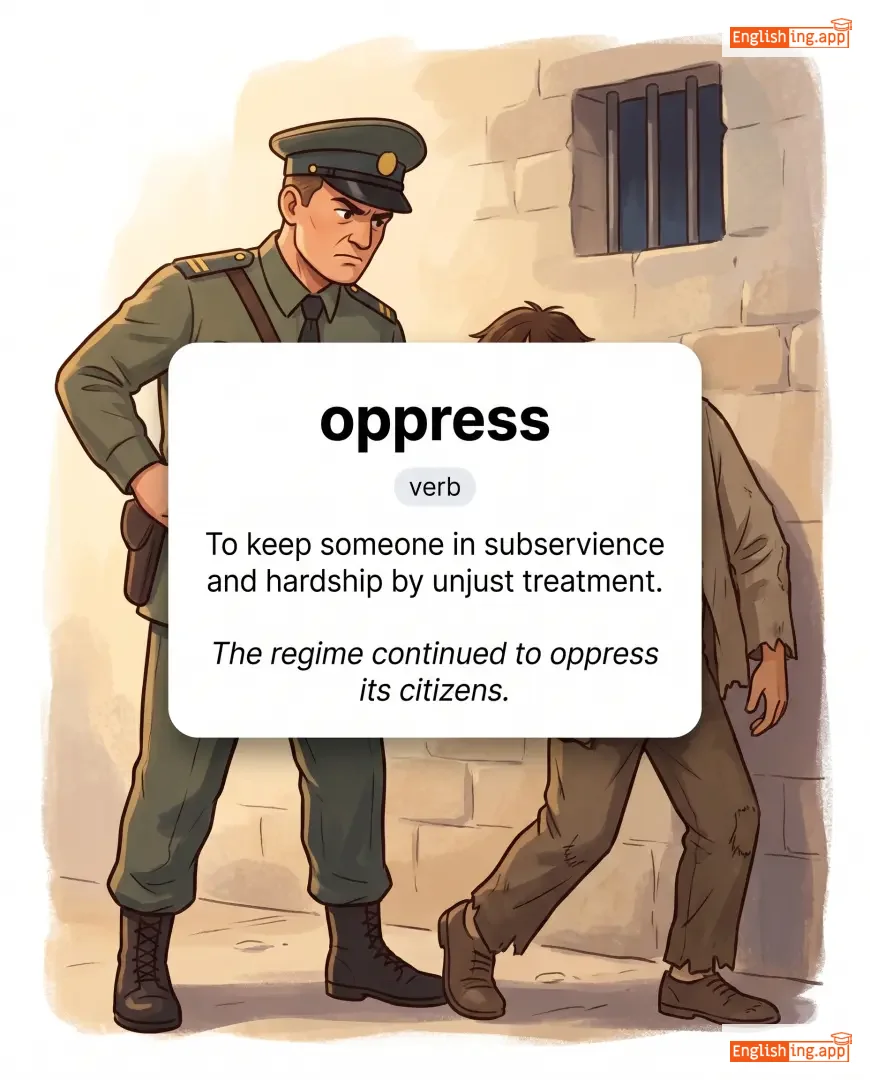
oppress definition card — visual illustration of the meaning
verb
/əˈprɛs/

To keep someone in subservience and hardship by unjust treatment.

"The regime continued to oppress its citizens."

adjective
/ˈɒptɪkəl/
光学的 (guāngxué de)

related to or used in seeing or sight

"The optical illusion fooled everyone at the exhibition."

"光学幻觉在展览会上迷惑了所有人。" (Guāngxué huànjué zài zhǎnlǎn huì shàng míhuòle suǒyǒu rén.)
adjective
/ˈɒptɪk/
光学的 (guāngxué de)

Relating to the eye or vision.

"The optic nerve carries signals from the eye to the brain."
"视神经将信号从眼睛传递到大脑。" (Shì shénjīng jiāng xìnhào cóng yǎnjīng chuándì dào dà nǎo.)
verb
/ɒpt/
选择 (xuanze)

to choose or decide to do something instead of something else

"Many students opt to study abroad for better opportunities."

"许多学生选择出国留学以获得更好的机会。" (Xuduo xuesheng xuanze chuguo liuxue yi huode geng hao de jihui.)
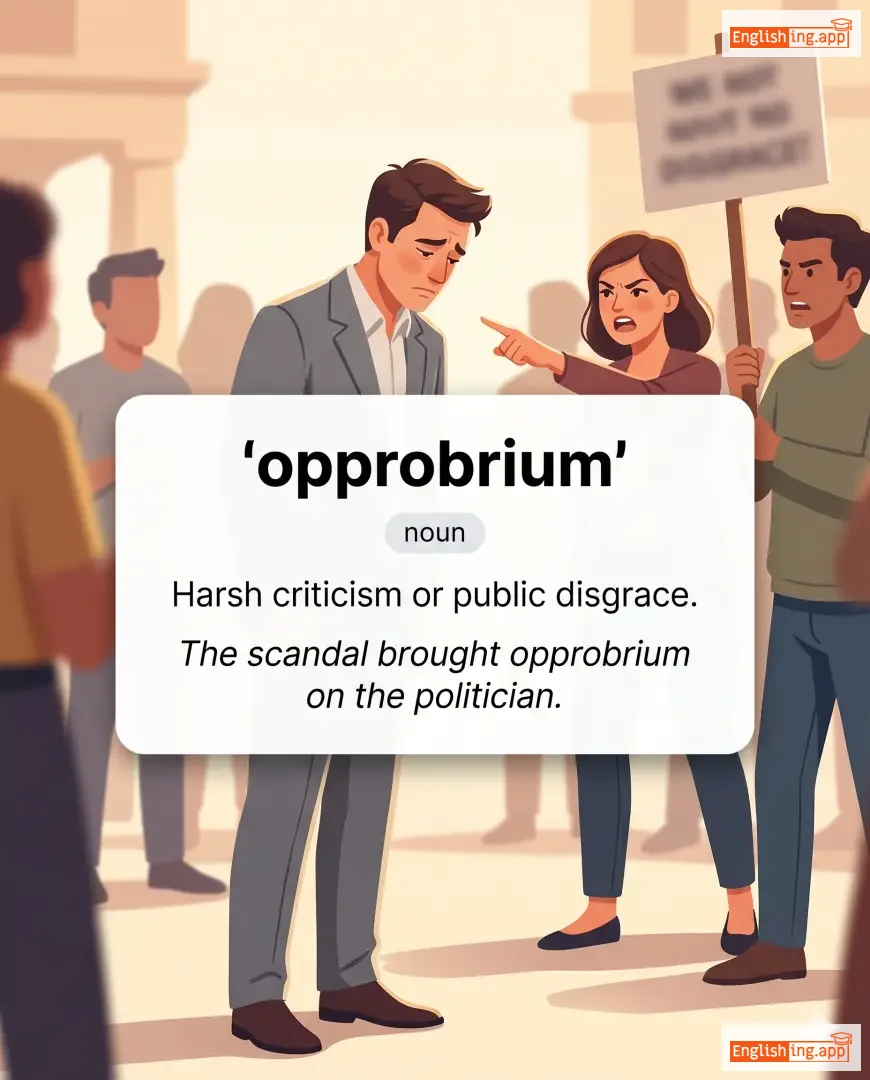
opprobrium definition card — visual illustration of the meaning
noun
/əˈprəʊ.bri.əm/
耻辱, 侮辱 (chiru, wuru)

Harsh criticism or public disgrace.

"The scandal brought opprobrium on the politician."

"丑闻给政治家带来了耻辱。" (Chouwen gei zhengzhijia dai lai le chiru.)
adjective
/əˈprəʊ.bri.əs/
侮辱性的 (wǔrǔxìng de)

Expressing strong criticism or scorn.

"He made opprobrious remarks about his opponent."

"他对对手做出了侮辱性评论。" (Tā duì duìshǒu zuò chūle wǔrǔxìng pínglùn.)
adjective
/əˈprɛs.ɪv/
压迫的 (yāpò de)

Harsh and authoritarian; overwhelming; causing distress; tyrannical;

"The oppressive heat made it difficult to work outside during the summer."

"压迫性的热浪使得夏天在外工作变得很困难。" (Yāpò xìng de rè làng shǐdé xiàtiān zài wài gōngzuò biàn dé hěn kùnnán.)
noun
/əˈpreʃ.ən/
压迫; 虐待; 暴政; (yā pò; nüèdài; bào zhèng;)

cruel or unjust treatment or exercise of authority; the state of being subject to harsh treatment

"The people fought against political oppression."

"人民反对政治压迫而斗争。" (Rénmín fǎnduì zhèngzhì yāpò ér dòuzhēng.)
opportunities definition card — visual illustration of the meaning
noun
ˌɒpəˈtjuːnɪtiz
机会 (jihui)

A set of circumstances that makes it possible to do something.

"Investing in emerging markets provides new opportunities."

"投资于新兴市场提供了新的机会。" (Touzi yu xinxing shichang tigong le xinde jihui.)
noun
/ˌɒp.əˈtjuː.nə.ti/
机会 (jī huì)

A favorable chance or set of circumstances that makes it possible to do something.

"She seized the opportunity to study abroad."

"她抓住了去国外学习的机会。" (Tā zhuāzhùle qù guówài xuéxí de jīhuì.)
verb
/əˈpəʊz/
反对 (fǎnduì)

to disagree with or fight against something

"He opposed the new policy at the meeting."

"他在会议上反对了新政策。" (Tā zài huìyì shàng fǎnduì le xīn zhèngcè.)