語彙集

英単語辞書 | 単語の意味、定義、例文

noun
/ˈɒrɪndʒ/
オレンジ (orenji)

a fruit that is typically round and orange in color

"She ate an orange for breakfast."
"彼女は朝食にオレンジを食べました。" (Kanojo wa chōshoku ni orenji o tabemashita.)
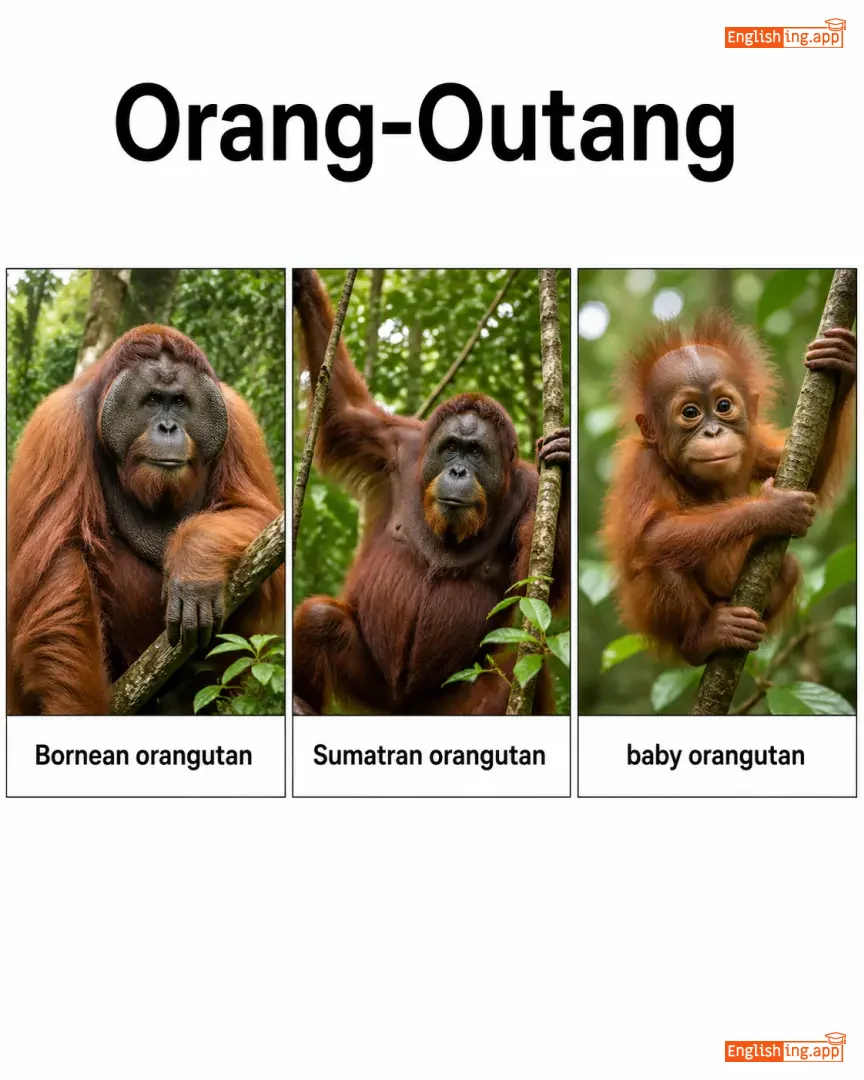
Orang-Outang definition card — visual illustration of the meaning
noun
/ɔːˈræŋ.ʊˌtæŋ/
オランウータン (orangūtan)

a large arboreal ape with long reddish hair, long arms, and hooked hands and feet, native to Borneo and Sumatra

"The orangutan swings gracefully through the forest canopy."

"オランウータンは森の樹冠を優雅に渡ります。" (Orangutan wa mori no jūkan o yūga ni watarimasu.)
adjective
/ˈɔːrəl/
口頭 (kōtō)

Spoken rather than written; relating to the mouth

"The student had to give an oral presentation."

"学生は口頭でプレゼンテーションをしなければなりませんでした。" (Gakusei wa kōtō de purezentēshon o shinakereba narimasen deshita.)
adjective
/əˈrækjələr/
神託のような (shintaku no yōna)

Resembling an oracle; giving wise, mysterious, or prophetic statements

"Her oracular words left the audience deep in thought."

"彼女の神託のような言葉は、観客を深く考えさせた。" (Kanojo no shintaku no yōna kotoba wa, kankyaku o fukaku kangaeseta.)
noun
/ˈɒrəkəl/
幸福 (kōfuku)

A person or source considered to provide wise and insightful advice or prophecy.

"In ancient Greece, people visited the oracle at Delphi for guidance."

"彼女は賞を受け取ったとき、自分の幸福を隠すことができませんでした。" (Kanojo wa shō o uketotta toki, jibun no kōfuku o kakusu koto ga dekimasen deshita.)
conjunction
/ɔːr/
または (mata wa)

used to link alternatives

"You can have tea or coffee."

"お茶かコーヒーをお選びいただけます。" (Ocha ka kōhī o o-erabi itadakemasu.)
noun
/ˈəʊpəs/
創作作品 (sousaku sakuhin)

A creative work, especially a large and important piece of music or art.

"The composer considered the symphony his greatest opus."

"作曲家は交響曲を自分の最も偉大な創作作品と見なしていました。" (Sakkyokuka wa kōkyōkyoku o jibun no mottomo idaina sōsaku sakuhin to minashite imashita.)
adjective
/ˈɒpjʊlənt/
豪華な (gōkana)

Ostentatiously rich, luxurious, or lavish.

"They hosted an opulent wedding with gold decorations."
"彼らは金色の装飾を施した豪華な結婚式を開催しました。" (Karera wa kin'iro no sōshoku o hodokoshita gōkana kekkonshiki o kaisai shimashita.)
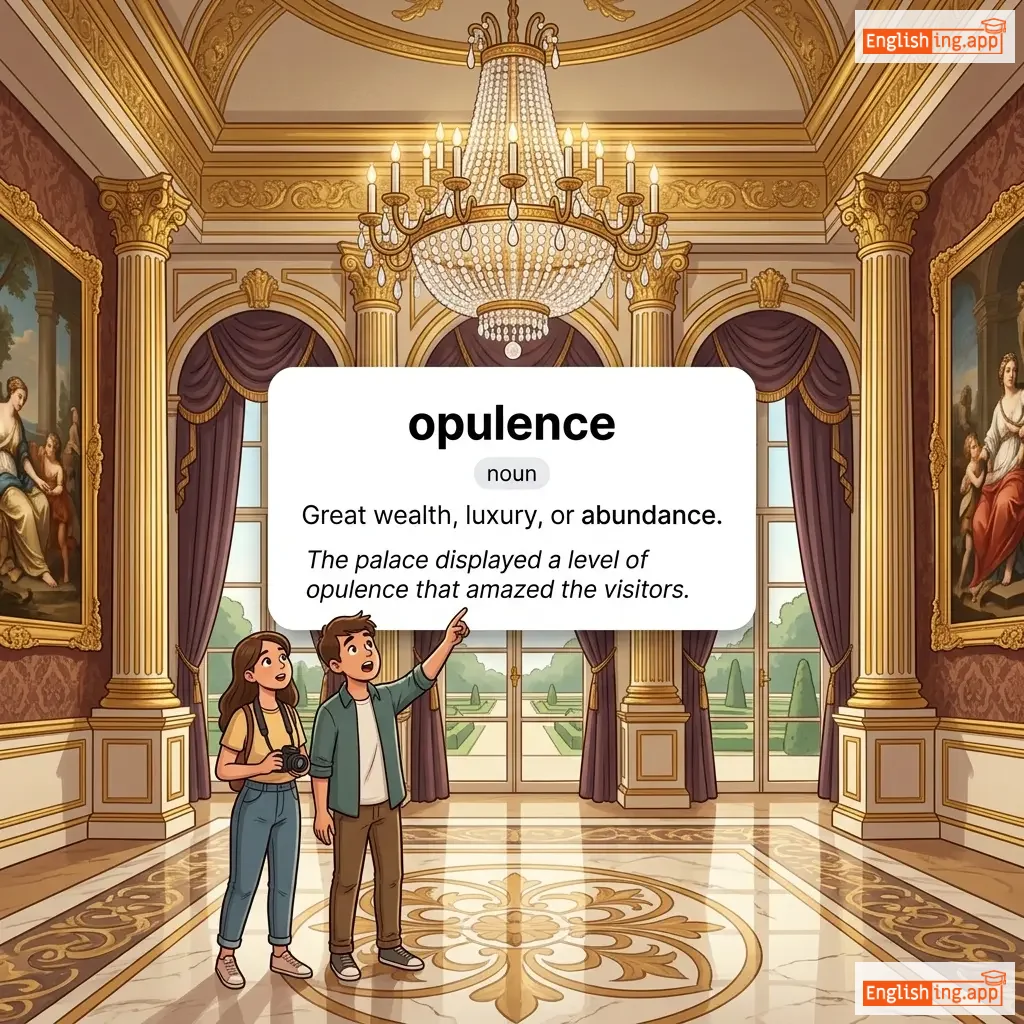
opulence definition card — visual illustration of the meaning
noun
/ˈɒpjʊləns/
豪華 (gōka)

Great wealth, luxury, or abundance.

"The palace displayed a level of opulence that amazed the visitors."

"宮殿は、訪問者を驚かせるような豪華さを展示していた。" (Kyūden wa, hōmon-sha o odorokasu yōna gōkasa o tenji shite ita.)
noun
/ɒpˈtɒmətri/
視力検査学 (shiryoku kensa gaku)

The practice or profession of examining the eyes and prescribing corrective lenses.

"She studied optometry at the university to become an eye specialist."

"彼女は大学でオプトメトリーを学び、眼科専門医になりました。" (Kanojo wa daigaku de optometry o manabi, ganka senmoni ni narimashita.)
noun
/ɒpˈtɒmɪtrɪst/
オプトメトリスト (oputometorisuto)

A healthcare professional who examines eyes and prescribes corrective lenses.

"The optometrist prescribed new glasses for her."

"オプトメトリストは彼女に新しい眼鏡を処方しました。" (Oputometorisuto wa kanojo ni atarashī megane o shohō shimashita.)
adjective
/ˈɒpʃənəl/
任意の (nin'i no)

Not required; left to personal choice.

"The dress code for the party is optional."

"パーティーのドレスコードは任意です。" (Pātī no doresu kōdo wa nin'i desu.)
Option definition card — visual illustration of the meaning
noun
/ˈɒpʃən/
選択肢 (sentakushi)

A choice or possibility available among alternatives.

"You have the option to pay by card or cash."
"カードまたは現金で支払うオプションがあります。" (Kaado mata wa genkin de shiharau opushon ga arimasu.)
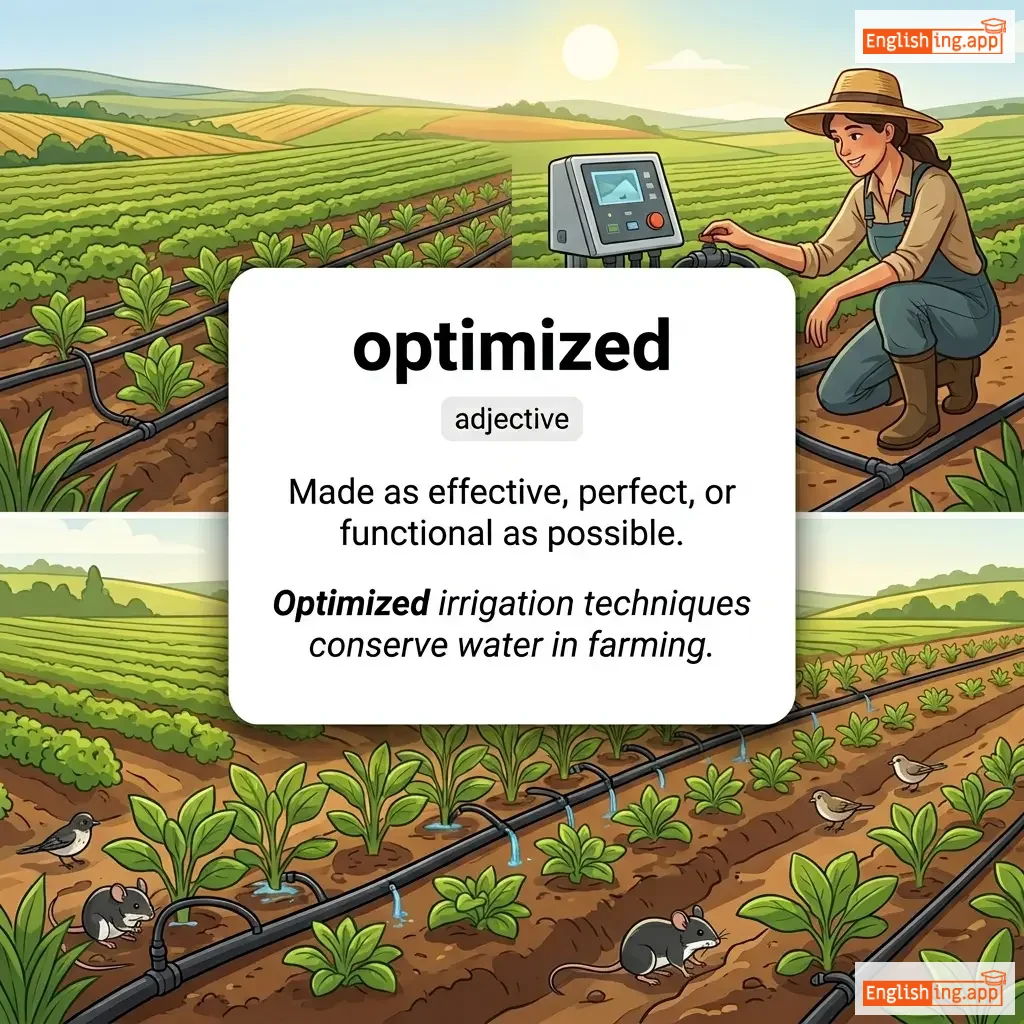
optimized definition card — visual illustration of the meaning
adjective
/ˈɒp.tɪ.maɪzd/
最適化された (optimized)

Made as effective, perfect, or functional as possible.

"Optimized irrigation techniques conserve water in farming."
"最適化された灌漑技術は農業で水を節約します。" (Saitekika sareta kankai gijutsu wa nougyou de mizu o setsuyaku shimasu.)
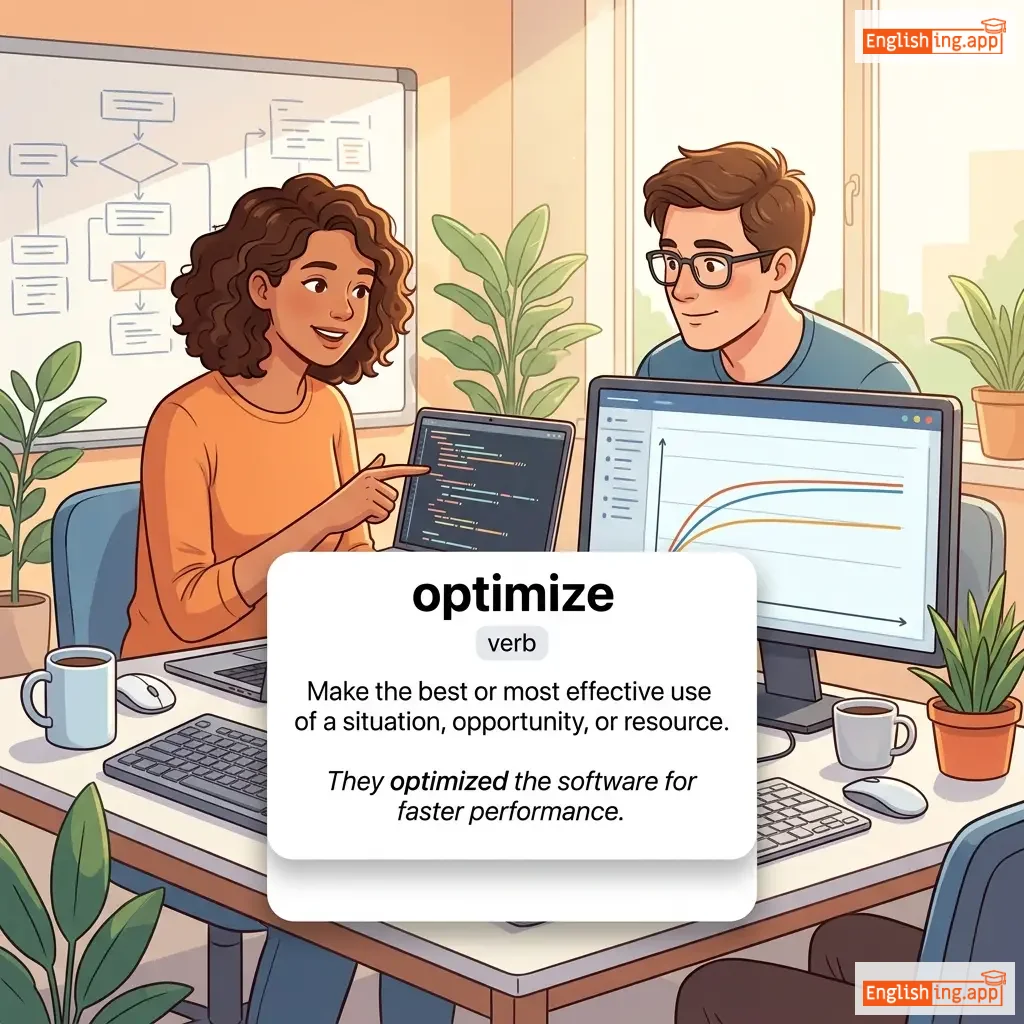
optimize definition card — visual illustration of the meaning
verb
ˈɒptɪmaɪz
最適化する, 改善する (saitekika suru, kaizen suru)

Make the best or most effective use of a situation, opportunity, or resource.

"They optimized the software for faster performance."
"彼らはパフォーマンス向上のためにソフトウェアを最適化しました。" (Karera wa pafōmansu kōjō no tame ni sofutowea o saitekika shimashita.)
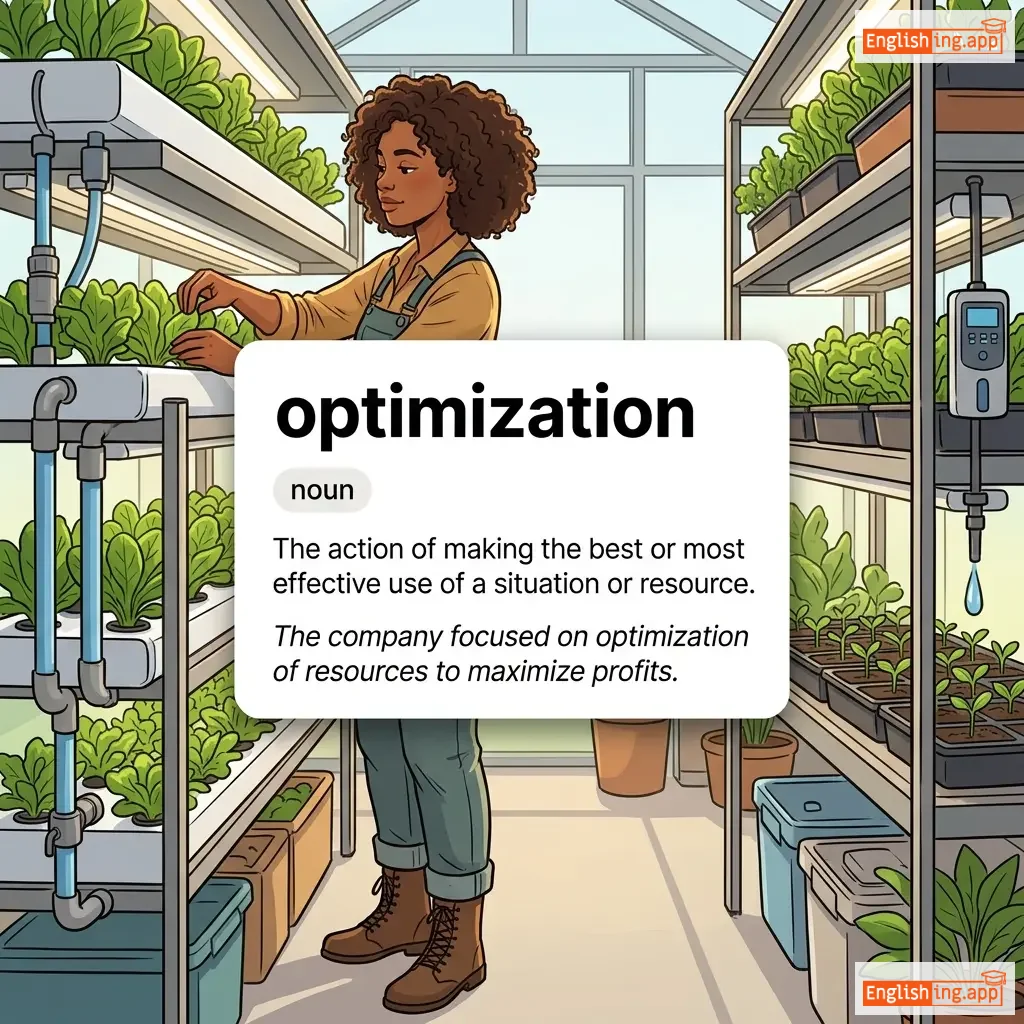
optimization definition card — visual illustration of the meaning
noun
ˌɒp.tɪ.mɪˈzeɪ.ʃən
最適化 (saitekika)

The action of making the best or most effective use of a situation or resource.

"The company focused on optimization of resources to maximize profits."

"会社は利益を最大化するためにリソースの最適化に焦点を当てました。" (Kaisha wa rieki o saidaika suru tame ni risōsu no saitekika ni shōten o atemashita.)
adjective
/ˌɑːp.təˈmɪs.tɪk/
楽観的 (rakkan-teki)

hopeful and confident about the future

"She is optimistic about the success of her new project."

"彼女は新しいプロジェクトの成功に楽観的です。" (Kanojo wa atarashī purojekuto no seikō ni rakkan-teki desu.)
noun
/ˈɒptɪmɪst/

A person who tends to be hopeful and confident about the future or the success of something.

"Even in tough times, she remained an optimist."

optimism definition card — visual illustration of the meaning
noun
/ˈɒptɪmɪzəm/
楽観主義 (rakkan shugi)

Hopefulness and confidence about the future.

"Her optimism kept the team motivated during tough times."

"彼女の楽観主義は困難な時期にチームを励ましました。" (Kanojo no rakkan shugi wa konnan na jiki ni chiimu wo hagemashita.)
optimally definition card — visual illustration of the meaning
adverb
/ˈɒp.tɪ.məl.i/
最適に (saiteki ni)

In the most effective or efficient way possible.

"Tasks should be allocated optimally for maximum output."
"タスクは最大の成果を上げるために最適に割り当てるべきです。" (Tasukusu wa saidai no seika o ageru tame ni saiteki ni wariante subeki desu.)
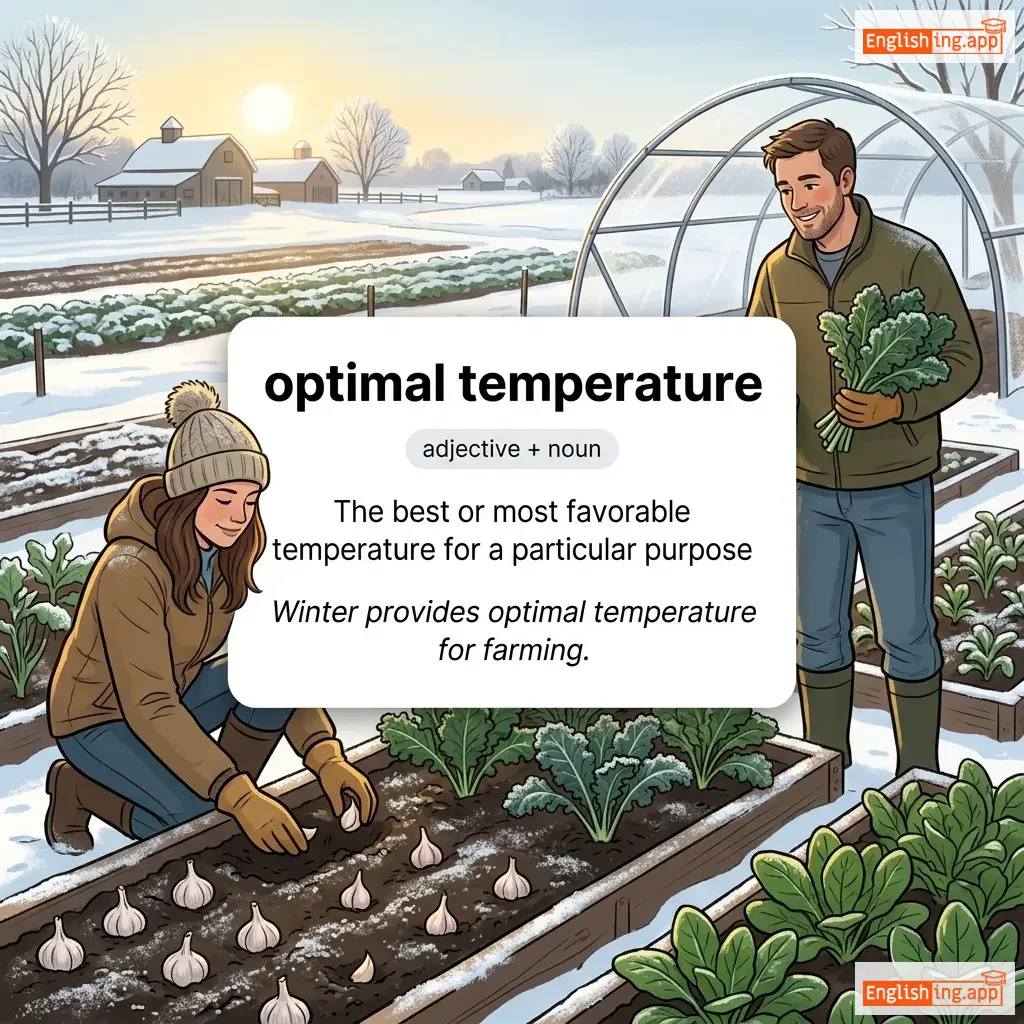
optimal temperature definition card — visual illustration of the meaning
adjective + noun
ˈɒptɪməl ˈtempərətʃər
最適温度 (saiteki ondo)

The best or most favorable temperature for a particular purpose

"Winter provides optimal temperature for farming."

"冬は農業に最適な温度を提供します。" (Fuyu wa nōgyō ni saiteki na ondo o teikyō shimasu.)
optimal definition card — visual illustration of the meaning
adjective
/ˈɒptɪməl/
最適 (saiteki)

Best or most favorable; ideal.

"This diet plan provides the optimal balance of nutrients."

"このダイエットプランは栄養素の最適なバランスを提供します。" (Kono daietto puran wa eiyōso no saiteki na baransu o teikyō shimasu.)
noun
/ˈɒptɪks/
光学 (kōgaku)

The branch of physics dealing with light and vision.

"She studied optics to understand how lenses work."

"彼女はレンズがどのように機能するかを理解するために光学を学びました。" (Kanojo wa renzu ga dono yō ni kinō suru ka o rikai suru tame ni kōgaku o manabimashita.)
noun
/ˌɑːpərˈtuːnɪzəm/
機会主義 (kikai shugi)

The practice of taking advantage of opportunities regardless of principles or ethics.

"His decision was driven by opportunism, not values."

"彼の決定は、価値観ではなくオポチュニズムに動機づけられていました。" (Kare no kettei wa, kachikan de wa naku opochnizumu ni doukizukerareteimashita.)
noun
/ˈoʊpənɪŋ/
開店 (kaiten)

an act or instance of beginning something

"The opening of the new store was a huge success."

"新しい店のオープニングは大成功でした。" (Atarashī mise no ōpuningu wa daiseikō deshita.)
adverb
/ˈəʊpənli/
率直に (sotchoku ni)

in a way that is not secret or hidden

"He spoke openly about his past mistakes."

"彼は自分の過去の過ちについて率直に話した。" (Kare wa jibun no kako no ayamachi ni tsuite sotchoku ni hanashita.)
noun
/ˈɒpərə/
オペラ (opera)

a dramatic performance in which the actors sing most of their lines

"We watched a beautiful opera at the theater last night."
"昨晩、劇場で美しいオペラを観ました。" (Sakuban, gekijō de utsukushī opera o mimashita.)
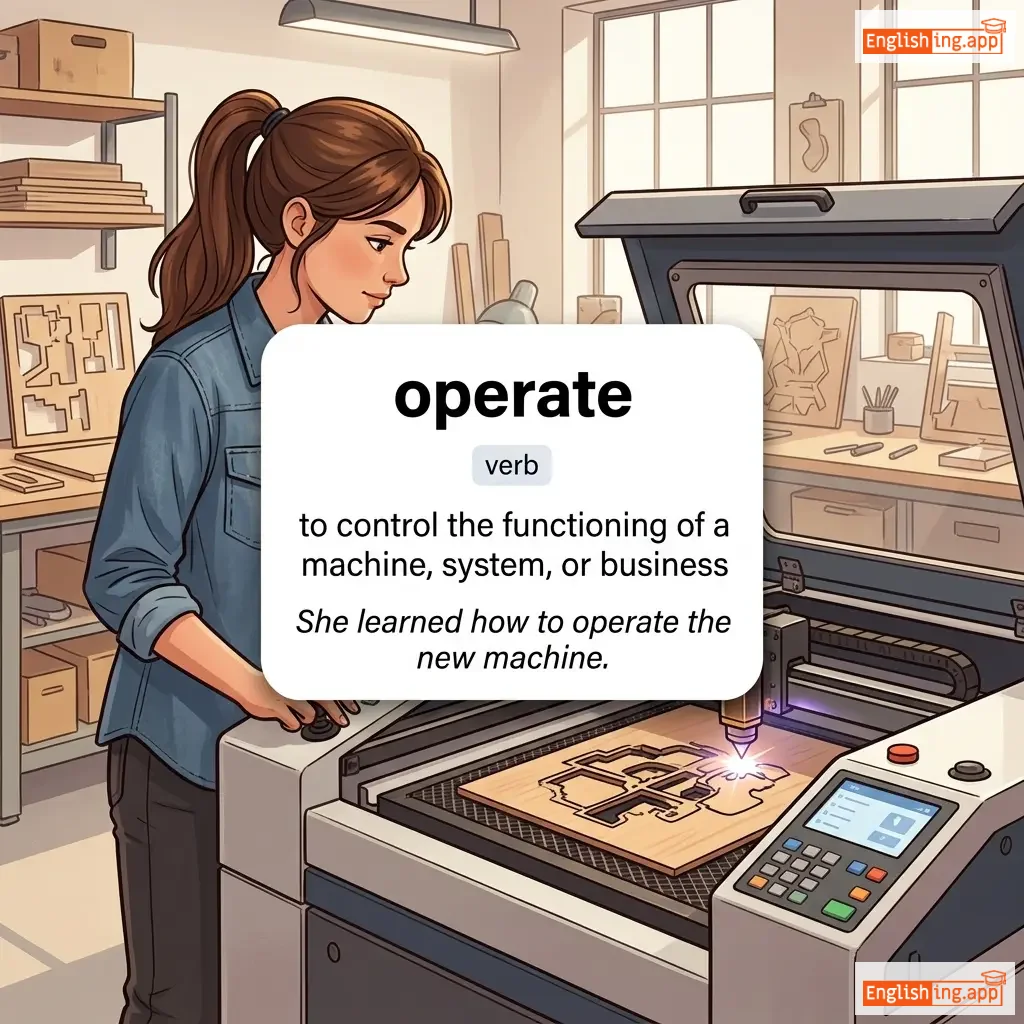
operate definition card — visual illustration of the meaning
verb
/ˈɑːpəˌreɪt/
操作する (sousa suru)

to control the functioning of a machine, system, or business

"She learned how to operate the new machine."

"彼女は新しい機械を操作する方法を学びました。" (Kanojo wa atarashii kikai wo sousa suru houhou wo manabimashita.)
verb
/ˈɒpəreɪtɪŋ/
運営する (un'ei suru)

to control or manage the functioning of something

"The company has been operating in this market for five years."

"その会社はこの市場で5年間運営されています。" (Sono kaisha wa kono shijou de go-nenkan un'ei sareteimasu.)
noun
/ˌɒpəˈreɪʃən/
手術 (shujutsu)

an act or process of functioning or operating

"The hospital performed a successful operation."
"病院は成功した手術を行いました。" (Byouin wa seikou shita shujutsu o okonai mashita.)
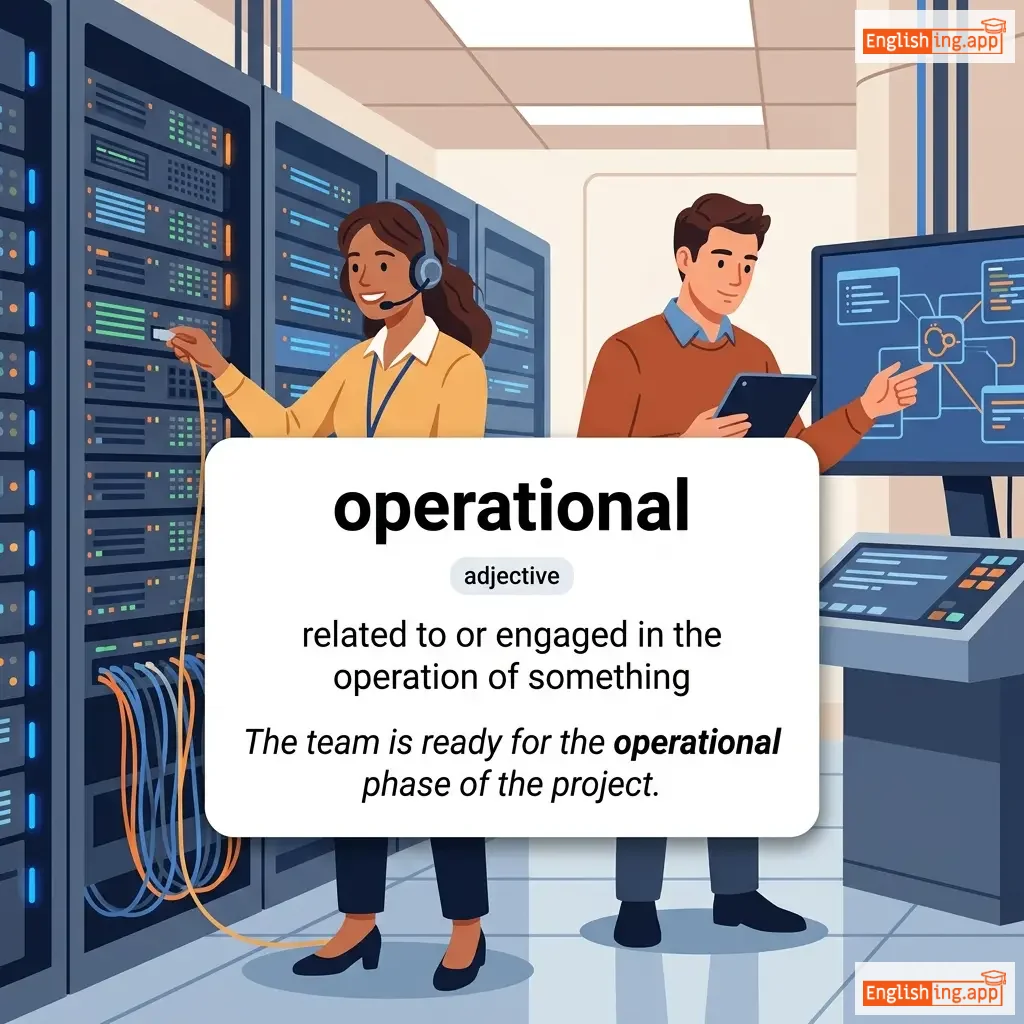
operational definition card — visual illustration of the meaning
adjective
/ˌɒpəˈreɪʃənl/
オペレーショナル (operational)

related to or engaged in the operation of something

"The team is ready for the operational phase of the project."

"チームはプロジェクトのオペレーショナルフェーズの準備ができています。" (Chīmu wa purojekuto no operēshonaru fēzu no junbi ga dekiteimasu.)
adjective
/ˈɒpərətɪv/
操作的 (sousateki)

functioning, having effect, or relating to a secret agent or worker

"The new law is now operative across the country."

"新しい法律は今、国内全体で施行されています。" (Atarashii houritsu wa ima, kokunai zentai de shikou sareteimasu.)
noun
/ˈɒpəreɪtər/
オペレーター (operetā)

a person who operates equipment, a business, or controls something

"The machine operator ensured that everything ran smoothly."

"機械オペレーターは、すべてがスムーズに動作することを確認しました。" (Kikai operetā wa, subete ga sumūzu ni dōsa suru koto o kakunin shimashita.)
noun
/ˌɒpəˈrɛtə/
軽いオペラ (karui opera)

a short opera with light and humorous themes

"The theater staged a famous operetta by Gilbert and Sullivan."

"劇場はギルバートとサリヴァンの有名な軽いオペラを上演しました。" (Gekijō wa Girubāto to Sarivan no yūmei na karui opera o jōen shimashita.)
noun
/ˈoʊpiət/

a drug containing opium or its derivatives, used to relieve pain or cause sleep

"The doctor prescribed an opiate to relieve the patient's pain."

verb
/oʊˈpaɪn/
意見を述べる (iken o noberu)

to express an opinion or belief

"The professor opined that the policy would fail."

"教授はその政策が失敗するだろうと述べました。" (Kyoju wa sono seisaku ga shippai suru darou to nobemashita.)
noun
/əˈpɪnjən/
意見 (iken)

A belief, judgment, or viewpoint about something, not necessarily based on fact.

"Everyone is entitled to their own opinion."

"誰もが自分の意見を持つ権利を持っています。" (dare mo ga jibun no iken o motsu kenri o motteimasu.)
noun
/əˈpoʊnənt/
幸せ (shiawase)

A person who competes against or disagrees with another.

"The boxer defeated his opponent in the final round."

"彼女は賞を受け取ったとき、幸せを隠すことができませんでした。" (kanojo wa shō o uketotta toki, shiawase o kakusu koto ga dekimasen deshita.)
adjective
/ˌɑːpərˈtuːn/
適切な瞬間 (tekisetsu na shunkan)

Happening at a suitable or convenient time.

"She arrived at an opportune moment to help."

"彼女は助けるために適切な瞬間に到着しました。" (Kanojo wa tasukeru tame ni tekisetsu na shunkan ni touchakushimashita.)
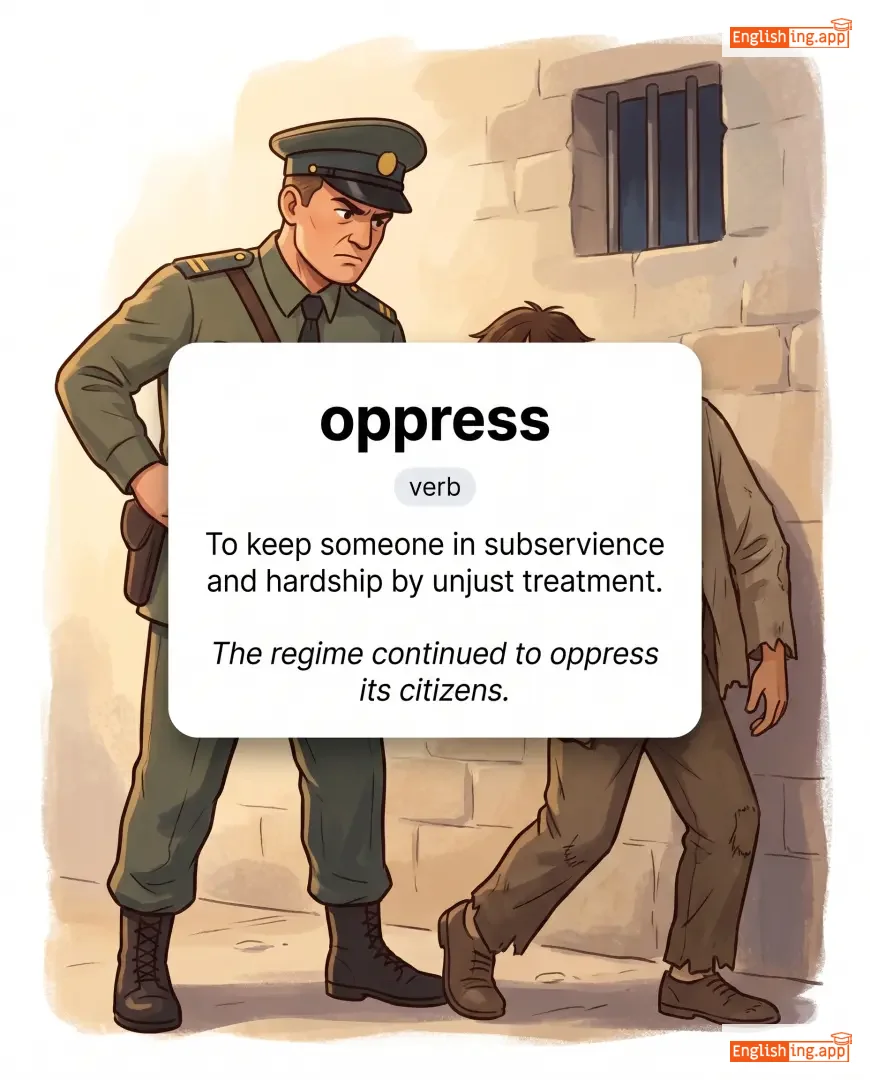
oppress definition card — visual illustration of the meaning
verb
/əˈprɛs/

To keep someone in subservience and hardship by unjust treatment.

"The regime continued to oppress its citizens."

adjective
/ˈɒptɪkəl/
光学的 (kōgakuteki)

related to or used in seeing or sight

"The optical illusion fooled everyone at the exhibition."

"その光学的錯覚は展示会で皆を騙した。" (Sono kōgakuteki sakaku wa tenjikai de mina o damashita.)
adjective
/ˈɒptɪk/
視覚の (shikaku no)

Relating to the eye or vision.

"The optic nerve carries signals from the eye to the brain."
"視神経は目から脳に信号を伝達します。" (Shishinkei wa me kara nō ni shingō o dentatsu shimasu.)
verb
/ɒpt/
選ぶ (erabu)

to choose or decide to do something instead of something else

"Many students opt to study abroad for better opportunities."

"多くの学生がより良い機会のために海外で学ぶことを選択します。" (Ooku no gakusei ga yori yoi kikai no tame ni kaigai de manabu koto o sentaku shimasu.)
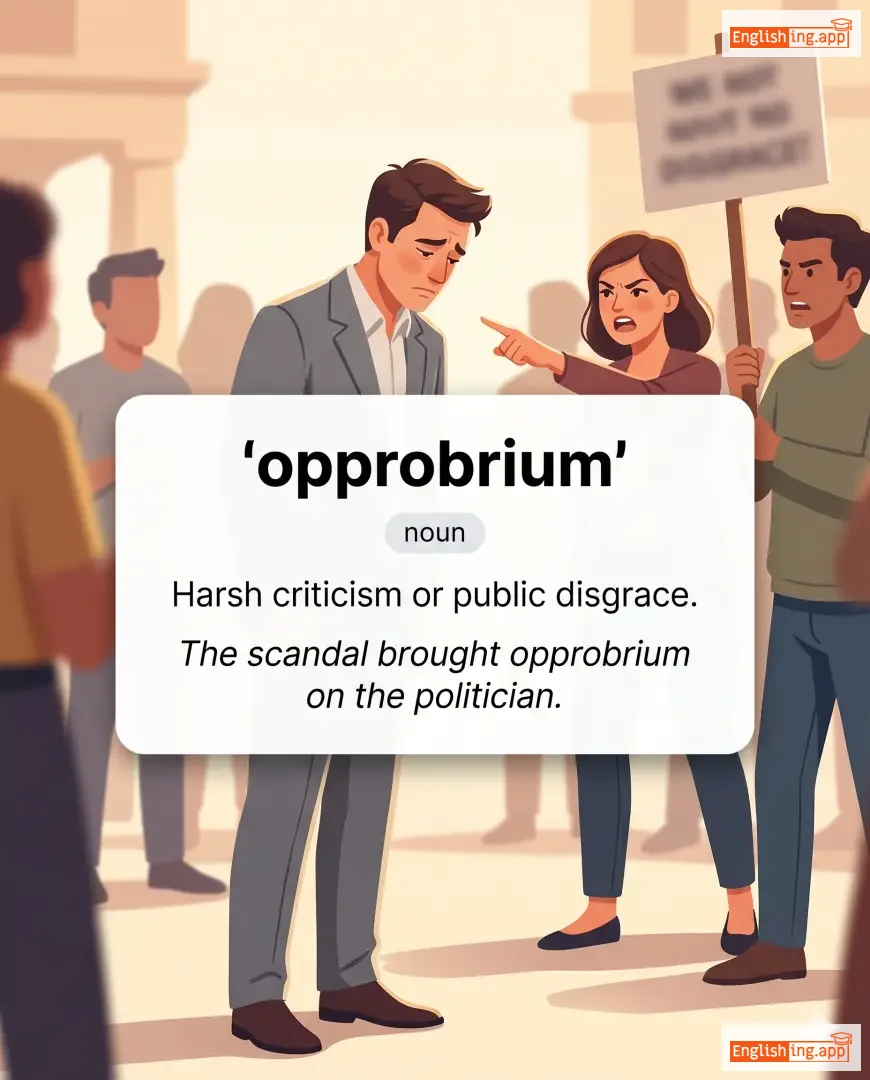
opprobrium definition card — visual illustration of the meaning
noun
/əˈprəʊ.bri.əm/
非難, 恥辱 (hinan, chijoku)

Harsh criticism or public disgrace.

"The scandal brought opprobrium on the politician."

"スキャンダルは政治家に非難を浴びせた。" (Sukyandaru wa seijika ni hinan o abiseta.)
adjective
/əˈprəʊ.bri.əs/
侮辱的な (bujokuteki na)

Expressing strong criticism or scorn.

"He made opprobrious remarks about his opponent."

"彼は対戦相手に対して侮辱的な発言をしました。" (Kare wa taisen aite ni taishite bujokuteki na hatsugen o shimashita.)
adjective
/əˈprɛs.ɪv/
抑圧的 (yokuatsuteki)

Harsh and authoritarian; overwhelming; causing distress; tyrannical;

"The oppressive heat made it difficult to work outside during the summer."

"厳しい暑さは夏の間外で働くのを難しくした。" (Kibishī atsusa wa natsu no aida soto de hataraku no o muzukashiku shita.)
noun
/əˈpreʃ.ən/
抑圧; 虐待; 圧政; (yokatsu; gyakutai; assoku;)

cruel or unjust treatment or exercise of authority; the state of being subject to harsh treatment

"The people fought against political oppression."

"人々は政治的な抑圧に反対して戦った。" (Hitobito wa seijiteki na yokatsu ni hantai shite tatakatta.)
opportunities definition card — visual illustration of the meaning
noun
ˌɒpəˈtjuːnɪtiz
機会 (kikai)

A set of circumstances that makes it possible to do something.

"Investing in emerging markets provides new opportunities."

"新興市場への投資は新しい機会を提供します。" (Shinkō shijō e no tōshi wa atarashī kikai o teikyō shimasu.)
noun
/ˌɒp.əˈtjuː.nə.ti/
チャンス (chansu)

A favorable chance or set of circumstances that makes it possible to do something.

"She seized the opportunity to study abroad."

"彼女は海外で勉強するチャンスをつかんだ。" (Kanojo wa kaigai de benkyō suru chansu o tsukanda.)
verb
/əˈpəʊz/
反対する (hantai suru)

to disagree with or fight against something

"He opposed the new policy at the meeting."

"彼は会議で新しい政策に反対した。" (Kare wa kaigi de atarashī seisaku ni hantai shita.)