語彙集

英単語辞書 | 単語の意味、定義、例文

noun
/əbˈdʒɛkʃən/
異議 (igi)

an expression or feeling of disapproval or opposition

"The lawyer raised an objection during the trial."

"弁護士は裁判中に異議を申し立てました。" (Bengoshi wa saiban-chuu ni igi wo moushitatemashita.)
adjective
/əbˈdʒek.ʃən.ə.bəl/
不快な (fukai na)

arousing distaste or opposition; unpleasant or offensive

"His objectionable behavior made everyone uncomfortable."
"彼の不快な行動は、皆を不快にさせた。" (Kare no fukai na kōdō wa, mina o fukai ni saseta.)
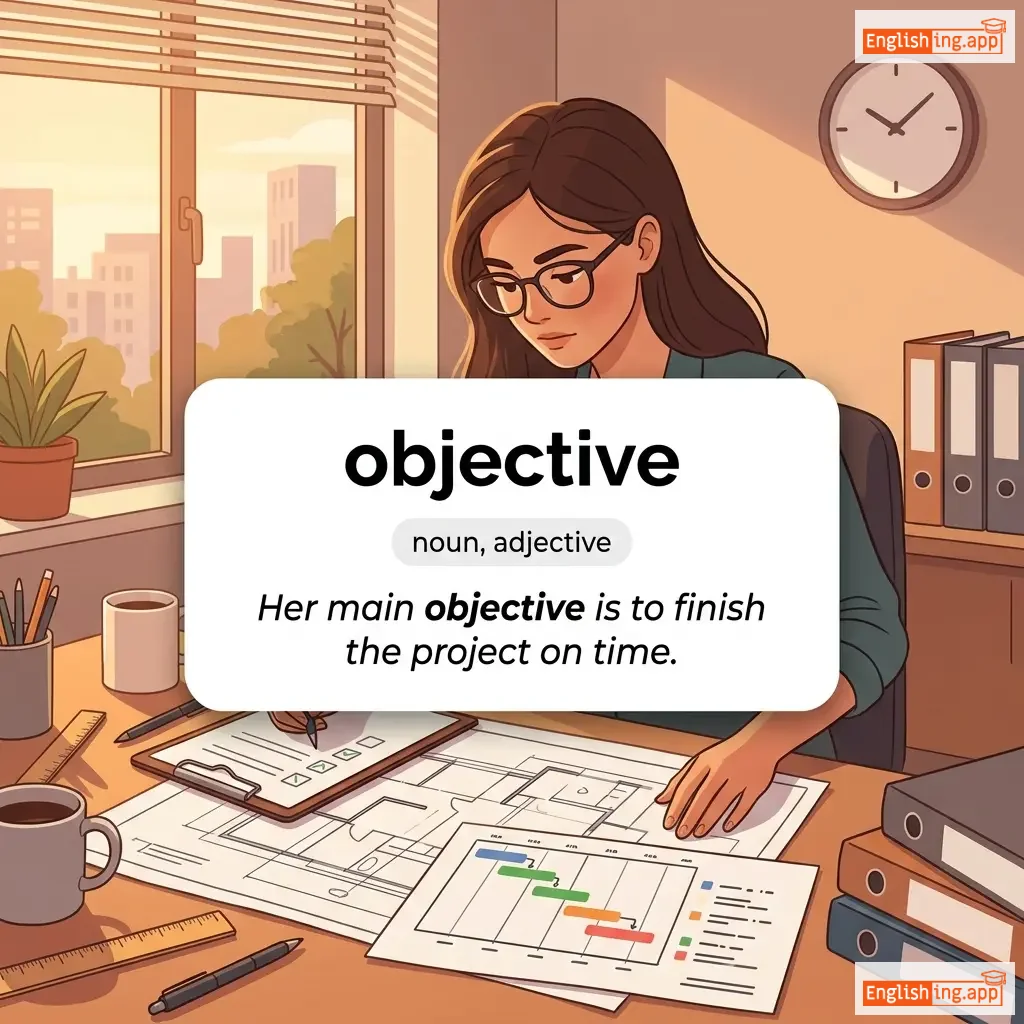
objective definition card — visual illustration of the meaning
noun, adjective
/əbˈdʒɛktɪv/
目標 / 客観的な (mokuhyou / kyakkanteki na)

As a noun: a goal or aim. As an adjective: not influenced by personal feelings; unbiased.

"Her main objective is to finish the project on time."

"彼女の主な目標はプロジェクトを時間通りに終わらせることです。" (Kanojo no omona mokuhyou wa purojekuto o jikan dōri ni owaraseru koto desu.)
noun
/əbˈdʒɛktər/
反対者 (hantaisha)

a person who expresses opposition or disapproval to something

"The objector raised his concerns during the town meeting."

"反対者は市議会の会議中に自分の懸念を表明しました。" (Hantaisha wa shigikai no kaigi-chū ni jibun no kennen o hyōmei shimashita.)
verb
/ˈɑːbdʒərˌɡeɪt/
厳しく叱る (kibishiku shikaru)

to scold or rebuke severely

"The teacher objurgated the student for being dishonest."

"先生は不正直な生徒を厳しく叱った。" (Sensei wa fuseijika na seito wo kibishiku shikatta.)
noun
/ˌɑːbdʒərˈɡeɪʃən/
厳しい叱責 (kibishī shisseki)

a harsh scolding or strong rebuke

"His misconduct earned him a severe objurgation from the manager."

"彼の不正行為はマネージャーから厳しい叱責を受けた。" (Kare no fusei kōi wa manējā kara kibishī shisseki o uketa.)
noun
/oʊˈbleɪʃən/
奉納 (hounou)

a religious offering, especially of bread or wine to God

"The priest placed the oblation on the altar during the ceremony."

"司祭は儀式の間に祭壇に奉納を置きました。" (Shisai wa gishiki no aida ni saidan ni hounou o okimashita.)
verb
/ˈɑːblɪˌɡeɪt/
強制する (kyousei suru)

to bind legally or morally; to compel someone to do something

"The contract obligates the company to provide timely service."

"契約は会社にタイムリーなサービスを提供することを義務付けます。" (Keiyaku wa kaisha ni taimurī na sābisu o teikyō suru koto o gimu zukemasu.)
noun
/ˌɒblɪˈɡeɪʃən/
義務 (gimu)

a duty or commitment

"You have an obligation to follow the rules."
"あなたは規則に従う義務があります。" (Anata wa kisoku ni shitagau gimu ga arimasu.)
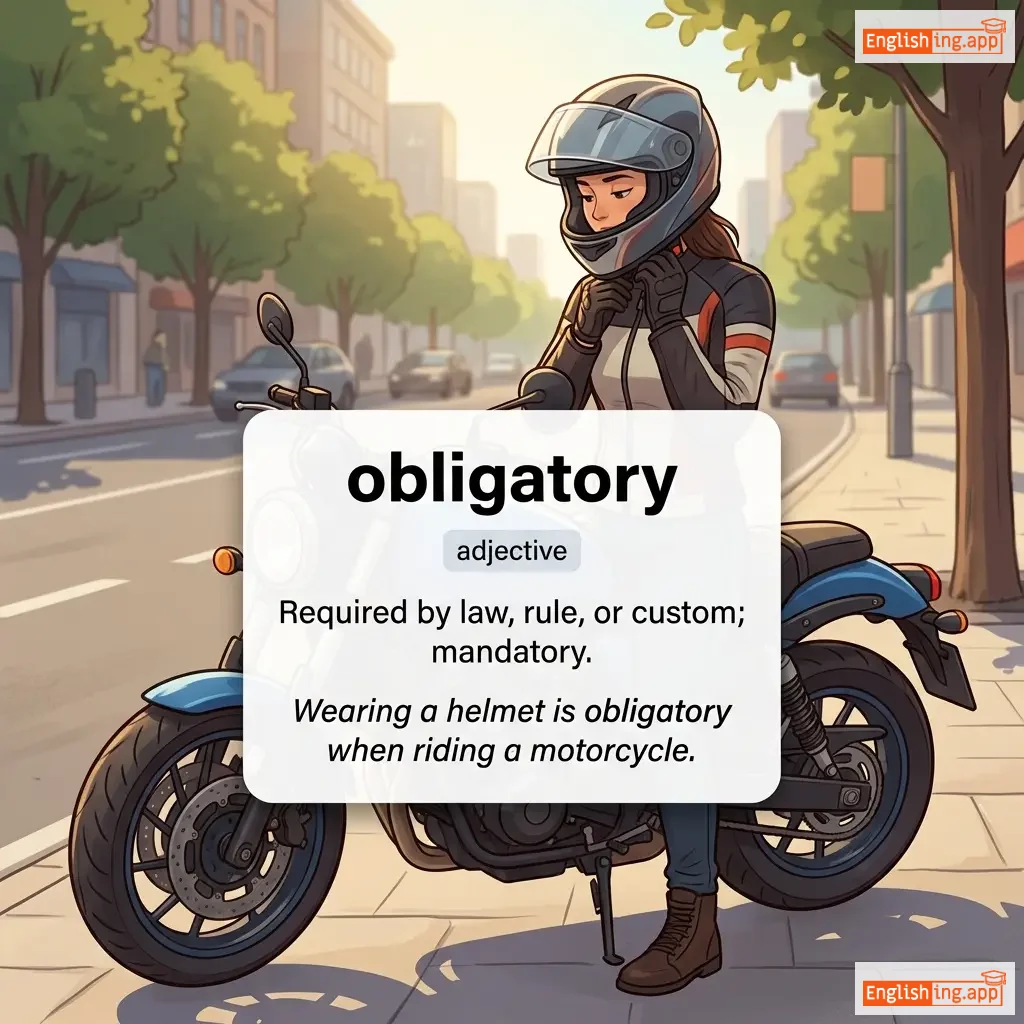
obligatory definition card — visual illustration of the meaning
adjective
/əˈblɪɡətɔːri/

Required by law, rule, or custom; mandatory.

"Wearing a helmet is obligatory when riding a motorcycle."
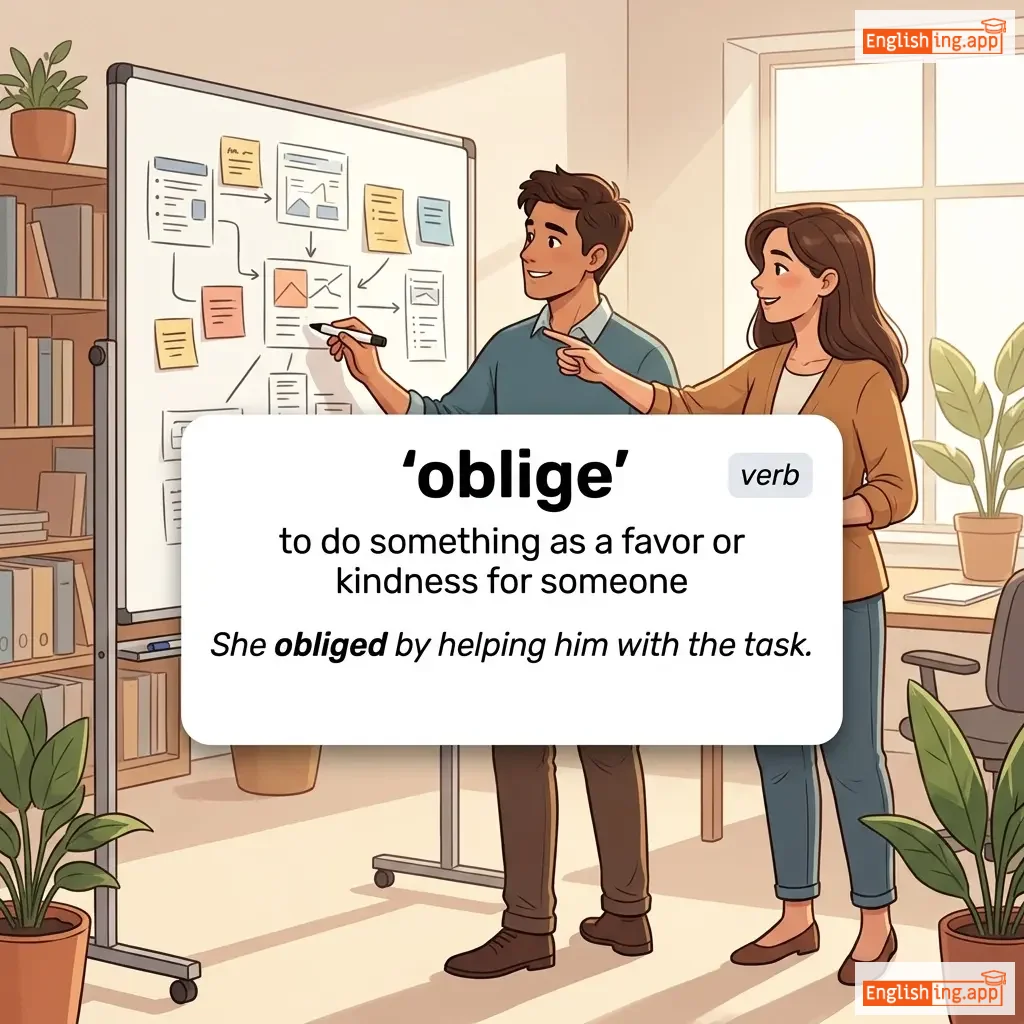
oblige definition card — visual illustration of the meaning
verb
/əˈblaɪdʒ/
助ける (tasukeru)

to do something as a favor or kindness for someone

"She obliged by helping him with the task."

"彼女はそのタスクを手伝うことで喜んでくれました。" (Kanojo wa sono tasuku wo tetsudau koto de yorokonde kuremashita.)
adjective
/əˈblaɪdʒɪŋ/
親切な (shinsena)

Willing to help or do favors; accommodating.

"The staff at the hotel were very obliging and friendly."

"ホテルのスタッフはとても親切で友好的でした。" (Hoteru no sutaffu wa totemo shinsen de yuukouteki deshita.)
adjective
/əˈbliːk/ or /oʊˈbliːk/
間接的 (kansetsu-teki)

Not explicit or direct in addressing a point; slanting or indirect.

"She made an oblique reference to his past mistakes."

"彼女は彼の過去の間違いに対して間接的な言及をしました。" (Kanojo wa kare no kako no machigai ni taishite kansetsu-teki na genkyu o shimashita.)
noun
/əˈblɪkwɪti/
歪み (yugami)

Deviation from moral or usual conduct; indirectness or lack of straightforwardness.

"The politician was criticized for the obliquity of his answers."
"その政治家は、彼の答えの歪みについて批判された。" (Sono seijika wa, kare no kotae no yugami ni tsuite hihan sareta.)
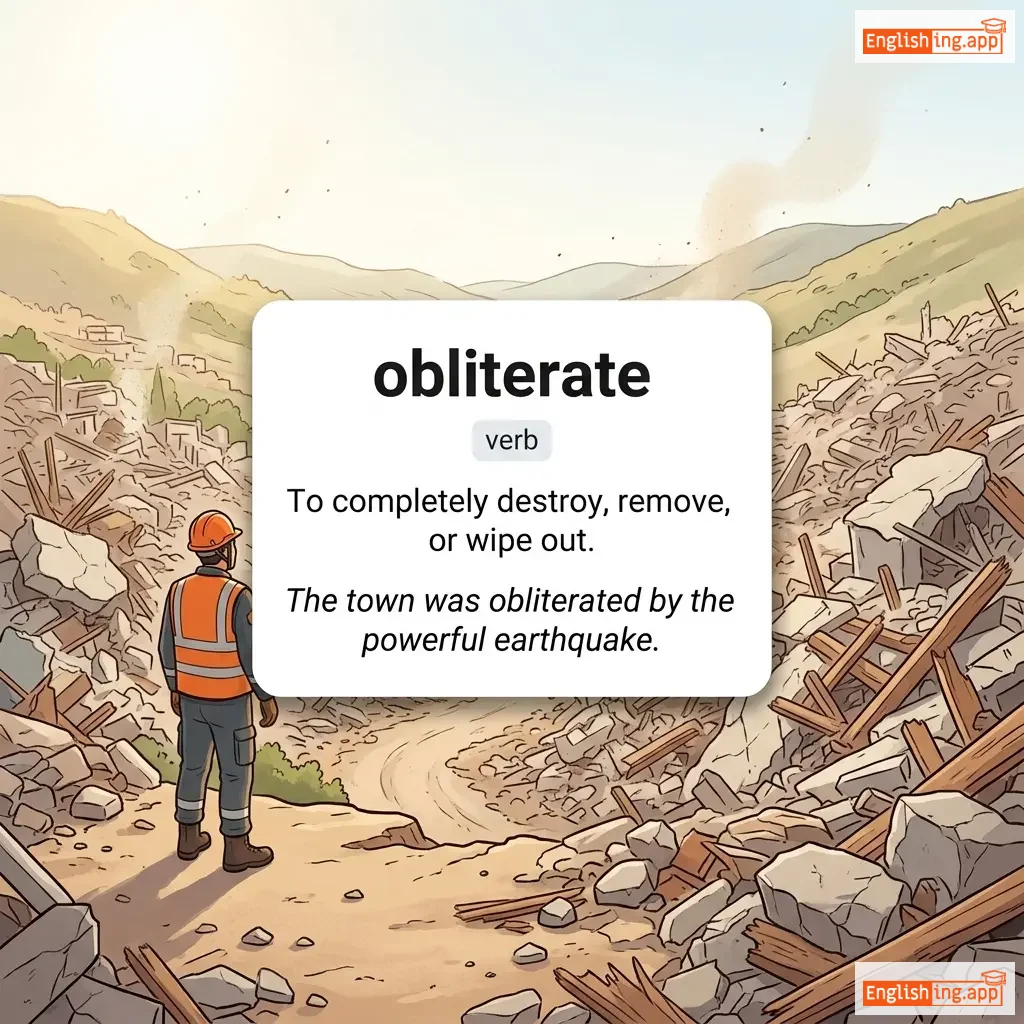
obliterate definition card — visual illustration of the meaning
verb
/əˈblɪtəreɪt/
完全に破壊する (kanzen ni hakai suru)

To completely destroy, remove, or wipe out.

"The town was obliterated by the powerful earthquake."
"町は強力な地震によって完全に壊滅しました。" (machi wa kyōryoku na jishin ni yotte kanzen ni kaimetsu shimashita.)
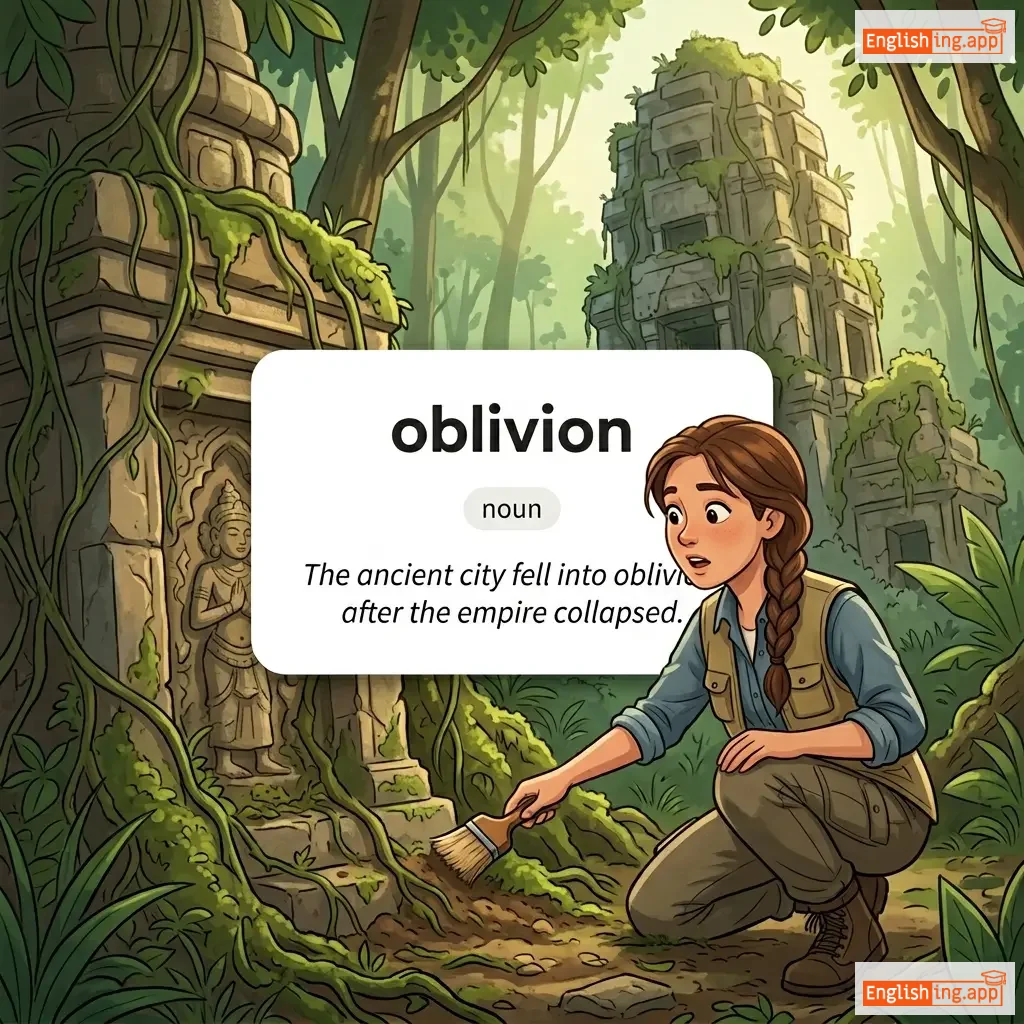
oblivion definition card — visual illustration of the meaning
noun
/əˈblɪviən/
忘却 (bōkyaku)

The state of being completely forgotten or unknown; the state of being unconscious or unaware.

"The ancient city fell into oblivion after the empire collapsed."

"古代の都市は帝国の崩壊後、忘却の中に落ちた。" (Kodai no toshi wa teikoku no hōkai-go, bōkyaku no naka ni ochita.)
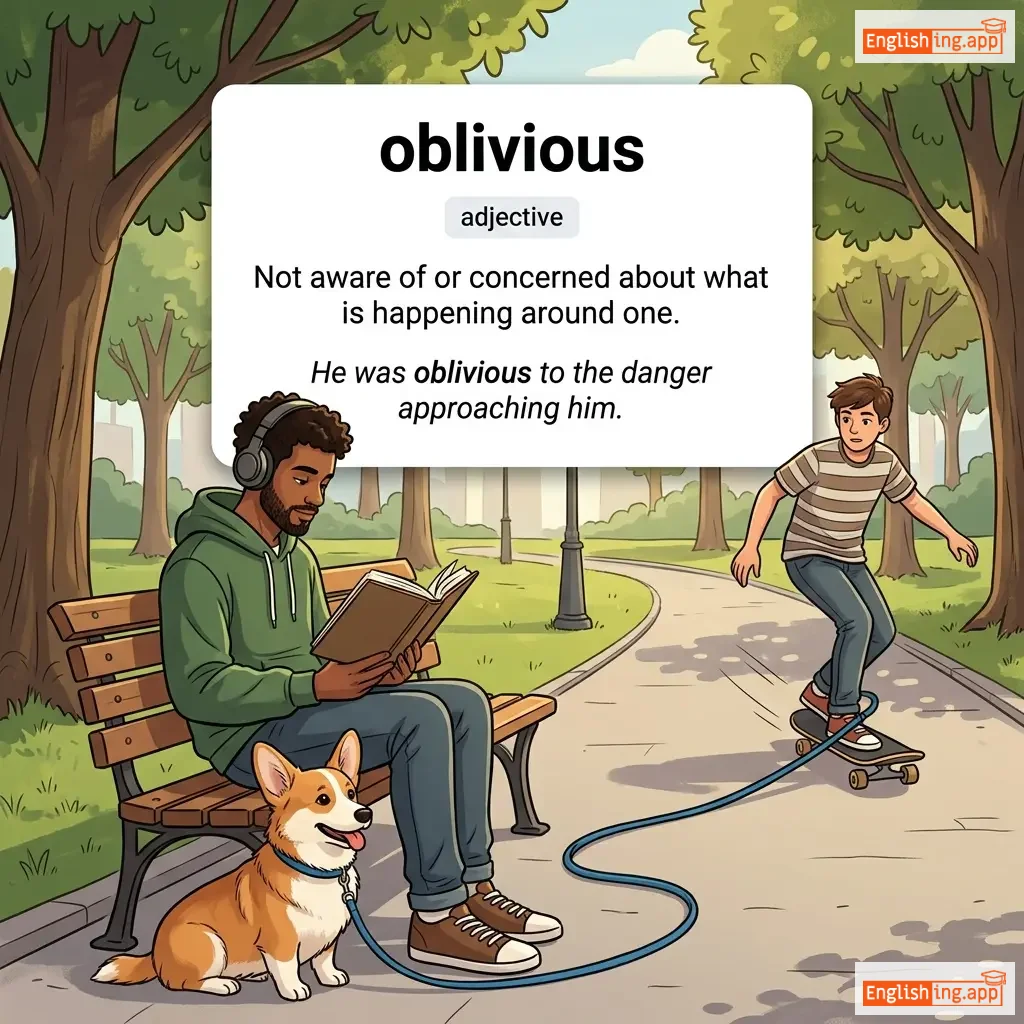
oblivious definition card — visual illustration of the meaning
adjective
/əˈblɪviəs/

Not aware of or concerned about what is happening around one.

"He was oblivious to the danger approaching him."

noun
/ˈɒbləkwɪ/
中傷 (chuushou)

Strong public criticism or verbal abuse; disgrace or shame from public condemnation.

"The politician faced obloquy after the scandal was exposed."

"スキャンダルが暴露された後、政治家は中傷に直面しました。" (Sukyandaru ga bakuro sareta ato, seijika wa chuushou ni chokumen shimashita.)
adjective
/əbˈnɒkʃəs/
不快な (fukai na)

Extremely unpleasant, offensive, or annoying.

"The obnoxious behavior of the guest ruined the party."

"ゲストの不快な振る舞いがパーティーを台無しにした。" (Gesuto no fukai na furumai ga pātii o dainashi ni shita.)
adjective, verb
/əbˈskjʊr/
不明確 (fumeikaku)

Not clearly expressed or understood; to make something difficult to see or understand.

"The meaning of the poem was obscure to most readers."

"詩の意味はほとんどの読者には不明確でした。" (Shi no imi wa hotondo no dokusha ni wa fumeikaku deshita.)
noun
/ˈɒbsɪkwiːz/
葬儀儀式 (sōgi gishiki)

Funeral rites or ceremonies.

"The obsequies for the late leader drew thousands of mourners."
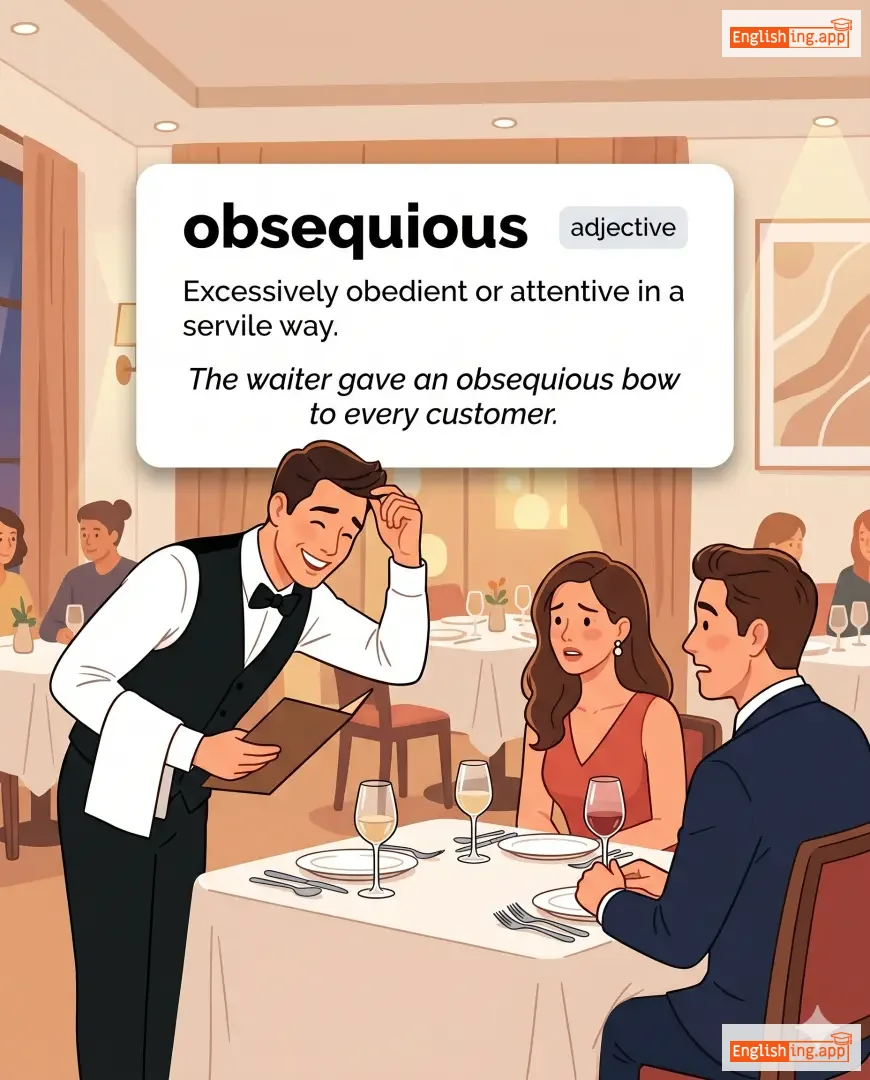
"故リーダーの葬儀儀式には、数千人の弔問客が集まりました。" (Ko rīdā no sōgi gishiki ni wa, sūsen-nin no chōmonkyaku ga atsumarimashita.)
obsequious definition card — visual illustration of the meaning
adjective
/əbˈsiːkwɪəs/
お世辞 (oseji)

Excessively obedient or attentive in a servile way.

"The waiter gave an obsequious bow to every customer."
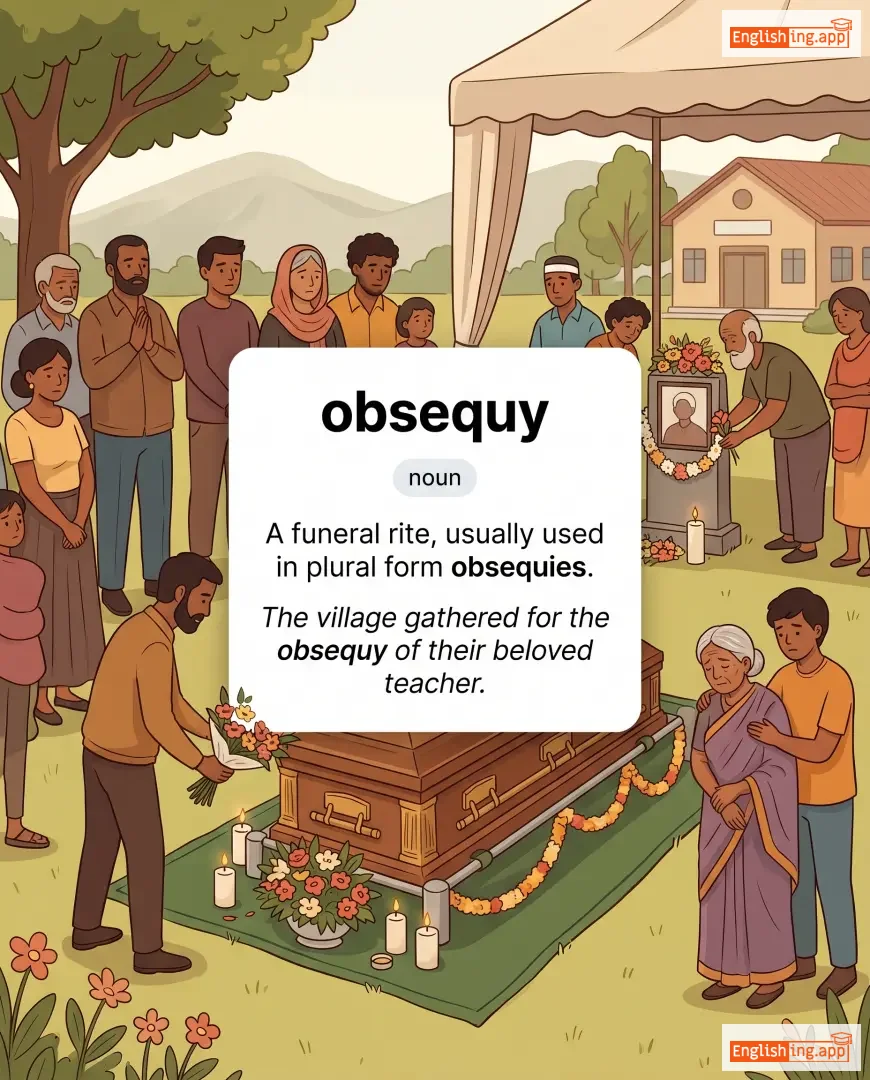
"ウェイターは各顧客にお世辞のようなお辞儀をしました。" (Ueitaa wa kaku kokyaku ni oseji no yō na ojigi o shimashita.)
obsequy definition card — visual illustration of the meaning
noun
/ˈɒbsɪkwi/
葬儀 (sōgi)

A funeral rite, usually used in plural form obsequies.

"The village gathered for the obsequy of their beloved teacher."

"村人たちは、愛する教師の葬儀のために集まりました。" (Murabito-tachi wa, aisuru kyōshi no sōgi no tame ni atsumarimashita.)
noun
/əbˈzɜːvəns/
遵守 (junshu)

The practice of following a custom, rule, or religious law.

"The festival is held in observance of a centuries-old tradition."

"その祭りは、数世代にわたる伝統を遵守して行われます。" (Sono matsuri wa, suudai ni wataru dentou wo junshu shite okonawaremasu.)
adjective
/əbˈzɜːvənt/
注意深い (chūi bukai)

Quick to notice details or attentive to rules and customs.

"She is very observant and rarely misses any detail."

"彼女はとても注意深く、ほとんどの詳細を見逃しません。" (Kanojo wa totemo chūi bukaku, hotondo no shōsai o minogashimasen.)
noun
/ˌɒbzəˈveɪʃən/
観察 (kansatsu)

the action or process of observing something carefully in order to gain information

"The scientist made an observation during the experiment."
"科学者は実験中に観察を行いました。" (Kagakusha wa jikken-chuu ni kansatsu o okonaimashita.)
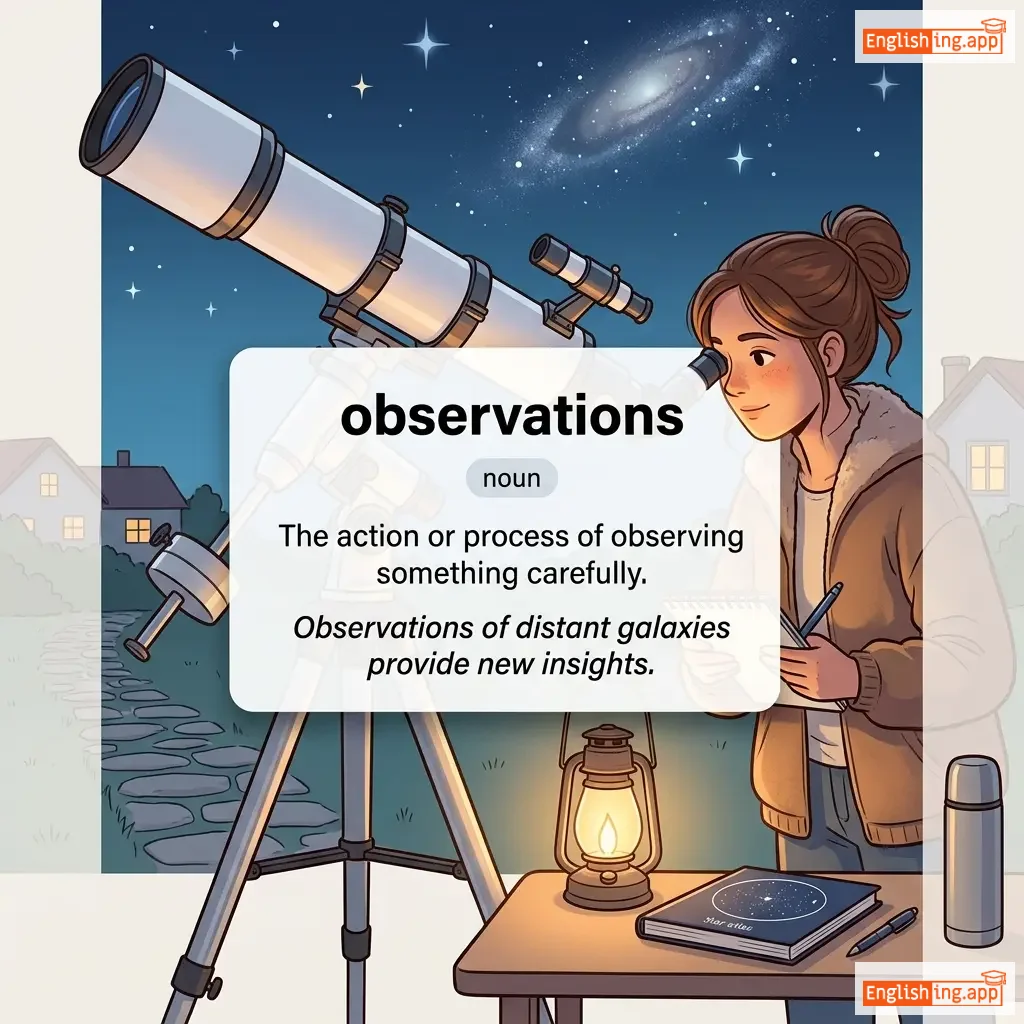
observations definition card — visual illustration of the meaning
noun
/ˌɒb.zəˈveɪ.ʃənz/
観察 (kansatsu)

The action or process of observing something carefully.

"Observations of distant galaxies provide new insights."

"遠くの銀河の観察は新たな洞察を提供します。" (Tōku no ginga no kansatsu wa aratana dōsatsu o teikyō shimasu.)
noun
/əbˈzɜːrvətɔːri/
天文台 (tenmondai)

A building equipped for observing astronomical or meteorological events.

"The observatory is open to the public on weekends."

"天文台は週末に一般公開されています。" (Tenmondai wa shuumatsu ni ippan koukai sareteimasu.)
verb
/əbˈzɜːv/
観察する (kansatsu suru)

to watch carefully and attentively

"The teacher asked the students to observe the experiment."
"先生は学生に実験を観察するように言いました。" (Sensei wa gakusei ni jikken o kansatsu suru yō ni iimashita.)
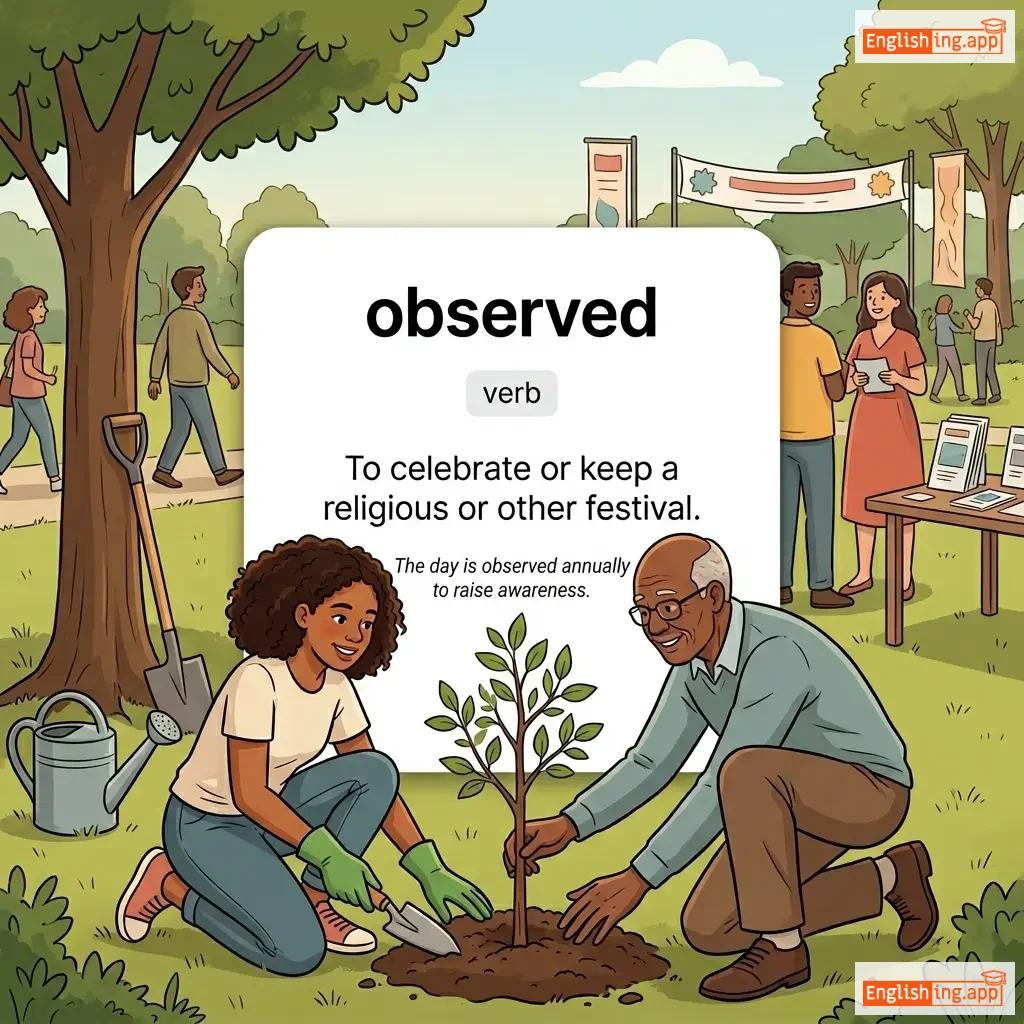
observed definition card — visual illustration of the meaning
verb
əbˈzɜːrvd
祝う (iwau)

To celebrate or keep a religious or other festival.

"The day is observed annually to raise awareness."

"その日は毎年意識を高めるために祝われます。" (Sono hi wa mainen ishiki o takameru tame ni iwaremasu.)
noun
/əbˈzɜːvər/
観察者 (kansatsusha)

a person who watches or notices something

"The observer took notes during the meeting."

"観察者は会議中にメモを取った。" (Kansatsusha wa kaigi chū ni memo o totta.)
verb
/əbˈsɛs/

To preoccupy or fill the mind of someone continually and to an excessive degree.

"She tends to obsess over small details."

noun
/əbˈsɛʃən/
執着 (shūchaku)

An idea, thought, or concern that continually preoccupies or intrudes on a person's mind.

"His obsession with success drove him to work day and night."

"成功への執着が彼を昼夜働かせた。" (Seikou e no shūchaku ga kare o chūya hatarakaseta.)
adjective
/əbˈsɛsɪv/
執着的 (shuchakuteki)

Relating to or characterized by an obsession; thinking about something too much.

"He has an obsessive interest in cleanliness."

"彼は清潔さに執着的な興味を持っています。" (Kare wa seiketsu-sa ni shuchakuteki na kyōmi o motteimasu.)
noun
/əbˈsɪdiən/
オブシディアン (黒いガラスのような火山岩) (obushidian (kuroi garasu no you na kazan gan))

A hard, dark, glasslike volcanic rock formed by rapid solidification of lava.

"The knife was made from sharp obsidian."
"ナイフは鋭いオブシディアンで作られていた。" (Naifu wa surudoi obushidian de tsukurarete ita.)
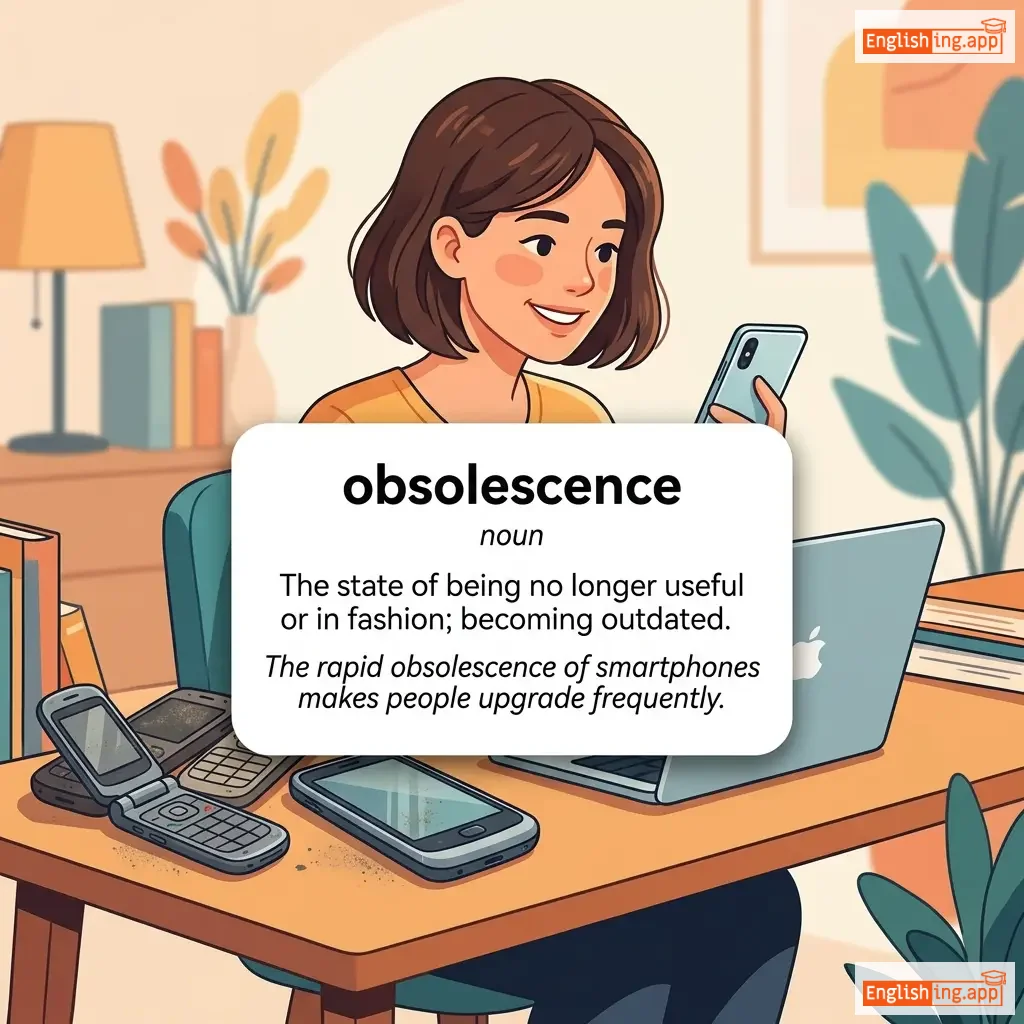
obsolescence definition card — visual illustration of the meaning
noun
/ˌɒbsəˈlɛsəns/
陳腐化 (chinpuka)

The state of being no longer useful or in fashion; becoming outdated.

"The rapid obsolescence of smartphones makes people upgrade frequently."

"スマートフォンの急速な陳腐化は人々に頻繁にアップグレードさせます。" (Sumātofon no kyūsokuna chinpuka wa hitobito ni hinpan ni appurēdo sasemasu.)
adjective
/ˌɒbsəˈlɛsnt/
時代遅れの (jidaiokure no)

Becoming outdated or on the way to becoming obsolete.

"The obsolescent technology could not compete with modern devices."

"時代遅れの技術は現代のデバイスには競争できなかった。" (Jidaiokure no gijutsu wa gendai no debaisu ni wa kyousou dekinakatta.)
adjective
/ˌɒbsəˈliːt/
時代遅れ (jidaiokure)

No longer in use or out of date.

"Floppy disks are now completely obsolete."
"フロッピーディスクは現在完全に時代遅れです。" (Furoppīdisuku wa genzai kanzen ni jidaiokure desu.)
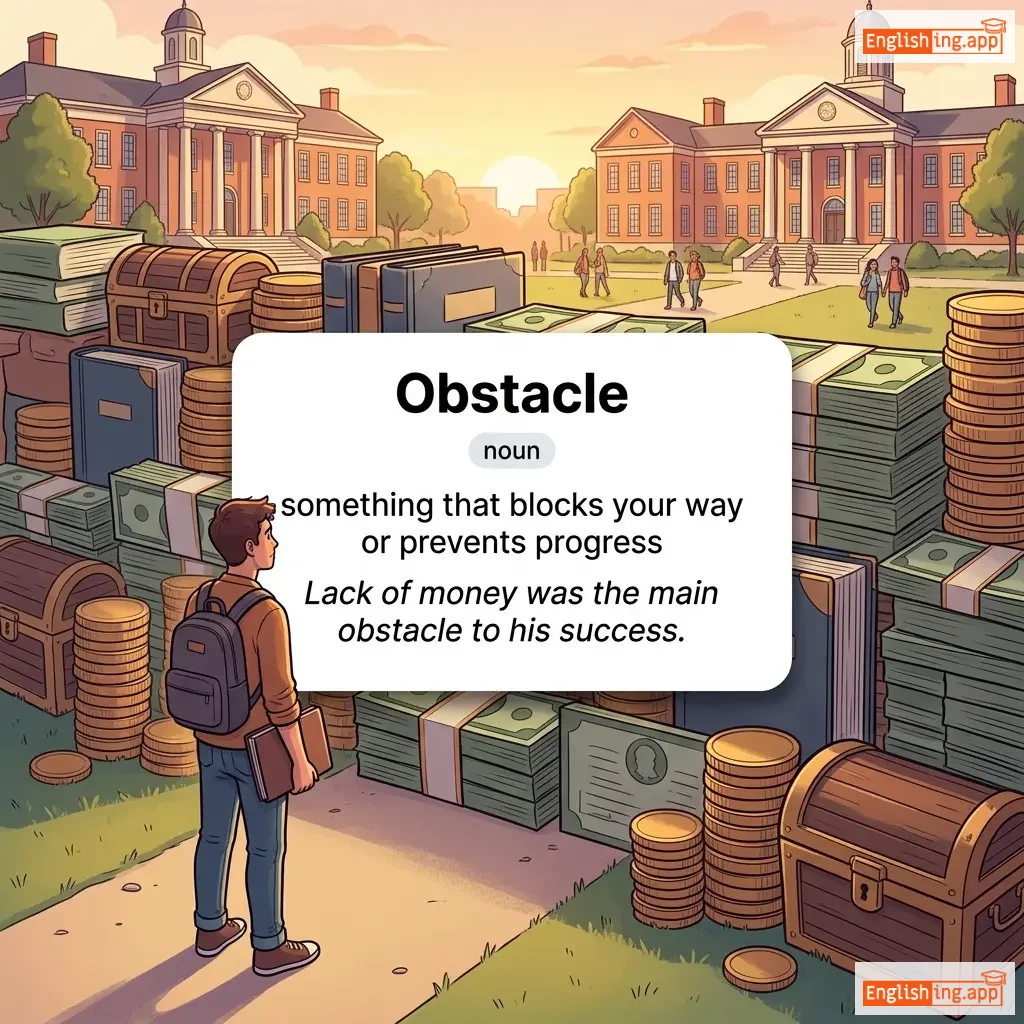
Obstacle definition card — visual illustration of the meaning
noun
/ˈɒbstəkəl/
障害 (shōgai)

something that blocks your way or prevents progress

"Lack of money was the main obstacle to his success."
"お金の不足は彼の成功への主要な障害でした。" (okane no fusoku wa kare no seikō e no shuyō na shōgai deshita.)
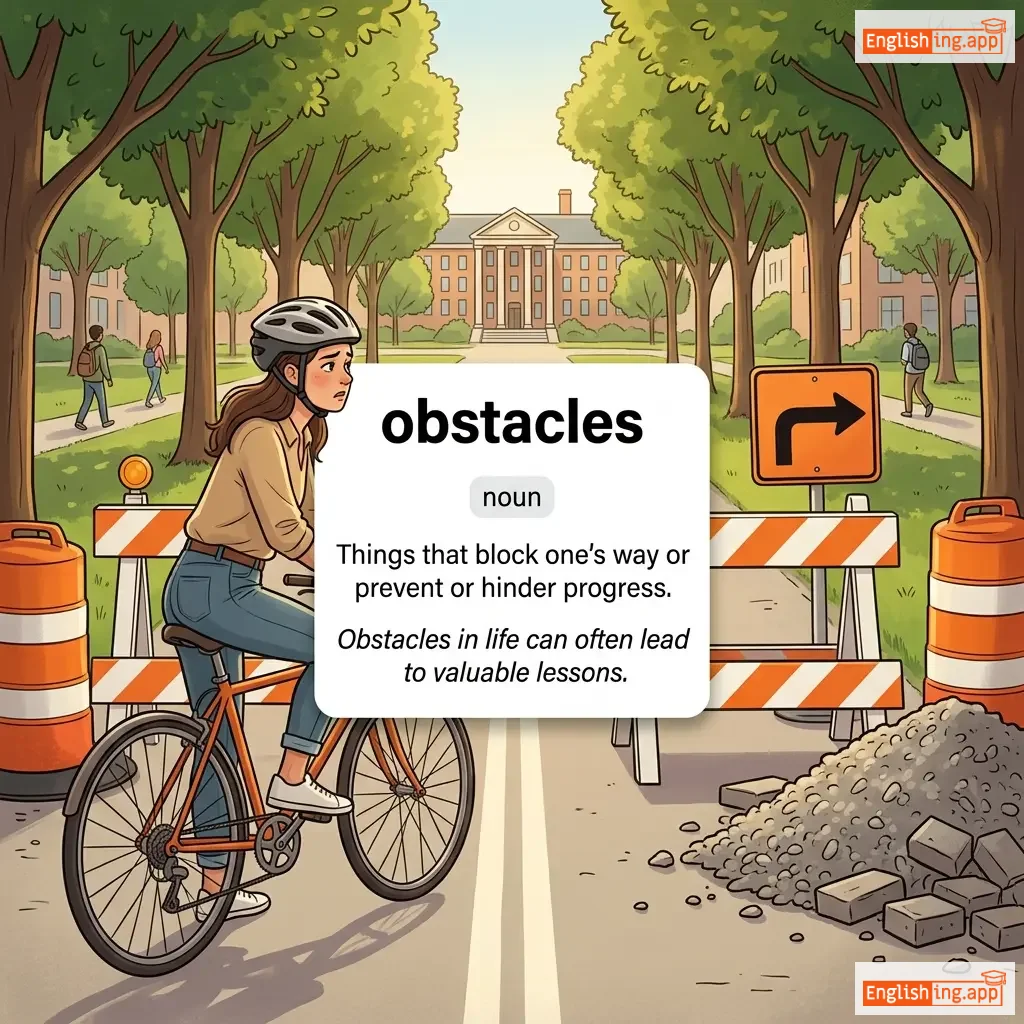
obstacles definition card — visual illustration of the meaning
noun
/ˈɒbstəkəlz/
障害物 (shougai-mono)

Things that block one's way or prevent or hinder progress.

"Obstacles in life can often lead to valuable lessons."

"人生の障害物はしばしば貴重な教訓に繋がる。" (Jinsei no shougai-mono wa shibashiba kichou na kyokun ni tsunagaru.)
noun
/ˌɒbstəˈtrɪʃən/
産科医 (sanka-i)

A doctor specializing in pregnancy, childbirth, and women's reproductive health.

"The obstetrician monitored the mother’s health throughout the pregnancy."
"産科医は妊娠中の母親の健康を監視しました。" (Sanka-i wa ninshin-chu no hahaoya no kenko o kanshi shimashita.)
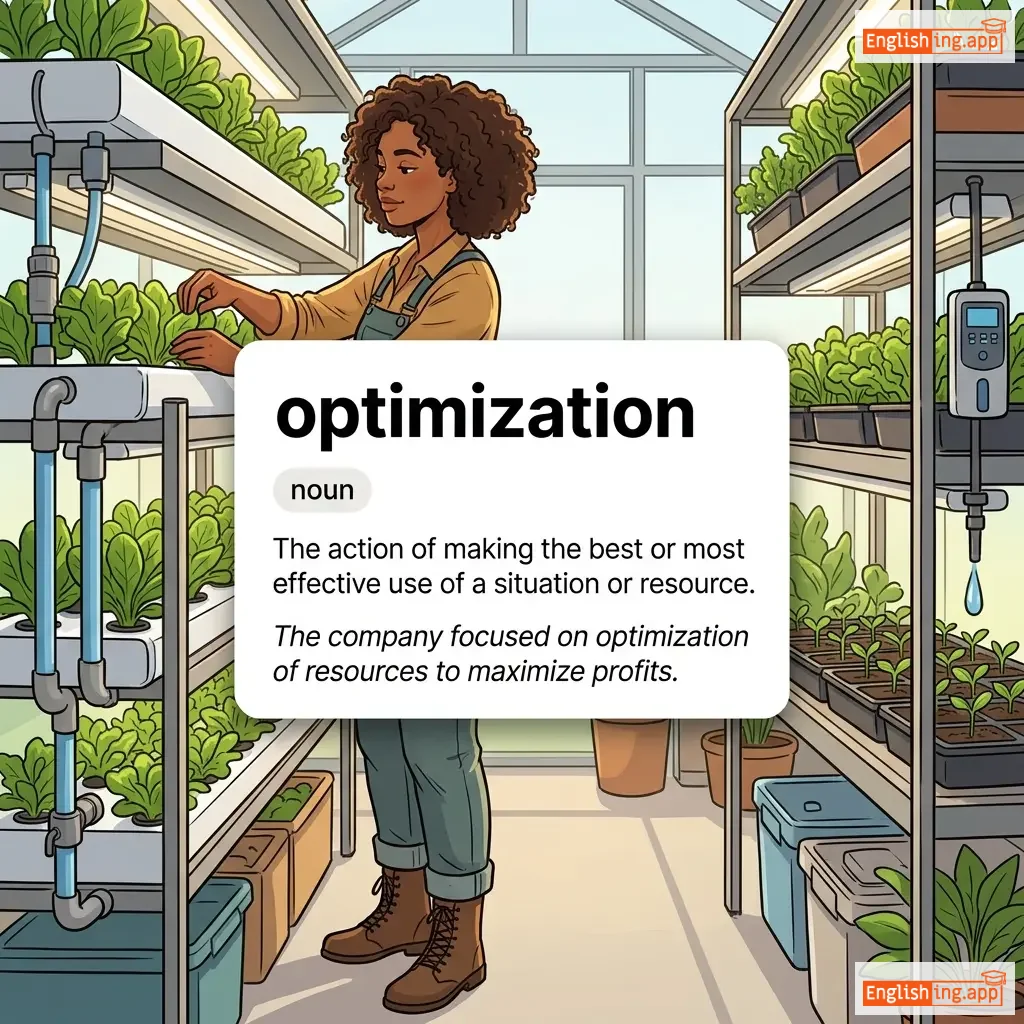
optimization definition card — visual illustration of the meaning
noun
ˌɒp.tɪ.mɪˈzeɪ.ʃən
最適化 (saitekika)

The action of making the best or most effective use of a situation or resource.

"The company focused on optimization of resources to maximize profits."
"会社は利益を最大化するためにリソースの最適化に焦点を当てました。" (Kaisha wa rieki o saidaika suru tame ni risōsu no saitekika ni shōten o atemashita.)
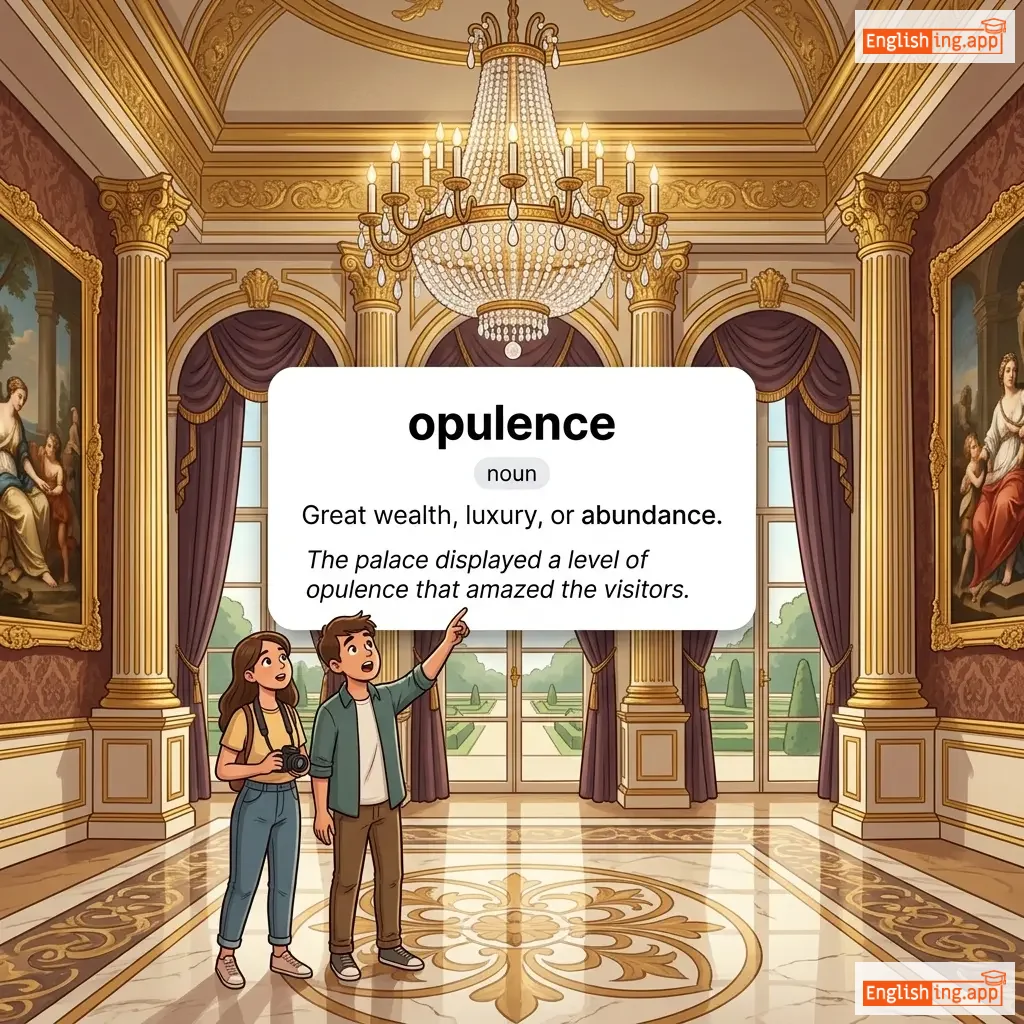
opulence definition card — visual illustration of the meaning
noun
/ˈɒpjʊləns/
豪華 (gōka)

Great wealth, luxury, or abundance.

"The palace displayed a level of opulence that amazed the visitors."

"宮殿は、訪問者を驚かせるような豪華さを展示していた。" (Kyūden wa, hōmon-sha o odorokasu yōna gōkasa o tenji shite ita.)
noun
/ɒpˈtɒmətri/
視力検査学 (shiryoku kensa gaku)

The practice or profession of examining the eyes and prescribing corrective lenses.

"She studied optometry at the university to become an eye specialist."

"彼女は大学でオプトメトリーを学び、眼科専門医になりました。" (Kanojo wa daigaku de optometry o manabi, ganka senmoni ni narimashita.)
noun
/ɒpˈtɒmɪtrɪst/
オプトメトリスト (oputometorisuto)

A healthcare professional who examines eyes and prescribes corrective lenses.

"The optometrist prescribed new glasses for her."

"オプトメトリストは彼女に新しい眼鏡を処方しました。" (Oputometorisuto wa kanojo ni atarashī megane o shohō shimashita.)
adjective
/ˈɒpʃənəl/
任意の (nin'i no)

Not required; left to personal choice.

"The dress code for the party is optional."
"パーティーのドレスコードは任意です。" (Pātī no doresu kōdo wa nin'i desu.)
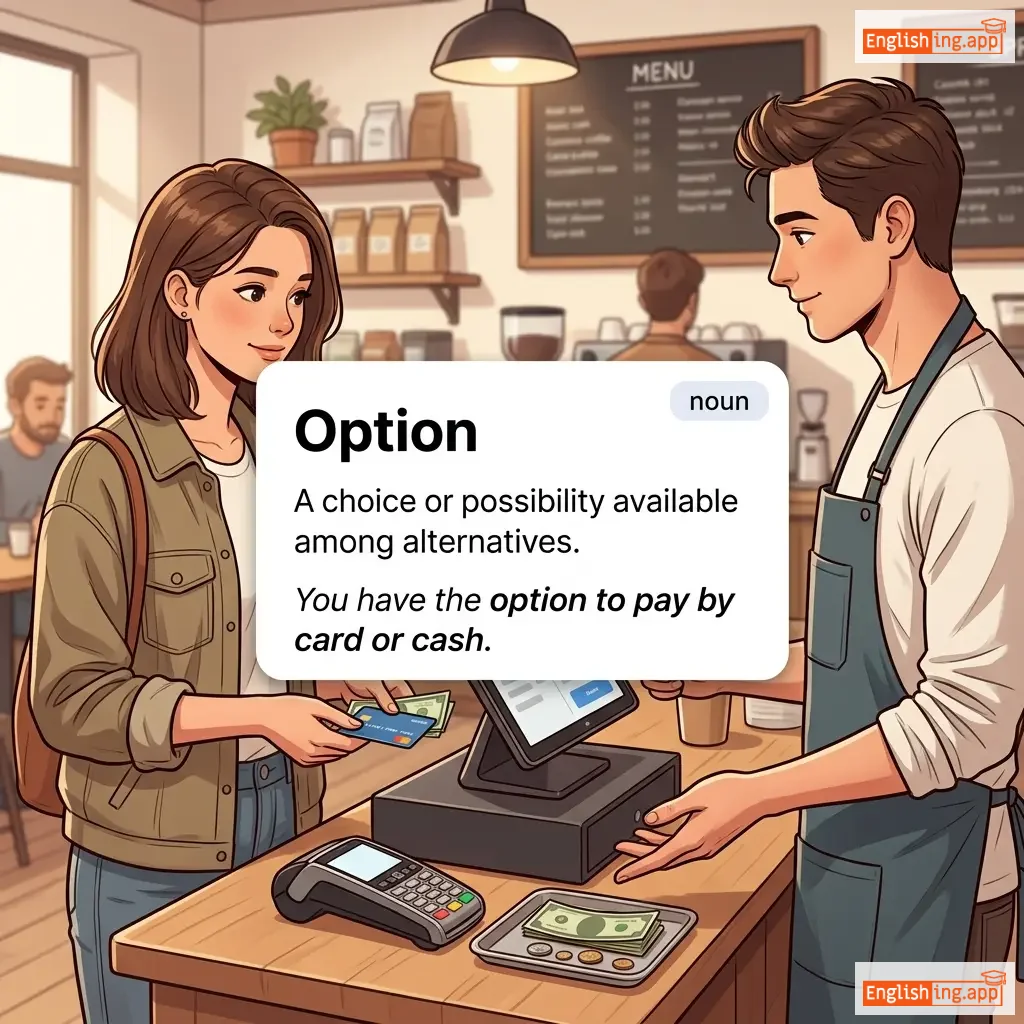
Option definition card — visual illustration of the meaning
noun
/ˈɒpʃən/
選択肢 (sentakushi)

A choice or possibility available among alternatives.

"You have the option to pay by card or cash."
"カードまたは現金で支払うオプションがあります。" (Kaado mata wa genkin de shiharau opushon ga arimasu.)
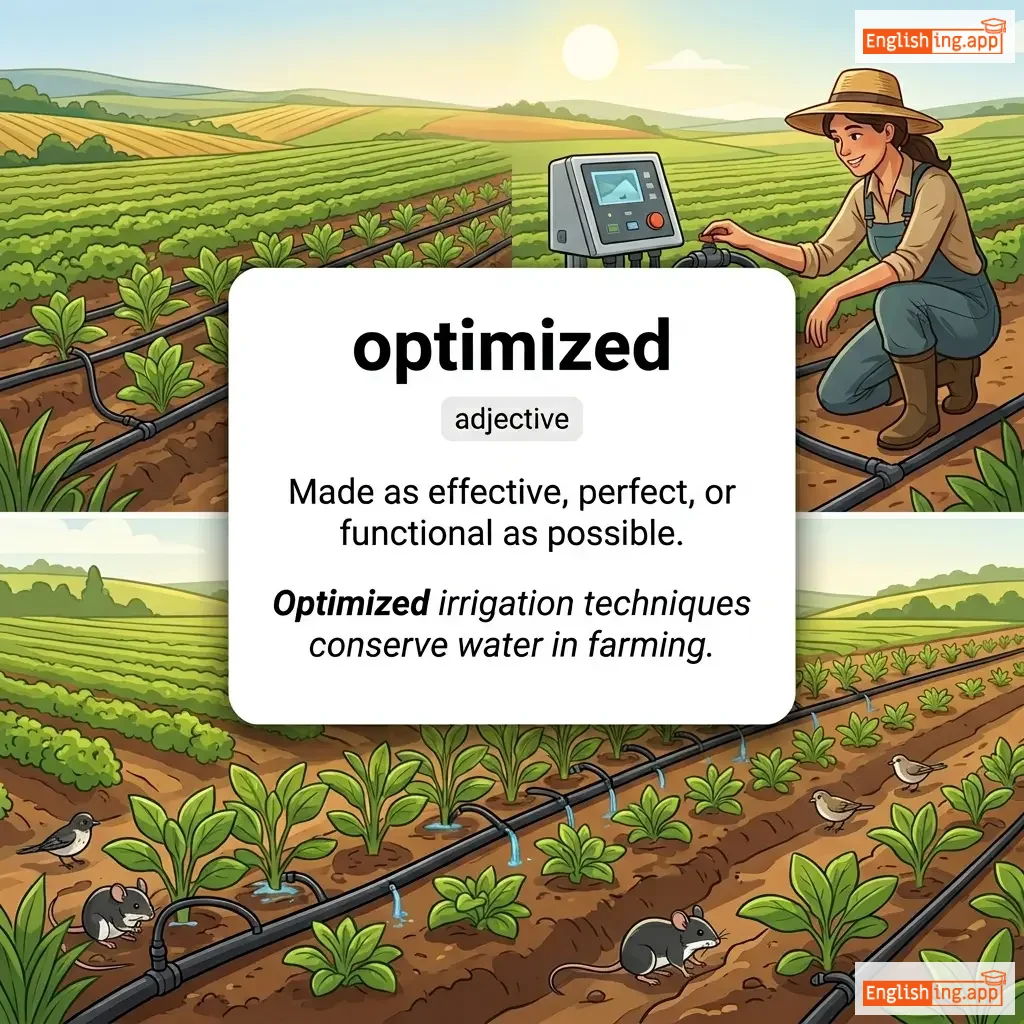
optimized definition card — visual illustration of the meaning
adjective
/ˈɒp.tɪ.maɪzd/
最適化された (optimized)

Made as effective, perfect, or functional as possible.

"Optimized irrigation techniques conserve water in farming."

"最適化された灌漑技術は農業で水を節約します。" (Saitekika sareta kankai gijutsu wa nougyou de mizu o setsuyaku shimasu.)
optimize definition card — visual illustration of the meaning
verb
ˈɒptɪmaɪz
最適化する, 改善する (saitekika suru, kaizen suru)

Make the best or most effective use of a situation, opportunity, or resource.

"They optimized the software for faster performance."

"彼らはパフォーマンス向上のためにソフトウェアを最適化しました。" (Karera wa pafōmansu kōjō no tame ni sofutowea o saitekika shimashita.)
optimal definition card — visual illustration of the meaning
adjective
/ˈɒptɪməl/
最適 (saiteki)

Best or most favorable; ideal.

"This diet plan provides the optimal balance of nutrients."

"このダイエットプランは栄養素の最適なバランスを提供します。" (Kono daietto puran wa eiyōso no saiteki na baransu o teikyō shimasu.)