語彙集

英単語辞書 | 単語の意味、定義、例文

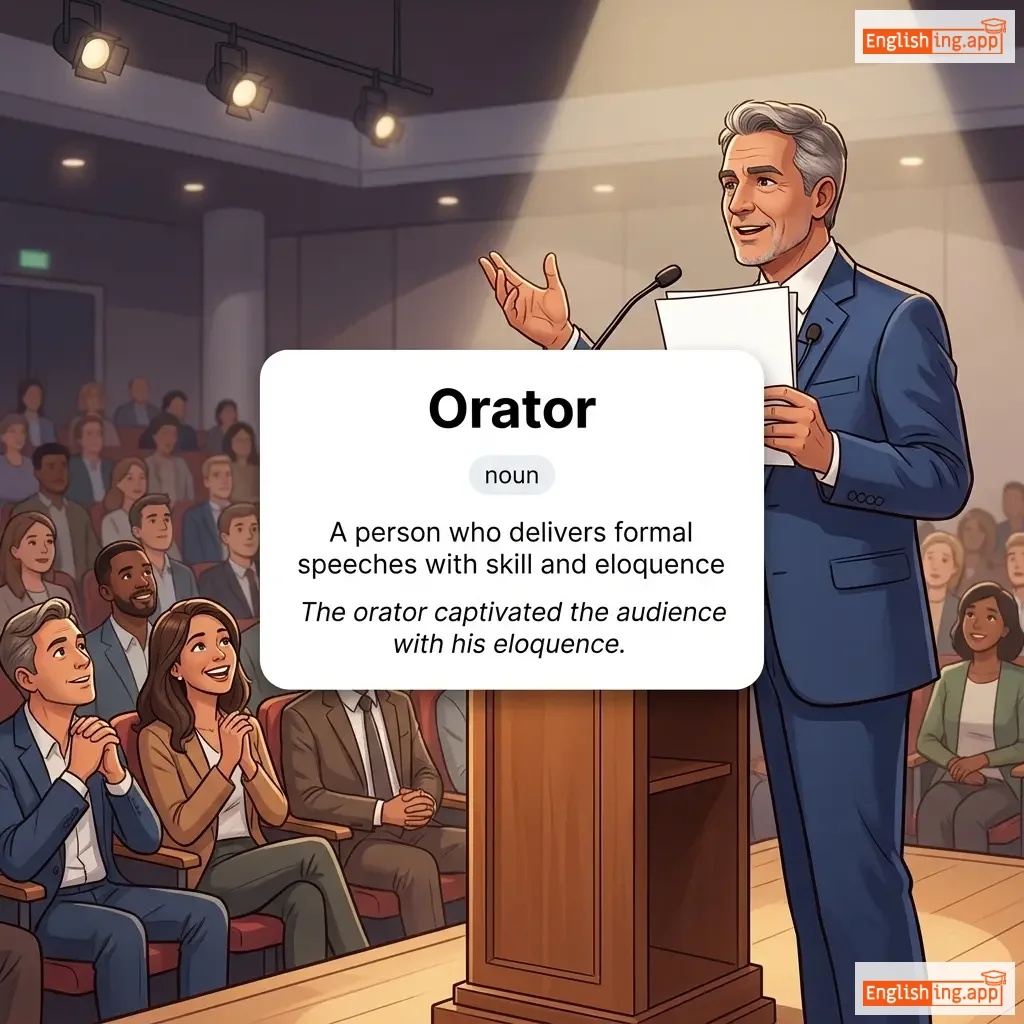
Orator definition card — visual illustration of the meaning
noun
/ˈɔːrətər/
演説者 (enzetsusha)

A person who delivers formal speeches with skill and eloquence

"The orator captivated the audience with his eloquence."

"演説者はその雄弁で聴衆を魅了しました。" (Enzetsusha wa sono yūben de chōshū o miryō shimashita.)
noun
/ˌɔːrəˈtɔːri.oʊ/
宗教音楽作品 (shūkyō ongaku sakuhin)

A large-scale musical composition for orchestra, choir, and soloists, usually on a sacred theme, performed without costumes or scenery.

"Handel's 'Messiah' is one of the most famous oratorios ever written."
"ヘンデルの『メサイア』は最も有名なオラトリオの1つです。" (Henderu no 'Mesaiya' wa mottomo yūmei na oratorio no 1tsu desu.)
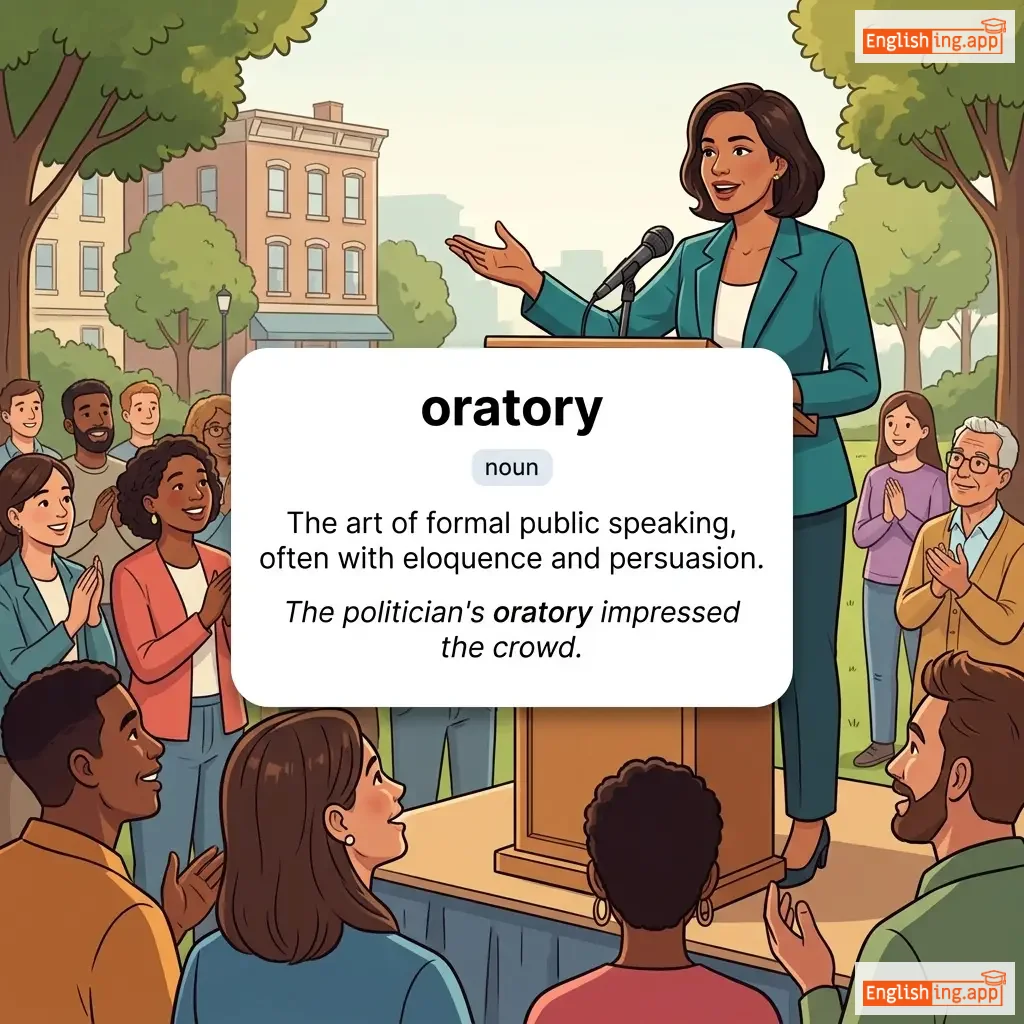
oratory definition card — visual illustration of the meaning
noun
/ˈɔːrəˌtɔːri/
雄弁術 (kyōbenshutsu)

The art of formal public speaking, often with eloquence and persuasion.

"The politician's oratory impressed the crowd."
"その政治家の雄弁術は群衆を感動させた。" (Sono seijika no kyōbenshutsu wa gunshū o kandō saseta.)
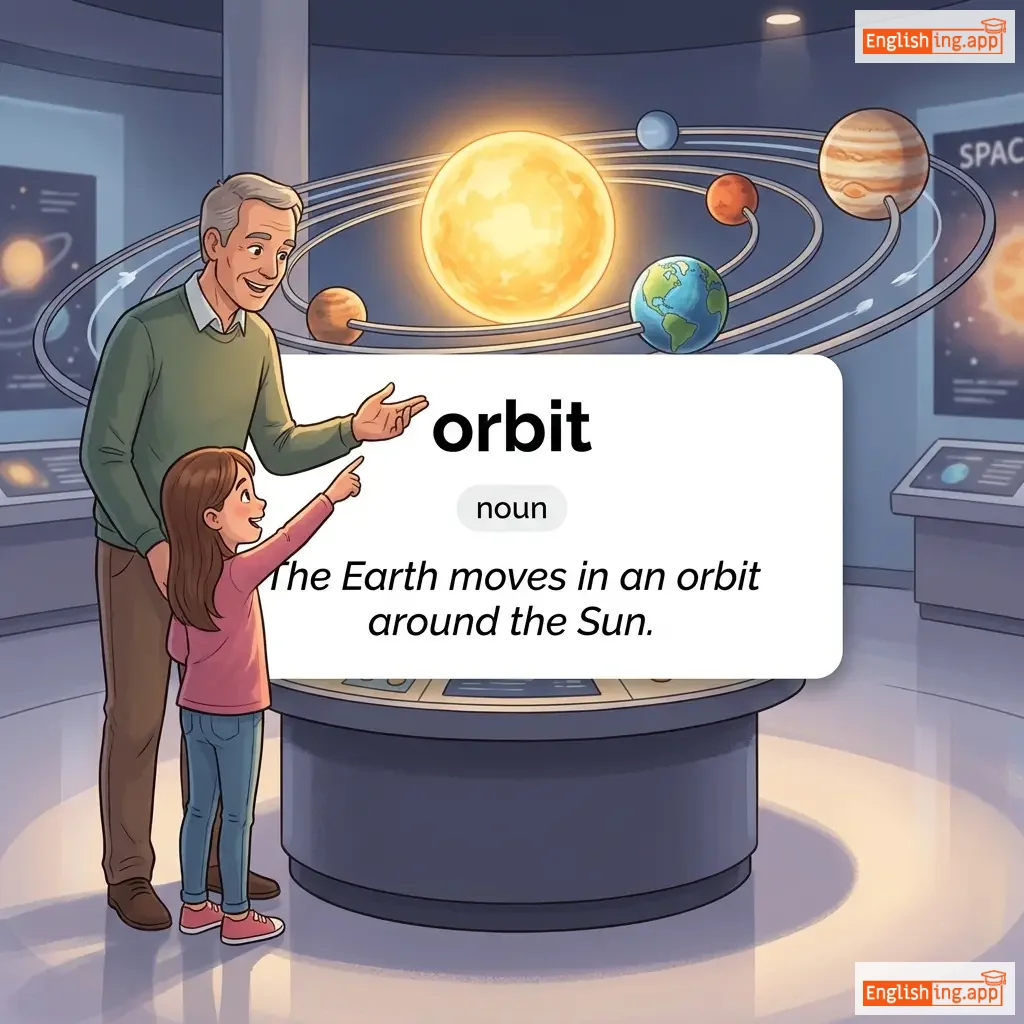
orbit definition card — visual illustration of the meaning
noun
/ˈɔːbɪt/
軌道 (kidou)

the curved path that a planet, satellite, or object follows around another body in space

"The Earth moves in an orbit around the Sun."
"地球は太陽の周りを軌道で回ります。" (Chikyuu wa taiyou no mawari o kidou de mawarimasu.)
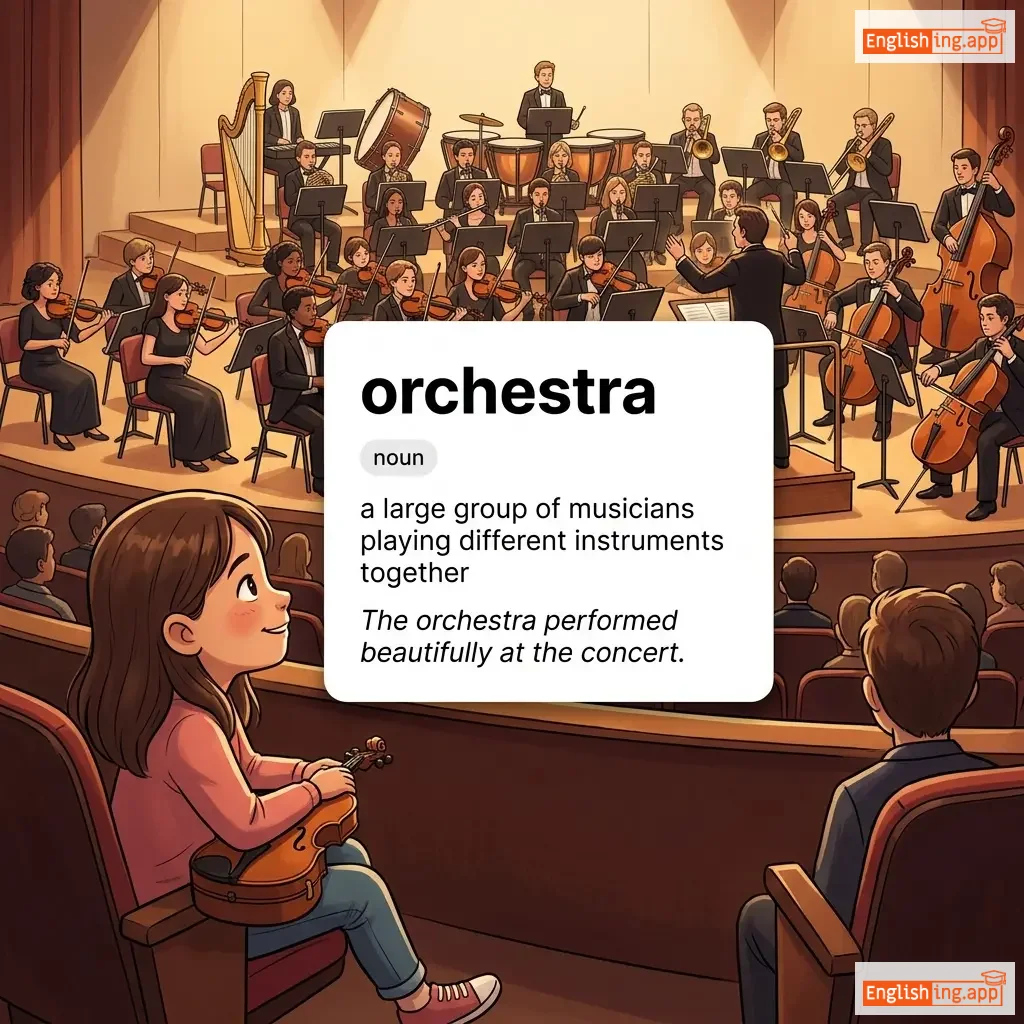
orchestra definition card — visual illustration of the meaning
noun
/ˈɔːkɪstrə/
オーケストラ (ōkesutora)

a large group of musicians playing different instruments together

"The orchestra performed beautifully at the concert."

"オーケストラはコンサートで素晴らしい演奏をしました。" (Ōkesutora wa konsāto de subarashī ensō o shimashita.)
adverb
/əˈrɪdʒɪnəli/
元々 (motomoto)

in the beginning, at first

"Originally, she wanted to be a doctor."

"元々、彼女は医者になりたかった。" (Motomoto, kanojo wa isha ni naritakatta.)
noun
/əbˈstɛtrɪks/
産科 (sanka)

The branch of medicine dealing with childbirth and care of women giving birth.

"She is studying obstetrics to become a specialist in childbirth."

"彼女は産科を学んで、出産専門医になろうとしている。" (Kanojo wa sanka o manande, shussan senmoni ni narou to shite iru.)
adjective
/ˈʌðər/
他の (hoka no)

used to refer to something different from the one already mentioned or known

"I don't want this one, I will take the other one."
"これを欲しくない、他のを取るつもりだ。" (Kore o hoshikunai, hoka no o toru tsumori da.)
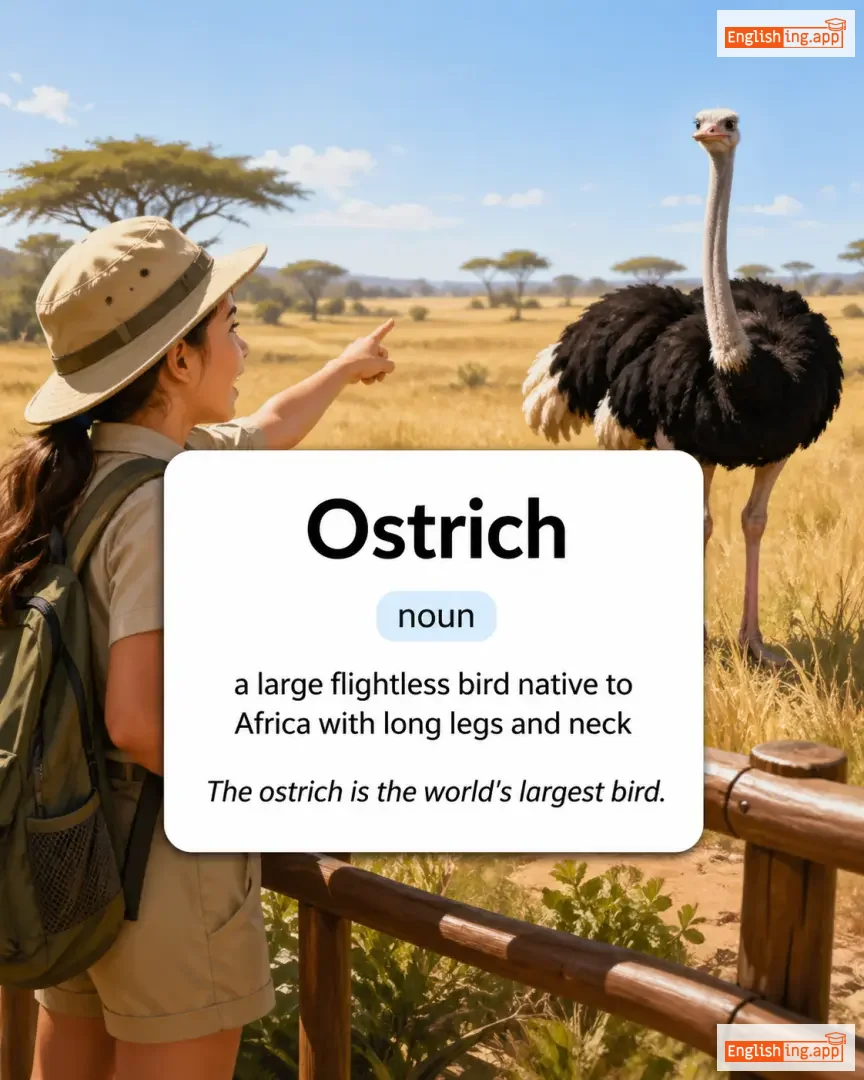
Ostrich definition card — visual illustration of the meaning
noun
/ˈɒs.trɪtʃ/
ダチョウ (dachou)

a large flightless bird native to Africa with long legs and neck

"The ostrich is the world's largest bird."
"ダチョウは世界最大の鳥です。" (dachou wa sekai saidai no tori desu)
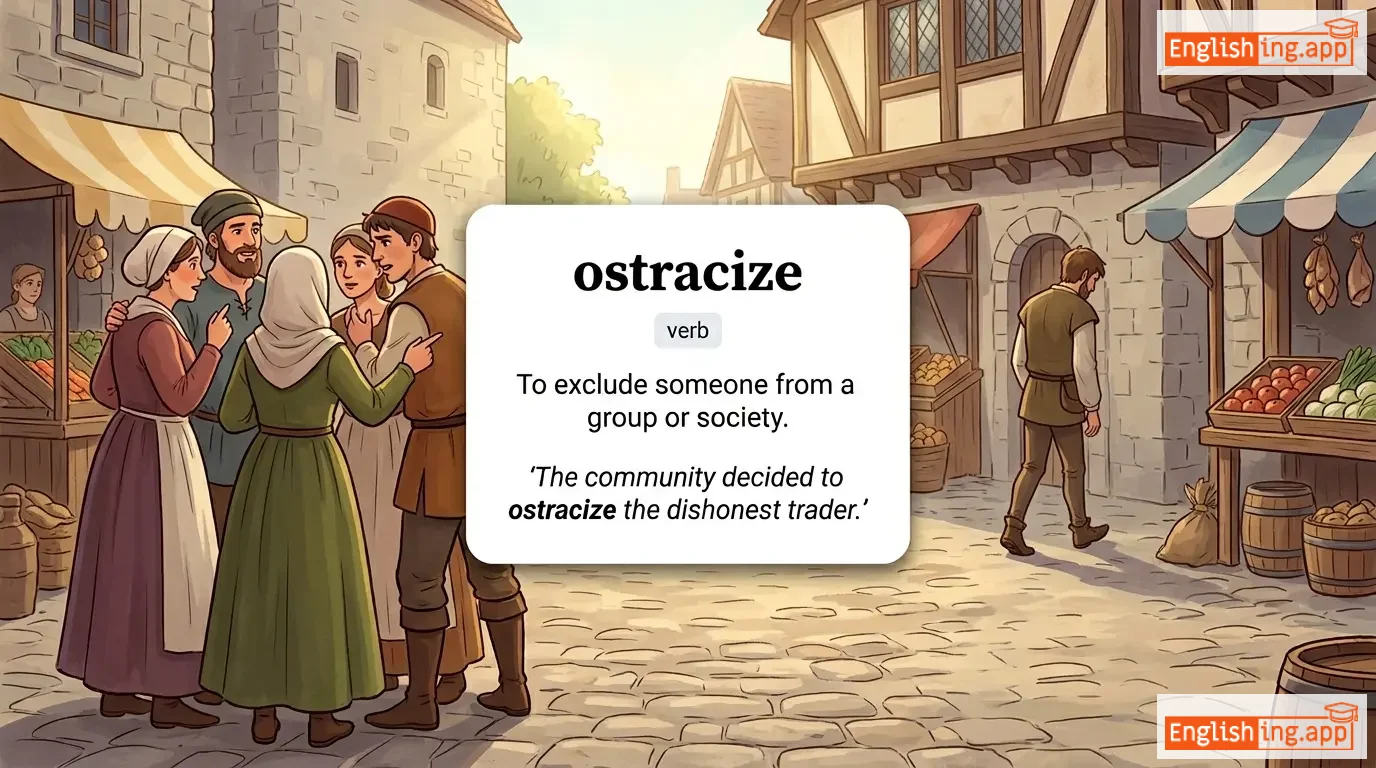
ostracize definition card — visual illustration of the meaning
verb
/ˈɒstrəsaɪz/
追放する (tsuihou suru)

To exclude someone from a group or society.

"The community decided to ostracize the dishonest trader."

"コミュニティは不正な商人を追放することを決定しました。" (Komyuniti wa fusei na shounin o tsuihou suru koto o kettei shimashita.)
noun
/ˈɒstrəsɪzəm/
追放 (tsuihou)

The act of excluding someone from a group or society.

"The student faced ostracism after breaking the rules."
"その学生は規則を破った後、追放に直面しました。" (Sono gakusei wa kisoku o yabutta ato, tsuihō ni chokumen shimashita.)
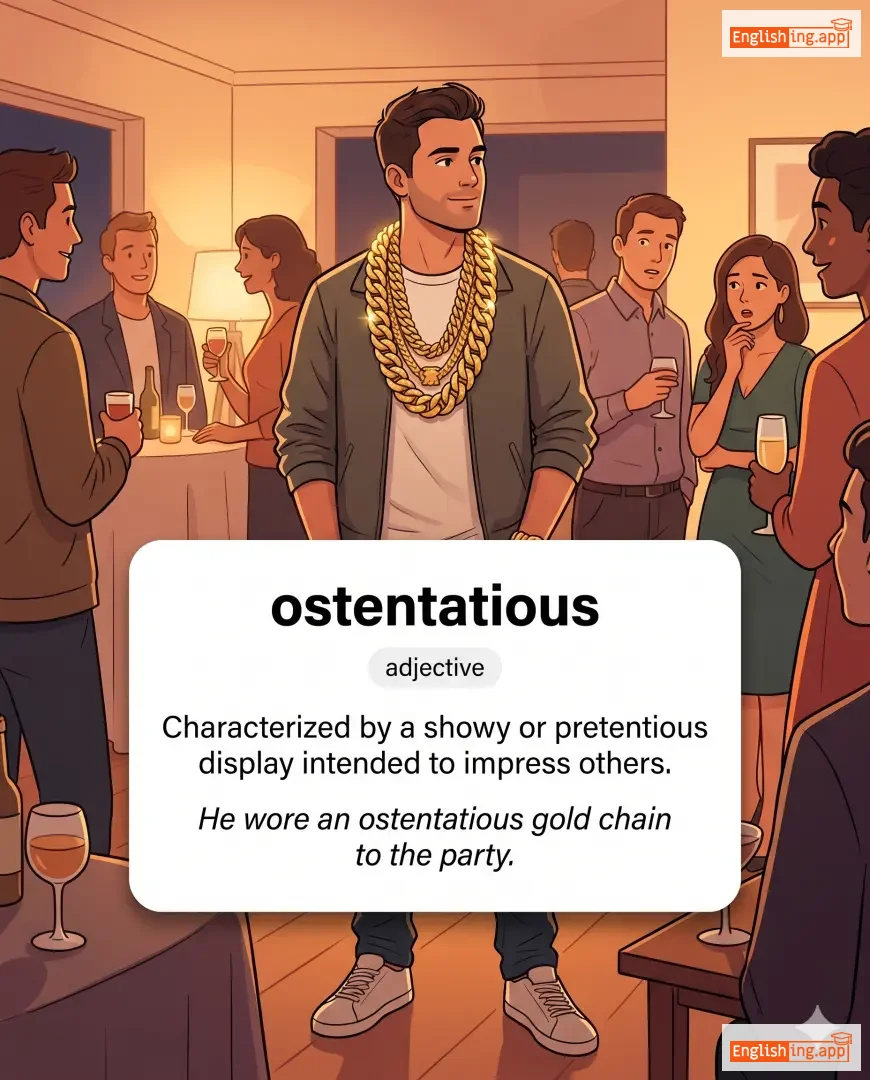
ostentatious definition card — visual illustration of the meaning
adjective
/ˌɒstɛnˈteɪʃəs/
見せびらかしの (misebirakashi no)

Characterized by a showy or pretentious display intended to impress others.

"He wore an ostentatious gold chain to the party."

"彼はパーティーで見せびらかしの金のチェーンをしていました。" (Kare wa pātī de misebirakashi no kin no chēn o shite imashita.)
noun
/ˌɒstɛnˈteɪʃən/
見せびらかし (misebirakashi)

excessive display of wealth or knowledge intended to attract admiration or envy

"The billionaire’s party was full of ostentation and luxury."

"億万長者のパーティーは、見せびらかしと贅沢で満ちていた。" (Okumanchouja no paatii wa, misebirakashi to zeitaku de michite ita.)
adjective
/ɒˈstɛnsɪv/
明示的 (meishiteki)

clearly demonstrative or pointing out; explicitly shown

"The teacher gave an ostensive example to clarify the concept."

"先生はその概念を明確にするために、明示的な例を示しました。" (Sensei wa sono gainen o meikaku ni suru tame ni, meishiteki na rei o shimeshimashita.)
adjective
/ɒˈstɛnsəbl/
見せかけの (misekake no)

stated or appearing to be true, but not necessarily so

"His ostensible reason for leaving was illness, but many doubted it."

"彼の出発の見せかけの理由は病気だったが、多くの人がそれを疑っていた。" (Kare no shuppatsu no misekake no riyū wa byōki datta ga, ōku no hito ga sore o utagatte ita.)
verb
/ˈɒsɪfaɪ/
骨化する (kotsuka suru)

to turn into bone or become rigid and inflexible

"With age, some tissues tend to ossify."

"年を重ねると、一部の組織が骨化する傾向があります。" (Toshi o kasaneru to, ichibu no soshiki ga kotsuka suru keiko ga arimasu.)
adjective
/ˈɑːsɪˌfaɪd/
骨に変わった、硬直した (hone ni kawatta, kōchoku shita)

Turned into bone or become rigid; unwilling to change.

"The company had an ossified management structure that resisted innovation."

"その会社は、革新に抵抗する硬直した管理構造を持っていました。" (Sono kaisha wa, kakushin ni teikō suru kōchoku shita kanri kōzō o motte imashita.)
adjective
/ˈɒsiəs/
骨のような (hone no you na)

consisting of or turned into bone; bony

"The fossil showed osseous structures of the ancient creature."

"化石は古代の生物の骨のような構造を示しました。" (Kaseki wa kodai no seibutsu no hone no you na kouzou wo shimeshimashita.)
verb
/ˈɑːskjʊleɪt/
キスする (kisu suru)

To kiss.

"They osculated under the mistletoe during the party."

"彼らはパーティーの時にヤドリギの下でキスをしました。" (Karera wa pātī no toki ni yadorigi no shita de kisu o shimashita.)
noun
/ˌɑːsɪˈleɪʃən/
振動 (shindou)

The movement back and forth at a regular speed.

"The oscillation of the pendulum controls the clock."
"振り子の振動が時計を制御します。" (Furiko no shindou ga tokei o seigyo shimasu.)
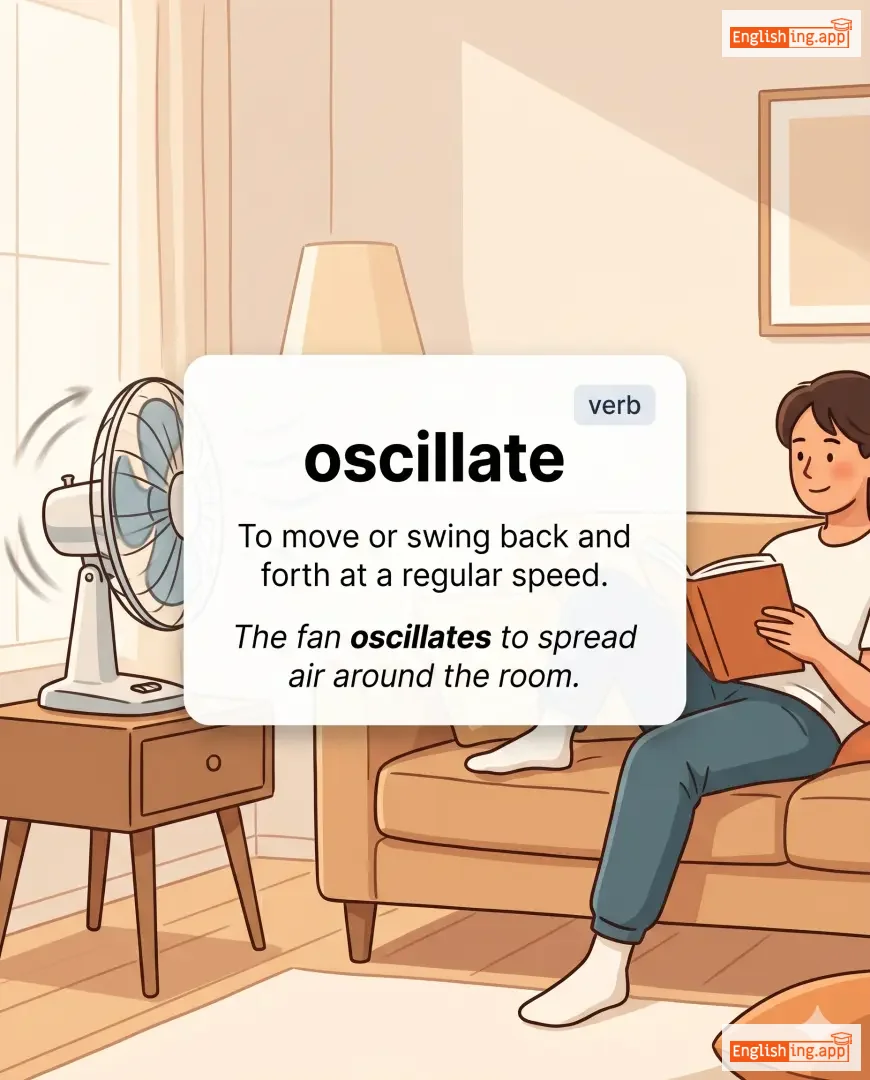
oscillate definition card — visual illustration of the meaning
verb
/ˈɑːsɪleɪt/
幸福 (koufuku)

To move or swing back and forth at a regular speed.

"The fan oscillates to spread air around the room."

"彼女は賞を受け取ったとき、喜びを隠せなかった。" (Kanojo wa shou wo uketotta toki, yorokobi wo kakusenakatta.)
adjective
/ˌɔːrθəˈpiːdɪk/
骨や筋肉の変形の修正に関連する (kotsu ya kinniku no henkei no shūsei ni kanren suru)

Relating to the correction of deformities of bones or muscles.

"She visited an orthopedic surgeon for her back pain."

"彼女は背中の痛みのために整形外科医に行った。" (Kanojo wa senaka no itami no tame ni seikeigeka-i ni itta.)
noun
/ɔːrˈθɑːɡrəfi/
正書法 (seishohou)

The conventional spelling system of a language.

"English orthography can be confusing for learners."

"英語の正書法は学習者にとって混乱を招くことがあります。" (Eigo no seishohou wa gakushū-sha ni totte konran o maneku koto ga arimasu.)
adjective
/ɔːrˈθɑːɡənl/
直交 (chokkō)

at right angles; independent or unrelated

"In mathematics, two vectors are orthogonal if their dot product is zero."

"数学では、2つのベクトルが直交している場合、そのドット積はゼロです。" (Sūgaku de wa, futatsu no bekutoru ga chokkō shite iru baai, sono dotto seki wa zero desu.)
noun
/ˈɔːrθədɑːksi/
正統 (seito)

traditional or generally accepted beliefs and practices

"The religious leader defended the orthodoxy of the faith."

"宗教指導者は信仰の正統性を守った。" (Shūkyō shidōsha wa shinkō no seitō-sei o mamotta.)
adjective
/ˈɔːrθədɑːks/

conforming to traditional beliefs or practices

"He comes from a very orthodox family."

noun
/ˈɔr.fən.ɪʒ/
孤児院 (kojiin)

an institution for the care and education of children who have lost their parents

"The charity built a new orphanage for homeless children."

"チャリティーはホームレスの子供たちのために新しい孤児院を建てました。" (Charitī wa hōmuresu no kodomotachi no tame ni atarashī kojiin o tatemashita.)
noun
/ˈɔr.fən/
孤児 (koji)

a child whose parents are dead; someone without protective support

"The orphan was adopted by a loving family."

"その孤児は愛情深い家族に養子として迎えられました。" (sono koji wa aijou fukai kazoku ni youshi toshite mukaeraremashita.)
adjective
/ˈɔːrəˌtʌnd/
豊かで明確な声 (yutaka de meikaku na koe)

full, rich, and clear in sound; pompous in style

"The actor's orotund voice filled the theater."

"俳優の豊かな声が劇場に響き渡った。" (Haiyū no yutaka na koe ga gekijō ni hibiki watatta.)
noun
/ˌɔːrnɪˈθɑːlədʒi/
鳥類学 (chōruigaku)

the scientific study of birds

"She pursued ornithology to understand the migration patterns of birds."

"彼女は鳥の移動パターンを理解するためにオルニソロジーを追求しました。" (Kanojo wa tori no idō pātern o rikai suru tame ni orunisorojī o tsuikyū shimashita.)
noun
/ˌɔːrnɪˈθɒlədʒɪst/
鳥類学者 (chōruigakusha)

a scientist who studies birds

"The ornithologist spent years studying migratory birds."

"そのオルニソロジストは渡り鳥を研究するために何年も費やしました。" (Sono orunisorojisuto wa wataridori o kenkyū suru tame ni nannen mo費やしました。)
adjective
/ˈɔːrnəri/
気難しい (kimuzukashī)

bad-tempered and combative; stubborn

"The ornery old man refused to leave his chair."

"その気難しい老人は椅子を離れようとしませんでした。" (Sono kimuzukashī rōjin wa isu o hanareyō to shimasen deshita.)
adjective
/ɔːˈneɪt/
華やかな (hanayakana)

elaborately or highly decorated

"The palace hall was filled with ornate furniture and paintings."

"宮殿のホールは華やかな家具と絵画でいっぱいだった。" (Kyuuden no hōru wa hanayakana kagu to kaiga de ippai datta.)
adjective
/ˌɔːrnəˈmɛntl/
装飾的な (shōshokuteki na)

Serving as decoration; decorative rather than functional.

"The garden was filled with ornamental plants."

"庭は装飾的な植物でいっぱいだった。" (Niwa wa shōshokuteki na shokubutsu de ippai datta.)
noun
/ˈɔːrnəmənt/
装飾品 (sōshokuhin)

A decorative object that adds beauty to something.

"The Christmas tree was decorated with colorful ornaments."

"クリスマスツリーはカラフルな装飾品で飾られていました。" (Kurisumasu tsurī wa karafuru na sōshokuhin de kazararete imashita.)
noun
/ˈɒrɪz(ə)n/
祈り (inori)

a prayer, especially a devout or formal one

"He whispered a quiet orison before going to sleep."

"寝る前に静かな祈りをささやいた。" (Neru mae ni shizukana inori wo sasayaita.)
verb
/əˈrɪdʒɪneɪt/
起源する (kigen suru)

to come into existence; to begin; to create or produce

"The tradition originated in ancient times."

"その伝統は古代の時代に起源を持っています。" (Sono dentō wa kodai no jidai ni kigen o motteimasu.)
noun
/ˈɔːrdɪnəns/
条例 (jōrei)

An authoritative rule, law, or decree issued by a city, town, or authority.

"The city council passed an ordinance banning smoking in public parks."

"市議会は公共公園での喫煙を禁じる条例を可決しました。" (Shigikai wa kōkyō kōen de no kitsuen o kinjiru jōrei o kaketsu shimashita.)
organic foods definition card — visual illustration of the meaning
noun
ɔːˈɡæn.ɪk fuːdz
オーガニック食品 (ooganikku shokuhin)

Food produced without the use of chemicals such as artificial pesticides, fertilizers, or other artificial agents.

"Organic foods are healthier than processed foods."

"オーガニック食品は加工食品よりも健康的です。" (Ooganikku shokuhin wa kakou shokuhin yori mo kenkou teki desu.)
organic farming definition card — visual illustration of the meaning
noun
ˈɔːr.ɡə.nɪk ˈfɑːr.mɪŋ
オーガニック農業 (ōganikku nōgyō)

Farming without chemical fertilizers and pesticides using natural methods.

"Organic farming reduces pollution and promotes healthier food."

"オーガニック農業は汚染を減らし、より健康的な食べ物を促進します。" (Ōganikku nōgyō wa osen o herashi, yori kenkō-teki na tabemono o sokushin shimasu.)
organic definition card — visual illustration of the meaning
adjective
/ɔːrˈɡænɪk/
オーガニック (ōganikku)

Relating to or derived from living matter; produced without artificial chemicals.

"They prefer to eat organic fruits and vegetables."

"彼らはオーガニックな果物と野菜を食べるのを好みます。" (Karera wa ōganikku na kudamono to yasai o taberu no o konomimasu.)
noun
/ˈɔːɡən/
臓器 (zōki)

a part of the body that performs a specific function

"The heart is an important organ in the human body."

"心臓は人間の体の重要な臓器です。" (Shinzō wa ningen no karada no jūyōna zōki desu.)
noun
/ˈɔːrdnəns/
軍需品 (gunjuhin)

Military supplies including weapons, ammunition, and combat equipment.

"The army stored ordnance in a secure facility outside the city."

"軍隊は都市外の安全な施設に軍需品を保管していた。" (Guntai wa toshigai no anzen na shisetsu ni gunjuhin o hokan shite ita.)
noun
/ˌɔːrdɪˈneɪʃən/
任命式 (ninmeishiki)

The ceremony of conferring holy orders or official religious authority.

"The church held a special service for the ordination of new priests."
"教会は新しい神父の任命のために特別なサービスを行いました。" (Kyōkai wa atarashī shinpu no ninmei no tame ni tokubetsu na sābisu o okonaimashita.)
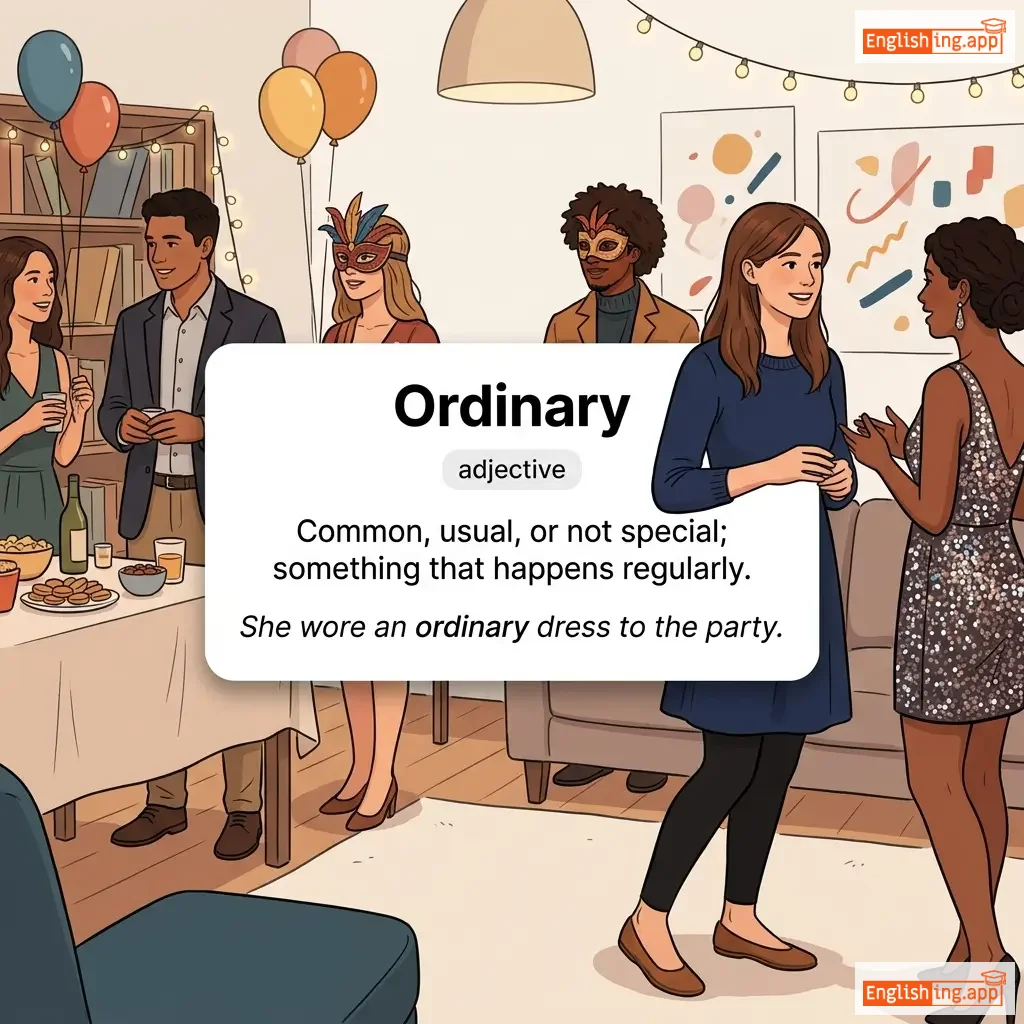
Ordinary definition card — visual illustration of the meaning
adjective
/ˈɔːrdəˌnɛri/
普通の (futsuu no)

Common, usual, or not special; something that happens regularly.

"She wore an ordinary dress to the party."
"彼女はパーティーに普通のドレスを着て行った。" (Kanojo wa paatii ni futsuu no doresu o kite itta.)
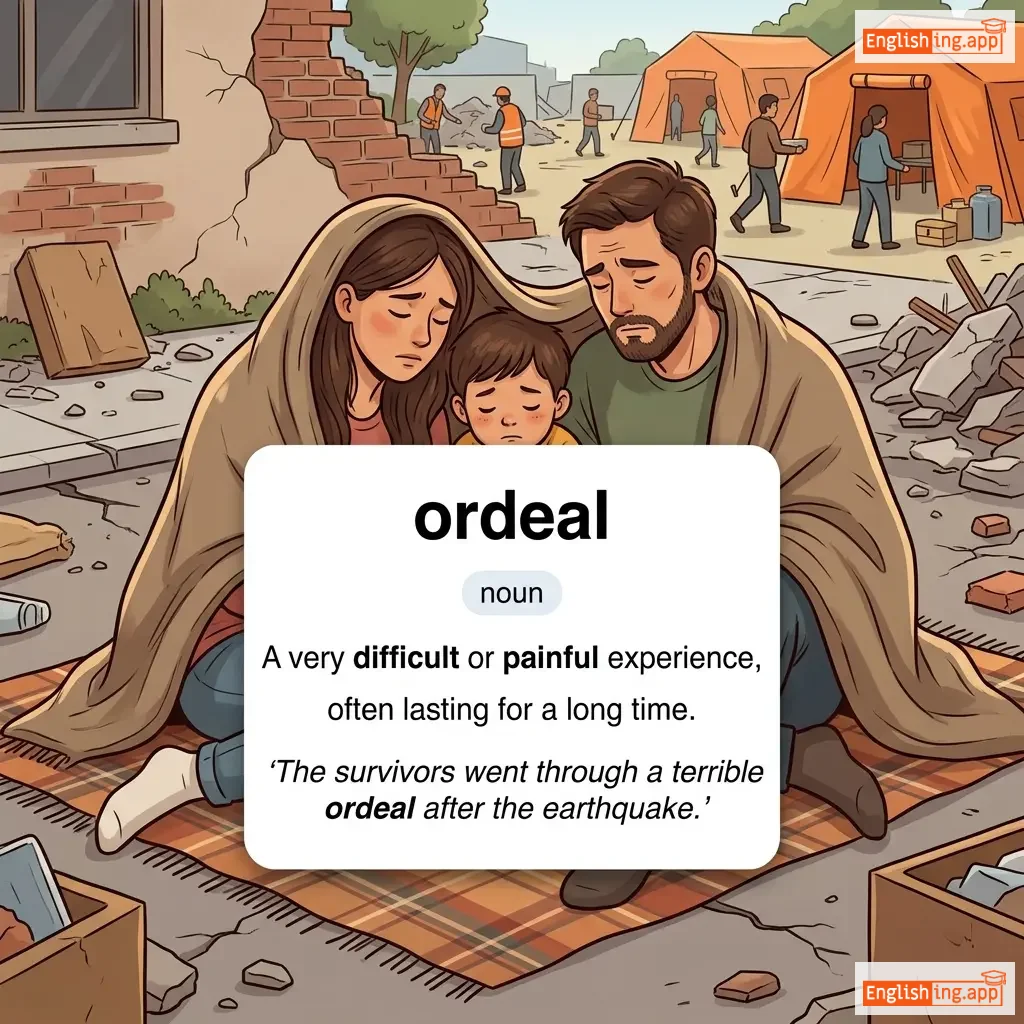
ordeal definition card — visual illustration of the meaning
noun
/ɔːrˈdiːl/
試練 (shiren)

A very difficult or painful experience, often lasting for a long time.

"The survivors went through a terrible ordeal after the earthquake."

"地震後、生存者は恐ろしい試練を乗り越えました。" (Jishin go, seizon-sha wa osoroshī shiren o norikoemashita.)
orchestrated definition card — visual illustration of the meaning
verb
ˈɔː.kɪ.streɪ.tɪd
精巧に組織された (seikou ni soshiki sareta)

Planned or coordinated carefully and deliberately.

"The attacks were orchestrated with precision."
"攻撃は正確に組織されていた。" (Kougeki wa seikaku ni soshiki sarete ita.)
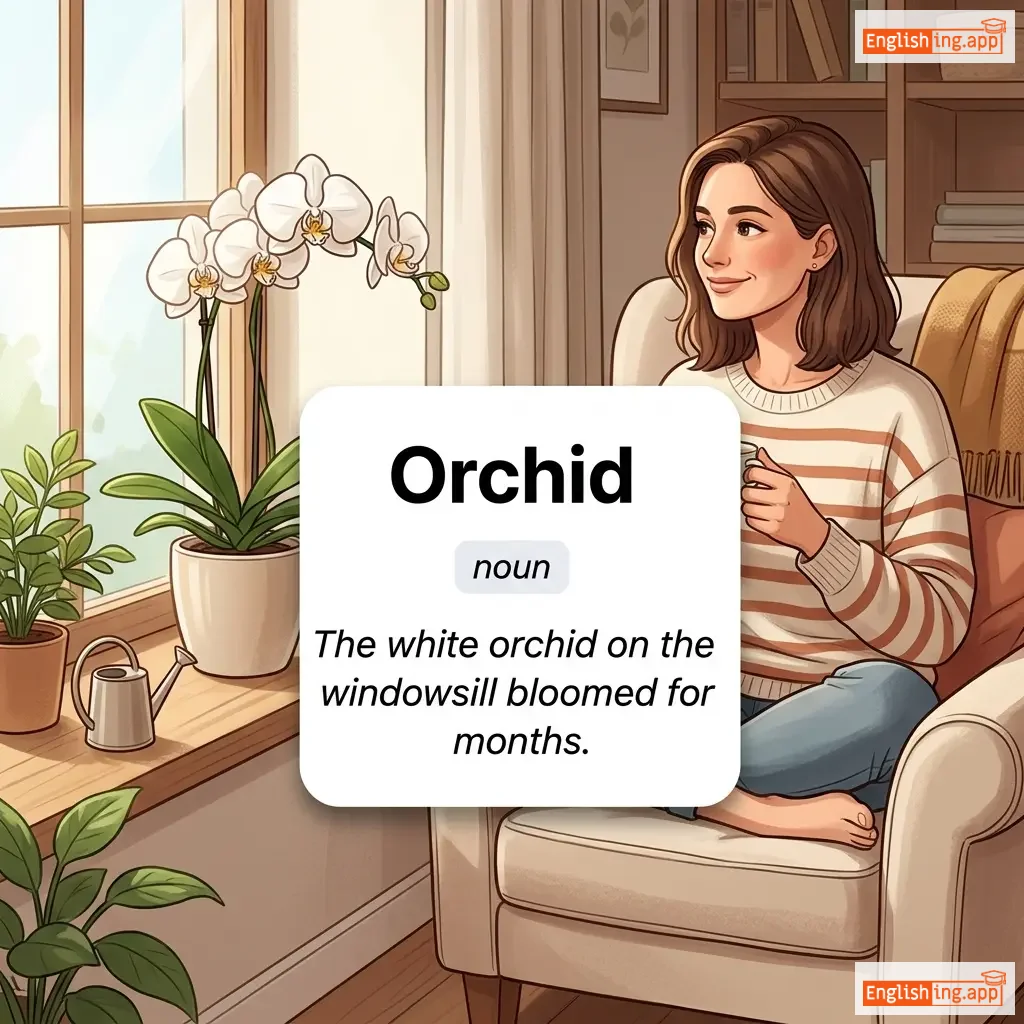
Orchid definition card — visual illustration of the meaning
noun
/ˈɔːrkɪd/
オーキッド (ookiddo)

a diverse family of flowering plants known for their exotic and often fragrant flowers

"The white orchid on the windowsill bloomed for months."

"窓辺の白いオーキッドは何ヶ月も咲き続けました。" (Madobe no shiroi ookiddo wa nan-kagetsu mo sakitsudzukemashita.)
verb
/ɔːrˈdeɪn/

To officially make someone a priest or minister; to decree or order something officially.

"The bishop will ordain three new priests this Sunday."

adjective
/ˈɔː.də.li/
整然とした; 系統的な; 平和的な (orderli)

well-organized; systematic; peaceful

"Please keep your desk orderly and clean."

"デスクを整然とした状態できれいに保ってください。" (Desuku o seiri sareta jōtai de kirei ni tamotte kudasai.)