語彙集

英単語辞書 | 単語の意味、定義、例文

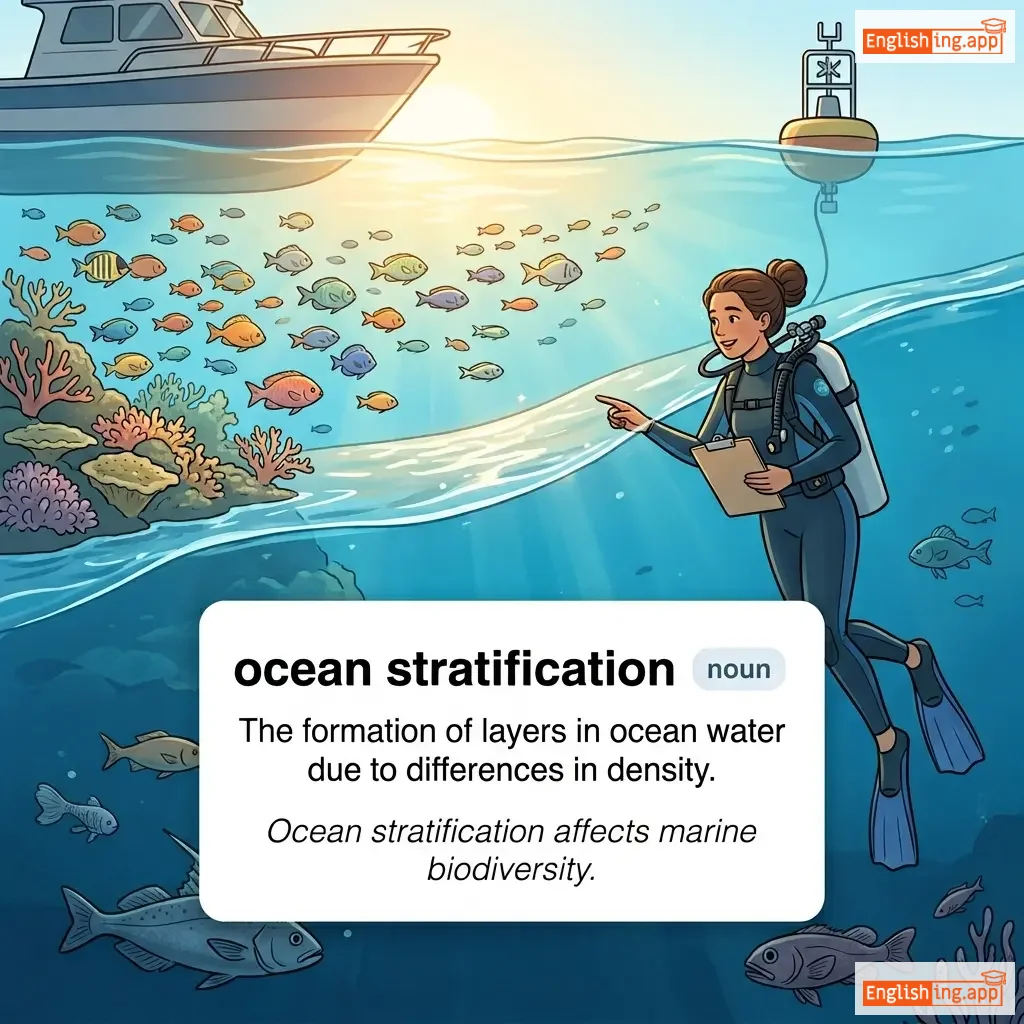
ocean stratification definition card — visual illustration of the meaning
noun
ˈoʊʃən ˌstrætɪfɪˈkeɪʃən
海洋の成層 (kaiyō no seisō)

The formation of layers in ocean water due to differences in density.

"Ocean stratification affects marine biodiversity."

"オーシャンストラティフィケーションは海洋生物多様性に影響を与えます。" (Ōshan sutoratifikēshon wa kaiyō seibutsu tayōsei ni eikyō o ataemasu.)
noun
/ˈɒktəɡən/
八角形 (hakkakukei)

A polygon with eight sides and eight angles.

"The stop sign is shaped like an octagon."

"ストップサインは八角形をしています。" (Sutoppu sain wa hakkakukei wo shiteimasu.)
noun
/ˈɒktɪv/

A series of eight musical notes, or the interval between one musical pitch and another with double its frequency.

"The singer's voice could easily reach the higher octave."

noun
/ɒkˈteɪvoʊ/
オクターヴォ (紙を8つに折りたたんで作られた本のサイズ) (okutāvo)

A size of book page resulting from folding a sheet of paper into eight leaves (sixteen pages).

"The old library contained rare octavo editions of Shakespeare."

"古い図書館にはシェイクスピアの珍しいオクターヴォ版がありました。" (Furui toshokan ni wa Sheikusupia no mezurashī okutāvo-ban ga arimashita.)
noun
/ɒkˈtoʊbər/
10月 (juugatsu)

the tenth month of the year in the Gregorian calendar

"The weather becomes cooler in October."

"10月になると天気が涼しくなります。" (juugatsu ni naru to tenki ga suzushiku narimasu)
noun
/ˌɒktədʒəˈnɛəriən/
80歳代の人 (80-sai dai no hito)

A person who is between 80 and 89 years old.

"The octogenarian still jogs every morning to stay healthy."

"そのオクトジェネリアンは毎朝健康を維持するためにジョギングをしています。" (Sono okutojenerian wa mai asa kenkou o iji suru tame ni jogingu o shiteimasu.)
adjective
/ˈɒkjʊlər/
眼科の (ganka no)

Relating to the eye or vision.

"The patient was referred to a specialist for ocular treatment."

"患者は眼科専門医に紹介されました。" (Kanja wa ganka senmon'i ni shōkai saremashita.)
noun
/ˈɒkjʊlɪst/
眼科医 (genka-i)

An old-fashioned term for an eye doctor or ophthalmologist.

"The village oculist was known for treating various eye diseases."

"村のオキュリストは、さまざまな目の病気を治療することで知られていました。" (Mura no okyuristo wa, samazama na me no byōki o chiryō suru koto de shirarete imashita.)
adjective
/ɒd/
奇妙 (kimyou)

different from what is usual or expected; strange or peculiar

"He has some odd habits that surprise everyone."

"彼は皆を驚かせる奇妙な習慣を持っています。" (Kare wa mina wo odokaseru kimyou na shuukan wo motteimasu.)
noun
/ˈɒdəti/
奇異 (kii)

Something strange or unusual.

"The bright pink building was an oddity in the small town."

"その明るいピンクの建物は小さな町での奇異な存在でした。" (Sono akarui pinku no tatemono wa chiisana machi de no kii na sonzai deshita.)
adverb
/ˈɒdli/
奇妙に (kimyouni)

in a strange or unusual way; unexpectedly

"Oddly, he didn’t seem upset by the bad news."

"奇妙に、彼は悪い知らせにも動揺していなかった。" (Kimyouni, kare wa warui shiraseni mo douyou shite inakatta)
noun
/ɒdz/
確率 (kakuritsu)

the likelihood or probability of something happening; chances for or against something

"The odds of winning the lottery are very low."

"宝くじに当選する確率は非常に低いです。" (Takarakuji ni tousen suru kakuritsu wa hijou ni hikui desu.)
noun
/oʊd/
オード (ōdo)

a lyrical poem, often expressing praise or strong emotions

"The poet wrote an ode to the beauty of nature."

"詩人は自然の美に対するオードを書いた。" (Shijin wa shizen no bi ni taisuru ōdo o kaita.)
adjective
/ˈoʊdiəs/
忌まわしい (imawashii)

extremely unpleasant or repulsive

"The dictator was remembered for his odious crimes."

"その独裁者は彼の忌まわしい犯罪で記憶されました。" (Sono dokusaisha wa kare no imawashii hanzai de kioku saremashita.)
noun
/ˈoʊdiəm/
嫌悪 (ken'o)

general or widespread hatred or disgust directed toward someone as a result of their actions

"The scandal brought public odium on the corrupt minister."

"スキャンダルは腐敗した大臣に対する公衆の嫌悪を引き起こした。" (Sukyandaru wa fuhai shita daijin ni taisuru kōshū no ken'o o hikiokoshita.)
adjective
/ˌoʊdəˈrɪfərəs/
芳香のある (hōkō no aru)

having or giving off a smell, especially a strong or pleasant one

"The garden was filled with odoriferous flowers."

"庭は芳香のある花でいっぱいでした。" (Niwa wa hōkō no aru hana de ippai deshita.)
adjective
/ˈoʊdərəs/
臭い (nikui)

having or giving off a smell, often unpleasant

"The odorous garbage had to be taken out immediately."

"その臭いゴミはすぐに出さなければならなかった。" (Sono nikui gomi wa sugu ni dasanakereba naranakatta.)
noun
/ˈoʊ.dər/
臭い (nikui)

a distinctive smell, especially an unpleasant one

"The odour of fresh bread filled the kitchen."

"新鮮なパンの臭いがキッチンに広がった。" (Shinsen na pan no nikui ga kicchin ni hirogatta.)
odyssey definition card — visual illustration of the meaning
noun
/ˈɑːdəsi/
長い旅 (nagai tabi)

a long, adventurous journey; a series of experiences

"Her career has been an odyssey of challenges and achievements."

"彼女のキャリアは挑戦と成果の長い旅でした。" (Kanojo no kyaria wa chōsen to seika no nagai tabi deshita.)
preposition
/ʌv/
(no)

expressing the relationship between a part and a whole

"The book is on the table, in front of the window."

"本はテーブルの上にあり、窓の前にあります。" (Hon wa tēburu no ue ni ari, mado no mae ni arimasu.)
adverb
/ɔːf/
オフ (ofu)

away from a place, position, or time; not functioning

"He turned off the light before leaving the room."

"彼は部屋を出る前に電気をオフにしました。" (Kare wa heya wo deru mae ni denki wo ofu ni shimashita.)
adjective
/ˌɔːfˈkiː/
外れた音 (hazureta oto)

out of tune; not in accordance with expected standards

"The singer was slightly off-key during the performance."

"歌手はパフォーマンス中に少し外れた音だった。" (Kashu wa pafōmansu chū ni sukoshi hazureta oto datta.)
noun
/ˈɔːfəl/
内臓 (naizou)

the internal organs and entrails of an animal used as food; waste parts

"The butcher prepared sausages using pork offal."

"肉屋は豚の臓物を使ってソーセージを作った。" (Nikuya wa buta no zōmotsu o tsukatte sōsēji o tsukutta.)
adjective
/ˈɒf.biːt/
風変わり (fūgawari)

Unusual, unconventional, or different from the norm.

"She has a very offbeat sense of humor."

"彼女はとても風変わりなユーモアを持っています。" (kanojo wa totemo fūgawari na yūmoa o motte imasu.)
noun
/əˈfens/
違反; 犯罪 (ihan; hanzai)

a breach of law or rule; an annoyance or resentment

"Stealing is a serious offence punishable by law."

"窃盗は法律で罰せられる重大な違反です。" (Settō wa hōritsu de bassareru jūdaina ihan desu.)
verb
/əˈfɛnd/
侮辱する (bujoku suru)

to cause someone to feel upset, insulted, or annoyed

"She didn’t mean to offend anyone with her remarks."

"彼女は自分のコメントで誰かを怒らせるつもりはなかった。" (Kanojo wa jibun no komento de dareka o okoraseru tsumori wa nakatta.)
noun
/əˈfɛndər/
犯罪者 (hanzai-sha)

a person who commits a crime or does something wrong

"The police caught the offender quickly."

"警察はすぐに犯罪者を捕まえました。" (Keisatsu wa sugu ni hanzai-sha o tsukamaemashita.)
noun
/əˈfɛns/
犯罪 (hanzai)

an illegal act; a crime

"The offense was committed in broad daylight."

"その罪は昼間に犯されました。" (Sono zai wa hiruma ni okasaremashita.)
adjective
/əˈfɛnsɪv/
攻撃的 (kougekiteki)

Causing hurt, anger, or annoyance; also relating to attacking in sports or war.

"His offensive remarks upset everyone at the meeting."

"彼の攻撃的な発言は、会議にいた全員を不快にさせました。" (Kare no kougekiteki na hatsugen wa, kaigi ni ita zen'in o fukai ni sasemashita.)
offer definition card — visual illustration of the meaning
verb
/ˈɔːfər/
提供する (teikyō suru)

to present or give something to someone

"She offered him a gift for his birthday."

"彼女は彼に誕生日のためにプレゼントを提供した。" (Kanojo wa kare ni tanjōbi no tame ni purezento o teikyō shita.)
noun
/ˈɒfərɪŋ/
オファリング (ofaringu)

something that is given, especially as a gift or contribution

"The company’s latest offering is an eco-friendly car."

"会社の最新のオファリングは、エコフレンドリーな車です。" (Kaisha no saishin no ofaringu wa, ekofurendorī na kuruma desu.)
noun
/ˈɒfərtɔːri/
奉納 (hounou)

The part of a religious service when offerings are collected; the offering itself.

"The offertory was taken during the Sunday service."

"日曜日の礼拝中に奉納が取られました。" (Nichiyoubi no reihai chuu ni hounou ga toraremashita.)
adjective/adverb
/ˌɒfˈhænd/
軽率 (keisotsu)

Without previous thought or preparation; casual and sometimes dismissive.

"She gave an offhand reply to his serious question."

"彼女は彼の真剣な質問に対して、軽率な返答をした。" (Kanojo wa kare no shinken na shitsumon ni taishite, keisotsu na hentou wo shita.)
adjective
/ˈɒnɡəʊɪŋ/
進行中 (shinkouchuu)

continuing; still in progress

"The ongoing project will finish next month."

"進行中のプロジェクトは来月終了します。" (Shinkouchuu no purojekuto wa raigetsu shūryō shimasu.)
noun
/ˈoʊ.mən/
未来の良いまたは悪い運命の兆し (mirai no yoi matawa warui unmei no kizashi)

an event regarded as a sign of future good or bad luck

"Many people consider a black cat crossing your path a bad omen."

"多くの人々は、黒猫が道を横切ることを悪いオーメンだと考えています。" (ooku no hitobito wa, kuroneko ga michi wo yokogiru koto wo warui omen da to kangaeteimasu.)
adjective
/ˈɒmɪnəs/
不吉 (fukitsu)

Giving the impression that something bad or unpleasant is going to happen.

"Dark clouds gave an ominous sign of an approaching storm."

"暗い雲が近づく嵐の不吉な兆しを示した。" (Kurai kumo ga chikaduku arashi no fukitsu na kizashi o shimeshita.)
noun
/əˈmɪʃən/
省略 (shōryaku)

The act of leaving out or excluding something; something that has been left out.

"Her omission of important details caused confusion."
"彼女の重要な詳細の省略が混乱を引き起こした。" (Kanojo no jūyōna shōryaku ga konran o hikiokoshita.)
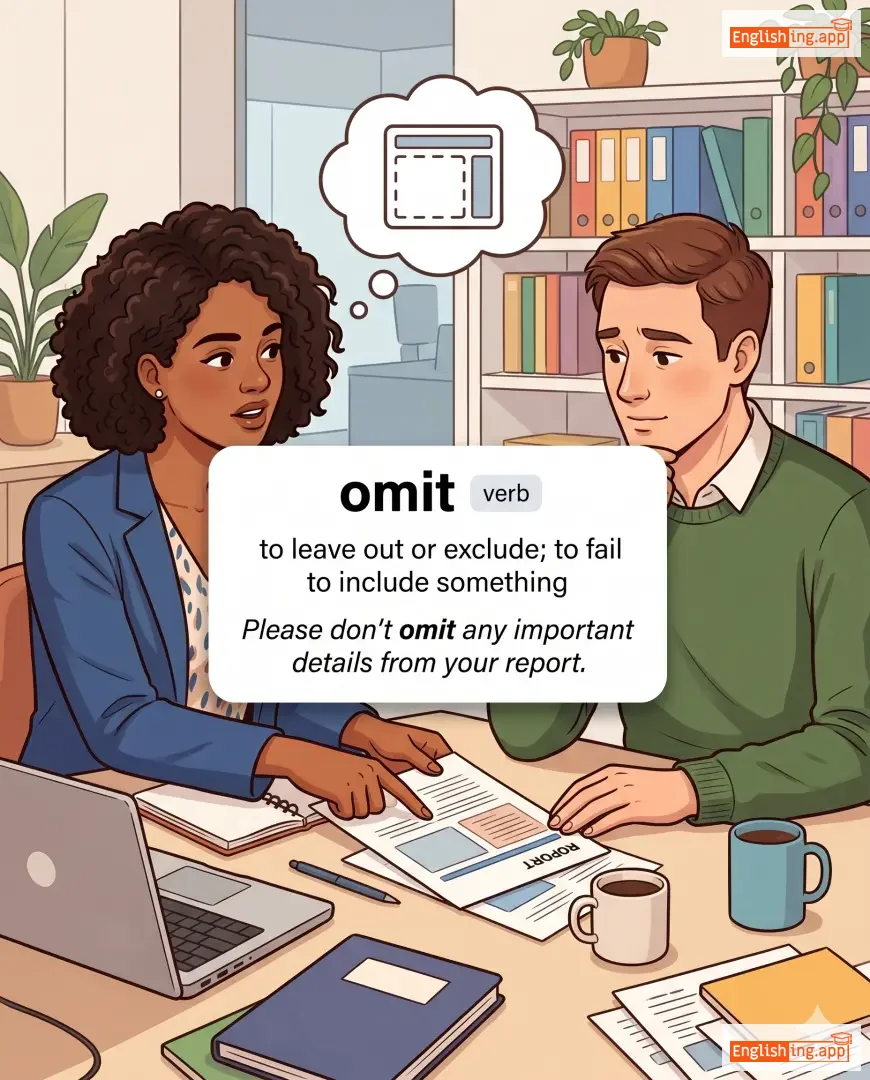
omit definition card — visual illustration of the meaning
verb
/oʊˈmɪt/
省略する (shōryaku suru)

to leave out or exclude; to fail to include something

"Please don't omit any important details from your report."

"レポートから重要な詳細を省略しないでください。" (Repōto kara jūyō na shōsai o shōryaku shinai de kudasai.)
noun
/ɒmˈnɪpətəns/
全能 (zennou)

The quality of having unlimited power or authority.

"Many religions describe God’s omnipotence as absolute."
"多くの宗教では神の全能は絶対的なものと説明されています。" (Ōku no shūkyō de wa kami no zennō wa zettaiteki na mono to setsumei sareteimasu.)
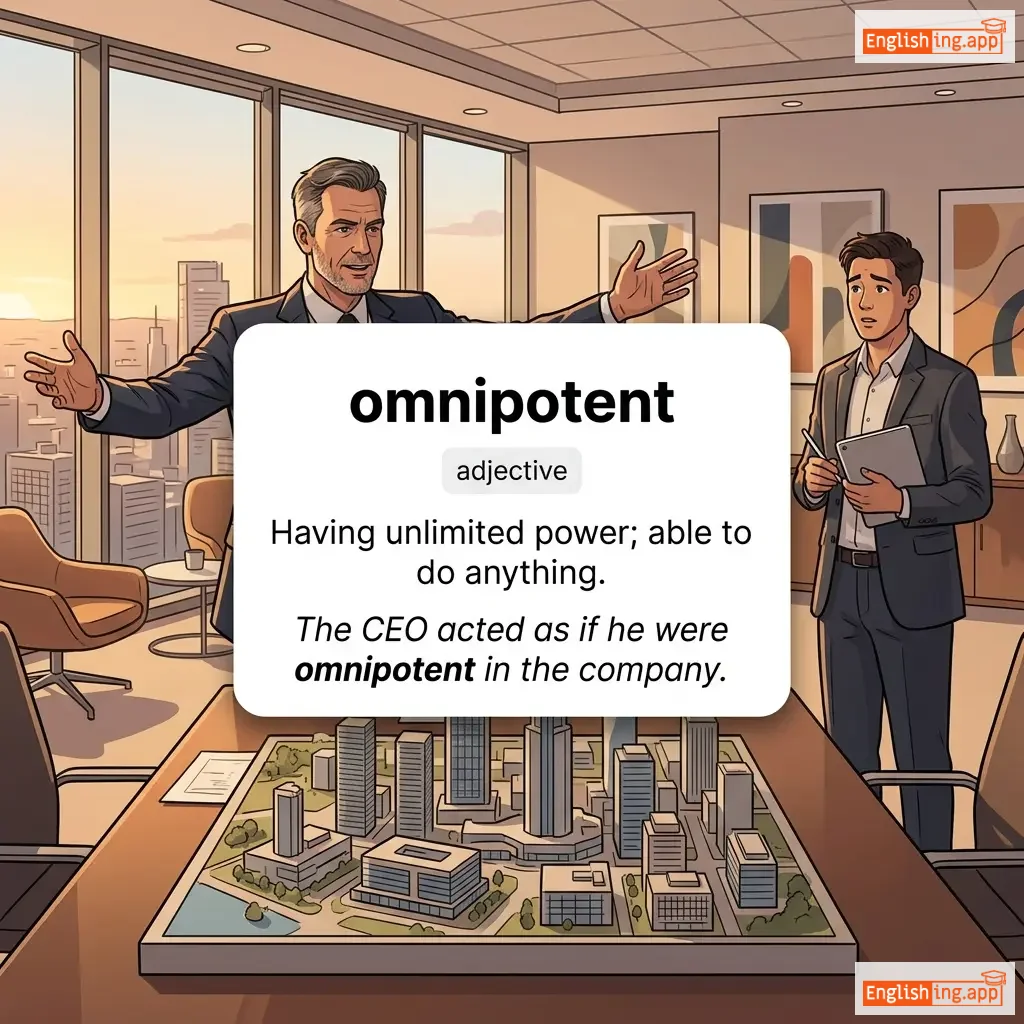
omnipotent definition card — visual illustration of the meaning
adjective
/ɒmˈnɪpətənt/
全能の (zen'nō no)

Having unlimited power; able to do anything.

"The CEO acted as if he were omnipotent in the company."
"CEOは会社で全能であるかのように振舞った。" (CEO wa kaisha de zennō de aru ka no yō ni furumatta.)
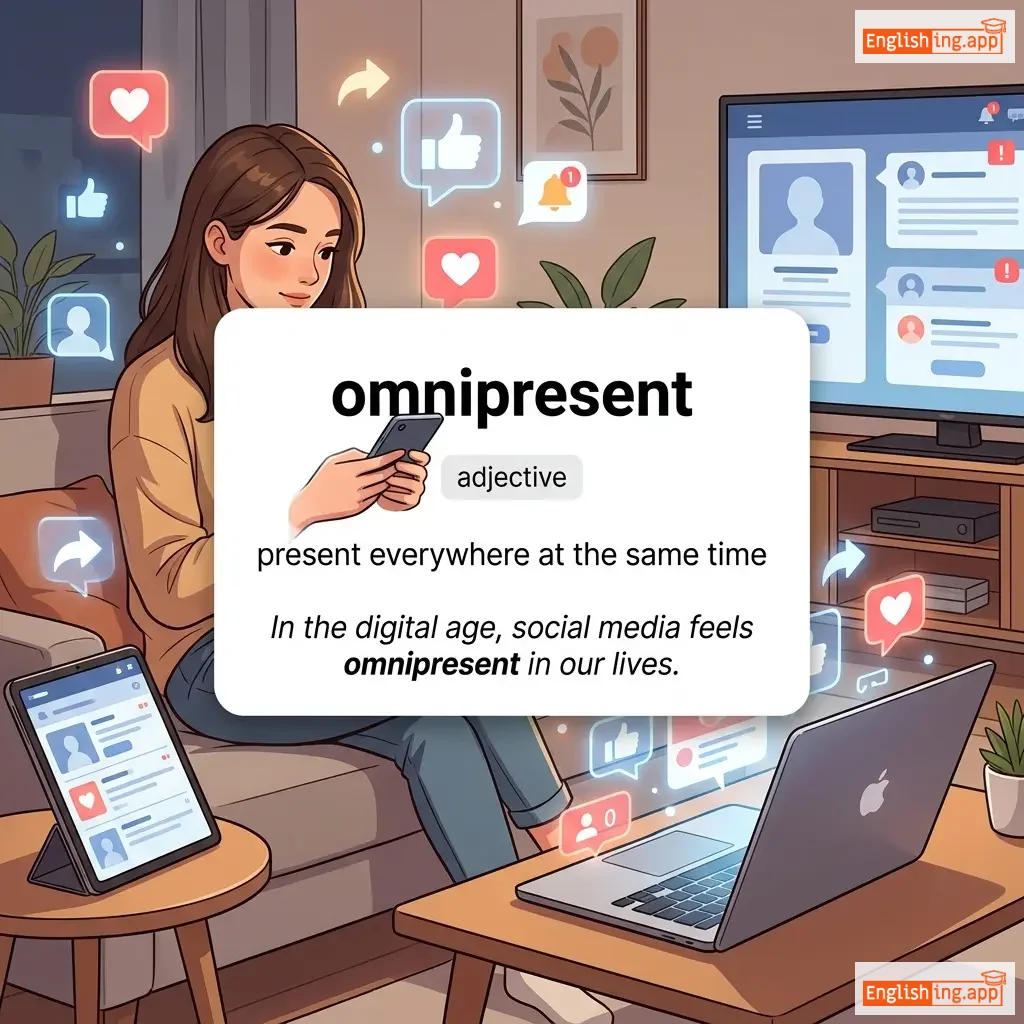
omnipresent definition card — visual illustration of the meaning
adjective
/ˌɒmnɪˈprɛzənt/
遍在する (hennzaisuru)

present everywhere at the same time

"In the digital age, social media feels omnipresent in our lives."

"デジタル時代では、ソーシャルメディアは私たちの生活の中で遍在するように感じます。" (Dejitaru jidai dewa, soosharu media wa watashitachi no seikatsu no naka de hennzai suru you ni kanjimasu.)
noun
/ɒmˈnɪʃəns/
全知 (zenchi)

the state of knowing everything

"The novel's narrator has an air of omniscience, revealing every character's thoughts."

"小説の語り手は全知の空気をまとい、すべてのキャラクターの考えを明らかにしている。" (shosetsu no katarite wa zenchi no kuuki o matoi, subete no kyarakuta no kangae o akirakani shite iru.)
adjective
/ɒmˈnɪʃənt/
全知 (zenchi)

having complete or unlimited knowledge and awareness

"Some religions describe God as omniscient and all-powerful."

"いくつかの宗教は神を全知かつ全能であると説明しています。" (Ikutsuka no shukyo wa kami o zenchi katsu zennou de aru to setsumei shiteimasu.)
adjective
/ɒmˈnɪvərəs/
雑食性 (zasshokusei)

eating both plants and animals

"Humans are generally considered omnivorous creatures."

"人間は一般的に雑食性の生き物と見なされます。" (Ningen wa ippanteki ni zasshokusei no ikimono to minasarerumasu.)
preposition
/ɒn/
(ue)

physically in contact with and supported by a surface

"The book is on the table."

"本はテーブルの上にあります。" (Hon wa tēburu no ue ni arimasu.)
adverb
/wʌns/
一度 (ichido)

on one occasion only; at a time in the past

"She visited Paris once last year."

"彼女は昨年一度パリを訪れました。" (Kanojo wa sakunen ichido Pari o otozuremashita.)
pronoun, noun, adjective
/wʌn/
(ichi)

the number equivalent to the sum of zero and one; a single person or thing

"Only one student answered the question."

"ただ一人の学生が質問に答えました。" (Tada hitori no gakusei ga shitsumon ni kotaemashita.)
noun
/wʌn θɜːd/
三分の一 (sanbun no ichi)

one part of something that is divided into three equal parts

"One-third of the class was absent today."
"クラスの三分の一が今日は欠席でした。" (Kurasu no sanbun no ichi ga kyō wa kesseki deshita.)
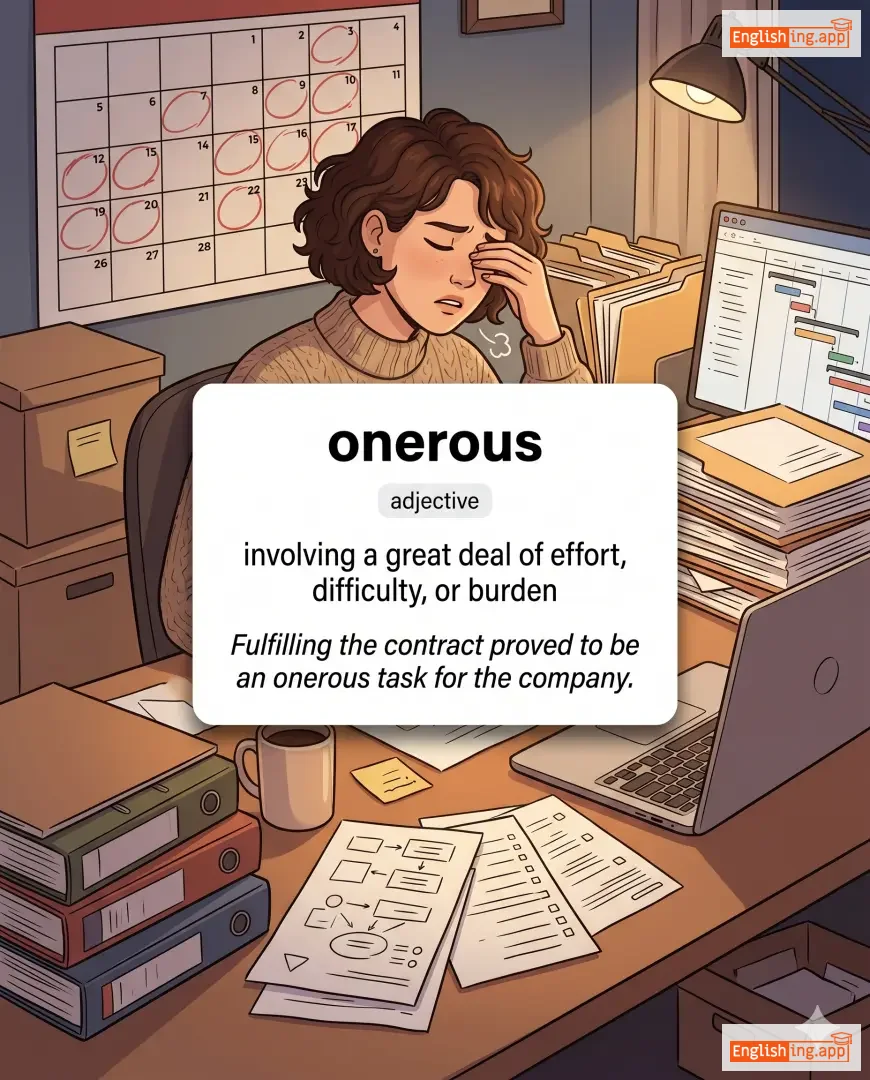
onerous definition card — visual illustration of the meaning
adjective
/ˈəʊnərəs/
重い (omoi)

involving a great deal of effort, difficulty, or burden

"Fulfilling the contract proved to be an onerous task for the company."

"契約を履行することは会社にとって負担の大きい仕事だと証明された。" (Keiyaku o rikō suru koto wa kaisha ni totte futan no ōkii shigoto da to shōmei sareta.)
verb
/uːz/
にじみ出る (nijimideru)

to slowly flow or leak out through small openings or pores

"Blood began to ooze from the small cut."

"血が小さな切り傷からにじみ出た。" (Chi ga chiisana kirikizu kara nijimideta.)