語彙集

英単語辞書 | 単語の意味、定義、例文

noun
/ˈmɔːrɡɪdʒ/
住宅ローン (jutaku rōn)

a legal agreement where a person borrows money to buy property and pays it back over time

"They applied for a mortgage to buy their new house."

"彼らは新しい家を買うために住宅ローンの申し込みをしました。" (Karera wa atarashī ie o kau tame ni jutaku rōn no mōshikomi o shimashita.)
noun
/mɔːrˈtɪʃən/
葬儀屋 (sōgiya)

a person whose job is to prepare dead bodies for burial or cremation and to arrange funerals

"The mortician prepared the body for the funeral service."

"葬儀屋は葬儀サービスのために遺体を準備しました。" (Sōgiya wa sōgi sābisu no tame ni itai o junbi shimashita.)
verb
/ˈmɔːrtɪfaɪ/
恥をかかせる (haji o kakaseru)

to cause someone to feel great embarrassment or shame

"She was mortified when she tripped on stage."

"彼女はステージでつまずいたとき、とても恥ずかしかった。" (Kanojo wa suteeji de tsumazuita toki, totemo hazukashikatta.)
🖼️

mosaic

noun
/moʊˈzeɪɪk/

A picture or pattern produced by arranging together small pieces of stone, tile, or glass.

"The church ceiling was decorated with a beautiful mosaic."

noun
/mɒsk/
モスク (mosuku)

A Muslim place of worship.

"They gathered at the mosque for the Friday prayer."
"彼らは金曜日の祈りのためにモスクに集まりました。" (Karera wa kin'yōbi no inori no tame ni mosuku ni atsumarimashita.)
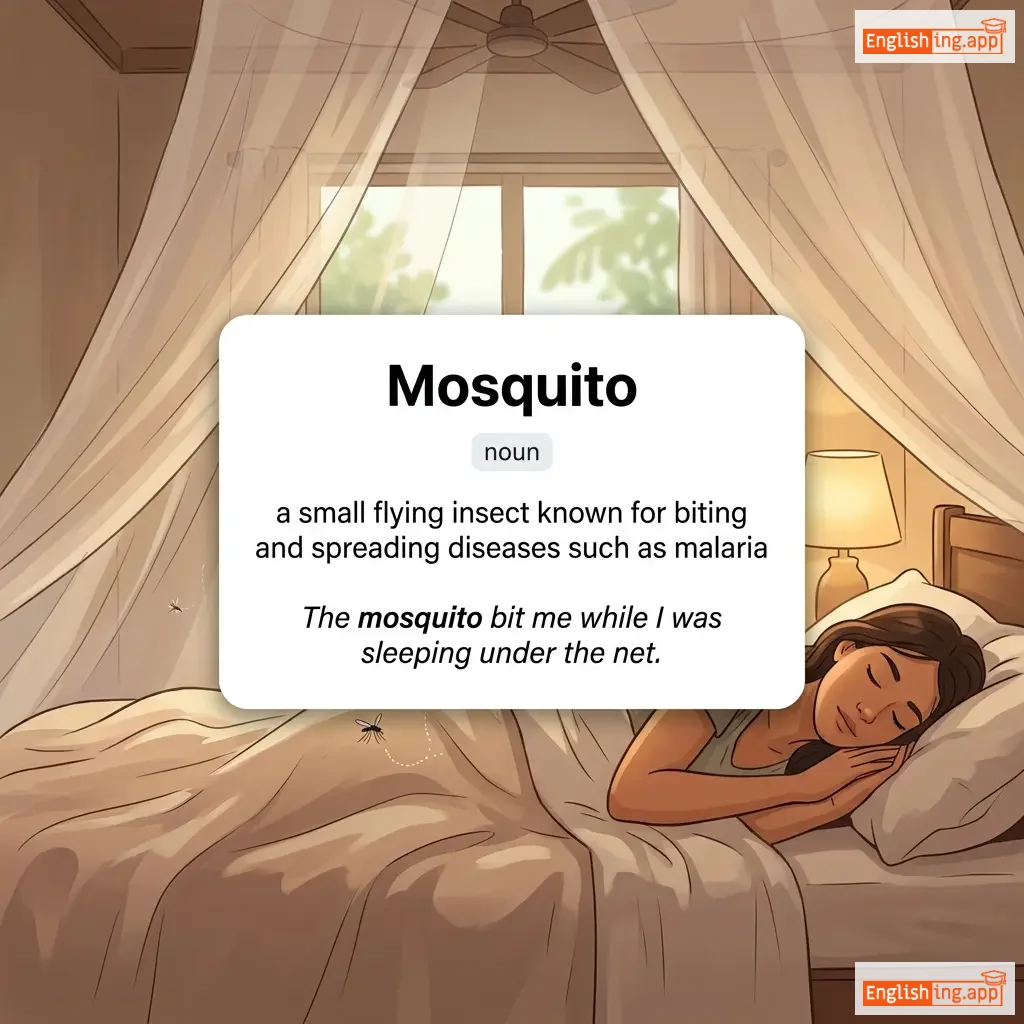
Mosquito definition card — visual illustration of the meaning
noun
/məˈskiːtəʊ/

a small flying insect known for biting and spreading diseases such as malaria

"The mosquito bit me while I was sleeping under the net."

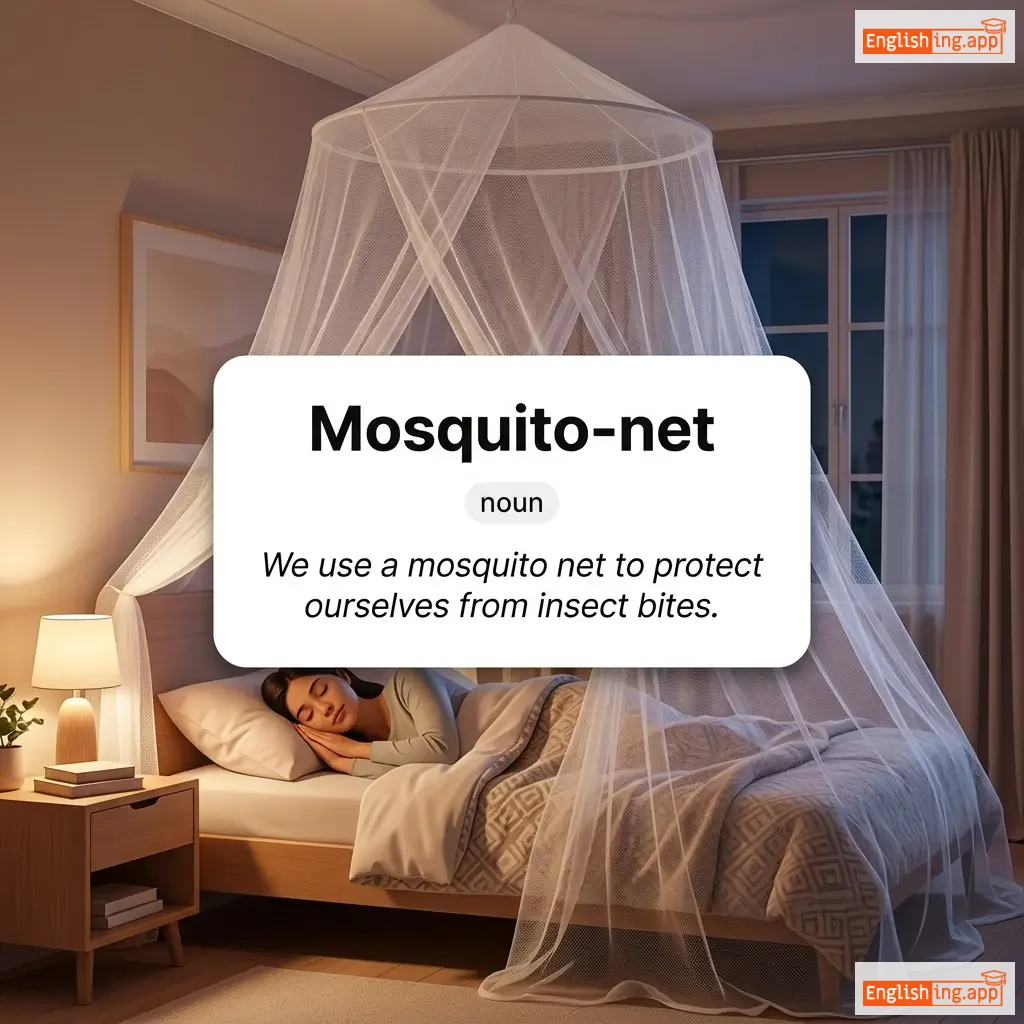
Mosquito-net definition card — visual illustration of the meaning
noun
/məˈskiː.toʊ net/
蚊帳 (kaya)

a fine mesh fabric used to cover beds or windows to keep mosquitoes and other insects out

"We use a mosquito net to protect ourselves from insect bites."

"私たちは虫刺されを防ぐために蚊帳を使います。" (watashitachi wa mushisasare o fusegu tame ni kaya o tsukaimasu.)
noun
/mɔːs/
(koke)

a small flowerless plant that grows in clumps in moist places

"Green moss covered the old stone wall."

"緑の苔が古い石の壁を覆っていました。" (midori no koke ga furui ishi no kabe o utte imashita.)
adjective
/ˈmɒsi/
苔むしている; 苔が生えている (kokemushiteiru; koke ga haeteiru)

covered with moss; having moss growing on it

"The old tree trunk was mossy and covered with green vegetation."

"古い木の幹は苔むしており、緑の植物で覆われていました。" (Furui ki no miki wa kokemushite ori, midori no shokubutsu de owareteimashita.)
adjective, adverb, pronoun
/moʊst/
ほとんど (hotondo)

the greatest in amount, degree, or number

"Most people like to relax on weekends."
"ほとんどの人々は週末にリラックスすることを好む。" (Hotondo no hitobito wa shūmatsu ni rirakkusu suru koto o konomu.)
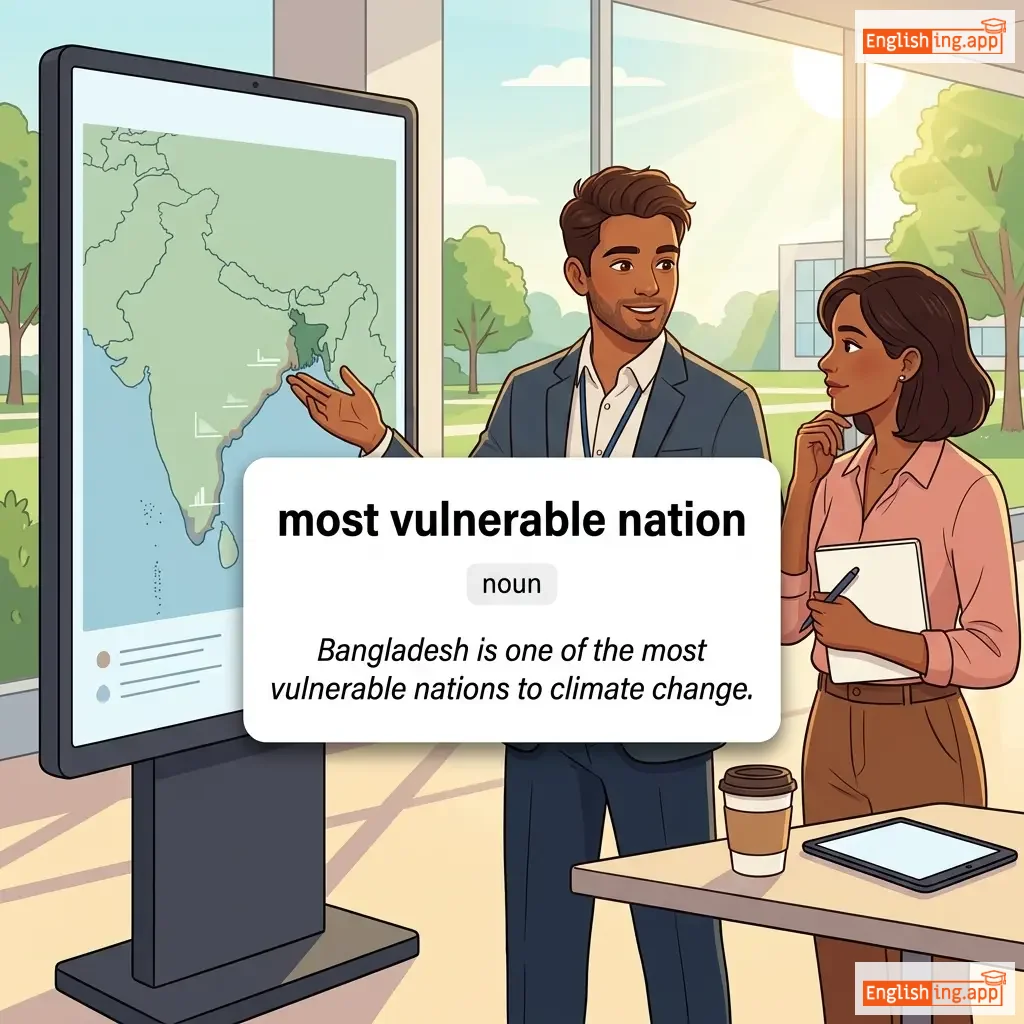
most vulnerable nation definition card — visual illustration of the meaning
noun
moʊst ˈvʌlnərəbəl ˈneɪʃən
最も脆弱な国 (mottomo zeijaku na kuni)

A country that is highly exposed to risks and lacks adequate protection or resilience.

"Bangladesh is one of the most vulnerable nations to climate change."

"バングラデシュは気候変動に最も脆弱な国の一つです。" (Banguradesh wa kikou hendou ni mottomo zeijaku na kuni no hitotsu desu.)
adverb
/ˈmoʊstli/
主に (omoni)

for the most part; mainly

"She is mostly interested in art and literature."

"彼女は主に芸術と文学に興味があります。" (Kanojo wa omoni geijutsu to bungaku ni kyōmi ga arimasu.)
noun
/moʊt/
微粒 (biryu)

A tiny particle or speck, especially of dust.

"A mote of dust floated in the sunlight."

"ほこりの微粒が日光の中で浮かんでいた。" (Hokori no biryu ga nikkou no naka de ukande ita.)
adjective
/ˈmɒθ ˌiːtən/
虫に食べられた (mushi ni taberareta)

Damaged or worn out, especially by moths or age.

"He wore a moth-eaten sweater on the cold day."
"彼は寒い日に虫に食べられたセーターを着ていた。" (Kare wa samui hi ni mushi ni taberareta seetaa o kite ita.)
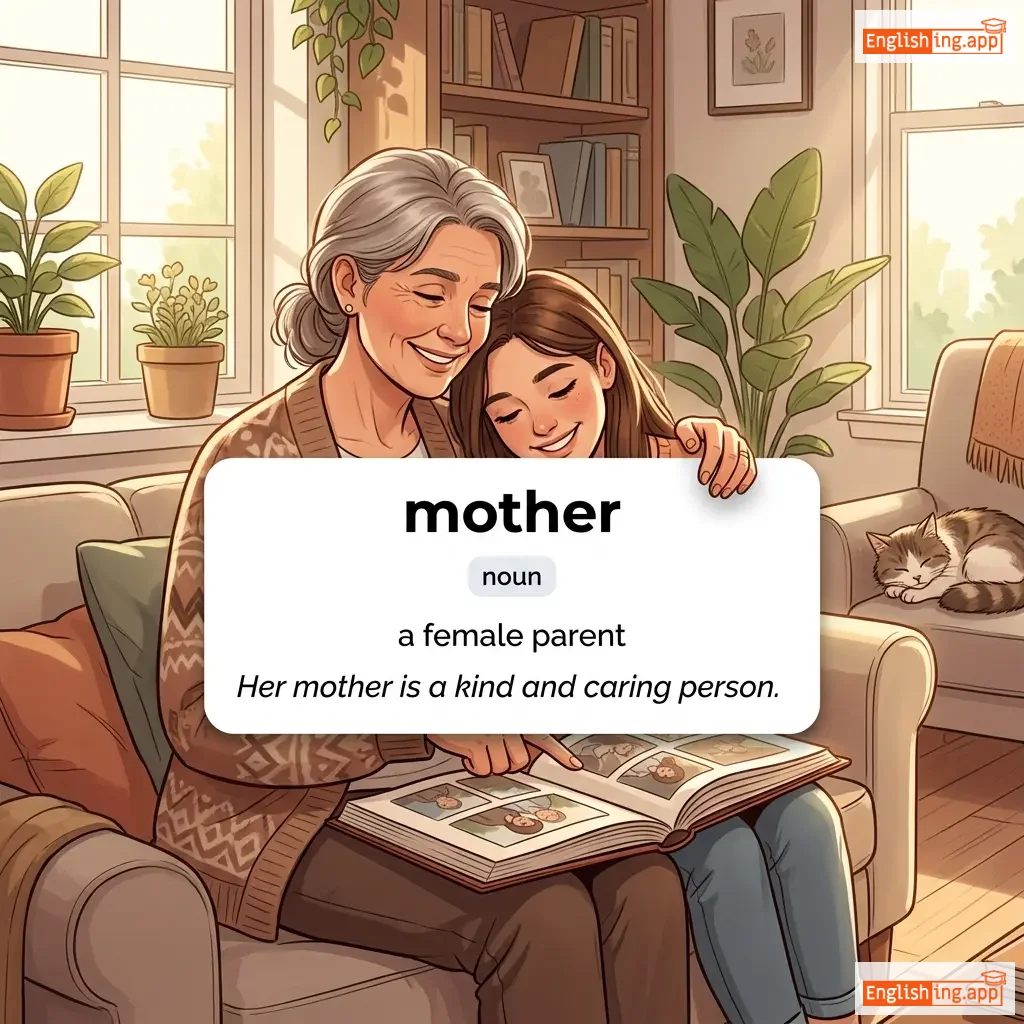
mother definition card — visual illustration of the meaning
noun
/ˈmʌðər/
(haha)

a female parent

"Her mother is a kind and caring person."

"彼女の母親は親切で思いやりのある人です。" (Kanojo no hahaoya wa shinsetsu de omoiyari no aru hito desu.)
noun
/ˈmʌðər ˈlæŋɡwɪdʒ/
母語 (bogo)

the first language a person learns from childhood; native language

"Children learn best when they are taught in their mother language."

"子どもは母語で学ぶと最もよく理解する。" (kodomo wa bogo de manabu to mottomo yoku rikai suru)
noun
/ˈmʌð.ər.hʊd/
母性 (bosei)

the state of being a mother; the qualities of a mother

"She embraced the joys and challenges of motherhood."

"彼女は母性の喜びと挑戦を受け入れました。" (Kanojo wa bosei no yorokobi to chousen o ukeiremashita.)
noun
/ˈmʌð.ər.lænd/
母国; 出身地 (bokoku)

the country where one was born or has citizenship; homeland

"He always spoke fondly of his motherland."

"彼はいつも自分の母国について愛情を込めて話していました。" (Kare wa itsumo jibun no bokoku ni tsuite aijou o komete hanashite imashita.)
👩‍👧‍👦

Motherly (madarī)

adjective
/ˈmʌðərli/
母性的 (boseiteki)

having qualities characteristic of a mother; caring and protective

"She showed motherly care and affection towards all the children."

"彼女はすべての子供たちに母親のようなケアと愛情を示しました。" (Kanojo wa subete no kodomotachi ni hahaoya no youna kea to aijou wo shimeshimashita.)
🎭

motif

noun
/moʊˈtiːf/

A recurring theme, subject, or idea in a work of art or literature.

"The motif of love is central to the novel."

adjective
/ˈmoʊtaɪl/
運動性のある (undōsei no aru)

Capable of movement or locomotion.

"Certain bacteria are motile and can swim toward nutrients."

"特定の細菌は運動性があり、栄養素に向かって泳ぐことができます。" (Tokutei no saikin wa undōsei ga ari, eiyōso ni mukatte oyogu koto ga dekimasu.)
noun
/moʊˈtɪləti/
運動性 (undousei)

The ability of an organism or cell to move independently.

"The motility of sperm is crucial for successful fertilization."

"精子の運動性は受精成功のために重要です。" (Seishi no undousei wa jusei seikou no tame ni juuyou desu.)
noun
/ˈmoʊʃən/
動き (ugoki)

the act or process of moving; a change of place or position

"The motion of the car made her sleepy."

"車の動きが彼女を眠くさせた。" (Kuruma no ugoki ga kanojo wo nemuku saseta.)
motivate definition card — visual illustration of the meaning
verb
/ˈmoʊtɪveɪt/

To provide someone with a reason or incentive to do something.

"The coach motivated the players to give their best performance."

noun
/ˌmoʊtɪˈveɪʃən/
モチベーション (mochibeeshon)

the reason or drive for acting or behaving in a particular way

"She lost her motivation to continue the project."

"彼女はプロジェクトを続けるモチベーションを失いました。" (Kanojo wa purojekuto o tsudzukeru mochibeeshon o ushinai mashita.)
noun
/ˈmoʊtɪv/
動機 (dōki)

a reason for doing something, especially one that is hidden or not obvious

"The police could not determine the motive behind the crime."

"警察は犯罪の背後にある動機を特定できませんでした。" (Keisatsu wa hanzai no haigo ni aru dōki o tokutei dekimasen deshita.)
adjective
/ˈmɒtli/
混成 (konsei)

Made up of different, often incongruous or diverse elements.

"The festival attracted a motley crowd of artists, musicians, and tourists."

"フェスティバルはアーティスト、ミュージシャン、観光客からなる混成の群衆を引き寄せた。" (Fesutibaru wa aatisuto, myuujishan, kankoukyaku kara naru konsei no gunshuu wo hiki yoseta.)
noun
/ˈmoʊtər/
モーター (mōtā)

a machine that produces motion or power to make something work

"The car’s motor stopped suddenly."
"車のモーターは突然止まりました。" (kuruma no mōtā wa totsuzen tomarimashita.)
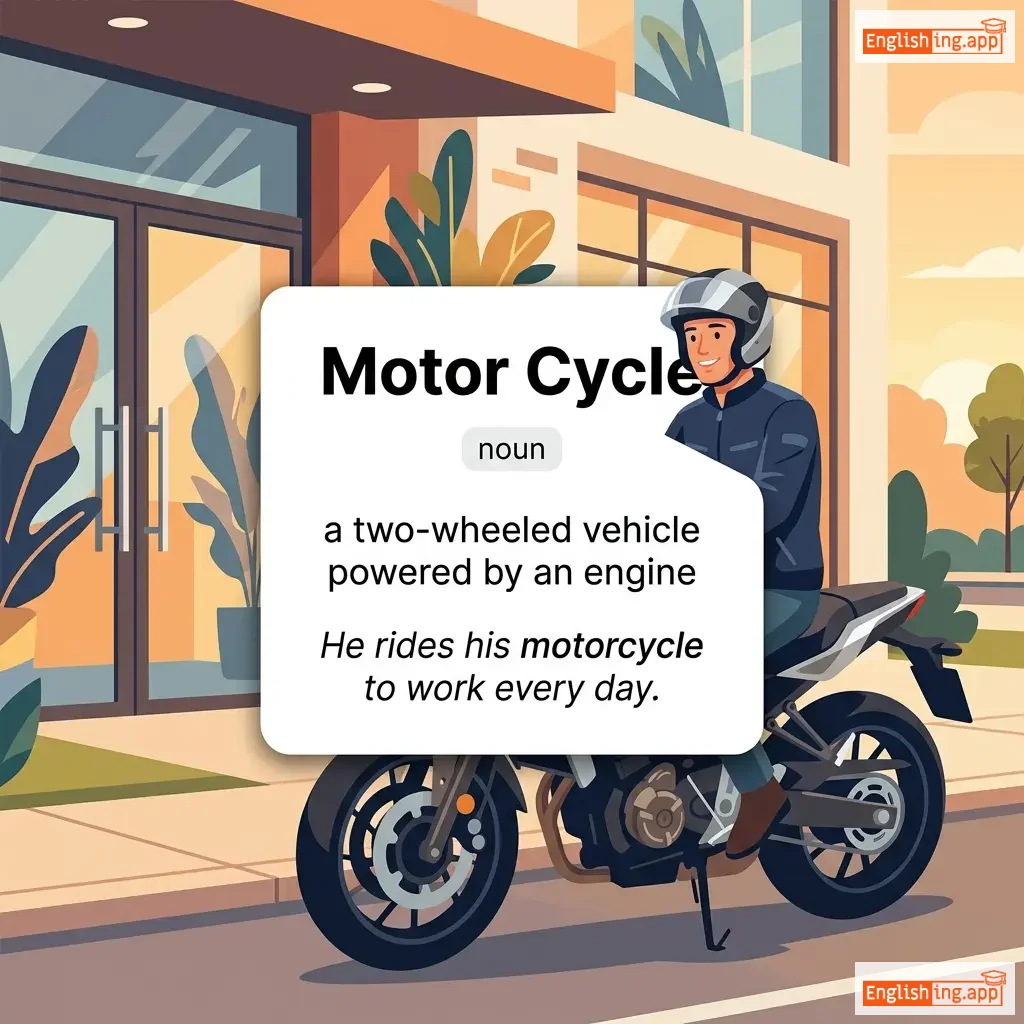
Motor Cycle definition card — visual illustration of the meaning
noun
/ˈmoʊ.tər ˌsaɪ.kəl/
バイク (baiku)

a two-wheeled vehicle powered by an engine

"He rides his motorcycle to work every day."

"彼は毎日バイクで仕事に行きます。" (Kare wa mainichi baiku de shigoto ni ikimasu.)
Motor lorry definition card — visual illustration of the meaning
noun
/ˈmoʊ.tər ˈlɔː.ri/
トラック (torakku)

a large motor vehicle used for transporting goods; truck

"The motor lorry delivered fresh vegetables to the market."

"そのモーター車は新鮮な野菜を市場に届けました。" (Sono mōtāsha wa shinsen na yasai o ichiba ni todokemashita.)
noun
/ˈmoʊtərˌsaɪkəl/
オートバイ (ootobai)

a two-wheeled motor-powered vehicle designed for transportation

"He rides his motorcycle to work every morning."

"彼は毎朝オートバイで仕事に行きます。" (Kare wa maiasa ootobai de shigoto ni ikimasu)
noun
/ˈməʊtərɪst/
自動車運転者 (jidousha untensha)

a person who drives a motor vehicle, especially a car or motorcycle

"The motorist stopped to help after seeing the accident on the highway."

"自動車運転者は事故を見て車を止め、助けました。" (Jidousha untensha wa jiko o mite kuruma o tome tasukemashita)
verb
/ˈmɒtl/
斑点 (hanten)

To mark with spots or patches of color.

"The leaves were mottled with shades of yellow and brown."

"葉は黄色と茶色の斑点で斑入りでした。" (Ha wa kiiro to chairo no hanten de haniri deshita.)
adjective
/ˈmɒtld/
斑点模様の (hanten moyou no)

Marked with spots, streaks, or blotches of different shades or colors.

"The snake's mottled skin helped it blend into the forest floor."

"ヘビの斑点模様の皮膚は、森の床に溶け込むのを助けました。" (Hebi no hanten moyou no hifu wa, mori no yuka ni toke komu no o tasukemashita.)
noun
/ˈmɒtəʊ/
モットー (motto)

A short sentence or phrase that expresses a guiding belief or principle.

"Her motto in life is 'never give up.'"

"彼女の人生のモットーは「決して諦めないこと」です。" (Kanojo no jinsei no motto wa 'kesshite akiramenai koto' desu.)
noun
/moʊld/
型(鋳型) (morudo)

a hollow container used to give shape to molten material; fungus

"She poured chocolate into the mould to make candies."

"彼女はキャンディーを作るために型にチョコレートを流し込んだ。" (Kanojo wa kyandii o tsukuru tame ni kata ni chokoreeto o nagashikonda.)
verb
/maʊnt/
取り付ける (toritsukeru)

to climb up, rise, or fix something in place

"They plan to mount a camera on the wall."
"彼らは壁にカメラを取り付ける予定です。" (Karera wa kabe ni kamera wo toritsukeru yotei desu.)
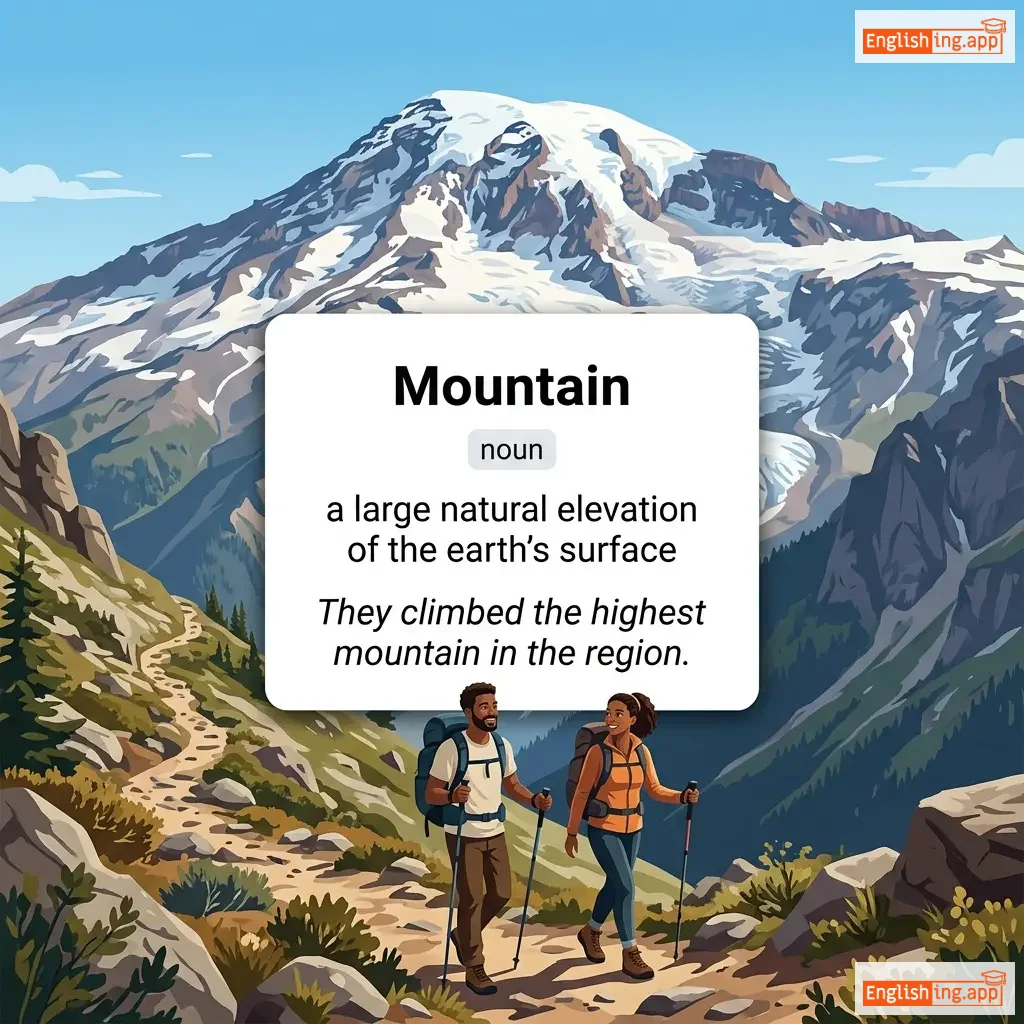
Mountain definition card — visual illustration of the meaning
noun
/ˈmaʊntən/
(yama)

a large natural elevation of the earth’s surface

"They climbed the highest mountain in the region."

"彼らはその地域で最も高い山に登りました。" (Karera wa sono chiiki de mottomo takai yama ni noborimashita.)
noun
/ˌmaʊntəˈnɪə/
登山者 (tozan-sha)

A person who climbs mountains as a sport or profession.

"The mountaineer reached the summit after a long climb."

"登山者は長い登山の後、頂上に到達しました。" (Tozan-sha wa nagai tozan no ato, chōjō ni tōtatsu shimashita.)
adjective
/ˈmaʊntənəs/
山岳地帯の (sangaku chitai no)

Having many mountains; very large or huge in size.

"They traveled through a mountainous region of Nepal."

"彼らはネパールの山岳地帯を通って旅行しました。" (Karera wa Nepāru no sangaku chitai o tōtte ryokō shimashita.)
noun
/ˈmaʊntɪˌbæŋk/
ペテン師 (petenshi)

A charlatan or trickster who deceives others, often for personal gain.

"The crowd was fooled by the mountebank’s false promises."

"群衆はそのペテン師の虚偽の約束に騙されました。" (Gunshū wa sono petenshi no kyogi no yakusoku ni damasaremashita.)
verb
/mɔːrn/
哀悼する (aitō suru)

To feel or express deep sadness or grief, especially because of someone's death.

"They gathered to mourn the loss of their friend."

"彼らは友人の死を悼むために集まりました。" (Karera wa yūjin no shi o aitō suru tame ni atsumarimashita.)
noun
/ˈmɔːr.nər/
喪に服する人 (sō ni fukusuru hito)

a person who attends a funeral or shows grief for someone who has died

"The mourners gathered at the cemetery to pay their respects."
"喪に服する人々は墓地に集まり、敬意を表しました。" (sō ni fukusuru hitobito wa bochi ni atsumari, keii o hyōshimashita.)
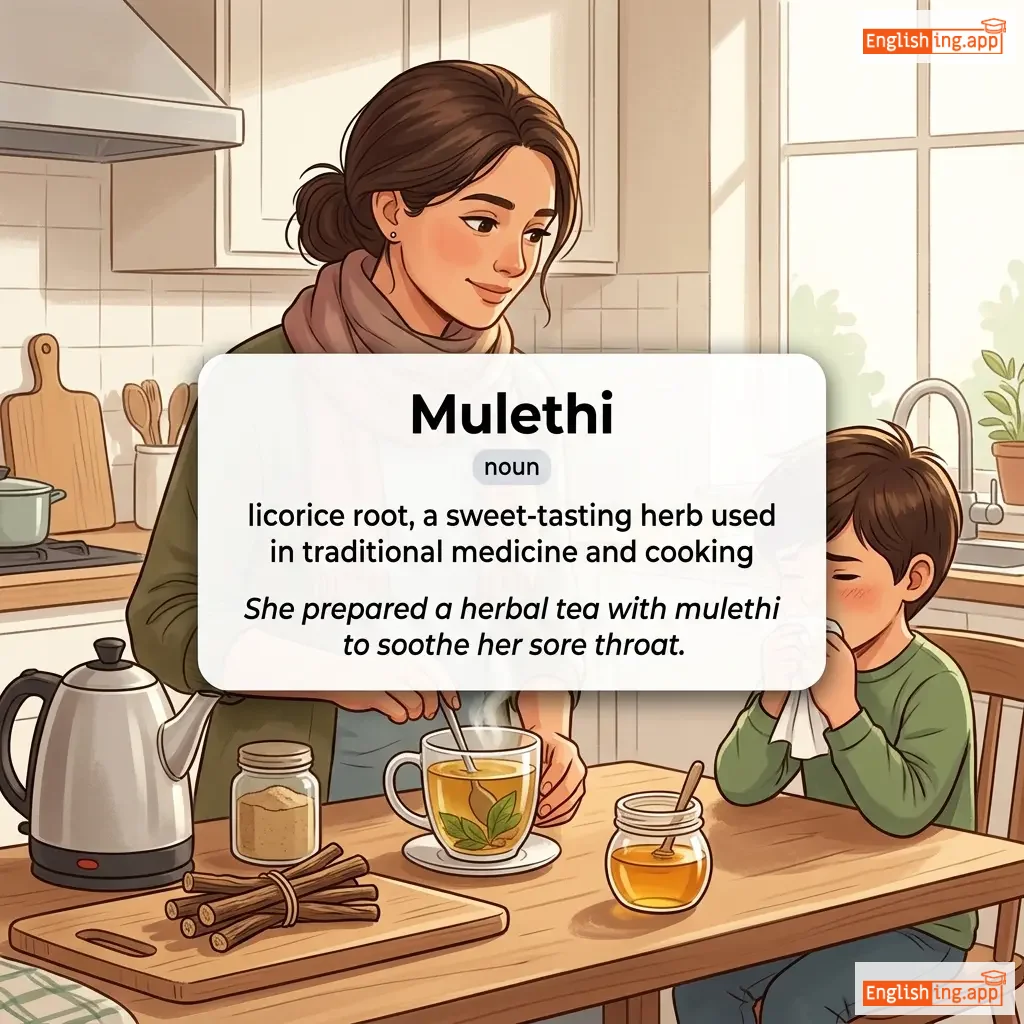
Mulethi definition card — visual illustration of the meaning
noun
/muˈleθi/
甘草の根 (kansou no ne)

licorice root, a sweet-tasting herb used in traditional medicine and cooking

"She prepared a herbal tea with mulethi to soothe her sore throat."

"彼女はムレティでハーブティーを作り、喉の痛みを和らげました。" (Kanojo wa mureti de haabu tee o tsukuri, nodo no itami o yawaragemashita.)
adjective
/ˈmʌltɪfɔːrm/
多様な (tayou na)

Having many different forms or appearances.

"The festival was a multiform celebration of art, music, and culture."

"その祭りは、芸術、音楽、文化の多様な祝典でした。" (Sono matsuri wa, geijutsu, ongaku, bunka no tayou na shukuten deshita.)
adjective
/ˌmʌltɪˈfɛərɪəs/
多様な (tayōna)

having many different parts, elements, or kinds

"The museum displayed a multifarious collection of artifacts."

"博物館は様々な種類の遺物を展示しました。" (Hakubutsukan wa samazama na shurui no ibutsu o tenji shimashita.)
multifaceted information frameworks definition card — visual illustration of the meaning
noun
ˌmʌltɪˈfæsɪtɪd ˌɪnfərˈmeɪʃən ˈfreɪmwɜːrks
多面的情報フレームワーク (tōmen no jōhō furēmuwāku)

Complex, comprehensive structures for organizing and managing information that have multiple aspects or dimensions.

"Digital literacy involves building multifaceted information frameworks."

"デジタルリテラシーは多面的な情報フレームワークの構築を含んでいます。" (Dejitaru riterashī wa tōmen-teki na jōhō furēmuwāku no kōchiku o fukundeimasu.)
multifaceted definition card — visual illustration of the meaning
adjective
/ˌmʌltiˈfæsɪtɪd/
多面的 (tamen teki)

having many different aspects or features

"Her career is multifaceted, involving teaching, research, and writing."

"彼女のキャリアは多面的で、教育、研究、執筆が含まれています。" (Kanojo no kyaria wa tamen teki de, kyōiku, kenkyū, shippitsu ga fukumarete imasu.)
adjective
/ˈmjuːlɪʃ/

extremely stubborn or unwilling to change

"She remained mulish despite all the convincing arguments."

verb
/mʌlkt/
罰金を科す / 詐欺を働く (bakin wo kasu / sagi wo hataraku)

to punish by a fine or to defraud someone of money

"The corrupt official was mulcted for his misconduct."

"腐敗した公務員は不正行為に対して罰金を科された。" (Fuhai shita kōmuin wa fusei kōi ni taishite bakkin wo kasareta.)