語彙集

英単語辞書 | 単語の意味、定義、例文

title
/ˈmɪstər/
(sama)

a title used before a man's name

"Mr. Rahman is our new teacher."

"ラフマン様は私たちの新しい先生です。" (Rahuman-sama wa watashitachi no atarashī sensei desu.)
title
/ˈmɪsɪz/
ミセス (misesu)

a title used before a married woman's name

"Mrs. Karim is the headmistress of the school."

"ミセス・カリムは学校の校長です。" (Misesu Karim wa gakkou no kouchou desu.)
👩‍💼

ms (ミズ)

title
/mɪz/
ミズ (Mizu)

a title used before a woman's name, regardless of marital status

"Ms. Akter will give a speech at the seminar."

"ミズ・アクターはセミナーでスピーチを行います。" (Mizu Akutā wa seminā de supīchi o okonai masu.)
adjective, adverb, pronoun
/mʌtʃ/
多く (ooku)

a large amount or degree of something

"She doesn’t have much time to finish the project."

"彼女はプロジェクトを終わらせるために多くの時間がない。" (Kanojo wa purojekuto o owaraseru tame ni ooku no jikan ga nai.)
noun
/mʌd/
(doro)

soft, wet earth or soil

"The children were playing in the mud after the rain."

"子供たちは雨の後で泥遊びをしていました。" (Kodomotachi wa ame no ato de doro asobi o shiteimashita.)
verb
/ˈmʌd.əl/
混乱させる (konran saseru)

to mix things up in a confused way or to make a mess of something

"He muddled the papers and couldn’t find the report."

"彼は書類を混乱させ、報告書を見つけられなかった。" (Kare wa shorui o konran sase, hōkokusho o mitsukerarenakatta.)
adjective
/ˈmʌd.i/
泥だらけ (doradake)

covered in or full of mud; unclear or confused

"The children came back with muddy shoes after playing outside."

"子供たちは外で遊んだ後、泥だらけの靴で帰ってきました。" (Kodomotachi wa soto de asonda ato, doradake no kutsu de kaette kimashita.)
verb
/ˈmʌfəl/
抑える (osaeru)

to make a sound quieter or less distinct; to cover or wrap something to reduce noise or warmth

"She tried to muffle her laughter with a scarf."

"彼女はスカーフで笑い声を抑えようとした。" (Kanojo wa sukāfu de warai goe o osaeyou to shita.)
Muffler definition card — visual illustration of the meaning
noun
/ˈmʌflər/
マフラー (mafurā)

a device on a vehicle's exhaust to reduce noise; also a scarf worn around the neck for warmth

"The car's muffler needs to be replaced."

"車のマフラーは交換する必要があります。" (Kuruma no mafurā wa kōkan suru hitsuyō ga arimasu.)
Mug definition card — visual illustration of the meaning
noun
/mʌɡ/
マグカップ (magukappu)

a large cup, typically cylindrical and having a handle and used without a saucer

"She drank her morning coffee from a ceramic mug."

"彼女はセラミックマグから朝のコーヒーを飲んだ。" (Kanojo wa seramikku magu kara asa no ko-hi- o nonda.)
adjective
/ˈmʌɡi/
蒸し暑くて湿気のある (mushi atsukute shikke no aru)

uncomfortably warm and humid

"It was a muggy afternoon in July."

"7月の午後は蒸し暑かった。" (Shichigatsu no gogo wa mushi atsukatta.)
noun
/ˈmʌɡwʌmp/
政党に属さない人 (seitō ni zokusanai hito)

a person who remains independent from party politics or remains aloof from disputes

"He was called a mugwump for refusing to join either political side."

"彼は政治的な立場に参加しないことを拒否したため、マグワンプと呼ばれました。" (Kare wa seijiteki na tachiba ni sanka shinai koto o kyohi shita tame, maguwampu to yobaremashita.)
noun
/mjuːˈlætoʊ/
混血の人(古くて攻撃的な言葉) (konketsu no hito (furukute kougeki-tekina kotoba))

an outdated and now offensive term historically used to describe a person of mixed white and Black ancestry

"The word 'mulatto' is now considered outdated and offensive."

"'ムラット'という言葉は、現在では時代遅れで攻撃的だと見なされています。" ('Muratto' to iu kotoba wa, genzai dewa jidaiokure de kougeki-teki da to minasa reteimasu.)
verb
/mʌlkt/
罰金を科す / 詐欺を働く (bakin wo kasu / sagi wo hataraku)

to punish by a fine or to defraud someone of money

"The corrupt official was mulcted for his misconduct."
"腐敗した公務員は不正行為に対して罰金を科された。" (Fuhai shita kōmuin wa fusei kōi ni taishite bakkin wo kasareta.)
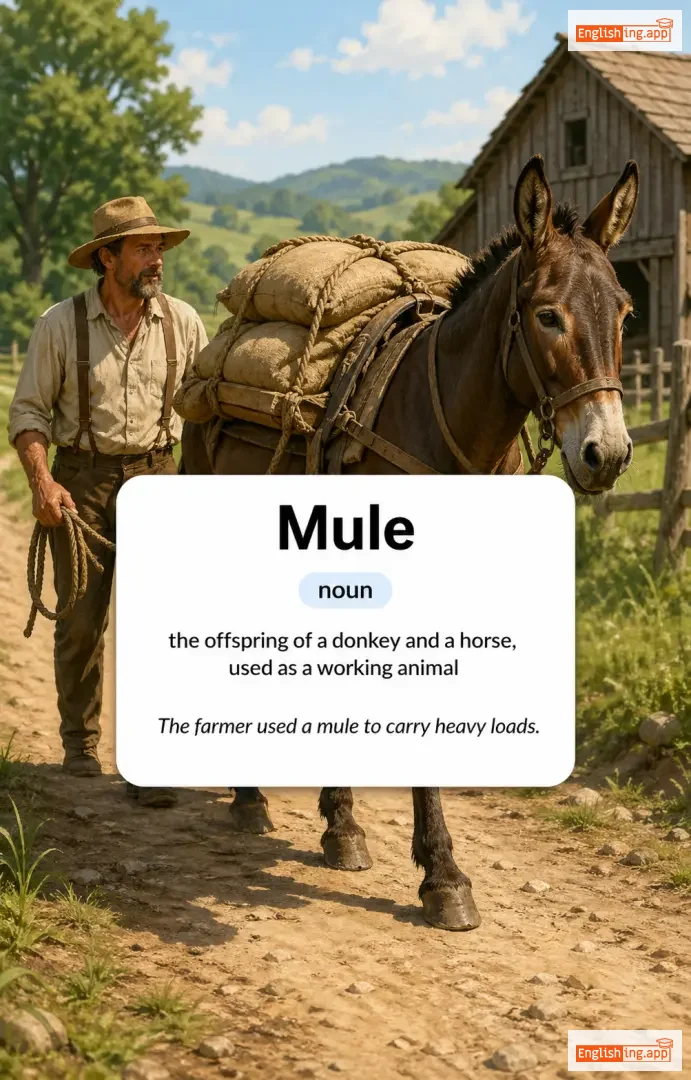
Mule definition card — visual illustration of the meaning
noun
/mjuːl/
ラバ (raba)

the offspring of a donkey and a horse, used as a working animal

"The farmer used a mule to carry heavy loads."

"農夫は重い荷物を運ぶためにラバを使いました。" (Nōfu wa omoi nimotsu o hakobu tame ni raba o tsukaimashita.)
noun
/ˌmjuːlˈtɪər/
荷馬使い (kebamatsukai)

a person who drives or takes care of mules

"The muleteer guided the animals safely across the mountain path."
"荷馬使いは動物を安全に山道を案内しました。" (Kebamatsukai wa dōbutsu o anzen ni yamamichi o annai shimashita.)
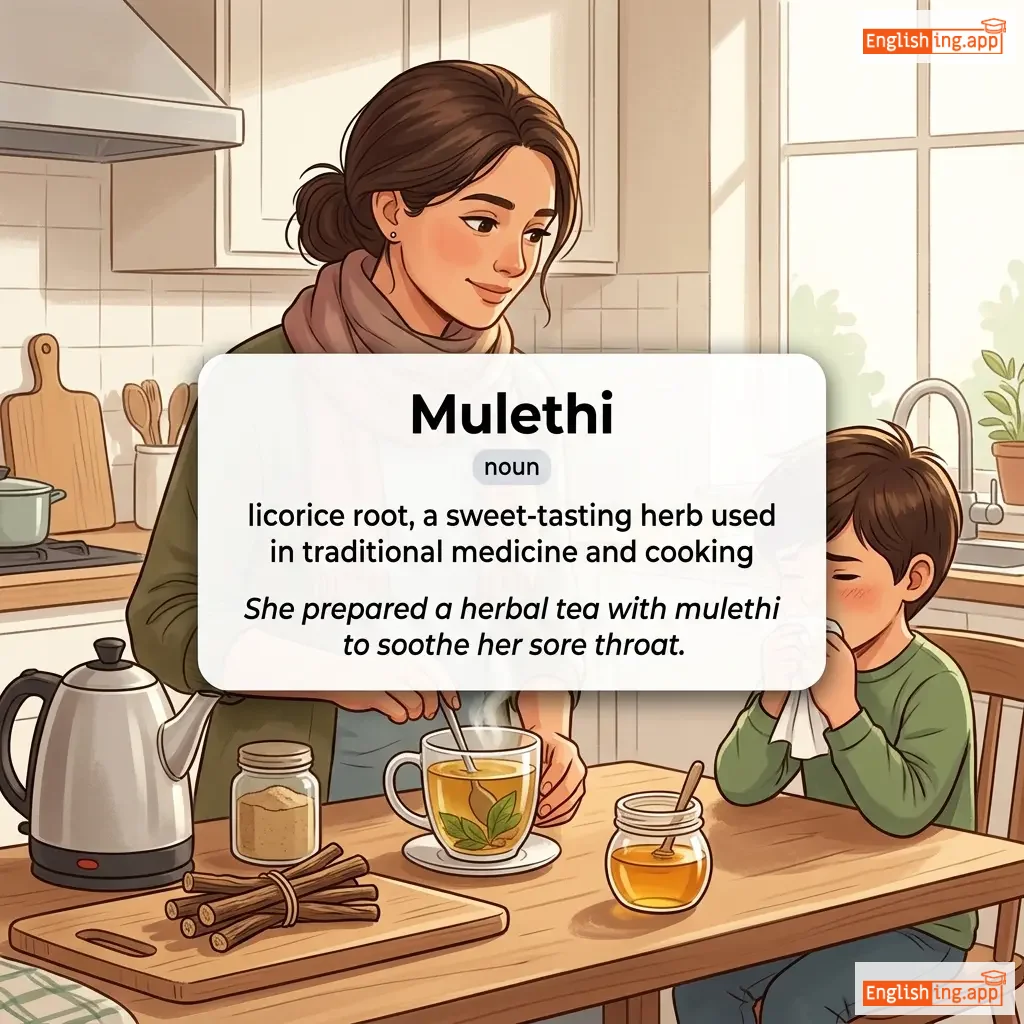
Mulethi definition card — visual illustration of the meaning
noun
/muˈleθi/
甘草の根 (kansou no ne)

licorice root, a sweet-tasting herb used in traditional medicine and cooking

"She prepared a herbal tea with mulethi to soothe her sore throat."

"彼女はムレティでハーブティーを作り、喉の痛みを和らげました。" (Kanojo wa mureti de haabu tee o tsukuri, nodo no itami o yawaragemashita.)
adjective
/ˈmjuːlɪʃ/

extremely stubborn or unwilling to change

"She remained mulish despite all the convincing arguments."

multifaceted definition card — visual illustration of the meaning
adjective
/ˌmʌltiˈfæsɪtɪd/
多面的 (tamen teki)

having many different aspects or features

"Her career is multifaceted, involving teaching, research, and writing."

"彼女のキャリアは多面的で、教育、研究、執筆が含まれています。" (Kanojo no kyaria wa tamen teki de, kyōiku, kenkyū, shippitsu ga fukumarete imasu.)
multifaceted information frameworks definition card — visual illustration of the meaning
noun
ˌmʌltɪˈfæsɪtɪd ˌɪnfərˈmeɪʃən ˈfreɪmwɜːrks
多面的情報フレームワーク (tōmen no jōhō furēmuwāku)

Complex, comprehensive structures for organizing and managing information that have multiple aspects or dimensions.

"Digital literacy involves building multifaceted information frameworks."

"デジタルリテラシーは多面的な情報フレームワークの構築を含んでいます。" (Dejitaru riterashī wa tōmen-teki na jōhō furēmuwāku no kōchiku o fukundeimasu.)
adjective
/ˌmʌltɪˈfɛərɪəs/
多様な (tayōna)

having many different parts, elements, or kinds

"The museum displayed a multifarious collection of artifacts."

"博物館は様々な種類の遺物を展示しました。" (Hakubutsukan wa samazama na shurui no ibutsu o tenji shimashita.)
adjective
/ˈmʌltɪfɔːrm/
多様な (tayou na)

Having many different forms or appearances.

"The festival was a multiform celebration of art, music, and culture."

"その祭りは、芸術、音楽、文化の多様な祝典でした。" (Sono matsuri wa, geijutsu, ongaku, bunka no tayou na shukuten deshita.)
adjective
/ˌmʌltɪˈlɪŋɡwəl/
多言語の (tagengo no)

Able to speak or written in several languages.

"She grew up in a multilingual household."

"彼女は多言語の家庭で育ちました。" (Kanojo wa tagengo no katei de sodachimashita.)
adjective
/ˈmʌltɪpl/
複数の (fukusū no)

involving or consisting of many parts or elements

"The company faced multiple challenges during the year."

"その会社は年間を通じて複数の課題に直面しました。" (Sono kaisha wa nenkan o tsūjite fukusū no kadai ni chokumen shimashita.)
noun
/ˌmʌltɪplɪˈkeɪʃən/
掛け算 (kakezan)

the mathematical process of combining numbers to get a product; the act of increasing in number or amount

"Multiplication is one of the basic operations taught in elementary mathematics."

"掛け算は算数の基本的な計算です。" (kakezan wa sansuu no kihonteki na keisan desu)
noun
/ˌmʌltɪˈplɪsɪti/
多様性 (tayousei)

A large number or variety of something.

"The project faced a multiplicity of challenges."

"プロジェクトは多様な課題に直面しました。" (Purojekuto wa tayou na kadai ni chokumen shimashita.)
noun
/ˈmʌltɪplaɪər/
乗数 (josu)

a number or factor by which another number is multiplied; something that increases the effect or value of something else

"In economics, government spending can act as a multiplier for economic growth."

"経済学では、政府支出が成長の乗数となることがある。" (keizaigaku dewa seifu shishutsu ga seicho no josu to naru koto ga aru)
multiply definition card — visual illustration of the meaning
verb
/ˈmʌltɪplaɪ/
掛け算 (kakezan)

to increase in number; to perform mathematical multiplication

"The bacteria multiply rapidly in warm conditions."

"細菌は温暖な条件で急速に増殖します。" (Saikin wa ondanna jouken de kyūsoku ni zōshoku shimasu)
adjective
/ˌmʌl.tiˈpɜː.pəs/
多目的 (tāmokuteki)

having multiple uses or functions; versatile

"This multipurpose tool can be used as a knife, screwdriver, and bottle opener."

"この多目的ツールは、ナイフ、ドライバー、ボトルオープナーとして使用できます。" (Kono tāmokuteki tsūru wa, naifu, doraibā, botoru ōpunā toshite shiyō dekimasu.)
multitasking definition card — visual illustration of the meaning
noun
ˈmʌltɪˌtɑːskɪŋ
複数のタスクを同時に行うこと (fukusū no tasuku o dōji ni okonau koto)

The practice of doing multiple tasks at the same time.

"Multitasking may reduce the quality of each individual task."

"マルチタスキングは、各タスクの品質を低下させる可能性があります。" (Maruchitaskingu wa, kaku tasuku no hinshitsu o teika saseru kanōsei ga arimasu.)
noun
/ˈmʌltɪtuːd/
多数 (tashū)

A large number of people or things.

"A multitude of fans gathered at the stadium."

"スタジアムに多数のファンが集まりました。" (Sutajiamu ni tashū no fan ga atsumarimashita.)
adjective
/mʌm/
沈黙; 何も言わない; 静かにする (chinmoku; nanimo iwanai; shizuka ni suru)

silent; saying nothing; keeping quiet

"He kept mum about the surprise party plans."

"彼はサプライズパーティーの計画について沈黙していました。" (Kare wa sapuraizu paatii no keikaku ni tsuite chinmoku shite imashita.)
verb
/ˈmʌmbəl/

To speak quietly and not clearly so that words are difficult to understand.

"He mumbled an apology before leaving."

mundane definition card — visual illustration of the meaning
adjective
/mʌnˈdeɪn/
平凡 (heibon)

lacking interest or excitement; dull and ordinary

"She tried to escape her mundane routine by traveling."

"彼女は旅行をして平凡な日常から逃げようとした。" (Kanojo wa ryokou o shite heibon na nichijou kara nigeyou to shita.)
verb
/nəˈsɛsɪteɪt/
必要とする (hitsuyou to suru)

To make something necessary or unavoidable.

"The heavy rains necessitated the cancellation of the event."

"激しい雨はイベントのキャンセルを避けられないものにしました。" (Hageshī ame wa ibento no kyansel o sakerarenai mono ni shimashita.)
noun
/niːp/
小潮 (shōchō)

A tide just after the first or third quarters of the moon when the difference between high and low tide is least.

"During a neap tide, the water level change is minimal."

"ニープタイドの間、水位の変化は最小限です。" (Nīpu taido no aida, suii no henka wa saishōgen desu.)
preposition
/nɪə(r)/
近く (chikaku)

At or to a short distance away; close in space, time, or relationship.

"There is a park near my house."

"私の家の近くに公園があります。" (Watashi no ie no chikaku ni kōen ga arimasu.)
adverb
/ˈnɪərbaɪ/
近く; 近所 (chikaku; kinjo)

close to; not far away; in the neighborhood

"There is a grocery store nearby."

"近くに食料品店があります。" (Chikaku ni shokuryouhinten ga arimasu.)
adjective
/ˈnɪəˌbaɪ/
近く (chikaku)

close to a particular place or person

"The nearest gas station is nearby."

"最寄りのガソリンスタンドは近くにあります。" (Moyori no gasorin sutando wa chikaku ni arimasu.)
adverb
/ˈnɪəli/
ほぼ (hobo)

almost, but not completely

"She nearly missed the bus."

"彼女はほぼバスに乗り遅れるところだった。" (Kanojo wa hobo basu ni noriokureru tokoro datta.)
Neat definition card — visual illustration of the meaning
adjective
/niːt/
きれい (kirei)

tidy, orderly, and well-arranged; simple and elegant

"His handwriting is very neat and easy to read."

"彼の手書きはとてもきれいで、読みやすいです。" (Kare no tegaki wa totemo kirei de, yomiyasui desu.)
adverb
/ˈniːtli/
きちんと; 清潔に (kichinto; seiketsu ni)

in a tidy and orderly way; carefully and precisely

"She arranged the books neatly on the shelf."

"彼女は本をきちんと棚に並べました。" (Kanojo wa hon o kichinto tana ni narabemashita.)
noun
/ˈneb.jʊ.lə/
星雲 (seiun)

A cloud of gas and dust in outer space, sometimes visible in the night sky.

"The Orion Nebula is one of the brightest in the sky."

"オリオン星雲は空で最も明るいものの一つです。" (Orion seiun wa sora de mottomo akarui mono no hitotsu desu.)
adjective
/ˈnɛbjələs/
曖昧な (aimaina)

Unclear, vague, or ill-defined; resembling a cloud or haze.

"His plan for the future was still nebulous and hard to understand."

"彼の未来に対する計画はまだ曖昧で、理解するのが難しかった。" (Kare no mirai ni taisuru keikaku wa mada aimai de, rikai suru no ga muzukashikatta.)
adverb
/ˌnɛsəˈsɛrɪli/
必ずしも (kanarazushimo)

as a necessary result; inevitably

"It doesn’t necessarily mean you’re wrong."

"それが必ずしもあなたが間違っていることを意味するわけではありません。" (Sore ga kanarazushimo anata ga machigatte iru koto o imi suru wake de wa arimasen.)
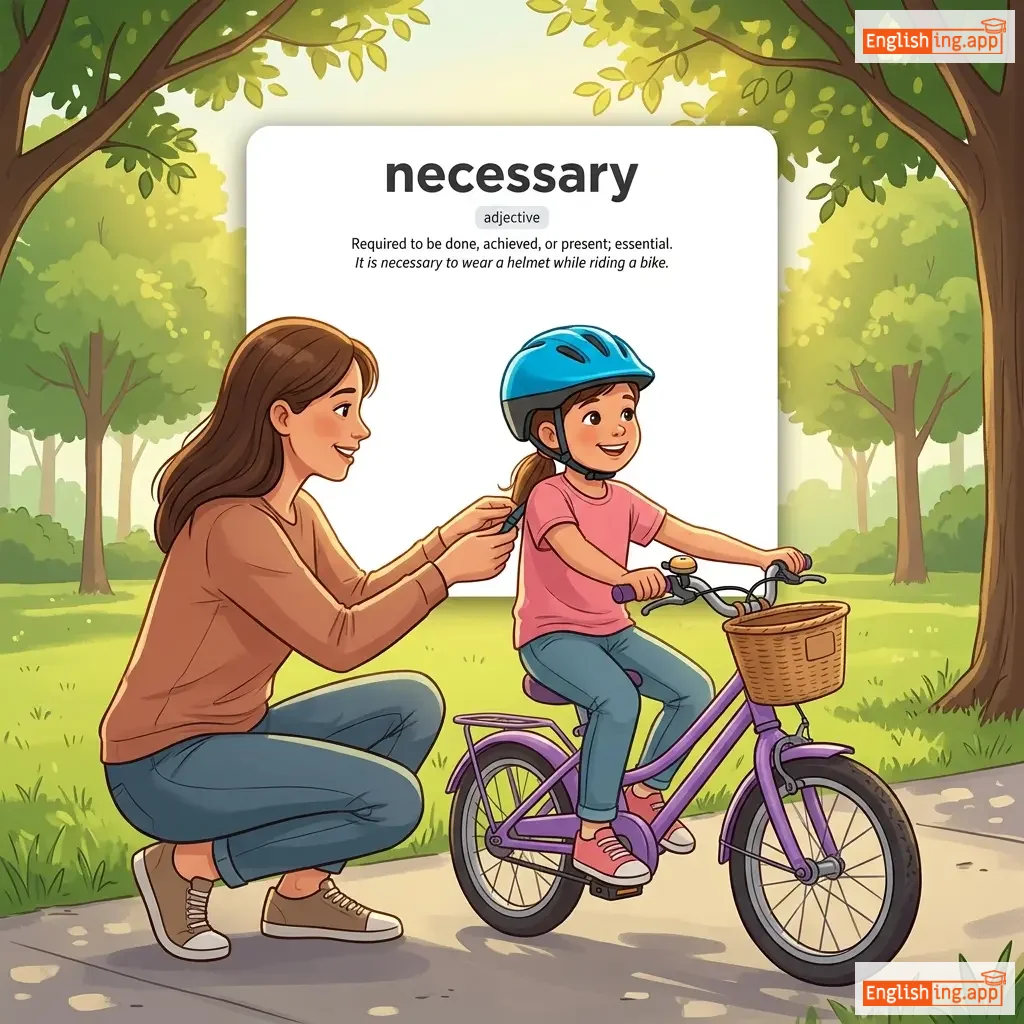
necessary definition card — visual illustration of the meaning
adjective
/ˈnɛsəsɛri/

Required to be done, achieved, or present; essential.

"It is necessary to wear a helmet while riding a bike."

noun
/nəˈkrɒpəlɪs/
古代の墓地 (kodai no bochi)

a large ancient cemetery with elaborate tombs

"The archaeologists discovered artifacts in the necropolis of the ancient city."

"考古学者たちは古代都市のネクロポリスで遺物を発見しました。" (Kōkogakushatachi wa kodai toshi no nekuroposu de ibutsu o hakken shimashita.)
🧙‍♂️

necromancer

noun
/ˈnɛkrəˌmænsər/

a person who practices necromancy; a wizard or magician who claims to communicate with the dead

"The villagers feared the old necromancer who lived at the edge of the forest."

noun
/ˈnɛkrəˌmænsi/
死霊術 (shireijutsu)

the practice of communicating with the dead, often to predict the future

"Ancient texts described rituals of necromancy performed by priests."

"古代の文献には、神父たちによって行われた死霊術の儀式が記述されています。" (Kodai no bunken ni wa, shinputa-tachi ni yotte okonawareta shireijutsu no gishiki ga kijutsusareteimasu.)
noun
/nɪˈkrɒlədʒi/
訃報 (fuhou)

An obituary notice or a list of people who have recently died.

"The newspaper published a necrology of notable figures who passed away that year."

"その新聞は、その年に亡くなった著名な人物のネクロロジーを発表しました。" (Sono shinbun wa, sono toshi ni nakunatta chomei na jinbutsu no nekuroji o happyō shimashita.)