語彙集

英単語辞書 | 単語の意味、定義、例文

noun
/neɪv/
教会の中央部 (kyoukai no chuoubu)

the central part of a church building intended to accommodate the congregation

"The choir sang beautifully in the church nave."

"合唱団は教会のネイヴで美しく歌いました。" (Gasshoudan wa kyoukai no neivu de utsukushiku utaimashita.)
👶

Navel

noun
/ˈneɪvəl/

the small hollow or raised area in the middle of the stomach, also called the belly button

"The baby’s navel was carefully cleaned after birth."

adjective
/ˈnæv.ɪ.ɡə.bəl/
航行可能 (kōkō kanō)

Able to be sailed on or through by ships or boats.

"The river is navigable for large cargo ships."
"その川は大型貨物船にとって航行可能です。" (Sono kawa wa ōgata kamotsusen ni totte kōkō kanō desu.)
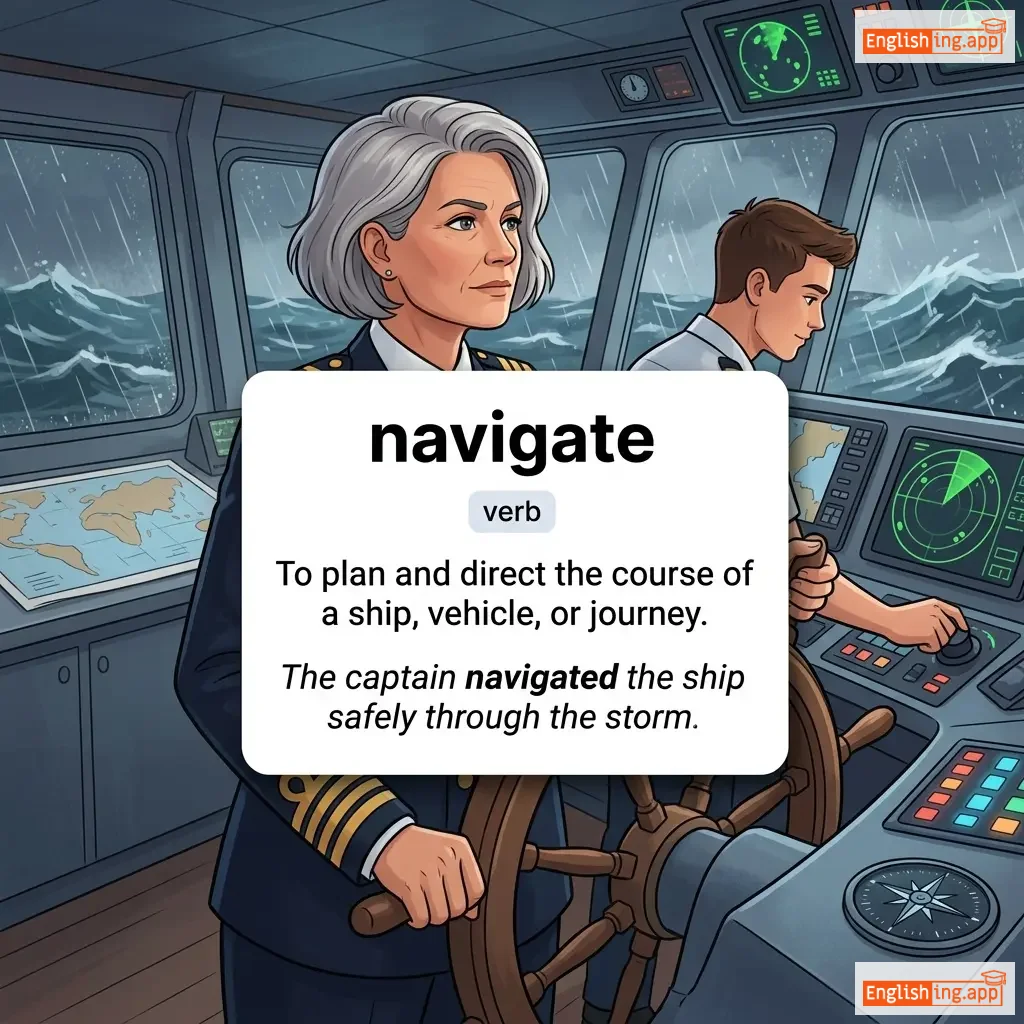
navigate definition card — visual illustration of the meaning
verb
/ˈnæv.ɪ.ɡeɪt/

To plan and direct the course of a ship, vehicle, or journey.

"The captain navigated the ship safely through the storm."

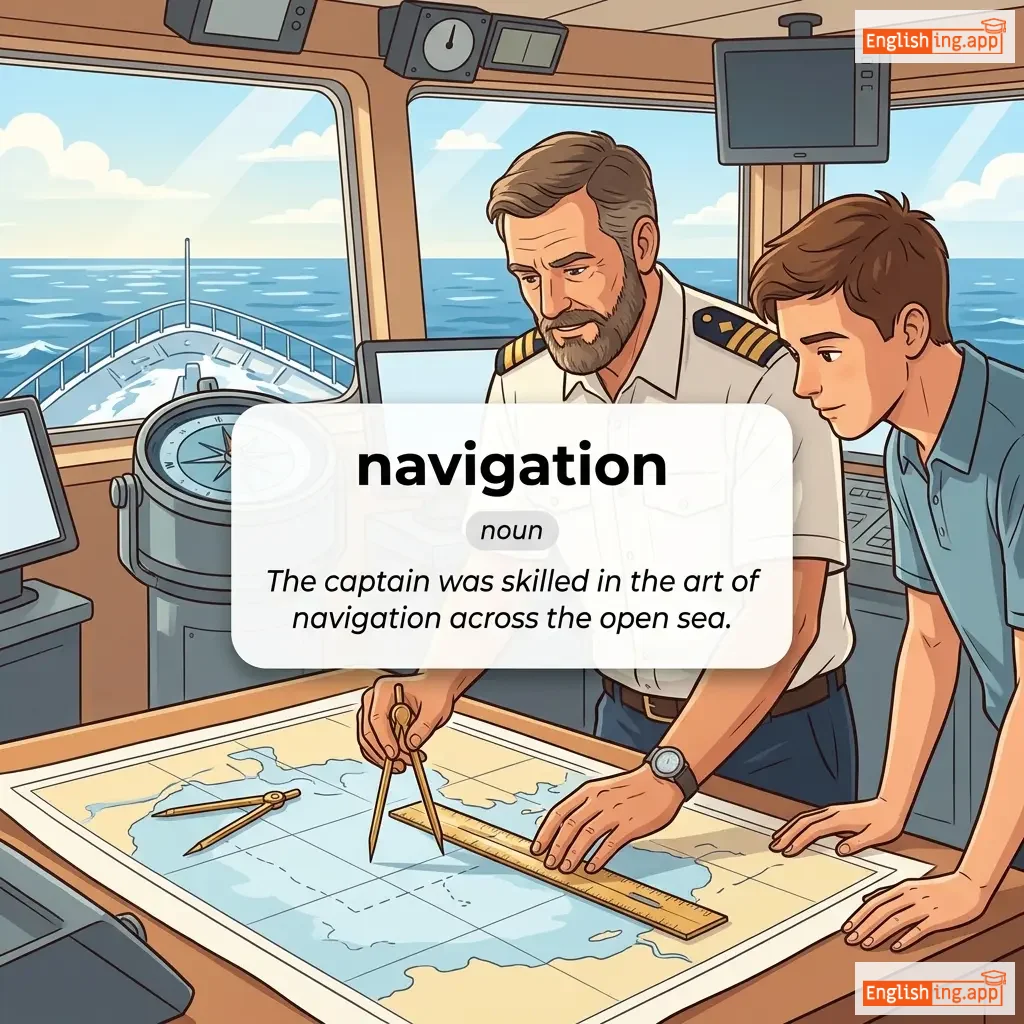
navigation definition card — visual illustration of the meaning
noun
/ˌnævɪˈɡeɪʃən/
ナビゲーション (navigēshon)

the process or activity of accurately determining one's position and planning and following a route

"The captain was skilled in the art of navigation across the open sea."

"キャプテンは開けた海での航海術に熟練していました。" (kyaputen wa aketa umi de no kōkaijutsu ni jukuren shiteimashita.)
Navy definition card — visual illustration of the meaning
noun
/ˈneɪvi/
海軍 (kaigun)

the branch of armed forces that conducts military operations at sea

"He joined the navy after graduating from college."

"彼は大学を卒業した後、海軍に入隊した。" (Kare wa daigaku o sotsugyō shita ato, kaigun ni nyūtai shita.)
noun
/ˈneɪˌseɪ.ɪŋ/
否定的な発言 (hiteiteki na hatsugen)

The act of expressing negative or pessimistic views.

"His constant naysaying discouraged the team."

"彼の絶え間ない否定的な発言はチームをがっかりさせました。" (Kare no taemanai hiteiteki na hatsugen wa chiimu wo gakkari saseshimashita.)
noun
/ˌɛn.biː.esˈpiː/
ノンブレイキングスペース (non breaking space)

a non-breaking space character in HTML used to prevent an automatic line break at its position

"Use   in HTML to add a space that won't break into a new line."

"HTMLで改行しないスペースを追加するために を使用します。" (HTML de kaigyō shinai supēsu o tsuika suru tame ni  o shiyō shimasu.)
noun
/niːp/
小潮 (shōchō)

A tide just after the first or third quarters of the moon when the difference between high and low tide is least.

"During a neap tide, the water level change is minimal."

"ニープタイドの間、水位の変化は最小限です。" (Nīpu taido no aida, suii no henka wa saishōgen desu.)
preposition
/nɪə(r)/
近く (chikaku)

At or to a short distance away; close in space, time, or relationship.

"There is a park near my house."

"私の家の近くに公園があります。" (Watashi no ie no chikaku ni kōen ga arimasu.)
adverb
/ˈnɪərbaɪ/
近く; 近所 (chikaku; kinjo)

close to; not far away; in the neighborhood

"There is a grocery store nearby."

"近くに食料品店があります。" (Chikaku ni shokuryouhinten ga arimasu.)
adjective
/ˈnɪəˌbaɪ/
近く (chikaku)

close to a particular place or person

"The nearest gas station is nearby."

"最寄りのガソリンスタンドは近くにあります。" (Moyori no gasorin sutando wa chikaku ni arimasu.)
adverb
/ˈnɪəli/
ほぼ (hobo)

almost, but not completely

"She nearly missed the bus."

"彼女はほぼバスに乗り遅れるところだった。" (Kanojo wa hobo basu ni noriokureru tokoro datta.)
Neat definition card — visual illustration of the meaning
adjective
/niːt/
きれい (kirei)

tidy, orderly, and well-arranged; simple and elegant

"His handwriting is very neat and easy to read."

"彼の手書きはとてもきれいで、読みやすいです。" (Kare no tegaki wa totemo kirei de, yomiyasui desu.)
adverb
/ˈniːtli/
きちんと; 清潔に (kichinto; seiketsu ni)

in a tidy and orderly way; carefully and precisely

"She arranged the books neatly on the shelf."

"彼女は本をきちんと棚に並べました。" (Kanojo wa hon o kichinto tana ni narabemashita.)
noun
/ˈneb.jʊ.lə/
星雲 (seiun)

A cloud of gas and dust in outer space, sometimes visible in the night sky.

"The Orion Nebula is one of the brightest in the sky."

"オリオン星雲は空で最も明るいものの一つです。" (Orion seiun wa sora de mottomo akarui mono no hitotsu desu.)
adjective
/ˈnɛbjələs/
曖昧な (aimaina)

Unclear, vague, or ill-defined; resembling a cloud or haze.

"His plan for the future was still nebulous and hard to understand."

"彼の未来に対する計画はまだ曖昧で、理解するのが難しかった。" (Kare no mirai ni taisuru keikaku wa mada aimai de, rikai suru no ga muzukashikatta.)
adverb
/ˌnɛsəˈsɛrɪli/
必ずしも (kanarazushimo)

as a necessary result; inevitably

"It doesn’t necessarily mean you’re wrong."

"それが必ずしもあなたが間違っていることを意味するわけではありません。" (Sore ga kanarazushimo anata ga machigatte iru koto o imi suru wake de wa arimasen.)
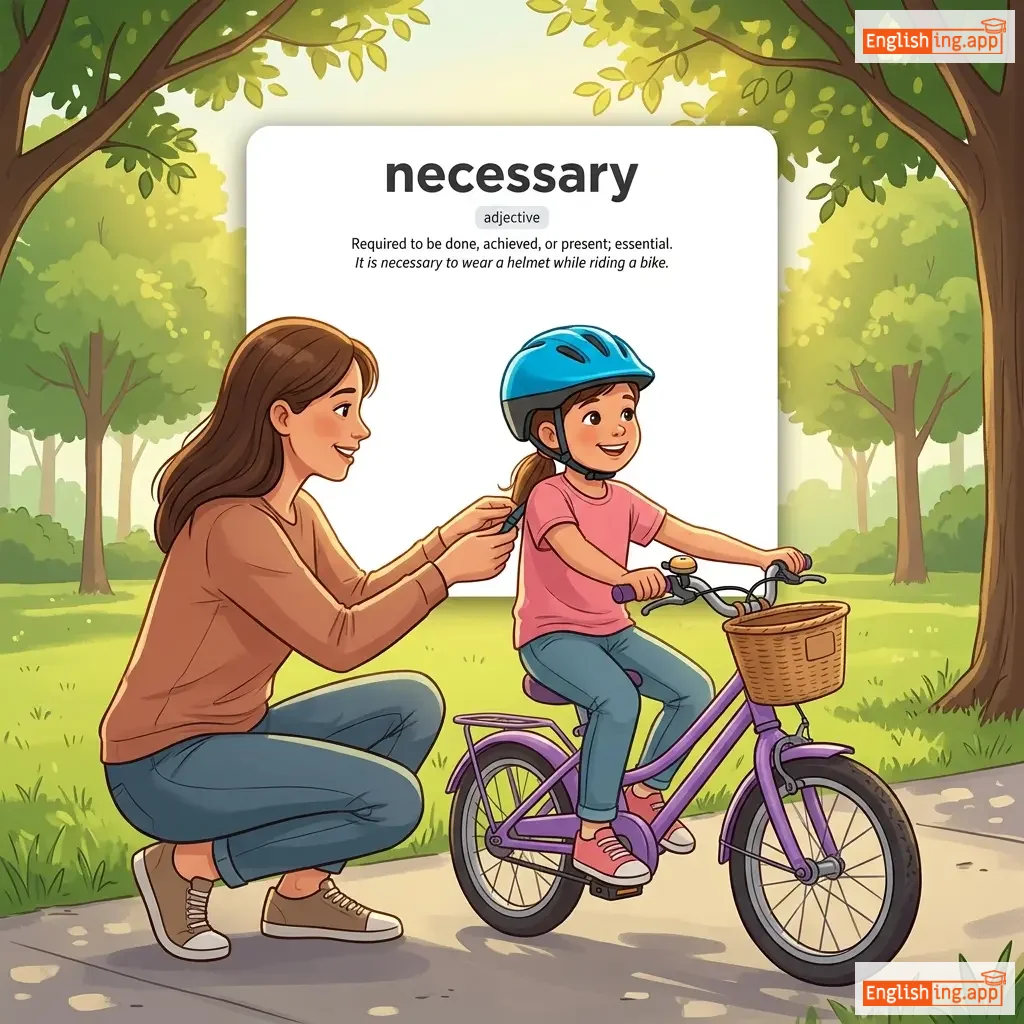
necessary definition card — visual illustration of the meaning
adjective
/ˈnɛsəsɛri/

Required to be done, achieved, or present; essential.

"It is necessary to wear a helmet while riding a bike."

verb
/nəˈsɛsɪteɪt/
必要とする (hitsuyou to suru)

To make something necessary or unavoidable.

"The heavy rains necessitated the cancellation of the event."
"激しい雨はイベントのキャンセルを避けられないものにしました。" (Hageshī ame wa ibento no kyansel o sakerarenai mono ni shimashita.)
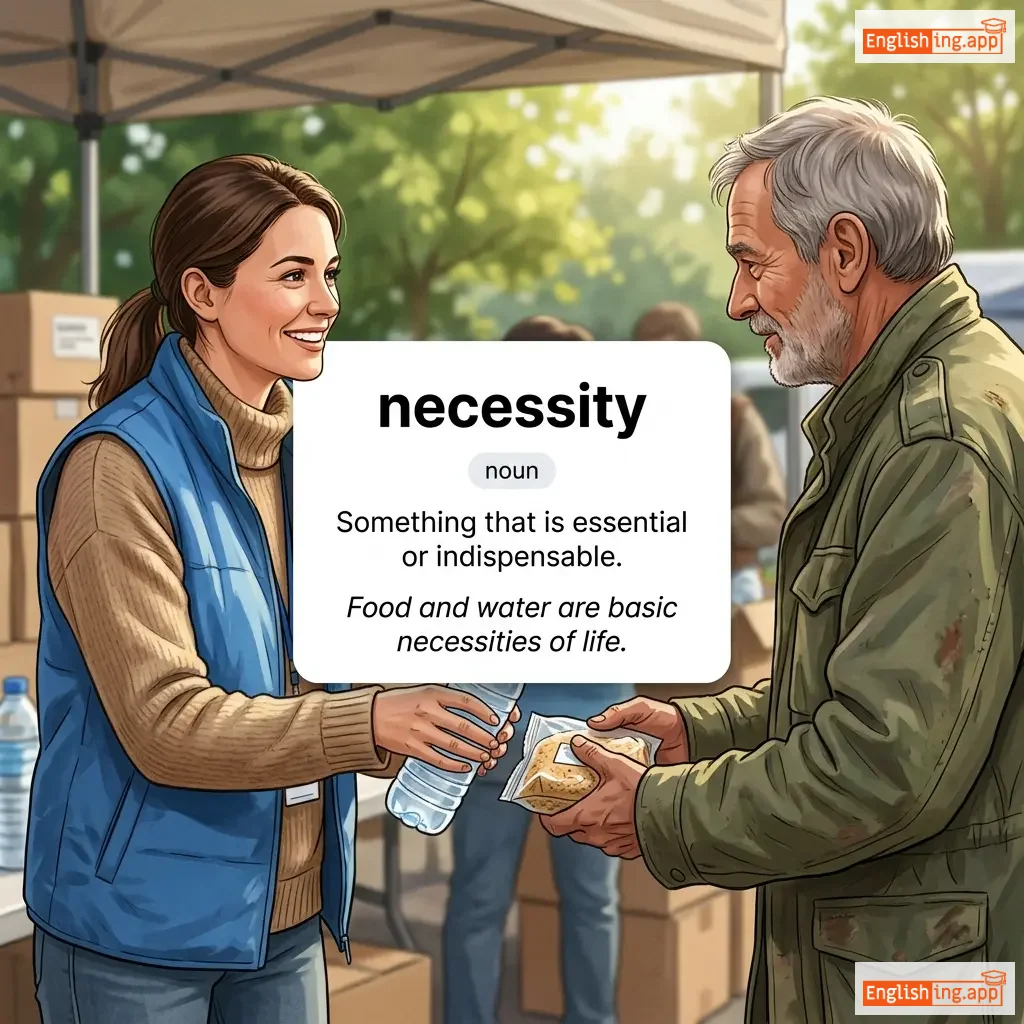
necessity definition card — visual illustration of the meaning
noun
/nəˈsɛsəti/
必要性 (hitsuyousei)

Something that is essential or indispensable.

"Food and water are basic necessities of life."

"食べ物と水は生活の基本的な必要性です。" (Tabemono to mizu wa seikatsu no kihonteki na hitsuyousei desu.)
noun
/nɛk/
(kubi)

the part of the body connecting the head and the shoulders

"She wore a necklace around her neck."
"彼女は首にネックレスをつけていた。" (Kanojo wa kubi ni nekkuresu wo tsuketeita.)
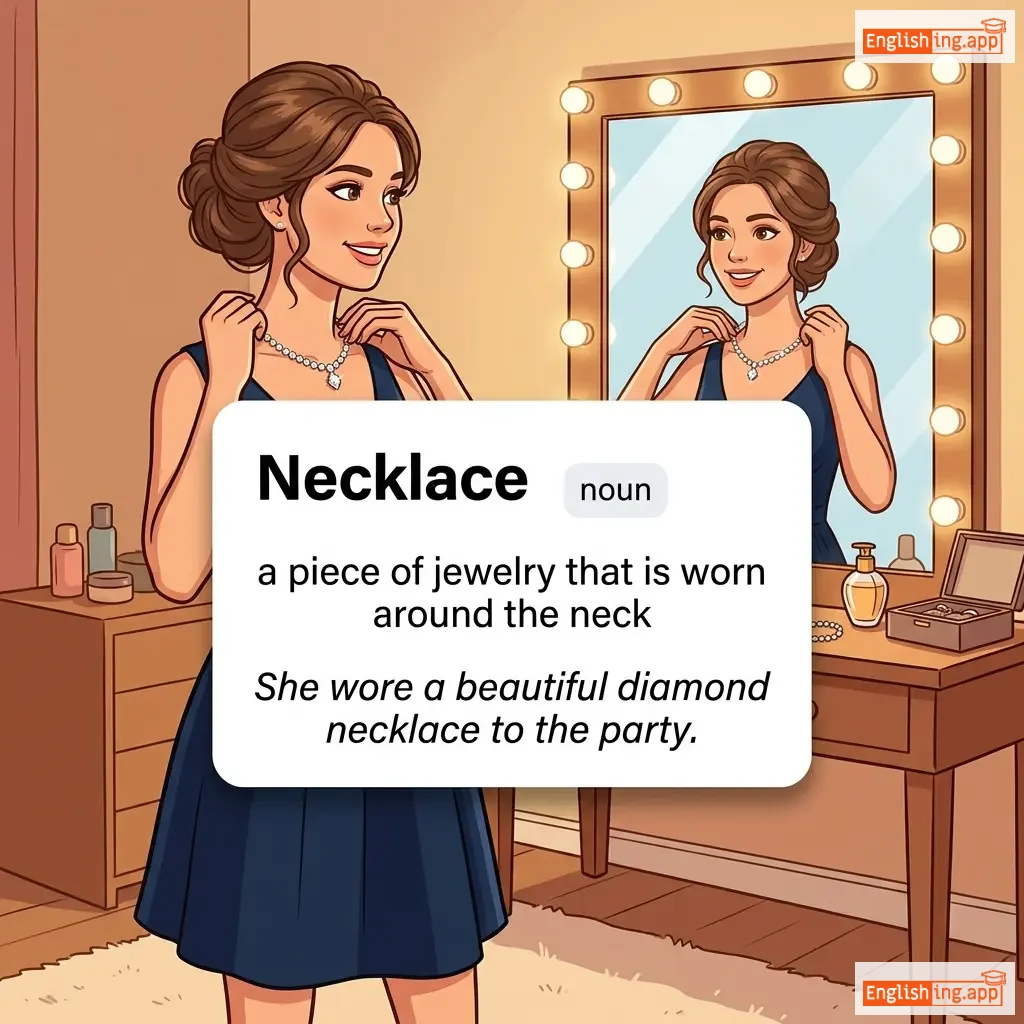
Necklace definition card — visual illustration of the meaning
noun
/ˈnek.ləs/
ネックレス (nekkuresu)

a piece of jewelry that is worn around the neck

"She wore a beautiful diamond necklace to the party."

"彼女はパーティーで美しいダイヤモンドのネックレスをしていました。" (Kanojo wa pātii de utsukushī daiyamondo no nekkuresu o shite imashita.)
noun
/ˈnɛkˌlaɪn/
ネックライン (nekkurain)

the edge of a garment around the neck, especially as cut to form a particular shape

"The dress has a beautiful V-shaped neckline."
"そのドレスには美しいV字型のネックラインがあります。" (Sono doresu ni wa utsukushī V-ji-gata no nekkurain ga arimasu.)
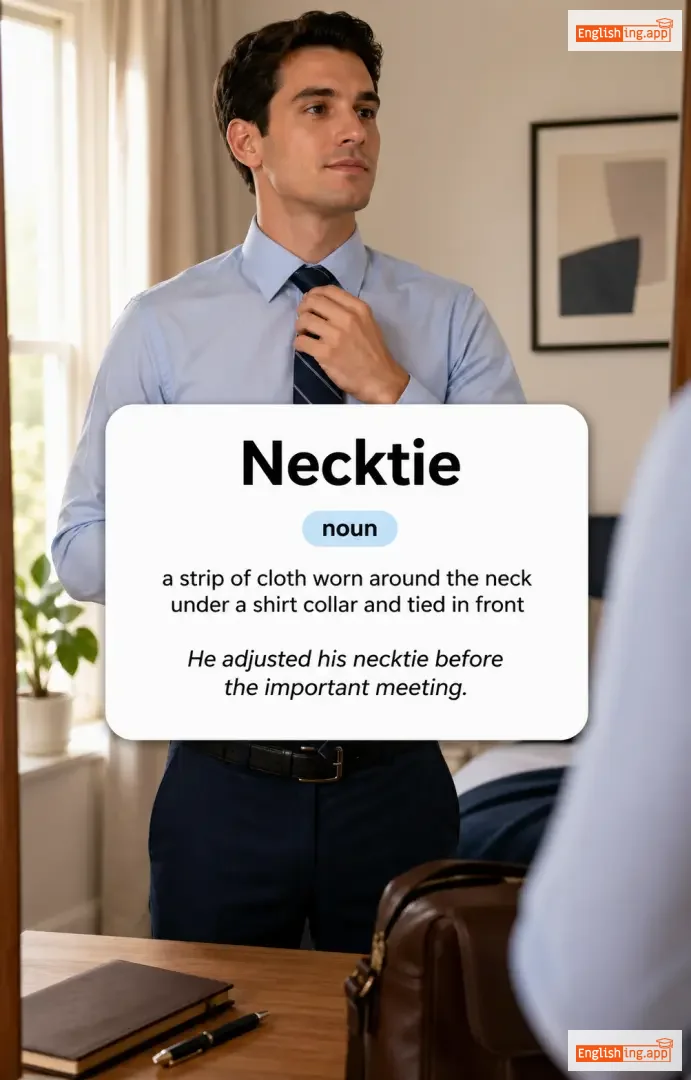
Necktie definition card — visual illustration of the meaning
noun
/ˈnek.taɪ/
ネクタイ (nekutai)

a strip of cloth worn around the neck under a shirt collar and tied in front

"He adjusted his necktie before the important meeting."

"彼は重要な会議の前にネクタイを調整した。" (Kare wa jūyōna kaigi no mae ni nekutai o chōsei shita.)
noun
/nɪˈkrɒlədʒi/
訃報 (fuhou)

An obituary notice or a list of people who have recently died.

"The newspaper published a necrology of notable figures who passed away that year."

"その新聞は、その年に亡くなった著名な人物のネクロロジーを発表しました。" (Sono shinbun wa, sono toshi ni nakunatta chomei na jinbutsu no nekuroji o happyō shimashita.)
🧙‍♂️

necromancer

noun
/ˈnɛkrəˌmænsər/

a person who practices necromancy; a wizard or magician who claims to communicate with the dead

"The villagers feared the old necromancer who lived at the edge of the forest."

noun
/ˈnɛkrəˌmænsi/
死霊術 (shireijutsu)

the practice of communicating with the dead, often to predict the future

"Ancient texts described rituals of necromancy performed by priests."

"古代の文献には、神父たちによって行われた死霊術の儀式が記述されています。" (Kodai no bunken ni wa, shinputa-tachi ni yotte okonawareta shireijutsu no gishiki ga kijutsusareteimasu.)
noun
/nəˈkrɒpəlɪs/
古代の墓地 (kodai no bochi)

a large ancient cemetery with elaborate tombs

"The archaeologists discovered artifacts in the necropolis of the ancient city."

"考古学者たちは古代都市のネクロポリスで遺物を発見しました。" (Kōkogakushatachi wa kodai toshi no nekuroposu de ibutsu o hakken shimashita.)
noun
/nɛˈkroʊsɪs/
壊死 (kaishi)

the death of body tissue due to disease, injury, or lack of blood supply

"The doctor explained that the patient’s wound showed signs of necrosis."
"医師は、患者の傷が壊死の兆候を示していると説明しました。" (Ishi wa, kanja no kizu ga kaishi no choukou wo shimeshiteiru to setsumei shimashita.)
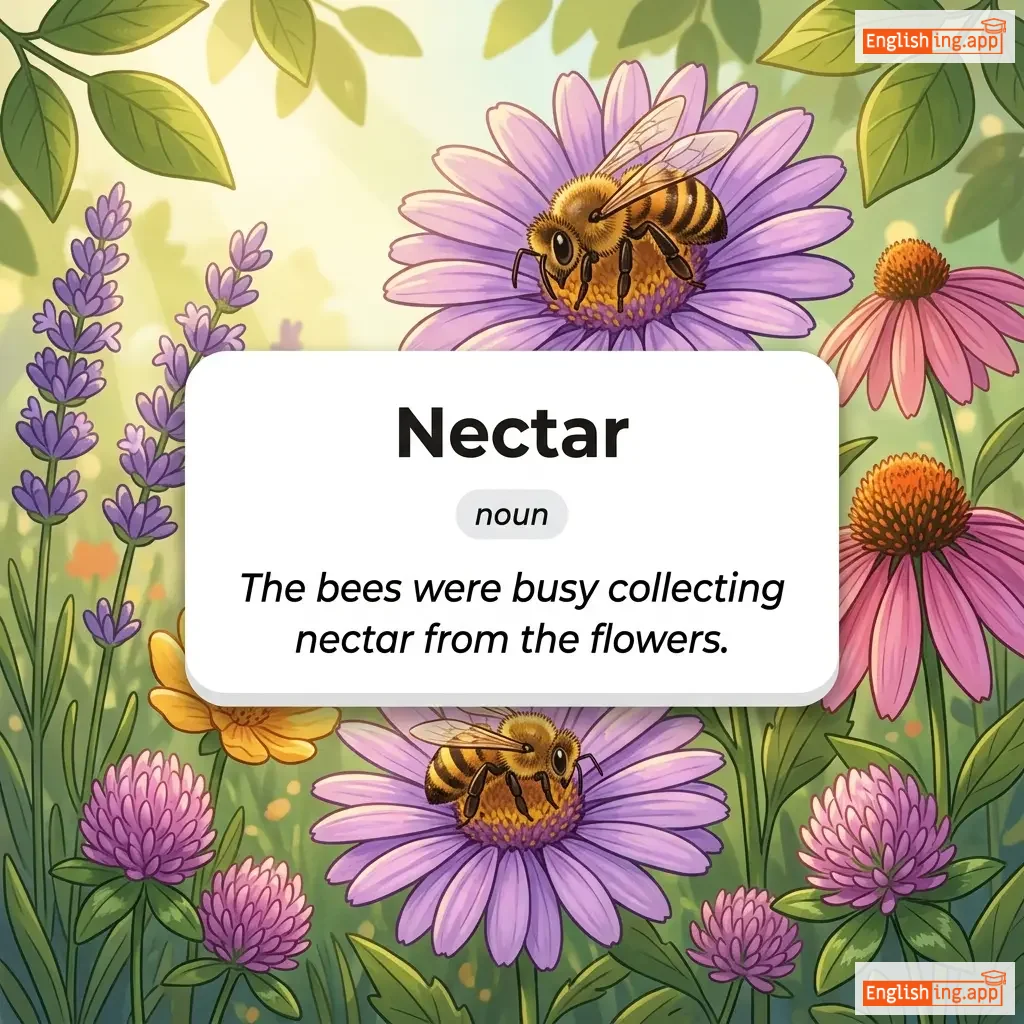
Nectar definition card — visual illustration of the meaning
noun
/ˈnɛktər/
甘露 (kanro)

a sweet liquid produced by flowers and collected by bees; in mythology, the drink of the gods

"The bees were busy collecting nectar from the flowers."

"蜂たちは花からネクターを集めるのに忙しかった。" (Hachitachi wa hana kara nekutā o atsumeru no ni isogashikatta.)
noun
/ˈnɛpətɪzəm/
縁故主義 (enkoshugi)

The practice of giving unfair advantages to relatives, especially in jobs or positions of power.

"The company was accused of nepotism after the manager hired his brother."

"マネージャーが兄弟を雇った後、会社は縁故主義で告発されました。" (Manējā ga kyōdai o yatotta ato, kaisha wa enkoshugi de kokuhatsu saremashita.)
conjunction
/ˈniːðər/
どちらも〜ない (dochira mo nai)

used to connect two negative alternatives

"Neither the manager nor the assistant could attend the meeting."

"マネージャーもアシスタントも会議に出席できなかった。" (maneja mo ashisutanto mo kaigi ni shusseki dekinakatta)
noun
/ˈnɛm.ə.sɪs/
敵 / ライバル (teki / raibaru)

A long-standing rival or an inescapable agent of downfall.

"For years, he considered his colleague to be his nemesis."

"何年もの間、彼は同僚を自分の敵だと思っていた。" (Nanen mono aida, kare wa douryou wo jibun no teki da to omotte ita.)
noun
/ˌniːoʊˈdɑːrwɪnɪzəm/
ネオダーウィニズム (neodaawinizumu)

A modern interpretation of Darwin's theory of evolution, integrating genetics and natural selection.

"Neo-Darwinism combines Darwin’s theory of natural selection with modern genetics."

"ネオダーウィニズムはダーウィンの自然選択説と現代遺伝学を組み合わせています。" (Neo-Darwinism wa Darwin no shizen sentaku setsu to gendai idengaku o kumiawase teimasu.)
noun
/ˌniːoʊˈlætɪn/
ネオラテン (neo raten)

The use of Latin language for scholarly, scientific, and literary purposes after the medieval period.

"Many scientific names are derived from Neo-Latin."

"多くの科学的な名前はネオラテンから派生しています。" (Ōku no kagakuteki na namae wa neo raten kara hassei shiteimasu.)
noun
/niːˈɒkrəsi/
未熟なまたは新しい官僚によって運営される政府 (Mijuku na mata wa atarashī kanryō ni yotte un'ei sareru seifu)

A government or leadership run by inexperienced or new officials.

"The sudden revolution led to a neocracy with inexperienced leaders."

"突然の革命は未経験のリーダーたちによるネオクラシーを生み出した。" (Totsuzen no kakumei wa mikeiken no rīdā-tachi ni yoru neokurashī o umidashita.)
adjective
/ˌniːoʊˈlɪθɪk/
新石器時代の (shin sekkī jidai no)

Relating to the later part of the Stone Age, when ground or polished stone weapons and tools prevailed.

"Neolithic communities began practicing agriculture and domesticating animals."

"新石器時代のコミュニティは農業を行い、動物を飼いならし始めた。" (Shin sekkī jidai no komyuniti wa nōgyō o okonai, dōbutsu o kainarashi hajimeta.)
noun
/niːˈɒlədʒɪzəm/
新造語 (shinzōgo)

A newly coined word or expression.

"The internet has given rise to many neologisms like 'selfie' and 'hashtag'."

"インターネットは「セルフィー」や「ハッシュタグ」などの多くの新造語を生み出しました。" (Intānetto wa 'serufī' ya 'hasshutagu' nado no ōku no shinzōgo o umidashimashita.)
noun
/niˈɒlədʒi/
新しい言葉の使用またはその起源の研究 (atarashii kotoba no shiyou matawa sono kigen no kenkyuu)

The use of new words or the study of their origin.

"The professor specialized in neology, studying the creation of modern slang."

"教授はネオロジーを専門とし、現代のスラングの創造を研究しました。" (Kyouju wa neorojī o senmon to shi, gendai no surangu no souzou o kenkyuu shimashita.)
noun
/ˌniːoʊˈpeɪɡənɪzəm/
ネオペイガニズム (neopeiganizumu)

Modern religious movements influenced by or claiming to be derived from the various historical pagan beliefs of pre-modern Europe.

"Neopaganism has gained popularity as people seek spiritual alternatives to mainstream religions."
"ネオペイガニズムは、人々が主流の宗教に代わる精神的な選択肢を探しているため、人気を集めています。" (Neopeiganizumu wa, hitobito ga shuryū no shūkyō ni kawaru seishinteki na sentakushi o sagashite iru tame, ninki o atsumeています。)
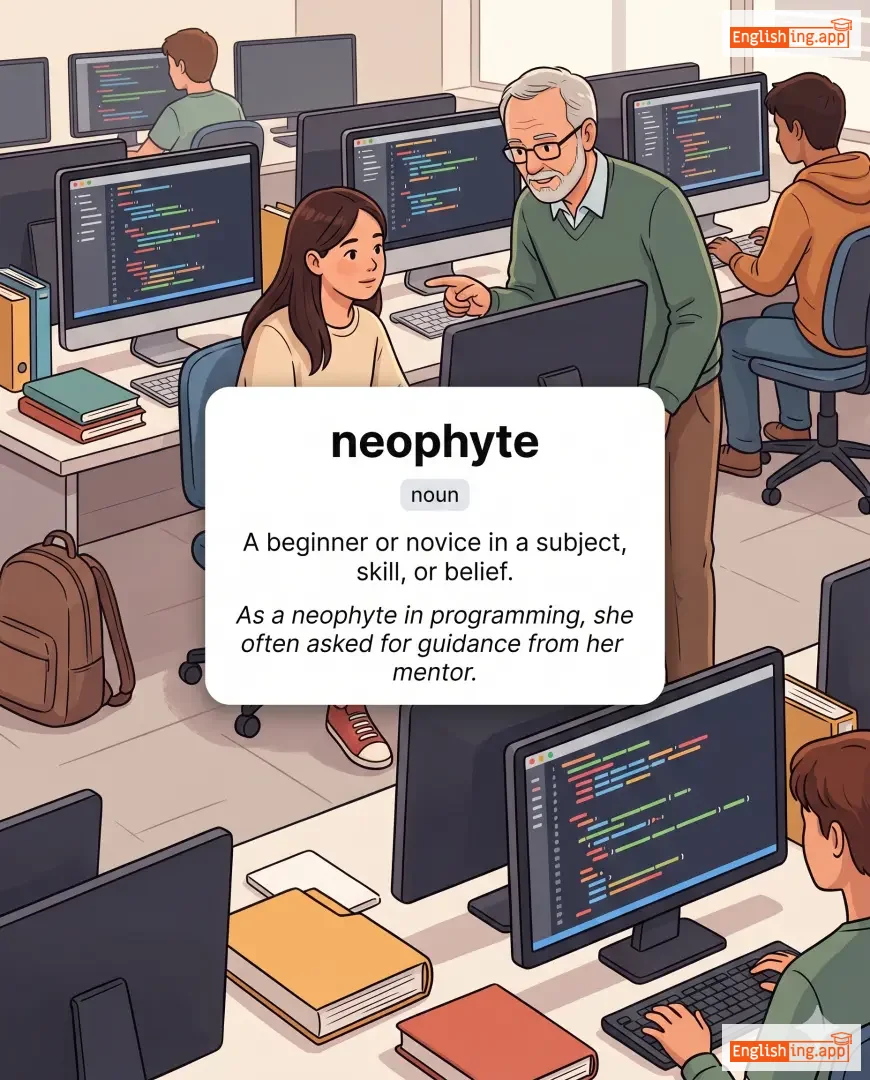
neophyte definition card — visual illustration of the meaning
noun
/ˈniːəˌfaɪt/
初心者 (shoshinsha)

A beginner or novice in a subject, skill, or belief.

"As a neophyte in programming, she often asked for guidance from her mentor."

"プログラミングの初心者として、彼女はよくメンターに指導を求めていた。" (Puroguramingu no shoshinsha to shite, kanojo wa yoku mentā ni shidō o motomete ita.)
noun
/ˈnefjuː/
(oi)

the son of one’s brother or sister

"My nephew is studying at the university."

"私の甥は大学で勉強しています。" (watashi no oi wa daigaku de benkyou shiteimasu)
noun
/nɛt/
(ami)

a piece of material made of threads or ropes woven together, used to catch or hold things

"The fisherman cast his net into the sea."

"漁師は網を海に投げた。" (Ryoushi wa ami wo umi ni nageta.)
mundanity definition card — visual illustration of the meaning
noun
mʌnˈdeɪ.nɪ.ti
平凡 (heibon)

The quality of being ordinary, routine, or lacking excitement.

"The mundanity of office life can be exhausting."

"オフィスの生活の平凡さは疲れることがあります。" (Ofisu no seikatsu no heibon-sa wa tsukareru koto ga arimasu.)
noun
/ˈnɛtˌwɜrk/
ネットワーク (nettowaaku)

A system of interconnected people, things, or computers.

"She built a strong professional network."

"彼女は強力なプロフェッショナルネットワークを作り上げた。" (Kanojo wa kyouryoku na purofesshonaru nettowaaku wo tsukuriageta.)
adjective
/ˈnɛtlˌsʌm/
苛立たしい (iradattashii)

Causing irritation, annoyance, or difficulty.

"The nettlesome rules frustrated the workers."

"苛立たしい規則は労働者たちを苛立たせました。" (Iradattashii kisoku wa roudousha-tachi wo iradatasemashita.)
noun
/ˈnɛtl̩/
触れると痛みを引き起こす植物 (fureru to itami o hikiokosu shokubutsu)

a plant with stinging hairs that cause irritation when touched

"He accidentally brushed against the nettle and felt a sharp sting."

"彼は不注意でイラクサに触れて鋭い痛みを感じた。" (Kare wa fuchūi de irakusa ni furete surudoi itami o kanjita.)
adjective
/ˈnɛðər/
下の (shita no)

situated down or below; lower

"They explored the nether regions of the cave."
"彼らは洞窟の下の地域を探索した。" (Karera wa dōkutsu no shita no chiiki o tansaku shita.)
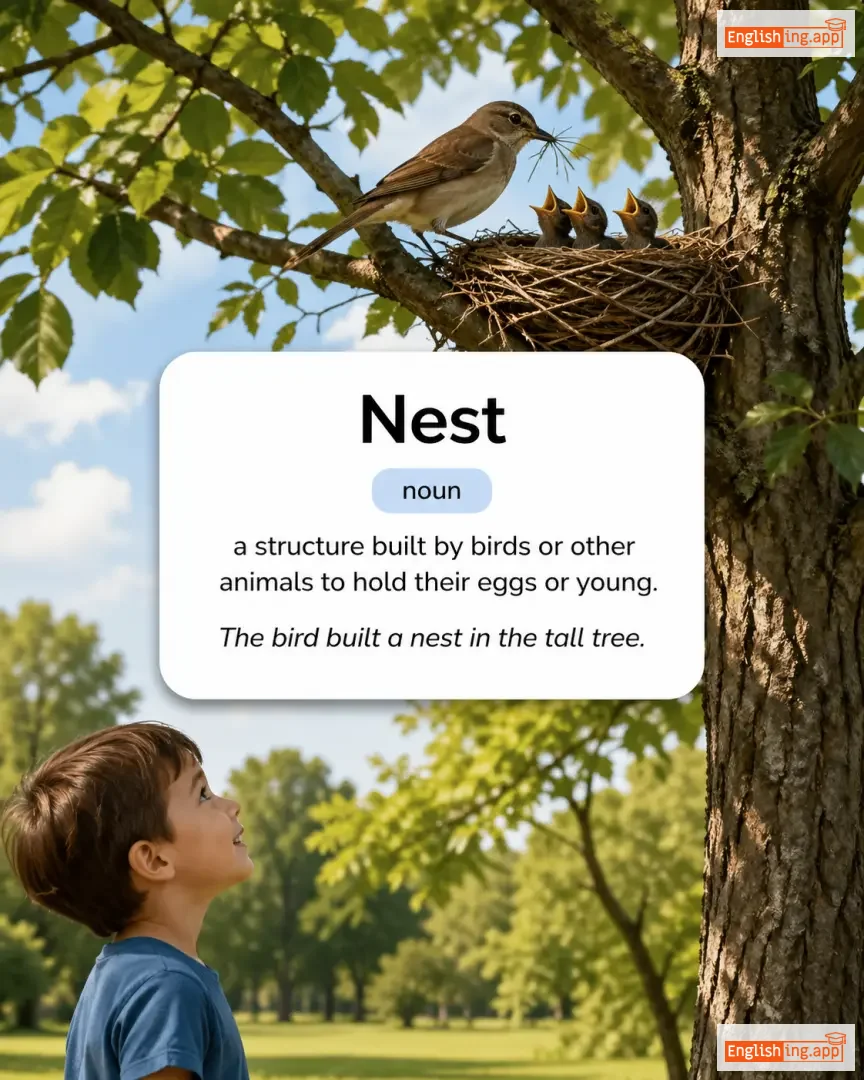
Nest definition card — visual illustration of the meaning
noun
/nɛst/
(su)

a structure built by birds or other animals to hold their eggs or young.

"The bird built a nest in the tall tree."

"その鳥は高い木に巣を作った。" (Sono tori wa takai ki ni su o tsukutta.)