Словари

Словарь английского языка | Значения слов, определения и примеры

noun
/neɪv/
главный неф церкви (glavny nef tserkvi)

the central part of a church building intended to accommodate the congregation

"The choir sang beautifully in the church nave."

"Хор прекрасно пел в нефе церкви." (Khor prekrasno pel v nefe tserkvi.)
👶

Navel

noun
/ˈneɪvəl/

the small hollow or raised area in the middle of the stomach, also called the belly button

"The baby’s navel was carefully cleaned after birth."

adjective
/ˈnæv.ɪ.ɡə.bəl/
плавучий (plavuchiy)

Able to be sailed on or through by ships or boats.

"The river is navigable for large cargo ships."

"Река пригодна для больших грузовых судов." (Reka prigodna dlya bol'shikh gruzovikh sudov.)
navigate definition card — visual illustration of the meaning
verb
/ˈnæv.ɪ.ɡeɪt/

To plan and direct the course of a ship, vehicle, or journey.

"The captain navigated the ship safely through the storm."
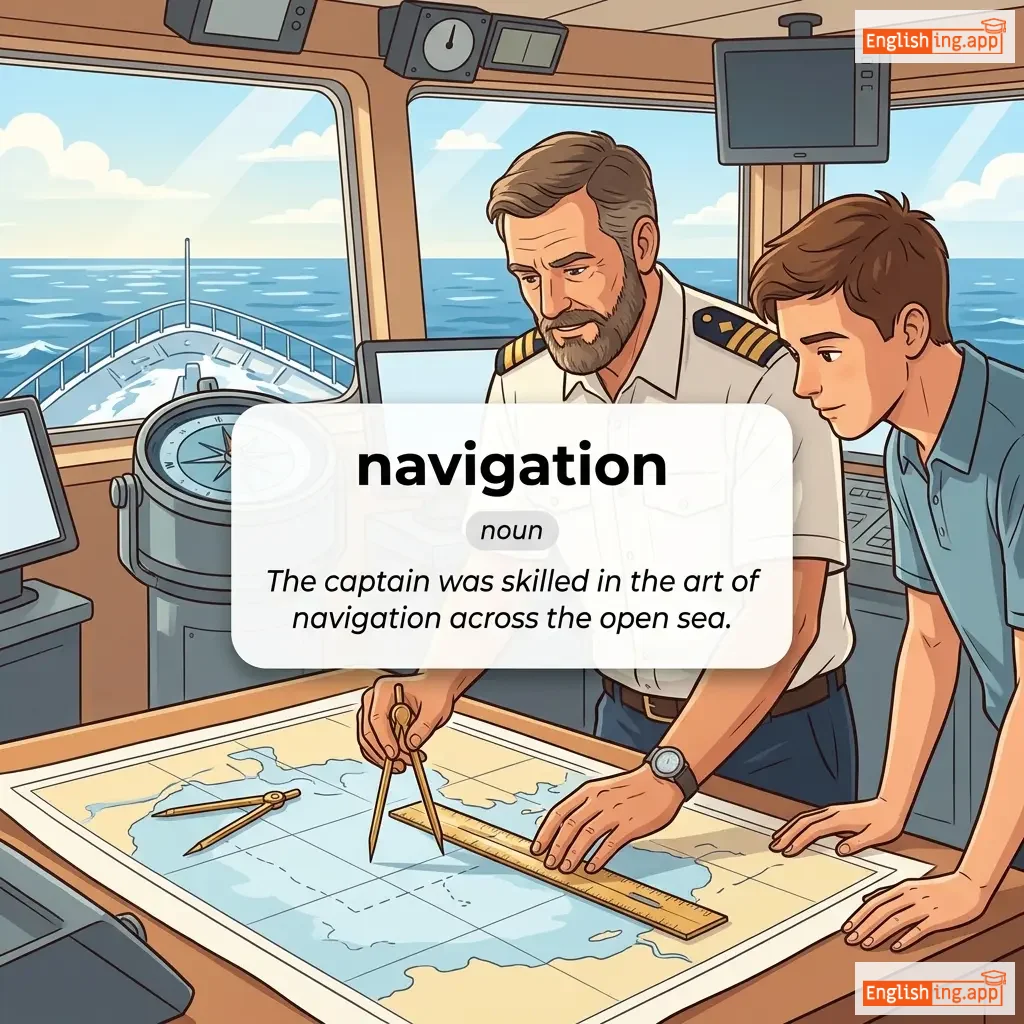
navigation definition card — visual illustration of the meaning
noun
/ˌnævɪˈɡeɪʃən/
навигация (navigatsiya)

the process or activity of accurately determining one's position and planning and following a route

"The captain was skilled in the art of navigation across the open sea."

"Капитан был мастером в искусстве навигации через открытое море." (Kapitan byl masterom v iskusstve navigatsii cherez otkrytoye more.)
Navy definition card — visual illustration of the meaning
noun
/ˈneɪvi/
военно-морской флот (voyenno-morskoy flot)

the branch of armed forces that conducts military operations at sea

"He joined the navy after graduating from college."

"Он поступил в военно-морской флот после окончания колледжа." (On postupil v voyenno-morskoy flot posle okonchaniya kolledzha.)
noun
/ˈneɪˌseɪ.ɪŋ/
негативное высказывание (negativnoe vyskazivanie)

The act of expressing negative or pessimistic views.

"His constant naysaying discouraged the team."

"Его постоянное негативное высказывание разочаровывало команду." (Ego postoyannoe negativnoe vyskazivanie razocharovyvalo komandu.)
noun
/ˌɛn.biː.esˈpiː/
неразрывный пробел (nerazryvnyy probel)

a non-breaking space character in HTML used to prevent an automatic line break at its position

"Use   in HTML to add a space that won't break into a new line."

"Используйте   в HTML, чтобы добавить пробел, который не разрывает строку." (Ispol'zuyte   v HTML, chtoby dobavit' probel, kotoryy ne razryvayet stroku.)
noun
/niːp/
низкий прилив (nizkiy prilyv)

A tide just after the first or third quarters of the moon when the difference between high and low tide is least.

"During a neap tide, the water level change is minimal."

"Во время низкого прилива изменение уровня воды минимально." (Vo vremya nizkogo prilyva izmenenie urovnya vody minimalno.)
preposition
/nɪə(r)/
близко (blizko)

At or to a short distance away; close in space, time, or relationship.

"There is a park near my house."

"Есть парк недалеко от моего дома." (Yest park nedaleko ot moyego doma.)
adverb
/ˈnɪərbaɪ/
рядом; в окрестностях (ryadom; v okrestnostyakh)

close to; not far away; in the neighborhood

"There is a grocery store nearby."

"Недалеко есть продуктовый магазин." (Nedaleko yest' produktovyy magazin.)
adjective
/ˈnɪəˌbaɪ/
рядом (ryadom)

close to a particular place or person

"The nearest gas station is nearby."

"Ближайшая автозаправка рядом." (Blizhayshaya avtobenzinovka ryadom.)
adverb
/ˈnɪəli/
почти (pochti)

almost, but not completely

"She nearly missed the bus."

"Она почти пропустила автобус." (Ona pochtit propustila avtobus.)
Neat definition card — visual illustration of the meaning
adjective
/niːt/
аккуратный (akkuratnyy)

tidy, orderly, and well-arranged; simple and elegant

"His handwriting is very neat and easy to read."

"Его почерк очень аккуратный и легко читаемый." (Ego pocherk ochen' akuratnyy i legko chitayemyy.)
adverb
/ˈniːtli/
аккуратно; чисто (akkuratno; chisto)

in a tidy and orderly way; carefully and precisely

"She arranged the books neatly on the shelf."

"Она аккуратно разместила книги на полке." (Ona akkurnato razmestila knigi na polke.)
noun
/ˈneb.jʊ.lə/
туманность (tumannost')

A cloud of gas and dust in outer space, sometimes visible in the night sky.

"The Orion Nebula is one of the brightest in the sky."

"Орионская туманность — одна из самых ярких на небе." (Orionskaya tumannost' — odna iz samykh yarkikh na nebe.)
adjective
/ˈnɛbjələs/
туманный (tumannyy)

Unclear, vague, or ill-defined; resembling a cloud or haze.

"His plan for the future was still nebulous and hard to understand."

"Его план на будущее был всё ещё туманным и трудным для понимания." (Yego plan na budushcheye byl vse yeshchyo tumannym i trudnym dlya ponyatiya.)
adverb
/ˌnɛsəˈsɛrɪli/
необязательно (neobyazatel'no)

as a necessary result; inevitably

"It doesn’t necessarily mean you’re wrong."
"Это не обязательно означает, что вы ошибаетесь." (Eto ne obyazatel'no oznachaet, chto vy oshibayetes'.)
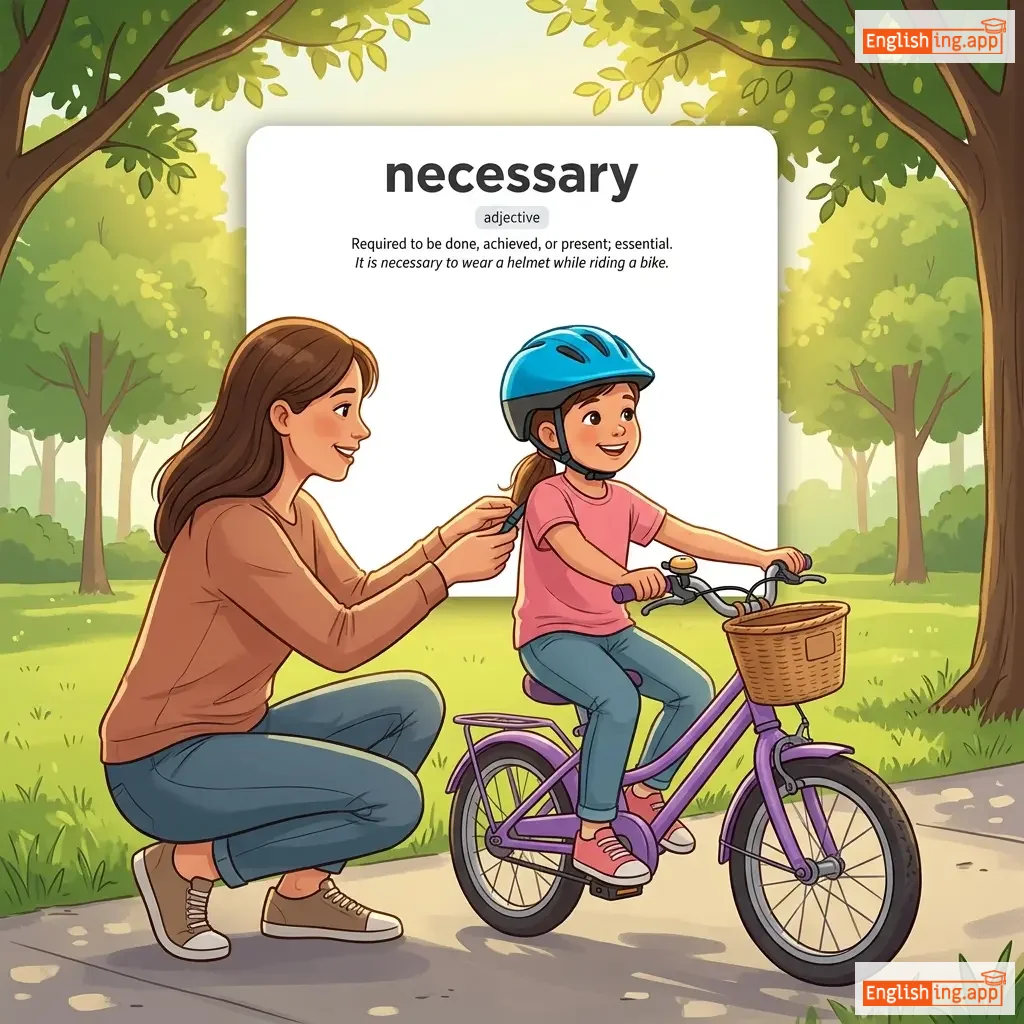
necessary definition card — visual illustration of the meaning
adjective
/ˈnɛsəsɛri/
необходимый (neseseri)

Required to be done, achieved, or present; essential.

"It is necessary to wear a helmet while riding a bike."

"Необходимо носить шлем во время езды на велосипеде." (Neobkhodimo nosit shlem vo vremya ezdy na velosipede)
verb
/nəˈsɛsɪteɪt/
сделать необходимым (sdelat' neobkhodimym)

To make something necessary or unavoidable.

"The heavy rains necessitated the cancellation of the event."
"Тяжелые дожди сделали отмену мероприятия неизбежной." (Tyazhelye dozhdi sdelali otmenu meropriyatiya neizbezhnoi.)
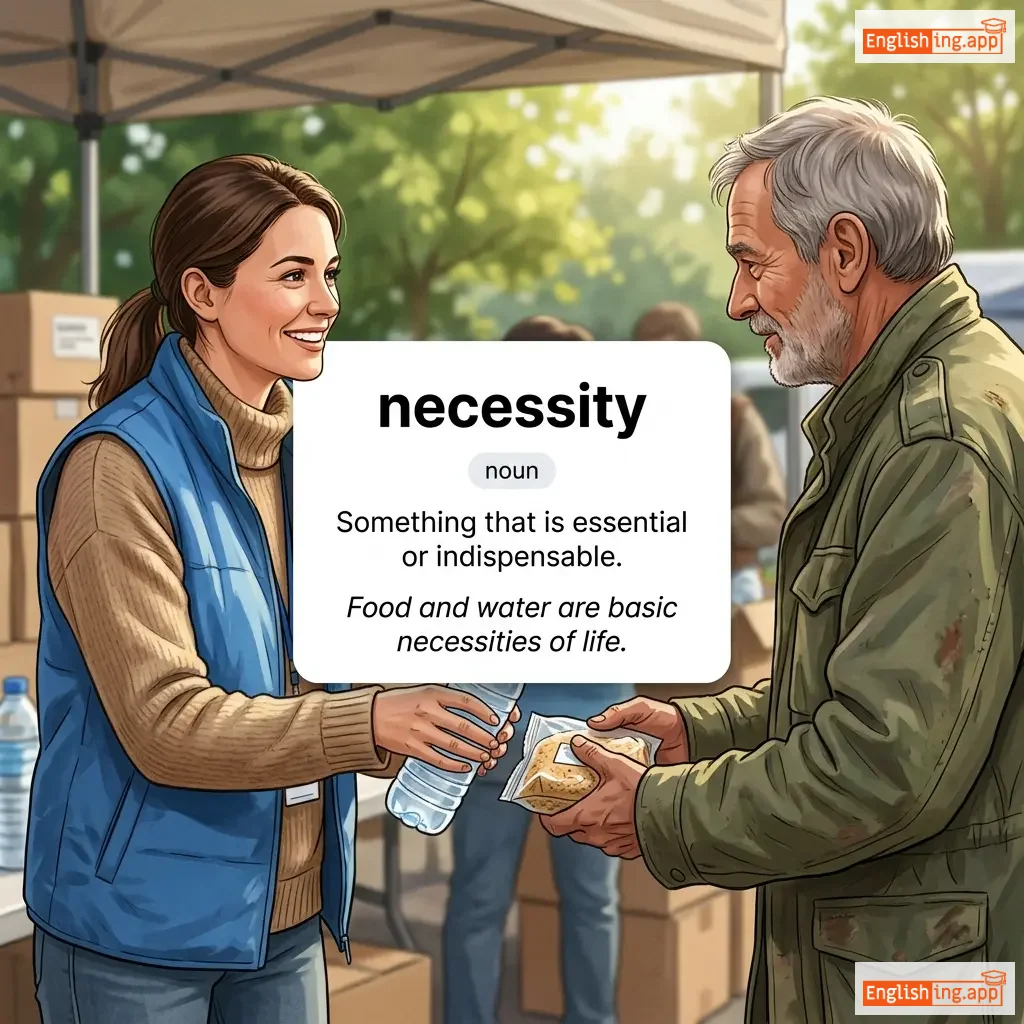
necessity definition card — visual illustration of the meaning
noun
/nəˈsɛsəti/
необходимость (neobkhodimost)

Something that is essential or indispensable.

"Food and water are basic necessities of life."

"Еда и вода являются основными необходимыми вещами в жизни." (Yeda i voda yavyayutsya osnovnymi neobkhodimymi veshchami v zhizni.)
noun
/nɛk/
шея (sheya)

the part of the body connecting the head and the shoulders

"She wore a necklace around her neck."
"Она носила ожерелье на своей шее." (Ona nosila ozherelye na svoey sheye.)
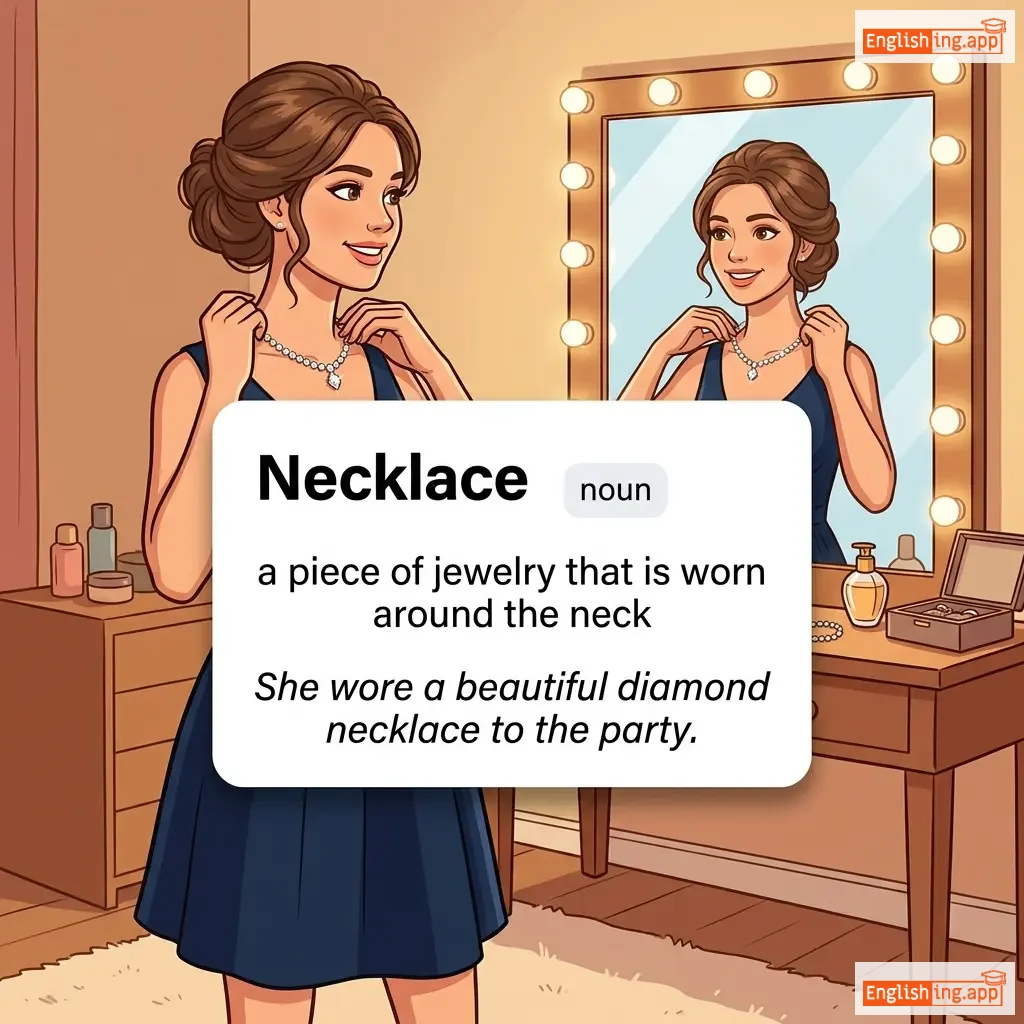
Necklace definition card — visual illustration of the meaning
noun
/ˈnek.ləs/
ожерелье (ozherele)

a piece of jewelry that is worn around the neck

"She wore a beautiful diamond necklace to the party."

"Она носила красивое бриллиантовое ожерелье на вечеринке." (Ona nosila krasivoe briliantovoe ozherelie na vecherinke.)
noun
/ˈnɛkˌlaɪn/
вырез (vyrez)

the edge of a garment around the neck, especially as cut to form a particular shape

"The dress has a beautiful V-shaped neckline."
"Платье имеет красивый вырез в форме V." (Plat'ye imeet krasivyy vyrez v forme V.)
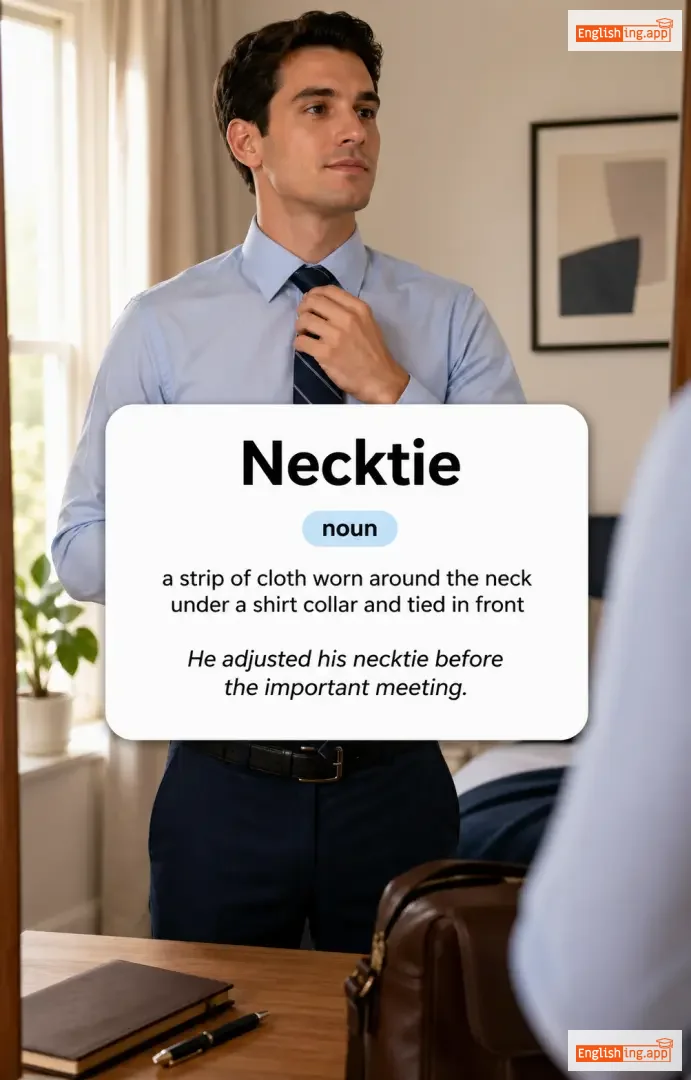
Necktie definition card — visual illustration of the meaning
noun
/ˈnek.taɪ/
галстук (galstuk)

a strip of cloth worn around the neck under a shirt collar and tied in front

"He adjusted his necktie before the important meeting."

"Он подправил свой галстук перед важной встречей." (On podpravil svoi galstuk pered vazhnoy vstrechey.)
noun
/nɪˈkrɒlədʒi/
некрология (nekrologiya)

An obituary notice or a list of people who have recently died.

"The newspaper published a necrology of notable figures who passed away that year."

"Газета опубликовала некролог известных личностей, которые умерли в этом году." (Gazeta opublikovala nekrolog izvestnykh lichnostey, kotorye umerli v etom godu.)
noun
/ˈnɛkrəˌmænsər/
некромант (nekromancer)

a person who practices necromancy; a wizard or magician who claims to communicate with the dead

"The villagers feared the old necromancer who lived at the edge of the forest."

"Жители деревни боялись старого некроманта, который жил на краю леса." (Zhiteli derevni boyalis starogo nekromanta, kotoryi zhil na kraju lesa.)
noun
/ˈnɛkrəˌmænsi/
некромантия (nekromantiya)

the practice of communicating with the dead, often to predict the future

"Ancient texts described rituals of necromancy performed by priests."

"Древние тексты описывают ритуалы некромантии, проводимые священниками." (Drevnie teksty opisyvayut ritualy nekromantii, provodimye svyashchennikami.)
noun
/nəˈkrɒpəlɪs/
некрополь (nekropol)

a large ancient cemetery with elaborate tombs

"The archaeologists discovered artifacts in the necropolis of the ancient city."

"Археологи обнаружили артефакты на некрополе древнего города." (Arheologi obnaruzhili artefakty na nekropole drevnego goroda.)
noun
/nɛˈkroʊsɪs/
некроз (nekroz)

the death of body tissue due to disease, injury, or lack of blood supply

"The doctor explained that the patient’s wound showed signs of necrosis."
"Врач объяснил, что рана пациента показала признаки некроза." (Vrach obyasnil, chto rana patsienta pokazala priznak nekroza.)
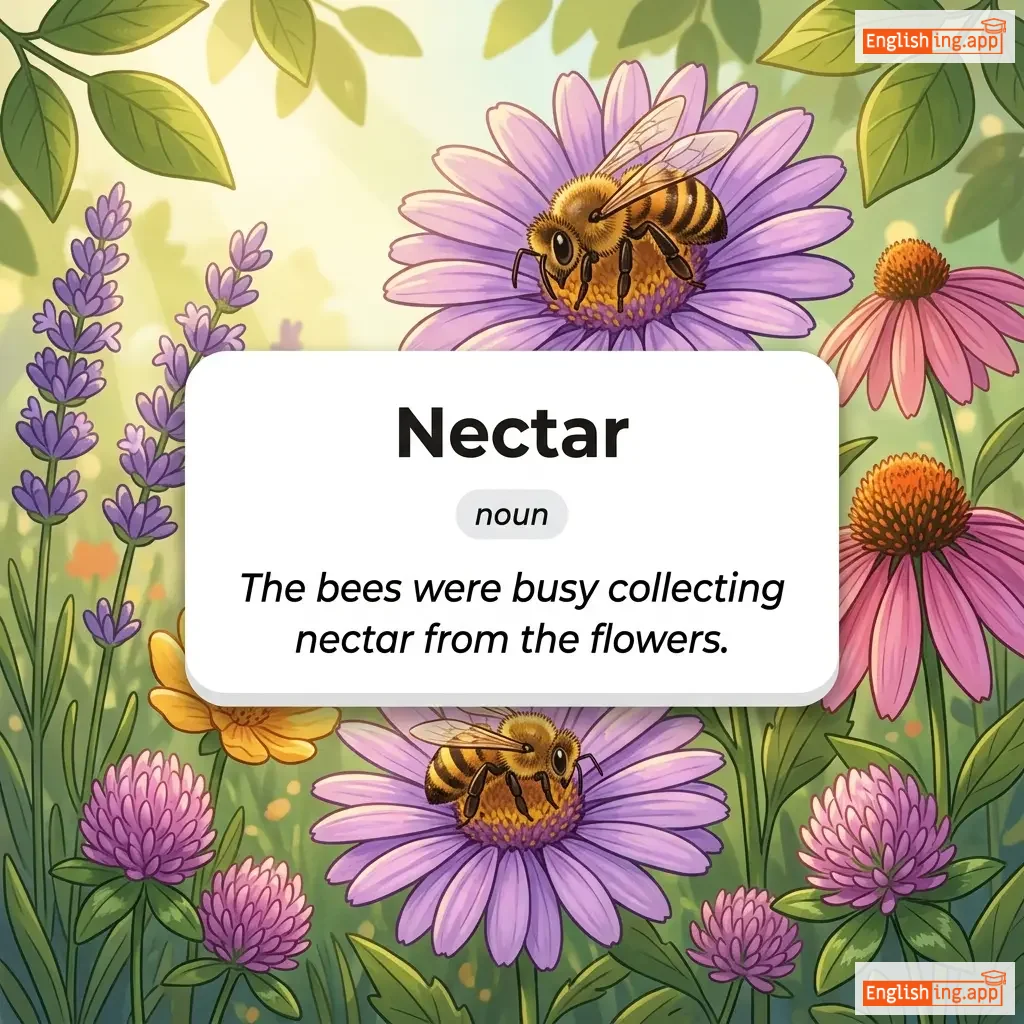
Nectar definition card — visual illustration of the meaning
noun
/ˈnɛktər/
нектар (nektar)

a sweet liquid produced by flowers and collected by bees; in mythology, the drink of the gods

"The bees were busy collecting nectar from the flowers."

"Пчелы были заняты сбором нектара с цветов." (Pchely byli zanyaty sbornom nektara s tsvetov.)
noun
/ˈnɛpətɪzəm/
непотизм (nepotizm)

The practice of giving unfair advantages to relatives, especially in jobs or positions of power.

"The company was accused of nepotism after the manager hired his brother."

"Компания была обвинена в непотизме после того, как менеджер нанял своего брата." (Kompanija byla obvinena v nepotizme posle togo, kak menedzher nanyl svoego brata.)
conjunction
/ˈniːðər/
ни тот ни другой (ni tot ni drugoy)

used to connect two negative alternatives

"Neither the manager nor the assistant could attend the meeting."

"Ни менеджер, ни помощник не смогли присутствовать на встрече." (ni menedzher ni pomoshnik ne smogli prisutstvovat na vstreche)
noun
/ˈnɛm.ə.sɪs/
враг / соперник (vrag / sopeerik)

A long-standing rival or an inescapable agent of downfall.

"For years, he considered his colleague to be his nemesis."

"Годами он считал своего коллегу своим врагом." (Godami on schital svoego kollegu svoim vragom.)
noun
/ˌniːoʊˈdɑːrwɪnɪzəm/
нео-дарвинизм (neo-darvinizm)

A modern interpretation of Darwin's theory of evolution, integrating genetics and natural selection.

"Neo-Darwinism combines Darwin’s theory of natural selection with modern genetics."

"Нео-дарвинизм сочетает теорию естественного отбора Дарвина с современной генетикой." (Neo-darvinizm sochetaet teoryyu estestvennogo otbora Darvina s sovremennoy genetiekoy.)
noun
/ˌniːoʊˈlætɪn/
нео-латин (neo-latin)

The use of Latin language for scholarly, scientific, and literary purposes after the medieval period.

"Many scientific names are derived from Neo-Latin."

"Многие научные названия происходят от нео-латинского." (Mnogie nauchnye nazvaniya proiskhodyat ot neo-latinskogo.)
noun
/niːˈɒkrəsi/
Правительство, возглавляемое неопытными или новыми чиновниками (Pravitel'stvo, vozglavlyaemoe neopitnymi ili novymi chinovnikami)

A government or leadership run by inexperienced or new officials.

"The sudden revolution led to a neocracy with inexperienced leaders."

"Внезапная революция привела к неократии с неопытными лидерами." (Vnezapnaya revolyutsiya privela k neokraty s neopitnymi liderami.)
adjective
/ˌniːoʊˈlɪθɪk/
неолитический (neolitischeskiy)

Relating to the later part of the Stone Age, when ground or polished stone weapons and tools prevailed.

"Neolithic communities began practicing agriculture and domesticating animals."

"Неолитические общества начали заниматься сельским хозяйством и одомашнивать животных." (Neoliticheskie obshchestva nachali zanimaćsya sel'skim khozyaystvom i odomashnivat' zhivotnykh.)
noun
/niːˈɒlədʒɪzəm/
неологизм (neologizm)

A newly coined word or expression.

"The internet has given rise to many neologisms like 'selfie' and 'hashtag'."

"Интернет дал начало многим неологизмам, таким как 'селфи' и 'хэштег'." (Internet dal nachalo mnogim neologizmam, takim kak 'selfi' i 'kheshtheg'.)
noun
/niˈɒlədʒi/
использование новых слов или изучение их происхождения (ispol'zovaniye novykh slov ili izucheniye ikh proiskhozhdeniya)

The use of new words or the study of their origin.

"The professor specialized in neology, studying the creation of modern slang."

"Профессор специализировался на неологии, изучая создание современного сленга." (Professor spetsializirovalsya na neologii, izuchaya sozdanie sovremennogo slenga.)
noun
/ˌniːoʊˈpeɪɡənɪzəm/
неопаганизм (neopaganizm)

Modern religious movements influenced by or claiming to be derived from the various historical pagan beliefs of pre-modern Europe.

"Neopaganism has gained popularity as people seek spiritual alternatives to mainstream religions."

"Неопаганизм приобрел популярность, так как люди ищут духовные альтернативы основным религиям." (Neopaganizm priobrels populyarnost', tak kak lyudi ishchut dukhovnye al'ternativy osnovnym religiyam.)
neophyte definition card — visual illustration of the meaning
noun
/ˈniːəˌfaɪt/
новичок (novichok)

A beginner or novice in a subject, skill, or belief.

"As a neophyte in programming, she often asked for guidance from her mentor."

"Будучи новичком в программировании, она часто просила советы у своего наставника." (Buduchi novichkom v programmirovanii, ona chasto prosila sovety u svoego nastavnika.)
noun
/ˈnefjuː/
племянник (plemyannik)

the son of one’s brother or sister

"My nephew is studying at the university."

"Мой племянник учится в университете." (moy plemyannik uchitsya v universitete)
noun
/nɛt/
сеть (set)

a piece of material made of threads or ropes woven together, used to catch or hold things

"The fisherman cast his net into the sea."

"Рыбак бросил свою сеть в море." (Rybak brosil svoju set' v more.)
mundanity definition card — visual illustration of the meaning
noun
mʌnˈdeɪ.nɪ.ti
банальность (banal'nost')

The quality of being ordinary, routine, or lacking excitement.

"The mundanity of office life can be exhausting."

"Банальность офисной жизни может быть утомительной." (Banal'nost' ofisnoy zhizni mozhet byt' utomitel'noy.)
noun
/ˈnɛtˌwɜrk/
сеть (set)

A system of interconnected people, things, or computers.

"She built a strong professional network."

"Она построила сильную профессиональную сеть." (Ona postroila sil'nuyu professional'nuyu set'.)
adjective
/ˈnɛtlˌsʌm/
раздражающий (razdrazhayushchiy)

Causing irritation, annoyance, or difficulty.

"The nettlesome rules frustrated the workers."

"Раздражающие правила расстроили работников." (Razdrazhayushchie pravila rasstroili rabotnikov.)
noun
/ˈnɛtl̩/
растение с жгучими волосками, которые вызывают раздражение при касании (rastenie s zhguchimi voloskami, kotorye vyzyvayut razdrazhenie pri kasanii)

a plant with stinging hairs that cause irritation when touched

"He accidentally brushed against the nettle and felt a sharp sting."

"Он случайно коснулся крапивы и почувствовал острое жжение." (On sluchayno kosnulsya krapivy i pochuvstvoval ostroye zhizhenie.)
adjective
/ˈnɛðər/
нижний (nizhniy)

situated down or below; lower

"They explored the nether regions of the cave."
"Они исследовали нижние регионы пещеры." (Oni issledovali nizhnie regiony peshchery.)
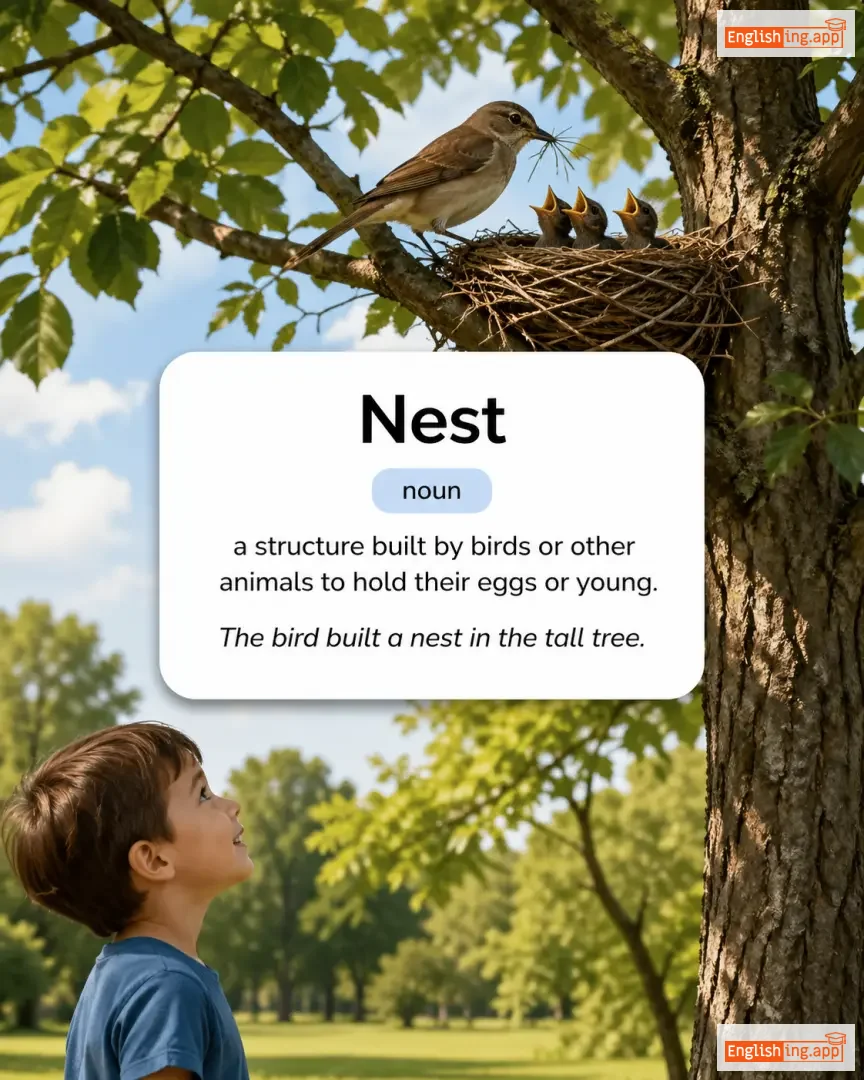
Nest definition card — visual illustration of the meaning
noun
/nɛst/
гнездо (gnezdo)

a structure built by birds or other animals to hold their eggs or young.

"The bird built a nest in the tall tree."

"Птица построила гнездо на высоком дереве." (Ptitsa postroila gnezdo na visokom dereve.)