Словари

Словарь английского языка | Значения слов, определения и примеры

noun
/moʊld/
форма; плесень (mould)

a hollow container used to give shape to molten material; fungus

"She poured chocolate into the mould to make candies."

"Она залила шоколад в форму, чтобы сделать конфеты." (Ona zalila shokolad v formu chtoby sdelat konfety.)
noun
/ˈmɒtəʊ/
девиз (deviz)

A short sentence or phrase that expresses a guiding belief or principle.

"Her motto in life is 'never give up.'"

"Её девиз в жизни - 'Никогда не сдавайся.'" (Eё deviz v zhizni - 'Nikogda ne sdavaysya.')
adjective
/ˈmɒtld/
пятнистый (pyatnisty)

Marked with spots, streaks, or blotches of different shades or colors.

"The snake's mottled skin helped it blend into the forest floor."

"Пятнистая кожа змеи помогла ей слиться с лесным полом." (Pyatnistaya kozha zmei pomogla ei slitsya s lesnym polom.)
verb
/ˈmɒtl/
пятнистый (pyatnisty)

To mark with spots or patches of color.

"The leaves were mottled with shades of yellow and brown."

"Листья были покрыты пятнами желтого и коричневого цвета." (List'ya byli pokryty pyatnami zheltogo i korichnevogo tsveta.)
noun
/ˈməʊtərɪst/
автомобилист (avtomobilist)

a person who drives a motor vehicle, especially a car or motorcycle

"The motorist stopped to help after seeing the accident on the highway."

"Автомобилист остановился, чтобы помочь после аварии." (Avtomobilist ostanovilsya chtoby pomoch posle avarii)
noun
/ˈmoʊtərˌsaɪkəl/
мотоцикл (mototsikl)

a two-wheeled motor-powered vehicle designed for transportation

"He rides his motorcycle to work every morning."

"Он каждое утро ездит на работу на мотоцикле." (On kazhdoe utro ezdit na rabotu na mototsikle)
Motor lorry definition card — visual illustration of the meaning
noun
/ˈmoʊ.tər ˈlɔː.ri/
грузовик с мотором (gruzovik s motorom)

a large motor vehicle used for transporting goods; truck

"The motor lorry delivered fresh vegetables to the market."
"Моторный грузовик доставил свежие овощи на рынок." (Motornyi gruzovik dostavil svezhie ovoshchi na rynok.)
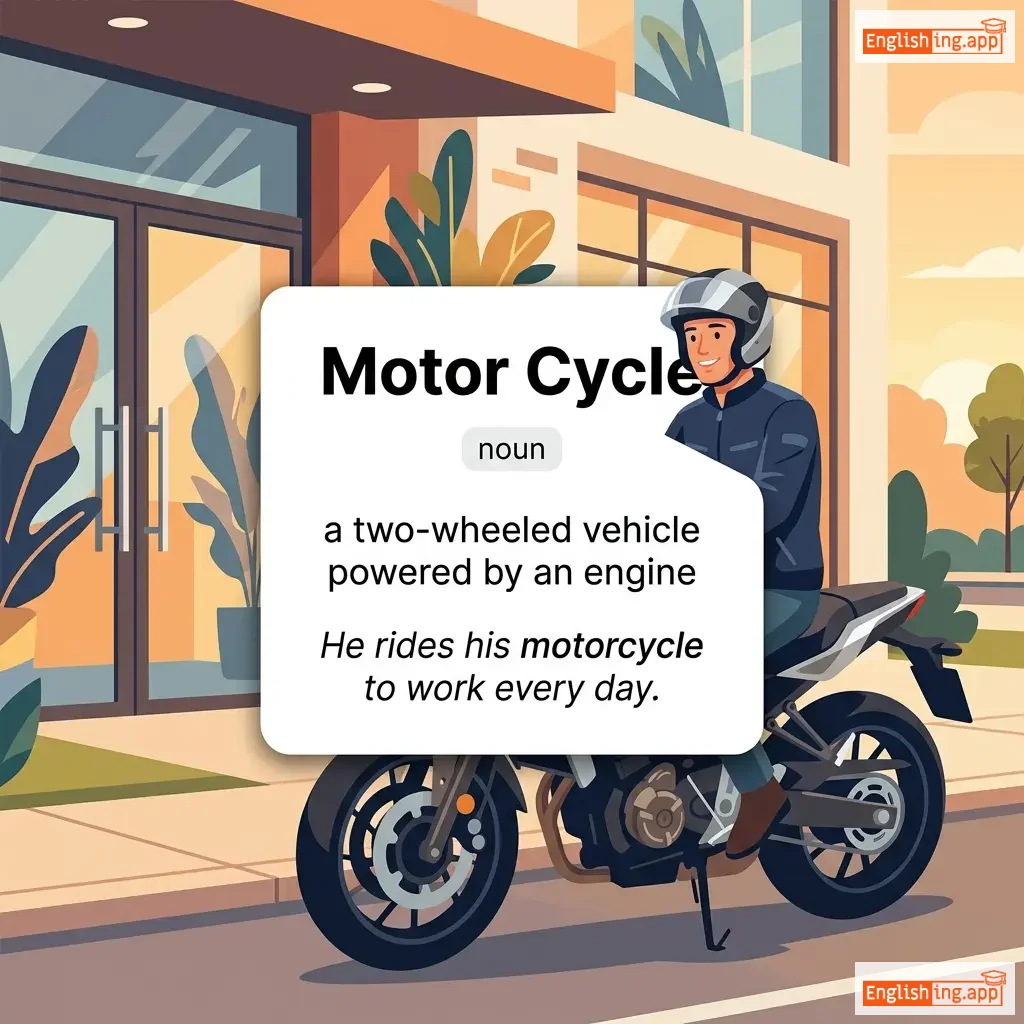
Motor Cycle definition card — visual illustration of the meaning
noun
/ˈmoʊ.tər ˌsaɪ.kəl/
мотоцикл (mototsikl)

a two-wheeled vehicle powered by an engine

"He rides his motorcycle to work every day."

"Он ездит на своем мотоцикле на работу каждый день." (On ezdit na svoem mototsikle na rabotu kazhdyy den')
noun
/ˈmoʊtər/
мотор (motor)

a machine that produces motion or power to make something work

"The car’s motor stopped suddenly."

"Мотор автомобиля внезапно остановился." (Motor avtomobilya vnezapno ostanovilsya.)
adjective
/ˈmɒtli/
пёстрый (pyostryi)

Made up of different, often incongruous or diverse elements.

"The festival attracted a motley crowd of artists, musicians, and tourists."

"Фестиваль привлёк пёструю толпу художников, музыкантов и туристов." (Festival prilyok pyostruyu tolpu khudozhnikov, muzykantov i turistov.)
noun
/ˈmoʊtɪv/
мотив (motiv)

a reason for doing something, especially one that is hidden or not obvious

"The police could not determine the motive behind the crime."

"Полиция не смогла определить мотив преступления." (Politsiya ne smogla opredelit motiv prestupleniya.)
noun
/ˌmoʊtɪˈveɪʃən/
мотивировка (motivirovka)

the reason or drive for acting or behaving in a particular way

"She lost her motivation to continue the project."

"Она потеряла свою мотивацию продолжать проект." (Ona poteryala svoyu motivatsiyu prodolzhat' proyekt.)
motivate definition card — visual illustration of the meaning
verb
/ˈmoʊtɪveɪt/

To provide someone with a reason or incentive to do something.

"The coach motivated the players to give their best performance."

noun
/ˈmoʊʃən/
движение (dvizhene)

the act or process of moving; a change of place or position

"The motion of the car made her sleepy."

"Движение машины заставило её заснуть." (Dvizhenie mashiny zastavilo yey zasnut.)
noun
/moʊˈtɪləti/
мобильность (mobil'nost')

The ability of an organism or cell to move independently.

"The motility of sperm is crucial for successful fertilization."

"Мотильность сперматозоидов важна для успешного оплодотворения." (Motil'nost' spermatozoyidov vazhna dlya uspeshnogo oplodotvoreniya.)
adjective
/ˈmoʊtaɪl/
подвижный (podvizhny)

Capable of movement or locomotion.

"Certain bacteria are motile and can swim toward nutrients."

"Некоторые бактерии подвижны и могут плавать к питательным веществам." (Nekotorye bakterii podvizhny i mogut plavat k pitatel'nym veshchestvam.)
🎭

motif

noun
/moʊˈtiːf/

A recurring theme, subject, or idea in a work of art or literature.

"The motif of love is central to the novel."

👩‍👧‍👦

Motherly (madrli)

adjective
/ˈmʌðərli/
материнский (materinskiy)

having qualities characteristic of a mother; caring and protective

"She showed motherly care and affection towards all the children."

"Она проявила материнскую заботу и привязанность ко всем детям." (Ona proyavila materinskuyu zabotu i privyazannost ko vsemm detyam.)
noun
/ˈmʌð.ər.lænd/
родина; родная страна (rodina)

the country where one was born or has citizenship; homeland

"He always spoke fondly of his motherland."

"Он всегда говорил с любовью о своей родине." (On vsegda govorit s lyubov'yu o svoey rodine.)
noun
/ˈmʌð.ər.hʊd/
материнство (materinstvo)

the state of being a mother; the qualities of a mother

"She embraced the joys and challenges of motherhood."

"Она приняла радости и трудности материнства." (Ona prinяла radosti i trudnosti materinstva.)
noun
/ˈmʌðər ˈlæŋɡwɪdʒ/
родной язык (rodnoy yazyk)

the first language a person learns from childhood; native language

"Children learn best when they are taught in their mother language."

"Дети лучше учатся на родном языке." (deti luchshe uchatsya na rodnom yazyke)
mother definition card — visual illustration of the meaning
noun
/ˈmʌðər/
мать (mat)

a female parent

"Her mother is a kind and caring person."

"Ее мать - добрый и заботливый человек." (Yeyo mat' - dobryy i zabotlivyy chelovek.)
adjective
/ˈmɒθ ˌiːtən/
съедено молью (s'yedeno mol'yu)

Damaged or worn out, especially by moths or age.

"He wore a moth-eaten sweater on the cold day."

"Он носил съеденный молью свитер в холодный день." (On nosil s'yedennyy mol'yu sviter v kholodnyy den'.)
noun
/moʊt/
частица (chastitsa)

A tiny particle or speck, especially of dust.

"A mote of dust floated in the sunlight."

"Пылинка плавала в лучах солнца." (Pylinka plavala v luchakh solnca.)
adverb
/ˈmoʊstli/
в основном (v osnovnom)

for the most part; mainly

"She is mostly interested in art and literature."

"Она в основном интересуется искусством и литературой." (Ona v osnovnom interesuyetsya iskusstvom i literaturoy.)
most vulnerable nation definition card — visual illustration of the meaning
noun
moʊst ˈvʌlnərəbəl ˈneɪʃən
нация с наибольшей уязвимостью (natsiya s naibolshey uyazvimmostyu)

A country that is highly exposed to risks and lacks adequate protection or resilience.

"Bangladesh is one of the most vulnerable nations to climate change."

"Бангладеш - одна из самых уязвимых стран для изменения климата." (Bangladesh - odna iz samykh uyazvimykh stran dlya izmeneniya klimata.)
adjective, adverb, pronoun
/moʊst/
большинство (bol'shinstvo)

the greatest in amount, degree, or number

"Most people like to relax on weekends."

"Большинство людей предпочитают отдыхать на выходных." (Bol'shinstvo lyudey predpochitayut otdykhat' na vykhodnykh.)
adjective
/ˈmɒsi/
покрытый мхом; с мхом, растущим на нем (pokrytyy mkhom; s mkhom, rastushchim na nem)

covered with moss; having moss growing on it

"The old tree trunk was mossy and covered with green vegetation."

"Старый ствол дерева был покрыт мхом и покрыт зеленой растительностью." (Staryy stvol dereva byl pokryt mkhom i pokryt zelyonoy rastitel'nost'yu.)
noun
/mɔːs/
мох (moh)

a small flowerless plant that grows in clumps in moist places

"Green moss covered the old stone wall."
"Зеленый мох покрыл старую каменную стену." (zelyonyy mok pokryl staruyu kamennuyu stenu.)
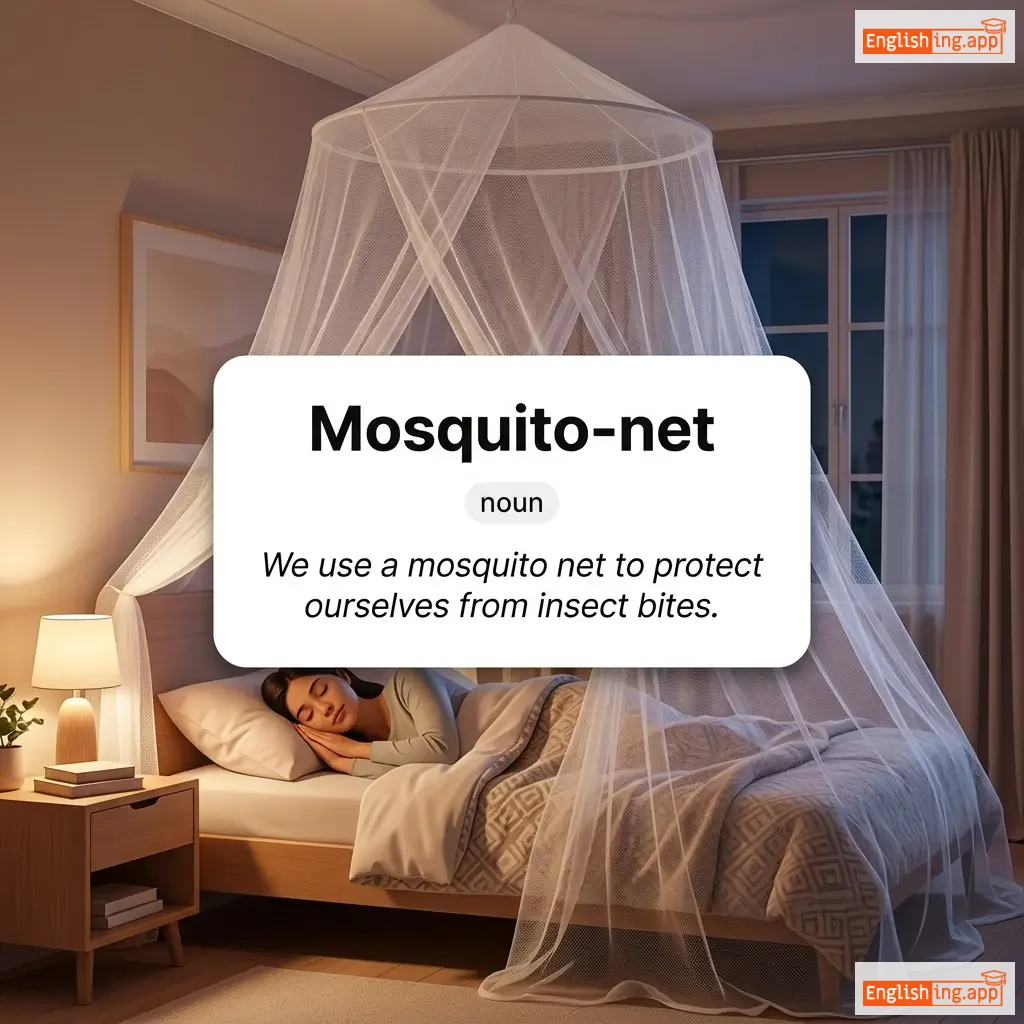
Mosquito-net definition card — visual illustration of the meaning
noun
/məˈskiː.toʊ net/

a fine mesh fabric used to cover beds or windows to keep mosquitoes and other insects out

"We use a mosquito net to protect ourselves from insect bites."
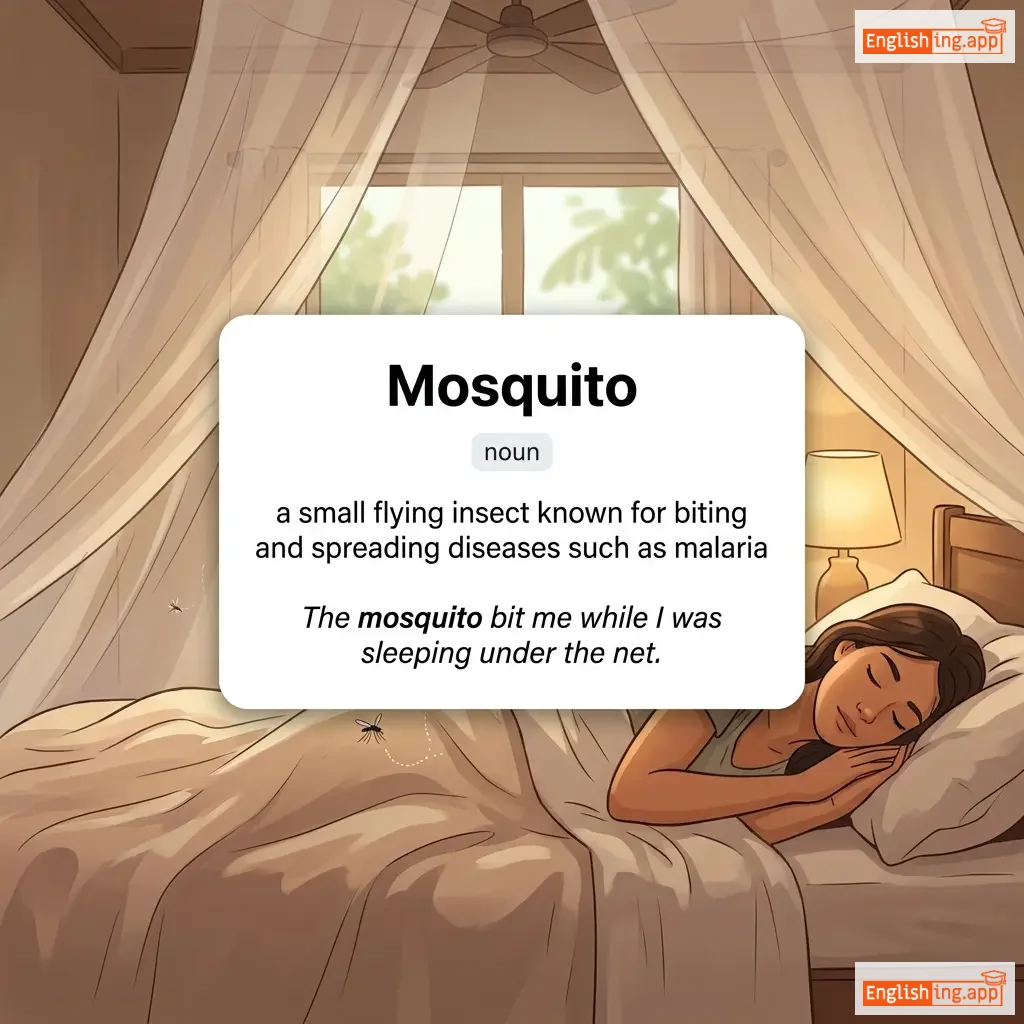
Mosquito definition card — visual illustration of the meaning
noun
/məˈskiːtəʊ/

a small flying insect known for biting and spreading diseases such as malaria

"The mosquito bit me while I was sleeping under the net."

noun
/mɒsk/
мечеть (mechet)

A Muslim place of worship.

"They gathered at the mosque for the Friday prayer."

"Они собрались в мечети для пятничной молитвы." (Oni sobralis' v mecheti dlya pyatnichnoy molitvy.)
noun
/moʊˈzeɪɪk/
мозаика (mozaika)

A picture or pattern produced by arranging together small pieces of stone, tile, or glass.

"The church ceiling was decorated with a beautiful mosaic."

"Потолок церкви был украшен красивой мозаикой." (Potolok tserkvi byl ukrashen krasivoy mozaikoy)
verb
/ˈmɔːrtɪfaɪ/
унизить (unizit)

to cause someone to feel great embarrassment or shame

"She was mortified when she tripped on stage."

"Она была поражена, когда споткнулась на сцене." (Ona byla porazheno, kogda spotknulas' na stse.)
noun
/mɔːrˈtɪʃən/
похоронный работник (pokhoronny rabotnik)

a person whose job is to prepare dead bodies for burial or cremation and to arrange funerals

"The mortician prepared the body for the funeral service."

"Похоронный работник подготовил тело для похоронной службы." (Pokhoronny rabotnik podgotovil telo dlya pokhoronnoy sluzhby.)
noun
/ˈmɔːrɡɪdʒ/
ипотека (ipoteka)

a legal agreement where a person borrows money to buy property and pays it back over time

"They applied for a mortgage to buy their new house."
"Они подали заявку на ипотеку, чтобы купить новый дом." (Oni podali zayavku na ipoteku, chtoby kupit' novyi dom.)
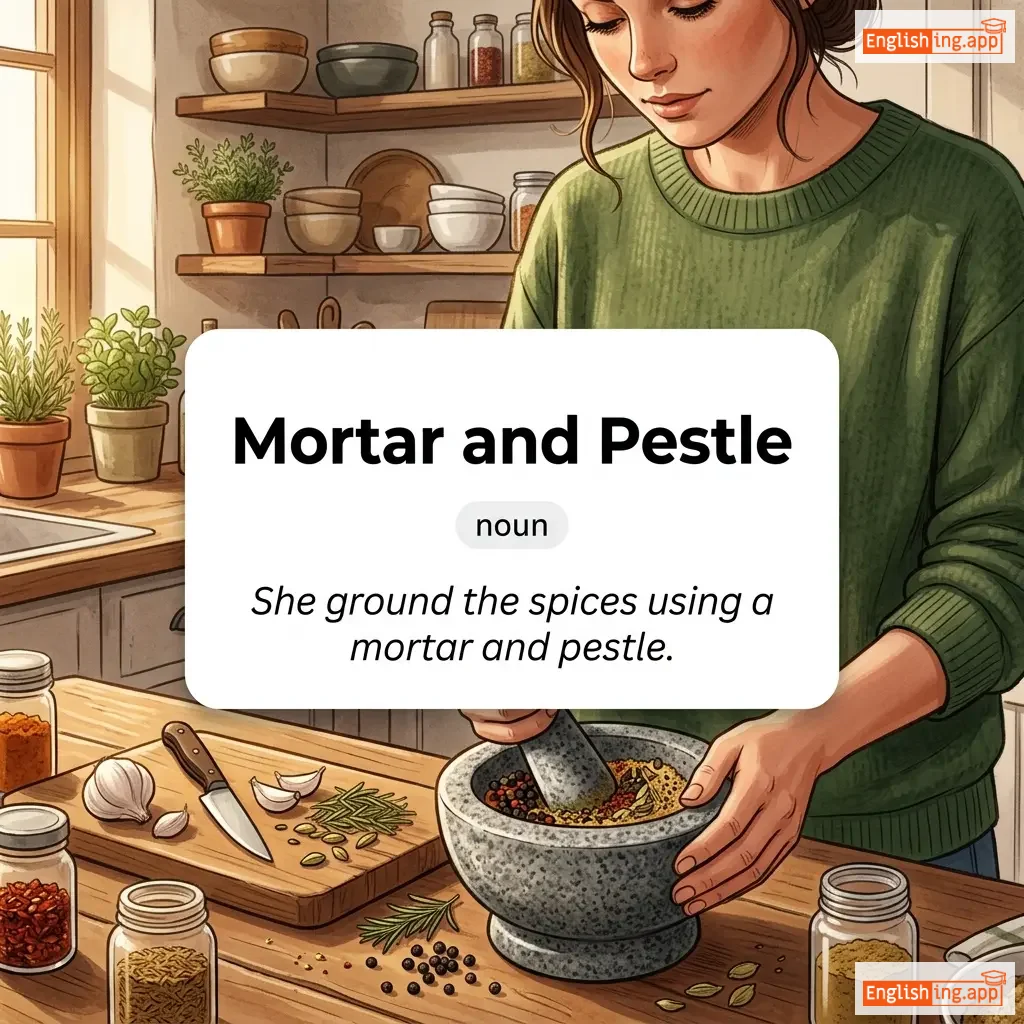
Mortar and Pestle definition card — visual illustration of the meaning
noun
/ˈmɔː.tər ænd ˈpes.əl/
мортир и пестик (mortir i pestik)

a bowl and grinding tool used to crush and grind spices, herbs, and other substances

"She ground the spices using a mortar and pestle."

"Она молола специи с помощью мортиры и пестика." (Ona molola spetsii s pomoshch'yu mortiry i pestika.)
noun
/ˈmɔːrtər/
смесь для связывания кирпичей / маленькая пушка (smes' dlya svyazyvaniya kirpichey / malen'kaya pushka)

a mixture used in building to bond bricks or stones together; also, a small cannon for firing shells

"The workers applied mortar between the bricks."

"Рабочие нанесли раствор между кирпичами." (Rabochie nanesli rastvor mezhdu kirpichami.)
noun
/mɔːˈtæləti/
смертность (smertnost)

the state of being subject to death; the death rate of a population

"Advancements in medicine have reduced child mortality significantly."

"Достижения в медицине значительно снизили детскую смертность." (Dostizheniya v meditsine znachitel'no snizili detskuyu smertnost'.)
adjective
/ˈmɔːtəl/
смертный; бренный; человеческий (smertnyy; brenny; chelovecheskiy)

subject to death; having a limited lifespan; human

"All human beings are mortal and will eventually die."

"Все люди смертны и в конце концов умрут." (Vse lyudi smertny i v kontse kontsov umrut.)
money definition card — visual illustration of the meaning
noun
/ˈmʌni/
счастье (schastye)

A medium of exchange in the form of coins and banknotes; wealth or financial resources.

"He saved enough money to buy a new car."

"Она не смогла скрыть свое счастье, когда получила приз." (Ona ne smogla skryt' svoe schast'ye, kogda poluchila priz.)
noun, verb
/ˈmɒnɪtər/
монитор, наблюдать (monitor, nablyudat)

to observe and check the progress or quality of something; also a device that displays information

"The teacher monitors the students during the exam."

"Учитель мониторит студентов во время экзамена." (Uchitel' monitorit studentov vo vremya ekzamina.)
noun
/məˈnɪʃən/
предостережение (predosterezhenie)

A warning or caution, often of a religious or moral nature.

"The priest gave a monition against dishonesty."

"Священник дал предостережение против нечестности." (Svyashchennik dal predosterezhenie protiv nechestnosti.)
noun
/ˈmʌŋɡrəl/
смешанная порода собак (smeshannaya poroda sobak)

A dog of mixed breed; sometimes used to describe something mixed or of inferior quality.

"The stray dog was a friendly mongrel."

"Бездомная собака была дружелюбным монгрелом." (Bezdomnaya sobaka byla druzhelyubnym mongrelom.)
noun
/ˈmɒŋ.ɡuːs/
мангуст (mangust)

a small carnivorous mammal known for its ability to kill venomous snakes

"The mongoose quickly attacked the cobra to protect its young."

"Мангуста быстро напала на кобру, чтобы защитить своих детёнышей." (Mangusta bystro napala na kobru, chtoby zashchitit' svoikh detyonyshey.)
adjective
/ˈmʌnid/
богатый; обеспеченный; состоятельный (manid)

having much money; wealthy; rich

"She comes from a moneyed family with extensive real estate holdings."

"Она из богатой семьи с обширной недвижимостью." (ona iz bogatoy sem'i s obshirnoy nedvizhimost'yu.)
noun
/ˈmʌn.deɪ/
понедельник (ponedelnik)

the first day of the working week following Sunday

"I start my new job on Monday."

"Я начинаю новую работу в понедельник." (ya nachinayu novuyu rabotu v ponedelnik)
noun
/ˈmɒnəstɛri/

A building or complex where monks or nuns live, work, and worship.

"The old monastery was surrounded by high stone walls."

adjective
/məˈnæstɪk/
монашеский (monasheskij)

Relating to monks, monasteries, or a life of religious seclusion.

"He chose to live a monastic life away from the city."
"Он выбрал монашескую жизнь вдали от города." (On vybral monasheskuyu zhizn' vdali ot goroda.)
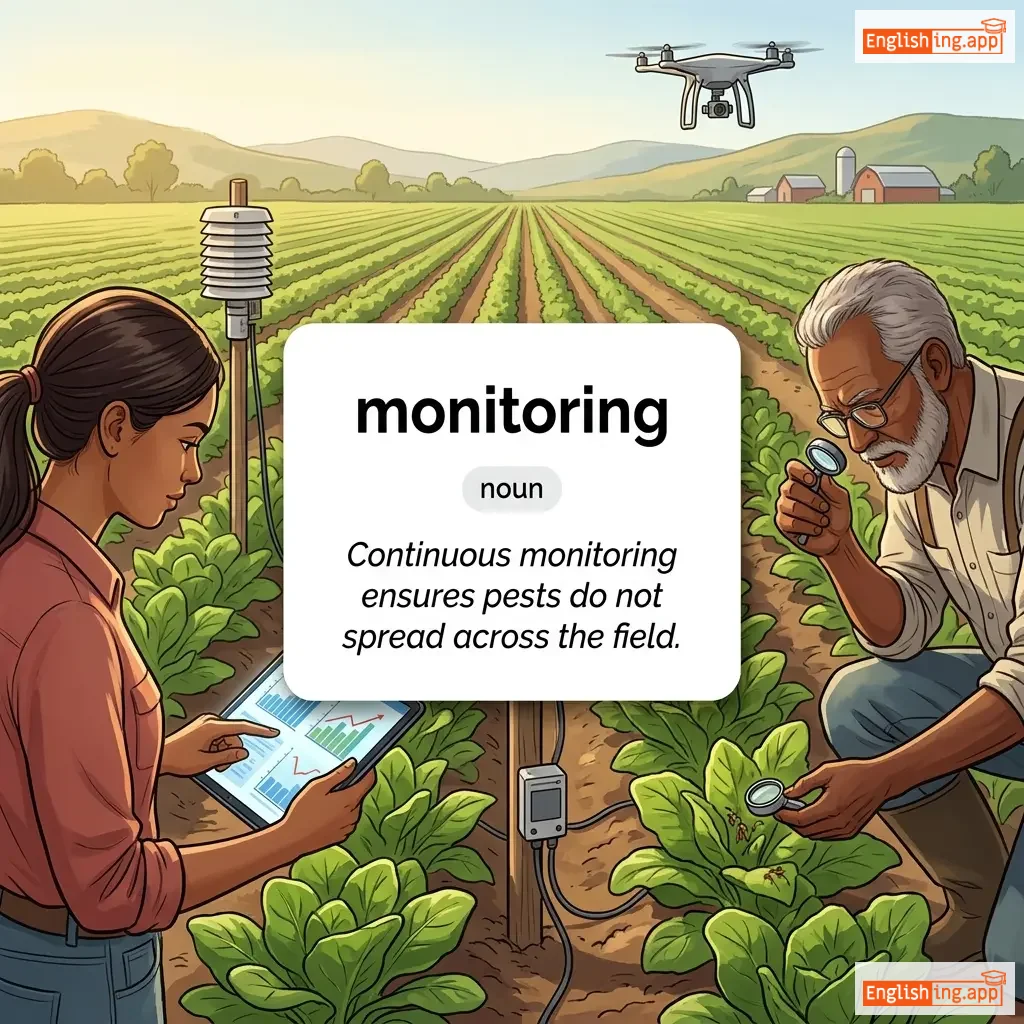
monitoring definition card — visual illustration of the meaning
noun
ˈmɒnɪtərɪŋ
мониторинг, постоянный контроль (monitoring, postoyanny kontrol)

The action of observing and checking the progress or quality of something over a period of time.

"Continuous monitoring ensures pests do not spread across the field."

"Непрерывный мониторинг гарантирует, что вредители не распространятся по полю." (Nepreryvny monitoring garantiye, chto vrediteli ne rasprostranyatsya po polyu.)