词汇表

英语词汇词典 | 单词含义、定义和示例

noun
/moʊld/
模具;霉菌 (mo-er-de)

a hollow container used to give shape to molten material; fungus

"She poured chocolate into the mould to make candies."

"她把巧克力倒进模具里做糖果。" (shi po de qiao ke li jin mo ju dao zuo tang guo)
noun
/ˈmɒtəʊ/
座右铭 (zuò yòu míng)

A short sentence or phrase that expresses a guiding belief or principle.

"Her motto in life is 'never give up.'"

"她的生活座右铭是'永不放弃。'" (Tā de shēnghuó zuò yòu míng shì 'yǒng bù fàngqì.')
adjective
/ˈmɒtld/
斑驳的 (bānbó de)

Marked with spots, streaks, or blotches of different shades or colors.

"The snake's mottled skin helped it blend into the forest floor."

"蛇的斑驳皮肤帮助它融入森林地面。" (Shé de bānbó pífū bāngzhù tā róngrù sēnlín dìmiàn.)
verb
/ˈmɒtl/
斑驳 (banbo)

To mark with spots or patches of color.

"The leaves were mottled with shades of yellow and brown."

"叶子上布满了黄色和棕色的斑点。" (Yèzi shàng bùmǎnle huángsè hé zōngsè de bāndiǎn.)
noun
/ˈməʊtərɪst/
驾驶员 (jiashi yuan)

a person who drives a motor vehicle, especially a car or motorcycle

"The motorist stopped to help after seeing the accident on the highway."

"驾驶员在高速公路上看到事故后停下来帮忙。" (Jiashi yuan zai gaosu gonglu shang kandao shigu hou ting xialai bangmang)
noun
/ˈmoʊtərˌsaɪkəl/
摩托车 (motuoche)

a two-wheeled motor-powered vehicle designed for transportation

"He rides his motorcycle to work every morning."

"他每天早上骑摩托车去上班。" (Ta meitian zaoshang qi motuoche qu shangban)
Motor lorry definition card — visual illustration of the meaning
noun
/ˈmoʊ.tər ˈlɔː.ri/
摩托卡车 (mótuō kǎchē)

a large motor vehicle used for transporting goods; truck

"The motor lorry delivered fresh vegetables to the market."

"这辆摩托卡车将新鲜蔬菜送到市场。" (Zhè liàng mótuō kǎchē jiāng xīnxiān shūcài sòng dào shìchǎng.)
Motor Cycle definition card — visual illustration of the meaning
noun
/ˈmoʊ.tər ˌsaɪ.kəl/
摩托车 (mótuōchē)

a two-wheeled vehicle powered by an engine

"He rides his motorcycle to work every day."

"他每天骑摩托车上班。" (Tā měitiān qí mótuōchē shàngbān.)
noun
/ˈmoʊtər/
马达 (mǎ dá)

a machine that produces motion or power to make something work

"The car’s motor stopped suddenly."

"汽车的马达突然停止了。" (qìchē de mǎ dá túrán tíngzhǐle.)
adjective
/ˈmɒtli/
杂乱 (záluàn)

Made up of different, often incongruous or diverse elements.

"The festival attracted a motley crowd of artists, musicians, and tourists."

"这个节日吸引了由艺术家、音乐家和游客组成的杂乱人群。" (Zhège jiérì xīyǐnle yóu yìshùjiā, yīnyuèjiā hé yóukè zǔchéng de záluàn rénqún.)
noun
/ˈmoʊtɪv/
动机 (dongji)

a reason for doing something, especially one that is hidden or not obvious

"The police could not determine the motive behind the crime."

"警方无法确定犯罪背后的动机。" (jingfang wufa queding fanzui bei hou de dongji.)
noun
/ˌmoʊtɪˈveɪʃən/
动机 (dongji)

the reason or drive for acting or behaving in a particular way

"She lost her motivation to continue the project."

"她失去了继续项目的动机。" (Ta shiqule jixu xiangmu de dongji.)
motivate definition card — visual illustration of the meaning
verb
/ˈmoʊtɪveɪt/

To provide someone with a reason or incentive to do something.

"The coach motivated the players to give their best performance."

noun
/ˈmoʊʃən/
运动 (yùndòng)

the act or process of moving; a change of place or position

"The motion of the car made her sleepy."

"汽车的运动让她昏昏欲睡。" (Qìchē de yùndòng ràng tā hūnhūn yù shuì.)
noun
/moʊˈtɪləti/
运动性 (yundongxing)

The ability of an organism or cell to move independently.

"The motility of sperm is crucial for successful fertilization."

"精子活动性对成功受精至关重要。" (Jingzi yundongxing dui chenggong shoujing zhiguan zhongyao.)
adjective
/ˈmoʊtaɪl/
可动的 (kě dòng de)

Capable of movement or locomotion.

"Certain bacteria are motile and can swim toward nutrients."

"某些细菌是可动的,能够朝营养物质游动。" (Mǒu xiē xìjūn shì kě dòng de, nénggòu cháo yíngyǎng wùzhì yóu dòng.)
🎭

motif

noun
/moʊˈtiːf/

A recurring theme, subject, or idea in a work of art or literature.

"The motif of love is central to the novel."

👩‍👧‍👦

Motherly (maderli)

adjective
/ˈmʌðərli/
母性 (muxing)

having qualities characteristic of a mother; caring and protective

"She showed motherly care and affection towards all the children."

"她向所有孩子展示了母亲般的关爱和温情。" (Ta xiang suoyou haizi zhanshiley muqinban de guanai he wenqing.)
noun
/ˈmʌð.ər.lænd/
祖国; 祖国 (zuguo)

the country where one was born or has citizenship; homeland

"He always spoke fondly of his motherland."

"他总是充满感情地谈论他的祖国。" (Ta zongshi chongman ganqing de tanlun tade zuguo.)
noun
/ˈmʌð.ər.hʊd/
母性 (mǔxìng)

the state of being a mother; the qualities of a mother

"She embraced the joys and challenges of motherhood."

"她拥抱了母性的快乐和挑战。" (Tā yōngbào le mǔxìng de kuàilè hé tiǎozhàn.)
noun
/ˈmʌðər ˈlæŋɡwɪdʒ/
母语 (muyü)

the first language a person learns from childhood; native language

"Children learn best when they are taught in their mother language."

"孩子用母语学习效果最好。" (haizi yong muyu xuexi xiaoguo zui hao)
mother definition card — visual illustration of the meaning
👩‍👧

mother (母亲)

noun
/ˈmʌðər/
母亲 (mǔqīn)

a female parent

"Her mother is a kind and caring person."

"她的母亲是一个善良和关心他人的人。" (Tā de mǔqīn shì yīgè shànliáng hé guānxīn tārén de rén.)
adjective
/ˈmɒθ ˌiːtən/
被蛀虫吃掉的 (bei zhu chong chi diao de)

Damaged or worn out, especially by moths or age.

"He wore a moth-eaten sweater on the cold day."

"他在寒冷的日子里穿了一件被蛀虫吃掉的毛衣。" (Ta zai hanleng de rizi li chuan le yijian bei zhu chong chi diao de maoyi.)
noun
/moʊt/
尘埃 (chen ai)

A tiny particle or speck, especially of dust.

"A mote of dust floated in the sunlight."

"一颗尘埃在阳光下飘浮。" (Yi ke chen ai zai yangguangxia piaofu.)
adverb
/ˈmoʊstli/
主要 (zhuyao)

for the most part; mainly

"She is mostly interested in art and literature."

"她主要对艺术和文学感兴趣。" (Ta zhuyao dui yishu he wenxue gan xingqu.)
most vulnerable nation definition card — visual illustration of the meaning
noun
moʊst ˈvʌlnərəbəl ˈneɪʃən
最脆弱的国家 (zui cui ruo de guo jia)

A country that is highly exposed to risks and lacks adequate protection or resilience.

"Bangladesh is one of the most vulnerable nations to climate change."

"孟加拉国是气候变化最脆弱的国家之一。" (Meng jiala guo shi qihou bianhua zui cui ruo de guo jia zhi yi.)
adjective, adverb, pronoun
/moʊst/
大多数 (dàduōshù)

the greatest in amount, degree, or number

"Most people like to relax on weekends."

"大多数人喜欢在周末休息。" (Dàduōshù rén xǐhuān zài zhōumò xiūxí.)
adjective
/ˈmɒsi/
覆盖苔藓的;生苔的 (fùgài táixiǎn de; shēng tái de)

covered with moss; having moss growing on it

"The old tree trunk was mossy and covered with green vegetation."
"这棵老树干上覆盖着苔藓,并且被绿色植物覆盖。" (Zhè kē lǎo shù gàn shàng fùgài zhe táixiǎn, bìngqiě bèi lǜsè zhíwù fùgài.)
noun
/mɔːs/
苔藓 (taixian)

a small flowerless plant that grows in clumps in moist places

"Green moss covered the old stone wall."

"绿色的苔藓覆盖了古老的石墙。" (lǜsè de tàixiǎn fùgài le gǔlǎo de shíqiáng.)
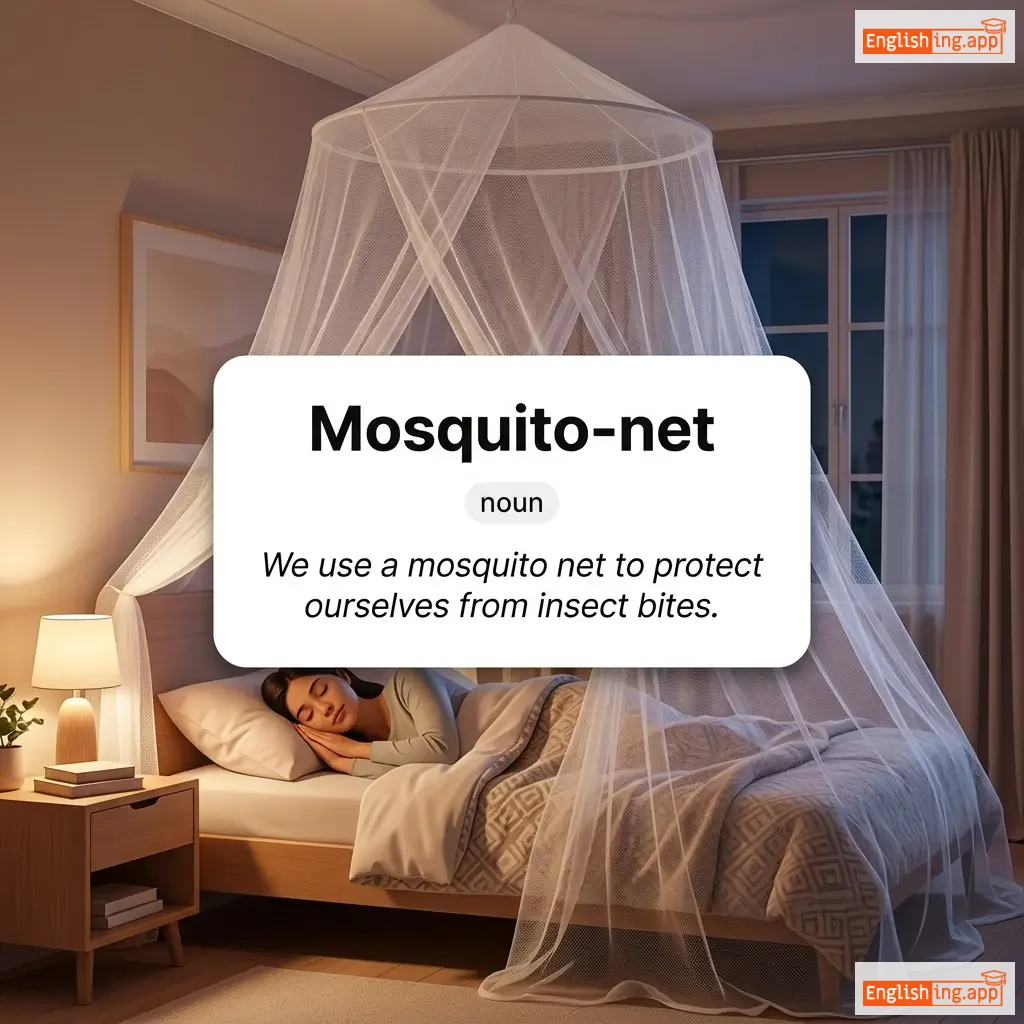
Mosquito-net definition card — visual illustration of the meaning
noun
/məˈskiː.toʊ net/
蚊帐 (wenzhang)

a fine mesh fabric used to cover beds or windows to keep mosquitoes and other insects out

"We use a mosquito net to protect ourselves from insect bites."

"我们使用蚊帐来保护自己,防止被虫子叮咬。" (wo men shi yong wen zhang lai bao hu zi ji, fang zhi bei chong zi ding yao.)
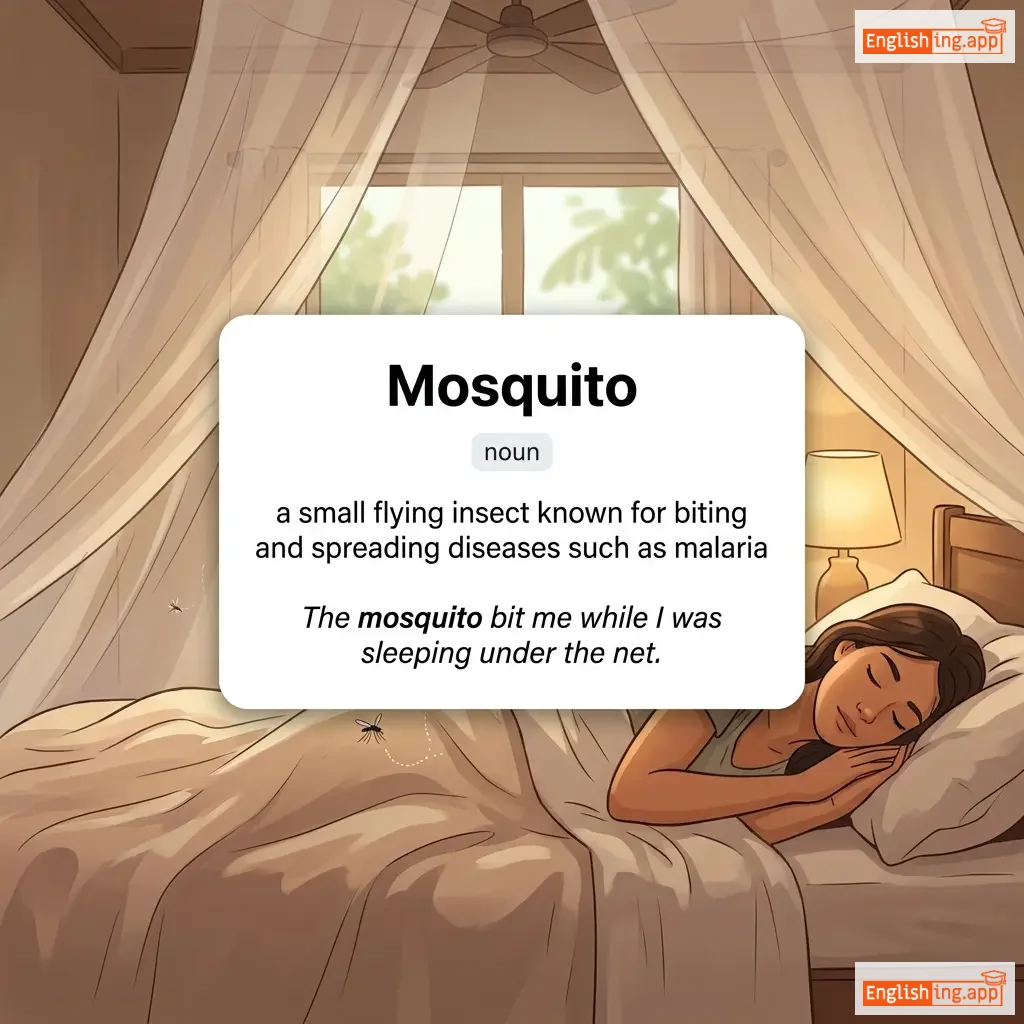
Mosquito definition card — visual illustration of the meaning
noun
/məˈskiːtəʊ/

a small flying insect known for biting and spreading diseases such as malaria

"The mosquito bit me while I was sleeping under the net."

noun
/mɒsk/
清真寺 (qīng zhēn sì)

A Muslim place of worship.

"They gathered at the mosque for the Friday prayer."

"他们在清真寺集会进行星期五的祷告。" (Tāmen zài qīng zhēn sì jíhuì jìnxíng xīngqīwǔ de dǎogào.)
🖼️

mosaic

noun
/moʊˈzeɪɪk/

A picture or pattern produced by arranging together small pieces of stone, tile, or glass.

"The church ceiling was decorated with a beautiful mosaic."

verb
/ˈmɔːrtɪfaɪ/
使…感到羞耻 (shǐ…gǎndào xiūchǐ)

to cause someone to feel great embarrassment or shame

"She was mortified when she tripped on stage."

"她在舞台上绊倒时非常羞愧。" (Tā zài wǔtái shàng bàn dào shí fēicháng xiūkuì.)
noun
/mɔːrˈtɪʃən/
殡仪员 (bìnyíyuán)

a person whose job is to prepare dead bodies for burial or cremation and to arrange funerals

"The mortician prepared the body for the funeral service."

"殡仪员为葬礼服务准备了尸体。" (Bìnyíyuán wèi zànglǐ fúwù zhǔnbèile shītǐ.)
noun
/ˈmɔːrɡɪdʒ/
抵押贷款 (dǐyā dàikuǎn)

a legal agreement where a person borrows money to buy property and pays it back over time

"They applied for a mortgage to buy their new house."
"他们申请了抵押贷款来购买他们的新房。" (Tāmen shēnqǐngle dǐyā dàikuǎn lái gòumǎi tāmen de xīn fáng.)
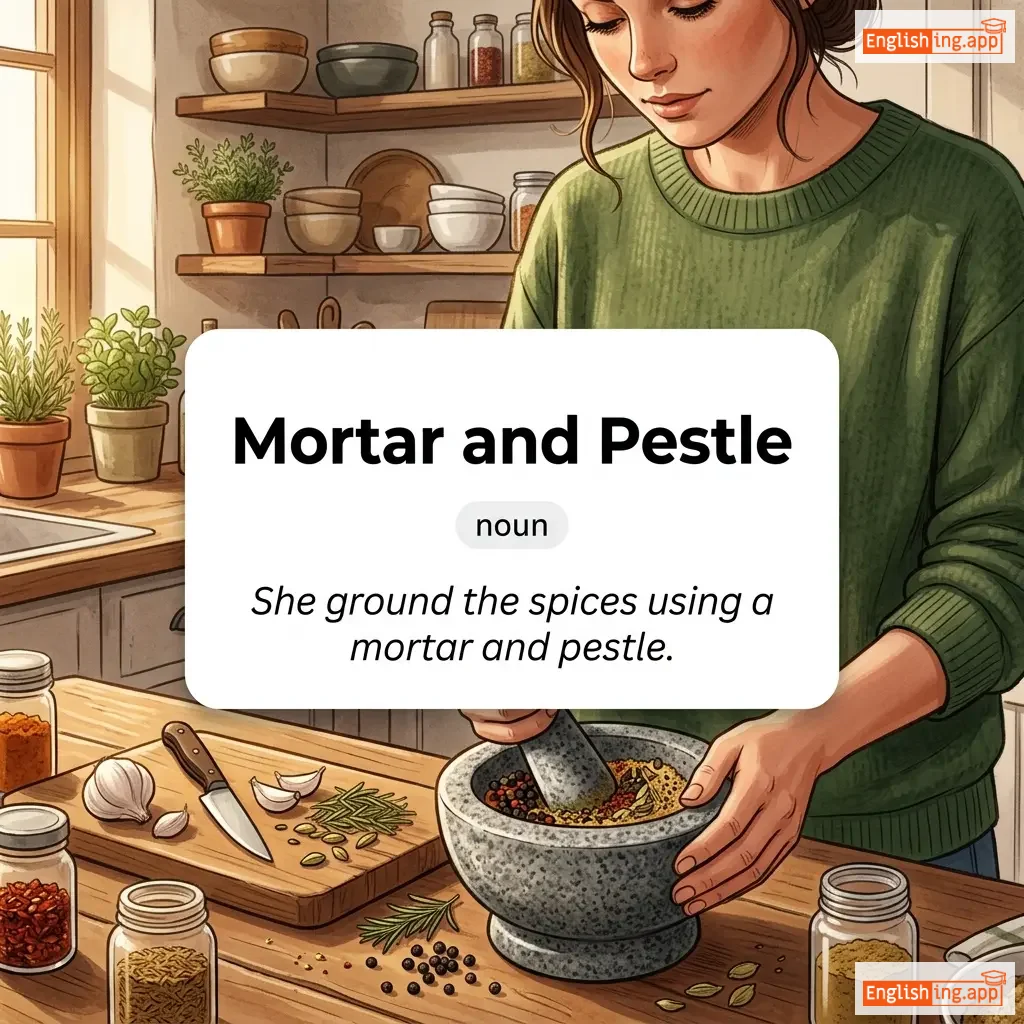
Mortar and Pestle definition card — visual illustration of the meaning
noun
/ˈmɔː.tər ænd ˈpes.əl/
研钵和杵 (yán bǒ hé chǔ)

a bowl and grinding tool used to crush and grind spices, herbs, and other substances

"She ground the spices using a mortar and pestle."

"她用研钵和杵磨碎了香料。" (Tā yòng yán bǒ hé chǔ mó suì le xiāng liào.)
noun
/ˈmɔːrtər/
用于粘接砖块的混合物 / 小型火炮 (yòng yú zhān jiē zhuān kuài de hùn hé wù / xiǎo xíng huǒ pào)

a mixture used in building to bond bricks or stones together; also, a small cannon for firing shells

"The workers applied mortar between the bricks."

"工人们在砖块之间涂抹了灰泥。" (Gōngrén men zài zhuān kuài zhī jiān tú mǒ le huī ní.)
noun
/mɔːˈtæləti/
死亡率 (sǐwáng lǜ)

the state of being subject to death; the death rate of a population

"Advancements in medicine have reduced child mortality significantly."

"医学的进步显著降低了婴儿死亡率。" (Yīxué de jìnbù xiǎnzhù jiàngdīle yīng'ér sǐwáng lǜ.)
adjective
/ˈmɔːtəl/
凡人; 有限寿命的; 人类 (fánrén; yǒuxiàn shòumìng de; rénlèi)

subject to death; having a limited lifespan; human

"All human beings are mortal and will eventually die."

"所有人类都是凡人,并最终会死。" (Suǒyǒu rénlèi dōu shì fánrén, bìng zuìzhōng huì sǐ.)
money definition card — visual illustration of the meaning
noun
/ˈmʌni/
幸福 (xìngfú)

A medium of exchange in the form of coins and banknotes; wealth or financial resources.

"He saved enough money to buy a new car."

"她在收到奖项时无法掩饰她的幸福。" (Tā zài shōudào jiǎngxiàng shí wúfǎ yǎnshì tā de xìngfú.)
noun, verb
/ˈmɒnɪtər/
监视器,观察 (jiānshìqì, guānchá)

to observe and check the progress or quality of something; also a device that displays information

"The teacher monitors the students during the exam."

"老师在考试期间监控学生。" (Lǎoshī zài kǎoshì qījiān jiānkòng xuéshēng.)
noun
/məˈnɪʃən/
警告 (jinggao)

A warning or caution, often of a religious or moral nature.

"The priest gave a monition against dishonesty."

"牧师对不诚实行为发出了警告。" (Mushi dui buchengshi xingwei fashu le jinggao.)
noun
/ˈmʌŋɡrəl/
杂种狗 (zá zhǒng gǒu)

A dog of mixed breed; sometimes used to describe something mixed or of inferior quality.

"The stray dog was a friendly mongrel."

"那只流浪狗是一只友好的杂种狗。" (nà zhī liú làng gǒu shì yī zhī yǒu hǎo de zá zhǒng gǒu.)
noun
/ˈmɒŋ.ɡuːs/
(méng)

a small carnivorous mammal known for its ability to kill venomous snakes

"The mongoose quickly attacked the cobra to protect its young."

"獴迅速攻击了眼镜蛇,以保护它的幼崽。" (Méng xùnsù gōngjīle yǎnjìngshé, yǐ bǎohù tā de yòuzǎi.)
adjective
/ˈmʌnid/
富有的; 富裕的; 有钱的 (manid)

having much money; wealthy; rich

"She comes from a moneyed family with extensive real estate holdings."

"她来自一个富有的家庭,拥有大量的房地产。" (tā láizì yīgè fùyǒu de jiātíng, yǒngyǒu dàliàng de fángdìchǎn.)
noun
/ˈmʌn.deɪ/
星期一 (xingqi yi)

the first day of the working week following Sunday

"I start my new job on Monday."

"我星期一开始新工作。" (wo xingqi yi kaishi xin gongzuo)
noun
/ˈmɒnəstɛri/

A building or complex where monks or nuns live, work, and worship.

"The old monastery was surrounded by high stone walls."

adjective
/məˈnæstɪk/
修道的 (xiudao de)

Relating to monks, monasteries, or a life of religious seclusion.

"He chose to live a monastic life away from the city."
"他选择过一种修道的生活,远离城市。" (Ta xuanze guo yizhong xiudao de shenghuo, yuanli chengshi.)
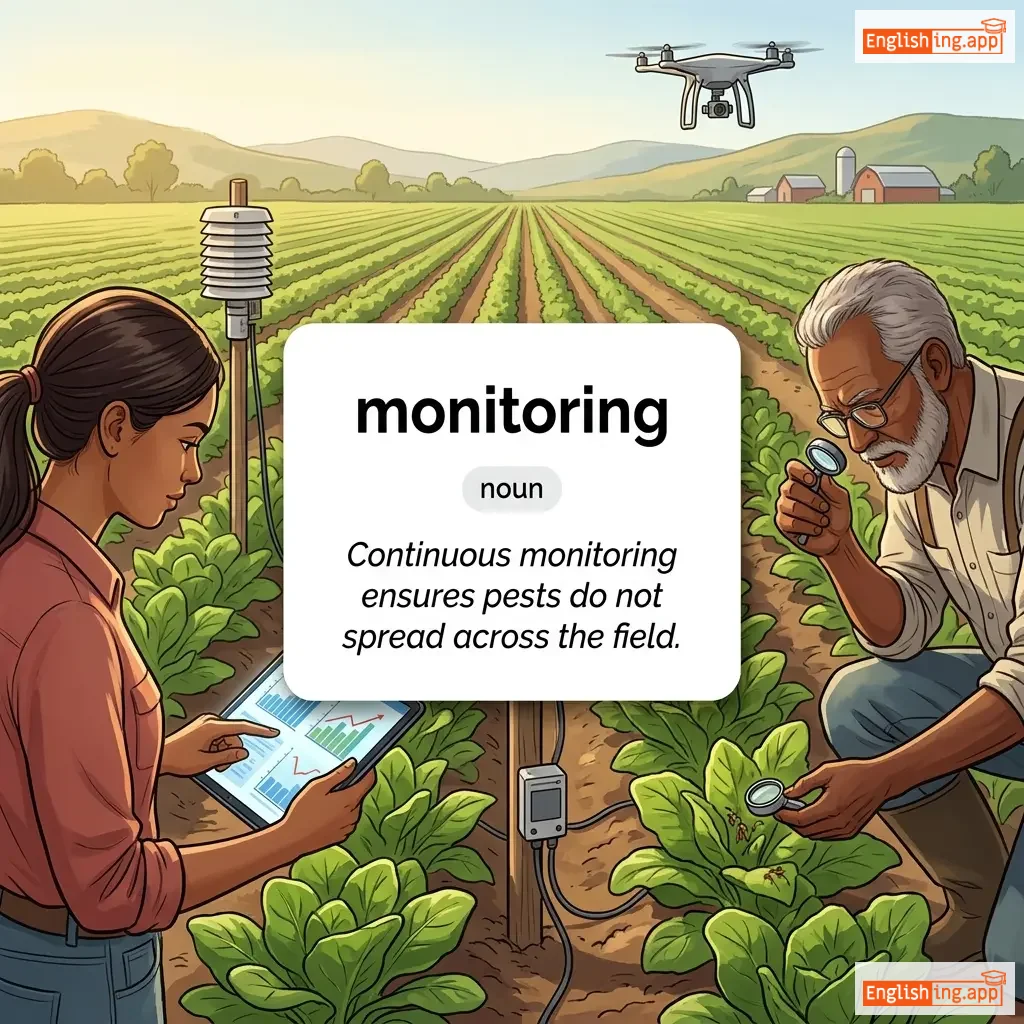
monitoring definition card — visual illustration of the meaning
noun
ˈmɒnɪtərɪŋ
监控,持续监测 (jiānkòng, chíxù jiāncè)

The action of observing and checking the progress or quality of something over a period of time.

"Continuous monitoring ensures pests do not spread across the field."

"持续的监测确保害虫不会在田地中蔓延。" (Chíxù de jiāncè quèbǎo hàichóng bù huì zài tiándì zhōng mànyán.)