词汇表

英语词汇词典 | 单词含义、定义和示例

onerous definition card — visual illustration of the meaning
adjective
/ˈəʊnərəs/
繁重 (fánzhòng)

involving a great deal of effort, difficulty, or burden

"Fulfilling the contract proved to be an onerous task for the company."

"履行合同对公司来说是一项繁重的任务。" (Lǚxíng hétóng duì gōngsī lái shuō shì yī xiàng fánzhòng de rènwù.)
noun
/wʌn θɜːd/
三分之一 (san fen zhi yi)

one part of something that is divided into three equal parts

"One-third of the class was absent today."

"班级的三分之一今天缺席。" (Banji de sanfen zhi yi jintian quexi.)
1️⃣

one (wān)

pronoun, noun, adjective
/wʌn/
(yi)

the number equivalent to the sum of zero and one; a single person or thing

"Only one student answered the question."

"只有一个学生回答了问题。" (Zhǐ yǒu yī gè xuéshēng huídále wèntí.)
adverb
/wʌns/
一次 (yi ci)

on one occasion only; at a time in the past

"She visited Paris once last year."

"她去年只去过一次巴黎。" (Ta qunian zhi quguo yi ci Bālí.)
preposition
/ɒn/
(zài)

physically in contact with and supported by a surface

"The book is on the table."

"书在桌子上。" (Shū zài zhuōzi shàng.)
adjective
/ɒmˈnɪvərəs/
杂食性 (zá shí xìng)

eating both plants and animals

"Humans are generally considered omnivorous creatures."

"人类通常被认为是杂食性动物。" (Rénlèi tōngcháng bèi rènwéi shì záshíxìng dòngwù.)
adjective
/ɒmˈnɪʃənt/
全知 (quan zhi)

having complete or unlimited knowledge and awareness

"Some religions describe God as omniscient and all-powerful."

"一些宗教将上帝描述为全知且全能的。" (Yixie zongjiao jiang shangdi miaoshu wei quan zhi qie quan neng de.)
noun
/ɒmˈnɪʃəns/
全知 (quanzhi)

the state of knowing everything

"The novel's narrator has an air of omniscience, revealing every character's thoughts."
"小说的叙述者具有全知的气质,揭示每个角色的想法。" (xiaoshuo de xushuzhe juyou quanzhi de qizhi, jieshi meige juese de xiangfa.)
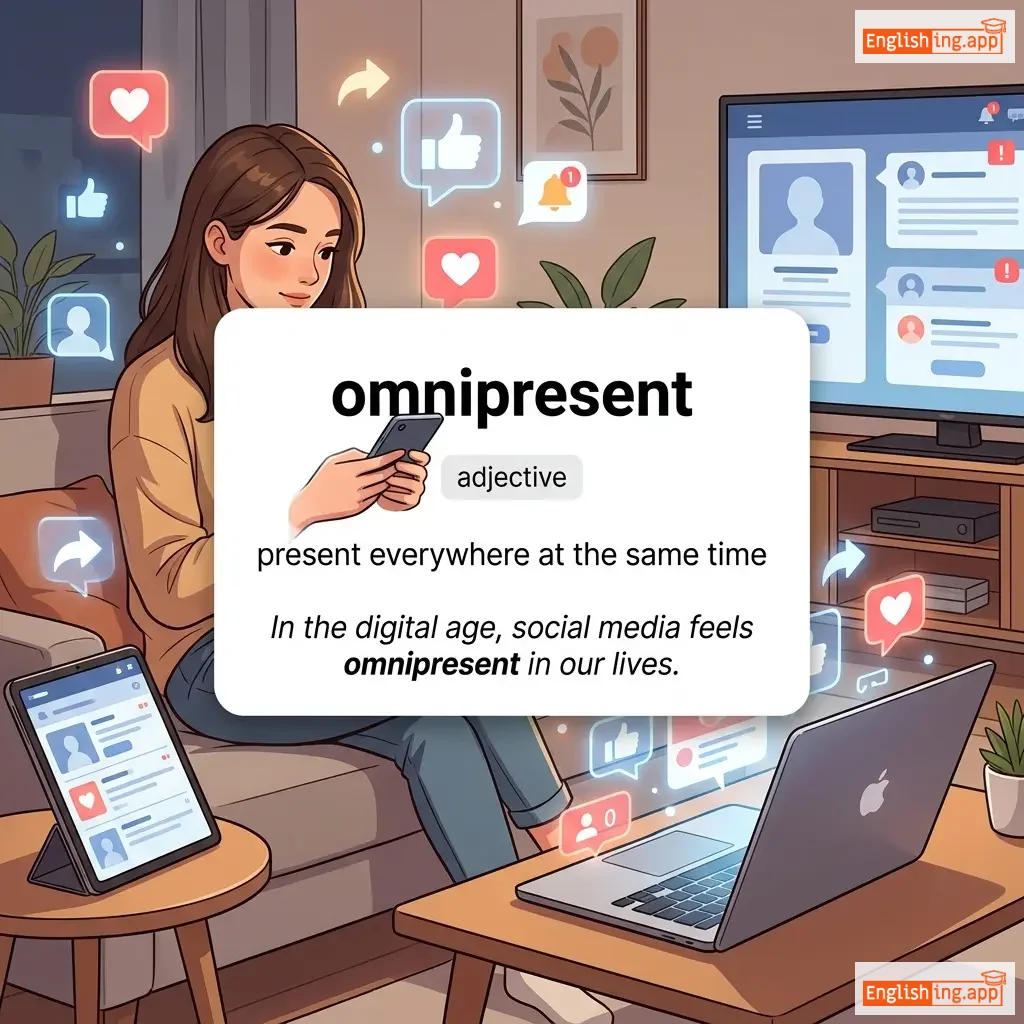
omnipresent definition card — visual illustration of the meaning
adjective
/ˌɒmnɪˈprɛzənt/
无处不在 (wuchubuzai)

present everywhere at the same time

"In the digital age, social media feels omnipresent in our lives."
"在数字时代,社交媒体在我们的生活中无处不在。" (Zai shuzi shidai, shejiao meiti zai women de shenghuo zhong wuchubuzai.)
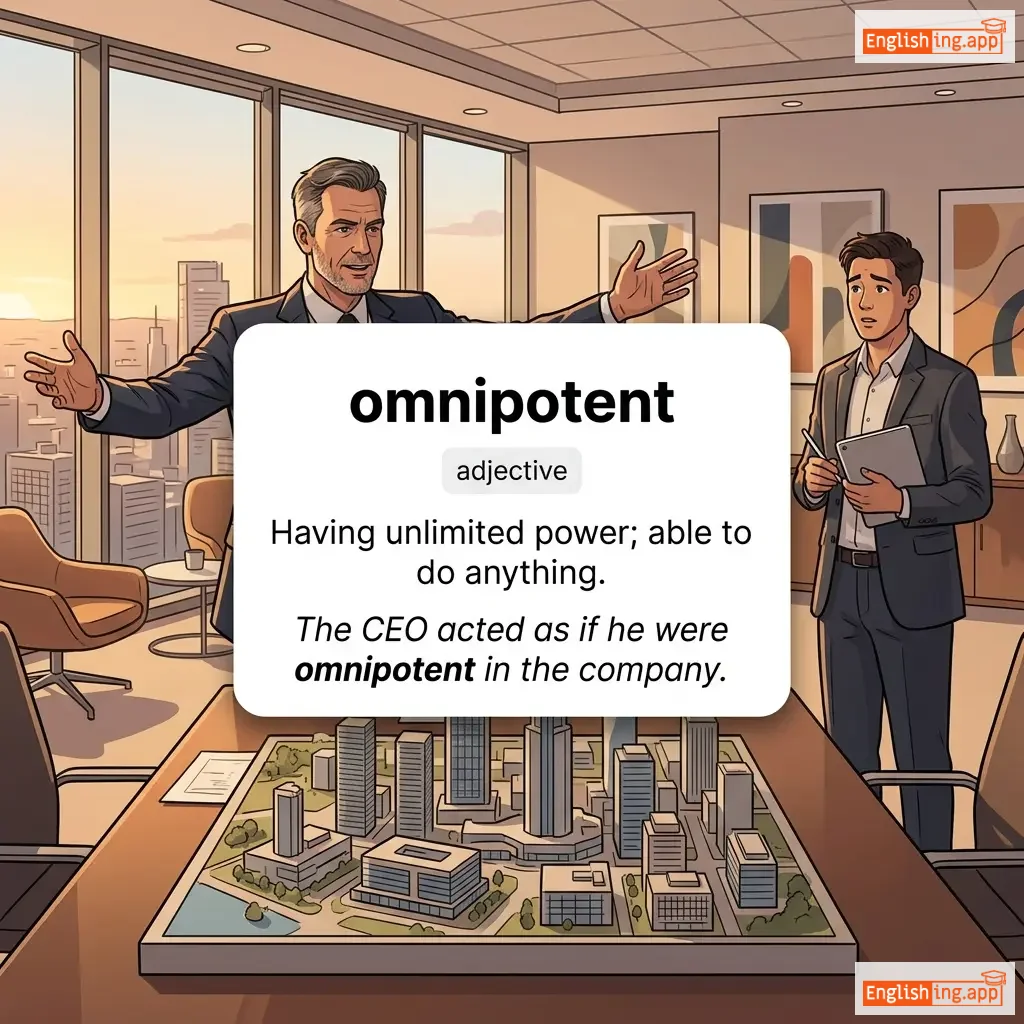
omnipotent definition card — visual illustration of the meaning
adjective
/ɒmˈnɪpətənt/
全能的 (quánnéng de)

Having unlimited power; able to do anything.

"The CEO acted as if he were omnipotent in the company."

"首席执行官在公司里表现得好像他无所不能。" (Shǒuxí zhíxíngguān zài gōngsī lǐ biǎoxiàn dé hǎoxiàng tā wúsuǒ bùnéng.)
noun
/ɒmˈnɪpətəns/
全能 (quánnéng)

The quality of having unlimited power or authority.

"Many religions describe God’s omnipotence as absolute."

"许多宗教将上帝的全能描述为绝对的。" (Xǔduō zōngjiào jiāng shàngdì de quánnéng miáoshù wèi juéduì de.)
omit definition card — visual illustration of the meaning
verb
/oʊˈmɪt/
遗漏 (yí lòu)

to leave out or exclude; to fail to include something

"Please don't omit any important details from your report."

"请不要遗漏报告中的重要细节。" (Qǐng bù yào yí lòu bào gào zhōng de zhòng yào xì jié.)
noun
/əˈmɪʃən/
遗漏 (yí lòu)

The act of leaving out or excluding something; something that has been left out.

"Her omission of important details caused confusion."

"她遗漏的重要细节导致了混乱。" (Tā yílòu de zhòngyào xìjié dǎozhìle hùnluàn.)
adjective
/ˈɒmɪnəs/
不祥 (bù xiáng)

Giving the impression that something bad or unpleasant is going to happen.

"Dark clouds gave an ominous sign of an approaching storm."

"乌云给人一种即将来临的暴风雨的不祥预兆。" (Wū yún gěi rén yī zhǒng jíjiāng láilín de bàofēngyǔ de bùxiáng yùzhào.)
noun
/ˈoʊ.mən/
未来好运或厄运的征兆 (weilai haoyun huo e yun de zheng zhao)

an event regarded as a sign of future good or bad luck

"Many people consider a black cat crossing your path a bad omen."

"许多人认为一只黑猫横穿你的路是一个坏预兆。" (xu duoren renwei yi zhi hei mao hengchuan nide lu shi yi ge huai yuzhao.)
noun
/əˈlɪmpɪks/
奥林匹克运动会 (Àolínpǐkè yùndònghuì)

an international sports competition held every four years with athletes from many countries

"The Olympics bring athletes from all over the world together."
"奥林匹克运动会将全世界的运动员聚集在一起。" (Àolínpǐkè yùndònghuì jiāng quán shìjiè de yùndòngyuán jùjí zài yīqǐ.)
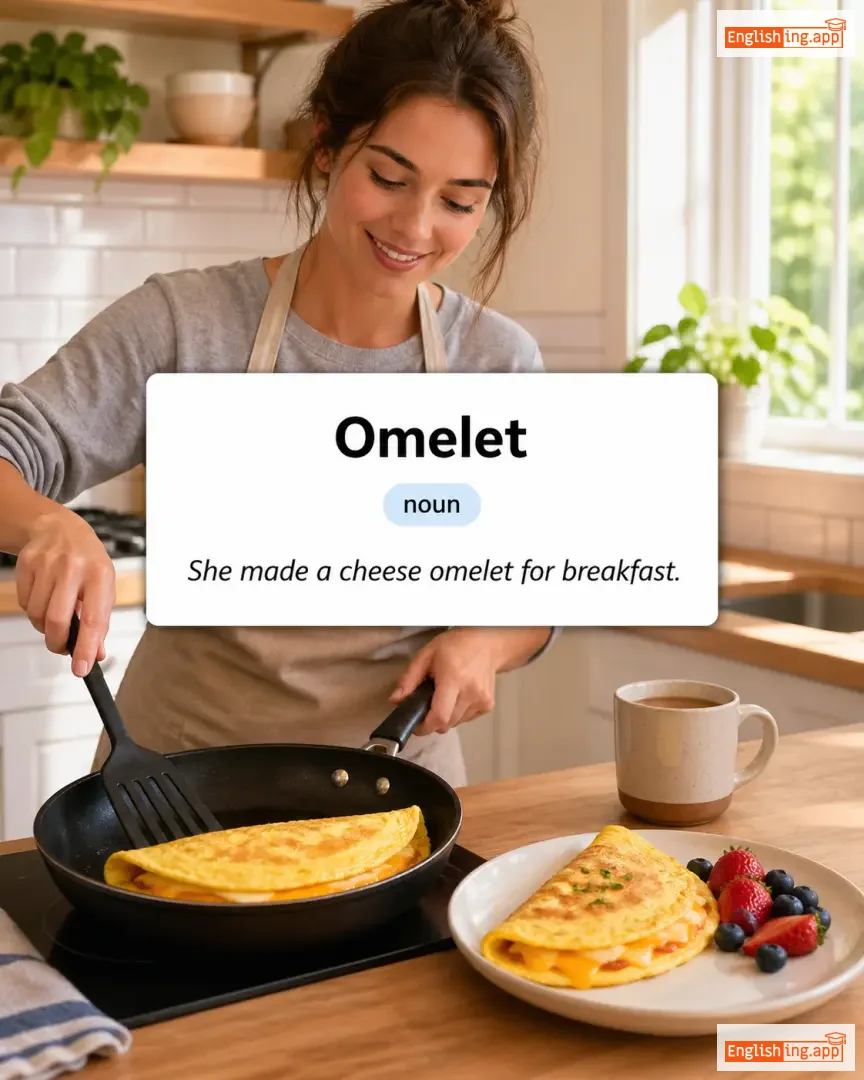
Omelet definition card — visual illustration of the meaning
noun
/ˈɒm.lət/
煎蛋饼 (jiān dàn bǐng)

a dish made from beaten eggs cooked in a frying pan and often folded around a filling

"She made a cheese omelet for breakfast."

"她做了一个奶酪煎蛋饼作为早餐。" (tā zuòle yīgè nǎilào jiān dàn bǐng zuòwéi zǎocān.)
adjective
/əˈfɪʃəl/
官方 (guānfāng)

relating to or connected with an authority or public office

"He is the official spokesperson for the company."

"他是公司的官方发言人。" (Tā shì gōngsī de guānfāng fāyánrén.)
adverb
/əˈfɪʃəli/
正式地 (zhèngshì de)

in a formal or authorized way

"The building was officially opened by the mayor."

"这座建筑由市长正式开幕。" (Zhè zuò jiànzhú yóu shìzhǎng zhèngshì kāimù.)
verb
/əˈfɪʃieɪt/
主持 (zhǔchí)

To perform official duties, especially in a ceremony or as a referee.

"The priest will officiate the wedding ceremony."

"牧师将主持婚礼仪式。" (Mùshī jiāng zhǔchí hūnlǐ yíshì.)
officious definition card — visual illustration of the meaning
adjective
/əˈfɪʃəs/
多管闲事 (duo guan xian shi)

Excessively eager to offer unwanted help or advice; meddlesome.

"The officious guard kept interrupting the visitors with unnecessary instructions."

"那位多管闲事的警卫不断用不必要的指令打扰游客。" (Na wei duo guan xian shi de jing wei buduan yong bu bi yao de zhi ling da rao you ke.)
adjective
/ˈɒfɪʃ/
冷淡 (lěngdàn)

Unfriendly, distant, or reserved in manner.

"He seemed offish at the party and avoided most conversations."

"他在派对上显得很冷淡,避开了大多数谈话。" (Tā zài pàiduì shàng xiǎndé hěn lěngdàn, bìkāi le dàduōshù tánhuà.)
verb
/ˈɒfsɛt/
抵消 (dǐxiāo)

To counterbalance or compensate for something.

"The company's losses were offset by gains in other departments."

"公司的亏损通过其他部门的收益得到了弥补。" (Gōngsī de kuīsǔn tōngguò qítā bùmén de shōuyì dédàole míbǔ.)
noun
/ˈɒfʃuːt/
分支 (fen zhi)

A branch or result that develops from something larger or more important.

"The startup was an offshoot of a major tech company."

"这家初创公司是一个大型科技公司分支。" (Zhe jia chu chuang gong si shi yi ge da xing ke ji gong si fen zhi.)
noun
/ˈɒf.sprɪŋ/
后代 (hòudài)

a person's child or children; an animal's young

"The bird carefully fed its offspring."

"那只鸟小心地喂养了它的后代。" (Nà zhī niǎo xiǎoxīn de wèiyǎngle tā de hòudài.)
adverb
/ˈɔːfən/
经常 (jīngcháng)

frequently, many times

"I often visit my grandparents on weekends."

"我经常在周末拜访我的祖父母。" (Wǒ jīngcháng zài zhōumò bàifǎng wǒ de zǔfùmǔ.)
verb
/ˈoʊɡəl/
色迷迷地看 (sè mímí dì kàn)

To look at someone with obvious sexual interest.

"He kept ogling the models on the runway."
"他一直盯着跑道上的模特看。" (Tā yīzhí dīngzhe pǎodào shàng de mótè kàn.)
👹

ogre

noun
/ˈoʊɡər/

A mythical monster, often depicted as large, hideous, and cruel; metaphorically, a cruel or terrifying person.

"The villagers feared the ogre who lived in the dark forest."

interjection
/oʊ/
(oh)

used to express surprise, realization, or understanding

"Oh, I didn't know you were here!"

"哦,我不知道你在这里!" (Oh, wǒ bù zhīdào nǐ zài zhèlǐ!)
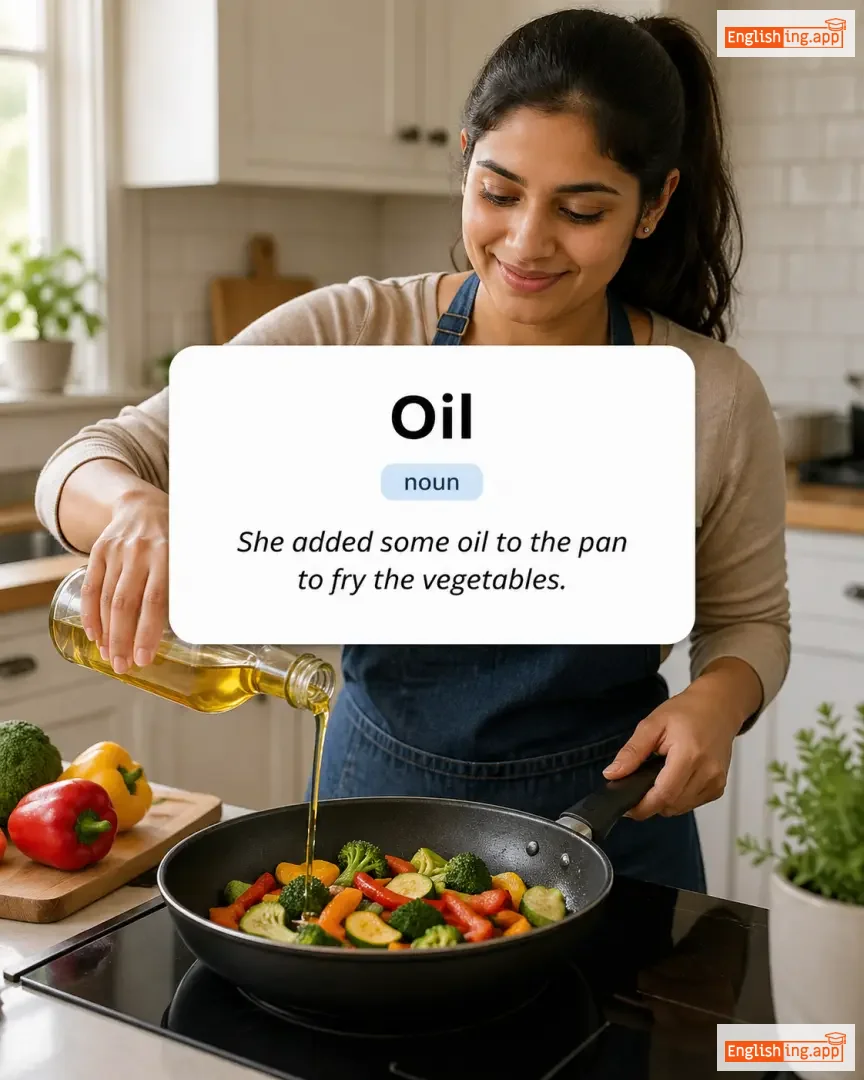
Oil definition card — visual illustration of the meaning
noun
/ɔɪl/
(you)

a viscous liquid derived from plants or animals, used for cooking, lubrication, or fuel

"She added some oil to the pan to fry the vegetables."

"她往锅里加了一些油来炒菜。" (Tā wǎng guō lǐ jiā le yīxiē yóu lái chǎocài.)
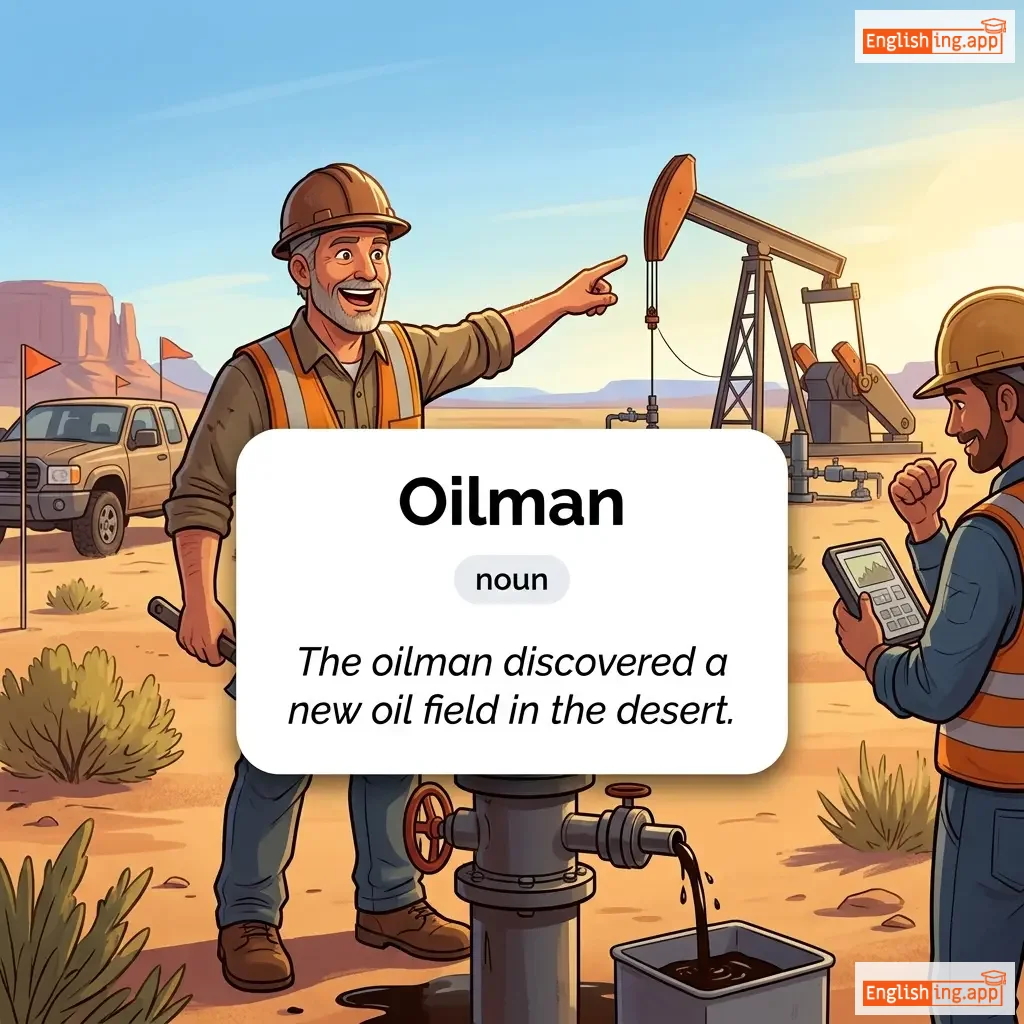
Oilman definition card — visual illustration of the meaning
noun
/ˈɔɪl.mən/
石油商 (shíyóu shāng)

a person who works in the oil industry; someone who sells oil or petroleum products

"The oilman discovered a new oil field in the desert."

"石油商在沙漠中发现了一个新的油田。" (Shíyóu shāng zài shāmò zhōng fāxiànle yīgè xīn de yóutián.)
noun
/ˈɔɪntmənt/
药膏 (yaogao)

A smooth, oily substance applied to the skin for healing or soothing.

"The doctor prescribed an ointment for the burn on his arm."

"医生为他手臂上的烧伤开了一种药膏。" (Yisheng wei ta shoubi shang de shaoshang kai le yi zhong yaogao.)
adjective
/ˈɔɪl.i/
油腻的; 油覆盖的; 油滑的 (yóunì de; yóu fùgài de; yóuhuá de)

covered with oil; containing oil; greasy

"Her oily skin needs special care."

"她的油腻皮肤需要特别护理。" (Tā de yóunì pífū xūyào tèbié hùlǐ.)
Olympic Games definition card — visual illustration of the meaning
noun
əˈlɪm.pɪk ɡeɪmz
奥林匹克运动会 (àolínpǐkè yùndònghuì)

The world's largest international sports competition held every four years, bringing together athletes from different countries to compete in various sports.

"The Olympic Games bring together the world's top athletes."

"奥林匹克运动会汇聚了世界上最顶尖的运动员。" (Àolínpǐkè yùndònghuì huìjùle shìjiè shàng zuì dǐngjiān de yùndòngyuán.)
adjective
/əˈlɪmpɪk/
奥林匹克 (àolínpǐkè)

related to the Olympic Games, a major international sporting event

"She trained hard to compete in the Olympic Games."

"她努力训练,为了参加奥林匹克运动会。" (Tā nǔlì xùnliàn, wèile cānjiā àolínpǐkè yùndònghuì.)
noun
/ˈɒlɪv brɑːntʃ/
橄榄枝 (ganlan zhi)

A symbol of peace or reconciliation; an offer to end conflict.

"He extended an olive-branch to his rival after years of hostility."
"他在多年敌对之后向他的对手伸出了橄榄枝。" (Ta zai duonian didui zhihou xiang tade duishou shenchu le ganlan zhi.)
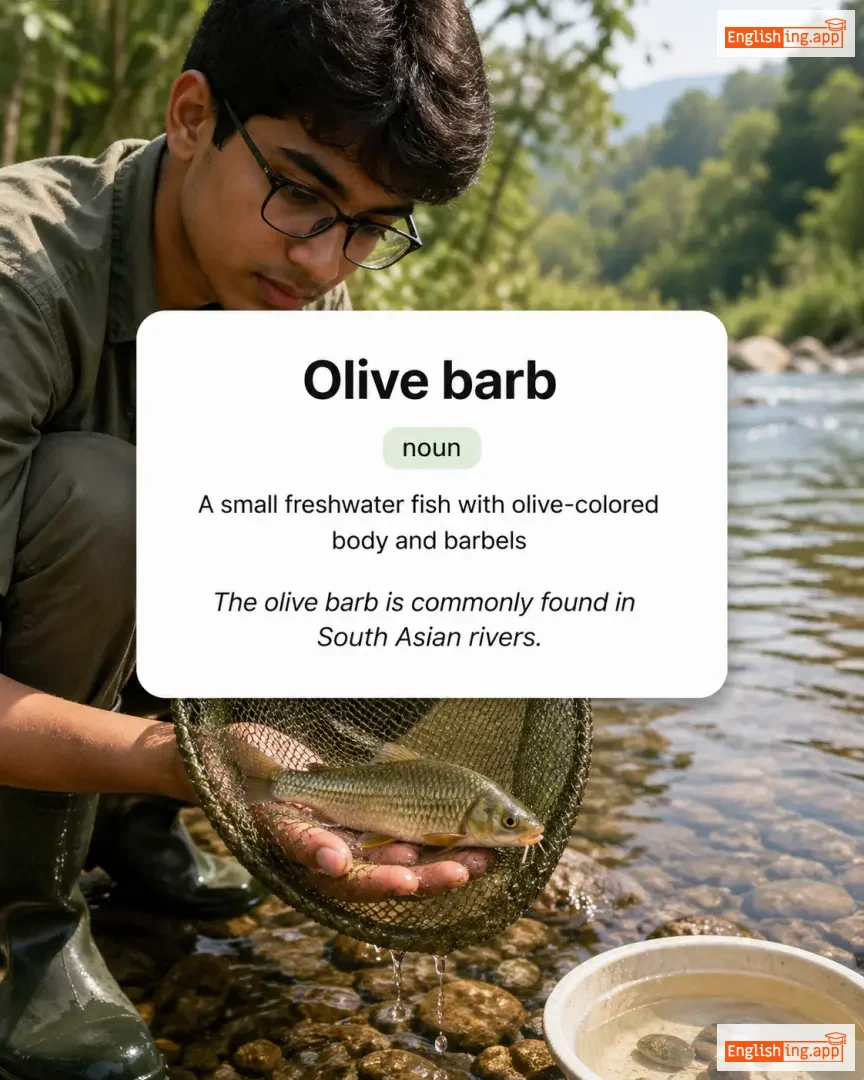
Olive barb definition card — visual illustration of the meaning
noun
/ˈɒlɪv bɑːb/
橄榄鲃 (ganlan ba)

A small freshwater fish with olive-colored body and barbels

"The olive barb is commonly found in South Asian rivers."
"橄榄鲃常见于南亚的河流中。" (ganlan ba changjian yu nanya de heliu zhong)
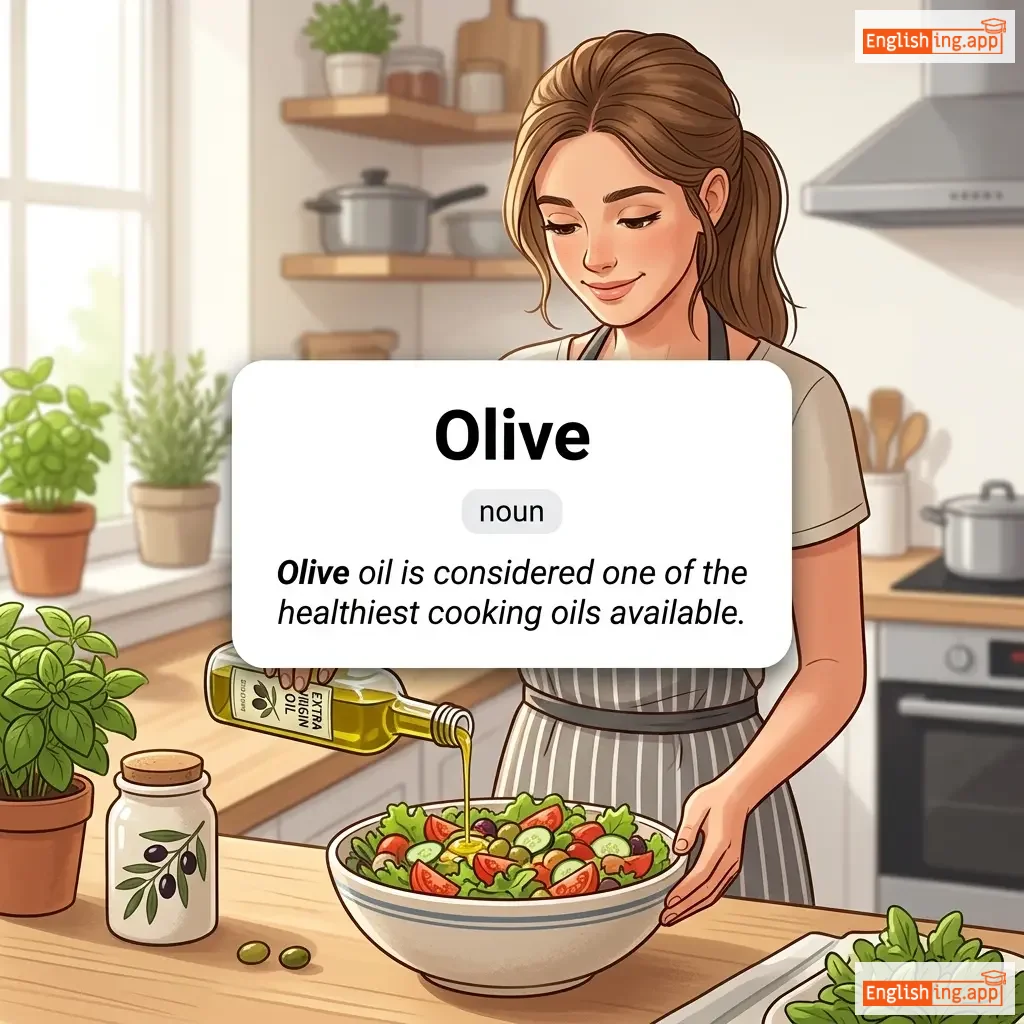
Olive definition card — visual illustration of the meaning
noun
/ˈɑː.lɪv/
橄榄 (gǎn lǎn)

a small oval fruit with a hard pit, typically green or black, used for eating or making oil

"Olive oil is considered one of the healthiest cooking oils available."
"橄榄油被认为是最健康的烹饪油之一。" (gǎn lǎn yóu bèi rènwéi shì zuì jiànkāng de pēngrèn yóu zhī yī.)
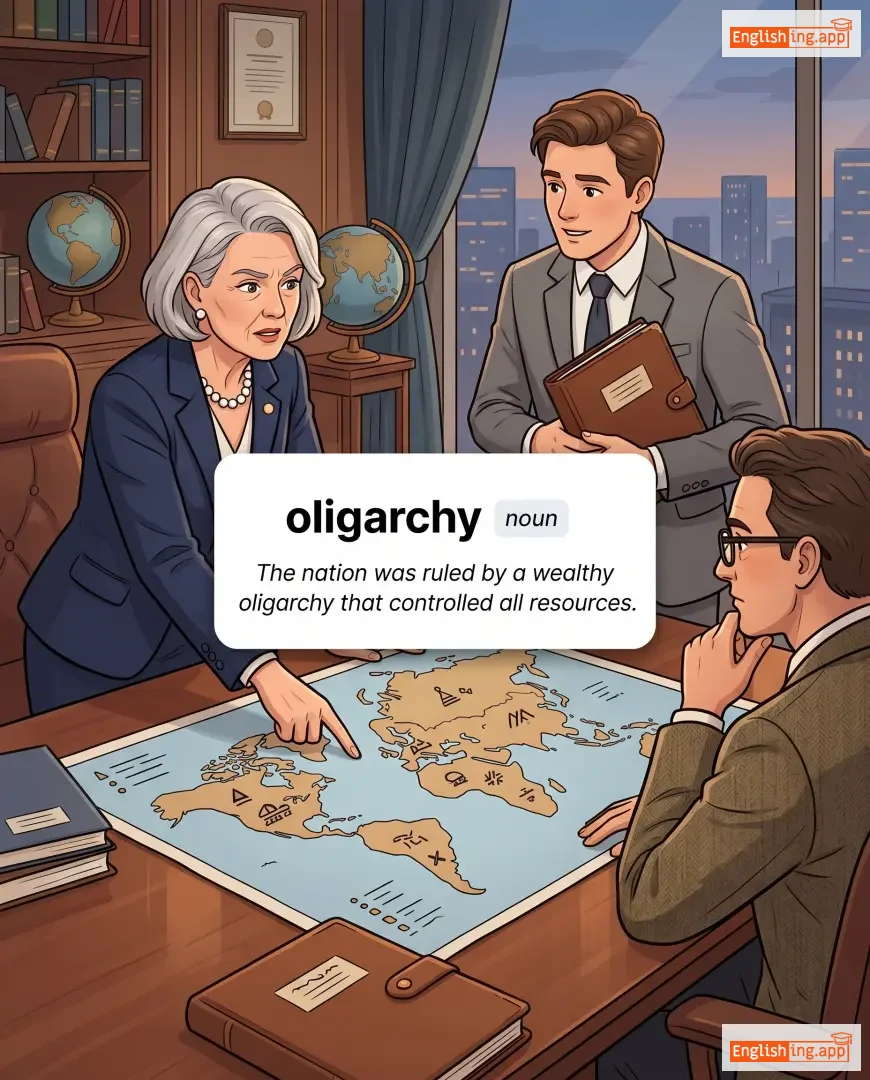
oligarchy definition card — visual illustration of the meaning
noun
/ˈɑːlɪˌɡɑːrki/
寡头政治 (guǎtóu zhèngzhì)

A small group of people having control of a country, organization, or institution.

"The nation was ruled by a wealthy oligarchy that controlled all resources."

"这个国家由一个富有的寡头集团统治,控制着所有资源。" (Zhège guójiā yóu yīgè fùyǒu de guǎtóu jítuán tǒngzhì, kòngzhì zhe suǒyǒu zīyuán.)
noun
/ɑːlˈfækʃən/
嗅觉 (xiùjué)

The sense of smell; the process of detecting and perceiving odors.

"Dogs have a highly developed sense of olfaction."

"狗的嗅觉非常发达。" (Gǒu de xiùjué fēicháng fādá.)
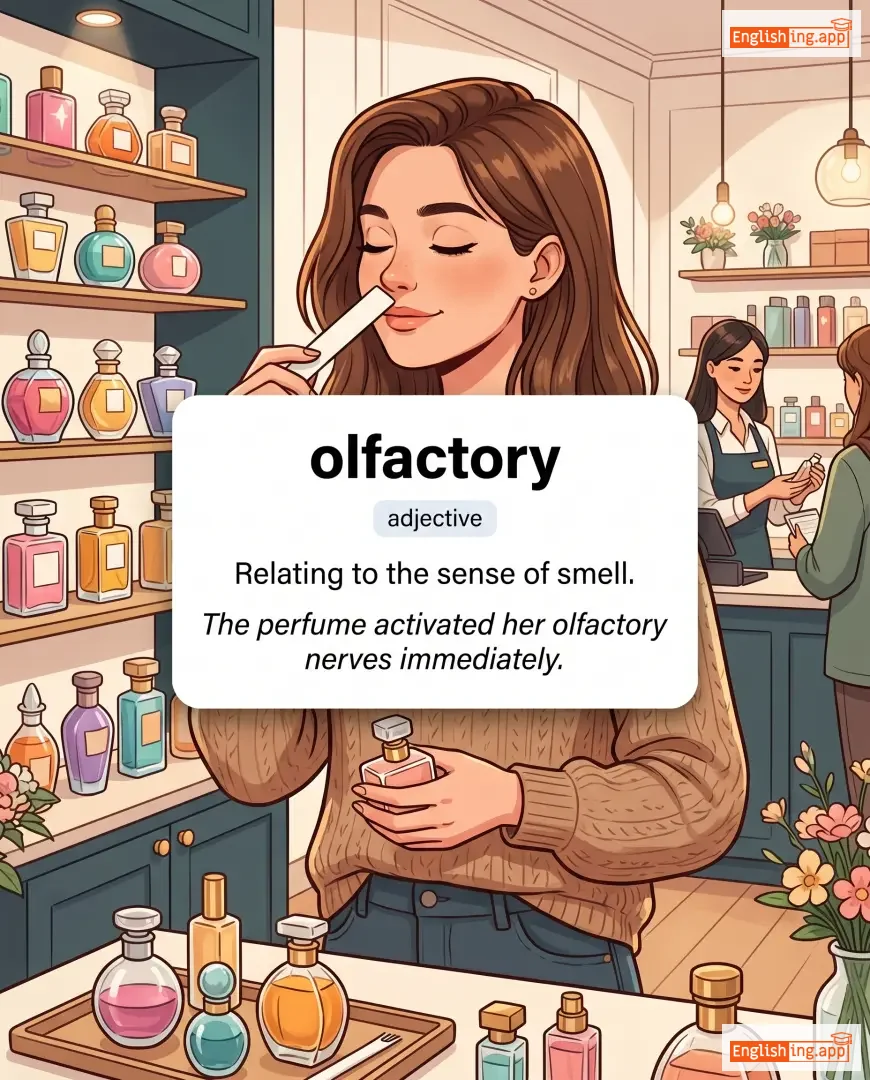
olfactory definition card — visual illustration of the meaning
adjective
/ɑːlˈfæktəri/

Relating to the sense of smell.

"The perfume activated her olfactory nerves immediately."

adjective
/oʊˈkeɪ/
好的 (hao de)

used to indicate agreement, approval, or understanding

"Okay, let's go to the park."

"好的,我们去公园。" (Hao de, women qu gongyuan.)
adjective
/əʊˈkeɪ/
没问题 (méi wèn tí)

used to express agreement or acceptance

"It's okay to leave early today."

"今天早些离开没问题。" (Jīn tiān zǎo xiē lí kāi méi wèn tí.)
adjective
/ˌoʊld ˈfæʃənd/
过时的 (guò shí de)

not modern; belonging to an earlier time

"He still wears an old-fashioned hat."
"他仍然戴着一顶过时的帽子。" (Tā réngrán dàizhe yī dǐng guò shí de màozi.)
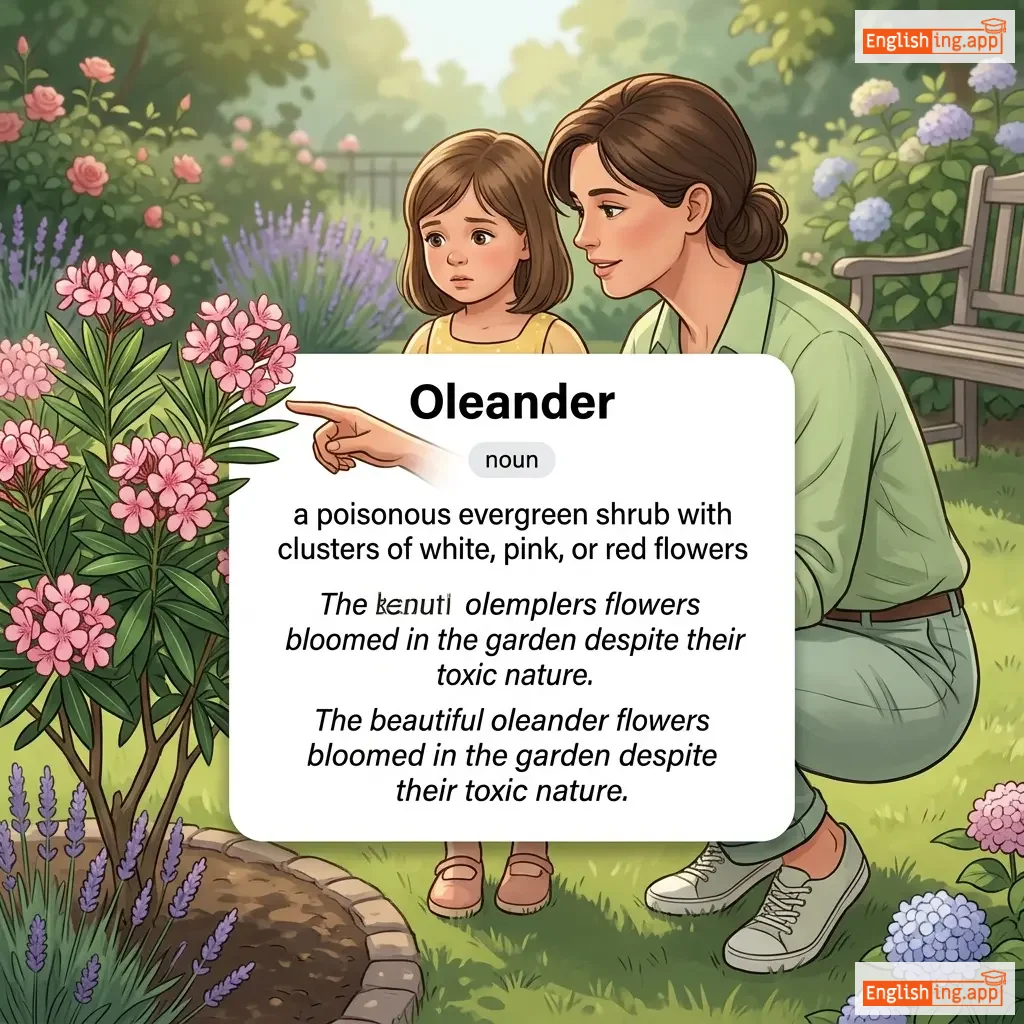
Oleander definition card — visual illustration of the meaning
noun
/oʊliˈændər/
夹竹桃 (jiā zhútáo)

a poisonous evergreen shrub with clusters of white, pink, or red flowers

"The beautiful oleander flowers bloomed in the garden despite their toxic nature."

"美丽的夹竹桃花在花园里盛开,尽管它们有毒。" (Měilì de jiā zhútáo huā zài huāyuán lǐ shèng kāi, jǐnguǎn tāmen yǒudú.)
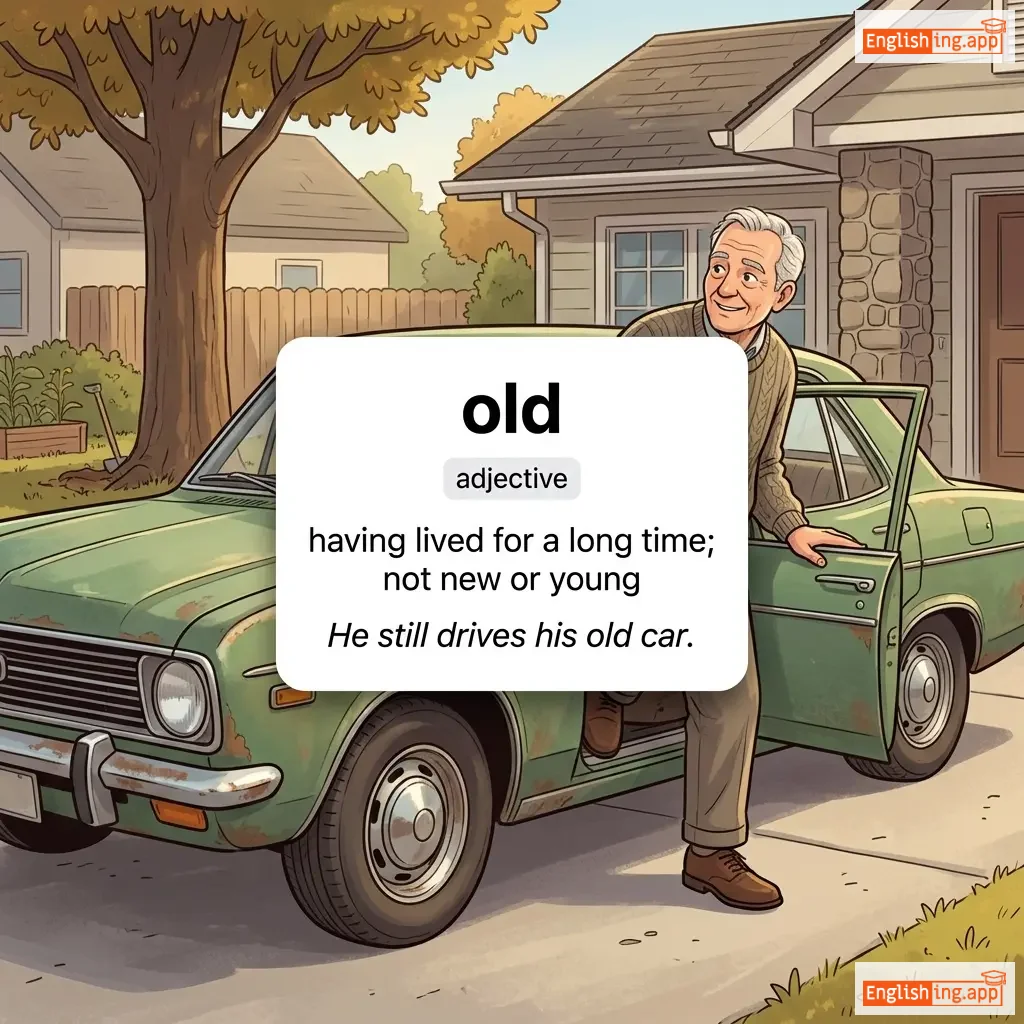
old definition card — visual illustration of the meaning
adjective
/oʊld/
旧的 (jiù de)

having lived for a long time; not new or young

"He still drives his old car."

"他仍然开着他的旧车。" (Tā réngrán kāi zhe tā de jiù chē.)
adjective
/ˈmɒtli/
杂乱 (záluàn)

Made up of different, often incongruous or diverse elements.

"The festival attracted a motley crowd of artists, musicians, and tourists."

"这个节日吸引了由艺术家、音乐家和游客组成的杂乱人群。" (Zhège jiérì xīyǐnle yóu yìshùjiā, yīnyuèjiā hé yóukè zǔchéng de záluàn rénqún.)
noun
/ˈmoʊtər/
马达 (mǎ dá)

a machine that produces motion or power to make something work

"The car’s motor stopped suddenly."

"汽车的马达突然停止了。" (qìchē de mǎ dá túrán tíngzhǐle.)
Motor Cycle definition card — visual illustration of the meaning
noun
/ˈmoʊ.tər ˌsaɪ.kəl/
摩托车 (mótuōchē)

a two-wheeled vehicle powered by an engine

"He rides his motorcycle to work every day."

"他每天骑摩托车上班。" (Tā měitiān qí mótuōchē shàngbān.)
Motor lorry definition card — visual illustration of the meaning
noun
/ˈmoʊ.tər ˈlɔː.ri/
摩托卡车 (mótuō kǎchē)

a large motor vehicle used for transporting goods; truck

"The motor lorry delivered fresh vegetables to the market."

"这辆摩托卡车将新鲜蔬菜送到市场。" (Zhè liàng mótuō kǎchē jiāng xīnxiān shūcài sòng dào shìchǎng.)