Vocabularios

Descubra, aprenda y domine el vocabulario en inglés

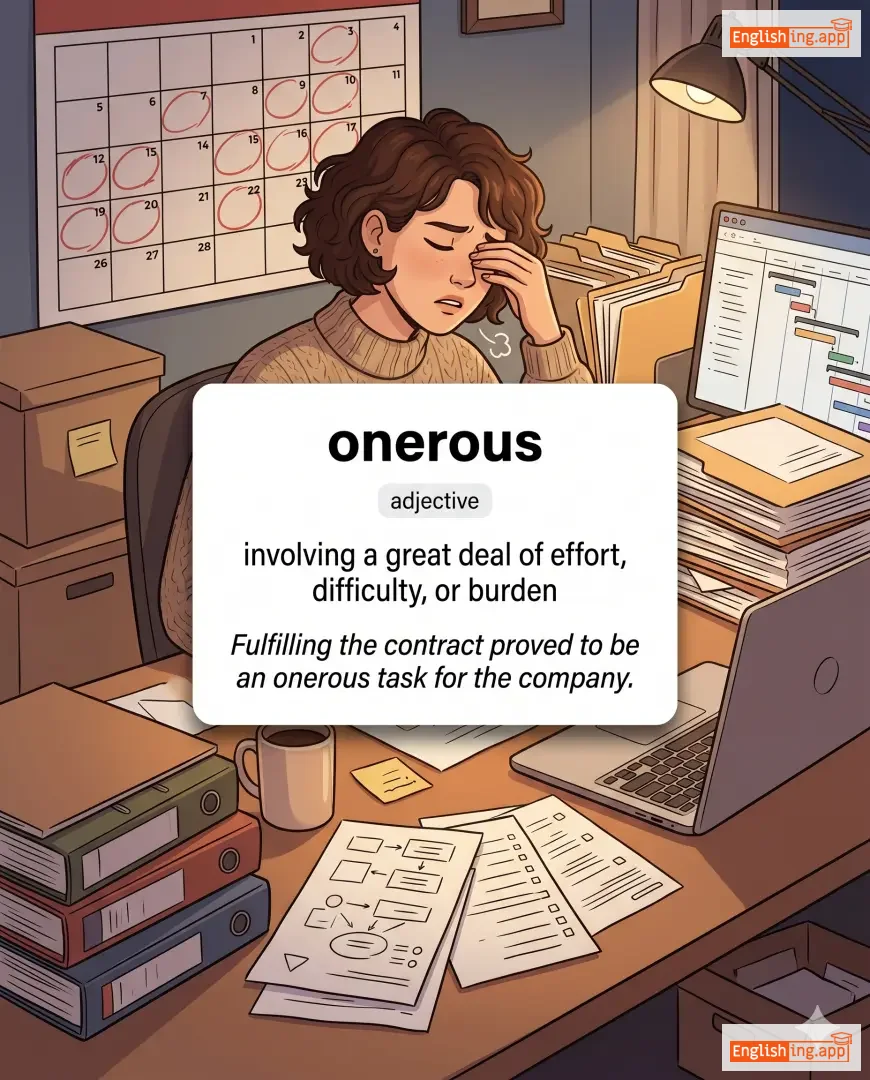
onerous definition card — visual illustration of the meaning
adjective
/ˈəʊnərəs/
arduo (arduo)

involving a great deal of effort, difficulty, or burden

"Fulfilling the contract proved to be an onerous task for the company."

"Cumplir el contrato resultó ser una tarea ardua para la empresa." (Cumplir el contrato resultó ser una tarea ardua para la empresa.)
noun
/wʌn θɜːd/
un tercio (un tercio)

one part of something that is divided into three equal parts

"One-third of the class was absent today."

"Un tercio de la clase estaba ausente hoy." (Un tercio de la clase estaba ausente hoy.)
1️⃣

one (uan)

pronoun, noun, adjective
/wʌn/
uno (uno)

the number equivalent to the sum of zero and one; a single person or thing

"Only one student answered the question."

"Solo un estudiante respondió la pregunta." (Solo un estudiante respondió la pregunta.)
adverb
/wʌns/
una vez (una vez)

on one occasion only; at a time in the past

"She visited Paris once last year."

"Ella visitó París una vez el año pasado." (Ella visitó París una vez el año pasado.)
preposition
/ɒn/
sobre (sobre)

physically in contact with and supported by a surface

"The book is on the table."

"El libro está sobre la mesa." (El libro está sobre la mesa.)
adjective
/ɒmˈnɪvərəs/
omnívoro (omnivoro)

eating both plants and animals

"Humans are generally considered omnivorous creatures."

"Los humanos generalmente se consideran criaturas omnívoras." (Los humanos generalmente se consideran criaturas omnívoras.)
adjective
/ɒmˈnɪʃənt/
omnisciente (omnisciente)

having complete or unlimited knowledge and awareness

"Some religions describe God as omniscient and all-powerful."

"Algunas religiones describen a Dios como omnisciente y todopoderoso." (Algunas religiones describen a Dios como omnisciente y todopoderoso.)
noun
/ɒmˈnɪʃəns/
omnisciencia (omnisciencia)

the state of knowing everything

"The novel's narrator has an air of omniscience, revealing every character's thoughts."

"El narrador de la novela tiene un aire de omnisciencia, revelando los pensamientos de cada personaje." (El narrador de la novela tiene un aire de omnisciencia, revelando los pensamientos de cada personaje.)
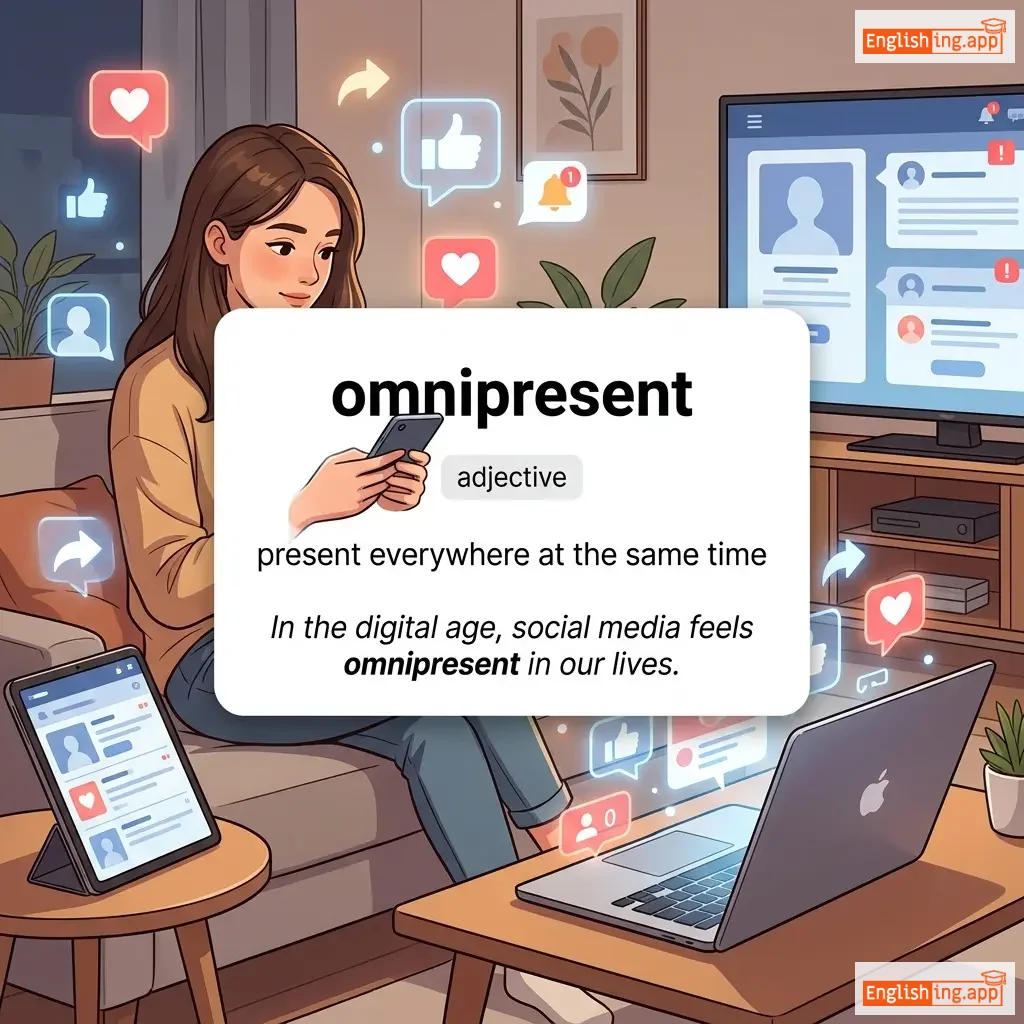
omnipresent definition card — visual illustration of the meaning
adjective
/ˌɒmnɪˈprɛzənt/
omnipresente (omnipresente)

present everywhere at the same time

"In the digital age, social media feels omnipresent in our lives."

"En la era digital, las redes sociales se sienten omnipresentes en nuestras vidas." (En la era digital, las redes sociales se sienten omnipresentes en nuestras vidas.)
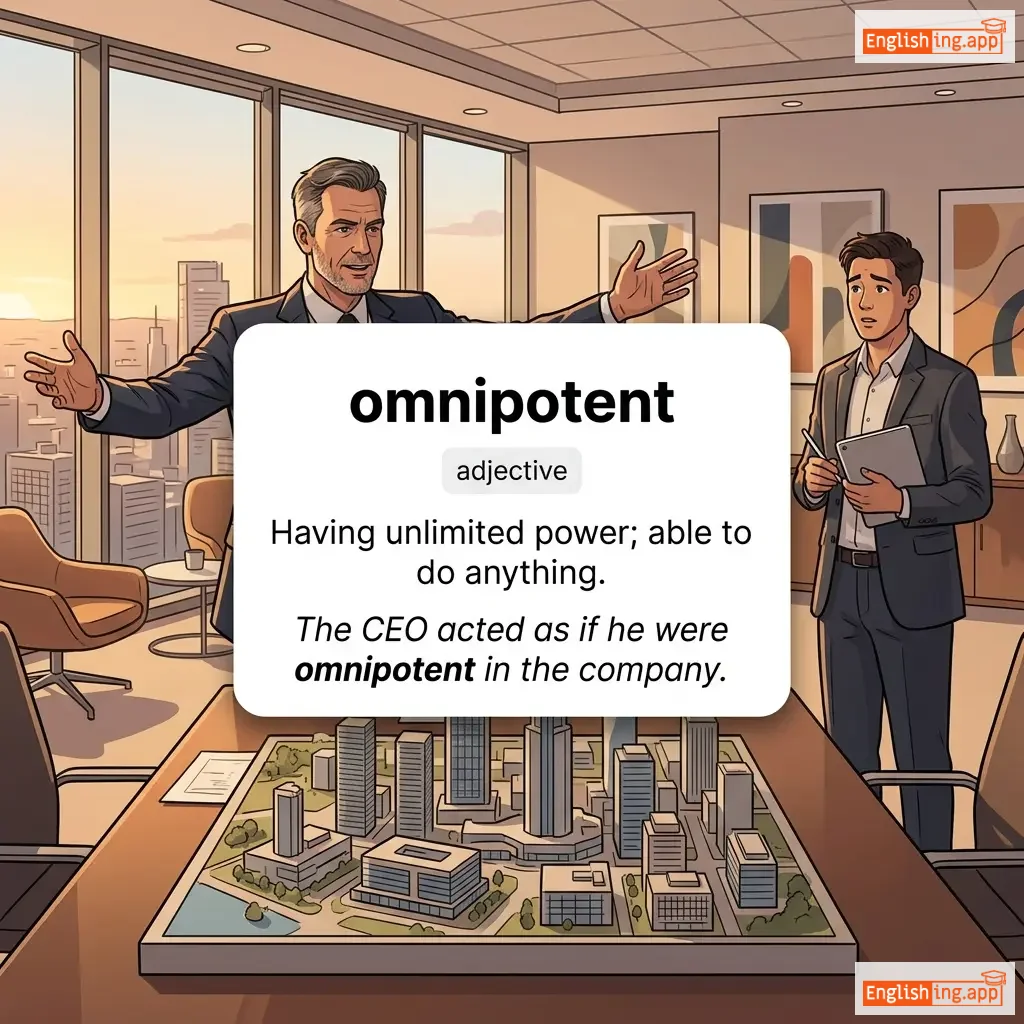
omnipotent definition card — visual illustration of the meaning
adjective
/ɒmˈnɪpətənt/
omnipotente (omnipotente)

Having unlimited power; able to do anything.

"The CEO acted as if he were omnipotent in the company."

"El CEO actuó como si fuera omnipotente en la empresa." (El CEO actuó como si fuera omnipotente en la empresa.)
noun
/ɒmˈnɪpətəns/
omnipotencia (omnipotencia)

The quality of having unlimited power or authority.

"Many religions describe God’s omnipotence as absolute."

"Muchas religiones describen la omnipotencia de Dios como absoluta." (Muchas religiones describen la omnipotencia de Dios como absoluta.)
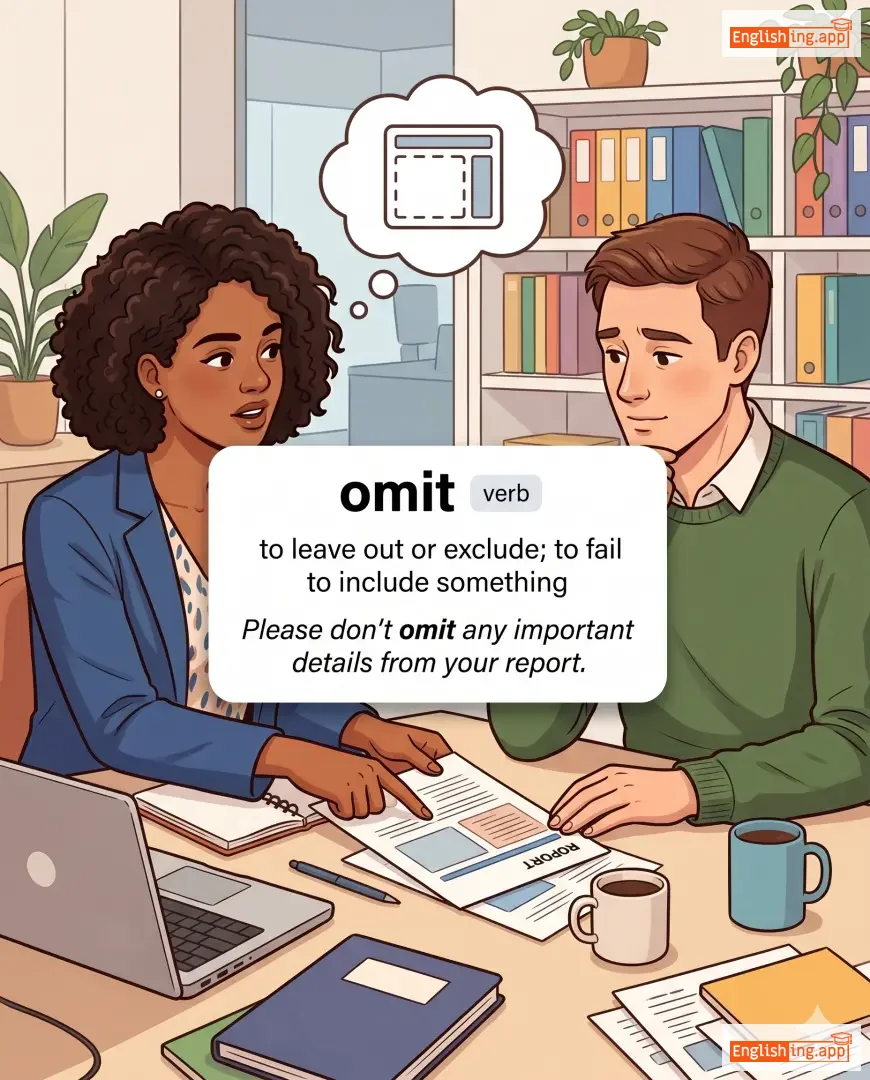
omit definition card — visual illustration of the meaning
verb
/oʊˈmɪt/
omitir (omitir)

to leave out or exclude; to fail to include something

"Please don't omit any important details from your report."

"Por favor, no omitas detalles importantes de tu informe." (Por favor, no omitas detalles importantes de tu informe.)
noun
/əˈmɪʃən/
omisión (omision)

The act of leaving out or excluding something; something that has been left out.

"Her omission of important details caused confusion."

"Su omisión de detalles importantes causó confusión." (Su omisión de detalles importantes causó confusión.)
adjective
/ˈɒmɪnəs/
amenazante (amenazante)

Giving the impression that something bad or unpleasant is going to happen.

"Dark clouds gave an ominous sign of an approaching storm."

"Las nubes oscuras dieron una señal amenazante de una tormenta que se acercaba." (Las nubes oscuras dieron una señal amenazante de una tormenta que se acercaba.)
noun
/ˈoʊ.mən/
presagio de buena o mala suerte futura (presagio de buena o mala suerte futura)

an event regarded as a sign of future good or bad luck

"Many people consider a black cat crossing your path a bad omen."

"Muchas personas consideran que un gato negro cruzando tu camino es un mal presagio." (Muchas personas consideran que un gato negro cruzando tu camino es un mal presagio.)
noun
/əˈlɪmpɪks/
Juegos Olímpicos (Juegos Olimpicos)

an international sports competition held every four years with athletes from many countries

"The Olympics bring athletes from all over the world together."

"Los Juegos Olímpicos reúnen a atletas de todo el mundo." (Los Juegos Olímpicos reúnen a atletas de todo el mundo.)
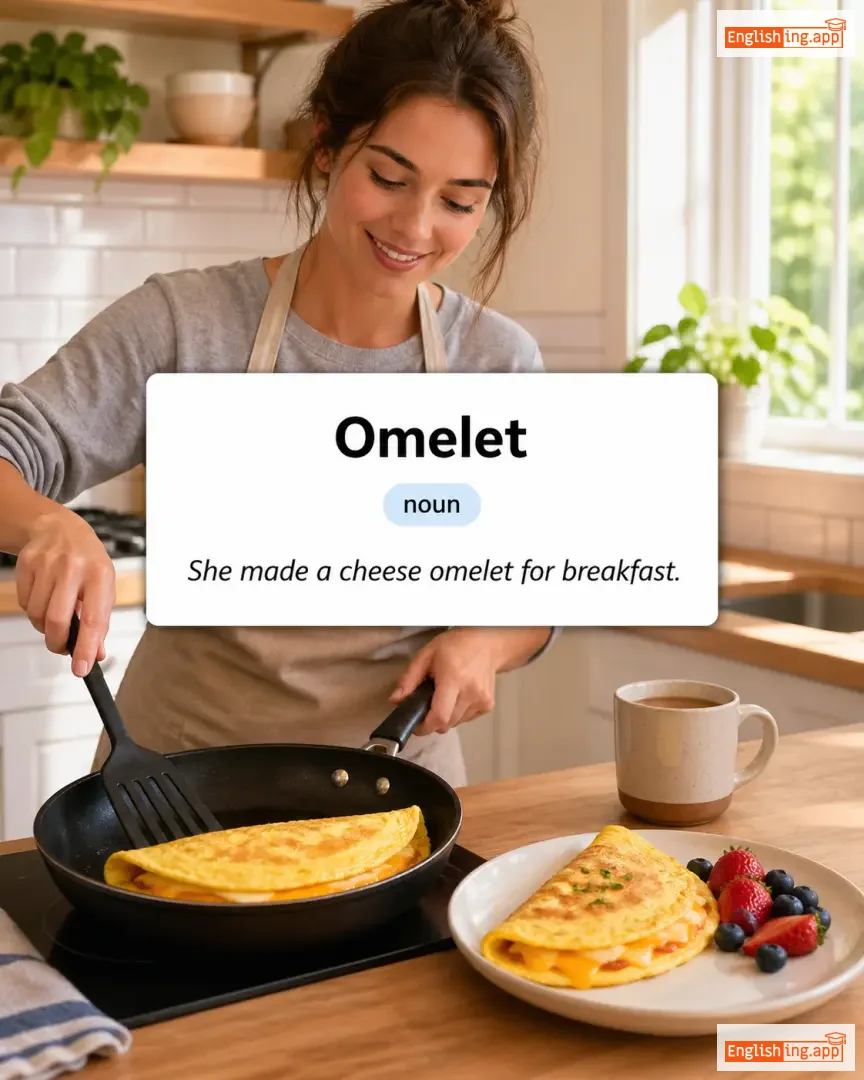
Omelet definition card — visual illustration of the meaning
noun
/ˈɒm.lət/
tortilla (tortilla)

a dish made from beaten eggs cooked in a frying pan and often folded around a filling

"She made a cheese omelet for breakfast."

"Ella hizo una tortilla de queso para el desayuno." (ella hizo una tortilla de queso para el desayuno.)
adjective
/əˈfɪʃəl/
oficial (oficial)

relating to or connected with an authority or public office

"He is the official spokesperson for the company."

"Él es el portavoz oficial de la empresa." (Él es el portavoz oficial de la empresa.)
adverb
/əˈfɪʃəli/
oficialmente (oficialmente)

in a formal or authorized way

"The building was officially opened by the mayor."

"El edificio fue oficialmente inaugurado por el alcalde." (El edificio fue oficialmente inaugurado por el alcalde.)
verb
/əˈfɪʃieɪt/
oficiar (oficiar)

To perform official duties, especially in a ceremony or as a referee.

"The priest will officiate the wedding ceremony."

"El sacerdote oficiará la ceremonia de la boda." (El sacerdote oficiará la ceremonia de la boda.)
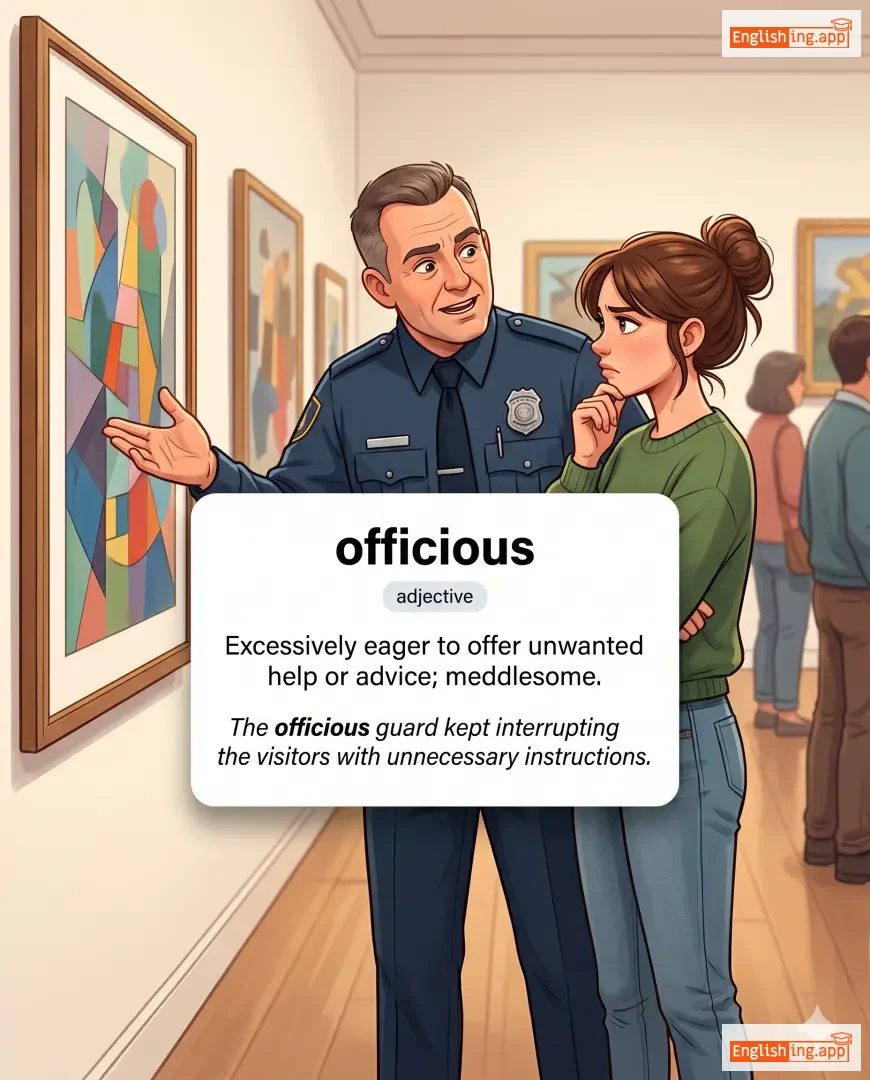
officious definition card — visual illustration of the meaning
adjective
/əˈfɪʃəs/
entrometido (entrometido)

Excessively eager to offer unwanted help or advice; meddlesome.

"The officious guard kept interrupting the visitors with unnecessary instructions."

"El guardia entrometido interrumpía a los visitantes con instrucciones innecesarias." (El guardia entrometido interrumpía a los visitantes con instrucciones innecesarias.)
adjective
/ˈɒfɪʃ/
distante (distante)

Unfriendly, distant, or reserved in manner.

"He seemed offish at the party and avoided most conversations."

"Parecía distante en la fiesta y evitaba la mayoría de las conversaciones." (Parecia distante en la fiesta y evitaba la mayoria de las conversaciones.)
verb
/ˈɒfsɛt/
compensar (compensar)

To counterbalance or compensate for something.

"The company's losses were offset by gains in other departments."

"Las pérdidas de la compañía fueron compensadas por las ganancias en otros departamentos." (Las perdidas de la compania fueron compensadas por las ganancias en otros departamentos.)
noun
/ˈɒfʃuːt/
ramificación (ramificacion)

A branch or result that develops from something larger or more important.

"The startup was an offshoot of a major tech company."

"La startup fue una ramificación de una gran empresa de tecnología." (La startup fue una ramificacion de una gran empresa de tecnologia.)
noun
/ˈɒf.sprɪŋ/
descendencia (descendencia)

a person's child or children; an animal's young

"The bird carefully fed its offspring."

"El pájaro alimentó cuidadosamente a su descendencia." (El pájaro alimentó cuidadosamente a su descendencia.)
adverb
/ˈɔːfən/
a menudo (a menudo)

frequently, many times

"I often visit my grandparents on weekends."

"A menudo visito a mis abuelos los fines de semana." (A menudo visito a mis abuelos los fines de semana.)
verb
/ˈoʊɡəl/
mirar lascivamente (mirar lascivamente)

To look at someone with obvious sexual interest.

"He kept ogling the models on the runway."

"Él no podía dejar de mirar las modelos en la pasarela." (El no podia dejar de mirar las modelos en la pasarela.)
noun
/ˈoʊɡər/
ogro (ohger)

A mythical monster, often depicted as large, hideous, and cruel; metaphorically, a cruel or terrifying person.

"The villagers feared the ogre who lived in the dark forest."

"Los aldeanos temían al ogro que vivía en el bosque oscuro." (Los aldeanos temian al ogro que vivia en el bosque oscuro)
interjection
/oʊ/
¡Oh! (oh)

used to express surprise, realization, or understanding

"Oh, I didn't know you were here!"

"¡Oh, no sabía que estabas aquí!" (¡Oh, no sabia que estabas aqui!)
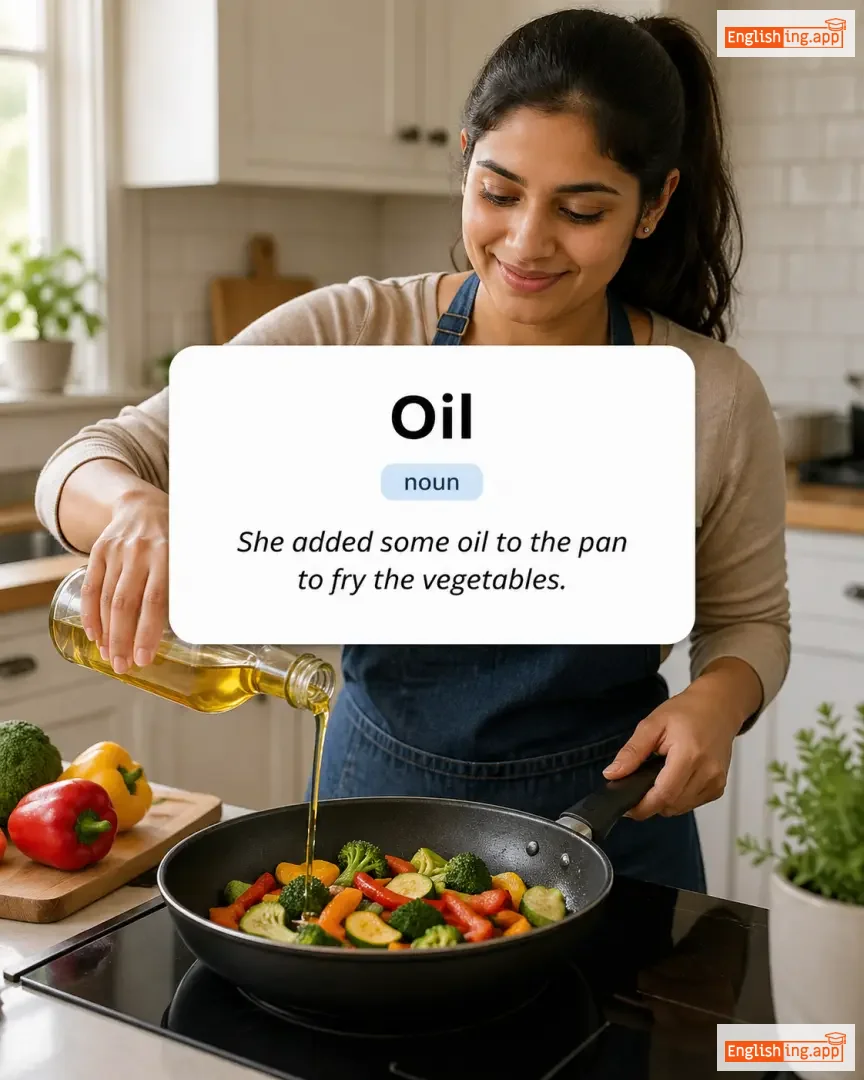
Oil definition card — visual illustration of the meaning
noun
/ɔɪl/
aceite (aceite)

a viscous liquid derived from plants or animals, used for cooking, lubrication, or fuel

"She added some oil to the pan to fry the vegetables."

"Ella añadió un poco de aceite a la sartén para freír las verduras." (Ella añadio un poco de aceite a la sarten para freir las verduras.)
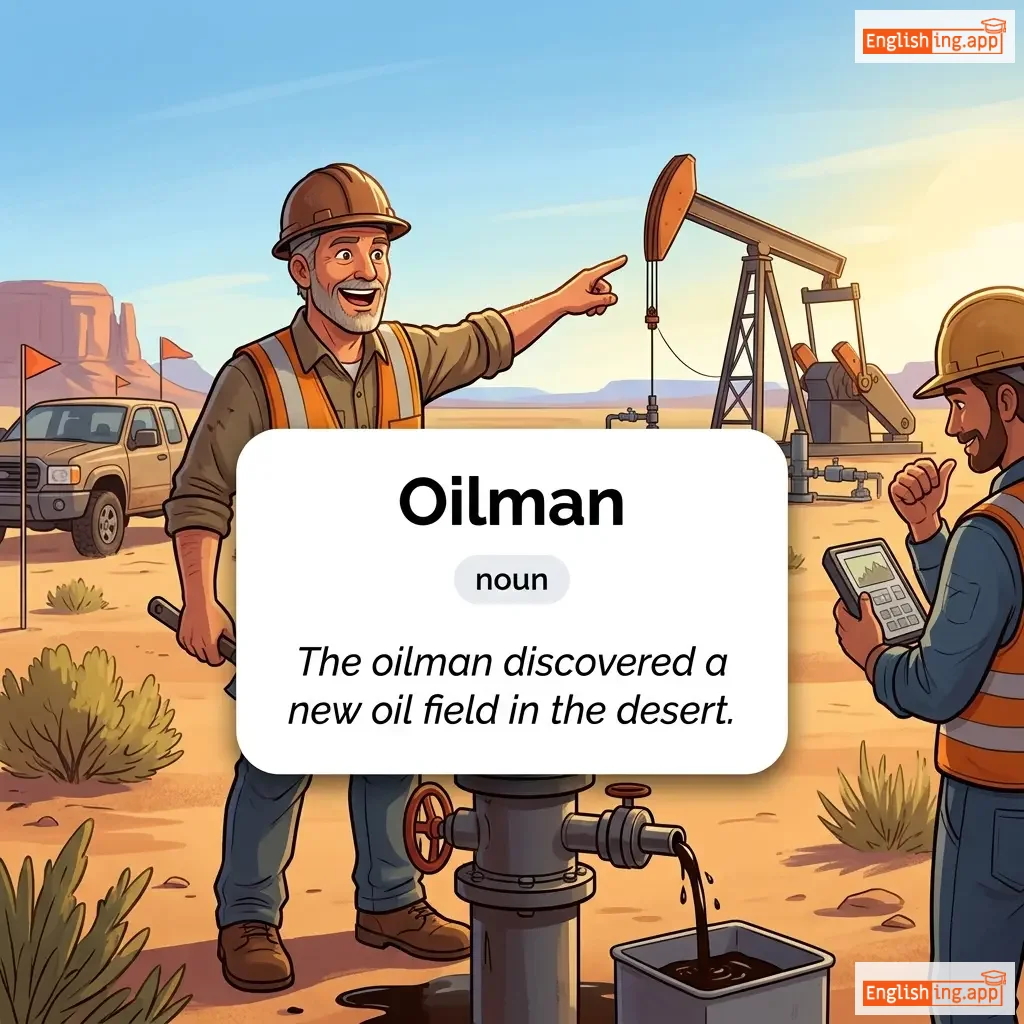
Oilman definition card — visual illustration of the meaning
noun
/ˈɔɪl.mən/
petrolero (petrolero)

a person who works in the oil industry; someone who sells oil or petroleum products

"The oilman discovered a new oil field in the desert."

"El petrolero descubrió un nuevo campo petrolero en el desierto." (El petrolero descubrio un nuevo campo petrolero en el desierto.)
noun
/ˈɔɪntmənt/
ungüento (ungüento)

A smooth, oily substance applied to the skin for healing or soothing.

"The doctor prescribed an ointment for the burn on his arm."

"El doctor recetó un ungüento para la quemadura en su brazo." (El doctor recetó un ungüento para la quemadura en su brazo.)
adjective
/ˈɔɪl.i/
oleoso; cubierto de aceite; grasoso (oleoso; cubierto de aceite; grasoso)

covered with oil; containing oil; greasy

"Her oily skin needs special care."

"Su piel aceitosa necesita cuidados especiales." (Su piel aceitosa necesita cuidados especiales.)
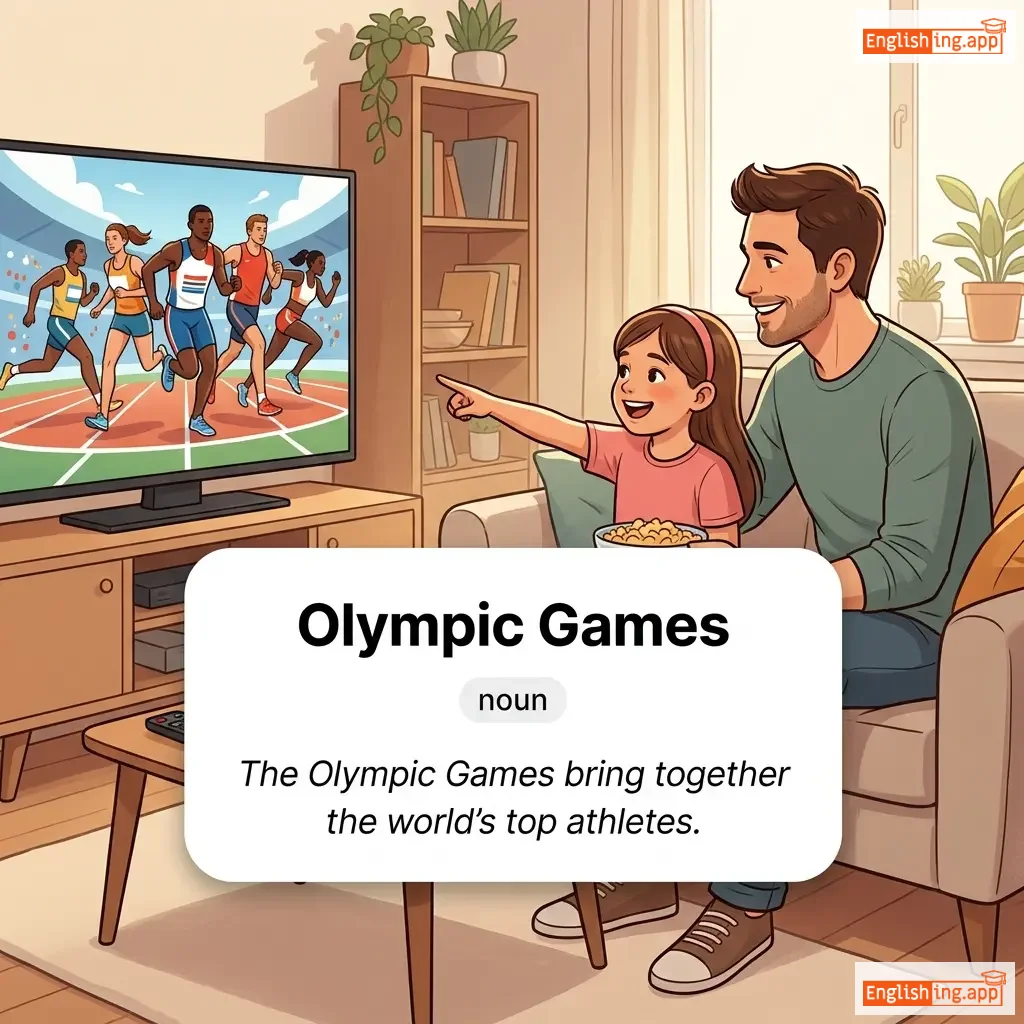
Olympic Games definition card — visual illustration of the meaning
noun
əˈlɪm.pɪk ɡeɪmz
juegos olímpicos (juegos olimpicos)

The world's largest international sports competition held every four years, bringing together athletes from different countries to compete in various sports.

"The Olympic Games bring together the world's top athletes."

"Los Juegos Olímpicos reúnen a los mejores atletas del mundo." (Los Juegos Olimpicos reune a los mejores atletas del mundo.)
adjective
/əˈlɪmpɪk/
olímpico (olimpiko)

related to the Olympic Games, a major international sporting event

"She trained hard to compete in the Olympic Games."

"Ella entrenó duro para competir en los Juegos Olímpicos." (Ella entrenó duro para competir en los Juegos Olímpicos.)
noun
/ˈɒlɪv brɑːntʃ/
rama de olivo (rama de olivo)

A symbol of peace or reconciliation; an offer to end conflict.

"He extended an olive-branch to his rival after years of hostility."

"Extendió una rama de olivo a su rival después de años de hostilidad." (Extendió una rama de olivo a su rival después de años de hostilidad.)
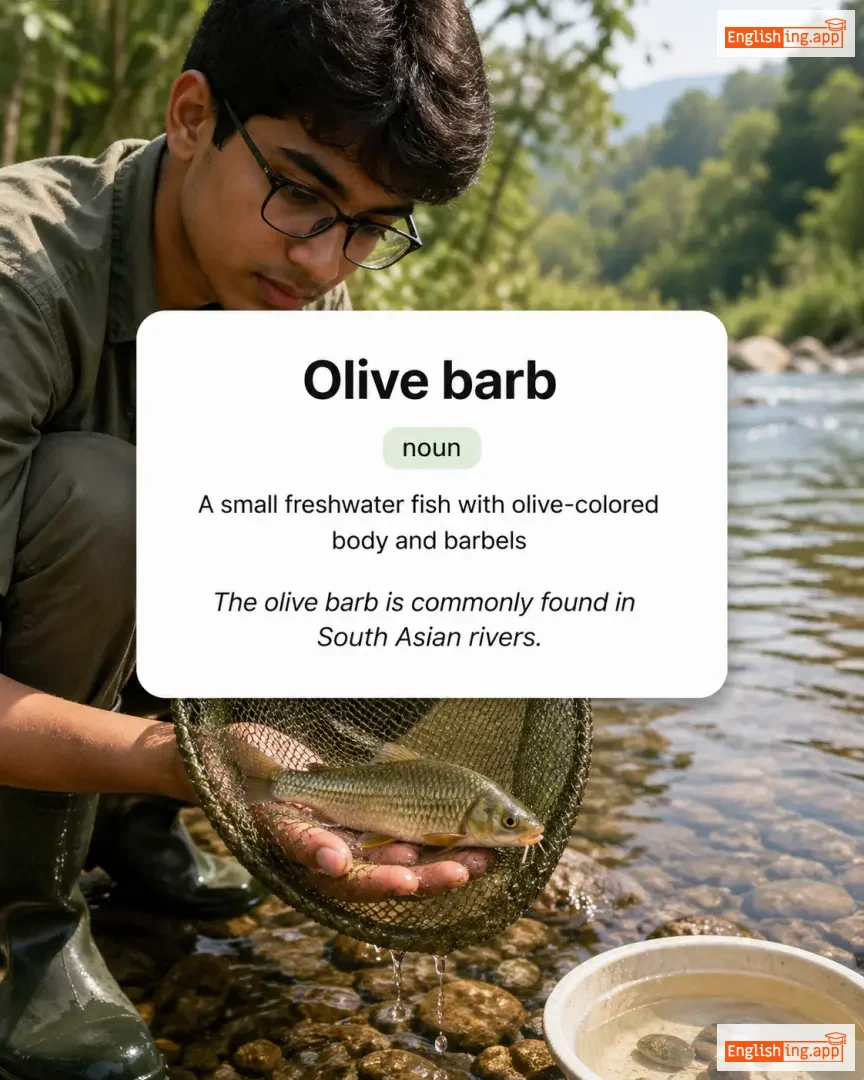
Olive barb definition card — visual illustration of the meaning
noun
/ˈɒlɪv bɑːb/
barbo oliva (barbo oliva)

A small freshwater fish with olive-colored body and barbels

"The olive barb is commonly found in South Asian rivers."

"El barbo oliva se encuentra comúnmente en los ríos del sur de Asia." (el barbo oliva se encuentra comunmente en los rios del sur de Asia)
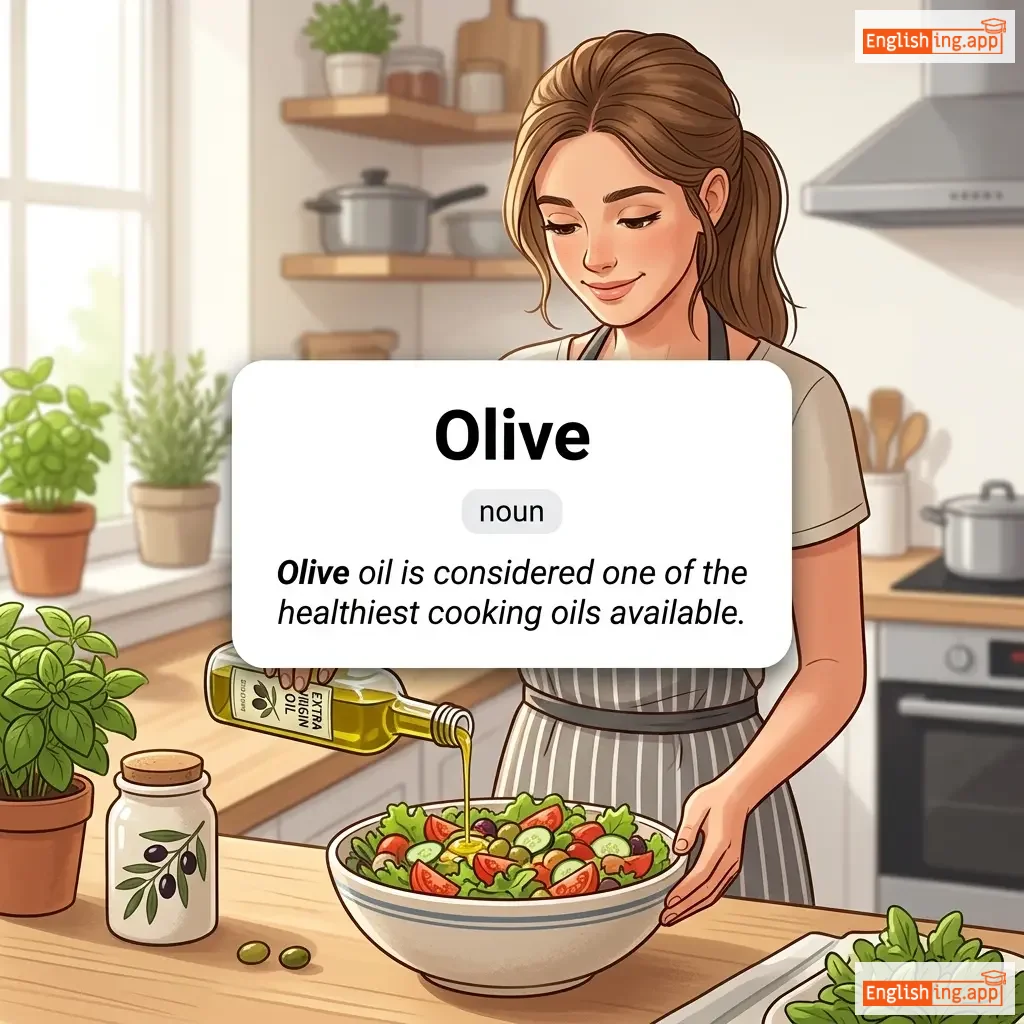
Olive definition card — visual illustration of the meaning
noun
/ˈɑː.lɪv/
aceituna (aceituna)

a small oval fruit with a hard pit, typically green or black, used for eating or making oil

"Olive oil is considered one of the healthiest cooking oils available."

"El aceite de oliva se considera uno de los aceites de cocina más saludables disponibles." (El aceite de oliva se considera uno de los aceites de cocina más saludables disponibles.)
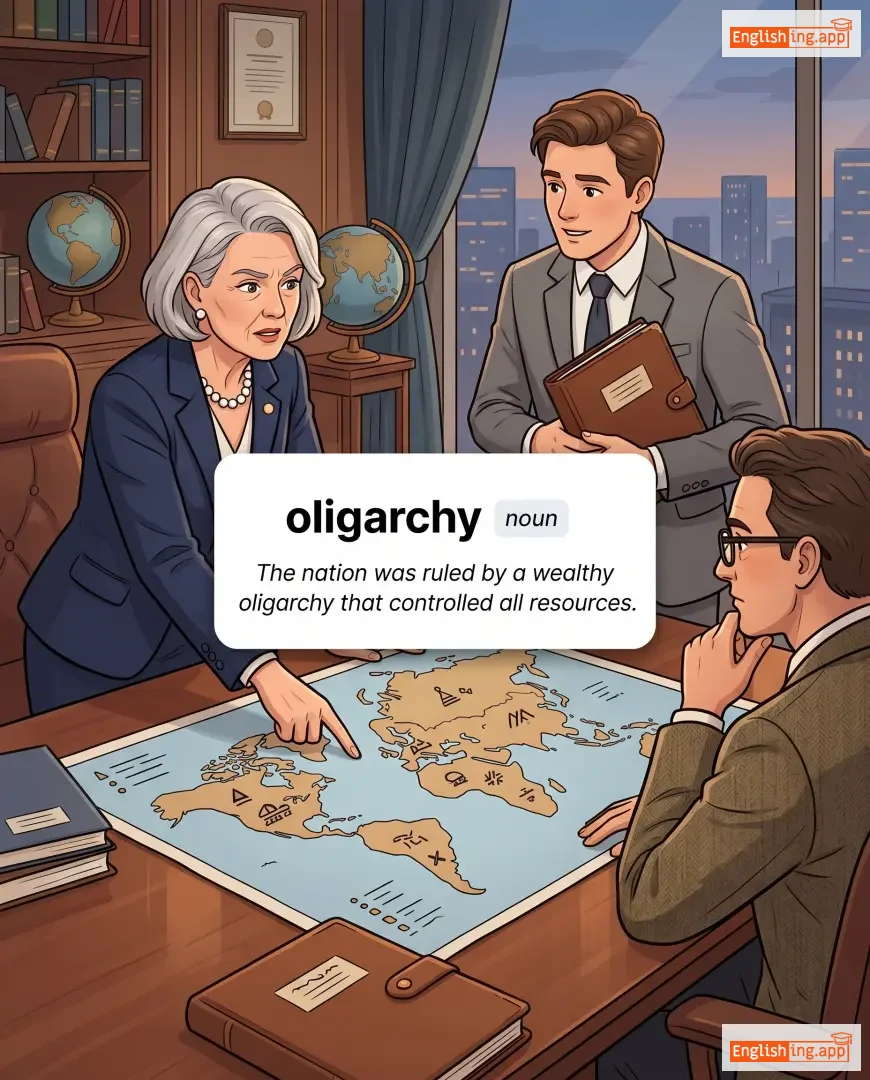
oligarchy definition card — visual illustration of the meaning
noun
/ˈɑːlɪˌɡɑːrki/
oligarquía (oligarkia)

A small group of people having control of a country, organization, or institution.

"The nation was ruled by a wealthy oligarchy that controlled all resources."

"La nación fue gobernada por una oligarquía rica que controlaba todos los recursos." (La nacion fue gobernada por una oligarquia rica que controlaba todos los recursos.)
noun
/ɑːlˈfækʃən/
olfato (olfato)

The sense of smell; the process of detecting and perceiving odors.

"Dogs have a highly developed sense of olfaction."

"Los perros tienen un sentido del olfato muy desarrollado." (Los perros tienen un sentido del olfato muy desarrollado.)
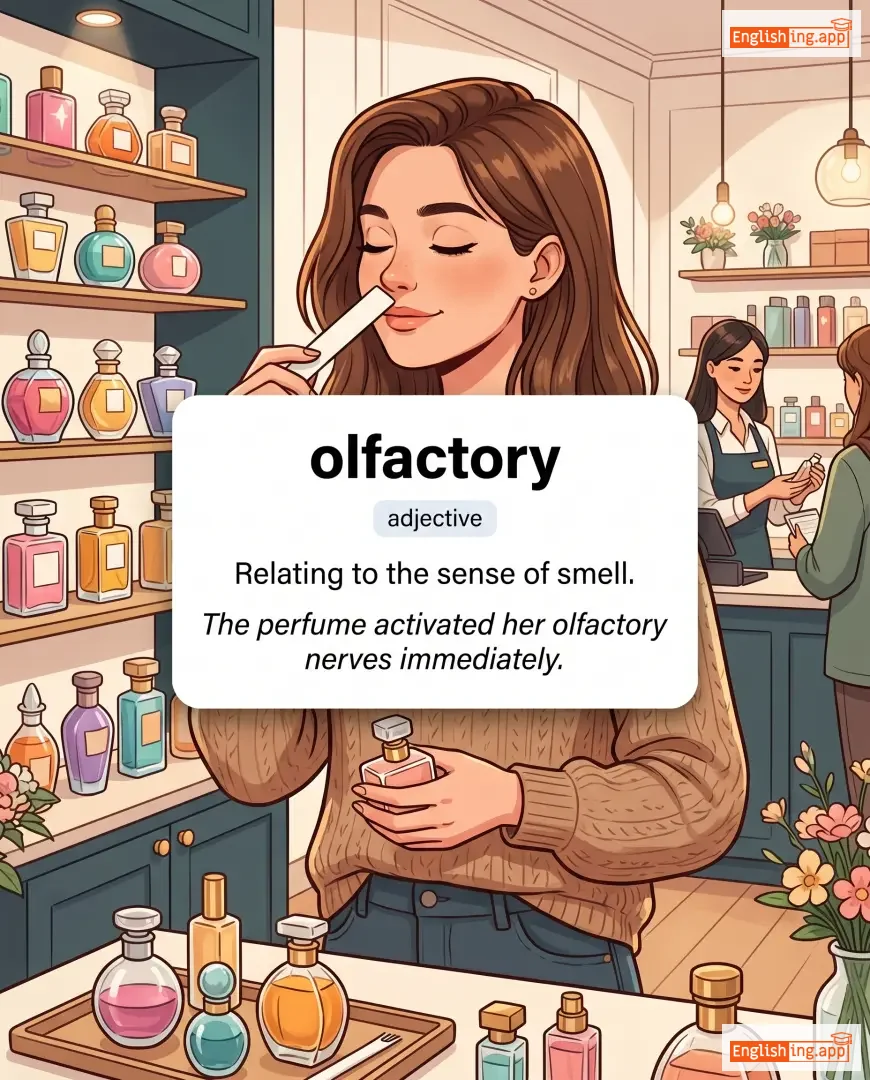
olfactory definition card — visual illustration of the meaning
adjective
/ɑːlˈfæktəri/
olfatorio (olfatorio)

Relating to the sense of smell.

"The perfume activated her olfactory nerves immediately."

"The perfume activated her olfactory nerves immediately." (El perfume activo de inmediato sus nervios olfatorios)
adjective
/oʊˈkeɪ/
está bien (esta bien)

used to indicate agreement, approval, or understanding

"Okay, let's go to the park."

"Está bien, vamos al parque." (Esta bien, vamos al parque.)
adjective
/əʊˈkeɪ/
está bien (esta bien)

used to express agreement or acceptance

"It's okay to leave early today."

"Está bien irse temprano hoy." (Está bien irse temprano hoy.)
adjective
/ˌoʊld ˈfæʃənd/
anticuado (anticuado)

not modern; belonging to an earlier time

"He still wears an old-fashioned hat."

"Él todavía usa un sombrero anticuado." (Él todavía usa un sombrero anticuado.)
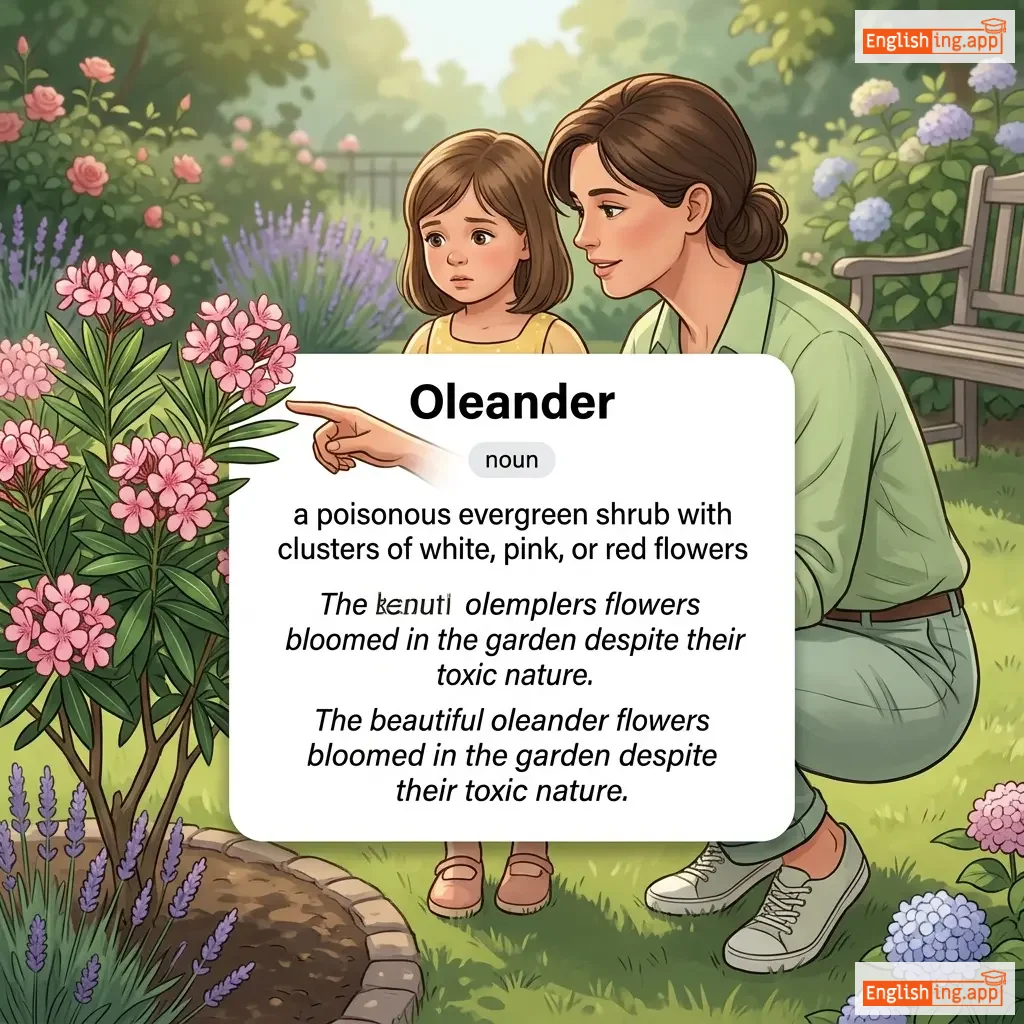
Oleander definition card — visual illustration of the meaning
noun
/oʊliˈændər/
oleandro (oleandro)

a poisonous evergreen shrub with clusters of white, pink, or red flowers

"The beautiful oleander flowers bloomed in the garden despite their toxic nature."

"Las hermosas flores de oleandro florecieron en el jardín a pesar de su naturaleza tóxica." (Las hermosas flores de oleandro florecieron en el jardín a pesar de su naturaleza tóxica.)
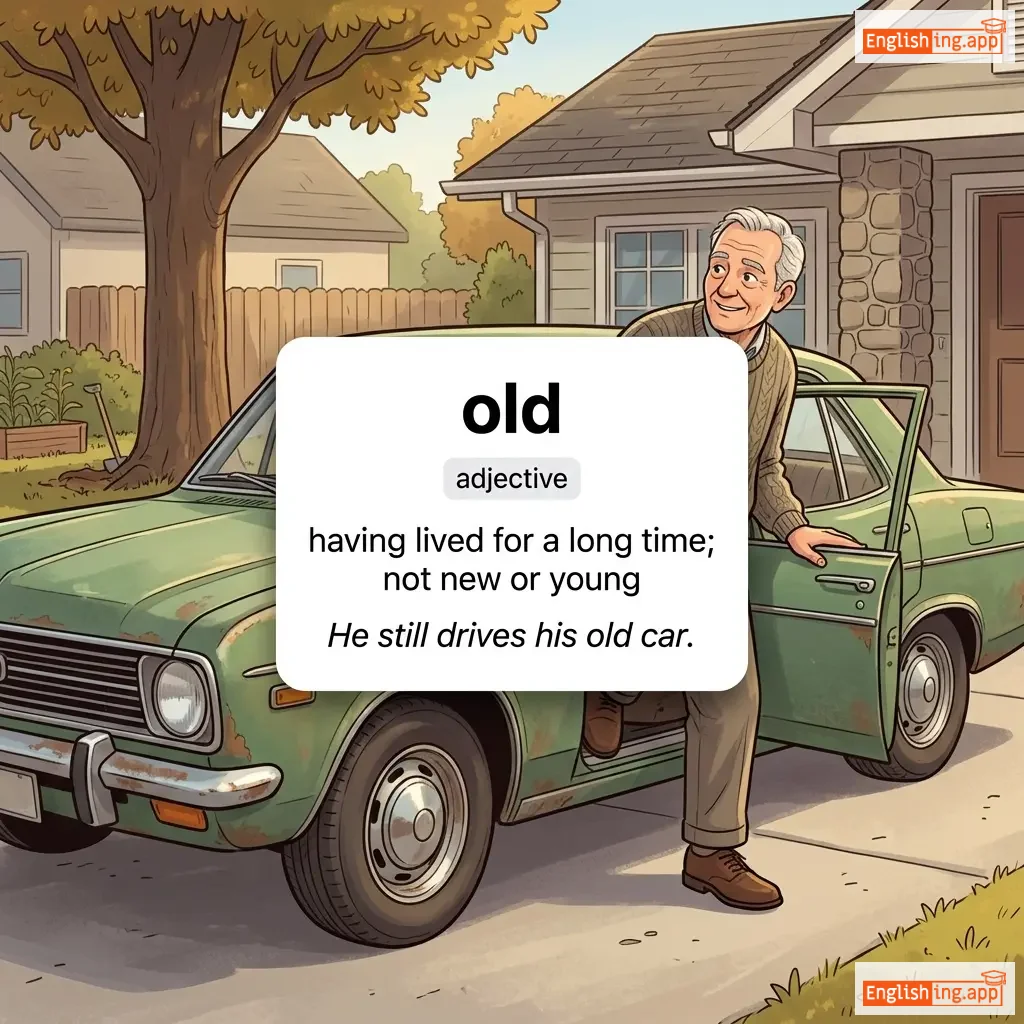
old definition card — visual illustration of the meaning
adjective
/oʊld/
viejo (viejo)

having lived for a long time; not new or young

"He still drives his old car."

"Él todavía conduce su coche viejo." (El todavia conduce su coche viejo.)
adjective
/ˈmɒtli/
heterogéneo (heterogéneo)

Made up of different, often incongruous or diverse elements.

"The festival attracted a motley crowd of artists, musicians, and tourists."

"El festival atrajo una multitud heterogénea de artistas, músicos y turistas." (El festival atrajo una multitud heterogénea de artistas, músicos y turistas.)
noun
/ˈmoʊtər/
motor (motor)

a machine that produces motion or power to make something work

"The car’s motor stopped suddenly."

"El motor del coche se detuvo de repente." (El motor del coche se detuvo de repente.)
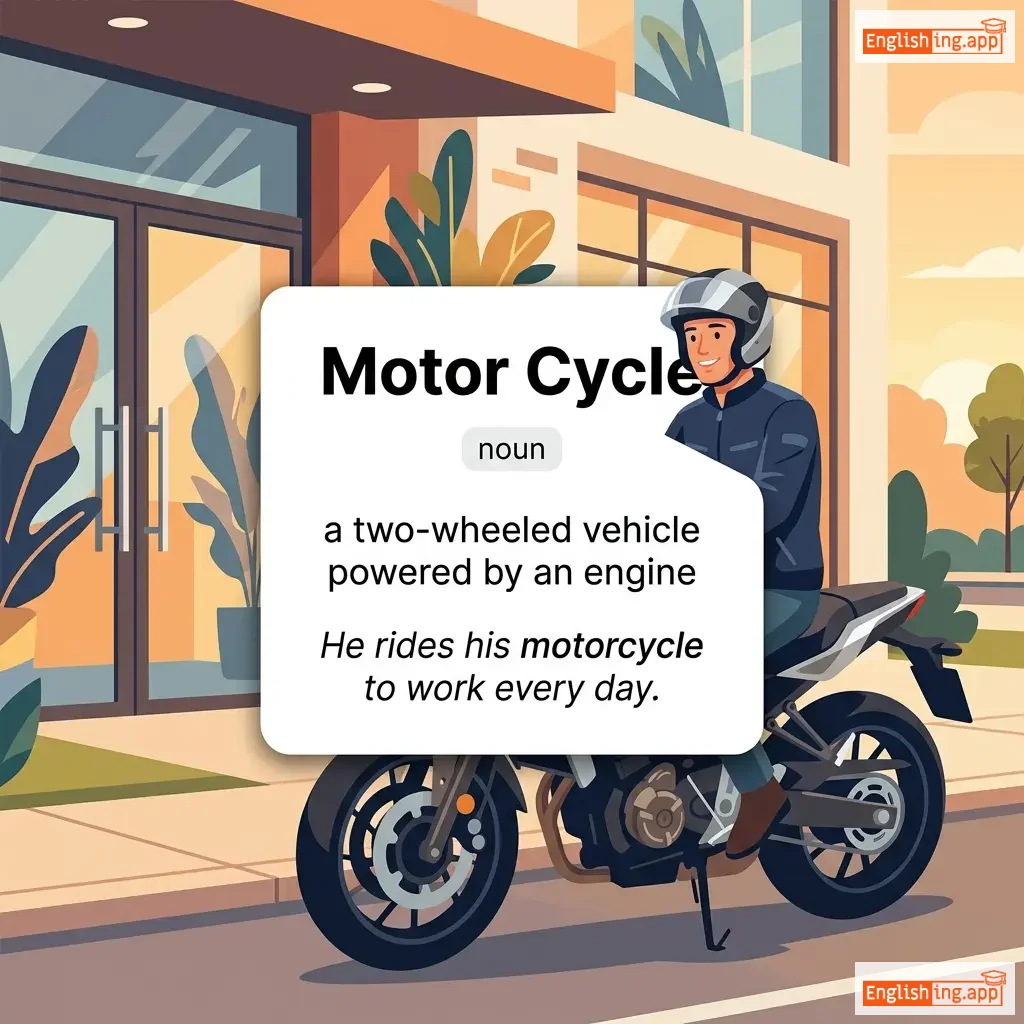
Motor Cycle definition card — visual illustration of the meaning
noun
/ˈmoʊ.tər ˌsaɪ.kəl/
motocicleta (motocicleta)

a two-wheeled vehicle powered by an engine

"He rides his motorcycle to work every day."

"Él monta su motocicleta al trabajo todos los días." (El monta su motocicleta al trabajo todos los días.)
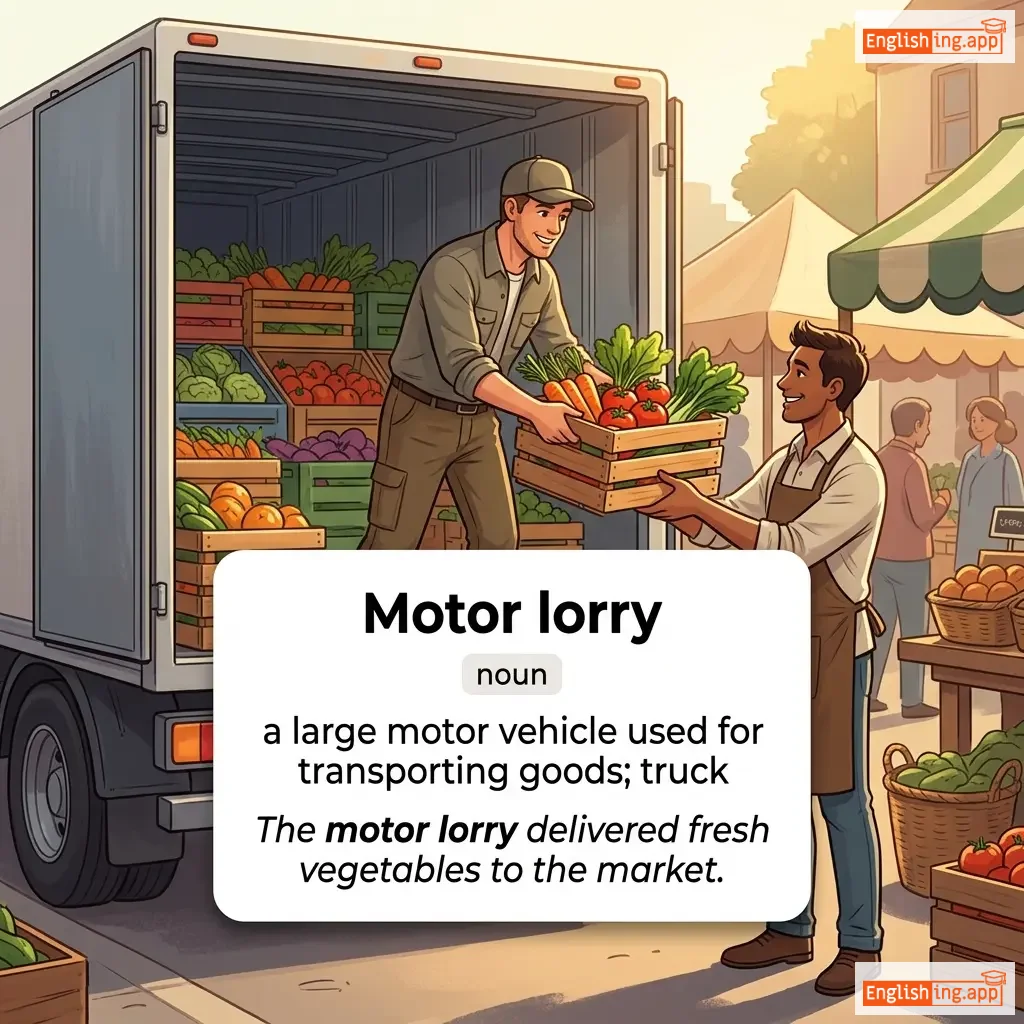
Motor lorry definition card — visual illustration of the meaning
noun
/ˈmoʊ.tər ˈlɔː.ri/
camión motorizado (camion motorizado)

a large motor vehicle used for transporting goods; truck

"The motor lorry delivered fresh vegetables to the market."

"El camión motorizado entregó verduras frescas al mercado." (El camion motorizado entrego verduras frescas al mercado.)