Словари

Словарь английского языка | Значения слов, определения и примеры

onerous definition card — visual illustration of the meaning
adjective
/ˈəʊnərəs/
трудный (trudnyj)

involving a great deal of effort, difficulty, or burden

"Fulfilling the contract proved to be an onerous task for the company."

"Выполнение контракта оказалось трудной задачей для компании." (Vypolnenie kontrakta okazalos trudnoj zadachej dlya kompanii.)
noun
/wʌn θɜːd/
одна треть (odna treti)

one part of something that is divided into three equal parts

"One-third of the class was absent today."

"Одна треть класса была сегодня отсутствует." (Odna tret' klassa byla segodnia otsutstvuet.)
1️⃣

one (van)

pronoun, noun, adjective
/wʌn/
один (odin)

the number equivalent to the sum of zero and one; a single person or thing

"Only one student answered the question."

"Только один студент ответил на вопрос." (Tol'ko odin student otvetil na vopros.)
adverb
/wʌns/
один раз (odin raz)

on one occasion only; at a time in the past

"She visited Paris once last year."

"Она посетила Париж один раз в прошлом году." (Ona posetila Parizh odin raz v proshlom godu.)
preposition
/ɒn/
на (na)

physically in contact with and supported by a surface

"The book is on the table."

"Книга на столе." (Kniga na stole.)
adjective
/ɒmˈnɪvərəs/
всеядный (vse-yadny)

eating both plants and animals

"Humans are generally considered omnivorous creatures."

"Люди обычно считаются всеядными существами." (Lyudi obychno schitayutsya vseyadnymi sushchestvami.)
adjective
/ɒmˈnɪʃənt/
всезнающий (vseznayushchiy)

having complete or unlimited knowledge and awareness

"Some religions describe God as omniscient and all-powerful."

"Некоторые религии описывают Бога как всезнающего и всемогущего." (Nekotorye religii opisyvayut Boga kak vseznayushchego i vsemogushchego.)
noun
/ɒmˈnɪʃəns/
всеведение (vsemiedenie)

the state of knowing everything

"The novel's narrator has an air of omniscience, revealing every character's thoughts."
"Рассказчик романа обладает аурой всеведения, раскрывая мысли каждого персонажа." (Rasskazchik romana obladaet auroi vsemiedenia, raskryvaya mysli kazhdogo personazha.)
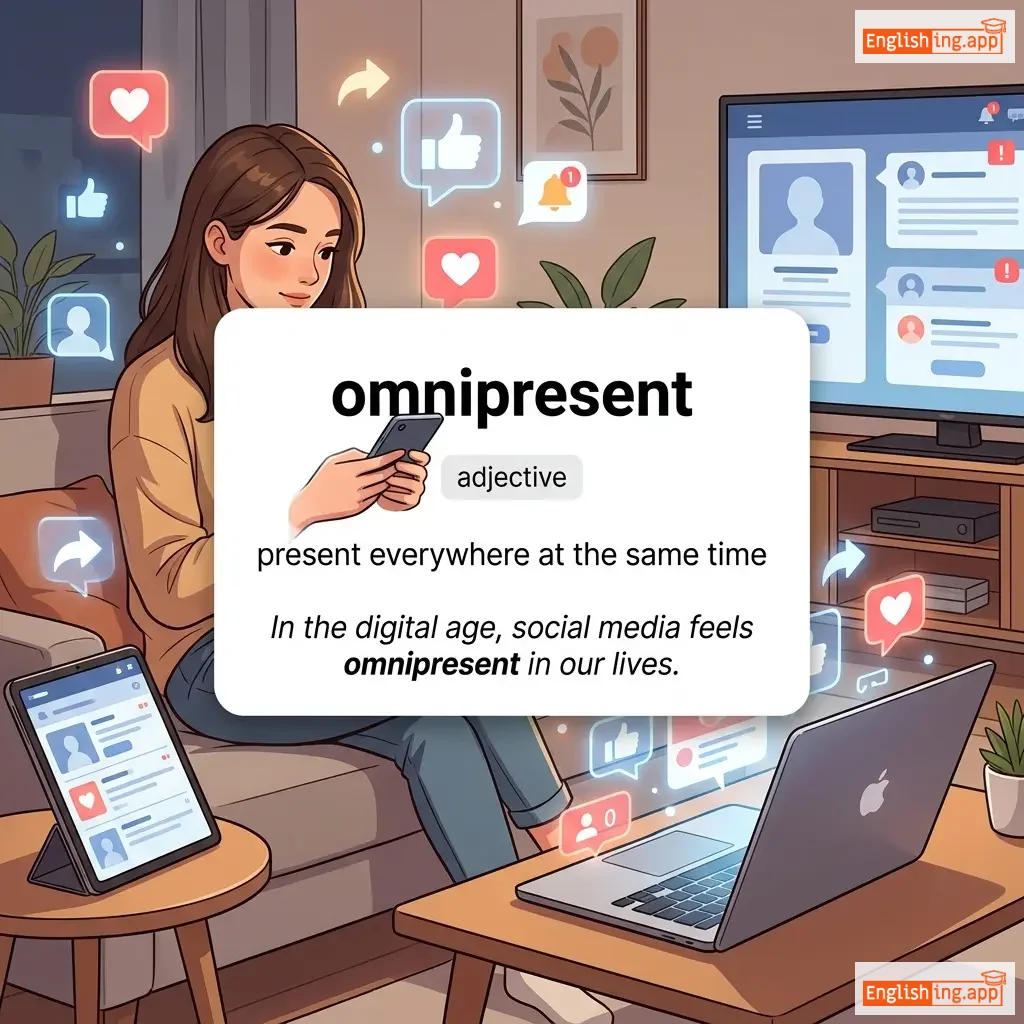
omnipresent definition card — visual illustration of the meaning
adjective
/ˌɒmnɪˈprɛzənt/
вездесущий (vezdesushchiy)

present everywhere at the same time

"In the digital age, social media feels omnipresent in our lives."
"В цифровую эпоху социальные сети ощущаются как повсеместные в нашей жизни." (V tsifrovuyu epokhu sotsial'nye seti oshchushchayutsya kak povsemyestnye v nashey zhizni.)
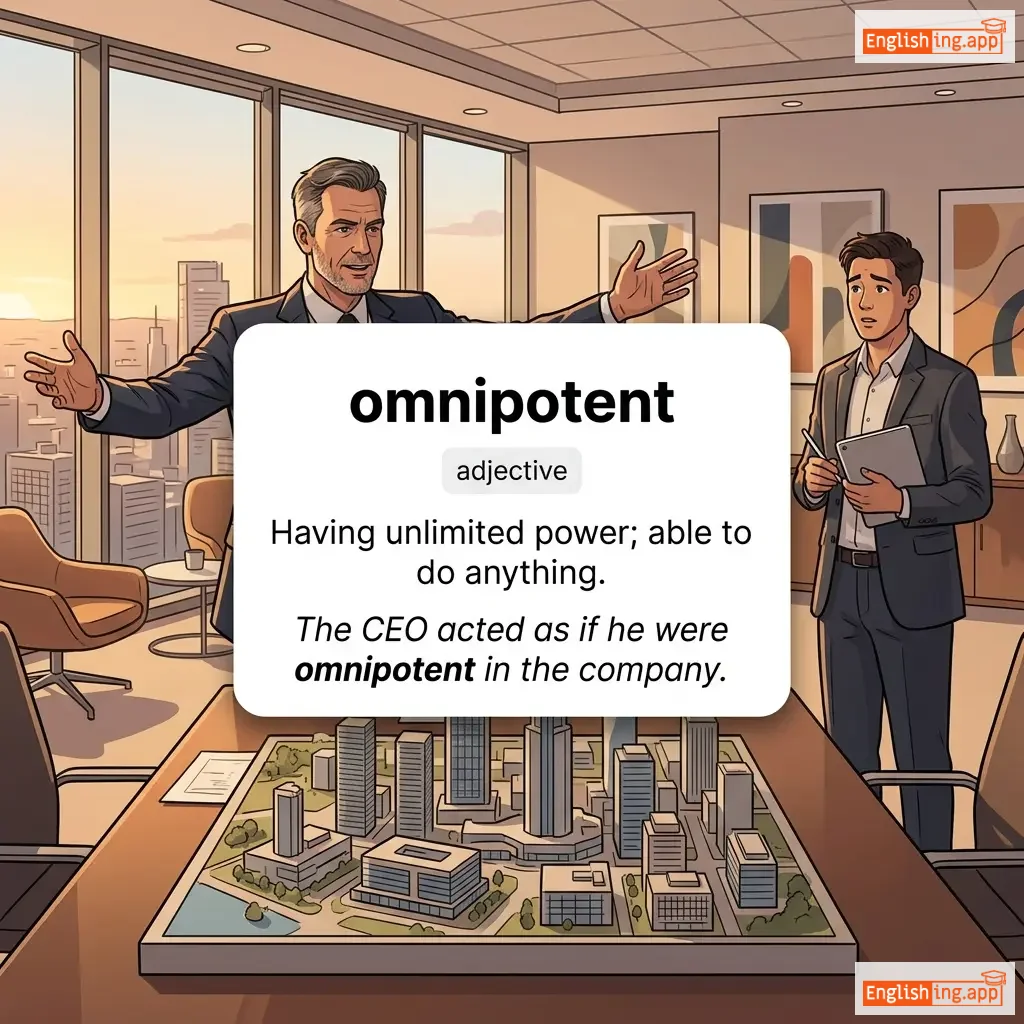
omnipotent definition card — visual illustration of the meaning
adjective
/ɒmˈnɪpətənt/
всемогущий (vsemogushchiy)

Having unlimited power; able to do anything.

"The CEO acted as if he were omnipotent in the company."

"Генеральный директор вел себя так, как будто он был всемогущим в компании." (General'nyy direktor vel sebya tak, kak budto on byl vsemogushchim v kompanii.)
noun
/ɒmˈnɪpətəns/
всемогущество (vsemozhestvo)

The quality of having unlimited power or authority.

"Many religions describe God’s omnipotence as absolute."

"Многие религии описывают всемогущество Бога как абсолютное." (Mnogie religii opisyvayut vsemozhestvo Boga kak absolyutnoe.)
omit definition card — visual illustration of the meaning
verb
/oʊˈmɪt/
опускать (opuskать)

to leave out or exclude; to fail to include something

"Please don't omit any important details from your report."

"Пожалуйста, не упустите важные детали в своем отчете." (Pozhaluysta, ne upustite vazhnyye detali v svoem otchete.)
noun
/əˈmɪʃən/
опущение (opushchenie)

The act of leaving out or excluding something; something that has been left out.

"Her omission of important details caused confusion."

"Ее опущение важных деталей вызвало путаницу." (Eyo opushchenie vazhnykh detalei vyzvalo putanitsu.)
adjective
/ˈɒmɪnəs/
угрожающий (ugrozhayushchiy)

Giving the impression that something bad or unpleasant is going to happen.

"Dark clouds gave an ominous sign of an approaching storm."

"Темные облака дали угрожающий знак приближающейся бури." (Temnye oblake dali ugrozhayushchiy znak priblizhayushcheysya buri.)
noun
/ˈoʊ.mən/
предвестие будущего удачи или неудачи (predvestie budushchego udachi ili neudachi)

an event regarded as a sign of future good or bad luck

"Many people consider a black cat crossing your path a bad omen."

"Многие люди считают, что черная кошка, пересекающая ваш путь, - это плохой знак." (Mnogie lyudi schitayut, chto chernaya koshka, peresekayushchaya vash put', eto plokhoy znak.)
noun
/əˈlɪmpɪks/
Олимпийские игры (Olimpiyskiye igry)

an international sports competition held every four years with athletes from many countries

"The Olympics bring athletes from all over the world together."

"Олимпийские игры собирают спортсменов со всего мира." (Olimpiyskiye igry sobirayut sportsmenov so vsego mira.)
Omelet definition card — visual illustration of the meaning
noun
/ˈɒm.lət/
омлет (omlet)

a dish made from beaten eggs cooked in a frying pan and often folded around a filling

"She made a cheese omelet for breakfast."

"Она приготовила сырный омлет на завтрак." (ona prigotovila syryj omlet na zavtrak.)
adjective
/əˈfɪʃəl/
официальный (ofitsial'nyy)

relating to or connected with an authority or public office

"He is the official spokesperson for the company."

"Он официальный представитель компании." (On ofitsial'nyy predstavitel' kompanii.)
adverb
/əˈfɪʃəli/
официально (ofitsial'no)

in a formal or authorized way

"The building was officially opened by the mayor."

"Здание было официально открыто мэром." (Zdanie bylo ofitsial'no otkryto merom.)
verb
/əˈfɪʃieɪt/
вести (vesti)

To perform official duties, especially in a ceremony or as a referee.

"The priest will officiate the wedding ceremony."

"Священник будет совершать церемонию бракосочетания." (Svyashchennik budet sovershat' tseremoniyu brako-sochitaniya.)
officious definition card — visual illustration of the meaning
adjective
/əˈfɪʃəs/
навязчивый (navyazchivyy)

Excessively eager to offer unwanted help or advice; meddlesome.

"The officious guard kept interrupting the visitors with unnecessary instructions."

"Навязчивый охранник постоянно перебивал посетителей ненужными инструкциями." (Navyazchivyy okhrannik postoyanno perebival posetiteley nenuzhnymi instruktsiyami.)
adjective
/ˈɒfɪʃ/
отчуждённый (otchuzhdenny)

Unfriendly, distant, or reserved in manner.

"He seemed offish at the party and avoided most conversations."

"Он казался отчуждённым на вечеринке и избегал большинства разговоров." (On kazalsya otchuzhdennym na vecherinke i izbegal bolshinstva razgovorov.)
verb
/ˈɒfsɛt/
компенсировать (kompensirovat')

To counterbalance or compensate for something.

"The company's losses were offset by gains in other departments."

"Убытки компании были компенсированы за счет прибыли в других отделах." (Ubytki kompanii byli kompensirovany za schet pribyli v drugikh otdelakh.)
noun
/ˈɒfʃuːt/
ответвление (otvetvlenie)

A branch or result that develops from something larger or more important.

"The startup was an offshoot of a major tech company."

"Стартап был ответвлением от крупной технологической компании." (Startap byl otvetvleniem ot krupnoj tekhnologicheskoj kompanii.)
noun
/ˈɒf.sprɪŋ/
потомство (potomstvo)

a person's child or children; an animal's young

"The bird carefully fed its offspring."

"Птица осторожно кормит свое потомство." (Ptitsa ostorozhno kormit svoe potomstvo.)
adverb
/ˈɔːfən/
часто (chasto)

frequently, many times

"I often visit my grandparents on weekends."

"Я часто посещаю своих бабушку и дедушку на выходных." (Ya chasto poseschayu svoikh babushku i dedushku na vykhodnykh.)
verb
/ˈoʊɡəl/
пялиться (pyalit’sya)

To look at someone with obvious sexual interest.

"He kept ogling the models on the runway."

"Он продолжал пялиться на модели на подиуме." (On prodolzhal pyalit’sya na modeli na podiume.)
👹

ogre

noun
/ˈoʊɡər/

A mythical monster, often depicted as large, hideous, and cruel; metaphorically, a cruel or terrifying person.

"The villagers feared the ogre who lived in the dark forest."

interjection
/oʊ/
Ох (oh)

used to express surprise, realization, or understanding

"Oh, I didn't know you were here!"
"Ох, я не знал, что ты здесь!" (Oh, ya ne znal, chto ty zdes'!)
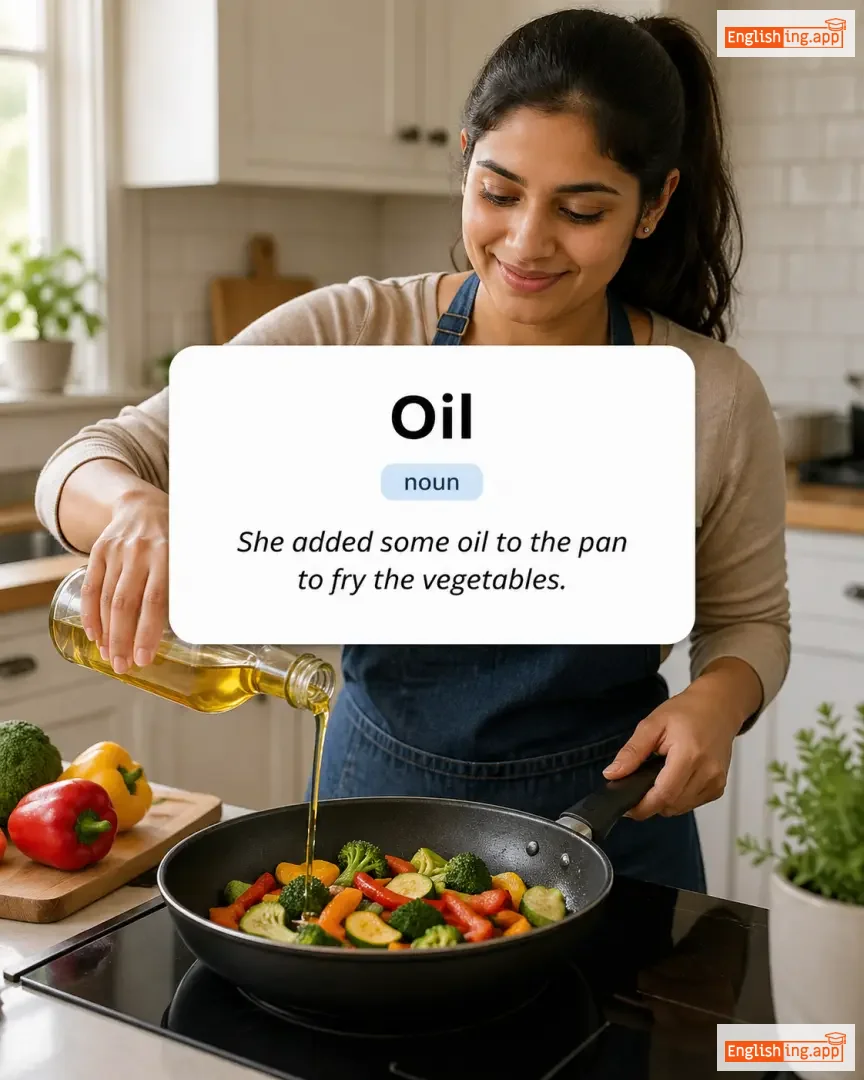
Oil definition card — visual illustration of the meaning
noun
/ɔɪl/
масло (maslo)

a viscous liquid derived from plants or animals, used for cooking, lubrication, or fuel

"She added some oil to the pan to fry the vegetables."
"Она добавила немного масла в сковороду, чтобы жарить овощи." (Ona dobavila nemnogo masla v skovorodu, chtoby zharit' ovoshchi.)
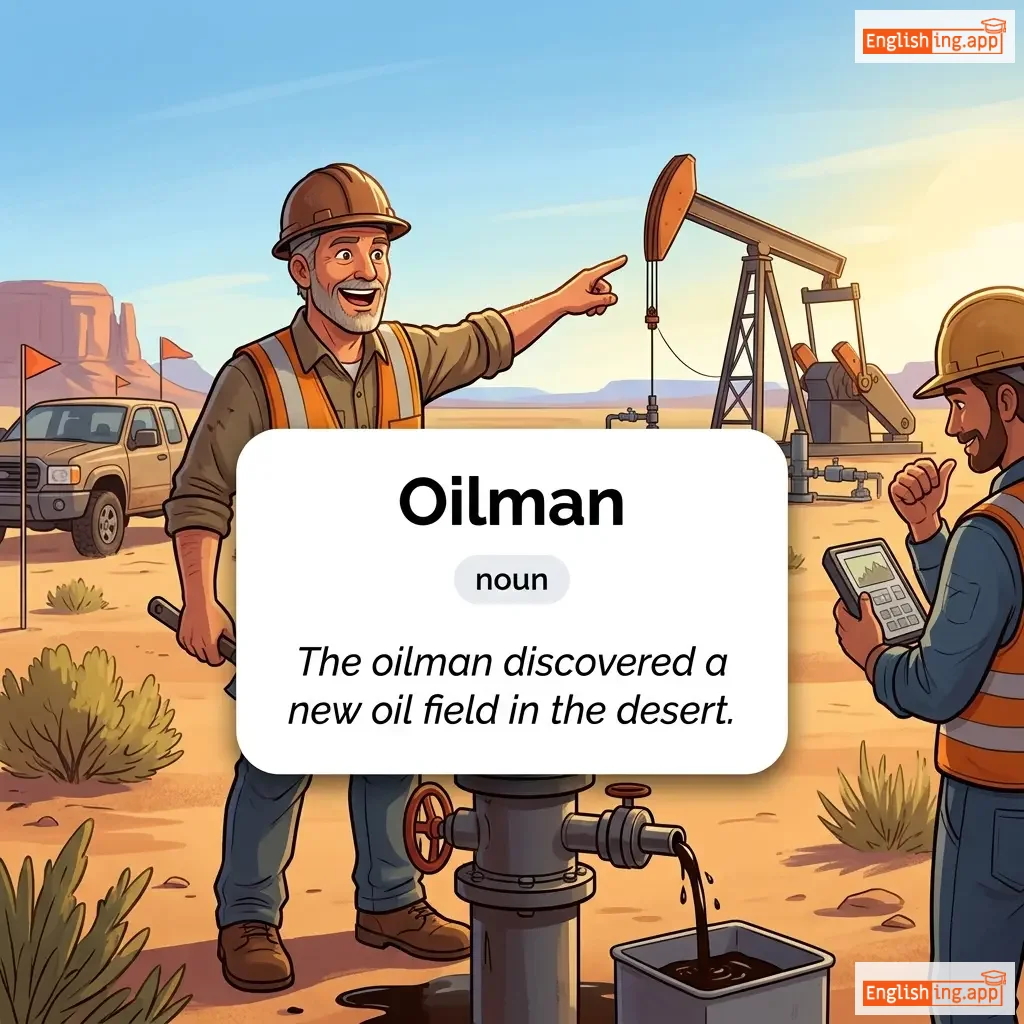
Oilman definition card — visual illustration of the meaning
noun
/ˈɔɪl.mən/
нефтяник (neftyanik)

a person who works in the oil industry; someone who sells oil or petroleum products

"The oilman discovered a new oil field in the desert."

"Нефтяник обнаружил новое нефтяное месторождение в пустыне." (Neftyanik obnaruzhil novoe neftyanoe mestorozhdenie v pustyne.)
noun
/ˈɔɪntmənt/
мазь (maz')

A smooth, oily substance applied to the skin for healing or soothing.

"The doctor prescribed an ointment for the burn on his arm."

"Доктор прописал мазь для ожога на его руке." (Doktor propisal maz' dlya ozhoga na yego ruke.)
adjective
/ˈɔɪl.i/
масляный; покрытый маслом; жирный (maslyany; pokryty maslom; zhirny)

covered with oil; containing oil; greasy

"Her oily skin needs special care."
"Её масляная кожа требует особого ухода." (Eё maslyanaya kozha trebujet osobogo ukhoda.)
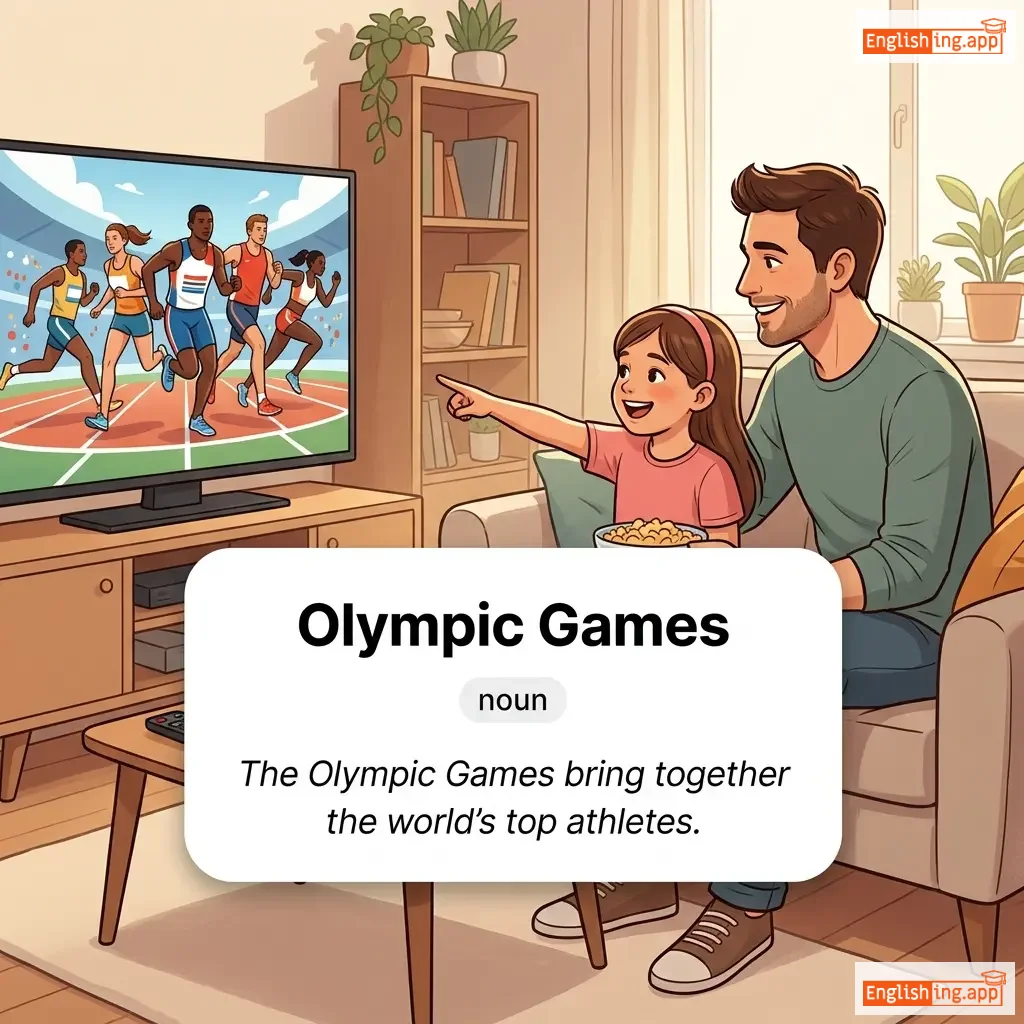
Olympic Games definition card — visual illustration of the meaning
noun
əˈlɪm.pɪk ɡeɪmz
олимпийские игры (olimpiyskiye igry)

The world's largest international sports competition held every four years, bringing together athletes from different countries to compete in various sports.

"The Olympic Games bring together the world's top athletes."

"Олимпийские игры собирают лучших спортсменов мира." (Olimpiyskiye igry sobirayut luchshikh sportsmenov mira.)
adjective
/əˈlɪmpɪk/
олимпийский (olimpiyskiy)

related to the Olympic Games, a major international sporting event

"She trained hard to compete in the Olympic Games."

"Она усердно тренировалась, чтобы участвовать в Олимпийских играх." (Ona usyerdno trenirovalas', chtoby uchastvovat' v Olimpiyskikh igrakh.)
noun
/ˈɒlɪv brɑːntʃ/
оливковая ветвь (olivkovaya vetv)

A symbol of peace or reconciliation; an offer to end conflict.

"He extended an olive-branch to his rival after years of hostility."
"Он протянул оливковую ветвь своему сопернику после многих лет вражды." (On protyanul olivkovuyu vetv' svoemu sooperniku posle mnogikh let vrazhdy.)
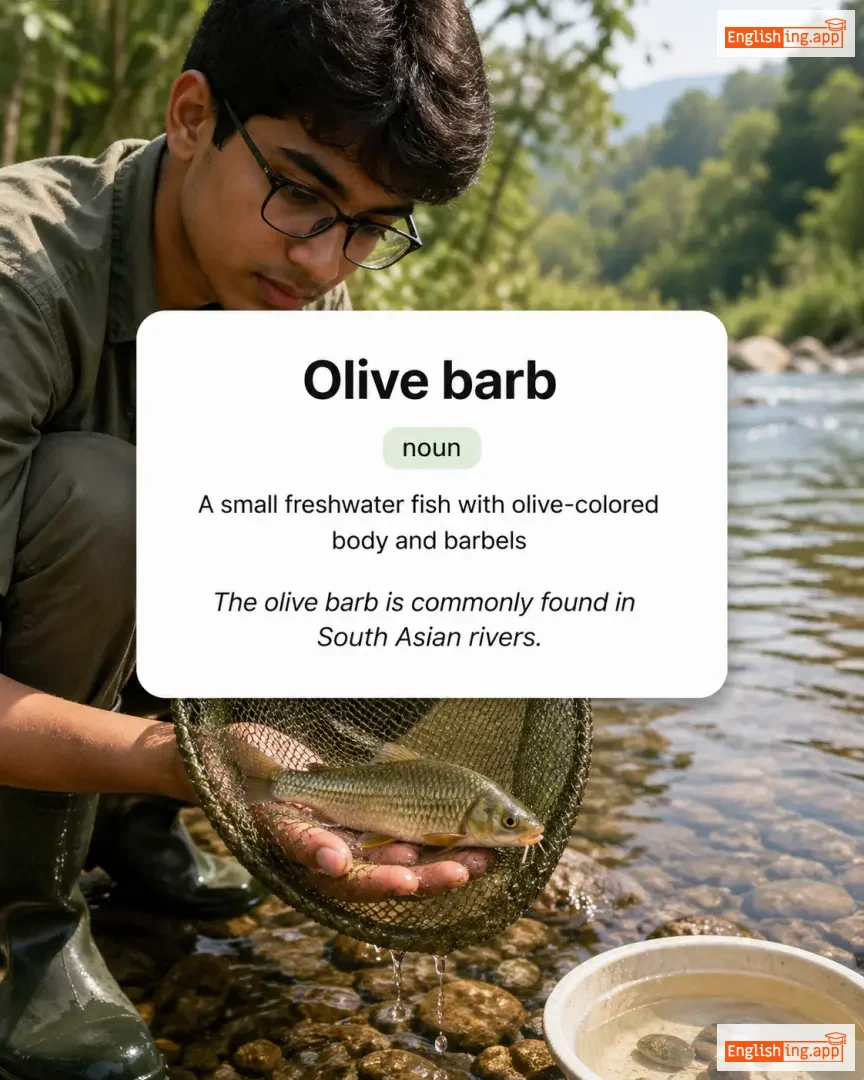
Olive barb definition card — visual illustration of the meaning
noun
/ˈɒlɪv bɑːb/
оливковый барбус (olivkovy barbus)

A small freshwater fish with olive-colored body and barbels

"The olive barb is commonly found in South Asian rivers."
"Оливковый барбус обычно встречается в реках Южной Азии." (olivkovy barbus obychno vstrechayetsya v rekakh yuzhnoy azii)
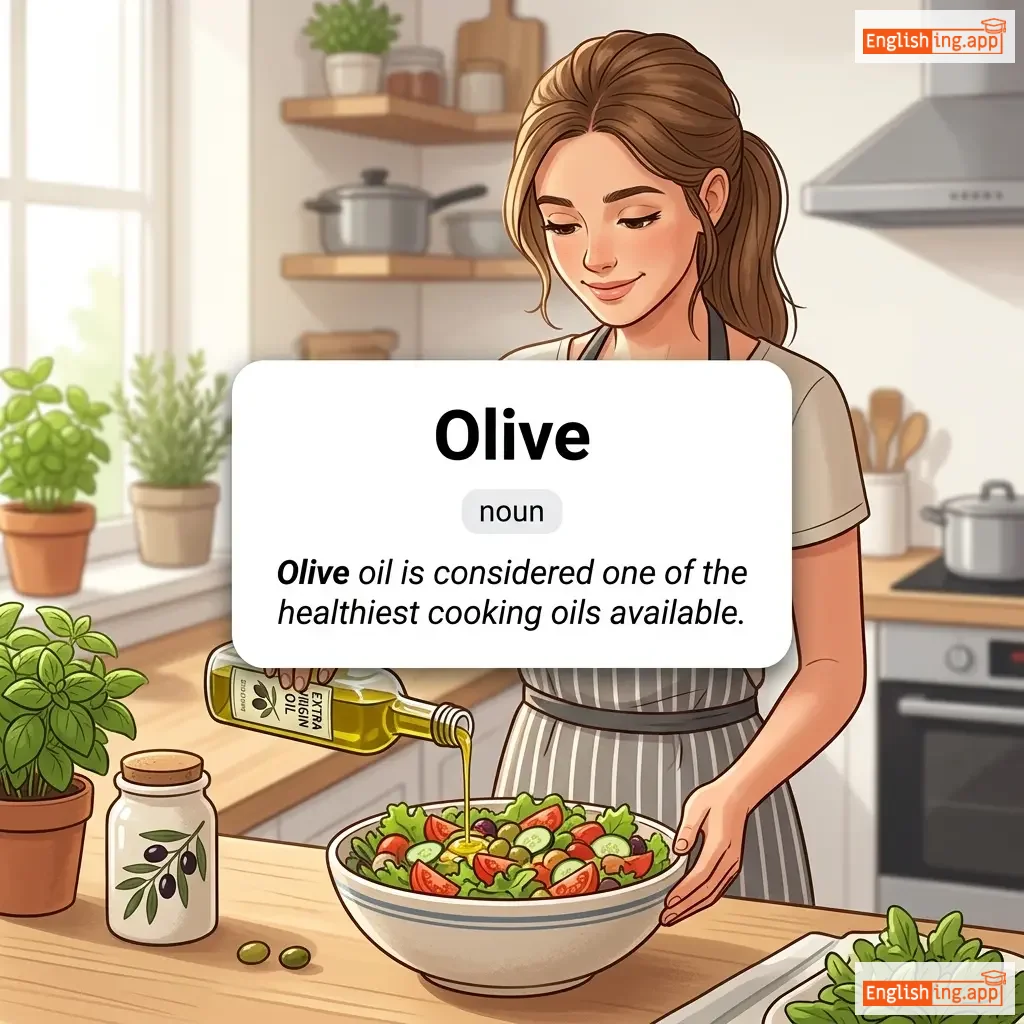
Olive definition card — visual illustration of the meaning
noun
/ˈɑː.lɪv/
олива (oliva)

a small oval fruit with a hard pit, typically green or black, used for eating or making oil

"Olive oil is considered one of the healthiest cooking oils available."
"Оливковое масло считается одним из самых полезных для здоровья масел для готовки." (Olivkovoye maslo schitayetsya odnim iz samykh poleznykh dlya zdorov'ya masel dlya gotovki.)
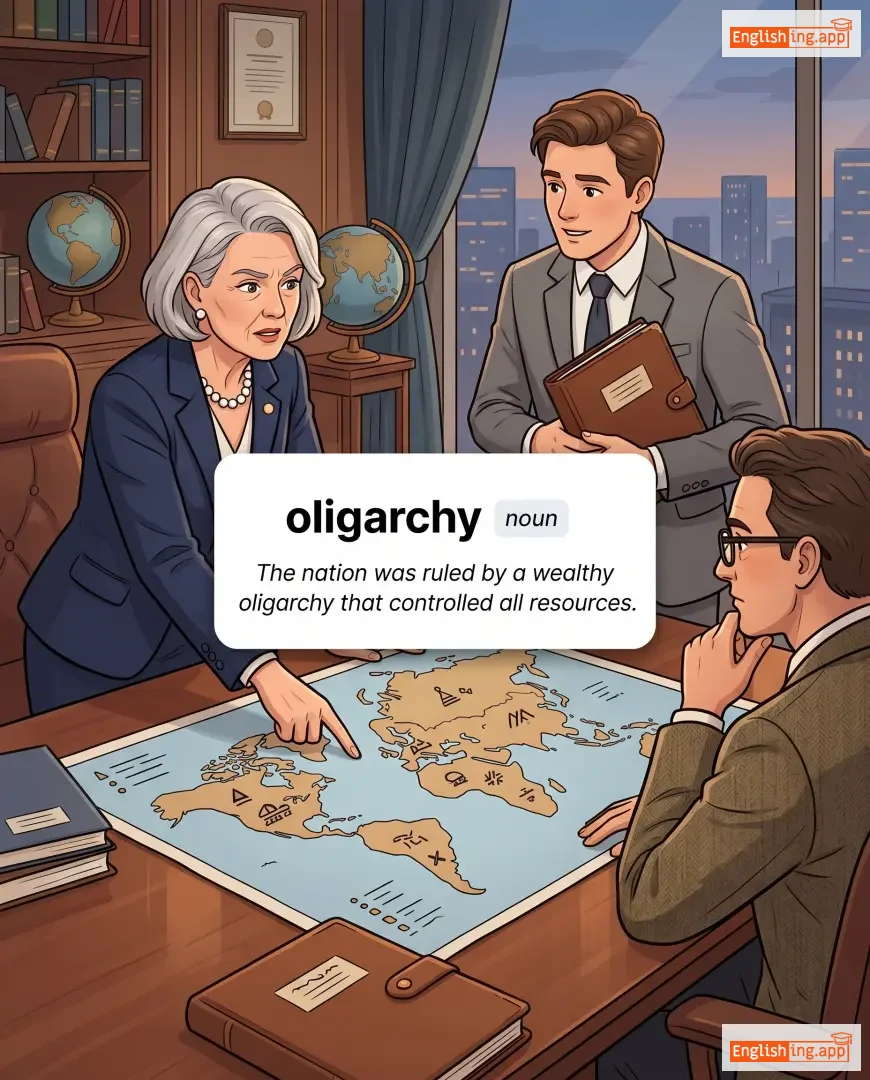
oligarchy definition card — visual illustration of the meaning
noun
/ˈɑːlɪˌɡɑːrki/
олигархия (oligarkhiya)

A small group of people having control of a country, organization, or institution.

"The nation was ruled by a wealthy oligarchy that controlled all resources."

"Страну управляла богатая олигархия, контролировавшая все ресурсы." (Stranu upravlyala bogataya oligarkhiya, kontrolirovavshaya vse resursy.)
noun
/ɑːlˈfækʃən/
обоняние (obonyanie)

The sense of smell; the process of detecting and perceiving odors.

"Dogs have a highly developed sense of olfaction."
"У собак хорошо развиты обоняние." (U sobak khorosho razvity obonyanie.)
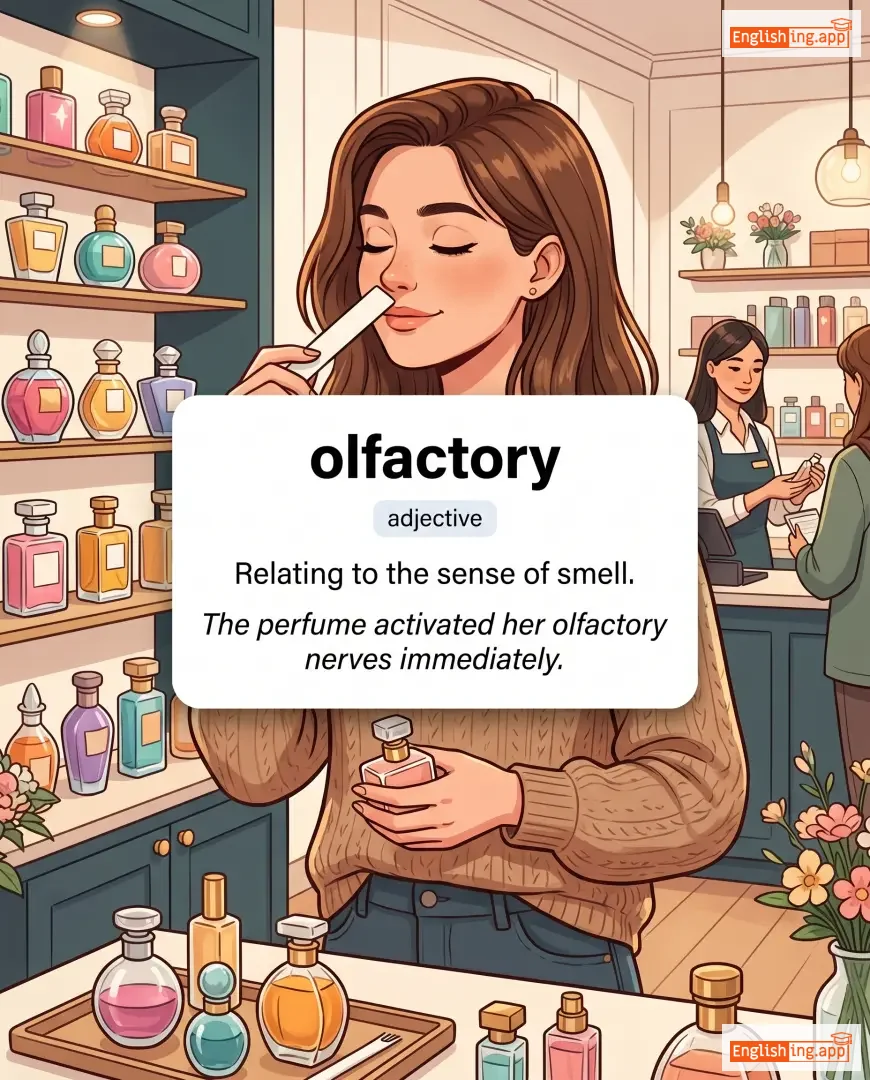
olfactory definition card — visual illustration of the meaning
adjective
/ɑːlˈfæktəri/
обонятельный (olfactory)

Relating to the sense of smell.

"The perfume activated her olfactory nerves immediately."

"Парфюм сразу активировал её обонятельные нервы." (Parfyum srazu aktiviroval yeyo obonyatelnyye nervy)
adjective
/oʊˈkeɪ/
хорошо (khorosho)

used to indicate agreement, approval, or understanding

"Okay, let's go to the park."

"Хорошо, давай пойдем в парк." (Khorosho, davay poydyom v park.)
adjective
/əʊˈkeɪ/
хорошо (khorosho)

used to express agreement or acceptance

"It's okay to leave early today."

"Хорошо, если уйти раньше сегодня." (Khorosho, esli uyti ranshe segodnya.)
adjective
/ˌoʊld ˈfæʃənd/
старомодный (staromodny)

not modern; belonging to an earlier time

"He still wears an old-fashioned hat."
"Он всё ещё носит старомодную шляпу." (On vse yeshchyo nosit staromodnuyu shlyapu.)
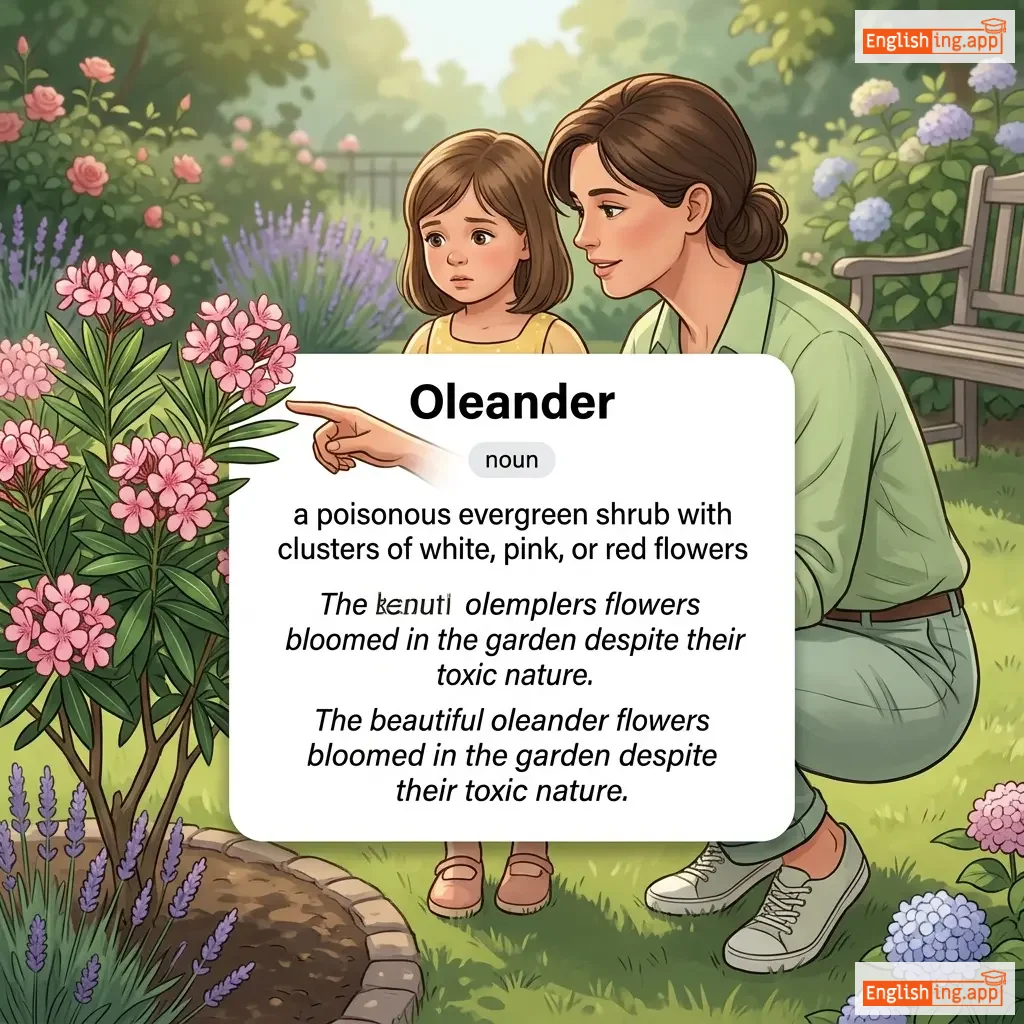
Oleander definition card — visual illustration of the meaning
noun
/oʊliˈændər/
олеандр (oleandr)

a poisonous evergreen shrub with clusters of white, pink, or red flowers

"The beautiful oleander flowers bloomed in the garden despite their toxic nature."
"Прекрасные цветы олеандра расцвели в саду, несмотря на их ядовитую природу." (Prekrasnye tsvety oleandra ratsveli v sadu, nesmotrya na ikh yadovityu prirodu.)
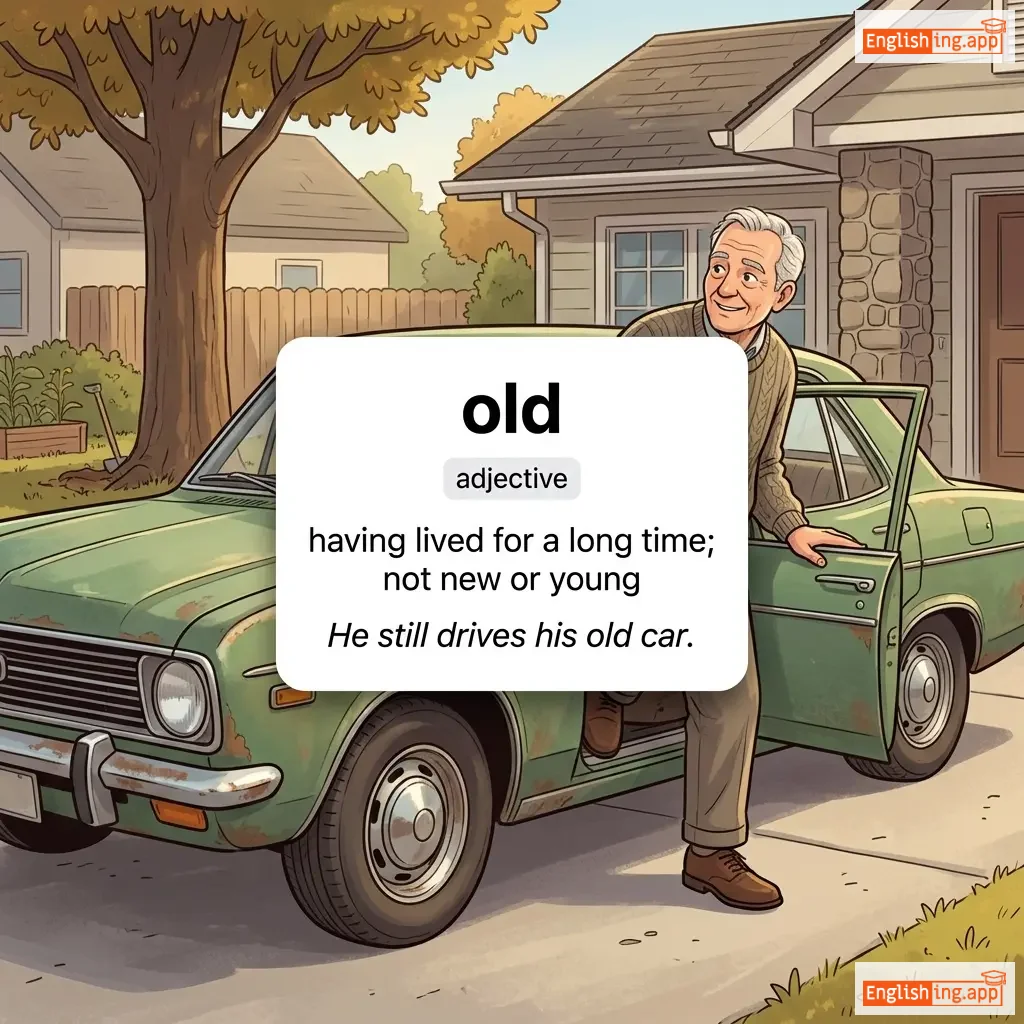
old definition card — visual illustration of the meaning
adjective
/oʊld/
старый (staryj)

having lived for a long time; not new or young

"He still drives his old car."

"Он все еще ездит на своей старой машине." (On vse eshche ezdit na svoej staroj mashine.)
adjective
/ˈmɒtli/
пёстрый (pyostryi)

Made up of different, often incongruous or diverse elements.

"The festival attracted a motley crowd of artists, musicians, and tourists."

"Фестиваль привлёк пёструю толпу художников, музыкантов и туристов." (Festival prilyok pyostruyu tolpu khudozhnikov, muzykantov i turistov.)
noun
/ˈmoʊtər/
мотор (motor)

a machine that produces motion or power to make something work

"The car’s motor stopped suddenly."
"Мотор автомобиля внезапно остановился." (Motor avtomobilya vnezapno ostanovilsya.)
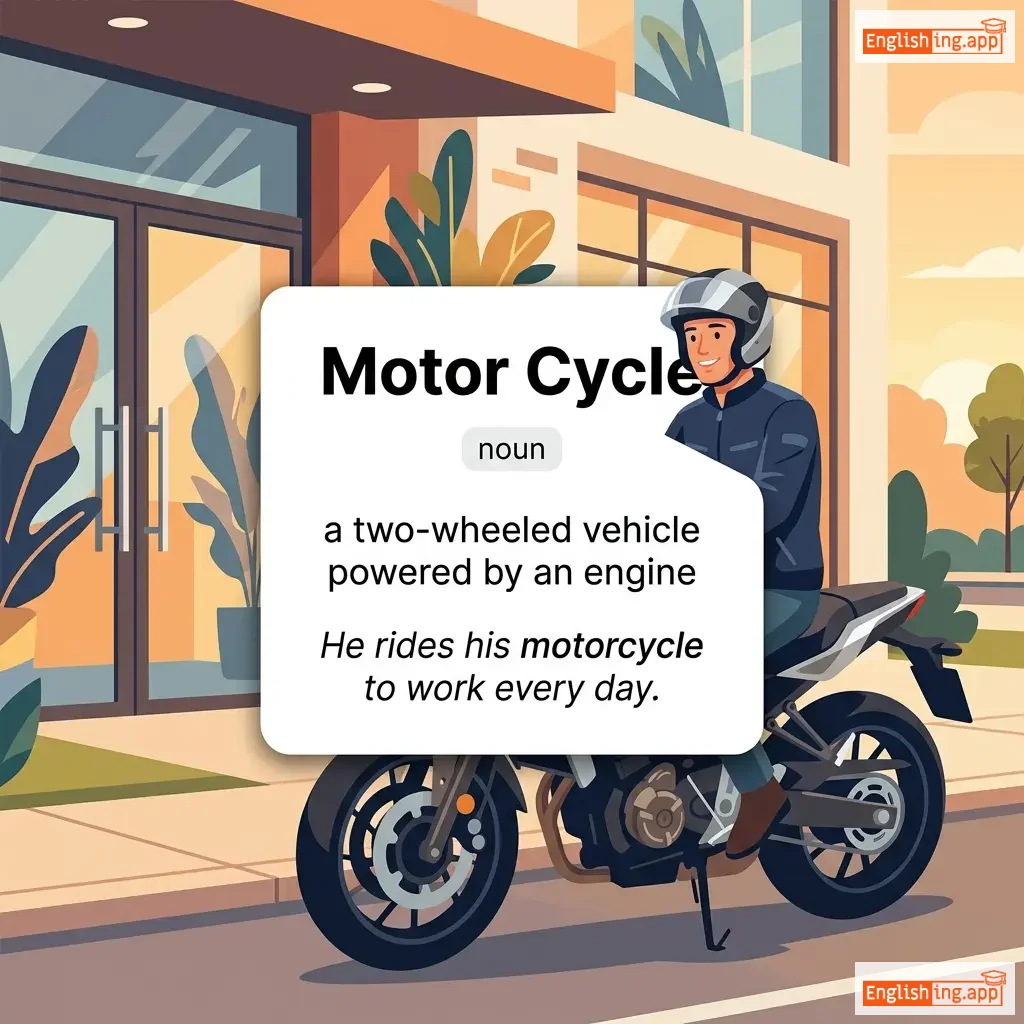
Motor Cycle definition card — visual illustration of the meaning
noun
/ˈmoʊ.tər ˌsaɪ.kəl/
мотоцикл (mototsikl)

a two-wheeled vehicle powered by an engine

"He rides his motorcycle to work every day."

"Он ездит на своем мотоцикле на работу каждый день." (On ezdit na svoem mototsikle na rabotu kazhdyy den')
Motor lorry definition card — visual illustration of the meaning
noun
/ˈmoʊ.tər ˈlɔː.ri/
грузовик с мотором (gruzovik s motorom)

a large motor vehicle used for transporting goods; truck

"The motor lorry delivered fresh vegetables to the market."

"Моторный грузовик доставил свежие овощи на рынок." (Motornyi gruzovik dostavil svezhie ovoshchi na rynok.)