Словари

Словарь английского языка | Значения слов, определения и примеры
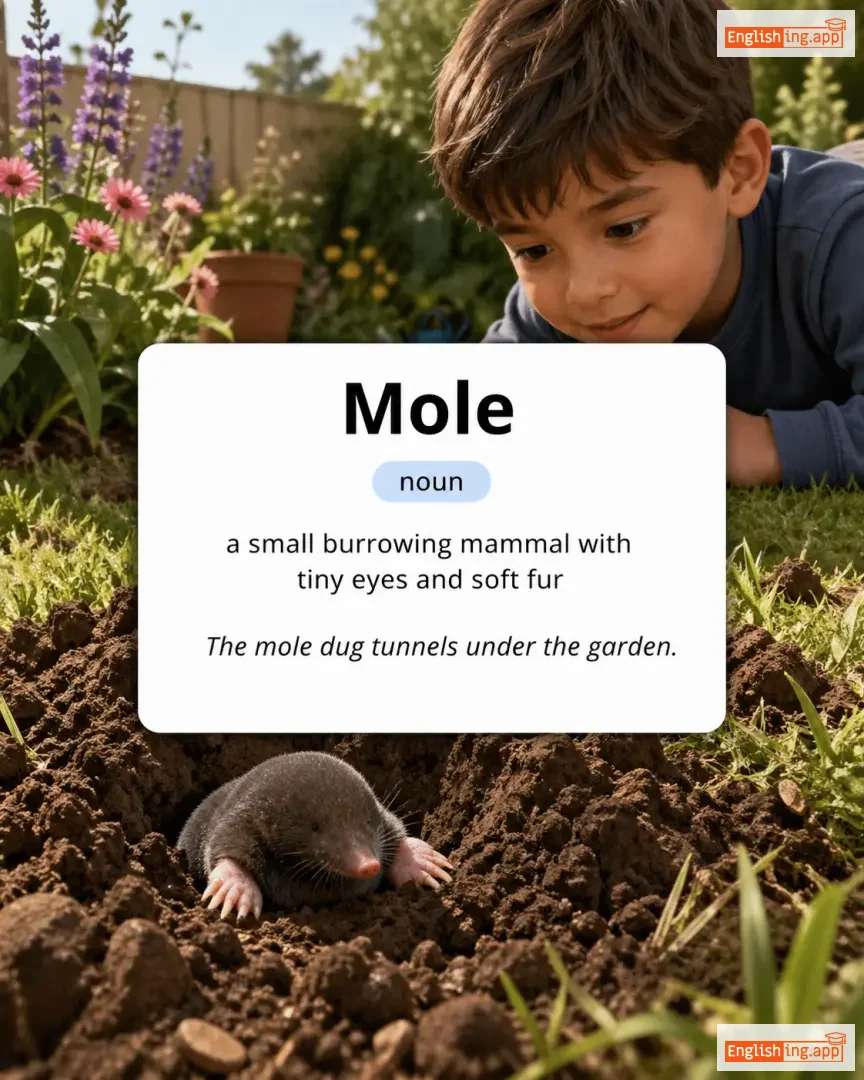
Mole definition card — visual illustration of the meaning
noun
/moʊl/
крот (krot)

a small burrowing mammal with tiny eyes and soft fur

"The mole dug tunnels under the garden."

"Крот вырыл туннели под садом." (Krot vyryl tunneli pod sadom.)
noun
/ˈmɒlɪkjuːl/
молекула (molekula)

The smallest unit of a chemical compound that retains its chemical properties.

"A water molecule is made up of two hydrogen atoms and one oxygen atom."

"Молекула воды состоит из двух атомов водорода и одного атома кислорода." (molekula vody sostoyit iz dveh atomov vodoroda i odnogo atoma kisloroda.)
verb
/məˈlɛst/
домогаться / подвергать сексуальному насилию (domogatsya / podvergat' seksual'nomu nasiliyu)

to assault or abuse someone, especially in a sexual or physical way

"The criminal was arrested for attempting to molest a child."
"Преступник был арестован за попытку домогаться до ребенка." (Prestuponnik byl arestovan za popytku domogatsya do rebenka.)
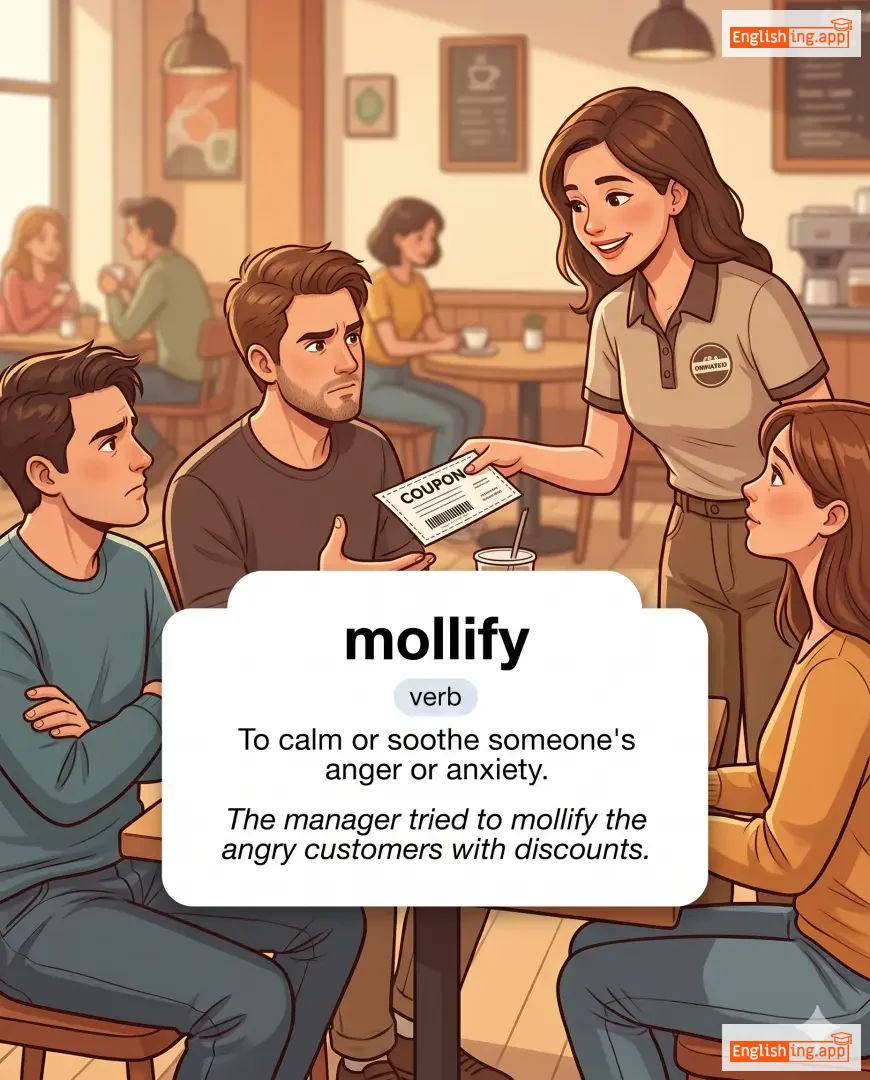
mollify definition card — visual illustration of the meaning
verb
/ˈmɒlɪfaɪ/
успокаивать (uspokaivat)

To calm or soothe someone's anger or anxiety.

"The manager tried to mollify the angry customers with discounts."

"Менеджер попытался успокоить разгневанных клиентов с помощью скидок." (Menedzher popytalsya uspokoit razgnevannykh klientov s pomoshch'yu skidok.)
verb
/ˈmɒlikɒdl/
баловать (balovat)

To treat someone in an overprotective and indulgent way.

"Parents should avoid mollycoddling their children too much."

"Родителям следует избегать слишком баловать своих детей." (Rodityelyam sleduyet izbegat' slishkom balovat' svoikh detey.)
verb
/məʊlt/
линять (linyat)

To shed old feathers, skin, or hair to make way for new growth.

"Birds molt their feathers once a year."

"Птицы линяют свои перья раз в год." (Ptitsy linayut svoi per'ya raz v god.)
adjective
/ˈməʊltən/
расплавленный (rasplavlennyy)

Made into liquid by heat; melted.

"The blacksmith poured molten metal into the mold."

"Кузнец налил расплавленный металл в форму." (Kuznets nalil raspavlennyy metall v formu.)
👩‍👧

mom (мама)

noun
/mɑːm/
мама (mama)

an informal word for mother

"My mom makes the best homemade food."

"Моя мама готовит лучшую домашнюю еду." (Moya mama gotovit luchshuyu domashnyuyu yedu.)
noun
/ˈmoʊmənt/
мгновение (mgnoveniye)

A very short period of time; a particular point in time.

"She paused for a moment before answering."

"Она остановилась на момент перед тем, как ответить." (Ona ostanovilas' na moment pered tem, kak otvetit'.)
adjective
/ˈmoʊmənˌteri/
кратковременный (kratkovremenny)

Lasting for only a short time.

"There was a momentary silence in the room."

"В комнате была кратковременная тишина." (V komnate byla kratkovremennaya tishina.)
adjective
/moʊˈmɛntəs/
значительный (znachitel'nyy)

Of great importance or significance, especially in its effect on the future.

"The signing of the agreement was a momentous event."
"Подписание соглашения было значительным событием." (Podpisaniye soglasheniya bylo znachitel'nym sobytiyem.)
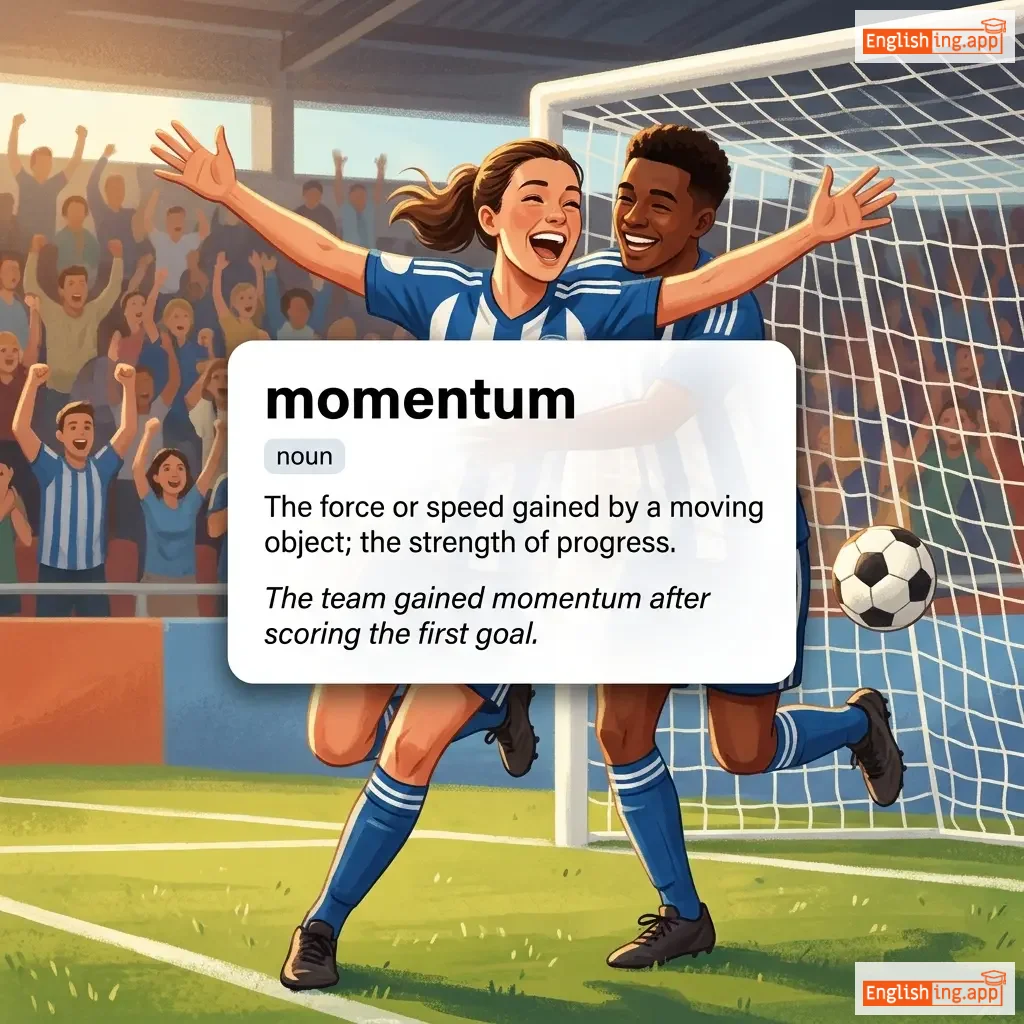
momentum definition card — visual illustration of the meaning
noun
/moʊˈmɛntəm/
импульс (momentum)

The force or speed gained by a moving object; the strength of progress.

"The team gained momentum after scoring the first goal."

"Команда набрала обороты после того, как забила первый гол." (Komanda nabrala oboroty posle togo kak zabila perviy gol.)
noun
/ˈmɒn.ɑːk/
монарх (monarh)

a sovereign ruler, especially a king or queen

"The monarch addressed the nation on television."
"Монарх обратился к нации по телевидению." (Monarh obratilsya k natsii po televizii.)
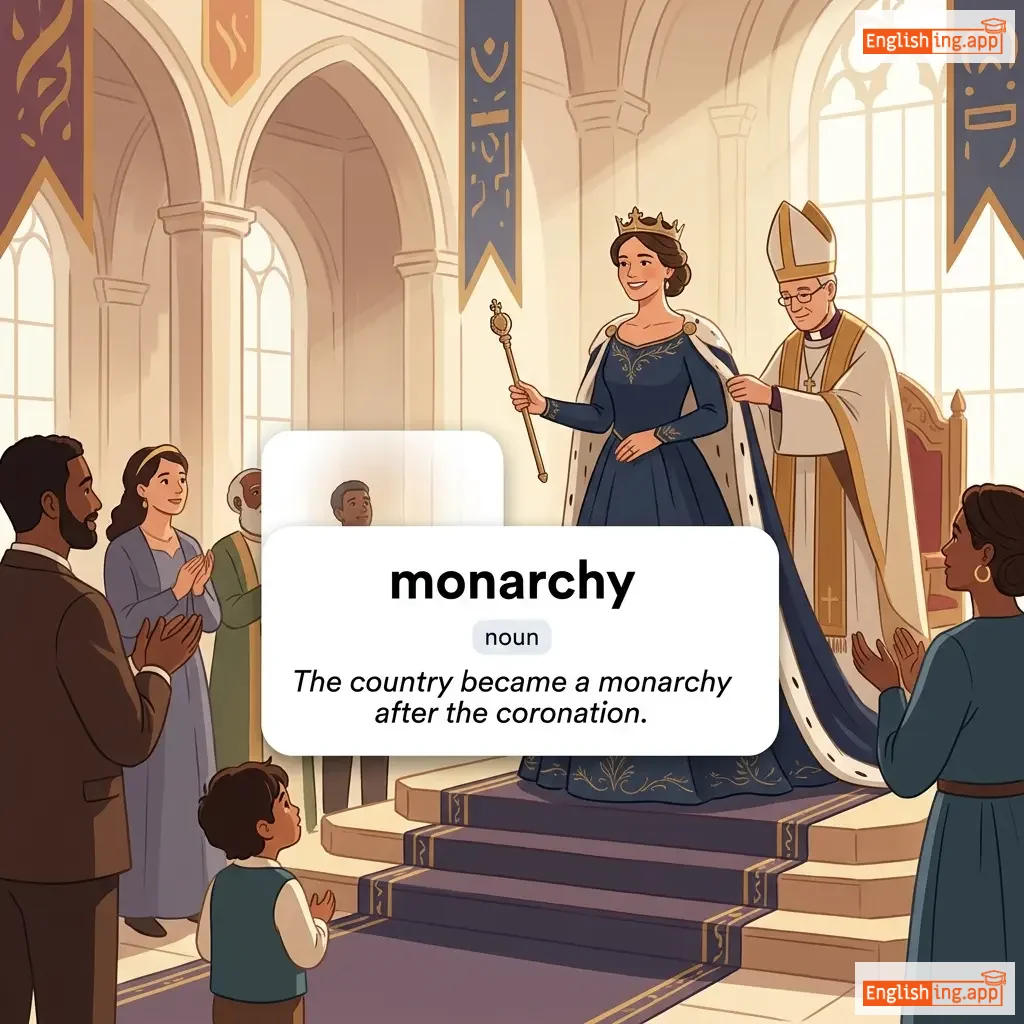
monarchy definition card — visual illustration of the meaning
noun
/ˈmɑːnərki/
монархия (monarhiya)

A system of government with a king or queen as head of state.

"The country became a monarchy after the coronation."

"Страна стала монархией после коронации." (Strana stala monarkhiyey posle koronatsii.)
noun
/ˈmɒnəstɛri/

A building or complex where monks or nuns live, work, and worship.

"The old monastery was surrounded by high stone walls."

adjective
/məˈnæstɪk/
монашеский (monasheskij)

Relating to monks, monasteries, or a life of religious seclusion.

"He chose to live a monastic life away from the city."

"Он выбрал монашескую жизнь вдали от города." (On vybral monasheskuyu zhizn' vdali ot goroda.)
noun
/ˈmʌn.deɪ/
понедельник (ponedelnik)

the first day of the working week following Sunday

"I start my new job on Monday."
"Я начинаю новую работу в понедельник." (ya nachinayu novuyu rabotu v ponedelnik)
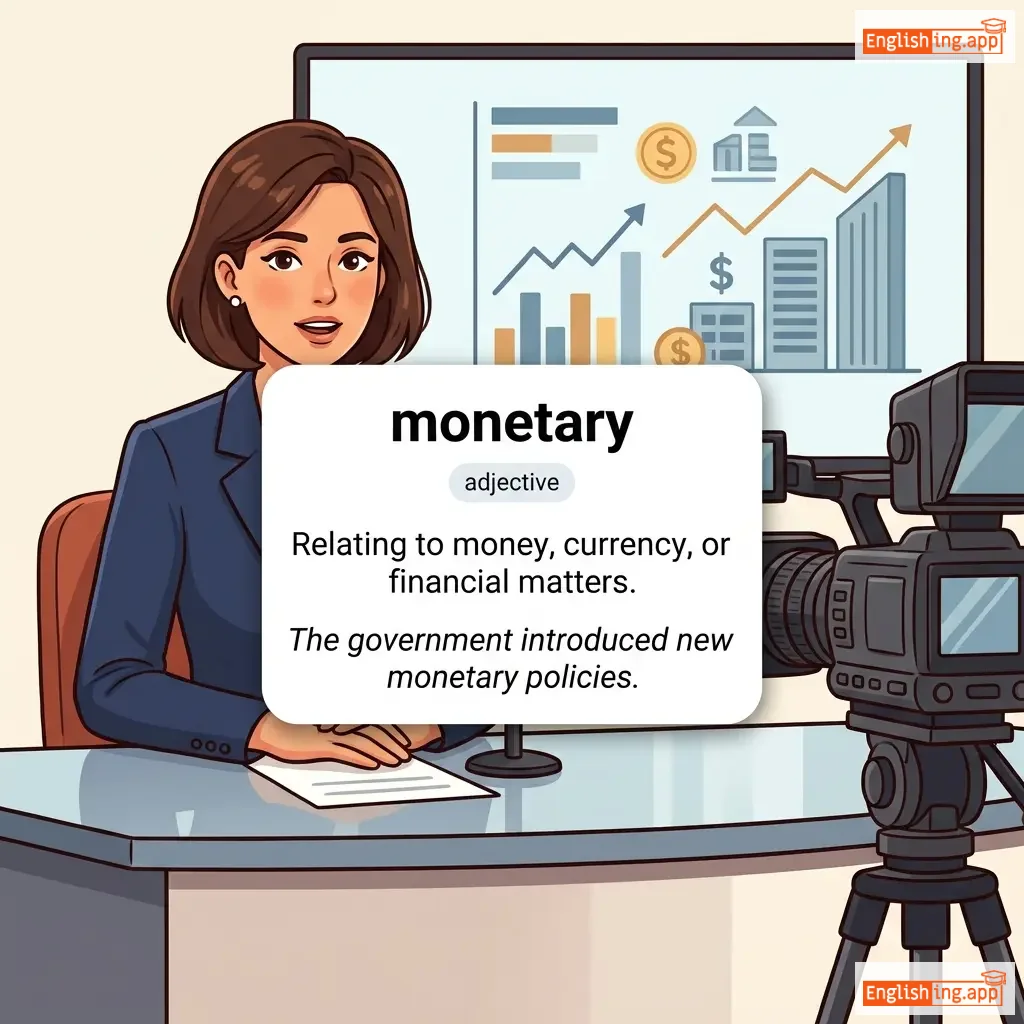
monetary definition card — visual illustration of the meaning
adjective
/ˈmʌnɪtəri/

Relating to money, currency, or financial matters.

"The government introduced new monetary policies."

monetization definition card — visual illustration of the meaning
noun
/ˌmɒn.ɪ.taɪˈzeɪ.ʃən/
монетизация (monetizatsiya)

The process of converting assets or services into money, involving commercialization, profit generation, and revenue creation.

"The monetization of digital content has created new income streams."

"Монетизация цифрового контента создала новые потоки дохода." (Monetizatsiya tsifrovogo kontenta sozdala novye potoki dokhoda.)
money definition card — visual illustration of the meaning
noun
/ˈmʌni/
счастье (schastye)

A medium of exchange in the form of coins and banknotes; wealth or financial resources.

"He saved enough money to buy a new car."

"Она не смогла скрыть свое счастье, когда получила приз." (Ona ne smogla skryt' svoe schast'ye, kogda poluchila priz.)
adjective
/ˈmʌnid/
богатый; обеспеченный; состоятельный (manid)

having much money; wealthy; rich

"She comes from a moneyed family with extensive real estate holdings."

"Она из богатой семьи с обширной недвижимостью." (ona iz bogatoy sem'i s obshirnoy nedvizhimost'yu.)
noun
/ˈmɒŋ.ɡuːs/
мангуст (mangust)

a small carnivorous mammal known for its ability to kill venomous snakes

"The mongoose quickly attacked the cobra to protect its young."

"Мангуста быстро напала на кобру, чтобы защитить своих детёнышей." (Mangusta bystro napala na kobru, chtoby zashchitit' svoikh detyonyshey.)
noun
/ˈmʌŋɡrəl/
смешанная порода собак (smeshannaya poroda sobak)

A dog of mixed breed; sometimes used to describe something mixed or of inferior quality.

"The stray dog was a friendly mongrel."

"Бездомная собака была дружелюбным монгрелом." (Bezdomnaya sobaka byla druzhelyubnym mongrelom.)
noun
/məˈnɪʃən/
предостережение (predosterezhenie)

A warning or caution, often of a religious or moral nature.

"The priest gave a monition against dishonesty."

"Священник дал предостережение против нечестности." (Svyashchennik dal predosterezhenie protiv nechestnosti.)
noun, verb
/ˈmɒnɪtər/
монитор, наблюдать (monitor, nablyudat)

to observe and check the progress or quality of something; also a device that displays information

"The teacher monitors the students during the exam."
"Учитель мониторит студентов во время экзамена." (Uchitel' monitorit studentov vo vremya ekzamina.)
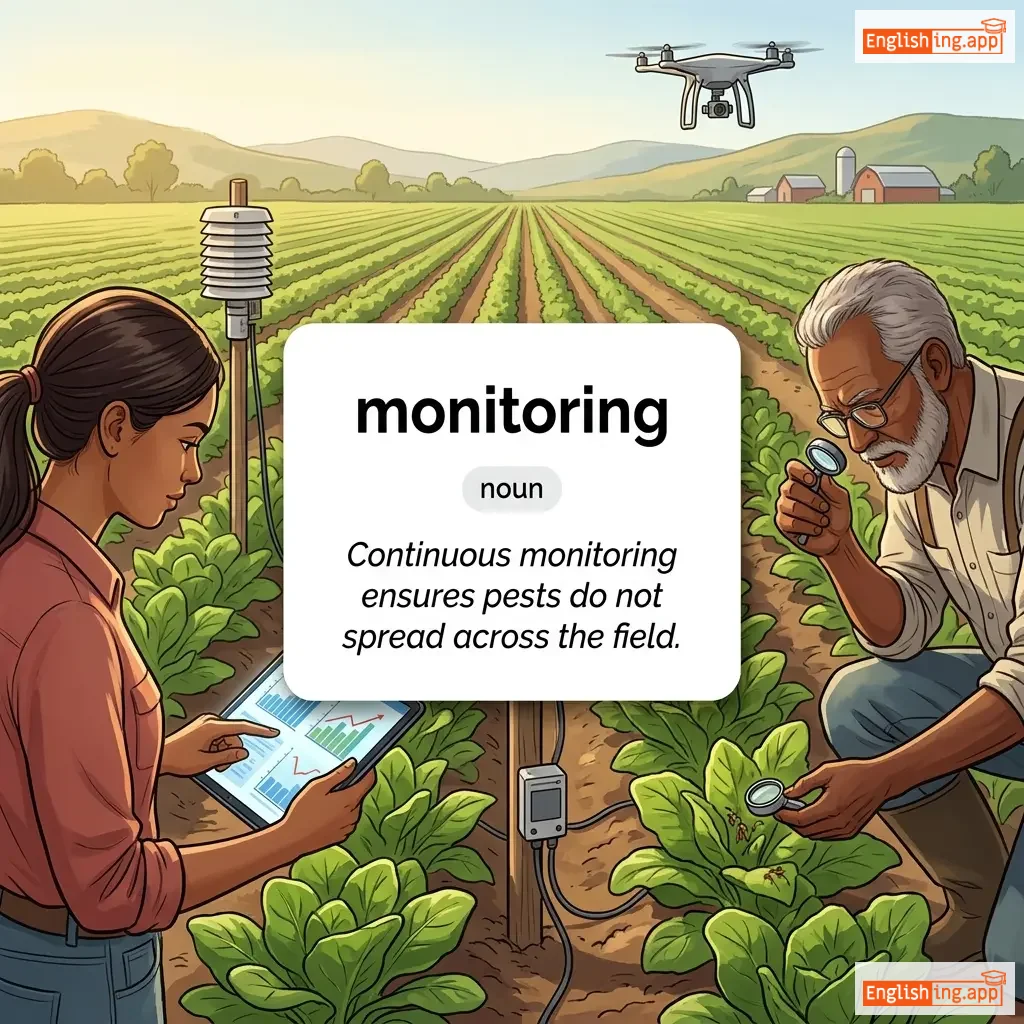
monitoring definition card — visual illustration of the meaning
noun
ˈmɒnɪtərɪŋ
мониторинг, постоянный контроль (monitoring, postoyanny kontrol)

The action of observing and checking the progress or quality of something over a period of time.

"Continuous monitoring ensures pests do not spread across the field."

"Непрерывный мониторинг гарантирует, что вредители не распространятся по полю." (Nepreryvny monitoring garantiye, chto vrediteli ne rasprostranyatsya po polyu.)
adjective
/ˈmɒnɪtəri/
предупреждающий (preduprezhdayushchiy)

Giving a warning or cautionary advice; serving to warn.

"His monitory tone made everyone cautious about their next move."

"Его предупредительный тон заставил всех насторожиться по поводу их следующего шага." (Yego preduprezhdayushchiy ton zastavil vsekh nastrozhitsya po povodu ikh sleduyushchego shaga.)
noun
/mɒŋk/
монах (monakh)

a member of a religious community living under vows of poverty, chastity, and obedience

"The monk lived a simple and peaceful life in the monastery."
"Монах жил простой и мирной жизнью в монастыре." (Monakh zhiv prosto i mirnoy zhiznyu v monastyre.)
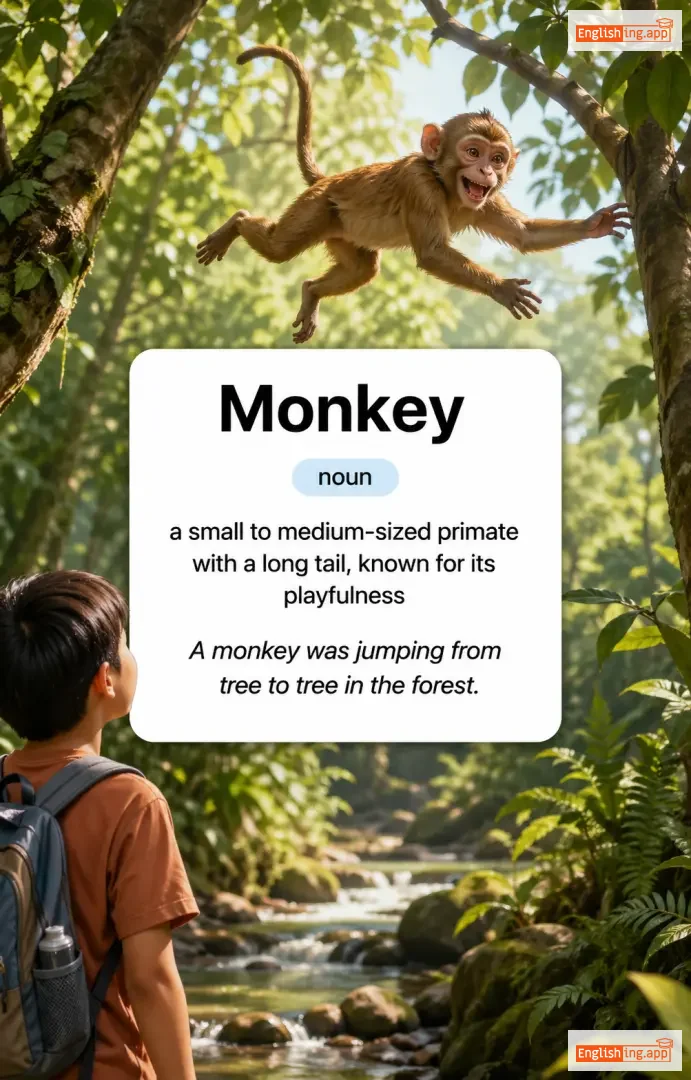
Monkey definition card — visual illustration of the meaning
noun
/ˈmʌŋki/
обезьяна (obez'yana)

a small to medium-sized primate with a long tail, known for its playfulness

"A monkey was jumping from tree to tree in the forest."

"Обезьяна прыгала с дерева на дерево в лесу." (Obezyana prygala s dereva na derevo v lesu)
adjective
/ˌmɒnəkrəˈmætɪk/

Consisting of or displaying only one color.

"The artist created a striking monochromatic painting in shades of blue."

noun/adjective
/ˈmɒnəkrəʊm/
монохром (monokhrom)

A photograph, painting, or screen image in black and white or varying tones of one color.

"The old film was shot entirely in monochrome."

"Старый фильм был снят полностью в монохроме." (Staryy film byl snyat polnost'yu v monokrome.)
noun
/ˈmɒnəkl/
монокль (monokl)

A single round lens for one eye, used to correct or enhance vision.

"The old gentleman wore a monocle at formal events."

"Пожилой джентльмен носил монокль на торжественных мероприятиях." (Pozhiloy dzhentlmen nosil monokl na torzhestvennykh meropriyatiyakh)
noun
/məˈnɒkrəsi/
монократия (monokratiya)

A system of government by a single person; autocracy.

"The nation suffered under decades of monocracy."
"Нация страдала от десятилетий монократии." (Natsiya stradala ot desyatiletiy monokratii.)
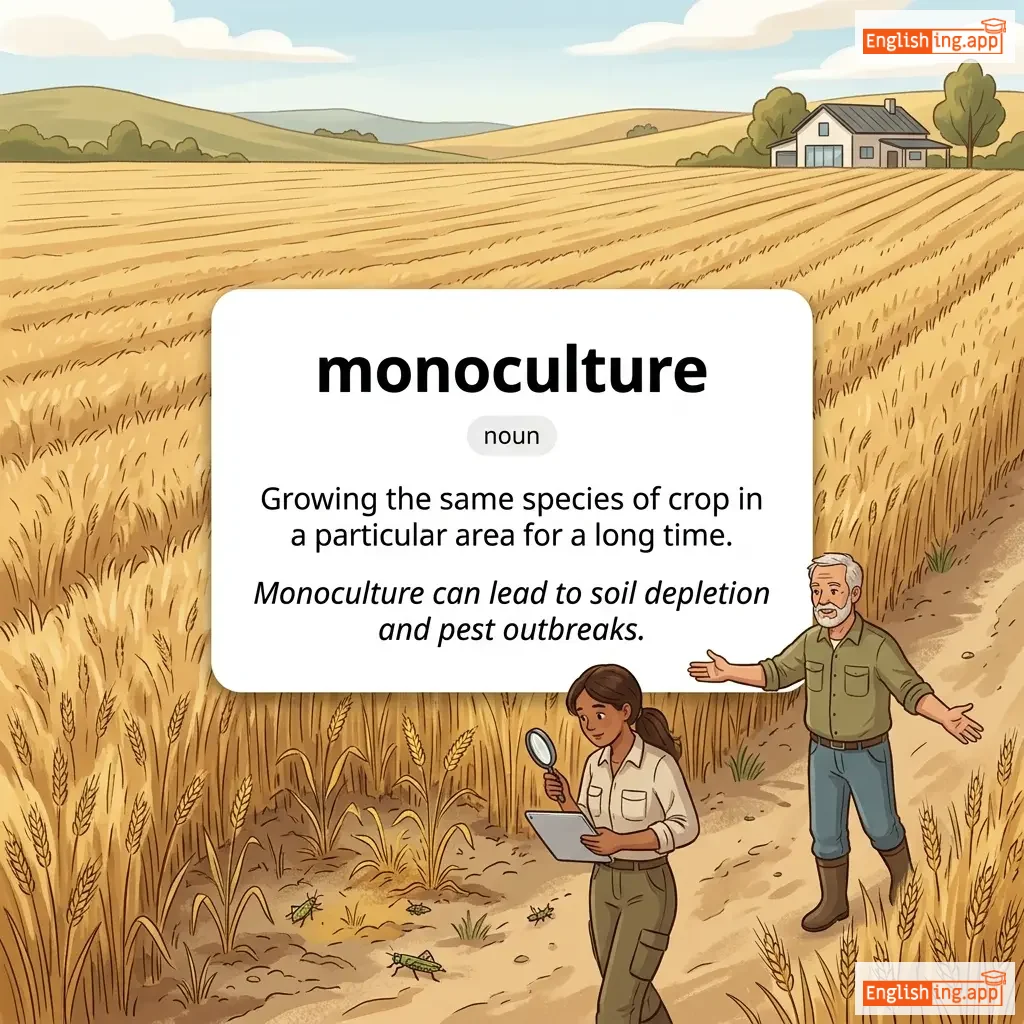
monoculture definition card — visual illustration of the meaning
noun
ˈmɒn.əˌkʌl.tʃər
монокультура (monokultura)

Growing the same species of crop in a particular area for a long time.

"Monoculture can lead to soil depletion and pest outbreaks."

"Монокультура может привести к снижению плодородия почвы и появлению вредителей." (Monokultura mozhet privesti k snizheniyu plodorodiya pochvy i poyavleniyu vrediteley.)
noun
/məˈnɒɡəmi/
моногамия (monogamiya)

The practice of being married to or in a relationship with only one person at a time.

"Many cultures encourage monogamy as the ideal form of marriage."

"Многие культуры поддерживают моногамию как идеальную форму брака." (Mnogie kultury podderzhivayut monogamiyu kak ideal'nuyu formu braka.)
noun
/ˈmɒnəɡræm/
мономограмма (monogramma)

A design consisting of two or more letters, typically a person's initials, combined or interwoven.

"The towel was embroidered with her monogram."

"Полотенце было вышито с её монограммой." (Polotentse bylo vyshito s yeye monogrammoy.)
noun
/ˈmɒnəɡrɑːf/
монография (monograph)

A detailed written study of a single specialized subject or aspect of it.

"The professor published a monograph on ancient pottery."

"Профессор опубликовал монографию по древней керамике." (Professor opublikoval monografiyu po drevney keramike.)
adjective
/mɔːrˈdeɪʃəs/
язвительный или саркастический (yazvitel'nyy ili sarkasticheskiy)

Sharp or biting in style, tone, or remark; sarcastic.

"The critic’s mordacious review offended the author."

"Язвительная рецензия критика обидела автора." (Yazvitelnaya retsenziya kritika obidela avtora.)
noun
/ˈmuːn.biːm/
лунный луч (lunnyy luch)

A ray of light from the moon.

"A moonbeam lit up the quiet forest clearing."

"Лунный луч осветил тихую поляну в лесу." (Lunnyy luch osvetil tikuyu polyanu v lesu.)
💭

moot

adjective, verb
/muːt/

Adjective: subject to debate or irrelevant. Verb: to suggest an idea for discussion.

"The issue of funding became a moot point after the project was canceled."

adjective, noun
/ˈmɔːrəl/
моральный (moral'nyy)

Adjective: concerned with principles of right and wrong. Noun: a lesson about right and wrong from a story or experience.

"The moral of the story is that honesty is the best policy."

"Мораль этой истории заключается в том, что честность — лучшая политика." (Moral' etoy istorii zaklyuchayetsya v tom, chto chestnost' — luchshaya politika.)
noun
/məˈræl/
мораль (moral)

The confidence, enthusiasm, and discipline of a person or group at a particular time.

"The team's morale improved after their recent victory."

"Мораль команды улучшилась после их недавней победы." (Moral' komandy uluchshilas' posle ikh nedavney pobedy.)
noun
/ˈmɒrəlɪst/
моралист (moralist)

A person who teaches or promotes moral principles and values.

"The author was known as a strict moralist in his writings."

"Автор был известен как строгий моралист в своих произведениях." (Avtor byl izvesten kak strogiy moralist v svoikh proizvedeniyakh.)
noun
/məˈrælɪti/
моральность (moral'nost')

Principles concerning the distinction between right and wrong or good and bad behavior.

"Society's sense of morality changes over time."

"Чувство морали в обществе меняется со временем." (Chuvstvo morali v obshchestve menyayetsya so vremyannym.)
verb
/ˈmɒrəlaɪz/
морализировать (moralizirovat)

To comment on issues of right and wrong, often with an air of superiority.

"He tends to moralize about other people's choices."

"Он склонен морализировать по поводу выбора других людей." (On sklonyen moralizirovat' po povodu vibora drugikh lyudey.)
adverb
/ˈmɔːrəli/
морально (moral'no)

in accordance with principles of right and wrong behavior; ethically

"She felt morally obligated to help the refugees."

"Она чувствовала моральную обязанность помочь беженцам." (Ona chuvstvovala moral'nuyu obyazannost' pomoch' bezhentsam.)
noun
/məˈræs/
сложная ситуация (slozhnaya situatsiya)

A complicated or confused situation; a swampy or boggy ground.

"The project got stuck in a bureaucratic morass."

"Проект застрял в бюрократическом болоте." (Proyekt zastrjal v byurokraticheskom bolote.)
noun
/ˌmɔːrəˈtɔːriəm/
мораторий (moratoriy)

A temporary suspension or delay of an activity, law, or obligation.

"The government announced a moratorium on new mining licenses."

"Правительство объявило мораторий на новые лицензии на добычу полезных ископаемых." (Pravitel'stvo ob'yavilo moratoriy na novye litsenzii na dobychu poleznykh iskopayemykh.)
adjective
/ˈmɔːrbɪd/
ненормальный интерес к тревожным или неприятным темам (nenormalnyy interes k trevozhnym ili nepriyatnym temam)

Having an abnormal interest in disturbing or unpleasant subjects such as death or disease.

"She had a morbid fascination with crime stories."
"У неё было мёрби́дное увлечение криминальными историями." (U nee bylo morbidnoe uvlchenie kriminal'nymi istoriyami.)
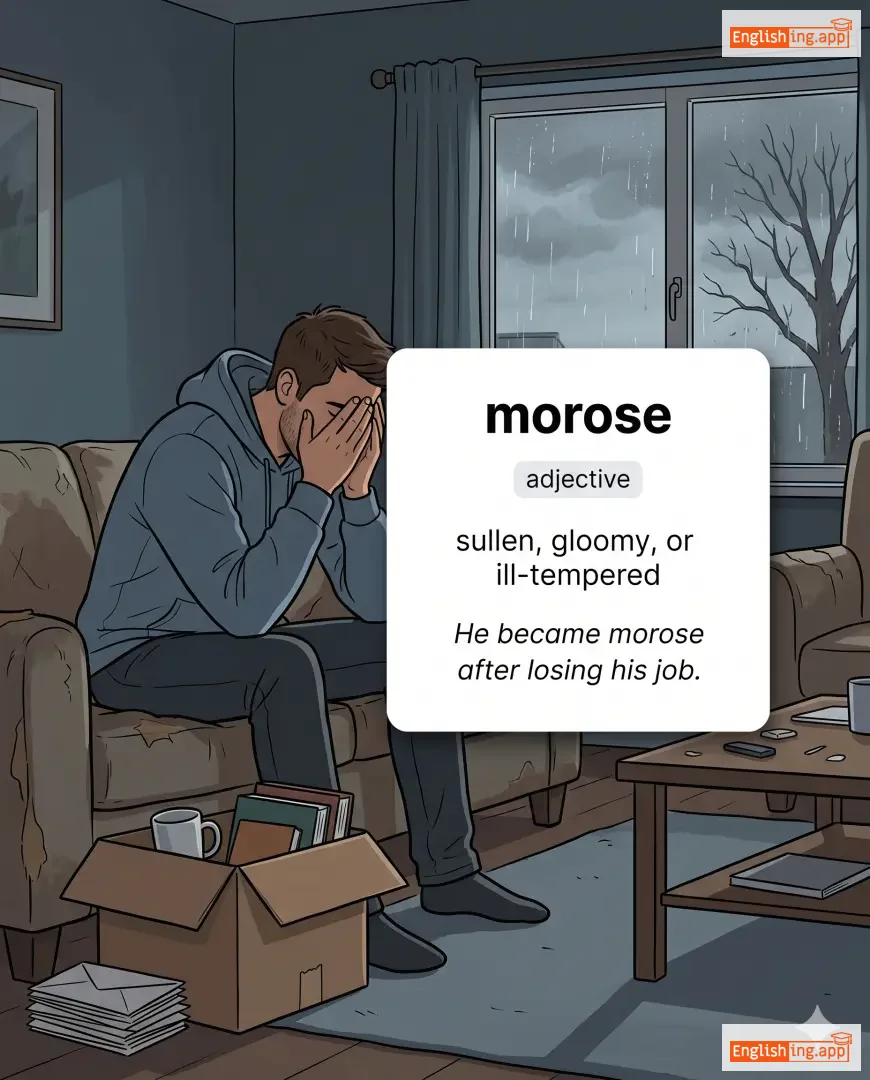
morose definition card — visual illustration of the meaning
adjective
/məˈroʊs/
мрачный (mrachnyy)

sullen, gloomy, or ill-tempered

"He became morose after losing his job."

"Он стал мрачным после потери работы." (On stal mrachnym posle poteri raboty.)