Словари

Словарь английского языка | Значения слов, определения и примеры

noun
/ˈmɔːrɡɪdʒ/
ипотека (ipoteka)

a legal agreement where a person borrows money to buy property and pays it back over time

"They applied for a mortgage to buy their new house."

"Они подали заявку на ипотеку, чтобы купить новый дом." (Oni podali zayavku na ipoteku, chtoby kupit' novyi dom.)
noun
/mɔːrˈtɪʃən/
похоронный работник (pokhoronny rabotnik)

a person whose job is to prepare dead bodies for burial or cremation and to arrange funerals

"The mortician prepared the body for the funeral service."

"Похоронный работник подготовил тело для похоронной службы." (Pokhoronny rabotnik podgotovil telo dlya pokhoronnoy sluzhby.)
verb
/ˈmɔːrtɪfaɪ/
унизить (unizit)

to cause someone to feel great embarrassment or shame

"She was mortified when she tripped on stage."

"Она была поражена, когда споткнулась на сцене." (Ona byla porazheno, kogda spotknulas' na stse.)
noun
/moʊˈzeɪɪk/
мозаика (mozaika)

A picture or pattern produced by arranging together small pieces of stone, tile, or glass.

"The church ceiling was decorated with a beautiful mosaic."

"Потолок церкви был украшен красивой мозаикой." (Potolok tserkvi byl ukrashen krasivoy mozaikoy)
noun
/mɒsk/
мечеть (mechet)

A Muslim place of worship.

"They gathered at the mosque for the Friday prayer."
"Они собрались в мечети для пятничной молитвы." (Oni sobralis' v mecheti dlya pyatnichnoy molitvy.)
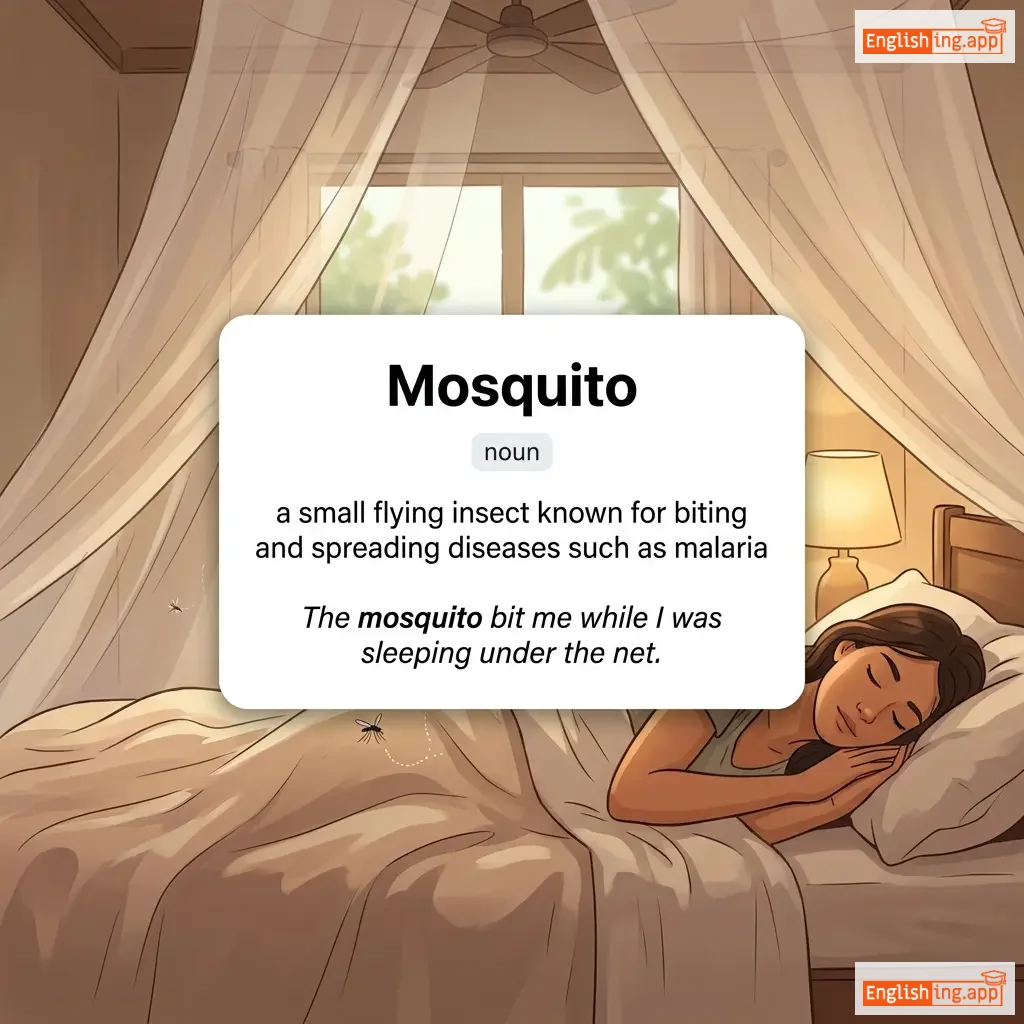
Mosquito definition card — visual illustration of the meaning
noun
/məˈskiːtəʊ/

a small flying insect known for biting and spreading diseases such as malaria

"The mosquito bit me while I was sleeping under the net."
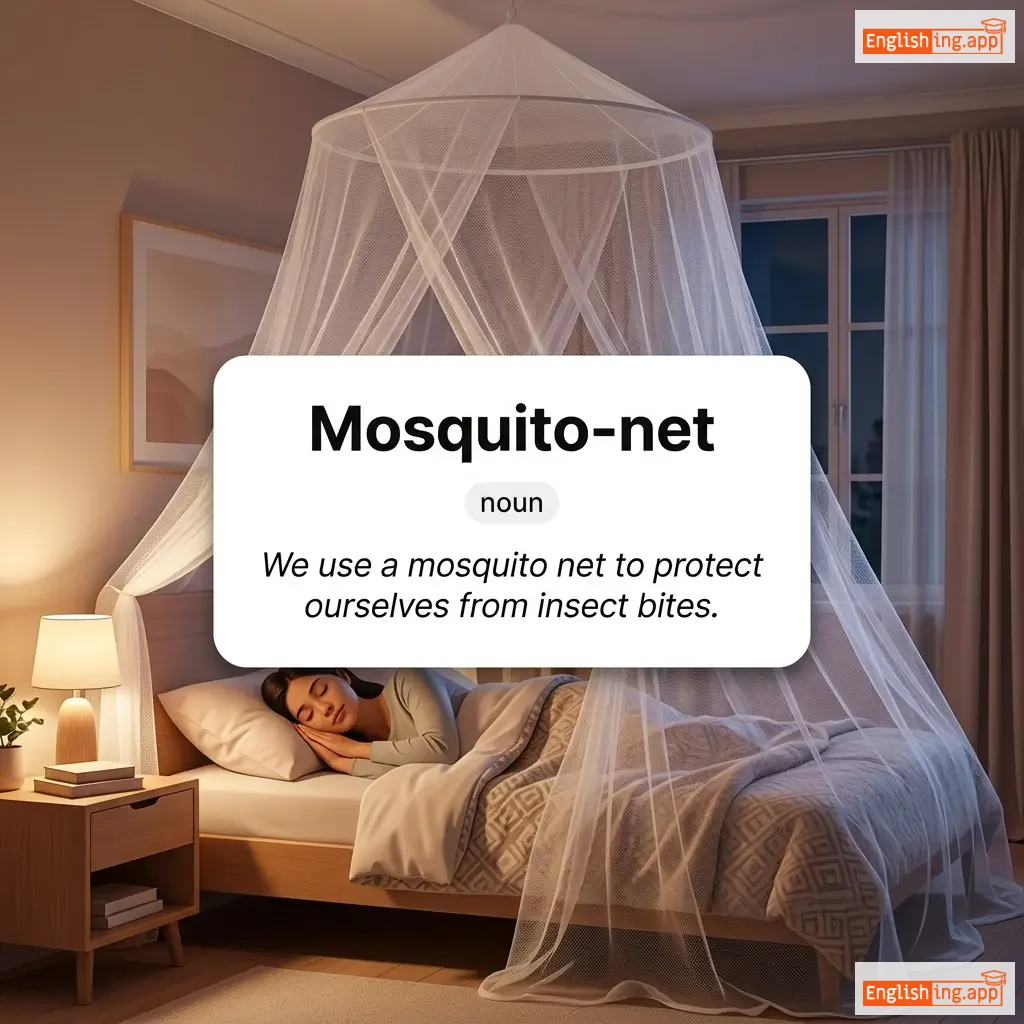
Mosquito-net definition card — visual illustration of the meaning
noun
/məˈskiː.toʊ net/

a fine mesh fabric used to cover beds or windows to keep mosquitoes and other insects out

"We use a mosquito net to protect ourselves from insect bites."

noun
/mɔːs/
мох (moh)

a small flowerless plant that grows in clumps in moist places

"Green moss covered the old stone wall."

"Зеленый мох покрыл старую каменную стену." (zelyonyy mok pokryl staruyu kamennuyu stenu.)
adjective
/ˈmɒsi/
покрытый мхом; с мхом, растущим на нем (pokrytyy mkhom; s mkhom, rastushchim na nem)

covered with moss; having moss growing on it

"The old tree trunk was mossy and covered with green vegetation."

"Старый ствол дерева был покрыт мхом и покрыт зеленой растительностью." (Staryy stvol dereva byl pokryt mkhom i pokryt zelyonoy rastitel'nost'yu.)
adjective, adverb, pronoun
/moʊst/
большинство (bol'shinstvo)

the greatest in amount, degree, or number

"Most people like to relax on weekends."
"Большинство людей предпочитают отдыхать на выходных." (Bol'shinstvo lyudey predpochitayut otdykhat' na vykhodnykh.)
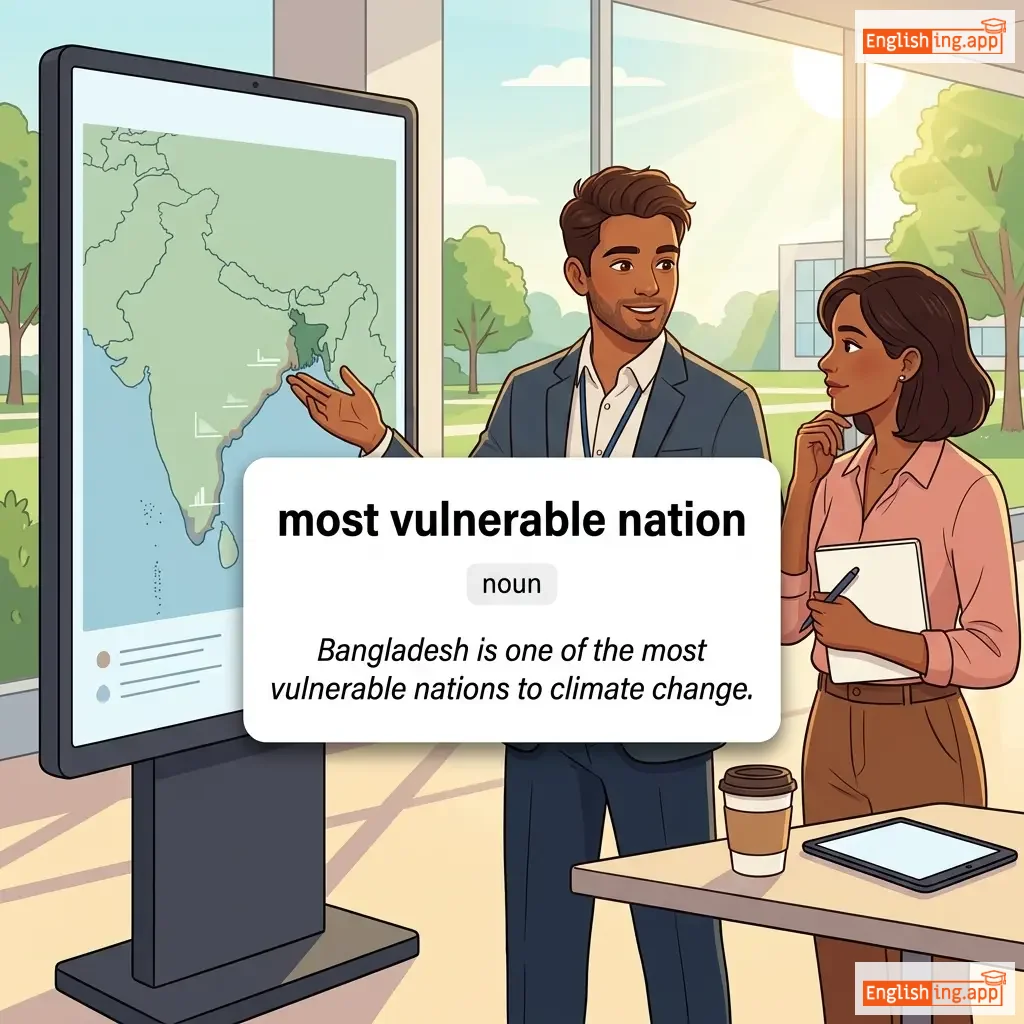
most vulnerable nation definition card — visual illustration of the meaning
noun
moʊst ˈvʌlnərəbəl ˈneɪʃən
нация с наибольшей уязвимостью (natsiya s naibolshey uyazvimmostyu)

A country that is highly exposed to risks and lacks adequate protection or resilience.

"Bangladesh is one of the most vulnerable nations to climate change."

"Бангладеш - одна из самых уязвимых стран для изменения климата." (Bangladesh - odna iz samykh uyazvimykh stran dlya izmeneniya klimata.)
adverb
/ˈmoʊstli/
в основном (v osnovnom)

for the most part; mainly

"She is mostly interested in art and literature."

"Она в основном интересуется искусством и литературой." (Ona v osnovnom interesuyetsya iskusstvom i literaturoy.)
noun
/moʊt/
частица (chastitsa)

A tiny particle or speck, especially of dust.

"A mote of dust floated in the sunlight."

"Пылинка плавала в лучах солнца." (Pylinka plavala v luchakh solnca.)
adjective
/ˈmɒθ ˌiːtən/
съедено молью (s'yedeno mol'yu)

Damaged or worn out, especially by moths or age.

"He wore a moth-eaten sweater on the cold day."
"Он носил съеденный молью свитер в холодный день." (On nosil s'yedennyy mol'yu sviter v kholodnyy den'.)
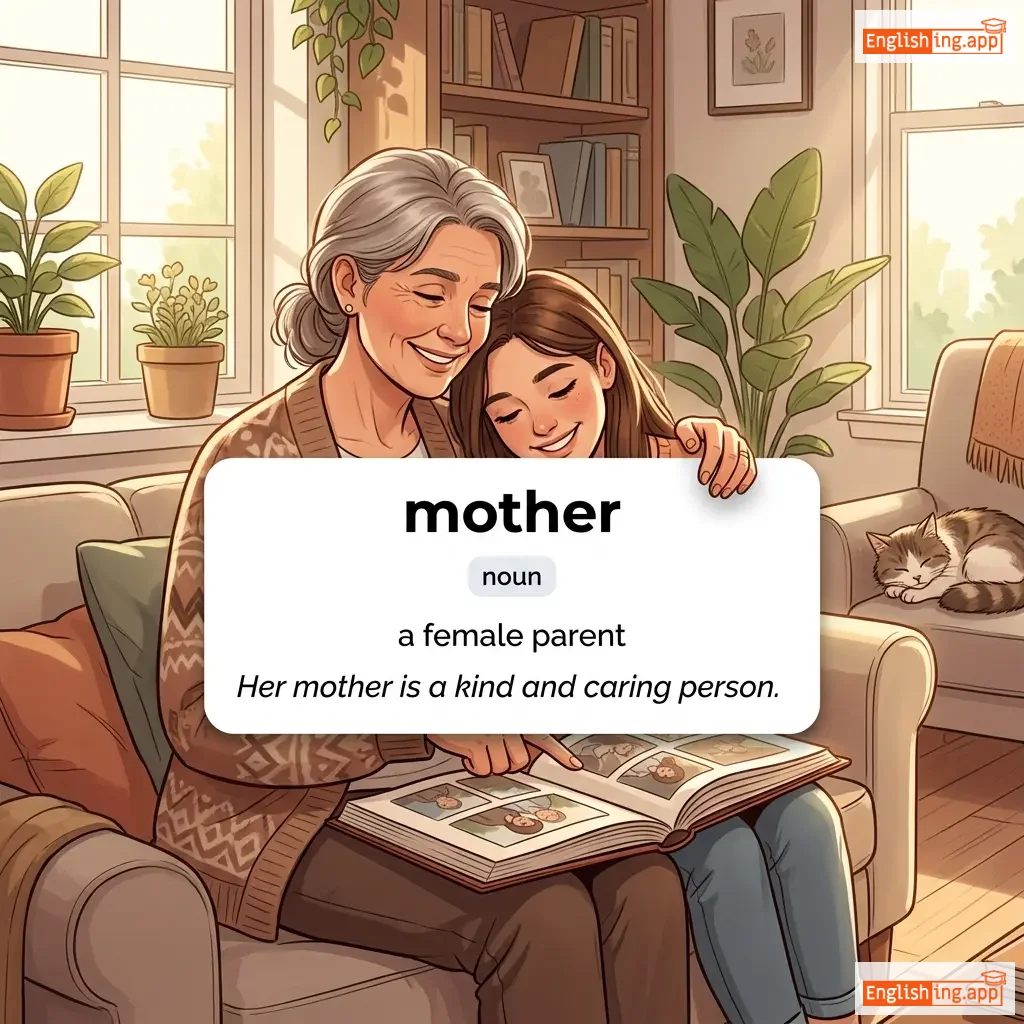
mother definition card — visual illustration of the meaning
noun
/ˈmʌðər/
мать (mat)

a female parent

"Her mother is a kind and caring person."

"Ее мать - добрый и заботливый человек." (Yeyo mat' - dobryy i zabotlivyy chelovek.)
noun
/ˈmʌðər ˈlæŋɡwɪdʒ/
родной язык (rodnoy yazyk)

the first language a person learns from childhood; native language

"Children learn best when they are taught in their mother language."

"Дети лучше учатся на родном языке." (deti luchshe uchatsya na rodnom yazyke)
noun
/ˈmʌð.ər.hʊd/
материнство (materinstvo)

the state of being a mother; the qualities of a mother

"She embraced the joys and challenges of motherhood."

"Она приняла радости и трудности материнства." (Ona prinяла radosti i trudnosti materinstva.)
noun
/ˈmʌð.ər.lænd/
родина; родная страна (rodina)

the country where one was born or has citizenship; homeland

"He always spoke fondly of his motherland."

"Он всегда говорил с любовью о своей родине." (On vsegda govorit s lyubov'yu o svoey rodine.)
👩‍👧‍👦

Motherly (madrli)

adjective
/ˈmʌðərli/
материнский (materinskiy)

having qualities characteristic of a mother; caring and protective

"She showed motherly care and affection towards all the children."

"Она проявила материнскую заботу и привязанность ко всем детям." (Ona proyavila materinskuyu zabotu i privyazannost ko vsemm detyam.)
🎭

motif

noun
/moʊˈtiːf/

A recurring theme, subject, or idea in a work of art or literature.

"The motif of love is central to the novel."

adjective
/ˈmoʊtaɪl/
подвижный (podvizhny)

Capable of movement or locomotion.

"Certain bacteria are motile and can swim toward nutrients."

"Некоторые бактерии подвижны и могут плавать к питательным веществам." (Nekotorye bakterii podvizhny i mogut plavat k pitatel'nym veshchestvam.)
noun
/moʊˈtɪləti/
мобильность (mobil'nost')

The ability of an organism or cell to move independently.

"The motility of sperm is crucial for successful fertilization."

"Мотильность сперматозоидов важна для успешного оплодотворения." (Motil'nost' spermatozoyidov vazhna dlya uspeshnogo oplodotvoreniya.)
noun
/ˈmoʊʃən/
движение (dvizhene)

the act or process of moving; a change of place or position

"The motion of the car made her sleepy."

"Движение машины заставило её заснуть." (Dvizhenie mashiny zastavilo yey zasnut.)
motivate definition card — visual illustration of the meaning
verb
/ˈmoʊtɪveɪt/

To provide someone with a reason or incentive to do something.

"The coach motivated the players to give their best performance."

noun
/ˌmoʊtɪˈveɪʃən/
мотивировка (motivirovka)

the reason or drive for acting or behaving in a particular way

"She lost her motivation to continue the project."

"Она потеряла свою мотивацию продолжать проект." (Ona poteryala svoyu motivatsiyu prodolzhat' proyekt.)
noun
/ˈmoʊtɪv/
мотив (motiv)

a reason for doing something, especially one that is hidden or not obvious

"The police could not determine the motive behind the crime."

"Полиция не смогла определить мотив преступления." (Politsiya ne smogla opredelit motiv prestupleniya.)
adjective
/ˈmɒtli/
пёстрый (pyostryi)

Made up of different, often incongruous or diverse elements.

"The festival attracted a motley crowd of artists, musicians, and tourists."

"Фестиваль привлёк пёструю толпу художников, музыкантов и туристов." (Festival prilyok pyostruyu tolpu khudozhnikov, muzykantov i turistov.)
noun
/ˈmoʊtər/
мотор (motor)

a machine that produces motion or power to make something work

"The car’s motor stopped suddenly."
"Мотор автомобиля внезапно остановился." (Motor avtomobilya vnezapno ostanovilsya.)
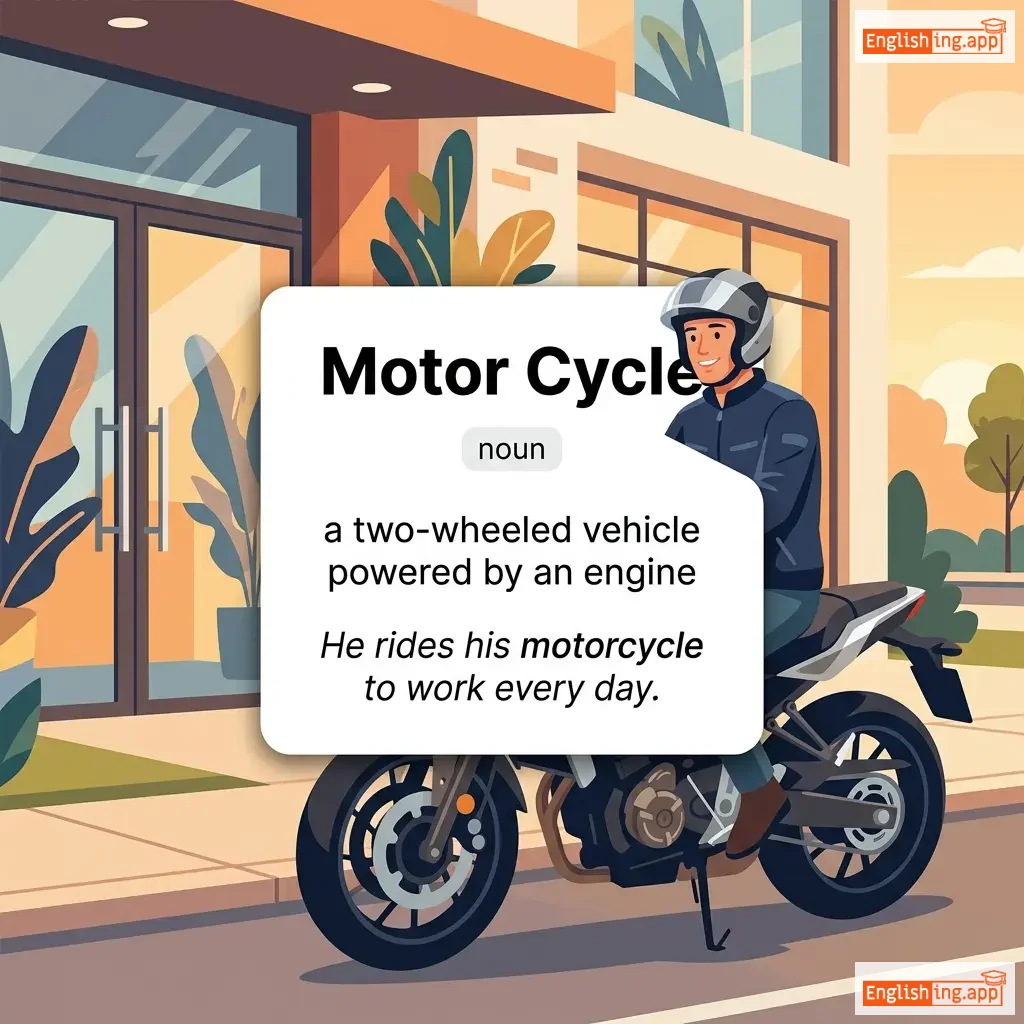
Motor Cycle definition card — visual illustration of the meaning
noun
/ˈmoʊ.tər ˌsaɪ.kəl/
мотоцикл (mototsikl)

a two-wheeled vehicle powered by an engine

"He rides his motorcycle to work every day."

"Он ездит на своем мотоцикле на работу каждый день." (On ezdit na svoem mototsikle na rabotu kazhdyy den')
Motor lorry definition card — visual illustration of the meaning
noun
/ˈmoʊ.tər ˈlɔː.ri/
грузовик с мотором (gruzovik s motorom)

a large motor vehicle used for transporting goods; truck

"The motor lorry delivered fresh vegetables to the market."

"Моторный грузовик доставил свежие овощи на рынок." (Motornyi gruzovik dostavil svezhie ovoshchi na rynok.)
noun
/ˈmoʊtərˌsaɪkəl/
мотоцикл (mototsikl)

a two-wheeled motor-powered vehicle designed for transportation

"He rides his motorcycle to work every morning."

"Он каждое утро ездит на работу на мотоцикле." (On kazhdoe utro ezdit na rabotu na mototsikle)
noun
/ˈməʊtərɪst/
автомобилист (avtomobilist)

a person who drives a motor vehicle, especially a car or motorcycle

"The motorist stopped to help after seeing the accident on the highway."

"Автомобилист остановился, чтобы помочь после аварии." (Avtomobilist ostanovilsya chtoby pomoch posle avarii)
verb
/ˈmɒtl/
пятнистый (pyatnisty)

To mark with spots or patches of color.

"The leaves were mottled with shades of yellow and brown."

"Листья были покрыты пятнами желтого и коричневого цвета." (List'ya byli pokryty pyatnami zheltogo i korichnevogo tsveta.)
adjective
/ˈmɒtld/
пятнистый (pyatnisty)

Marked with spots, streaks, or blotches of different shades or colors.

"The snake's mottled skin helped it blend into the forest floor."

"Пятнистая кожа змеи помогла ей слиться с лесным полом." (Pyatnistaya kozha zmei pomogla ei slitsya s lesnym polom.)
noun
/ˈmɒtəʊ/
девиз (deviz)

A short sentence or phrase that expresses a guiding belief or principle.

"Her motto in life is 'never give up.'"

"Её девиз в жизни - 'Никогда не сдавайся.'" (Eё deviz v zhizni - 'Nikogda ne sdavaysya.')
noun
/moʊld/
форма; плесень (mould)

a hollow container used to give shape to molten material; fungus

"She poured chocolate into the mould to make candies."

"Она залила шоколад в форму, чтобы сделать конфеты." (Ona zalila shokolad v formu chtoby sdelat konfety.)
verb
/maʊnt/
устанавливать (ustanavlivat)

to climb up, rise, or fix something in place

"They plan to mount a camera on the wall."
"Они планируют установить камеру на стену." (Oni planiruyut ustanovit kameru na stenu.)
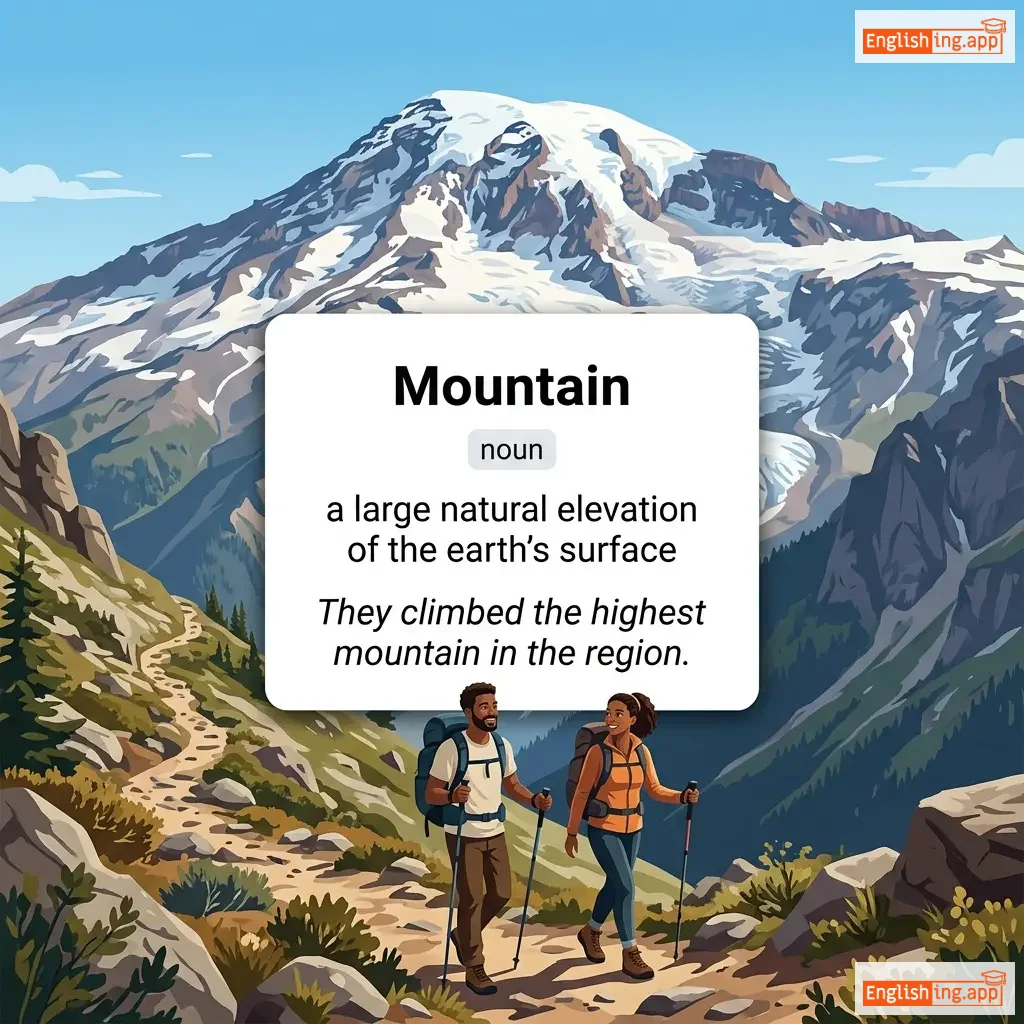
Mountain definition card — visual illustration of the meaning
noun
/ˈmaʊntən/
гора (gora)

a large natural elevation of the earth’s surface

"They climbed the highest mountain in the region."

"Они поднялись на самую высокую гору в регионе." (Oni podnyalis' na samuyu vysokuyu goru v regione.)
noun
/ˌmaʊntəˈnɪə/
альпинист (al'pinist)

A person who climbs mountains as a sport or profession.

"The mountaineer reached the summit after a long climb."

"Альпинист достиг вершины после долгого подъема." (Al'pinist dostig vershiny posle dolgogo pod'yema.)
adjective
/ˈmaʊntənəs/
гористый (goristyy)

Having many mountains; very large or huge in size.

"They traveled through a mountainous region of Nepal."

"Они путешествовали через гористый регион Непала." (Oni puteshestvovali cherez goristyj region Nepala.)
noun
/ˈmaʊntɪˌbæŋk/
обманщик (obmanщик)

A charlatan or trickster who deceives others, often for personal gain.

"The crowd was fooled by the mountebank’s false promises."

"Толпа была обманута ложными обещаниями мошенника." (Tolpa byla obmanuta lozhnymi obeshchaniyami moshennika.)
verb
/mɔːrn/
оплакивать (oplakit)

To feel or express deep sadness or grief, especially because of someone's death.

"They gathered to mourn the loss of their friend."

"Они собрались, чтобы оплакать потерю своего друга." (Oni sobralis', chtoby oplakit' poteryu svoego druga.)
noun
/ˈmɔːr.nər/
человек, присутствующий на похоронах (chelovek, prisutstvuyushchiy na pokhoronakh)

a person who attends a funeral or shows grief for someone who has died

"The mourners gathered at the cemetery to pay their respects."
"Плакальщики собрались на кладбище, чтобы отдать дань уважения." (Plakalschiki sobralis' na kladbishche, chtoby otdat' dan' uzhazheniya.)
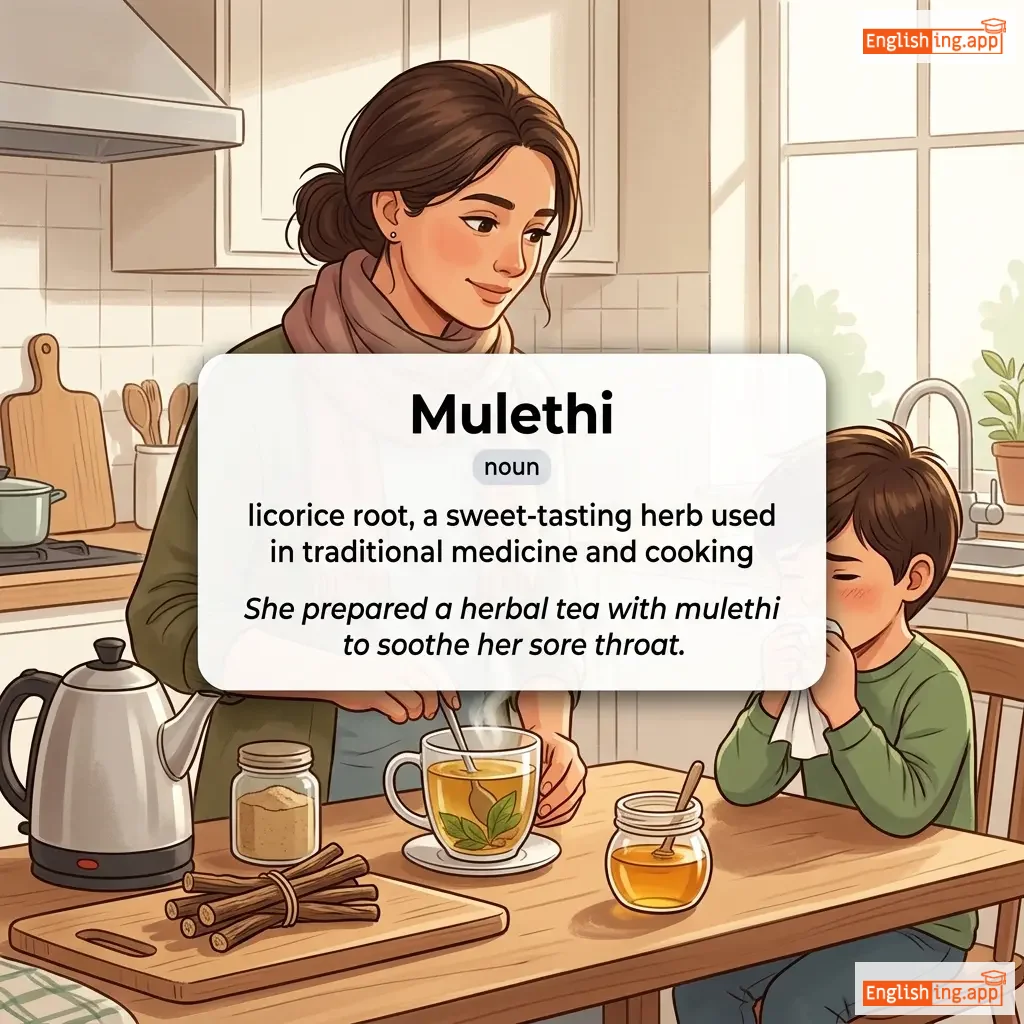
Mulethi definition card — visual illustration of the meaning
noun
/muˈleθi/
корень лакрицы (koren' lakritsy)

licorice root, a sweet-tasting herb used in traditional medicine and cooking

"She prepared a herbal tea with mulethi to soothe her sore throat."

"Она приготовила травяной чай с мулети для облегчения боли в горле." (Ona prigotovila travyanoy chay s muleti dlya oblegcheniya boli v gorle.)
adjective
/ˈmʌltɪfɔːrm/
многоликий (mnogolikiy)

Having many different forms or appearances.

"The festival was a multiform celebration of art, music, and culture."

"Фестиваль был многоликим праздником искусства, музыки и культуры." (Festival byl mnogolikim prazdnikom iskusstva, muzyki i kul'tury.)
adjective
/ˌmʌltɪˈfɛərɪəs/
многообразный (mnogoobrazny)

having many different parts, elements, or kinds

"The museum displayed a multifarious collection of artifacts."

"Музей представил разнообразную коллекцию артефактов." (Muzyey predstavil raznoobraznuyu kollektsiyu artefaktov.)
multifaceted information frameworks definition card — visual illustration of the meaning
noun
ˌmʌltɪˈfæsɪtɪd ˌɪnfərˈmeɪʃən ˈfreɪmwɜːrks
многофункциональные информационные рамки (mnogofunktsional'nye informatsionnye ramki)

Complex, comprehensive structures for organizing and managing information that have multiple aspects or dimensions.

"Digital literacy involves building multifaceted information frameworks."

"Цифровая грамотность включает в себя создание многофункциональных информационных рамок." (Tsifrovaya gramotnost' vklyuchayet v sebya sozdanie mnogofunktsional'nykh informatsionnykh ramok.)
multifaceted definition card — visual illustration of the meaning
adjective
/ˌmʌltiˈfæsɪtɪd/
многогранный (mnogogranny)

having many different aspects or features

"Her career is multifaceted, involving teaching, research, and writing."

"Её карьера многогранна, она включает в себя преподавание, исследования и писательство." (Eyo kariera mnogogranna, ona vklyuchayet v sebya prepodavanie, issledovaniya i pisatel'stvo.)
adjective
/ˈmjuːlɪʃ/

extremely stubborn or unwilling to change

"She remained mulish despite all the convincing arguments."

verb
/mʌlkt/
штрафовать / обманывать (shtrafovat' / obmanyvat')

to punish by a fine or to defraud someone of money

"The corrupt official was mulcted for his misconduct."

"Коррупционный чиновник был оштрафован за свои проступки." (Korruptsionnyy chinovnik byl oshtrafovan za svoi prostupki.)