Словари

Словарь английского языка | Значения слов, определения и примеры

noun
/ˌɒp.əˈtjuː.nə.ti/
возможность (vozmozhnost)

A favorable chance or set of circumstances that makes it possible to do something.

"She seized the opportunity to study abroad."

"Она воспользовалась возможностью учиться за границей." (Ona vospol'zovalas' vozmozhnost'yu uchit'sya za granitsey.)
opportunities definition card — visual illustration of the meaning
noun
ˌɒpəˈtjuːnɪtiz
возможности (vozmozhnosti)

A set of circumstances that makes it possible to do something.

"Investing in emerging markets provides new opportunities."

"Инвестирование в развивающиеся рынки открывает новые возможности." (Investirovanie v razvivayushchiesya rynki otkryvayut novye vozmozhnosti.)
noun
/ˌɑːpərˈtuːnɪst/
оппортунист (opportunist)

A person who takes advantage of situations for personal gain, often disregarding principles.

"He is seen as an opportunist who always puts his interests first."

"Его считают оппортунистом, который всегда ставит свои интересы на первое место." (Ego schitayut opportunistom, kotoryy vsegda stavit svoi interesy na pervoye mesto.)
noun
/ˌɑːpərˈtuːnɪzəm/
оппортунизм (opportunizm)

The practice of taking advantage of opportunities regardless of principles or ethics.

"His decision was driven by opportunism, not values."

"Его решение было вызвано оппортунизмом, а не ценностями." (Ego reshenie bylo vyzvano opportunizmom, a ne tsennostyami.)
adjective
/ˌɑːpərˈtuːn/
удобный момент (udobny moment)

Happening at a suitable or convenient time.

"She arrived at an opportune moment to help."

"Она приехала в удобный момент, чтобы помочь." (Ona priyekhala v udobny moment, chtoby pomoch'.)
noun
/əˈpoʊnənt/
счастье (schast'ye)

A person who competes against or disagrees with another.

"The boxer defeated his opponent in the final round."

"Она не могла скрыть своего счастья, когда получила награду." (Ona ne mogla skryt' svoego schast'ya, kogda poluchila nagradu.)
noun
/əˈpɪnjən/
мнение (mneniye)

A belief, judgment, or viewpoint about something, not necessarily based on fact.

"Everyone is entitled to their own opinion."

"Каждый имеет право на собственное мнение." (Kazhdyy imeyet pravo na sobstvennoe mneniye.)
verb
/oʊˈpaɪn/
выразить мнение (vyrazit mnenie)

to express an opinion or belief

"The professor opined that the policy would fail."

"Профессор выразил мнение, что политика провалится." (Professor vyrazil mnenie, chto politika provalitsya.)
noun
/ˈoʊpiət/

a drug containing opium or its derivatives, used to relieve pain or cause sleep

"The doctor prescribed an opiate to relieve the patient's pain."

noun
/ˌɒpəˈrɛtə/
легкая опера (legkaya opera)

a short opera with light and humorous themes

"The theater staged a famous operetta by Gilbert and Sullivan."

"Театр поставил известную оперетту Гилберта и Салливана." (Teatr postavil izvestnuyu operettu Gilberta i Sillivana.)
noun
/ˈɒpəreɪtər/
оператор (operator)

a person who operates equipment, a business, or controls something

"The machine operator ensured that everything ran smoothly."

"Оператор машины обеспечил, чтобы всё работало гладко." (Operator mashiny obespechil, chtoby vsyo rabotalo gladko.)
adjective
/ˈɒpərətɪv/
оперативный (operativnyy)

functioning, having effect, or relating to a secret agent or worker

"The new law is now operative across the country."
"Новый закон теперь действует по всей стране." (Novyy zakon teper' deystvuyet po vsey strane.)
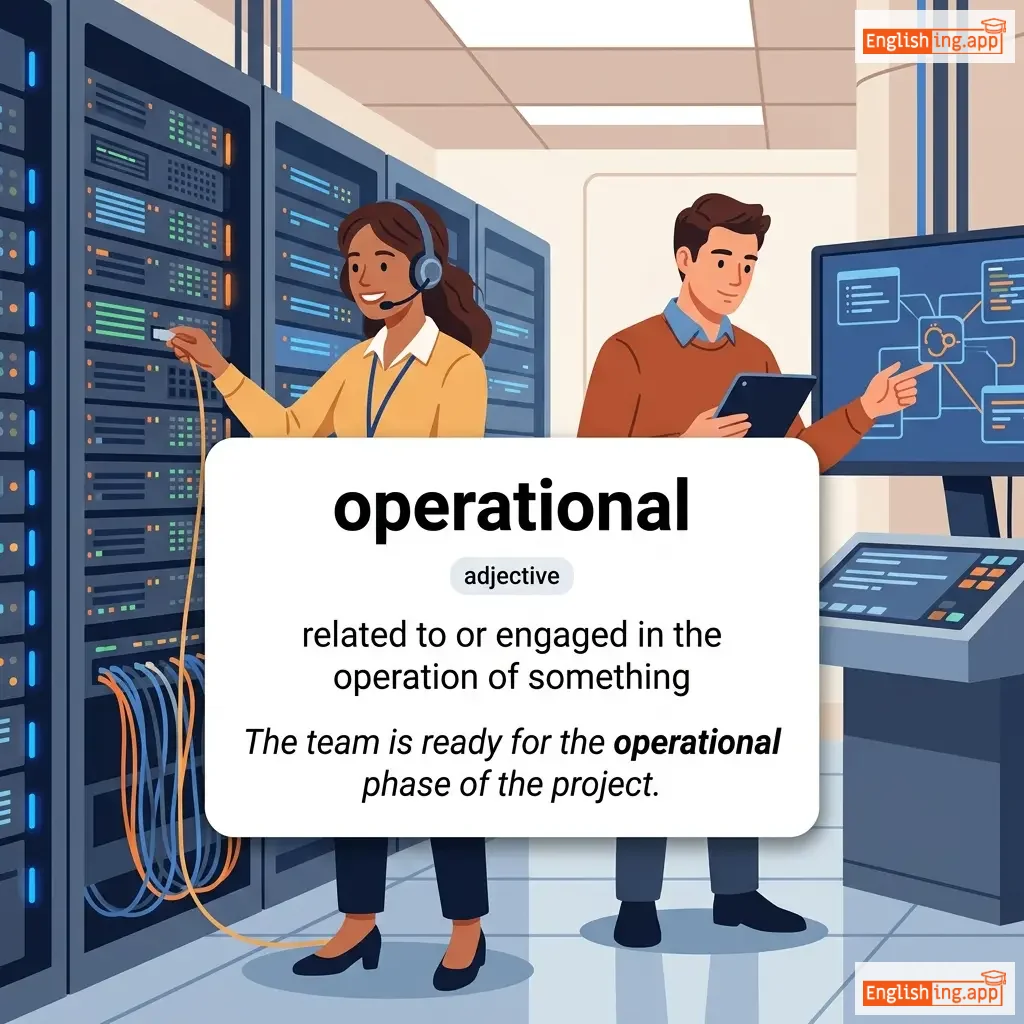
operational definition card — visual illustration of the meaning
adjective
/ˌɒpəˈreɪʃənl/
операционный (operatsionny)

related to or engaged in the operation of something

"The team is ready for the operational phase of the project."

"Команда готова к операционному этапу проекта." (Komanda gotova k operatsionnomu etapu proyекта.)
noun
/ˌɒpəˈreɪʃən/
операция (operatsiya)

an act or process of functioning or operating

"The hospital performed a successful operation."

"Больница провела успешную операцию." (Bol'nitsa provela uspeshnuyu operatsiyu.)
verb
/ˈɒpəreɪtɪŋ/
оперирующий (opiruyushchiy)

to control or manage the functioning of something

"The company has been operating in this market for five years."
"Компания работает на этом рынке уже пять лет." (Kompaniya rabotayet na etom rynke uzhe pyat' let.)
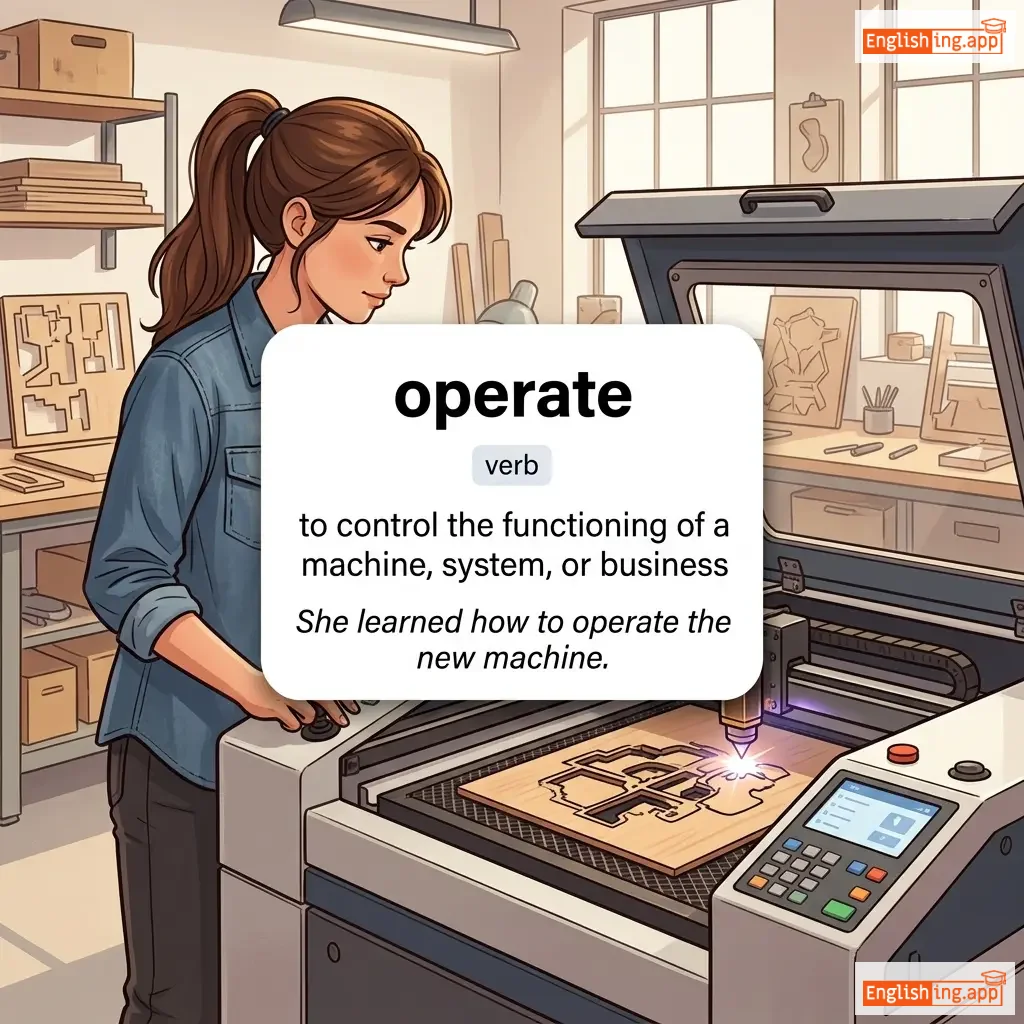
operate definition card — visual illustration of the meaning
verb
/ˈɑːpəˌreɪt/
управлять (upravlyat')

to control the functioning of a machine, system, or business

"She learned how to operate the new machine."

"Она научилась управлять новой машиной." (Ona nauchilas' upravlyat' novoy mashinoy.)
noun
/ˈɒpərə/
опера (opera)

a dramatic performance in which the actors sing most of their lines

"We watched a beautiful opera at the theater last night."

"Мы посмотрели красивую оперу в театре прошлой ночью." (My posmotreli krasivuyu operu v teatre proshloy noch'yu.)
adverb
/ˈəʊpənli/
открыто (otkryto)

in a way that is not secret or hidden

"He spoke openly about his past mistakes."

"Он открыто говорил о своих прошлых ошибках." (On otkryto govorit o svoikh proshlykh oshibkakh.)
noun
/ˈoʊpənɪŋ/
открытие (otkrytie)

an act or instance of beginning something

"The opening of the new store was a huge success."

"Открытие нового магазина стало большим успехом." (Otkrytie novogo magazina stalo bol'shim uspekhom.)
noun
/ˈoʊ.dər/
запах (zapakh)

a distinctive smell, especially an unpleasant one

"The odour of fresh bread filled the kitchen."

"Запах свежего хлеба наполнил кухню." (Zapakh svezhogo khleba napolnil kukhnyu.)
noun
/ˈɒktɪv/

A series of eight musical notes, or the interval between one musical pitch and another with double its frequency.

"The singer's voice could easily reach the higher octave."

noun
/ɒkˈteɪvoʊ/
октаво (размер книги, получаемый путем складывания листа бумаги в восемь частей) (oktavo)

A size of book page resulting from folding a sheet of paper into eight leaves (sixteen pages).

"The old library contained rare octavo editions of Shakespeare."

"Старая библиотека содержала редкие издания в октаве Шекспира." (Staraya biblioteka soderzhala redkie izdaniya v oktave Shekspira.)
noun
/ɒkˈtoʊbər/
октябрь (oktyabr)

the tenth month of the year in the Gregorian calendar

"The weather becomes cooler in October."

"В октябре погода становится прохладнее." (v oktyabre pogoda stanovitsya prokhladnee)
noun
/ˌɒktədʒəˈnɛəriən/
октогенарий (oktogenariy)

A person who is between 80 and 89 years old.

"The octogenarian still jogs every morning to stay healthy."

"Октогенарий все еще бегает каждое утро, чтобы оставаться здоровым." (Oktogenariy vse eshche begayet kazhdoe utro, chtoby ostavatsya zdorovym.)
adjective
/ˈɒkjʊlər/
окулярный (okulyarnyy)

Relating to the eye or vision.

"The patient was referred to a specialist for ocular treatment."

"Пациент был направлен к специалисту для окулярного лечения." (Patsiyent byl napravlen k spetsialistu dlya okulyarnogo lecheniya.)
noun
/ˈɒkjʊlɪst/
окулист (okulist)

An old-fashioned term for an eye doctor or ophthalmologist.

"The village oculist was known for treating various eye diseases."

"Деревенский окулист был известен лечением различных заболеваний глаз." (Derevenskiy okulist byl izvesten lecheniyem razlichnykh zabolevaniy glaz.)
adjective
/ɒd/
странный (strannyy)

different from what is usual or expected; strange or peculiar

"He has some odd habits that surprise everyone."

"У него есть несколько странных привычек, которые удивляют всех." (U nego yest' neskol'ko strannykh privychek, kotorye udivlyayut vsekh.)
noun
/ˈɒdəti/
странность (strannost)

Something strange or unusual.

"The bright pink building was an oddity in the small town."

"Яркое розовое здание было странностью в маленьком городке." (Yarkoye rozovoye zdaniye bylo strannost'yu v malen'kom gorodke.)
adverb
/ˈɒdli/
странно (stranno)

in a strange or unusual way; unexpectedly

"Oddly, he didn’t seem upset by the bad news."

"Странно, но его не расстроила плохая новость." (Stranno, no ego ne rasstroila plokhaya novost)
noun
/ɒdz/
вероятность (veroyatnost)

the likelihood or probability of something happening; chances for or against something

"The odds of winning the lottery are very low."

"Шансы выиграть в лотерею очень низки." (Shansy viigrat v lotereyu ochen nizki.)
noun
/oʊd/
ода (oda)

a lyrical poem, often expressing praise or strong emotions

"The poet wrote an ode to the beauty of nature."

"Поэт написал оду о красоте природы." (Poet napisal odu o krasote prirody.)
adjective
/ˈoʊdiəs/
отвратительный (otvratitel'nyy)

extremely unpleasant or repulsive

"The dictator was remembered for his odious crimes."

"Диктатор запомнился своими отвратительными преступлениями." (Diktator zapomnilsya svoimi otvratitel'nymi prestupleniyami.)
noun
/ˈoʊdiəm/
презрение (prezrenie)

general or widespread hatred or disgust directed toward someone as a result of their actions

"The scandal brought public odium on the corrupt minister."

"Скандал принес общественное презрение к коррумпированному министру." (Skandal prines obshchestvennoye prezrenie k korrumpirovannomu ministru.)
adjective
/ˌoʊdəˈrɪfərəs/
ароматный (aromatny)

having or giving off a smell, especially a strong or pleasant one

"The garden was filled with odoriferous flowers."

"Сад был наполнен ароматными цветами." (Sad byl napolnen aromatnymi tsvetami.)
adjective
/ˈoʊdərəs/
вонючий (vonyuchiy)

having or giving off a smell, often unpleasant

"The odorous garbage had to be taken out immediately."

"Зловонный мусор нужно было вынести немедленно." (Zlovonnyy musor nuzhno bylo vynesti nemedlenno.)
verb
/əˈfɛnd/
обидеть (obidet)

to cause someone to feel upset, insulted, or annoyed

"She didn’t mean to offend anyone with her remarks."

"Она не хотела обидеть кого-либо своими замечаниями." (Ona ne khotela obidet' kogo-libo svoimi zamechaniyami.)
adjective/adverb
/ˌɒfˈhænd/
без раздумий (bez razdumiy)

Without previous thought or preparation; casual and sometimes dismissive.

"She gave an offhand reply to his serious question."

"Она дала ответ без раздумий на его серьезный вопрос." (Ona dala otvet bez razdumiy na ego seryoznyy vopros.)
noun
/ˈɒfərtɔːri/
приношение (prinoshenie)

The part of a religious service when offerings are collected; the offering itself.

"The offertory was taken during the Sunday service."

"Приношение было собрано во время воскресной службы." (Prinoshenie bylo sobrano vo vremya voskresnoy sluzhby.)
noun
/ˈɒfərɪŋ/
предложение (predlozhenie)

something that is given, especially as a gift or contribution

"The company’s latest offering is an eco-friendly car."

"Последнее предложение компании - это экологически чистый автомобиль." (Poslednee predlozhenie kompanii - eto ekologicheski chisty avto.)
offer definition card — visual illustration of the meaning
verb
/ˈɔːfər/
предлагать (predlagat')

to present or give something to someone

"She offered him a gift for his birthday."

"Она предложила ему подарок на его день рождения." (Ona predlozhila emu podarok na ego den' rozhdeniya.)
adjective
/əˈfɛnsɪv/
оскорбительный (oskorbitel'nyj)

Causing hurt, anger, or annoyance; also relating to attacking in sports or war.

"His offensive remarks upset everyone at the meeting."

"Его оскорбительные замечания огорчили всех на встрече." (Ego oskorbitelnye zamechaniya ogorchili vsekh na vstreche.)
noun
/əˈfɛns/
преступление (prestupleniye)

an illegal act; a crime

"The offense was committed in broad daylight."

"Преступление было совершено при свете дня." (Prestupleniye bylo soversheno pri svete dnya.)
noun
/əˈfɛndər/
правонарушитель (prava-narushitel)

a person who commits a crime or does something wrong

"The police caught the offender quickly."

"Полиция быстро поймала правонарушителя." (Policiya bystro pojmala pravonarushitelya.)
adjective
/ˌɔːfˈkiː/
не в ноте (ne v note)

out of tune; not in accordance with expected standards

"The singer was slightly off-key during the performance."

"Певец был немного не в ноте во время выступления." (Pevets byl nemnogo ne v note vo vremya vystupleniya.)
odyssey definition card — visual illustration of the meaning
noun
/ˈɑːdəsi/
долгое путешествие (dolgoye puteshestviye)

a long, adventurous journey; a series of experiences

"Her career has been an odyssey of challenges and achievements."

"Её карьера была одиссеей из испытаний и достижений." (Yejo kariyera byla odisseyey iz ispytaniy i dostizheniy.)
preposition
/ʌv/
от (ot)

expressing the relationship between a part and a whole

"The book is on the table, in front of the window."

"Книга на столе, перед окном." (Kniga na stole, pered oknom.)
adverb
/ɔːf/
выключено (vyklyucheno)

away from a place, position, or time; not functioning

"He turned off the light before leaving the room."

"Он выключил свет перед тем, как выйти из комнаты." (On vyklyuchil svet pered tem, kak vyjti iz komnaty.)
adjective
/ˈɒf.biːt/
необычный (neobychnyy)

Unusual, unconventional, or different from the norm.

"She has a very offbeat sense of humor."

"У неё очень необычное чувство юмора." (U nee ochen' neobychnoye chuvstvo yumora.)
noun
/əˈfens/
проступок; нарушение закона (prostoopok; narushenie zakona)

a breach of law or rule; an annoyance or resentment

"Stealing is a serious offence punishable by law."

"Кража — это серьёзный проступок, подлежащий наказанию по закону." (Krazha — eto seryoznyy prostoopok, podlezhaschiy nakazaniyu po zakonu.)
noun
/ˈɒktəɡən/
восьмиугольник (vos'miugol'nik)

A polygon with eight sides and eight angles.

"The stop sign is shaped like an octagon."

"Знак стоп имеет форму восьмиугольника." (Znak stop imeet formu vos'miugol'nika.)