ভোকাবুলারিসমূহ

ইংরেজি শব্দের বাংলা অর্থ | English to Bangla Word Meaning Dictionary

noun
/ˌɒp.əˈtjuː.nə.ti/
সুযোগ (sujog)

A favorable chance or set of circumstances that makes it possible to do something.

"She seized the opportunity to study abroad."

"সে বিদেশে পড়াশোনার সুযোগটি কাজে লাগিয়েছিল।" (Se bideshe porashonar sujogti kaje lagiyechilo.)
opportunities definition card — visual illustration of the meaning
noun
ˌɒpəˈtjuːnɪtiz
সুযোগ, সম্ভাবনা (sujog, shombhabona)

A set of circumstances that makes it possible to do something.

"Investing in emerging markets provides new opportunities."

"উদীয়মান বাজারে বিনিয়োগ নতুন সুযোগ তৈরি করে।" (Udiyoman bajare biniyog notun sujog toiri kore.)
noun
/ˌɑːpərˈtuːnɪst/
সুযোগসন্ধানী (sujogsandhani)

A person who takes advantage of situations for personal gain, often disregarding principles.

"He is seen as an opportunist who always puts his interests first."

"তাকে একজন সুযোগসন্ধানী হিসেবে দেখা হয়, যে সবসময় নিজের স্বার্থকে আগে রাখে।" (Take ekjon sujogsandhani hisebe dekha hoy, je sobsomoy nijer swarthke age rakhe.)
noun
/ˌɑːpərˈtuːnɪzəm/
সুযোগসন্ধানিতা (sujogsandhanita)

The practice of taking advantage of opportunities regardless of principles or ethics.

"His decision was driven by opportunism, not values."

"তার সিদ্ধান্ত নীতির কারণে নয়, সুযোগসন্ধানিতার কারণে প্রভাবিত হয়েছিল।" (Tar siddhanto nitir karone noy, sujogsandhanitar karone probhabit hoyechilo.)
adjective
/ˌɑːpərˈtuːn/
সুবর্ণ সময় (suborno somoy)

Happening at a suitable or convenient time.

"She arrived at an opportune moment to help."

"সে সাহায্যের জন্য একটি সুবর্ণ সময়ে এসে পৌঁছেছিল।" (Se sahajyer jonno ekti suborno somoye eshe pouchhilo.)
noun
/əˈpoʊnənt/
প্রতিদ্বন্দ্বী (protiddondhi)

A person who competes against or disagrees with another.

"The boxer defeated his opponent in the final round."

"বক্সার ফাইনাল রাউন্ডে তার প্রতিদ্বন্দ্বীকে পরাজিত করেছিল।" (Boxer final rounde tar protiddondhike porajito korechilo.)
noun
/əˈpɪnjən/
মতামত (motamot)

A belief, judgment, or viewpoint about something, not necessarily based on fact.

"Everyone is entitled to their own opinion."

"প্রত্যেকের নিজের মতামতের অধিকার আছে।" (Protyeker nijer motamoter odhikar ache.)
verb
/oʊˈpaɪn/
মত প্রকাশ করা (moto prokash kora)

to express an opinion or belief

"The professor opined that the policy would fail."

"প্রফেসর মত দিয়েছিলেন যে নীতি ব্যর্থ হবে।" (Professor moto diyechhilen je niti byartho hobe.)
noun
/ˈoʊpiət/
আফিমজাত ওষুধ (afimjat oshudh)

a drug containing opium or its derivatives, used to relieve pain or cause sleep

"The doctor prescribed an opiate to relieve the patient's pain."

"ডাক্তার রোগীর ব্যথা কমাতে একটি আফিমজাত ওষুধ লিখে দিলেন।" (Daktar rogir byatha komate ekti afimjat oshudh likhe dilen.)
noun
/ˌɒpəˈrɛtə/
হালকা ধরণের অপেরা (halka dhoroner opera)

a short opera with light and humorous themes

"The theater staged a famous operetta by Gilbert and Sullivan."

"থিয়েটারে গিলবার্ট ও সুলিভানের একটি বিখ্যাত হালকা অপেরা মঞ্চস্থ করা হয়েছিল।" (Theatre e Gilbert o Sullivan er ekti bikhato halka opera monchostho kora hoyechilo.)
noun
/ˈɒpəreɪtər/
পরিচালক (porichalok)

a person who operates equipment, a business, or controls something

"The machine operator ensured that everything ran smoothly."

"যন্ত্রের অপারেটর নিশ্চিত করেছিলেন যে সবকিছু ঠিকমতো চলছে।" (Jontrer operator nishchit korechilen je sobkichu thikmoto cholche.)
adjective
/ˈɒpərətɪv/
কার্যকর (karyokor)

functioning, having effect, or relating to a secret agent or worker

"The new law is now operative across the country."

"নতুন আইন এখন সারা দেশে কার্যকর।" (Notun ain ekhon sara deshe karyokor.)
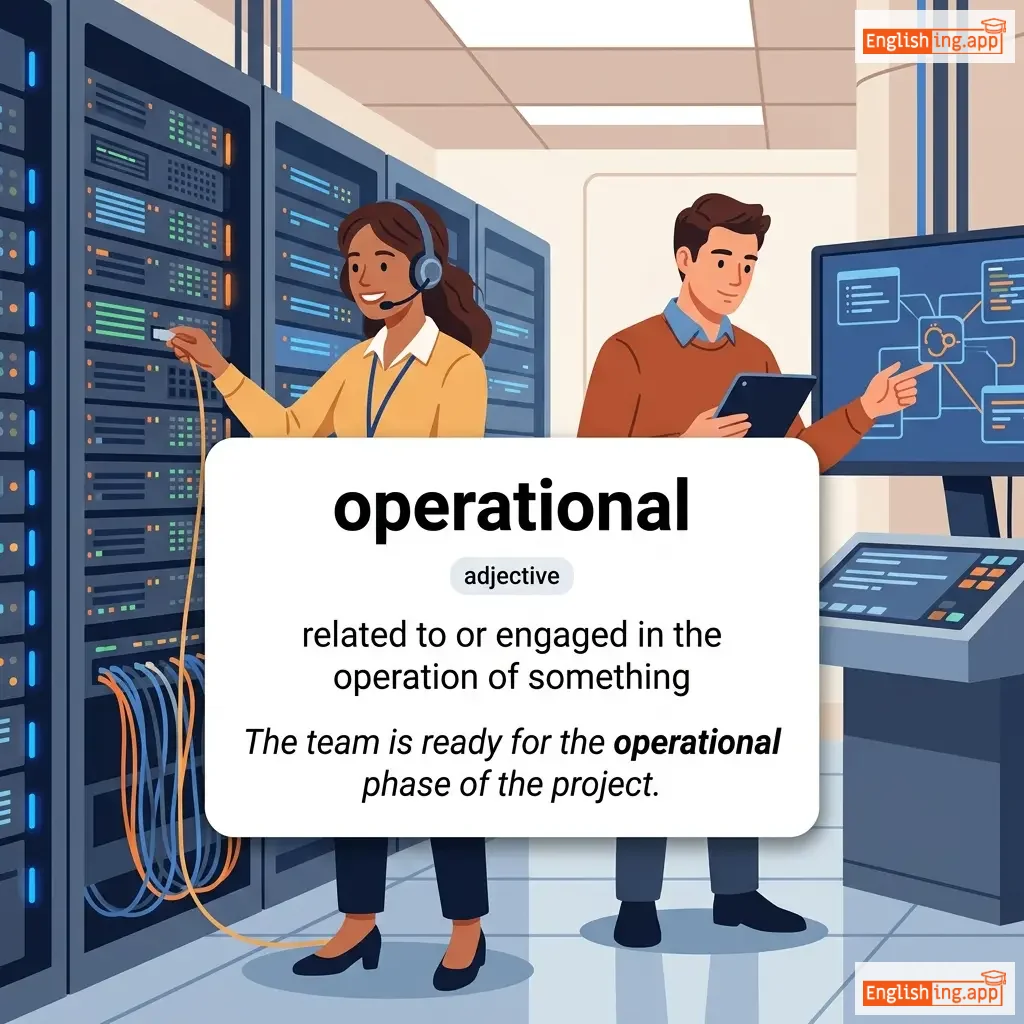
operational definition card — visual illustration of the meaning
adjective
/ˌɒpəˈreɪʃənl/
অপারেশনাল (operational)

related to or engaged in the operation of something

"The team is ready for the operational phase of the project."

"দলটি প্রকল্পের অপারেশনাল পর্বের জন্য প্রস্তুত।" (Dolti prokolper operational porber jonno prostut.)
noun
/ˌɒpəˈreɪʃən/
অপারেশন (operation)

an act or process of functioning or operating

"The hospital performed a successful operation."

"হাসপাতাল সফল অপারেশন সম্পন্ন করেছে।" (Haspatal sofol operation somponno korechhe.)
verb
/ˈɒpəreɪtɪŋ/
অপারেটিং (operating)

to control or manage the functioning of something

"The company has been operating in this market for five years."

"কোম্পানিটি এই বাজারে পাঁচ বছর ধরে অপারেটিং করছে।" (Kompaniti ei bazare pach bochhor dhore operating korchhe.)
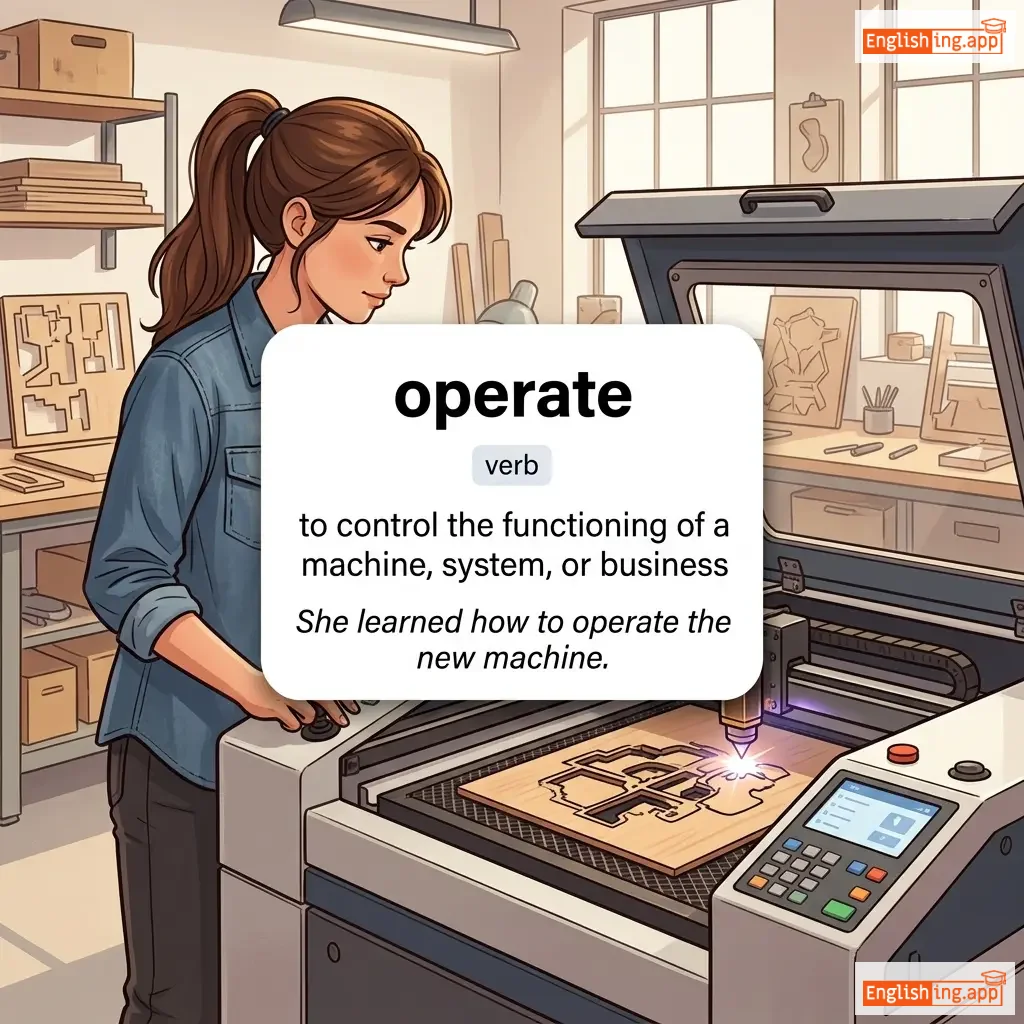
operate definition card — visual illustration of the meaning
verb
/ˈɑːpəˌreɪt/
চালানো (chalano)

to control the functioning of a machine, system, or business

"She learned how to operate the new machine."

"সে নতুন মেশিনটি কীভাবে চালাতে হয় তা শিখেছিল।" (Se notun machine ti kivabe chalate hoy ta shikhchhilo.)
noun
/ˈɒpərə/
সঙ্গীতনাট্য (songitonatyo)

a dramatic performance in which the actors sing most of their lines

"We watched a beautiful opera at the theater last night."

"আমরা গত রাতে থিয়েটারে একটি সুন্দর অপেরা দেখেছিলাম।" (Amra got rate theatere ekti sundor opera dekhechhilam.)
adverb
/ˈəʊpənli/
খোলাখুলিভাবে (kholakhulivabe)

in a way that is not secret or hidden

"He spoke openly about his past mistakes."

"সে তার অতীত ভুলগুলো নিয়ে খোলাখুলিভাবে কথা বলেছিল।" (Se tar otit bhulgulo niye kholakhulivabe kotha bolechhilo.)
noun
/ˈoʊpənɪŋ/
উদ্বোধন (udbadhan)

an act or instance of beginning something

"The opening of the new store was a huge success."

"নতুন দোকানের উদ্বোধনটি একটি বিশাল সাফল্য ছিল।" (Notun dokaner udbodhoni ekta bishal safollo chhilo.)
noun
/ˈoʊ.dər/
গন্ধ; সুগন্ধ বা দুর্গন্ধ; (gondho)

a distinctive smell, especially an unpleasant one

"The odour of fresh bread filled the kitchen."

"তাজা রুটির গন্ধ রান্নাঘর ভরে দিল।" (taja rutir gondho rannaghore bhore dilo.)
noun
/ˈɒktɪv/
অষ্টক (ostok)

A series of eight musical notes, or the interval between one musical pitch and another with double its frequency.

"The singer's voice could easily reach the higher octave."

"গায়িকার কণ্ঠস্বর সহজেই উচ্চ অষ্টকে পৌঁছাতে পারত।" (Gayikar kontoswor sohojei uccho ostoke pouchhate parto.)
noun
/ɒkˈteɪvoʊ/
অক্টাভো (আট ভাগ করা পাতার বইয়ের আকার) (oktavo)

A size of book page resulting from folding a sheet of paper into eight leaves (sixteen pages).

"The old library contained rare octavo editions of Shakespeare."

"পুরনো লাইব্রেরিতে শেকসপিয়ারের বিরল অক্টাভো সংস্করণ ছিল।" (Purono libraryte Shekspiarer birol oktavo songskoron chilo.)
noun
/ɒkˈtoʊbər/
অক্টোবর (oktobar)

the tenth month of the year in the Gregorian calendar

"The weather becomes cooler in October."

"অক্টোবরে আবহাওয়া ঠান্ডা হতে শুরু করে।" (oktobore abohawa thanda hote shuru kore)
noun
/ˌɒktədʒəˈnɛəriən/
আশি বছরের বৃদ্ধ (oktojenarian)

A person who is between 80 and 89 years old.

"The octogenarian still jogs every morning to stay healthy."

"অক্টোজেনেরিয়ান ব্যক্তি প্রতিদিন সকালে দৌড়ান সুস্থ থাকার জন্য।" (Oktojenarian bekti protidin sokale douran sustho thakar jonno.)
adjective
/ˈɒkjʊlər/
চোখ সম্পর্কিত (okular)

Relating to the eye or vision.

"The patient was referred to a specialist for ocular treatment."

"রোগীকে চোখের চিকিৎসার জন্য একজন বিশেষজ্ঞের কাছে পাঠানো হয়েছিল।" (Rogike chokher chikitsar jonno ekjon bisheshogger kache pathano hoyechilo.)
noun
/ˈɒkjʊlɪst/
চক্ষু চিকিৎসক (okulist)

An old-fashioned term for an eye doctor or ophthalmologist.

"The village oculist was known for treating various eye diseases."

"গ্রামের অকুলিস্ট বিভিন্ন চোখের রোগের চিকিৎসার জন্য পরিচিত ছিলেন।" (Gramer okulist bibhinno chokher roger chikitsar jonno porichito chilen.)
adjective
/ɒd/
অদ্ভুত (odbhut)

different from what is usual or expected; strange or peculiar

"He has some odd habits that surprise everyone."

"তার কিছু অদ্ভুত অভ্যাস আছে যা সবাইকে অবাক করে।" (Tar kichu odbhut obhash ache ja sobaike obak kore.)
noun
/ˈɒdəti/
অদ্ভুত জিনিস (oditi)

Something strange or unusual.

"The bright pink building was an oddity in the small town."

"উজ্জ্বল গোলাপি রঙের ভবনটি ছোট শহরে একটি অদ্ভুত ব্যাপার ছিল।" (Ujjol golapi ronger bhobonti choto shohoore ekti oddbhut byapar chilo.)
adverb
/ˈɒdli/
অদ্ভুতভাবে (odbhutbhabe)

in a strange or unusual way; unexpectedly

"Oddly, he didn’t seem upset by the bad news."

"অদ্ভুতভাবে, খারাপ খবরেও সে বিচলিত হয়নি।" (odbhutbhabe, kharap khoboreo se bicholito hoyni)
noun
/ɒdz/
সম্ভাবনা (sombhabona)

the likelihood or probability of something happening; chances for or against something

"The odds of winning the lottery are very low."

"লটারি জেতার সম্ভাবনা খুবই কম।" (Lotari jetar sombhabona khubi kom.)
noun
/oʊd/
প্রশস্তি কবিতা (proshosti kobita)

a lyrical poem, often expressing praise or strong emotions

"The poet wrote an ode to the beauty of nature."

"কবি প্রকৃতির সৌন্দর্যের প্রশংসায় একটি ওড লিখেছিলেন।" (Kobi prokritir soundorjer proshongsay ekti ode likhechilen.)
adjective
/ˈoʊdiəs/
ঘৃণ্য (ghrinno)

extremely unpleasant or repulsive

"The dictator was remembered for his odious crimes."

"একনায়ক তার ঘৃণ্য অপরাধের জন্য স্মরণীয় ছিলেন।" (Eknayok tar ghrinno oparadher jonno smoroniya chilen.)
noun
/ˈoʊdiəm/
অপমান/ঘৃণা (opoman/ghrina)

general or widespread hatred or disgust directed toward someone as a result of their actions

"The scandal brought public odium on the corrupt minister."

"কেলেঙ্কারিটি দুর্নীতিগ্রস্ত মন্ত্রীর ওপর জনসাধারণের ঘৃণা নিয়ে আসে।" (Kelenkariti durnitigrosto montrir opar jonsadharoner ghrina niye ase.)
adjective
/ˌoʊdəˈrɪfərəs/
সুগন্ধি (sugondhi)

having or giving off a smell, especially a strong or pleasant one

"The garden was filled with odoriferous flowers."

"বাগানটি সুগন্ধি ফুলে ভরে গিয়েছিল।" (Baganti sugondhi fule bhore giyechhilo.)
adjective
/ˈoʊdərəs/
দুর্গন্ধযুক্ত (durgondhojukto)

having or giving off a smell, often unpleasant

"The odorous garbage had to be taken out immediately."

"দুর্গন্ধযুক্ত আবর্জনা দ্রুত বাইরে ফেলা দরকার ছিল।" (durgondhojukto aborjona druto baire fela dorkar chilo.)
verb
/əˈfɛnd/
অপমান করা (opoman kora)

to cause someone to feel upset, insulted, or annoyed

"She didn’t mean to offend anyone with her remarks."

"তার মন্তব্য দিয়ে তিনি কাউকে অপমান করতে চাননি।" (Tar mottomo dwoe tini kauke opoman korte chaan ni.)
adjective/adverb
/ˌɒfˈhænd/
অসাবধানী (osabdhani)

Without previous thought or preparation; casual and sometimes dismissive.

"She gave an offhand reply to his serious question."

"সে তার গম্ভীর প্রশ্নের অসাবধানী উত্তর দিল।" (se tar gombhir proshner osabdhani uttor dilo.)
noun
/ˈɒfərtɔːri/
দান (dan)

The part of a religious service when offerings are collected; the offering itself.

"The offertory was taken during the Sunday service."

"রবিবারের প্রার্থনার সময় দান সংগ্রহ করা হয়েছিল।" (robibarer prarthonar somoy dan songroho kora hoyechhilo.)
noun
/ˈɒfərɪŋ/
উপহার বা নিবেদন (upohar ba nibedon)

something that is given, especially as a gift or contribution

"The company’s latest offering is an eco-friendly car."

"কোম্পানির নতুন উপহার হলো একটি পরিবেশবান্ধব গাড়ি।" (Companyr notun upohar holo ekti poribeshbandhob gari.)
offer definition card — visual illustration of the meaning
verb
/ˈɔːfər/
প্রস্তাব করা (prostab kora)

to present or give something to someone

"She offered him a gift for his birthday."

"সে তাকে তার জন্মদিনের জন্য একটি উপহার প্রস্তাব করেছিল।" (Se take tar jonmodiner jonno ekti upohar prostab korechhilo.)
adjective
/əˈfɛnsɪv/
অপমানজনক (opmanjonok)

Causing hurt, anger, or annoyance; also relating to attacking in sports or war.

"His offensive remarks upset everyone at the meeting."

"তার অপমানজনক মন্তব্য সবার মন খারাপ করে দিল।" (tar opmanjonok montobbo sabar mon kharap kore dilo.)
noun
/əˈfɛns/
অপরাধ (oprodh)

an illegal act; a crime

"The offense was committed in broad daylight."

"অপরাধটি বিস্তৃত দিনে সংঘটিত হয়েছিল।" (Oprodhti bistirno dine songhotito hoyechilo.)
noun
/əˈfɛndər/
অপরাধী (oporadhi)

a person who commits a crime or does something wrong

"The police caught the offender quickly."

"পুলিশ দ্রুত অপরাধীকে ধরেছিল।" (Police druto oporadhike dhorechhilo.)
adjective
/ˌɔːfˈkiː/
সুরভ্রষ্ট (survroshto)

out of tune; not in accordance with expected standards

"The singer was slightly off-key during the performance."

"গানের সময় গায়কটি সামান্য সুরভ্রষ্ট ছিলেন।" (ganer somoy gayokti samanno survroshto chilen.)
odyssey definition card — visual illustration of the meaning
noun
/ˈɑːdəsi/
দীর্ঘ যাত্রা (dirgho jatra)

a long, adventurous journey; a series of experiences

"Her career has been an odyssey of challenges and achievements."

"তার কর্মজীবন ছিল চ্যালেঞ্জ ও অর্জনের একটি দীর্ঘ যাত্রা।" (tar kormojibon chilo challenge o orjoner ekti dirgho jatra.)
preposition
/ʌv/
এর (er)

expressing the relationship between a part and a whole

"The book is on the table, in front of the window."

"বইটি টেবিলের উপর, জানালার সামনে রয়েছে।" (boi ti tebil er upore, janalar samne royechhe.)
adverb
/ɔːf/
বন্ধ (bondho)

away from a place, position, or time; not functioning

"He turned off the light before leaving the room."

"ঘর ছাড়ার আগে সে লাইটটি বন্ধ করে দিল।" (ghar charar age se lightti bondho kore dilo.)
adjective
/ˈɒf.biːt/
অস্বাভাবিক (oswabhavik)

Unusual, unconventional, or different from the norm.

"She has a very offbeat sense of humor."

"তার হাস্যরসের অনুভূতি খুবই অস্বাভাবিক।" (tar hashyaroser onubhuti khubi oswabhavik.)
noun
/əˈfens/
অপরাধ; অপরাধী; অপমানজনক কার্য; (oporadh)

a breach of law or rule; an annoyance or resentment

"Stealing is a serious offence punishable by law."

"চুরি একটি গুরুতর অপরাধ যা আইন অনুযায়ী দণ্ডনীয়।" (churi ekti gurutor oporadh ja ain onujayye dondoniyo.)
noun
/ˈɒktəɡən/
অষ্টভুজ (ostobhuj)

A polygon with eight sides and eight angles.

"The stop sign is shaped like an octagon."

"স্টপ সাইনটি একটি অষ্টভুজ আকৃতির।" (Stop sign-ti ekti ostobhuj akritir.)