词汇表

英语词汇词典 | 单词含义、定义和示例

noun
/ˌɒp.əˈtjuː.nə.ti/
机会 (jī huì)

A favorable chance or set of circumstances that makes it possible to do something.

"She seized the opportunity to study abroad."

"她抓住了去国外学习的机会。" (Tā zhuāzhùle qù guówài xuéxí de jīhuì.)
opportunities definition card — visual illustration of the meaning
noun
ˌɒpəˈtjuːnɪtiz
机会 (jihui)

A set of circumstances that makes it possible to do something.

"Investing in emerging markets provides new opportunities."

"投资于新兴市场提供了新的机会。" (Touzi yu xinxing shichang tigong le xinde jihui.)
noun
/ˌɑːpərˈtuːnɪst/
机会主义者 (jihu zhuyi zhe)

A person who takes advantage of situations for personal gain, often disregarding principles.

"He is seen as an opportunist who always puts his interests first."

"他被看作是一个机会主义者,总是把自己的利益放在第一位。" (Ta bei kanzuo shi yige jihu zhuyi zhe, zongshi ba ziji de liyi fang zai di yi wei.)
noun
/ˌɑːpərˈtuːnɪzəm/
机会主义 (jihui zhuyi)

The practice of taking advantage of opportunities regardless of principles or ethics.

"His decision was driven by opportunism, not values."

"他的决定是由机会主义驱动的,而不是由价值观驱动的。" (Ta de jue ding shi you jihui zhuyi qudong de, er bu shi you jiazhi guan qudong de.)
adjective
/ˌɑːpərˈtuːn/
合适的时刻 (heshi de shike)

Happening at a suitable or convenient time.

"She arrived at an opportune moment to help."

"她在合适的时刻到达,准备帮助。" (Ta zai heshi de shike daoda, zhunbei bangzhu.)
noun
/əˈpoʊnənt/
幸福 (xìng fú)

A person who competes against or disagrees with another.

"The boxer defeated his opponent in the final round."

"当她获得奖项时,她无法隐藏自己的幸福。" (dāng tā huò dé jiǎng xiàng shí, tā wú fǎ yǐn cáng zì jǐ de xìng fú.)
noun
/əˈpɪnjən/
意见 (yìjiàn)

A belief, judgment, or viewpoint about something, not necessarily based on fact.

"Everyone is entitled to their own opinion."

"每个人都有权发表自己的意见。" (měi gè rén dōu yǒu quán fābiǎo zìjǐ de yìjiàn.)
verb
/oʊˈpaɪn/
表达意见 (biaoda yijian)

to express an opinion or belief

"The professor opined that the policy would fail."

"教授认为政策会失败。" (Jiaoshou renwei zhengce hui shibai.)
noun
/ˈoʊpiət/

a drug containing opium or its derivatives, used to relieve pain or cause sleep

"The doctor prescribed an opiate to relieve the patient's pain."

noun
/ˌɒpəˈrɛtə/
轻歌剧 (qīng gē jù)

a short opera with light and humorous themes

"The theater staged a famous operetta by Gilbert and Sullivan."

"剧院上演了吉尔伯特与沙利文的著名轻歌剧。" (Jùyuàn shàngyǎnle Jí'ěrbótè yǔ Shālìwén de zhùmíng qīng gē jù.)
noun
/ˈɒpəreɪtər/
操作员 (caozuo yuan)

a person who operates equipment, a business, or controls something

"The machine operator ensured that everything ran smoothly."

"机器操作员确保一切顺利运行。" (Jiqi caozuoyuan quebao yiqie shunli yunxing.)
adjective
/ˈɒpərətɪv/
有效的 (youxiao de)

functioning, having effect, or relating to a secret agent or worker

"The new law is now operative across the country."

"新法律现在在全国范围内生效。" (Xīn fǎlǜ xiànzài zài quánguó fànwéi nèi shēngxiào.)
operational definition card — visual illustration of the meaning
adjective
/ˌɒpəˈreɪʃənl/
操作的 (caozuode)

related to or engaged in the operation of something

"The team is ready for the operational phase of the project."

"团队已准备好进入项目的操作阶段。" (Tuan dui yi zhunbei hao jinru xiangmu de caozuo jie duan.)
noun
/ˌɒpəˈreɪʃən/
手术 (shǒushù)

an act or process of functioning or operating

"The hospital performed a successful operation."

"医院进行了成功的手术。" (Yīyuàn jìnxíngle chénggōng de shǒushù.)
verb
/ˈɒpəreɪtɪŋ/
操作 (caozuo)

to control or manage the functioning of something

"The company has been operating in this market for five years."
"公司已经在这个市场运营了五年。" (Gongsi yijing zai zhege shichang yunying le wu nian.)
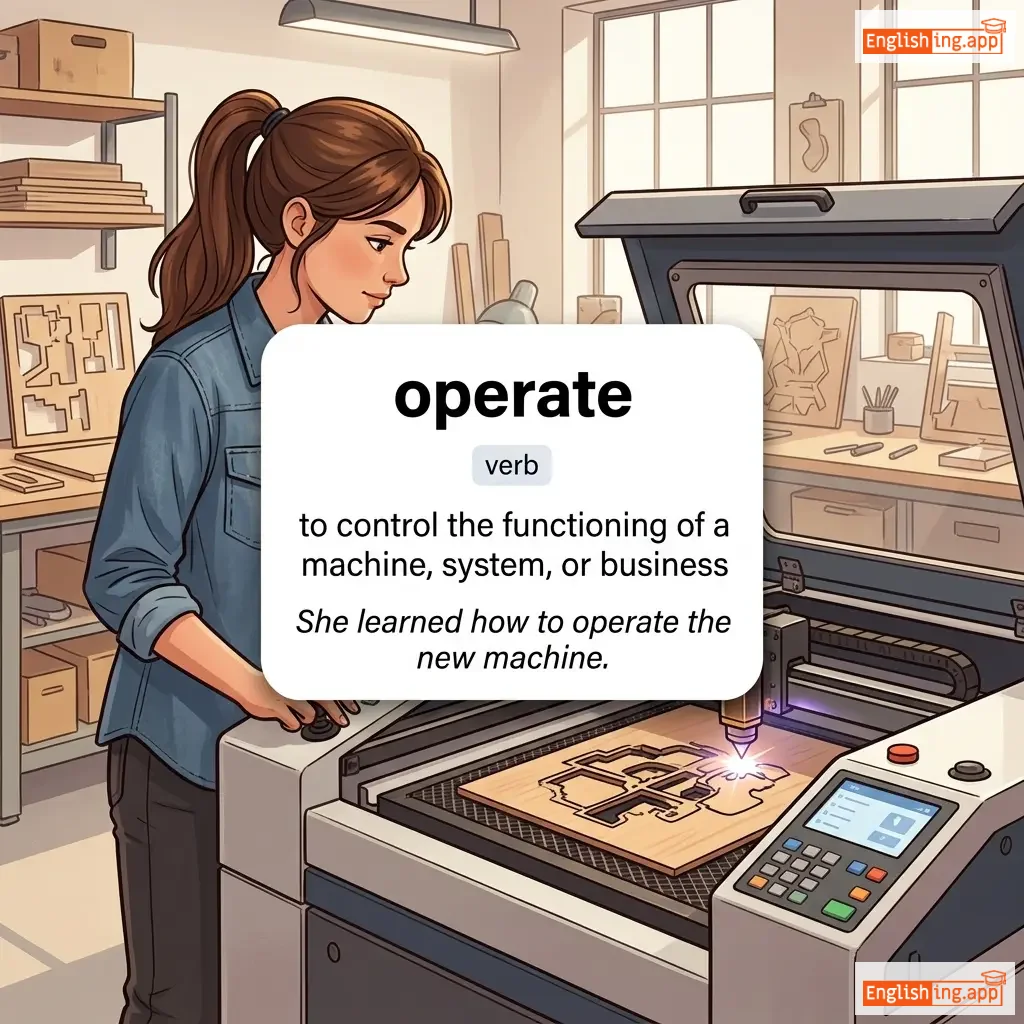
operate definition card — visual illustration of the meaning
verb
/ˈɑːpəˌreɪt/
操作 (caozuo)

to control the functioning of a machine, system, or business

"She learned how to operate the new machine."

"她学会了如何操作这台新机器。" (Ta xuehui le ruhe caozuo zhe tai xin jiqi.)
noun
/ˈɒpərə/
歌剧 (geju)

a dramatic performance in which the actors sing most of their lines

"We watched a beautiful opera at the theater last night."

"我们昨晚在剧院观看了一场美丽的歌剧。" (Wǒmen zuówǎn zài jùyuàn guānkànle yī chǎng měilì de gējù.)
adverb
/ˈəʊpənli/
公开地 (gōngkāi de)

in a way that is not secret or hidden

"He spoke openly about his past mistakes."

"他公开地谈论了他的过去错误。" (Tā gōngkāi de tánlùnle tā de guòqù cuòwù.)
noun
/ˈoʊpənɪŋ/
开幕 (kaimu)

an act or instance of beginning something

"The opening of the new store was a huge success."

"新店的开业是一个巨大的成功。" (Xīn diàn de kāiyè shì yīgè jùdà de chénggōng.)
noun
/ˈoʊ.dər/
气味 (qiwei)

a distinctive smell, especially an unpleasant one

"The odour of fresh bread filled the kitchen."

"新鲜面包的气味充满了厨房。" (Xīnxiān miànbāo de qìwèi chōngmǎnle chúfáng.)
noun
/ˈɒktɪv/

A series of eight musical notes, or the interval between one musical pitch and another with double its frequency.

"The singer's voice could easily reach the higher octave."

noun
/ɒkˈteɪvoʊ/
八开 (通过将纸张折叠成八个部分而产生的书籍大小) (bā kāi)

A size of book page resulting from folding a sheet of paper into eight leaves (sixteen pages).

"The old library contained rare octavo editions of Shakespeare."

"这座古老的图书馆里有莎士比亚的稀有八开版书籍。" (Zhè zuò gǔlǎo de túshūguǎn lǐ yǒu Shāshìbǐyǎ de xīyǒu bā kāi bǎn shūjí.)
noun
/ɒkˈtoʊbər/
十月 (shi yue)

the tenth month of the year in the Gregorian calendar

"The weather becomes cooler in October."

"十月天气开始变凉。" (shi yue tianqi kaishi bian liang)
noun
/ˌɒktədʒəˈnɛəriən/
八十岁老人 (bāshí suì lǎorén)

A person who is between 80 and 89 years old.

"The octogenarian still jogs every morning to stay healthy."

"这位八十岁老人仍然每天早上跑步以保持健康。" (Zhè wèi bāshí suì lǎorén réngrán měitiān zǎoshang pǎobù yǐ bǎochí jiànkāng.)
adjective
/ˈɒkjʊlər/
眼科的 (yǎn kē de)

Relating to the eye or vision.

"The patient was referred to a specialist for ocular treatment."

"患者被转诊到眼科专家进行治疗。" (Huànzhě bèi zhuǎnzhěn dào yǎn kē zhuānjiā jìnxíng zhìliáo.)
noun
/ˈɒkjʊlɪst/
眼科医生 (yǎn kē yī shēng)

An old-fashioned term for an eye doctor or ophthalmologist.

"The village oculist was known for treating various eye diseases."

"村里的眼科医生以治疗各种眼病而闻名。" (Cūn lǐ de yǎn kē yī shēng yǐ zhì liáo gè zhǒng yǎn bìng ér wén míng.)
adjective
/ɒd/
奇怪 (qiguai)

different from what is usual or expected; strange or peculiar

"He has some odd habits that surprise everyone."

"他有一些奇怪的习惯,令人感到惊讶。" (Ta you yixie qiguai de xiguan, lingren gandao jingya.)
noun
/ˈɒdəti/
奇异 (qiyi)

Something strange or unusual.

"The bright pink building was an oddity in the small town."

"那座亮粉色的建筑在小镇上是个奇异的存在。" (Nà zuò liàng fěnsè de jiànzhú zài xiǎo zhèn shàng shì gè qíyì de cúnzài.)
adverb
/ˈɒdli/
奇怪地 (qiguaide)

in a strange or unusual way; unexpectedly

"Oddly, he didn’t seem upset by the bad news."

"奇怪的是,他似乎并没有因为坏消息而难过。" (Qiguaide shi, ta sihu bing mei you yinwei huai xiaoxi er nanguo)
noun
/ɒdz/
可能性 (kenengxing)

the likelihood or probability of something happening; chances for or against something

"The odds of winning the lottery are very low."

"中彩票的机会非常小。" (Zhongcai de jihui feichang xiao.)
noun
/oʊd/
颂诗 (songshi)

a lyrical poem, often expressing praise or strong emotions

"The poet wrote an ode to the beauty of nature."

"诗人写了一首歌颂自然美的颂诗。" (Shīrén xiěle yī shǒu gēsòng zìrán měi de sòngshī.)
adjective
/ˈoʊdiəs/
可憎的 (kě zēng de)

extremely unpleasant or repulsive

"The dictator was remembered for his odious crimes."

"这位独裁者因他可憎的罪行而被记住。" (Zhè wèi dúcái zhě yīn tā kě zēng de zuìxíng ér bèi jìzhù.)
noun
/ˈoʊdiəm/
憎恶 (zengwu)

general or widespread hatred or disgust directed toward someone as a result of their actions

"The scandal brought public odium on the corrupt minister."

"丑闻让腐败的部长蒙受了公众的憎恶。" (Chou wen rang fubai de buchang meng shou le gongzhong de zengwu.)
adjective
/ˌoʊdəˈrɪfərəs/
芬芳的 (fen fang de)

having or giving off a smell, especially a strong or pleasant one

"The garden was filled with odoriferous flowers."

"花园里充满了芬芳的花朵。" (Huayuan li chongman le fenfang de huaduo.)
adjective
/ˈoʊdərəs/
臭的 (chòu de)

having or giving off a smell, often unpleasant

"The odorous garbage had to be taken out immediately."

"臭的垃圾必须立即处理。" (chòu de lājī bìxū lìjí chǔlǐ.)
verb
/əˈfɛnd/
冒犯 (màofàn)

to cause someone to feel upset, insulted, or annoyed

"She didn’t mean to offend anyone with her remarks."

"她不想用她的评论冒犯任何人。" (Tā bùxiǎng yòng tā de pínglùn màofàn rènhé rén.)
adjective/adverb
/ˌɒfˈhænd/
草率 (caolüè)

Without previous thought or preparation; casual and sometimes dismissive.

"She gave an offhand reply to his serious question."

"她对他严肃的问题做出了一个草率的回答。" (Ta dui ta yanxu de wenti zuo chu le yige caolu de huida.)
noun
/ˈɒfərtɔːri/
奉献 (fengxian)

The part of a religious service when offerings are collected; the offering itself.

"The offertory was taken during the Sunday service."

"奉献在星期日的礼拜期间收集。" (Fengxian zai xingqi ri de libai qi jian shouji.)
noun
/ˈɒfərɪŋ/
提供 (tigong)

something that is given, especially as a gift or contribution

"The company’s latest offering is an eco-friendly car."

"公司的最新产品是一款环保汽车。" (Gongsi de zui xin chanpin shi yi kuan huanbao qiche.)
offer definition card — visual illustration of the meaning
verb
/ˈɔːfər/
提供 (tígōng)

to present or give something to someone

"She offered him a gift for his birthday."

"她给他送了一个生日礼物。" (Tā gěi tā sòngle yīgè shēngrì lǐwù.)
adjective
/əˈfɛnsɪv/
冒犯的 (maofan de)

Causing hurt, anger, or annoyance; also relating to attacking in sports or war.

"His offensive remarks upset everyone at the meeting."

"他的冒犯性言论让会议上的每个人都不高兴。" (Tade maofanxing yanlun rang huiyi shang de meigeren dou bu gaoxing.)
noun
/əˈfɛns/
犯罪 (fànzuì)

an illegal act; a crime

"The offense was committed in broad daylight."

"这个犯罪是在白天犯下的。" (Zhège fànzuì shì zài báitiān fànxià de.)
noun
/əˈfɛndər/
违法者 (wéifǎ zhě)

a person who commits a crime or does something wrong

"The police caught the offender quickly."

"警察迅速抓住了违法者。" (Jǐngchá xùnsù zhuā zhùle wéifǎ zhě.)
adjective
/ˌɔːfˈkiː/
跑调 (paodiao)

out of tune; not in accordance with expected standards

"The singer was slightly off-key during the performance."

"歌手在表演时稍微跑调了。" (geshou zai biaoyan shi shaowei paodiao le.)
odyssey definition card — visual illustration of the meaning
noun
/ˈɑːdəsi/
漫长的旅行 (man chang de lüxing)

a long, adventurous journey; a series of experiences

"Her career has been an odyssey of challenges and achievements."

"她的职业生涯是一场挑战和成就的漫长旅行。" (Ta de zhiye shengya shi yi chang tiaozhan he chengjiu de man chang lüxing.)
preposition
/ʌv/
(de)

expressing the relationship between a part and a whole

"The book is on the table, in front of the window."

"书在桌子上,在窗户前。" (Shu zai zhuozi shang, zai chuanghu qian.)
adverb
/ɔːf/
(guan)

away from a place, position, or time; not functioning

"He turned off the light before leaving the room."

"他在离开房间之前关掉了灯。" (ta zai likai fangjian zhijiang guan diao le deng.)
adjective
/ˈɒf.biːt/
不寻常 (bu xun chang)

Unusual, unconventional, or different from the norm.

"She has a very offbeat sense of humor."

"她有非常不寻常的幽默感。" (ta you fei chang bu xun chang de you mo gan.)
noun
/əˈfens/
罪行; 侵犯法规 (zuìxíng; qīnfàn fǎguī)

a breach of law or rule; an annoyance or resentment

"Stealing is a serious offence punishable by law."

"盗窃是严重的罪行,依法可追究。" (daoqie shi yanzhong de zuixing, yifa ke zhuiqiu.)
noun
/ˈɒktəɡən/
八边形 (ba bian xing)

A polygon with eight sides and eight angles.

"The stop sign is shaped like an octagon."

"停车标志呈八边形。" (Tingche biaozhi cheng ba bian xing.)