Словари

Словарь английского языка | Значения слов, определения и примеры

noun
/ˈɒrɪndʒ/
апельсин (apelsin)

a fruit that is typically round and orange in color

"She ate an orange for breakfast."
"Она съела апельсин на завтрак." (Ona syela apelsin na zavtrak.)
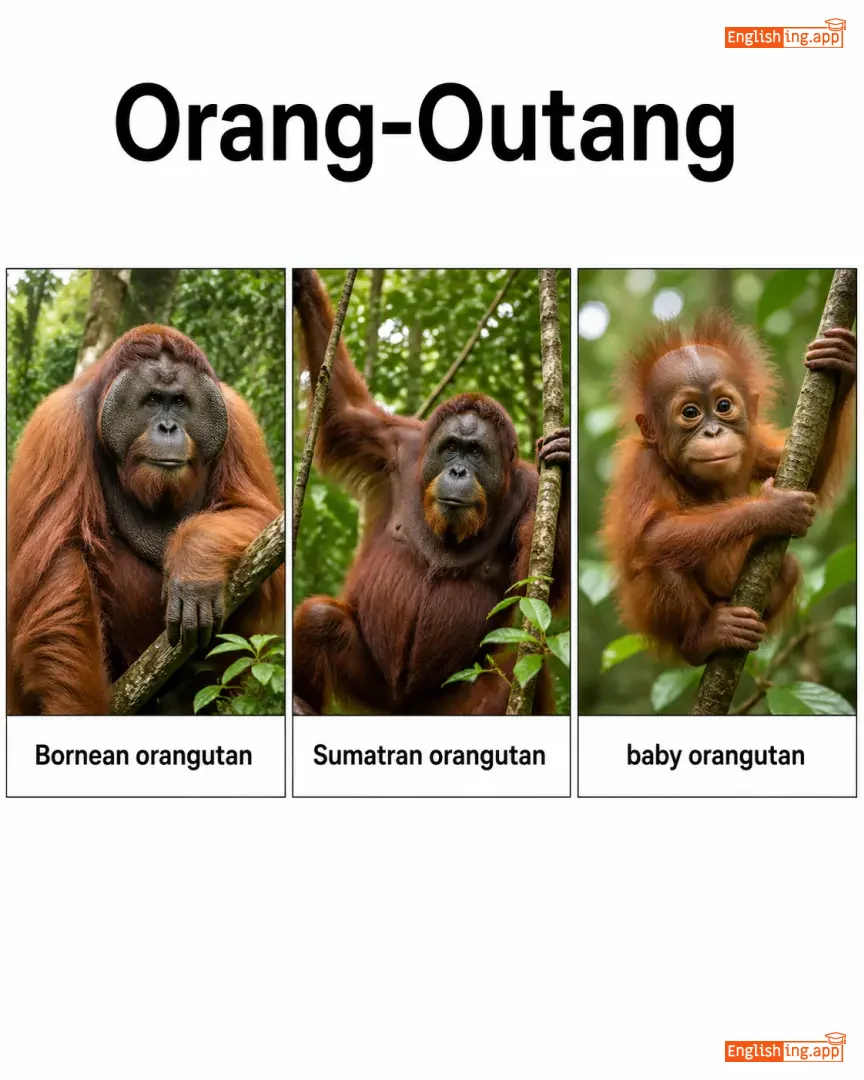
Orang-Outang definition card — visual illustration of the meaning
noun
/ɔːˈræŋ.ʊˌtæŋ/
орангутан (orangutan)

a large arboreal ape with long reddish hair, long arms, and hooked hands and feet, native to Borneo and Sumatra

"The orangutan swings gracefully through the forest canopy."

"Орангутан изящно качается через верхушки деревьев." (Orangutan izyashchno kachayetsya cherez verkhushki derev'yev.)
adjective
/ˈɔːrəl/
устный (ustny)

Spoken rather than written; relating to the mouth

"The student had to give an oral presentation."

"Студент должен был провести устную презентацию." (Student dolzhen byl provesti ustnuyu prezentatsiyu.)
adjective
/əˈrækjələr/
оракульный (orakul'nyy)

Resembling an oracle; giving wise, mysterious, or prophetic statements

"Her oracular words left the audience deep in thought."

"Ее оракульные слова заставили аудиторию задуматься." (Eyo orakul'nye slova zastavili auditoriyu zadumatsya.)
noun
/ˈɒrəkəl/
счастье (schastye)

A person or source considered to provide wise and insightful advice or prophecy.

"In ancient Greece, people visited the oracle at Delphi for guidance."

"Она не могла скрыть свое счастье, когда получила награду." (Ona ne mogla skryt' svoe schast'ye, kogda poluchila nagradu.)
conjunction
/ɔːr/
или (ili)

used to link alternatives

"You can have tea or coffee."

"Вы можете пить чай или кофе." (Vy mozhete pit' chai ili kofe.)
noun
/ˈəʊpəs/
творческое произведение (tvorcheskoe proizvedenie)

A creative work, especially a large and important piece of music or art.

"The composer considered the symphony his greatest opus."

"Композитор считал симфонию своим величайшим творческим произведением." (Kompozitor schital simfoniu svoim velichayshim tvorcheskim proizvedeniyem.)
adjective
/ˈɒpjʊlənt/
роскошный (roskoshnyy)

Ostentatiously rich, luxurious, or lavish.

"They hosted an opulent wedding with gold decorations."
"Они устроили роскошную свадьбу с золотыми украшениями." (Oni ustroili roskoshnuyu svad'bu s zolotymi ukrasheniya.)
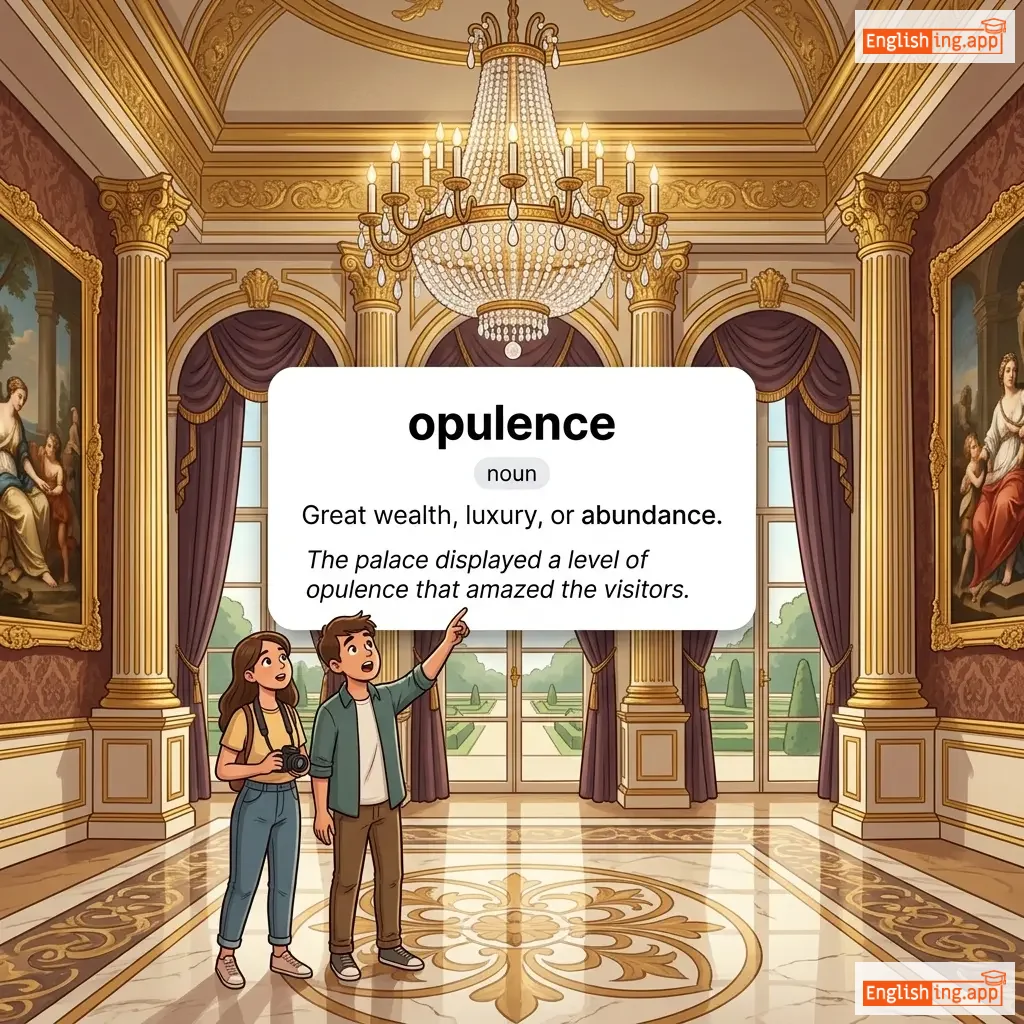
opulence definition card — visual illustration of the meaning
noun
/ˈɒpjʊləns/
роскошь (roskosh)

Great wealth, luxury, or abundance.

"The palace displayed a level of opulence that amazed the visitors."

"Дворец демонстрировал уровень роскоши, который поразил посетителей." (Dvorets demontstriroval urovny roskoshi, kotoryy porazil posetiteley.)
noun
/ɒpˈtɒmətri/
оптометрия (optometriya)

The practice or profession of examining the eyes and prescribing corrective lenses.

"She studied optometry at the university to become an eye specialist."

"Она изучала оптометрию в университете, чтобы стать специалистом по глазам." (Ona izuchala optometriyu v universitete, chtoby stat' spetsialistom po glazam.)
noun
/ɒpˈtɒmɪtrɪst/
оптометрист (optometrist)

A healthcare professional who examines eyes and prescribes corrective lenses.

"The optometrist prescribed new glasses for her."

"Оптометрист прописал ей новые очки." (Optometrist propisal yey novye ochki.)
adjective
/ˈɒpʃənəl/
необязательный (neobyazatel'nyy)

Not required; left to personal choice.

"The dress code for the party is optional."
"Дресс-код для вечеринки необязателен." (Dres-kod dlya vecherinki neobyazatel'en.)
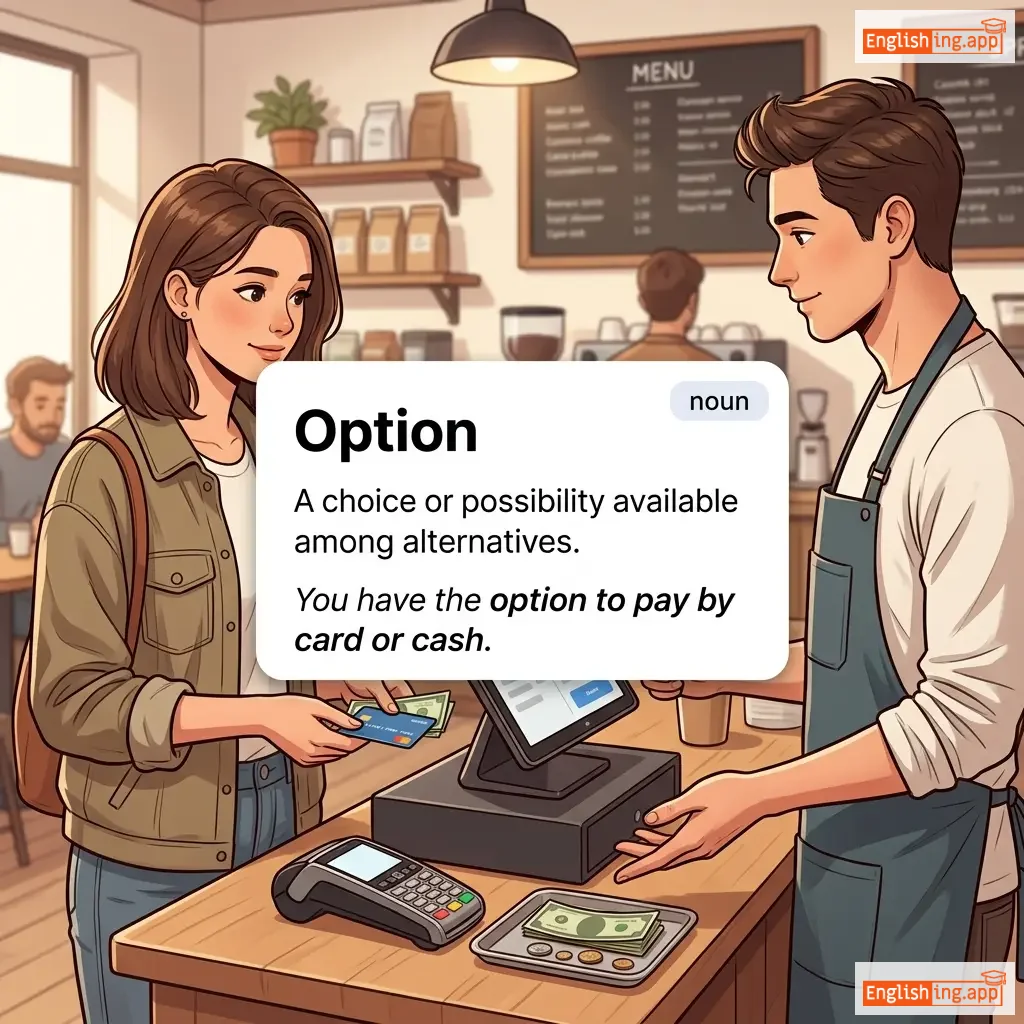
Option definition card — visual illustration of the meaning
noun
/ˈɒpʃən/
опция (optsiya)

A choice or possibility available among alternatives.

"You have the option to pay by card or cash."
"У вас есть возможность оплатить картой или наличными." (U vas yest' vozmozhnost' oplatit' kartoy ili nalichnymi.)
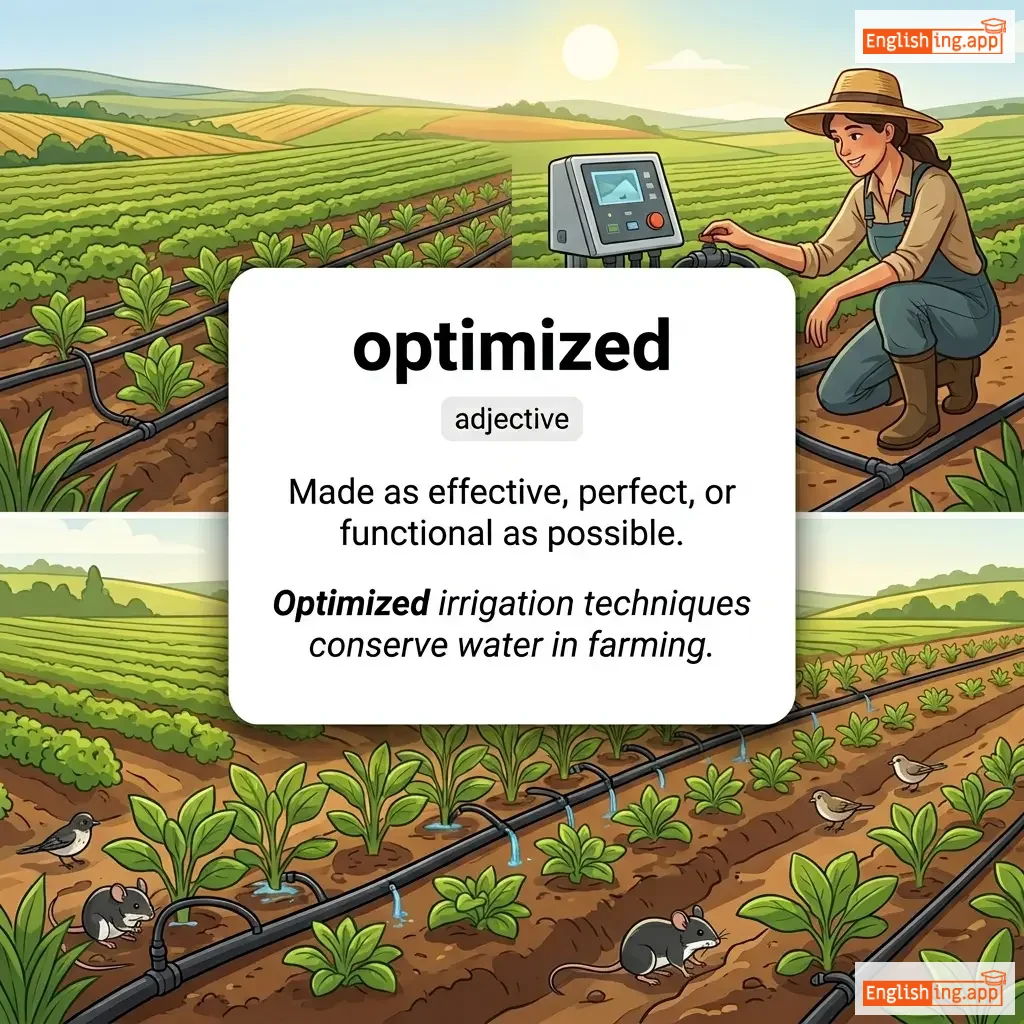
optimized definition card — visual illustration of the meaning
adjective
/ˈɒp.tɪ.maɪzd/
оптимизированный (optimizirovannyy)

Made as effective, perfect, or functional as possible.

"Optimized irrigation techniques conserve water in farming."
"Оптимизированные методы орошения экономят воду в сельском хозяйстве." (Optimizirovannyye metody orosheniya ekonomyat vodu v selskom khozyaystve.)
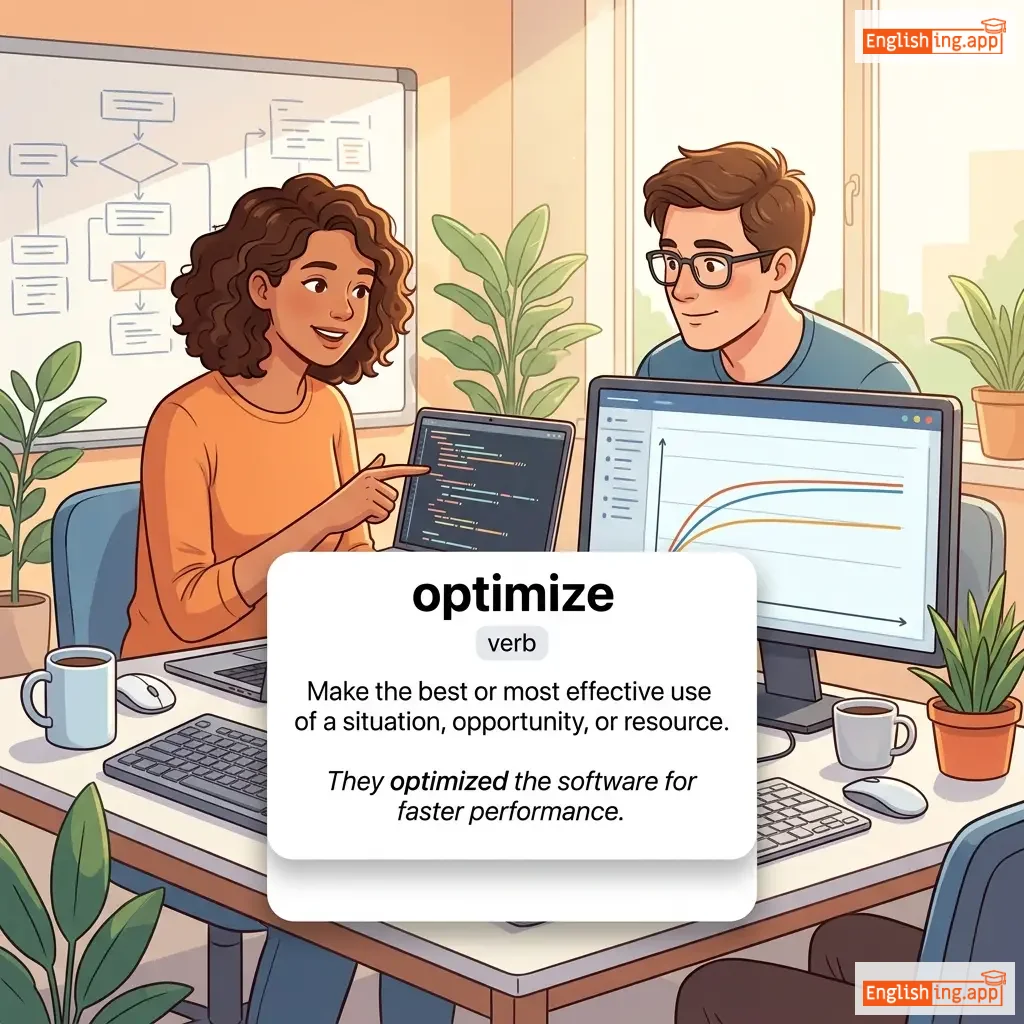
optimize definition card — visual illustration of the meaning
verb
ˈɒptɪmaɪz
оптимизировать, улучшать (optimizirovat, uluchshat)

Make the best or most effective use of a situation, opportunity, or resource.

"They optimized the software for faster performance."
"Они оптимизировали программное обеспечение для лучшей производительности." (Oni optimizirovali programmnoye obespecheniye dlya luchshey proizvoditel'nosti.)
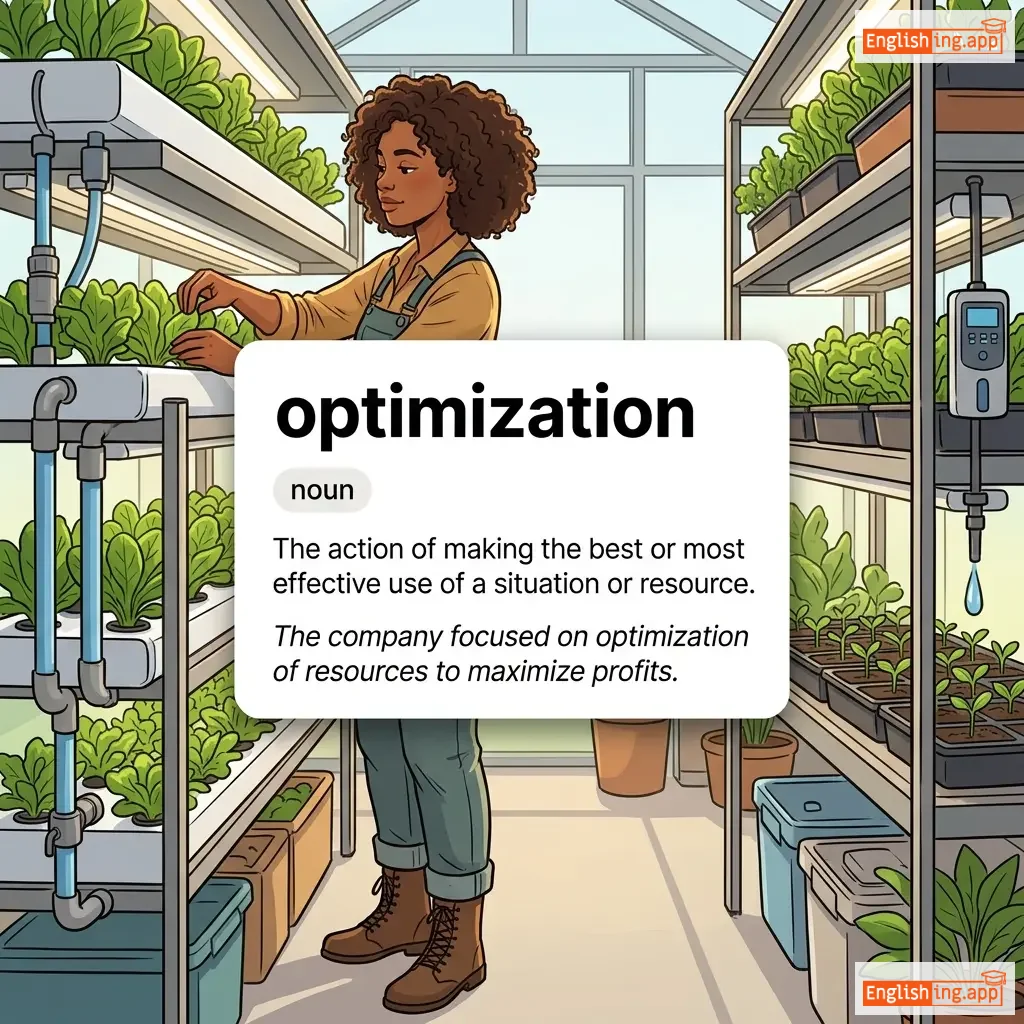
optimization definition card — visual illustration of the meaning
noun
ˌɒp.tɪ.mɪˈzeɪ.ʃən
оптимизация (optimizatsiya)

The action of making the best or most effective use of a situation or resource.

"The company focused on optimization of resources to maximize profits."

"Компания сосредоточила внимание на оптимизации ресурсов для максимизации прибыли." (Kompaniya sosredotochila vnimanie na optimizatsii resursov dlya maksimalizatsii pribyli.)
adjective
/ˌɑːp.təˈmɪs.tɪk/
оптимистичный (optimistichnyy)

hopeful and confident about the future

"She is optimistic about the success of her new project."

"Она оптимистична относительно успеха своего нового проекта." (Ona optimistichna otnositel'no uspekha svoego novogo proyektu.)
noun
/ˈɒptɪmɪst/
оптимист (optimist)

A person who tends to be hopeful and confident about the future or the success of something.

"Even in tough times, she remained an optimist."

"Даже в трудные времена она оставалась оптимисткой." (Dazhe v trudnye vremena ona ostavalasya optimistkoy)
optimism definition card — visual illustration of the meaning
noun
/ˈɒptɪmɪzəm/
оптимизм (optimizm)

Hopefulness and confidence about the future.

"Her optimism kept the team motivated during tough times."

"Её оптимизм мотивировал команду в трудные времена." (Yeyo optimizm motiviroval komandu v trudnye vremena.)
optimally definition card — visual illustration of the meaning
adverb
/ˈɒp.tɪ.məl.i/
оптимально (optimal'no)

In the most effective or efficient way possible.

"Tasks should be allocated optimally for maximum output."
"Задачи должны быть распределены оптимально для максимального результата." (Zadachi dolzhny byt' raspredeleny optimal'no dlya maksimal'nogo rezul'tata.)
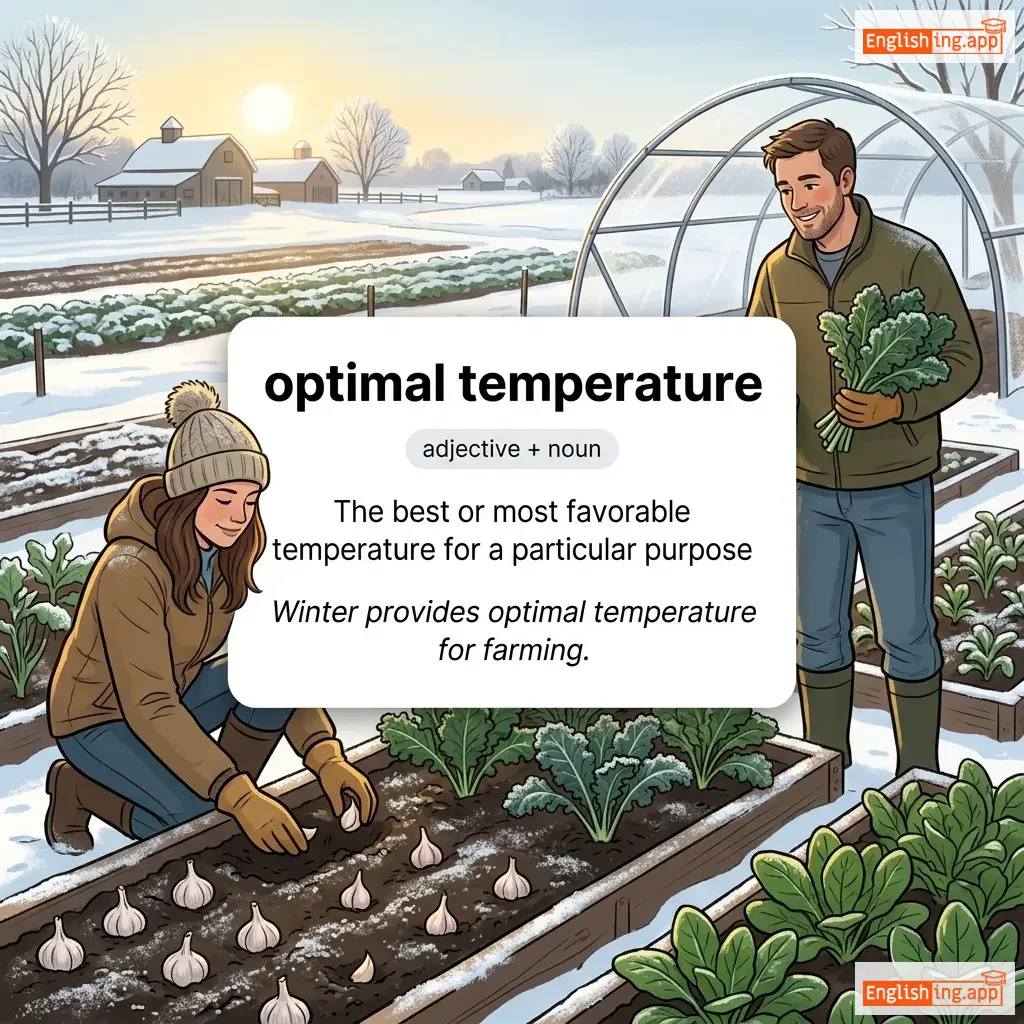
optimal temperature definition card — visual illustration of the meaning
adjective + noun
ˈɒptɪməl ˈtempərətʃər
оптимальная температура (optimal'naya temperatura)

The best or most favorable temperature for a particular purpose

"Winter provides optimal temperature for farming."

"Зима предоставляет оптимальную температуру для сельского хозяйства." (Zima predostavlyayet optimal'nuyu temperaturu dlya sel'skogo khozyaystva.)
optimal definition card — visual illustration of the meaning
adjective
/ˈɒptɪməl/
оптимальный (optimal'nyy)

Best or most favorable; ideal.

"This diet plan provides the optimal balance of nutrients."

"Этот диетический план обеспечивает оптимальное соотношение питательных веществ." (Etot dieticheskiy plan obespechivayet optimal'noye sootnosheniye pitatel'nykh veshchestv.)
noun
/ˈɒptɪks/
оптика (optika)

The branch of physics dealing with light and vision.

"She studied optics to understand how lenses work."

"Она изучала оптику, чтобы понять, как работают линзы." (Ona izuchala optiku, chtoby ponyat', kak rabotayut linzy.)
noun
/ˌɑːpərˈtuːnɪzəm/
оппортунизм (opportunizm)

The practice of taking advantage of opportunities regardless of principles or ethics.

"His decision was driven by opportunism, not values."

"Его решение было вызвано оппортунизмом, а не ценностями." (Ego reshenie bylo vyzvano opportunizmom, a ne tsennostyami.)
noun
/ˈoʊpənɪŋ/
открытие (otkrytie)

an act or instance of beginning something

"The opening of the new store was a huge success."

"Открытие нового магазина стало большим успехом." (Otkrytie novogo magazina stalo bol'shim uspekhom.)
adverb
/ˈəʊpənli/
открыто (otkryto)

in a way that is not secret or hidden

"He spoke openly about his past mistakes."

"Он открыто говорил о своих прошлых ошибках." (On otkryto govorit o svoikh proshlykh oshibkakh.)
noun
/ˈɒpərə/
опера (opera)

a dramatic performance in which the actors sing most of their lines

"We watched a beautiful opera at the theater last night."
"Мы посмотрели красивую оперу в театре прошлой ночью." (My posmotreli krasivuyu operu v teatre proshloy noch'yu.)
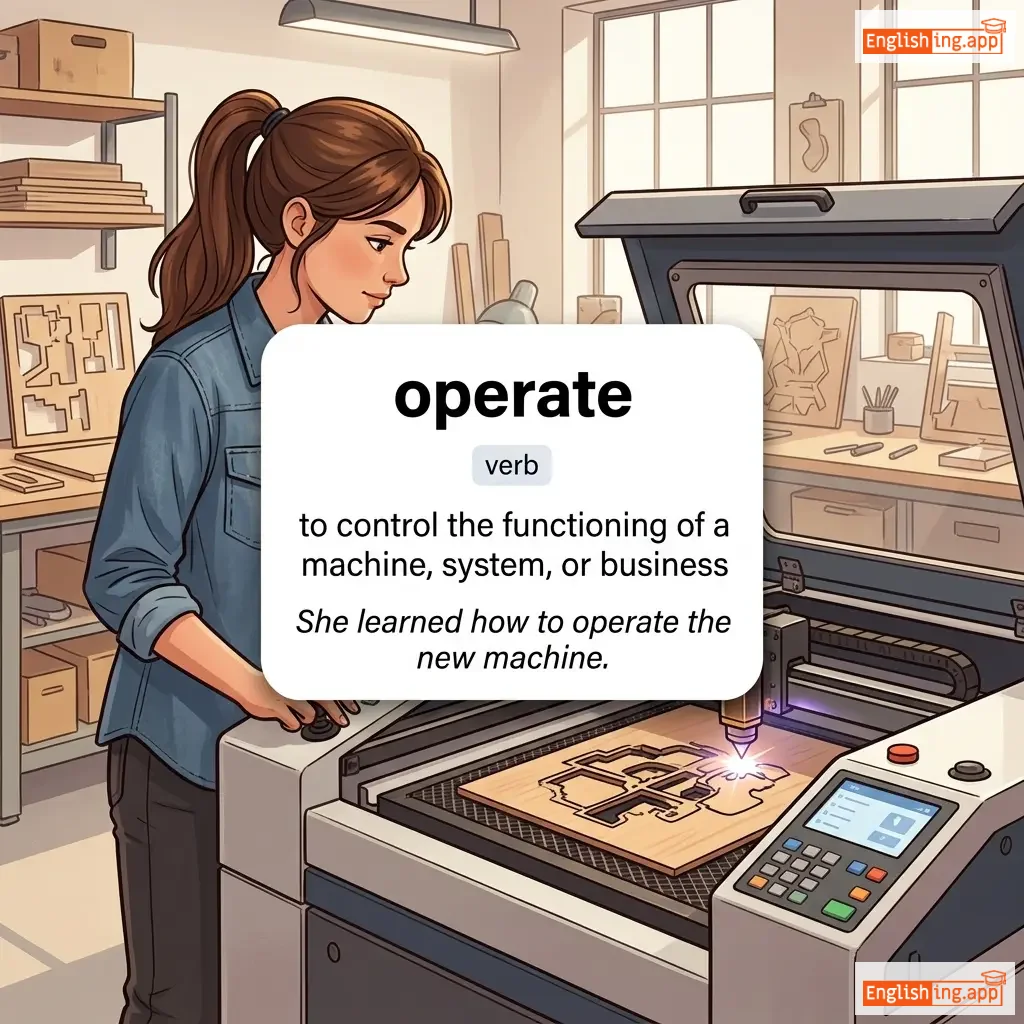
operate definition card — visual illustration of the meaning
verb
/ˈɑːpəˌreɪt/
управлять (upravlyat')

to control the functioning of a machine, system, or business

"She learned how to operate the new machine."

"Она научилась управлять новой машиной." (Ona nauchilas' upravlyat' novoy mashinoy.)
verb
/ˈɒpəreɪtɪŋ/
оперирующий (opiruyushchiy)

to control or manage the functioning of something

"The company has been operating in this market for five years."

"Компания работает на этом рынке уже пять лет." (Kompaniya rabotayet na etom rynke uzhe pyat' let.)
noun
/ˌɒpəˈreɪʃən/
операция (operatsiya)

an act or process of functioning or operating

"The hospital performed a successful operation."
"Больница провела успешную операцию." (Bol'nitsa provela uspeshnuyu operatsiyu.)
operational definition card — visual illustration of the meaning
adjective
/ˌɒpəˈreɪʃənl/
операционный (operatsionny)

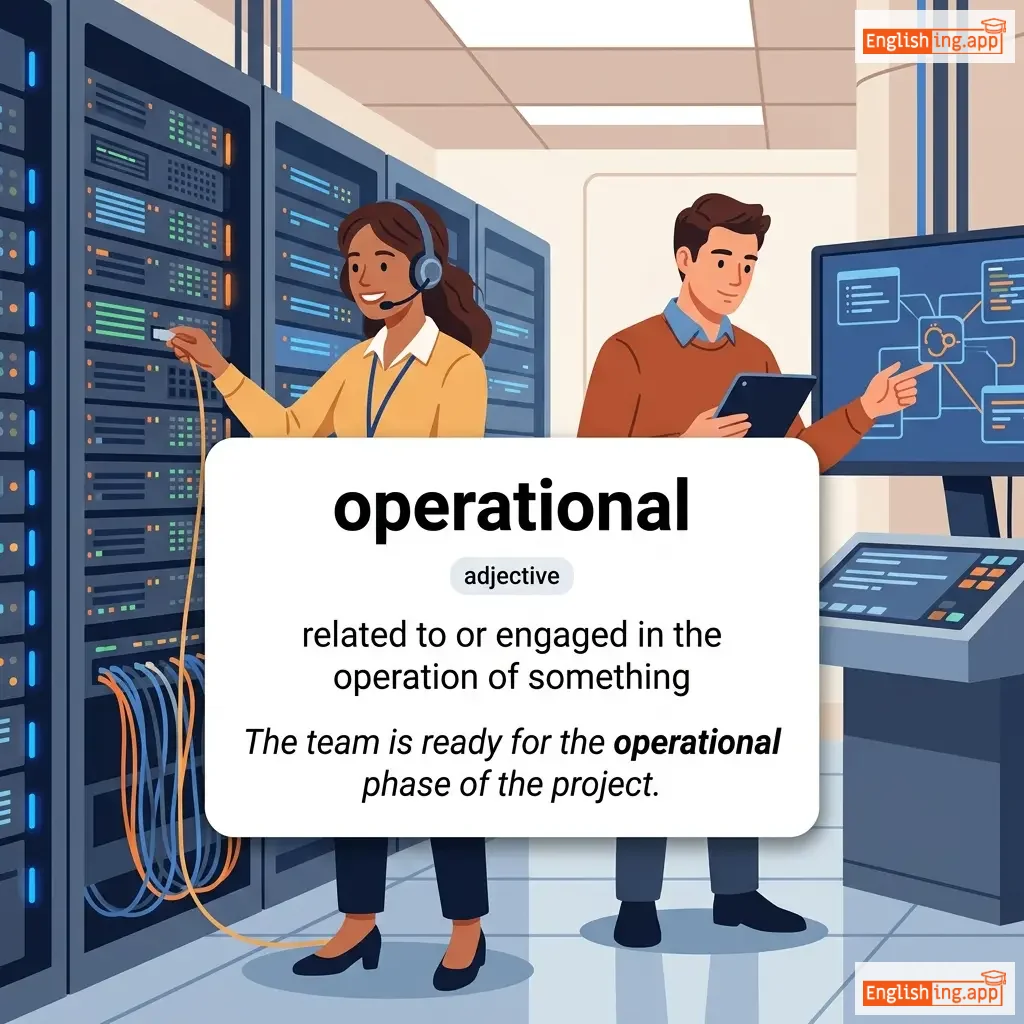
related to or engaged in the operation of something

"The team is ready for the operational phase of the project."

"Команда готова к операционному этапу проекта." (Komanda gotova k operatsionnomu etapu proyекта.)
adjective
/ˈɒpərətɪv/
оперативный (operativnyy)

functioning, having effect, or relating to a secret agent or worker

"The new law is now operative across the country."

"Новый закон теперь действует по всей стране." (Novyy zakon teper' deystvuyet po vsey strane.)
noun
/ˈɒpəreɪtər/
оператор (operator)

a person who operates equipment, a business, or controls something

"The machine operator ensured that everything ran smoothly."

"Оператор машины обеспечил, чтобы всё работало гладко." (Operator mashiny obespechil, chtoby vsyo rabotalo gladko.)
noun
/ˌɒpəˈrɛtə/
легкая опера (legkaya opera)

a short opera with light and humorous themes

"The theater staged a famous operetta by Gilbert and Sullivan."

"Театр поставил известную оперетту Гилберта и Салливана." (Teatr postavil izvestnuyu operettu Gilberta i Sillivana.)
noun
/ˈoʊpiət/

a drug containing opium or its derivatives, used to relieve pain or cause sleep

"The doctor prescribed an opiate to relieve the patient's pain."

verb
/oʊˈpaɪn/
выразить мнение (vyrazit mnenie)

to express an opinion or belief

"The professor opined that the policy would fail."

"Профессор выразил мнение, что политика провалится." (Professor vyrazil mnenie, chto politika provalitsya.)
noun
/əˈpɪnjən/
мнение (mneniye)

A belief, judgment, or viewpoint about something, not necessarily based on fact.

"Everyone is entitled to their own opinion."

"Каждый имеет право на собственное мнение." (Kazhdyy imeyet pravo na sobstvennoe mneniye.)
noun
/əˈpoʊnənt/
счастье (schast'ye)

A person who competes against or disagrees with another.

"The boxer defeated his opponent in the final round."

"Она не могла скрыть своего счастья, когда получила награду." (Ona ne mogla skryt' svoego schast'ya, kogda poluchila nagradu.)
adjective
/ˌɑːpərˈtuːn/
удобный момент (udobny moment)

Happening at a suitable or convenient time.

"She arrived at an opportune moment to help."
"Она приехала в удобный момент, чтобы помочь." (Ona priyekhala v udobny moment, chtoby pomoch'.)
oppress definition card — visual illustration of the meaning
verb
/əˈprɛs/

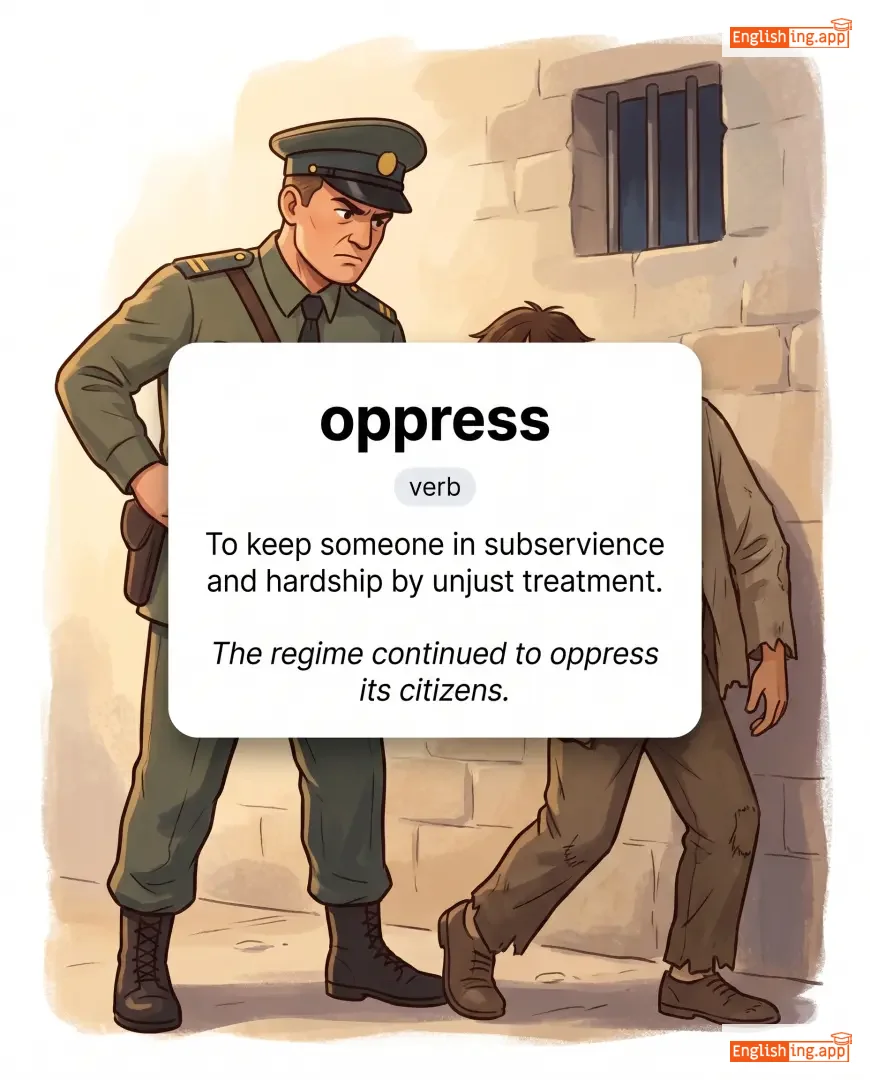
To keep someone in subservience and hardship by unjust treatment.

"The regime continued to oppress its citizens."

adjective
/ˈɒptɪkəl/
оптический (opticheskiy)

related to or used in seeing or sight

"The optical illusion fooled everyone at the exhibition."

"Оптическая иллюзия обманула всех на выставке." (Opticheskaya illuziya obmanula vsekh na vystavke.)
adjective
/ˈɒptɪk/
оптический (opticheskiy)

Relating to the eye or vision.

"The optic nerve carries signals from the eye to the brain."

"Оптический нерв передает сигналы от глаза к мозгу." (Opticheskiy nerv peredayot signaly ot glaza k mozgu.)
verb
/ɒpt/
выбирать (vybirat')

to choose or decide to do something instead of something else

"Many students opt to study abroad for better opportunities."
"Многие студенты выбирают учёбу за границей ради лучших возможностей." (Mnogie studenty vybiraют uchyobu za granitsey radi luchshikh vozmozhnostey.)
opprobrium definition card — visual illustration of the meaning
noun
/əˈprəʊ.bri.əm/
осуждение, позор (osuzhdenie, pozor)

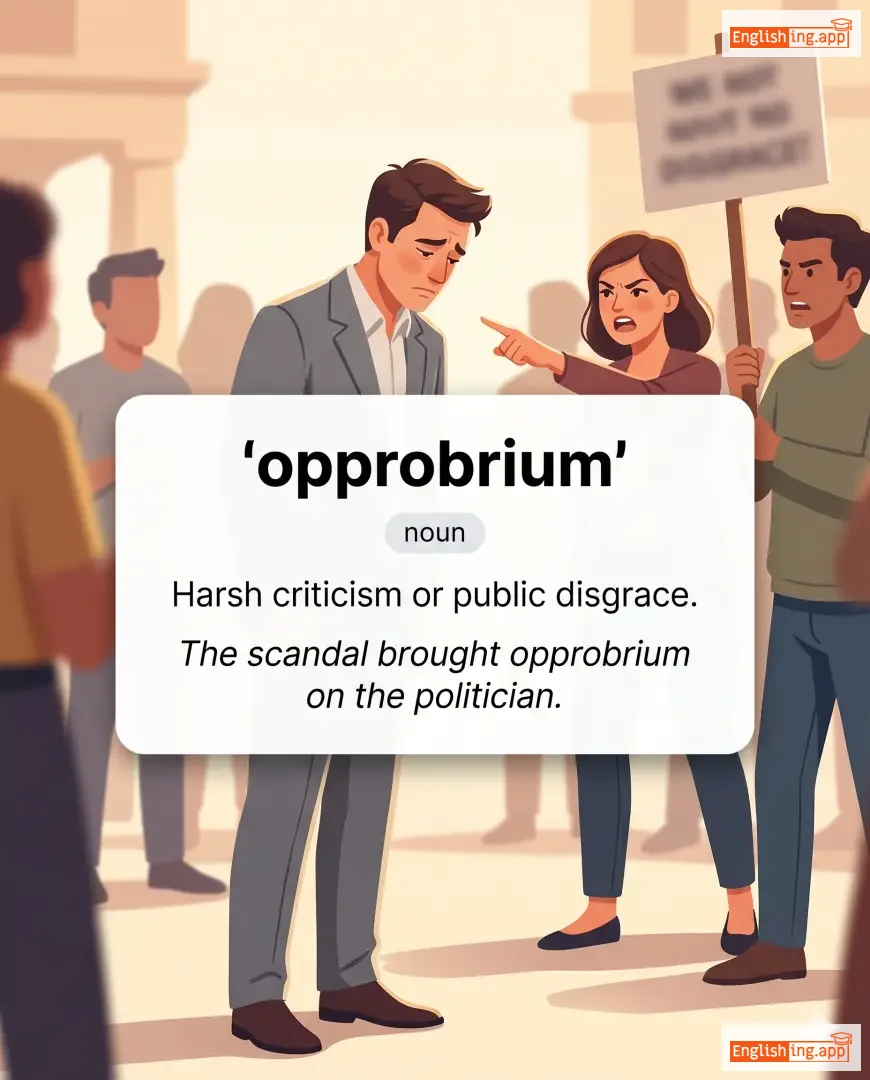
Harsh criticism or public disgrace.

"The scandal brought opprobrium on the politician."

"Скандал принес осуждение политику." (Skandal prines osuzhdenie politiky.)
adjective
/əˈprəʊ.bri.əs/
оскорбительный (oskorbitel'nyy)

Expressing strong criticism or scorn.

"He made opprobrious remarks about his opponent."

"Он сделал оскорбительные замечания о своем противнике." (On sdelal oskorbitel'nye zamechaniya o svoem protivnike.)
adjective
/əˈprɛs.ɪv/
угнетающий (ugnetayushchiy)

Harsh and authoritarian; overwhelming; causing distress; tyrannical;

"The oppressive heat made it difficult to work outside during the summer."

"Подавляющая жара усложняла работу на улице летом." (Podavlyayushchaya zhara uslozhnlyala rabotu na ulitse letom.)
noun
/əˈpreʃ.ən/
угнетение; насилие; тирания; (ugnetenie; nasilie; tiraniya;)

cruel or unjust treatment or exercise of authority; the state of being subject to harsh treatment

"The people fought against political oppression."

"Люди боролись против политического угнетения." (Lyudi borolis' protiv politicheskogo ugneteniya.)
opportunities definition card — visual illustration of the meaning
noun
ˌɒpəˈtjuːnɪtiz
возможности (vozmozhnosti)

A set of circumstances that makes it possible to do something.

"Investing in emerging markets provides new opportunities."

"Инвестирование в развивающиеся рынки открывает новые возможности." (Investirovanie v razvivayushchiesya rynki otkryvayut novye vozmozhnosti.)
noun
/ˌɒp.əˈtjuː.nə.ti/
возможность (vozmozhnost)

A favorable chance or set of circumstances that makes it possible to do something.

"She seized the opportunity to study abroad."

"Она воспользовалась возможностью учиться за границей." (Ona vospol'zovalas' vozmozhnost'yu uchit'sya za granitsey.)
verb
/əˈpəʊz/
противостоять (protivostoyat)

to disagree with or fight against something

"He opposed the new policy at the meeting."

"Он выступил против новой политики на собрании." (On vystupil protiv novoy politiki na sobraniji.)