Словари

Словарь английского языка | Значения слов, определения и примеры
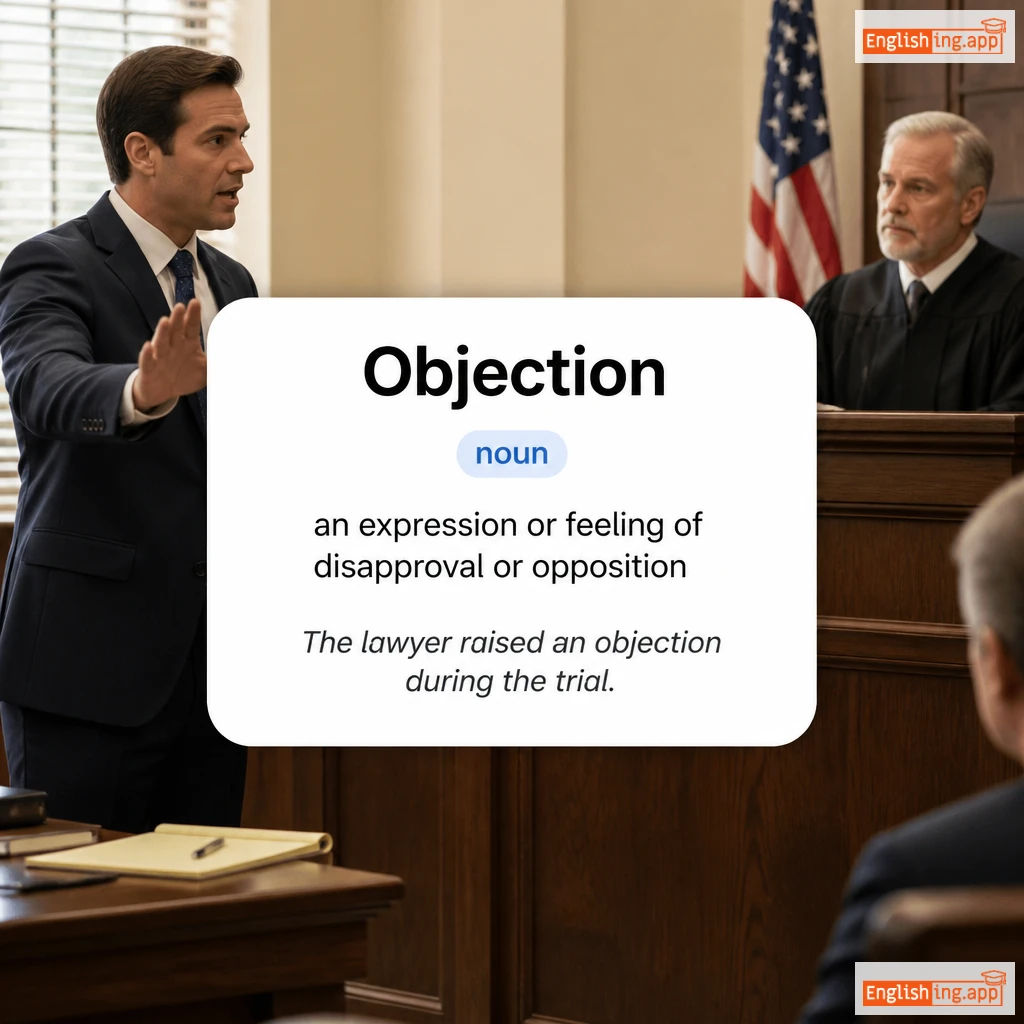
Objection definition card — visual illustration of the meaning
noun
/əbˈdʒɛkʃən/
возражение (vozrazhenie)

an expression or feeling of disapproval or opposition

"The lawyer raised an objection during the trial."

"Адвокат поднял возражение во время судебного разбирательства." (Advokat podnyal vozrazhenie vo vremya sudebnogo razbiraetel'stva.)
adjective
/əbˈdʒek.ʃən.ə.bəl/
неприемлемый (nepriemlemyi)

arousing distaste or opposition; unpleasant or offensive

"His objectionable behavior made everyone uncomfortable."
"Его неприемлемое поведение заставило всех чувствовать себя неловко." (Yego nepriemlemoe povedenie zastavilo vsekh chuvstvovat' sebya nelovko.)
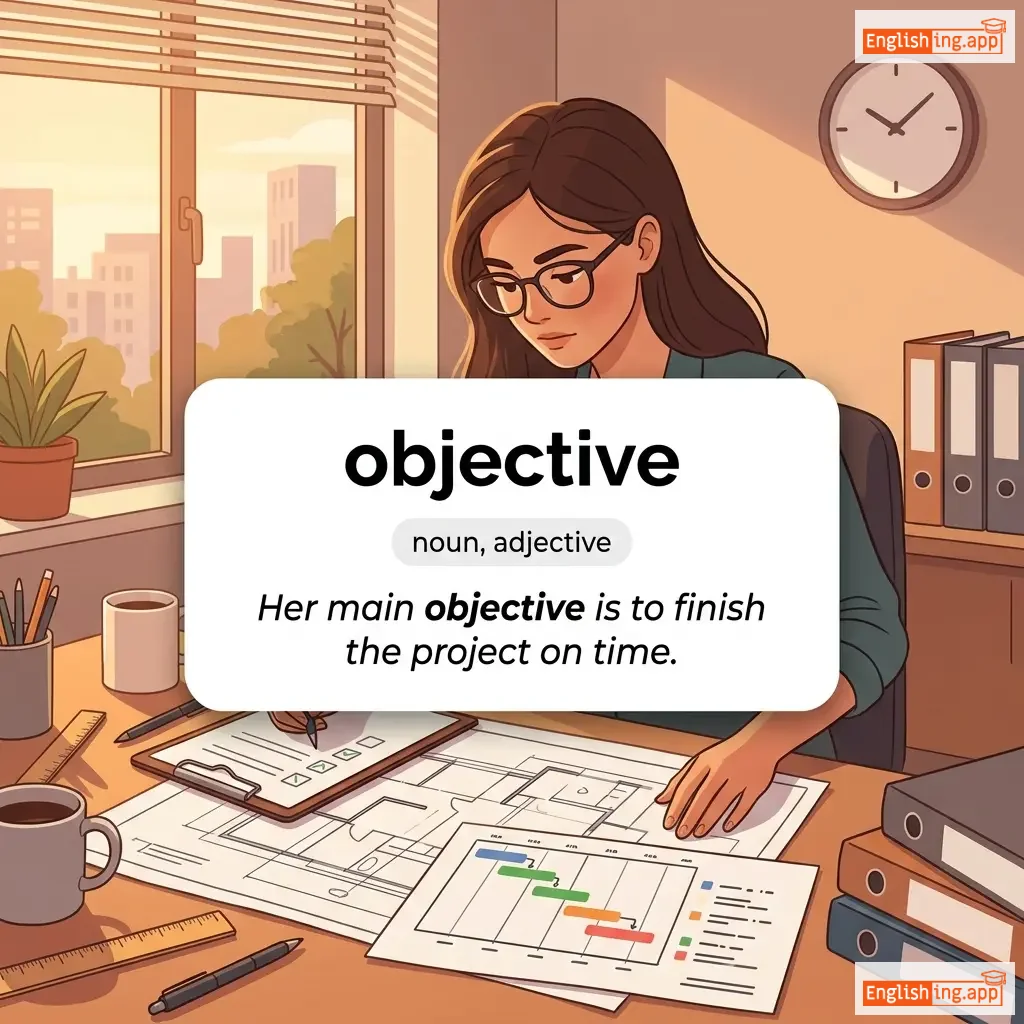
objective definition card — visual illustration of the meaning
noun, adjective
/əbˈdʒɛktɪv/
цель / объективный (tsjel / ob'jektivnyj)

As a noun: a goal or aim. As an adjective: not influenced by personal feelings; unbiased.

"Her main objective is to finish the project on time."

"Её главная цель — закончить проект вовремя." (Yejo glavnya tsjel' — zakonchit' proyekt vovremya.)
noun
/əbˈdʒɛktər/
опротестующий (oprotestuyushchiy)

a person who expresses opposition or disapproval to something

"The objector raised his concerns during the town meeting."

"Опротестующий выразил свои опасения во время собрания городского совета." (Oprotestuyushchiy vyrazil svoi opaseniya vo vremya sobrania gorodskogo soveta.)
verb
/ˈɑːbdʒərˌɡeɪt/
жестоко отчитывать (zhestoko otchityvat')

to scold or rebuke severely

"The teacher objurgated the student for being dishonest."

"Учитель сильно отчитал ученика за нечестность." (Uchitel' sil'no otchital uchenika za nechesotnost'.)
noun
/ˌɑːbdʒərˈɡeɪʃən/
строгий выговор (strogij vigovor)

a harsh scolding or strong rebuke

"His misconduct earned him a severe objurgation from the manager."

"Его проступок вызвал строгий выговор от менеджера." (Ego prostupok vyzval strogij vigovor ot menedzhera.)
noun
/oʊˈbleɪʃən/
жертвоприношение (zhertvoprinoshenie)

a religious offering, especially of bread or wine to God

"The priest placed the oblation on the altar during the ceremony."
"Священник положил жертвоприношение на алтарь во время церемонии." (Svyashchennik polozhil zhertvoprinoshenie na altar vo vremya tseremonii.)
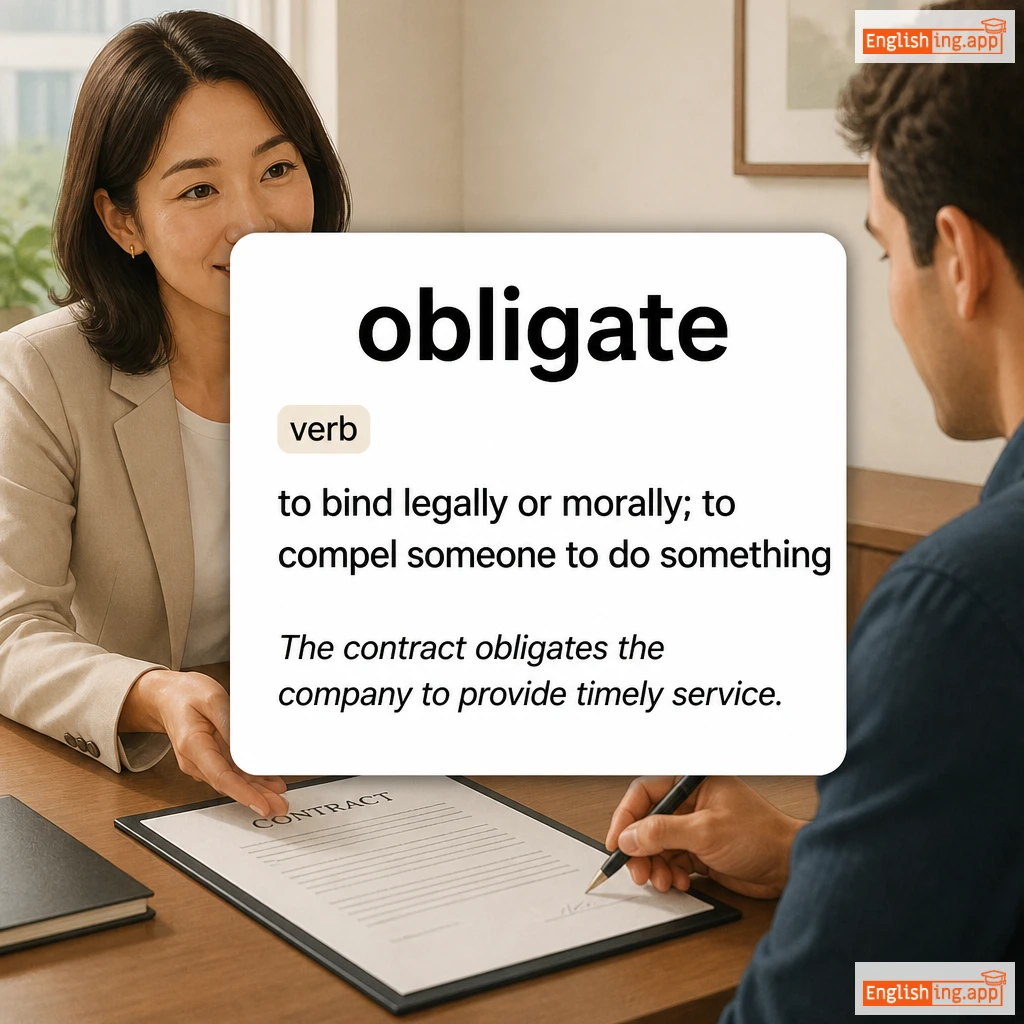
obligate definition card — visual illustration of the meaning
verb
/ˈɑːblɪˌɡeɪt/
обязывать (obyazyvat)

to bind legally or morally; to compel someone to do something

"The contract obligates the company to provide timely service."
"Контракт обязывает компанию предоставлять своевременное обслуживание." (Kontrakt obyayet kompaniyu predostavlyat' svoevremennoe obsluzhivanie.)
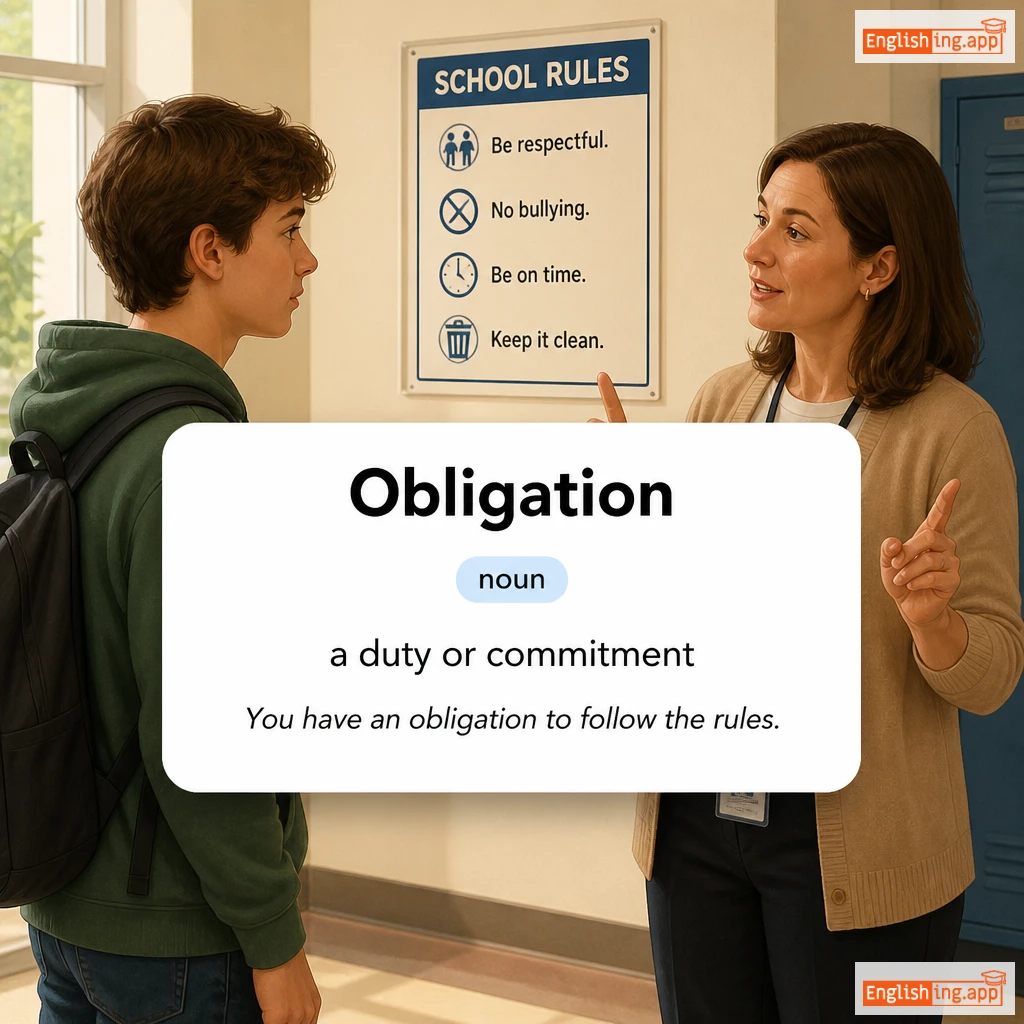
Obligation definition card — visual illustration of the meaning
noun
/ˌɒblɪˈɡeɪʃən/
обязанность (obyazannost)

a duty or commitment

"You have an obligation to follow the rules."
"У вас есть обязательство следовать правилам." (U vas yest' obyazatel'stvo sleduyte pravilam.)
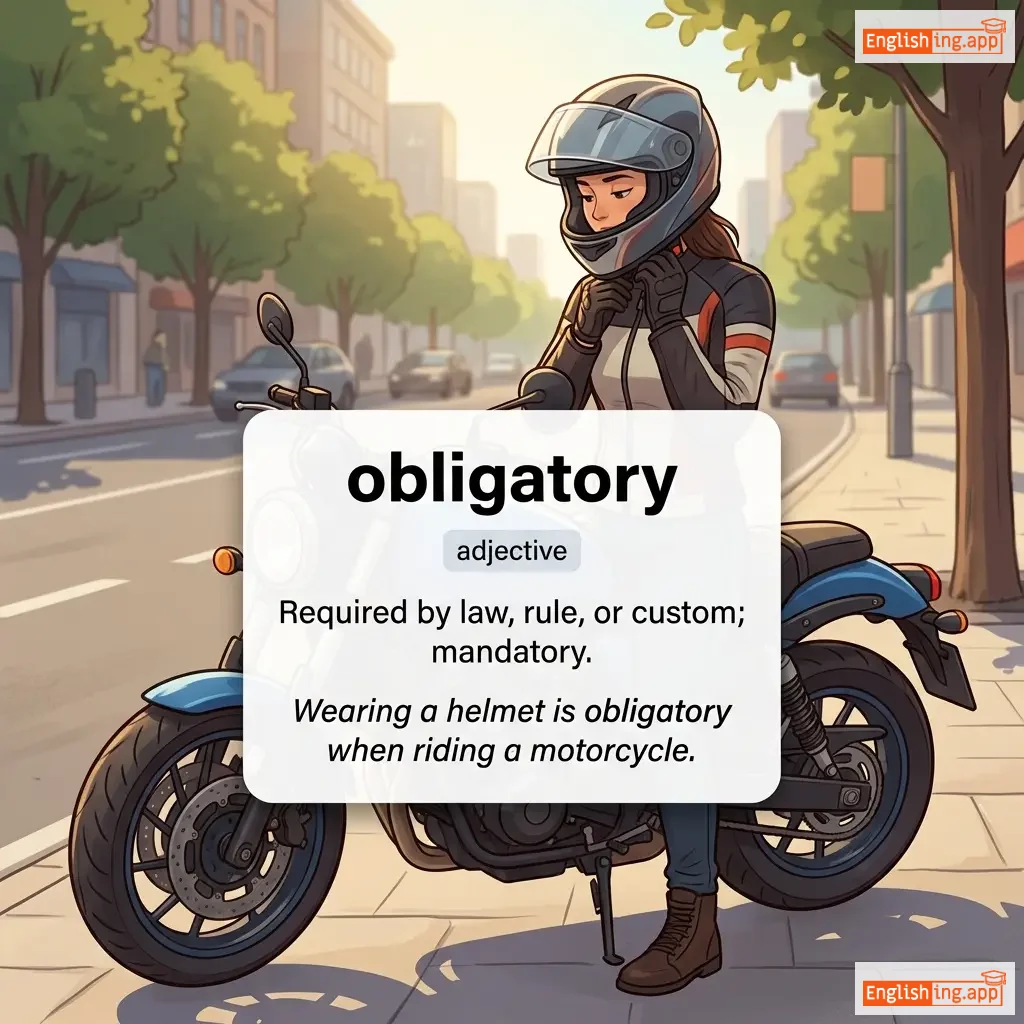
obligatory definition card — visual illustration of the meaning
adjective
/əˈblɪɡətɔːri/

Required by law, rule, or custom; mandatory.

"Wearing a helmet is obligatory when riding a motorcycle."
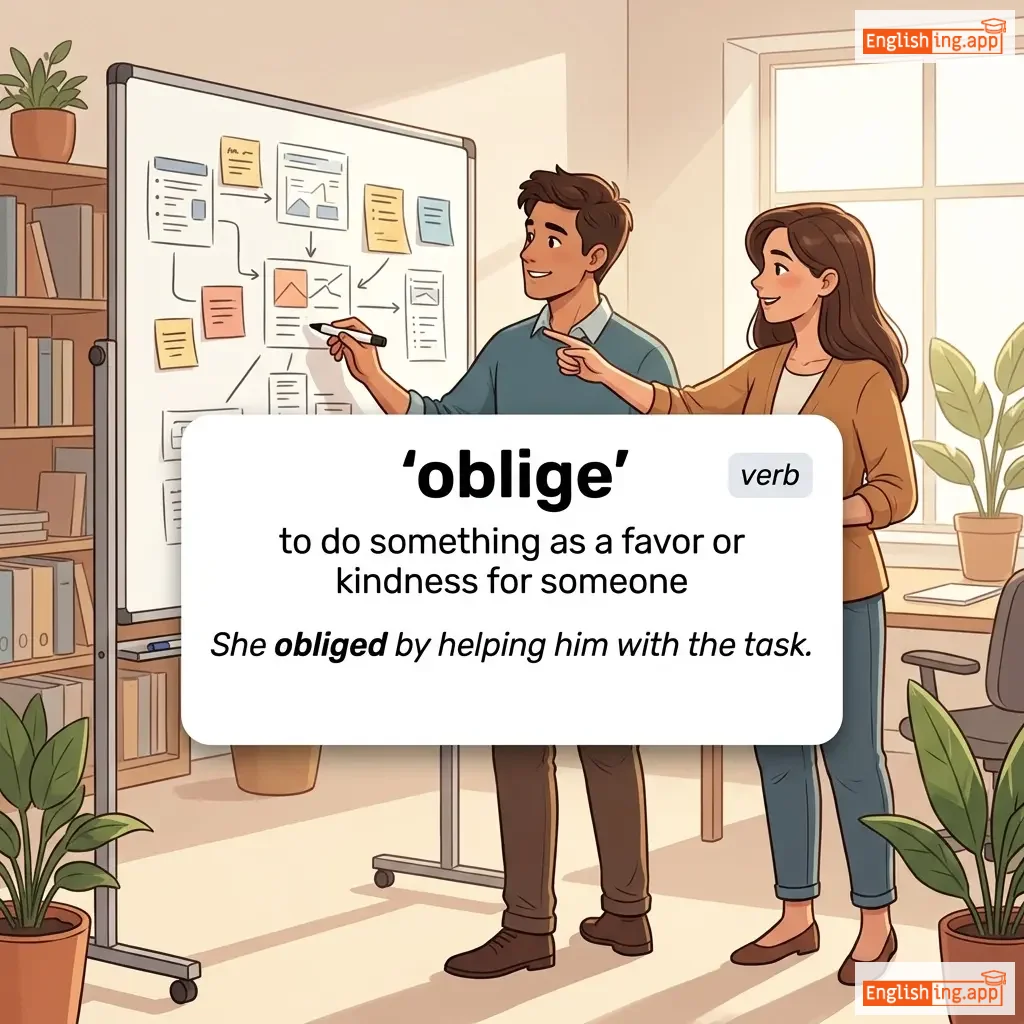
oblige definition card — visual illustration of the meaning
verb
/əˈblaɪdʒ/
обязать (obyazat)

to do something as a favor or kindness for someone

"She obliged by helping him with the task."

"Она сделала это, помогая ему с задачей." (Ona sdelala eto, pomogaya emu s zadachey.)
adjective
/əˈblaɪdʒɪŋ/
готовый помочь (gotovyy pomoch)

Willing to help or do favors; accommodating.

"The staff at the hotel were very obliging and friendly."

"Персонал в отеле был очень готов помочь и дружелюбен." (Personall v otele byl ochen' gotov pomoch i druzhelyuben.)
adjective
/əˈbliːk/ or /oʊˈbliːk/
косвенный (kosvenny)

Not explicit or direct in addressing a point; slanting or indirect.

"She made an oblique reference to his past mistakes."

"Она сделала косвенное замечание о его прошлых ошибках." (Ona sdelala kosvennoe zamechanie o yego proshlykh oshibkakh.)
noun
/əˈblɪkwɪti/
кривизна (krivizna)

Deviation from moral or usual conduct; indirectness or lack of straightforwardness.

"The politician was criticized for the obliquity of his answers."
"Политика был критикован за кривизну его ответов." (Politika byl kritikovann za kriviznu ego otvetov.)
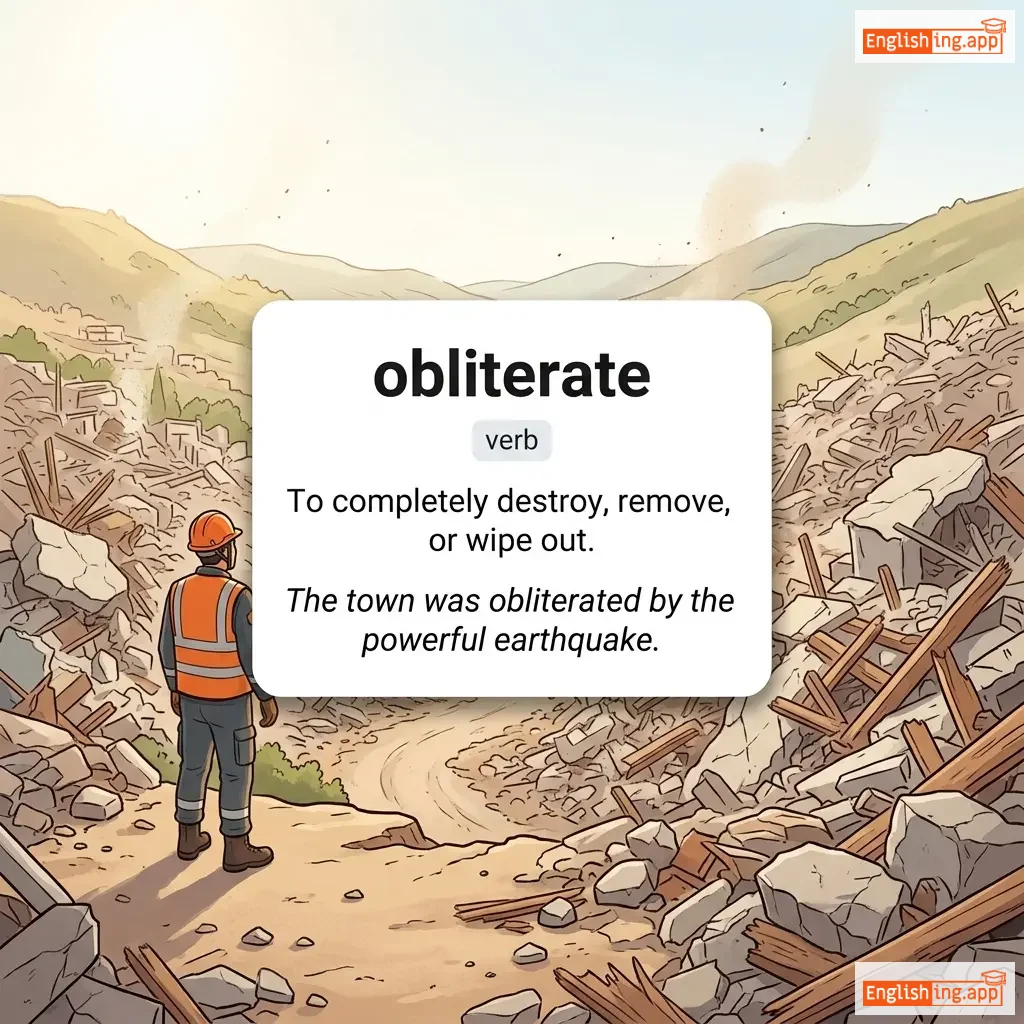
obliterate definition card — visual illustration of the meaning
verb
/əˈblɪtəreɪt/
полностью уничтожить (polnostyu unichtozhit)

To completely destroy, remove, or wipe out.

"The town was obliterated by the powerful earthquake."
"Город был полностью уничтожен мощным землетрясением." (Gorod byl polnostyu unichtozhen moshchnym zemletryaseniem.)
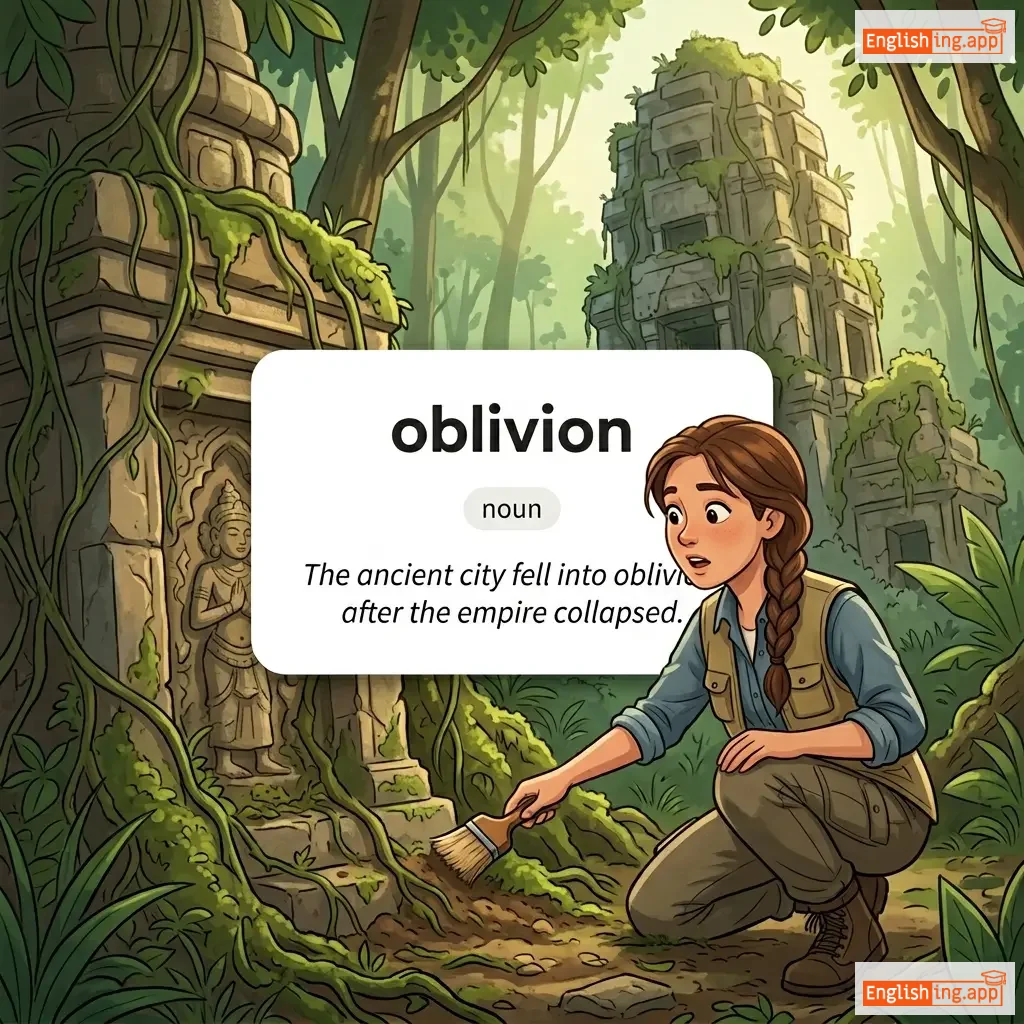
oblivion definition card — visual illustration of the meaning
noun
/əˈblɪviən/
забвение (zabvenie)

The state of being completely forgotten or unknown; the state of being unconscious or unaware.

"The ancient city fell into oblivion after the empire collapsed."
"Древний город исчез в забвении после разрушения империи." (Drevniy gorod ischez v zabvenii posle razrusheniya imperii.)
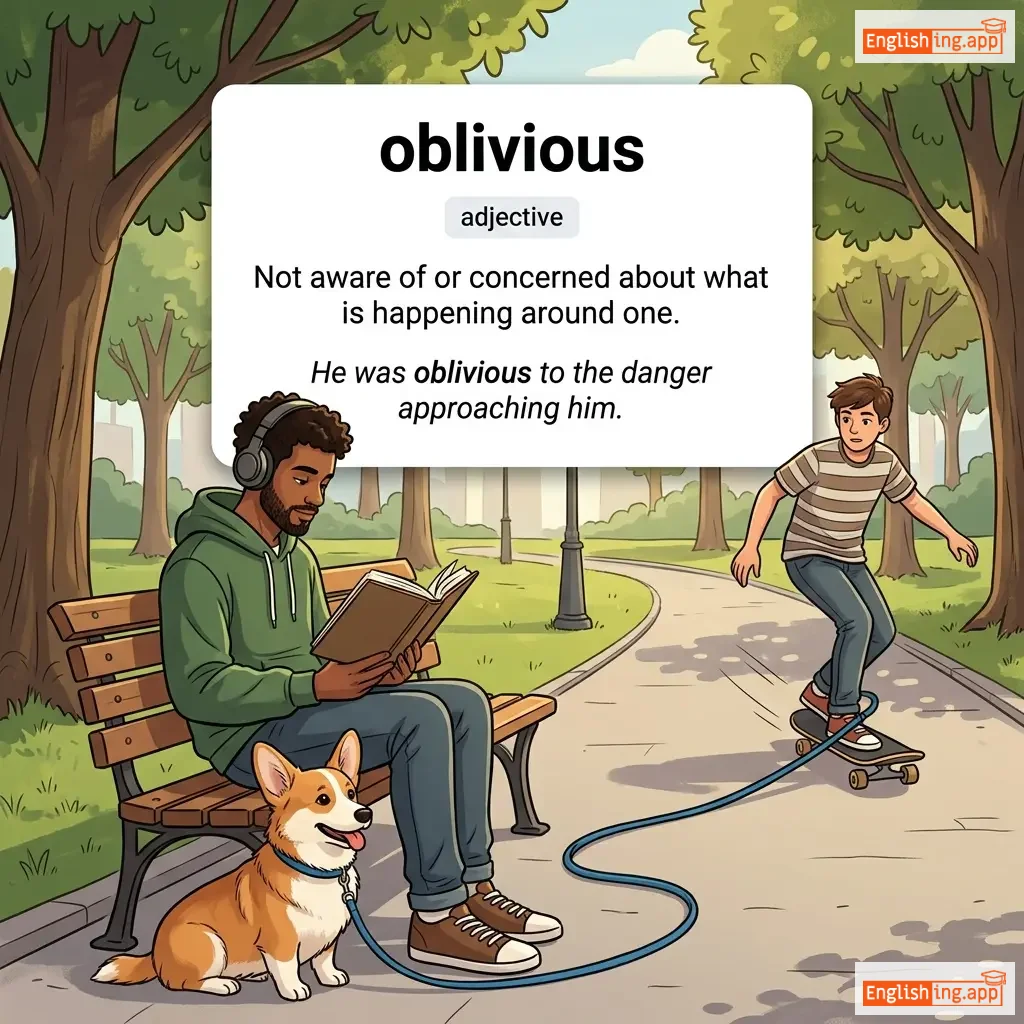
oblivious definition card — visual illustration of the meaning
adjective
/əˈblɪviəs/

Not aware of or concerned about what is happening around one.

"He was oblivious to the danger approaching him."
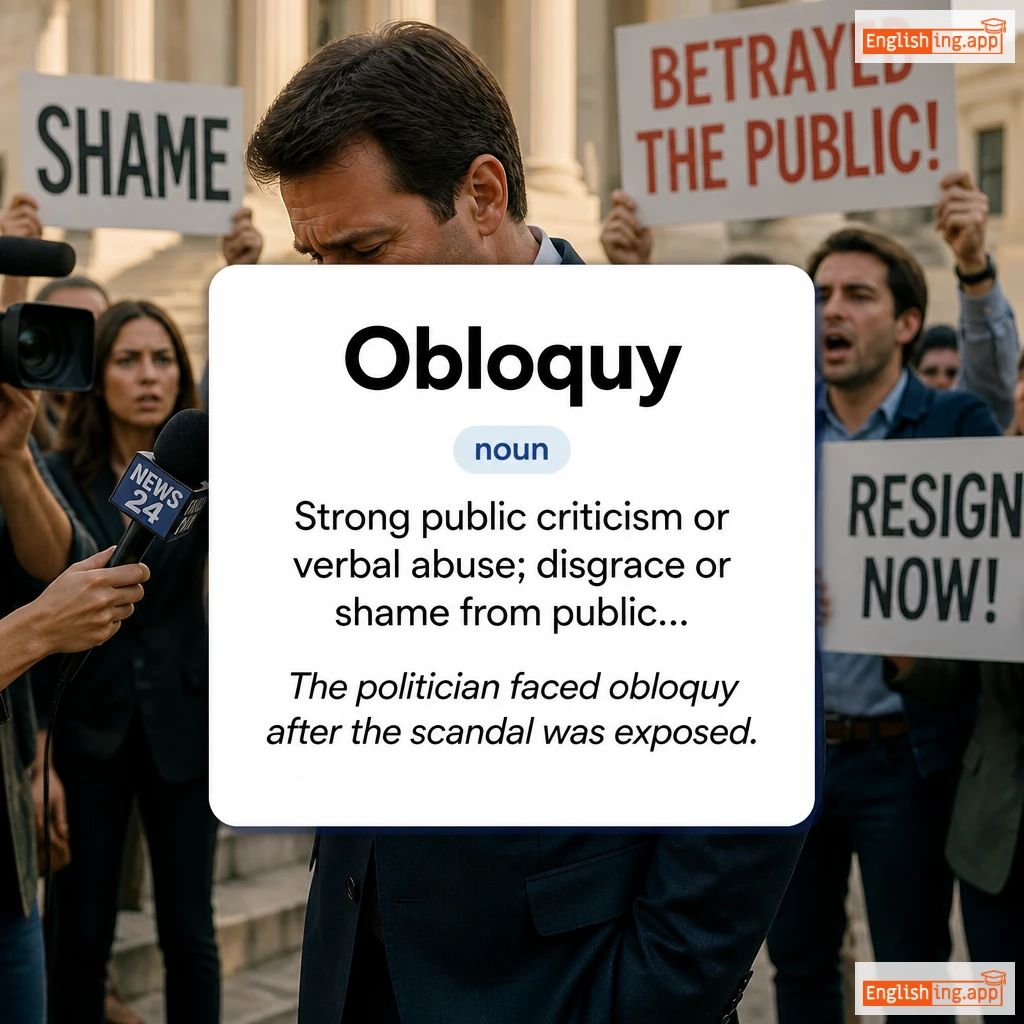
Obloquy definition card — visual illustration of the meaning
noun
/ˈɒbləkwɪ/
клевета (kleweta)

Strong public criticism or verbal abuse; disgrace or shame from public condemnation.

"The politician faced obloquy after the scandal was exposed."

"Политик столкнулся с клеветой после того, как был раскрыт скандал." (Politik stolknulsya s klevetoy posle togo, kak byl raskryt skandal.)
adjective
/əbˈnɒkʃəs/
невыносимый (nevyinosimyj)

Extremely unpleasant, offensive, or annoying.

"The obnoxious behavior of the guest ruined the party."

"Невыносимое поведение гостя испортило вечеринку." (Nevynosimoe povedenie gostya isportilo vecherinku.)
adjective, verb
/əbˈskjʊr/
неясный (neyasnyy)

Not clearly expressed or understood; to make something difficult to see or understand.

"The meaning of the poem was obscure to most readers."

"Значение поэмы было непонятно большинству читателей." (Znachenie poemy bylo neponyatno bol'shinstvu chitateley.)
noun
/ˈɒbsɪkwiːz/
погребальные обряды (pogrebal'nye obryady)

Funeral rites or ceremonies.

"The obsequies for the late leader drew thousands of mourners."
"Погребальные обряды для покойного лидера привлекли тысячи скорбящих." (Pogrebal'nye obryady dlya pokoynogo lidera privlekli tysyachi skorbyashchikh.)
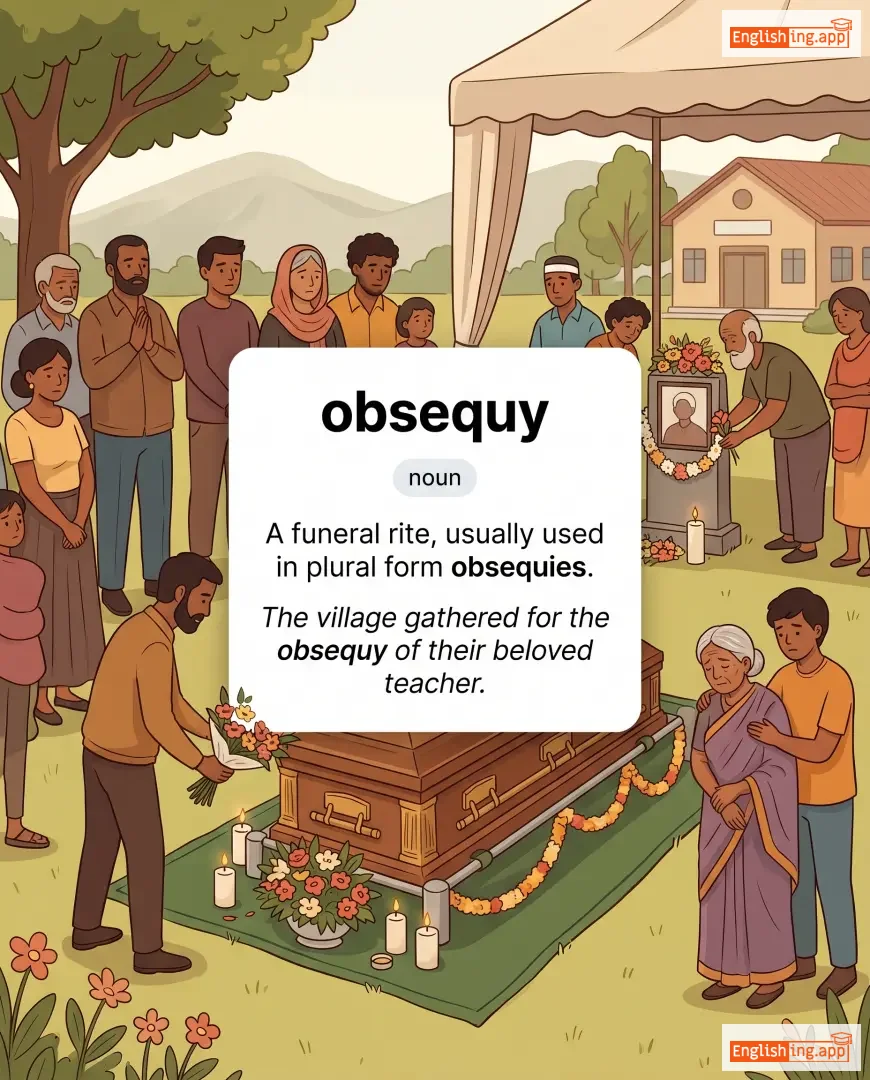
obsequious definition card — visual illustration of the meaning
adjective
/əbˈsiːkwɪəs/
угодливый (ugodlivyj)

Excessively obedient or attentive in a servile way.

"The waiter gave an obsequious bow to every customer."
"Официант сделал угодливый поклон каждому клиенту." (Oficiant sdelal ugodlivyj poklon kazhdomu klientu.)
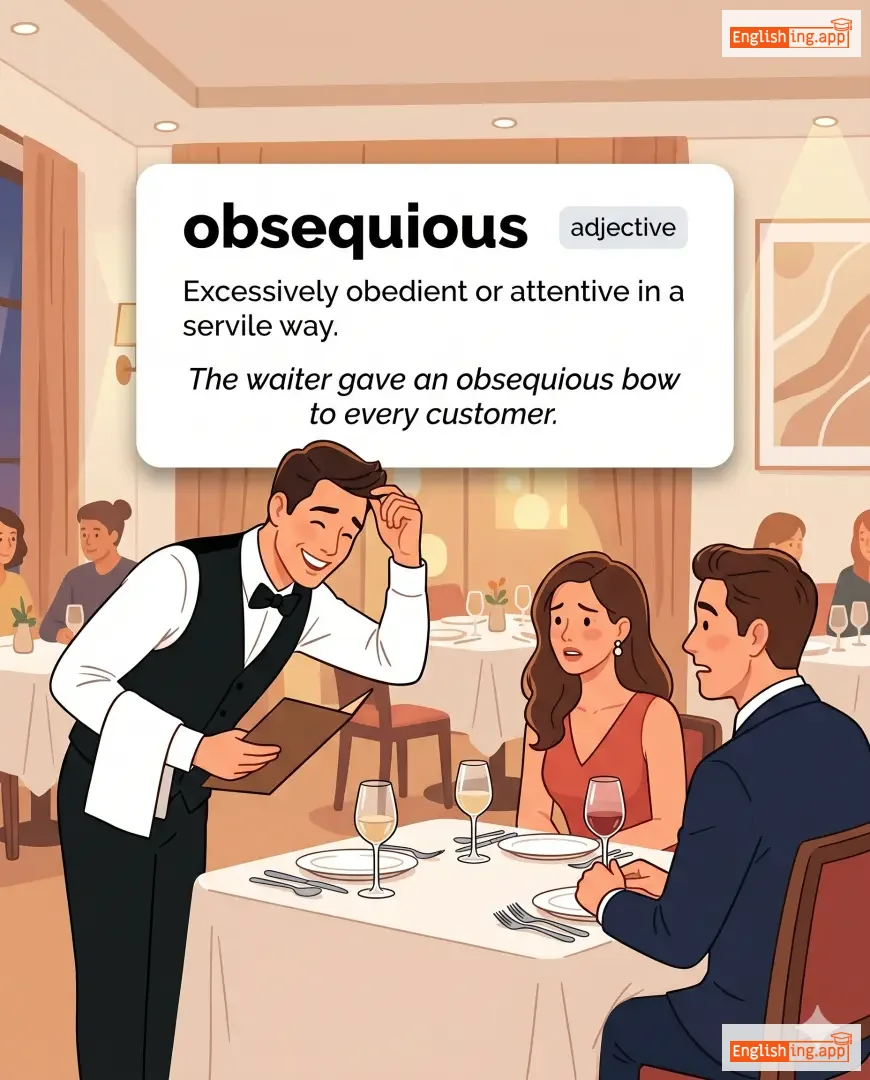
obsequy definition card — visual illustration of the meaning
noun
/ˈɒbsɪkwi/
похороны (pokhorony)

A funeral rite, usually used in plural form obsequies.

"The village gathered for the obsequy of their beloved teacher."

"Деревня собралась для похорон их любимого учителя." (Derevnya sobralas' dlya pokhoron ikh lyubimogo uchitelya.)
noun
/əbˈzɜːvəns/
соблюдение (soblyudenie)

The practice of following a custom, rule, or religious law.

"The festival is held in observance of a centuries-old tradition."

"Фестиваль проводится в соблюдении вековой традиции." (Festival proyavlyayetsya v soblyudenii vekovoy traditsii.)
adjective
/əbˈzɜːvənt/
внимательный (vnimatel'nyj)

Quick to notice details or attentive to rules and customs.

"She is very observant and rarely misses any detail."
"Она очень внимательная и редко пропускает детали." (Ona ochen' vnimatelnaya i redko propuskayet detali.)
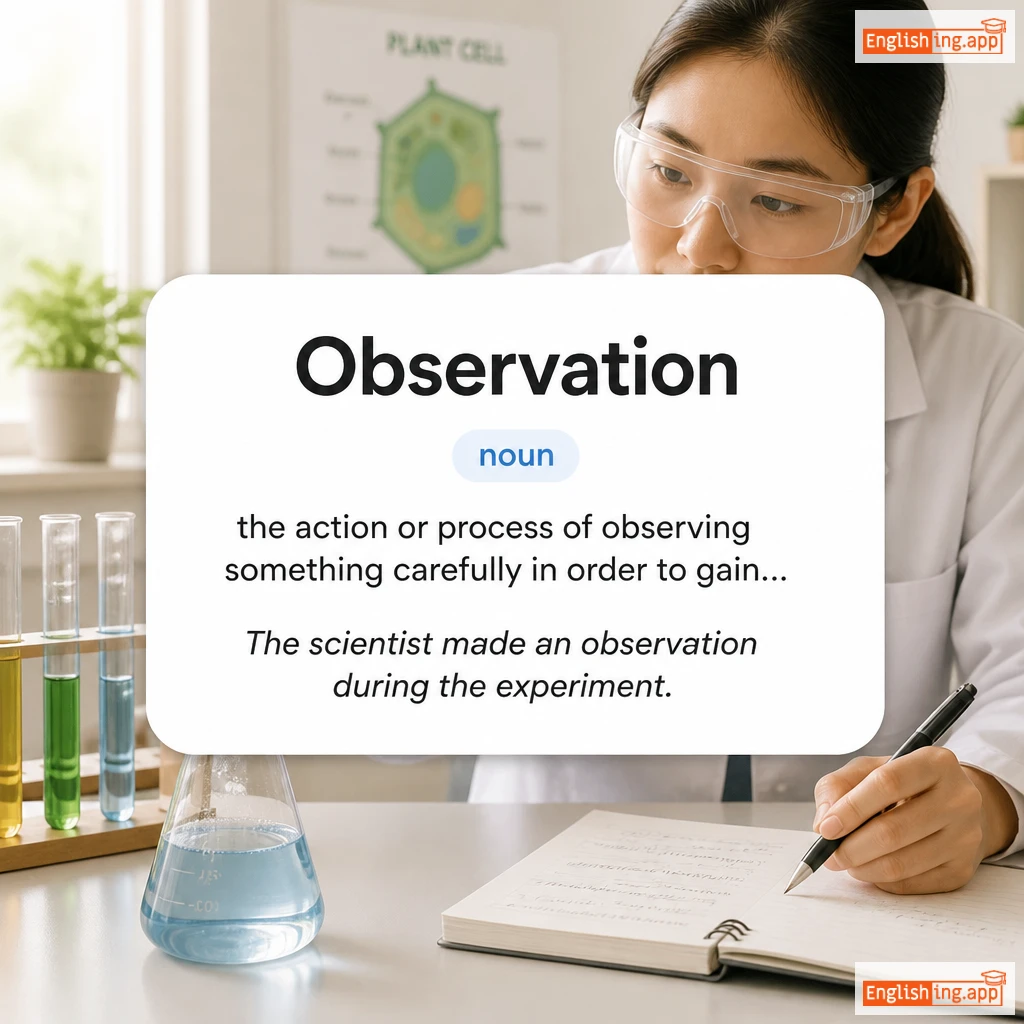
Observation definition card — visual illustration of the meaning
noun
/ˌɒbzəˈveɪʃən/
наблюдение (nablyudenie)

the action or process of observing something carefully in order to gain information

"The scientist made an observation during the experiment."
"Ученый сделал наблюдение во время эксперимента." (Uchenyy sdelal nablyudeniye vo vremya eksperimenta.)
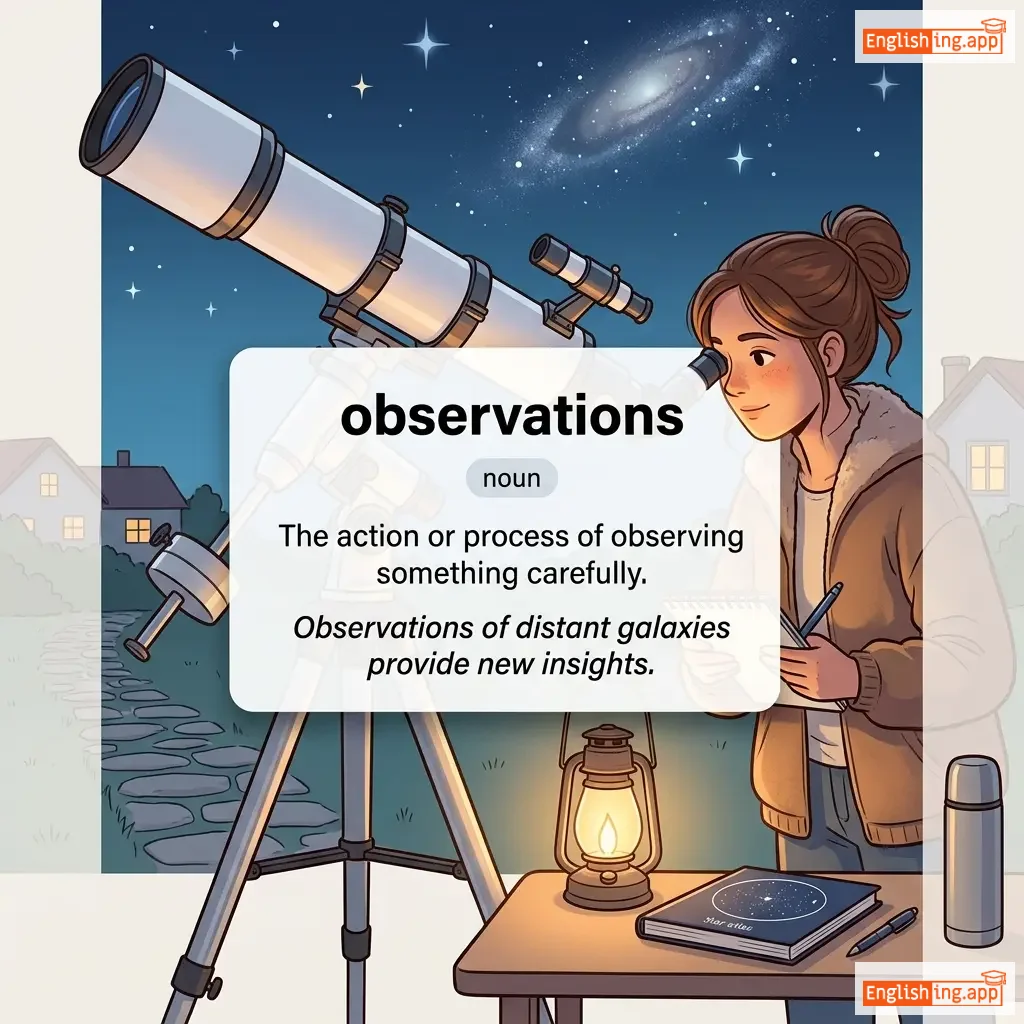
observations definition card — visual illustration of the meaning
noun
/ˌɒb.zəˈveɪ.ʃənz/
наблюдение (nablyudenie)

The action or process of observing something carefully.

"Observations of distant galaxies provide new insights."

"Наблюдения за удалёнными галактиками дают новые идеи." (Nablyudeniya za udalennymi galaktikami dayut novye idei.)
noun
/əbˈzɜːrvətɔːri/
обсерватория (observatoriya)

A building equipped for observing astronomical or meteorological events.

"The observatory is open to the public on weekends."
"Обсерватория открыта для посетителей по выходным." (Observersiya otkryta dlya posetiteley po vykhodnym.)
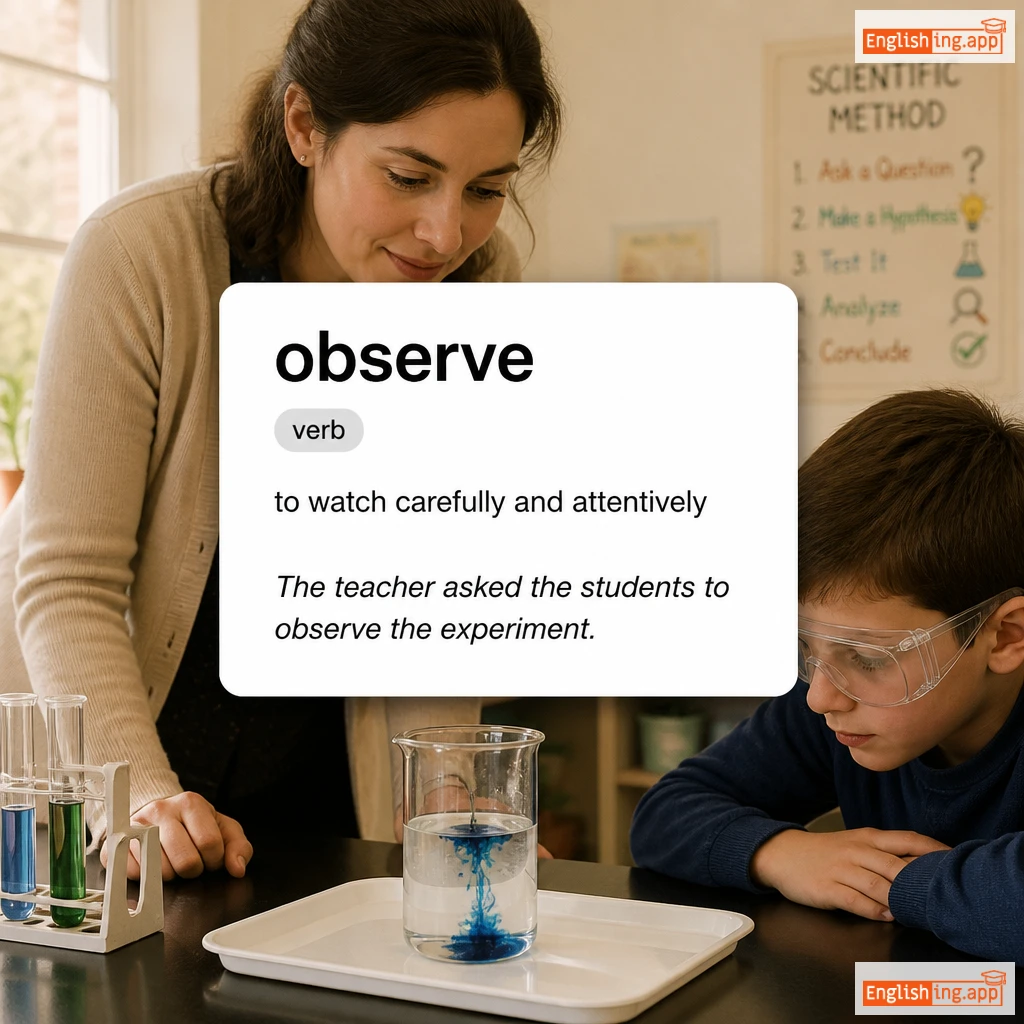
observe definition card — visual illustration of the meaning
verb
/əbˈzɜːv/
наблюдать (nablyudat)

to watch carefully and attentively

"The teacher asked the students to observe the experiment."
"Учитель попросил студентов наблюдать за экспериментом." (Uchitel' poprosil studentov nablyudat' za eksperimentom.)
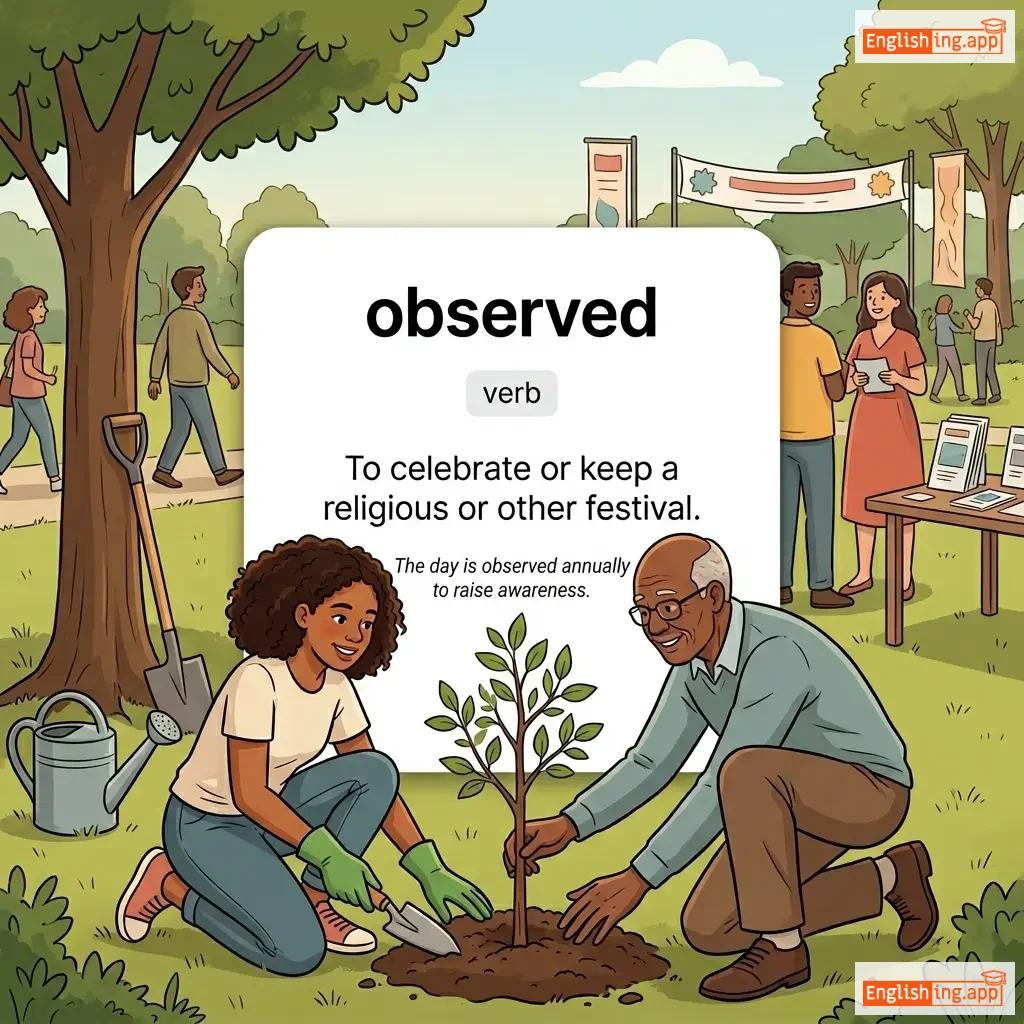
observed definition card — visual illustration of the meaning
verb
əbˈzɜːrvd
праздновать (prazdnovat')

To celebrate or keep a religious or other festival.

"The day is observed annually to raise awareness."
"Этот день празднуется ежегодно для повышения осведомленности." (Etot den' prazdnuyetsya ezhegodno dlya povysheniya osvedomlennosti.)
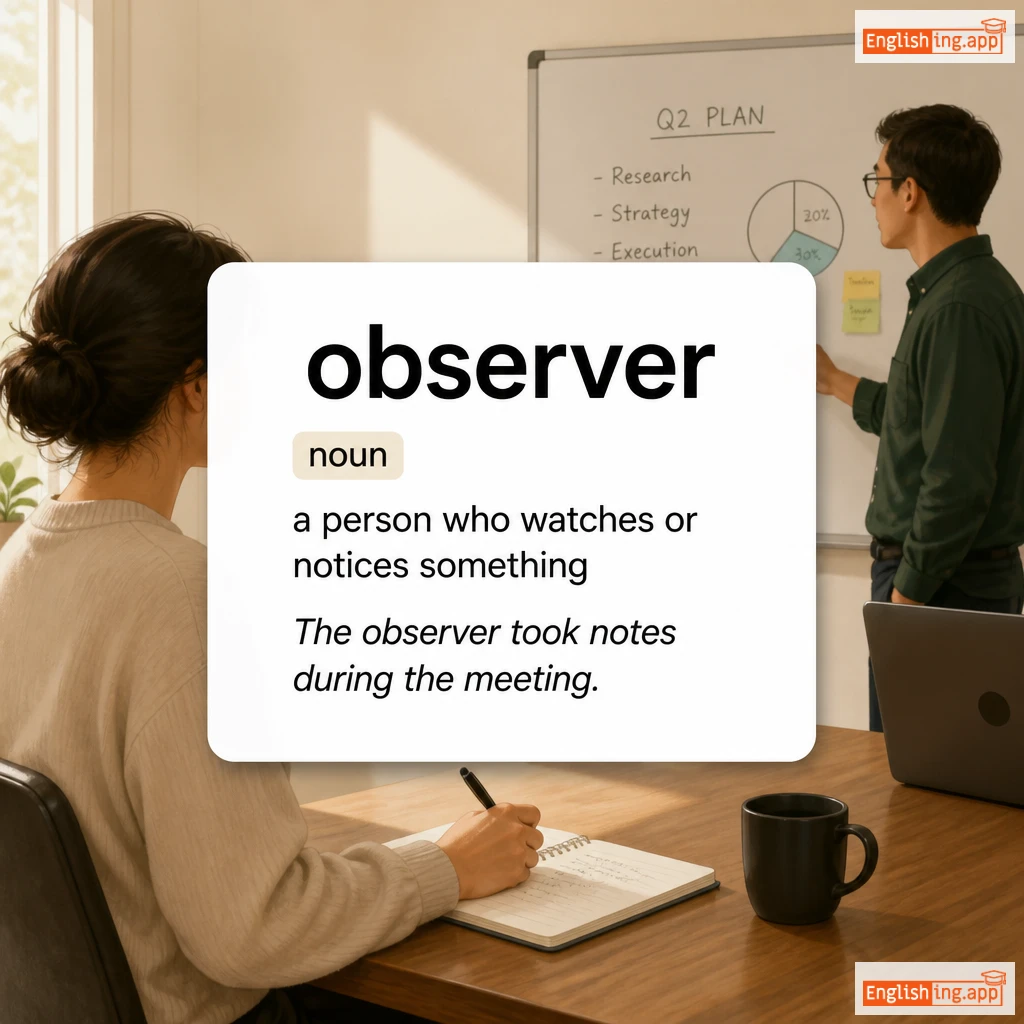
observer definition card — visual illustration of the meaning
noun
/əbˈzɜːvər/
наблюдатель (nablyudatel)

a person who watches or notices something

"The observer took notes during the meeting."
"Наблюдатель сделал заметки во время встречи." (Nablyudatel sdelal zametki vo vremya vstrechi.)
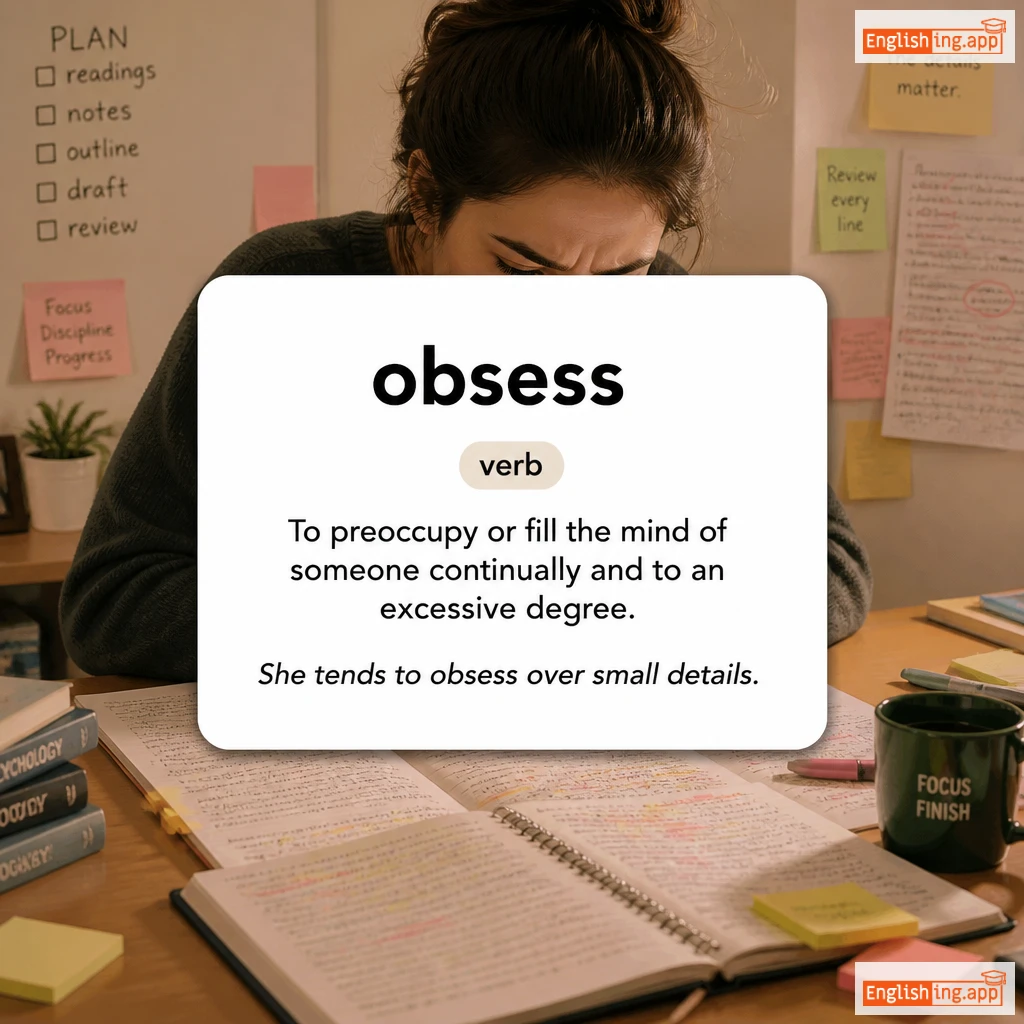
obsess definition card — visual illustration of the meaning
verb
/əbˈsɛs/
одержимость (odyerzhiomost')

To preoccupy or fill the mind of someone continually and to an excessive degree.

"She tends to obsess over small details."

"Она склонна зацикливаться на мелочах." (Ona sklonna zaklikivatsya na melochakh.)
obsession definition card — visual illustration of the meaning
noun
/əbˈsɛʃən/
одержимость (oderzhimost)

An idea, thought, or concern that continually preoccupies or intrudes on a person's mind.

"His obsession with success drove him to work day and night."

"Его одержимость успехом заставляла его работать день и ночь." (Yego oderzhimost' uspekhom zastavlyala yego rabotat' den' i noch'.)
adjective
/əbˈsɛsɪv/
навязчивый (navyazchivyy)

Relating to or characterized by an obsession; thinking about something too much.

"He has an obsessive interest in cleanliness."

"У него навязчивый интерес к чистоте." (U nego navyazchivyy interes k chistote.)
noun
/əbˈsɪdiən/
обсидиан (темная стекловидная вулканическая порода) (obsidian (temnaya steklovidnaya vulkanicheskaya poroda))

A hard, dark, glasslike volcanic rock formed by rapid solidification of lava.

"The knife was made from sharp obsidian."
"Нож был сделан из острого обсидиана." (Nozh byl sdelan iz ostrogo obsidiana.)
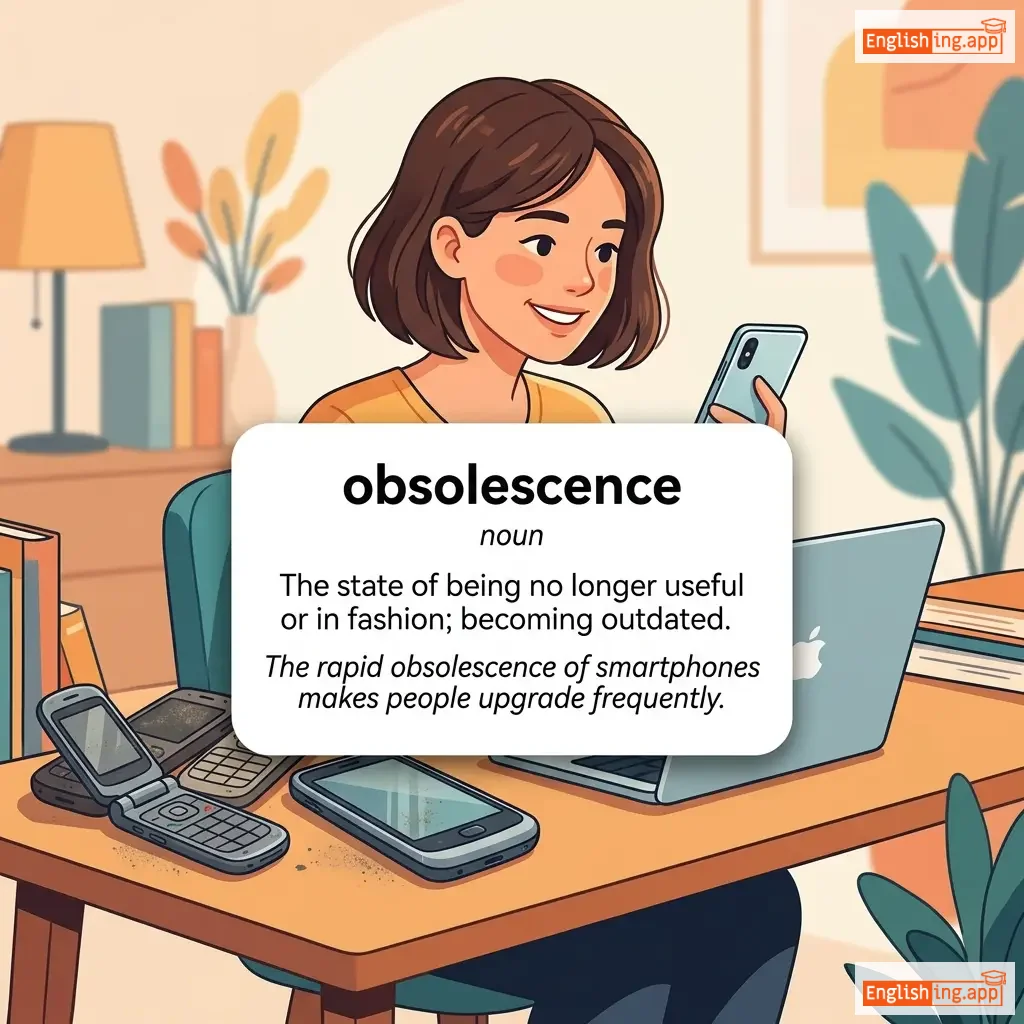
obsolescence definition card — visual illustration of the meaning
noun
/ˌɒbsəˈlɛsəns/
обсолесценция (obsolescentziya)

The state of being no longer useful or in fashion; becoming outdated.

"The rapid obsolescence of smartphones makes people upgrade frequently."

"Быстрая обсолесценция смартфонов заставляет людей часто обновлять устройства." (Bystraya obsolescentziya smartfonov zastavlyaet lyudey chasto obnovlyat' ustroystva.)
adjective
/ˌɒbsəˈlɛsnt/
устаревающий (ustarevayushchiy)

Becoming outdated or on the way to becoming obsolete.

"The obsolescent technology could not compete with modern devices."

"Устаревающая технология не могла конкурировать с современными устройствами." (Ustarevayushchaya tekhnologiya ne mogla konkurirovat' s sovremennymi ustroystvami.)
adjective
/ˌɒbsəˈliːt/
устаревший (ustarevshiy)

No longer in use or out of date.

"Floppy disks are now completely obsolete."
"Флоппи-диски теперь полностью устарели." (Floppy-diski teper' polnost'yu ustareli.)
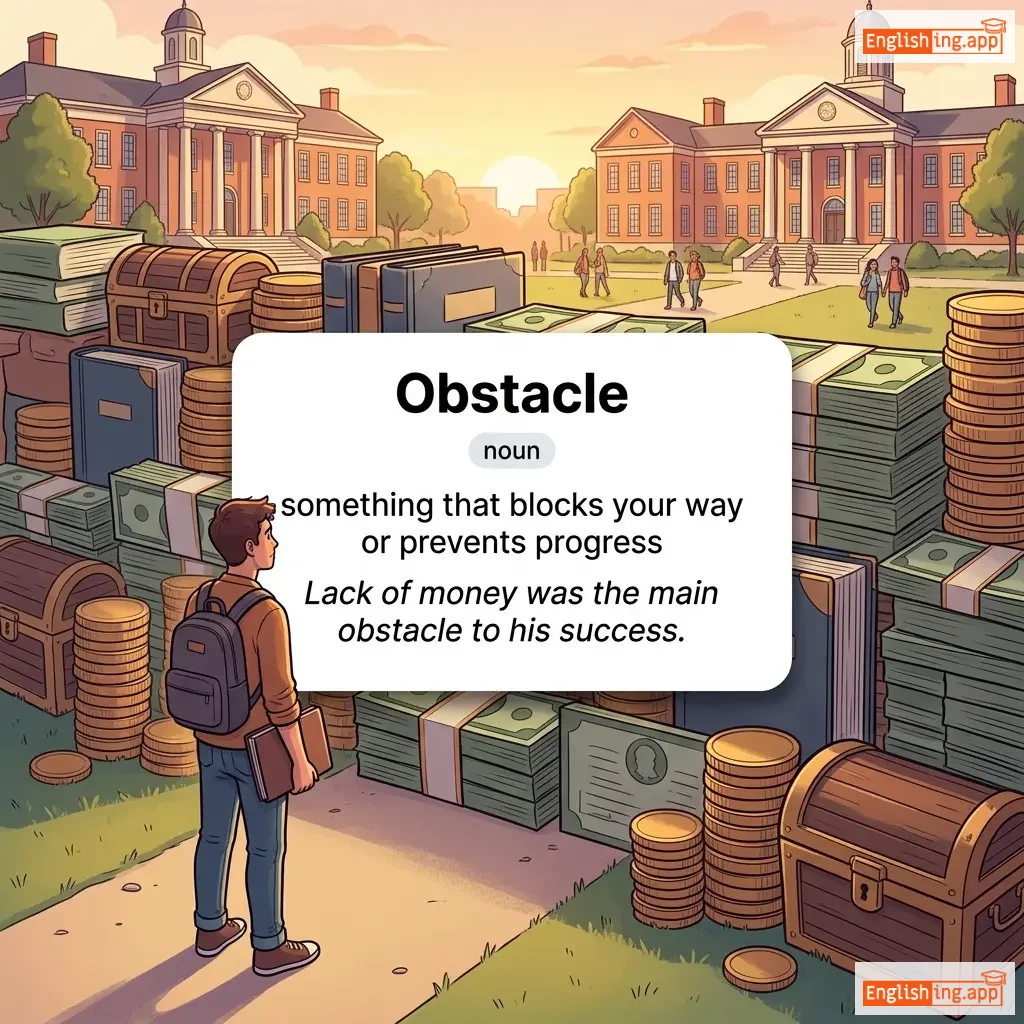
Obstacle definition card — visual illustration of the meaning
noun
/ˈɒbstəkəl/
препятствие (prepyatstvie)

something that blocks your way or prevents progress

"Lack of money was the main obstacle to his success."
"Отсутствие денег было главным препятствием для его успеха." (Otsutstvie deneg bylo glavnym prepyatstviem dlya yego uspekha.)
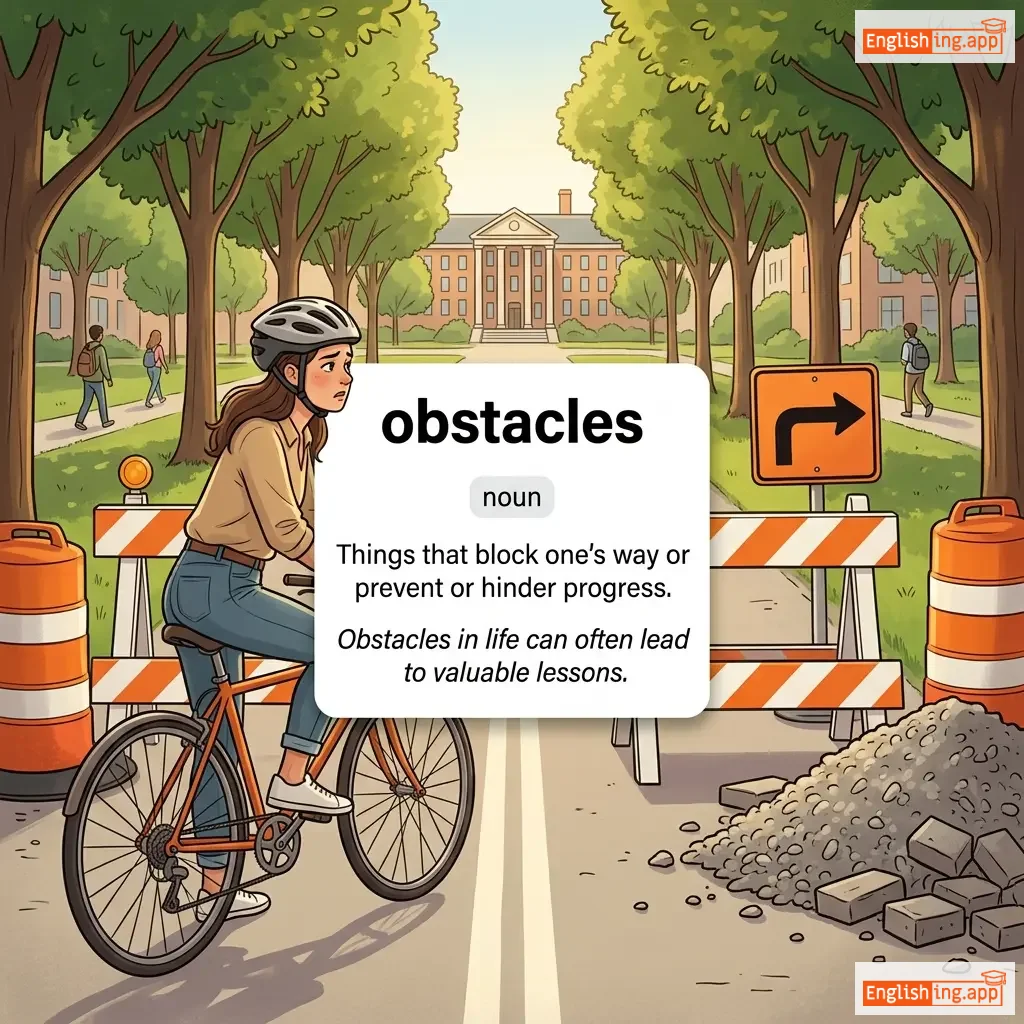
obstacles definition card — visual illustration of the meaning
noun
/ˈɒbstəkəlz/
препятствия (prepyatstviya)

Things that block one's way or prevent or hinder progress.

"Obstacles in life can often lead to valuable lessons."

"Препятствия в жизни часто приводят к ценным урокам." (Prepyatstviya v zhizni chasto privedut k tsennym urokam.)
noun
/ˌɒbstəˈtrɪʃən/
акушер-гинеколог (akusher-ginekolog)

A doctor specializing in pregnancy, childbirth, and women's reproductive health.

"The obstetrician monitored the mother’s health throughout the pregnancy."
"Акушер-гинеколог следил за здоровьем матери на протяжении всей беременности." (Akusher-ginekolog sledil za zdorov'em materi na protyazhenii vsei beremennosti.)
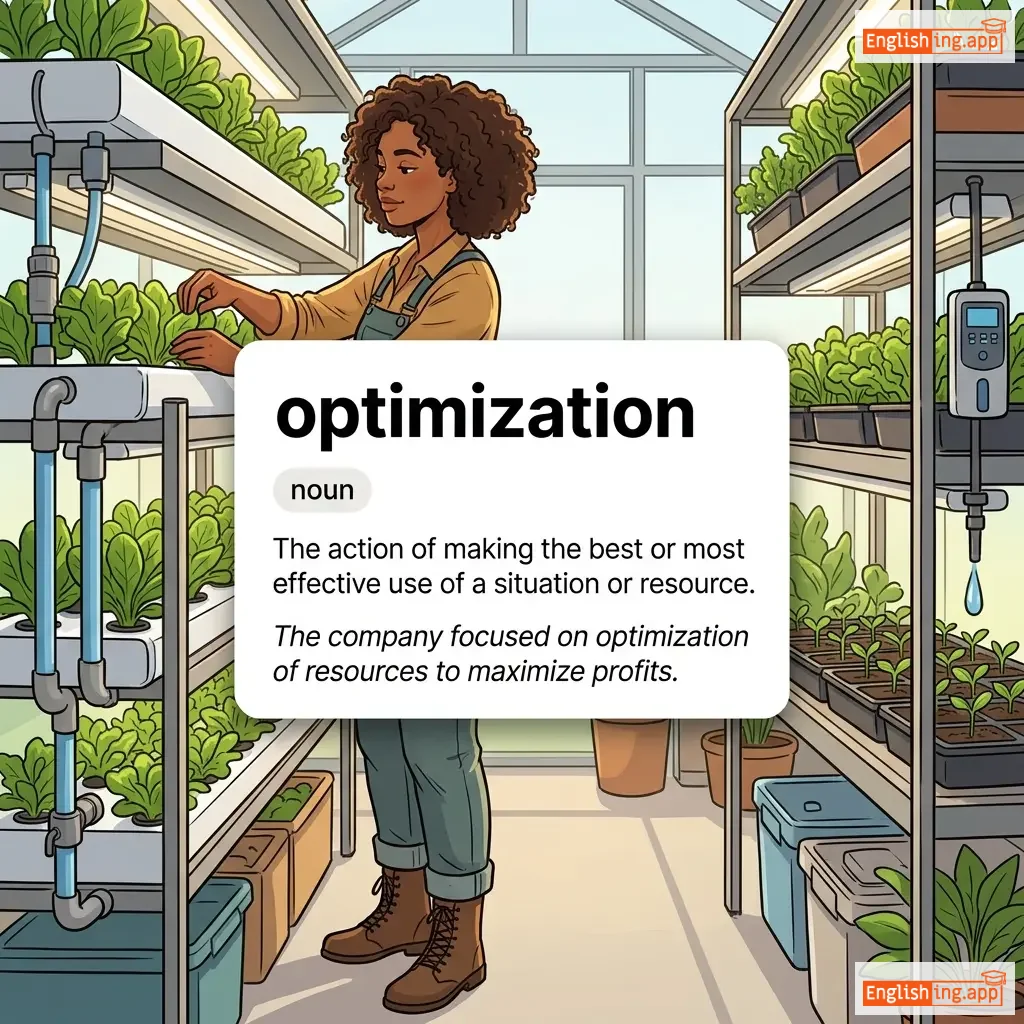
optimization definition card — visual illustration of the meaning
noun
ˌɒp.tɪ.mɪˈzeɪ.ʃən
оптимизация (optimizatsiya)

The action of making the best or most effective use of a situation or resource.

"The company focused on optimization of resources to maximize profits."
"Компания сосредоточила внимание на оптимизации ресурсов для максимизации прибыли." (Kompaniya sosredotochila vnimanie na optimizatsii resursov dlya maksimalizatsii pribyli.)
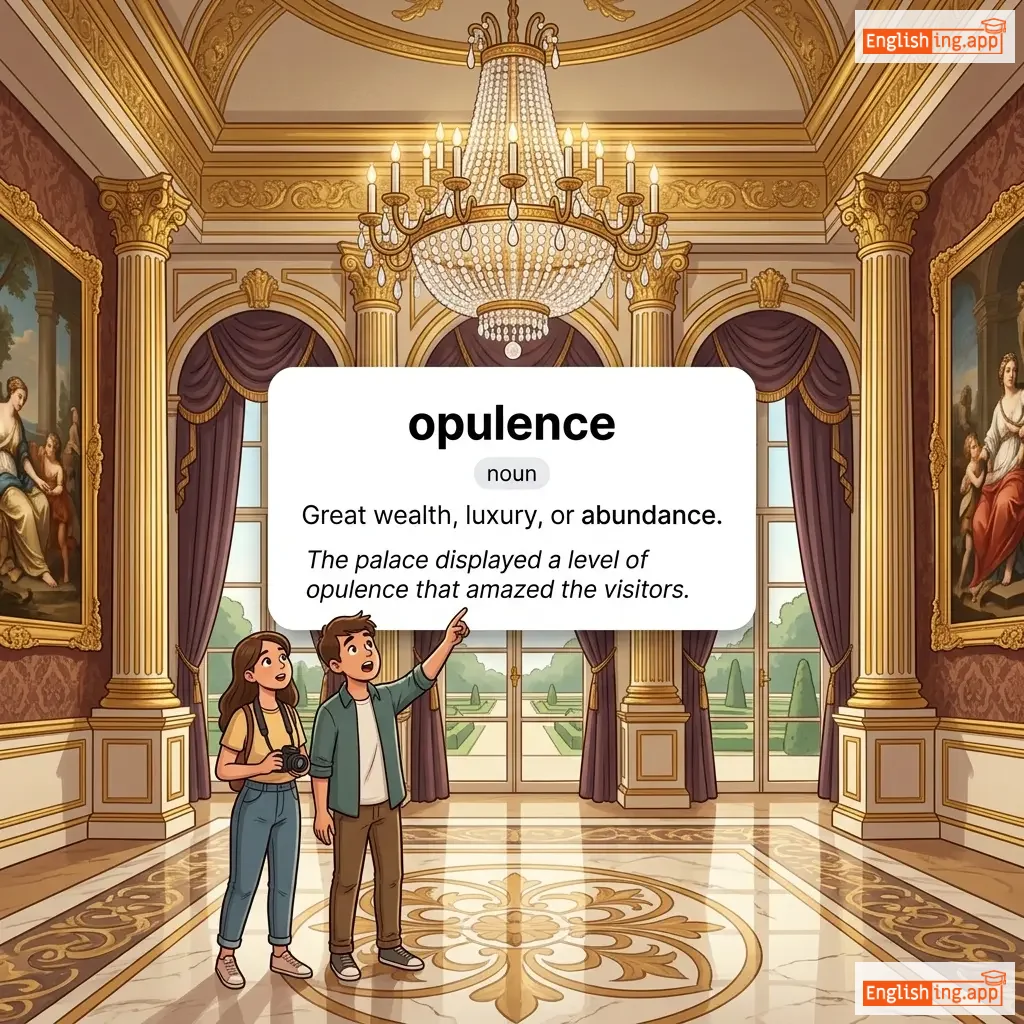
opulence definition card — visual illustration of the meaning
noun
/ˈɒpjʊləns/
роскошь (roskosh)

Great wealth, luxury, or abundance.

"The palace displayed a level of opulence that amazed the visitors."

"Дворец демонстрировал уровень роскоши, который поразил посетителей." (Dvorets demontstriroval urovny roskoshi, kotoryy porazil posetiteley.)
noun
/ɒpˈtɒmətri/
оптометрия (optometriya)

The practice or profession of examining the eyes and prescribing corrective lenses.

"She studied optometry at the university to become an eye specialist."

"Она изучала оптометрию в университете, чтобы стать специалистом по глазам." (Ona izuchala optometriyu v universitete, chtoby stat' spetsialistom po glazam.)
noun
/ɒpˈtɒmɪtrɪst/
оптометрист (optometrist)

A healthcare professional who examines eyes and prescribes corrective lenses.

"The optometrist prescribed new glasses for her."

"Оптометрист прописал ей новые очки." (Optometrist propisal yey novye ochki.)
adjective
/ˈɒpʃənəl/
необязательный (neobyazatel'nyy)

Not required; left to personal choice.

"The dress code for the party is optional."
"Дресс-код для вечеринки необязателен." (Dres-kod dlya vecherinki neobyazatel'en.)
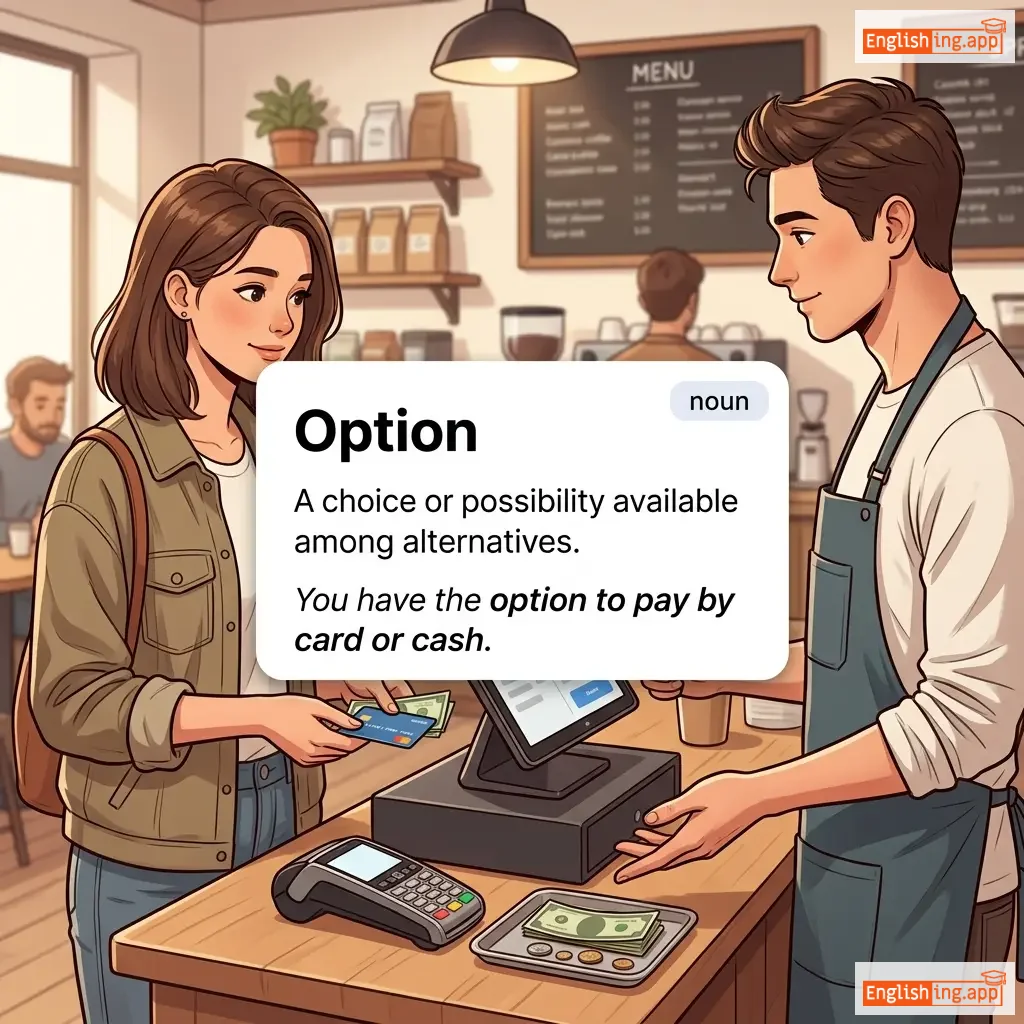
Option definition card — visual illustration of the meaning
noun
/ˈɒpʃən/
опция (optsiya)

A choice or possibility available among alternatives.

"You have the option to pay by card or cash."
"У вас есть возможность оплатить картой или наличными." (U vas yest' vozmozhnost' oplatit' kartoy ili nalichnymi.)
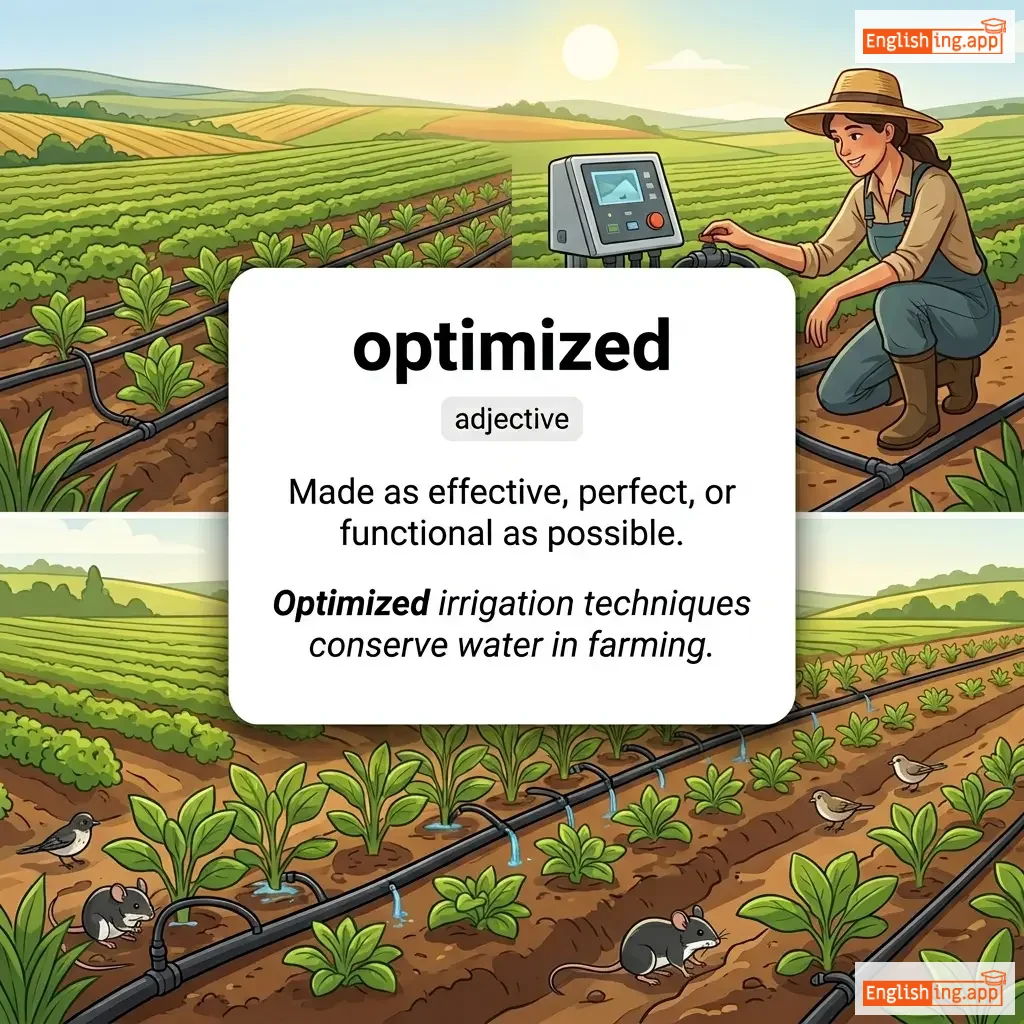
optimized definition card — visual illustration of the meaning
adjective
/ˈɒp.tɪ.maɪzd/
оптимизированный (optimizirovannyy)

Made as effective, perfect, or functional as possible.

"Optimized irrigation techniques conserve water in farming."

"Оптимизированные методы орошения экономят воду в сельском хозяйстве." (Optimizirovannyye metody orosheniya ekonomyat vodu v selskom khozyaystve.)
optimize definition card — visual illustration of the meaning
verb
ˈɒptɪmaɪz
оптимизировать, улучшать (optimizirovat, uluchshat)

Make the best or most effective use of a situation, opportunity, or resource.

"They optimized the software for faster performance."

"Они оптимизировали программное обеспечение для лучшей производительности." (Oni optimizirovali programmnoye obespecheniye dlya luchshey proizvoditel'nosti.)
optimal definition card — visual illustration of the meaning
adjective
/ˈɒptɪməl/
оптимальный (optimal'nyy)

Best or most favorable; ideal.

"This diet plan provides the optimal balance of nutrients."

"Этот диетический план обеспечивает оптимальное соотношение питательных веществ." (Etot dieticheskiy plan obespechivayet optimal'noye sootnosheniye pitatel'nykh veshchestv.)