वोकैबुलरीज

इंग्लिश वोकैबुलरी डिस्कवर, लर्न और मास्टर करें

noun
/əbˈdʒɛkʃən/
आपत्ति (apatti)

an expression or feeling of disapproval or opposition

"The lawyer raised an objection during the trial."

"वकील ने मुकदमे के दौरान एक आपत्ति उठाई।" (vakil ne mukadme ke dauran ek apatti uthayi.)
adjective
/əbˈdʒek.ʃən.ə.bəl/
आपत्तिजनक (apattijank)

arousing distaste or opposition; unpleasant or offensive

"His objectionable behavior made everyone uncomfortable."

"उसका आपत्तिजनक व्यवहार सभी को असहज बना देता था।" (uska apattijank vyavhaar sabhi ko asahaj bana deta tha)
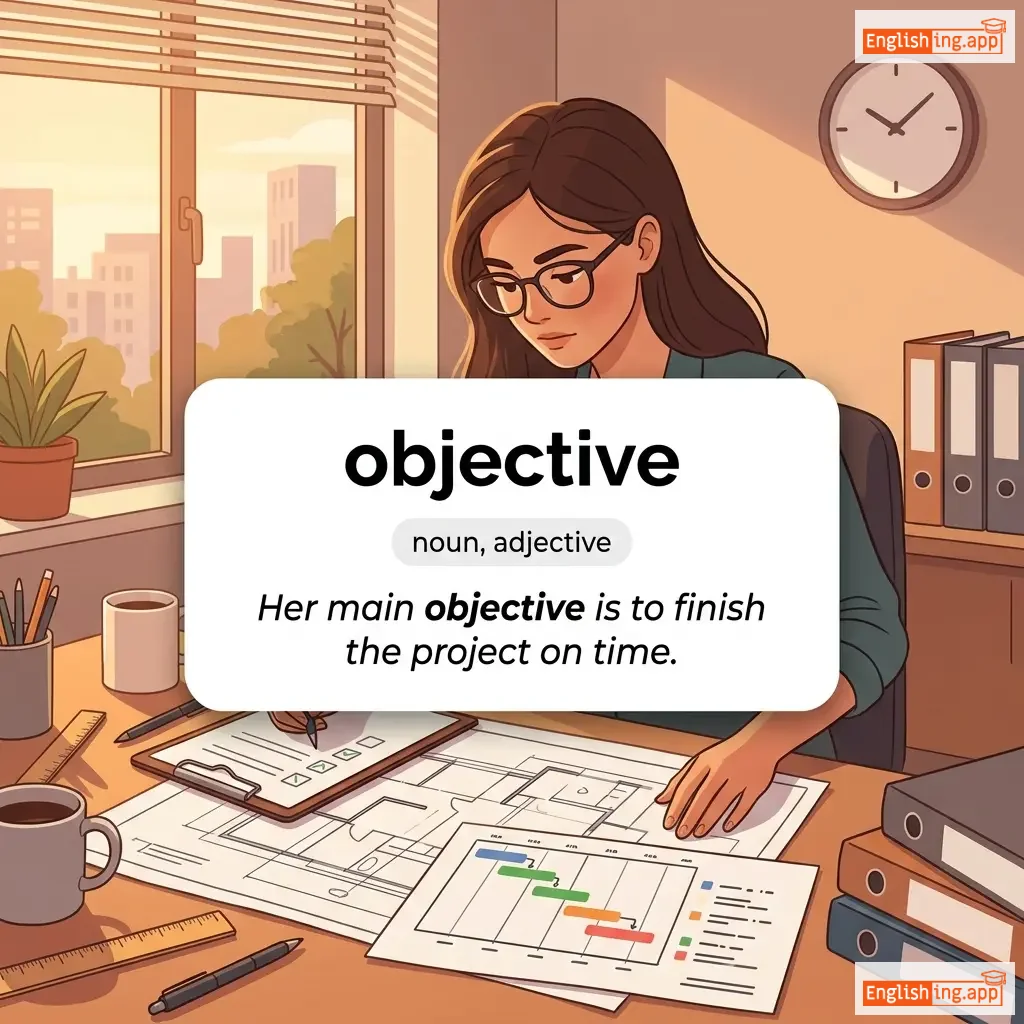
objective definition card — visual illustration of the meaning
noun, adjective
/əbˈdʒɛktɪv/
लक्ष्य / उद्देश्य (lakshya / uddeshya)

As a noun: a goal or aim. As an adjective: not influenced by personal feelings; unbiased.

"Her main objective is to finish the project on time."

"उसका मुख्य उद्देश्य समय पर परियोजना को पूरा करना है।" (Uska mukhya uddeshya samay par pariyojna ko poora karna hai.)
noun
/əbˈdʒɛktər/
विरोधी (virodhi)

a person who expresses opposition or disapproval to something

"The objector raised his concerns during the town meeting."

"विरोधी ने नगर सभा के दौरान अपनी चिंताओं को उठाया।" (Virodhi ne nagar sabha ke dauran apni chintao ko uthaya.)
verb
/ˈɑːbdʒərˌɡeɪt/
कड़ी फटकार लगाना (kadi fatkar lagana)

to scold or rebuke severely

"The teacher objurgated the student for being dishonest."

"टीचर ने छात्र को बेईमानी करने के लिए कड़ी फटकार लगाई।" (Teacher ne chatra ko beimani karne ke liye kadi fatkar lagayi.)
noun
/ˌɑːbdʒərˈɡeɪʃən/
कठोर फटकार (kathor fatkaar)

a harsh scolding or strong rebuke

"His misconduct earned him a severe objurgation from the manager."

"उसकी गलती के कारण उसे प्रबंधक से कठोर फटकार मिली।" (Uski galti ke kaaran use prabandhak se kathor fatkaar mili.)
noun
/oʊˈbleɪʃən/
धार्मिक अर्पण (dharmik arpan)

a religious offering, especially of bread or wine to God

"The priest placed the oblation on the altar during the ceremony."

"पुरोहित ने समारोह के दौरान वेदी पर धार्मिक अर्पण रखा।" (Purohit ne samaroh ke dauran vedi par dharmik arpan rakha.)
verb
/ˈɑːblɪˌɡeɪt/
बाध्य करना (baadhya karna)

to bind legally or morally; to compel someone to do something

"The contract obligates the company to provide timely service."

"ठेका कंपनी को समय पर सेवा प्रदान करने के लिए बाध्य करता है।" (Theka company ko samay par seva pradan karne ke liye baadhya karta hai.)
noun
/ˌɒblɪˈɡeɪʃən/
जिम्मेदारी (zimmedari)

a duty or commitment

"You have an obligation to follow the rules."

"तुम्हारे पास नियमों का पालन करने की एक जिम्मेदारी है।" (Tumhare paas niyamon ka palan karne ki ek zimmedari hai.)
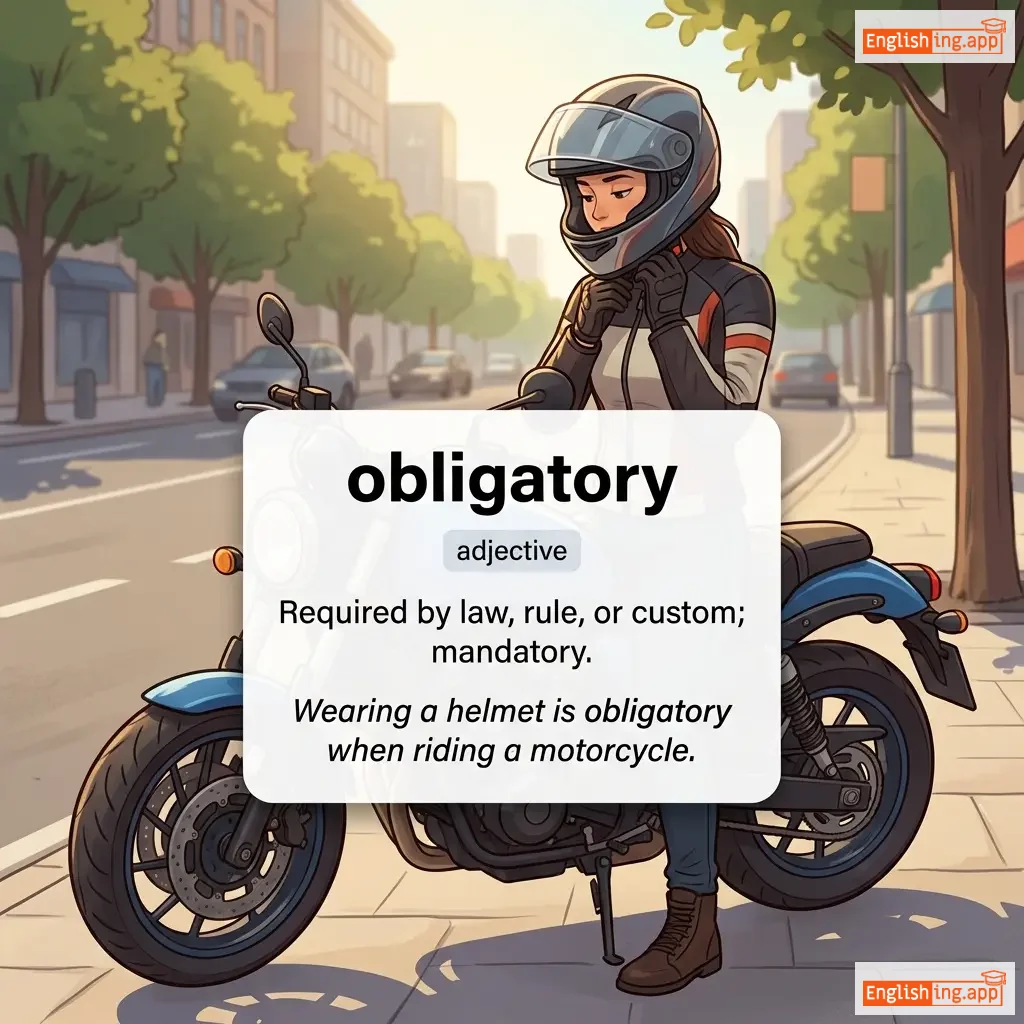
obligatory definition card — visual illustration of the meaning
adjective
/əˈblɪɡətɔːri/
अनिवार्य (obligatory)

Required by law, rule, or custom; mandatory.

"Wearing a helmet is obligatory when riding a motorcycle."

"मोटरसाइकिल चलाते समय हेलमेट पहनना अनिवार्य है." (motor saikil chalate samay helmet pehnana anivaarya hai)
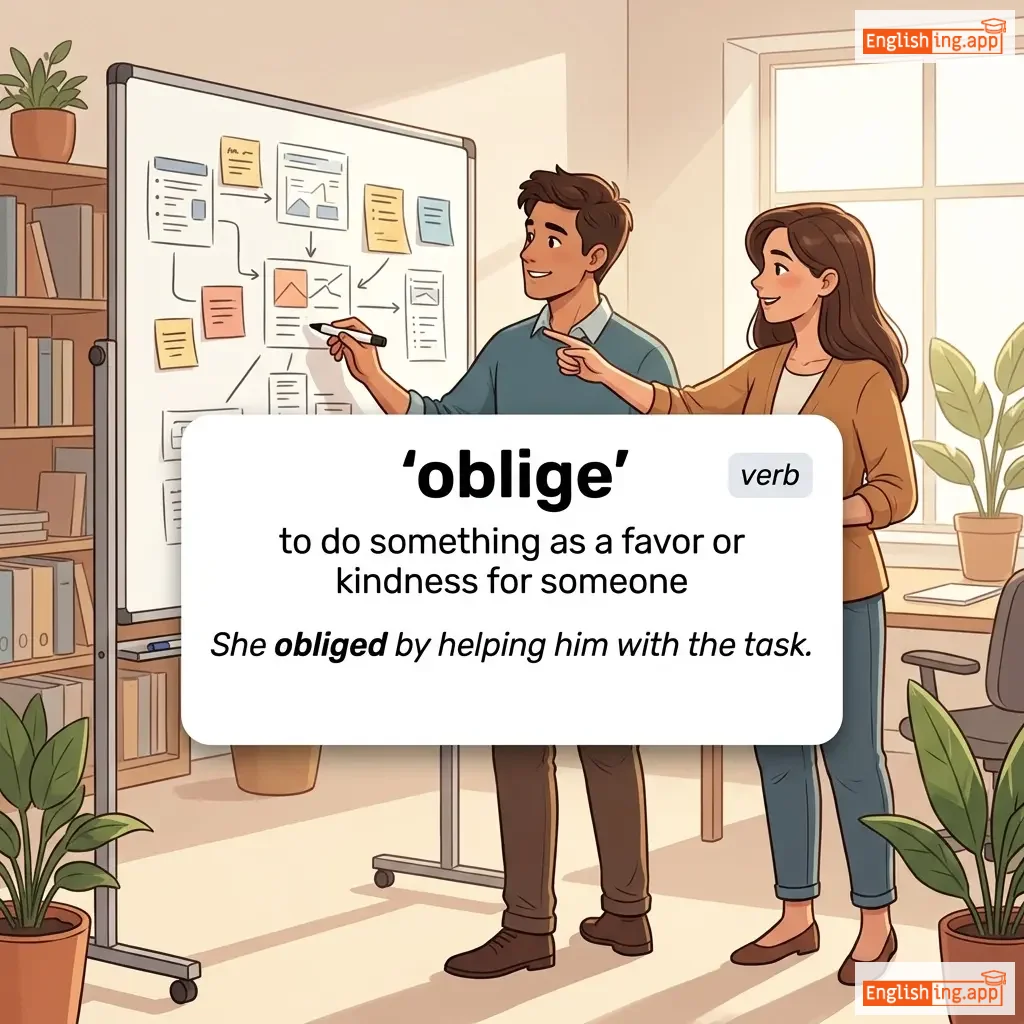
oblige definition card — visual illustration of the meaning
verb
/əˈblaɪdʒ/
सहायता करना (sahayata karna)

to do something as a favor or kindness for someone

"She obliged by helping him with the task."

"उसने उस कार्य में उसकी मदद करके अनुग्रह दिखाया।" (Usne us kaarya mein uski madad karke anugrah dikhaya.)
adjective
/əˈblaɪdʒɪŋ/
सहायिक (sahayik)

Willing to help or do favors; accommodating.

"The staff at the hotel were very obliging and friendly."

"होटल में स्टाफ बहुत सहायक और मित्रवत था।" (hotel mein staff bahut sahayak aur mitravat tha.)
adjective
/əˈbliːk/ or /oʊˈbliːk/
तिरछा (tirchha)

Not explicit or direct in addressing a point; slanting or indirect.

"She made an oblique reference to his past mistakes."

"उसने उसकी पुरानी गलतियों का तिरछा संदर्भ दिया।" (Usne uski purani galtiyon ka tirchha sandarbh diya.)
noun
/əˈblɪkwɪti/
विकृति (vikriti)

Deviation from moral or usual conduct; indirectness or lack of straightforwardness.

"The politician was criticized for the obliquity of his answers."

"राजनीतिज्ञ को उनके उत्तरों की विकृति के लिए आलोचना की गई।" (rajnitijñ ko unke uttarō ki vikriti ke liye alochna ki gayi.)
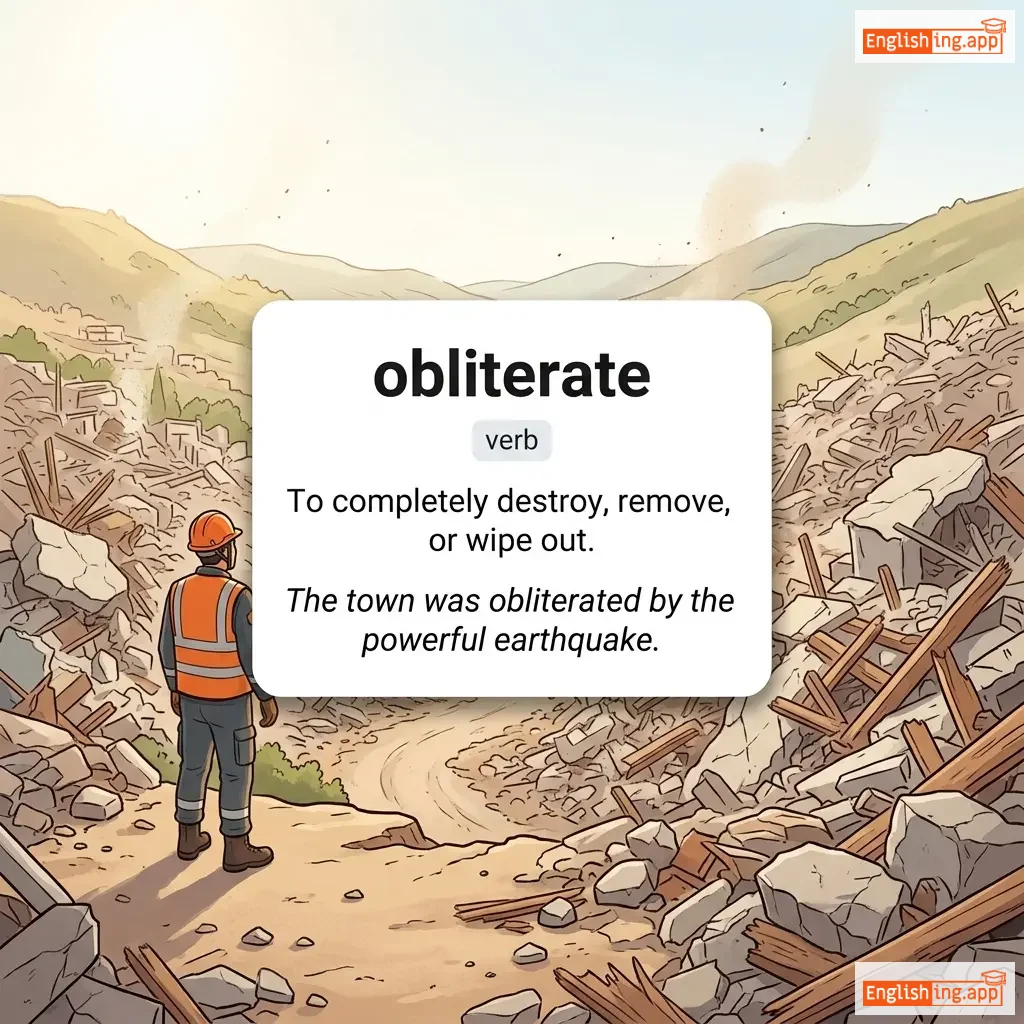
obliterate definition card — visual illustration of the meaning
verb
/əˈblɪtəreɪt/
पूर्ण रूप से नष्ट करना (poorn roop se nasht karna)

To completely destroy, remove, or wipe out.

"The town was obliterated by the powerful earthquake."

"शहर शक्तिशाली भूकंप से पूर्ण रूप से नष्ट हो गया था।" (shahar shaktishaali bhookamp se poorn roop se nasht ho gaya tha.)
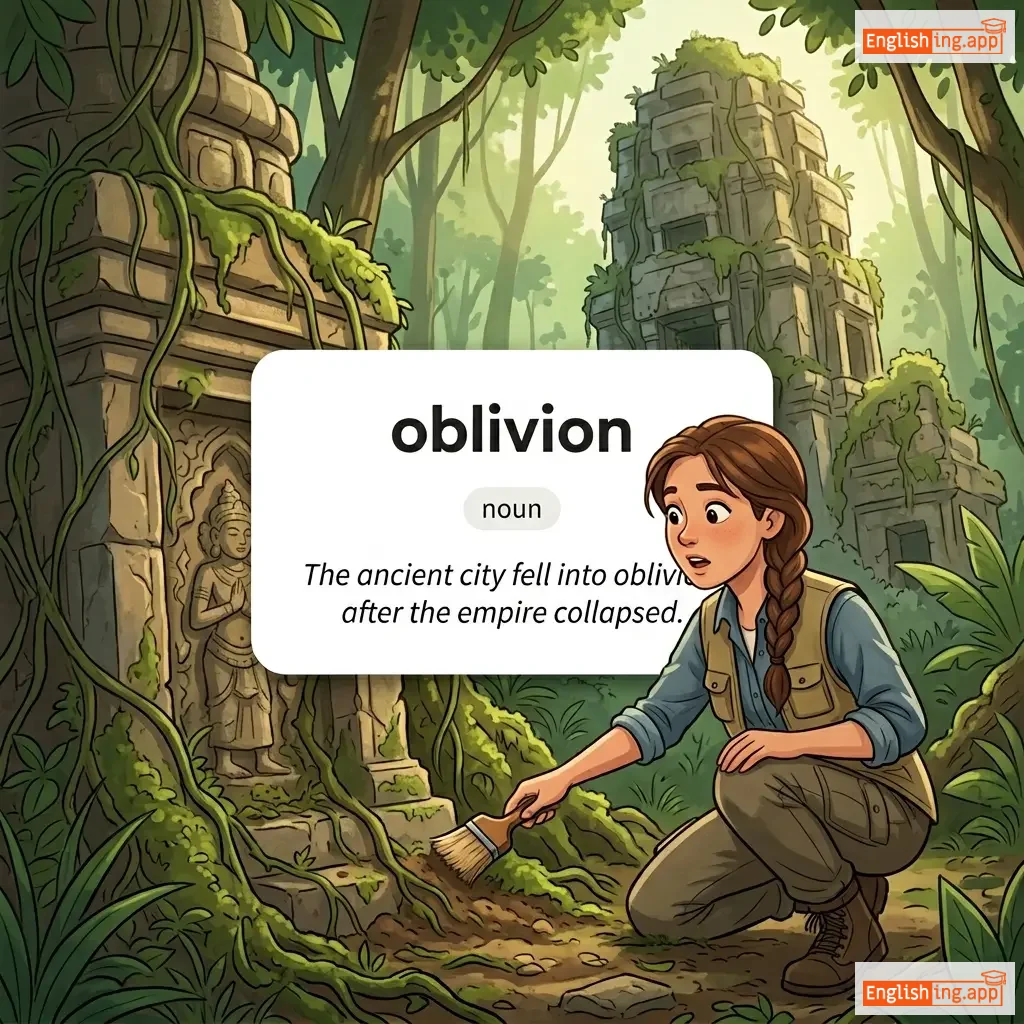
oblivion definition card — visual illustration of the meaning
noun
/əˈblɪviən/
अविस्मरण (avismaran)

The state of being completely forgotten or unknown; the state of being unconscious or unaware.

"The ancient city fell into oblivion after the empire collapsed."

"प्राचीन शहर साम्राज्य के पतन के बाद अविस्मरण में गिर गया था।" (Prachin shahar samrajya ke patan ke baad avismaran mein gir gaya tha.)
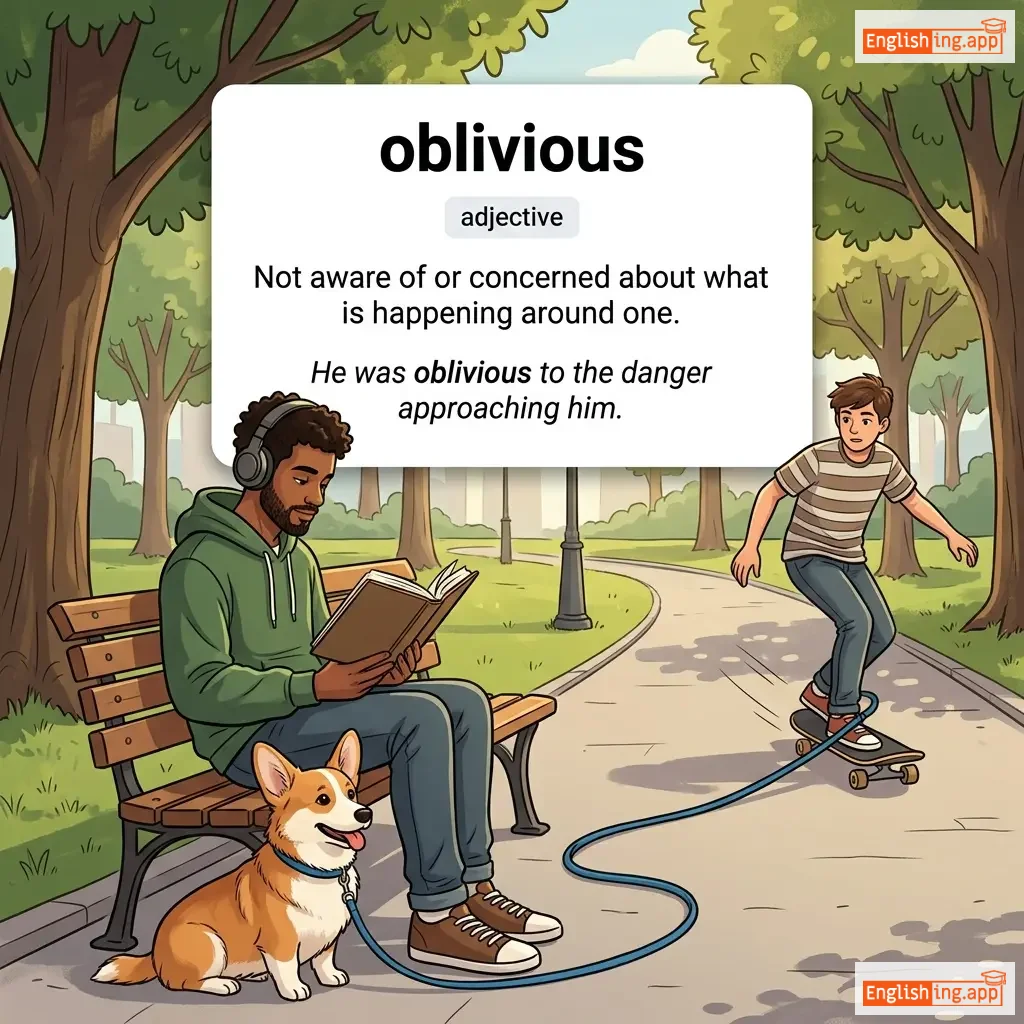
oblivious definition card — visual illustration of the meaning
adjective
/əˈblɪviəs/
बेखबर (oblivious)

Not aware of or concerned about what is happening around one.

"He was oblivious to the danger approaching him."

"वह अपने चारों ओर आ रहे खतरे के बारे में अंजान था।" (vah apne chaaron or aa rahe khatare ke baare mein anjaan tha)
noun
/ˈɒbləkwɪ/
दुर्वचन (durvachan)

Strong public criticism or verbal abuse; disgrace or shame from public condemnation.

"The politician faced obloquy after the scandal was exposed."

"राजनेता को स्कैंडल के उजागर होने के बाद दुर्वचन का सामना करना पड़ा।" (Rajnetaa ko scandal ke ujagar hone ke baad durvachan ka saamna karna pada.)
adjective
/əbˈnɒkʃəs/
घिनौना (ghinouna)

Extremely unpleasant, offensive, or annoying.

"The obnoxious behavior of the guest ruined the party."

"अतिथि का घिनौना व्यवहार पार्टी को बर्बाद कर दिया।" (Atithi ka ghinouna vyavhaar party ko barbaad kar diya.)
adjective, verb
/əbˈskjʊr/
अस्पष्ट (aspasht)

Not clearly expressed or understood; to make something difficult to see or understand.

"The meaning of the poem was obscure to most readers."

"कविता का अर्थ अधिकांश पाठकों के लिए अस्पष्ट था।" (Kavita ka arth adhikansh pathako ke liye aspasht tha.)
noun
/ˈɒbsɪkwiːz/
अंत्येष्टि संस्कार (antyeshti sanskar)

Funeral rites or ceremonies.

"The obsequies for the late leader drew thousands of mourners."

"वह नेता के अंतिम संस्कार में हजारों शोक व्यक्तियों ने भाग लिया।" (Vah neta ke antim sanskar mein hazaron shok vyaktiyon ne bhag liya.)
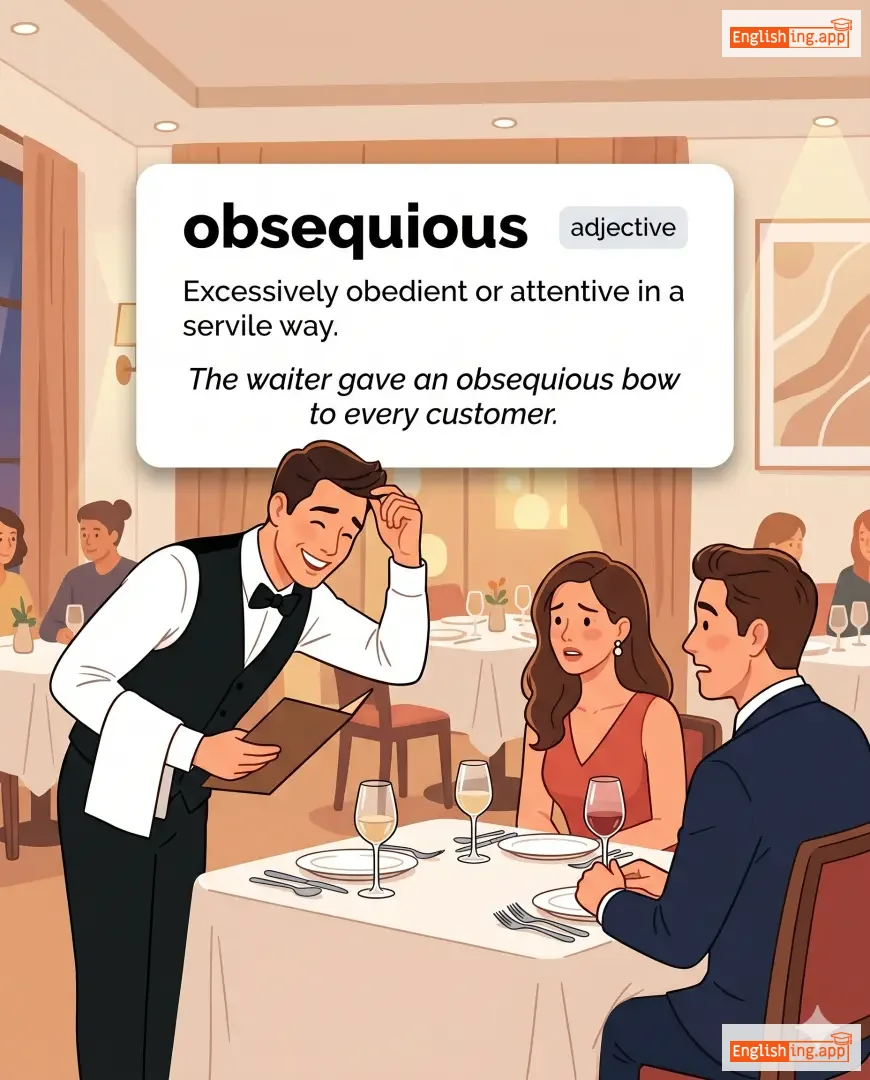
obsequious definition card — visual illustration of the meaning
adjective
/əbˈsiːkwɪəs/
चापलूस (chaploose)

Excessively obedient or attentive in a servile way.

"The waiter gave an obsequious bow to every customer."

"वेटर ने हर ग्राहक को चापलूसी से सिर झुकाया।" (Waiter ne har grahak ko chaploosi se sir jhukaya.)
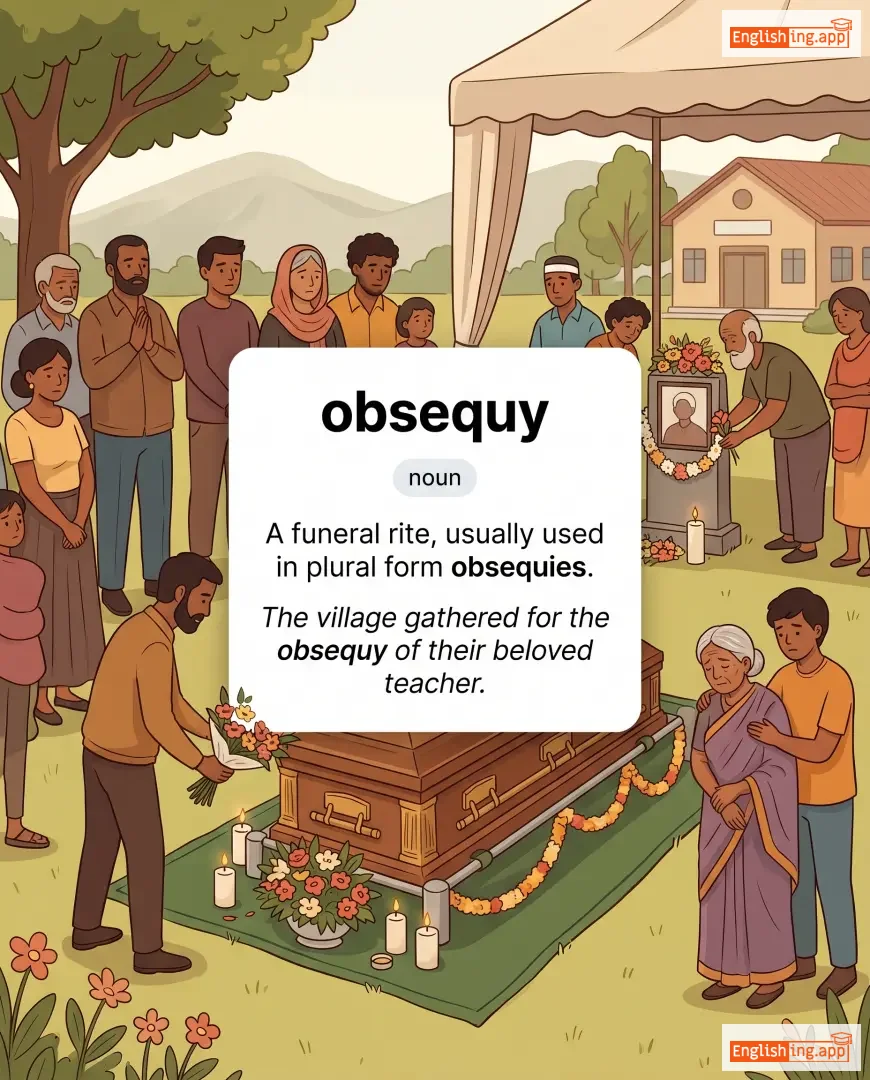
obsequy definition card — visual illustration of the meaning
noun
/ˈɒbsɪkwi/
अंत्येष्टि (antyeshti)

A funeral rite, usually used in plural form obsequies.

"The village gathered for the obsequy of their beloved teacher."

"गांववालों ने अपने प्रिय शिक्षक की अंत्येष्टि में भाग लिया।" (Gaavwalo ne apne priya shikshak ki antyeshti mein bhag liya.)
noun
/əbˈzɜːvəns/
पालन (paalan)

The practice of following a custom, rule, or religious law.

"The festival is held in observance of a centuries-old tradition."

"त्योहार एक सदी पुरानी परंपरा के पालन में आयोजित किया जाता है।" (Tyohar ek sadi purani parampara ke paalan mein aayojit kiya jata hai.)
adjective
/əbˈzɜːvənt/
सतर्क (satark)

Quick to notice details or attentive to rules and customs.

"She is very observant and rarely misses any detail."

"वह बहुत सतर्क है और शायद ही कभी कोई विवरण छोड़ती है।" (Vah bahut satark hai aur shaayad hi kabhi koi vivaran chhodti hai.)
noun
/ˌɒbzəˈveɪʃən/
अवलोकन (avlokan)

the action or process of observing something carefully in order to gain information

"The scientist made an observation during the experiment."

"वैज्ञानिक ने प्रयोग के दौरान एक अवलोकन किया।" (Vaigyanik ne prayog ke dauran ek avlokan kiya.)
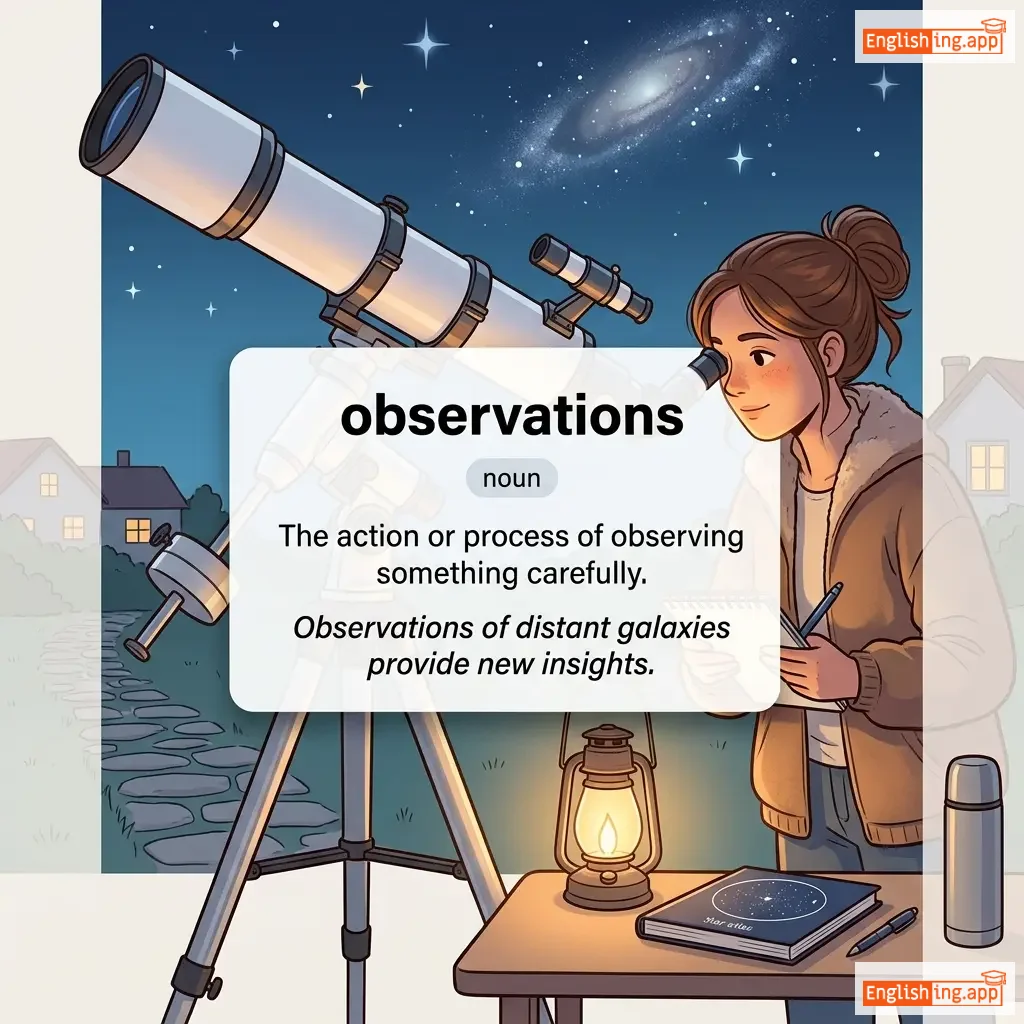
observations definition card — visual illustration of the meaning
noun
/ˌɒb.zəˈveɪ.ʃənz/
पर्यवेक्षण (paryaveshan)

The action or process of observing something carefully.

"Observations of distant galaxies provide new insights."

"दूर की आकाशगंगाओं के पर्यवेक्षण से नई समझ प्राप्त होती है।" (Door ki aakashgangaon ke paryaveshan se nayi samajh prapt hoti hai.)
noun
/əbˈzɜːrvətɔːri/
उद्यानशाला (udyanshala)

A building equipped for observing astronomical or meteorological events.

"The observatory is open to the public on weekends."

"उद्यानशाला सप्ताहांत में जनता के लिए खुली रहती है।" (Udyanshala saptahant mein janta ke liye khuli rahti hai.)
verb
/əbˈzɜːv/
नजर रखना (nazar rakhna)

to watch carefully and attentively

"The teacher asked the students to observe the experiment."

"शिक्षक ने छात्रों से प्रयोग को देखने को कहा।" (Shikshak ne chhatron se prayog ko dekhne ko kaha.)
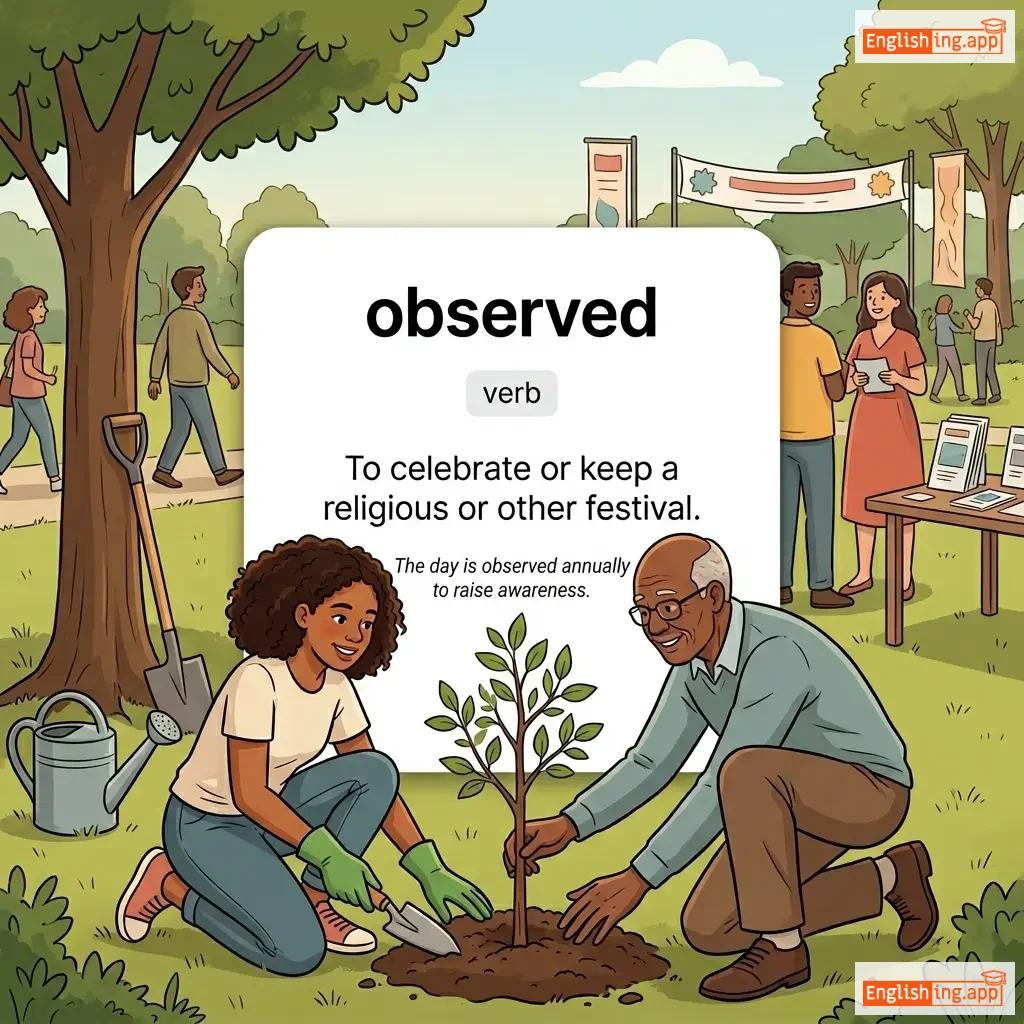
observed definition card — visual illustration of the meaning
verb
əbˈzɜːrvd
मनाना (manaana)

To celebrate or keep a religious or other festival.

"The day is observed annually to raise awareness."

"दिन को प्रति वर्ष जागरूकता बढ़ाने के लिए मनाया जाता है।" (din ko prati varsh jagrukta badhane ke liye manaya jata hai.)
noun
/əbˈzɜːvər/
पर्यवेक्षक (paryavekṣak)

a person who watches or notices something

"The observer took notes during the meeting."

"पर्यवेक्षक ने बैठक के दौरान नोट्स लिए।" (Paryavekṣak ne baithak ke dauran noṭs liye.)
verb
/əbˈsɛs/
आवेशित करना (aaveshit karna)

To preoccupy or fill the mind of someone continually and to an excessive degree.

"She tends to obsess over small details."

"वह छोटे-छोटे विवरणों पर बहुत ध्यान देती है।" (Vah chhote-chhote vivaron par bahut dhyan deti hai.)
noun
/əbˈsɛʃən/
आसक्तता (asaktata)

An idea, thought, or concern that continually preoccupies or intrudes on a person's mind.

"His obsession with success drove him to work day and night."

"सफलता के प्रति उसकी आसक्तता ने उसे दिन-रात काम करने पर मजबूर कर दिया।" (Safalta ke prati uski asaktata ne use din-raat kaam karne par majboor kar diya.)
adjective
/əbˈsɛsɪv/
आसक्तिपूर्ण (asaktipoorn)

Relating to or characterized by an obsession; thinking about something too much.

"He has an obsessive interest in cleanliness."

"उसकी सफाई में अत्यधिक रुचि है।" (Uski safai mein atyadhik ruchi hai.)
noun
/əbˈsɪdiən/
ऑब्सीडियन (काले कांच जैसा ज्वालामुखी पत्थर) (obsidian (kaale kaanch jaisa jwalaamukhi pathar))

A hard, dark, glasslike volcanic rock formed by rapid solidification of lava.

"The knife was made from sharp obsidian."

"चाकू तेज़ ऑब्सीडियन से बना था।" (Chakoo tez obsidian se bana tha.)
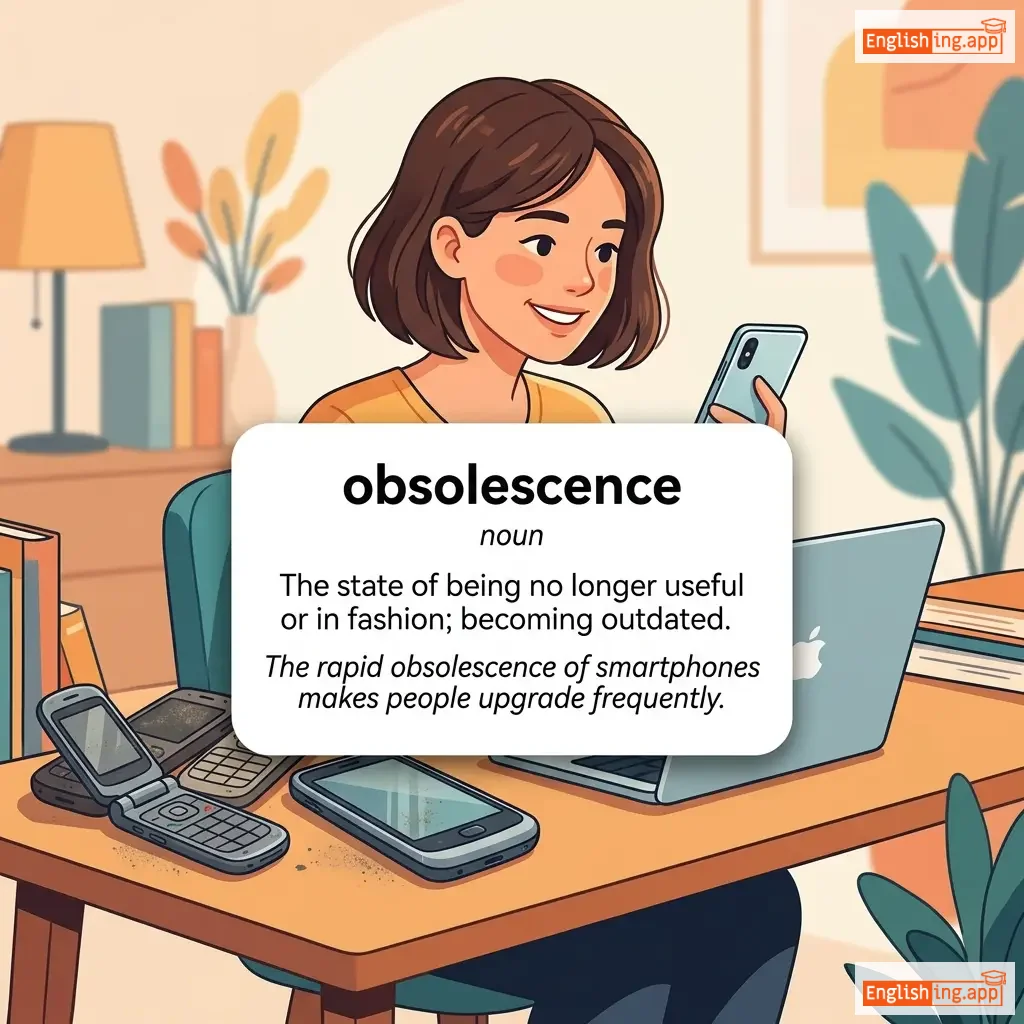
obsolescence definition card — visual illustration of the meaning
noun
/ˌɒbsəˈlɛsəns/
निष्क्रियता (nishkriyata)

The state of being no longer useful or in fashion; becoming outdated.

"The rapid obsolescence of smartphones makes people upgrade frequently."

"स्मार्टफोन की तेजी से निष्क्रियता लोगों को बार-बार अपग्रेड करने के लिए मजबूर करती है।" (Smartphone ki tezi se nishkriyata logon ko baar-baar upgrade karne ke liye majboor karti hai.)
adjective
/ˌɒbsəˈlɛsnt/
अप्रचलित (aprachalit)

Becoming outdated or on the way to becoming obsolete.

"The obsolescent technology could not compete with modern devices."

"अप्रचलित प्रौद्योगिकी आधुनिक उपकरणों से प्रतिस्पर्धा नहीं कर पा रही थी।" (Aprochalit praudyogiki aadhunik upkaran se pratishpardha nahi kar pa rahi thi.)
adjective
/ˌɒbsəˈliːt/
पुराना (purana)

No longer in use or out of date.

"Floppy disks are now completely obsolete."

"फ्लॉपी डिस्क अब पूरी तरह से पुरानी हो चुकी है।" (Floppy disk ab puri tarah se purani ho chuki hai.)
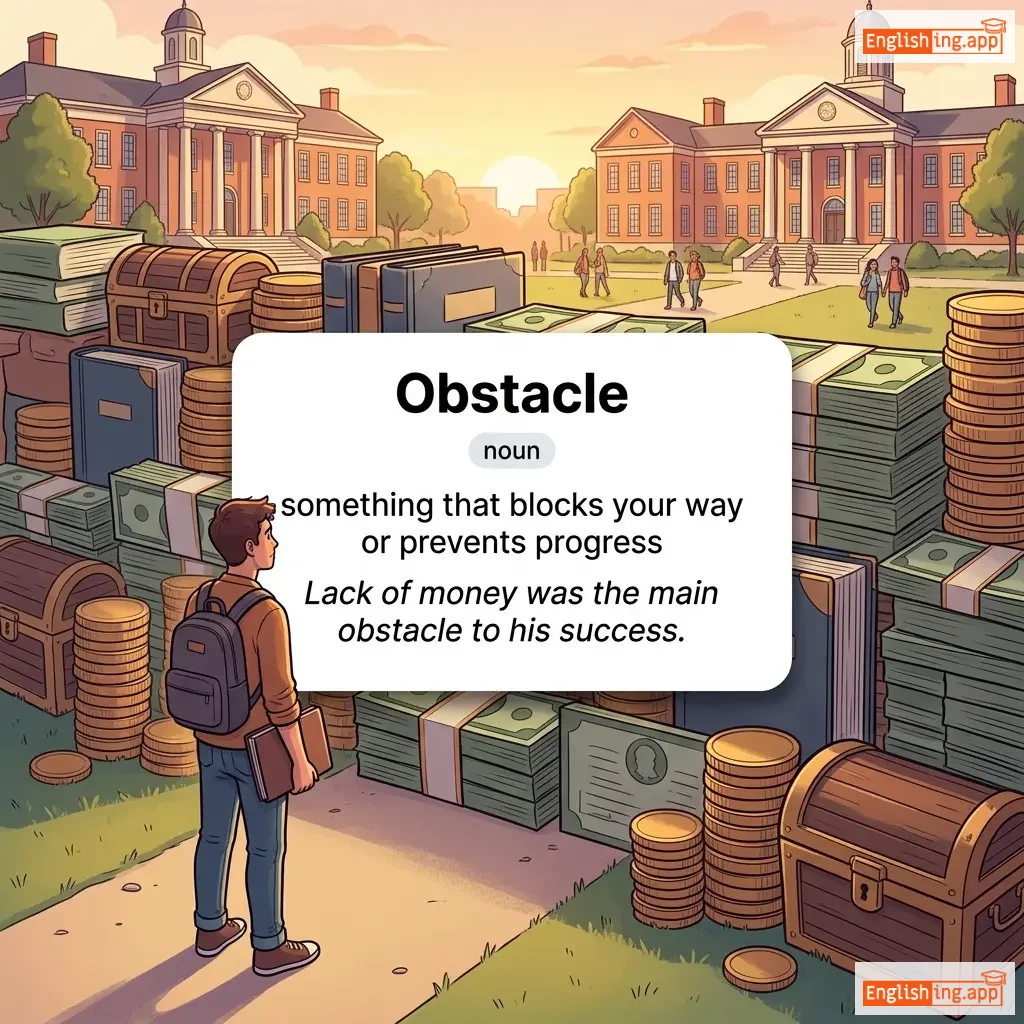
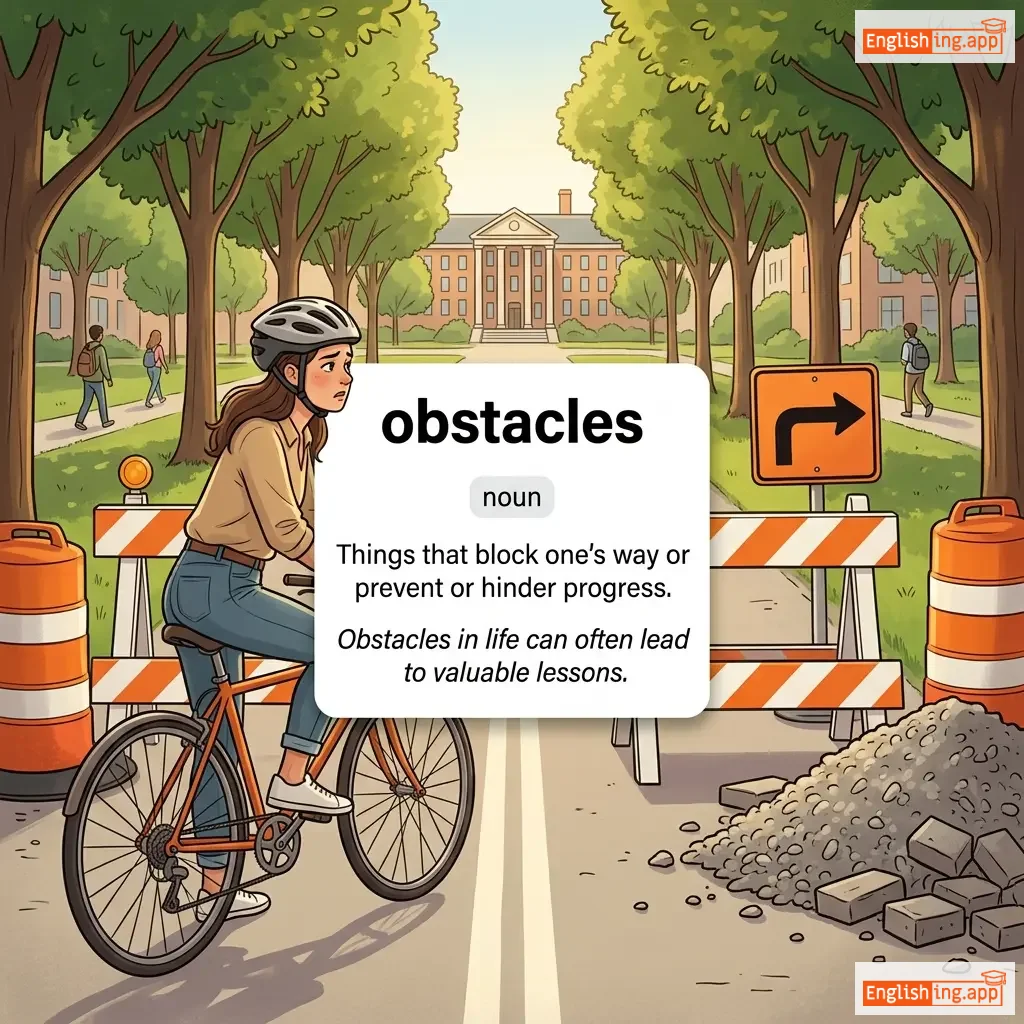
Obstacle definition card — visual illustration of the meaning
noun
/ˈɒbstəkəl/
अवरोध (avrodh)

something that blocks your way or prevents progress

"Lack of money was the main obstacle to his success."

"पैसे की कमी उसकी सफलता में मुख्य अवरोध थी।" (paise ki kami uski safalta mein mukhya avrodh thi)
obstacles definition card — visual illustration of the meaning
noun
/ˈɒbstəkəlz/
बाधाएं (baadhaen)

Things that block one's way or prevent or hinder progress.

"Obstacles in life can often lead to valuable lessons."

"जिंदगी में रुकावटें अक्सर मूल्यवान पाठों की ओर ले जाती हैं।" (Zindagi mein rukavaten aksar mulyavan pathon ki or le jaati hain.)
noun
/ˌɒbstəˈtrɪʃən/
प्रसूति विशेषज्ञ (prasooti visheshagya)

A doctor specializing in pregnancy, childbirth, and women's reproductive health.

"The obstetrician monitored the mother’s health throughout the pregnancy."

"प्रसूति विशेषज्ञ ने गर्भावस्था के दौरान मां के स्वास्थ्य की निगरानी की।" (Prasooti visheshagya ne garbhavastha ke dauran maan ke swasthya ki nigrani ki.)
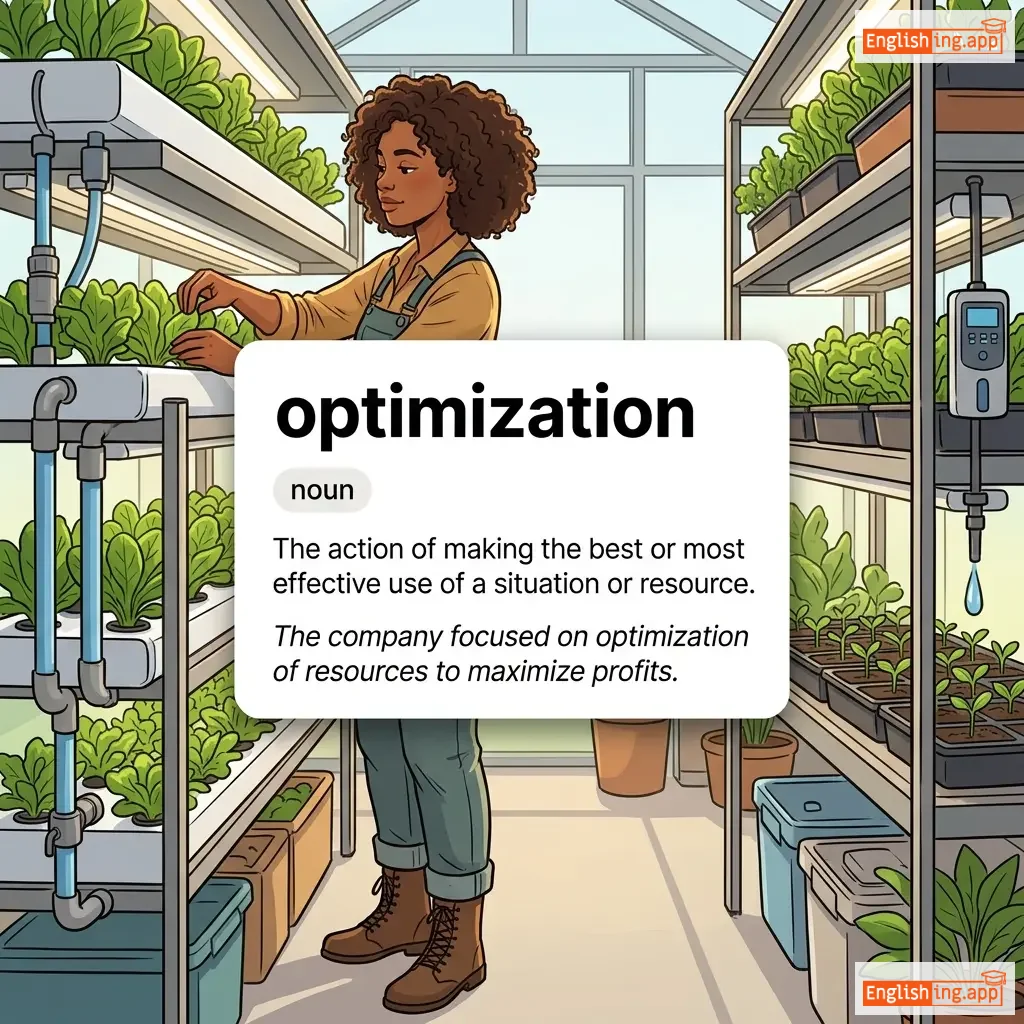
optimization definition card — visual illustration of the meaning
noun
ˌɒp.tɪ.mɪˈzeɪ.ʃən
सर्वोत्तमकरण (sarvottamkaran)

The action of making the best or most effective use of a situation or resource.

"The company focused on optimization of resources to maximize profits."

"कंपनी ने मुनाफे को अधिकतम करने के लिए संसाधनों के सर्वोत्तम उपयोग पर ध्यान केंद्रित किया।" (Kampani ne munafe ko adhiktam karne ke liye sansadhanon ke sarvottam upyog par dhyan kendrit kiya.)
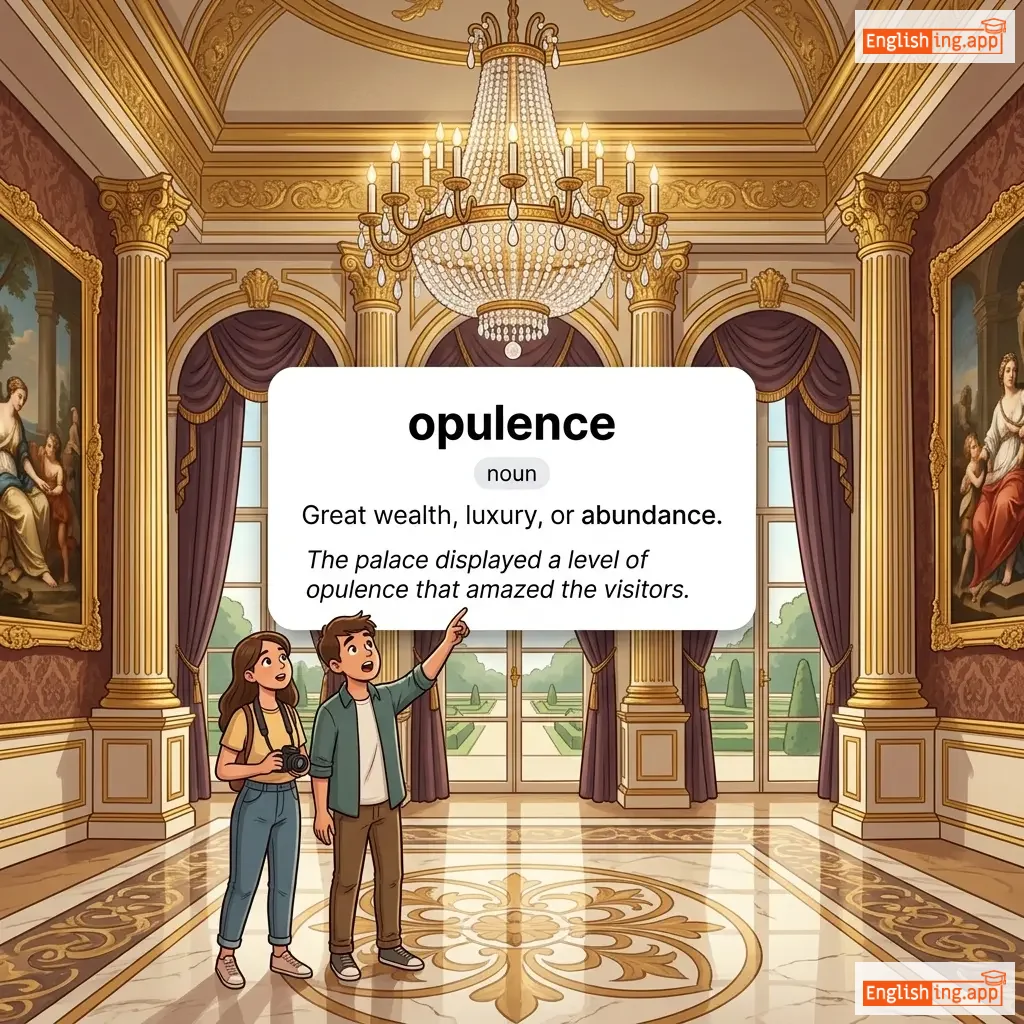
opulence definition card — visual illustration of the meaning
noun
/ˈɒpjʊləns/
वैभव (vaibhav)

Great wealth, luxury, or abundance.

"The palace displayed a level of opulence that amazed the visitors."

"महल में एक ऐसा स्तर था वैभव का जिसने आगंतुकों को आश्चर्यचकित कर दिया।" (mahal mein ek aisa sttar tha vaibhav ka jisne aagantukon ko aashcharyachakit kar diya.)
noun
/ɒpˈtɒmətri/
आँख विज्ञान (aankh vigyaan)

The practice or profession of examining the eyes and prescribing corrective lenses.

"She studied optometry at the university to become an eye specialist."

"उसने विश्वविद्यालय में ऑप्टोमेट्री की पढ़ाई की ताकि वह एक नेत्र विशेषज्ञ बन सके।" (Usne vishwavidyalay mein optometry ki padhai ki taaki woh ek netra visheshagya ban sake.)
noun
/ɒpˈtɒmɪtrɪst/
ऑप्टोमेट्रिस्ट (optometrist)

A healthcare professional who examines eyes and prescribes corrective lenses.

"The optometrist prescribed new glasses for her."

"ऑप्टोमेट्रिस्ट ने उसके लिए नए चश्मे का सुझाव दिया।" (optometrist ne uske liye naye chashme ka sujhav diya.)
adjective
/ˈɒpʃənəl/
वैकल्पिक (vaikalpik)

Not required; left to personal choice.

"The dress code for the party is optional."

"पार्टी के लिए ड्रेस कोड वैकल्पिक है।" (Party ke liye dress code vaikalpik hai.)
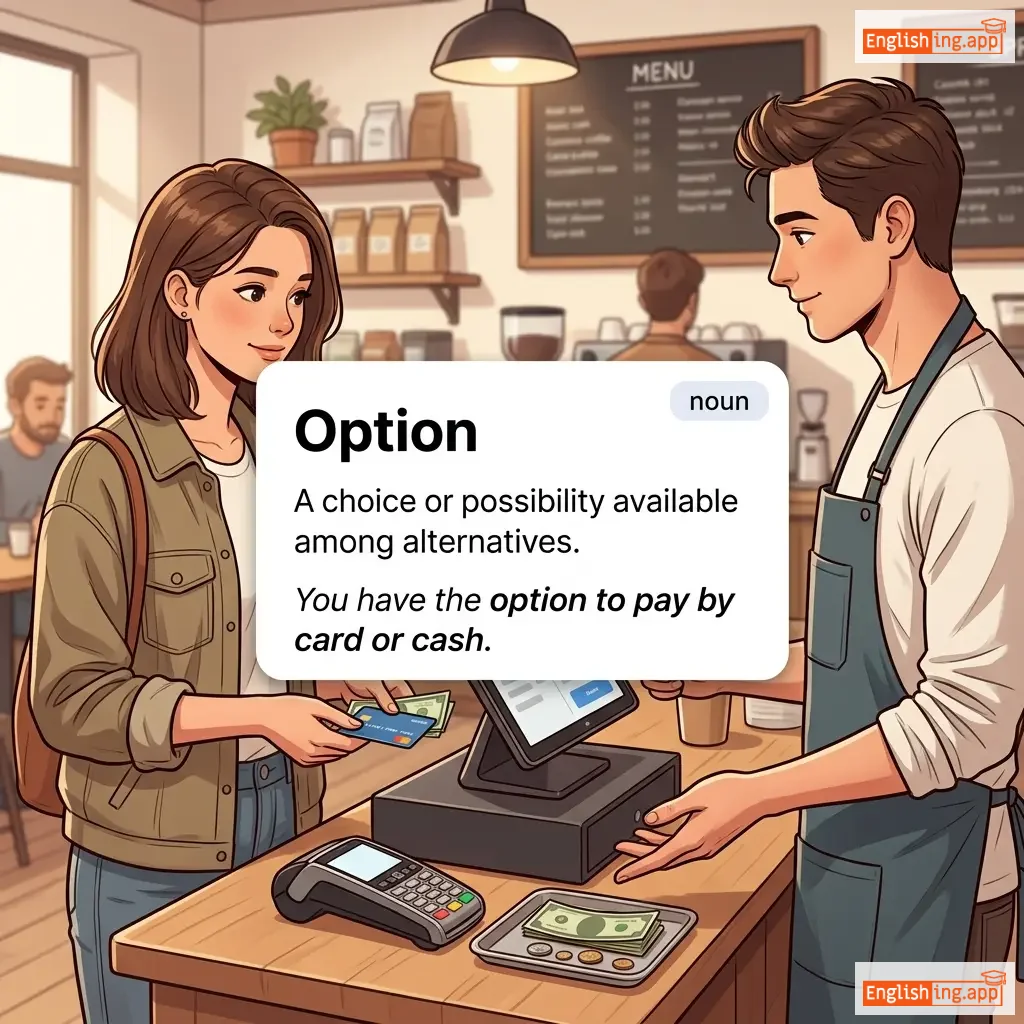
Option definition card — visual illustration of the meaning
noun
/ˈɒpʃən/
विकल्प (vikalp)

A choice or possibility available among alternatives.

"You have the option to pay by card or cash."

"आपके पास कार्ड या नकद में भुगतान करने का विकल्प है।" (aapke paas kaard ya nakad mein bhugtaan karne ka vikalp hai.)
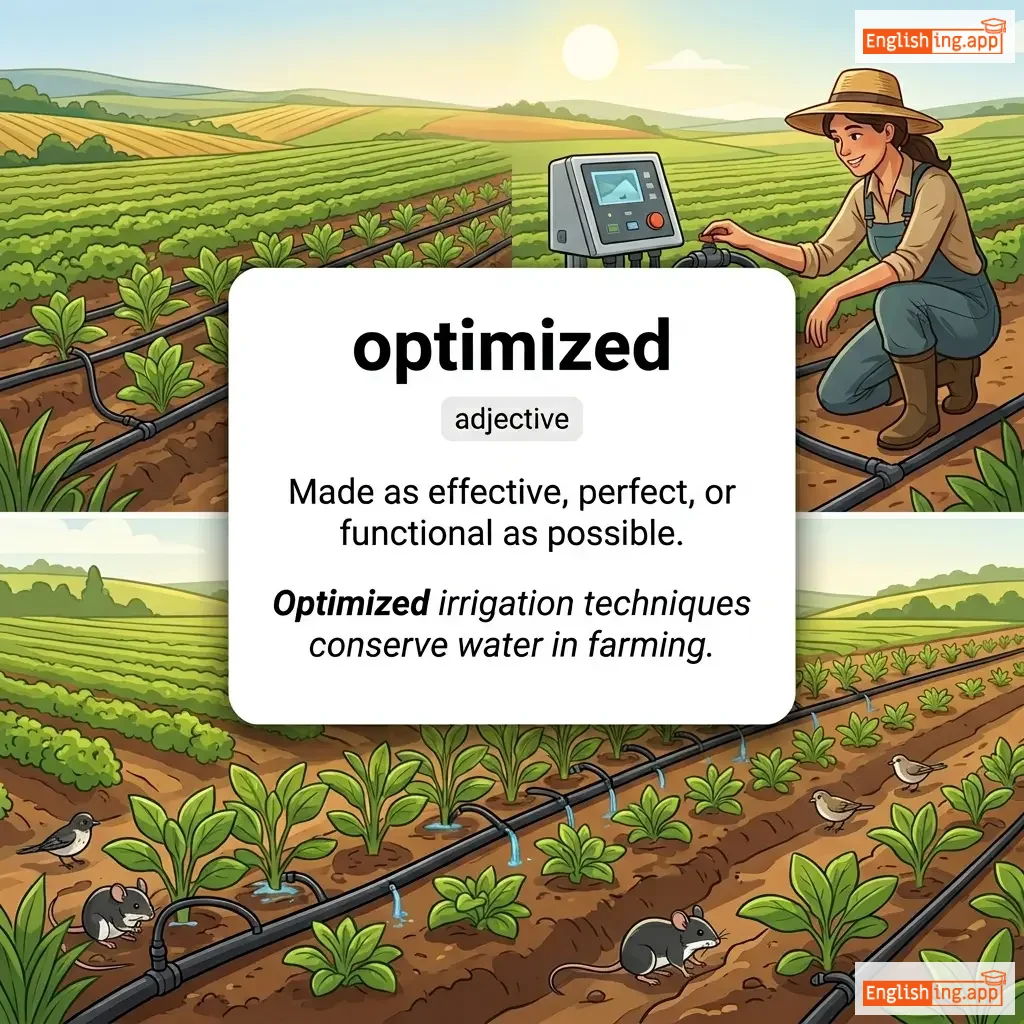
optimized definition card — visual illustration of the meaning
adjective
/ˈɒp.tɪ.maɪzd/
अनुकूलित (anukulit)

Made as effective, perfect, or functional as possible.

"Optimized irrigation techniques conserve water in farming."

"अनुकूलित सिंचाई तकनीकें खेती में पानी बचाती हैं." (Anukulit sinchaai takneeken kheti mein paani bachati hain.)
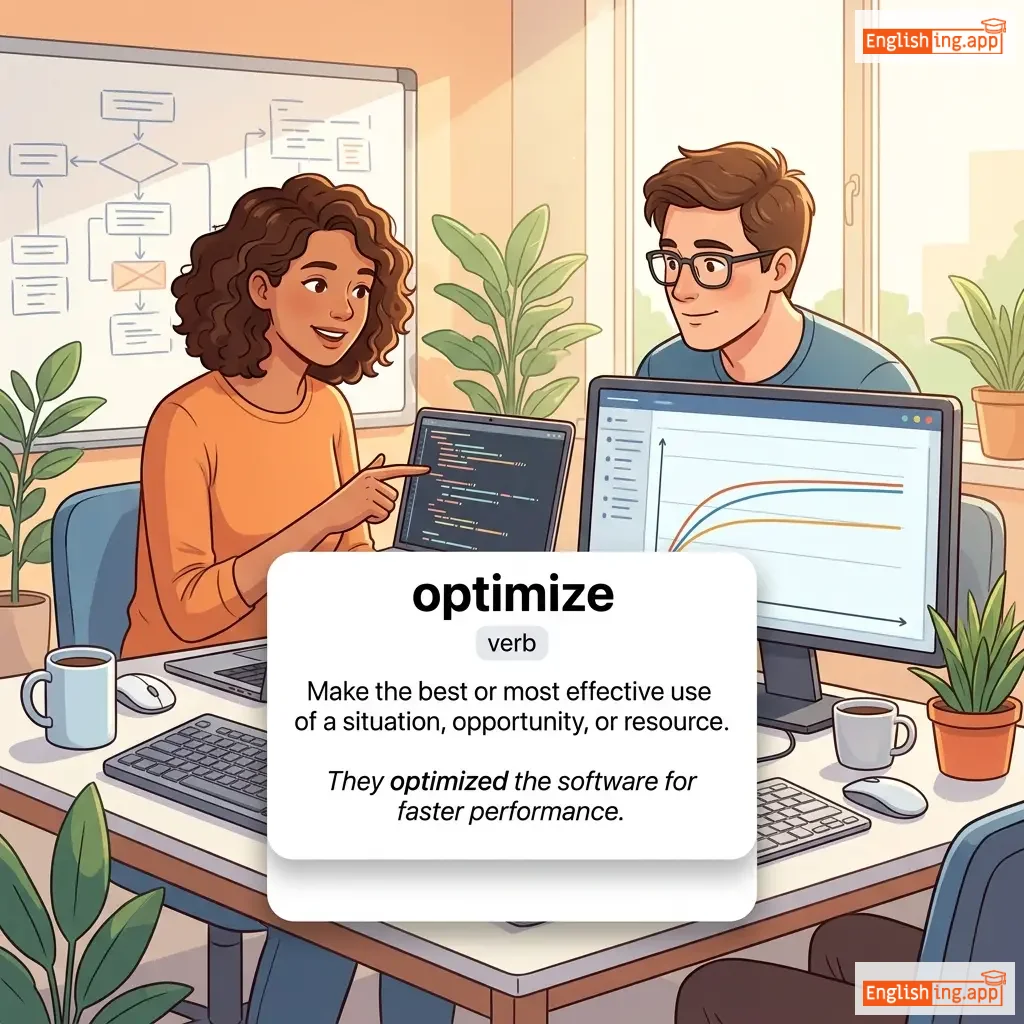
optimize definition card — visual illustration of the meaning
verb
ˈɒptɪmaɪz
सर्वोत्तम बनाना, अनुकूलित करना (sarvottam banana, anukulit karna)

Make the best or most effective use of a situation, opportunity, or resource.

"They optimized the software for faster performance."

"Unhone software ko tez pradarshan ke liye optimize kiya." (Unhone software ko tez pradarshan ke liye optimize kiya.)
optimal definition card — visual illustration of the meaning
adjective
/ˈɒptɪməl/
श्रेष्ठ (shreshth)

Best or most favorable; ideal.

"This diet plan provides the optimal balance of nutrients."

"यह डाइट योजना पोषक तत्वों का सर्वोत्तम संतुलन प्रदान करती है।" (Yah diet yojana poshak tatvon ka sarvottam santulan pradan karti hai.)