वोकैबुलरीज

इंग्लिश वोकैबुलरी डिस्कवर, लर्न और मास्टर करें

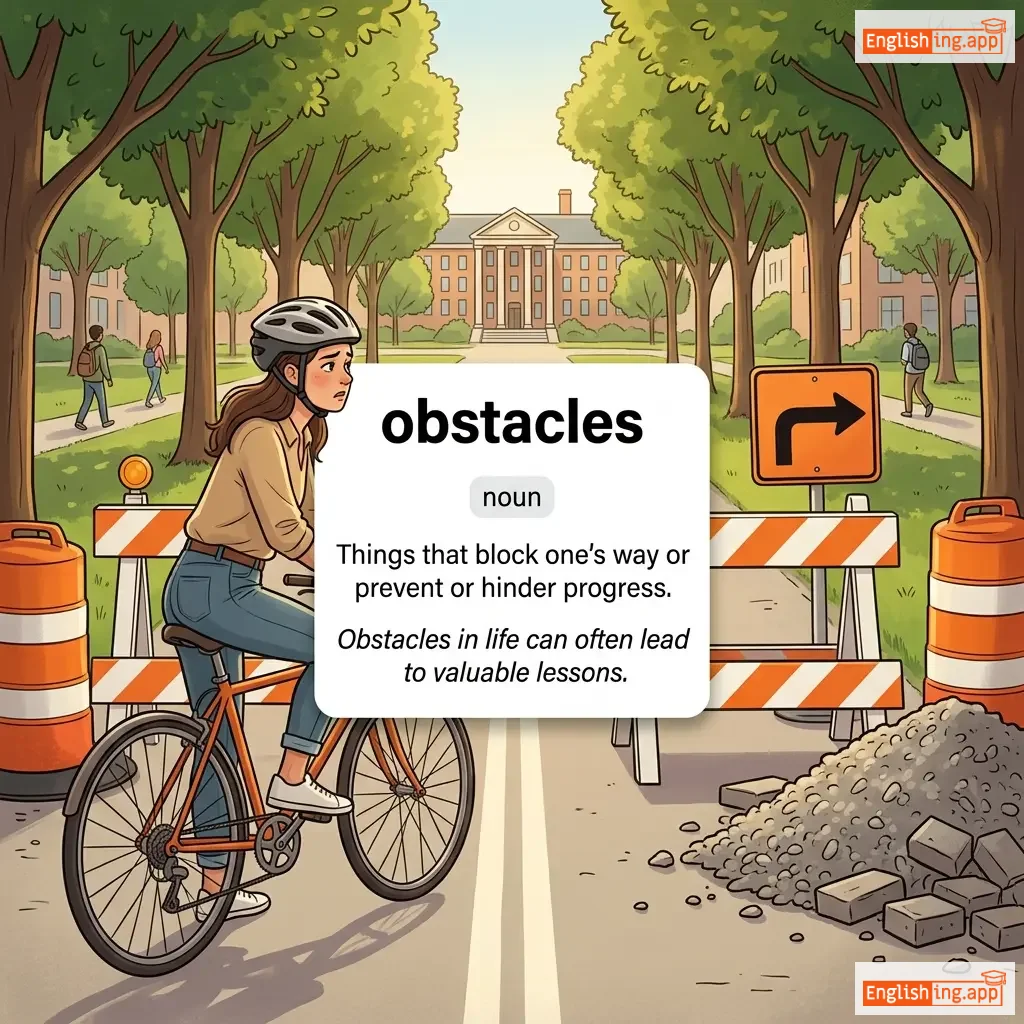
obstacles definition card — visual illustration of the meaning
noun
/ˈɒbstəkəlz/
बाधाएं (baadhaen)

Things that block one's way or prevent or hinder progress.

"Obstacles in life can often lead to valuable lessons."

"जिंदगी में रुकावटें अक्सर मूल्यवान पाठों की ओर ले जाती हैं।" (Zindagi mein rukavaten aksar mulyavan pathon ki or le jaati hain.)
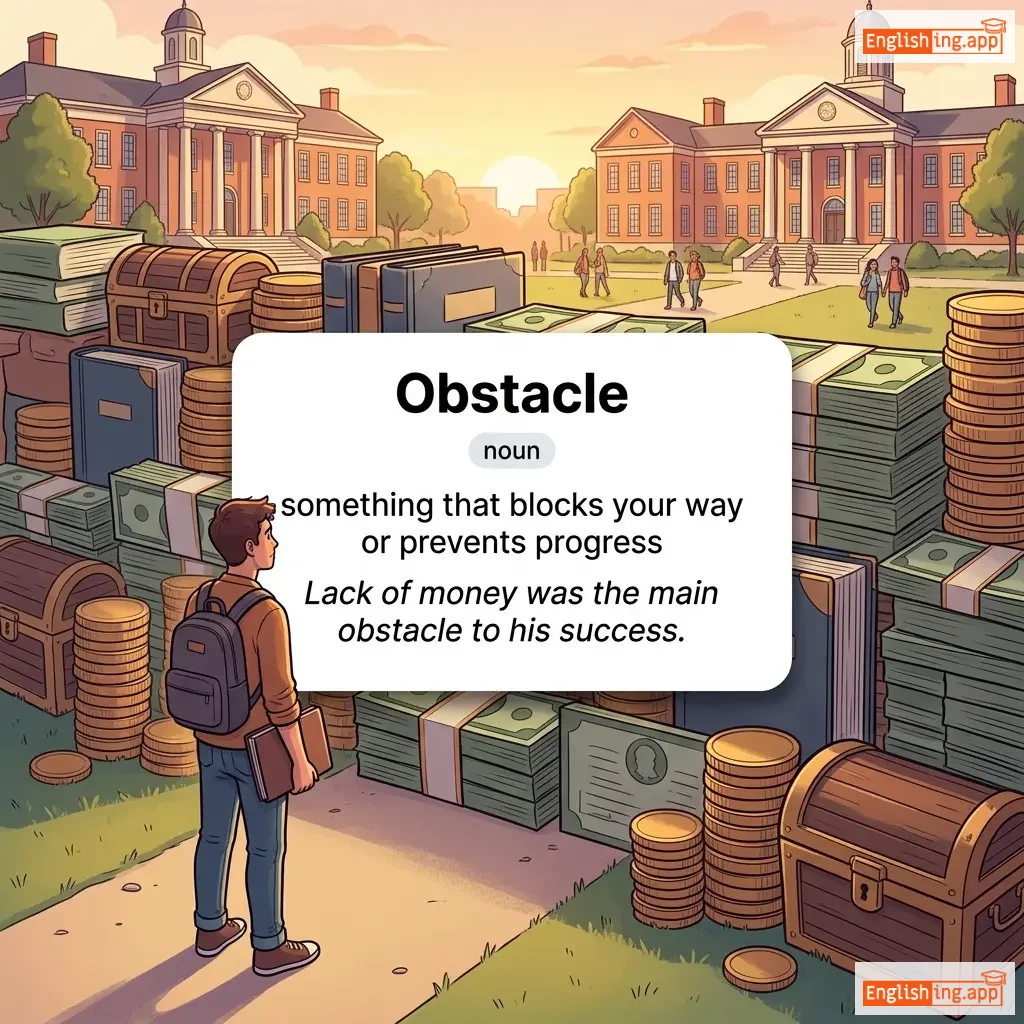
Obstacle definition card — visual illustration of the meaning
noun
/ˈɒbstəkəl/
अवरोध (avrodh)

something that blocks your way or prevents progress

"Lack of money was the main obstacle to his success."

"पैसे की कमी उसकी सफलता में मुख्य अवरोध थी।" (paise ki kami uski safalta mein mukhya avrodh thi)
adjective
/ˌɒbsəˈliːt/
पुराना (purana)

No longer in use or out of date.

"Floppy disks are now completely obsolete."

"फ्लॉपी डिस्क अब पूरी तरह से पुरानी हो चुकी है।" (Floppy disk ab puri tarah se purani ho chuki hai.)
adjective
/ˌɒbsəˈlɛsnt/
अप्रचलित (aprachalit)

Becoming outdated or on the way to becoming obsolete.

"The obsolescent technology could not compete with modern devices."

"अप्रचलित प्रौद्योगिकी आधुनिक उपकरणों से प्रतिस्पर्धा नहीं कर पा रही थी।" (Aprochalit praudyogiki aadhunik upkaran se pratishpardha nahi kar pa rahi thi.)
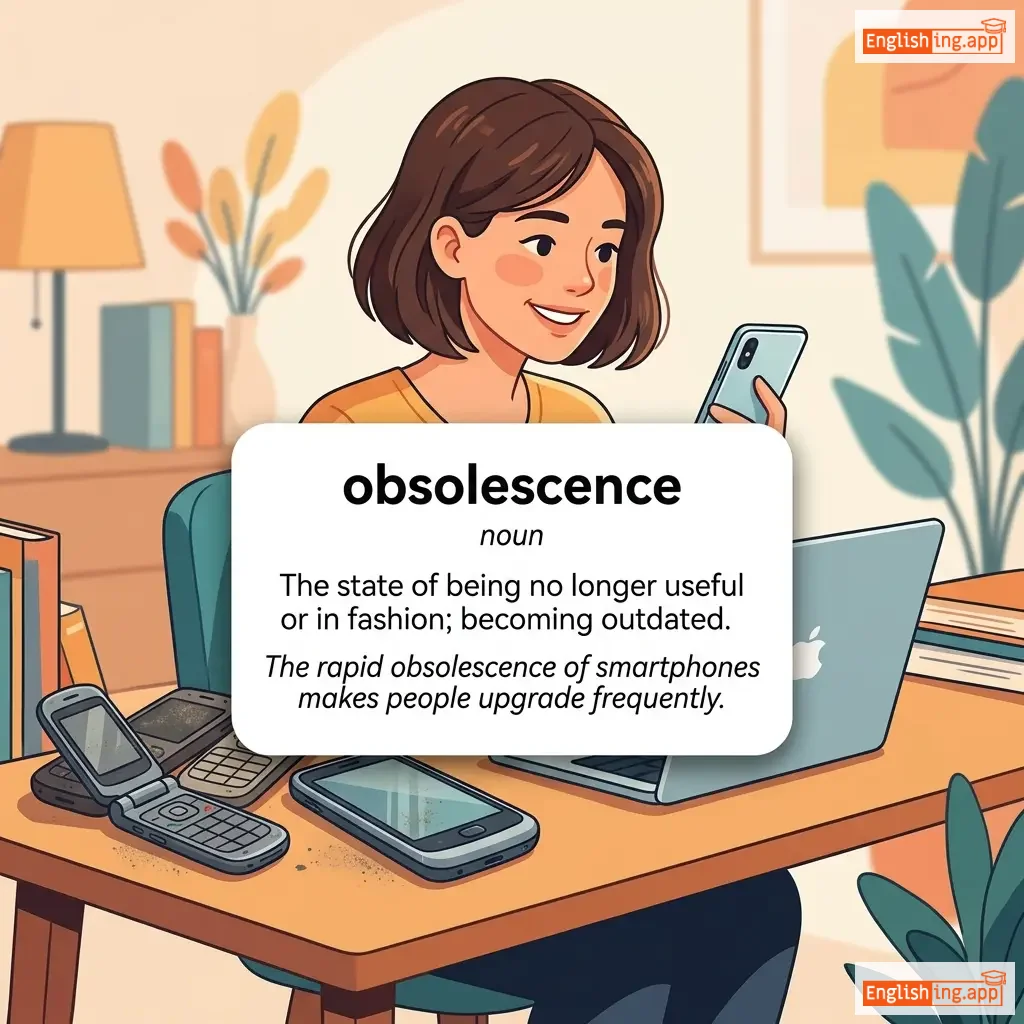
obsolescence definition card — visual illustration of the meaning
noun
/ˌɒbsəˈlɛsəns/
निष्क्रियता (nishkriyata)

The state of being no longer useful or in fashion; becoming outdated.

"The rapid obsolescence of smartphones makes people upgrade frequently."

"स्मार्टफोन की तेजी से निष्क्रियता लोगों को बार-बार अपग्रेड करने के लिए मजबूर करती है।" (Smartphone ki tezi se nishkriyata logon ko baar-baar upgrade karne ke liye majboor karti hai.)
noun
/əbˈsɪdiən/
ऑब्सीडियन (काले कांच जैसा ज्वालामुखी पत्थर) (obsidian (kaale kaanch jaisa jwalaamukhi pathar))

A hard, dark, glasslike volcanic rock formed by rapid solidification of lava.

"The knife was made from sharp obsidian."

"चाकू तेज़ ऑब्सीडियन से बना था।" (Chakoo tez obsidian se bana tha.)
adjective
/əbˈsɛsɪv/
आसक्तिपूर्ण (asaktipoorn)

Relating to or characterized by an obsession; thinking about something too much.

"He has an obsessive interest in cleanliness."

"उसकी सफाई में अत्यधिक रुचि है।" (Uski safai mein atyadhik ruchi hai.)
noun
/əbˈsɛʃən/
आसक्तता (asaktata)

An idea, thought, or concern that continually preoccupies or intrudes on a person's mind.

"His obsession with success drove him to work day and night."

"सफलता के प्रति उसकी आसक्तता ने उसे दिन-रात काम करने पर मजबूर कर दिया।" (Safalta ke prati uski asaktata ne use din-raat kaam karne par majboor kar diya.)
verb
/əbˈsɛs/
आवेशित करना (aaveshit karna)

To preoccupy or fill the mind of someone continually and to an excessive degree.

"She tends to obsess over small details."

"वह छोटे-छोटे विवरणों पर बहुत ध्यान देती है।" (Vah chhote-chhote vivaron par bahut dhyan deti hai.)
noun
/əbˈzɜːvər/
पर्यवेक्षक (paryavekṣak)

a person who watches or notices something

"The observer took notes during the meeting."

"पर्यवेक्षक ने बैठक के दौरान नोट्स लिए।" (Paryavekṣak ne baithak ke dauran noṭs liye.)
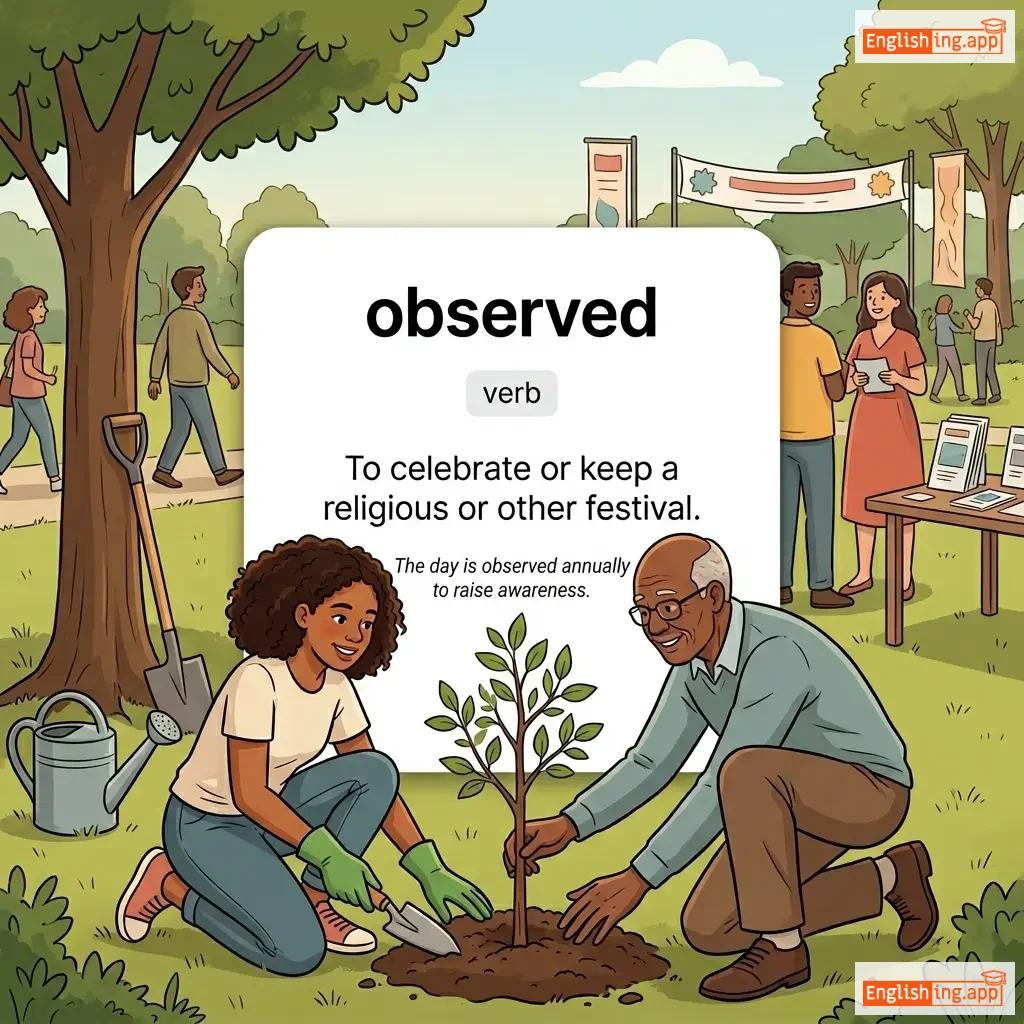
observed definition card — visual illustration of the meaning
verb
əbˈzɜːrvd
मनाना (manaana)

To celebrate or keep a religious or other festival.

"The day is observed annually to raise awareness."

"दिन को प्रति वर्ष जागरूकता बढ़ाने के लिए मनाया जाता है।" (din ko prati varsh jagrukta badhane ke liye manaya jata hai.)
verb
/əbˈzɜːv/
नजर रखना (nazar rakhna)

to watch carefully and attentively

"The teacher asked the students to observe the experiment."

"शिक्षक ने छात्रों से प्रयोग को देखने को कहा।" (Shikshak ne chhatron se prayog ko dekhne ko kaha.)
noun
/əbˈzɜːrvətɔːri/
उद्यानशाला (udyanshala)

A building equipped for observing astronomical or meteorological events.

"The observatory is open to the public on weekends."

"उद्यानशाला सप्ताहांत में जनता के लिए खुली रहती है।" (Udyanshala saptahant mein janta ke liye khuli rahti hai.)
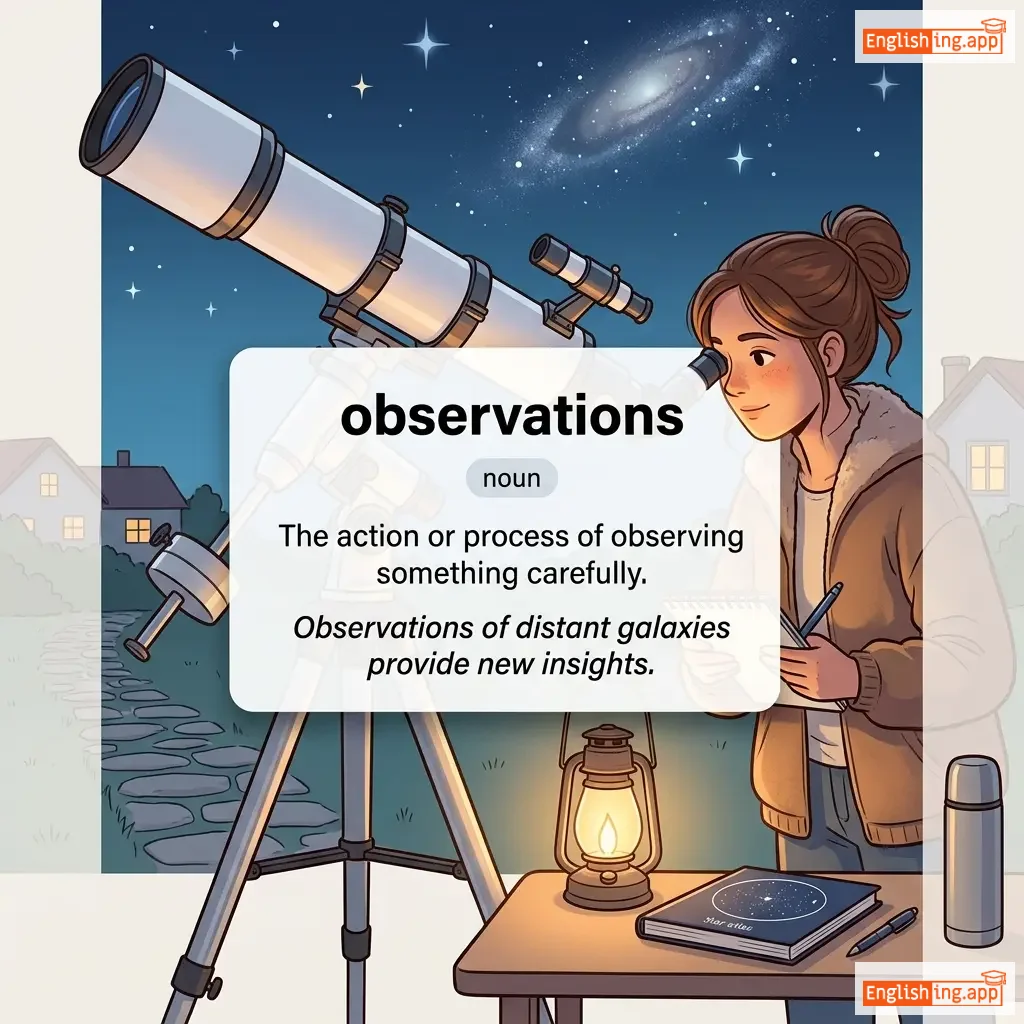
observations definition card — visual illustration of the meaning
noun
/ˌɒb.zəˈveɪ.ʃənz/
पर्यवेक्षण (paryaveshan)

The action or process of observing something carefully.

"Observations of distant galaxies provide new insights."

"दूर की आकाशगंगाओं के पर्यवेक्षण से नई समझ प्राप्त होती है।" (Door ki aakashgangaon ke paryaveshan se nayi samajh prapt hoti hai.)
noun
/ˌɒbzəˈveɪʃən/
अवलोकन (avlokan)

the action or process of observing something carefully in order to gain information

"The scientist made an observation during the experiment."

"वैज्ञानिक ने प्रयोग के दौरान एक अवलोकन किया।" (Vaigyanik ne prayog ke dauran ek avlokan kiya.)
adjective
/əbˈzɜːvənt/
सतर्क (satark)

Quick to notice details or attentive to rules and customs.

"She is very observant and rarely misses any detail."

"वह बहुत सतर्क है और शायद ही कभी कोई विवरण छोड़ती है।" (Vah bahut satark hai aur shaayad hi kabhi koi vivaran chhodti hai.)
noun
/əbˈzɜːvəns/
पालन (paalan)

The practice of following a custom, rule, or religious law.

"The festival is held in observance of a centuries-old tradition."

"त्योहार एक सदी पुरानी परंपरा के पालन में आयोजित किया जाता है।" (Tyohar ek sadi purani parampara ke paalan mein aayojit kiya jata hai.)
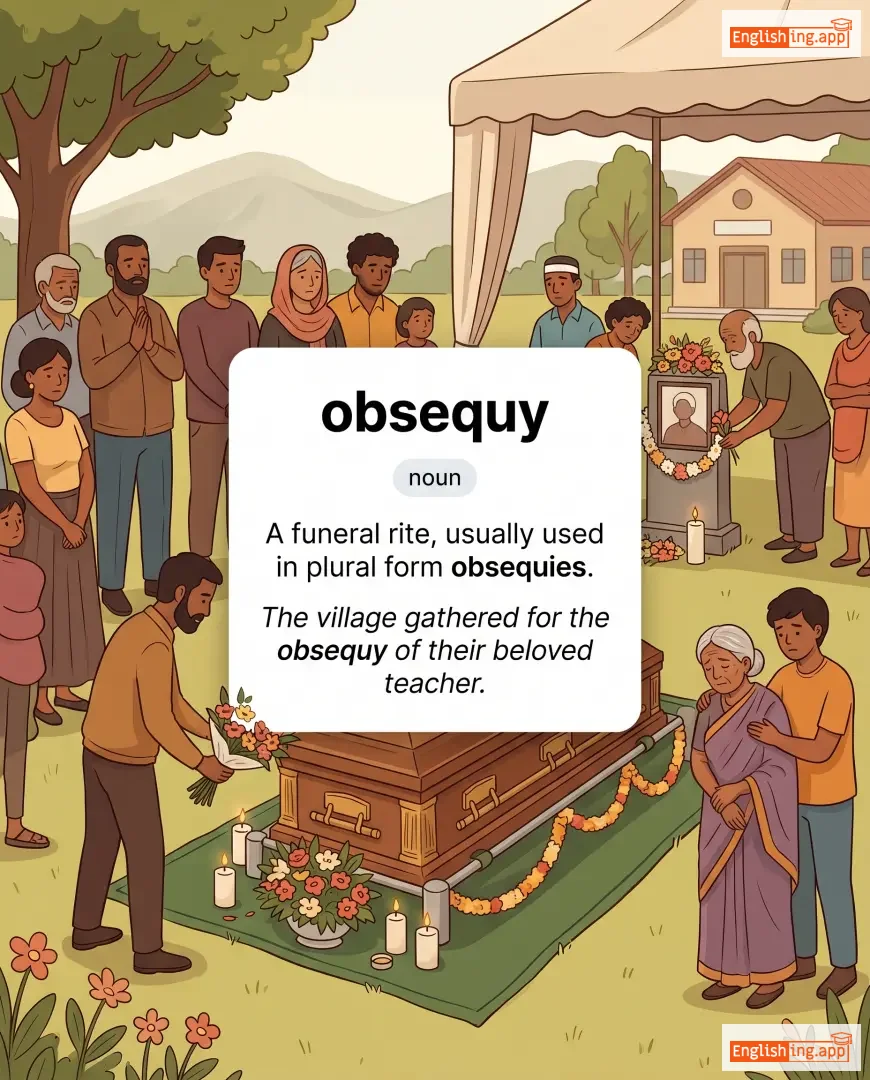
obsequy definition card — visual illustration of the meaning
noun
/ˈɒbsɪkwi/
अंत्येष्टि (antyeshti)

A funeral rite, usually used in plural form obsequies.

"The village gathered for the obsequy of their beloved teacher."

"गांववालों ने अपने प्रिय शिक्षक की अंत्येष्टि में भाग लिया।" (Gaavwalo ne apne priya shikshak ki antyeshti mein bhag liya.)
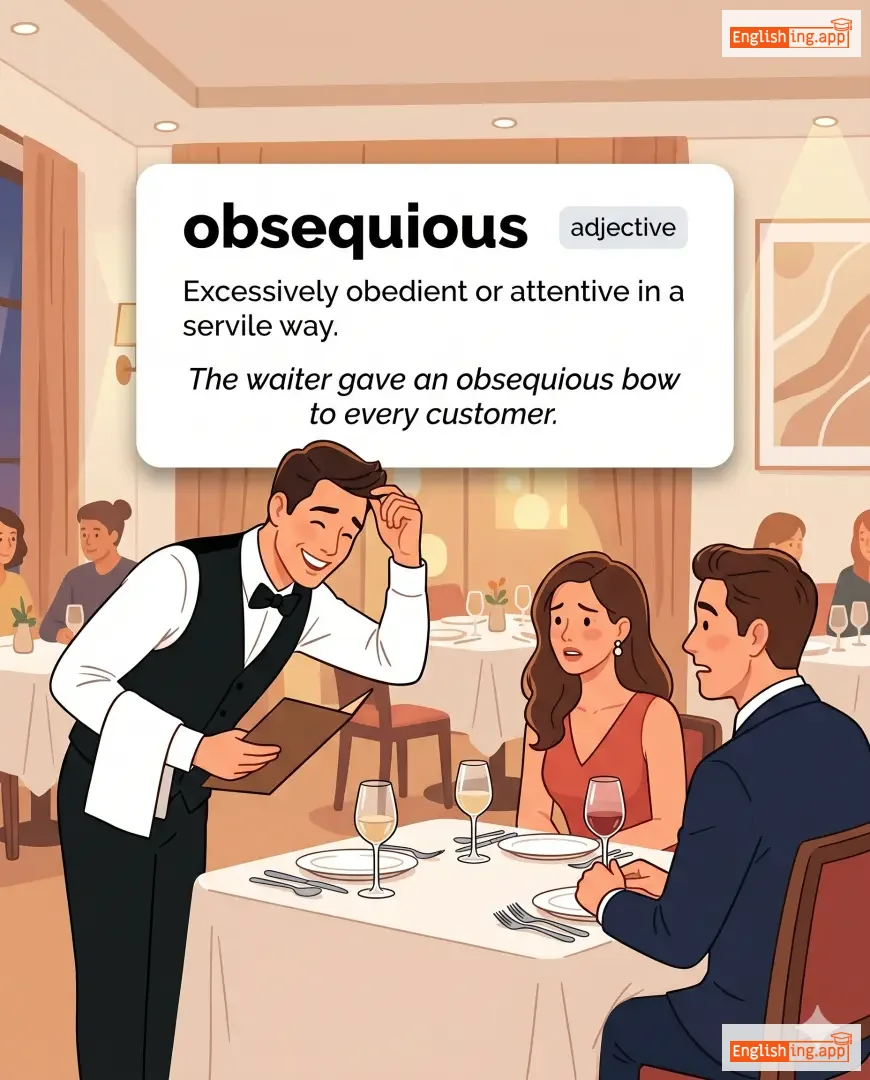
obsequious definition card — visual illustration of the meaning
adjective
/əbˈsiːkwɪəs/
चापलूस (chaploose)

Excessively obedient or attentive in a servile way.

"The waiter gave an obsequious bow to every customer."

"वेटर ने हर ग्राहक को चापलूसी से सिर झुकाया।" (Waiter ne har grahak ko chaploosi se sir jhukaya.)
noun
/ˈɒbsɪkwiːz/
अंत्येष्टि संस्कार (antyeshti sanskar)

Funeral rites or ceremonies.

"The obsequies for the late leader drew thousands of mourners."

"वह नेता के अंतिम संस्कार में हजारों शोक व्यक्तियों ने भाग लिया।" (Vah neta ke antim sanskar mein hazaron shok vyaktiyon ne bhag liya.)
adjective, verb
/əbˈskjʊr/
अस्पष्ट (aspasht)

Not clearly expressed or understood; to make something difficult to see or understand.

"The meaning of the poem was obscure to most readers."

"कविता का अर्थ अधिकांश पाठकों के लिए अस्पष्ट था।" (Kavita ka arth adhikansh pathako ke liye aspasht tha.)
adjective
/əbˈnɒkʃəs/
घिनौना (ghinouna)

Extremely unpleasant, offensive, or annoying.

"The obnoxious behavior of the guest ruined the party."

"अतिथि का घिनौना व्यवहार पार्टी को बर्बाद कर दिया।" (Atithi ka ghinouna vyavhaar party ko barbaad kar diya.)
noun
/ˈɒbləkwɪ/
दुर्वचन (durvachan)

Strong public criticism or verbal abuse; disgrace or shame from public condemnation.

"The politician faced obloquy after the scandal was exposed."

"राजनेता को स्कैंडल के उजागर होने के बाद दुर्वचन का सामना करना पड़ा।" (Rajnetaa ko scandal ke ujagar hone ke baad durvachan ka saamna karna pada.)
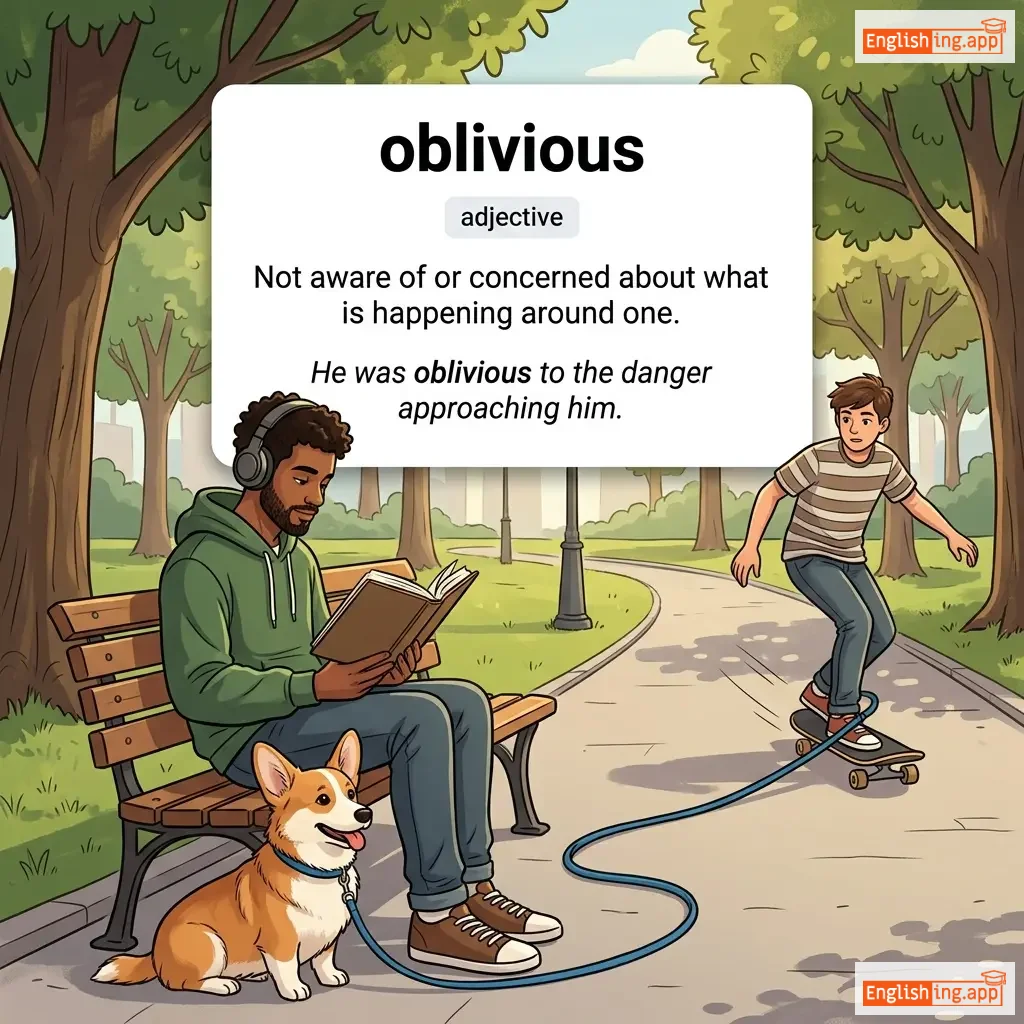
oblivious definition card — visual illustration of the meaning
adjective
/əˈblɪviəs/
बेखबर (oblivious)

Not aware of or concerned about what is happening around one.

"He was oblivious to the danger approaching him."

"वह अपने चारों ओर आ रहे खतरे के बारे में अंजान था।" (vah apne chaaron or aa rahe khatare ke baare mein anjaan tha)
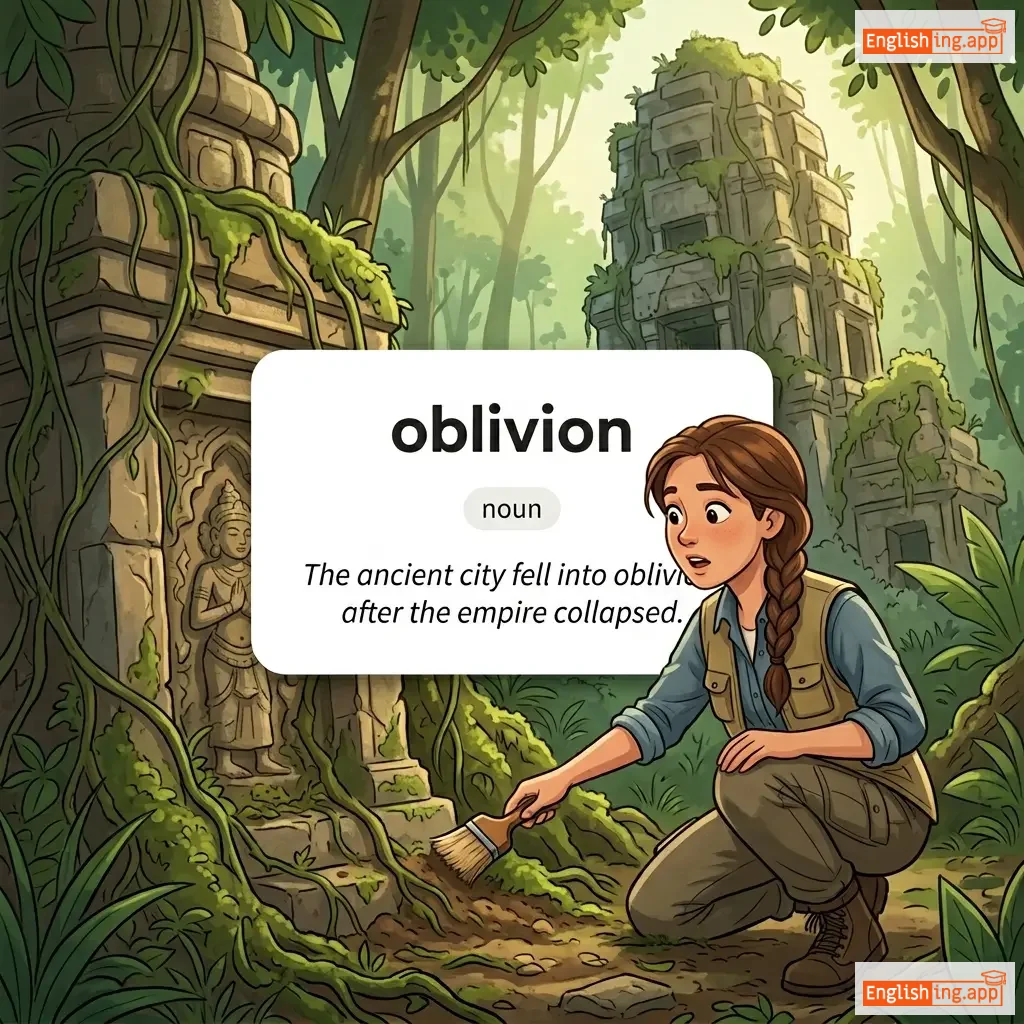
oblivion definition card — visual illustration of the meaning
noun
/əˈblɪviən/
अविस्मरण (avismaran)

The state of being completely forgotten or unknown; the state of being unconscious or unaware.

"The ancient city fell into oblivion after the empire collapsed."

"प्राचीन शहर साम्राज्य के पतन के बाद अविस्मरण में गिर गया था।" (Prachin shahar samrajya ke patan ke baad avismaran mein gir gaya tha.)
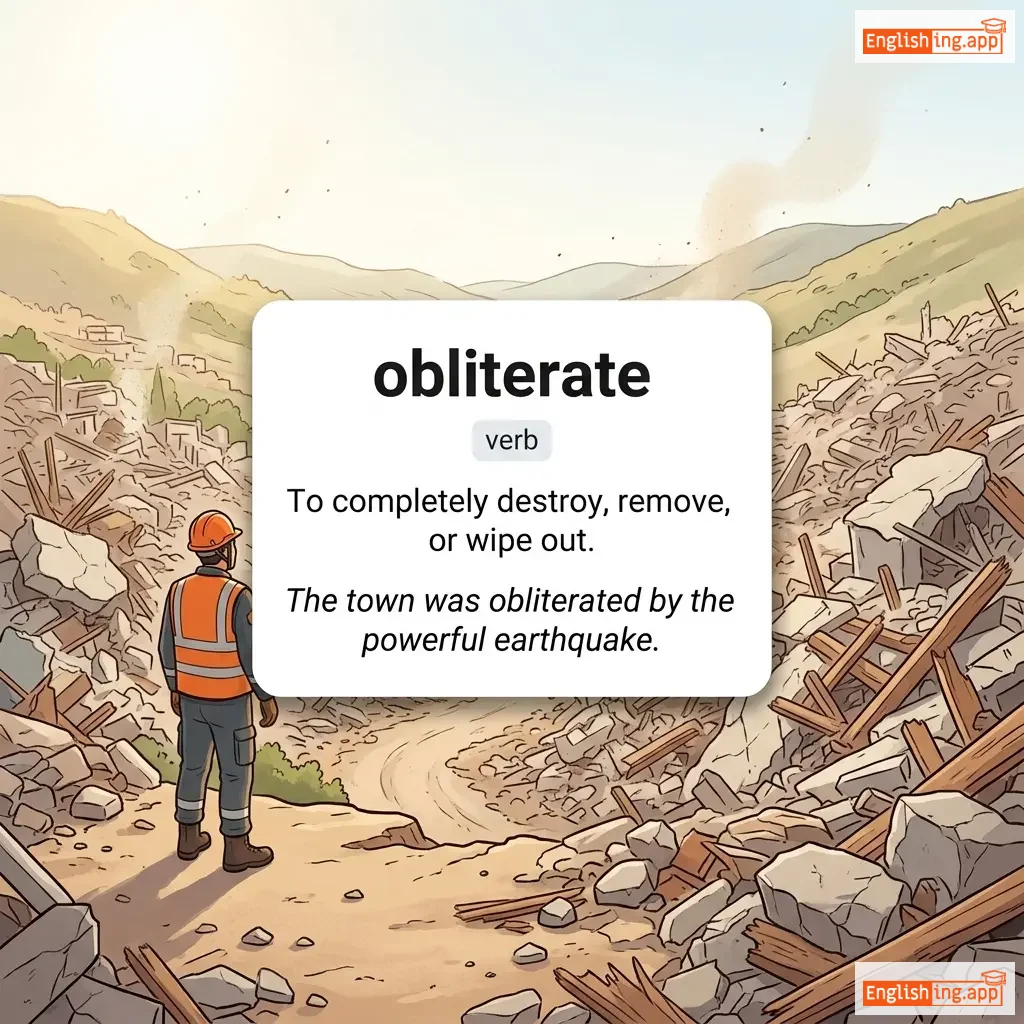
obliterate definition card — visual illustration of the meaning
verb
/əˈblɪtəreɪt/
पूर्ण रूप से नष्ट करना (poorn roop se nasht karna)

To completely destroy, remove, or wipe out.

"The town was obliterated by the powerful earthquake."

"शहर शक्तिशाली भूकंप से पूर्ण रूप से नष्ट हो गया था।" (shahar shaktishaali bhookamp se poorn roop se nasht ho gaya tha.)
noun
/əˈblɪkwɪti/
विकृति (vikriti)

Deviation from moral or usual conduct; indirectness or lack of straightforwardness.

"The politician was criticized for the obliquity of his answers."

"राजनीतिज्ञ को उनके उत्तरों की विकृति के लिए आलोचना की गई।" (rajnitijñ ko unke uttarō ki vikriti ke liye alochna ki gayi.)
adjective
/əˈbliːk/ or /oʊˈbliːk/
तिरछा (tirchha)

Not explicit or direct in addressing a point; slanting or indirect.

"She made an oblique reference to his past mistakes."

"उसने उसकी पुरानी गलतियों का तिरछा संदर्भ दिया।" (Usne uski purani galtiyon ka tirchha sandarbh diya.)
adjective
/əˈblaɪdʒɪŋ/
सहायिक (sahayik)

Willing to help or do favors; accommodating.

"The staff at the hotel were very obliging and friendly."

"होटल में स्टाफ बहुत सहायक और मित्रवत था।" (hotel mein staff bahut sahayak aur mitravat tha.)
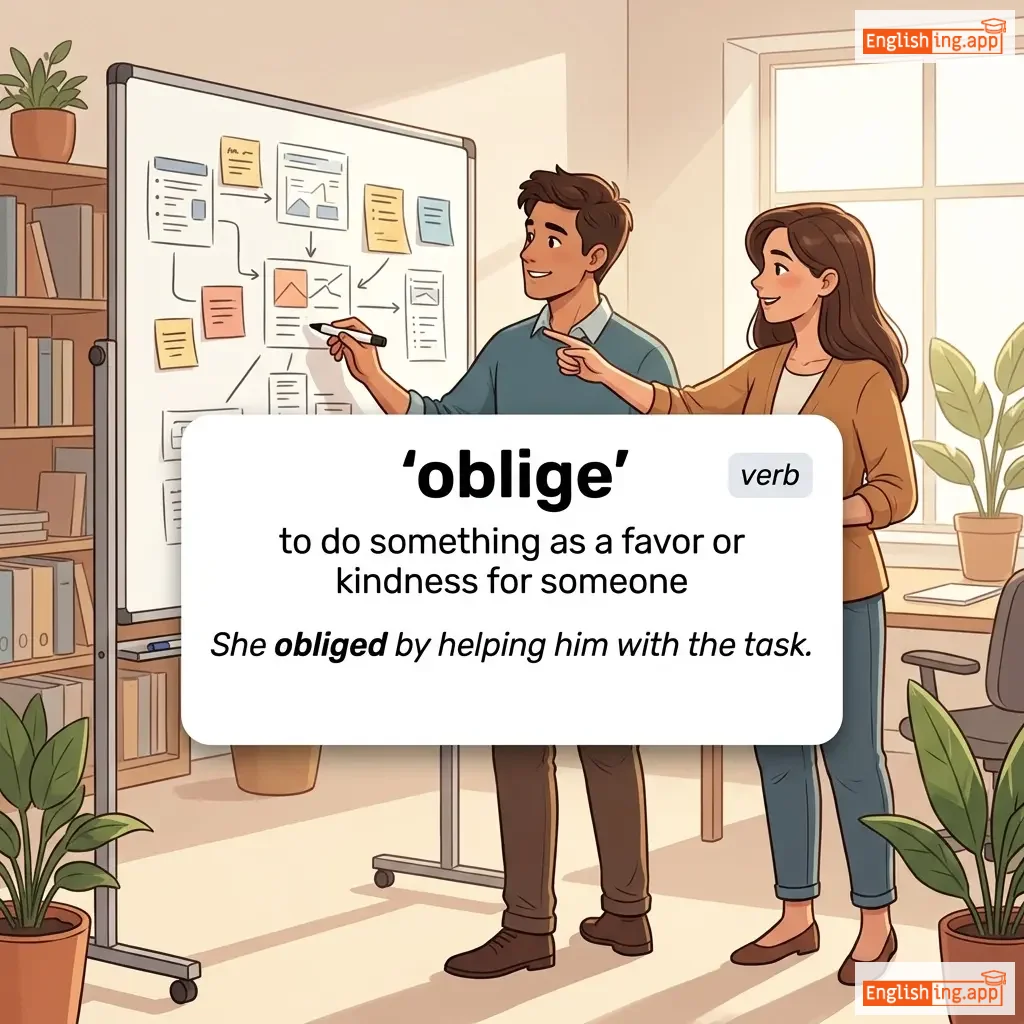
oblige definition card — visual illustration of the meaning
verb
/əˈblaɪdʒ/
सहायता करना (sahayata karna)

to do something as a favor or kindness for someone

"She obliged by helping him with the task."

"उसने उस कार्य में उसकी मदद करके अनुग्रह दिखाया।" (Usne us kaarya mein uski madad karke anugrah dikhaya.)
adjective
/oʊˈbiːs/
मोटा (mota)

Extremely overweight; having an excessive amount of body fat.

"The doctor advised the obese patient to adopt a healthier lifestyle."

"डॉक्टर ने मोटे मरीज को स्वस्थ जीवनशैली अपनाने की सलाह दी।" (Daktar ne mote mareez ko swasth jeevanshailee apnane ki salah di.)
noun
/nɪmf/
निम्फ (nimpf)

a mythological spirit of nature; a beautiful young woman in classical mythology

"The water nymph appeared by the moonlit lake."

"जल निम्फ चाँदनी झील के पास प्रकट हुई।" (jal nymph chandani jheel ke paas prakat hui.)
noun
/oʊf/
अकर्मठ या मूर्ख व्यक्ति (akarmath ya murkh vyakti)

a clumsy, stupid, or awkward person

"He acted like an oaf at the dinner party, spilling drinks everywhere."

"उसने डिनर पार्टी में एक अकर्मठ व्यक्ति की तरह व्यवहार किया, हर जगह ड्रिंक्स गिरा दिए।" (Usne dinner party mein ek akarmath vyakti ki tarah vyavhaar kiya, har jagah drinks gira diye.)
noun
/oʊk/
ओक पेड़ (ok ped)

a large tree that produces acorns and has strong, hard wood

"The old oak tree provided shade for the entire yard."

"पुराना ओक पेड़ पूरे आंगन में छाया दे रहा था।" (purana ok ped pure aangan mein chhaya de raha tha.)
adjective
/ˈoʊ.kən/
ओक की लकड़ी से बना हुआ (ok ki lakdi se bana hua)

made of or resembling oak wood

"The villagers gathered around the oaken table in the hall."

"गांव वाले हॉल में ओक की लकड़ी की मेज के चारों ओर जमा हो गए थे।" (Gaon wale hall mein ok ki lakdi ki mej ke charon or jama ho gaye the.)
noun
/ˈoʊ.kəm/
पुरानी रस्सी के रेशे (purani rassi ke reshe)

loose fibers obtained by untwisting old ropes, used for caulking ships

"The shipbuilders used oakum to seal the gaps in the wooden planks."

"जहाज निर्माणकर्ता लकड़ी की तख्तियों में दरारें भरने के लिए ओकम का इस्तेमाल कर रहे थे।" (Jahaz nirmaankarta lakdi ki takhtiyon mein daraarein bharne ke liye okam ka istemal kar rahe the.)
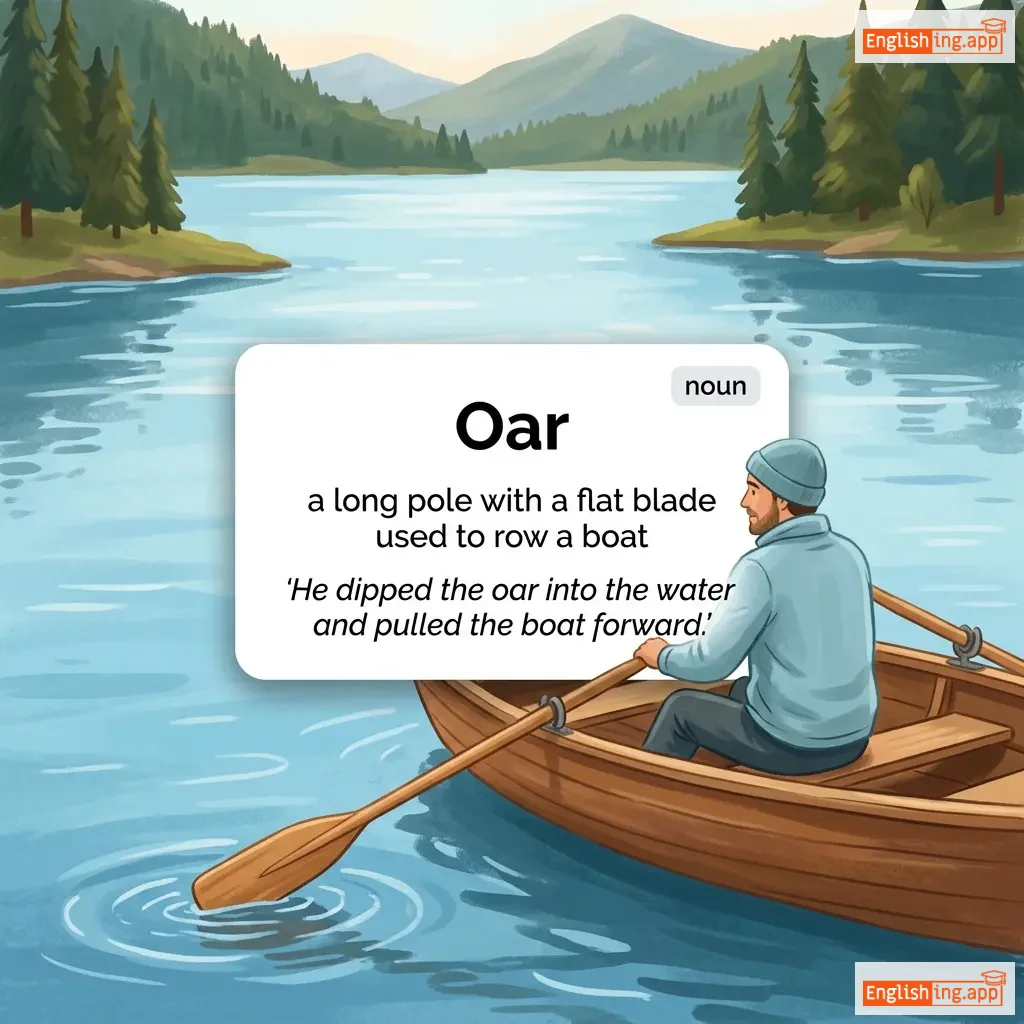
Oar definition card — visual illustration of the meaning
noun
/ɔːr/
कर्ण (karn)

a long pole with a flat blade used to row a boat

"He dipped the oar into the water and pulled the boat forward."

"उसने कर्ण को पानी में डुबोकर नाव को आगे खींचा।" (Usne karn ko paani mein dubokar naav ko aage kheencha.)
Oarsman definition card — visual illustration of the meaning
noun
/ˈɔːrzmən/
नाविक (navik)

a person who rows a boat, especially as a member of a racing crew

"The experienced oarsman rowed the boat across the river."

"अनुभवी नाविक ने नाव को नदी के पार खींचा।" (anubhavi navik ne naav ko nadi ke paar kheencha)
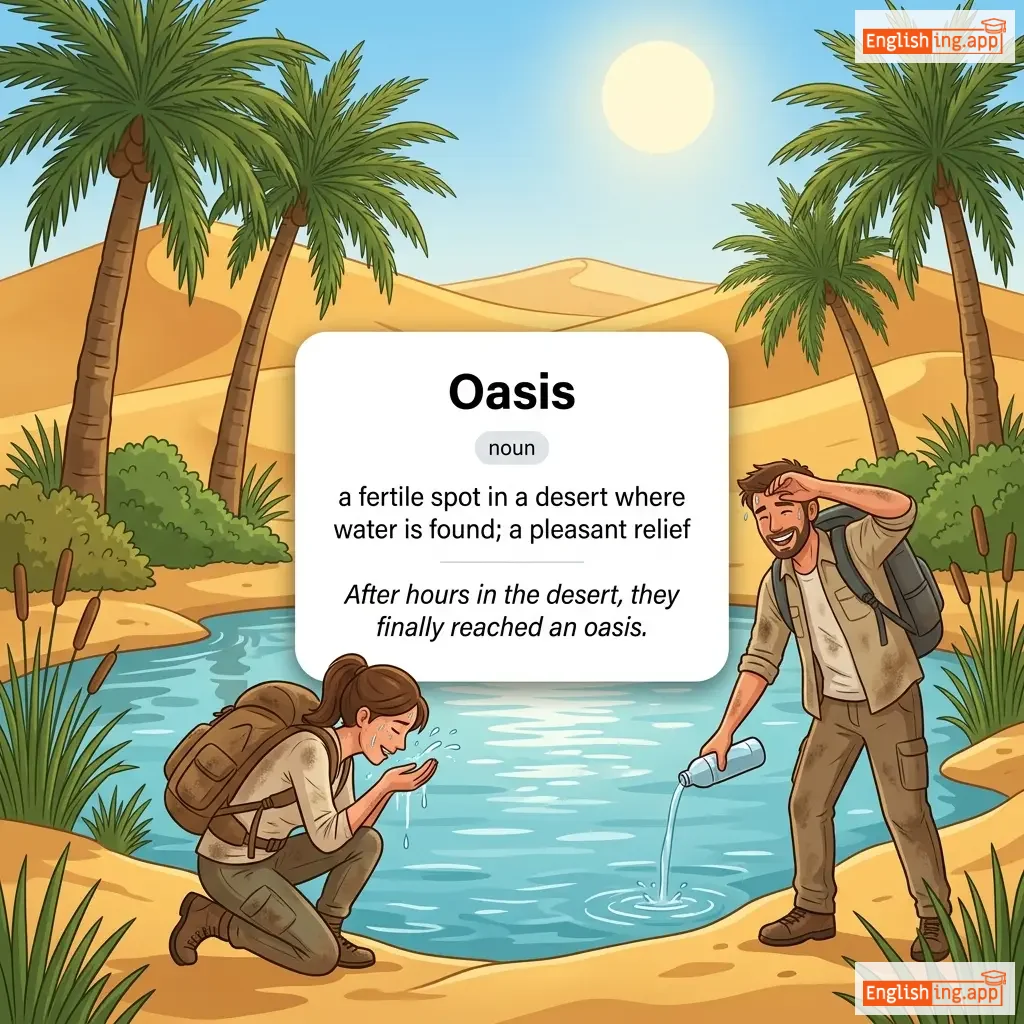
Oasis definition card — visual illustration of the meaning
noun
/oʊˈeɪ.sɪs/
रेगिस्तान में हरा-भरा स्थान (registan mein hara-bhara sthan)

a fertile spot in a desert where water is found; a pleasant relief

"After hours in the desert, they finally reached an oasis."

"रेगिस्तान में घंटों के बाद, वे अंततः एक ओएसिस तक पहुंचे।" (Registan mein ghanton ke baad, ve antatah ek oasis tak pahunche.)
noun
/oʊθ/
शपथ (shapath)

a solemn promise, often invoking a divine witness

"She took an oath to tell the truth in court."

"उसने अदालत में सत्य बोलने की शपथ ली।" (Usne adalat mein satya bolne ki shapath li.)
noun
/ˈoʊtˌmiːl/
ओट्स का दलिया (ots ka daliya)

A type of porridge made from ground oats, often eaten for breakfast.

"She eats a bowl of oatmeal every morning for breakfast."

"वह हर सुबह नाश्ते में एक कटोरी ओटमील खाती है।" (Vah har subah nashtay mein ek katori oatmeal khati hai.)
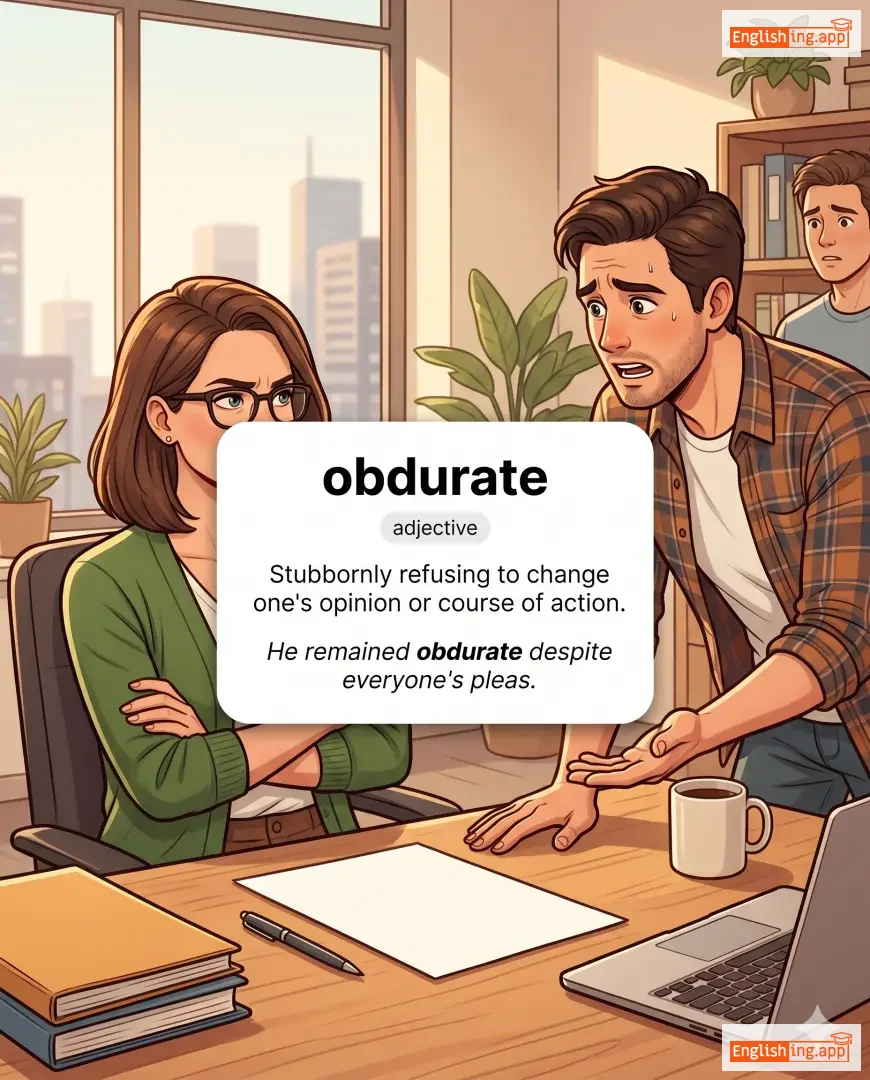
obdurate definition card — visual illustration of the meaning
adjective
/ˈɑːbdjʊrət/
हठी (hathi)

Stubbornly refusing to change one's opinion or course of action.

"He remained obdurate despite everyone's pleas."

"वह सभी के अनुरोध के बावजूद हठी बना रहा।" (vah sabhi ke anurodh ke bawajood hathi bana raha.)
noun
/oʊˈbiː.di.əns/
आज्ञापालन (aagyaapan)

compliance with an order, request, or law; submission to authority

"Children should show obedience to their parents."

"बच्चों को अपने माता-पिता के प्रति आज्ञा पालन दिखाना चाहिए।" (bachon ko apne mata-pita ke prati aagyaapan dikhana chahiye.)
adjective
/oʊˈbiːdiənt/
आज्ञाकारी (aajyakaari)

Willing to comply with rules or authority.

"The obedient child quickly followed her mother's instructions."

"आज्ञाकारी बच्ची ने जल्दी से अपनी माँ के निर्देशों का पालन किया।" (Aajyakaari bacchi ne jaldi se apni maa ke nirdeshon ka paalan kiya.)
noun
/oʊˈbeɪsəns/
श्रद्धा प्रदर्शन (shraddha pradarshan)

A gesture of respect such as a bow or curtsy.

"They bowed in obeisance to the king."

"वे राजा के प्रति श्रद्धा के रूप में झुके।" (Ve raja ke prati shraddha ke roop mein jhuke.)
noun
/ˈɑːbəlɪsk/
ओबेलिस्क (obelisk)

A tall, four-sided, narrow tapering monument with a pyramid-shaped top.

"The ancient Egyptians built obelisks to honor their gods."

"प्राचीन मिस्रवासियों ने अपने देवताओं की पूजा करने के लिए ओबेलिस्क बनाए।" (Da prachin Misrwasiyon ne apne devtaon ki pooja karne ke liye obelisk banaye.)
noun
/əbˈdʒɛktər/
विरोधी (virodhi)

a person who expresses opposition or disapproval to something

"The objector raised his concerns during the town meeting."

"विरोधी ने नगर सभा के दौरान अपनी चिंताओं को उठाया।" (Virodhi ne nagar sabha ke dauran apni chintao ko uthaya.)
verb
/ˈɑːbdʒərˌɡeɪt/
कड़ी फटकार लगाना (kadi fatkar lagana)

to scold or rebuke severely

"The teacher objurgated the student for being dishonest."

"टीचर ने छात्र को बेईमानी करने के लिए कड़ी फटकार लगाई।" (Teacher ne chatra ko beimani karne ke liye kadi fatkar lagayi.)
noun
/ˌɑːbdʒərˈɡeɪʃən/
कठोर फटकार (kathor fatkaar)

a harsh scolding or strong rebuke

"His misconduct earned him a severe objurgation from the manager."

"उसकी गलती के कारण उसे प्रबंधक से कठोर फटकार मिली।" (Uski galti ke kaaran use prabandhak se kathor fatkaar mili.)
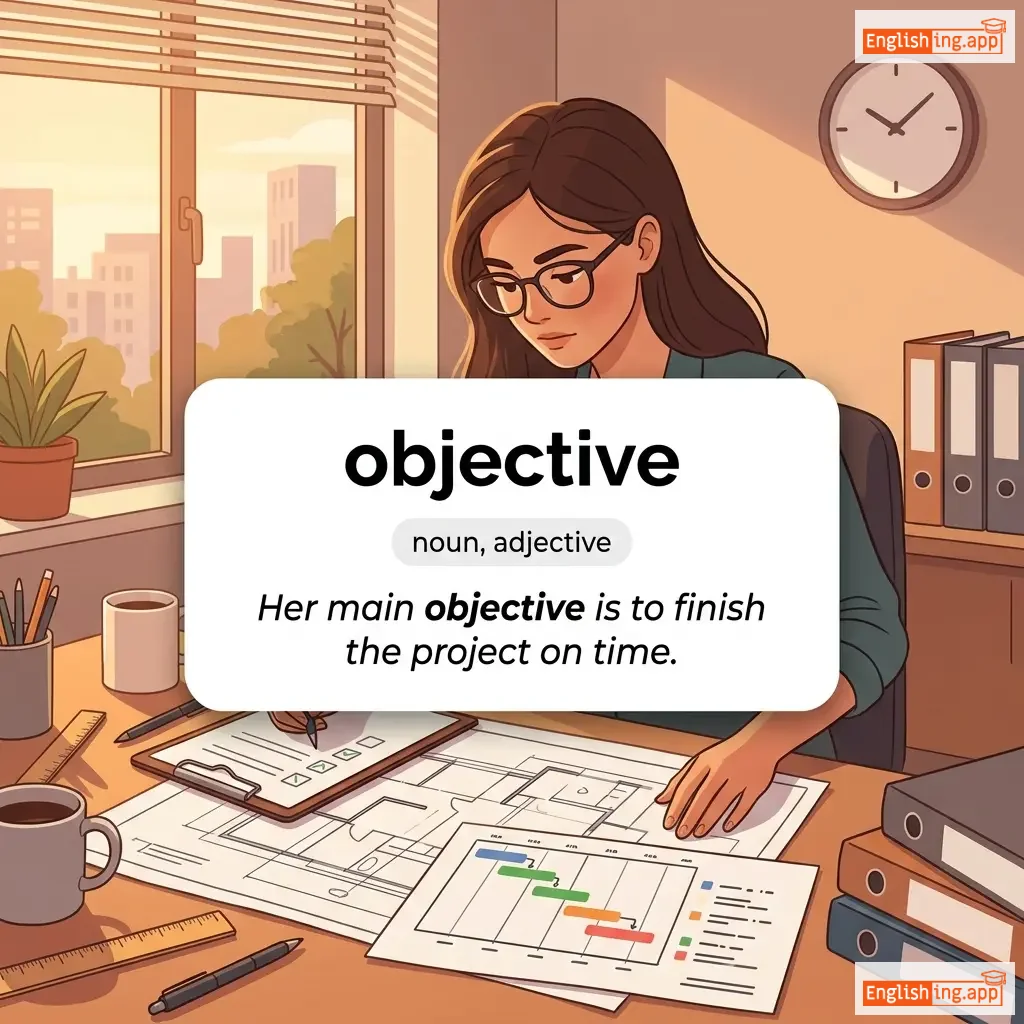
objective definition card — visual illustration of the meaning
noun, adjective
/əbˈdʒɛktɪv/
लक्ष्य / उद्देश्य (lakshya / uddeshya)

As a noun: a goal or aim. As an adjective: not influenced by personal feelings; unbiased.

"Her main objective is to finish the project on time."

"उसका मुख्य उद्देश्य समय पर परियोजना को पूरा करना है।" (Uska mukhya uddeshya samay par pariyojna ko poora karna hai.)