वोकैबुलरीज

इंग्लिश वोकैबुलरी डिस्कवर, लर्न और मास्टर करें

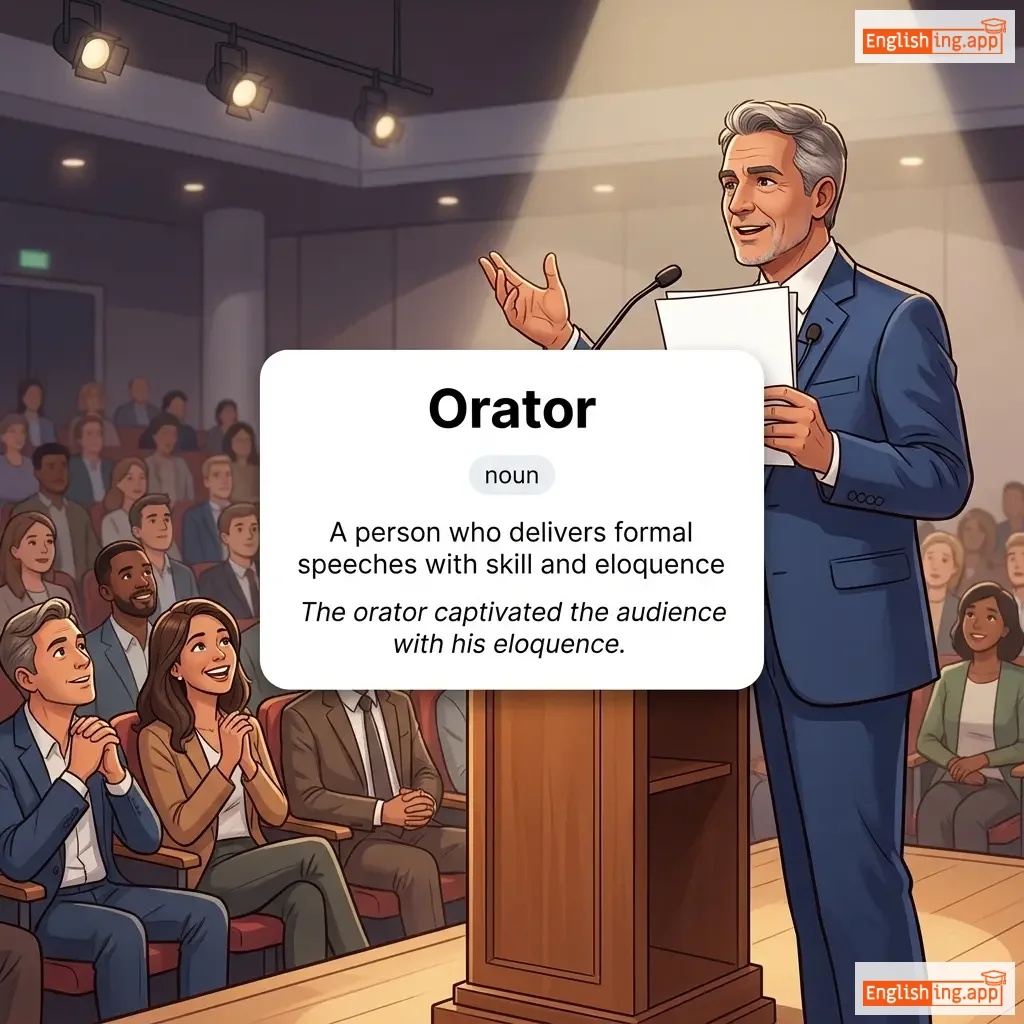
Orator definition card — visual illustration of the meaning
noun
/ˈɔːrətər/
वक्ता (vakta)

A person who delivers formal speeches with skill and eloquence

"The orator captivated the audience with his eloquence."

"वक्ता ने अपनी ओजस्विता से दर्शकों को मोहित कर लिया।" (vakta ne apni ojwasita se darshako ko mohit kar liya.)
noun
/ˌɔːrəˈtɔːri.oʊ/
धार्मिक संगीत रचना (dharmik sangeet rachna)

A large-scale musical composition for orchestra, choir, and soloists, usually on a sacred theme, performed without costumes or scenery.

"Handel's 'Messiah' is one of the most famous oratorios ever written."

"हैंडल के 'मसीहा' को लिखा गया सबसे प्रसिद्ध ओरटोरियो है।" (Handel ke 'Masihah' ko likha gaya sabse prasiddh oratorio hai.)
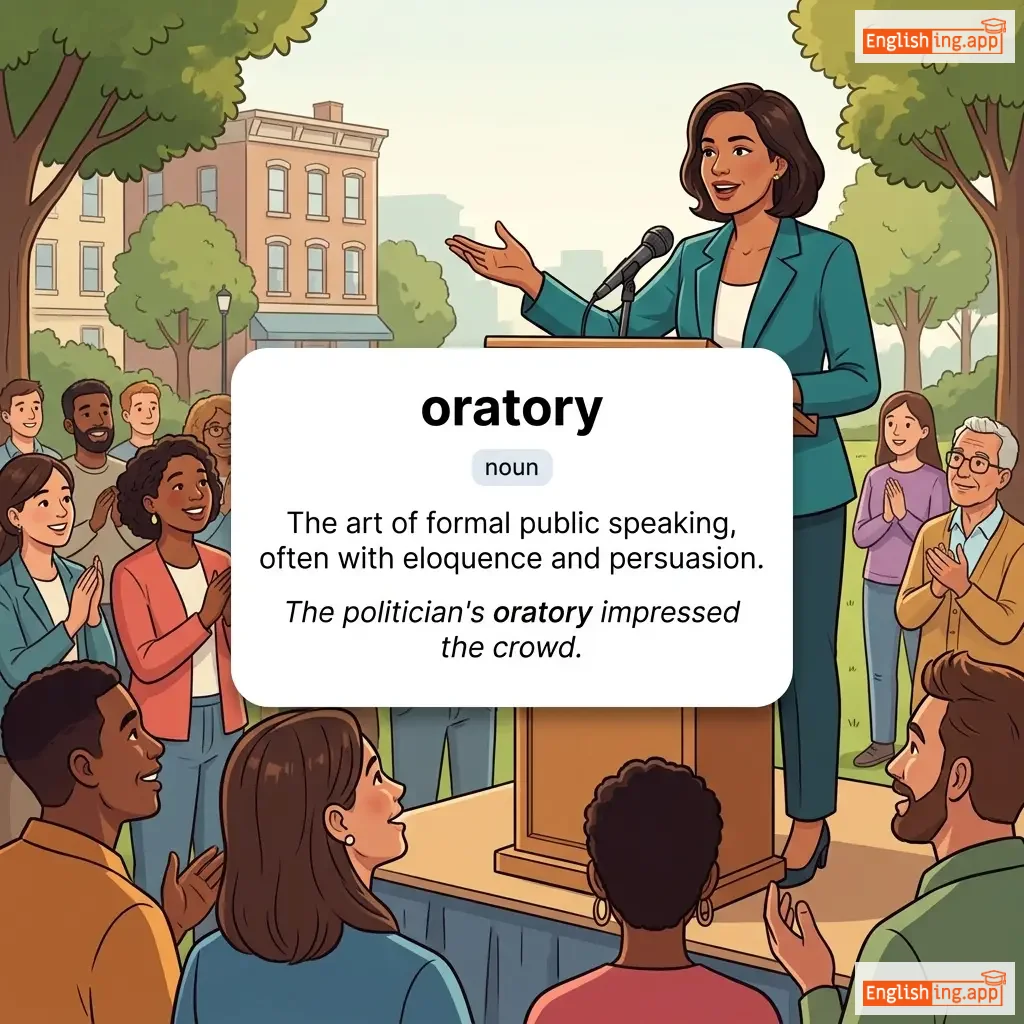
oratory definition card — visual illustration of the meaning
noun
/ˈɔːrəˌtɔːri/
वक्तृत्व कला (vaktrtva kala)

The art of formal public speaking, often with eloquence and persuasion.

"The politician's oratory impressed the crowd."

"राजनेता की वक्तृत्व कला ने भीड़ को प्रभावित किया।" (Raajneeta ki vaktrtva kala ne bheed ko prabhaavit kiya.)
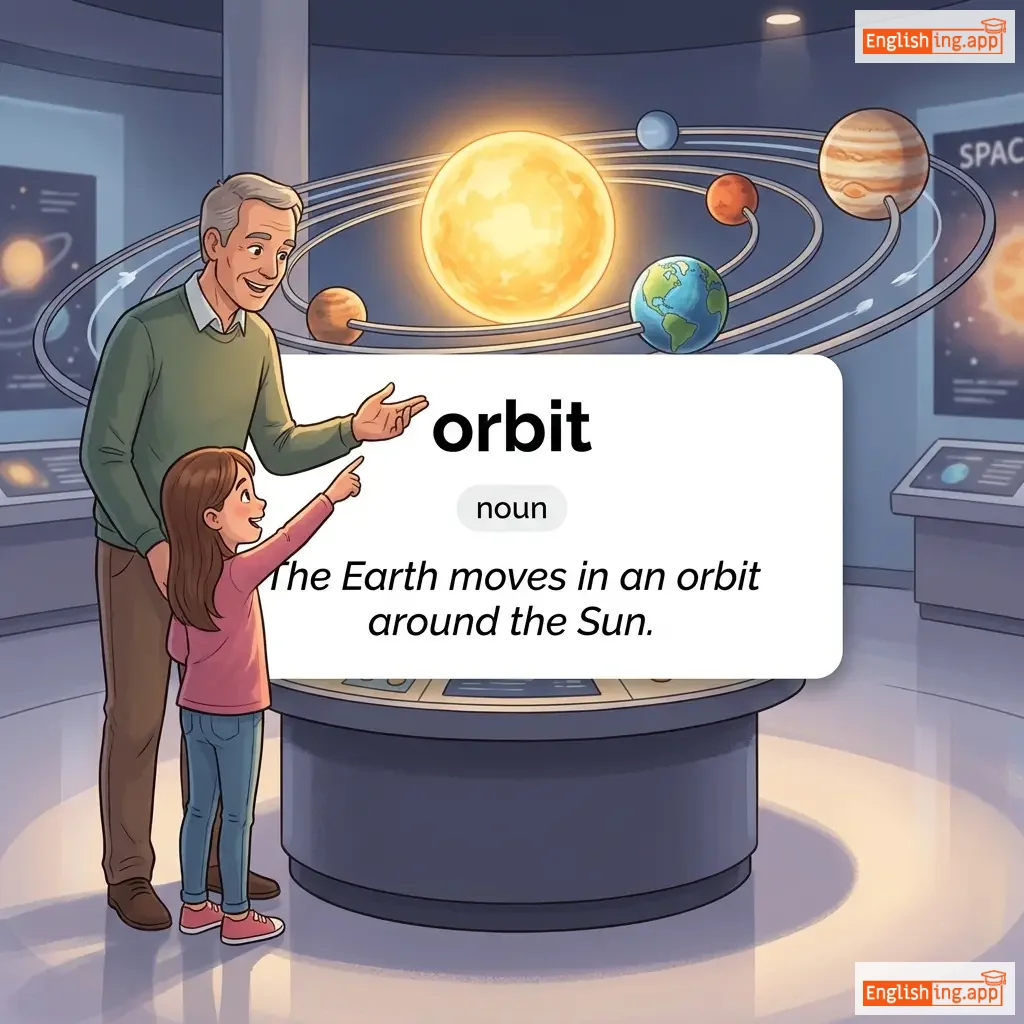
orbit definition card — visual illustration of the meaning
noun
/ˈɔːbɪt/
कक्षपथ (kakshapath)

the curved path that a planet, satellite, or object follows around another body in space

"The Earth moves in an orbit around the Sun."

"पृथ्वी सूर्य के चारों ओर एक कक्षपथ में घूमती है।" (Prithvi Surya ke chaaron aur ek kakshapath mein ghoomti hai.)
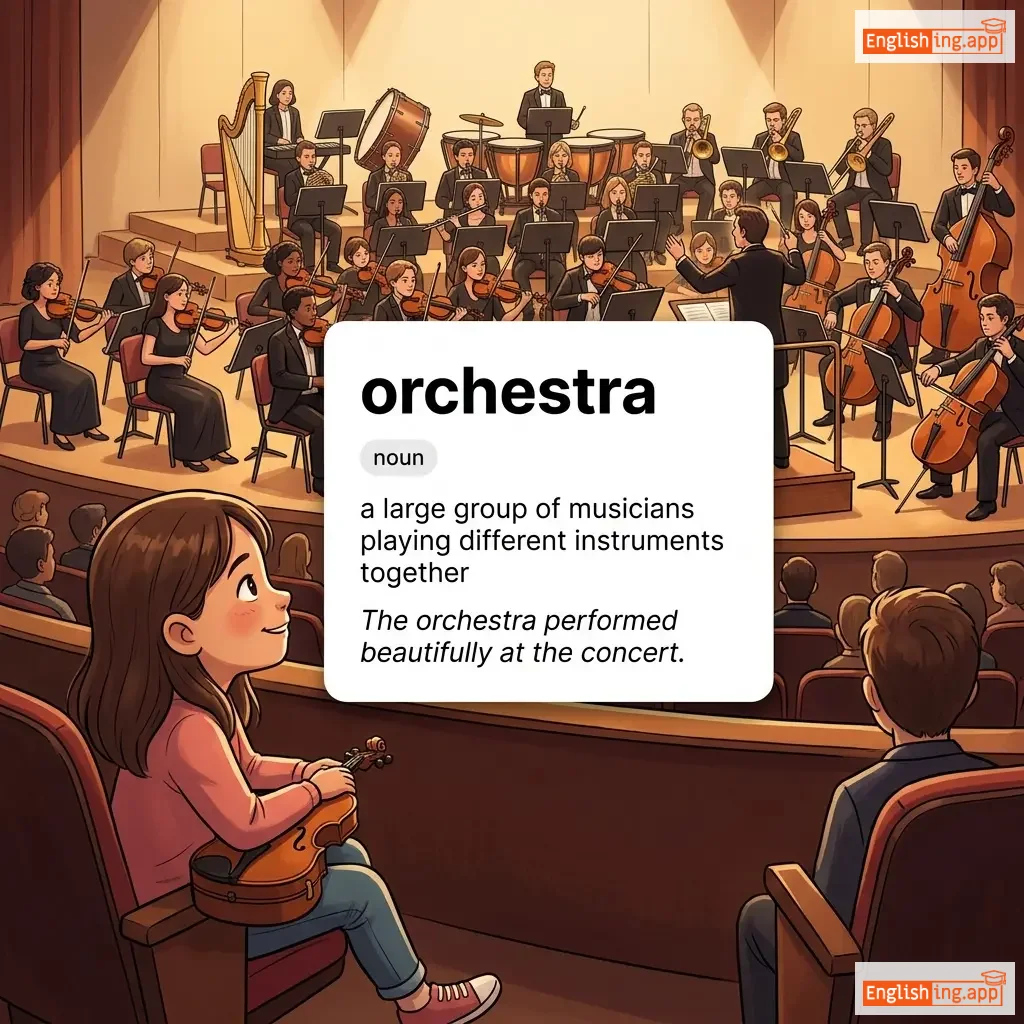
orchestra definition card — visual illustration of the meaning
noun
/ˈɔːkɪstrə/
ऑर्केस्ट्रा (orkestra)

a large group of musicians playing different instruments together

"The orchestra performed beautifully at the concert."

"ऑर्केस्ट्रा ने संगीत समारोह में सुंदर प्रदर्शन किया।" (Orkestra ne sangeet samaroh mein sundar pradarshan kiya.)
adverb
/əˈrɪdʒɪnəli/
मूल रूप से (mool roop se)

in the beginning, at first

"Originally, she wanted to be a doctor."

"मूल रूप से, वह डॉक्टर बनना चाहती थी।" (Mool roop se, vah doctor banna chahti thi.)
noun
/əbˈstɛtrɪks/
प्रसूति विज्ञान (prasooti vigyaan)

The branch of medicine dealing with childbirth and care of women giving birth.

"She is studying obstetrics to become a specialist in childbirth."

"वह प्रसूति विज्ञान का अध्ययन कर रही है ताकि वह प्रसव विशेषज्ञ बन सके।" (Vah prasooti vigyaan ka adhyayan kar rahi hai taaki vah prasav visheshagya ban sake.)
adjective
/ˈʌðər/
अन्य (anya)

used to refer to something different from the one already mentioned or known

"I don't want this one, I will take the other one."

"मैं यह नहीं चाहता, मैं वह लूंगा।" (Main yah nahin chahta, main vah loonga.)
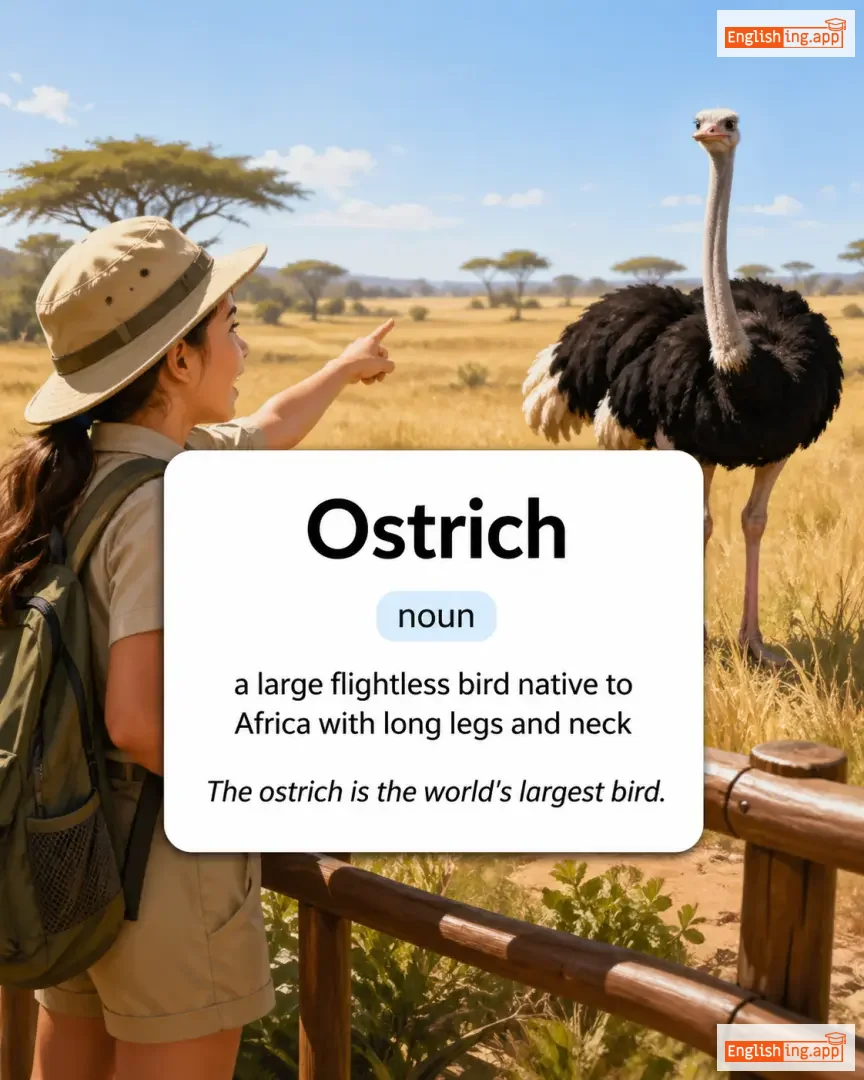
Ostrich definition card — visual illustration of the meaning
noun
/ˈɒs.trɪtʃ/
स्ट्रिच (strich)

a large flightless bird native to Africa with long legs and neck

"The ostrich is the world's largest bird."

"स्ट्रिच दुनिया का सबसे बड़ा पक्षी है।" (strich duniya ka sabse bada pakshi hai)
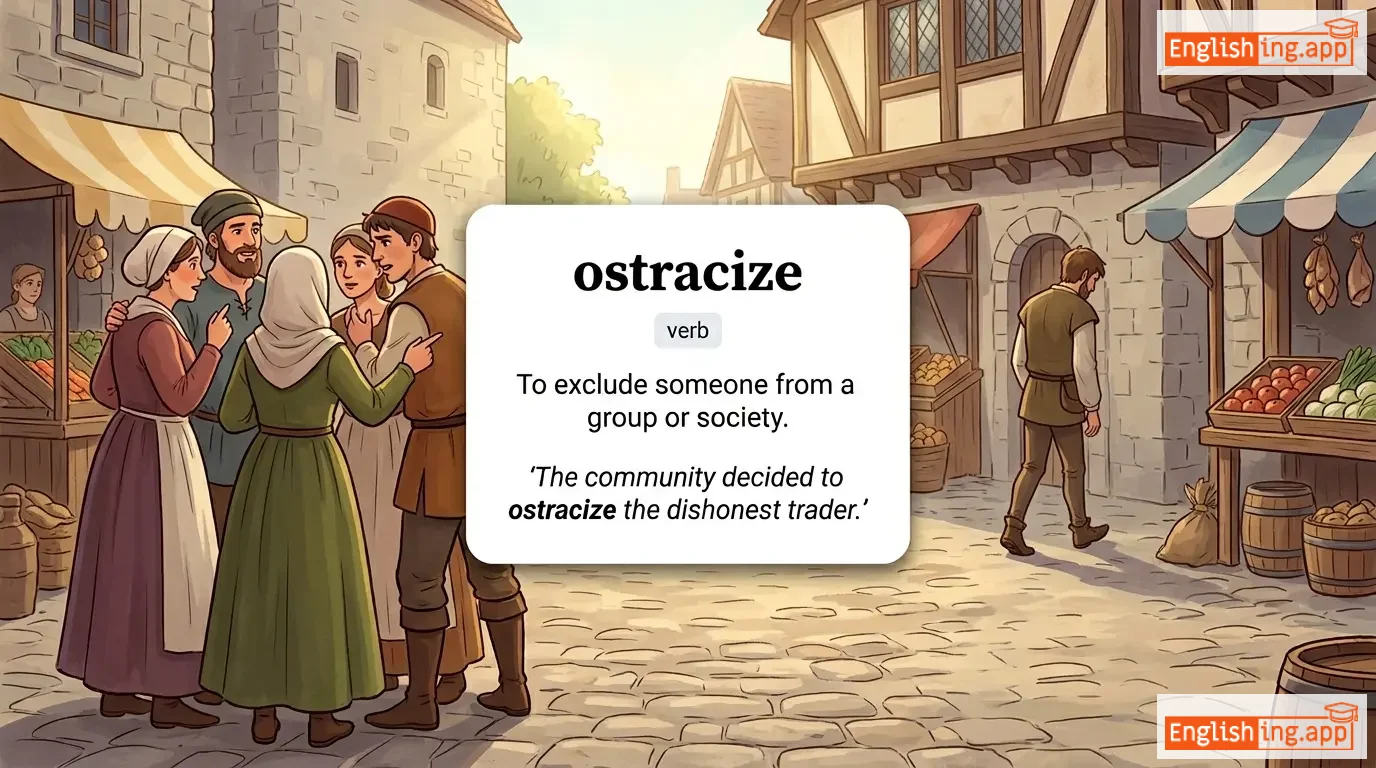
ostracize definition card — visual illustration of the meaning
verb
/ˈɒstrəsaɪz/
बहिष्कृत करना (bahishkrit karna)

To exclude someone from a group or society.

"The community decided to ostracize the dishonest trader."

"समुदाय ने बेईमानी करने वाले व्यापारी को बहिष्कृत करने का निर्णय लिया।" (Samuday ne beemani karne wale vyapari ko bahishkrit karne ka nirnay liya.)
noun
/ˈɒstrəsɪzəm/
बहिष्कार (bahishkar)

The act of excluding someone from a group or society.

"The student faced ostracism after breaking the rules."

"नियम तोड़ने के बाद छात्र को बहिष्कार का सामना करना पड़ा।" (Niyam todne ke baad chhatra ko bahishkar ka samna karna pada.)
ostentatious definition card — visual illustration of the meaning
adjective
/ˌɒstɛnˈteɪʃəs/
प्रदर्शनकारी (pradarshankari)

Characterized by a showy or pretentious display intended to impress others.

"He wore an ostentatious gold chain to the party."

"उसने पार्टी में एक आडंबरपूर्ण सोने की चेन पहनी थी।" (Usne party mein ek adambarpurn sone ki chain pehni thi.)
noun
/ˌɒstɛnˈteɪʃən/
अभिमान प्रदर्शन (abhimaan pradarshan)

excessive display of wealth or knowledge intended to attract admiration or envy

"The billionaire’s party was full of ostentation and luxury."

"अरबपति की पार्टी अभिमान प्रदर्शन और विलासिता से भरी हुई थी।" (Arbpati ki party abhimaan pradarshan aur vilasita se bhari hui thi.)
adjective
/ɒˈstɛnsɪv/
स्पष्ट रूप से दिखाने वाला (spasht roop se dikhane wala)

clearly demonstrative or pointing out; explicitly shown

"The teacher gave an ostensive example to clarify the concept."

"शिक्षक ने अवधारणा को स्पष्ट करने के लिए एक स्पष्ट रूप से दिखाने वाला उदाहरण दिया।" (Shikshak ne avdharana ko spasht karne ke liye ek spasht roop se dikhane wala udaharan diya.)
adjective
/ɒˈstɛnsəbl/
स्पष्ट (spasht)

stated or appearing to be true, but not necessarily so

"His ostensible reason for leaving was illness, but many doubted it."

"उसका जाने का स्पष्ट कारण बीमारी था, लेकिन कई लोग इसे संदेहपूर्ण मानते थे।" (Uska jane ka spasht karan bimari tha, lekin kai log ise sandehpurn maante the.)
verb
/ˈɒsɪfaɪ/
हड्डी में बदलना (haddi mein badalna)

to turn into bone or become rigid and inflexible

"With age, some tissues tend to ossify."

"वृद्धावस्था में, कुछ ऊतक ऑसिफ़ाई होने लगते हैं।" (Vruddhavastha mein, kuch ootak ossify hone lagte hain.)
adjective
/ˈɑːsɪˌfaɪd/
हड्डी में बदलना, कठोर (haddi mein badalna, kathor)

Turned into bone or become rigid; unwilling to change.

"The company had an ossified management structure that resisted innovation."

"कंपनी का एक कठोर प्रबंधन ढांचा था जो नवाचार का विरोध करता था।" (Kampani ka ek kathor prabandhan dhancha tha jo navaachar ka virodh karta tha.)
adjective
/ˈɒsiəs/
हड्डी से संबंधित (haddi se sambandhit)

consisting of or turned into bone; bony

"The fossil showed osseous structures of the ancient creature."

"फॉसिल ने प्राचीन प्राणी की हड्डी जैसी संरचनाएँ दिखाई।" (Fossil ne prachin prani ki haddi jaisi sanrachnaen dikhayi.)
verb
/ˈɑːskjʊleɪt/
चुम्बन करना (chumban karna)

To kiss.

"They osculated under the mistletoe during the party."

"उन्होंने पार्टी के दौरान मिस्टलेटो के नीचे चुंबन किया।" (Unhone party ke dauran mistletoe ke neeche chumban kiya.)
noun
/ˌɑːsɪˈleɪʃən/
दोलन (dolan)

The movement back and forth at a regular speed.

"The oscillation of the pendulum controls the clock."

"पेंडुलम का दोलन घड़ी को नियंत्रित करता है।" (Pendulum ka dolan ghadi ko niyantrit karta hai.)
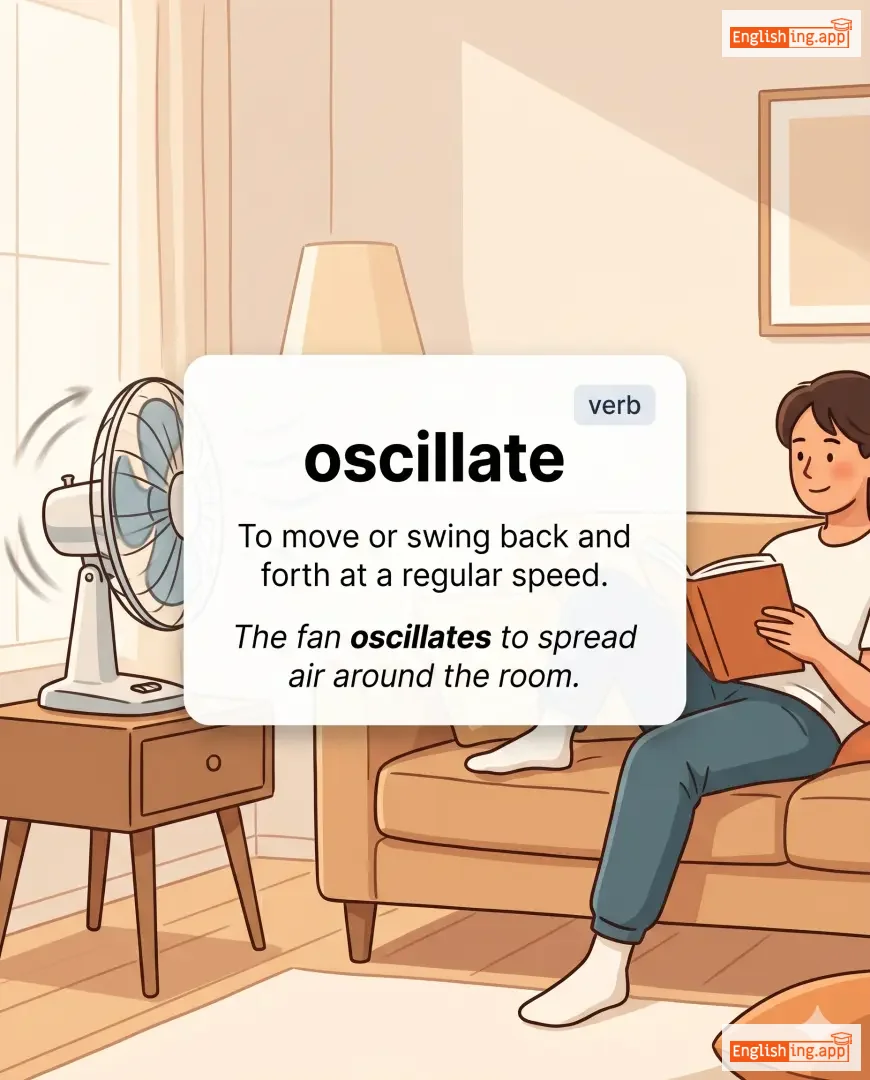
oscillate definition card — visual illustration of the meaning
verb
/ˈɑːsɪleɪt/
खुशी (khushi)

To move or swing back and forth at a regular speed.

"The fan oscillates to spread air around the room."

"वह जब पुरस्कार प्राप्त करती है तो वह अपनी खुशी को छिपा नहीं पाती।" (vah jab puraskaar prapt karti hai to vah apni khushi ko chhupa nahin paati.)
adjective
/ˌɔːrθəˈpiːdɪk/
हड्डी और मांसपेशियों की विकृति से संबंधित (haddi aur maanspeshiyon ki vikriti se sambandhit)

Relating to the correction of deformities of bones or muscles.

"She visited an orthopedic surgeon for her back pain."

"उसने अपनी पीठ दर्द के लिए एक आर्थोपेडिक सर्जन से संपर्क किया।" (Usne apni peeth dard ke liye ek orthopedic surgeon se sampark kiya.)
noun
/ɔːrˈθɑːɡrəfi/
वर्तनी (vartani)

The conventional spelling system of a language.

"English orthography can be confusing for learners."

"अंग्रेजी वर्तनी शिक्षार्थियों के लिए उलझन भरी हो सकती है।" (Angreji vartani shiksharthiyon ke liye uljhan bhari ho sakti hai.)
adjective
/ɔːrˈθɑːɡənl/
ऑर्थोगोनल (orthogonal)

at right angles; independent or unrelated

"In mathematics, two vectors are orthogonal if their dot product is zero."

"गणित में, दो वेक्टर ऑर्थोगोनल होते हैं यदि उनका डॉट उत्पाद शून्य होता है।" (Ganit mein, do vector orthogonal hote hain yadi unka dot utpad shunya hota hai.)
noun
/ˈɔːrθədɑːksi/
परंपरावाद (paramparawad)

traditional or generally accepted beliefs and practices

"The religious leader defended the orthodoxy of the faith."

"धार्मिक नेता ने विश्वास के परंपरावाद की रक्षा की।" (Dharmik neta ne vishwas ke paramparawad ki raksha ki.)
adjective
/ˈɔːrθədɑːks/
पारंपरिक (orthodoks)

conforming to traditional beliefs or practices

"He comes from a very orthodox family."

"वह एक बहुत पारंपरिक परिवार से आता है." (hi kams phrom a veri orthodoks family.)
noun
/ˈɔr.fən.ɪʒ/
अनाथ आश्रम (anath ashram)

an institution for the care and education of children who have lost their parents

"The charity built a new orphanage for homeless children."

"चैरिटी ने बेघर बच्चों के लिए एक नया अनाथ आश्रम बनाया।" (chayrity ne begar bachon ke liye ek naya anath ashram banaya.)
noun
/ˈɔr.fən/
अनाथ बच्चा (anath bachcha)

a child whose parents are dead; someone without protective support

"The orphan was adopted by a loving family."

"अनाथ बच्चा एक स्नेही परिवार द्वारा अपनाया गया।" (anath bachcha ek snehi parivar dwara apnaya gaya.)
adjective
/ˈɔːrəˌtʌnd/
गंभीर और स्पष्ट स्वर (gambhir aur spashth swar)

full, rich, and clear in sound; pompous in style

"The actor's orotund voice filled the theater."

"अभिनेता की गंभीर आवाज़ ने थिएटर को भर दिया।" (Abhineta ki gambhir aawaaz ne theater ko bhar diya.)
noun
/ˌɔːrnɪˈθɑːlədʒi/
पक्षी विज्ञान (pakshi vigyan)

the scientific study of birds

"She pursued ornithology to understand the migration patterns of birds."

"उसने पक्षियों के प्रवासन पैटर्न को समझने के लिए ऑर्निथोलॉजी का अध्ययन किया।" (Usne pakshiyon ke pravasan pattern ko samjhne ke liye ornithology ka adhyayan kiya.)
noun
/ˌɔːrnɪˈθɒlədʒɪst/
पक्षीविज्ञानी (pakshivigyani)

a scientist who studies birds

"The ornithologist spent years studying migratory birds."

"ऑर्निथोलॉजिस्ट ने वर्षों तक प्रवासी पक्षियों का अध्ययन किया।" (Ornithologist ne varsho tak pravasi pakshiyon ka adhyayan kiya.)
adjective
/ˈɔːrnəri/
चिड़चिड़ा (chidhchidhā)

bad-tempered and combative; stubborn

"The ornery old man refused to leave his chair."

"चिड़चिड़े बुजुर्ग आदमी ने अपनी कुर्सी छोड़ने से इंकार कर दिया।" (Chidhchidhā bujurg ādmī ne apnī kursī chhodne se inkār kar diyā.)
adjective
/ɔːˈneɪt/
भव्य (bhavya)

elaborately or highly decorated

"The palace hall was filled with ornate furniture and paintings."

"महल के हॉल में भव्य फर्नीचर और चित्र थे।" (Mahal ke hall mein bhavya furniture aur chitra the.)
adjective
/ˌɔːrnəˈmɛntl/
सज्जावटी (sajjavati)

Serving as decoration; decorative rather than functional.

"The garden was filled with ornamental plants."

"बाग़ में सजावटी पौधों से भरा हुआ था।" (Baag mein sajavati podhon se bhara hua tha.)
noun
/ˈɔːrnəmənt/
सज्जा (sajja)

A decorative object that adds beauty to something.

"The Christmas tree was decorated with colorful ornaments."

"क्रिसमस ट्री को रंगीन सजावट से सजाया गया था।" (Christmas tree ko rangeen sajawat se sajaya gaya tha.)
noun
/ˈɒrɪz(ə)n/
प्रार्थना (prarthana)

a prayer, especially a devout or formal one

"He whispered a quiet orison before going to sleep."

"सोने से पहले उसने एक शांत प्रार्थना फुसफुसाई।" (sone se pehle usne ek shant prarthana fufusai.)
verb
/əˈrɪdʒɪneɪt/
उत्पन्न होना (utpann hona)

to come into existence; to begin; to create or produce

"The tradition originated in ancient times."

"परंपरा प्राचीन समय में उत्पन्न हुई।" (Parampara prachin samay mein utpann hui.)
noun
/ˈɔːrdɪnəns/
विधान (vidhan)

An authoritative rule, law, or decree issued by a city, town, or authority.

"The city council passed an ordinance banning smoking in public parks."

"शहर परिषद ने सार्वजनिक पार्कों में धूम्रपान पर प्रतिबंध लगाने के लिए एक विधान पारित किया।" (Shahar parishad ne sarvajanik parkon mein dhoomrapan par pratibandh lagane ke liye ek vidhan parit kiya.)
organic foods definition card — visual illustration of the meaning
noun
ɔːˈɡæn.ɪk fuːdz
जैविक खाद्य (jaivik khadya)

Food produced without the use of chemicals such as artificial pesticides, fertilizers, or other artificial agents.

"Organic foods are healthier than processed foods."

"ऑर्गेनिक फूड्स प्रसंस्कृत खाद्य पदार्थों से ज्यादा स्वास्थ्यवर्धक होते हैं।" (Organic foods prasanskrut khadya padarthon se zyada swasthyavardhak hote hain.)
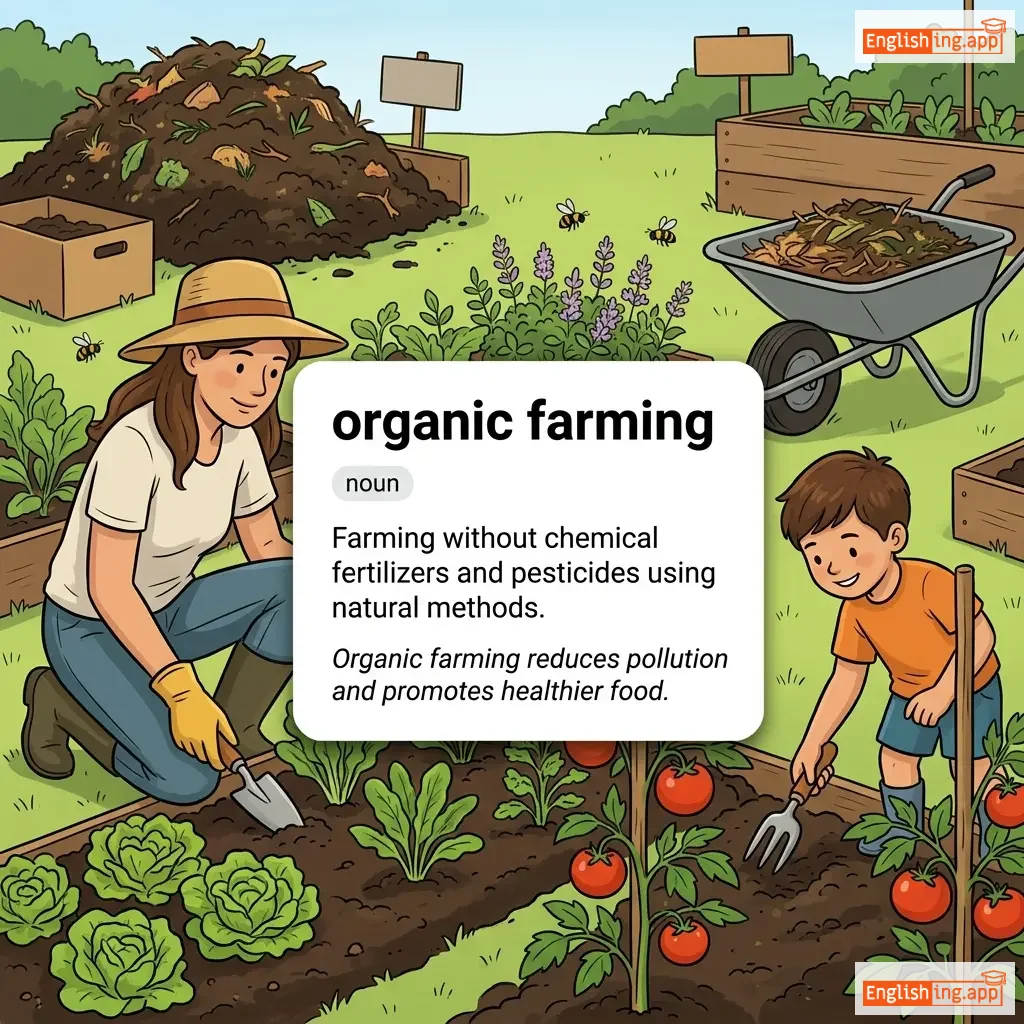
organic farming definition card — visual illustration of the meaning
noun
ˈɔːr.ɡə.nɪk ˈfɑːr.mɪŋ
ऑर्गेनिक खेती (organic kheti)

Farming without chemical fertilizers and pesticides using natural methods.

"Organic farming reduces pollution and promotes healthier food."

"ऑर्गेनिक खेती प्रदूषण को कम करती है और स्वास्थ्यपूर्ण भोजन को बढ़ावा देती है।" (Organic kheti pradooshan ko kam karti hai aur swasthyapurn bhojan ko badhava deti hai.)
organic definition card — visual illustration of the meaning
adjective
/ɔːrˈɡænɪk/
कार्बनिक (karbanik)

Relating to or derived from living matter; produced without artificial chemicals.

"They prefer to eat organic fruits and vegetables."

"वे जैविक फल और सब्जियां खाना पसंद करते हैं।" (Ve jaivik phal aur sabjiyaan khana pasand karte hain.)
noun
/ˈɔːɡən/
अंग (ang)

a part of the body that performs a specific function

"The heart is an important organ in the human body."

"दिल मानव शरीर का एक महत्वपूर्ण अंग है।" (Dil manav sharir ka ek mahatvapurn ang hai.)
noun
/ˈɔːrdnəns/
सामरिक आपूर्ति (saamrik aapoorti)

Military supplies including weapons, ammunition, and combat equipment.

"The army stored ordnance in a secure facility outside the city."

"सेना ने शहर के बाहर एक सुरक्षित स्थान पर सैन्य सामग्री संग्रहित की" (Sena ne shahar ke baahar ek surakshit sthan par sainya samaagri sangrahit ki)
noun
/ˌɔːrdɪˈneɪʃən/
दीक्षा (diksha)

The ceremony of conferring holy orders or official religious authority.

"The church held a special service for the ordination of new priests."

"गिरजाघर ने नए पुरोहितों के अभिषेक के लिए एक विशेष सेवा आयोजित की।" (Girjahar ne naye purohiton ke abhishhek ke liye ek vishesh seva aayojit ki.)
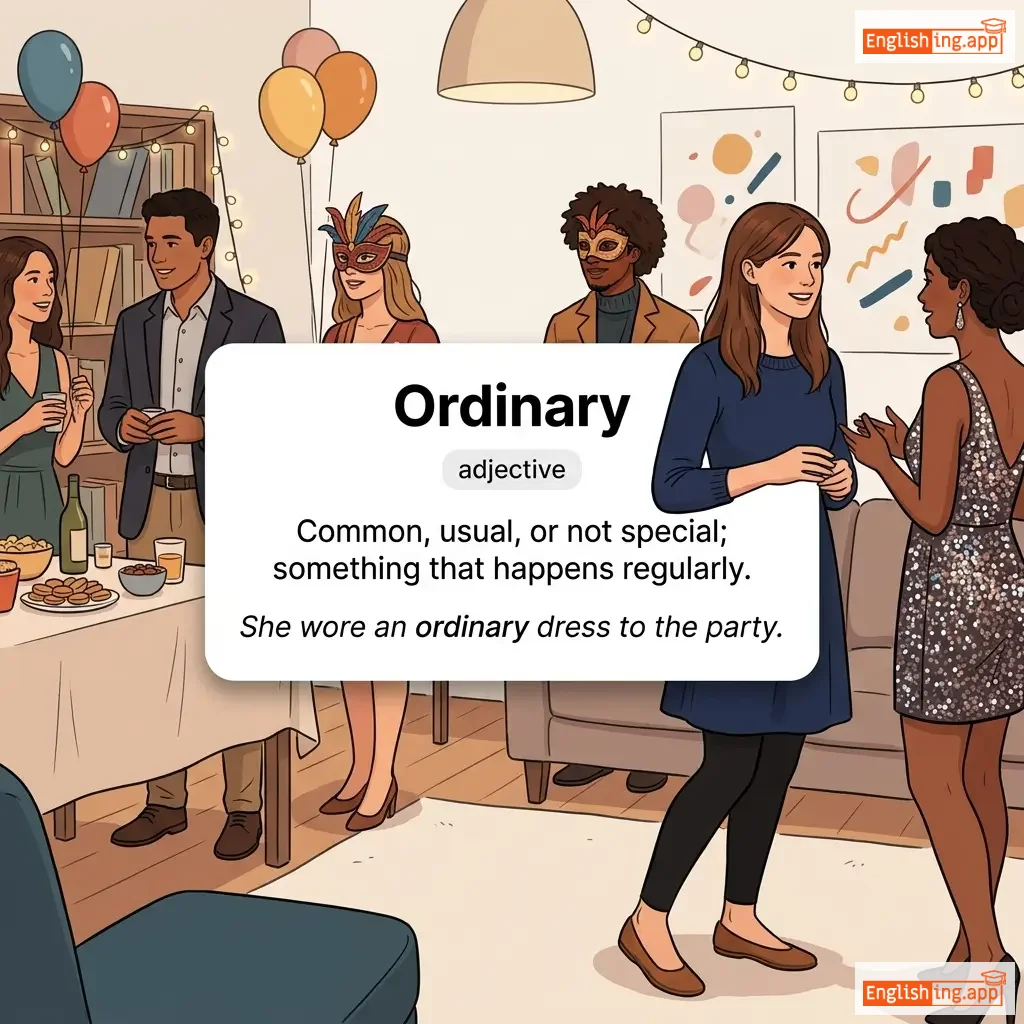
Ordinary definition card — visual illustration of the meaning
adjective
/ˈɔːrdəˌnɛri/
साधारण (sadharan)

Common, usual, or not special; something that happens regularly.

"She wore an ordinary dress to the party."

"वह पार्टी में साधारण ड्रेस पहने हुए थी।" (Wah party mein sadharan dress pehne hue thi.)
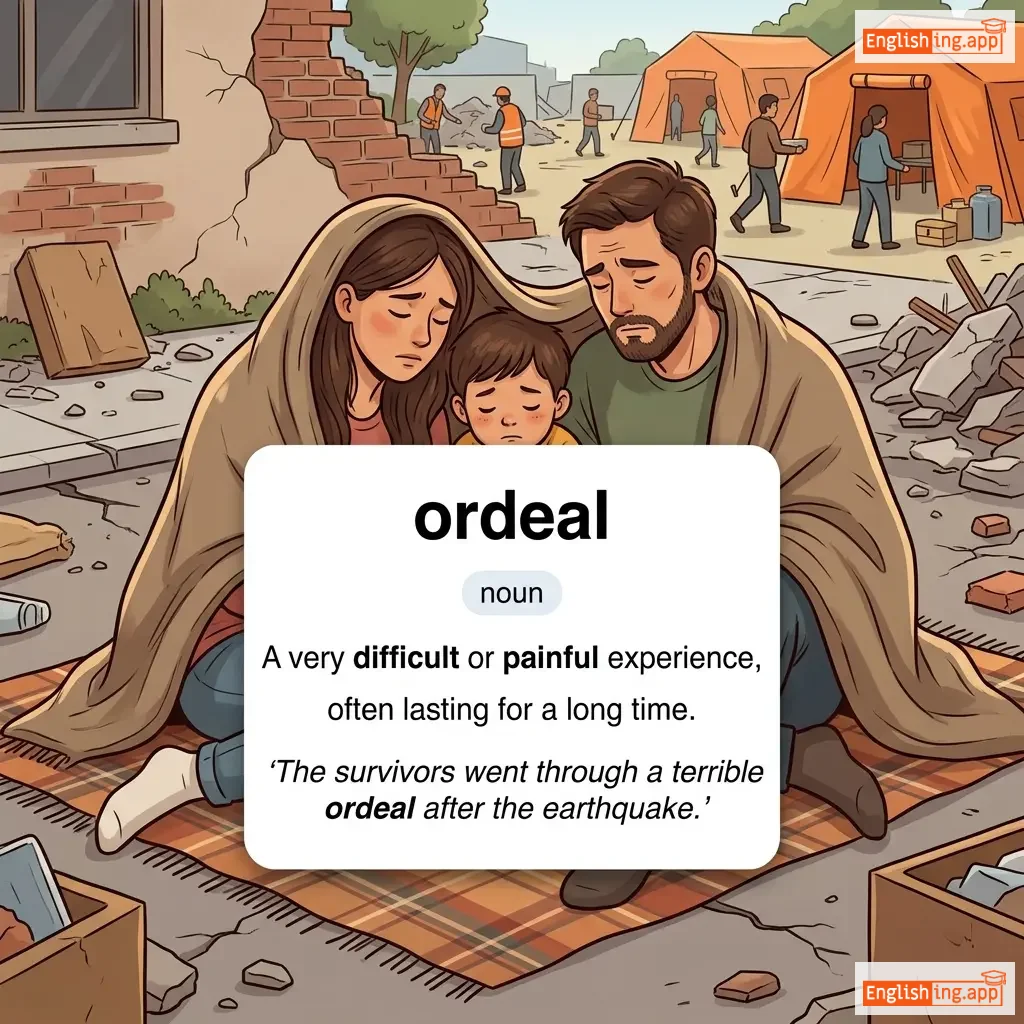
ordeal definition card — visual illustration of the meaning
noun
/ɔːrˈdiːl/
कठिन अनुभव (kathin anubhav)

A very difficult or painful experience, often lasting for a long time.

"The survivors went through a terrible ordeal after the earthquake."

"भूकंप के बाद उत्तरजीवी एक भयानक अनुभव से गुज़रे।" (bhookamp ke baad uttareejee ek bhayankar anubhav se guzre.)
orchestrated definition card — visual illustration of the meaning
verb
ˈɔː.kɪ.streɪ.tɪd
संगठित (sangathit)

Planned or coordinated carefully and deliberately.

"The attacks were orchestrated with precision."

"हमले सटीकता के साथ संगठित किए गए थे।" (Hamle sathikta ke saath sangathit kiye gaye the.)
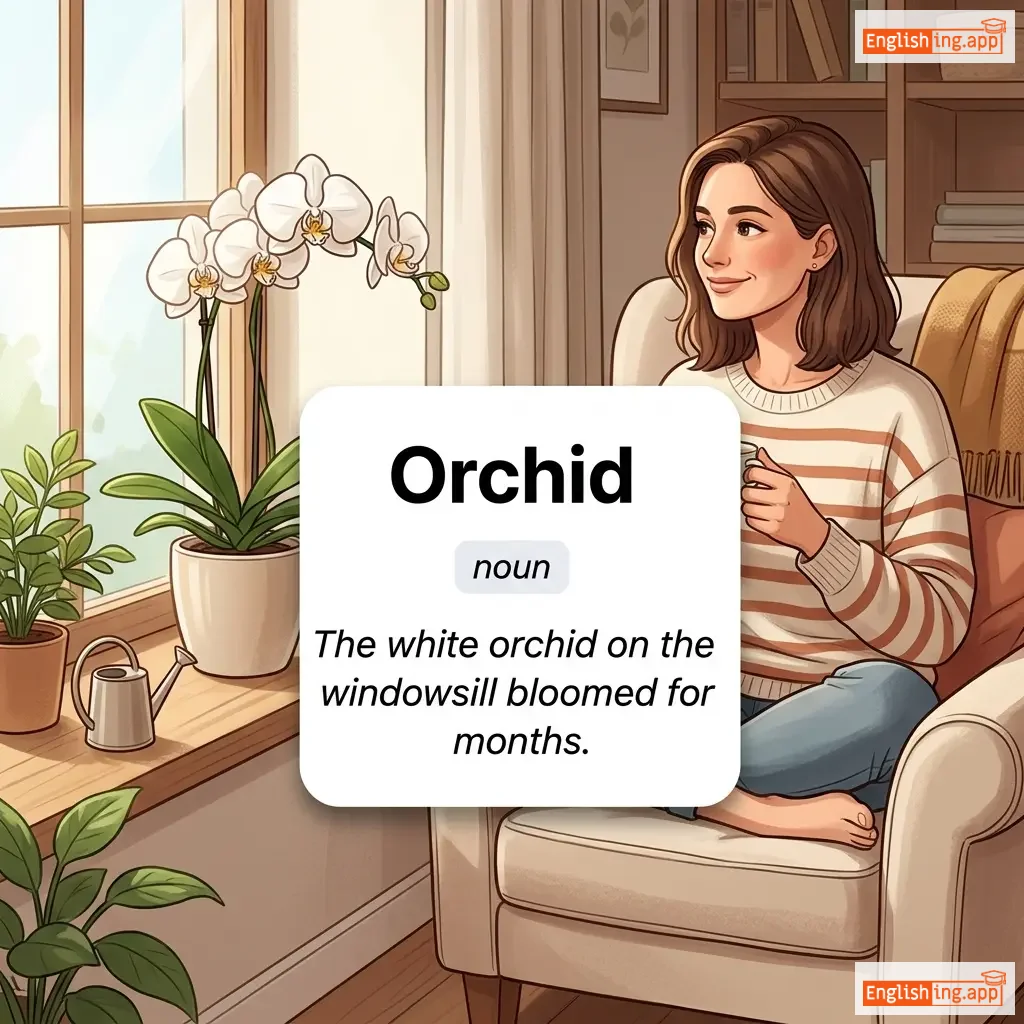
Orchid definition card — visual illustration of the meaning
noun
/ˈɔːrkɪd/
आर्किड (arkid)

a diverse family of flowering plants known for their exotic and often fragrant flowers

"The white orchid on the windowsill bloomed for months."

"खिड़की पर सफेद आर्किड महीनों तक खिला रहा।" (khidki par safed arkid mahino tak khila raha.)
verb
/ɔːrˈdeɪn/
पादरी बनाना (paadri banana)

To officially make someone a priest or minister; to decree or order something officially.

"The bishop will ordain three new priests this Sunday."

"बिशप इस रविवार तीन नए पादरियों को पादरी बनाएंगे।" (Bishop is ravivaar teen naye paadiyon ko paadri banaenge.)
adjective
/ˈɔː.də.li/
व्यवस्थित; संगठित; शांतिपूर्ण; (orderli)

well-organized; systematic; peaceful

"Please keep your desk orderly and clean."

"कृपया अपना डेस्क व्यवस्थित और साफ रखें।" (kripya apna desk vyavasthit aur saaf rakhen)