Словари

Словарь английского языка | Значения слов, определения и примеры

Orator definition card — visual illustration of the meaning
noun
/ˈɔːrətər/
оратор (orator)

A person who delivers formal speeches with skill and eloquence

"The orator captivated the audience with his eloquence."

"Оратор захватил внимание аудитории своей красноречивостью." (Orator zakhvatil vnimanie auditorii svoey krasnorechivost'yu.)
noun
/ˌɔːrəˈtɔːri.oʊ/
религиозная музыкальная композиция (religioznaya muzykal'naya kompozitsiya)

A large-scale musical composition for orchestra, choir, and soloists, usually on a sacred theme, performed without costumes or scenery.

"Handel's 'Messiah' is one of the most famous oratorios ever written."
"Мессия Генделя — одно из самых известных ораторио, когда-либо написанных." (Messiya Hendelya — odno iz samykh izvestnykh oratorio, kogda-libo napisannykh.)
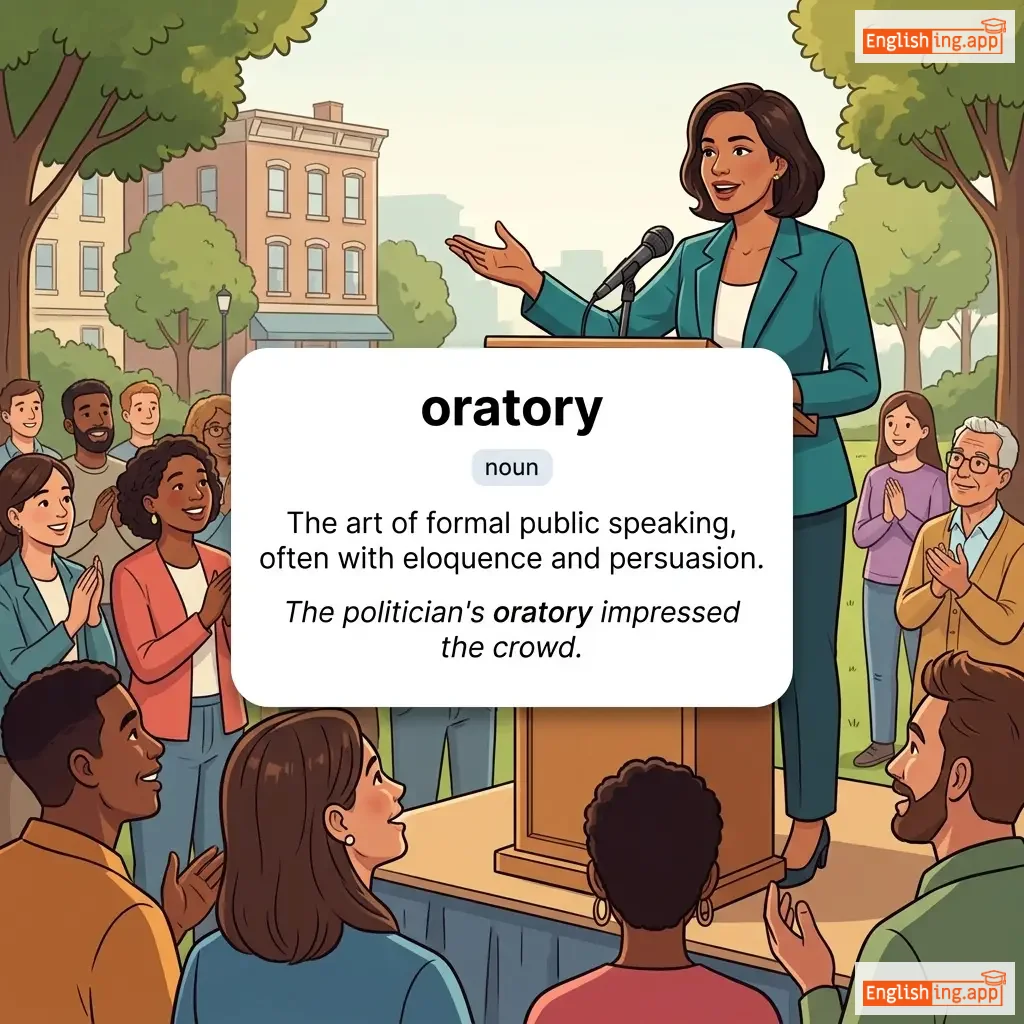
oratory definition card — visual illustration of the meaning
noun
/ˈɔːrəˌtɔːri/
ораторское искусство (oratorskoye iskusstvo)

The art of formal public speaking, often with eloquence and persuasion.

"The politician's oratory impressed the crowd."
"Ораторское искусство политика впечатлило толпу." (Oratorskoye iskusstvo politika vpechatlilo tolpu.)
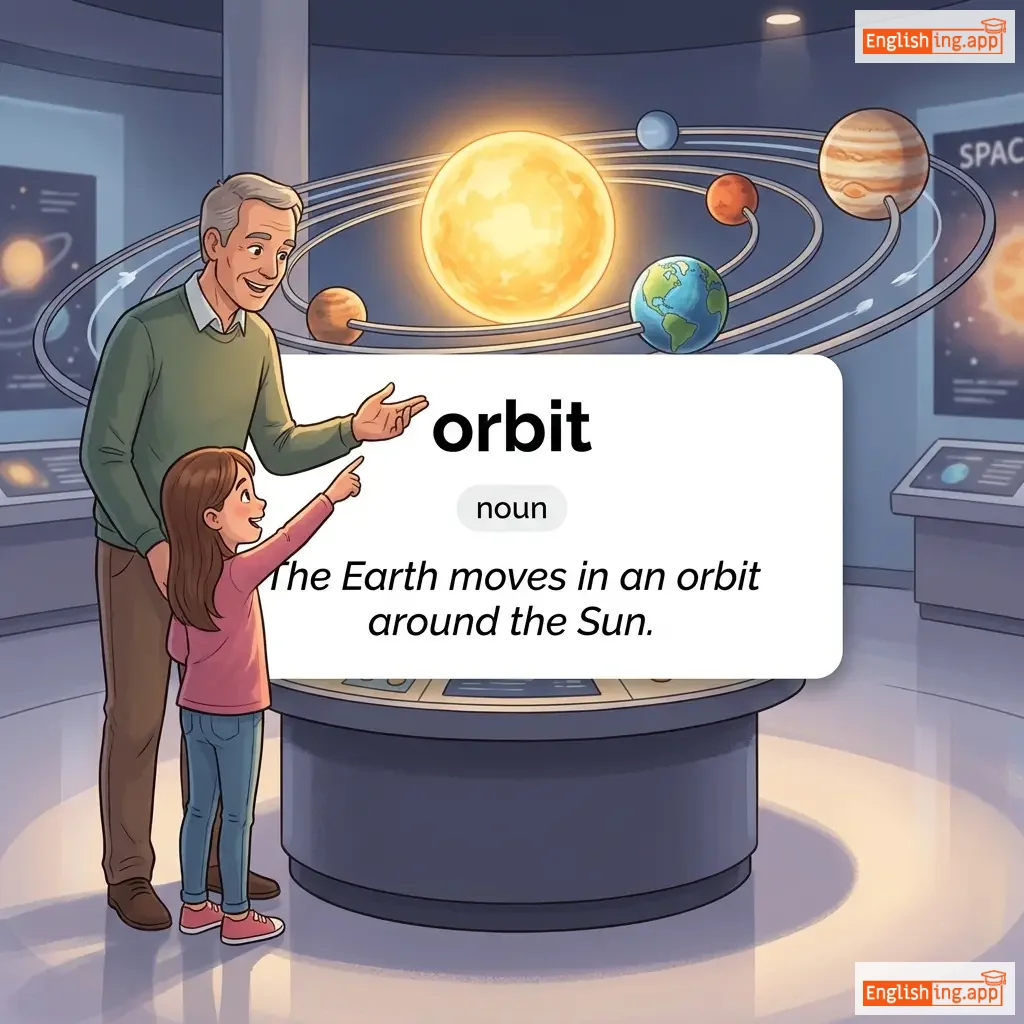
orbit definition card — visual illustration of the meaning
noun
/ˈɔːbɪt/
орбита (orbita)

the curved path that a planet, satellite, or object follows around another body in space

"The Earth moves in an orbit around the Sun."
"Земля движется по орбите вокруг Солнца." (Zemlya dvizhutsya po orbite vokrug Solntsa.)
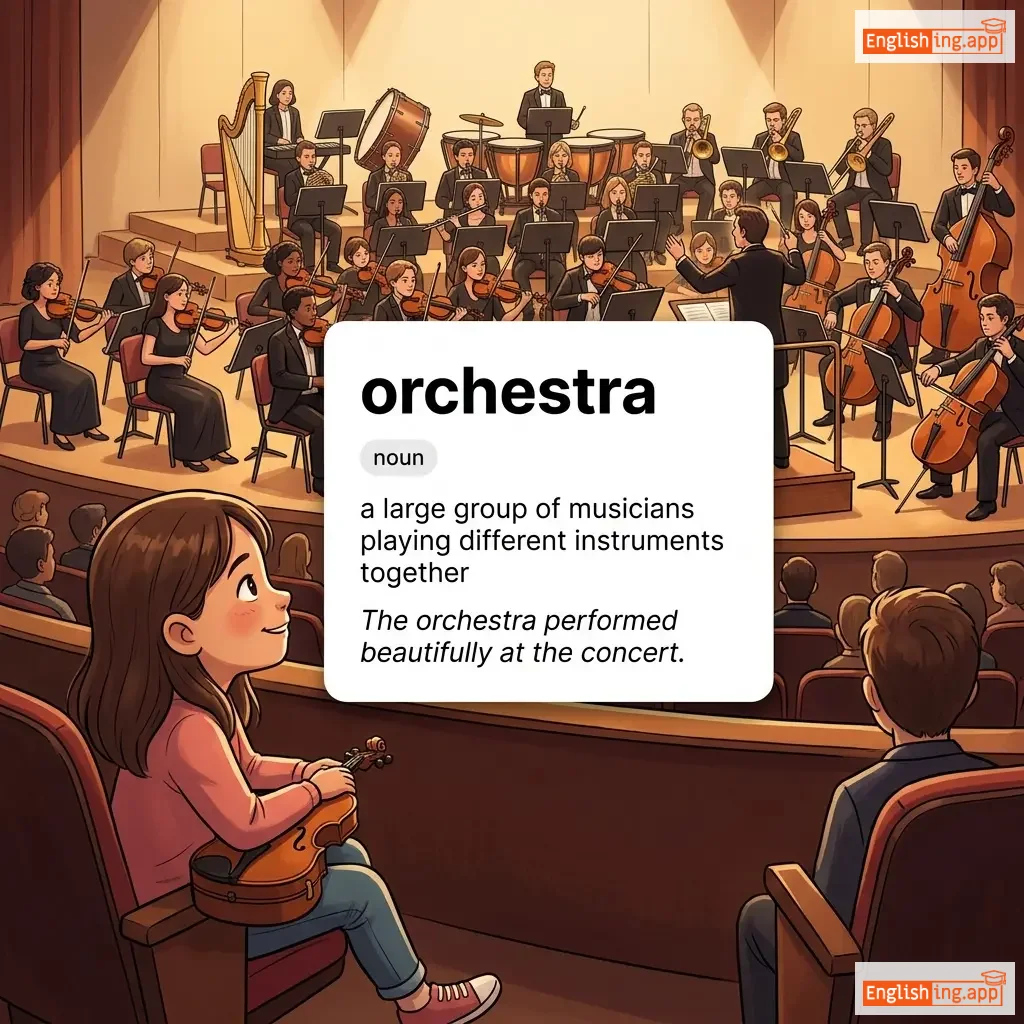
orchestra definition card — visual illustration of the meaning
noun
/ˈɔːkɪstrə/
оркестр (orkestr)

a large group of musicians playing different instruments together

"The orchestra performed beautifully at the concert."

"Оркестр прекрасно выступил на концерте." (Orkestr prekrasno vystupil na kontserte.)
adverb
/əˈrɪdʒɪnəli/
изначально (iznachal'no)

in the beginning, at first

"Originally, she wanted to be a doctor."

"Изначально она хотела стать врачом." (Iznachal'no ona hotela stat' vrachom.)
noun
/əbˈstɛtrɪks/
акушерство (akusherstvo)

The branch of medicine dealing with childbirth and care of women giving birth.

"She is studying obstetrics to become a specialist in childbirth."

"Она учится на акушерку, чтобы стать специалистом по родам." (Ona uchitsya na akusherku, chtoby stat' spetsialistom po rodam.)
adjective
/ˈʌðər/
другой (drugoy)

used to refer to something different from the one already mentioned or known

"I don't want this one, I will take the other one."
"Я не хочу это, я возьму другое." (Ya ne khochu eto, ya voz'mu drugoye.)
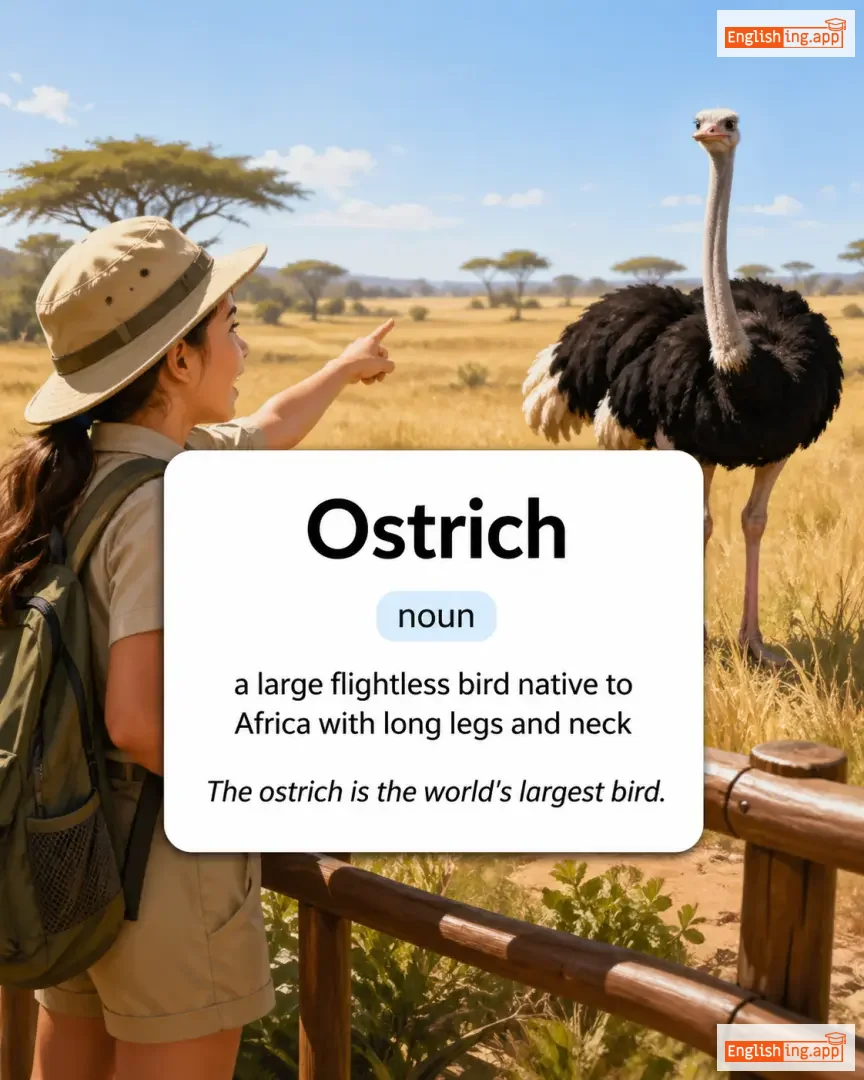
Ostrich definition card — visual illustration of the meaning
noun
/ˈɒs.trɪtʃ/
страус (straus)

a large flightless bird native to Africa with long legs and neck

"The ostrich is the world's largest bird."
"Страус - самая большая птица в мире." (Straus - samaya bol'shaya ptitsa v mire)
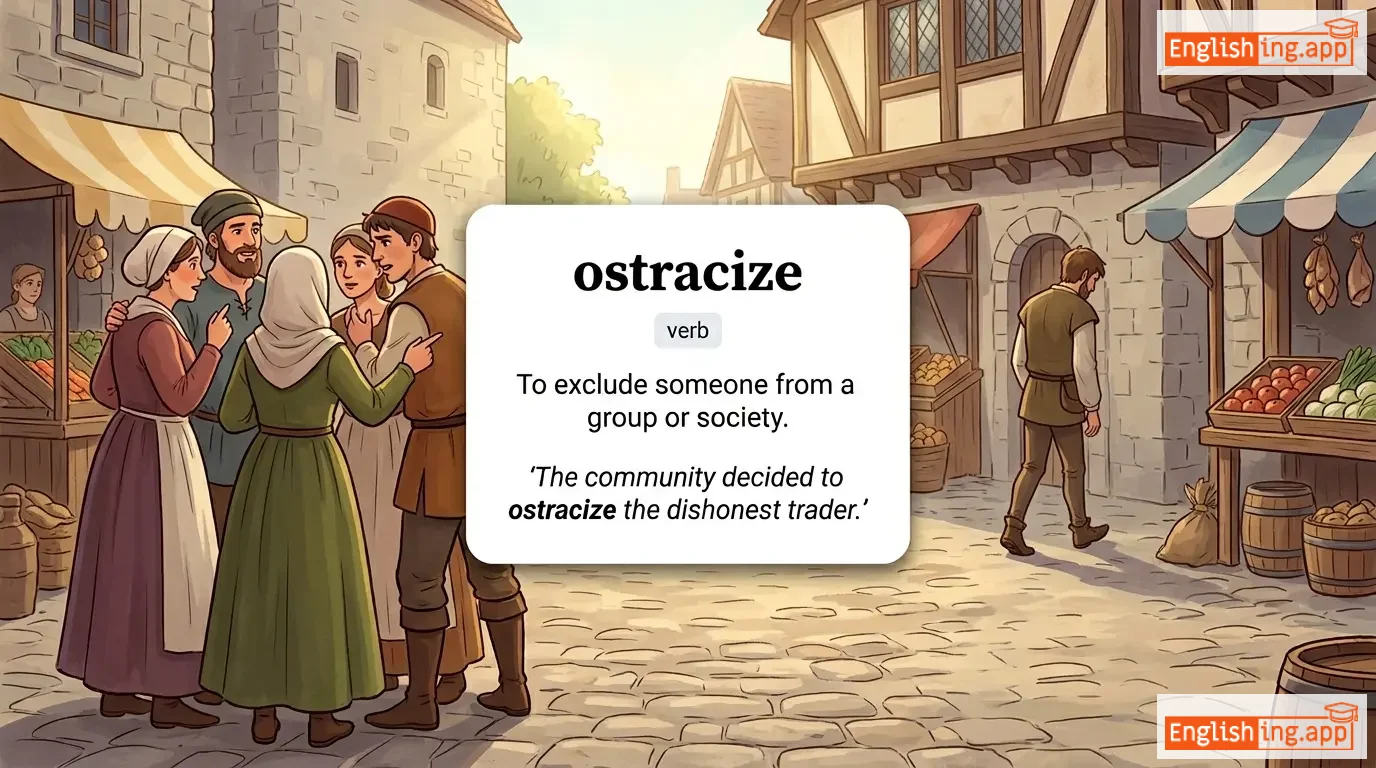
ostracize definition card — visual illustration of the meaning
verb
/ˈɒstrəsaɪz/
остранить (ostranit)

To exclude someone from a group or society.

"The community decided to ostracize the dishonest trader."

"Сообщество решило остранить нечестного торговца." (Soobshchestvo reshilo ostranit nechestnogo torgovtsa.)
noun
/ˈɒstrəsɪzəm/
остракизм (ostrakizm)

The act of excluding someone from a group or society.

"The student faced ostracism after breaking the rules."
"Студент столкнулся с острикатизмом после того, как нарушил правила." (Student stolknulsya s ostrakizmom posle togo, kak narushil pravila.)
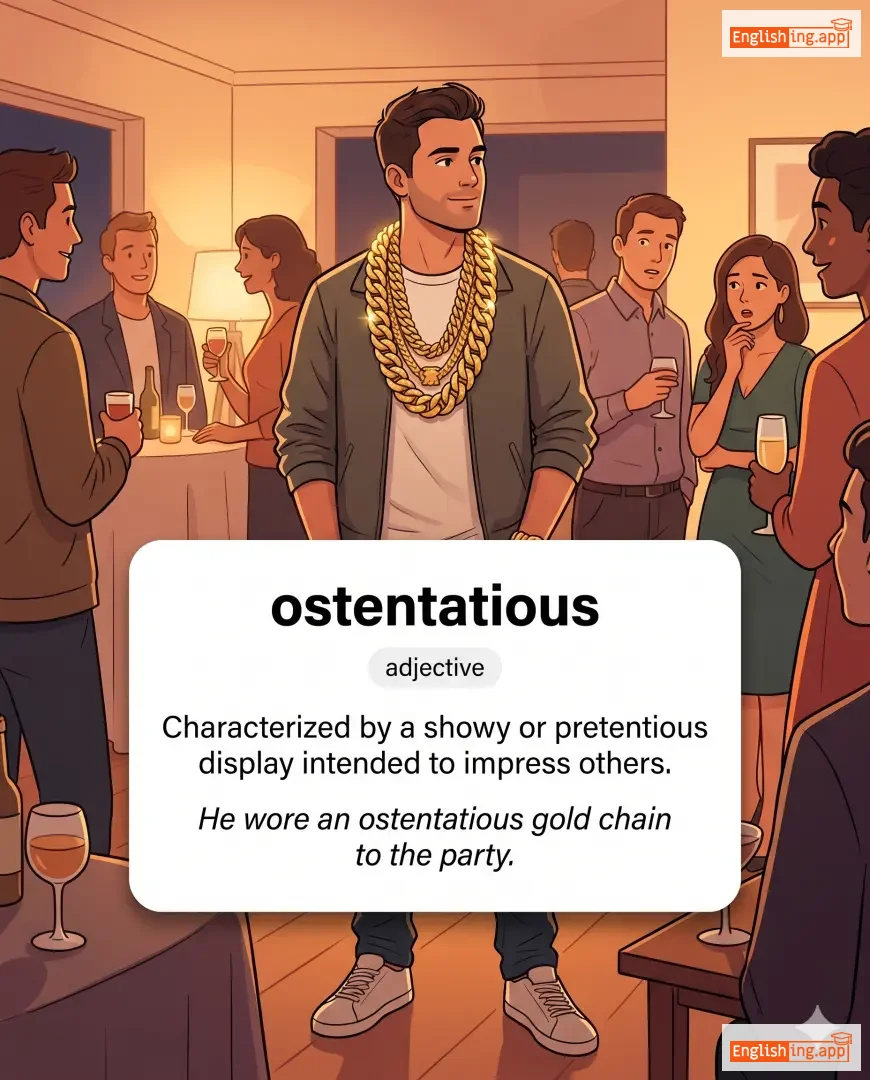
ostentatious definition card — visual illustration of the meaning
adjective
/ˌɒstɛnˈteɪʃəs/
претенциозный (pretentsioznyy)

Characterized by a showy or pretentious display intended to impress others.

"He wore an ostentatious gold chain to the party."

"Он носил на вечеринке претенциозную золотую цепочку." (On nosil na vecherinke pretentsioznuyu zolotuyu tsepochku.)
noun
/ˌɒstɛnˈteɪʃən/
показуха (pokazukha)

excessive display of wealth or knowledge intended to attract admiration or envy

"The billionaire’s party was full of ostentation and luxury."

"Вечеринка миллиардера была полна показухи и роскоши." (Vecherinka milliardera byla polna pokazukhi i roskoshi.)
adjective
/ɒˈstɛnsɪv/
остенсивный (ostensivny)

clearly demonstrative or pointing out; explicitly shown

"The teacher gave an ostensive example to clarify the concept."

"Учитель привел остенсивный пример, чтобы разъяснить концепцию." (Uchitel' privyol ostensivnyy primer, chtoby raz'yasnit' kontseptsiyu.)
adjective
/ɒˈstɛnsəbl/
очевидный (ochevidnyy)

stated or appearing to be true, but not necessarily so

"His ostensible reason for leaving was illness, but many doubted it."

"Его очевидная причина для ухода была болезнь, но многие сомневались в этом." (Ego ochevidnaya prichina dlya ukhoda byla bolezn', no mnogiye somnevayalis' v etom.)
verb
/ˈɒsɪfaɪ/
оссифицировать (ossifitsirovat)

to turn into bone or become rigid and inflexible

"With age, some tissues tend to ossify."

"С возрастом некоторые ткани начинают осифицироваться." (S vozrastom nekotorye tkani nachinayut ossifitsirovatsya.)
adjective
/ˈɑːsɪˌfaɪd/
превращенный в кость, жесткий (prevrashchyonnyy v kost', zhestkiy)

Turned into bone or become rigid; unwilling to change.

"The company had an ossified management structure that resisted innovation."

"Компания имела жесткую структуру управления, которая сопротивлялась инновациям." (Kompaniya imela zhestkuyu strukturu upravleniya, kotoraya soprotivlyalas' innovatsiyam.)
adjective
/ˈɒsiəs/
костный (kostnyj)

consisting of or turned into bone; bony

"The fossil showed osseous structures of the ancient creature."

"Окаменелость показала костные структуры древнего существа." (Okamenelost' pokazala kostnye struktury drevnego suschestva.)
verb
/ˈɑːskjʊleɪt/
целовать (tselovat)

To kiss.

"They osculated under the mistletoe during the party."

"Они поцеловались под омелой на вечеринке." (Oni potselovalis' pod omeloy na vecherinke.)
noun
/ˌɑːsɪˈleɪʃən/
колебание (kolebaniye)

The movement back and forth at a regular speed.

"The oscillation of the pendulum controls the clock."
"Колебания маятника управляют часами." (Kolebaniya mayatnika upravlyayut chasami.)
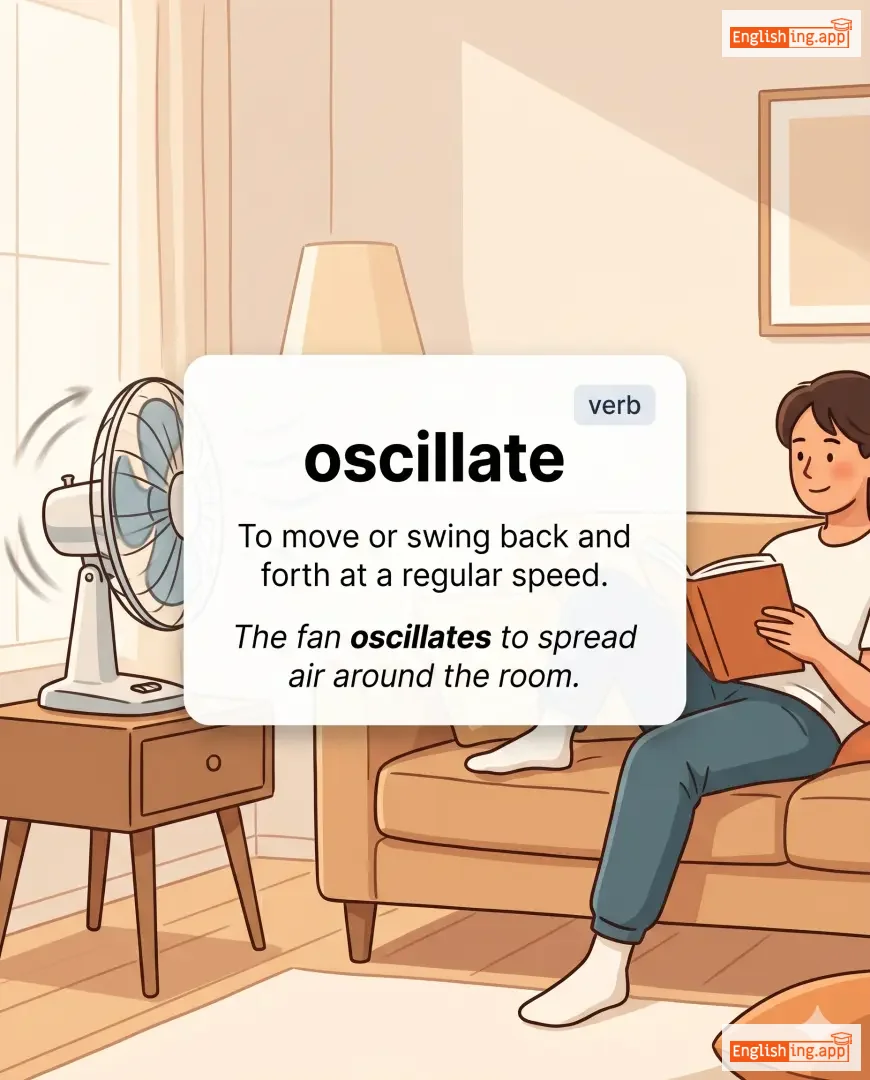
oscillate definition card — visual illustration of the meaning
verb
/ˈɑːsɪleɪt/
счастье (schast'ye)

To move or swing back and forth at a regular speed.

"The fan oscillates to spread air around the room."

"Она не могла скрыть свою радость, когда получила награду." (Ona ne mogla skryt' svoyu radost', kogda poluchila nagradu.)
adjective
/ˌɔːrθəˈpiːdɪk/
связанный с коррекцией деформаций костей или мышц (svyazannyy s korrektsiyey deformatsiy kostey ili myshts)

Relating to the correction of deformities of bones or muscles.

"She visited an orthopedic surgeon for her back pain."

"Она обратилась к ортопеду из-за болей в спине." (Ona obratilas' k ortopedu iz-za boley v spine.)
noun
/ɔːrˈθɑːɡrəfi/
орфография (orfografiya)

The conventional spelling system of a language.

"English orthography can be confusing for learners."

"Английская орфография может быть запутанной для учащихся." (Angliyskaya orfografiya mozhet byt' zaputannoy dlya uchashchikhsya.)
adjective
/ɔːrˈθɑːɡənl/
ортогональный (ortogonal'nyy)

at right angles; independent or unrelated

"In mathematics, two vectors are orthogonal if their dot product is zero."

"В математике два вектора ортогональны, если их скалярное произведение равно нулю." (V matematike dva vektora ortogonal'nyy, esli ikh skalarnoye proizvedeniye ravno nulyu.)
noun
/ˈɔːrθədɑːksi/
ортодоксия (ortodoksiya)

traditional or generally accepted beliefs and practices

"The religious leader defended the orthodoxy of the faith."

"Религиозный лидер защищал ортодоксию веры." (Religioznyy lider zashchishchal ortodoksiya very.)
adjective
/ˈɔːrθədɑːks/
ортодоксальный (ortodoxalnyy)

conforming to traditional beliefs or practices

"He comes from a very orthodox family."

"Он родом из очень ортодоксальной семьи." (On rodom iz ochen ortodoxalnoy semi)
noun
/ˈɔr.fən.ɪʒ/
детский дом (detskiy dom)

an institution for the care and education of children who have lost their parents

"The charity built a new orphanage for homeless children."

"Благотворительная организация построила новый детский дом для бездомных детей." (Blagotvoritel'naya organizatsiya postroila novyy detskiy dom dlya bezdomnykh detey.)
noun
/ˈɔr.fən/
сирота (sirota)

a child whose parents are dead; someone without protective support

"The orphan was adopted by a loving family."

"Сирота был усыновлён любящей семьёй." (Sirota byl usynovlyon lyubyashchey sem'yoy.)
adjective
/ˈɔːrəˌtʌnd/
глубокий и ясный голос (glubokij i yasnyj golos)

full, rich, and clear in sound; pompous in style

"The actor's orotund voice filled the theater."

"Глубокий голос актера наполнил театр." (Glubokij golos aktera napolnil teatr.)
noun
/ˌɔːrnɪˈθɑːlədʒi/
орнитология (ornitologiya)

the scientific study of birds

"She pursued ornithology to understand the migration patterns of birds."

"Она изучала орнитологию, чтобы понять миграционные паттерны птиц." (Ona izuchala ornitologiyu, chtoby ponyat' migratsionnye patterny ptits.)
noun
/ˌɔːrnɪˈθɒlədʒɪst/
орнитолог (ornitolog)

a scientist who studies birds

"The ornithologist spent years studying migratory birds."

"Орнитолог провел годы, изучая мигрирующих птиц." (Ornitolog provel gody, izuchaya migriruyushchikh ptits.)
adjective
/ˈɔːrnəri/
раздражительный (razdrazhitel'nyy)

bad-tempered and combative; stubborn

"The ornery old man refused to leave his chair."

"Этот раздражительный старик отказался покидать своё кресло." (Eto razdrazhitel'nyy starik otkazalsya pokidat' svoe kreslo.)
adjective
/ɔːˈneɪt/
роскошный (roskoshnyy)

elaborately or highly decorated

"The palace hall was filled with ornate furniture and paintings."

"Зал дворца был заполнен роскошной мебелью и картинами." (Zal dvortsa byl zapolnen roscohnyy mebelyu i kartinami.)
adjective
/ˌɔːrnəˈmɛntl/
декоративный (dekorativnyy)

Serving as decoration; decorative rather than functional.

"The garden was filled with ornamental plants."

"Сад был заполнен декоративными растениями." (Sad byl zapolnen dekorativnymi rasteniyami.)
noun
/ˈɔːrnəmənt/
украшение (ukrasheniye)

A decorative object that adds beauty to something.

"The Christmas tree was decorated with colorful ornaments."

"Рождественская елка была украшена цветными украшениями." (Rozhdestvenskaya yolka byla ukrashena tsvetnymi ukrasheniya.)
noun
/ˈɒrɪz(ə)n/
молитва (molitva)

a prayer, especially a devout or formal one

"He whispered a quiet orison before going to sleep."

"Он шептал тихую молитву перед сном." (On sheptal tikhuyu molitvu pered snom.)
verb
/əˈrɪdʒɪneɪt/
возникать (voznikat)

to come into existence; to begin; to create or produce

"The tradition originated in ancient times."

"Традиция возникла в древние времена." (Tradicija voznikla v drevnie vremena.)
noun
/ˈɔːrdɪnəns/
устав (ustav)

An authoritative rule, law, or decree issued by a city, town, or authority.

"The city council passed an ordinance banning smoking in public parks."

"Городской совет принял устав, запрещающий курение в общественных парках." (Gorodskoy sovet prinyal ustav, zapreshchayushchiy kuryeniye v obshchestvennykh parkakh.)
organic foods definition card — visual illustration of the meaning
noun
ɔːˈɡæn.ɪk fuːdz
органические продукты (organicheskie produkty)

Food produced without the use of chemicals such as artificial pesticides, fertilizers, or other artificial agents.

"Organic foods are healthier than processed foods."
"Органические продукты полезнее, чем переработанные продукты." (Organicheskie produkty poleznee, chem pererabotannye produkty.)
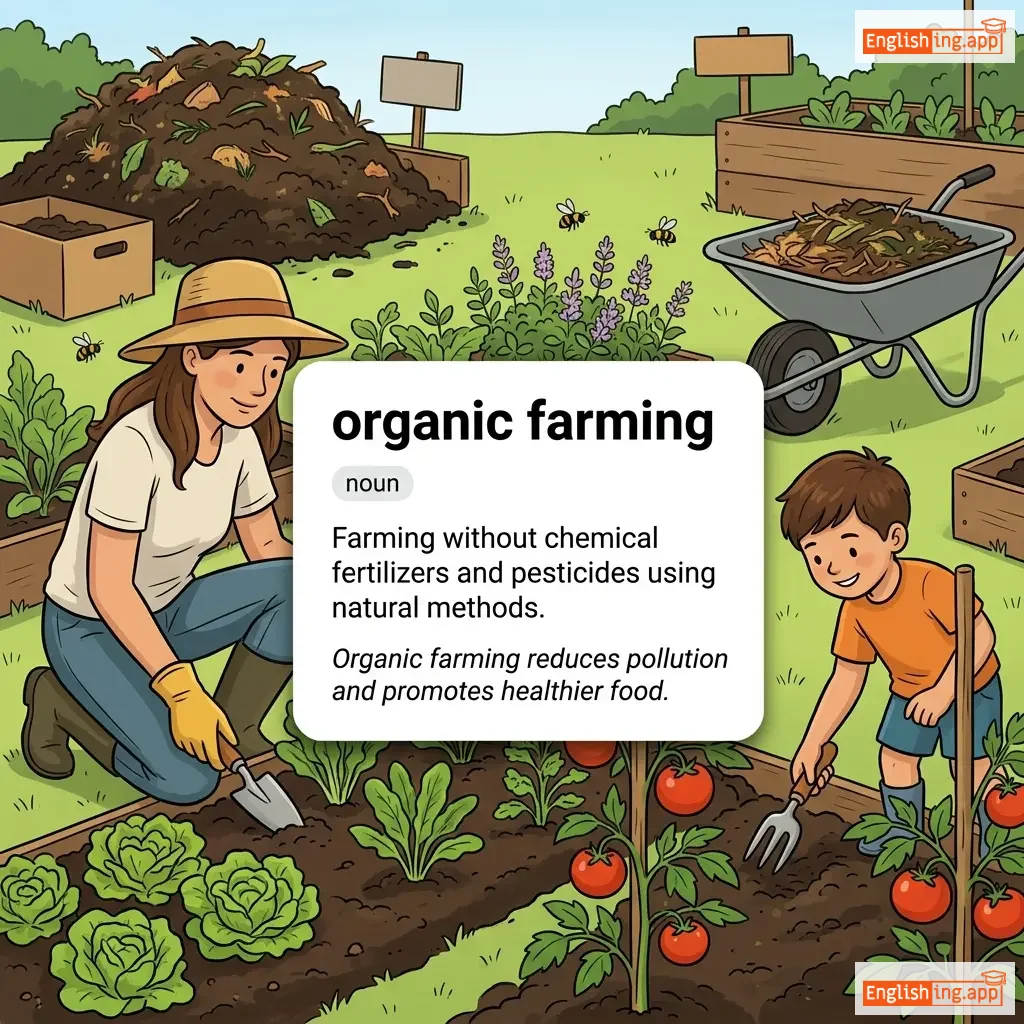
organic farming definition card — visual illustration of the meaning
noun
ˈɔːr.ɡə.nɪk ˈfɑːr.mɪŋ
органическое сельское хозяйство (organicheskoe selskoe khozyaystvo)

Farming without chemical fertilizers and pesticides using natural methods.

"Organic farming reduces pollution and promotes healthier food."

"Органическое сельское хозяйство снижает загрязнение и способствует более здоровой пище." (Organicheskoe selskoe khozyaystvo snizhaet zagryaznenie i sposbstvaet bolee zdorovoy pishche.)
organic definition card — visual illustration of the meaning
adjective
/ɔːrˈɡænɪk/
органический (organicheskiy)

Relating to or derived from living matter; produced without artificial chemicals.

"They prefer to eat organic fruits and vegetables."

"Они предпочитают есть органические фрукты и овощи." (Oni predpochitayut est' organicheskie frukty i ovoshchi.)
noun
/ˈɔːɡən/
орган (organ)

a part of the body that performs a specific function

"The heart is an important organ in the human body."

"Сердце — важный орган в человеческом теле." (Serdtse — vazhnyy organ v chelovecheskom tele.)
noun
/ˈɔːrdnəns/
вооружение (vooruzhenie)

Military supplies including weapons, ammunition, and combat equipment.

"The army stored ordnance in a secure facility outside the city."

"Армия хранила вооружение в безопасном месте за пределами города." (Armiya khranila vooruzhenie v bezopasnom meste za predelami goroda.)
noun
/ˌɔːrdɪˈneɪʃən/
посвящение (posvyashcheniye)

The ceremony of conferring holy orders or official religious authority.

"The church held a special service for the ordination of new priests."
"Церковь провела специальную службу для посвящения новых священников." (Tserkov' provela spetsial'nuyu sluzhbu dlya posvyashcheniya novykh svyashchennikov.)
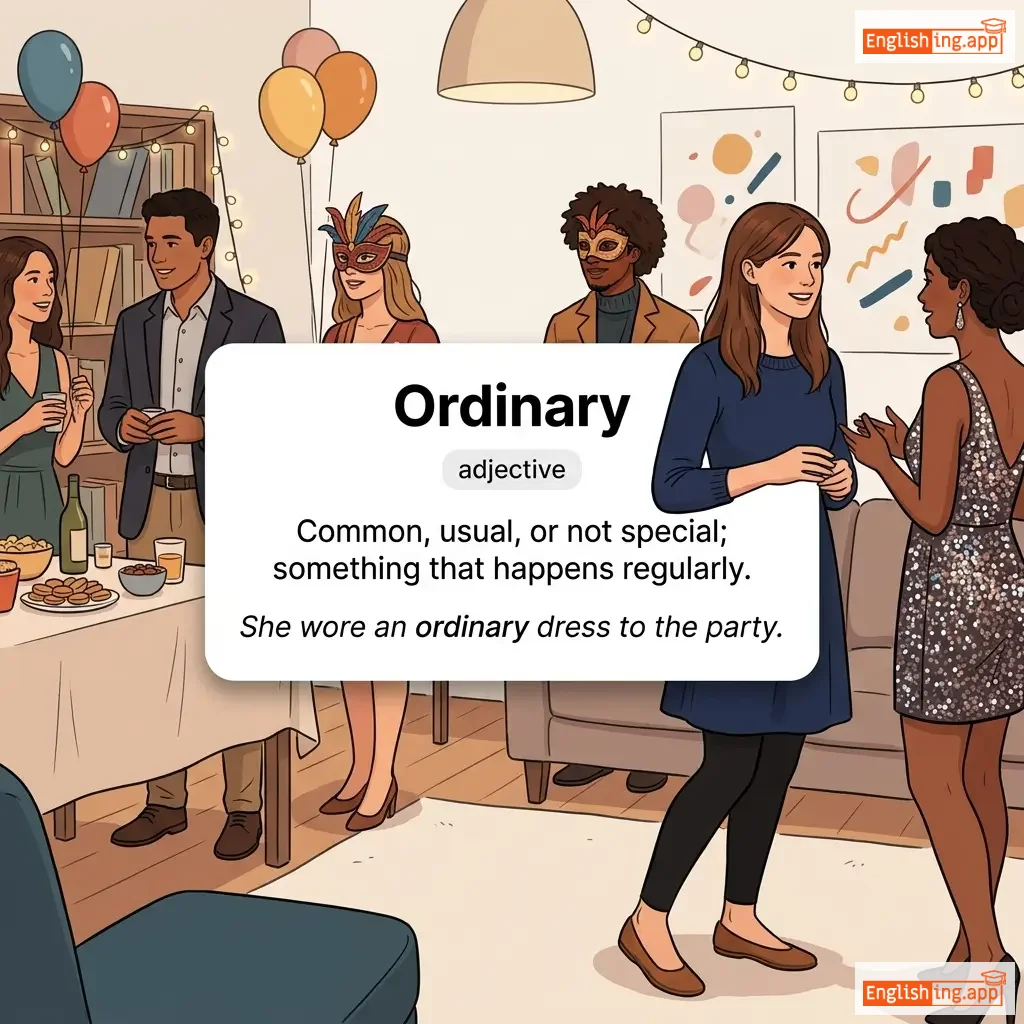
Ordinary definition card — visual illustration of the meaning
adjective
/ˈɔːrdəˌnɛri/
обычный (obychny)

Common, usual, or not special; something that happens regularly.

"She wore an ordinary dress to the party."
"Она носила обычное платье на вечеринку." (Ona nosila obychnoye plat'ye na vecherinku.)
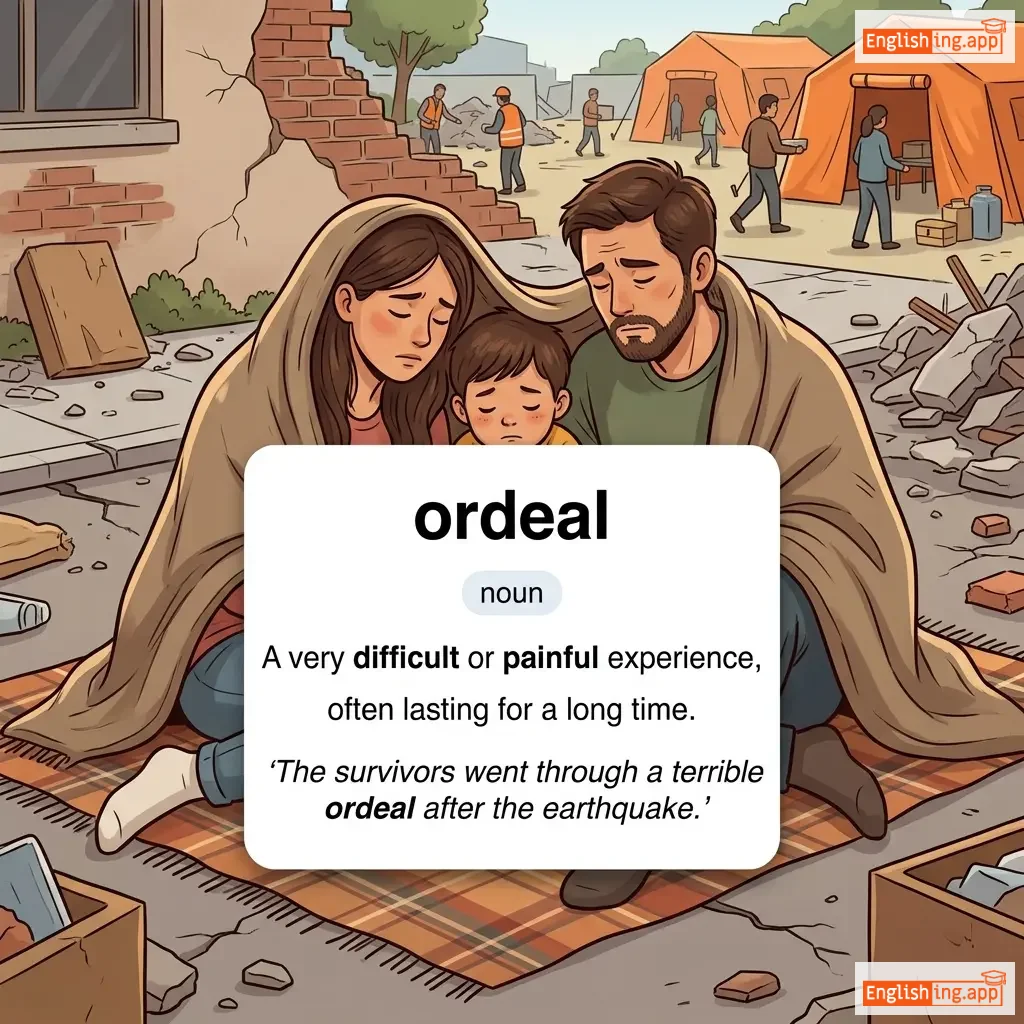
ordeal definition card — visual illustration of the meaning
noun
/ɔːrˈdiːl/
трудный опыт (trudnyy opyt)

A very difficult or painful experience, often lasting for a long time.

"The survivors went through a terrible ordeal after the earthquake."

"Выжившие прошли через ужасное испытание после землетрясения." (Vyzhivshie proshli cherez uzhasnoe ispytanie posle zemletryaseniya.)
orchestrated definition card — visual illustration of the meaning
verb
ˈɔː.kɪ.streɪ.tɪd
срежиссирован (srezhissirovan)

Planned or coordinated carefully and deliberately.

"The attacks were orchestrated with precision."
"Атаки были срежиссированы с точностью." (Ataki byli srezhissirovany s tochnost'yu.)
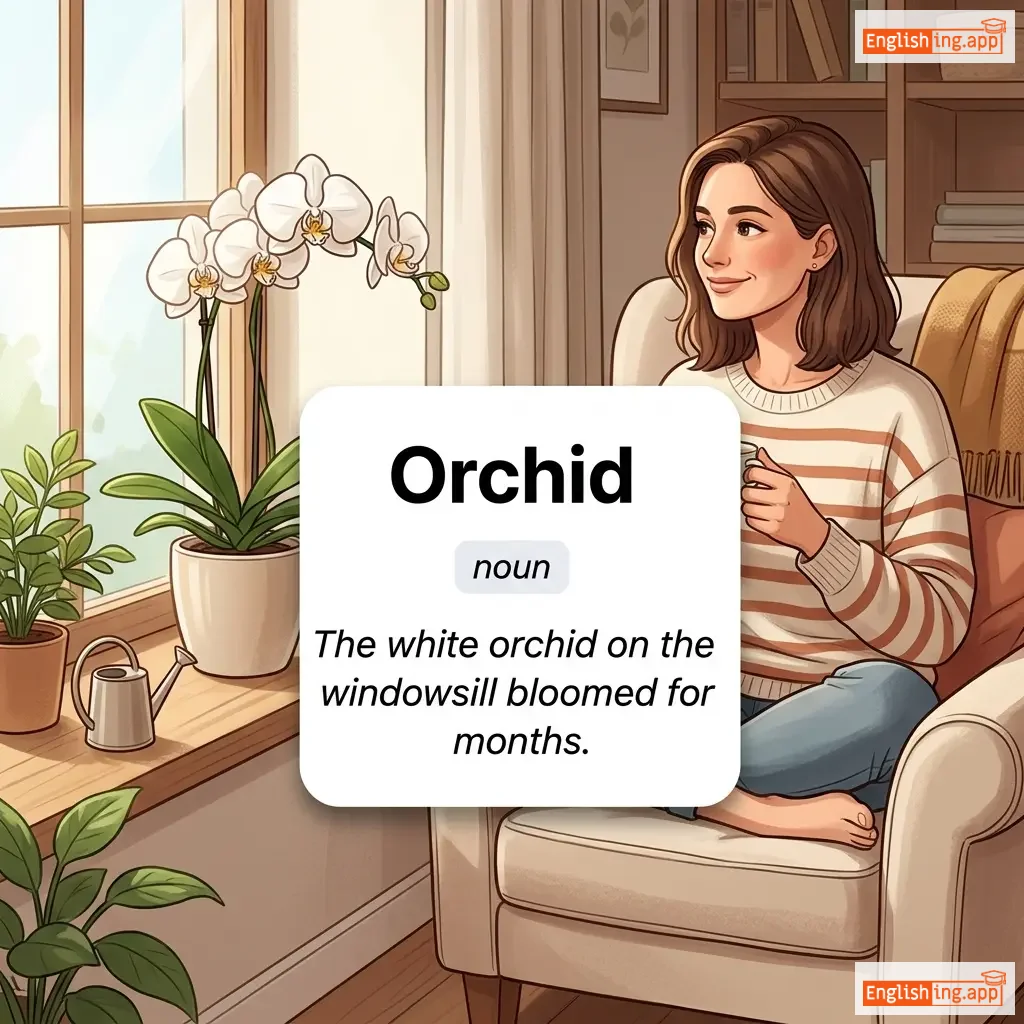
Orchid definition card — visual illustration of the meaning
noun
/ˈɔːrkɪd/
орхидея (orkhidaya)

a diverse family of flowering plants known for their exotic and often fragrant flowers

"The white orchid on the windowsill bloomed for months."

"Белая орхидея на подоконнике цвела в течение нескольких месяцев." (Belyaya orkhideya na podokonnike tsvyela v techeniye neskol'kikh mesyatsev.)
verb
/ɔːrˈdeɪn/
священствовать (svyashchennstvovat')

To officially make someone a priest or minister; to decree or order something officially.

"The bishop will ordain three new priests this Sunday."

"Епископ ordain три новых священников в это воскресенье." (Episkop ordain tri novykh svyashchennikov v eto voskresen'ye.)
adjective
/ˈɔː.də.li/
упорядоченный; систематичный; мирный (orderli)

well-organized; systematic; peaceful

"Please keep your desk orderly and clean."

"Пожалуйста, держите свой стол в порядке и чистоте." (Pozhaluysta, derzhite svoi stol v poryadke i chistote.)