Словари

Словарь английского языка | Значения слов, определения и примеры

title
/ˈmɪstər/
г-н (g-n)

a title used before a man's name

"Mr. Rahman is our new teacher."

"Г-н Рахман — наш новый учитель." (G-n Rahman — nash novyy uchitel'.)
title
/ˈmɪsɪz/
миссис (missis)

a title used before a married woman's name

"Mrs. Karim is the headmistress of the school."

"Миссис Карим - директор школы." (Missis Karim - direktor shkoly.)
👩‍💼

ms (миз)

title
/mɪz/
Мисс (Miss)

a title used before a woman's name, regardless of marital status

"Ms. Akter will give a speech at the seminar."

"Мисс Акктер прочтет речь на семинаре." (Miss Akter prochtyot rech' na seminare.)
adjective, adverb, pronoun
/mʌtʃ/
много (mnogo)

a large amount or degree of something

"She doesn’t have much time to finish the project."

"У неё нет много времени, чтобы закончить проект." (U nee net mnogo vremeni, chtoby zakonchit' proyekt.)
noun
/mʌd/
грязь (gryaz)

soft, wet earth or soil

"The children were playing in the mud after the rain."

"Дети играли в грязи после дождя." (Deti igrali v gryazi posle dozhdya.)
verb
/ˈmʌd.əl/
перемешивать (peremeshivat)

to mix things up in a confused way or to make a mess of something

"He muddled the papers and couldn’t find the report."

"Он перемешал бумаги и не смог найти отчет." (On peremeshal bumagi i ne smog nayti otchet.)
adjective
/ˈmʌd.i/
грязный (gryazny)

covered in or full of mud; unclear or confused

"The children came back with muddy shoes after playing outside."

"Дети вернулись с грязными ботинками после игры на улице." (Deti vernulis' s gryaznymi botinkami posle igry na ulitse.)
verb
/ˈmʌfəl/
заглушить (zaglushit)

to make a sound quieter or less distinct; to cover or wrap something to reduce noise or warmth

"She tried to muffle her laughter with a scarf."

"Она пыталась заглушить свой смех шарфом." (Ona pytalas' zaglushit' svoy smekh sharfom.)
Muffler definition card — visual illustration of the meaning
noun
/ˈmʌflər/
глушитель (glushitel)

a device on a vehicle's exhaust to reduce noise; also a scarf worn around the neck for warmth

"The car's muffler needs to be replaced."

"Глушитель автомобиля нужно заменить." (Glushitel avtomobilya nuzhno zamenit.)
Mug definition card — visual illustration of the meaning
noun
/mʌɡ/
кружка (kruzka)

a large cup, typically cylindrical and having a handle and used without a saucer

"She drank her morning coffee from a ceramic mug."

"Она выпила утренний кофе из керамической кружки." (Ona vypila utrejnii kofe iz keramicheskoj kruzhki.)
adjective
/ˈmʌɡi/
душно и влажно (dushno i vlazhno)

uncomfortably warm and humid

"It was a muggy afternoon in July."

"Это был душный день в июле." (Eto byl dushnyy den' v iyule.)
noun
/ˈmʌɡwʌmp/
независимый от партий человек (nezavisimyi ot partiy chelovek)

a person who remains independent from party politics or remains aloof from disputes

"He was called a mugwump for refusing to join either political side."

"Его называли магвампом, потому что он отказался присоединиться к какой-либо политической стороне." (Ego nazyvali magvampom, potomu chto on otkazalsya prisoyedinitsya k kakoy-libo politicheskoy storone.)
noun
/mjuːˈlætoʊ/
человек смешанной расы (устаревший и оскорбительный термин) (chelovek smeshannoy rasy (ustarevshiy i oskorbitel'nyy termin))

an outdated and now offensive term historically used to describe a person of mixed white and Black ancestry

"The word 'mulatto' is now considered outdated and offensive."

"Слово 'мулат' теперь считается устаревшим и оскорбительным." (Slovo 'mulat' teper' schitayetsya ustarevshim i oskorbitel'nym.)
verb
/mʌlkt/
штрафовать / обманывать (shtrafovat' / obmanyvat')

to punish by a fine or to defraud someone of money

"The corrupt official was mulcted for his misconduct."
"Коррупционный чиновник был оштрафован за свои проступки." (Korruptsionnyy chinovnik byl oshtrafovan za svoi prostupki.)
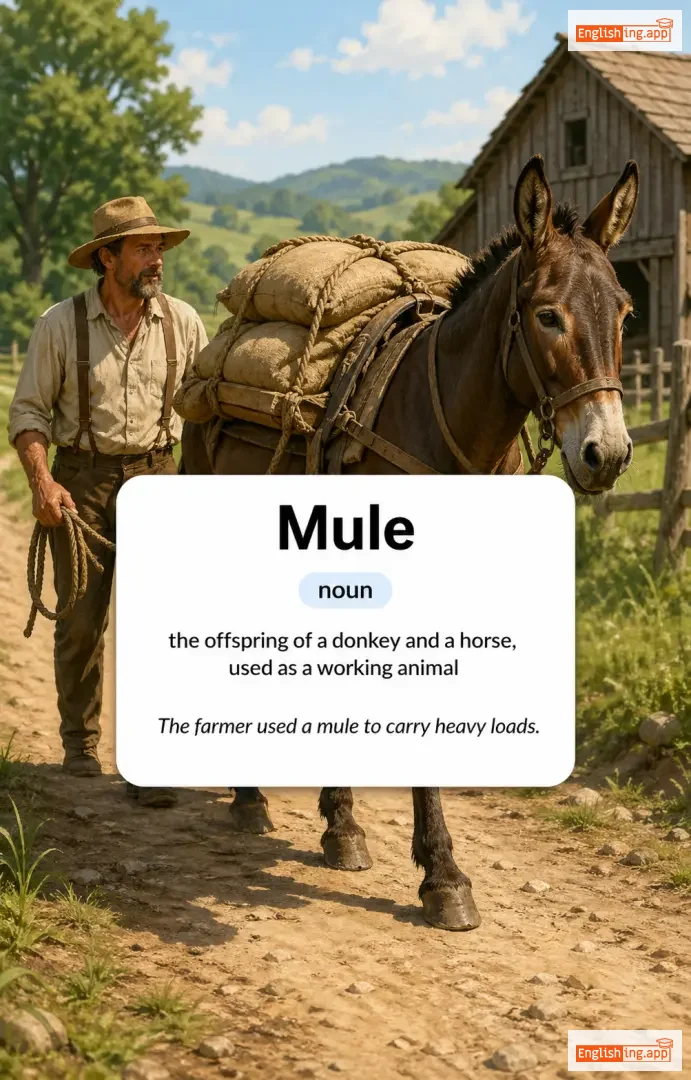
Mule definition card — visual illustration of the meaning
noun
/mjuːl/
мул (mul)

the offspring of a donkey and a horse, used as a working animal

"The farmer used a mule to carry heavy loads."

"Фермер использовал мула для транспортировки тяжелых грузов." (Fermyer ispol'zoval mula dlya transportirovki tyazhelykh gruzov.)
noun
/ˌmjuːlˈtɪər/
вьючный конюх (vyuchnyy konyukh)

a person who drives or takes care of mules

"The muleteer guided the animals safely across the mountain path."
"Вьючный конюх проводил животных по безопасному горному пути." (Vyuchnyy konyukh provodil zhivotnykh po bezopasnomu gornomu puti.)
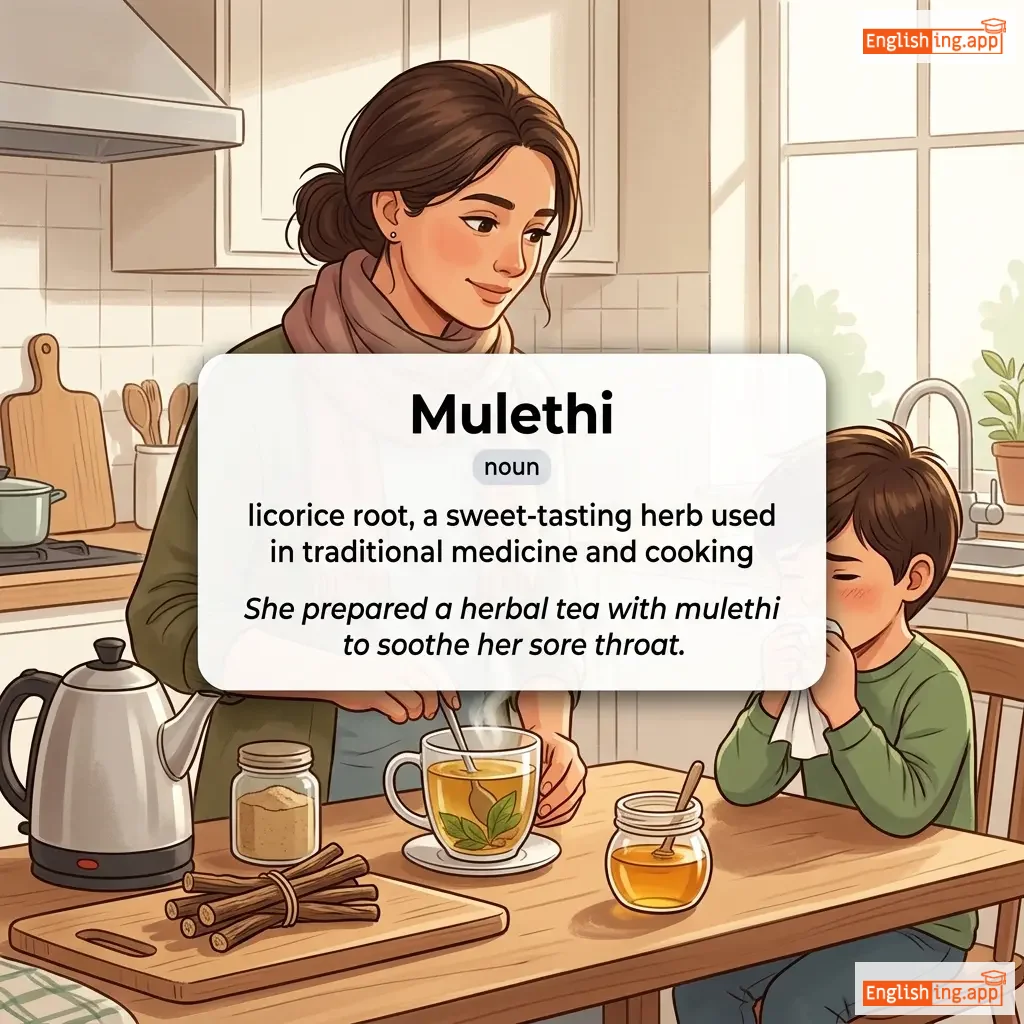
Mulethi definition card — visual illustration of the meaning
noun
/muˈleθi/
корень лакрицы (koren' lakritsy)

licorice root, a sweet-tasting herb used in traditional medicine and cooking

"She prepared a herbal tea with mulethi to soothe her sore throat."

"Она приготовила травяной чай с мулети для облегчения боли в горле." (Ona prigotovila travyanoy chay s muleti dlya oblegcheniya boli v gorle.)
adjective
/ˈmjuːlɪʃ/

extremely stubborn or unwilling to change

"She remained mulish despite all the convincing arguments."

multifaceted definition card — visual illustration of the meaning
adjective
/ˌmʌltiˈfæsɪtɪd/
многогранный (mnogogranny)

having many different aspects or features

"Her career is multifaceted, involving teaching, research, and writing."

"Её карьера многогранна, она включает в себя преподавание, исследования и писательство." (Eyo kariera mnogogranna, ona vklyuchayet v sebya prepodavanie, issledovaniya i pisatel'stvo.)
multifaceted information frameworks definition card — visual illustration of the meaning
noun
ˌmʌltɪˈfæsɪtɪd ˌɪnfərˈmeɪʃən ˈfreɪmwɜːrks
многофункциональные информационные рамки (mnogofunktsional'nye informatsionnye ramki)

Complex, comprehensive structures for organizing and managing information that have multiple aspects or dimensions.

"Digital literacy involves building multifaceted information frameworks."

"Цифровая грамотность включает в себя создание многофункциональных информационных рамок." (Tsifrovaya gramotnost' vklyuchayet v sebya sozdanie mnogofunktsional'nykh informatsionnykh ramok.)
adjective
/ˌmʌltɪˈfɛərɪəs/
многообразный (mnogoobrazny)

having many different parts, elements, or kinds

"The museum displayed a multifarious collection of artifacts."

"Музей представил разнообразную коллекцию артефактов." (Muzyey predstavil raznoobraznuyu kollektsiyu artefaktov.)
adjective
/ˈmʌltɪfɔːrm/
многоликий (mnogolikiy)

Having many different forms or appearances.

"The festival was a multiform celebration of art, music, and culture."

"Фестиваль был многоликим праздником искусства, музыки и культуры." (Festival byl mnogolikim prazdnikom iskusstva, muzyki i kul'tury.)
adjective
/ˌmʌltɪˈlɪŋɡwəl/
многоязычный (mnogoyazychny)

Able to speak or written in several languages.

"She grew up in a multilingual household."

"Она выросла в многоязычной семье." (Ona vyrasla v mnogoyazychnoy sem'e.)
adjective
/ˈmʌltɪpl/
множество (mnozhestvo)

involving or consisting of many parts or elements

"The company faced multiple challenges during the year."

"Компания столкнулась с множеством проблем в течение года." (Kompaniya stolknulas' s mnozhestvom problem v techenie goda.)
noun
/ˌmʌltɪplɪˈkeɪʃən/
умножение (umnozhenie)

the mathematical process of combining numbers to get a product; the act of increasing in number or amount

"Multiplication is one of the basic operations taught in elementary mathematics."

"Умножение — одна из основных математических операций." (umnozhenie odna iz osnovnykh matematicheskikh operatsii)
noun
/ˌmʌltɪˈplɪsɪti/
множество (mnozhestvo)

A large number or variety of something.

"The project faced a multiplicity of challenges."

"Проект столкнулся с множеством проблем." (Proyekt stolknulsya s mnozhestvom problem.)
noun
/ˈmʌltɪplaɪər/
мультипликатор (multiplikator)

a number or factor by which another number is multiplied; something that increases the effect or value of something else

"In economics, government spending can act as a multiplier for economic growth."

"В экономике государственные расходы могут служить мультипликатором роста." (v ekonomike gosudarstvennye raskhody mogut sluzhit multiplikatorom rosta)
multiply definition card — visual illustration of the meaning
verb
/ˈmʌltɪplaɪ/
умножать (umnozhat)

to increase in number; to perform mathematical multiplication

"The bacteria multiply rapidly in warm conditions."

"Бактерии быстро размножаются в теплых условиях." (Bakterii bistro razmnozhayutsya v teplykh usloviyakh)
adjective
/ˌmʌl.tiˈpɜː.pəs/
многофункциональный (mnogofunktsional'nyy)

having multiple uses or functions; versatile

"This multipurpose tool can be used as a knife, screwdriver, and bottle opener."
"Этот многофункциональный инструмент может использоваться как нож, отвертка и открывалка для бутылок." (Etot mnogofunktsional'nyy instrument mozhet ispol'zovat'sya kak nozh, otver'tka i otkryvalka dlya butylok.)
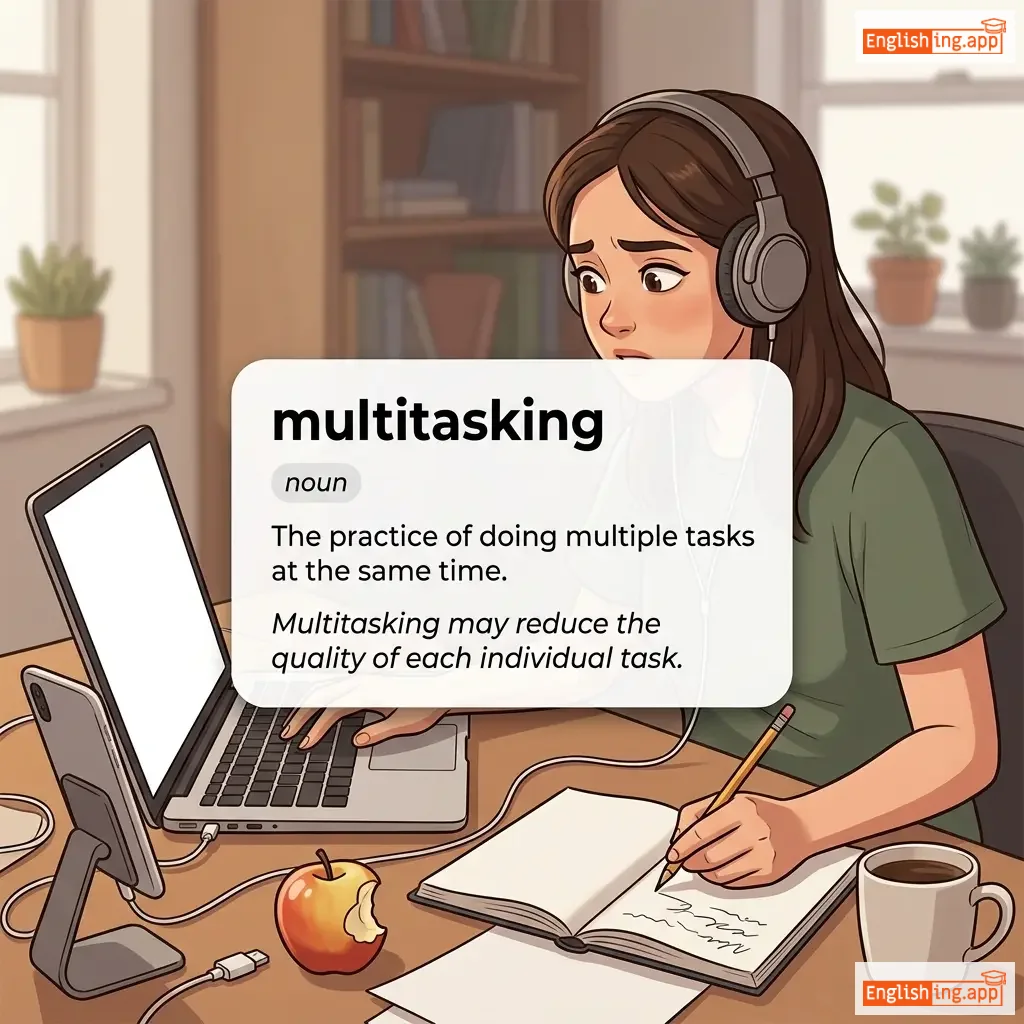
multitasking definition card — visual illustration of the meaning
noun
ˈmʌltɪˌtɑːskɪŋ
выполнение нескольких задач одновременно (vypolnenie neskol'kikh zadach odnovremenno)

The practice of doing multiple tasks at the same time.

"Multitasking may reduce the quality of each individual task."

"Мультитаскинг может снизить качество каждой отдельной задачи." (Multitasking mozhet snizit' kachestvo kazhdoy otdelnoy zadachi.)
noun
/ˈmʌltɪtuːd/
множество (mnozhestvo)

A large number of people or things.

"A multitude of fans gathered at the stadium."

"Множество фанатов собрались на стадионе." (Mnozhestvo fanatov sobralis' na stadioe.)
adjective
/mʌm/
молчаливый; не говорить ничего; оставаться молчаливым (molchalivyy; ne govorit' nichego; ostavatsya molchalivym)

silent; saying nothing; keeping quiet

"He kept mum about the surprise party plans."

"Он молчал о планах сюрпризной вечеринки." (On molchal o planakh syurpriznoy vecherinki.)
verb
/ˈmʌmbəl/

To speak quietly and not clearly so that words are difficult to understand.

"He mumbled an apology before leaving."

mundane definition card — visual illustration of the meaning
adjective
/mʌnˈdeɪn/
обычный (obychny)

lacking interest or excitement; dull and ordinary

"She tried to escape her mundane routine by traveling."

"Она пыталась выбраться из своей скучной рутины, путешествуя." (Ona pytalas' vybrat'sya iz svoey skuchnoy rutiny, puteshestvuyaya.)
verb
/nəˈsɛsɪteɪt/
сделать необходимым (sdelat' neobkhodimym)

To make something necessary or unavoidable.

"The heavy rains necessitated the cancellation of the event."

"Тяжелые дожди сделали отмену мероприятия неизбежной." (Tyazhelye dozhdi sdelali otmenu meropriyatiya neizbezhnoi.)
noun
/niːp/
низкий прилив (nizkiy prilyv)

A tide just after the first or third quarters of the moon when the difference between high and low tide is least.

"During a neap tide, the water level change is minimal."

"Во время низкого прилива изменение уровня воды минимально." (Vo vremya nizkogo prilyva izmenenie urovnya vody minimalno.)
preposition
/nɪə(r)/
близко (blizko)

At or to a short distance away; close in space, time, or relationship.

"There is a park near my house."

"Есть парк недалеко от моего дома." (Yest park nedaleko ot moyego doma.)
adverb
/ˈnɪərbaɪ/
рядом; в окрестностях (ryadom; v okrestnostyakh)

close to; not far away; in the neighborhood

"There is a grocery store nearby."

"Недалеко есть продуктовый магазин." (Nedaleko yest' produktovyy magazin.)
adjective
/ˈnɪəˌbaɪ/
рядом (ryadom)

close to a particular place or person

"The nearest gas station is nearby."

"Ближайшая автозаправка рядом." (Blizhayshaya avtobenzinovka ryadom.)
adverb
/ˈnɪəli/
почти (pochti)

almost, but not completely

"She nearly missed the bus."

"Она почти пропустила автобус." (Ona pochtit propustila avtobus.)
Neat definition card — visual illustration of the meaning
adjective
/niːt/
аккуратный (akkuratnyy)

tidy, orderly, and well-arranged; simple and elegant

"His handwriting is very neat and easy to read."

"Его почерк очень аккуратный и легко читаемый." (Ego pocherk ochen' akuratnyy i legko chitayemyy.)
adverb
/ˈniːtli/
аккуратно; чисто (akkuratno; chisto)

in a tidy and orderly way; carefully and precisely

"She arranged the books neatly on the shelf."

"Она аккуратно разместила книги на полке." (Ona akkurnato razmestila knigi na polke.)
noun
/ˈneb.jʊ.lə/
туманность (tumannost')

A cloud of gas and dust in outer space, sometimes visible in the night sky.

"The Orion Nebula is one of the brightest in the sky."

"Орионская туманность — одна из самых ярких на небе." (Orionskaya tumannost' — odna iz samykh yarkikh na nebe.)
adjective
/ˈnɛbjələs/
туманный (tumannyy)

Unclear, vague, or ill-defined; resembling a cloud or haze.

"His plan for the future was still nebulous and hard to understand."

"Его план на будущее был всё ещё туманным и трудным для понимания." (Yego plan na budushcheye byl vse yeshchyo tumannym i trudnym dlya ponyatiya.)
adverb
/ˌnɛsəˈsɛrɪli/
необязательно (neobyazatel'no)

as a necessary result; inevitably

"It doesn’t necessarily mean you’re wrong."
"Это не обязательно означает, что вы ошибаетесь." (Eto ne obyazatel'no oznachaet, chto vy oshibayetes'.)
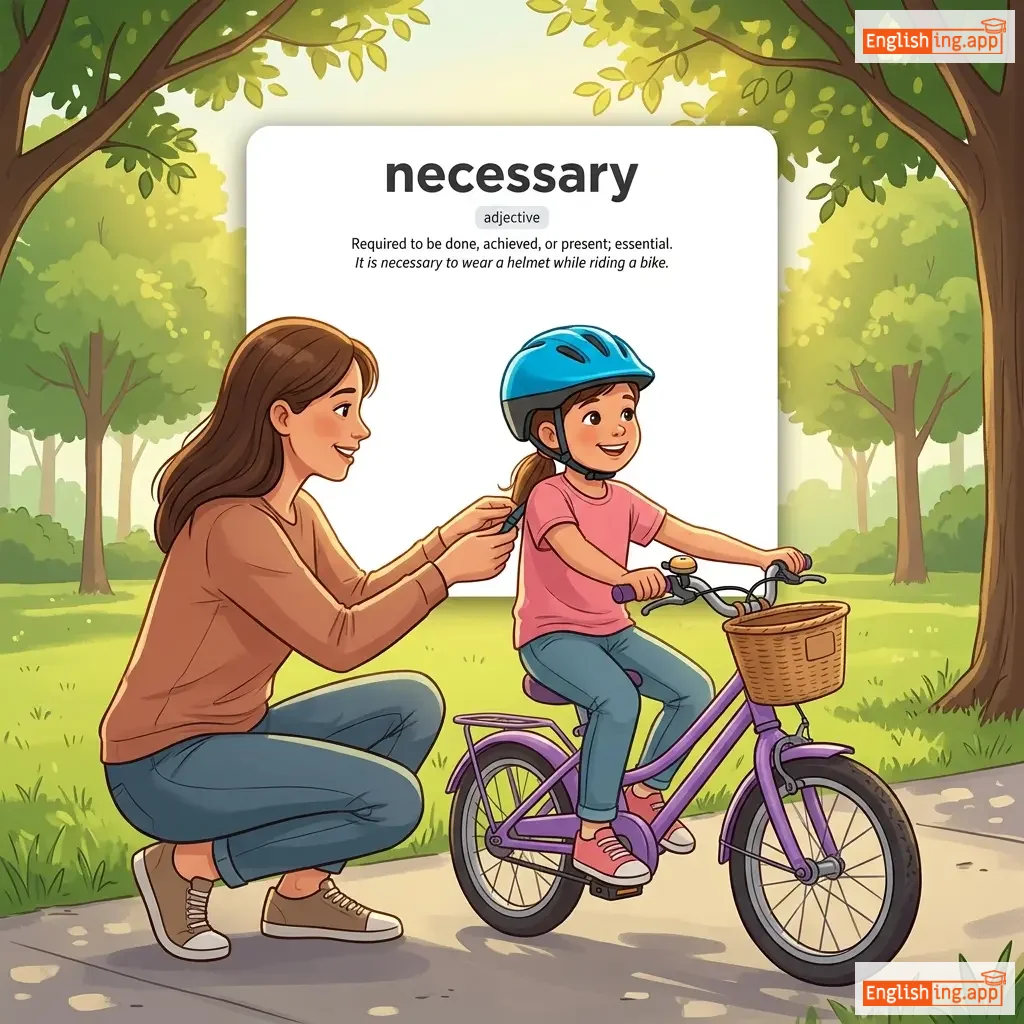
necessary definition card — visual illustration of the meaning
adjective
/ˈnɛsəsɛri/
необходимый (neseseri)

Required to be done, achieved, or present; essential.

"It is necessary to wear a helmet while riding a bike."

"Необходимо носить шлем во время езды на велосипеде." (Neobkhodimo nosit shlem vo vremya ezdy na velosipede)
noun
/nəˈkrɒpəlɪs/
некрополь (nekropol)

a large ancient cemetery with elaborate tombs

"The archaeologists discovered artifacts in the necropolis of the ancient city."

"Археологи обнаружили артефакты на некрополе древнего города." (Arheologi obnaruzhili artefakty na nekropole drevnego goroda.)
noun
/ˈnɛkrəˌmænsər/
некромант (nekromancer)

a person who practices necromancy; a wizard or magician who claims to communicate with the dead

"The villagers feared the old necromancer who lived at the edge of the forest."

"Жители деревни боялись старого некроманта, который жил на краю леса." (Zhiteli derevni boyalis starogo nekromanta, kotoryi zhil na kraju lesa.)
noun
/ˈnɛkrəˌmænsi/
некромантия (nekromantiya)

the practice of communicating with the dead, often to predict the future

"Ancient texts described rituals of necromancy performed by priests."

"Древние тексты описывают ритуалы некромантии, проводимые священниками." (Drevnie teksty opisyvayut ritualy nekromantii, provodimye svyashchennikami.)
noun
/nɪˈkrɒlədʒi/
некрология (nekrologiya)

An obituary notice or a list of people who have recently died.

"The newspaper published a necrology of notable figures who passed away that year."

"Газета опубликовала некролог известных личностей, которые умерли в этом году." (Gazeta opublikovala nekrolog izvestnykh lichnostey, kotorye umerli v etom godu.)