Словари

Словарь английского языка | Значения слов, определения и примеры

adjective
/ˈmʌski/
мускусный (muskusny)

having a strong, sweet, earthy smell like musk

"The perfume had a musky fragrance."

"В парфюмерии был мускусный аромат." (V parfumerii byl muskushnyy aromat.)
noun
/ˈmʊzlɪm/
мусульманин (musul'manin)

a follower of Islam

"He is a devout Muslim."

"Он верный мусульманин." (On vernyy musul'manin.)
verb
/mʌst/
должен (dolzhen)

to be required or obligated to

"You must complete your homework before you go out."
"Ты должен закончить домашку, прежде чем выйти." (Ty dolzhen zakonchit' domashku, prezhde chem vyiti.)
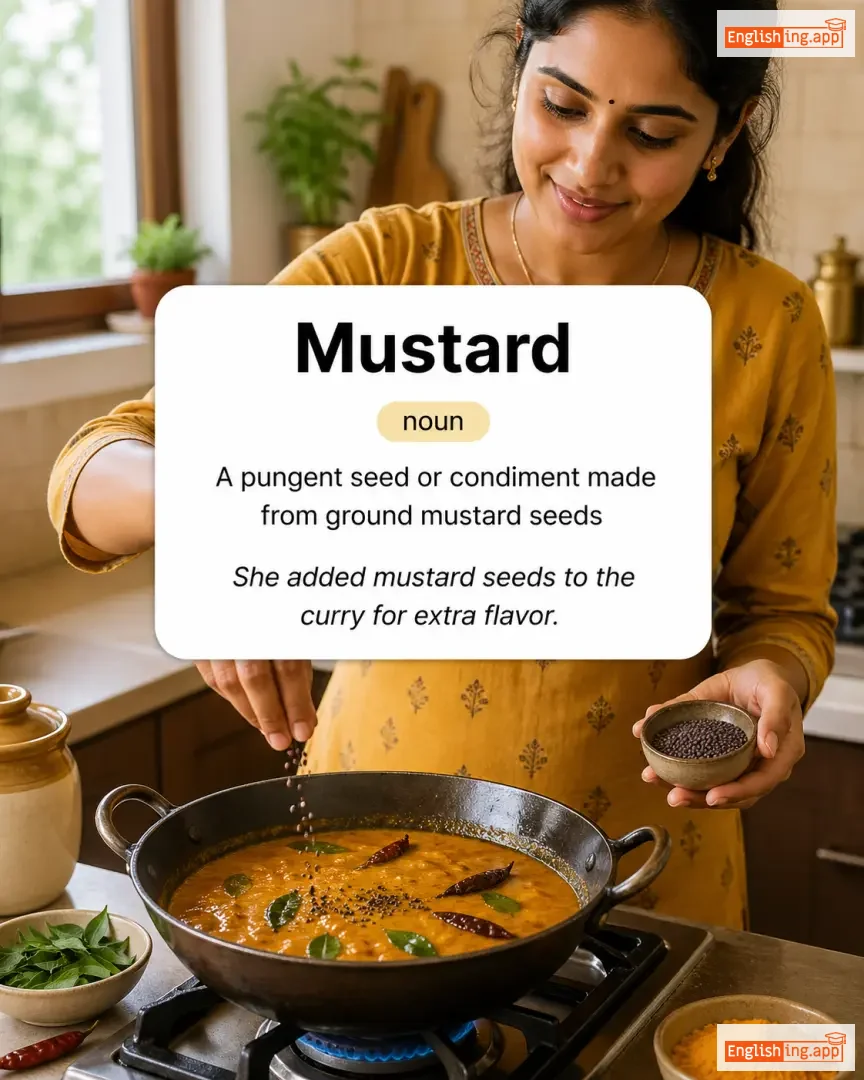
Mustard definition card — visual illustration of the meaning
noun
/ˈmʌs.tərd/
горчица (gorchitsa)

A pungent seed or condiment made from ground mustard seeds

"She added mustard seeds to the curry for extra flavor."
"Она добавила семена горчицы в карри, чтобы добавить больше вкуса." (ona dobavila semena gorchitsy v karri, chtoby dobavit' bolshe vkus.)
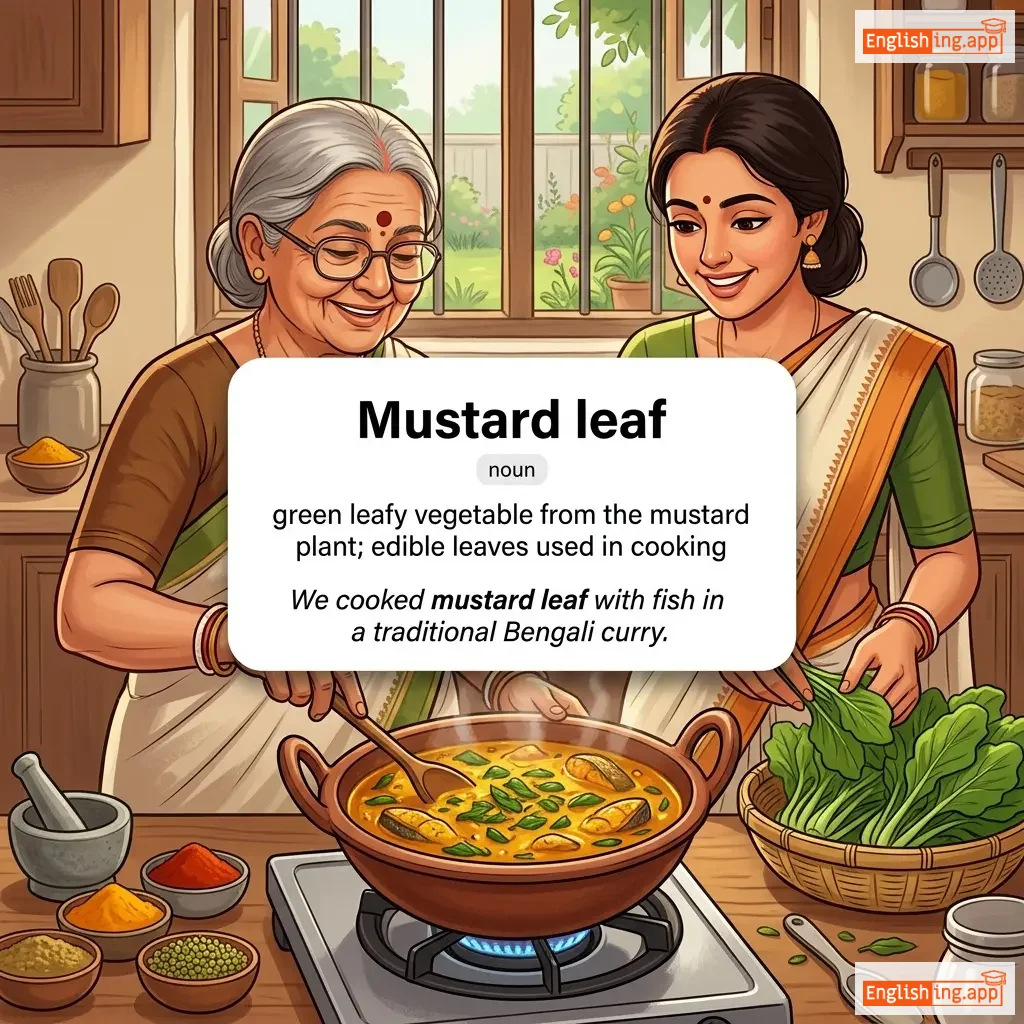
Mustard leaf definition card — visual illustration of the meaning
noun
/ˈmʌs.tərd liːf/
листья горчицы (listya gorchitsy)

green leafy vegetable from the mustard plant; edible leaves used in cooking

"We cooked mustard leaf with fish in a traditional Bengali curry."

"Мы готовили листья горчицы с рыбой в традиционном бенгальском карри." (My gotovili list'ya gorchitsy s ryboy v traditsionnom bengalskom karri.)
Mustard Oil definition card — visual illustration of the meaning
noun
/ˈmʌstərd ɔɪl/
горчичное масло (gorchichnoye maslo)

oil extracted from mustard seeds, commonly used for cooking and medicinal purposes

"We use mustard oil for cooking vegetables in our kitchen."
"Мы используем горчичное масло для приготовления овощей на нашей кухне." (My ispol'zuyem gorchichnoye maslo dlya prigotovleniya ovoshchey na nashey kukhne.)
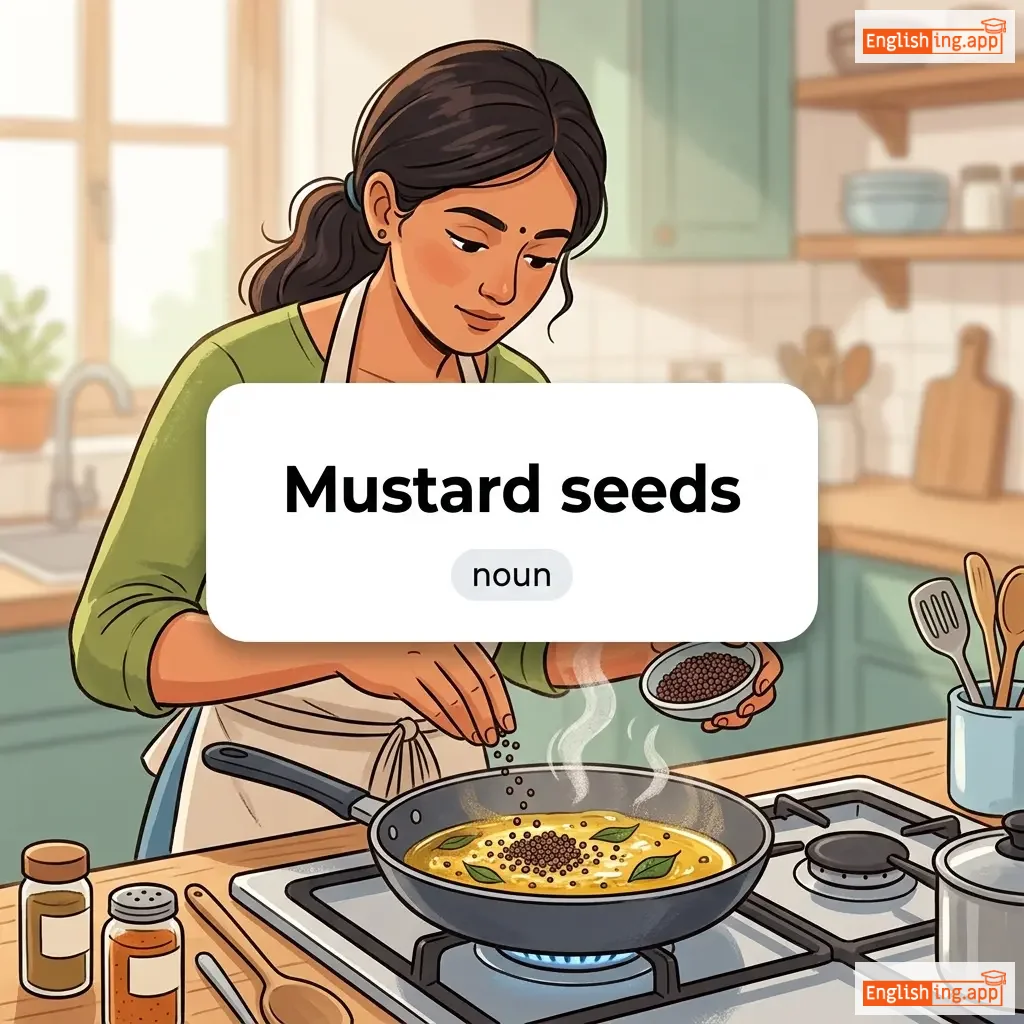
Mustard seeds definition card — visual illustration of the meaning
noun
/ˈmʌs.tərd siːdz/
горчичные семена (gorchichnye semena)

small round seeds from the mustard plant, used as a spice and for making mustard condiment

"Mustard seeds are often tempered in hot oil to release their nutty flavor before adding to dishes."

"Семена горчицы часто обжариваются в горячем масле, чтобы раскрыть их ореховый вкус перед добавлением в блюда." (Semena gorchitsy chasto obzhariyvayutsya v goryachem masle, chtoby raskryt' ikh orekhovyy vkus pered dobavleniem v blyuda.)
verb, noun
/ˈmʌstər/
собирать / собирать мужество (sobirat / sobirat muzhectvo)

to gather people, especially soldiers; to summon courage or strength

"He mustered enough courage to face the challenge."

"Он собрал достаточно мужества, чтобы встретиться с вызовом." (On sobral dostatochno muzhestva, chtoby vstrechatsya s vyzovom.)
adjective
/ˈmʌsti/
заплесневелый, сырой или с запахом влаги (zaplesnevelyy, syroy ili s zapakhom vlagi)

having a stale, moldy, or damp smell

"The old books had a musty odor."

"Старые книги имели затхлый запах." (Staryye knigi imeli zatkhy zapakh.)
noun
/ˌmjuːtəˈbɪləti/
изменчивость (izmenchivost)

The quality of being changeable or capable of change.

"The mutability of fashion trends makes it hard to keep up."

"Изменчивость модных трендов усложняет следить за ними." (Izmenchivost modnykh trendov uslozhnyayet slezhit' za nimi.)
adjective
/ˈmjuːtəbl/
изменчивый (izmenchivyy)

Capable of change or alteration.

"Human emotions are mutable and can shift rapidly."

"Человеческие эмоции изменчивы и могут быстро меняться." (Chelovekskie emotsii izmenchivy i mogut bystro menyat'sya.)
noun
/ˌmjuːtəˈbɪləti/
мутабилинити (ошибка в написании) (mutabiliti (oshivka v napisanij))

A misspelled form of 'mutability', meaning the quality of being changeable.

"The document contained the misspelled word 'mutablility' instead of 'mutability'."

"Документ содержал слово с ошибкой 'mutablility' вместо 'mutability'." (Dokument soderzhal slovo s oshibkoy 'mutablility' vmesto 'mutability'.)
verb
/ˈmjuːteɪt/
мутировать (mutirovat')

To change or cause to change in form, nature, or character.

"The virus can mutate into a more dangerous strain."

"Вирус может мутировать в более опасный штамм." (Virus mozhet mutirovat' v bolee opasnyy shtamm.)
noun
/mjuːˈteɪʃn/
мутация, генетическое изменение (mutaciya, geneticheskoe izmenenie)

A change in form, structure, or nature, especially in genetics.

"Scientists discovered a genetic mutation that caused the disorder."

"Учёные обнаружили генетическую мутацию, которая вызвала расстройство." (Uchyonye obnaruzhili geneticheskuyu mutaciyu, kotoraya vyzvala rasstroystvo.)
adjective
/mjuːt/
немой (nemoy)

silent or unable to speak; not expressed in words

"She remained mute during the entire meeting."

"Она осталась немой на протяжении всей встречи." (Ona ostalas nemoy na protyazhenii vsej vstrechi.)
adjective
/ˈmjuːtɪd/
приглушенный (priglushennyy)

softened in sound, color, or effect; subdued

"The room was painted in muted shades of blue and grey."

"Комната была покрашена в приглушенные оттенки синего и серого." (Komnata byla pokrashena v priglushennye otnetki sinyego i serogo.)
verb
/ˈmjuːtɪleɪt/
искорёжить (iskoryezhit)

to inflict serious damage on something, often by cutting or tearing

"The ancient manuscript was mutilated by careless handling."

"Древний манускрипт был изуродован из-за небрежного обращения." (Drevniy manuskript byl izurodovan iz-za nebrezhnogo obrashcheniya.)
adjective
/ˈmjuːtɪnəs/
мятежный (myatezhny)

refusing to obey authority; rebellious

"The soldiers grew mutinous after months without pay."

"Солдаты стали мятежными после месяцев без оплаты." (Soldaty stali myatezhnymi posle mesyatsev bez oplaty.)
noun
/ˈmjuːtɪni/
мятеж (m'yatezh)

an open rebellion against authority, especially by soldiers or sailors

"The sailors staged a mutiny against their captain."

"Моряки устроили мятеж против своего капитана." (Moryaki ustroili m'yatezh protiv svoego kapitana.)
verb
/ˈmʌtər/
бормотать (bormotat)

to speak in a low or barely audible voice, often in dissatisfaction or irritation

"He muttered something under his breath as he walked away."
"Он пробормотал что-то под нос, когда уходил." (On probormotal chto-to pod nos, kogda ukhodyl.)
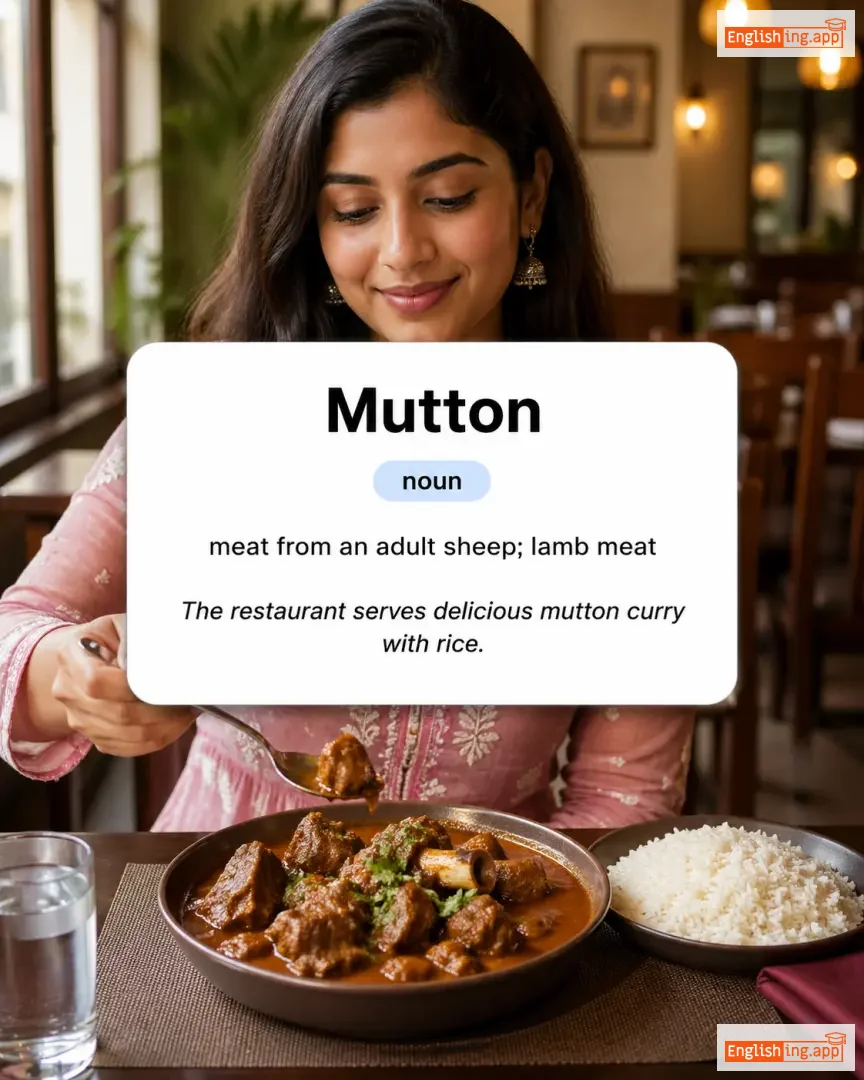
Mutton definition card — visual illustration of the meaning
noun
/ˈmʌtn/
мясо барашка (myaso barashka)

meat from an adult sheep; lamb meat

"The restaurant serves delicious mutton curry with rice."

"Ресторан подает вкусное карри из мяса барашка с рисом." (Restoran podayet vkusnoye karri iz myasa barashka s risom.)
adjective
/ˈmjuːtʃuəl/
взаимный (vzaimnyy)

felt, shared, or done by two or more people equally

"They have mutual respect for each other."

"У них взаимное уважение друг к другу." (U nikh vzaimnoye uvazheniye drug k drugu.)
pronoun
/maɪ/
мой (moy)

used to indicate possession or ownership

"This is my book."
"Это моя книга." (Eto moya kniga.)
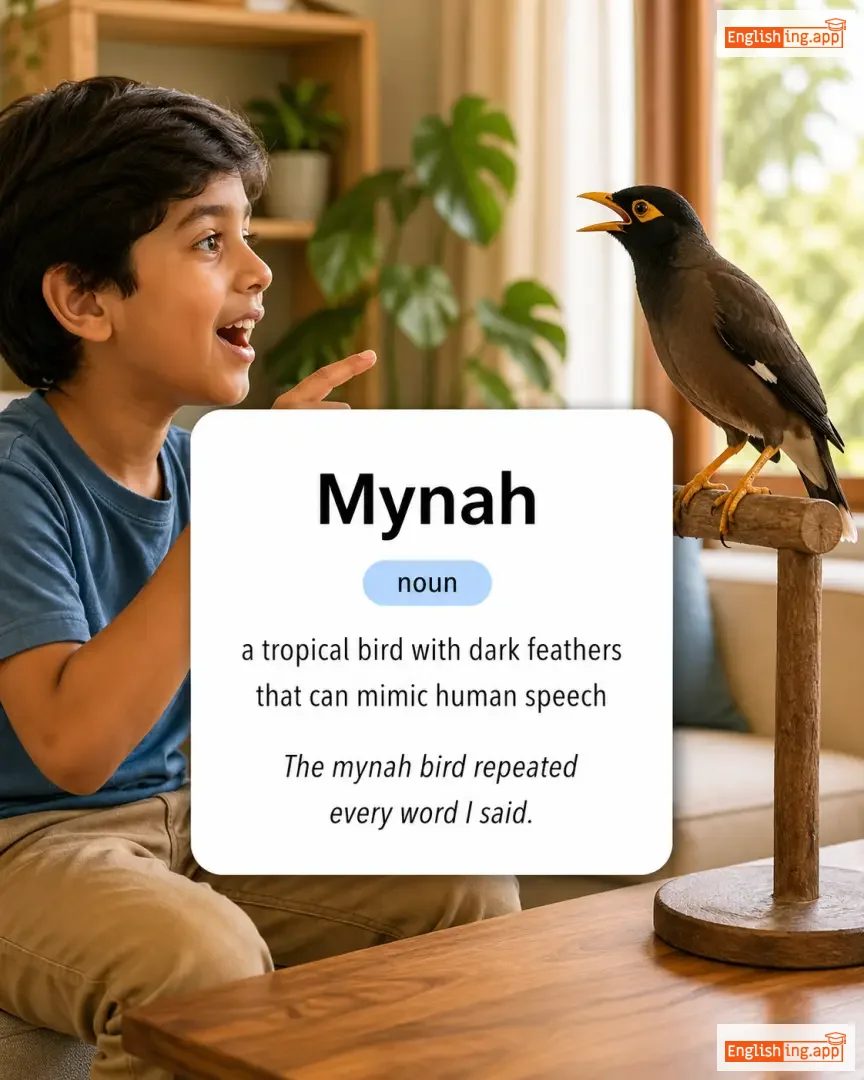
Mynah definition card — visual illustration of the meaning
noun
/ˈmaɪ.nə/
майна (mayna)

a tropical bird with dark feathers that can mimic human speech

"The mynah bird repeated every word I said."

"Птица майна повторила каждое слово, которое я сказал." (Ptitsa mayna povtorila kazhdoe slovo, kotoroe ya skazal.)
adjective
/maɪˈɑːpɪk/
миопия, ограниченное зрение (miopiya, ogranichennoe zrenie)

lacking foresight or long-term perspective; also refers to nearsightedness

"The company’s myopic strategy led to long-term losses."

"Миопическая стратегия компании привела к долгосрочным потерям." (Miopicheskaya strategiya kompanii privela k dolgrosrochnym poteryam.)
pronoun
/maɪˈsɛlf/
сам (sam)

used for emphasis or to refer to oneself

"I will do it myself."

"Я сделаю это сам." (Ya sdelayu eto sam.)
noun/adjective
/ˈmɪriəd/
бесчисленный (beshchislennyy)

a countless or extremely great number

"There are myriad stars in the night sky."
"В ночном небе бесчисленные звезды." (V nochnom nebe beschislenniye zvezdy.)
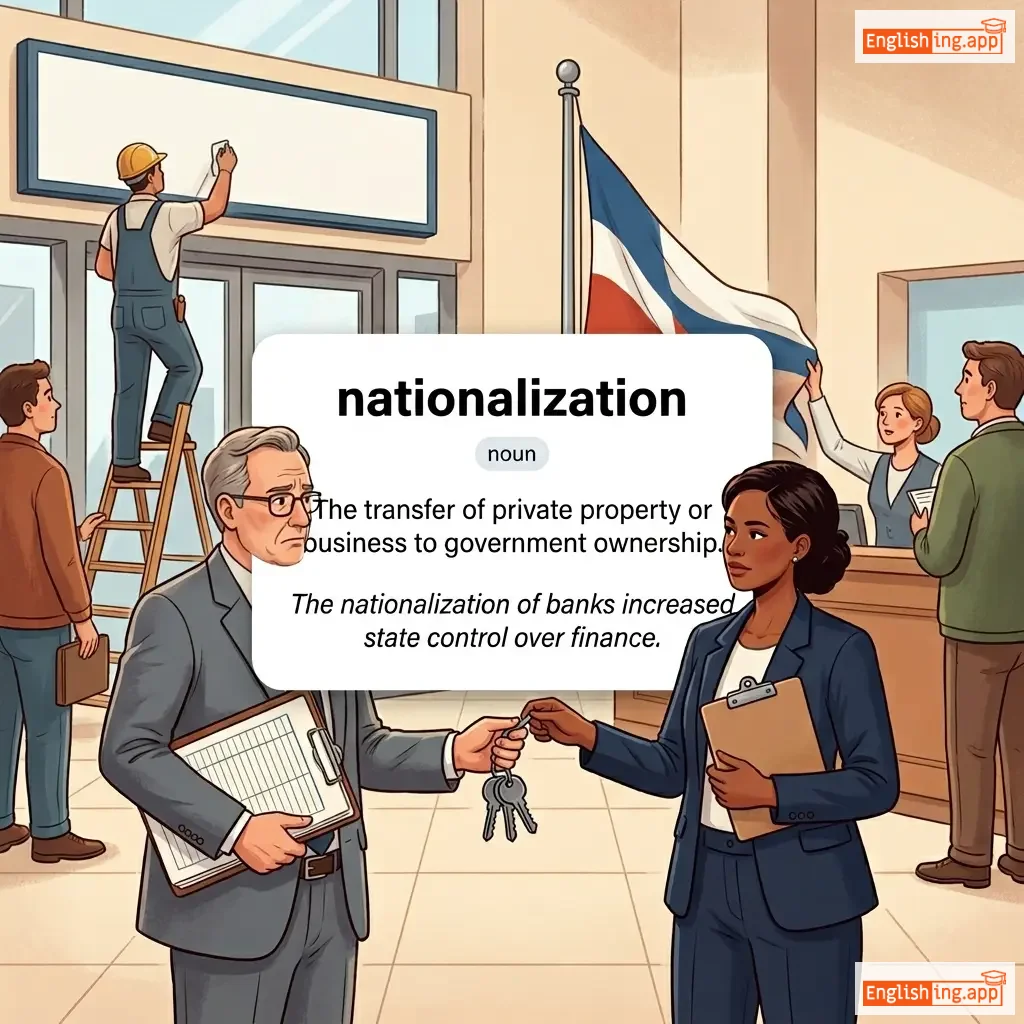
nationalization definition card — visual illustration of the meaning
noun
/ˌnæʃ.ən.ə.laɪˈzeɪ.ʃən/
национализация (natsionalizatsiya)

The transfer of private property or business to government ownership.

"The nationalization of banks increased state control over finance."

"Национализация банков увеличила государственный контроль над финансами." (Natsionalizatsiya bankov uvelichila gosudarstvennyy kontrol' nad finansami.)
noun
/ˌnæʃəˈnæləti/
национальность (natsional'nost')

The status of belonging to a particular nation, either by birth or naturalization.

"Her nationality is Canadian, though she was born in France."

"Ее национальность канадская, хотя она родилась во Франции." (Yeyo natsional'nost' kanadskaya, khotya ona rodilas' vo Frantsii.)
noun
/ˈnæʃənəl ˈænθəm/
государственный гимн (gosudarstvennyi gimn)

an official patriotic song of a country, performed at national events and ceremonies

"The national anthem was played before the international match."

"Перед международным матчем прозвучал государственный гимн." (Pered mezhdunarodnym matchem prozvuchal gosudarstvennyi gimn)
adjective
/ˈnæʃənəl/
национальный (natsional'nyy)

relating to a nation, especially its culture, language, or government

"The national anthem was played at the ceremony."

"Национальный гимн был сыгран на церемонии." (Natsional'nyy gimn byl sygran na tseremonii.)
noun
/ˈneɪʃən/
нация (natsiya)

a large group of people united by common descent, history, culture, or language

"The nation celebrated its independence day with pride."

"Нация отметила свой день независимости с гордостью." (Natsiya otmetila svoy den' nezavisimosti s gordost'yu.)
noun
/næˈteɪʃən/
плавание (plavanie)

The act or sport of swimming.

"She took lessons in natation to improve her swimming skills."

"Она взяла уроки плавания, чтобы улучшить свои навыки плавания." (Ona vzyala uroki plavaniya, chtoby uluchshit' svoi navyki plavaniya.)
adjective
/ˈneɪtl/
относящийся к рождению (otnosyashchijsya k rozhdeniyu)

Relating to birth or the place of birth.

"She returned to her natal village after many years."

"Она вернулась в свою родную деревню после многих лет." (Ona vernulas' v svoyu rodnuyu derevnyu posle mnogikh let.)
adjective
/ˈnæsti/
неприятный (nepriyatnyy)

very unpleasant, unkind, or offensive

"He made a nasty comment about her dress."

"Он сделал неприятный комментарий о её платье." (On sdelal nepriyatnyy kommentariy o yeё plat'ye.)
nascent definition card — visual illustration of the meaning
adjective
/ˈneɪsnt/
зарождающийся (zarozhdajushchijsja)

Just coming into existence and beginning to develop.

"The nascent technology has great potential."

"Зарождающаяся технология имеет большой потенциал." (Zarozhdajushchajasja tekhnologija imejet bol'shoj potencial.)
adjective
/ˈneɪzl/
назальный (nazal'nyj)

Relating to the nose; a sound produced through the nose.

"He spoke with a nasal voice due to his cold."

"Он говорил с носовым голосом из-за простуды." (On govorit s nosovym golosom iz-za prostudy.)
adverb
/ˈnæroʊli/
едва; с трудом (yedva; s trudom)

by a small margin; barely; in a limited way

"She narrowly escaped the accident."

"Она едва избежала аварии." (Ona yedva izbezhalа avarii.)
adjective
/ˌnæroʊˈmaɪndɪd/

Having a limited outlook or unwillingness to accept different opinions or ideas.

"She was too narrow-minded to consider other perspectives."
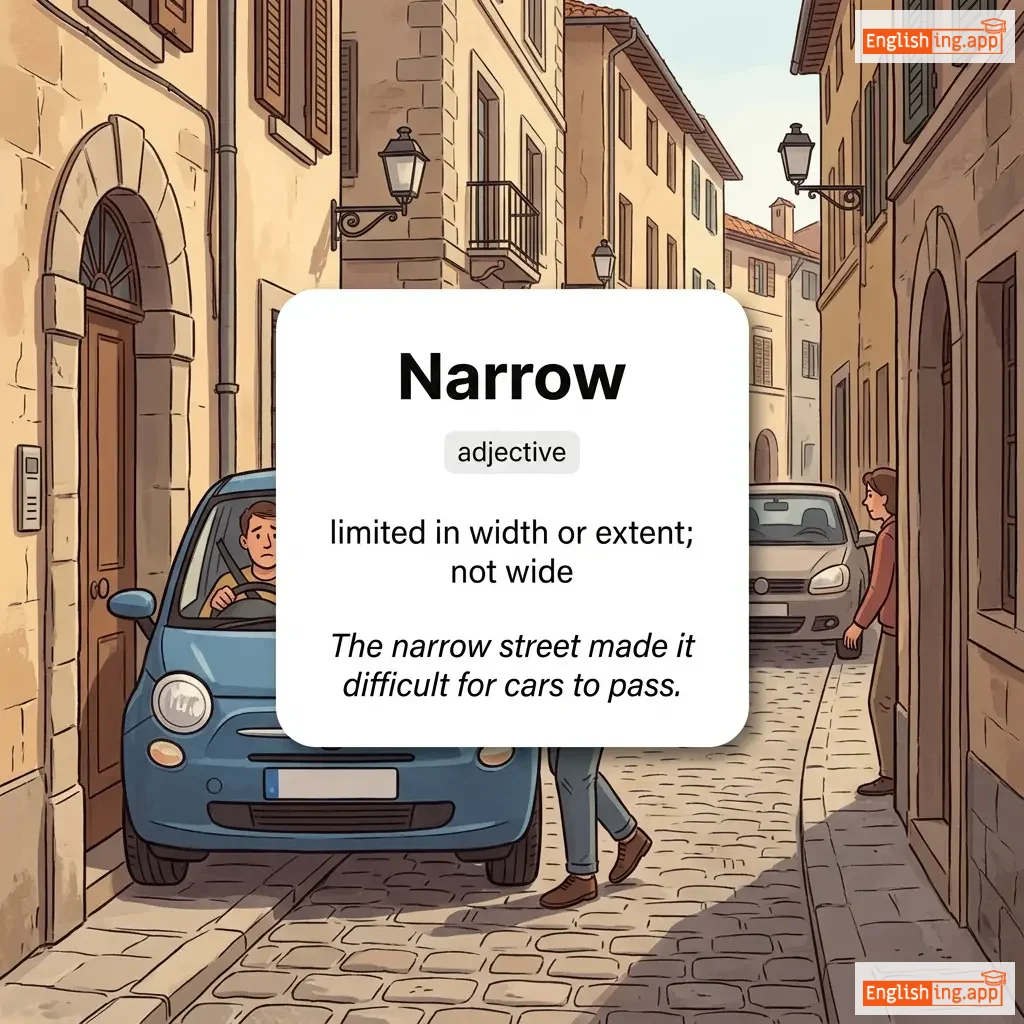
Narrow definition card — visual illustration of the meaning
adjective
/ˈnær.oʊ/
узкий (uzkiy)

limited in width or extent; not wide

"The narrow street made it difficult for cars to pass."

"Узкая улица затруднила движение автомобилей." (Uzkiy ulitsa zatrudnila dvizhiniye avto)
noun
/ˈnæreɪtər/
рассказчик (rasskazchik)

A person who tells the story in a book, play, or film.

"The narrator guided the audience through the complex plot."
"Рассказчик проводил аудиторию через сложный сюжет." (Rasskazchik provodil auditoriyu cherez slozhnyy syuzhet.)
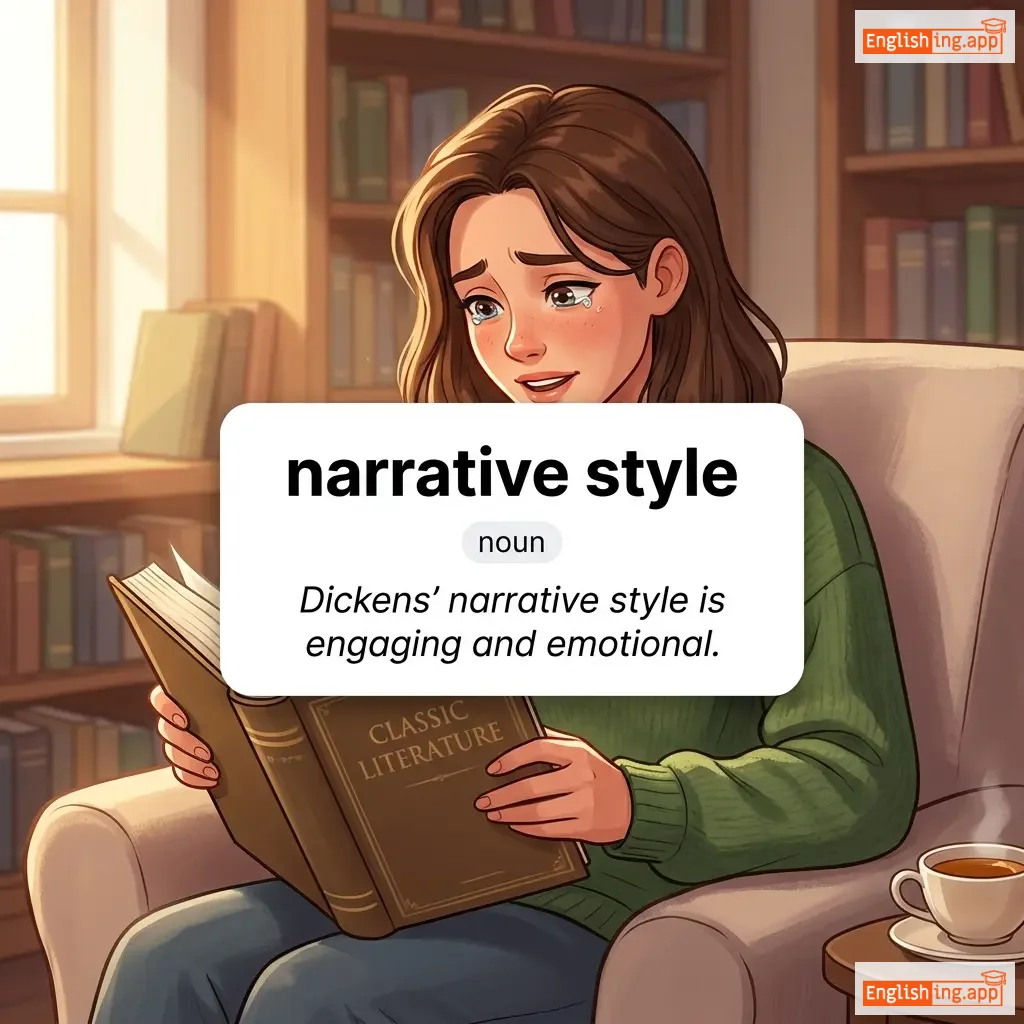
narrative style definition card — visual illustration of the meaning
noun
ˈnærətɪv staɪl
повествовательный стиль (povestvovatel'nyy stil')

The way in which a story is told, including the point of view and the voice of the narrator.

"Dickens' narrative style is engaging and emotional."

"Повествовательный стиль Диккенса захватывающий и эмоциональный." (Povestvovatel'nyy stil' Dikkensa zakhvatyvayushchiy i emosional'nyy.)
noun
/ˈnærətɪv/
нарратив (narrativ)

A spoken or written account of connected events; a story.

"The novel’s narrative explores themes of identity and freedom."

"Нарратив романа исследует темы идентичности и свободы." (Narrativ romana issleduet temy identichnosti i svobody.)
noun
/næˈreɪʃən/
повествование (povestvovanie)

The act of telling a story or describing events in detail.

"The movie’s narration was done by a famous actor."

"Наррация фильма была выполнена знаменитым актером." (Narratsiya fil'ma byla vypolnena znamenitym akterom.)
verb
/ˈnæreɪt/
рассказывать (rasskazyvat)

To tell a story or describe events, often in detail.

"She will narrate the events of her journey to the audience."

"Она будет рассказывать о событиях своего путешествия аудитории." (Ona budet rasskazyvat' o sobytiyakh svoego puteshestviya auditorii.)
noun
/nɑːrˈkɒtɪk/
наркотик (narkotik)

A drug that dulls the senses and relieves pain, often causing sleep and sometimes addiction.

"The police seized a large amount of narcotic substances."

"Полиция изъяла большое количество наркотических веществ." (Politsiya izyalyalo bol'shoye kolichestvo narkoticheskikh veshchestv.)
noun
/nɑːrˈsɪsəs/
цветок нарцисса (tsvetok nartsissa)

A type of flowering plant with yellow or white blooms, often associated with self-love from Greek mythology.

"A narcissus bloomed in the garden during spring."

"Нарцисс распустился в саду весной." (Nartsiss raspustilsya v sadu vesnoy.)
noun
/ˈnɑːrsɪsɪst/
нарциссист (nartsissist)

A person who has an excessive interest in or admiration of themselves.

"Everyone avoided him because he was a narcissist."

"Все избегали его, потому что он был нарциссистом." (Vse izbegali ego, potomu chto on byl nartsissistom.)
adjective, adverb
/ˈneɪʃənˌwaɪd/
по всей стране (po vsey strane)

existing or happening throughout an entire nation

"The campaign received nationwide support."

"Кампания получила поддержку по всей стране." (Kampaniya poluchila podderzhku po vsey strane.)
⬇️

nadir

noun
/ˈneɪdɪər/

The lowest point of a situation or condition.

"The company reached its nadir during the financial crisis."