Словари

Словарь английского языка | Значения слов, определения и примеры

noun
/ˈmeɪsə/
меса (mesa)

An isolated flat-topped hill with steep sides, found in arid regions.

"The hikers stopped to admire the mesa rising above the desert floor."

"Путешественники остановились, чтобы полюбоваться месой, поднимающейся над песчаным полом пустыни." (Puteshestvenniki ostanovilis, chtoby polyubovatsya mesoy, podnimayushchiesya nad peschanym polom pustyni.)
adverb
/ˈmerɪli/
весело (veselo)

in a cheerful and joyful manner

"The children played merrily in the garden."

"Дети играли весело в саду." (Deti igrali veselo v sadu.)
noun
/ˈmɛr.meɪd/
русалка (rusalka)

A mythical sea creature with the head and torso of a woman and the tail of a fish

"The little girl loved stories about mermaids living under the sea."

"Маленькая девочка любила истории о русалках, которые жили под водой." (Malen'kaya devochka lyubila istorii o rusal'kakh, kotorye zhili pod vodoj.)
adjective
/ˌmɛrɪˈtɔːriəs/
заслуженный (zasluzhennyy)

Deserving reward, praise, or recognition.

"She received a scholarship for her meritorious academic performance."

"Она получила стипендию за свои заслуженные академические достижения." (Ona poluchila stipendiyu za svoi zasluzhennyye akademicheskiye dostizheniya.)
membership definition card — visual illustration of the meaning
noun
/ˈmɛmbərʃɪp/
членство (chlenstvo)

The state of being a member of a group, organization, or club.

"Her membership in the gym expires next month."

"Её членство в спортзале заканчивается в следующем месяце." (Yeyo chlenstvo v sportzale zakanchivaetsya v sleduyushchem mesyatse.)
adjective
/ˈmɛdəlsəm/
вмешивающийся (vmeshivayushchiesya)

fond of interfering in other people’s affairs

"She found her neighbor to be meddlesome and annoying."

"Она посчитала своего соседа вмешивающимся и раздражающим." (Ona poschitala svoego soseda vmeshivayushchiesya i razdrazhayushchim.)
noun
/ˈmiːdiə/
средства массовой информации (sredstva massovoy informatsii)

the main means of mass communication such as newspapers, television, radio, and the internet

"The story quickly spread across the media."

"История быстро распространилась через СМИ." (Istoriya bystro rasprostranilas cherez SMI.)
media dominance definition card — visual illustration of the meaning
noun
ˈmiːdiə ˈdɒmɪnəns
медийное доминирование (mediinoye dominirivaniye)

The control and powerful influence that media has over communication and information distribution in society.

"The internet has enhanced media dominance globally."

"Интернет усилил медийное доминирование на глобальном уровне." (Internet usilil mediinoye dominirivaniye na global'nom urovne.)
adjective
/ˌmed.iˈiː.vəl/
средневековый (srednevekovyy)

relating to the Middle Ages; medieval

"The castle displayed mediaeval architecture and design."

"Замок отображал средневековую архитектуру и дизайн." (Zamok otobrazhal srednevekovuyu arkhitekturu i dizayn.)
adjective
/ˈmiː.di.əl/
медиальный (medial'nyj)

Situated in or pertaining to the middle; located toward the midline of the body or structure.

"The medial side of the knee is more prone to injury."

"Медиальная сторона колена более подвержена травмам." (Medial'naya storona kolena bolee podverzhena travm.)
verb
/ˈmiː.di.eɪt/
посредничать (posrednichat)

To act as an intermediary in bringing about agreement or reconciliation between parties.

"She was asked to mediate between the two companies."

"Её попросили посредничать между двумя компаниями." (Eyo poprosili posrednichat' mezhdu dvumya kompaniyami.)
mediation definition card — visual illustration of the meaning
noun
/ˌmiːdɪˈeɪʃən/
медиация (mediatsiya)

Intervention between parties to promote reconciliation, settlement, or compromise.

"The mediation helped resolve the conflict between the two teams."

"Медиация помогла разрешить конфликт между двумя командами." (Mediatsiya pomogla rezhlit' konflikt mezhdu dvumya komandami.)
mediative definition card — visual illustration of the meaning
adjective
/ˈmiː.di.eɪ.tɪv/
связанный с медиацией (svyazannyy s mediatsiey)

Related to mediation, helping to resolve conflicts through diplomatic means.

"His mediative skills helped resolve the conflict."

"Его медиативные навыки помогли разрешить конфликт." (Ego mediativnye navyki pomogli rezreshit' konflikt.)
noun
/ˈmiːdieɪtər/
посредник (mediator)

A person who attempts to make people involved in a conflict agree

"The United Nations often acts as a mediator in international disputes."

"Организация Объединённых Наций часто выступает в роли медиатора в международных спорах." (Organizatsiya Ob'yedinyonnykh Natsiy chasto vystupayet v roli mediatora v mezhdunarodnykh sporah.)
medical definition card — visual illustration of the meaning
adjective
/ˈmedɪkəl/
медицинский (meditsinskiy)

relating to the science or practice of medicine

"He went for a medical check-up last week."
"Он пошел на медицинское обследование на прошлой неделе." (On poshel na meditsinskoe obsledovanie na proshloy nedele.)
medicate definition card — visual illustration of the meaning
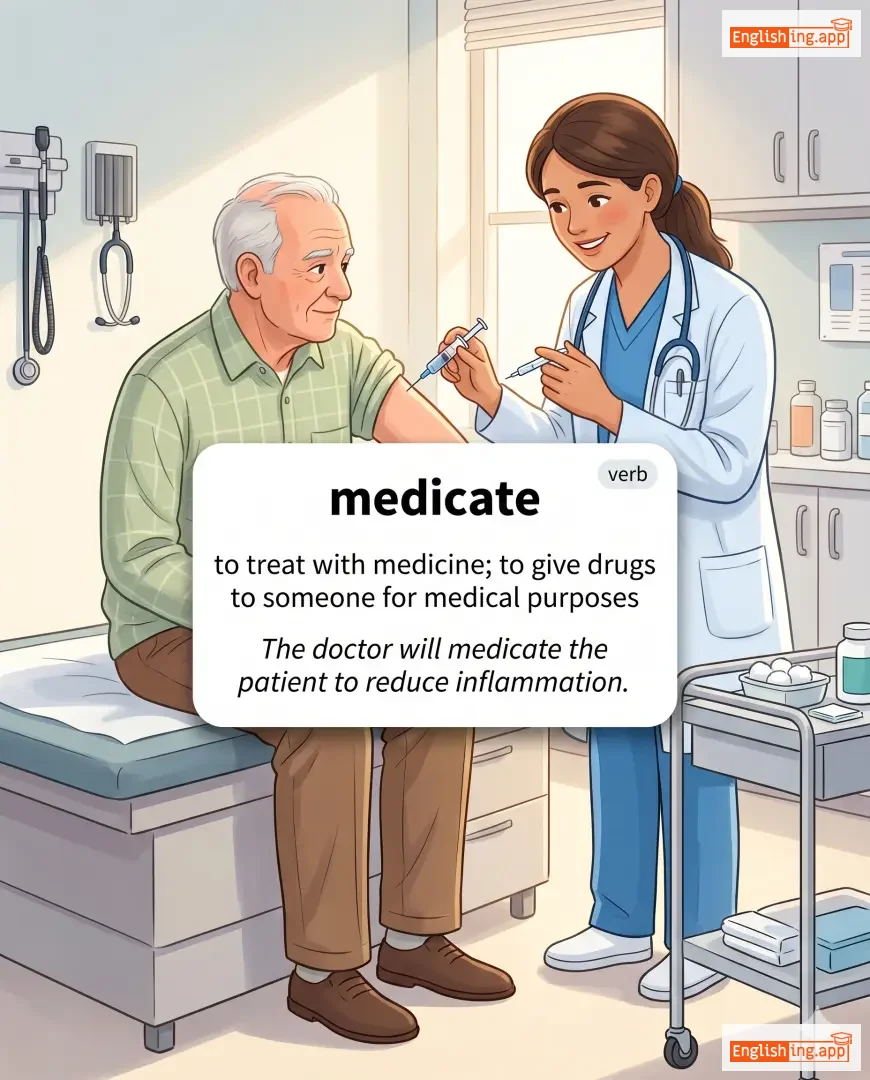
verb
/ˈmedɪkeɪt/
лечить (lechit)

to treat with medicine; to give drugs to someone for medical purposes

"The doctor will medicate the patient to reduce inflammation."

"Доктор будет лечить пациента, чтобы уменьшить воспаление." (Doktor budet lechit' patsiyenta, chtoby umenshit' vospaleniye.)
noun
/ˌmedɪˈkeɪʃən/
лекарство (lekarstvo)

a drug or other form of medicine used to treat or prevent disease

"The doctor prescribed medication for his headache."

"Доктор прописал лекарство от головной боли." (Doktor propisal lekarstvo ot golovnoi boli.)
medicine definition card — visual illustration of the meaning
noun
/ˈmed.ɪ.sən/
лекарство (lekarstvo)

A substance used to treat illness, injury, or disease.

"He took some medicine for his headache."

"Он принял лекарство от головной боли." (On prinyal lekarstvo ot golovnoy boli.)
adjective
/ˌmiː.diˈiː.vəl/
средневековый (srednevekovyy)

Relating to the Middle Ages, the period in European history from about the 5th to the 15th century.

"The castle is a famous medieval monument."

"Замок — это знаменитый средневековый памятник." (Zamok — eto znamenityy srednevekovyy pamyatnik.)
adjective
/ˌmiː.diˈoʊ.kər/
посредственный (posredstvenny)

Of only average quality; not very good.

"The movie was entertaining but overall mediocre."

"Фильм был увлекательным, но в целом посредственным." (Film byl uvykatelym, no v tsele posredstvennym.)
mediocrity definition card — visual illustration of the meaning
noun
ˌmiː.diˈɒk.rə.ti
средность (srednost)

Being average or ordinary, not particularly good.

"He refused to settle for mediocrity and aimed for greatness."

"Он отказался довольствоваться посредственностью и стремился к величию." (On otkazalsya dovol'stvovat'sya posredstvennost'yu i stremilsya k velichiyu.)
noun
/ˌmɛdɪˈteɪʃən/
медитация (meditatsiya)

The practice of focusing the mind to achieve calmness, clarity, or spiritual growth.

"She practices meditation every morning to start her day peacefully."

"Она практикует медитацию каждое утро, чтобы начать свой день с покоем." (Ona praktikuet meditatsiyu kazhdoe utro, chtoby nachat' svoy den' s pokoyem.)
noun
/ˈmiːdiəm/
средство (sredstvo)

A means or channel of communication, expression, or artistic work.

"Television is a powerful medium for spreading information."

"Телевидение - мощное средство распространения информации." (Televidenie - moshchnoe sredstvo rasprostraneniya informatsii.)
noun
/ˈmɛdli/
смесь (smes)

A mixture of different things, especially musical tunes combined together.

"The band played a medley of popular songs."

"Группа сыграла смесь популярных песен." (Gruppa sygrala smes' populyarnykh pesen.)
adjective
/miːk/
кроткий (krotkiy)

Quiet, gentle, and submissive in nature.

"Despite his strength, he remained meek and humble."

"Несмотря на свою силу, он остался кротким и скромным." (Nesmotrya na svoyu silu, on ostalsya krotkim i skromnym.)
adverb
/ˈmiːk.li/
смиренно; покорно (smirennо; pokorno)

in a quiet, gentle way; without resistance or protest

"He meekly accepted the criticism without arguing."

"Он смиренно принял критику, не споря." (On smirенно prinyal kritiku, ne sporya.)
noun
/ˈmiːknəs/
смирение (smireniye)

The quality of being quiet, gentle, and submissive

"His meekness was often mistaken for weakness by his colleagues."

"Его смирение часто воспринимали как слабость его коллегами." (Ego smireniye chasto vosprinimali kak slaboyst' ego kollegami.)
meet definition card — visual illustration of the meaning
verb
/miːt/
встретиться (vstretytsya)

To come into the presence of someone by chance or arrangement.

"I will meet you at the cafe tomorrow."

"Я встречу тебя в кафе завтра." (Ya vstretyu tebya v kafe zavtra.)
meeting definition card — visual illustration of the meaning
noun
/ˈmiːtɪŋ/
встреча (vstrecha)

A gathering of people for discussion or decision-making.

"The board had a meeting to finalize the budget."
"Совет провел встречу, чтобы завершить бюджет." (Sovet provel vstrechu, chtoby zavershit' byudzhet.)
megalithic definition card — visual illustration of the meaning
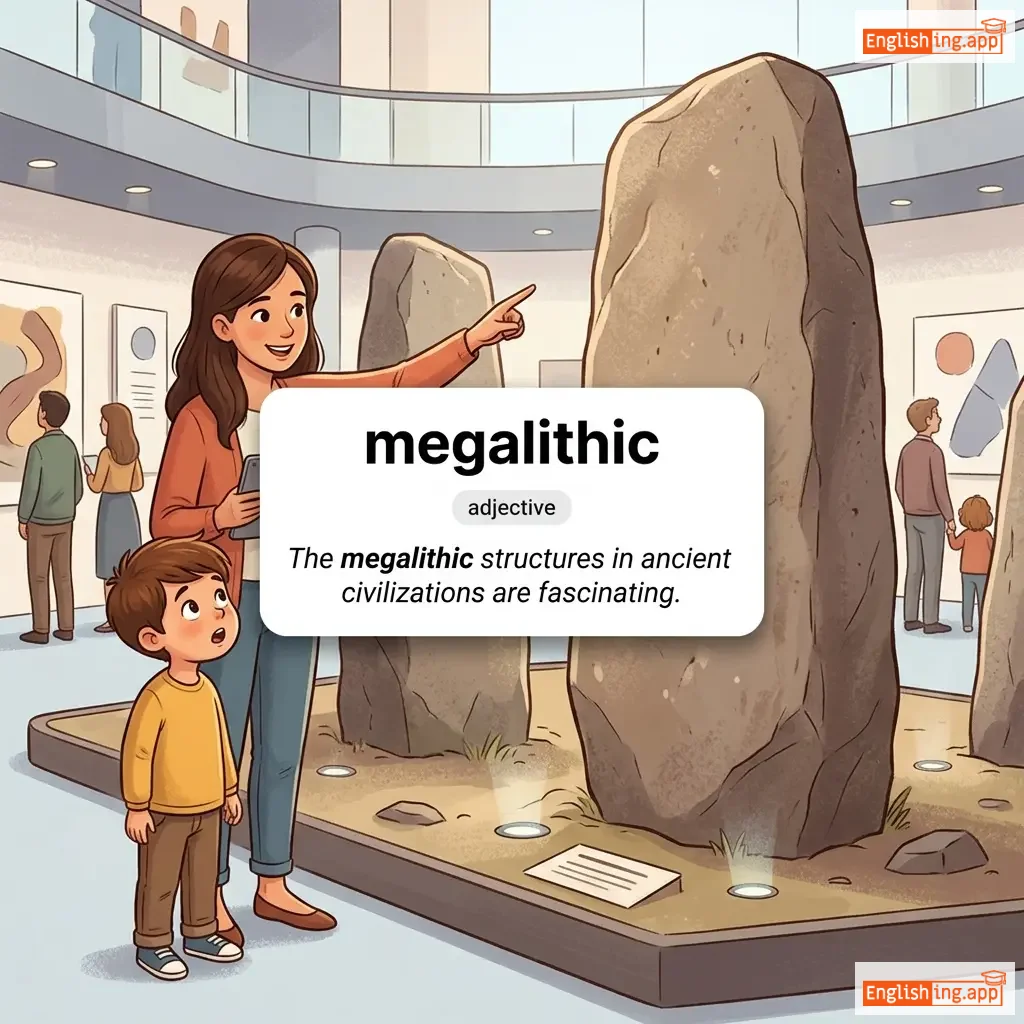
adjective
ˌmɛɡəˈlɪθɪk
мегалитический (megaliticheskiy)

Relating to or denoting prehistoric monuments made of or containing large stones.

"The megalithic structures in ancient civilizations are fascinating."
"Мегалитические сооружения в древних цивилизациях fascinируют." (Megaliticheskiye sooruzheniya v drevnikh tsivilizatsiyakh fasciniruyut.)
megalomania definition card — visual illustration of the meaning
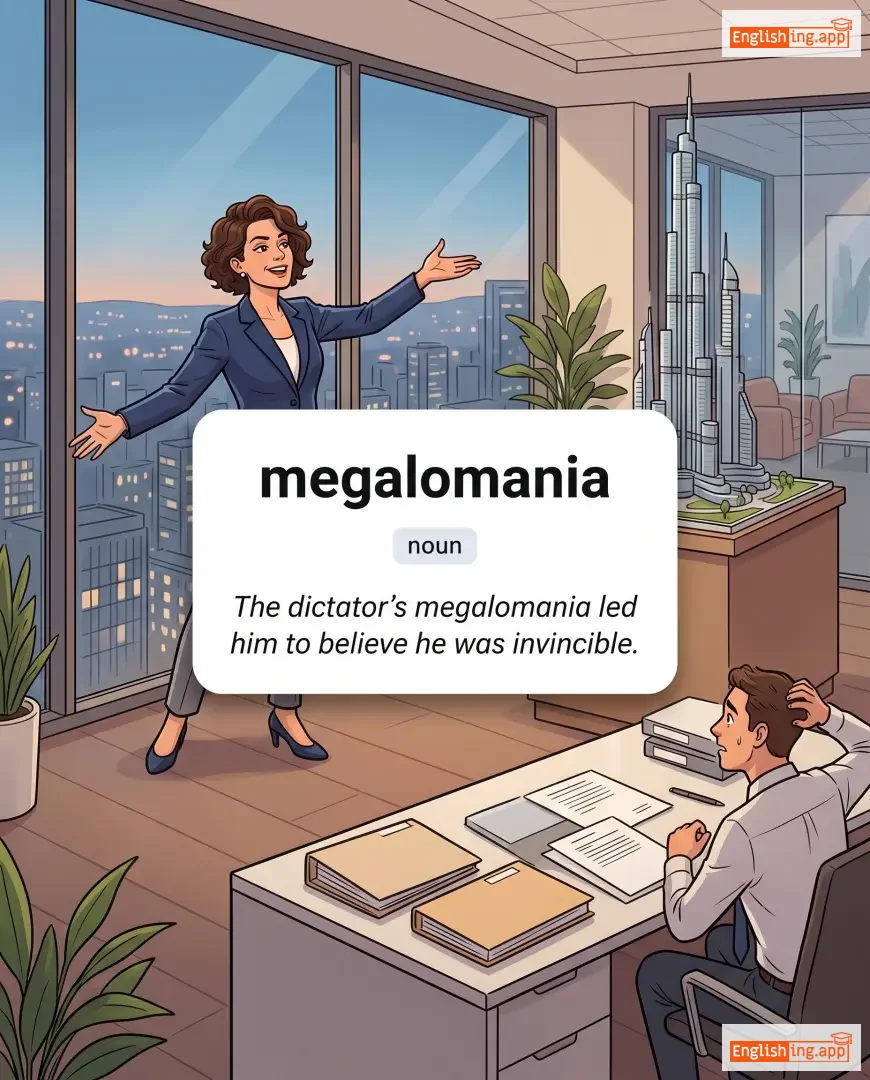
noun
/ˌmɛɡələˈmeɪniə/
бредовые фантазии о власти, богатстве или всевластии (bredovye fantazii o vlasti, bogatstve ili vsevlastii)

A condition characterized by delusional fantasies of power, wealth, or omnipotence.

"The dictator’s megalomania led him to believe he was invincible."

"Мегаломания диктатора заставила его поверить, что он непобедим." (Megalomaniya diktatora zastavila ego poverit, chto on nepobedim.)
adjective
/ˌmel.ənˈkɒl.ɪk/
грустный и задумчивый; выражать или чувствовать грусть (melankholichny)

sad and thoughtful; feeling or expressing sadness

"The melancholic music made everyone feel sad."

"Меланхоличная музыка заставила всех почувствовать грусть." (Melankholichnaya muzyka zastoavila vsekh pochuvstvovat' grust')
noun
/ˈmɛlənˌkɒli/
меланхолия (melankholiya)

A deep, persistent sadness or gloom.

"She felt a deep melancholy after hearing the tragic news."

"Она почувствовала глубокую меланхолию, услышав трагические новости." (Ona pochuvstvovala glubokuyu melankholiyu, uslyshav tragicheskie novosti.)
noun
/meɪˈlɑːnʒ/
смешение (smeshchenie)

A mixture of different things or styles.

"The festival offered a melange of music, food, and art."

"Фестиваль предложил смесь музыки, еды и искусства." (Festival predlozhil smes' muzyki, yedy i iskusstva.)
noun
/ˈmeɪleɪ/
хаотичная драка (khaotichnaya draka)

A noisy, confused fight or crowd situation.

"A melee broke out during the football match."

"Во время футбольного матча началась хаотичная драка." (Vo vremya futbol'nogo matcha nachalas' khaotichnaya draka.)
verb
/ˈmiːliəˌreɪt/
улучшать (uluchshat)

To make something better or improve a condition.

"The new policies aim to meliorate the living conditions of the poor."

"Новые политики направлены на улучшение условий жизни бедных." (Novye politiki napravleny na uluchshenie usloviy zhizni bednykh.)
noun
/ˈmiːliərɪzəm/
мелиоризм (melyorism)

The belief that the world tends to improve and that humans can aid its betterment.

"Her philosophy of meliorism kept her hopeful during difficult times."

"Её философия мелиоризма поддерживала её надежду в трудные времена." (Yeyo filosofiia meliorizma podderzhivala yeyo nadezhdu v trudnye vremena.)
adjective
/məˈlɪfluəs/
мелодичный (melodichnyy)

Sweet or musical; pleasant to hear.

"The singer’s mellifluous voice enchanted the audience."

"Мелодичный голос певца очаровал аудиторию." (Melodichnyy golos pevtsa ocharoval auditoriyu.)
adjective
/ˈmel.əʊ/
мягкий и приятный; расслабленный и нежный (melo)

soft and pleasant; relaxed and gentle

"The mellow evening light created a peaceful atmosphere."

"Мягкий свет вечера создавал мирную атмосферу." (Myagkiy svet vechera sozdaval mirnuyu atmosferu.)
adjective
/məˈloʊdiəs/
мелодичный (melodichny)

Having a pleasant tune; tuneful.

"She played a melodious tune on the piano."

"Она сыграла мелодичную мелодию на пианино." (Ona sygrala melodichnuyu melodiya na piano.)
noun
/ˈmɛləˌdrɑːmə/
мелодрама с преувеличениями (melodrama s preuvelicheniyami)

A dramatic piece with exaggerated characters and exciting events intended to appeal to the emotions.

"The movie was criticized for its excessive melodrama."
"Фильм был раскритикован за излишний мелодраматизм." (Film byl raskritikovann za izlishniy melodramatizm.)
Melody definition card — visual illustration of the meaning
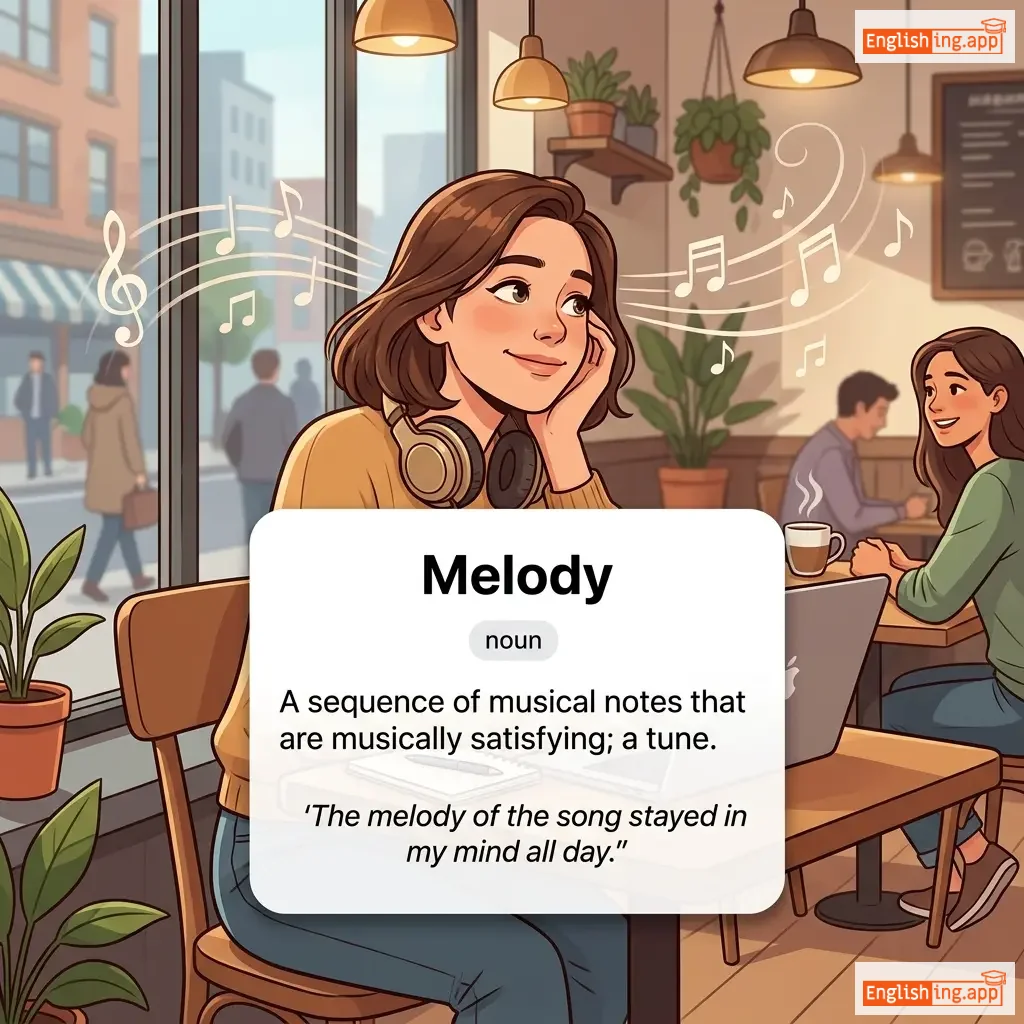
noun
/ˈmɛlədi/
мелодия (melodiya)

A sequence of musical notes that are musically satisfying; a tune.

"The melody of the song stayed in my mind all day."
"Мелодия песни оставалась в моей голове весь день." (Melodiya pesni ostavalas' v moyey golove ves' den'.)
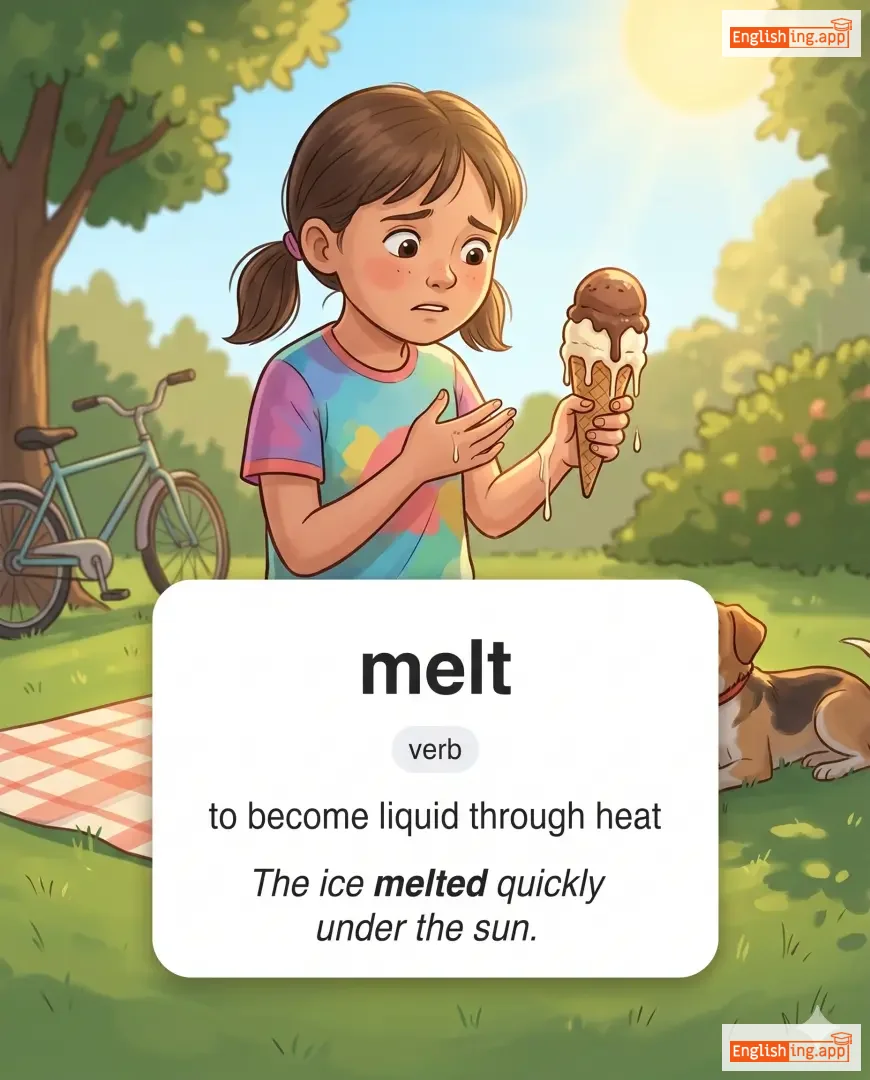
melt definition card — visual illustration of the meaning
verb
/mɛlt/
таять (tayat)

to become liquid through heat

"The ice melted quickly under the sun."

"Лёд растаял быстро под солнцем." (Lyod rastayal bystro pod solntsem.)
verb, noun, adjective
/ˈmeltɪŋ/
плавление (plavleniye)

the process of changing from solid to liquid due to heat; becoming softer or less rigid; emotionally moving or tender

"The ice is melting quickly under the hot sun."

"Лёд быстро тает под жарким солнцем." (Lyod bystro tayet pod zharkim solntsem)
noun
/ˈmembər/
член (chlen)

a person or thing that belongs to a group or organization

"She is a member of the local sports club."

"Она является членом местного спортивного клуба." (Ona yavyayetsya chlenom mestnogo sportivnogo kluba.)
members definition card — visual illustration of the meaning
noun
ˈmem.bərz
члены (chleny)

A person, animal, or plant belonging to a particular group; an individual belonging to a group such as a society or team.

"Members collaborate to finalize recruitment decisions."

"Члены команды сотрудничают, чтобы завершить процесс набора персонала." (Chleny komandy sotrudnichayut, chtoby zavershit' protsess nabora personala.)
adjective
/ˈmɜːrsɪfəl/
милосердный (miloserdnyy)

showing compassion or forgiveness towards someone one has the power to punish or harm.

"The judge was merciful and gave him a lighter sentence."

"Судья был милосердным и дал ему более мягкое наказание." (Sudiya byl miloserdnym i dal emu boleye myagkoye nakazaniye.)
noun
/ˈmɜːrsəˌnɛri/
наемник (naemnik)

a professional soldier hired to serve in a foreign army; also used to describe someone motivated solely by money.

"The mercenary fought for whoever paid the highest wage."

"Наемник сражался за того, кто платил наибольшую зарплату." (Naemnik srazhalsya za togo, kto platil naibol'shuyu zarplatu.)
noun
/ˈmɜːrtʃənt/
торговец (torgovets)

a person or company involved in the trade of goods, especially in large quantities

"The merchant sold spices from distant lands."

"Торговец продавал специи из дальних стран." (Torgovets prodaval spetsii iz dal'nikh stran.)
adjective
/ˈmɜːrkəntaɪl/
торговый (torgovyi)

related to trade or commerce

"The city grew rapidly due to its mercantile activities."

"Город быстро развивался благодаря своим торговым действиям." (Gorod bystro razvivalsya blagodarya svoim torgovym deistviyam.)