词汇表

英语词汇词典 | 单词含义、定义和示例

noun
/ˈmeɪsə/
台地 (tái dì)

An isolated flat-topped hill with steep sides, found in arid regions.

"The hikers stopped to admire the mesa rising above the desert floor."

"远足者停下来欣赏那座高出沙漠地面的梅萨。" (Yuǎnzú zhě tíng xiàlái xīnshǎng nà zuò gāo chū shāmò dìmiàn de méi sà.)
adverb
/ˈmerɪli/
快乐地 (kuaile de)

in a cheerful and joyful manner

"The children played merrily in the garden."

"孩子们在花园里快乐地玩耍。" (Haizimen zai huayuan li kuaile de wanshua.)
🧜‍♀️

Mermaid (mèrmáid)

noun
/ˈmɛr.meɪd/
美人鱼 (měirényú)

A mythical sea creature with the head and torso of a woman and the tail of a fish

"The little girl loved stories about mermaids living under the sea."

"小女孩喜欢关于美人鱼在海底生活的故事。" (xiǎo nǚhái xǐhuān guānyú měirényú zài hǎidǐ shēnghuó de gùshì.)
adjective
/ˌmɛrɪˈtɔːriəs/
值得称赞的 (zhí dé chēng zàn de)

Deserving reward, praise, or recognition.

"She received a scholarship for her meritorious academic performance."

"她因其值得称赞的学术表现而获得奖学金。" (Tā yīn qí zhí dé chēng zàn de xué shù biǎo xiàn ér huò dé jiǎng xué jīn.)
membership definition card — visual illustration of the meaning
noun
/ˈmɛmbərʃɪp/
会员资格 (huiyuanzige)

The state of being a member of a group, organization, or club.

"Her membership in the gym expires next month."

"她在健身房的会员资格下个月到期。" (Ta zai jianshenfang de huiyuanzige xiayue daoqi.)
adjective
/ˈmɛdəlsəm/
爱干涉他人事务的人 (ài gānshè tārén shìwù de rén)

fond of interfering in other people’s affairs

"She found her neighbor to be meddlesome and annoying."

"她发现她的邻居爱干涉他人事务且令人烦恼。" (Tā fāxiàn tā de línjū ài gānshè tārén shìwù qiě lìng rén fánnǎo.)
noun
/ˈmiːdiə/
媒体 (mei ti)

the main means of mass communication such as newspapers, television, radio, and the internet

"The story quickly spread across the media."

"故事很快通过媒体传播开来。" (gùshì hěn kuài tōngguò méitǐ chuánbō kāilái.)
media dominance definition card — visual illustration of the meaning
noun
ˈmiːdiə ˈdɒmɪnəns
媒体主导地位 (méitǐ zhǔdǎo dìwèi)

The control and powerful influence that media has over communication and information distribution in society.

"The internet has enhanced media dominance globally."

"互联网增强了全球媒体主导地位。" (Hùliánwǎng zēngqiángle quánqiú méitǐ zhǔdǎo dìwèi.)
adjective
/ˌmed.iˈiː.vəl/
中世纪的 (zhōngshìjì de)

relating to the Middle Ages; medieval

"The castle displayed mediaeval architecture and design."

"城堡展示了中世纪的建筑风格和设计。" (Chéngbǎo zhǎnshìle zhōngshìjì de jiànzhú fēnggé hé shèjì.)
adjective
/ˈmiː.di.əl/
内侧 (nèi cè)

Situated in or pertaining to the middle; located toward the midline of the body or structure.

"The medial side of the knee is more prone to injury."

"膝盖的内侧更容易受伤。" (xīgài de nèi cè gèng róngyì shòushāng.)
verb
/ˈmiː.di.eɪt/
调解 (tiaojie)

To act as an intermediary in bringing about agreement or reconciliation between parties.

"She was asked to mediate between the two companies."

"她被要求在两家公司之间调解。" (Ta bei yaoqiu zai liang jia gongsi zhi jian tiaojie.)
mediation definition card — visual illustration of the meaning
noun
/ˌmiːdɪˈeɪʃən/
调解 (tiaojie)

Intervention between parties to promote reconciliation, settlement, or compromise.

"The mediation helped resolve the conflict between the two teams."

"调解帮助解决了两队之间的冲突。" (Tiaojie bangzhu jiejuele liang dui zhijian de chongtu.)
mediative definition card — visual illustration of the meaning
adjective
/ˈmiː.di.eɪ.tɪv/
与调解相关 (yǔ tiáojiě xiāngguān)

Related to mediation, helping to resolve conflicts through diplomatic means.

"His mediative skills helped resolve the conflict."

"他的调解技巧帮助解决了冲突。" (Tā de tiáojiě jìqiǎo bāngzhù jiějué le chōngtú.)
noun
/ˈmiːdieɪtər/
调解员 (tiaojieyuan)

A person who attempts to make people involved in a conflict agree

"The United Nations often acts as a mediator in international disputes."

"联合国常常在国际争端中充当调解员。" (Liánhéguó chángcháng zài guójì zhēngduān zhōng chōngdāng tiáojiěyuán.)
medical definition card — visual illustration of the meaning
adjective
/ˈmedɪkəl/
医学的 (yīxué de)

relating to the science or practice of medicine

"He went for a medical check-up last week."

"他上周去做了体检。" (Tā shàng zhōu qù zuò le tǐjiǎn.)
medicate definition card — visual illustration of the meaning
verb
/ˈmedɪkeɪt/
用药治疗 (yòng yào zhìliáo)

to treat with medicine; to give drugs to someone for medical purposes

"The doctor will medicate the patient to reduce inflammation."

"医生将为病人治疗以减轻炎症。" (Yīshēng jiāng wèi bìngrén zhìliáo yǐ jiǎnqīng yánzhèng.)
noun
/ˌmedɪˈkeɪʃən/
药物 (yaowu)

a drug or other form of medicine used to treat or prevent disease

"The doctor prescribed medication for his headache."

"医生为他的头痛开了药物。" (Yisheng wei tā de tóutòng kāile yàowù.)
medicine definition card — visual illustration of the meaning
noun
/ˈmed.ɪ.sən/
药物 (yaowu)

A substance used to treat illness, injury, or disease.

"He took some medicine for his headache."

"他吃了些药物来治疗头痛。" (Tā chīle xiē yàowù lái zhìliáo tóutòng.)
adjective
/ˌmiː.diˈiː.vəl/
中世纪的 (zhōng shìjì de)

Relating to the Middle Ages, the period in European history from about the 5th to the 15th century.

"The castle is a famous medieval monument."

"这座城堡是一个著名的中世纪纪念碑。" (Zhè zuò chéngbǎo shì yīgè zhùmíng de zhōng shìjì jìniànbēi.)
adjective
/ˌmiː.diˈoʊ.kər/
平庸 (pingyong)

Of only average quality; not very good.

"The movie was entertaining but overall mediocre."

"这部电影很有趣,但总体来说平庸。" (Zhè bù diànyǐng hěn yǒuqù, dàn zǒngtǐ lái shuō píngyōng.)
mediocrity definition card — visual illustration of the meaning
noun
ˌmiː.diˈɒk.rə.ti
平庸 (píngyōng)

Being average or ordinary, not particularly good.

"He refused to settle for mediocrity and aimed for greatness."

"他拒绝满足于平庸,努力追求伟大。" (Tā jùjué mǎnzú yú píngyōng, nǔlì zhuīqiú wěidà.)
noun
/ˌmɛdɪˈteɪʃən/
冥想 (mingxiang)

The practice of focusing the mind to achieve calmness, clarity, or spiritual growth.

"She practices meditation every morning to start her day peacefully."

"她每天早上练习冥想,开始她的平静一天。" (Ta meitian zaoshang lianxi mingxiang, kaishi tade pingjing yitian.)
noun
/ˈmiːdiəm/
媒介 (méijiè)

A means or channel of communication, expression, or artistic work.

"Television is a powerful medium for spreading information."

"电视是传播信息的强大媒介。" (Diànshì shì chuánbò xìnxī de qiángdà méijiè.)
noun
/ˈmɛdli/
混合 (hunhe)

A mixture of different things, especially musical tunes combined together.

"The band played a medley of popular songs."

"乐队演奏了流行歌曲的混合曲目。" (Yuèduì yǎnzòu le liúxíng gēqǔ de hùnhé qūmù.)
adjective
/miːk/
温顺 (wēnshùn)

Quiet, gentle, and submissive in nature.

"Despite his strength, he remained meek and humble."

"尽管他很强壮,他依然保持温顺和谦虚。" (Jǐnguǎn tā hěn qiángzhuàng, tā yīrán bǎochí wēnshùn hé qiānxū.)
adverb
/ˈmiːk.li/
顺从地; 温顺地 (shùn cóng de; wēn shùn de)

in a quiet, gentle way; without resistance or protest

"He meekly accepted the criticism without arguing."

"他顺从地接受了批评,没有争论。" (Tā shùn cóng de jiē shòu le pī píng, méi yǒu zhēng lùn.)
noun
/ˈmiːknəs/
谦逊 (qianxun)

The quality of being quiet, gentle, and submissive

"His meekness was often mistaken for weakness by his colleagues."

"他的谦逊常常被同事误解为软弱。" (Tā de qiānxùn chángcháng bèi tóngshì wùjiě wéi ruǎnruò.)
meet definition card — visual illustration of the meaning
verb
/miːt/
见面 (jiànmiàn)

To come into the presence of someone by chance or arrangement.

"I will meet you at the cafe tomorrow."

"我明天在咖啡馆见你。" (Wǒ míngtiān zài kāfēi guǎn jiàn nǐ.)
meeting definition card — visual illustration of the meaning
noun
/ˈmiːtɪŋ/
会议 (huiyi)

A gathering of people for discussion or decision-making.

"The board had a meeting to finalize the budget."
"董事会举行了会议来完成预算。" (Dongshihui juxingle huiyi lai wancheng yusuan.)
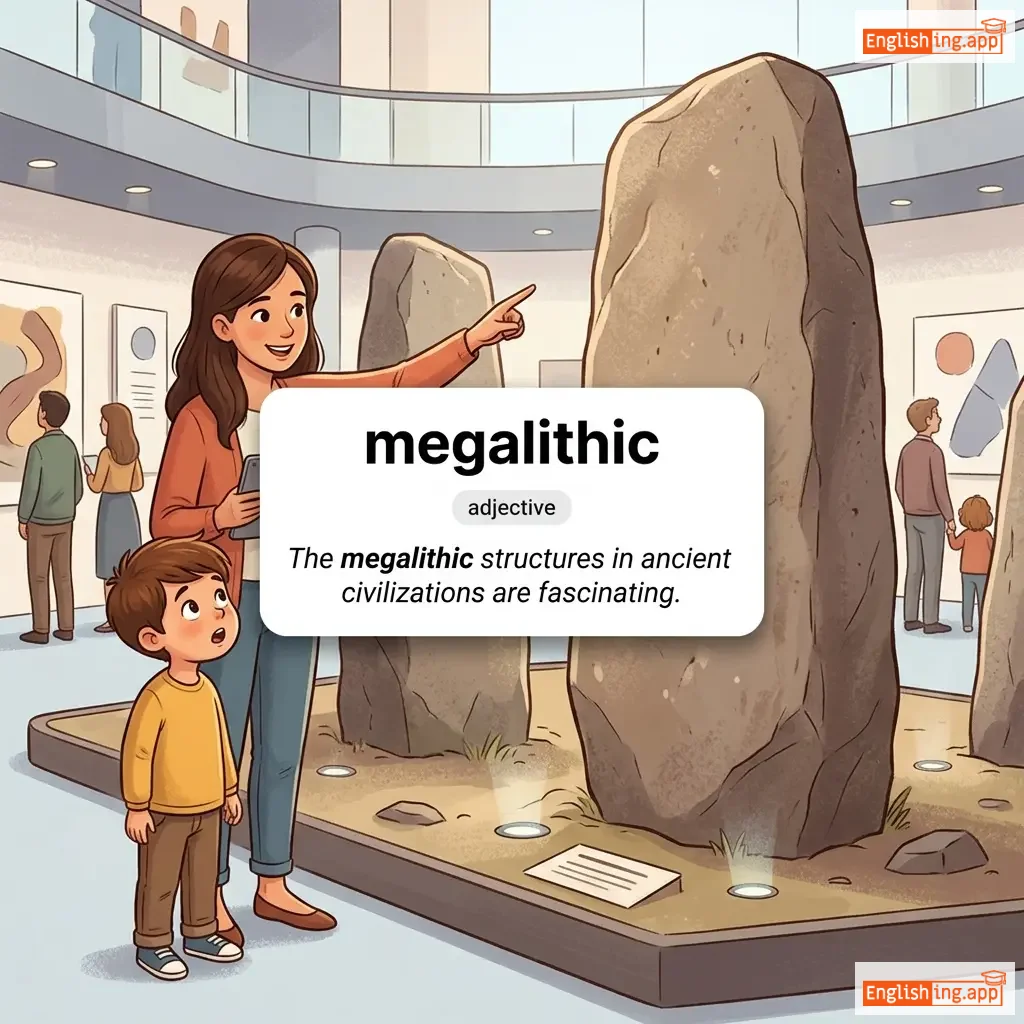
megalithic definition card — visual illustration of the meaning
adjective
ˌmɛɡəˈlɪθɪk
巨石 (jushi)

Relating to or denoting prehistoric monuments made of or containing large stones.

"The megalithic structures in ancient civilizations are fascinating."

"古代文明中的巨石结构令人着迷。" (Gudai wenming zhong de jushi jiegou lingren zhamimi.)
megalomania definition card — visual illustration of the meaning
noun
/ˌmɛɡələˈmeɪniə/
对权力、财富或万能的妄想 (duì quánlì, cáifù huò wànnéng de wàngxiǎng)

A condition characterized by delusional fantasies of power, wealth, or omnipotence.

"The dictator’s megalomania led him to believe he was invincible."

"独裁者的极端自恋狂使他相信自己无敌。" (Dúcáizhě de jíduān zìliàn kuáng shǐ tā xiāngxìn zìjǐ wúdí.)
adjective
/ˌmel.ənˈkɒl.ɪk/
悲伤和沉思;感受或表达悲伤 (youyu de)

sad and thoughtful; feeling or expressing sadness

"The melancholic music made everyone feel sad."

"忧郁的音乐让每个人都感到悲伤。" (Youyu de yinyue rang mei ge ren dou gandao beishang)
noun
/ˈmɛlənˌkɒli/
忧郁 (youyu)

A deep, persistent sadness or gloom.

"She felt a deep melancholy after hearing the tragic news."

"她在听到悲惨的消息后感到深深的忧郁。" (Ta zai tingdao beican de xiaoxi hou gandu shenshen de youyu.)
noun
/meɪˈlɑːnʒ/
混合 (hunhe)

A mixture of different things or styles.

"The festival offered a melange of music, food, and art."

"这个节日提供了音乐、食物和艺术的混合。" (Zhège jiérì tígōngle yīnyuè, shíwù hé yìshù de hùn hé.)
noun
/ˈmeɪleɪ/
混乱的打斗 (hunluan de dadou)

A noisy, confused fight or crowd situation.

"A melee broke out during the football match."

"在足球比赛中爆发了一场混乱的打斗。" (Zai zuqiu bisai zhong baofa le yi chang hunluan de dadou.)
verb
/ˈmiːliəˌreɪt/
改善 (gǎishàn)

To make something better or improve a condition.

"The new policies aim to meliorate the living conditions of the poor."

"新的政策旨在改善穷人的生活条件。" (Xīn de zhèngcè zhǐ zài gǎishàn qióngrén de shēnghuó tiáojiàn.)
noun
/ˈmiːliərɪzəm/
改善主义 (gaishan zhuyi)

The belief that the world tends to improve and that humans can aid its betterment.

"Her philosophy of meliorism kept her hopeful during difficult times."

"她的改善主义哲学让她在艰难时刻保持希望。" (tā de gǎishàn zhǔyì zhéxué ràng tā zài jiānnán shíkè bǎochí xīwàng.)
adjective
/məˈlɪfluəs/
甜美的 (tiánměi de)

Sweet or musical; pleasant to hear.

"The singer’s mellifluous voice enchanted the audience."

"歌手那甜美的声音迷住了观众。" (Gēshǒu nà tiánměi de shēngyīn mí zhùle guānzhòng.)
adjective
/ˈmel.əʊ/
柔和宜人; 放松温和 (méiluò)

soft and pleasant; relaxed and gentle

"The mellow evening light created a peaceful atmosphere."

"温柔的晚霞创造了一个宁静的氛围。" (wēnróu de wǎnxiá chuàngzàole yīgè níngjìng de fēnwéi.)
adjective
/məˈloʊdiəs/
悦耳的 (yue er de)

Having a pleasant tune; tuneful.

"She played a melodious tune on the piano."

"她在钢琴上弹奏了一首悦耳的旋律。" (Tā zài gāngqín shàng tánzòu le yī shǒu yuè ěr de xuànlǜ.)
noun
/ˈmɛləˌdrɑːmə/
夸张的戏剧 (kuāzhāng de xìjù)

A dramatic piece with exaggerated characters and exciting events intended to appeal to the emotions.

"The movie was criticized for its excessive melodrama."
"这部电影因其过度的戏剧性而受到批评。" (Zhè bù diànyǐng yīn qí guòdù de xìjù xìng ér shòudào pīpíng.)
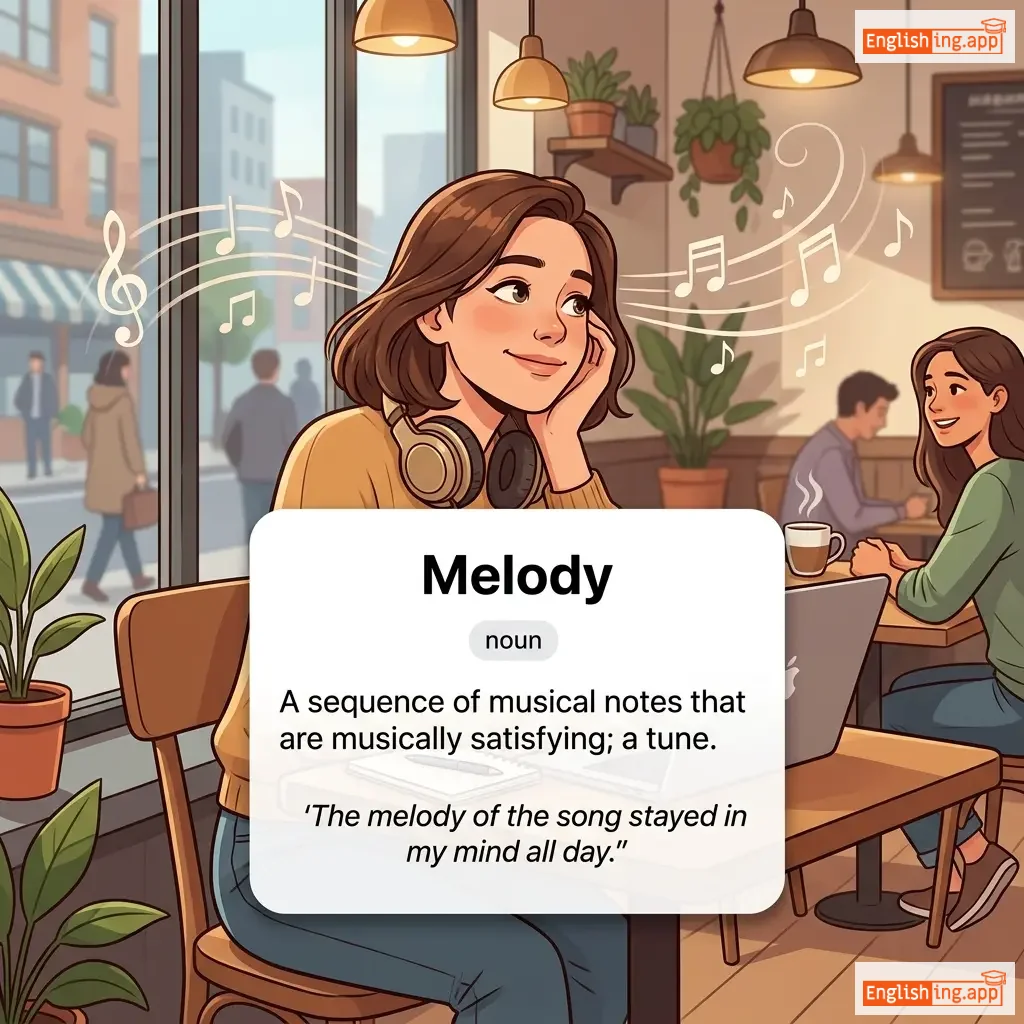
Melody definition card — visual illustration of the meaning
noun
/ˈmɛlədi/
旋律 (xuanlü)

A sequence of musical notes that are musically satisfying; a tune.

"The melody of the song stayed in my mind all day."
"这首歌的旋律整天萦绕在我的脑海中。" (Zhe shou ge de xuanlü zheng tian yingrao zai wode nao hai zhong.)
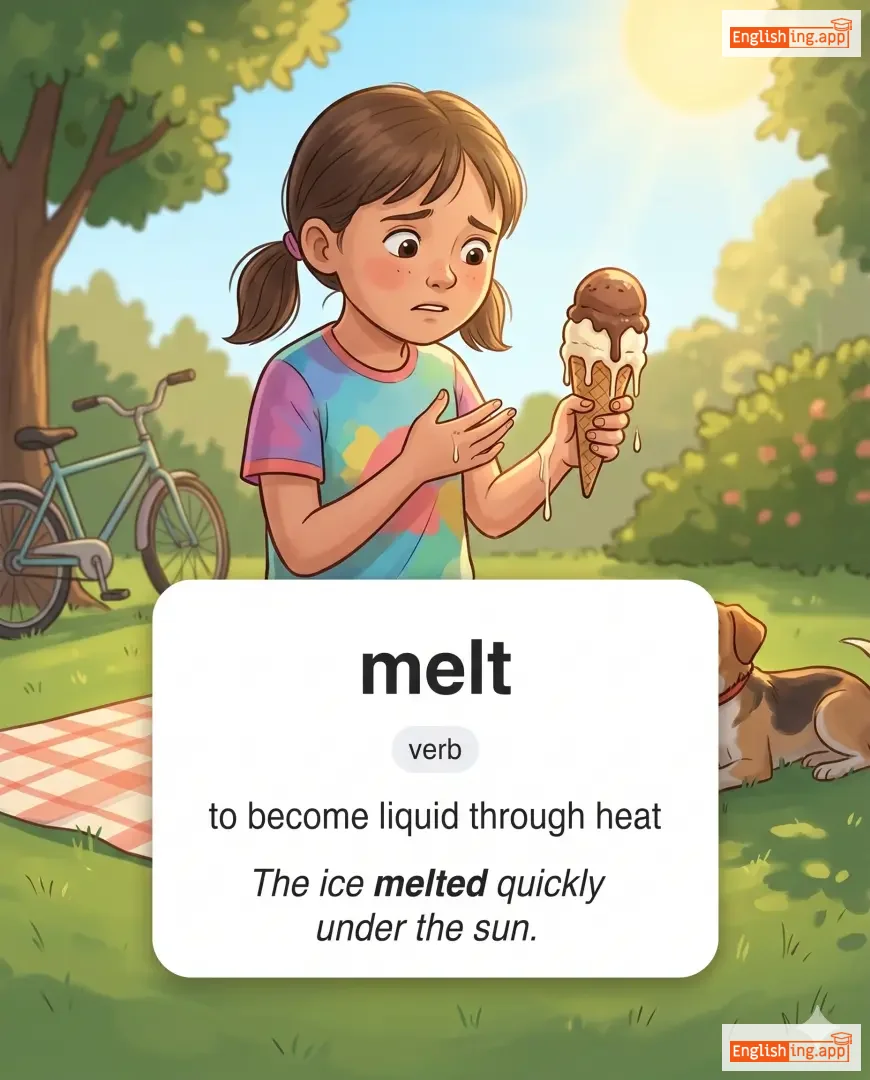
melt definition card — visual illustration of the meaning
verb
/mɛlt/
融化 (ronghua)

to become liquid through heat

"The ice melted quickly under the sun."

"冰在太阳下迅速融化。" (Bing zai taiyang xia xunsu ronghua.)
verb, noun, adjective
/ˈmeltɪŋ/
融化 (ronghua)

the process of changing from solid to liquid due to heat; becoming softer or less rigid; emotionally moving or tender

"The ice is melting quickly under the hot sun."

"冰在炎热的阳光下迅速融化。" (Bing zai yanre de yangguang xia xunsu ronghua)
noun
/ˈmembər/
成员 (chéngyuán)

a person or thing that belongs to a group or organization

"She is a member of the local sports club."

"她是当地体育俱乐部的成员。" (Tā shì dāngdì tǐyù jùlèbù de chéngyuán.)
members definition card — visual illustration of the meaning
noun
ˈmem.bərz
成员 (chengyuan)

A person, animal, or plant belonging to a particular group; an individual belonging to a group such as a society or team.

"Members collaborate to finalize recruitment decisions."

"成员们合作以最终确定招聘决策。" (Chéngyuánmen hézuò yǐ zuìzhōng quèdìng zhāopìn juécè.)
adjective
/ˈmɜːrsɪfəl/
仁慈 (réncí)

showing compassion or forgiveness towards someone one has the power to punish or harm.

"The judge was merciful and gave him a lighter sentence."

"法官很仁慈,给了他一个更轻的判决。" (fǎguān hěn réncí, gěile tā yīgè gèng qīng de pànjué.)
noun
/ˈmɜːrsəˌnɛri/
雇佣兵 (gùyòng bīng)

a professional soldier hired to serve in a foreign army; also used to describe someone motivated solely by money.

"The mercenary fought for whoever paid the highest wage."

"雇佣兵为支付最高工资的人而战斗。" (Gùyòng bīng wèi zhīfù zuìgāo gōngzī de rén ér zhàndòu.)
noun
/ˈmɜːrtʃənt/
商人 (shāngrén)

a person or company involved in the trade of goods, especially in large quantities

"The merchant sold spices from distant lands."

"商人出售来自遥远土地的香料。" (Shāngrén chūshòu láizì yáoyuǎn tǔdì de xiāngliào.)
adjective
/ˈmɜːrkəntaɪl/
商业的 (shāngyè de)

related to trade or commerce

"The city grew rapidly due to its mercantile activities."

"由于其商业活动,这座城市迅速发展。" (Yóuyú qí shāngyè huódòng, zhè zuò chéngshì xùnsù fāzhǎn.)