Vocabulaires

Découvrez, apprenez et maîtrisez le vocabulaire anglais

noun
/ˈmeɪsə/
mesa (mesa)

An isolated flat-topped hill with steep sides, found in arid regions.

"The hikers stopped to admire the mesa rising above the desert floor."

"Les randonneurs se sont arrêtés pour admirer la méssa qui s'élevait au-dessus du sol du désert." (Les randonneurs se sont arrêtés pour admirer la méssa qui s'élevait au-dessus du sol du désert.)
adverb
/ˈmerɪli/
joyeusement (joyeusement)

in a cheerful and joyful manner

"The children played merrily in the garden."

"Les enfants jouaient joyeusement dans le jardin." (Les enfants jouaient joyeusement dans le jardin.)
🧜‍♀️

Mermaid (mɛʁmɛd)

noun
/ˈmɛr.meɪd/
sirène (sirene)

A mythical sea creature with the head and torso of a woman and the tail of a fish

"The little girl loved stories about mermaids living under the sea."

"La petite fille adorait les histoires de sirènes vivant sous la mer." (La petite fille adorait les histoires de sirenes vivant sous la mer.)
adjective
/ˌmɛrɪˈtɔːriəs/
méritant (meritant)

Deserving reward, praise, or recognition.

"She received a scholarship for her meritorious academic performance."

"Elle a reçu une bourse pour sa performance académique méritante." (Elle a reçu une bourse pour sa performance académique méritante.)
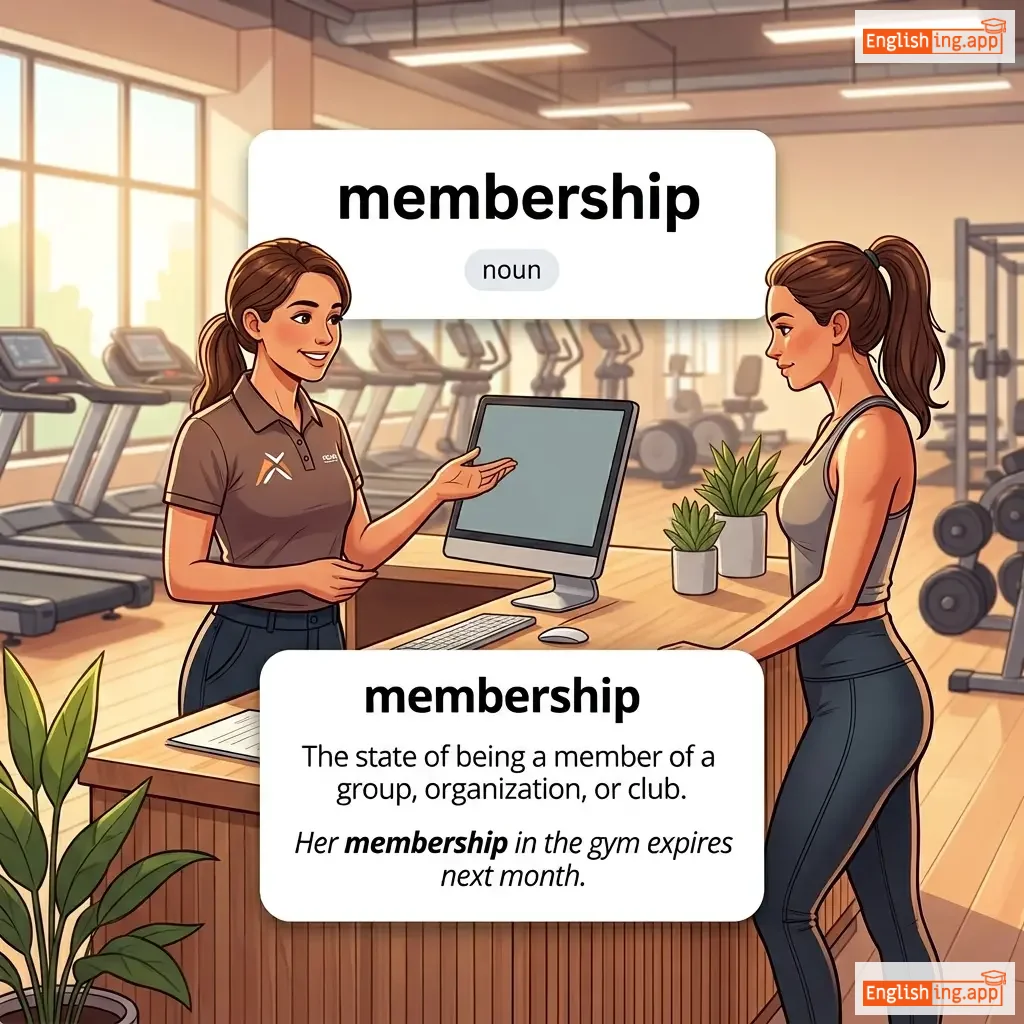
membership definition card — visual illustration of the meaning
noun
/ˈmɛmbərʃɪp/
adhésion (adhesion)

The state of being a member of a group, organization, or club.

"Her membership in the gym expires next month."

"Son adhésion à la salle de sport expire le mois prochain." (Son adhesion a la salle de sport expire le mois prochain.)
adjective
/ˈmɛdəlsəm/
mélangeant (melangeant)

fond of interfering in other people’s affairs

"She found her neighbor to be meddlesome and annoying."

"Elle a trouvé son voisin envahissant et agaçant." (Elle a trouvé son voisin envahissant et agaçant.)
noun
/ˈmiːdiə/
médias (medias)

the main means of mass communication such as newspapers, television, radio, and the internet

"The story quickly spread across the media."

"L'histoire s'est rapidement répandue dans les médias." (L'histoire s'est rapidement repandue dans les medias.)
media dominance definition card — visual illustration of the meaning
noun
ˈmiːdiə ˈdɒmɪnəns
domination des médias (domination des medias)

The control and powerful influence that media has over communication and information distribution in society.

"The internet has enhanced media dominance globally."

"Internet a renforcé la domination des médias à l'échelle mondiale." (Internet a renforcé la domination des médias à l'échelle mondiale.)
adjective
/ˌmed.iˈiː.vəl/
médiéval (médiéval)

relating to the Middle Ages; medieval

"The castle displayed mediaeval architecture and design."

"Le château affichait une architecture et un design médiévaux." (Le château affichait une architecture et un design médiévaux.)
adjective
/ˈmiː.di.əl/
médial (medial)

Situated in or pertaining to the middle; located toward the midline of the body or structure.

"The medial side of the knee is more prone to injury."

"Le côté médial du genou est plus sujet aux blessures." (Le côté médial du genou est plus sujet aux blessures.)
verb
/ˈmiː.di.eɪt/
médiater (mediater)

To act as an intermediary in bringing about agreement or reconciliation between parties.

"She was asked to mediate between the two companies."

"Elle a été demandée de médiater entre les deux entreprises." (Elle a été demandée de médiater entre les deux entreprises.)
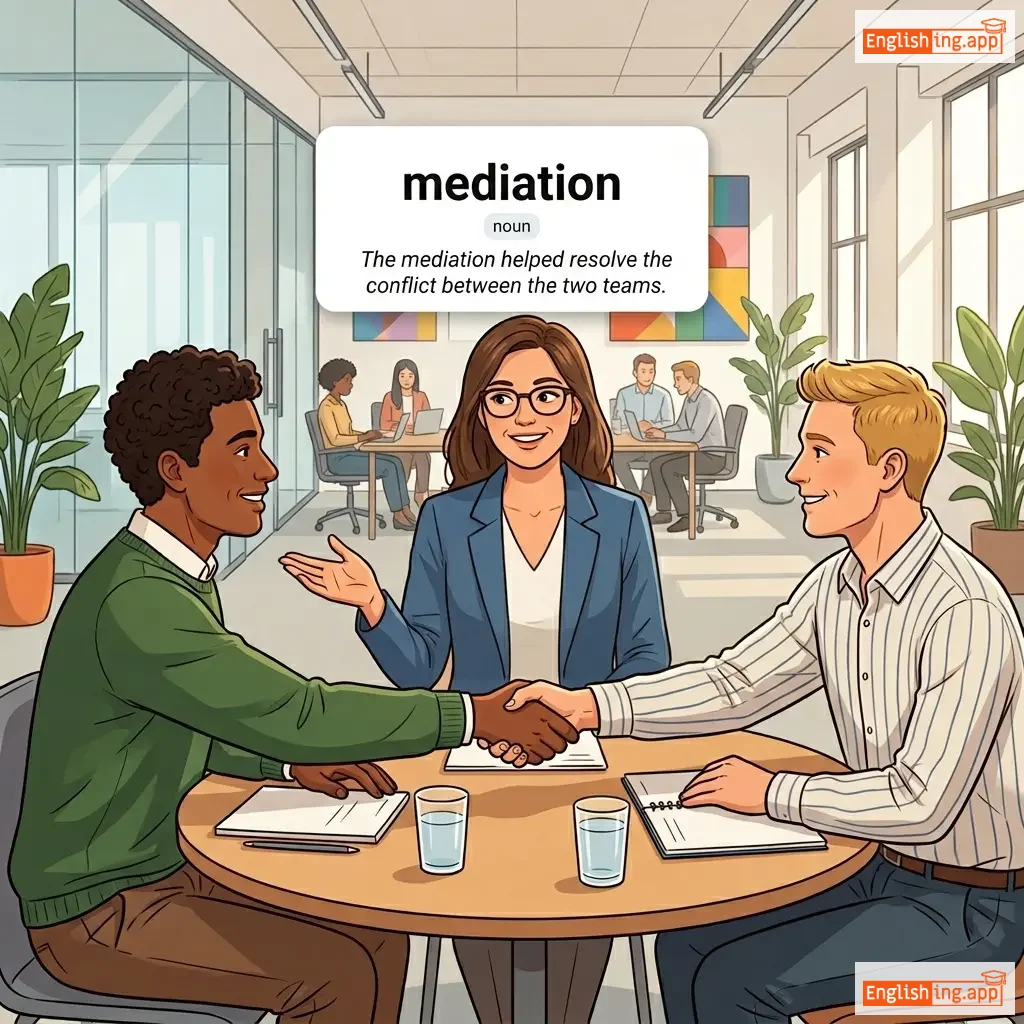
mediation definition card — visual illustration of the meaning
noun
/ˌmiːdɪˈeɪʃən/
médiation (mediation)

Intervention between parties to promote reconciliation, settlement, or compromise.

"The mediation helped resolve the conflict between the two teams."

"La médiation a aidé à résoudre le conflit entre les deux équipes." (La mediation a aide a resoudre le conflit entre les deux equipes.)
mediative definition card — visual illustration of the meaning
adjective
/ˈmiː.di.eɪ.tɪv/
relatif à la médiation (relatif à la médiation)

Related to mediation, helping to resolve conflicts through diplomatic means.

"His mediative skills helped resolve the conflict."

"Ses compétences médiatrices ont aidé à résoudre le conflit." (Ses compétences médiatrices ont aidé à résoudre le conflit.)
noun
/ˈmiːdieɪtər/
médiateur (mediateur)

A person who attempts to make people involved in a conflict agree

"The United Nations often acts as a mediator in international disputes."

"Les Nations Unies agissent souvent comme médiateur dans les conflits internationaux." (Les Nations Unies agissent souvent comme médiateur dans les conflits internationaux.)
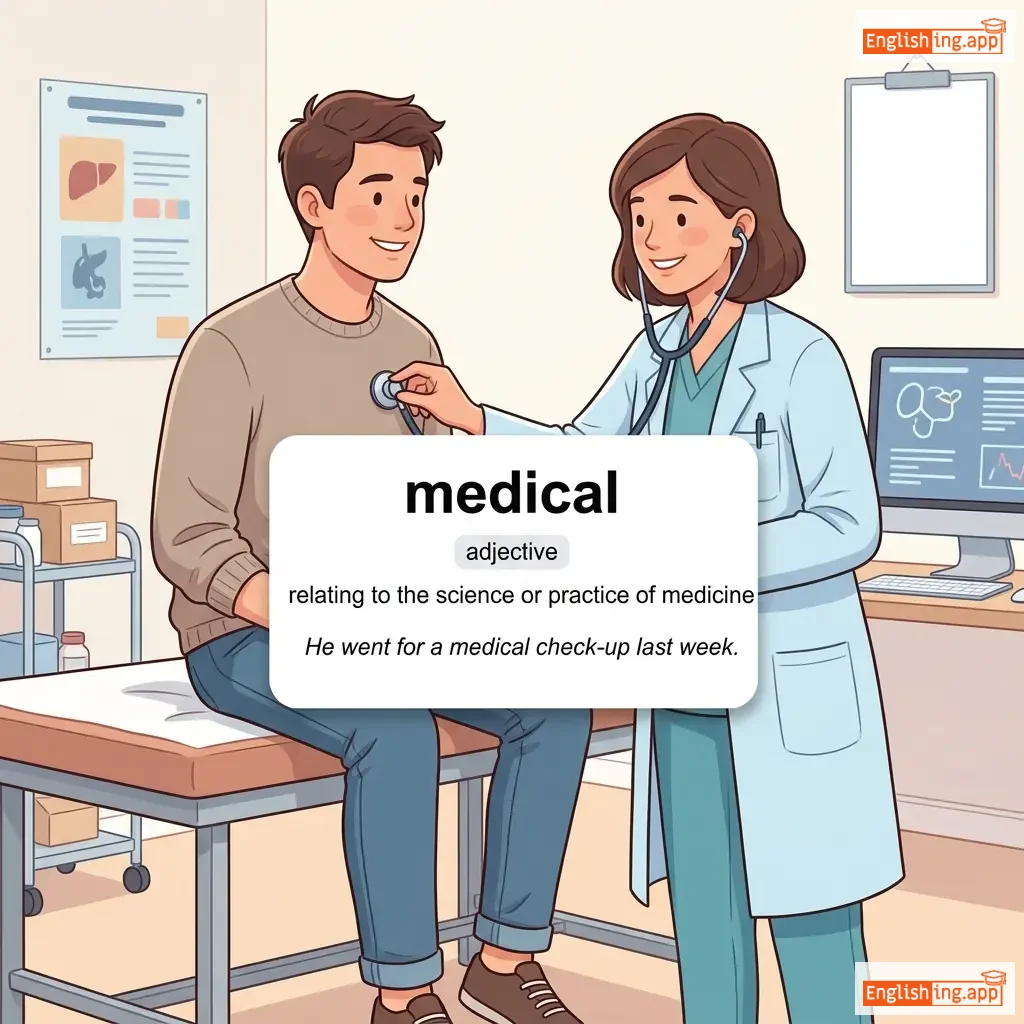
medical definition card — visual illustration of the meaning
adjective
/ˈmedɪkəl/
médical (medical)

relating to the science or practice of medicine

"He went for a medical check-up last week."

"Il est allé à un examen médical la semaine dernière." (Il est alle a un examen medical la semaine derniere.)
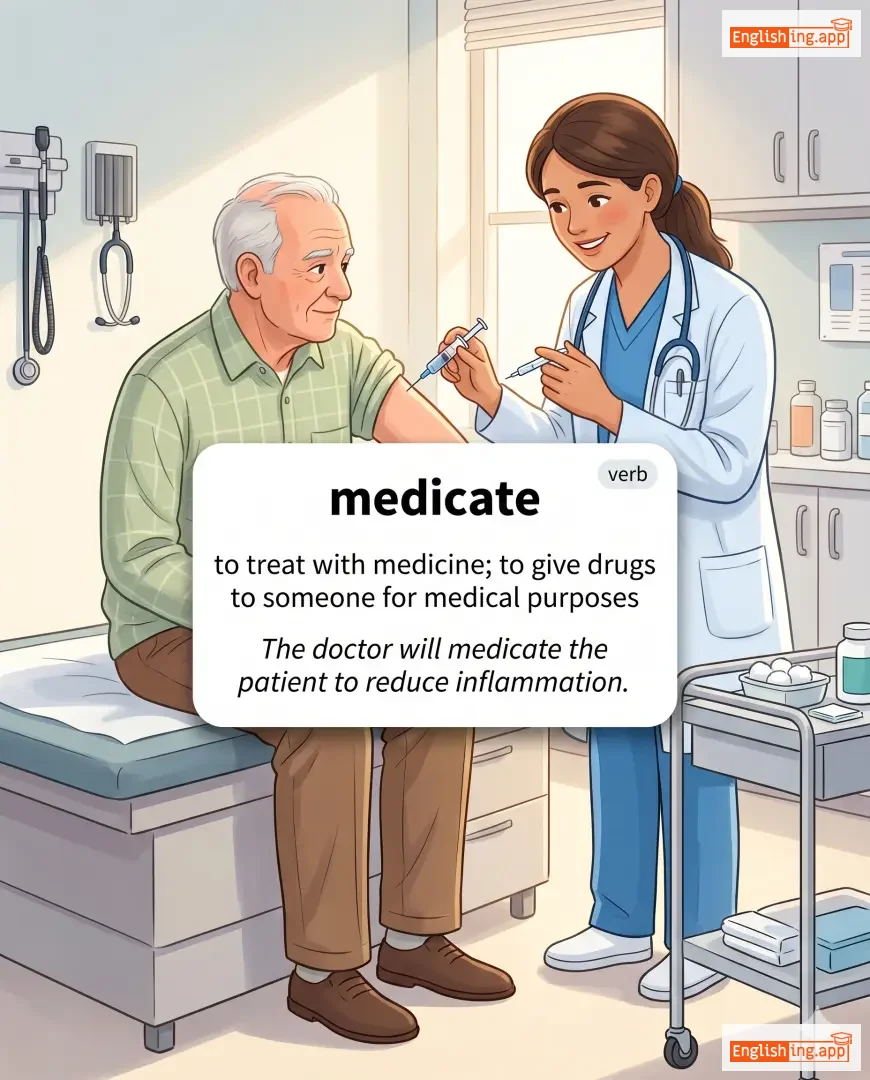
medicate definition card — visual illustration of the meaning
verb
/ˈmedɪkeɪt/
médicamenter (médicamenter)

to treat with medicine; to give drugs to someone for medical purposes

"The doctor will medicate the patient to reduce inflammation."

"Le docteur medicinera le patient pour réduire l'inflammation." (Le docteur medicinera le patient pour réduire l'inflammation.)
noun
/ˌmedɪˈkeɪʃən/
médicament (medicament)

a drug or other form of medicine used to treat or prevent disease

"The doctor prescribed medication for his headache."

"Le médecin a prescrit des médicaments pour son mal de tête." (Le medecin a prescrit des medicaments pour son mal de tete.)
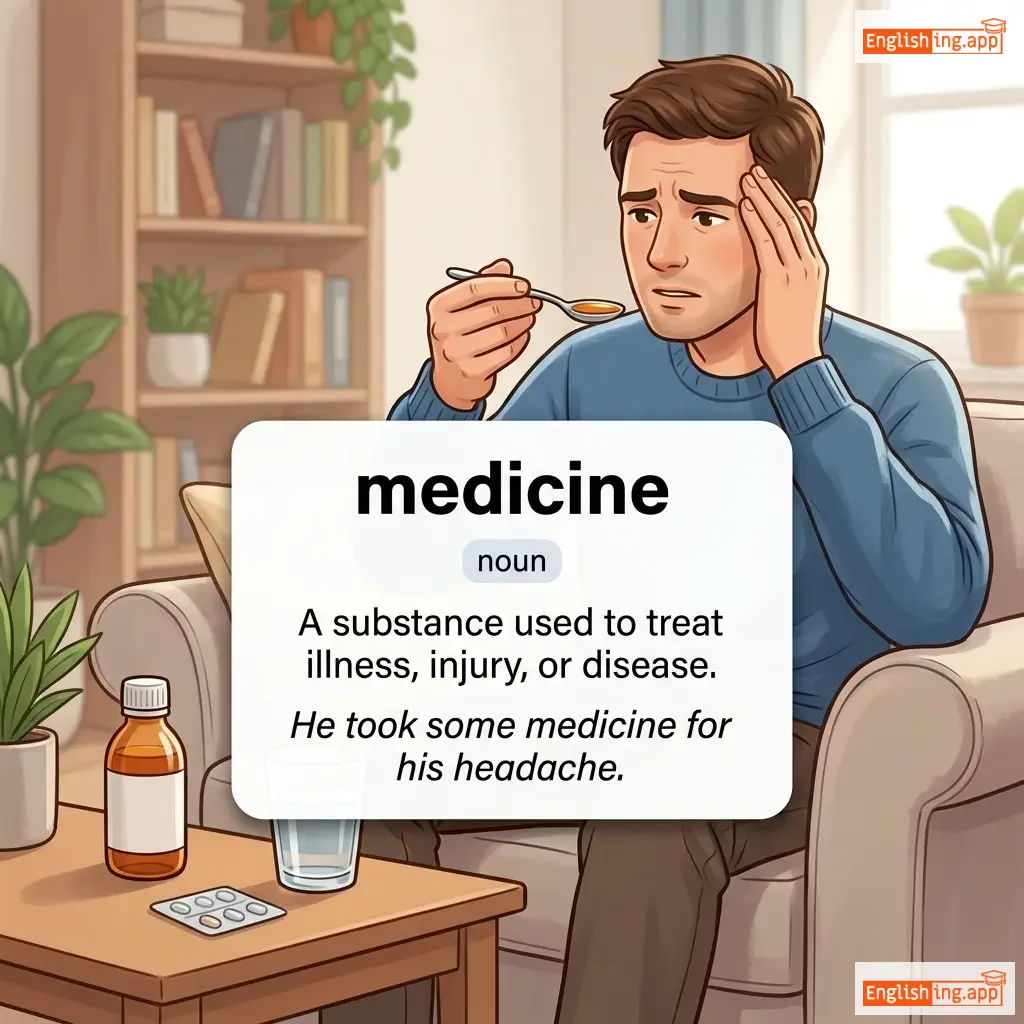
medicine definition card — visual illustration of the meaning
noun
/ˈmed.ɪ.sən/
médicament (médicament)

A substance used to treat illness, injury, or disease.

"He took some medicine for his headache."

"Il a pris de la médecine pour son mal de tête." (Il a pris de la médecine pour son mal de tête.)
adjective
/ˌmiː.diˈiː.vəl/
médiéval (medieval)

Relating to the Middle Ages, the period in European history from about the 5th to the 15th century.

"The castle is a famous medieval monument."

"Le château est un monument médiéval célèbre." (Le château est un monument médiéval célèbre.)
adjective
/ˌmiː.diˈoʊ.kər/
médiocre (mediocre)

Of only average quality; not very good.

"The movie was entertaining but overall mediocre."

"Le film était divertissant mais dans l'ensemble médiocre." (Le film etait divertissant mais dans l'ensemble mediocre.)
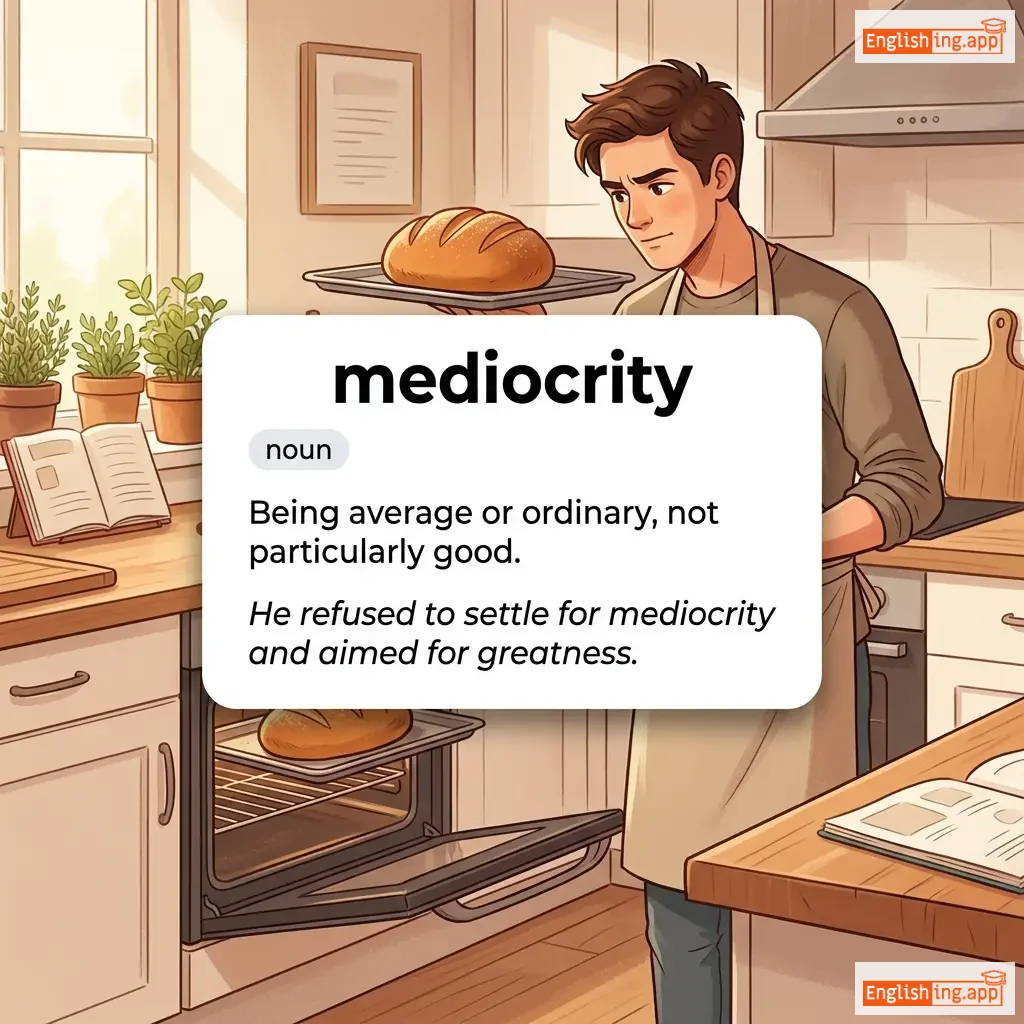
mediocrity definition card — visual illustration of the meaning
noun
ˌmiː.diˈɒk.rə.ti
médiocrité (mediocrite)

Being average or ordinary, not particularly good.

"He refused to settle for mediocrity and aimed for greatness."

"Il a refusé de se contenter de la médiocrité et a visé la grandeur." (Il a refuse de se contenter de la mediocrite et a vise la grandeur.)
noun
/ˌmɛdɪˈteɪʃən/
méditation (meditation)

The practice of focusing the mind to achieve calmness, clarity, or spiritual growth.

"She practices meditation every morning to start her day peacefully."

"Elle pratique la méditation chaque matin pour commencer sa journée en paix." (Elle pratique la meditation chaque matin pour commencer sa journée en paix.)
noun
/ˈmiːdiəm/
moyen (moyen)

A means or channel of communication, expression, or artistic work.

"Television is a powerful medium for spreading information."

"La télévision est un moyen puissant de diffuser des informations." (La television est un moyen puissant de diffuser des informations.)
noun
/ˈmɛdli/
mélange (melange)

A mixture of different things, especially musical tunes combined together.

"The band played a medley of popular songs."

"Le groupe a joué un mélange de chansons populaires." (Le groupe a joué un mélange de chansons populaires.)
adjective
/miːk/
doux (doux)

Quiet, gentle, and submissive in nature.

"Despite his strength, he remained meek and humble."

"Malgré sa force, il est resté doux et humble." (Malgré sa force, il est resté doux et humble.)
adverb
/ˈmiːk.li/
humblement; docilement (humblement; docilement)

in a quiet, gentle way; without resistance or protest

"He meekly accepted the criticism without arguing."

"Il a accepté les critiques humblement sans discuter." (Il a accepté les critiques humblement sans discuter.)
noun
/ˈmiːknəs/
humilité (humilite)

The quality of being quiet, gentle, and submissive

"His meekness was often mistaken for weakness by his colleagues."

"Sa humilité était souvent prise pour de la faiblesse par ses collègues." (Sa humilite etait souvent prise pour de la faiblesse par ses collegues.)
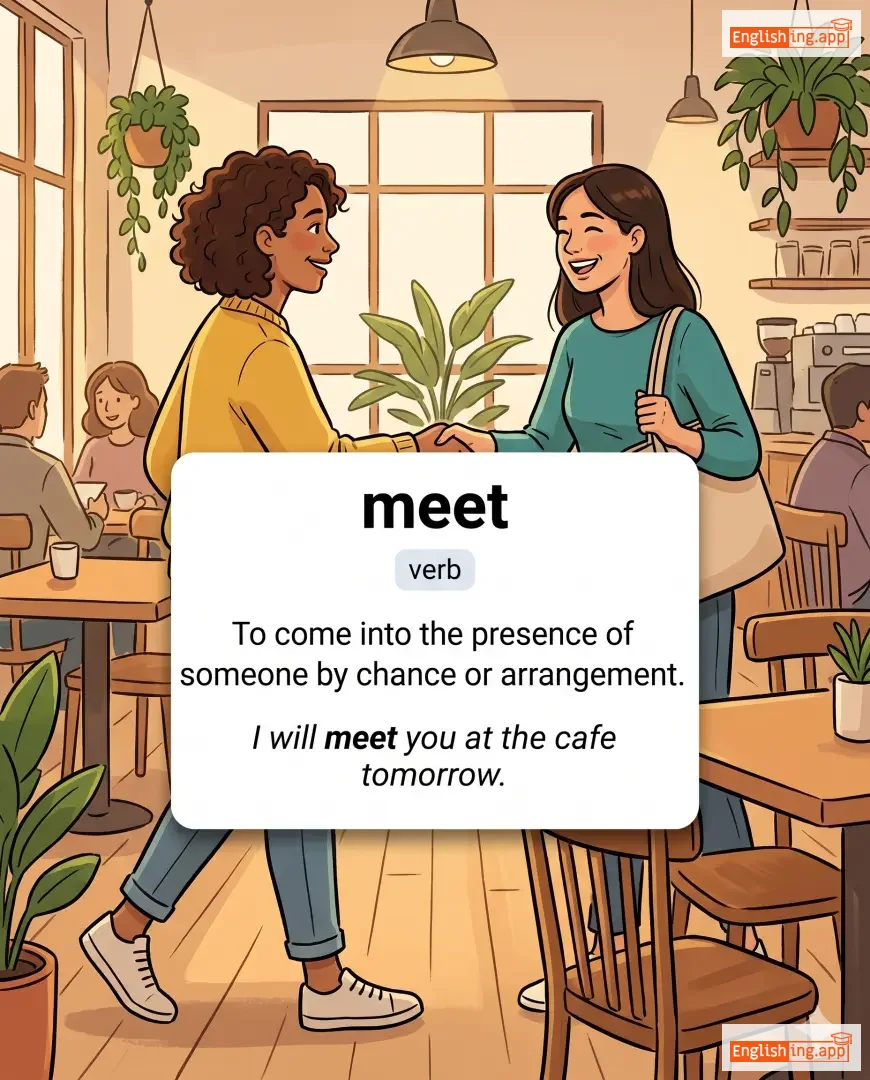
meet definition card — visual illustration of the meaning
verb
/miːt/
rencontrer (rencontrer)

To come into the presence of someone by chance or arrangement.

"I will meet you at the cafe tomorrow."

"Je te rencontrerai au café demain." (Je te rencontrerai au café demain.)
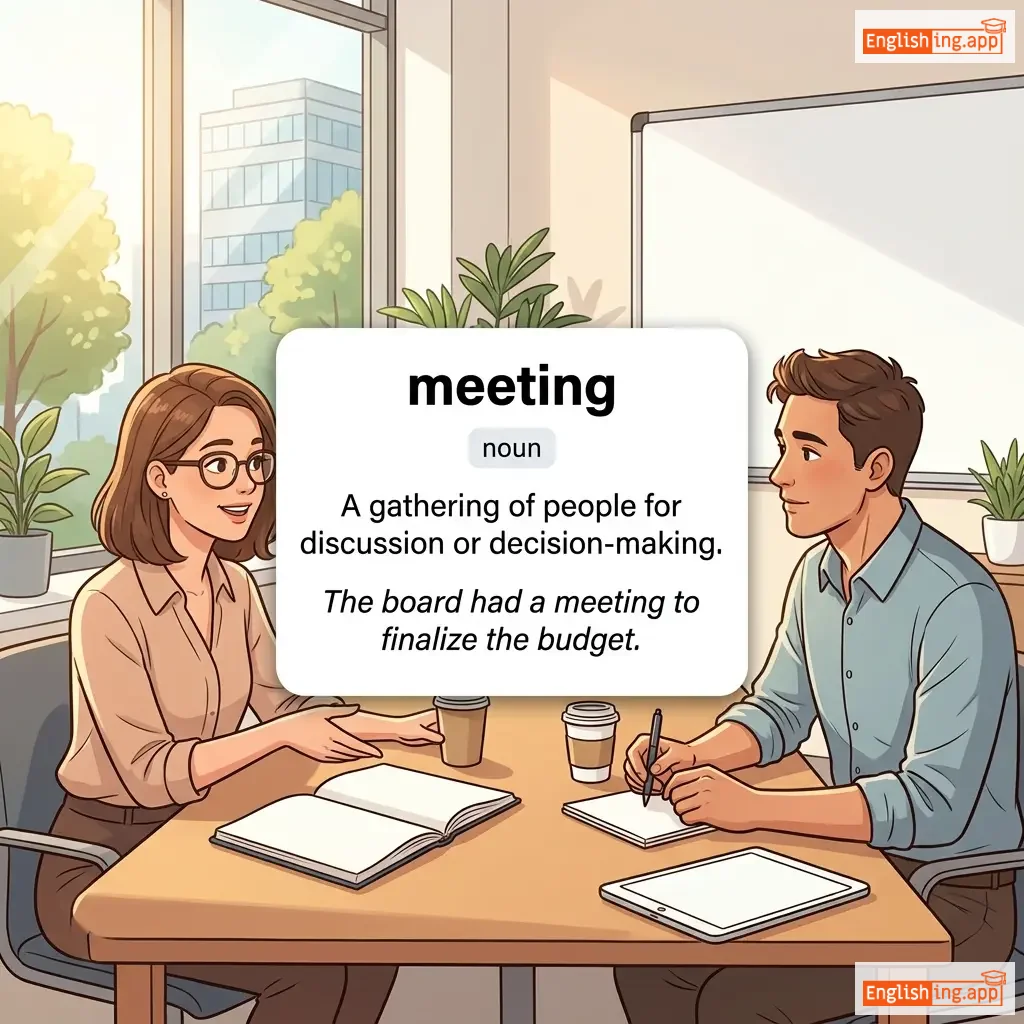
meeting definition card — visual illustration of the meaning
noun
/ˈmiːtɪŋ/
réunion (reunion)

A gathering of people for discussion or decision-making.

"The board had a meeting to finalize the budget."

"Le conseil a eu une réunion pour finaliser le budget." (Le conseil a eu une reunion pour finaliser le budget.)
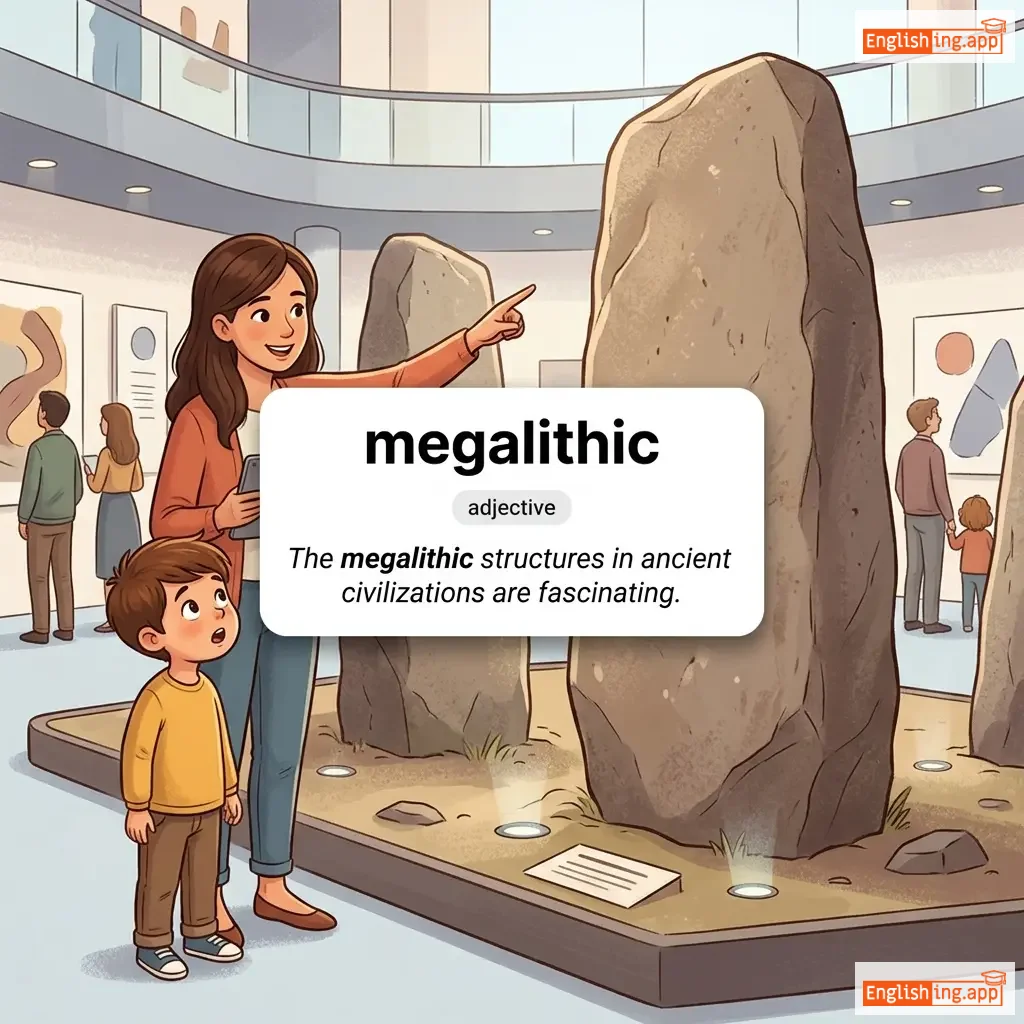
megalithic definition card — visual illustration of the meaning
adjective
ˌmɛɡəˈlɪθɪk
mégalithique (megalithique)

Relating to or denoting prehistoric monuments made of or containing large stones.

"The megalithic structures in ancient civilizations are fascinating."

"Les structures mégalithiques dans les civilisations anciennes sont fascinantes." (Les structures mégalithiques dans les civilisations anciennes sont fascinantes.)
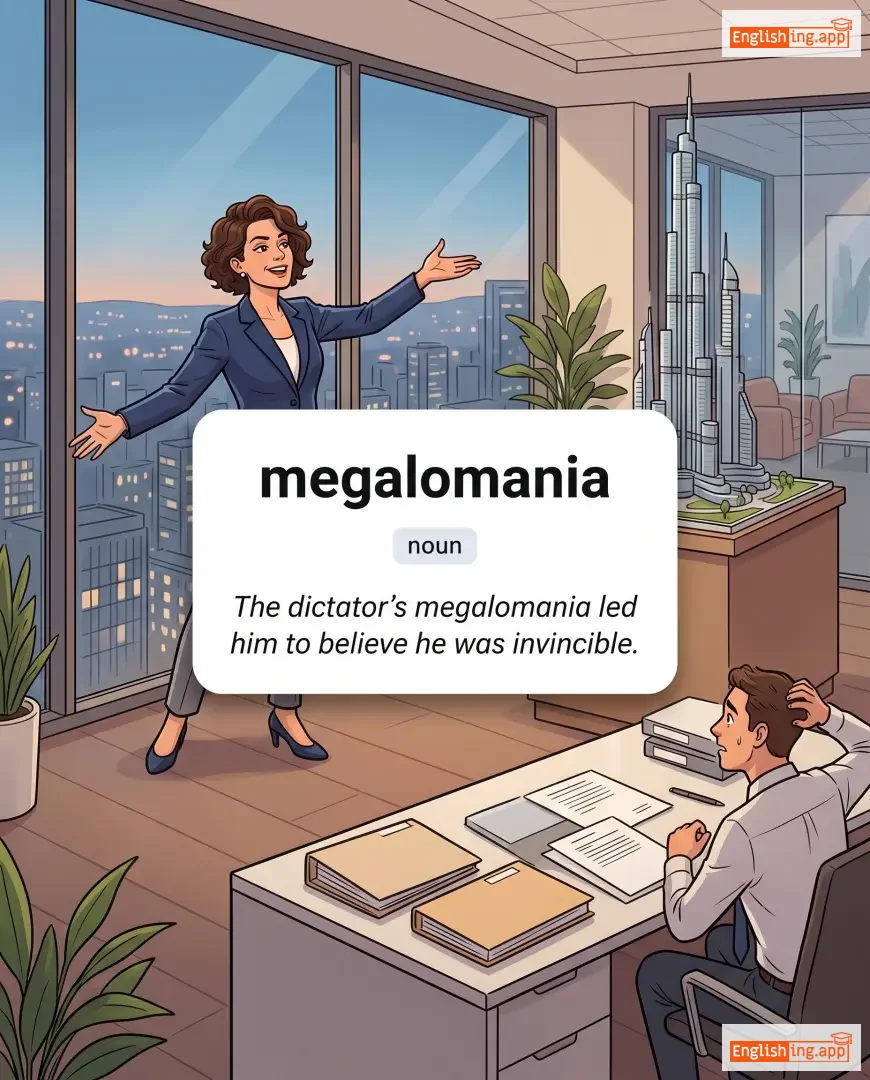
megalomania definition card — visual illustration of the meaning
noun
/ˌmɛɡələˈmeɪniə/
fantasies délirantes de pouvoir, richesse ou omnipotence (fantasies delirantes de pouvoir, richesse ou omnipotence)

A condition characterized by delusional fantasies of power, wealth, or omnipotence.

"The dictator’s megalomania led him to believe he was invincible."

"La mégalomanie du dictateur l’a conduit à croire qu’il était invincible." (La megalomanie du dictateur l’a conduit à croire qu’il était invincible.)
adjective
/ˌmel.ənˈkɒl.ɪk/
triste et pensif; exprimant ou ressentant de la tristesse (melancolique)

sad and thoughtful; feeling or expressing sadness

"The melancholic music made everyone feel sad."

"La musique mélancolique a fait sentir tout le monde triste." (La musique melancolique a fait sentir tout le monde triste)
noun
/ˈmɛlənˌkɒli/
mélancolie (melancolie)

A deep, persistent sadness or gloom.

"She felt a deep melancholy after hearing the tragic news."

"Elle a ressenti une profonde mélancolie après avoir entendu les nouvelles tragiques." (Elle a ressenti une profonde melancolie après avoir entendu les nouvelles tragiques.)
noun
/meɪˈlɑːnʒ/
mélange (melange)

A mixture of different things or styles.

"The festival offered a melange of music, food, and art."

"Le festival a offert un mélange de musique, de nourriture et d'art." (Le festival a offert un mélange de musique, de nourriture et d'art.)
noun
/ˈmeɪleɪ/
bagarre chaotique (bagarre chaotique)

A noisy, confused fight or crowd situation.

"A melee broke out during the football match."

"Une bagarre chaotique a éclaté pendant le match de football." (Une bagarre chaotique a eclate pendant le match de football.)
verb
/ˈmiːliəˌreɪt/
améliorer (ameliorer)

To make something better or improve a condition.

"The new policies aim to meliorate the living conditions of the poor."

"Les nouvelles politiques visent à améliorer les conditions de vie des pauvres." (Les nouvelles politiques visent a ameliorer les conditions de vie des pauvres.)
noun
/ˈmiːliərɪzəm/
méliorisme (meliorism)

The belief that the world tends to improve and that humans can aid its betterment.

"Her philosophy of meliorism kept her hopeful during difficult times."

"Sa philosophie du méliorisme l'a maintenue pleine d'espoir pendant les moments difficiles." (Sa philosophie du méliorisme l'a maintenue pleine d'espoir pendant les moments difficiles.)
adjective
/məˈlɪfluəs/
mélodieux (melodieux)

Sweet or musical; pleasant to hear.

"The singer’s mellifluous voice enchanted the audience."

"La voix mélodieuse du chanteur a enchanté le public." (La voix mélodieuse du chanteur a enchanté le public.)
adjective
/ˈmel.əʊ/
doux et agréable; détendu et gentil (melo)

soft and pleasant; relaxed and gentle

"The mellow evening light created a peaceful atmosphere."

"La lumière douce du soir a créé une atmosphère paisible." (La lumière douce du soir a créé une atmosphère paisible.)
adjective
/məˈloʊdiəs/
mélodieux (melodieu)

Having a pleasant tune; tuneful.

"She played a melodious tune on the piano."

"Elle a joué une mélodie mélodieuse au piano." (Elle a joue une melodie melodieuse au piano.)
noun
/ˈmɛləˌdrɑːmə/
mélodrame exagéré (melodrame exagere)

A dramatic piece with exaggerated characters and exciting events intended to appeal to the emotions.

"The movie was criticized for its excessive melodrama."

"Le film a été critiqué pour son excès de mélodrame." (Le film a été critiqué pour son excès de mélodrame.)
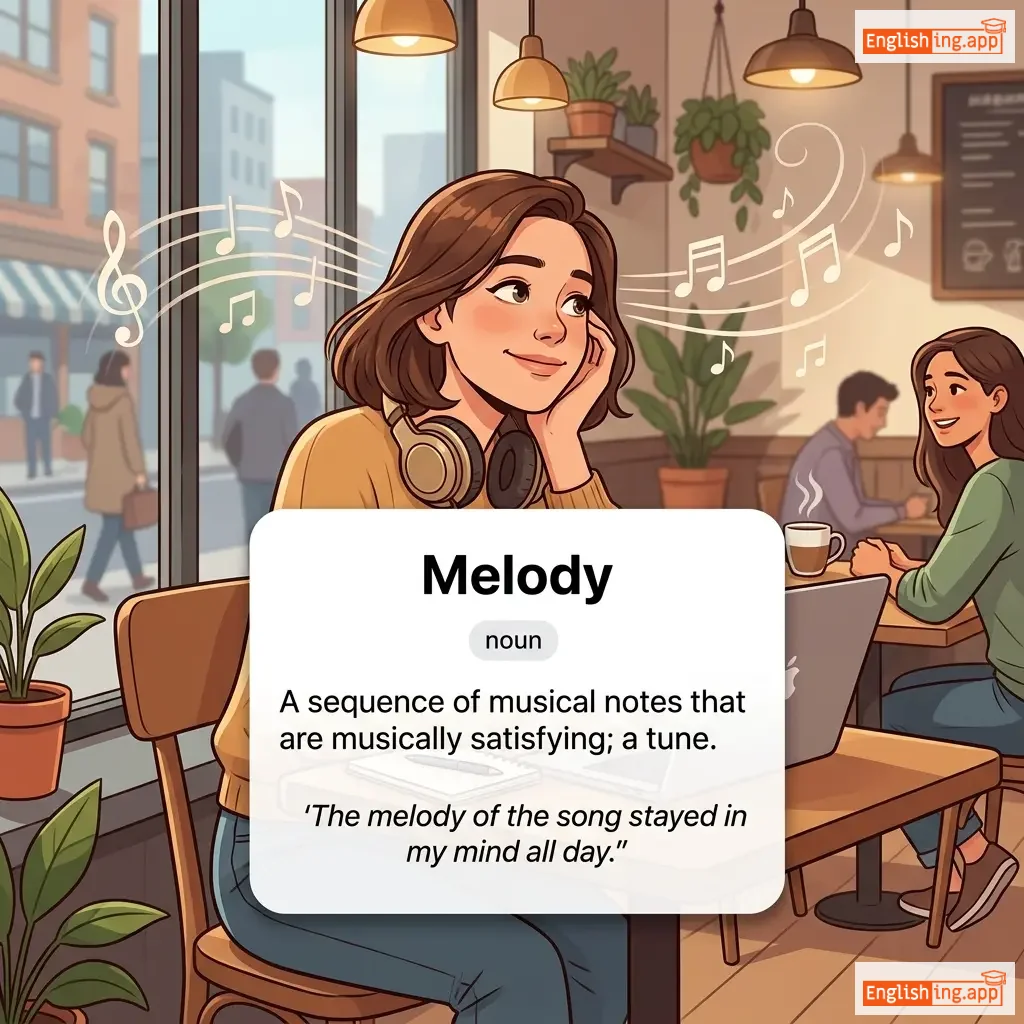
Melody definition card — visual illustration of the meaning
noun
/ˈmɛlədi/
mélodie (melodie)

A sequence of musical notes that are musically satisfying; a tune.

"The melody of the song stayed in my mind all day."

"La mélodie de la chanson est restée dans mon esprit toute la journée." (La melodie de la chanson est restée dans mon esprit toute la journée.)
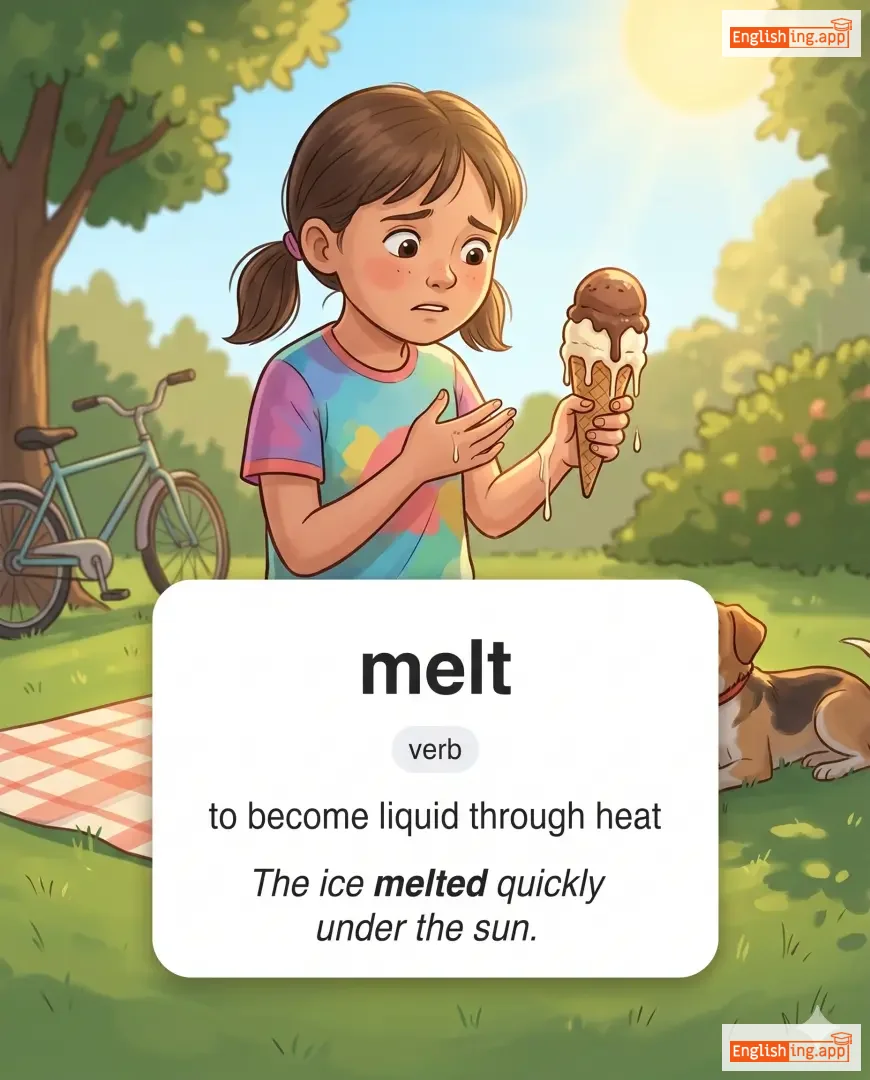
melt definition card — visual illustration of the meaning
verb
/mɛlt/
fondre (fondre)

to become liquid through heat

"The ice melted quickly under the sun."

"La glace a fondu rapidement sous le soleil." (La glace a fondu rapidement sous le soleil.)
verb, noun, adjective
/ˈmeltɪŋ/
fusion (fusion)

the process of changing from solid to liquid due to heat; becoming softer or less rigid; emotionally moving or tender

"The ice is melting quickly under the hot sun."

"La glace fond rapidement sous le soleil brûlant." (La glace fond rapidement sous le soleil brulant)
noun
/ˈmembər/
membre (membre)

a person or thing that belongs to a group or organization

"She is a member of the local sports club."

"Elle est membre du club sportif local." (Elle est membre du club sportif local.)
members definition card — visual illustration of the meaning
noun
ˈmem.bərz
membres (membres)

A person, animal, or plant belonging to a particular group; an individual belonging to a group such as a society or team.

"Members collaborate to finalize recruitment decisions."

"Les membres collaborent pour finaliser les décisions de recrutement." (Les membres collaborent pour finaliser les décisions de recrutement.)
adjective
/ˈmɜːrsɪfəl/
clément (clément)

showing compassion or forgiveness towards someone one has the power to punish or harm.

"The judge was merciful and gave him a lighter sentence."

"Le juge était clément et lui a donné une peine plus légère." (Le juge était clément et lui a donné une peine plus légère.)
noun
/ˈmɜːrsəˌnɛri/
mercenaire (mercenaire)

a professional soldier hired to serve in a foreign army; also used to describe someone motivated solely by money.

"The mercenary fought for whoever paid the highest wage."

"Le mercenaire a combattu pour celui qui payait le salaire le plus élevé." (Le mercenaire a combattu pour celui qui payait le salaire le plus élevé.)
noun
/ˈmɜːrtʃənt/
marchand (marchand)

a person or company involved in the trade of goods, especially in large quantities

"The merchant sold spices from distant lands."

"Le marchand vendait des épices venant de terres lointaines." (Le marchand vendait des épices venant de terres lointaines.)
adjective
/ˈmɜːrkəntaɪl/
commercial (commercial)

related to trade or commerce

"The city grew rapidly due to its mercantile activities."

"La ville a rapidement prospéré grâce à ses activités mercantiles." (La ville a rapidement prospéré grâce à ses activités mercantiles.)