वोकैबुलरीज

इंग्लिश वोकैबुलरी डिस्कवर, लर्न और मास्टर करें

noun
/ˈmeɪsə/
टेबल पर्वत (tebal parvat)

An isolated flat-topped hill with steep sides, found in arid regions.

"The hikers stopped to admire the mesa rising above the desert floor."

"हाइकरों ने मरुस्थल के फर्श से ऊपर उठते मेसा की सराहना करने के लिए रुका।" (haikarom ne marusthal ke farsh se upar uthte mesa ki sarahna karne ke liye ruka.)
adverb
/ˈmerɪli/
खुशी से (khushi se)

in a cheerful and joyful manner

"The children played merrily in the garden."

"बच्चों ने बगिया में खुशी से खेला।" (bachon ne bagiya mein khushi se khela)
noun
/ˈmɛr.meɪd/
मत्स्यकन्या (matsyakannya)

A mythical sea creature with the head and torso of a woman and the tail of a fish

"The little girl loved stories about mermaids living under the sea."

"छोटी लड़की समुद्र के नीचे रहने वाली मत्स्यकन्याओं की कहानियाँ पसंद करती थी" (chhoti ladki samudra ke neeche rehne wali matsyakannyayon ki kahaniyan pasand karti thi)
adjective
/ˌmɛrɪˈtɔːriəs/
योग्य (yogya)

Deserving reward, praise, or recognition.

"She received a scholarship for her meritorious academic performance."

"उसने अपनी योग्य शैक्षिक प्रदर्शन के लिए एक स्कॉलरशिप प्राप्त की।" (Usne apni yogya shaikshik pradarshan ke liye ek scholarship prapt ki.)
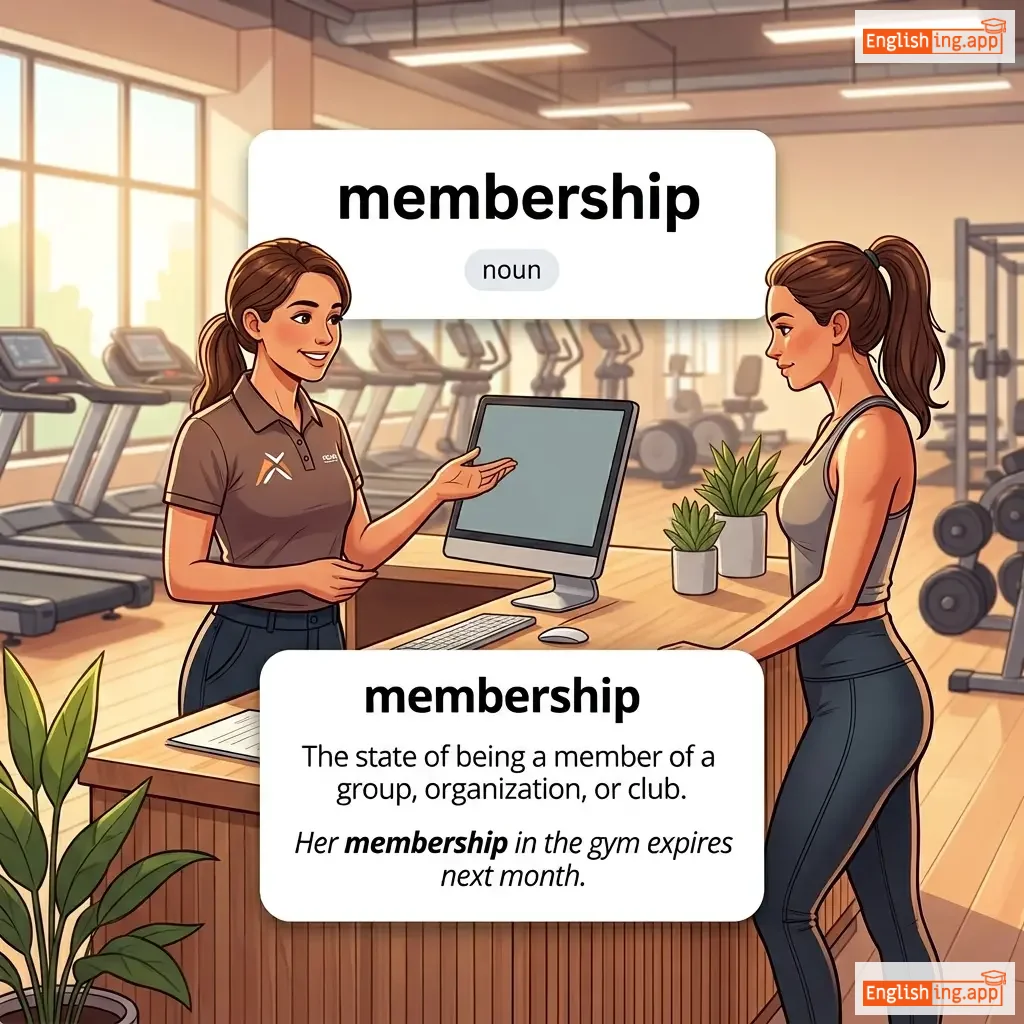
membership definition card — visual illustration of the meaning
noun
/ˈmɛmbərʃɪp/
सदस्यता (sadasyata)

The state of being a member of a group, organization, or club.

"Her membership in the gym expires next month."

"उसकी जिम की सदस्यता अगले महीने समाप्त हो रही है।" (uski jim ki sadasyata agle mahine samapt ho rahi hai.)
adjective
/ˈmɛdəlsəm/
दूसरों के मामलों में दखल देने वाला (doosron ke mamlo mein dakhal dene wala)

fond of interfering in other people’s affairs

"She found her neighbor to be meddlesome and annoying."

"उसे अपनी पड़ोसी को दखल देने वाला और चिढ़ाने वाला पाया।" (Use apni padosi ko dakhal dene wala aur chidhane wala paya.)
noun
/ˈmiːdiə/
मीडिया (media)

the main means of mass communication such as newspapers, television, radio, and the internet

"The story quickly spread across the media."

"कहानी जल्दी ही मीडिया में फैल गई।" (Kahani jaldi hi media mein phail gayi.)
media dominance definition card — visual illustration of the meaning
noun
ˈmiːdiə ˈdɒmɪnəns
मीडिया प्रभुत्व (media prabhutva)

The control and powerful influence that media has over communication and information distribution in society.

"The internet has enhanced media dominance globally."

"इंटरनेट ने वैश्विक स्तर पर मीडिया प्रभुत्व को बढ़ाया है।" (Internet ne vaishvik star par media prabhutva ko badhaya hai.)
adjective
/ˌmed.iˈiː.vəl/
मध्यकालीन (madhyakalīn)

relating to the Middle Ages; medieval

"The castle displayed mediaeval architecture and design."

"किले में मध्यकालीन वास्तुकला और डिजाइन प्रदर्शित था।" (kile mein madhyakalīn vāstukalā aur design pradarshit thā.)
adjective
/ˈmiː.di.əl/
मध्य (madhya)

Situated in or pertaining to the middle; located toward the midline of the body or structure.

"The medial side of the knee is more prone to injury."

"घुटने का मध्य हिस्सा चोट लगने के लिए अधिक प्रवण है।" (ghutne ka madhya hissa chot lagne ke liye adhik pravana hai.)
verb
/ˈmiː.di.eɪt/
मध्यस्थता करना (madhyasthata karna)

To act as an intermediary in bringing about agreement or reconciliation between parties.

"She was asked to mediate between the two companies."

"उसे दो कंपनियों के बीच मध्यस्थता करने के लिए कहा गया था।" (Use do kampaniyon ke beech madhyasthata karne ke liye kaha gaya tha.)
mediation definition card — visual illustration of the meaning
noun
/ˌmiːdɪˈeɪʃən/
मध्यस्थता (madhyasthata)

Intervention between parties to promote reconciliation, settlement, or compromise.

"The mediation helped resolve the conflict between the two teams."

"मध्यस्थता ने दो टीमों के बीच संघर्ष को हल करने में मदद की।" (Madhyasthata ne do teamon ke beech sangharsh ko hal karne mein madad ki.)
mediative definition card — visual illustration of the meaning
adjective
/ˈmiː.di.eɪ.tɪv/
मध्यस्थता संबंधित (madhyasthata sambandhit)

Related to mediation, helping to resolve conflicts through diplomatic means.

"His mediative skills helped resolve the conflict."

"उसकी मध्यस्थता कौशल ने संघर्ष को हल करने में मदद की।" (Uski madhyasthata kaushal ne sangharsh ko hal karne mein madad ki.)
noun
/ˈmiːdieɪtər/
मध्यस्थ (mediator)

A person who attempts to make people involved in a conflict agree

"The United Nations often acts as a mediator in international disputes."

"संयुक्त राष्ट्र अक्सर अंतरराष्ट्रीय विवादों में मध्यस्थ के रूप में कार्य करता है।" (sanyukt rashtr aksar antarraashtreey vivaadon mein madhyasth ke roop mein kaary karta hai.)
medical definition card — visual illustration of the meaning
adjective
/ˈmedɪkəl/
चिकित्सकीय (chikitskiya)

relating to the science or practice of medicine

"He went for a medical check-up last week."

"वह पिछले सप्ताह एक चिकित्सा जांच के लिए गया था।" (Wah pichhle saptah ek chikitsa jaanch ke liye gaya tha.)
medicate definition card — visual illustration of the meaning
verb
/ˈmedɪkeɪt/
औषधि देना (aushadhi dena)

to treat with medicine; to give drugs to someone for medical purposes

"The doctor will medicate the patient to reduce inflammation."

"डॉक्टर रोगी को सूजन कम करने के लिए औषधि देंगे।" (Doktar rogi ko soojan kam karne ke liye aushadhi denge.)
noun
/ˌmedɪˈkeɪʃən/
दवाई (dawai)

a drug or other form of medicine used to treat or prevent disease

"The doctor prescribed medication for his headache."

"डॉक्टर ने उसके सिरदर्द के लिए दवाई लिखी।" (Doktor ne uske sirdard ke liye dawai likhi.)
medicine definition card — visual illustration of the meaning
noun
/ˈmed.ɪ.sən/
दवा (dawa)

A substance used to treat illness, injury, or disease.

"He took some medicine for his headache."

"उसने सिरदर्द के लिए कुछ दवा ली।" (Usne sirdard ke liye kuch dawa li.)
adjective
/ˌmiː.diˈiː.vəl/
मध्यकालीन (madhyakalin)

Relating to the Middle Ages, the period in European history from about the 5th to the 15th century.

"The castle is a famous medieval monument."

"किला एक प्रसिद्ध मध्यकालीन स्मारक है।" (Kila ek prasiddh madhyakalin smarak hai.)
adjective
/ˌmiː.diˈoʊ.kər/
मध्यम (madhyam)

Of only average quality; not very good.

"The movie was entertaining but overall mediocre."

"फिल्म मनोरंजक थी लेकिन कुल मिलाकर मध्यम थी।" (Film manoranjak thi lekin kul milakar madhyam thi.)
mediocrity definition card — visual illustration of the meaning
noun
ˌmiː.diˈɒk.rə.ti
औसत दर्जेपनापन (ausat darjepanapan)

Being average or ordinary, not particularly good.

"He refused to settle for mediocrity and aimed for greatness."

"उसने औसत दर्जेपनापन को स्वीकार नहीं किया और महानता के लिए प्रयास किया।" (Usne ausat darjepanapan ko sveekar nahin kiya aur mahaanta ke liye prayaas kiya.)
noun
/ˌmɛdɪˈteɪʃən/
ध्यान (dhyan)

The practice of focusing the mind to achieve calmness, clarity, or spiritual growth.

"She practices meditation every morning to start her day peacefully."

"वह हर सुबह शांति से अपना दिन शुरू करने के लिए ध्यान करती है।" (Vah har subah shaanti se apna din shuru karne ke liye dhyan karti hai.)
noun
/ˈmiːdiəm/
माध्यम (madhyam)

A means or channel of communication, expression, or artistic work.

"Television is a powerful medium for spreading information."

"टीवी सूचना प्रसार का एक शक्तिशाली माध्यम है।" (TV soochna prasaar ka ek shaktishali madhyam hai.)
noun
/ˈmɛdli/
मिश्रण (mishran)

A mixture of different things, especially musical tunes combined together.

"The band played a medley of popular songs."

"बैंड ने लोकप्रिय गानों का एक मिश्रण बजाया।" (Band ne lokpriya ganon ka ek mishran bajaya.)
adjective
/miːk/
विनम्र (vinamra)

Quiet, gentle, and submissive in nature.

"Despite his strength, he remained meek and humble."

"अपनी शक्ति के बावजूद, वह विनम्र और नम्र बना रहा।" (Apni shakti ke bawajood, vah vinamra aur namra bana raha.)
adverb
/ˈmiːk.li/
नम्रता से; विनम्रता से; (namrata se; vinamrata se)

in a quiet, gentle way; without resistance or protest

"He meekly accepted the criticism without arguing."

"उसने बिना किसी बहस के आलोचना नम्रता से स्वीकार की।" (Usne bina kisi behas ke alochana namrata se sveekar ki.)
noun
/ˈmiːknəs/
विनम्रता (meekness)

The quality of being quiet, gentle, and submissive

"His meekness was often mistaken for weakness by his colleagues."

"उसकी विनम्रता को अक्सर उसके सहकर्मियों द्वारा कमजोरी समझा जाता था।" (uski vinamrata ko aksar uske sahakarmiyon dwara kamzori samjha jata tha)
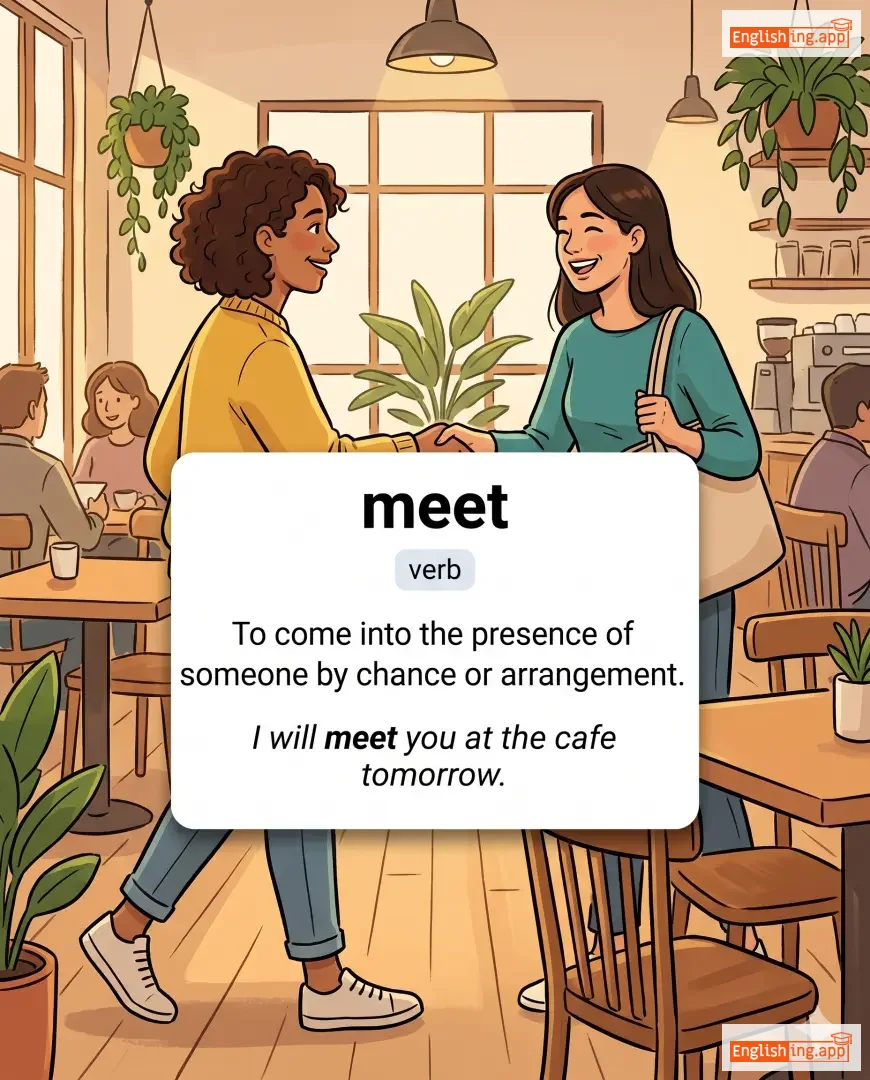
meet definition card — visual illustration of the meaning
verb
/miːt/
मिलना (milna)

To come into the presence of someone by chance or arrangement.

"I will meet you at the cafe tomorrow."

"मैं कल कैफे में तुमसे मिलूंगा।" (Main kal cafe mein tumse milunga.)
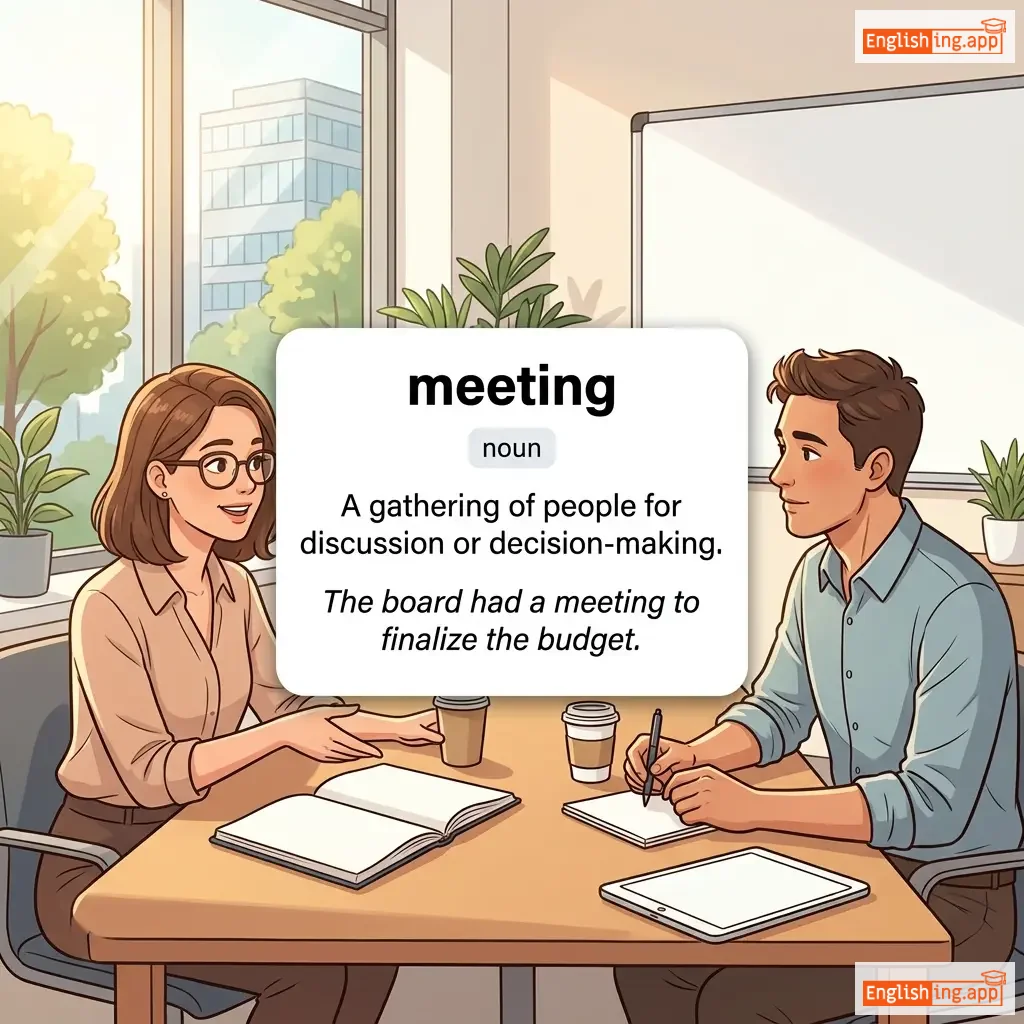
meeting definition card — visual illustration of the meaning
noun
/ˈmiːtɪŋ/
बैठक (baithak)

A gathering of people for discussion or decision-making.

"The board had a meeting to finalize the budget."

"बोर्ड ने बजट को अंतिम रूप देने के लिए एक बैठक की।" (board ne budget ko antim roop dene ke liye ek baithak ki.)
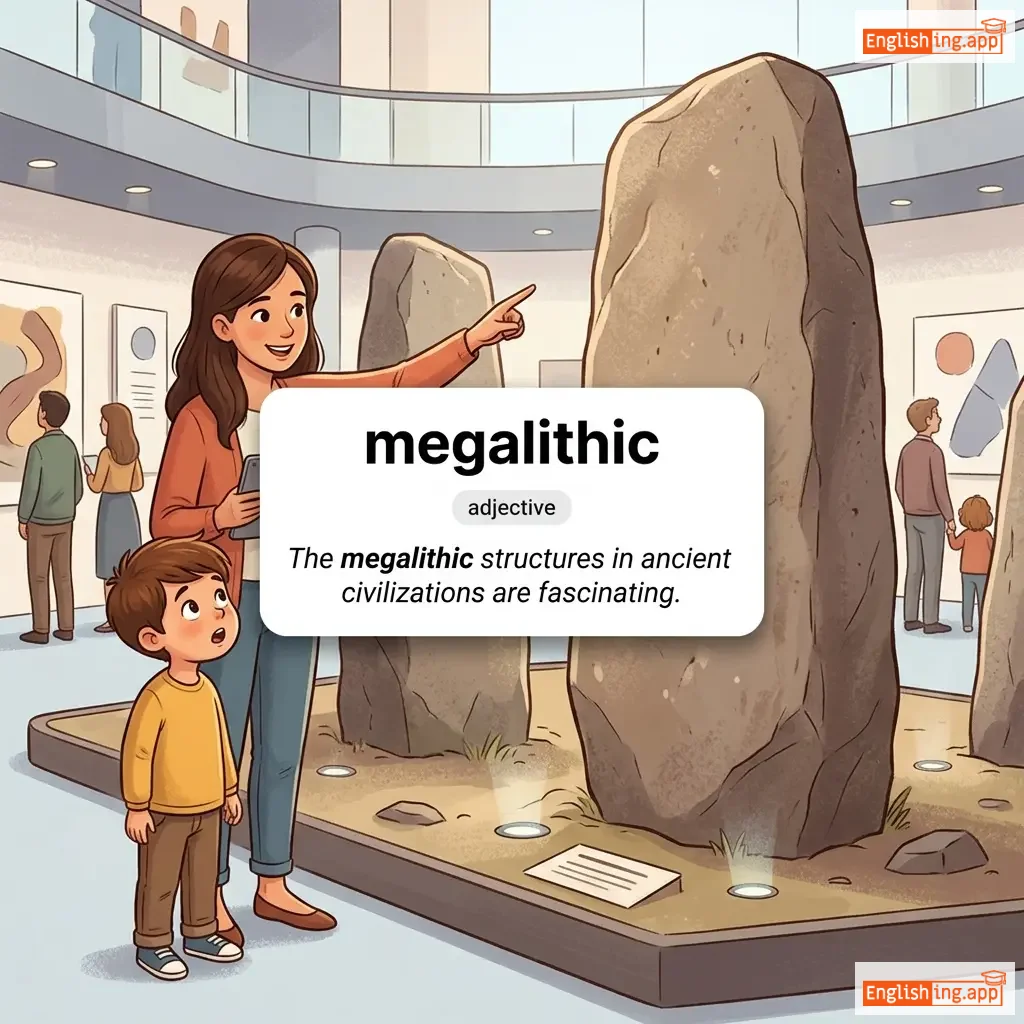
megalithic definition card — visual illustration of the meaning
adjective
ˌmɛɡəˈlɪθɪk
मेगालिथिक (megalithik)

Relating to or denoting prehistoric monuments made of or containing large stones.

"The megalithic structures in ancient civilizations are fascinating."

"प्राचीन सभ्यताओं में मेगालिथिक संरचनाएँ आकर्षक हैं।" (Prachin sabhyataon mein megalithik sanrachnaayein aakarshak hain.)
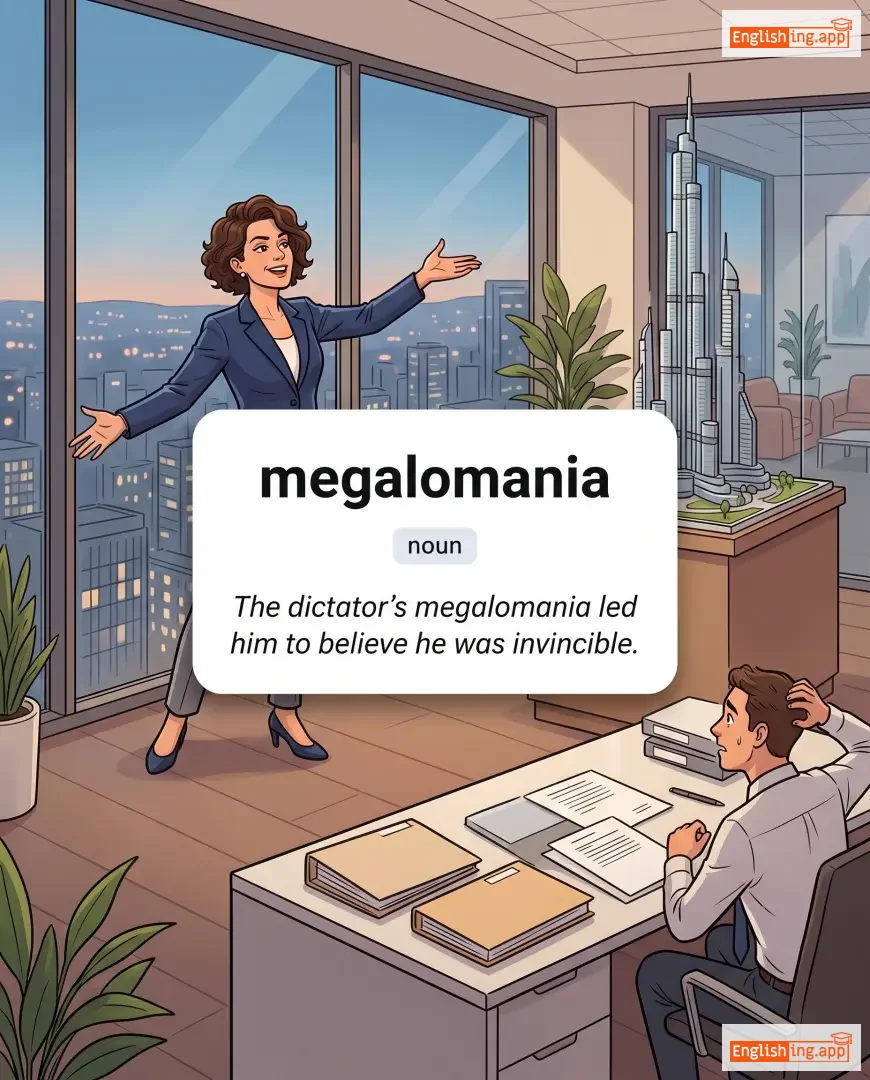
megalomania definition card — visual illustration of the meaning
noun
/ˌmɛɡələˈmeɪniə/
अत्यधिक शक्ति और श्रेष्ठता का भ्रम (atyadhik shakti aur shreshthata ka bhram)

A condition characterized by delusional fantasies of power, wealth, or omnipotence.

"The dictator’s megalomania led him to believe he was invincible."

"तानाशाह का मेगालोमेनिया उसे यह विश्वास करने पर मजबूर कर दिया कि वह अभेद्य था।" (Taanashaah ka megalomania use yeh vishwas karne par majboor kar diya ki vah abhedya tha.)
adjective
/ˌmel.ənˈkɒl.ɪk/
उदासीन और विचारशील; दुःख व्यक्त करने या महसूस करने वाला (melankolik)

sad and thoughtful; feeling or expressing sadness

"The melancholic music made everyone feel sad."

"मेलांकोलिक संगीत ने सभी को उदास कर दिया।" (melankolik sangeet ne sabhi ko udaas kar diya)
noun
/ˈmɛlənˌkɒli/
विषाद (vishad)

A deep, persistent sadness or gloom.

"She felt a deep melancholy after hearing the tragic news."

"उसने दुखद समाचार सुनने के बाद गहरी विषाद महसूस किया।" (Usne dukhdar samachar sunne ke baad gehri vishad mehsoos kiya.)
noun
/meɪˈlɑːnʒ/
मिश्रण (mishran)

A mixture of different things or styles.

"The festival offered a melange of music, food, and art."

"त्योहार ने संगीत, भोजन और कला का मिश्रण प्रस्तुत किया।" (Tyohar ne sangeet, bhojan aur kala ka mishran prastut kiya.)
noun
/ˈmeɪleɪ/
कोलाहलपूर्ण लड़ाई (kolahalpurn ladai)

A noisy, confused fight or crowd situation.

"A melee broke out during the football match."

"फुटबॉल मैच के दौरान एक कोलाहलपूर्ण लड़ाई हुई।" (Football match ke dauran ek kolahalpurn ladai hui.)
verb
/ˈmiːliəˌreɪt/
सुधारना (sudharna)

To make something better or improve a condition.

"The new policies aim to meliorate the living conditions of the poor."

"नई नीतियाँ गरीबों की जीवन स्थिति को सुधारने का लक्ष्य रखती हैं।" (Nayi neetiyan gareebon ki jeevan sthiti ko sudharne ka lakshya rakhti hain.)
noun
/ˈmiːliərɪzəm/
सुधारवाद (sudhaarbwad)

The belief that the world tends to improve and that humans can aid its betterment.

"Her philosophy of meliorism kept her hopeful during difficult times."

"उसका सुधारवादी दर्शन कठिन समय में भी उसे आशावादी बनाए रखता था।" (uska sudhaarbadi darshan kathin samay mein bhi use aashaawadi banaye rakhta tha.)
adjective
/məˈlɪfluəs/
मधुर (madhur)

Sweet or musical; pleasant to hear.

"The singer’s mellifluous voice enchanted the audience."

"गायक की मधुर आवाज़ ने दर्शकों को मंत्रमुग्ध कर दिया।" (gaayak ki madhur aawaaz ne darshako ko mantrmugdh kar diya.)
adjective
/ˈmel.əʊ/
मुलायम और सुखद; आरामदायक और कोमल (melo)

soft and pleasant; relaxed and gentle

"The mellow evening light created a peaceful atmosphere."

"मेलो शाम की रोशनी ने एक शांतिपूर्ण माहौल बनाया।" (melo shaam ki roshni ne ek shantipurn maahol banaya.)
adjective
/məˈloʊdiəs/
सुमधुर (sumadhur)

Having a pleasant tune; tuneful.

"She played a melodious tune on the piano."

"उसने पियानो पर एक सुमधुर धुन बजाई।" (usne piano par ek sumadhur dhun bajayi.)
noun
/ˈmɛləˌdrɑːmə/
नाटकीय अतिरंजन (naatakiya atiranjan)

A dramatic piece with exaggerated characters and exciting events intended to appeal to the emotions.

"The movie was criticized for its excessive melodrama."

"फिल्म को उसके अत्यधिक नाटकीयता के लिए आलोचना की गई थी।" (film ko uske atyadhik naatakiyata ke liye alochana ki gayi thi.)
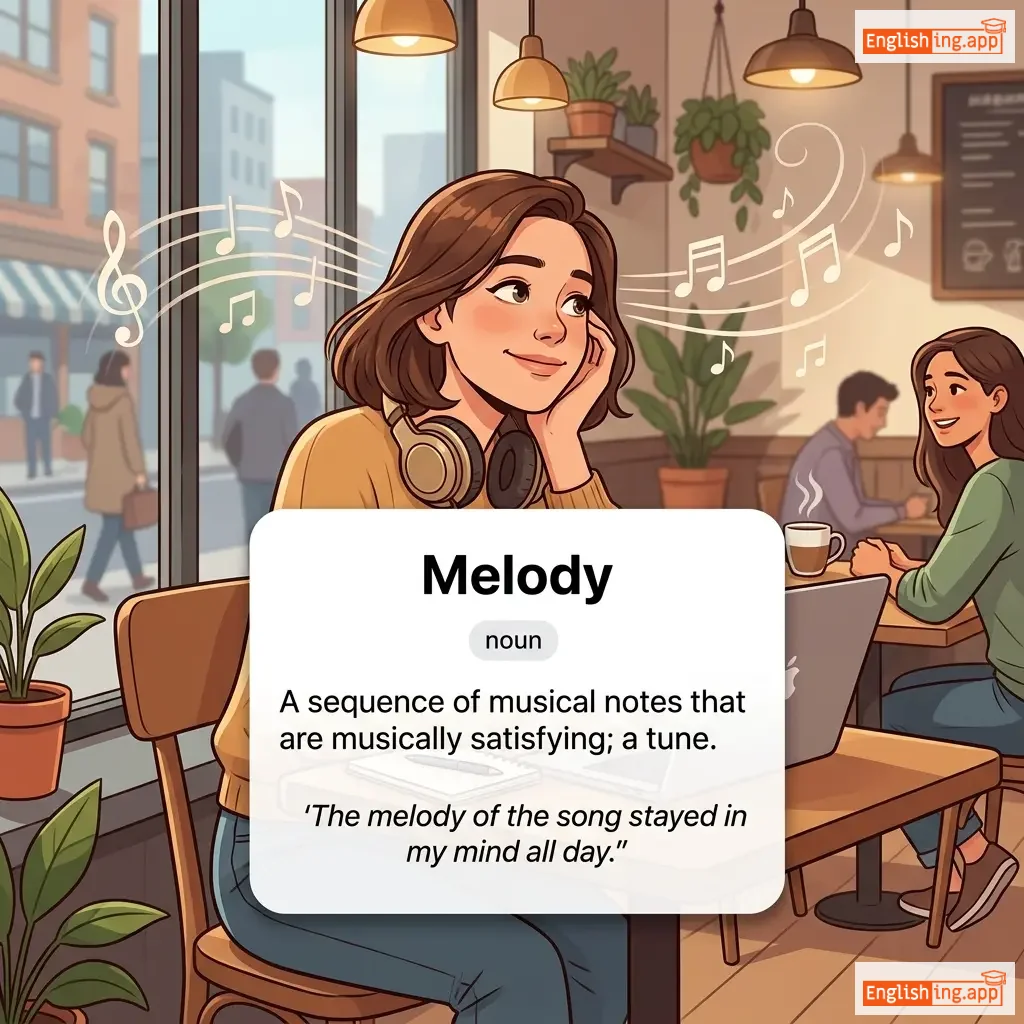
Melody definition card — visual illustration of the meaning
noun
/ˈmɛlədi/
धुन (dhun)

A sequence of musical notes that are musically satisfying; a tune.

"The melody of the song stayed in my mind all day."

"गाने की धुन पूरे दिन मेरे मन में रही।" (gaane ki dhun poore din mere man mein rahi.)
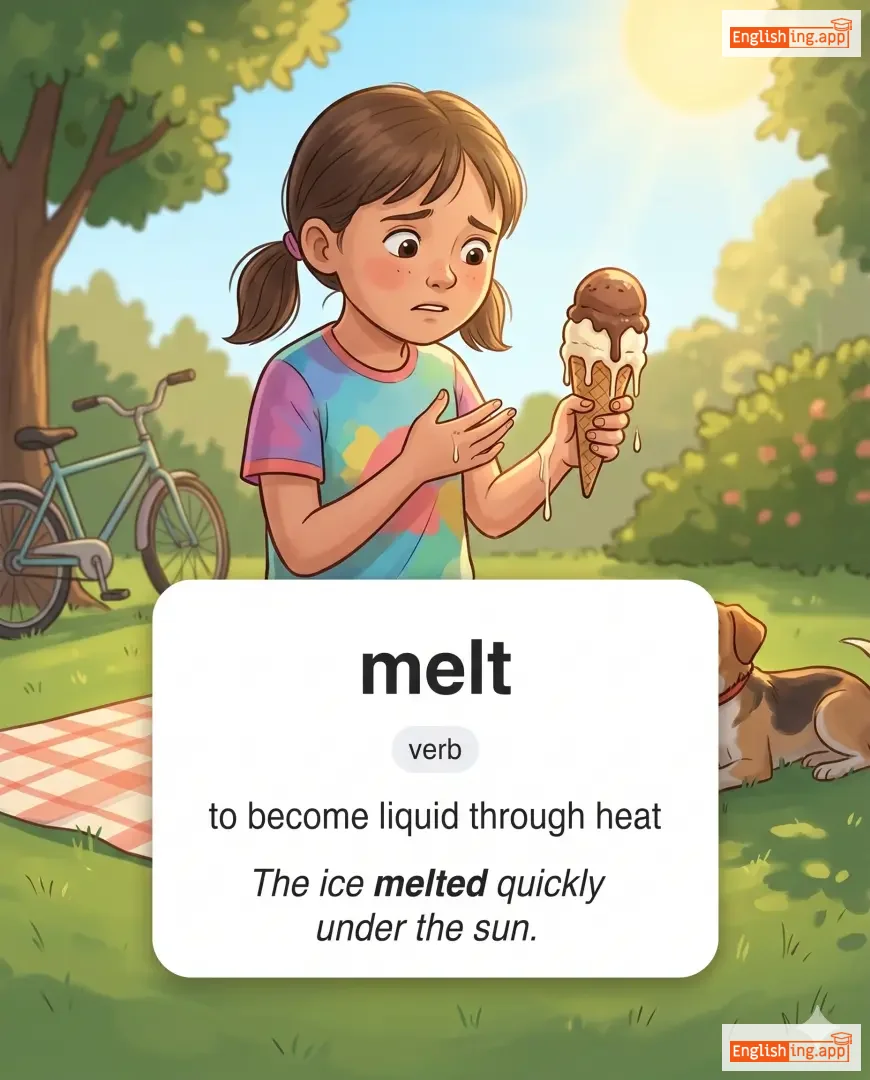
melt definition card — visual illustration of the meaning
verb
/mɛlt/
पिगलना (pigalna)

to become liquid through heat

"The ice melted quickly under the sun."

"हिमनदियां सूरज के नीचे जल्दी पिघल गईं।" (Himnadiyan suraj ke neeche jaldi pighal gayi.)
verb, noun, adjective
/ˈmeltɪŋ/
पिघलना (pighalna)

the process of changing from solid to liquid due to heat; becoming softer or less rigid; emotionally moving or tender

"The ice is melting quickly under the hot sun."

"तेज़ धूप में बर्फ जल्दी पिघल रही है।" (tez dhoop mein barf jaldi pighal rahi hai)
noun
/ˈmembər/
सदस्य (sadasya)

a person or thing that belongs to a group or organization

"She is a member of the local sports club."

"वह स्थानीय खेल क्लब की सदस्य है।" (Vah sthalīya khel klub kī sadasya hai.)
members definition card — visual illustration of the meaning
noun
ˈmem.bərz
सदस्य (sadasya)

A person, animal, or plant belonging to a particular group; an individual belonging to a group such as a society or team.

"Members collaborate to finalize recruitment decisions."

"सदस्य भर्ती निर्णय अंतिम रूप देने के लिए सहयोग करते हैं।" (Sadasya bharti nirnay antim roop dene ke liye sahyog karte hain.)
adjective
/ˈmɜːrsɪfəl/
दयालु (dayalu)

showing compassion or forgiveness towards someone one has the power to punish or harm.

"The judge was merciful and gave him a lighter sentence."

"न्यायाधीश दयालु थे और उन्होंने उसे हल्का सजा दी।" (Nyayadhish dayalu the aur unhone use halka saja di.)
noun
/ˈmɜːrsəˌnɛri/
भाड़े का सैनिक (bhade ka sainik)

a professional soldier hired to serve in a foreign army; also used to describe someone motivated solely by money.

"The mercenary fought for whoever paid the highest wage."

"भाड़े का सैनिक उस व्यक्ति के लिए लड़ा जिसने सबसे अधिक वेतन दिया।" (bhade ka sainik us vyakti ke liye lada jisne sabse adhik vetan diya.)
noun
/ˈmɜːrtʃənt/
व्यापारी (vyapari)

a person or company involved in the trade of goods, especially in large quantities

"The merchant sold spices from distant lands."

"व्यापारी ने दूर-दराज के देशों से मसाले बेचे।" (Vyapari ne door-daraz ke deshon se masale beche.)
adjective
/ˈmɜːrkəntaɪl/
वाणिज्यिक (vanijjik)

related to trade or commerce

"The city grew rapidly due to its mercantile activities."

"शहर ने अपनी वाणिज्यिक गतिविधियों के कारण तेजी से वृद्धि की।" (Shahar ne apni vanijjik gatividhiyon ke karan tezi se vruddhi ki.)