वोकैबुलरीज

इंग्लिश वोकैबुलरी डिस्कवर, लर्न और मास्टर करें

noun
/mɪˈsɑːdʒəni/
महिलाओं के प्रति घृणा (mahilao ke prati ghrina)

Hatred of, contempt for, or prejudice against women.

"The novel has been criticized for promoting misogyny."

"उपन्यास को महिलाओं के प्रति घृणा को बढ़ावा देने के लिए आलोचना की गई थी।" (Upanyas ko mahilaon ke prati ghrina ko badhawa dene ke liye alochna ki gayi thi.)
noun
/mɪˈsɑːdʒɪnɪst/
महिला द्वेषी (mahila dveshi)

A person who dislikes, despises, or is strongly prejudiced against women.

"Many condemned his speech as the words of a misogynist."

"कई लोगों ने उनके भाषण की निंदा एक महिला द्वेषी के शब्दों के रूप में की।" (Kai logon ne unke bhashan ki ninda ek mahila dveshi ke shabdon ke roop mein ki.)
noun
/mɪˈsɑːɡəmi/
विवाह विरोध (vivah virodh)

Hatred or dislike of marriage.

"His misogamy prevented him from ever settling down with a partner."

"उसका विवाह विरोध उसे कभी भी किसी साथी के साथ बसा हुआ नहीं बनने देता।" (Uska vivah virodh use kabhi bhi kisi saathi ke saath basa hua nahi banne deta.)
noun
/ˌmɪsˈnoʊmər/
गलत नाम (galat naam)

A wrong or inaccurate name or designation.

"Calling the tiny dog a 'giant' is a misnomer."

"छोटे कुत्ते को 'जायंट' कहना एक गलत नाम है।" (Chhote kutte ko 'giant' kehna ek galat naam hai.)
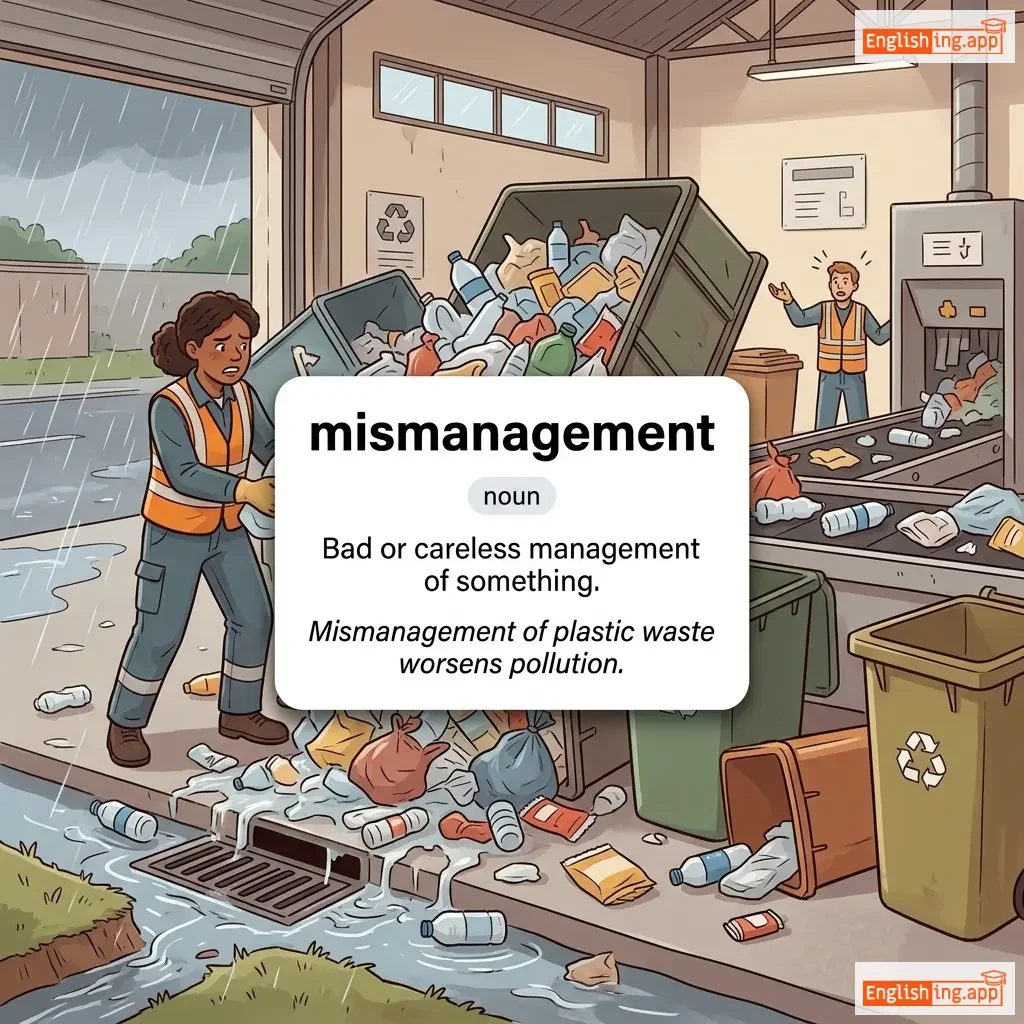
mismanagement definition card — visual illustration of the meaning
noun
ˌmɪsˈmænɪdʒmənt
अव्यवस्थापन (avyavasthapan)

Bad or careless management of something.

"Mismanagement of plastic waste worsens pollution."

"प्लास्टिक कचरे का अव्यवस्थापन प्रदूषण को बढ़ाता है।" (Plastic kachre ka avyavasthapan pradushan ko badhata hai.)
verb
/ˌmɪsˈmænɪdʒ/
गलत तरीके से प्रबंधित करना (galat tareeke se prabandhit karna)

to handle or control something badly or inefficiently

"The company went bankrupt because it was mismanaged for years."

"कंपनी दिवालिया हो गई क्योंकि इसे कई सालों तक गलत तरीके से प्रबंधित किया गया था।" (Kampani divaliya ho gayi kyunki ise kai salon tak galat tareeke se prabandhit kiya gaya tha.)
adjective
/mɪsˈliːdɪŋ/
भ्रामक (bhramak)

giving the wrong idea or impression

"The advertisement was misleading and gave false information."

"विज्ञापन भ्रामक था और उसने झूठी जानकारी दी।" (Vigyapan bhramak tha aur usne jhoothi jankari di.)
verb
/ˌmɪsˈleɪ/
अस्थायी रूप से खोना (asthaayi roop se khona)

to lose something temporarily by putting it in the wrong place

"I must have mislaid my keys somewhere in the house."

"मुझे लगता है कि मैंने अपने चाबियाँ कहीं घर में भूल दी हैं।" (Mujhe lagta hai ki maine apne chabiyaan kahin ghar mein bhool di hain.)
verb
/ˌmɪsɪnˈtɜːrprɪt/
गलत समझना (galat samajhna)

to understand or explain something wrongly

"He misinterpreted her silence as agreement."

"उसने उसकी चुप्पी को सहमति समझ लिया।" (Usne uski chuppi ko sahmati samajh liya.)
noun
/ˈmɪshæp/
दुर्घटना, विपत्ति (durghatna, vipatti)

an unlucky accident or minor misfortune

"A minor mishap delayed the train for half an hour."

"एक छोटी दुर्घटना ने ट्रेन को आधे घंटे के लिए देरी कर दी।" (ek chhoti durghatna ne train ko aadhe ghante ke liye deri kar di.)
noun
/mɪsˈɡɪvɪŋz/
संदेह, चिंता (sandeh, chinta)

feelings of doubt or concern about the outcome or propriety of something

"She had serious misgivings about signing the contract."

"उसे समझौते पर साइन करने के बारे में गंभीर संदेह था।" (Use samjhote par sign karne ke baare mein gambhir sandeh tha.)
noun
/ˌmɪsˈɡɪvɪŋ/
संदेह (sandeh)

A feeling of doubt, worry, or suspicion.

"She had serious misgivings about signing the contract."

"उसने अनुबंध पर हस्ताक्षर करने को लेकर गंभीर संदेह व्यक्त किया।" (Usne anubandh par hastakshar karne ko lekar gambhir sandeh vyakt kiya.)
noun
/ˌmɪsˈfɔːrtʃən/
दुर्दैव (durdaiv)

Bad luck or an unfortunate event.

"He suffered the misfortune of losing his job during the recession."

"उसने मंदी के दौरान अपनी नौकरी खोने का दुर्भाग्य सहा।" (Usne mandi ke dauran apni naukri khone ka durdaiv saha.)
noun
/ˈmɪzəri/
दुःख (dukh)

A state of great suffering, unhappiness, or discomfort.

"The refugees lived in constant misery."

"शरणार्थियों ने निरंतर दुःख में जीवन बिताया।" (Sharanarthiyon ne nirantar dukh mein jeevan bitaya.)
adjective
/ˈmaɪzərli/
कंजूस (kanjoos)

Unwilling to spend money; stingy.

"She lived a miserly life, refusing to buy anything new."

"वह कंजूस जीवन जीती थी, नई चीज़ खरीदने से मना करती थी।" (Vah kanjoos jeevan jeeti thi, nai cheez kharidne se mana karti thi.)
adverb
/ˈmɪzərəbli/
दीनहीन तरीके से; बुरी तरह से (deenheen tareeke se; buree tarah se)

in a wretched or unhappy manner; extremely badly

"The team performed miserably in the championship."

"टीम ने चैंपियनशिप में मिज़रेबली प्रदर्शन किया।" (team ne championship mein mizarebali pradarshan kiya)
adjective
/ˈmɪzərəbəl/
दुःखी (dukhhi)

Extremely unhappy or uncomfortable.

"He felt miserable after losing his job."

"अपनी नौकरी खोने के बाद वह बहुत दुखी महसूस कर रहा था।" (Apni naukri khone ke baad vah bahut dukhi mahsus kar raha tha.)
noun
/ˈmaɪzər/
कंजूस (kanjoos)

A person who hoards wealth and spends as little money as possible.

"The old miser refused to donate even a penny to charity."

"वृद्ध कंजूस ने दान देने से एक पैसा भी मना कर दिया।" (Vriddh kanjoos ne dan dene se ek paisa bhi mana kar diya.)
noun
/ˌmɪsdɪˈmiːnər/
छोटी अपराध (chhoti aparadh)

A minor wrongdoing or criminal offense that is less serious than a felony.

"He was fined for a misdemeanor involving public disturbance."

"उसे सार्वजनिक अशांति से जुड़ी एक छोटी अपराध के लिए जुर्माना हुआ।" (Use sarvajanik ashanti se judi ek chhoti aparadh ke liye jurmana hua.)
noun
/ˌmɪsˈdiːd/
अपराध (apraadh)

A wrong or illegal act.

"He regretted his past misdeeds and apologized."

"उसने अपने पिछले गलत कामों पर पछतावा किया और माफी मांगी।" (Usne apne pichle galat kaamon par pachhtawa kiya aur maafi maangi.)
noun
/ˈmɪskriənt/
दुराचारी (durachari)

A person who behaves badly or criminally.

"The police arrested the miscreant responsible for the theft."

"पुलिस ने चोरी के लिए जिम्मेदार दुराचारी को गिरफ्तार किया।" (Police ne chori ke liye jimmedar durachari ko giraftaar kiya.)
verb
/ˈmɪmɪk/
नकल करना (nakal karna)

To copy the actions, speech, or behavior of someone or something.

"Children often mimic their parents' behavior."

"बच्चे अक्सर अपने माता-पिता के व्यवहार की नकल करते हैं।" (Bacche aksar apne mata-pita ke vyavhaar ki nakal karte hain.)
noun
/ˈmaɪnɪŋ/
खनन (khannan)

the process of extracting valuable minerals or other resources from the earth

"Mining in this area has increased in recent years."

"इस क्षेत्र में खनन पिछले कुछ वर्षों में बढ़ा है।" (Is kshetra mein khannan pichle kuch varsho mein badha hai.)
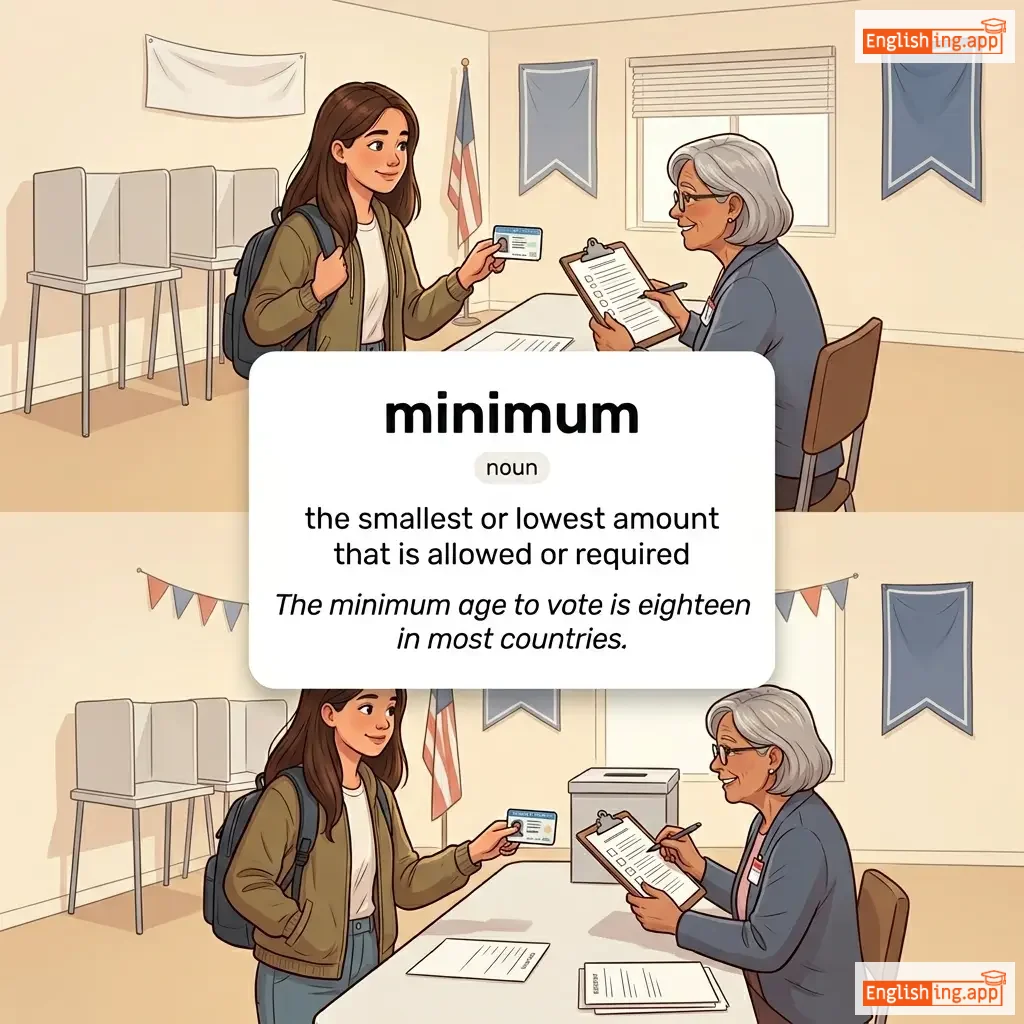
minimum definition card — visual illustration of the meaning
noun
/ˈmɪnɪməm/
न्यूनतम (nyuntam)

the smallest or lowest amount that is allowed or required

"The minimum age to vote is eighteen in most countries."

"वोट देने की न्यूनतम आयु अधिकांश देशों में अठारह साल है।" (Vote dene ki nyuntam aayu adhikansh deshon mein atharah saal hai.)
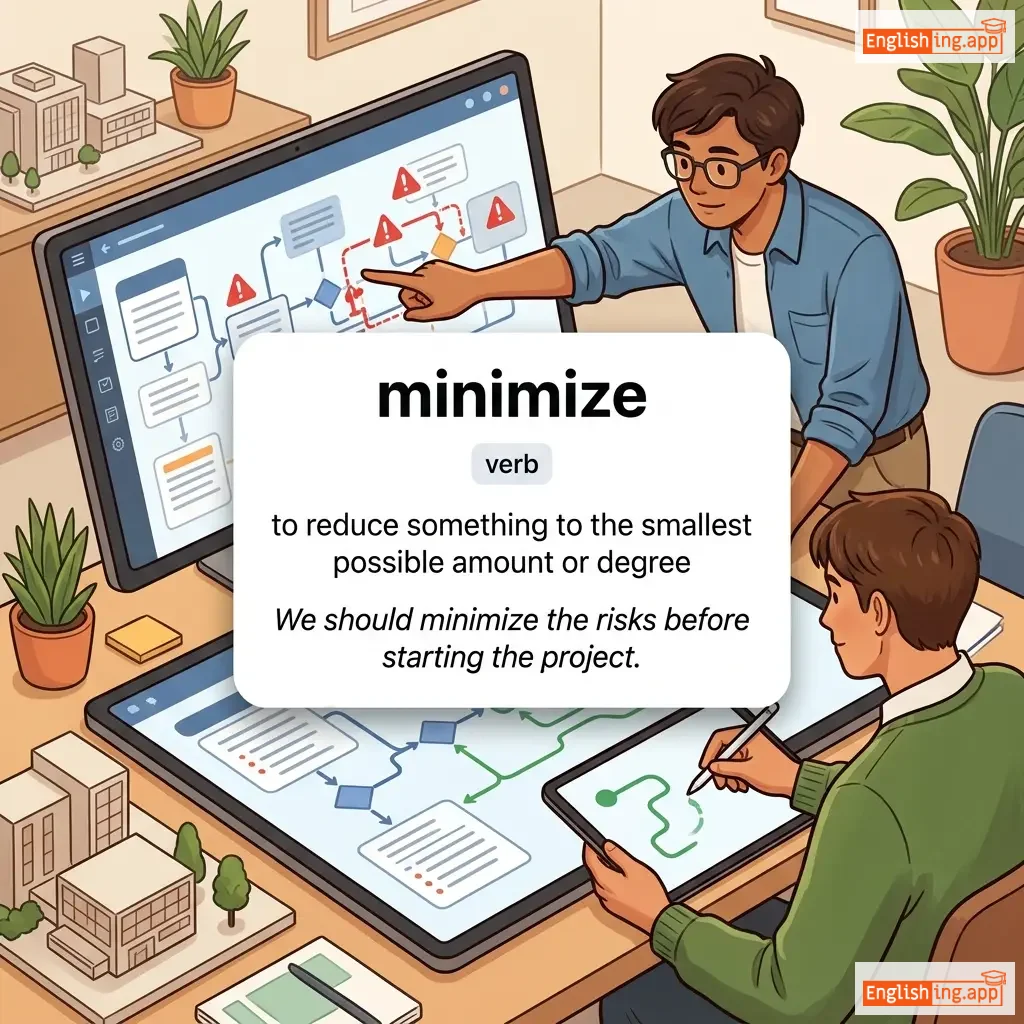
minimize definition card — visual illustration of the meaning
verb
/ˈmɪnɪmaɪz/
न्यूनतम करना (nyoonatam karna)

to reduce something to the smallest possible amount or degree

"We should minimize the risks before starting the project."

"हमें परियोजना शुरू करने से पहले जोखिम को कम करना चाहिए।" (Humein pariyojna shuru karne se pehle jokhim ko kam karna chahiye.)
adjective
/ˈmɪnɪməl/
न्यूनतम (nyunatam)

the smallest or least amount possible

"The damage to the car was minimal after the accident."

"दुर्घटना के बाद कार को हुए नुकसान की मात्रा न्यूनतम थी।" (Durghatna ke baad car ko hue nuksan ki matra nyunatam thi.)
noun/adjective
/ˈmɪnətʃər/ or /ˈmɪniətʃʊr/
सूक्ष्म संस्करण (sookshm sanskaran)

a very small version of something; small in scale or size

"The artist created a miniature model of the castle."

"कलाकार ने किले का सूक्ष्म मॉडल बनाया।" (Kalakar ne kile ka sookshm model banaya.)
adjective
/ˈmɪn.dʒi/
किफ़ायती; सख़्त; आलसी (kifayati; sakht; aalsi)

mean or stingy; unwilling to spend money

"He is too mingy to spend money on anything but necessities."

"वह किसी भी चीज़ पर पैसे खर्च करने के लिए बहुत मिंजी है, सिवाय आवश्यकताओं के।" (vah kisi bhi cheez par paise kharch karne ke liye bahut minji hai, siwaay aavashyaktaon ke.)
verb
/ˈmɪŋɡl/
मिलाना (milana)

to mix or combine; to move among people and engage socially

"Guests mingled at the party, chatting and laughing together."

"मेहमान पार्टी में एक दूसरे से मिले, चैटिंग और हंसी मजाक करते हुए।" (Mehmaan party mein ek doosre se mile, chatting aur hansi mazaak karte hue.)
noun
/ˈmɪnərəl/
खनिज (khonij)

a naturally occurring substance that is solid and inorganic, often used in industry or nutrition

"Calcium is an important mineral for strong bones."

"कैल्शियम मजबूत हड्डियों के लिए एक महत्वपूर्ण खनिज है।" (Calcium majboot haddiyon ke liye ek mahatvapurn khonij hai.)
noun
/ˈmaɪnə(r)/
खनिक (khanik)

a person who works in a mine, extracting minerals or other resources

"The miner worked in the coal mine for many years."

"खनिक ने कई वर्षों तक कोयला खदान में काम किया।" (Khanik ne kai varshon tak koyla khadan mein kaam kiya.)
noun, pronoun, verb
/maɪn/
खदान / मेरा (khadan / mera)

a place where minerals are dug from the ground; or something belonging to me

"The workers went deep into the mine to extract coal."

"कामकाजी लोग कोयला निकालने के लिए खदान में गहरे गए।" (kaamkaji log koyla nikaalne ke liye khadan mein gahare gaye.)
mindset definition card — visual illustration of the meaning
noun
ˈmaɪnd.set
मानसिकता (maansikta)

The established set of attitudes held by someone.

"A growth mindset helps individuals embrace challenges."

"एक विकास मानसिकता व्यक्तियों को चुनौतियों को अपनाने में मदद करती है।" (Ek vikas maansikta vyaktiyon ko chunautiyon ko apnane mein madad karti hai.)
adjective
/ˈmaɪndləs/
बिना सोचे-समझे (bina soche-samjhe)

without thought or intelligence; done without consideration

"He was bored by the mindless tasks at work."

"वह काम पर बिना सोचे-समझे कामों से उब चुका था।" (Wah kaam par bina soche-samjhe kaamon se ub chuka tha.)
mindfulness definition card — visual illustration of the meaning
noun
/ˈmaɪnd.fʊl.nəs/
सचेतन उपस्थिति (sachetan upasthiti)

The quality or state of being conscious or aware of something; a mental state achieved by focusing one's awareness on the present moment.

"Practicing mindfulness reduces stress and anxiety."

"माइंडफुलनेस का अभ्यास तनाव और चिंता को कम करता है।" (Mindfulness ka abhyas tanav aur chinta ko kam karta hai.)
adjective
/ˈmaɪnd.fəl/
सचेत; ध्यानपूर्ण (sachet; dhyanpurn)

being conscious or aware; paying attention to the present moment

"She is always mindful of her surroundings and pays attention to details."

"वह हमेशा अपने आस-पास के माहौल के प्रति सचेत रहती है और विवरणों पर ध्यान देती है।" (vah hamesha apne aas-paas ke maahol ke prati sachet rahti hai aur vivaranon par dhyan deti hai.)
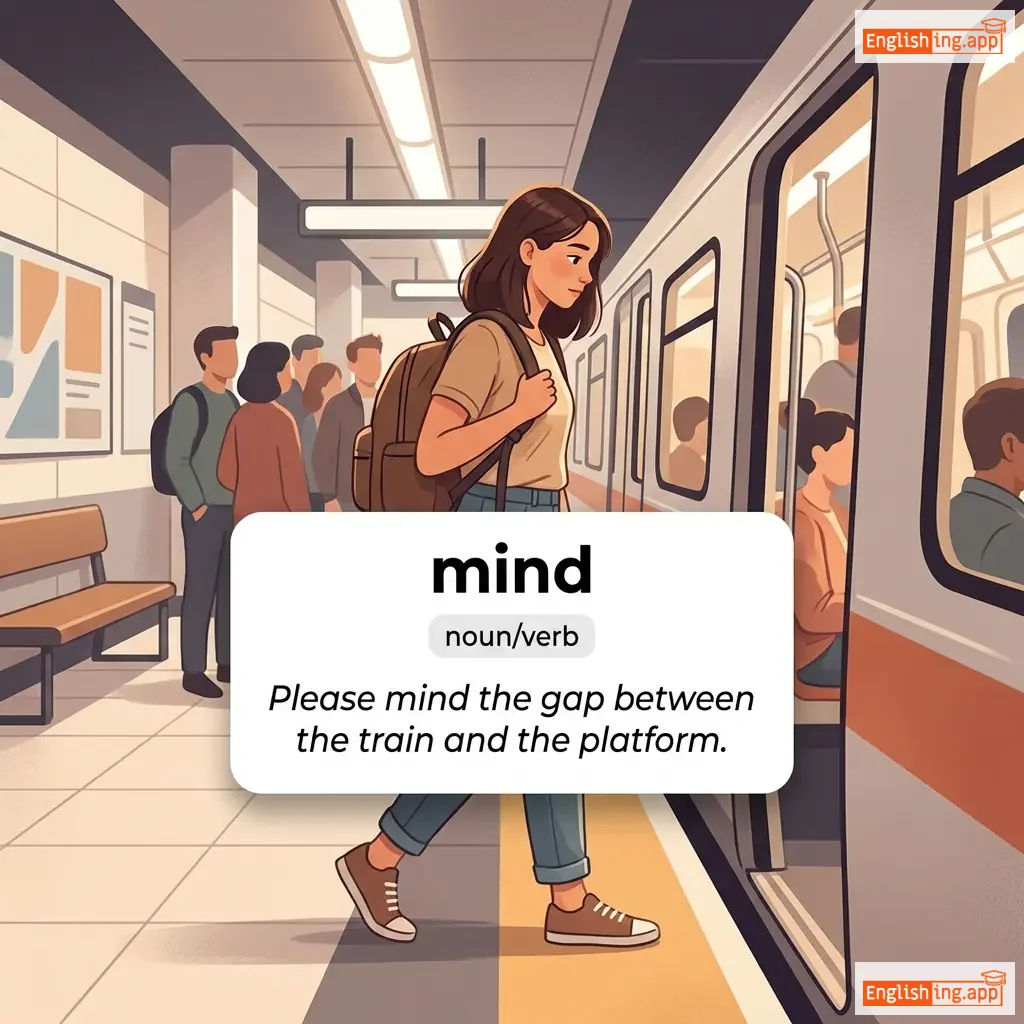
mind definition card — visual illustration of the meaning
noun/verb
/maɪnd/
मन / ध्यान रखना (man / dhyan rakhna)

the part of a person that enables them to think, feel, and reason; to pay attention or take care

"Please mind the gap between the train and the platform."

"कृपया ट्रेन और प्लेटफार्म के बीच गैप का ध्यान रखें।" (Kripya train aur platform ke beech gap ka dhyan rakhen.)
adjective
/ˈmɪnsɪŋ/
अत्यधिक नाटकीय (atyadhik natakiy)

affectedly delicate, dainty, or refined in manner or movement

"He walked with mincing steps across the stage."

"वह मंच पर नाटकीय कदमों से चल रहा था।" (Vah manch par natakiy kadmon se chal raha tha.)
mince definition card — visual illustration of the meaning
verb
/mɪns/
काटना (katna)

to cut food, especially meat, into very small pieces; to speak in an affectedly delicate or refined way

"She minced the garlic before adding it to the sauce."

"उसने सॉस में डालने से पहले लहसुन को बारीक काटा।" (Usne sauce mein daalne se pehle lahsun ko baareek kaata.)
adjective
/ˈmɪnətɔːri/
धमकी देने वाला (dhamki dene wala)

Expressing a threat; menacing.

"The criminal gave the witness a minatory look."

"अपराधी ने गवाह को धमकी देने वाली नजर से देखा।" (Aparadhi ne gawah ko dhamki dene wali nazar se dekha.)
noun
/ˌmɪnəˈrɛt/
मिनार (minar)

A tall, slender tower of a mosque, from which the call to prayer is announced.

"The minaret of the mosque could be seen from miles away."

"मस्जिद का मीनार कई मील दूर से दिखता था।" (Masjid ka minar kai meel door se dikhta tha.)
noun
/ˈmɪmɪkri/
अनुकरण (anukaran)

The act of imitating someone or something, often for humor or learning.

"The comedian’s mimicry of celebrities made the audience laugh."

"कॉमेडियन के सेलेब्रिटीज़ की मिमिक्री ने दर्शकों को हंसी दिलाई।" (Comedian ke celebrities ki mimicry ne darshako ko hasie dilai.)
adjective
/ˈmɪlɪtənt/
आक्रामक (aakramak)

Aggressively active in a cause, sometimes using forceful methods.

"The group became increasingly militant in their demands."

"समूह अपनी मांगों में बढ़ता हुआ आक्रामक हो गया।" (Samooh apni maangon mein badhta hua aakramak ho gaya.)
noun
/mɪˈlɪʃə/
सैन्य (sainya)

a group of ordinary people who are trained to act as soldiers in emergencies

"The village formed a militia to defend against attacks."

"गांव ने हमलों से बचाव के लिए एक मिलिशिया बनाई।" (gaon ne hamlon se bachav ke liye ek militia banayi.)
verb
/ˈmɪlɪˌteɪt/
रोकना (rokna)

to have a strong effect against something; to work as a powerful factor in preventing or influencing an outcome

"His lack of experience will militate against his promotion."

"उसके अनुभव की कमी उसके पदोन्नति के खिलाफ काम करेगी।" (uske anubhav ki kami uske podonnati ke khilaf kaam karegi.)
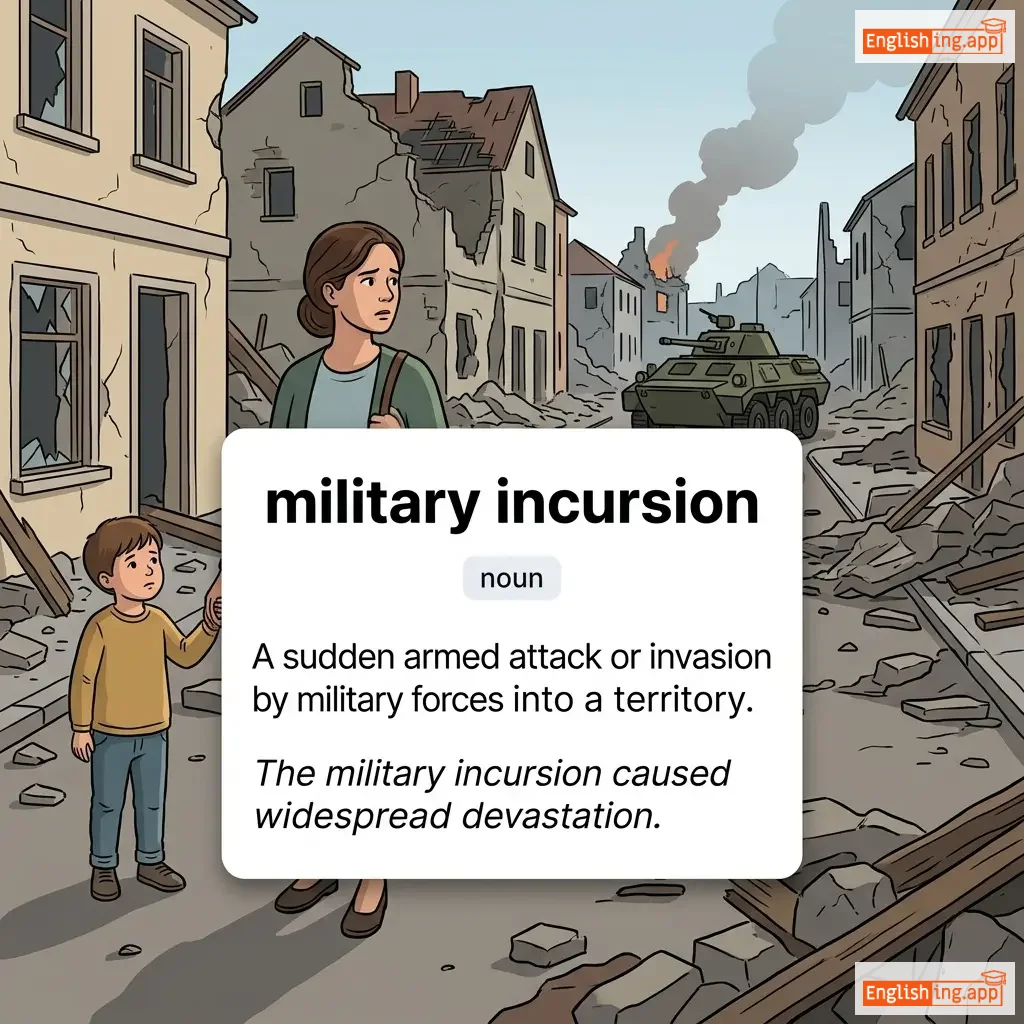
military incursion definition card — visual illustration of the meaning
noun
ˈmɪl.ɪ.tər.i ɪnˈkɜː.ʃən
सैन्य आक्रमण (sainya aakraman)

A sudden armed attack or invasion by military forces into a territory.

"The military incursion caused widespread devastation."

"सैन्य आक्रमण ने व्यापक विध्वंस किया।" (Sainya aakraman ne vyapak vidhwans kiya.)
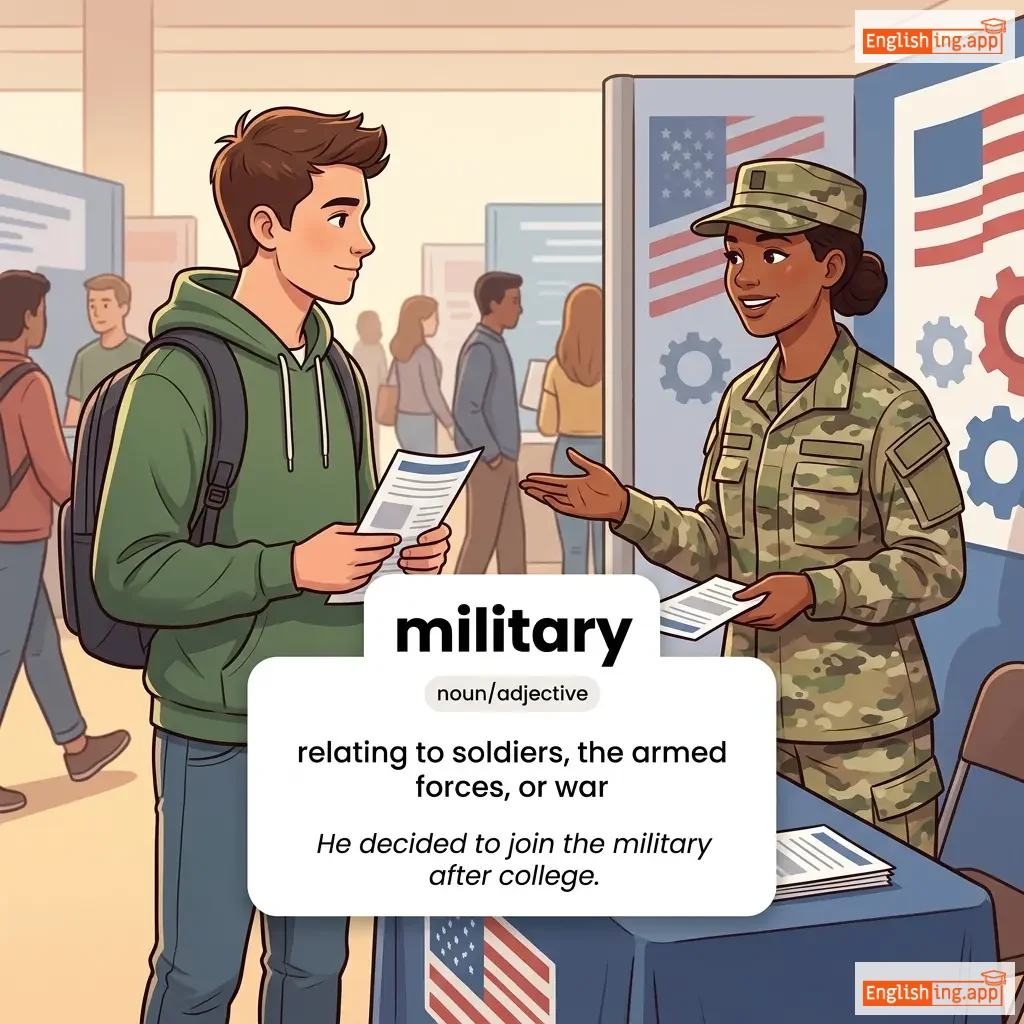
military definition card — visual illustration of the meaning
noun/adjective
/ˈmɪlɪˌtɛri/
सैन्य (sainya)

relating to soldiers, the armed forces, or war

"He decided to join the military after college."

"उसने कॉलेज के बाद सेना में शामिल होने का निर्णय लिया।" (Usne college ke baad sena mein shaamil hone ka nirnay liya.)
noun
/ˈmɪlɪtəˌrɪzəm/
सैन्यवादी तंत्र (sainyavadi tantra)

The belief in maintaining a strong military and using it aggressively to defend or promote national interests.

"The rise of militarism in the region caused tension among neighboring countries."

"क्षेत्र में सैन्यवादी तंत्र का उभार पड़ोसी देशों के बीच तनाव का कारण बना।" (kshetra mein sainyavadi tantra ka ubhaar padosi deshon ke beech tanav ka kaaran bana.)
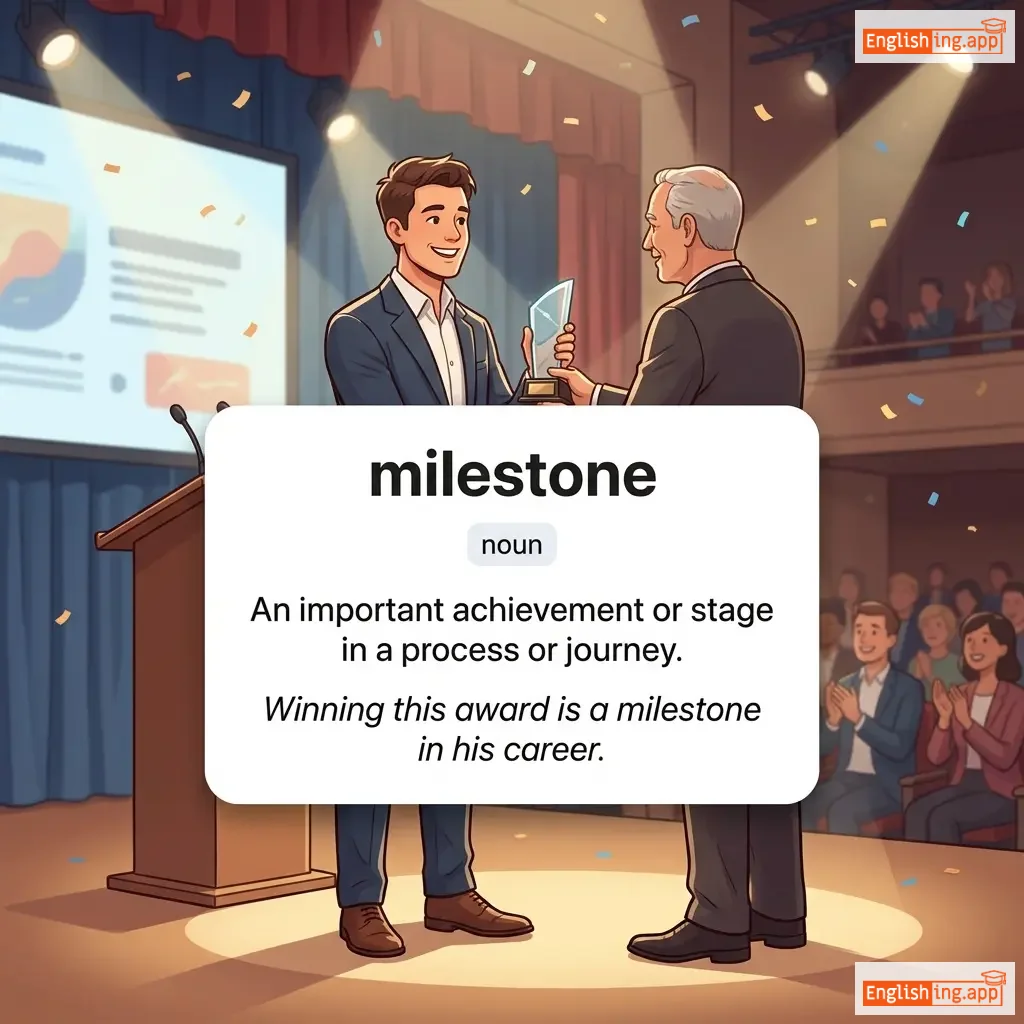
milestone definition card — visual illustration of the meaning
noun
ˈmaɪl.stəʊn
महत्वपूर्ण उपलब्धि (mahatvapoorn uplabdhi)

An important achievement or stage in a process or journey.

"Winning this award is a milestone in his career."

"यह पुरस्कार जीतना उसके करियर में एक माइलस्टोन है।" (Yeh puraskar jeetna uske career mein ek milestone hai.)
verb
/ˌmɪsˈkaʊnt/
गलत गिनती करना (galat ginti karna)

To count wrongly or inaccurately.

"He miscounted the number of chairs in the hall."

"उसने हॉल में कुर्सियों की संख्या गलत गिनी।" (Usne hall mein kursiyon ki sankhya galat gini.)