語彙集

英単語辞書 | 単語の意味、定義、例文

noun
/mɪˈsɑːdʒəni/
女性嫌悪 (josei ken'o)

Hatred of, contempt for, or prejudice against women.

"The novel has been criticized for promoting misogyny."

"その小説は女性嫌悪を助長すると批判された。" (Sono shōsetsu wa josei ken'o o jochō suru to hihan sareta.)
noun
/mɪˈsɑːdʒɪnɪst/
女性嫌悪者 (josei ken'oshā)

A person who dislikes, despises, or is strongly prejudiced against women.

"Many condemned his speech as the words of a misogynist."

"多くの人々は彼のスピーチを女性嫌悪者の言葉として非難しました。" (Ōku no hitobito wa kare no supīchi o josei ken'oshā no kotoba to shite hinan shimashita.)
noun
/mɪˈsɑːɡəmi/
ミソガミー (misogamī)

Hatred or dislike of marriage.

"His misogamy prevented him from ever settling down with a partner."

"彼のミソガミーは、パートナーと一緒に落ち着くことを妨げた。" (Kare no misogamī wa, pātonā to issho ni ochitsuku koto o samatage ta.)
noun
/ˌmɪsˈnoʊmər/
誤った名前 (ayamatta namae)

A wrong or inaccurate name or designation.

"Calling the tiny dog a 'giant' is a misnomer."
"小さな犬を「ジャイアント」と呼ぶのは誤った名前です。" (Chiisana inu wo 'Jaianto' to yobu no wa ayamatta namae desu.)
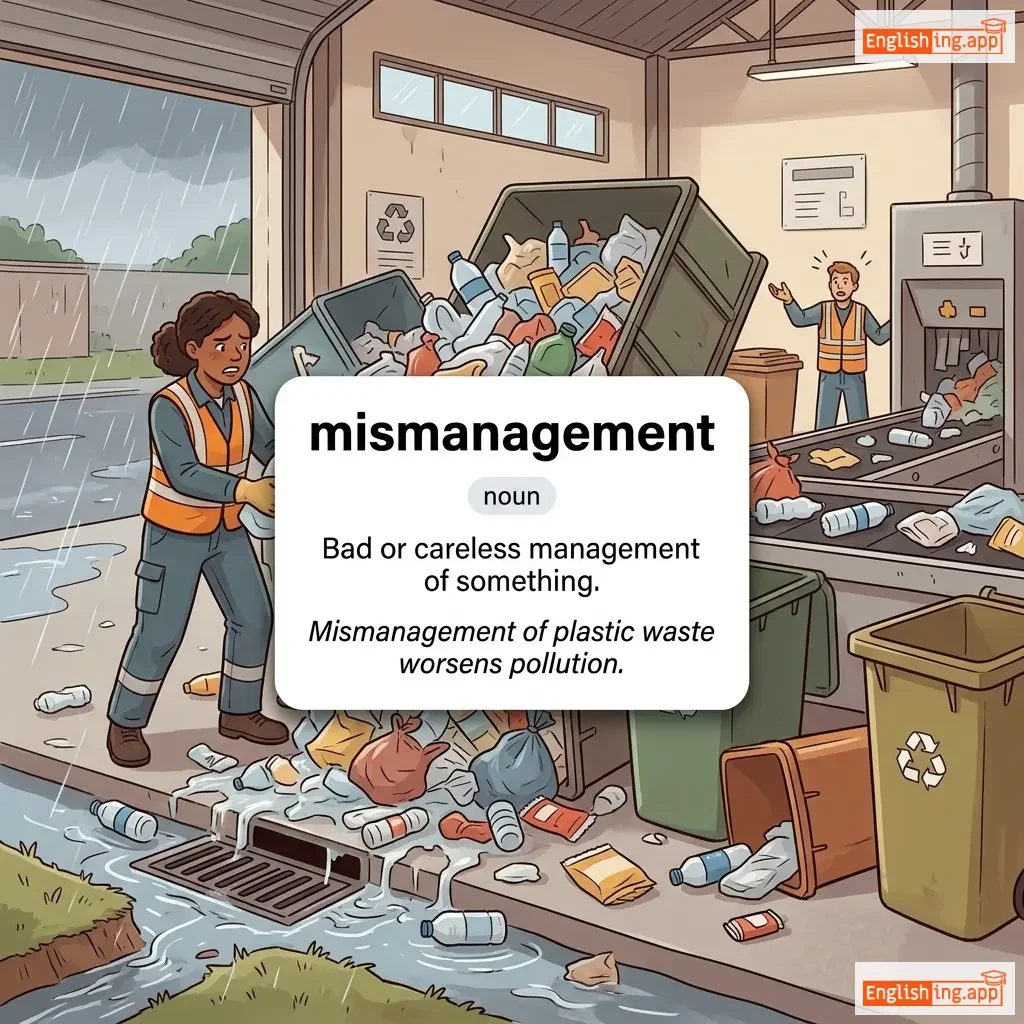
mismanagement definition card — visual illustration of the meaning
noun
ˌmɪsˈmænɪdʒmənt
不適切な管理 (futekisetsu na kanri)

Bad or careless management of something.

"Mismanagement of plastic waste worsens pollution."

"プラスチックごみの不適切な管理が汚染を悪化させます。" (Purasutikku gomi no futekisetsu na kanri ga osen o akka sasemasu.)
verb
/ˌmɪsˈmænɪdʒ/

to handle or control something badly or inefficiently

"The company went bankrupt because it was mismanaged for years."

adjective
/mɪsˈliːdɪŋ/
誤解を招く (gokai o maneku)

giving the wrong idea or impression

"The advertisement was misleading and gave false information."

"その広告は誤解を招くもので、偽の情報を提供していました。" (Sono kōkoku wa gokai o maneku mono de, nise no jōhō o teikyō shiteimashita.)
verb
/ˌmɪsˈleɪ/
一時的に失う (ichijiteki ni ushinau)

to lose something temporarily by putting it in the wrong place

"I must have mislaid my keys somewhere in the house."

"私は家のどこかで鍵を一時的に失ったに違いない。" (Watashi wa ie no dokoka de kagi o ichijiteki ni ushinatta ni chigai nai.)
verb
/ˌmɪsɪnˈtɜːrprɪt/
誤解する (gokai suru)

to understand or explain something wrongly

"He misinterpreted her silence as agreement."

"彼は彼女の沈黙を同意と誤解した。" (Kare wa kanojo no chinmoku o dōi to gokai shita.)
noun
/ˈmɪshæp/
不運, 小さな事故 (fuun, chiisana jiko)

an unlucky accident or minor misfortune

"A minor mishap delayed the train for half an hour."

"小さな事故で電車は30分遅れました。" (Chiisana jiko de densha wa 30-pun okuremashita.)
noun
/mɪsˈɡɪvɪŋz/
疑念、不安 (ginen, fuan)

feelings of doubt or concern about the outcome or propriety of something

"She had serious misgivings about signing the contract."

"彼女は契約書にサインすることに対して深刻な疑念を抱いていた。" (Kanojo wa keiyaku-sho ni sain suru koto ni taishite shinkoku na ginen o idaite ita.)
noun
/ˌmɪsˈɡɪvɪŋ/
疑念 (ginen)

A feeling of doubt, worry, or suspicion.

"She had serious misgivings about signing the contract."

"彼女は契約書にサインすることに対して真剣な疑念を抱いていた。" (Kanojo wa keiyakusho ni sain suru koto ni taishite shinken na ginen o daite ita.)
noun
/ˌmɪsˈfɔːrtʃən/
不運 (fuun)

Bad luck or an unfortunate event.

"He suffered the misfortune of losing his job during the recession."

"彼は不況時に仕事を失うという不運に見舞われました。" (Kare wa fukyou ji ni shigoto o ushinau to iu fuun ni mimawaremashita.)
noun
/ˈmɪzəri/
苦しみ (kurushimi)

A state of great suffering, unhappiness, or discomfort.

"The refugees lived in constant misery."

"難民たちは絶え間ない苦しみの中で暮らしていました。" (Nanmin-tachi wa taemanai kurushimi no naka de kurashite imashita.)
adjective
/ˈmaɪzərli/
けちな (kechina)

Unwilling to spend money; stingy.

"She lived a miserly life, refusing to buy anything new."

"彼女はけちな生活を送り、新しいものを買うことを拒んでいた。" (Kanojo wa kechina seikatsu o okuri, atarashī mono o kau koto o kobandeita.)
adverb
/ˈmɪzərəbli/
悲惨に (hisan ni)

in a wretched or unhappy manner; extremely badly

"The team performed miserably in the championship."

"チームはチャンピオンシップで悲惨にプレーしました。" (Chiimu wa chanpionshipu de hisan ni puree shimashita.)
adjective
/ˈmɪzərəbəl/
惨めな (mijimena)

Extremely unhappy or uncomfortable.

"He felt miserable after losing his job."

"仕事を失った後、彼は惨めに感じていた。" (Shigoto o ushinatta ato, kare wa mijime ni kanjite ita.)
noun
/ˈmaɪzər/
けちん坊 (kechinbō)

A person who hoards wealth and spends as little money as possible.

"The old miser refused to donate even a penny to charity."

"その古いけちん坊は慈善団体に1ペニーも寄付することを拒否した。" (Sono furui kechinbō wa jizen dantai ni 1 penī mo kifu suru koto o kyohi shita.)
noun
/ˌmɪsdɪˈmiːnər/
軽犯罪 (keihanzai)

A minor wrongdoing or criminal offense that is less serious than a felony.

"He was fined for a misdemeanor involving public disturbance."

"公共の秩序に関わる軽犯罪で罰金を科された。" (Kōkyō no chitsujo ni kakawaru keihanzai de bakkin o kasareta.)
noun
/ˌmɪsˈdiːd/
不正行為 (fusei koui)

A wrong or illegal act.

"He regretted his past misdeeds and apologized."

"彼は自分の過去の悪行を後悔し、謝罪しました。" (Kare wa jibun no kako no akugyou o koukai shi, shazai shimashita.)
noun
/ˈmɪskriənt/
悪党 (akutou)

A person who behaves badly or criminally.

"The police arrested the miscreant responsible for the theft."

"警察は盗みの責任を負う悪党を逮捕しました。" (Keisatsu wa nusumi no sekinin o ou akutou o taiho shimashita.)
🦜

Mimic

verb
/ˈmɪmɪk/

To copy the actions, speech, or behavior of someone or something.

"Children often mimic their parents' behavior."

noun
/ˈmaɪnɪŋ/
採掘 (saikutsu)

the process of extracting valuable minerals or other resources from the earth

"Mining in this area has increased in recent years."
"この地域での採掘は近年増加しています。" (Kono chiiki de no saikutsu wa kin-nen zōka shiteimasu.)
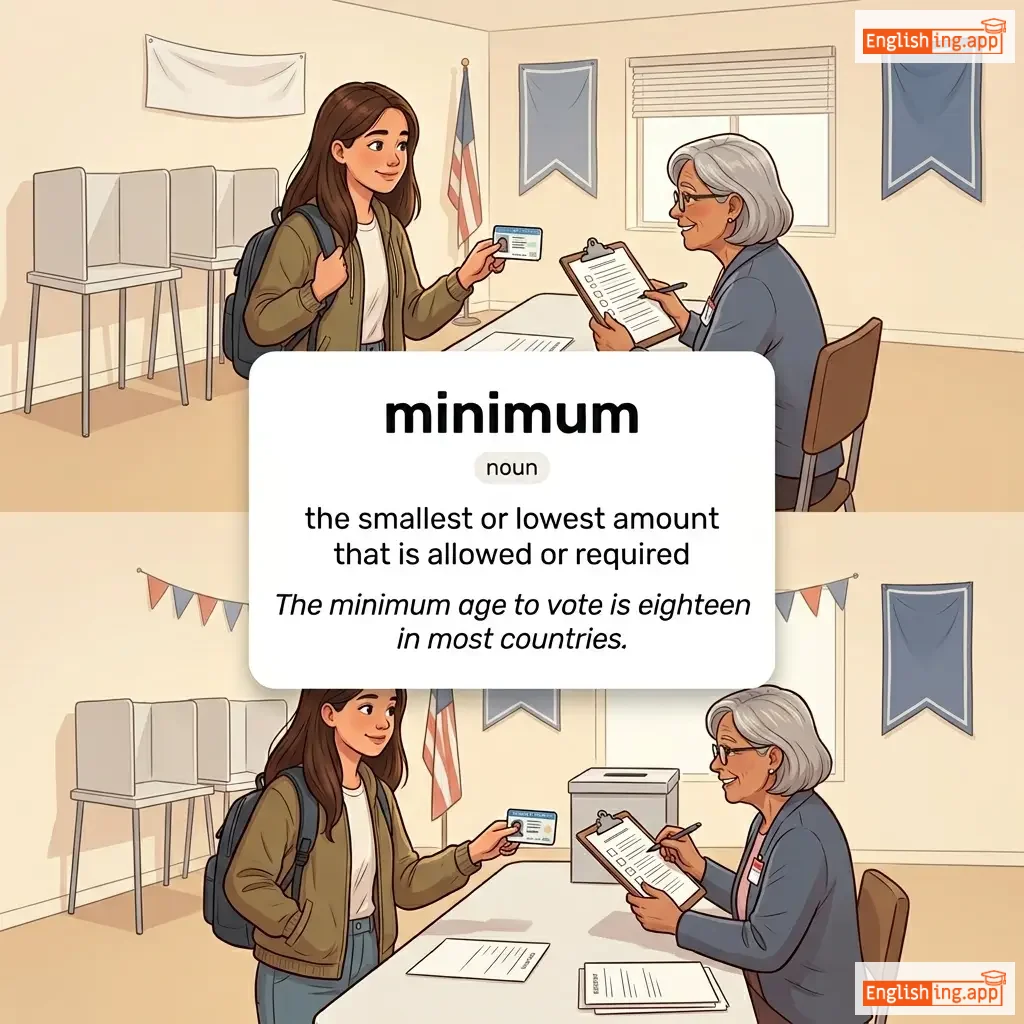
minimum definition card — visual illustration of the meaning
noun
/ˈmɪnɪməm/
最小限 (saishōgen)

the smallest or lowest amount that is allowed or required

"The minimum age to vote is eighteen in most countries."
"投票のための最小年齢は、ほとんどの国で18歳です。" (Tōhyō no tame no saishō nenrei wa, hotondo no kuni de 18-sai desu.)
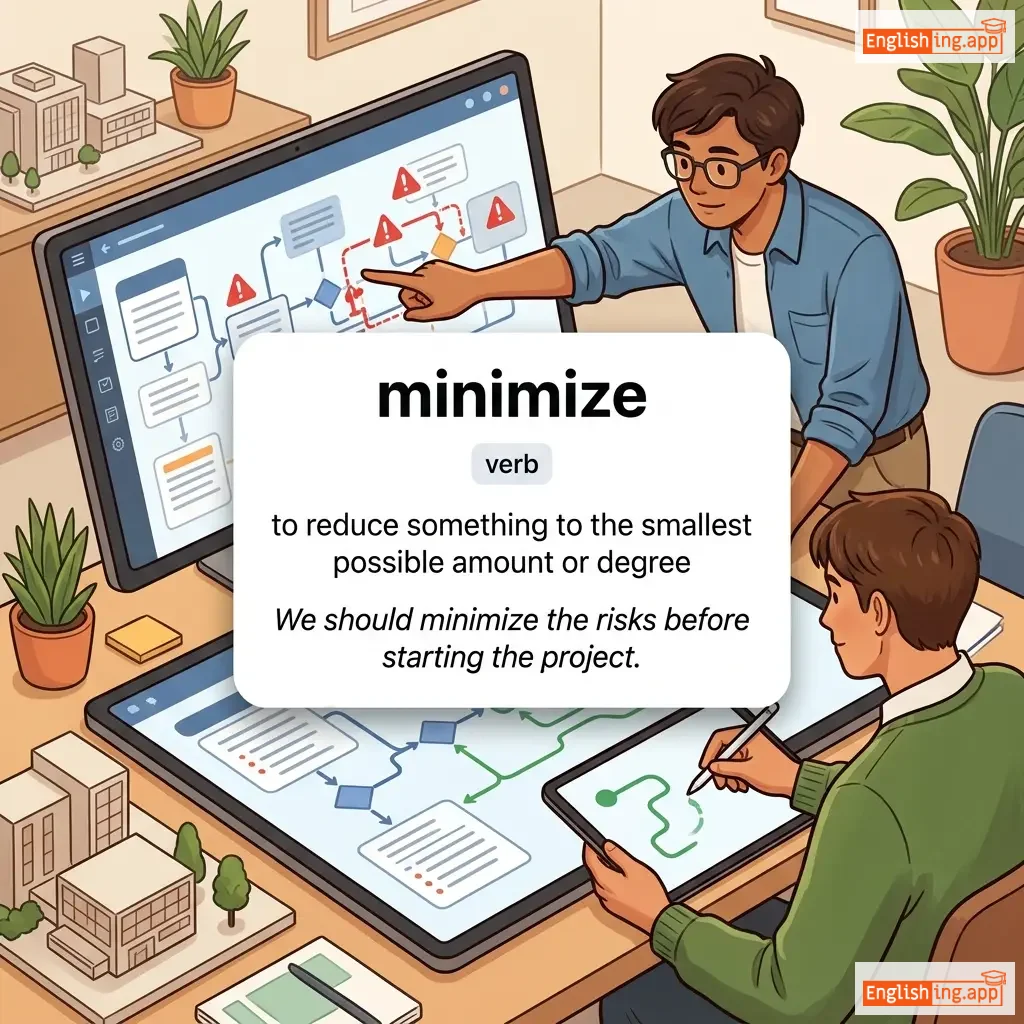
minimize definition card — visual illustration of the meaning
verb
/ˈmɪnɪmaɪz/
最小化する (saishōka suru)

to reduce something to the smallest possible amount or degree

"We should minimize the risks before starting the project."

"プロジェクトを始める前にリスクを最小化するべきです。" (Purojekuto o hajimeru mae ni risuku o saishōka suru beki desu.)
adjective
/ˈmɪnɪməl/
最小限 (saishōgen)

the smallest or least amount possible

"The damage to the car was minimal after the accident."

"事故後、車の損傷は最小限でした。" (Jiko-go, kuruma no sonshō wa saishōgen deshita.)
noun/adjective
/ˈmɪnətʃər/ or /ˈmɪniətʃʊr/
ミニチュア版 (minichua-ban)

a very small version of something; small in scale or size

"The artist created a miniature model of the castle."

"アーティストは城のミニチュアモデルを作りました。" (Aatisuto wa shiro no minichua moderu o tsukurimashita.)
adjective
/ˈmɪn.dʒi/
ケチ; 吝嗇 (kechi; rinshaku)

mean or stingy; unwilling to spend money

"He is too mingy to spend money on anything but necessities."

"彼は必要なもの以外にお金を使うのがあまりにもケチだ。" (Kare wa hitsuyou na mono igai ni okane o tsukau no ga amari ni mo kechi da.)
verb
/ˈmɪŋɡl/

to mix or combine; to move among people and engage socially

"Guests mingled at the party, chatting and laughing together."

noun
/ˈmɪnərəl/
鉱物 (kōbutsu)

a naturally occurring substance that is solid and inorganic, often used in industry or nutrition

"Calcium is an important mineral for strong bones."

"カルシウムは強い骨のための重要な鉱物です。" (Karushiumu wa tsuyoi hone no tame no jūyōna kōbutsu desu.)
noun
/ˈmaɪnə(r)/
鉱夫 (kōfu)

a person who works in a mine, extracting minerals or other resources

"The miner worked in the coal mine for many years."

"鉱夫は長年、石炭鉱で働いていました。" (Kōfu wa naganen, sekitan kō de hataraite imashita.)
noun, pronoun, verb
/maɪn/
鉱山 / 私の (kōzan / watashi no)

a place where minerals are dug from the ground; or something belonging to me

"The workers went deep into the mine to extract coal."
"労働者たちは炭鉱に深く入って炭を採掘しました。" (Rōdō-sha-tachi wa tankō ni fukaku haitte sumi o saikutsu shimashita.)
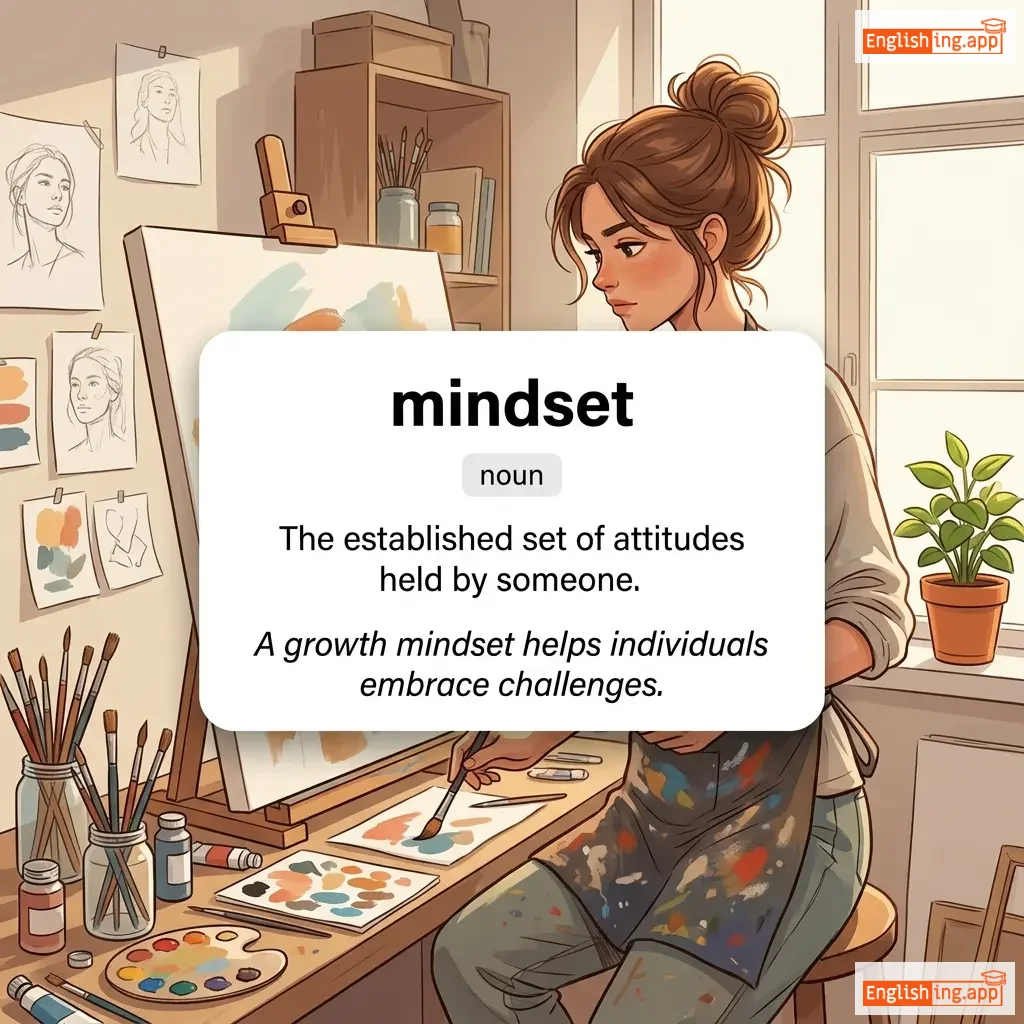
mindset definition card — visual illustration of the meaning
noun
ˈmaɪnd.set
マインドセット (maindosetto)

The established set of attitudes held by someone.

"A growth mindset helps individuals embrace challenges."

"成長マインドセットは、個人が挑戦を受け入れるのを助けます。" (Seichō maindosetto wa, kojin ga chōsen o ukeireru no o tasukemasu.)
adjective
/ˈmaɪndləs/
無意味な (muimi na)

without thought or intelligence; done without consideration

"He was bored by the mindless tasks at work."
"彼は仕事の中で無意味な作業に退屈していた。" (Kare wa shigoto no naka de muimi na sagyō ni taikutsu shite ita.)
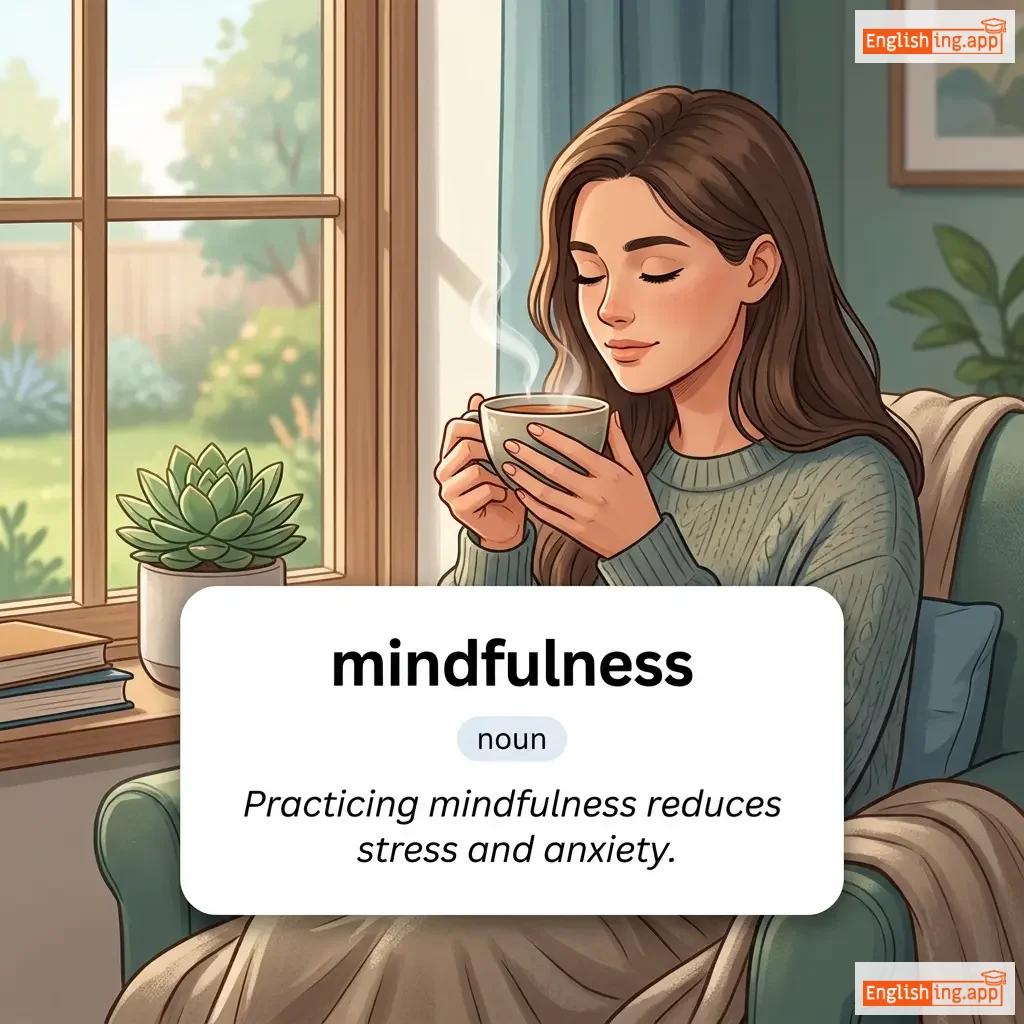
mindfulness definition card — visual illustration of the meaning
noun
/ˈmaɪnd.fʊl.nəs/
マインドフルネス (maindofurunesu)

The quality or state of being conscious or aware of something; a mental state achieved by focusing one's awareness on the present moment.

"Practicing mindfulness reduces stress and anxiety."

"マインドフルネスの実践は、ストレスと不安を軽減します。" (Maindofurunesu no jissen wa, sutoresu to fuan o keigen shimasu.)
adjective
/ˈmaɪnd.fəl/
注意深い; 意識的 (chūibukai; ishikiteki)

being conscious or aware; paying attention to the present moment

"She is always mindful of her surroundings and pays attention to details."
"彼女は常に自分の周りに注意を払い、詳細に気を配っています。" (Kanojo wa jōzu ni jibun no mawari ni chūi o harai, shōsai ni ki o haiteimasu.)
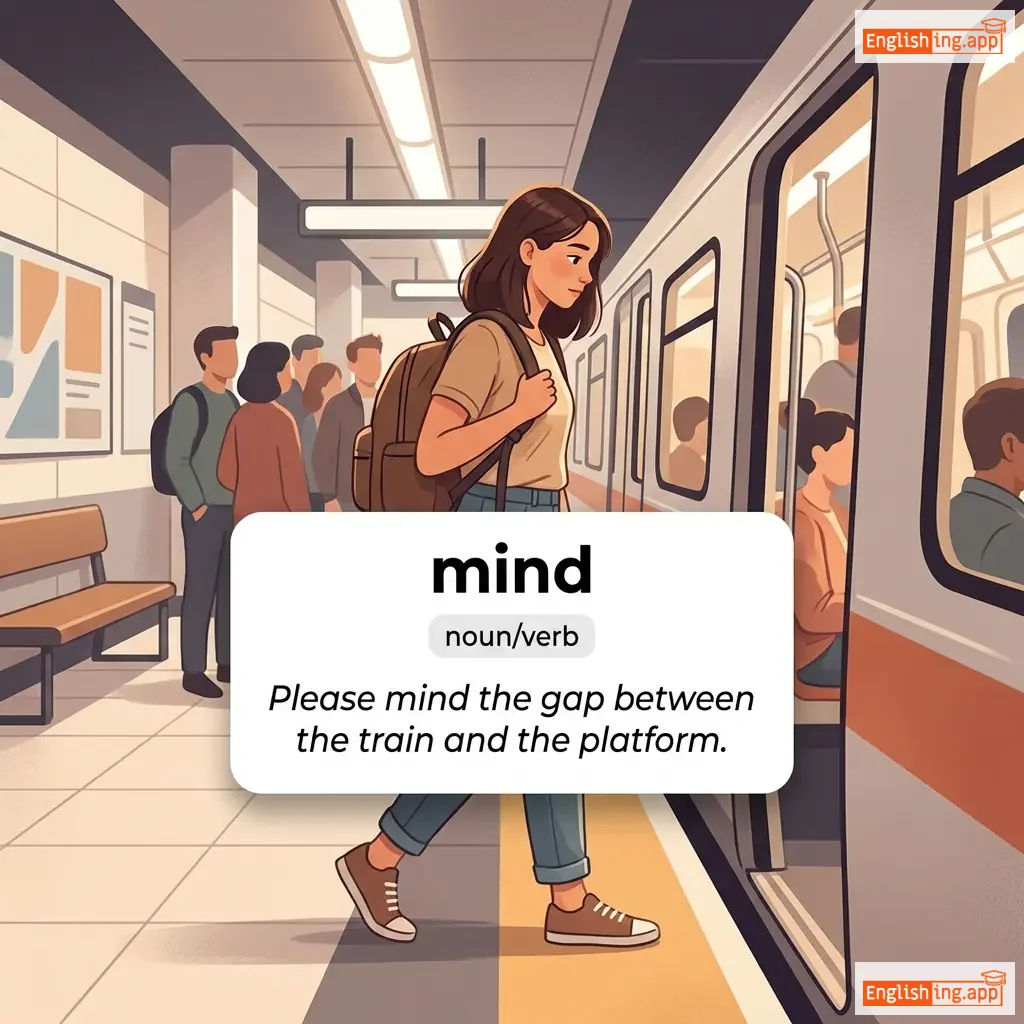
mind definition card — visual illustration of the meaning
noun/verb
/maɪnd/
心 / 世話する (kokoro / sewa suru)

the part of a person that enables them to think, feel, and reason; to pay attention or take care

"Please mind the gap between the train and the platform."

"列車とプラットフォームの間の隙間に注意してください。" (Ressha to purattofōmu no aida no suki ma ni chūi shite kudasai.)
adjective
/ˈmɪnsɪŋ/
気取った (kidotta)

affectedly delicate, dainty, or refined in manner or movement

"He walked with mincing steps across the stage."
"彼はステージを歩くとき、気取った足取りで歩いていました。" (Kare wa suteeji o aruku toki, kidotta ashidori de aruite imashita.)
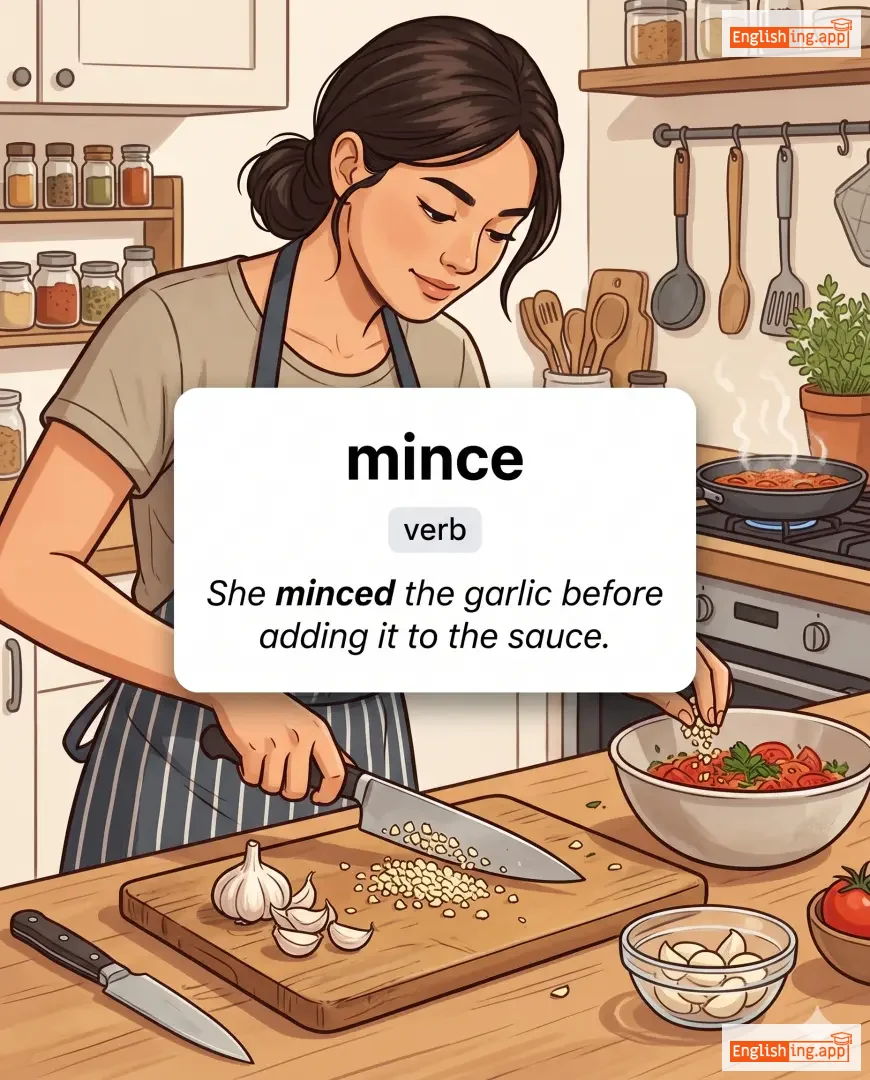
mince definition card — visual illustration of the meaning
verb
/mɪns/
刻む (kizamu)

to cut food, especially meat, into very small pieces; to speak in an affectedly delicate or refined way

"She minced the garlic before adding it to the sauce."

"彼女はソースに加える前にニンニクをみじん切りにしました。" (Kanojo wa sōsu ni kuwaeru mae ni nin'niku wo mijingiri ni shimashita.)
adjective
/ˈmɪnətɔːri/
威嚇的な (ikakuteki na)

Expressing a threat; menacing.

"The criminal gave the witness a minatory look."

"犯人は証人に威嚇的な視線を送った。" (Hannin wa shōnin ni ikakuteki na shisen o okutta.)
noun
/ˌmɪnəˈrɛt/
ミナレット (minaretto)

A tall, slender tower of a mosque, from which the call to prayer is announced.

"The minaret of the mosque could be seen from miles away."

"モスクのミナレットは数マイル先から見ることができました。" (Mosuku no minaretto wa suu mairu saki kara miru koto ga dekimashita.)
noun
/ˈmɪmɪkri/
模倣 (mohou)

The act of imitating someone or something, often for humor or learning.

"The comedian’s mimicry of celebrities made the audience laugh."

"コメディアンの有名人の模倣で観客を笑わせました。" (Komedian no yuumeijin no mohou de kankyaku wo warawasemashita.)
adjective
/ˈmɪlɪtənt/
過激 (kageki)

Aggressively active in a cause, sometimes using forceful methods.

"The group became increasingly militant in their demands."

"そのグループは彼らの要求においてますます過激になった。" (Sono gurūpu wa karera no yōkyū ni oite masumasu kageki ni natta.)
noun
/mɪˈlɪʃə/
民兵 (minpei)

a group of ordinary people who are trained to act as soldiers in emergencies

"The village formed a militia to defend against attacks."

"村は攻撃から守るために民兵を結成した。" (Mura wa kougeki kara mamoru tame ni minpei wo kessei shita.)
verb
/ˈmɪlɪˌteɪt/
妨げる (samatageru)

to have a strong effect against something; to work as a powerful factor in preventing or influencing an outcome

"His lack of experience will militate against his promotion."
"彼の経験不足が昇進に対して障害となるだろう。" (kare no keiken fusoku ga shōshin ni taishite shōgai to naru darou.)
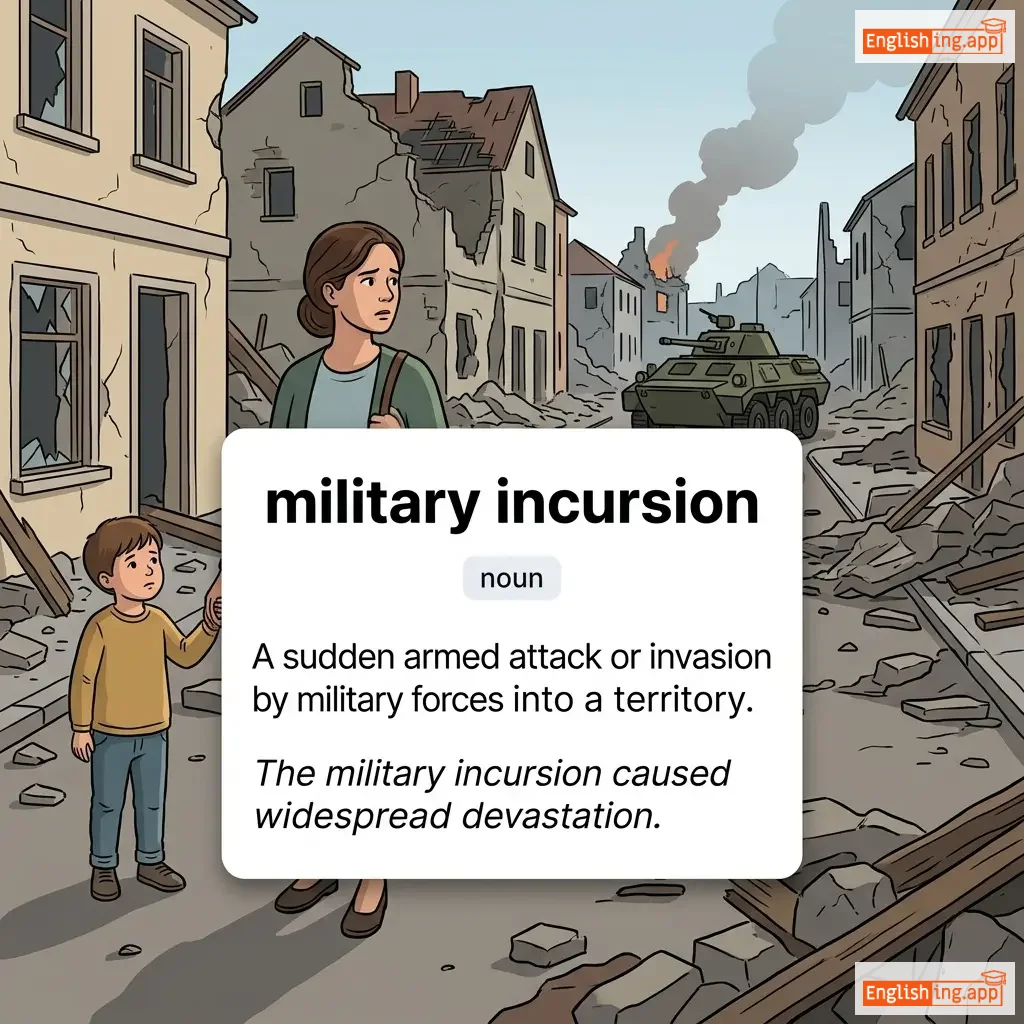
military incursion definition card — visual illustration of the meaning
noun
ˈmɪl.ɪ.tər.i ɪnˈkɜː.ʃən
軍事侵入 (gunji shinnyū)

A sudden armed attack or invasion by military forces into a territory.

"The military incursion caused widespread devastation."
"軍事侵入は広範囲にわたる破壊を引き起こしました。" (Gunji shinnyū wa kōhan'i ni wataru hakai o hikiokoshimashita.)
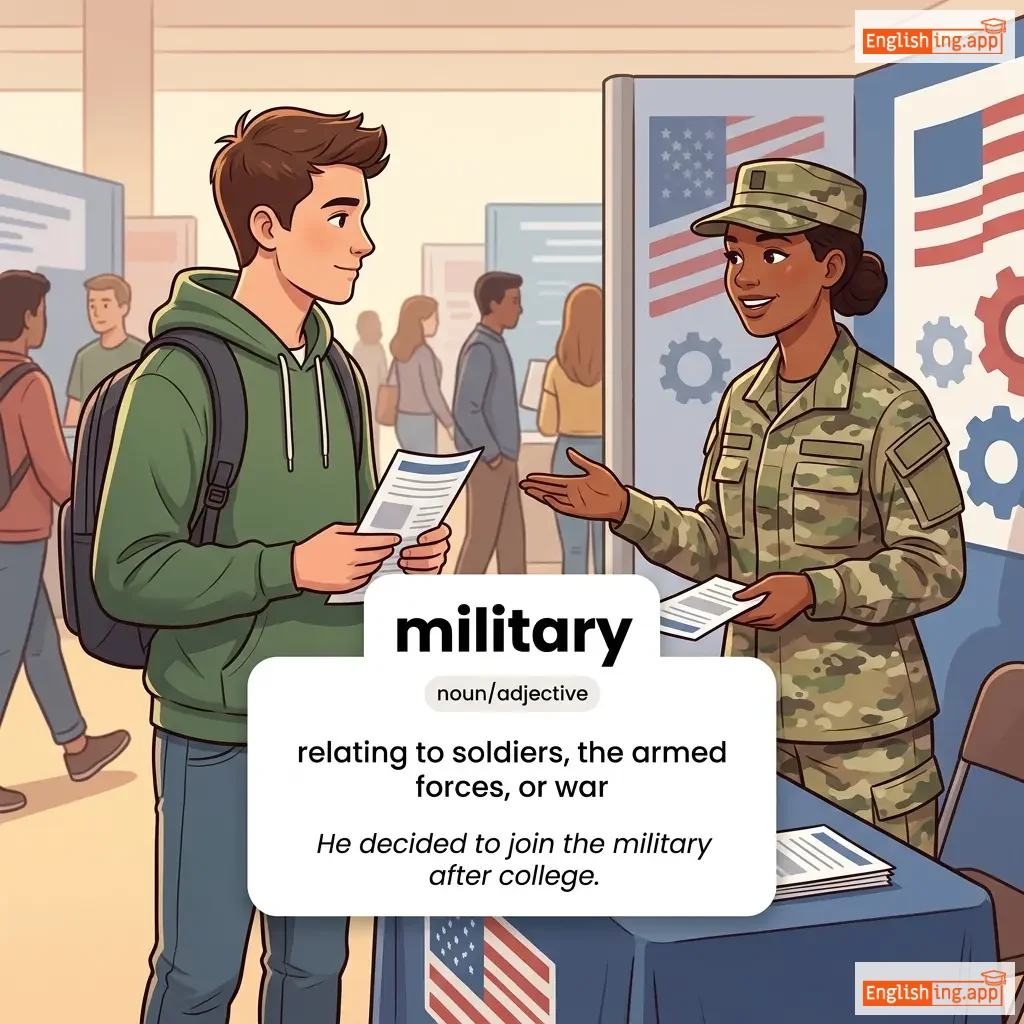
military definition card — visual illustration of the meaning
noun/adjective
/ˈmɪlɪˌtɛri/
軍隊 (guntai)

relating to soldiers, the armed forces, or war

"He decided to join the military after college."

"彼は大学を卒業後、軍隊に参加することに決めた。" (Kare wa daigaku o sotsugyou go, guntai ni sanka suru koto ni kimeta.)
noun
/ˈmɪlɪtəˌrɪzəm/
軍国主義 (gunkokushugi)

The belief in maintaining a strong military and using it aggressively to defend or promote national interests.

"The rise of militarism in the region caused tension among neighboring countries."
"地域での軍国主義の台頭は、隣国間の緊張を引き起こしました。" (Chiiki de no gunkokushugi no taitō wa, ringokukan no kinchō o hikiokoshimashita.)
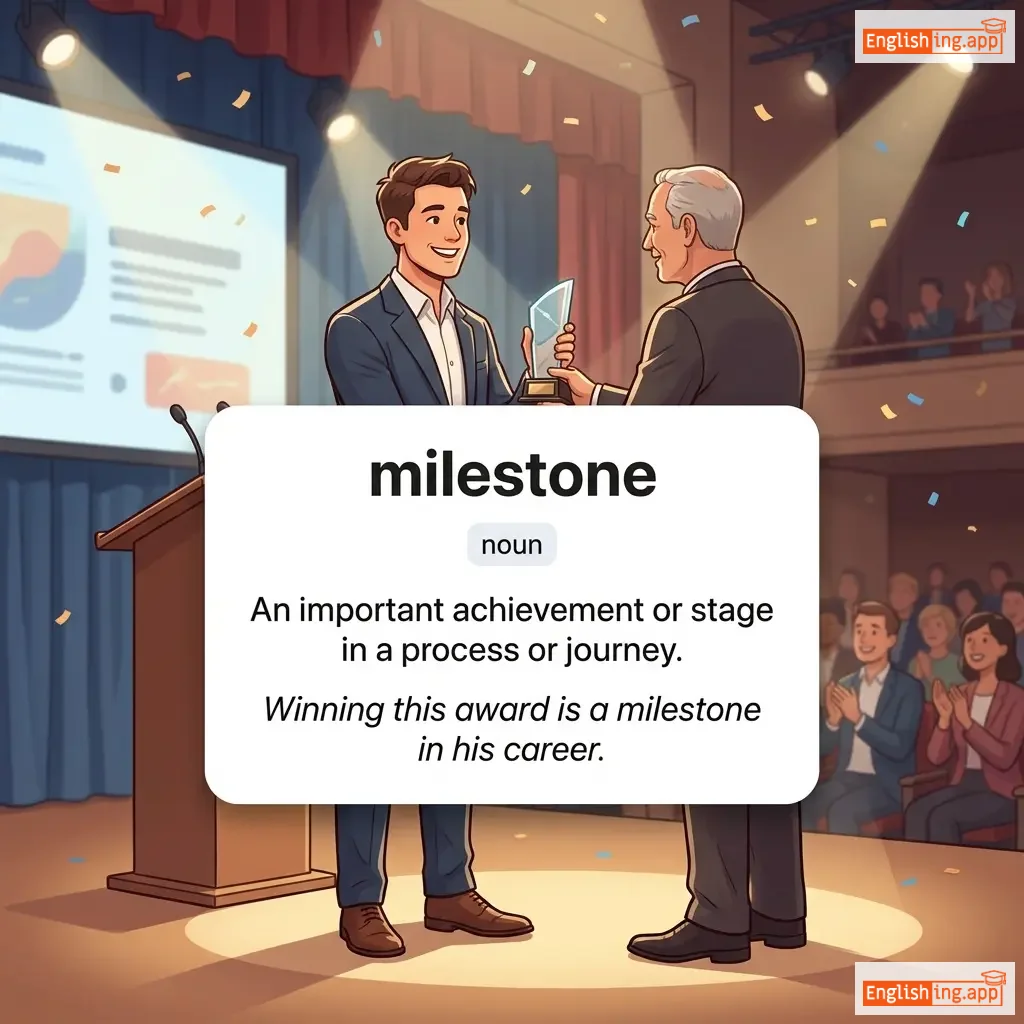
milestone definition card — visual illustration of the meaning
noun
ˈmaɪl.stəʊn
重要な達成 (jūyōna tassei)

An important achievement or stage in a process or journey.

"Winning this award is a milestone in his career."

"この賞を受賞することは彼のキャリアの中でのマイルストーンです。" (Kono shō o jushō suru koto wa kare no kyariā no naka de no mairusutōn desu.)
verb
/ˌmɪsˈkaʊnt/
間違えて数える (machigaete kazoeru)

To count wrongly or inaccurately.

"He miscounted the number of chairs in the hall."

"彼はホールの椅子の数を間違えて数えました。" (Kare wa hōru no isu no kazu o machigaete kazoemashita.)