語彙集

英単語辞書 | 単語の意味、定義、例文

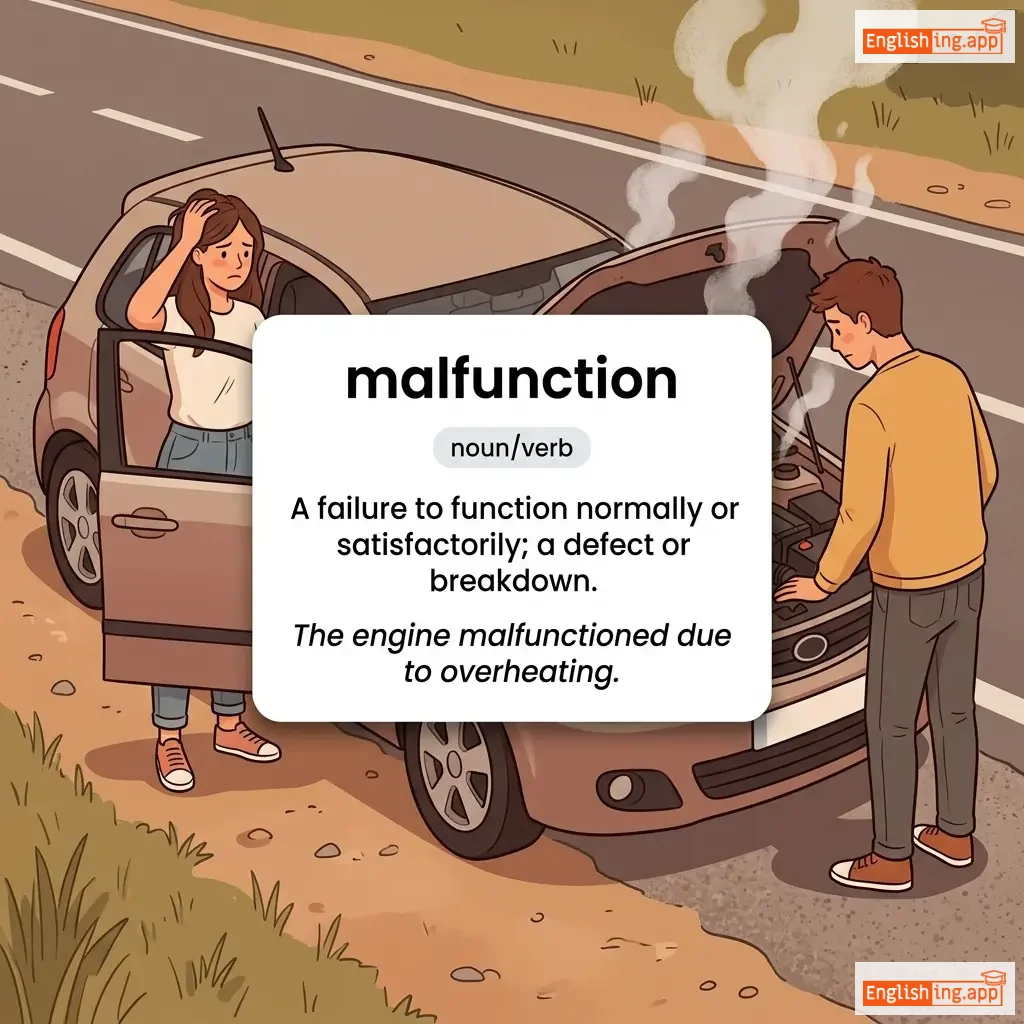
malfunction definition card — visual illustration of the meaning
noun/verb
mælˈfʌŋk.ʃən
故障 (koshou)

A failure to function normally or satisfactorily; a defect or breakdown.

"The engine malfunctioned due to overheating."

"エンジンは過熱のため故障しました。" (Enjin wa kanetsu no tame koshou shimashita.)
noun
/mælˈfiːzəns/
公務員の不正行為 (koumuin no fusei koui)

Wrongdoing or misconduct, especially by a public official.

"The mayor was accused of malfeasance in office."

"市長は職務中の不正行為で告発された。" (Shichou wa shokumu-chuu no fusei koui de kokuhatsu sareta.)
adjective
/məˈlɛvələnt/
悪意のある (akui no aru)

Having or showing a wish to do evil or harm to others.

"The malevolent glare in his eyes frightened the children."

"彼の目に浮かぶ悪意のある視線は子供たちを怖がらせた。" (Kare no me ni ukabu akui no aru shisen wa kodomotachi o kowagaraseta.)
noun
/məˈlɛvələns/
悪意 (akui)

The state or condition of being malevolent; having or showing a wish to do evil to others.

"His malevolence was clear in the cruel way he treated his rivals."

"彼の悪意は、彼がライバルを扱う残忍な方法において明らかだった。" (Kare no akui wa, kare ga raibaru o atsukau zan'ina hōhō ni oite akirakadaった.)
adjective
/ˌmæl.əˈfɪʃ.ənt/
悪意のある (akui no aru)

Doing harm or evil; having a harmful effect.

"The maleficient acts of the tyrant ruined the kingdom."

"暴君の悪意のある行為は王国を滅ぼした。" (Bōkun no akui no aru kōi wa ōkoku o horoboshita.)
adjective
/məˈlɛfɪsənt/
邪悪 (jaaku)

Causing harm or destruction, especially by supernatural means.

"The maleficent witch cursed the young princess."

"その悪しき魔女は若い王女に呪いをかけました。" (Sono ashiki majo wa wakai ōjo ni noroi o kakemashita.)
noun
/ˈmæl.əˌfæk.tər/
悪党 (akutou)

A person who commits a crime or does evil.

"The malefactor was arrested for the robbery."

"その悪党は強盗で逮捕された。" (Sono akutou wa goutou de taiho sareta.)
noun
/ˌmæl.əˈdɪk.ʃən/
呪い (noroi)

A curse or the utterance of a curse.

"The witch cast a malediction upon the village."

"魔女は村に呪いをかけた。" (Majo wa mura ni noroi o kaketa.)
noun/adjective
/meɪl/
男性 (dansei)

a man or boy; relating to men or boys

"The school has more male teachers than female teachers."

"学校には女性の教師よりも男性の教師が多い。" (Gakkou ni wa josei no kyoushi yori mo dansei no kyoushi ga ooi.)
noun
/ˈmæl.kənˌtɛnt/
不満な人 (fuman na hito)

A person who is dissatisfied or rebellious; one who is not content.

"The malcontent voiced his grievances against the government."
"不満な人は政府に対して不平を述べました。" (Fuman na hito wa seifu ni taishite fuhei wo nobemashita.)
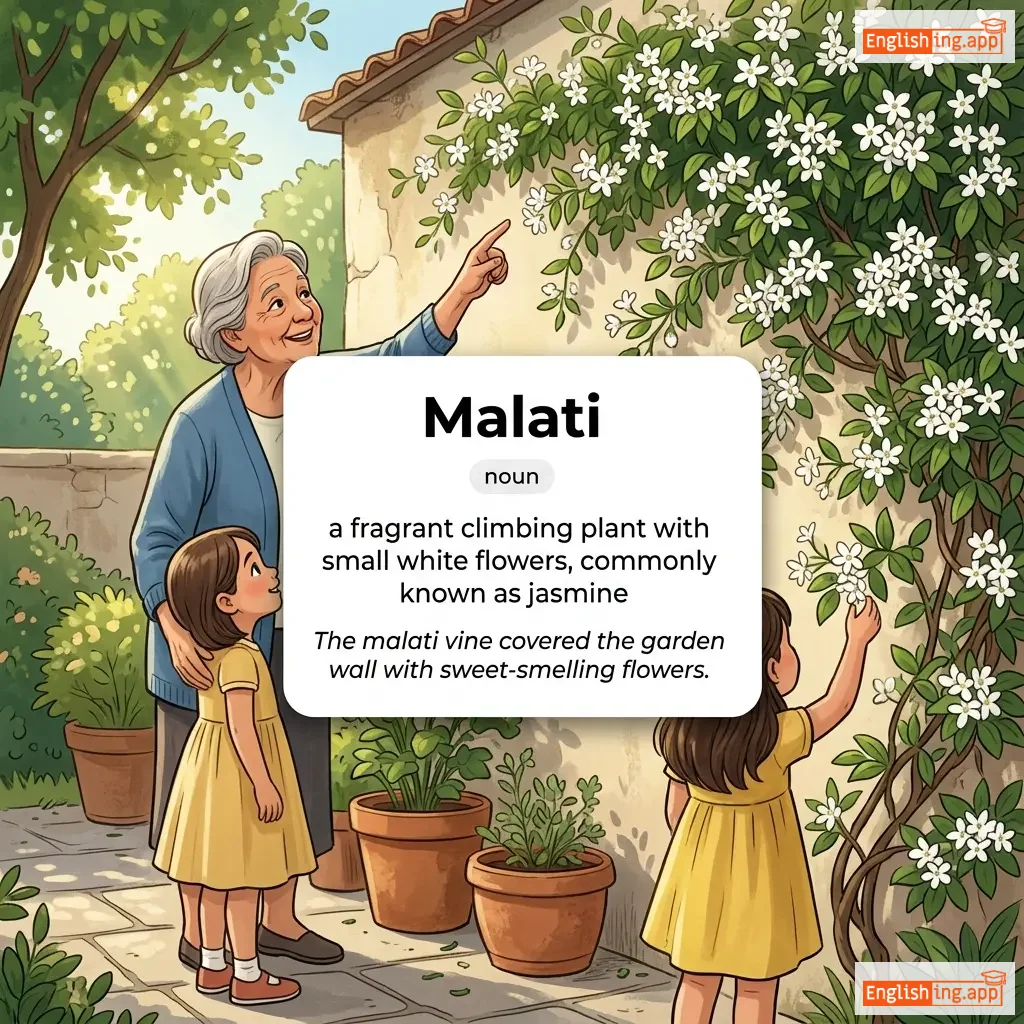
Malati definition card — visual illustration of the meaning
noun
/məˈlɑː.ti/
マラティ (malati)

a fragrant climbing plant with small white flowers, commonly known as jasmine

"The malati vine covered the garden wall with sweet-smelling flowers."

"マラティのツルが甘い香りの花で庭の壁を覆っていました。" (Malati no tsuru ga amai kaori no hana de niwa no kabe wo otteimashita)
noun
/məˈlɛəriə/
マラリア (mararia)

a serious infectious disease spread by mosquitoes, causing fever, chills, and sweating

"Malaria is a common disease in tropical regions."

"マラリアは熱帯地域で一般的な病気です。" (Mararia wa nettai chiiki de ippantekina byōki desu.)
adjective, adverb
/ˌmæləprəˈpoʊ/
不適切 (futekisetsu)

inappropriate or unsuitable; at an inconvenient or inappropriate time

"His comment was malapropos during the serious discussion."

"真剣な議論中に彼のコメントは不適切だった。" (Shinken na giron-chuu ni kare no komento wa futekisetsu datta.)
noun
/ˈmæləprɒˌpɪzəm/
誤用語 (goyōgo)

the mistaken use of a word in place of a similar-sounding one, often with amusing effect

"He is famous for his malapropism when speaking in public."

"彼は公衆の前で話すときに誤用語で有名です。" (Kare wa kōshū no mae de hanasu toki ni goyōgo de yūmei desu.)
noun
/məˈleɪz/
不調 (fuchou)

a general feeling of discomfort, illness, or unease whose exact cause is difficult to identify

"After the long journey, she felt a general malaise."

"長時間の旅行の後、彼女は一般的な不調を感じました。" (Choujikan no ryokou no ato, kanojo wa ippan-teki na fuchou o kanjimashita.)
noun
/ˈmælədi/
病気 (byouki)

a disease or disorder of the body or mind; a serious problem

"The doctor treated the malady with great care."

"医者は病気を慎重に治療しました。" (Isha wa byouki wo shinchou ni chiryou shimashita.)
adjective
/ˌmæləˈdrɔɪt/
不器用 (bukiyou)

clumsy or awkward in movement or behavior

"His maladroit attempt at fixing the chair made it worse."

"椅子を修理しようとした彼の不器用な試みは、さらに悪化させた。" (Isu o shuuri shiyou to shita kare no bukiyou na kokoromi wa, sara ni akka saseta.)
noun
/ˈmeɪkɪŋ/
制作 (seisaku)

the process of producing or constructing something

"The making of the movie took over two years."

"映画の制作には2年以上かかりました。" (Eiga no seisaku ni wa 2-nen ijō kakarimashita.)
noun
/ˈmeɪkʌp/
化粧 (keshou)

cosmetics used to enhance or alter appearance

"She applied makeup before the party."

"彼女はパーティーの前に化粧をした。" (Kanojo wa pātī no mae ni keshou o shita.)
adjective
/ˈmeɪkˌʃɪft/
即席の (sokuseki no)

used as a temporary substitute; improvised

"They used boxes as a makeshift table."

"彼らは箱を即席のテーブルとして使った。" (Karera wa hako o sokuseki no tēburu to shite tsukatta.)
noun
/ˈmeɪkər/
創造者 (sozo-sha)

a person or thing that makes or produces something

"He is a famous movie maker in Hollywood."

"彼はハリウッドの有名な映画製作者です。" (kare wa hariruddo no yuumei na eiga seisakusha desu.)
make definition card — visual illustration of the meaning
verb
/meɪk/
作る (tsukuru)

to create, build, or cause something to happen

"She can make delicious cakes."
"彼女は美味しいケーキを作れます。" (Kanojo wa oishii keeki o tsukuremasu.)
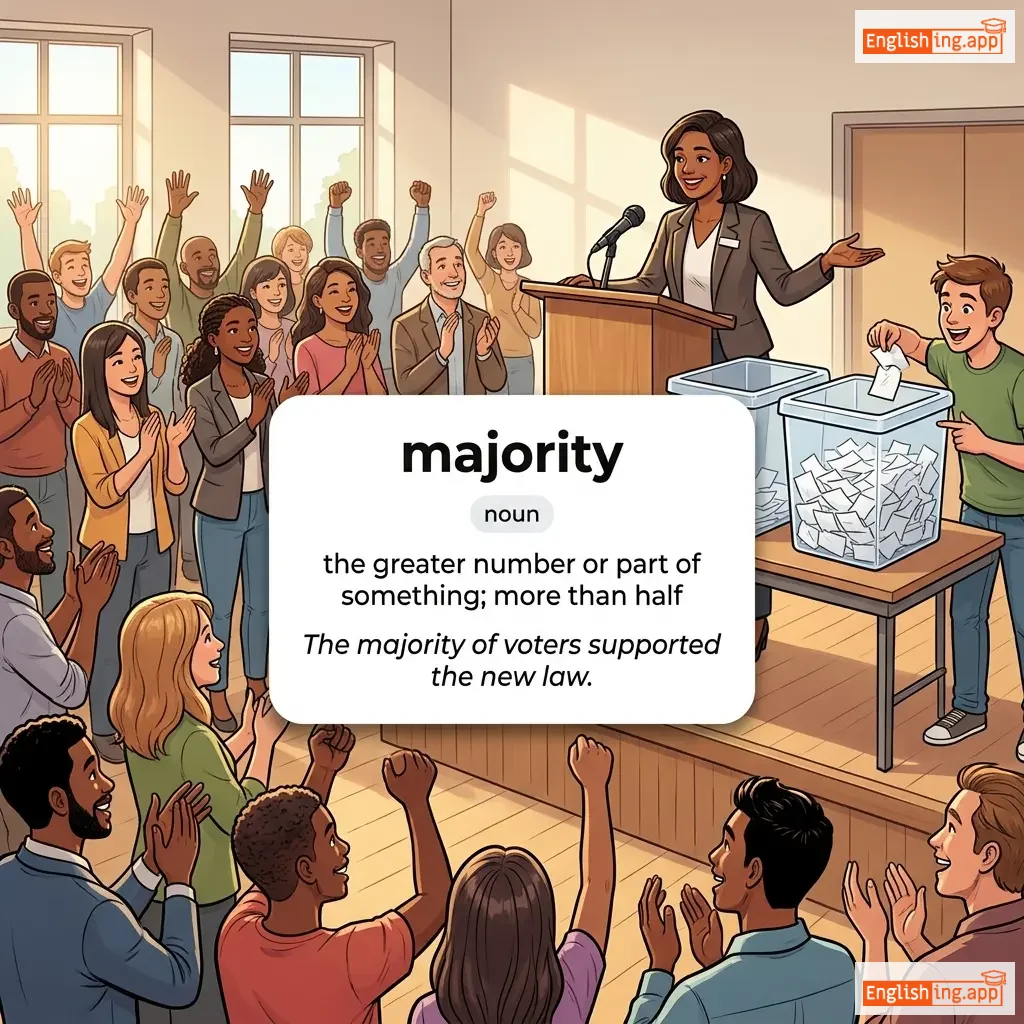
majority definition card — visual illustration of the meaning
noun
/məˈdʒɒrəti/
多数 (tasuu)

the greater number or part of something; more than half

"The majority of voters supported the new law."

"有権者の多数が新しい法律を支持しました。" (Yuken-sha no tasuu ga atarashii houritsu o shiji shimashita.)
adjective
/ˈmeɪdʒər/
重要な (jūyōna)

important, serious, or significant

"Climate change is a major concern for the world."
"気候変動は世界にとって重大な懸念事項です。" (kikō hendō wa sekai ni totte jūdaina shinpai jikō desu.)
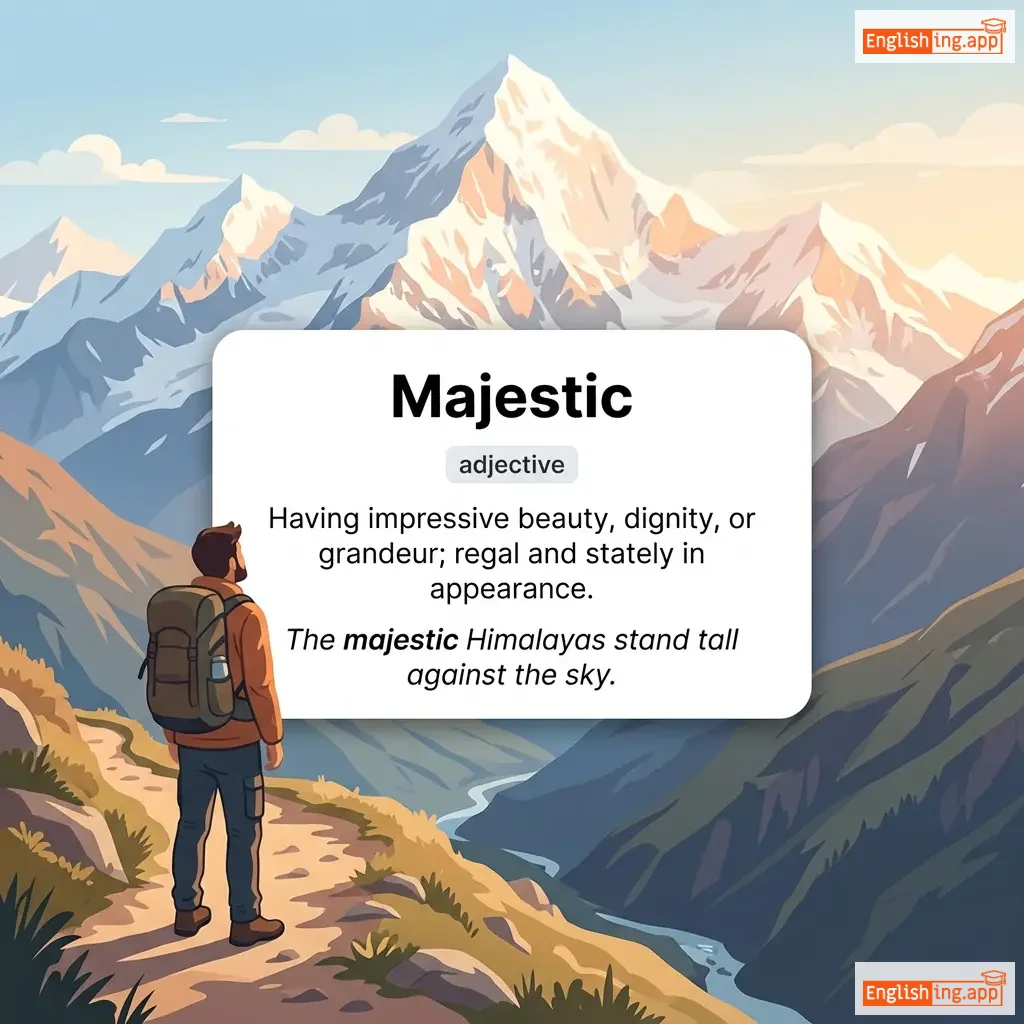
Majestic definition card — visual illustration of the meaning
adjective
məˈdʒes.tɪk
壮大な (sōdaina)

Having impressive beauty, dignity, or grandeur; regal and stately in appearance.

"The majestic Himalayas stand tall against the sky."
"壮大なヒマラヤ山脈は空に向かって高くそびえ立っています。" (Sōdaina Himaraya sanmyaku wa sora ni mukatte takaku sobietatteimasu.)
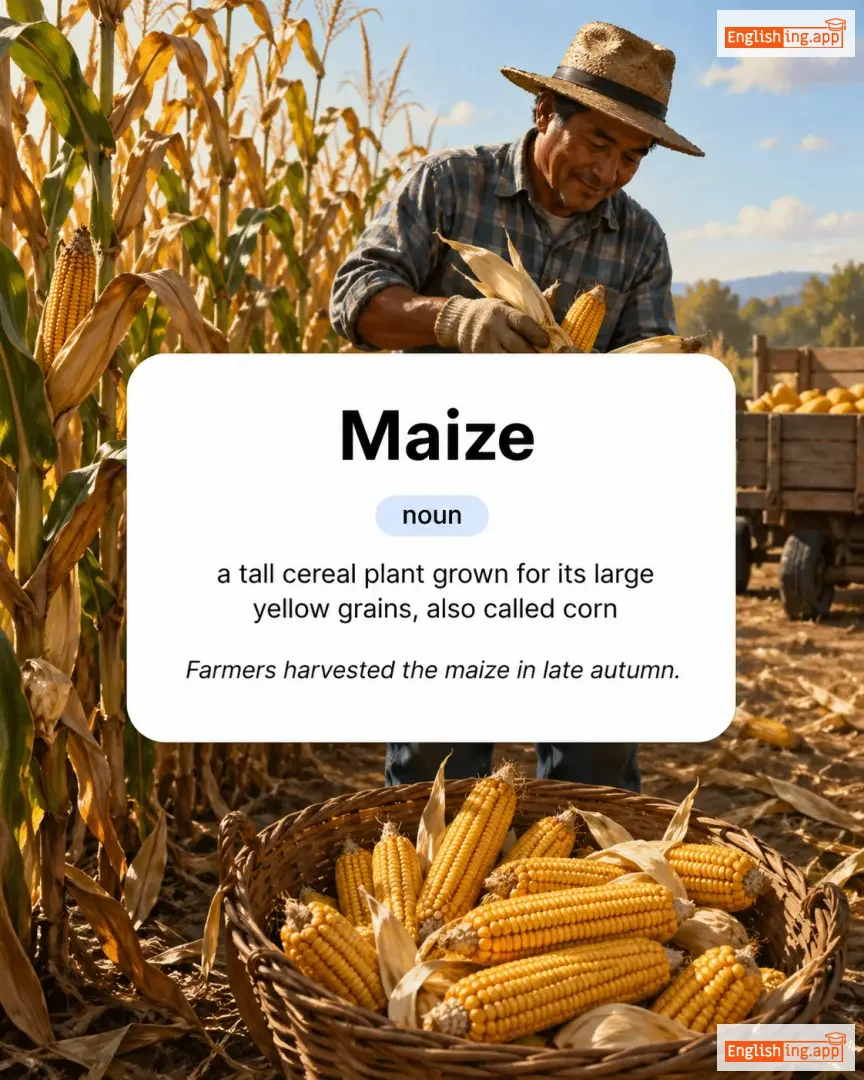
Maize definition card — visual illustration of the meaning
noun
/meɪz/
トウモロコシ (toumorokoshi)

a tall cereal plant grown for its large yellow grains, also called corn

"Farmers harvested the maize in late autumn."
"農家は秋の終わりにトウモロコシを収穫しました。" (Nouka wa aki no owari ni toumorokoshi wo shuukaku shimashita.)
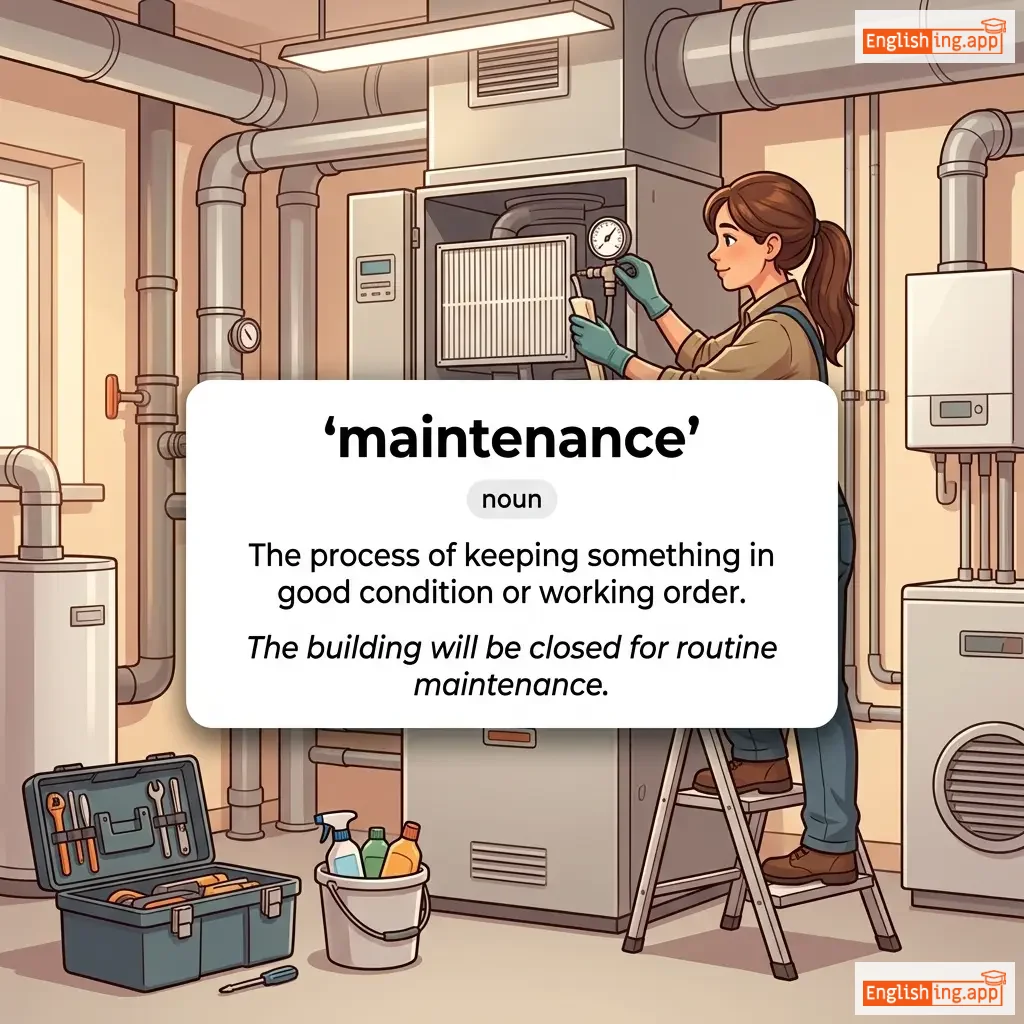
maintenance definition card — visual illustration of the meaning
noun
/ˈmeɪntənəns/
メンテナンス (mentenansu)

The process of keeping something in good condition or working order.

"The building will be closed for routine maintenance."
"その建物は定期的なメンテナンスのために閉鎖されます。" (Sono tatemono wa teikiteki na mentenansu no tame ni heisa saremasu.)
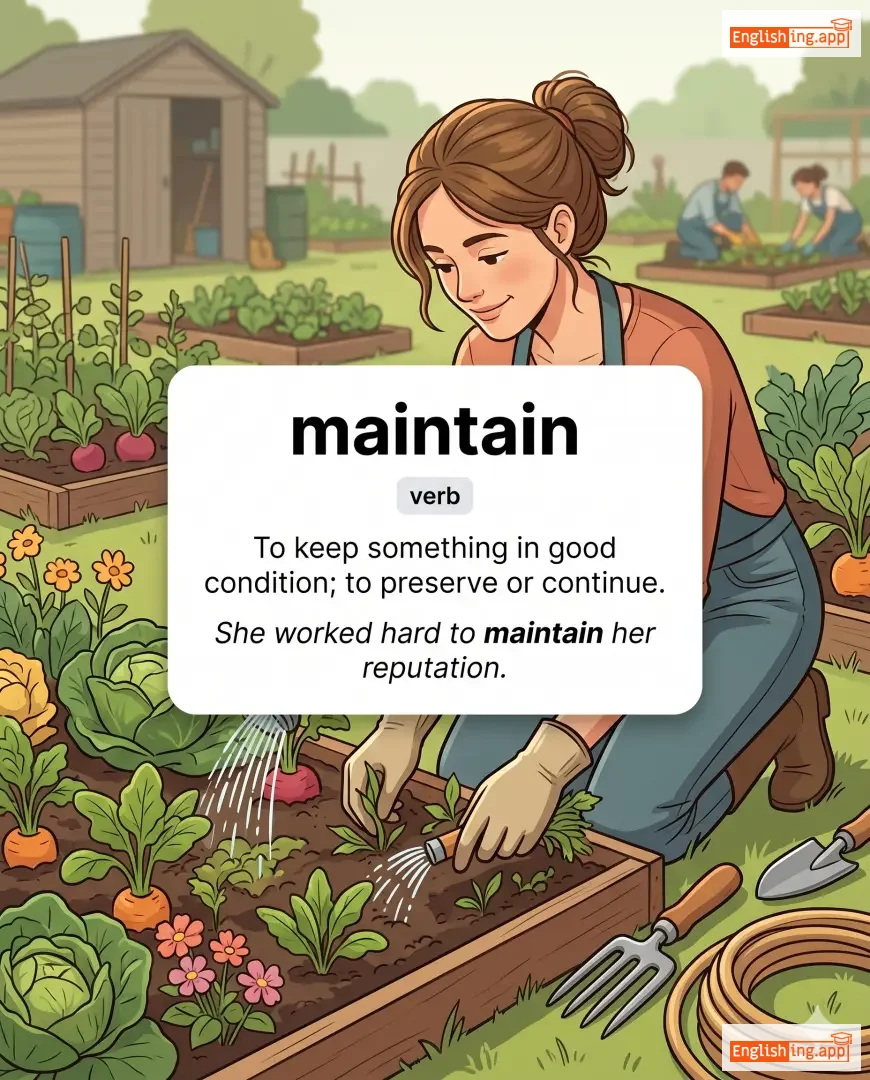
maintain definition card — visual illustration of the meaning
verb
/meɪnˈteɪn/
維持する (iji suru)

To keep something in good condition; to preserve or continue.

"She worked hard to maintain her reputation."

"彼女は評判を維持するために一生懸命働きました。" (Kanojo wa hyōban o iji suru tame ni isshōkenmei hatarakimashita.)
noun
/ˈmeɪnstriːm/
主流 (shuryuu)

the ideas, attitudes, or activities that are regarded as normal or conventional; the dominant trend in opinion or fashion

"Social media has become a mainstream source of news for many people."

"ソーシャルメディアは多くの人々にとって主流のニュースソースとなった。" (Sōsharumedia wa ōku no hitobito ni totte shuryū no nyūsu sōsu to natta.)
adverb
/ˈmeɪnli/
主に (omoni)

for the most part; chiefly

"The audience was mainly composed of students."

"観客は主に学生で構成されていました。" (Kankyaku wa omoni gakusei de kousei sarete imashita.)
noun
/ˈmeɪnˌlænd/

the principal landmass of a country or continent, as opposed to the surrounding islands

"The mainland of Australia is home to most of its population."

adjective
/meɪn/
主要な (shuyō na)

most important; chief in size, extent, or importance

"The main reason for his success is hard work."

"彼の成功の主な理由は、努力したことです。" (kare no seikō no omona riyū wa, doryoku shita koto desu.)
noun
/laɪər/
ライアー (raiaa)

a stringed musical instrument of ancient Greece

"The musician played a melody on the lyre."

"ミュージシャンはライアーでメロディーを演奏しました。" (Miyuujishan wa raiaa de merodii wo ensou shimashita.)
noun
/lʌst/
欲望 (yokubou)

a very strong sexual desire or an intense craving for something

"His mind was clouded by lust for power."

"彼の心は権力への欲望に覆われていた。" (kare no kokoro wa kenryoku e no yokubou ni owarete ita.)
noun
/ˈlʌstər/
光沢 (koutaku)

a gentle sheen or soft glow, especially from a polished surface

"The diamond had a brilliant luster."

"ダイヤモンドは輝く光沢を持っていた。" (Daiyamondo wa kagayaku koutaku o motte ita.)
lustrous definition card — visual illustration of the meaning
adjective
/ˈlʌstrəs/
光沢のある (kōtaku no aru)

having a gentle sheen or soft glow

"Her hair looked smooth and lustrous."

"彼女の髪は滑らかで光沢のあるように見えた。" (Kanojo no kami wa nameraka de kōtaku no aru yō ni mieta.)
noun
/lʌɡˈʒʊəriəns/
贅沢 (zeitaku)

abundant growth, richness, or elegance

"The garden was filled with the luxuriance of tropical plants."

"庭は熱帯植物の贅沢で満たされていた。" (Niwa wa nettai shokubutsu no zeitaku de mitasarete ita.)
adjective
/lʌɡˈʒʊəriənt/
豊かな (yutakana)

abundant in growth or richly abundant

"The luxuriant forest was teeming with life."

"豊かな森は命で満ちていた。" (Yutakana mori wa inochi de michite ita.)
verb
/lʌɡˈʒʊrieɪt/
贅沢を楽しむ (zeitaku wo tanoshimu)

to enjoy something in a self-indulgent way; to take pleasure in great comfort

"She luxuriated in the warm bubble bath after a long day."

"長い一日の後、彼女は暖かいバブルバスで贅沢を楽しんでいた。" (Nagai ichinichi no ato, kanojo wa atatakai baburu basu de zeitaku wo tanoshinde ita.)
adjective
/lʌɡˈʒʊəriəs/
豪華な (gouka na)

extremely comfortable, elegant, or enjoyable, often involving great expense

"They stayed in a luxurious hotel during their vacation."

"彼らは休暇中に豪華なホテルに泊まりました。" (Karera wa kyuuka-chuu ni gouka na hoteru ni tomarimashita.)
noun
/ˈlʌkʃəri/
贅沢 (zeitaku)

a state of great comfort or elegance, often involving great expense

"Staying at a five-star hotel is a luxury for most people."

"五つ星ホテルに泊まることは、ほとんどの人にとって贅沢です。" (itsutsu boshi hoteru ni tomaru koto wa, hotondo no hito ni totte zeitaku desu.)
verb
/ˈlaɪɪŋ/
嘘をつく (uso o tsuku)

the act of not telling the truth

"He was caught lying about his grades."

"彼は成績について嘘をついているところを捕まえられました。" (Kare wa seiseki ni tsuite uso o tsuite iru tokoro o tsukamaeraremashita.)
noun
/meɪs/
メイス / 王杖 (meisu / ōjō)

a ceremonial staff carried as a symbol of authority or a weapon similar to a club

"The guard carried a mace as a symbol of authority."

"ガードは権威の象徴としてメイスを持っていた。" (Gādo wa ken'i no shōchō to shite meisu o motte ita.)
noun
/ˌmæk.ɪˈneɪ.ʃən/
陰謀 (inbō)

a secret plan or scheme intended to accomplish something, especially something evil

"The detective uncovered the villain's machination."

"探偵は悪党の陰謀を暴露した。" (Tantei wa akutō no inbō o bakuro shita.)
verb
/ˈmæk.ɪ.neɪt/
陰謀を企てる (inbō o kitediru)

to engage in plots or schemes, usually for harmful or evil purposes

"The rebels tried to machinate against the king."

"反乱者たちは王に対して陰謀を企てようとした。" (Hanran-sha-tachi wa ō ni taishite inbō o kitedeyō to shita.)
machiavellian definition card — visual illustration of the meaning
adjective
/ˌmækɪəˈvɛliən/
陰謀的で計略的、特に政治や自分のキャリアを進めるために倫理を無視する (makyaverian)

cunning, scheming, and unscrupulous, especially in politics or in advancing one's career

"The politician was known for his Machiavellian tactics."

"その政治家はマキャヴェリアンな戦術で知られていた。" (Sono seijika wa makyaverian na senjutsu de shirareteita.)
verb
/ˈmæsəˌreɪt/
浸す (hitasu)

to soften or break up something, especially food, by soaking in liquid

"The chef macerated the fruit in wine before serving."

"シェフは果物をワインにマセレートしてから提供しました。" (Shefu wa kudamono o wain ni maserēto shite kara teikyō shimashita.)
adjective
/məˈkɑːbrə/
恐ろしい (osoroshii)

disturbing and horrifying because of involvement with or depiction of death and injury

"The horror movie had a macabre ending."

"ホラー映画には恐ろしい結末がありました。" (Horā eiga ni wa osoroshī ketsumatsu ga arimashita.)
noun
/ˈluː.məˌnɛr.i/
著名人 (chomeijin)

A person who inspires or influences others, especially in a particular field.

"He is considered a luminary in the world of science."

"彼は科学の世界で著名人と見なされています。" (Kare wa kagaku no sekai de chomeijin to minasarerareteimasu.)
noun
/ˈlɪrɪk/
歌詞 (kashi)

the words of a song or a short poem that expresses personal feelings

"She memorized every lyric of her favorite song."

"彼女はお気に入りの歌の歌詞をすべて覚えていました。" (Kanojo wa okiniiri no uta no kashi o subete oboeteimashita.)