Словари

Словарь английского языка | Значения слов, определения и примеры
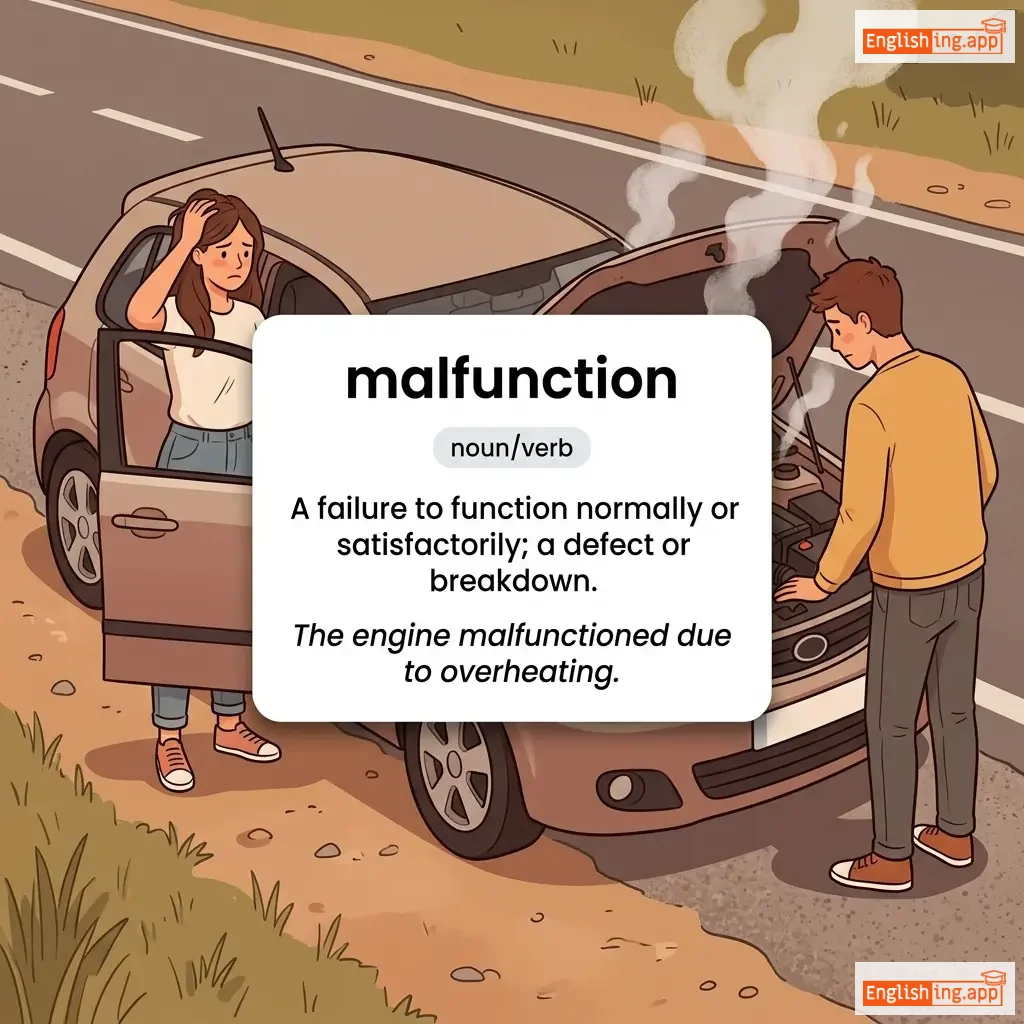
malfunction definition card — visual illustration of the meaning
noun/verb
mælˈfʌŋk.ʃən
неисправность (neispravnost)

A failure to function normally or satisfactorily; a defect or breakdown.

"The engine malfunctioned due to overheating."

"Двигатель вышел из строя из-за перегрева." (Dvigatel' vyshel iz stroya iz-za peregreva.)
noun
/mælˈfiːzəns/
злоупотребление служебным положением (zloupotreblenie sluzhebnyim polozheniem)

Wrongdoing or misconduct, especially by a public official.

"The mayor was accused of malfeasance in office."

"Мэра обвинили в злоупотреблении служебным положением." (Mery obvinili v zloupotreblenii sluzhebnyim polozheniem.)
adjective
/məˈlɛvələnt/
злобный (zlobnyj)

Having or showing a wish to do evil or harm to others.

"The malevolent glare in his eyes frightened the children."

"Злобный взгляд в его глазах напугал детей." (Zlobnyj vzglyad v ego glazakh napugal detej.)
noun
/məˈlɛvələns/
злонамеренность (zlonamerenost)

The state or condition of being malevolent; having or showing a wish to do evil to others.

"His malevolence was clear in the cruel way he treated his rivals."

"Его злонамеренность была очевидна в жестоком отношении к своим соперникам." (Ego zlonamerenost' byla ochevidna v zhestokom otnoshenii k svoim sopernikam.)
adjective
/ˌmæl.əˈfɪʃ.ənt/
злой (zloy)

Doing harm or evil; having a harmful effect.

"The maleficient acts of the tyrant ruined the kingdom."

"Злые поступки тирана разрушили королевство." (Zlye postupki tirana razrushili korolevstvo.)
adjective
/məˈlɛfɪsənt/
злой (zloy)

Causing harm or destruction, especially by supernatural means.

"The maleficent witch cursed the young princess."

"Злая ведьма прокляла молодую принцессу." (Zlaya ved'ma proklyala moloduyu printsessu.)
noun
/ˈmæl.əˌfæk.tər/
преступник (prestupnik)

A person who commits a crime or does evil.

"The malefactor was arrested for the robbery."

"Преступник был арестован за ограбление." (Prestuptnik byl arestovan za ograblenie.)
noun
/ˌmæl.əˈdɪk.ʃən/
проклятие (proklyatie)

A curse or the utterance of a curse.

"The witch cast a malediction upon the village."

"Ведьма наложила проклятие на деревню." (V'ed'ma nalozhila proklyatie na derevnyu.)
noun/adjective
/meɪl/
мужской (muzhskoy)

a man or boy; relating to men or boys

"The school has more male teachers than female teachers."

"В школе больше мужчин-преподавателей, чем женщин-преподавателей." (V shkole bolshe muzhchin-prepodavateley, chem zhenshchin-prepodavateley.)
noun
/ˈmæl.kənˌtɛnt/
недовольный человек (nedovolny chelovek)

A person who is dissatisfied or rebellious; one who is not content.

"The malcontent voiced his grievances against the government."
"Недовольный человек высказал свои жалобы против правительства." (Nedovolny chelovek vyskazal svoi zhaloby protiv pravitelstva.)
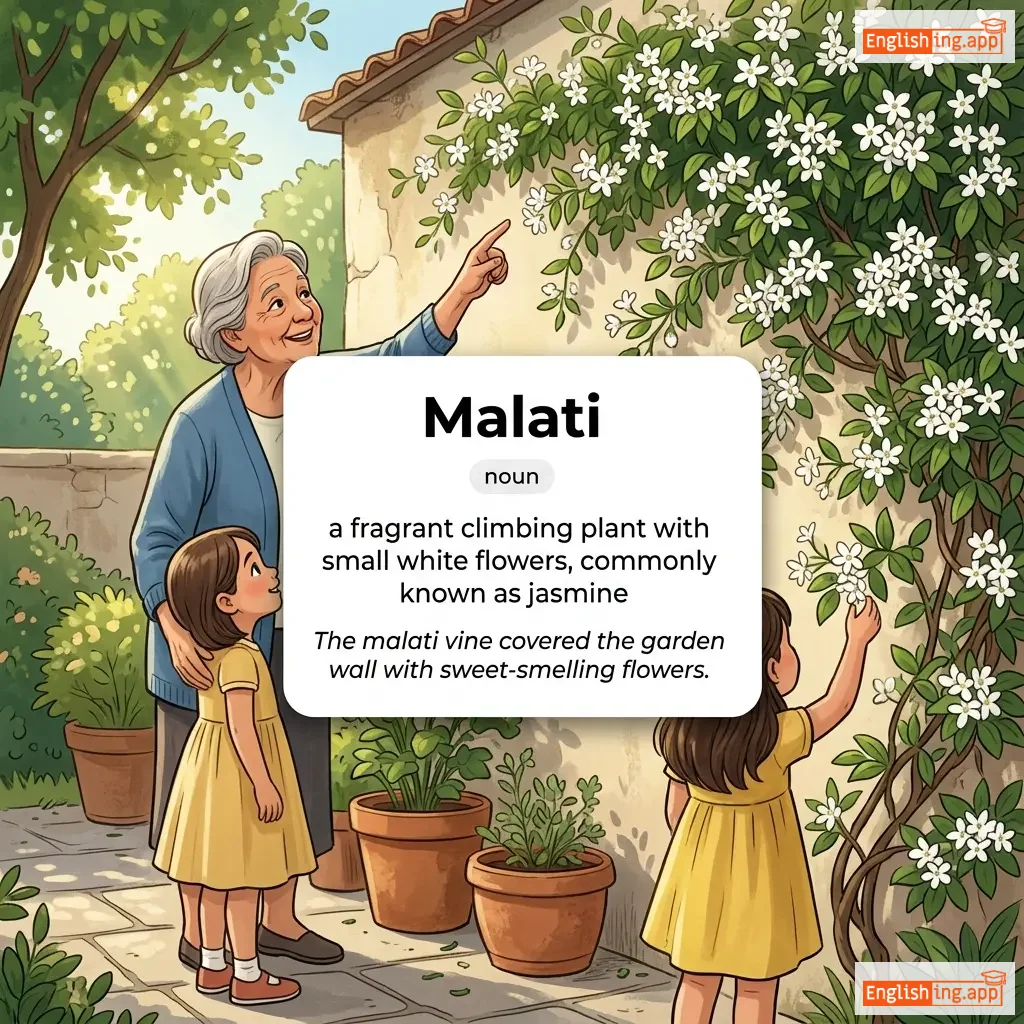
Malati definition card — visual illustration of the meaning
noun
/məˈlɑː.ti/
мала́ти (malati)

a fragrant climbing plant with small white flowers, commonly known as jasmine

"The malati vine covered the garden wall with sweet-smelling flowers."

"Лоза малати покрыла садовую стену сладко пахнущими цветами." (Loza malati pokryla sadovuyu stenu sladko pakhnushchimi tsvetami)
noun
/məˈlɛəriə/
малярия (malariya)

a serious infectious disease spread by mosquitoes, causing fever, chills, and sweating

"Malaria is a common disease in tropical regions."

"Малярия - это распространённое заболевание в тропических районах." (Malyariya - eto rasprostranyonnoye zabolevaniye v tropicheskikh rayonakh.)
adjective, adverb
/ˌmæləprəˈpoʊ/
неуместный (neumestnyy)

inappropriate or unsuitable; at an inconvenient or inappropriate time

"His comment was malapropos during the serious discussion."

"Его комментарий был неуместным во время серьезной дискуссии." (Yego kommentariy byl neumestnym vo vremya seryoznoy diskussii.)
noun
/ˈmæləprɒˌpɪzəm/
малапропизм (malapropizm)

the mistaken use of a word in place of a similar-sounding one, often with amusing effect

"He is famous for his malapropism when speaking in public."

"Он знаменит своим малапропизмом, когда говорит на публике." (On znamenit svoim malapropizmom, kogda govorit na publike.)
noun
/məˈleɪz/
недомогание (nedomoganie)

a general feeling of discomfort, illness, or unease whose exact cause is difficult to identify

"After the long journey, she felt a general malaise."

"После долгого путешествия она почувствовала общее недомогание." (Posle dolgogo puteshestviya ona pochuvstvovala obshchee nedomoganie.)
noun
/ˈmælədi/
болезнь (bolezn)

a disease or disorder of the body or mind; a serious problem

"The doctor treated the malady with great care."

"Врач лечил болезнь с большой осторожностью." (Vrach lechil bolezn' s bol'shoy ostorozhnost'yu.)
adjective
/ˌmæləˈdrɔɪt/
неуклюжий (neuklyuzhiy)

clumsy or awkward in movement or behavior

"His maladroit attempt at fixing the chair made it worse."

"Его неуклюжая попытка починить стул только ухудшила ситуацию." (Ego neuklyuzhaya popytka pochinit' stul tol'ko ukhudshila situatsiyu.)
noun
/ˈmeɪkɪŋ/
создание (sozdanie)

the process of producing or constructing something

"The making of the movie took over two years."

"Создание фильма заняло более двух лет." (Sozdanie fil'ma zanyalo bolee dvukh let.)
noun
/ˈmeɪkʌp/
макияж (makiyazh)

cosmetics used to enhance or alter appearance

"She applied makeup before the party."

"Она нанесла макияж перед вечеринкой." (Ona nanesla makiyazh pered vecherinkoy.)
adjective
/ˈmeɪkˌʃɪft/
временный (vremennyy)

used as a temporary substitute; improvised

"They used boxes as a makeshift table."

"Они использовали коробки как временный стол." (Oni ispol'zovali korobki kak vremennyy stol.)
noun
/ˈmeɪkər/
создатель (sozdatel)

a person or thing that makes or produces something

"He is a famous movie maker in Hollywood."

"Он знаменитый кинорежиссер в Голливуде." (On znamenityy kinorezhisser v Gollivude.)
make definition card — visual illustration of the meaning
verb
/meɪk/
делать (delat')

to create, build, or cause something to happen

"She can make delicious cakes."
"Она может делать вкусные торты." (Ona mozhet delat' vkusnye torty.)
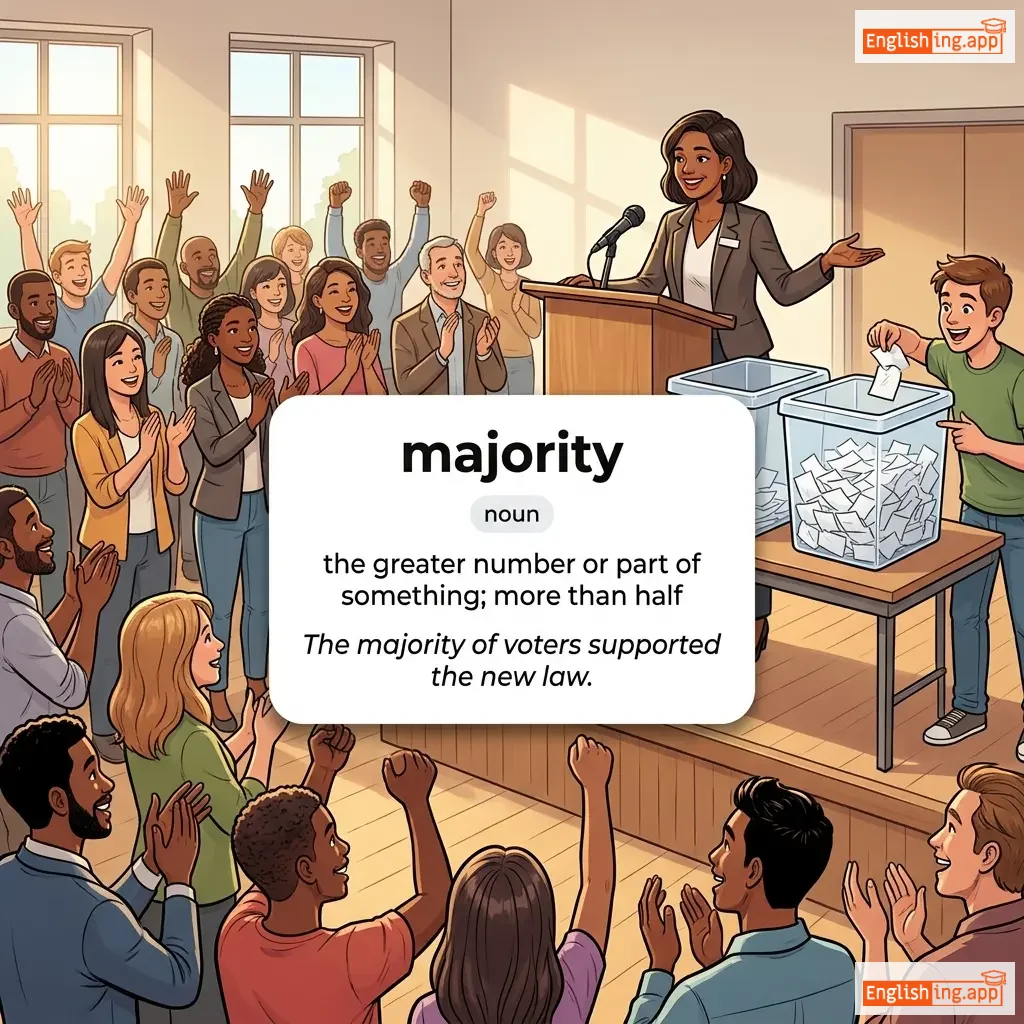
majority definition card — visual illustration of the meaning
noun
/məˈdʒɒrəti/
большинство (bolshinstvo)

the greater number or part of something; more than half

"The majority of voters supported the new law."

"Большинство избирателей поддержали новый закон." (Bolshinstvo izbirateley podderzhali novyy zakon.)
adjective
/ˈmeɪdʒər/
важный (vazhnyy)

important, serious, or significant

"Climate change is a major concern for the world."
"Изменение климата — это важная проблема для мира." (Izmeneniye klimata — eto vazhnaya problema dlya mira.)
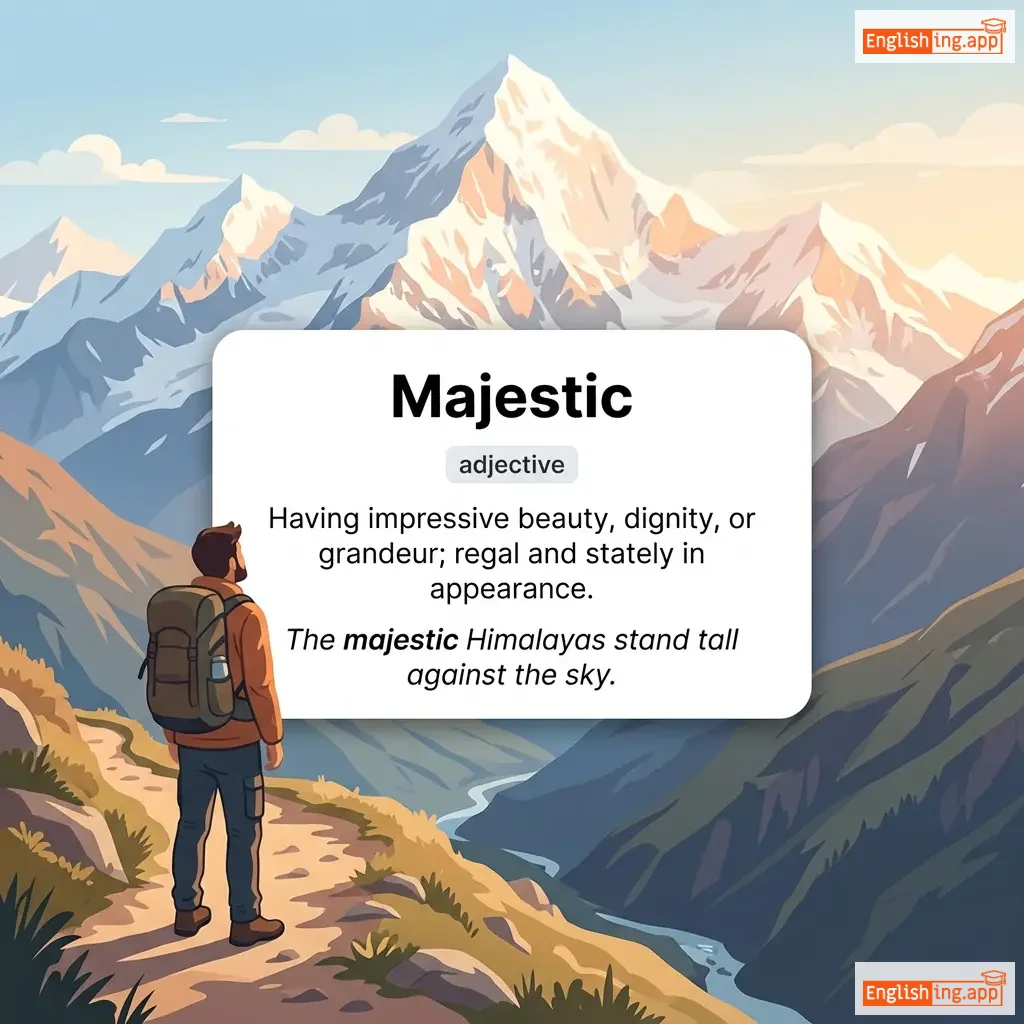
Majestic definition card — visual illustration of the meaning
adjective
məˈdʒes.tɪk
величественный (velichestvennyy)

Having impressive beauty, dignity, or grandeur; regal and stately in appearance.

"The majestic Himalayas stand tall against the sky."
"Величественные горы Гималаев высоко возвышаются против неба." (Velichestvennye gory Himalayev vysoko vozvyshayutsya protiv neba.)
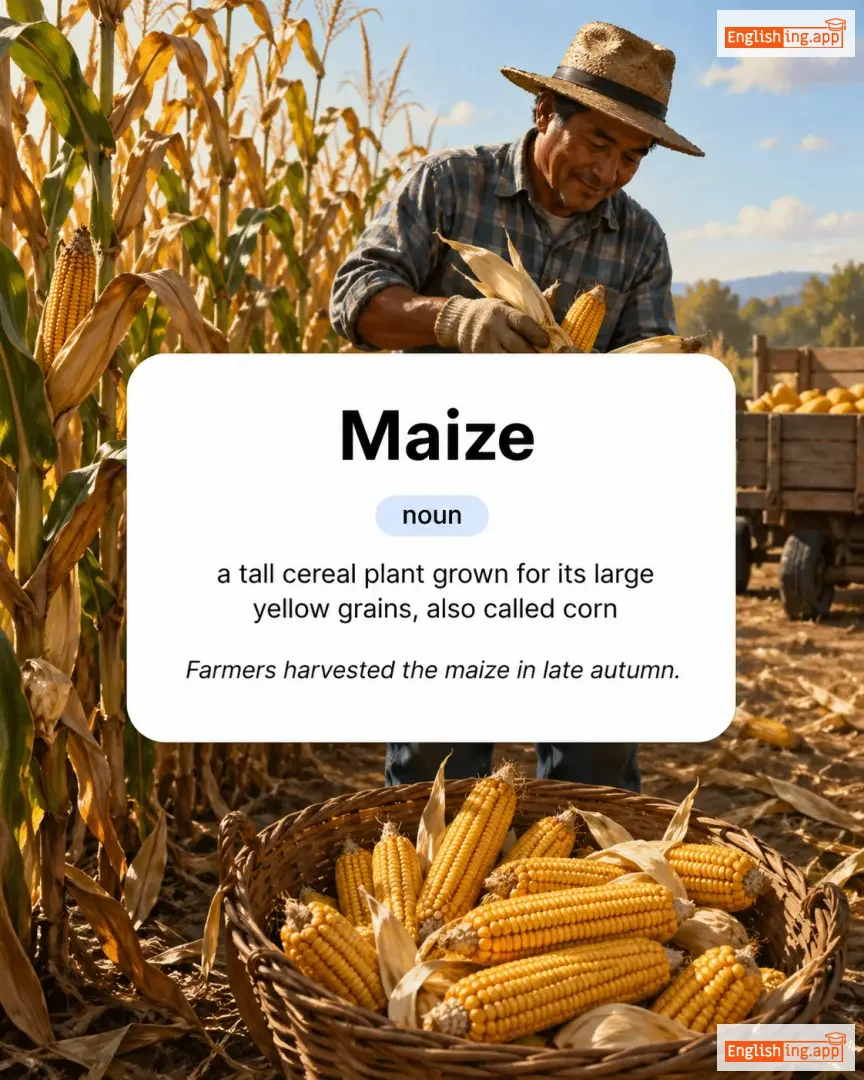
Maize definition card — visual illustration of the meaning
noun
/meɪz/
кукуруза (kukuruza)

a tall cereal plant grown for its large yellow grains, also called corn

"Farmers harvested the maize in late autumn."
"Фермеры собрали кукурузу поздней осенью." (Fermery sobrali kukuruzu pozdney osenyu.)
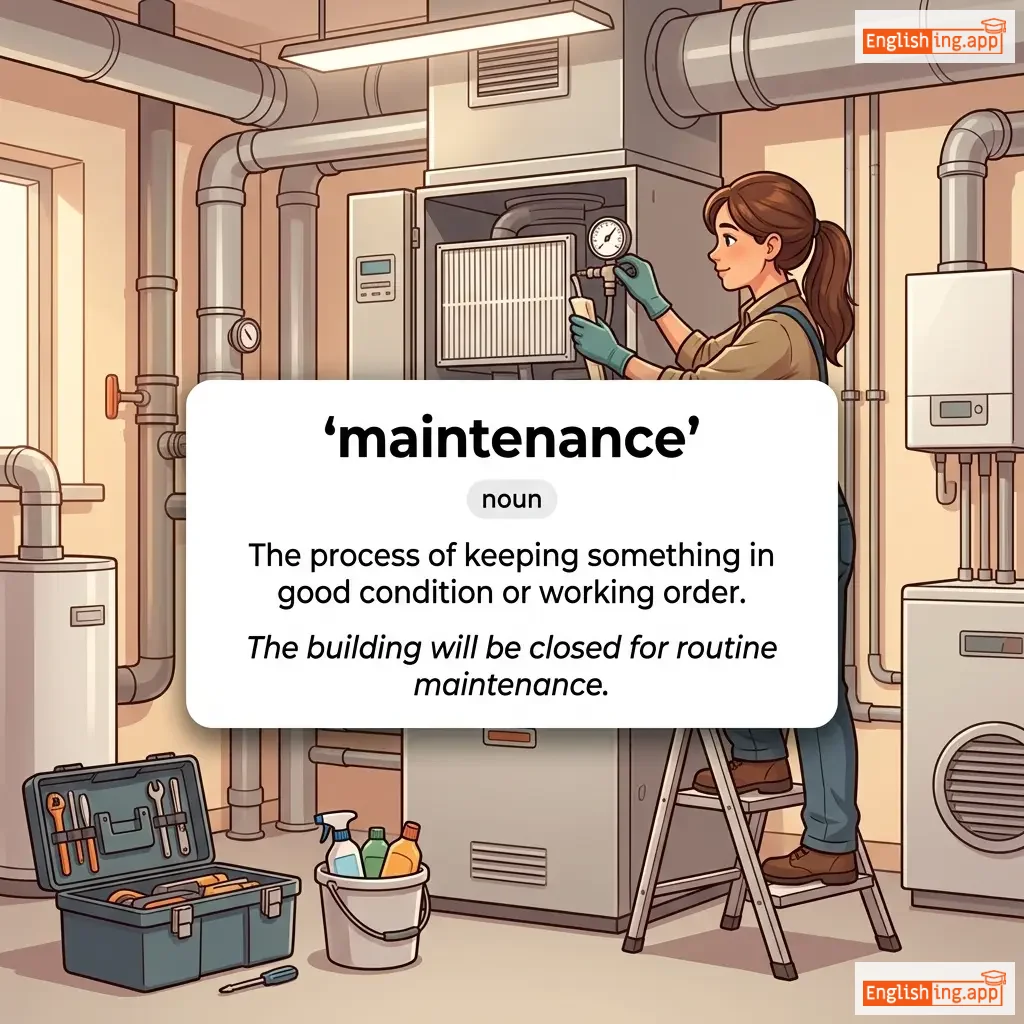
maintenance definition card — visual illustration of the meaning
noun
/ˈmeɪntənəns/
обслуживание (obsluzhivanie)

The process of keeping something in good condition or working order.

"The building will be closed for routine maintenance."
"Здание будет закрыто на плановое обслуживание." (Zdanie budet zakryto na planovoe obsluzhivanie.)
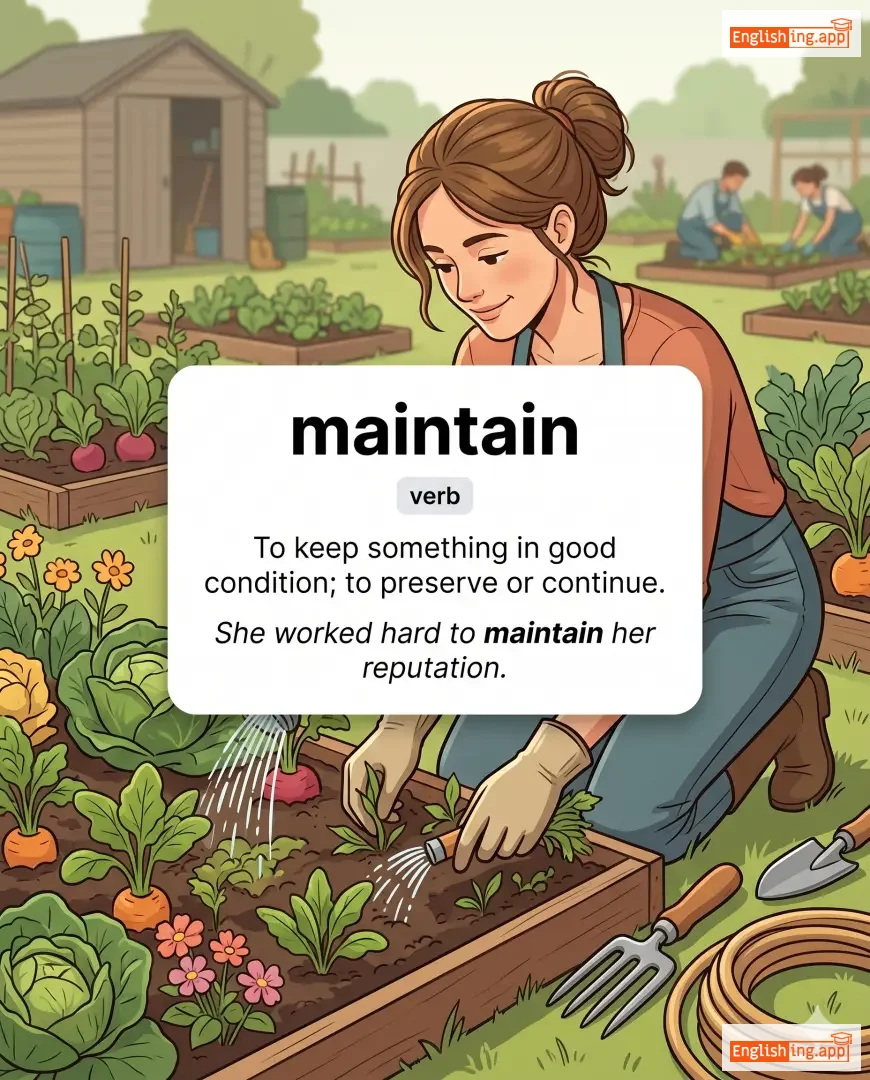
maintain definition card — visual illustration of the meaning
verb
/meɪnˈteɪn/
сохранять (sokhranyat)

To keep something in good condition; to preserve or continue.

"She worked hard to maintain her reputation."

"Она усердно работала, чтобы сохранить свою репутацию." (Ona usyerdno rabotala, chtoby sokhranit svoyu reputatsiyu.)
noun
/ˈmeɪnstriːm/
основное течение (osnovnoe techenie)

the ideas, attitudes, or activities that are regarded as normal or conventional; the dominant trend in opinion or fashion

"Social media has become a mainstream source of news for many people."

"Социальные сети стали основным источником новостей для многих людей." (Sotsial'nye seti stali osnovnym istochnikom novostey dlya mnogikh lyudey.)
adverb
/ˈmeɪnli/
в основном (v osnovnom)

for the most part; chiefly

"The audience was mainly composed of students."

"Аудитория в основном состояла из студентов." (Auditoriya v osnovnom sostoyala iz studentov.)
noun
/ˈmeɪnˌlænd/

the principal landmass of a country or continent, as opposed to the surrounding islands

"The mainland of Australia is home to most of its population."

adjective
/meɪn/
основной (osnovnoy)

most important; chief in size, extent, or importance

"The main reason for his success is hard work."

"Основная причина его успеха — это тяжелый труд." (Osnovnaya prichina yego uspekha — eto tyazhelyy trud.)
noun
/laɪər/
лира (lira)

a stringed musical instrument of ancient Greece

"The musician played a melody on the lyre."

"Музыкант сыграл мелодию на лире." (Muzykant sygral melodiya na lire.)
noun
/lʌst/
страсть (strast)

a very strong sexual desire or an intense craving for something

"His mind was clouded by lust for power."

"Его ум был затуманен страстью к власти." (Ego um byl zatumanen strast'yu k vlasti.)
noun
/ˈlʌstər/
блеск (blesk)

a gentle sheen or soft glow, especially from a polished surface

"The diamond had a brilliant luster."

"У алмаза был яркий блеск." (U almazza byl yarkiy blesk.)
lustrous definition card — visual illustration of the meaning
adjective
/ˈlʌstrəs/
блестящий (blestyashchiy)

having a gentle sheen or soft glow

"Her hair looked smooth and lustrous."

"Её волосы выглядели гладкими и блестящими." (Yeyo volosy vyglyadeli glazkimi i blestyashchimi.)
noun
/lʌɡˈʒʊəriəns/
роскошь (roskosh)

abundant growth, richness, or elegance

"The garden was filled with the luxuriance of tropical plants."

"Сад был полон роскоши тропических растений." (Sad byl polon roskoshi tropicheskikh rasteniy.)
adjective
/lʌɡˈʒʊəriənt/
пышный (pyshny)

abundant in growth or richly abundant

"The luxuriant forest was teeming with life."

"Пышный лес был полон жизни." (Pyshnyy les byl polon zhizni.)
verb
/lʌɡˈʒʊrieɪt/
наслаждаться роскошью (naslazhdatsya roskosh'yu)

to enjoy something in a self-indulgent way; to take pleasure in great comfort

"She luxuriated in the warm bubble bath after a long day."

"Она наслаждалась теплым пузырьковым вечером после долгого дня." (Ona naslazhdalasy teplym puzyr'kovym vecherom posle dolgogo dnya.)
adjective
/lʌɡˈʒʊəriəs/
роскошный (roskoshny)

extremely comfortable, elegant, or enjoyable, often involving great expense

"They stayed in a luxurious hotel during their vacation."

"Они остановились в роскошном отеле во время отпуска." (Oni ostanovilis' v roskoshnom otele vo vremya otpyska.)
noun
/ˈlʌkʃəri/
роскошь (roskosh)

a state of great comfort or elegance, often involving great expense

"Staying at a five-star hotel is a luxury for most people."

"Проживание в пятизвездочном отеле — это роскошь для большинства людей." (prozhivanie v pyatizvezdochnom otele eto roskosh dlya bolshinstva lyudey.)
verb
/ˈlaɪɪŋ/
лгать (lgat)

the act of not telling the truth

"He was caught lying about his grades."

"Его поймали на лжи о его оценках." (Ego poymali na lzhi o ego otsenkakh.)
noun
/meɪs/
булава / скипетр (bulava / skipetr)

a ceremonial staff carried as a symbol of authority or a weapon similar to a club

"The guard carried a mace as a symbol of authority."

"Страж носил булаву как символ власти." (Strazh nosil bulavu kak simvol vlasti.)
noun
/ˌmæk.ɪˈneɪ.ʃən/
махинация (makhinatsiya)

a secret plan or scheme intended to accomplish something, especially something evil

"The detective uncovered the villain's machination."

"Детектив раскрыл махинацию злодея." (Detektiv raskryl makhinatsiyu zlodeya.)
verb
/ˈmæk.ɪ.neɪt/
замышлять (zamyshlyat)

to engage in plots or schemes, usually for harmful or evil purposes

"The rebels tried to machinate against the king."

"Бунтари пытались замышлять против короля." (Buntari pytalis' zamyshlyat' protiv korolya.)
machiavellian definition card — visual illustration of the meaning
adjective
/ˌmækɪəˈvɛliən/
хитрый, махинационный и безнравственный, особенно в политике или для продвижения своей карьеры (makkiavellian)

cunning, scheming, and unscrupulous, especially in politics or in advancing one's career

"The politician was known for his Machiavellian tactics."

"Политик был известен своими махинационными тактиками." (Politik byl izvesten svoimi makhinasional'nymi taktika.)
verb
/ˈmæsəˌreɪt/
размягчать (razmyagchat)

to soften or break up something, especially food, by soaking in liquid

"The chef macerated the fruit in wine before serving."

"Шеф макерировал фрукты в вине перед подачей." (Shef makeriroval frukty v vine pered podachey.)
adjective
/məˈkɑːbrə/
мракобесие (mrakobesie)

disturbing and horrifying because of involvement with or depiction of death and injury

"The horror movie had a macabre ending."

"У фильма ужасов был мракобесный конец." (U fil'ma uzhasov byl mrakobesnyj konets.)
noun
/ˈluː.məˌnɛr.i/
выдающаяся личность (vydajushchayasya lichnost)

A person who inspires or influences others, especially in a particular field.

"He is considered a luminary in the world of science."

"Его считают выдающейся личностью в мире науки." (Ego schitayut vydajushchaysya lichnost'yu v mire nauki.)
noun
/ˈlɪrɪk/
текст песни (tekst pesni)

the words of a song or a short poem that expresses personal feelings

"She memorized every lyric of her favorite song."

"Она выучила каждый текст своей любимой песни." (Ona vyuchila kazhdyi tekst svoei lyubimoi pesni.)