
词汇表

英语词汇词典 | 单词含义、定义和示例

malfunction definition card — visual illustration of the meaning
noun/verb
mælˈfʌŋk.ʃən
故障 (gùzhàng)

A failure to function normally or satisfactorily; a defect or breakdown.

"The engine malfunctioned due to overheating."

"发动机因过热而发生故障。" (Fādòngjī yīn guòrè ér fāshēng gùzhàng.)
noun
/mælˈfiːzəns/
公职人员的不当行为 (gongzhi renyuan de budang xingwei)

Wrongdoing or misconduct, especially by a public official.

"The mayor was accused of malfeasance in office."

"市长因在职务中不当行为而被指控。" (Shizhang yin zhiwu zhong budang xingwei er bei zhikong.)
adjective
/məˈlɛvələnt/
恶意的 (èyì de)

Having or showing a wish to do evil or harm to others.

"The malevolent glare in his eyes frightened the children."

"他眼中的恶意目光吓到了孩子们。" (Tā yǎnzhōng de èyì mùguāng xià dào le háizimen.)
noun
/məˈlɛvələns/
恶意 (èyì)

The state or condition of being malevolent; having or showing a wish to do evil to others.

"His malevolence was clear in the cruel way he treated his rivals."

"他的恶意在他对待竞争对手的残忍方式中表现得淋漓尽致。" (Tā de èyì zài tā duìdài jìngzhēng duìshǒu de cánrěn fāngshì zhōng biǎoxiàn dé línlí jìnzhì.)
adjective
/ˌmæl.əˈfɪʃ.ənt/
恶意的 (è yì de)

Doing harm or evil; having a harmful effect.

"The maleficient acts of the tyrant ruined the kingdom."

"暴君的恶意行为摧毁了王国。" (Bàojūn de èyì xíngwéi cuīhuǐle wángguó.)
adjective
/məˈlɛfɪsənt/
邪恶 (xiee)

Causing harm or destruction, especially by supernatural means.

"The maleficent witch cursed the young princess."

"那个恶毒的女巫诅咒了年轻的公主。" (Na ge exie de nǚwū zhǔzhòu le niánqīng de gōngzhǔ.)
noun
/ˈmæl.əˌfæk.tər/
恶棍 (è gùn)

A person who commits a crime or does evil.

"The malefactor was arrested for the robbery."

"恶棍因抢劫被捕。" (È gùn yīn qiǎngjié bèi bǔ.)
noun
/ˌmæl.əˈdɪk.ʃən/
诅咒 (zuzhou)

A curse or the utterance of a curse.

"The witch cast a malediction upon the village."

"女巫对村庄施下了诅咒。" (Nǚwū duì cūnzhuāng shīxiàle zǔzhòu.)
noun/adjective
/meɪl/
男性 (nánxìng)

a man or boy; relating to men or boys

"The school has more male teachers than female teachers."

"学校有更多的男性教师而非女性教师。" (Xuéxiào yǒu gèng duō de nánxìng jiàoshī ér fēi nǚxìng jiàoshī.)
noun
/ˈmæl.kənˌtɛnt/
不满的人 (bùmǎn de rén)

A person who is dissatisfied or rebellious; one who is not content.

"The malcontent voiced his grievances against the government."
"这个不满的人表达了他对政府的不满。" (Zhège bùmǎn de rén biǎodále tā duì zhèngfǔ de bùmǎn.)
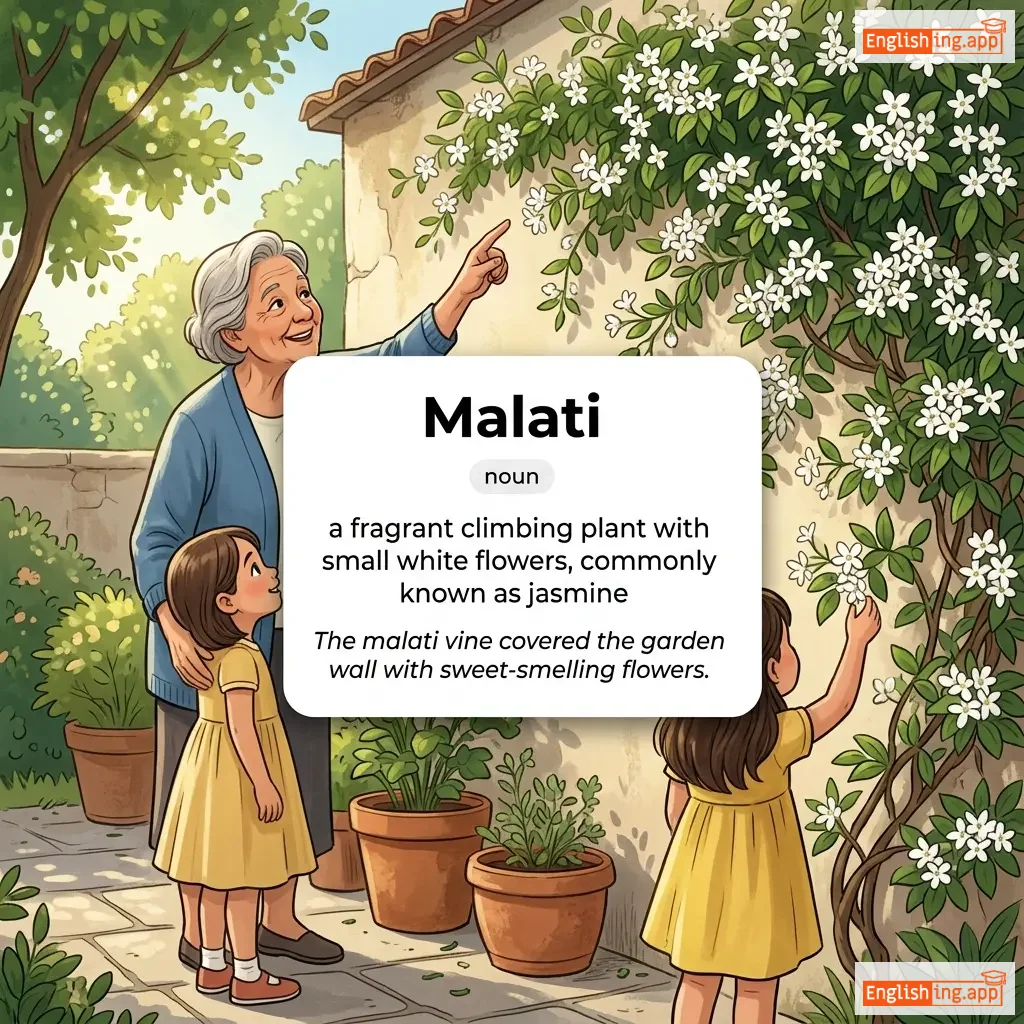
Malati definition card — visual illustration of the meaning
noun
/məˈlɑː.ti/
马拉提 (malati)

a fragrant climbing plant with small white flowers, commonly known as jasmine

"The malati vine covered the garden wall with sweet-smelling flowers."

"马拉提藤蔓用甜美的花香覆盖了花园的墙壁。" (Malati tengman yong tianmei de huaxiang fukai le huayuan de qiangbi)
noun
/məˈlɛəriə/
疟疾 (nüe ji)

a serious infectious disease spread by mosquitoes, causing fever, chills, and sweating

"Malaria is a common disease in tropical regions."

"疟疾在热带地区是一种常见疾病。" (Nüe ji zai rèdài dìqū shì yī zhǒng chángjiàn jíbìng.)
adjective, adverb
/ˌmæləprəˈpoʊ/
不合时宜 (bù hé shí yí)

inappropriate or unsuitable; at an inconvenient or inappropriate time

"His comment was malapropos during the serious discussion."

"在严肃的讨论中,他的评论不合时宜。" (Zài yánsù de tǎolùn zhōng, tā de pínglùn bù hé shí yí.)
noun
/ˈmæləprɒˌpɪzəm/
误用词汇 (wù yòng cí huì)

the mistaken use of a word in place of a similar-sounding one, often with amusing effect

"He is famous for his malapropism when speaking in public."

"他因在公众演讲时的误用词汇而闻名。" (Tā yīn zài gōng zhòng yǎn jiǎng shí de wù yòng cí huì ér wén míng.)
noun
/məˈleɪz/
不适 (bushi)

a general feeling of discomfort, illness, or unease whose exact cause is difficult to identify

"After the long journey, she felt a general malaise."

"长时间旅行后,她感到一种普遍的不适。" (Chang shi jian lv you hou, ta gan dao yi zhong pu bian de bu shi.)
noun
/ˈmælədi/
(bing)

a disease or disorder of the body or mind; a serious problem

"The doctor treated the malady with great care."

"医生非常小心地治疗了这场病。" (Yi sheng fei chang xiao xin de zhi liao le zhe chang bing.)
adjective
/ˌmæləˈdrɔɪt/
笨拙 (bènzhuō)

clumsy or awkward in movement or behavior

"His maladroit attempt at fixing the chair made it worse."

"他修理椅子的笨拙尝试只让事情变得更糟。" (Tā xiūlǐ yǐzi de bènzhuō chángshì zhǐ ràng shìqíng biàn dé gèng zāo.)
noun
/ˈmeɪkɪŋ/
制作 (zhìzuò)

the process of producing or constructing something

"The making of the movie took over two years."

"电影的制作过程花费了超过两年时间。" (Diànyǐng de zhìzuò guòchéng huāfèi le chāoguò liǎng nián shíjiān.)
noun
/ˈmeɪkʌp/
化妆 (huàzhuāng)

cosmetics used to enhance or alter appearance

"She applied makeup before the party."

"她在聚会前化了妆。" (Tā zài jùhuì qián huàle zhuāng.)
adjective
/ˈmeɪkˌʃɪft/
临时 (línshí)

used as a temporary substitute; improvised

"They used boxes as a makeshift table."

"他们用箱子作为临时桌子。" (Tāmen yòng xiāngzi zuòwéi línshí zhuōzi.)
noun
/ˈmeɪkər/
创造者 (chuangzao zhe)

a person or thing that makes or produces something

"He is a famous movie maker in Hollywood."

"他是好莱坞著名的电影制片人。" (ta shi haolaiwu zhuming de dianying zhipian ren.)
make definition card — visual illustration of the meaning
verb
/meɪk/
(zuo)

to create, build, or cause something to happen

"She can make delicious cakes."
"她可以做美味的蛋糕。" (Ta keyi zuo meiwei de dangao.)
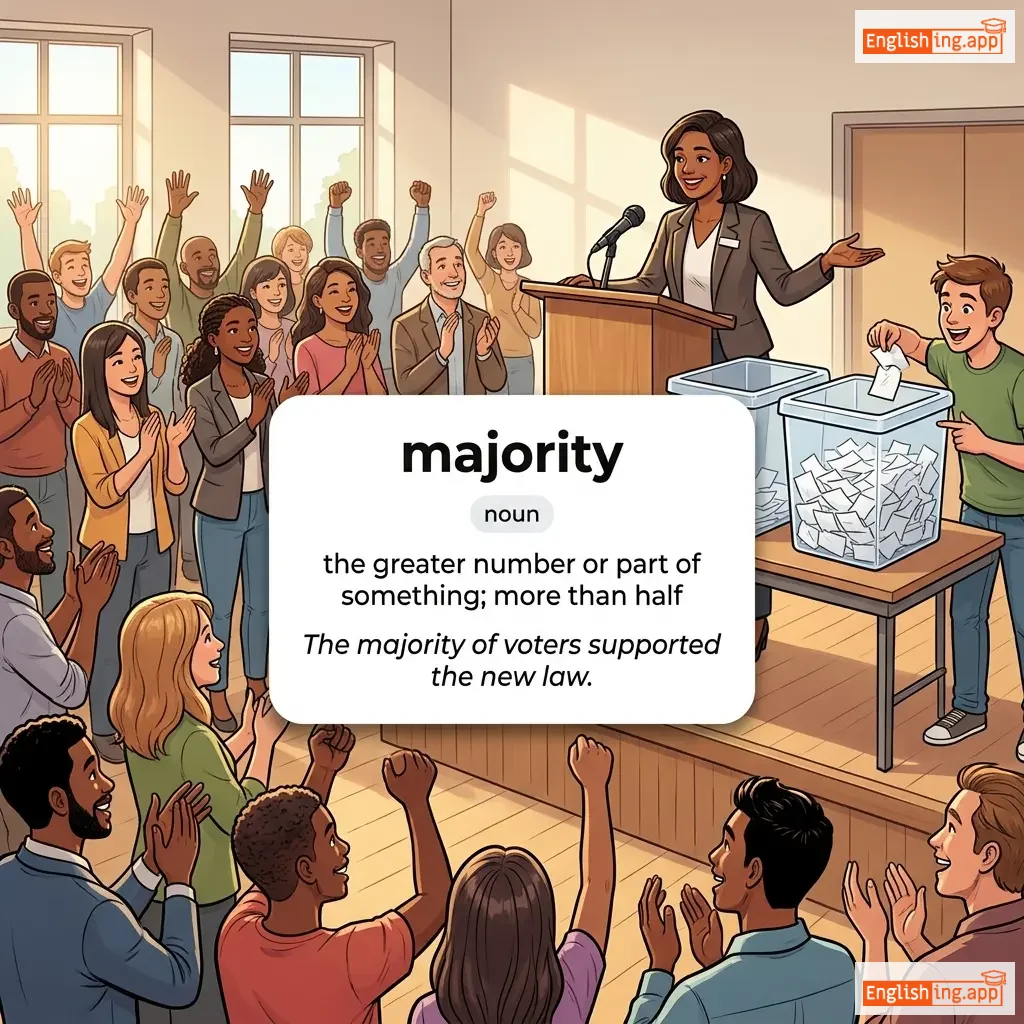
majority definition card — visual illustration of the meaning
noun
/məˈdʒɒrəti/
多数 (duoshu)

the greater number or part of something; more than half

"The majority of voters supported the new law."

"大多数选民支持新法律。" (Da duoshu xuanmin zhichi xin falü.)
adjective
/ˈmeɪdʒər/
重要的 (zhòngyào de)

important, serious, or significant

"Climate change is a major concern for the world."
"气候变化是全球关注的重大问题。" (qìhòu biànhuà shì quánqiú guānzhù de zhòngdà wèntí.)
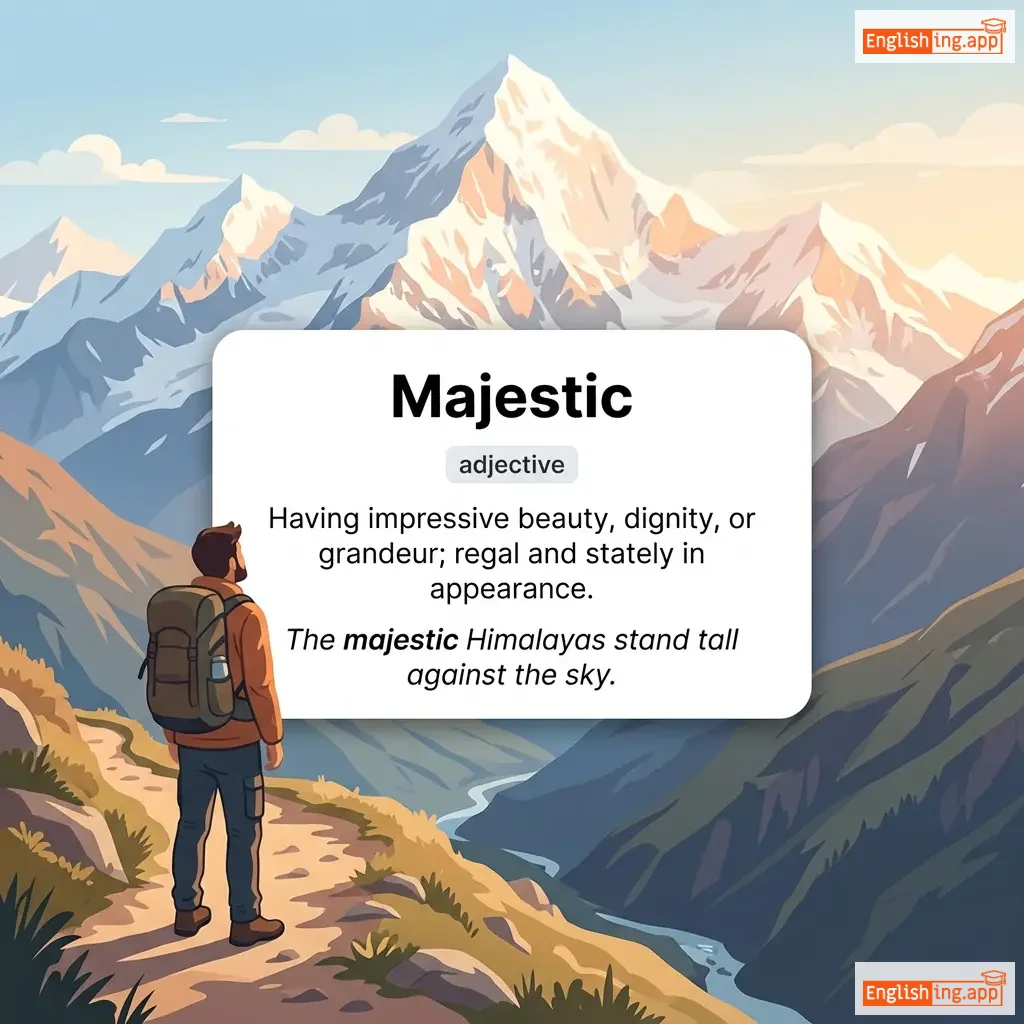
Majestic definition card — visual illustration of the meaning
adjective
məˈdʒes.tɪk
雄伟的 (xióng wěi de)

Having impressive beauty, dignity, or grandeur; regal and stately in appearance.

"The majestic Himalayas stand tall against the sky."
"雄伟的喜马拉雅山高耸在天空中。" (Xióng wěi de xǐ mǎ lā yǎ shān gāo sǒng zài tiānkōng zhōng.)
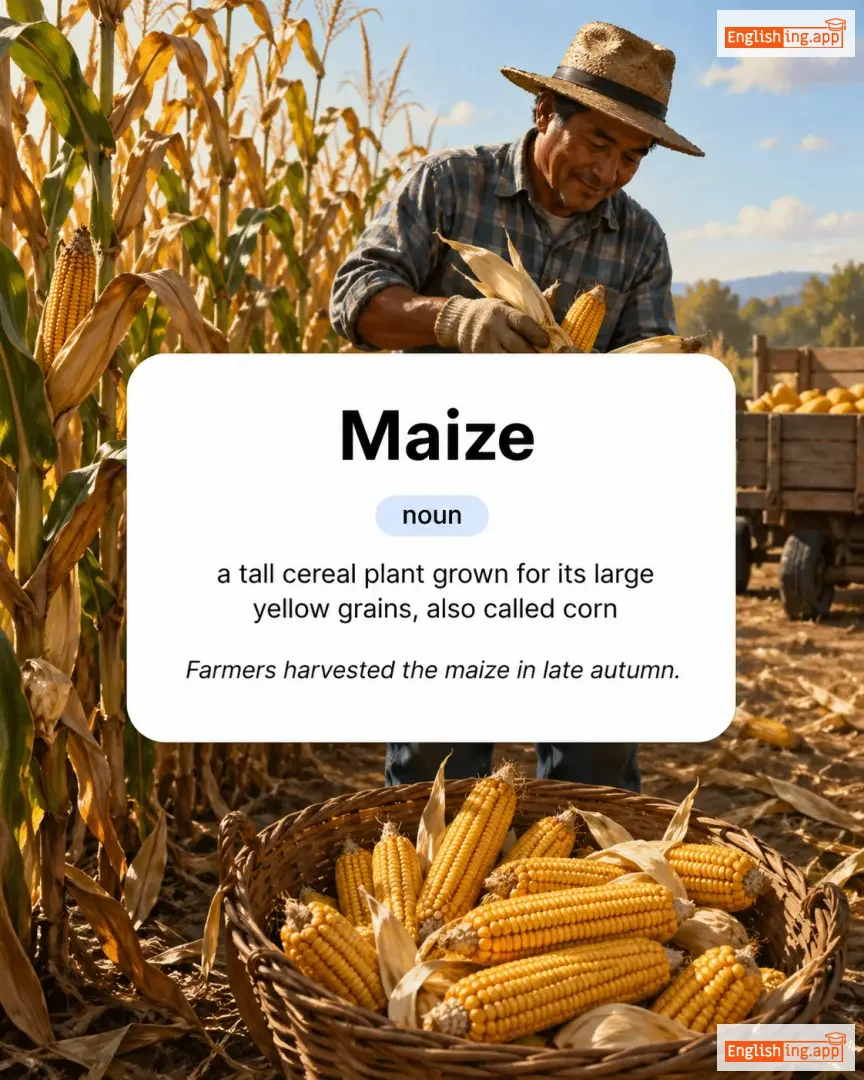
Maize definition card — visual illustration of the meaning
noun
/meɪz/
玉米 (yumi)

a tall cereal plant grown for its large yellow grains, also called corn

"Farmers harvested the maize in late autumn."
"农民在秋末收割了玉米。" (Nongmin zai qiumo shouge le yumi.)
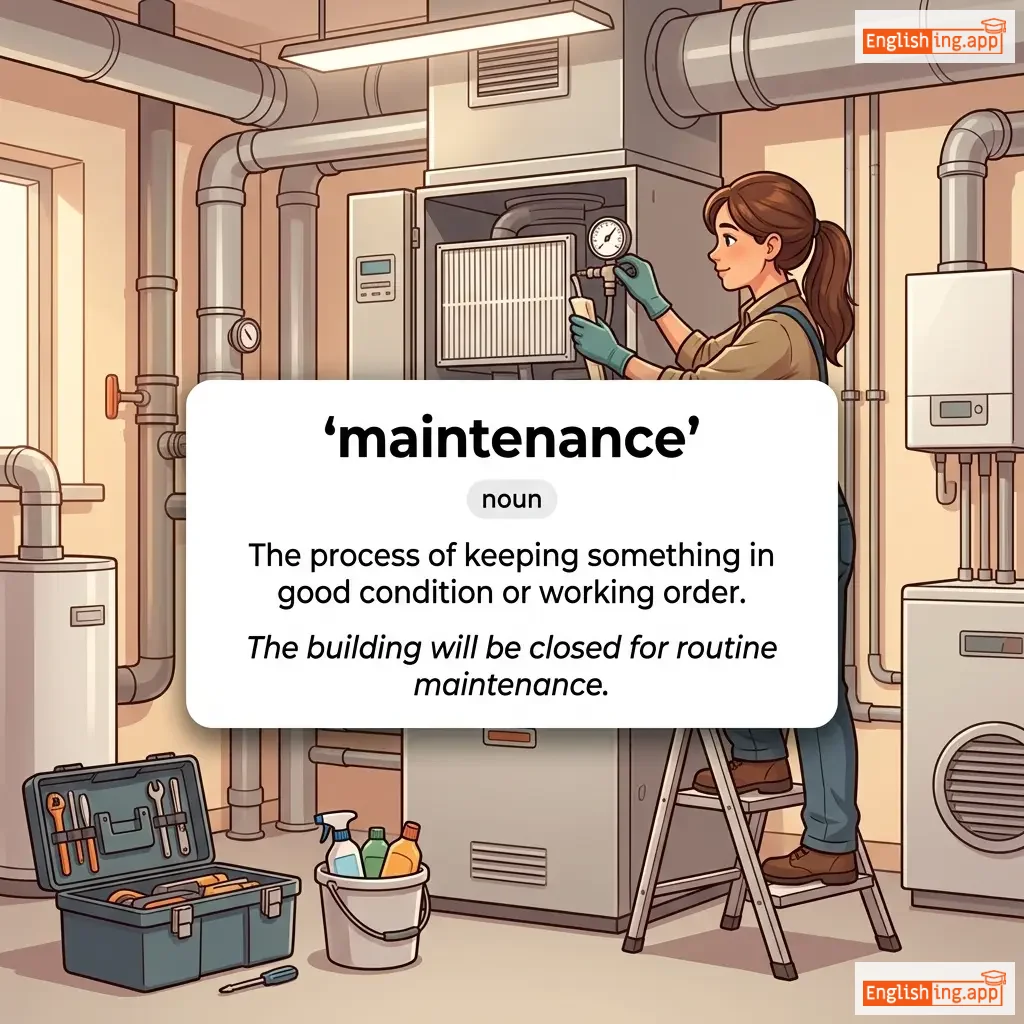
maintenance definition card — visual illustration of the meaning
noun
/ˈmeɪntənəns/
维护 (wéihù)

The process of keeping something in good condition or working order.

"The building will be closed for routine maintenance."
"该建筑将因常规维护而关闭。" (Gāi jiànzhú jiāng yīn chángguī wéihù ér guānbì.)
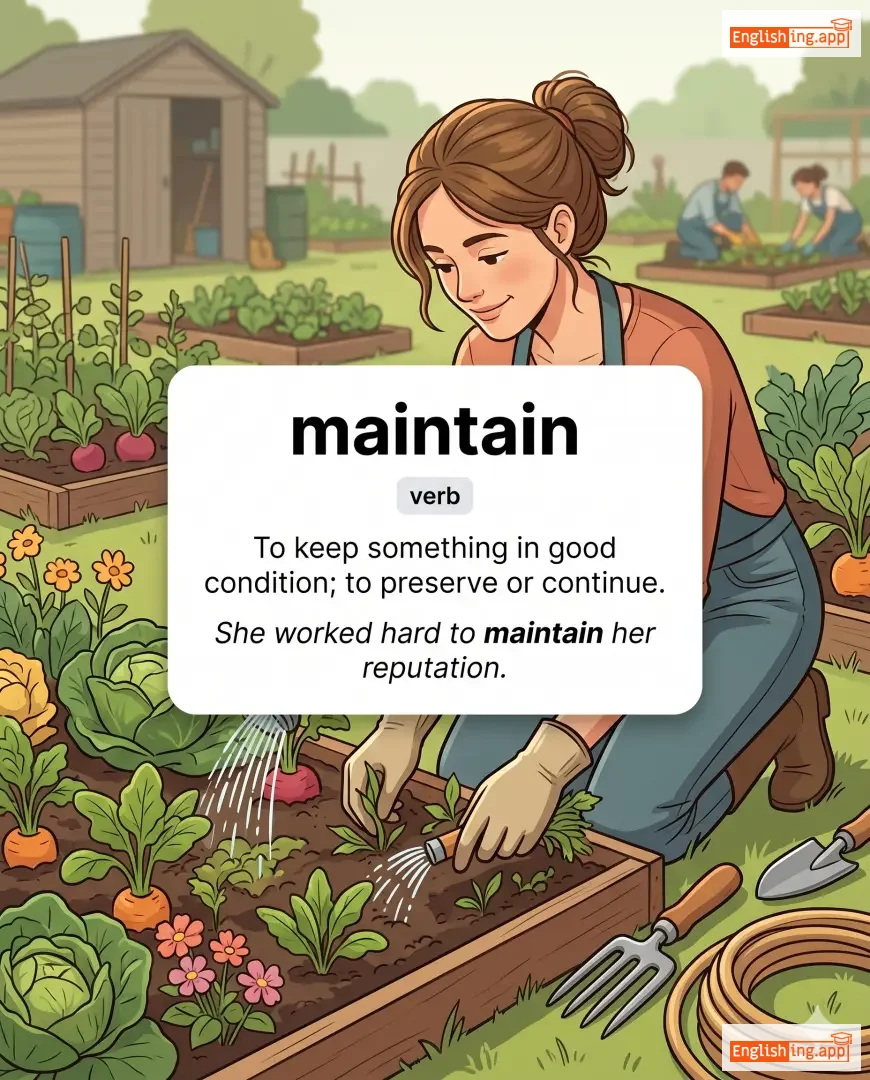
maintain definition card — visual illustration of the meaning
verb
/meɪnˈteɪn/
保持 (bǎochí)

To keep something in good condition; to preserve or continue.

"She worked hard to maintain her reputation."

"她努力工作以保持自己的声誉。" (Tā nǔlì gōngzuò yǐ bǎochí zìjǐ de shēngyù.)
noun
/ˈmeɪnstriːm/
主流 (zhuliu)

the ideas, attitudes, or activities that are regarded as normal or conventional; the dominant trend in opinion or fashion

"Social media has become a mainstream source of news for many people."

"社交媒体已经成为许多人获取新闻的主流来源。" (Shejiao meiti yijing chengwei xuduo ren huoqu xinwen de zhuliu laiyuan.)
adverb
/ˈmeɪnli/
主要 (zhuyao)

for the most part; chiefly

"The audience was mainly composed of students."

"观众主要由学生组成。" (Guanzhong zhuyao you xuesheng zucheng.)
noun
/ˈmeɪnˌlænd/

the principal landmass of a country or continent, as opposed to the surrounding islands

"The mainland of Australia is home to most of its population."

adjective
/meɪn/
主要的 (zhuyao de)

most important; chief in size, extent, or importance

"The main reason for his success is hard work."

"他成功的主要原因是努力工作。" (ta chenggong de zhuyao yuanyin shi nuli gongzuo.)
noun
/laɪər/
竖琴 (shùqín)

a stringed musical instrument of ancient Greece

"The musician played a melody on the lyre."

"音乐家在竖琴上演奏了一首旋律。" (Yīnyuè jiā zài shùqín shàng yǎnzòu le yī shǒu xuánlǜ.)
noun
/lʌst/
欲望 (yùwàng)

a very strong sexual desire or an intense craving for something

"His mind was clouded by lust for power."

"他的思想被权力的欲望所笼罩。" (tā de sīxiǎng bèi quánlì de yùwàng suǒ lóngzhào.)
noun
/ˈlʌstər/
光泽 (guangze)

a gentle sheen or soft glow, especially from a polished surface

"The diamond had a brilliant luster."

"钻石有着耀眼的光泽。" (zuanshi youzhe yaoyan de guangze.)
lustrous definition card — visual illustration of the meaning
adjective
/ˈlʌstrəs/
光泽 (guāngzé)

having a gentle sheen or soft glow

"Her hair looked smooth and lustrous."

"她的头发看起来光滑而光泽。" (Tā de tóufǎ kàn qǐlái guānghuá ér guāngzé.)
noun
/lʌɡˈʒʊəriəns/
奢华 (shēhuá)

abundant growth, richness, or elegance

"The garden was filled with the luxuriance of tropical plants."

"花园里充满了热带植物的奢华。" (huāyuán lǐ chōngmǎnle rèdài zhíwù de shēhuá.)
adjective
/lʌɡˈʒʊəriənt/
繁茂的 (fánmào de)

abundant in growth or richly abundant

"The luxuriant forest was teeming with life."

"繁茂的森林充满了生命。" (Fánmào de sēnlín chōngmǎnle shēngmìng.)
verb
/lʌɡˈʒʊrieɪt/
沉溺于奢华 (chen ni yu she hua)

to enjoy something in a self-indulgent way; to take pleasure in great comfort

"She luxuriated in the warm bubble bath after a long day."

"她在一个漫长的日子后沉浸在温暖的气泡浴中。" (Ta zai yi ge man chang de ri zi hou chen ni yu wen nuan de qi bao yu zhong.)
adjective
/lʌɡˈʒʊəriəs/
奢华的 (shehua de)

extremely comfortable, elegant, or enjoyable, often involving great expense

"They stayed in a luxurious hotel during their vacation."

"他们在度假期间住进了一家奢华的酒店。" (Tamen zai dujia qijian zhu jin le yijia shehua de jiudian.)
noun
/ˈlʌkʃəri/
奢侈 (shechi)

a state of great comfort or elegance, often involving great expense

"Staying at a five-star hotel is a luxury for most people."

"住在五星级酒店对大多数人来说是奢侈的。" (zhu zai wuxingji jiudian dui daduoshu ren laishuo shi shechi de.)
verb
/ˈlaɪɪŋ/
撒谎 (sā huǎng)

the act of not telling the truth

"He was caught lying about his grades."

"他因撒谎关于他的成绩而被抓住。" (Tā yīn sā huǎng guānyú tā de chéngjī ér bèi zhuā zhù.)
noun
/meɪs/
权杖 / 钉锤 (quánzhàng / dīngchuí)

a ceremonial staff carried as a symbol of authority or a weapon similar to a club

"The guard carried a mace as a symbol of authority."

"守卫携带了一根权杖作为权威的象征。" (Shǒuwèi xiédài le yī gēn quánzhàng zuòwéi quánwēi de xiàngzhēng.)
noun
/ˌmæk.ɪˈneɪ.ʃən/
阴谋 (yīnmóu)

a secret plan or scheme intended to accomplish something, especially something evil

"The detective uncovered the villain's machination."

"侦探揭示了恶棍的阴谋。" (Zhēntàn jiēshìle ègùn de yīnmóu.)
verb
/ˈmæk.ɪ.neɪt/
策划 (cèhuà)

to engage in plots or schemes, usually for harmful or evil purposes

"The rebels tried to machinate against the king."

"叛乱者试图反对国王密谋。" (Pànluàn zhě shìtú fǎnduì guówáng mìmóu.)
machiavellian definition card — visual illustration of the meaning
adjective
/ˌmækɪəˈvɛliən/
狡猾的,阴谋的,不择手段的,尤其是在政治或推动自己事业方面 (majiayaweli)

cunning, scheming, and unscrupulous, especially in politics or in advancing one's career

"The politician was known for his Machiavellian tactics."

"那位政治家因其马基雅维利式的手段而闻名。" (Na wei zhengzhijia yin qi majiayaweli shi de shouduan er wenming.)
verb
/ˈmæsəˌreɪt/
浸泡 (jìnpào)

to soften or break up something, especially food, by soaking in liquid

"The chef macerated the fruit in wine before serving."

"厨师在上菜前将水果浸泡在葡萄酒中。" (Chúshī zài shàngcài qián jiāng shuǐguǒ jìnpào zài pútáojiǔ zhōng.)
adjective
/məˈkɑːbrə/
恐怖 (kǒngbù)

disturbing and horrifying because of involvement with or depiction of death and injury

"The horror movie had a macabre ending."

"这部恐怖片有一个恐怖的结局。" (Zhè bù kǒngbù piàn yǒu yīgè kǒngbù de jiéjú.)
noun
/ˈluː.məˌnɛr.i/
杰出人物 (jiechu renwu)

A person who inspires or influences others, especially in a particular field.

"He is considered a luminary in the world of science."

"他被认为是科学界的杰出人物。" (Ta bei renwei shi kexuejie de jiechu renwu.)
noun
/ˈlɪrɪk/
歌词 (gēcí)

the words of a song or a short poem that expresses personal feelings

"She memorized every lyric of her favorite song."

"她记住了她最喜欢的歌曲的每一首歌词。" (Tā jì zhùle tā zuì xǐhuān de gēqǔ de měi yī shǒu gēcí.)