词汇表

英语词汇词典 | 单词含义、定义和示例

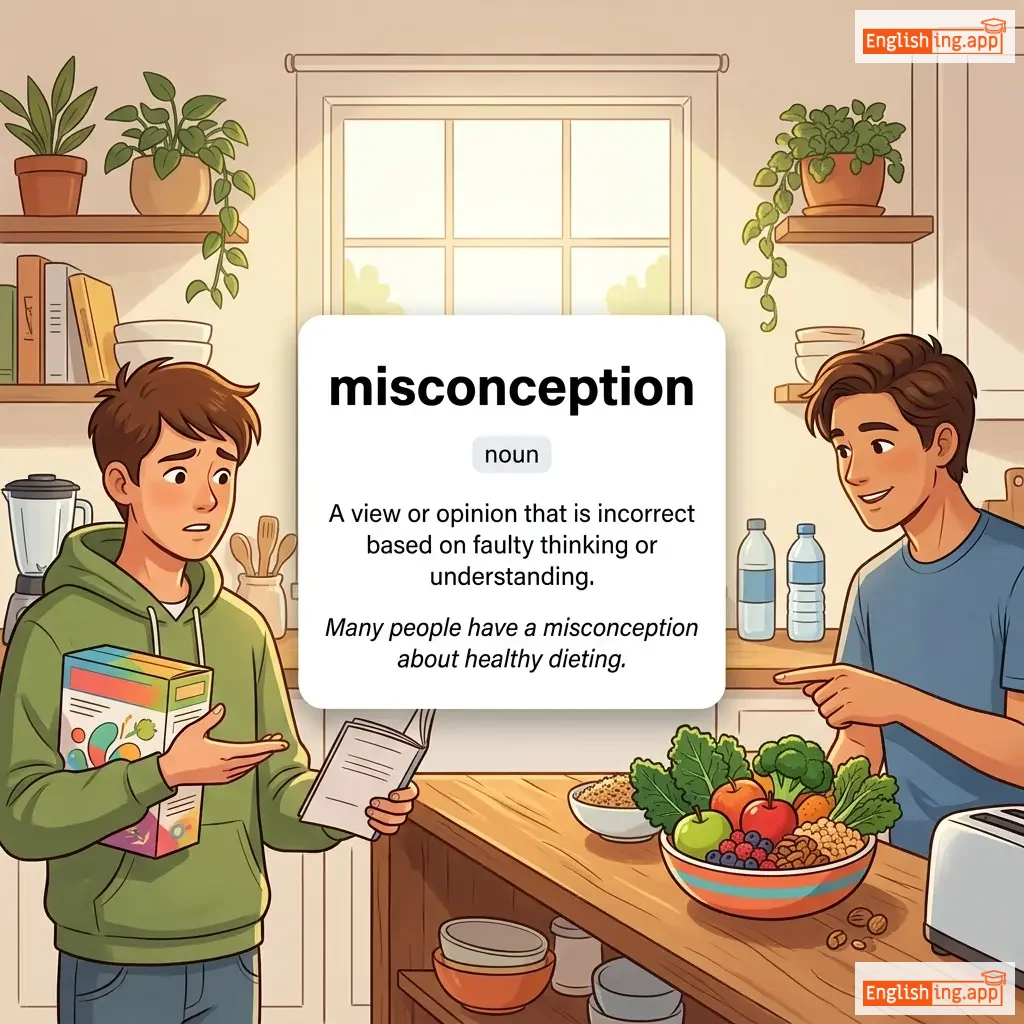
misconception definition card — visual illustration of the meaning
noun
/ˌmɪs.kənˈsep.ʃən/
误解,错觉 (wùjiě, cuòjué)

A view or opinion that is incorrect based on faulty thinking or understanding.

"Many people have a misconception about healthy dieting."

"许多人对健康饮食有误解。" (Xǔduō rén duì jiànkāng yǐnshí yǒu wùjiě.)
noun
/ˌmɪsˈkɒndʌkt/
不当行为 (butang xingwei)

Improper or unacceptable behavior, especially by a professional or authority figure.

"The teacher was dismissed for serious misconduct."

"老师因严重的不当行为被解雇。" (Laoshi yin yanzhong de butang xingwei bei jiegou.)
🧑‍🤝‍🧑

minion (米宁)

noun
/ˈmɪn.i.ən/
爪牙 (zhuǎyá)

A follower or underling of a powerful person, especially a servile one.

"The dictator was surrounded by loyal minions who carried out his orders."

"独裁者被忠诚的爪牙包围,他们执行他的命令。" (Dúcáizhě bèi zhōngchéng de zhuǎyá bāowéi, tāmen zhíxíng tā de mìnglìng.)
adjective
/meɪn/
主要的 (zhuyao de)

most important; chief in size, extent, or importance

"The main reason for his success is hard work."

"他成功的主要原因是努力工作。" (ta chenggong de zhuyao yuanyin shi nuli gongzuo.)
noun
/ˈmeɪnˌlænd/

the principal landmass of a country or continent, as opposed to the surrounding islands

"The mainland of Australia is home to most of its population."

adverb
/ˈmeɪnli/
主要 (zhuyao)

for the most part; chiefly

"The audience was mainly composed of students."

"观众主要由学生组成。" (Guanzhong zhuyao you xuesheng zucheng.)
noun
/ˈmeɪnstriːm/
主流 (zhuliu)

the ideas, attitudes, or activities that are regarded as normal or conventional; the dominant trend in opinion or fashion

"Social media has become a mainstream source of news for many people."
"社交媒体已经成为许多人获取新闻的主流来源。" (Shejiao meiti yijing chengwei xuduo ren huoqu xinwen de zhuliu laiyuan.)
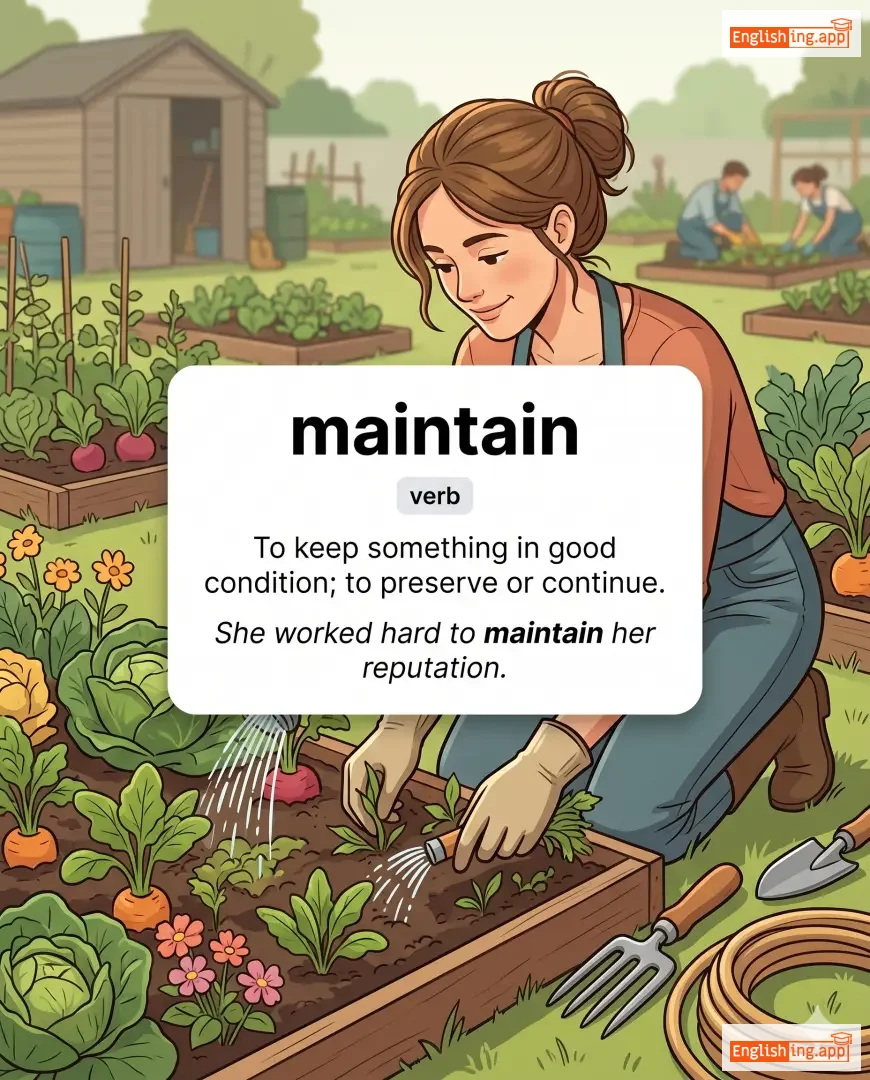
maintain definition card — visual illustration of the meaning
verb
/meɪnˈteɪn/
保持 (bǎochí)

To keep something in good condition; to preserve or continue.

"She worked hard to maintain her reputation."
"她努力工作以保持自己的声誉。" (Tā nǔlì gōngzuò yǐ bǎochí zìjǐ de shēngyù.)
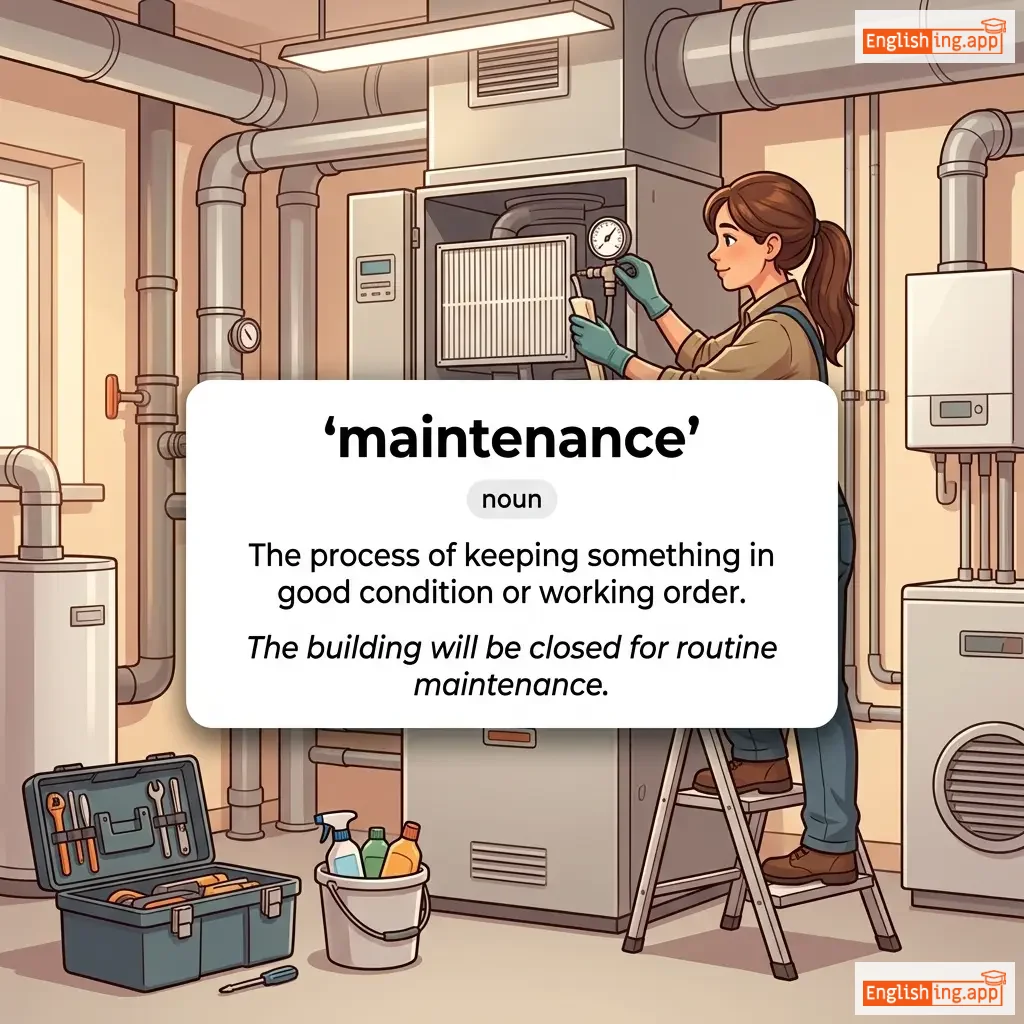
maintenance definition card — visual illustration of the meaning
noun
/ˈmeɪntənəns/
维护 (wéihù)

The process of keeping something in good condition or working order.

"The building will be closed for routine maintenance."
"该建筑将因常规维护而关闭。" (Gāi jiànzhú jiāng yīn chángguī wéihù ér guānbì.)
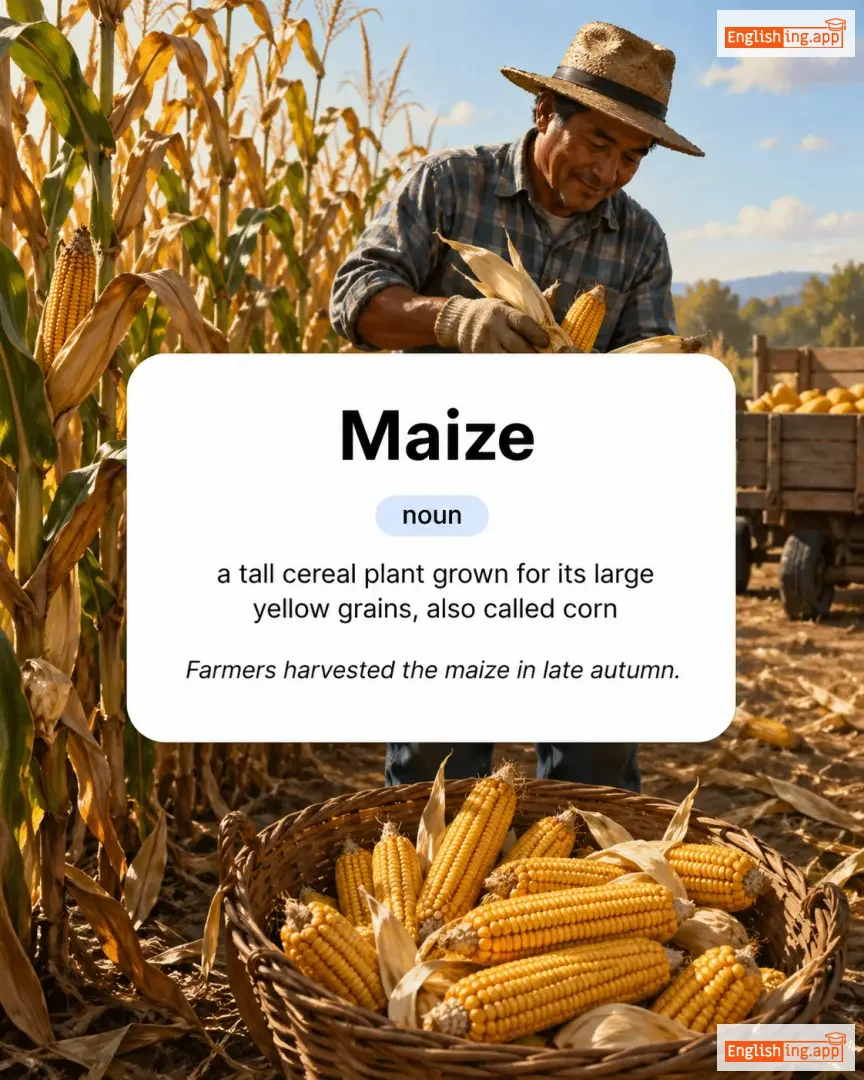
Maize definition card — visual illustration of the meaning
noun
/meɪz/
玉米 (yumi)

a tall cereal plant grown for its large yellow grains, also called corn

"Farmers harvested the maize in late autumn."
"农民在秋末收割了玉米。" (Nongmin zai qiumo shouge le yumi.)
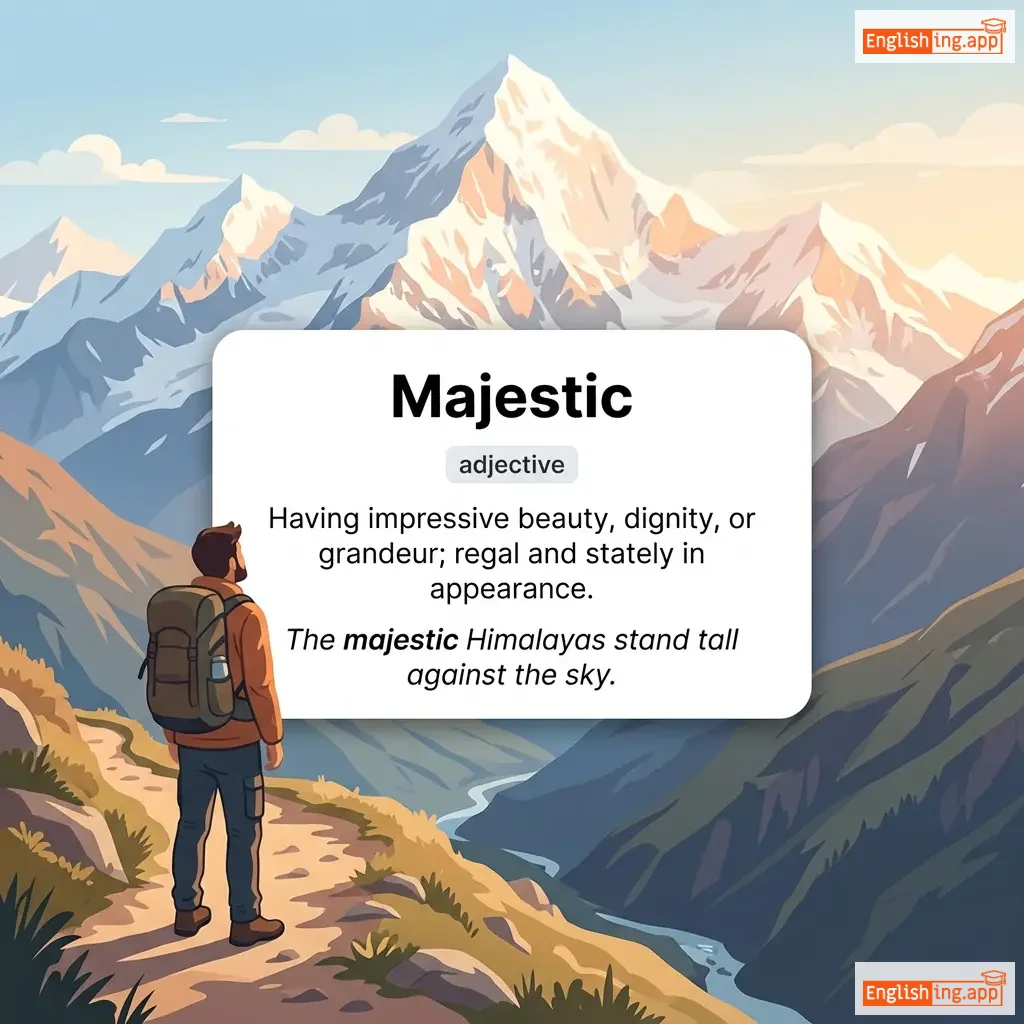
Majestic definition card — visual illustration of the meaning
adjective
məˈdʒes.tɪk
雄伟的 (xióng wěi de)

Having impressive beauty, dignity, or grandeur; regal and stately in appearance.

"The majestic Himalayas stand tall against the sky."

"雄伟的喜马拉雅山高耸在天空中。" (Xióng wěi de xǐ mǎ lā yǎ shān gāo sǒng zài tiānkōng zhōng.)
adjective
/ˈmeɪdʒər/
重要的 (zhòngyào de)

important, serious, or significant

"Climate change is a major concern for the world."
"气候变化是全球关注的重大问题。" (qìhòu biànhuà shì quánqiú guānzhù de zhòngdà wèntí.)
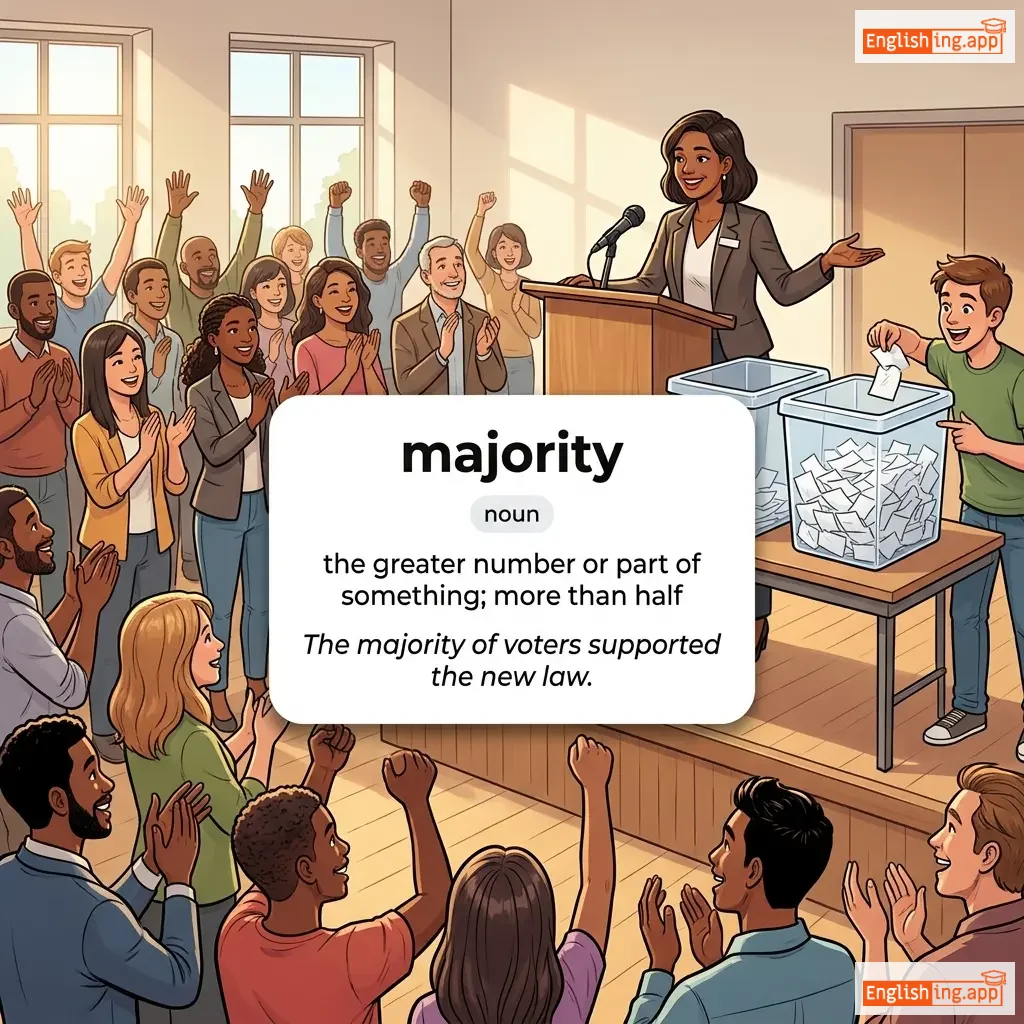
majority definition card — visual illustration of the meaning
noun
/məˈdʒɒrəti/
多数 (duoshu)

the greater number or part of something; more than half

"The majority of voters supported the new law."

"大多数选民支持新法律。" (Da duoshu xuanmin zhichi xin falü.)
make definition card — visual illustration of the meaning
verb
/meɪk/
(zuo)

to create, build, or cause something to happen

"She can make delicious cakes."

"她可以做美味的蛋糕。" (Ta keyi zuo meiwei de dangao.)
noun
/ˈmeɪkər/
创造者 (chuangzao zhe)

a person or thing that makes or produces something

"He is a famous movie maker in Hollywood."

"他是好莱坞著名的电影制片人。" (ta shi haolaiwu zhuming de dianying zhipian ren.)
adjective
/ˈmeɪkˌʃɪft/
临时 (línshí)

used as a temporary substitute; improvised

"They used boxes as a makeshift table."

"他们用箱子作为临时桌子。" (Tāmen yòng xiāngzi zuòwéi línshí zhuōzi.)
noun
/ˈmeɪkʌp/
化妆 (huàzhuāng)

cosmetics used to enhance or alter appearance

"She applied makeup before the party."

"她在聚会前化了妆。" (Tā zài jùhuì qián huàle zhuāng.)
noun
/ˈmeɪkɪŋ/
制作 (zhìzuò)

the process of producing or constructing something

"The making of the movie took over two years."

"电影的制作过程花费了超过两年时间。" (Diànyǐng de zhìzuò guòchéng huāfèi le chāoguò liǎng nián shíjiān.)
adjective
/ˌmæləˈdrɔɪt/
笨拙 (bènzhuō)

clumsy or awkward in movement or behavior

"His maladroit attempt at fixing the chair made it worse."

"他修理椅子的笨拙尝试只让事情变得更糟。" (Tā xiūlǐ yǐzi de bènzhuō chángshì zhǐ ràng shìqíng biàn dé gèng zāo.)
noun
/ˈmælədi/
(bing)

a disease or disorder of the body or mind; a serious problem

"The doctor treated the malady with great care."

"医生非常小心地治疗了这场病。" (Yi sheng fei chang xiao xin de zhi liao le zhe chang bing.)
noun
/məˈleɪz/
不适 (bushi)

a general feeling of discomfort, illness, or unease whose exact cause is difficult to identify

"After the long journey, she felt a general malaise."

"长时间旅行后,她感到一种普遍的不适。" (Chang shi jian lv you hou, ta gan dao yi zhong pu bian de bu shi.)
noun
/ˈmæləprɒˌpɪzəm/
误用词汇 (wù yòng cí huì)

the mistaken use of a word in place of a similar-sounding one, often with amusing effect

"He is famous for his malapropism when speaking in public."

"他因在公众演讲时的误用词汇而闻名。" (Tā yīn zài gōng zhòng yǎn jiǎng shí de wù yòng cí huì ér wén míng.)
adjective, adverb
/ˌmæləprəˈpoʊ/
不合时宜 (bù hé shí yí)

inappropriate or unsuitable; at an inconvenient or inappropriate time

"His comment was malapropos during the serious discussion."

"在严肃的讨论中,他的评论不合时宜。" (Zài yánsù de tǎolùn zhōng, tā de pínglùn bù hé shí yí.)
noun
/məˈlɛəriə/
疟疾 (nüe ji)

a serious infectious disease spread by mosquitoes, causing fever, chills, and sweating

"Malaria is a common disease in tropical regions."
"疟疾在热带地区是一种常见疾病。" (Nüe ji zai rèdài dìqū shì yī zhǒng chángjiàn jíbìng.)
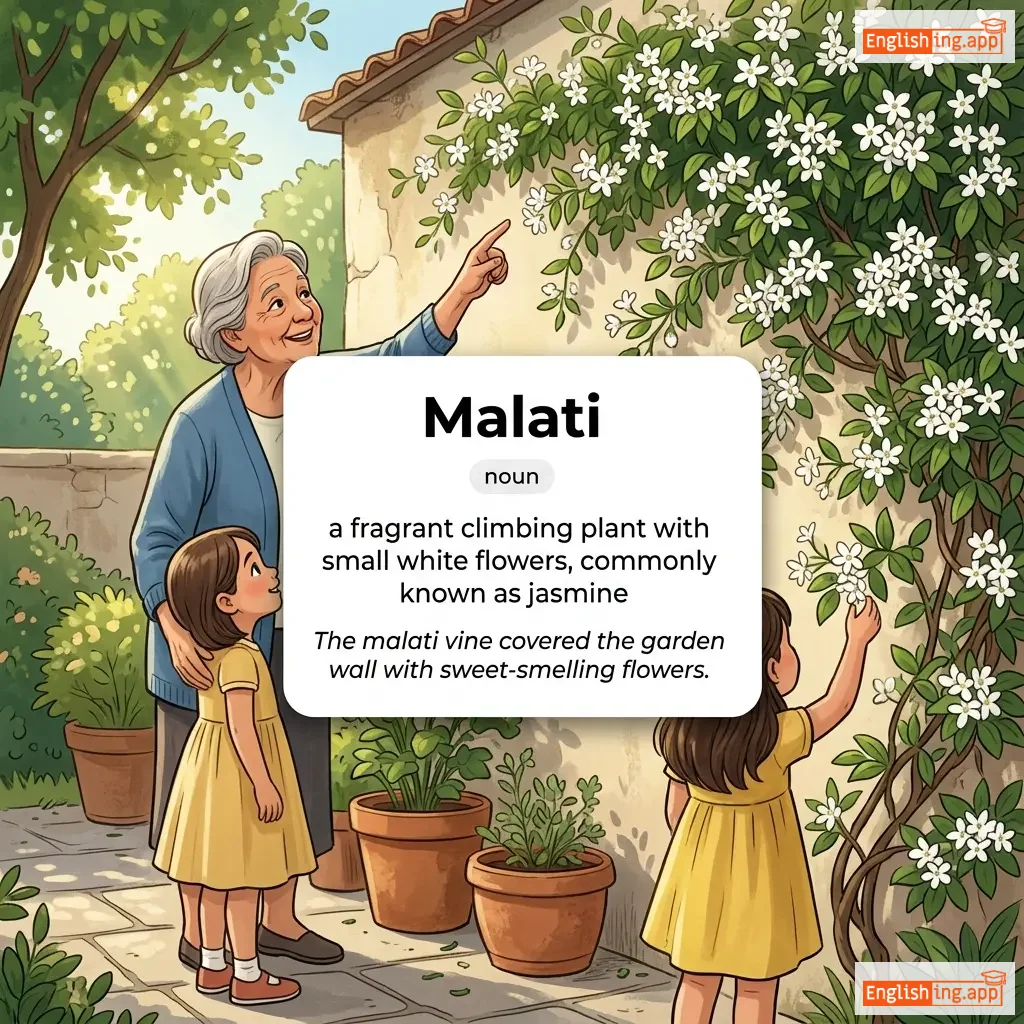
Malati definition card — visual illustration of the meaning
noun
/məˈlɑː.ti/
马拉提 (malati)

a fragrant climbing plant with small white flowers, commonly known as jasmine

"The malati vine covered the garden wall with sweet-smelling flowers."

"马拉提藤蔓用甜美的花香覆盖了花园的墙壁。" (Malati tengman yong tianmei de huaxiang fukai le huayuan de qiangbi)
noun
/ˈmæl.kənˌtɛnt/
不满的人 (bùmǎn de rén)

A person who is dissatisfied or rebellious; one who is not content.

"The malcontent voiced his grievances against the government."

"这个不满的人表达了他对政府的不满。" (Zhège bùmǎn de rén biǎodále tā duì zhèngfǔ de bùmǎn.)
noun/adjective
/meɪl/
男性 (nánxìng)

a man or boy; relating to men or boys

"The school has more male teachers than female teachers."

"学校有更多的男性教师而非女性教师。" (Xuéxiào yǒu gèng duō de nánxìng jiàoshī ér fēi nǚxìng jiàoshī.)
noun
/ˌmæl.əˈdɪk.ʃən/
诅咒 (zuzhou)

A curse or the utterance of a curse.

"The witch cast a malediction upon the village."

"女巫对村庄施下了诅咒。" (Nǚwū duì cūnzhuāng shīxiàle zǔzhòu.)
noun
/ˈmæl.əˌfæk.tər/
恶棍 (è gùn)

A person who commits a crime or does evil.

"The malefactor was arrested for the robbery."

"恶棍因抢劫被捕。" (È gùn yīn qiǎngjié bèi bǔ.)
adjective
/məˈlɛfɪsənt/
邪恶 (xiee)

Causing harm or destruction, especially by supernatural means.

"The maleficent witch cursed the young princess."

"那个恶毒的女巫诅咒了年轻的公主。" (Na ge exie de nǚwū zhǔzhòu le niánqīng de gōngzhǔ.)
adjective
/ˌmæl.əˈfɪʃ.ənt/
恶意的 (è yì de)

Doing harm or evil; having a harmful effect.

"The maleficient acts of the tyrant ruined the kingdom."

"暴君的恶意行为摧毁了王国。" (Bàojūn de èyì xíngwéi cuīhuǐle wángguó.)
noun
/məˈlɛvələns/
恶意 (èyì)

The state or condition of being malevolent; having or showing a wish to do evil to others.

"His malevolence was clear in the cruel way he treated his rivals."

"他的恶意在他对待竞争对手的残忍方式中表现得淋漓尽致。" (Tā de èyì zài tā duìdài jìngzhēng duìshǒu de cánrěn fāngshì zhōng biǎoxiàn dé línlí jìnzhì.)
adjective
/məˈlɛvələnt/
恶意的 (èyì de)

Having or showing a wish to do evil or harm to others.

"The malevolent glare in his eyes frightened the children."

"他眼中的恶意目光吓到了孩子们。" (Tā yǎnzhōng de èyì mùguāng xià dào le háizimen.)
noun
/mælˈfiːzəns/
公职人员的不当行为 (gongzhi renyuan de budang xingwei)

Wrongdoing or misconduct, especially by a public official.

"The mayor was accused of malfeasance in office."
"市长因在职务中不当行为而被指控。" (Shizhang yin zhiwu zhong budang xingwei er bei zhikong.)
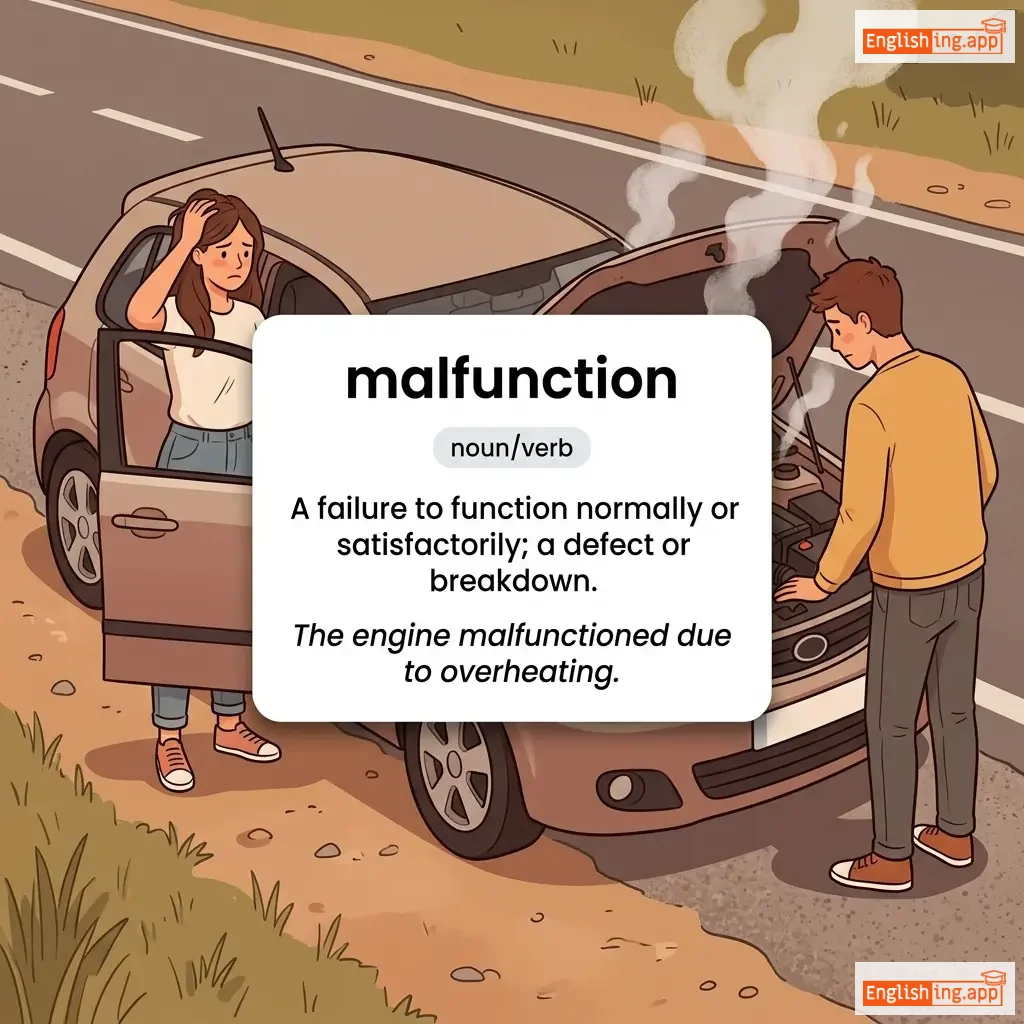
malfunction definition card — visual illustration of the meaning
noun/verb
mælˈfʌŋk.ʃən
故障 (gùzhàng)

A failure to function normally or satisfactorily; a defect or breakdown.

"The engine malfunctioned due to overheating."

"发动机因过热而发生故障。" (Fādòngjī yīn guòrè ér fāshēng gùzhàng.)
noun
/ˈmælɪs/
恶意 (eyi)

The intention or desire to do evil or cause harm.

"She bore no malice towards her former friend."

"她对她的前朋友没有恶意。" (Tā duì tā de qián péngyǒu méiyǒu èyì.)
adjective
/məˈlɪʃəs/
恶意的 (èyì de)

Characterized by malice; intending or intended to do harm.

"The hackers launched a malicious attack on the company’s system."

"黑客对公司的系统发起了恶意攻击。" (Hēikè duì gōngsī de xìtǒng fāqǐle èyì gōngjī.)
Malign definition card — visual illustration of the meaning
🗣️

Malign

verb
/məˈlaɪn/

to speak harmful untruths about someone; to slander or defame

"She felt hurt when her rivals tried to malign her reputation."

adjective
/məˈlɪɡnənt/
恶性 (èxìng)

dangerous or harmful in influence or effect; medically, tending to invade and destroy tissue

"Doctors confirmed that the tumor was malignant."
"医生确认肿瘤是恶性的。" (Yisheng queren zhongliu shi èxìng de.)
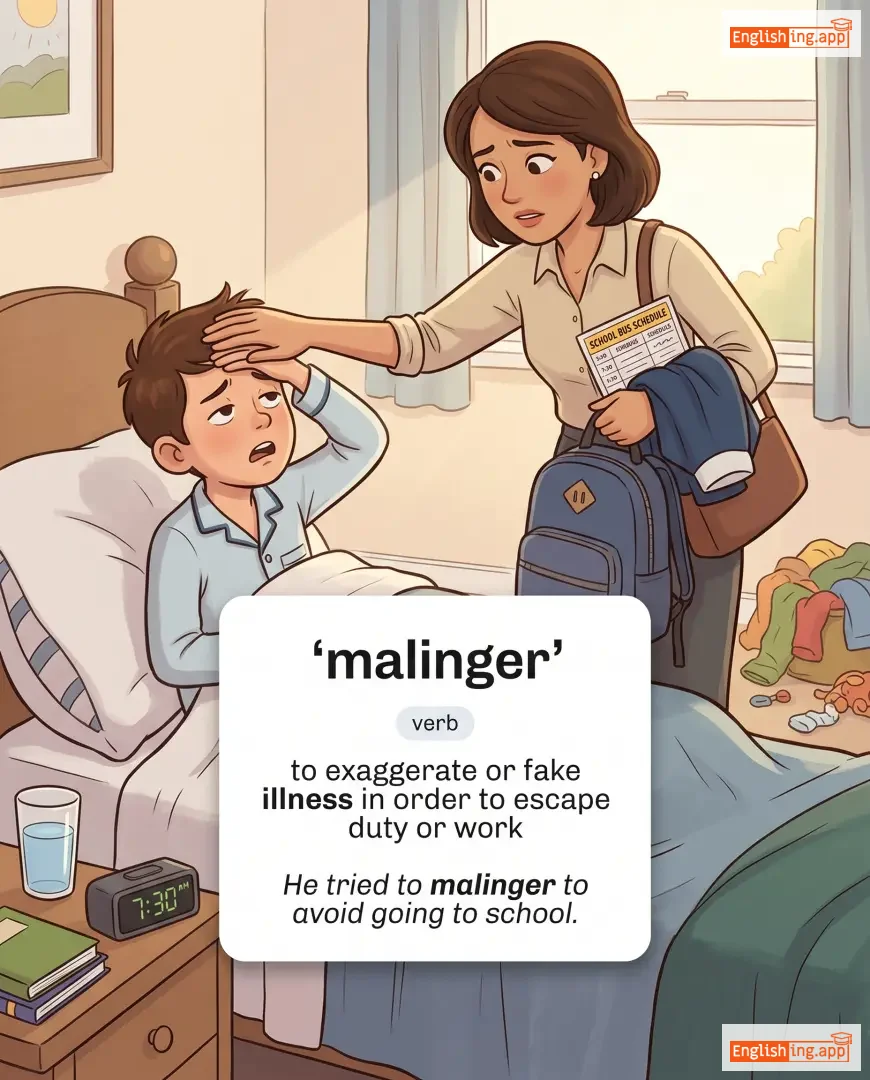
malinger definition card — visual illustration of the meaning
verb
/məˈlɪŋɡər/
装病 (zhuang bing)

to exaggerate or fake illness in order to escape duty or work

"He tried to malinger to avoid going to school."

"他试图装病以逃避上学。" (Ta shitu zhuang bing yi taobi shangxue.)
malingerer definition card — visual illustration of the meaning
noun
/məˈlɪŋɡərər/
装病的人 (zhuang bing de ren)

a person who pretends to be sick to avoid duty or work

"The manager suspected that John was a malingerer."

"经理怀疑约翰是一个装病的人。" (Jing li huai yi Yue han shi yi ge zhuang bing de ren.)
noun
/mɔːl/ or /mæl/
购物中心 (gòuwù zhōngxīn)

a large building or series of connected buildings containing shops and restaurants

"They went to the mall to buy new clothes."

"他们去购物中心买新衣服。" (tāmen qù gòuwù zhōngxīn mǎi xīn yīfú.)
noun
/meɪndʒ/
疥癣 (jiaixuan)

a skin disease in animals caused by parasitic mites, leading to hair loss and sores

"The stray dog was suffering from mange."
"流浪狗正在忍受疥癣。" (Liulang gou zhengzai renshou jiaixuan.)
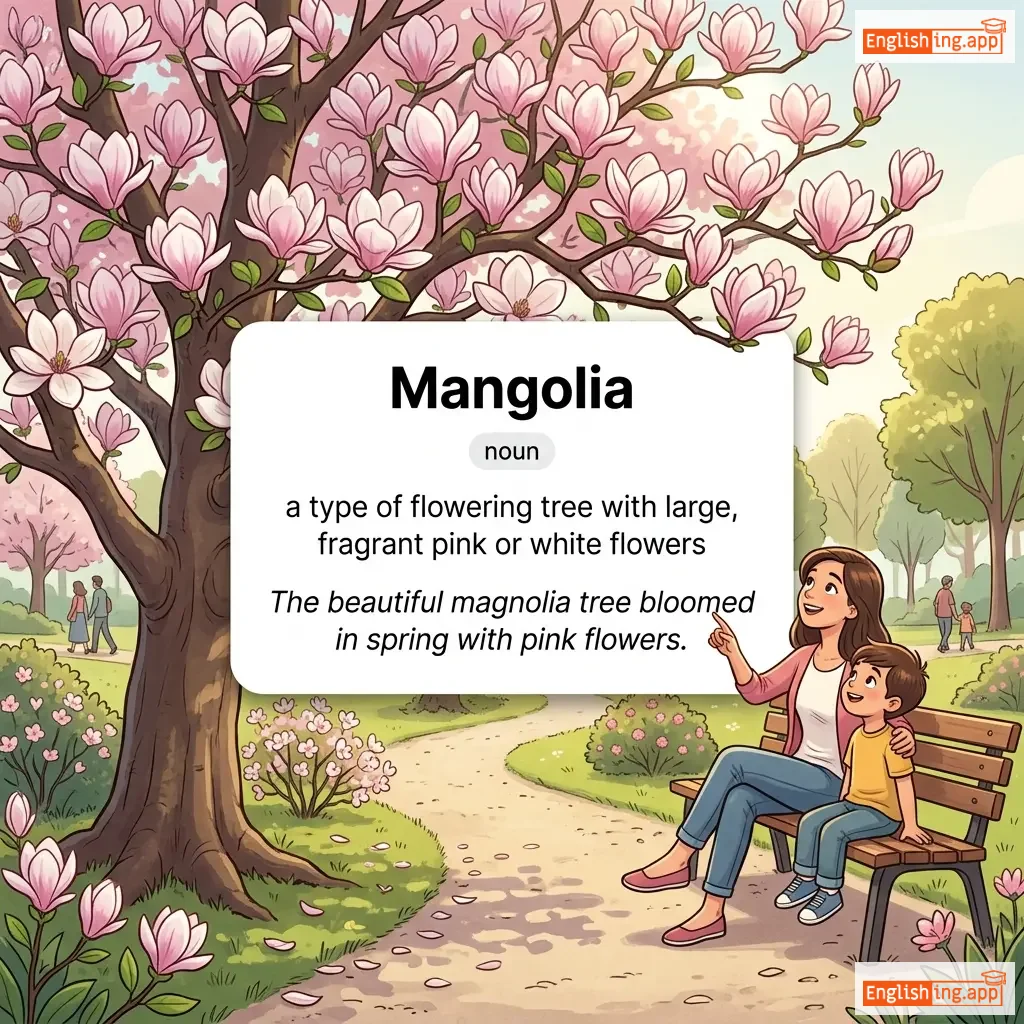
Mangolia definition card — visual illustration of the meaning
noun
/mæŋˈɡoʊ.li.ə/
木兰花 (mùlán huā)

a type of flowering tree with large, fragrant pink or white flowers

"The beautiful magnolia tree bloomed in spring with pink flowers."
"美丽的木兰花树在春天开花,盛开着粉色的花朵。" (Měilì de mùlán huā shù zài chūntiān kāihuā, shèngkāi zhe fěn sè de huāduǒ)
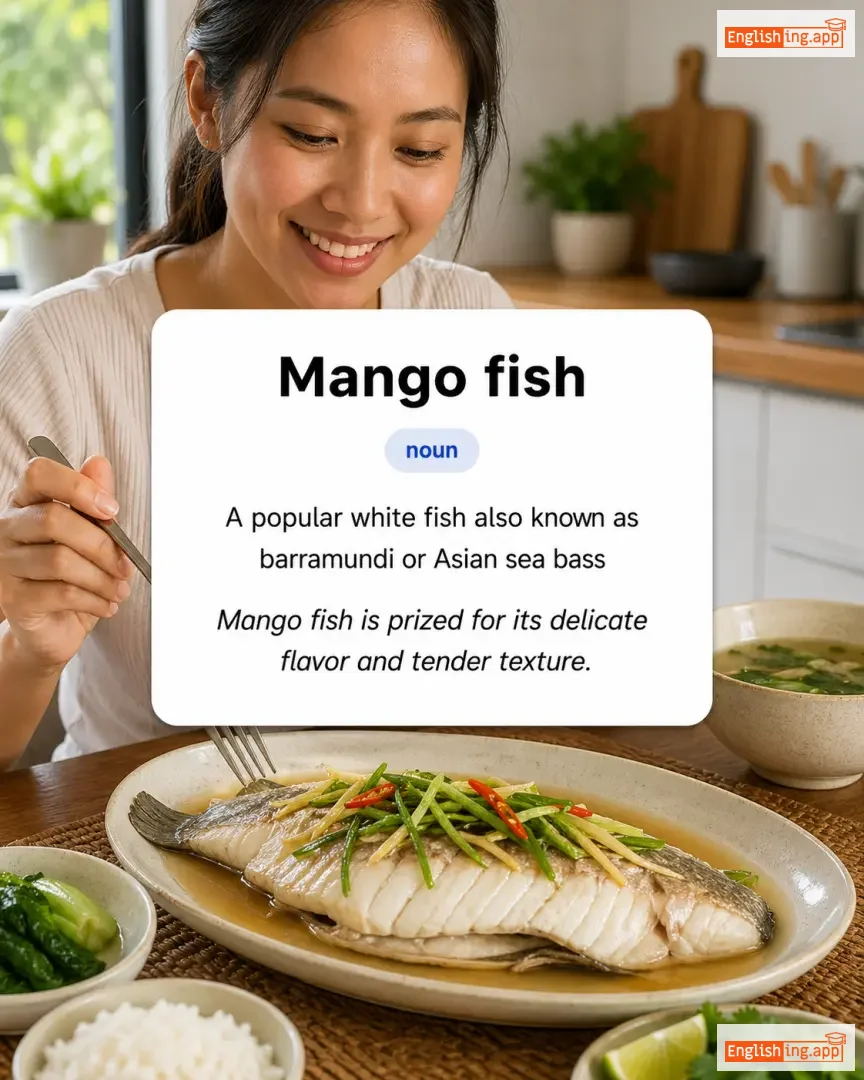
Mango fish definition card — visual illustration of the meaning
noun
/ˈmæŋɡoʊ fɪʃ/
金目鲈 (jin mu lu)

A popular white fish also known as barramundi or Asian sea bass

"Mango fish is prized for its delicate flavor and tender texture."
"金目鲈因其细腻的味道和嫩滑的质地而受到青睐。" (jin mu lu yin qi xi ni de wei dao he nen hua de zhi di er shou dao qing lai)
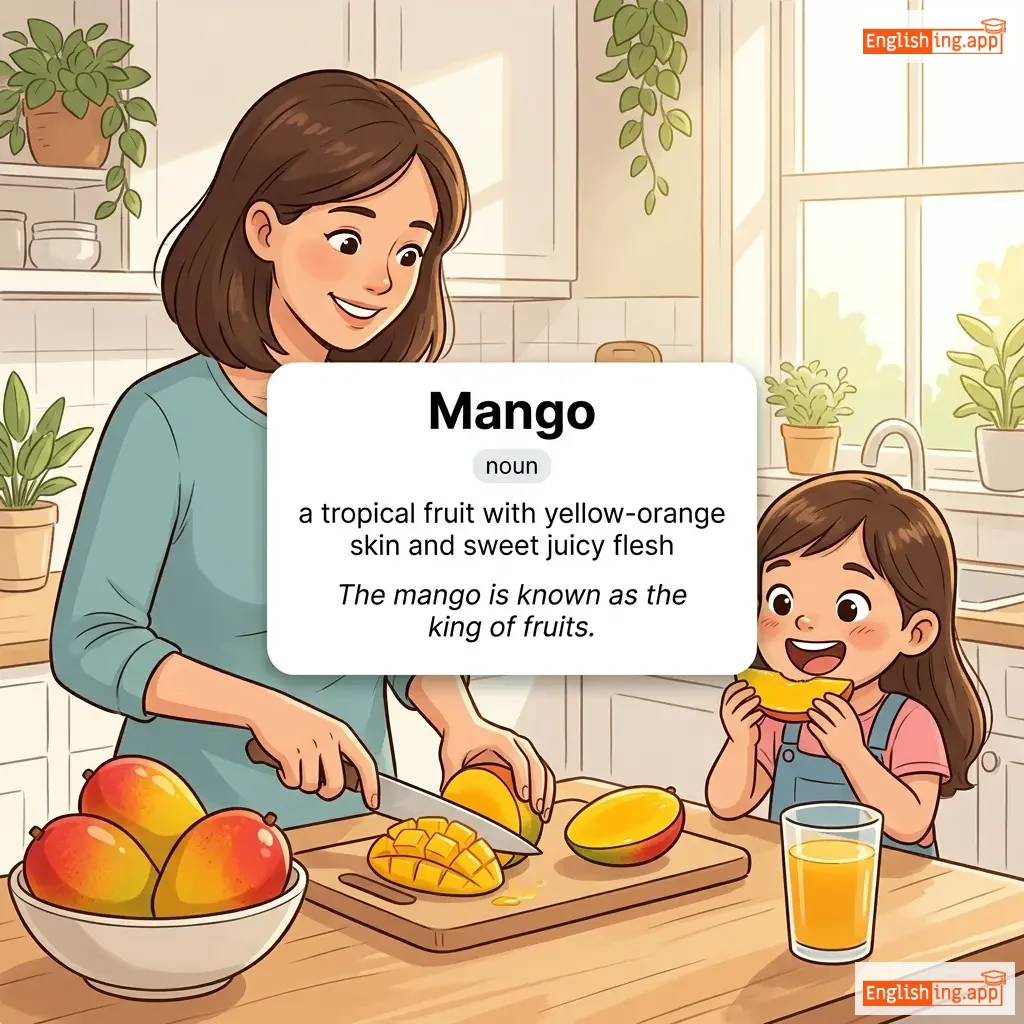
Mango definition card — visual illustration of the meaning
noun
/ˈmæŋ.ɡoʊ/
芒果 (mángguǒ)

a tropical fruit with yellow-orange skin and sweet juicy flesh

"The mango is known as the king of fruits."

"芒果被誉为水果之王。" (Mángguǒ bèi yù wéi shuǐguǒ zhī wáng.)
verb
/ˈmæŋɡəl/
毁坏 (huihuai)

to severely damage or mutilate something, often by tearing or crushing

"The car was mangled in the accident."

"车在事故中毁坏。" (Chē zài shìgù zhōng huǐhuài.)
noun
/meɪn/
鬃毛 (zōngmáo)

the long hair growing on the neck of a horse, lion, or other animal

"The lion shook its thick mane proudly."

"狮子骄傲地摇动着它浓密的鬃毛。" (Shīzi jiāo'ào de yáodòng zhe tā nóngmì de zōngmáo.)
noun, verb
/ˈmæn.deɪt/
命令 (mingling)

an official order or command; to give someone authority to act in a certain way

"The government issued a mandate to reduce carbon emissions."

"政府发布了减少碳排放的命令。" (Zhèngfǔ fābùle jiǎnshǎo tàn pái fàng de mìnglìng.)
adjective
/ˈmæn.dəˌtɔːr.i/
强制性的 (qiángzhìxìng de)

required by law or rules; compulsory

"Wearing seat belts is mandatory in most countries."

"在大多数国家,佩戴安全带是强制性的。" (Zài dàduōshù guójiā, pèidài ānquán dài shì qiángzhìxìng de.)