词汇表

英语词汇词典 | 单词含义、定义和示例

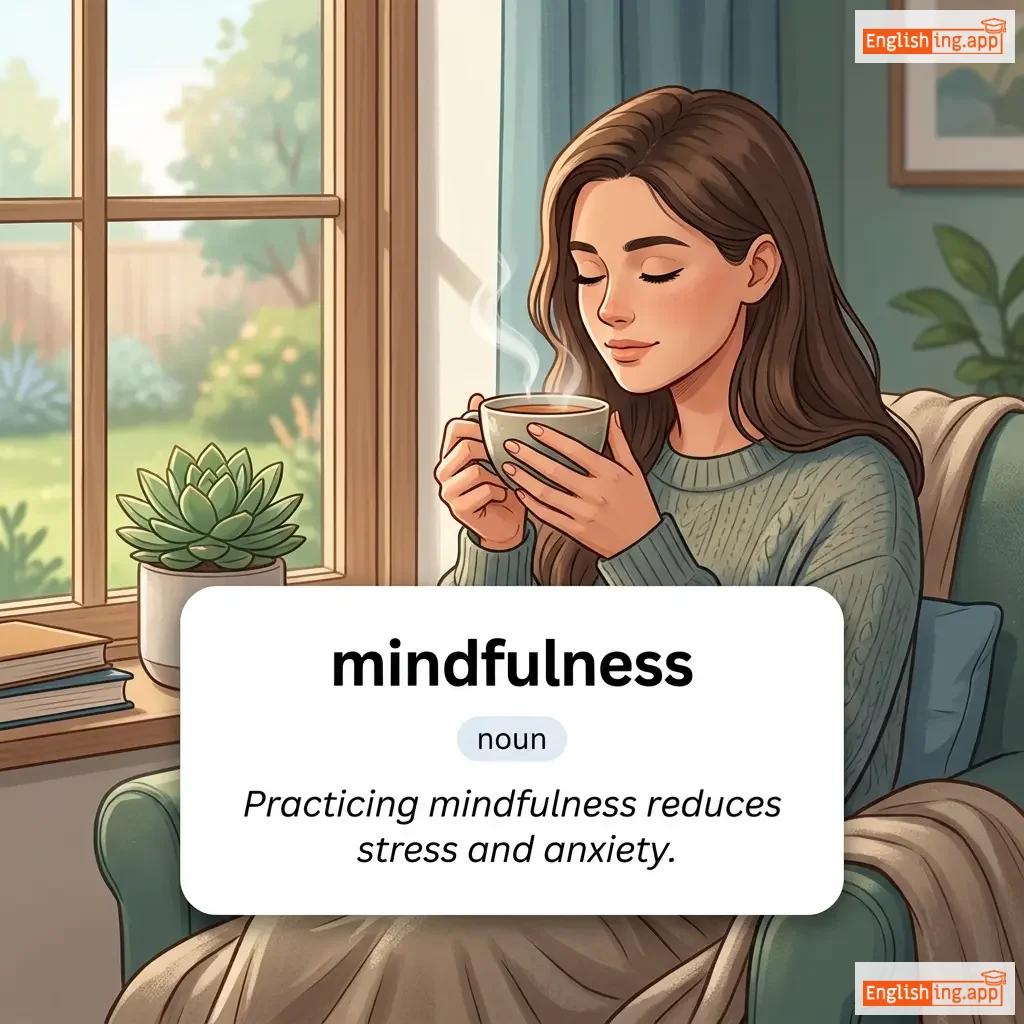
mindfulness definition card — visual illustration of the meaning
noun
/ˈmaɪnd.fʊl.nəs/
正念 (zhèng niàn)

The quality or state of being conscious or aware of something; a mental state achieved by focusing one's awareness on the present moment.

"Practicing mindfulness reduces stress and anxiety."

"正念练习可以减少压力和焦虑。" (Zhèngniàn liànxí kěyǐ jiǎnshǎo yālì hé jiāolǜ.)
adjective
/ˈmaɪndləs/
无意义的 (wú yìyì de)

without thought or intelligence; done without consideration

"He was bored by the mindless tasks at work."
"他对工作中无意义的任务感到无聊。" (Tā duì gōngzuò zhōng wú yìyì de rènwù gǎndào wúliáo.)
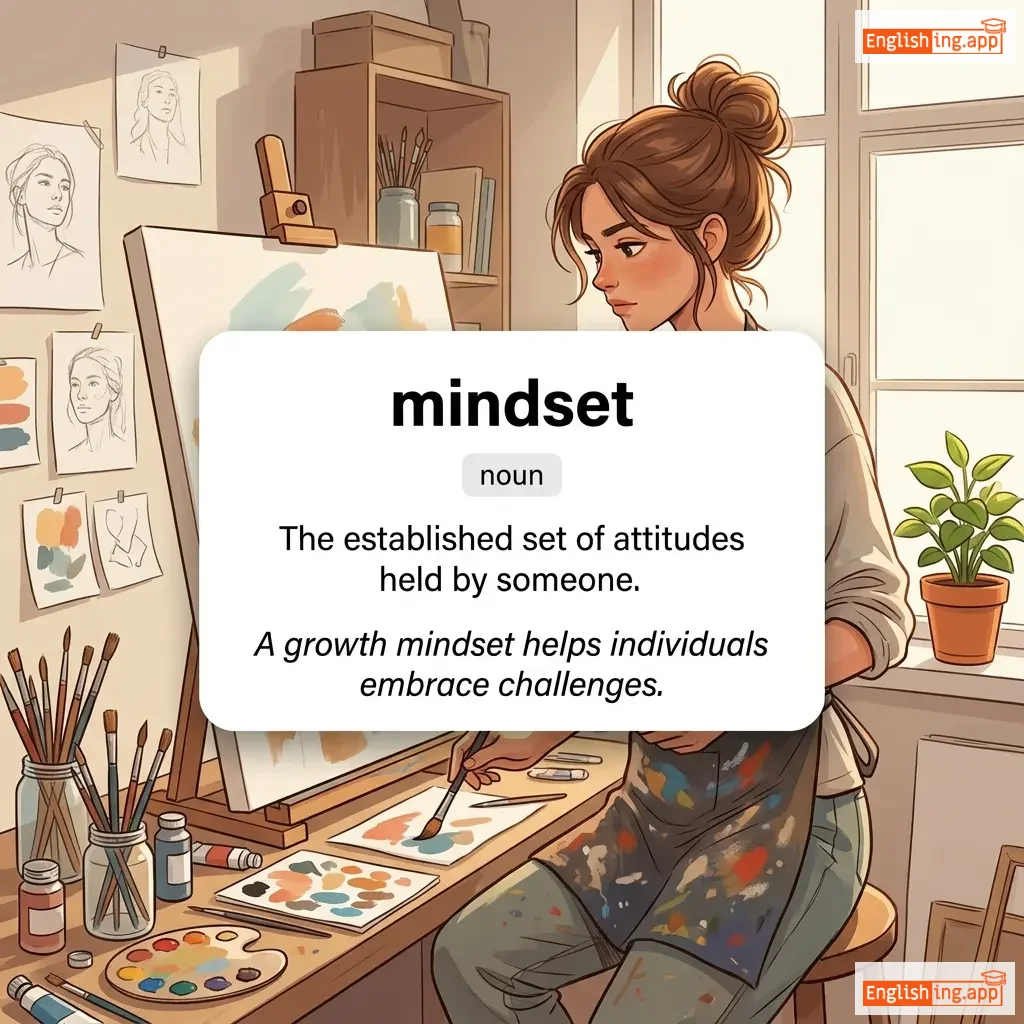
mindset definition card — visual illustration of the meaning
noun
ˈmaɪnd.set
思维方式 (sīwéi fāngshì)

The established set of attitudes held by someone.

"A growth mindset helps individuals embrace challenges."

"成长型思维帮助个人接受挑战。" (Chéngzhǎng xíng sīwéi bāngzhù gèrén jiēshòu tiǎozhàn.)
noun, pronoun, verb
/maɪn/
矿井 / 我的 (kuàngjǐng / wǒ de)

a place where minerals are dug from the ground; or something belonging to me

"The workers went deep into the mine to extract coal."

"工人们深入矿井开采煤炭。" (Gōngrénmen shēn rù kuàngjǐng kāicǎi méitàn.)
noun
/ˈmaɪnə(r)/
矿工 (kuànggōng)

a person who works in a mine, extracting minerals or other resources

"The miner worked in the coal mine for many years."

"矿工在煤矿工作了很多年。" (Kuànggōng zài méikuàng gōngzuò le hěn duō nián.)
noun
/ˈmɪnərəl/
矿物 (kuàngwù)

a naturally occurring substance that is solid and inorganic, often used in industry or nutrition

"Calcium is an important mineral for strong bones."

"钙是一种对强壮骨骼很重要的矿物。" (gài shì yī zhǒng duì qiángzhuàng gǔgé hěn zhòngyào de kuàngwù.)
verb
/ˈmɪŋɡl/

to mix or combine; to move among people and engage socially

"Guests mingled at the party, chatting and laughing together."

adjective
/ˈmɪn.dʒi/
小气; 吝啬 (xiaoqi; linse)

mean or stingy; unwilling to spend money

"He is too mingy to spend money on anything but necessities."

"他太小气,不愿意在除必要的东西外花钱。" (Ta tai xiaoqi, buyuan yong zai chu bixiao de dongxi wai huai qian.)
noun/adjective
/ˈmɪnətʃər/ or /ˈmɪniətʃʊr/
微型版本 (weixing banben)

a very small version of something; small in scale or size

"The artist created a miniature model of the castle."

"艺术家制作了一个城堡的微型模型。" (Yishujia zhizuole yige chengbao de weixing moxing.)
adjective
/ˈmɪnɪməl/
最小的 (zuìxiǎo de)

the smallest or least amount possible

"The damage to the car was minimal after the accident."
"事故后,汽车的损坏是最小的。" (shìgù hòu, qìchē de sǔnhuài shì zuìxiǎo de.)
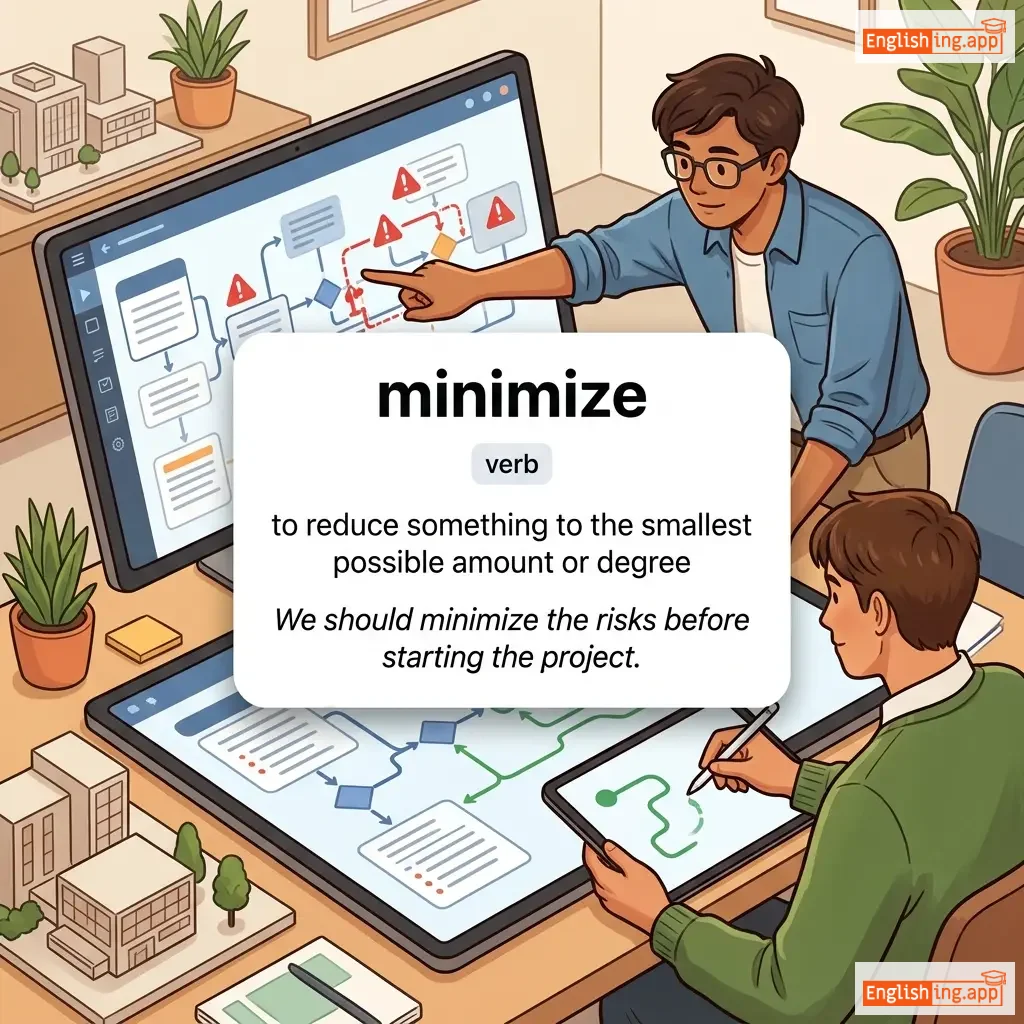
minimize definition card — visual illustration of the meaning
verb
/ˈmɪnɪmaɪz/
最小化 (zuìxiǎohuà)

to reduce something to the smallest possible amount or degree

"We should minimize the risks before starting the project."
"在开始项目之前,我们应该最小化风险。" (Zài kāishǐ xiàngmù zhīqián, wǒmen yīnggāi zuìxiǎohuà fēngxiǎn.)
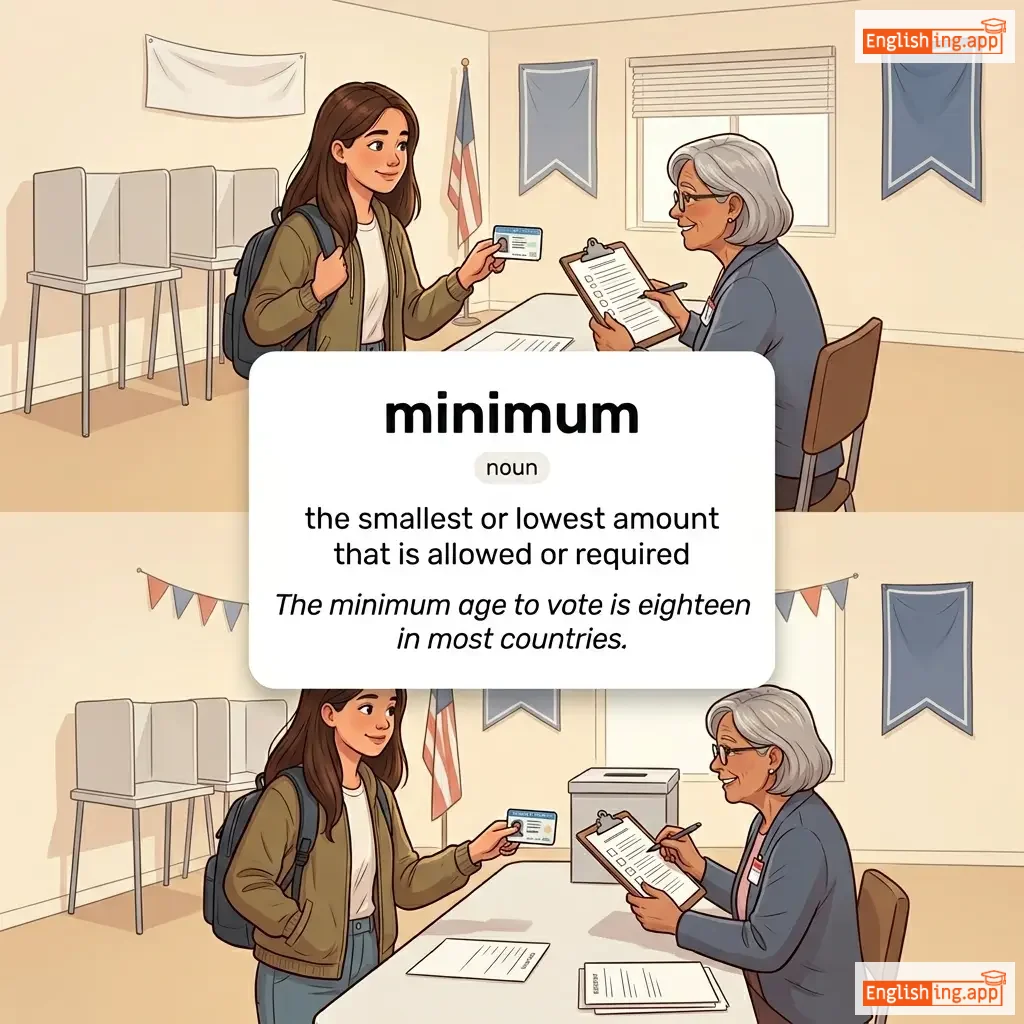
minimum definition card — visual illustration of the meaning
noun
/ˈmɪnɪməm/
最小值 (zuì xiǎo zhí)

the smallest or lowest amount that is allowed or required

"The minimum age to vote is eighteen in most countries."

"在大多数国家,投票的最低年龄是十八岁。" (Zài dàduōshù guójiā, tóupiào de zuìdī niánlíng shì shíbā suì.)
noun
/ˈmaɪnɪŋ/
采矿 (cǎikuàng)

the process of extracting valuable minerals or other resources from the earth

"Mining in this area has increased in recent years."

"该地区的采矿业近年来有所增加。" (Gāi dìqū de cǎikuàngyè jìnnián lái yǒu suǒ zēngjiā.)
adjective
/ˈmɪn.ɪ.skjuːl/
微小 (weixiao)

Extremely small or tiny.

"The error was so miniscule that nobody noticed it."

"这个错误如此微小,以至于没人注意到它。" (Zhege cuowu ruci weixiao, yi zhi yu meirén zhùyì dào tā.)
🧑‍🤝‍🧑

minion (米宁)

noun
/ˈmɪn.i.ən/
爪牙 (zhuǎyá)

A follower or underling of a powerful person, especially a servile one.

"The dictator was surrounded by loyal minions who carried out his orders."

"独裁者被忠诚的爪牙包围,他们执行他的命令。" (Dúcáizhě bèi zhōngchéng de zhuǎyá bāowéi, tāmen zhíxíng tā de mìnglìng.)
noun
/ˌmɪsˈkɒndʌkt/
不当行为 (butang xingwei)

Improper or unacceptable behavior, especially by a professional or authority figure.

"The teacher was dismissed for serious misconduct."
"老师因严重的不当行为被解雇。" (Laoshi yin yanzhong de butang xingwei bei jiegou.)
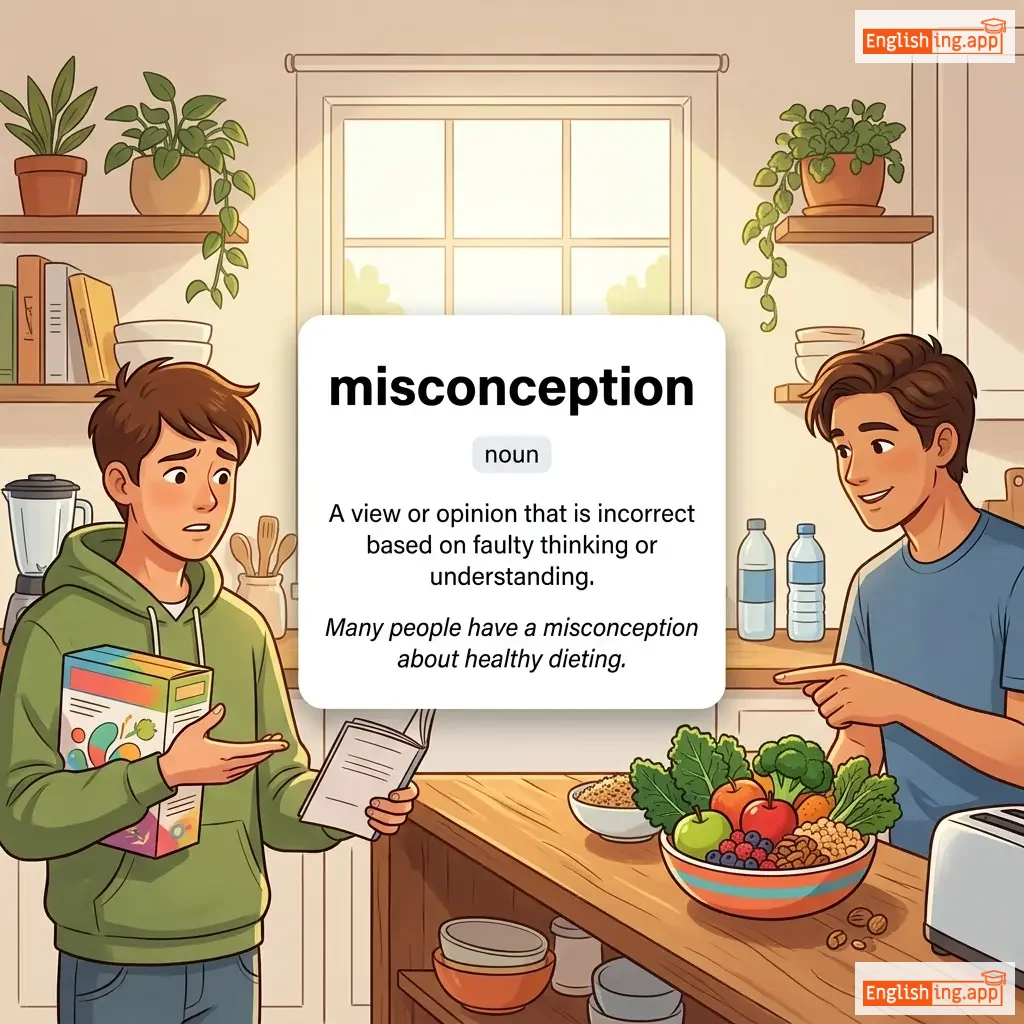
misconception definition card — visual illustration of the meaning
noun
/ˌmɪs.kənˈsep.ʃən/
误解,错觉 (wùjiě, cuòjué)

A view or opinion that is incorrect based on faulty thinking or understanding.

"Many people have a misconception about healthy dieting."

"许多人对健康饮食有误解。" (Xǔduō rén duì jiànkāng yǐnshí yǒu wùjiě.)
verb
/ˌmɪskənˈsiːv/
误解 (wùjiě)

To misunderstand or form an incorrect idea about something.

"He misconceived the purpose of the project."

"他误解了项目的目的。" (Tā wùjiě le xiàngmù de mùdì.)
adjective
/ˈmɪstʃɪvəs/
调皮的 (tiaopi de)

Causing or showing a fondness for causing trouble in a playful way.

"She gave him a mischievous smile."

"她给了他一个调皮的微笑。" (Ta gei le ta yi ge tiaopi de weixiao.)
noun
/ˈmɪstʃɪf/
恶作剧 (èzuòjù)

Playful misbehavior or troublemaking.

"The children were full of mischief during the party."

"孩子们在派对上充满了恶作剧。" (Háizimen zài pàiduì shàng chōngmǎnle èzuòjù.)
noun
/ˌmɪsˈtʃæns/

An unfortunate accident or event; bad luck.

"By mischance, he missed the last train home."

noun
/ˈmɪsəleɪni/
杂集 (za ji)

A collection or mixture of various things.

"The book is a miscellany of essays and poems."

"这本书是散文和诗歌的杂集。" (Zhe ben shu shi san wen he shi ge de za ji.)
adjective
/ˌmɪsəˈleɪniəs/
杂项 (záxiàng)

Consisting of a variety of different items or types.

"The drawer was filled with miscellaneous objects."

"抽屉里装满了杂物。" (Chōutì lǐ zhuāngmǎnle záwù.)
noun
/mɪˌsɛdʒəˈneɪʃən/
种族通婚 (zhǒngzú tōnghūn)

the interbreeding of people considered to be of different racial types

"The law once prohibited miscegenation in many countries."

"法律曾在许多国家禁止了种族通婚。" (Fǎlǜ céng zài xǔduō guójiā jìnzhǐle zhǒngzú tōnghūn.)
noun
/ˌmɪs.bɪˈheɪ.vjər/
不良或不可接受的行为,特别是孩子们或在正式场合中的行为 (misbehaviour)

Bad or unacceptable behavior, especially by children or in formal situations

"The student was punished for his misbehaviour in class."

"学生因在课堂上的不当行为而受到惩罚。" (Xuesheng yin zai kètáng shàng de bùdàng xíngwéi ér shòudào chéngfá.)
noun
/ˌmɪsbɪˈheɪvjər/
不当行为 (budang xingwei)

bad or improper behavior

"The teacher punished the student for his misbehavior."
"老师因学生的不当行为而惩罚了他。" (Laoshi yin xuesheng de budang xingwei er chengfa le ta.)
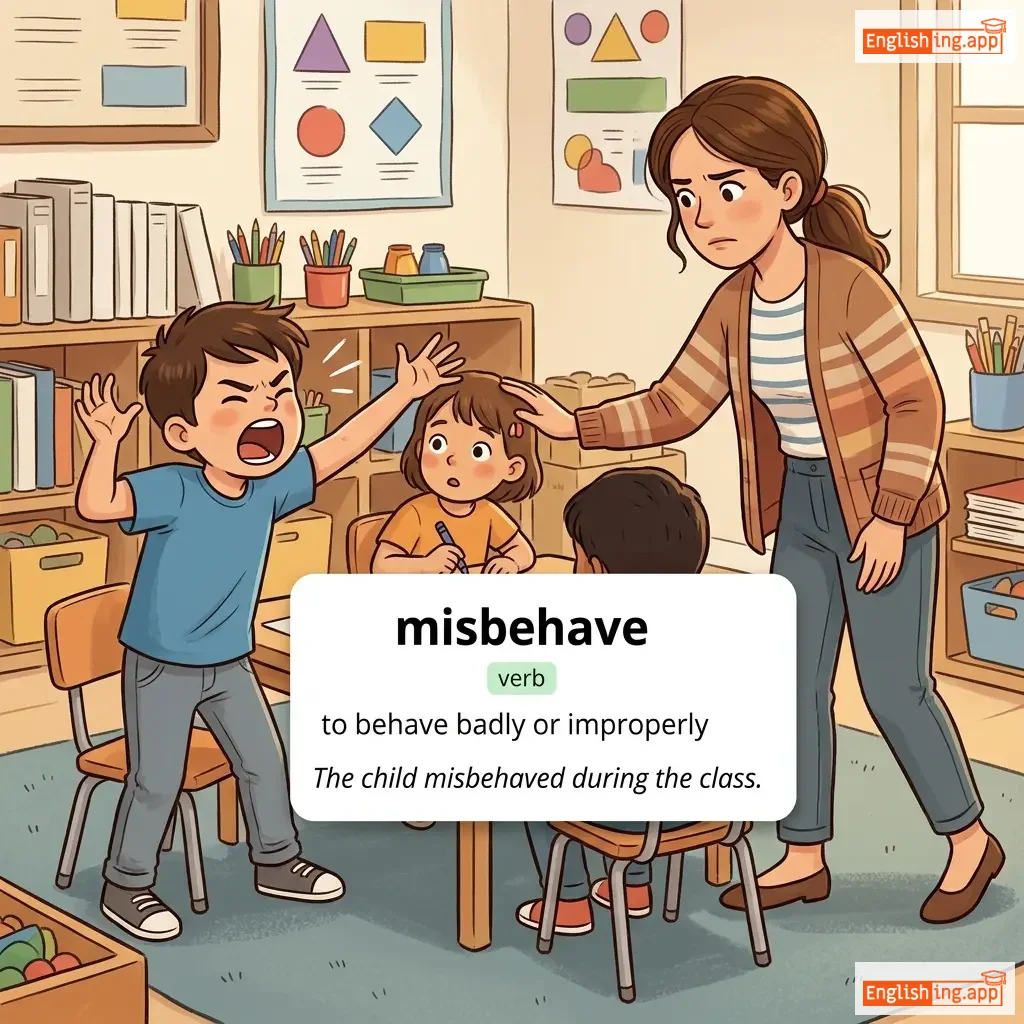
misbehave definition card — visual illustration of the meaning
verb
/ˌmɪsbɪˈheɪv/
行为不当 (xíngwéi bù dāng)

to behave badly or improperly

"The child misbehaved during the class."

"这个孩子在课堂上行为不当。" (Zhège háizi zài kèchéng shàng xíngwéi bù dāng.)
verb
/ˌmɪs.əˈtrɪb.juːt/
错误归因 (cuo wu gui yin)

to incorrectly credit something, such as a work or remark, to the wrong person or source

"The quote was misattributed to Shakespeare."
"这句话被错误地归因于莎士比亚。" (Zhe ju hua bei cuo wu de gui yin yu Sha Shi Bi Ya.)
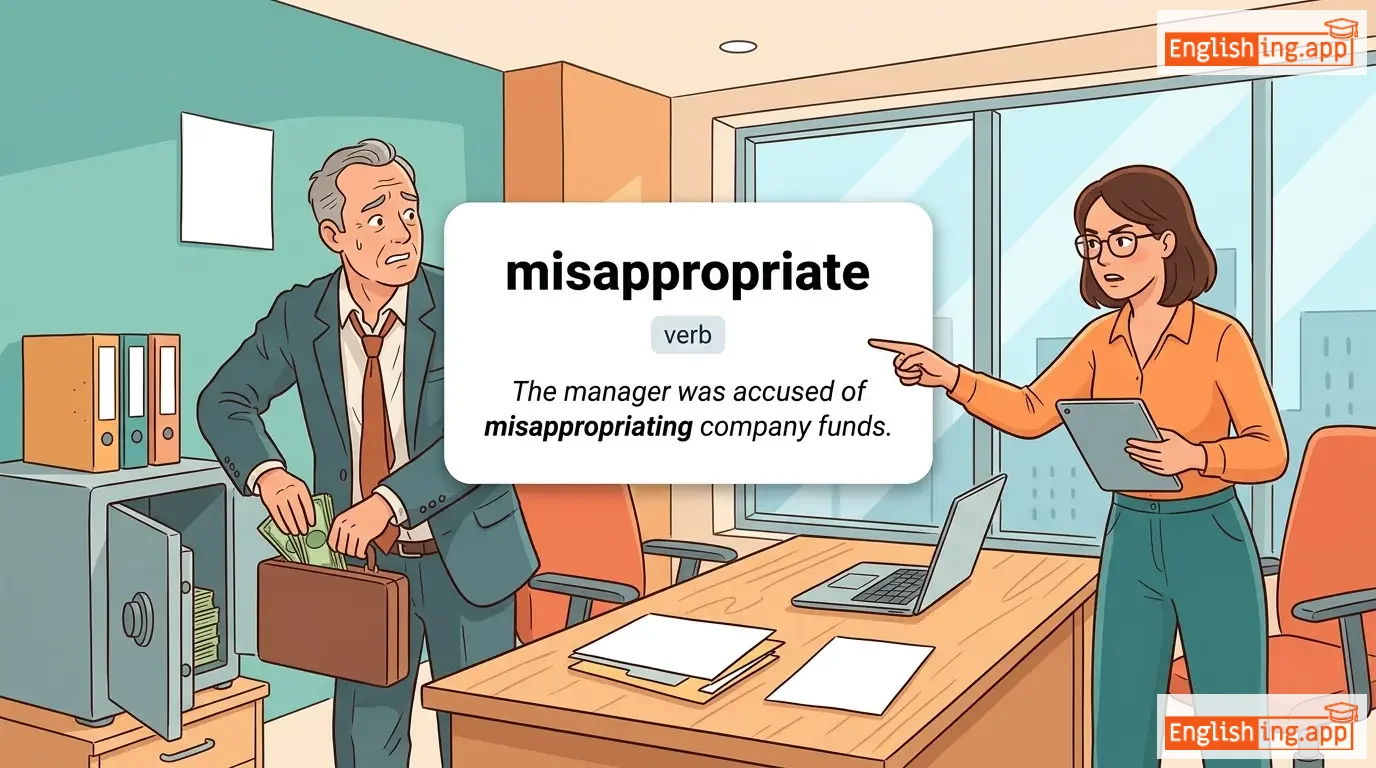
misappropriate definition card — visual illustration of the meaning
verb
/ˌmɪsəˈproʊprieɪt/
挪用 (nuóyòng)

to take or use something dishonestly, especially money or property, for one's own use

"The manager was accused of misappropriating company funds."

"经理被指控挪用公司资金。" (Jīnglǐ bèi zhǐkòng nuóyòng gōngsī zījīn.)
noun
/ˌmɪsæprɪˈhɛnʃən/
误解 (wùjiě)

a mistaken belief or misunderstanding

"There is a common misapprehension about the causes of the disease."

"关于疾病原因存在常见的误解。" (Guānyú jíbìng yuányīn cúnzài chángjiàn de wùjiě.)
verb
/ˌmɪsæprɪˈhɛnd/
误解 (wùjiě)

to misunderstand or misinterpret something

"He misapprehended the teacher’s instructions and did the task incorrectly."

"他误解了老师的指示,错误地做了任务。" (Tā wùjiěle lǎoshī de zhǐshì, cuòwù de zuòle rènwù.)
noun
/mɪˈsænθrəpi/
厌人症 (yàn rén zhèng)

a general dislike, distrust, or hatred of humankind

"His misanthropy was evident in the way he avoided people."

"他的厌人症在他回避人群的方式中显而易见。" (Tā de yàn rén zhèng zài tā huíbì rénqún de fāngshì zhōng xiǎn ér yìjiàn.)
adjective
/ˌmɪsənˈθrɑːpɪk/
厌人症的 (yàn rén zhèng de)

having or showing a dislike of humankind

"His misanthropic attitude made it difficult for him to make friends."
"他那种厌人症的态度让他难以交到朋友。" (Tā nà zhǒng yàn rén zhèng de tàidù ràng tā nán yǐ jiāo dào péngyǒu.)
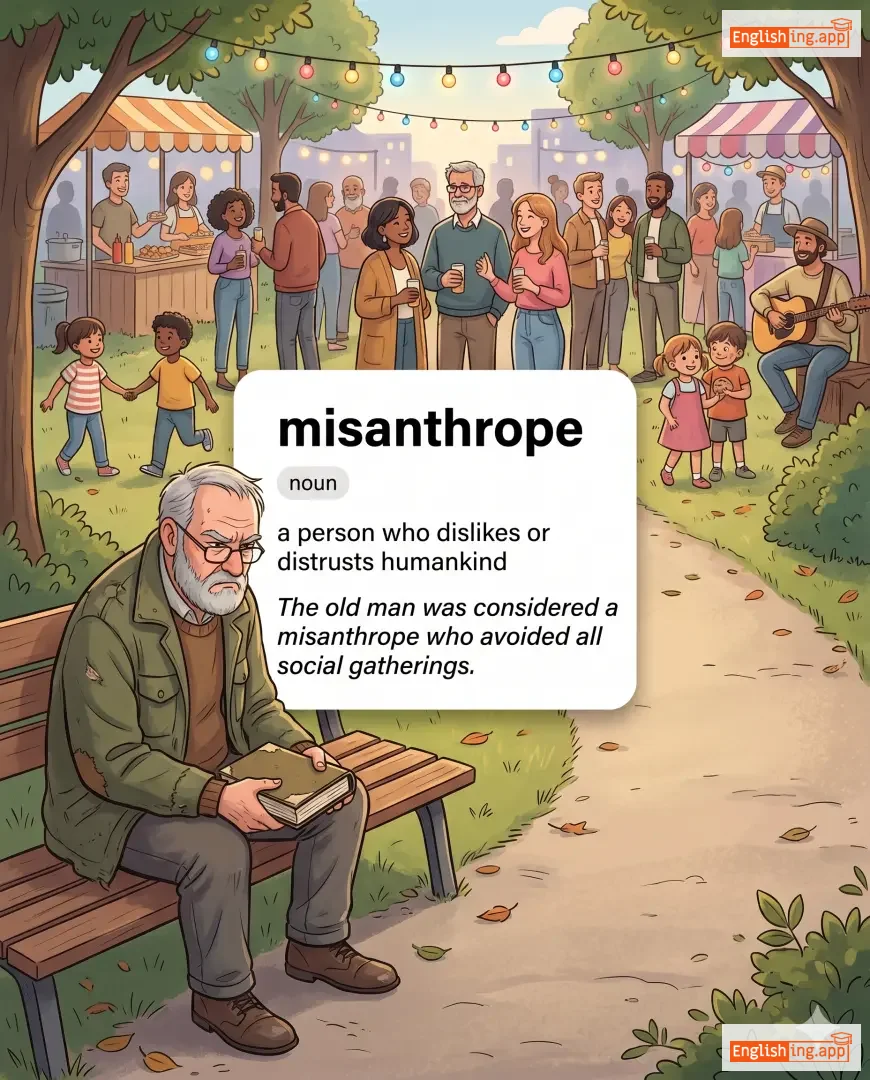
misanthrope definition card — visual illustration of the meaning
noun
/ˈmɪsənˌθroʊp/
厌人者 (yànrénzhě)

a person who dislikes or distrusts humankind

"The old man was considered a misanthrope who avoided all social gatherings."

"这个老人被认为是一个回避所有社交活动的厌人者。" (Zhège lǎorén bèi rènwéi shì yī gè huíbì suǒyǒu shèjiāo huódòng de yànrénzhě.)
noun
/mɜːrθ/
欢乐 (huanle)

Great joy, amusement, or laughter.

"The festival was full of mirth and laughter."

"这个节日充满了欢乐和笑声。" (Zhège jiérì chōngmǎnle huānlè hé xiàoshēng.)
noun
/ˌmɪsədˈvɛntʃər/
不幸的事故 (buxing de shigu)

An unlucky accident, mishap, or unfortunate event.

"He broke his leg during a skiing misadventure."

"他在滑雪时发生了一次不幸的事故,摔断了腿。" (Ta zai huaxue shi fasheng le yici buxing de shigu, shuai duan le tui.)
noun
/ˈmɪnɪstər/
部长 (bù zhǎng)

a head of a government department; a person who leads a church

"The finance minister announced new tax policies."

"财政部长宣布了新的税收政策。" (Cái zhèng bù zhǎng xuānbùle xīn de shuì shōu zhèng cè.)
noun
/ˌmɪn.ɪˈstreɪ.ʃən/
服务 (fuwu)

The act of providing care, assistance, or religious service.

"She recovered thanks to the kind ministrations of the nurses."

"她感谢护士们亲切的照料而康复。" (Tā gǎnxiè hùshì men qīnqiè de zhàoliào ér kāngfù.)
noun
/ˈmɪn.ɪ.stri/
部委 (bù wěi)

A government department headed by a minister or the work of a religious minister.

"He works at the Ministry of Education."

"他在教育部工作。" (Tā zài jiàoyù bù gōngzuò.)
adjective/noun
/ˈmaɪ.nər/
微小 / 未成年 (wei xiao / wei chengnian)

less important, serious, or significant; a person under the legal age

"Luckily, the accident caused only minor injuries."

"幸运的是,事故只造成了轻微伤害。" (xìng yùn de shì, shì gù zhǐ zào chéng le qīng wēi shāng hài.)
noun
/maɪˈnɔːr.ɪ.ti/
少数 (shaoshu)

A smaller number or part, especially a group differing from the majority.

"The law aims to protect the rights of ethnic minorities."

"法律旨在保护少数民族的权利。" (Fa lü zhi zai bao hu shao shu min zu de quan li.)
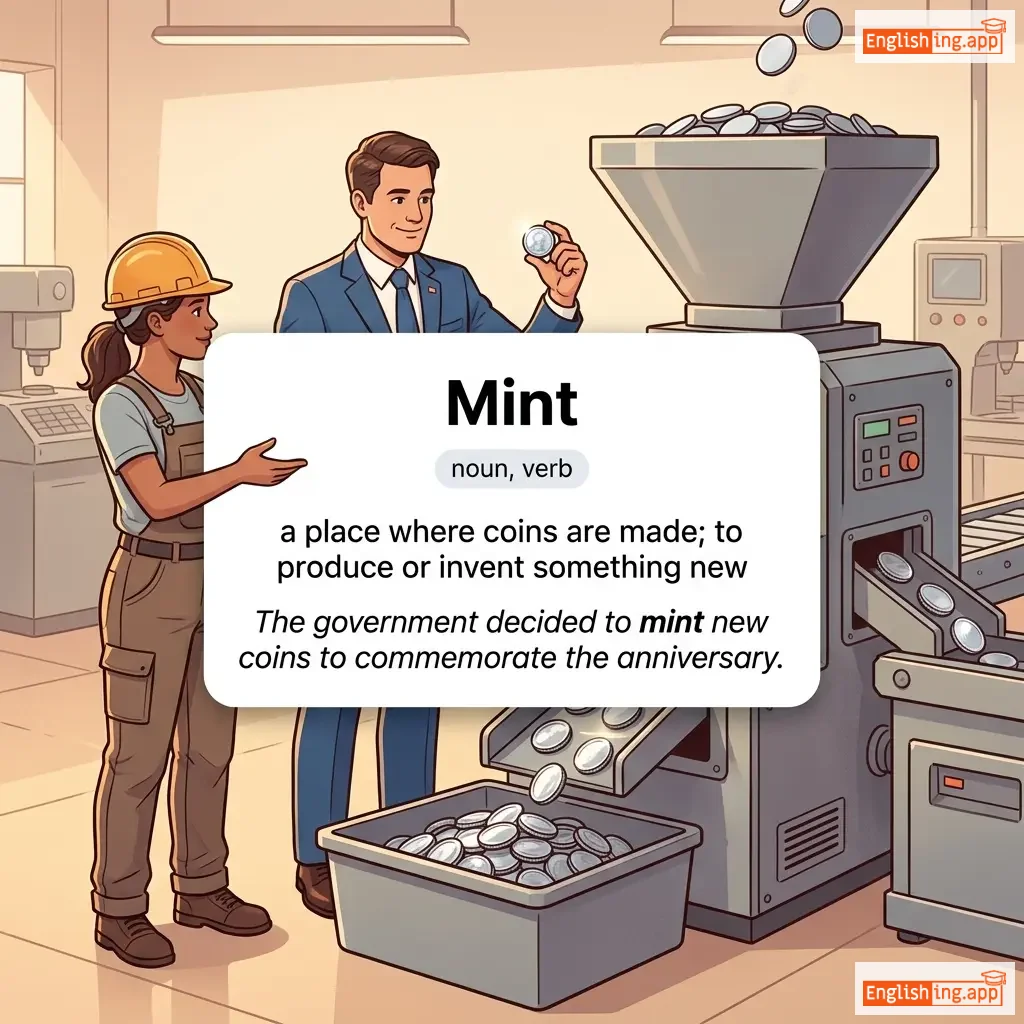
Mint definition card — visual illustration of the meaning
noun, verb
/mɪnt/
薄荷 / 铸币厂 (bohe / zhubi chang)

a place where coins are made; to produce or invent something new

"The government decided to mint new coins to commemorate the anniversary."

"政府决定铸造新硬币以纪念周年纪念日。" (Zhengfu jueding zhuzuo xin yingbi yi jinian zhouni jinianri.)
adjective
/ˈmɪnəskjuːl/
微小 (weixiao)

extremely small in size or importance

"She made only a minuscule contribution to the project."

"她对这个项目的贡献微乎其微。" (Ta dui zhege xiangmu de gongxian weihuqiwei.)
noun, adjective
/maɪˈnjuːt/ (adj), /ˈmɪnɪt/ (noun)
分钟 / 微小 (fēnzhōng / wēi xiǎo)

a period of sixty seconds; extremely small or detailed

"He examined the painting with minute attention to detail."

"他以极小的注意力检查了这幅画。" (Tā yǐ jí xiǎo de zhùyìlì jiǎnchále zhè fú huà.)
noun
/maɪˈnjuːʃə/
琐事 (suǒ shì)

a small or trivial detail of something

"He was bored by the minutia of office paperwork."

"他对办公室文件的琐事感到厌倦。" (Tā duì bàngōngshì wénjiàn de suǒ shì gǎndào yànjuàn.)
adverb
/maɪˈnjuːtli/
仔细地 (zǐxì de)

in very small detail; extremely carefully

"The detective examined the evidence minutely."

"侦探仔细地检查了证据。" (Zhēntàn zǐxì de jiǎnchále zhèngjù.)
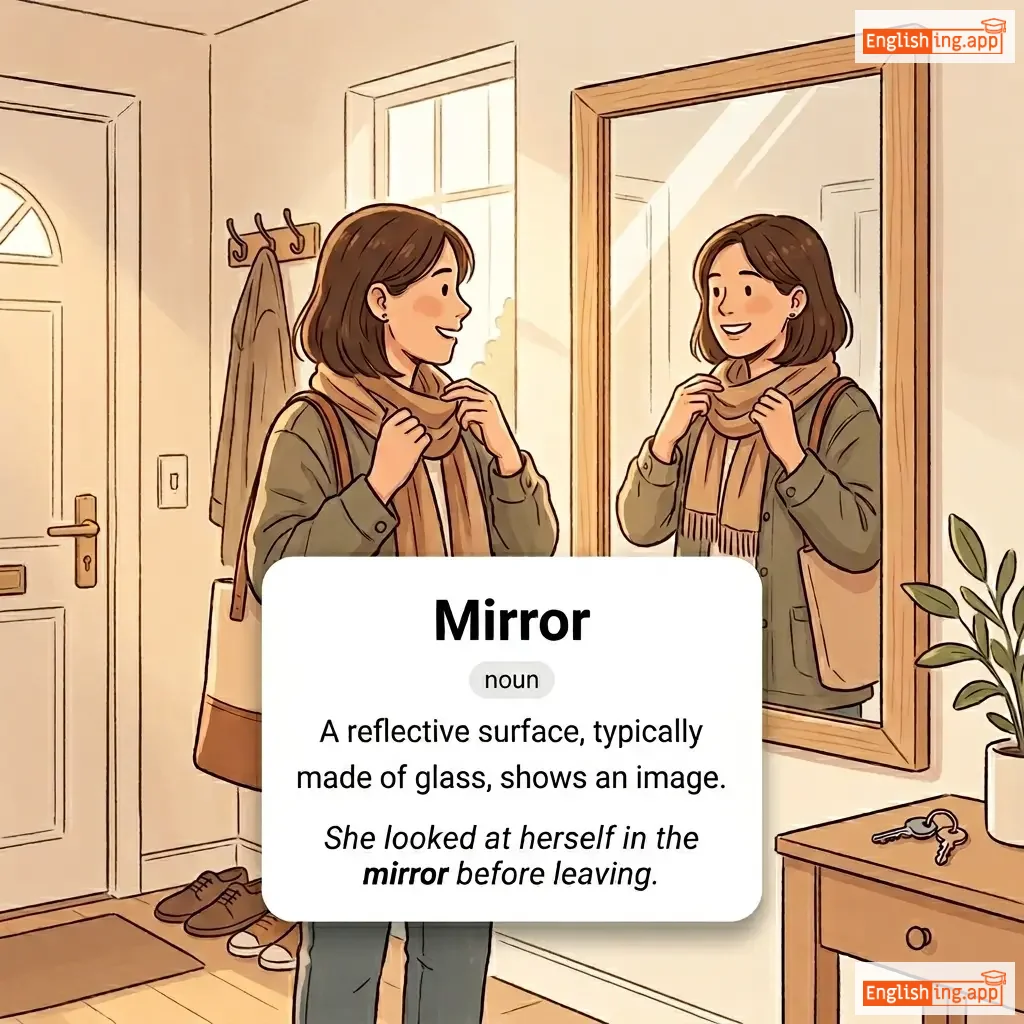
Mirror definition card — visual illustration of the meaning
noun
/ˈmɪrər/

A reflective surface, typically made of glass, that shows an image.

"She looked at herself in the mirror before leaving."

adjective, verb (past tense/participle of mire)
/ˈmaɪərd/
困境中 (kùnjìng zhōng)

Trapped or entangled in something, typically a difficult situation.

"The politician was mired in scandal."

"这位政治家陷入了丑闻中。" (Zhè wèi zhèngzhìjiā xiànrùle chǒuwén zhōng.)
🪵

mire

noun, verb
/ˈmaɪər/

A stretch of swampy or boggy ground; as a verb, to entangle or involve someone in a difficult situation.

"The car was stuck in the mire after the heavy rain."

adjective
/mɪˈrækjələs/
奇迹般的 (qíjì bān de)

Extraordinarily wonderful or unusual, as if by a miracle.

"Her recovery after the accident was truly miraculous."

"她在事故后的康复真的是奇迹般的。" (Tā zài shìgù hòu de kāngfù zhēn de shì qíjì bān de.)