ভোকাবুলারিসমূহ

ইংরেজি শব্দের বাংলা অর্থ | English to Bangla Word Meaning Dictionary

mindfulness definition card — visual illustration of the meaning
noun
/ˈmaɪnd.fʊl.nəs/
সচেতন উপস্থিতি বা মনোযোগ (socheton uposthiti ba monoyog)

The quality or state of being conscious or aware of something; a mental state achieved by focusing one's awareness on the present moment.

"Practicing mindfulness reduces stress and anxiety."

"সচেতন উপস্থিতি অনুশীলন চাপ ও উদ্বেগ কমায়।" (Socheton uposthiti onushilon chap o udbeg komay.)
adjective
/ˈmaɪndləs/
অবিবেচক (obibechok)

without thought or intelligence; done without consideration

"He was bored by the mindless tasks at work."

"সে কাজের অবিবেচক কাজগুলোতে বিরক্ত ছিল।" (Se kajer obibechok kajgulote birokt chilo.)
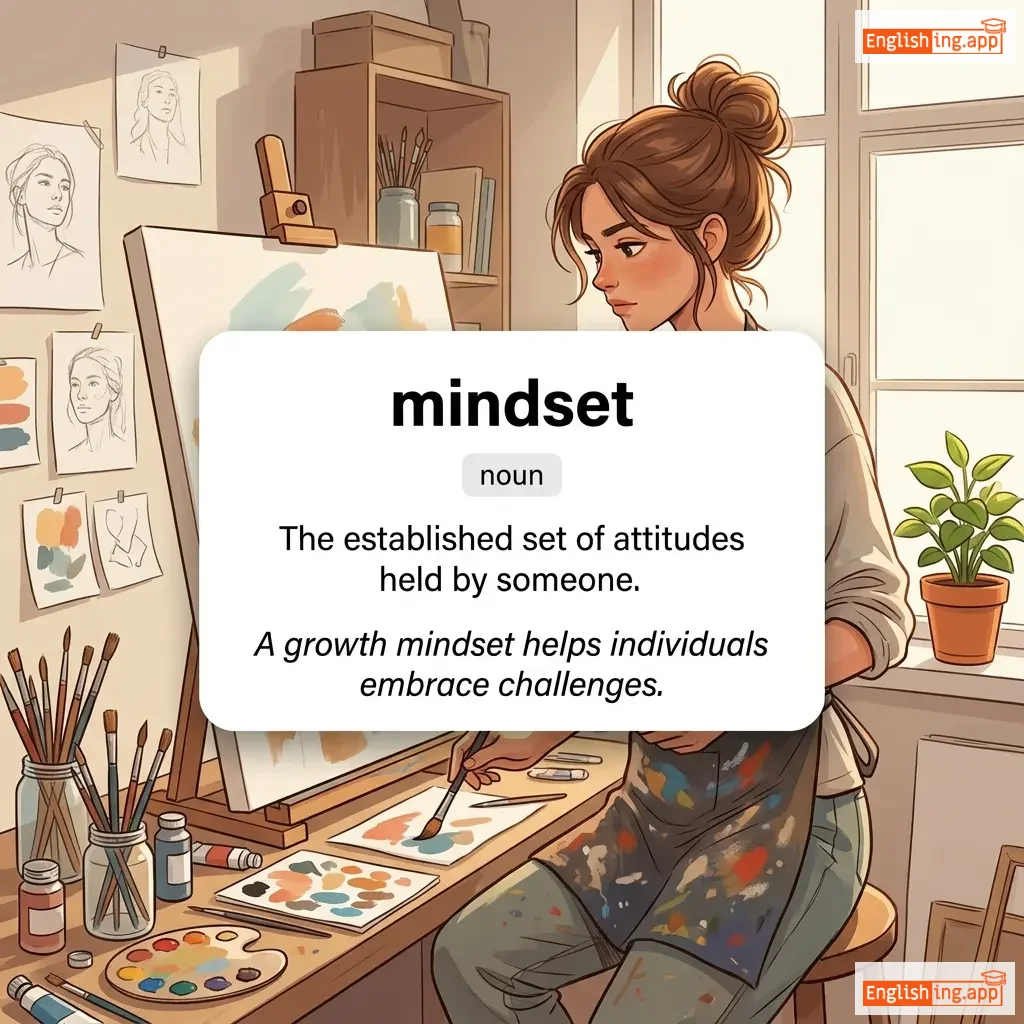
mindset definition card — visual illustration of the meaning
noun
ˈmaɪnd.set
মানসিকতা বা দৃষ্টিভঙ্গি (manoshikota ba drishtibhongi)

The established set of attitudes held by someone.

"A growth mindset helps individuals embrace challenges."

"একটি বিকাশমূলক মানসিকতা ব্যক্তিদের চ্যালেঞ্জ গ্রহণে সহায়তা করে।" (Ekti bikashmulok manoshikota byaktider challenge grohone sahayota kore.)
noun, pronoun, verb
/maɪn/
খনি / আমার (khoni / amar)

a place where minerals are dug from the ground; or something belonging to me

"The workers went deep into the mine to extract coal."

"শ্রমিকরা কয়লা উত্তোলনের জন্য গভীর খনিতে গেল।" (shromikra koila utoloner jonno gobhir khonite gelo.)
noun
/ˈmaɪnə(r)/
খনি শ্রমিক (khoni shromik)

a person who works in a mine, extracting minerals or other resources

"The miner worked in the coal mine for many years."

"মাইনার বহু বছর ধরে কয়লা খনিতে কাজ করেছে।" (Miner bohu bochor dhore koyla khonite kaj korechhe.)
noun
/ˈmɪnərəl/
খনিজ পদার্থ (khonij podartho)

a naturally occurring substance that is solid and inorganic, often used in industry or nutrition

"Calcium is an important mineral for strong bones."

"ক্যালসিয়াম মজবুত হাড়ের জন্য একটি গুরুত্বপূর্ণ খনিজ পদার্থ।" (Calcium mojbut harder jonno ekti guruttopurno khonij podartho.)
verb
/ˈmɪŋɡl/
মেশা (mesha)

to mix or combine; to move among people and engage socially

"Guests mingled at the party, chatting and laughing together."

"অতিথিরা পার্টিতে একে অপরের সাথে আড্ডা দিয়ে মিশে যাচ্ছিল।" (Othithira partite eke operer sathe adda diye mishe jachhilo.)
adjective
/ˈmɪn.dʒi/
কৃপণ; খুঁতখুঁতে; দ্বিধাবিভক্ত; (kripon)

mean or stingy; unwilling to spend money

"He is too mingy to spend money on anything but necessities."

"সে এত কৃপণ যে প্রয়োজনীয় জিনিস ছাড়া অন্য কিছুতে টাকা খরচ করে না।" (she eto kripon je proyojoniyo jinish chara onno kichute taka khoroch kore na)
noun/adjective
/ˈmɪnətʃər/ or /ˈmɪniətʃʊr/
ক্ষুদ্র সংস্করণ (khudro songskoron)

a very small version of something; small in scale or size

"The artist created a miniature model of the castle."

"শিল্পী দুর্গের একটি ক্ষুদ্র মডেল তৈরি করেছিলেন।" (Shilpi durger ekti khudro model toiri korechilen.)
adjective
/ˈmɪnɪməl/
সর্বনিম্ন (sorbonimno)

the smallest or least amount possible

"The damage to the car was minimal after the accident."

"দুর্ঘটনার পরে গাড়িটির ক্ষতি ছিল সর্বনিম্ন।" (Durghotonar pore garitir khoti chhilo sorbonimno.)
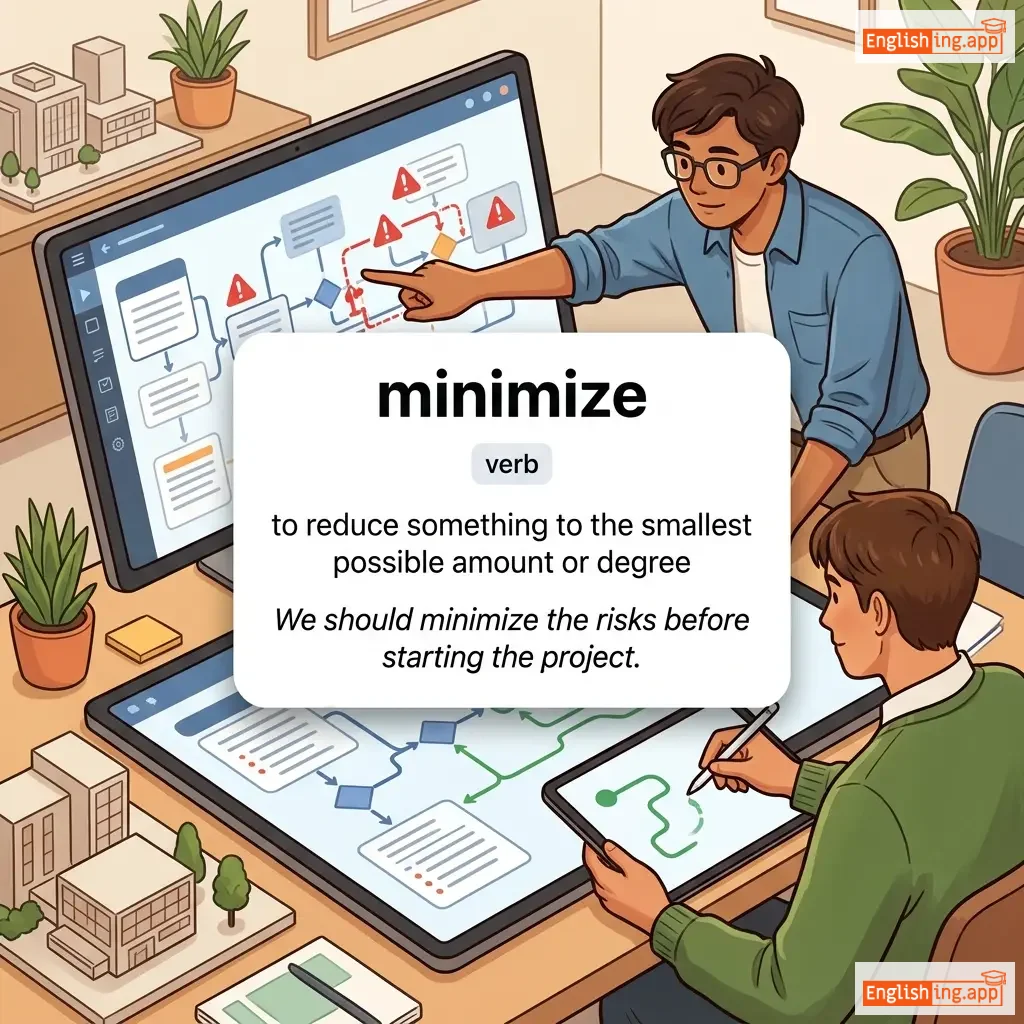
minimize definition card — visual illustration of the meaning
verb
/ˈmɪnɪmaɪz/
সর্বনিম্ন করা (sorbonimno kora)

to reduce something to the smallest possible amount or degree

"We should minimize the risks before starting the project."

"প্রকল্প শুরু করার আগে আমাদের ঝুঁকি সর্বনিম্ন করা উচিত।" (Prokolpo shuru korar age amader jhuki sorbonimno kora uchit.)
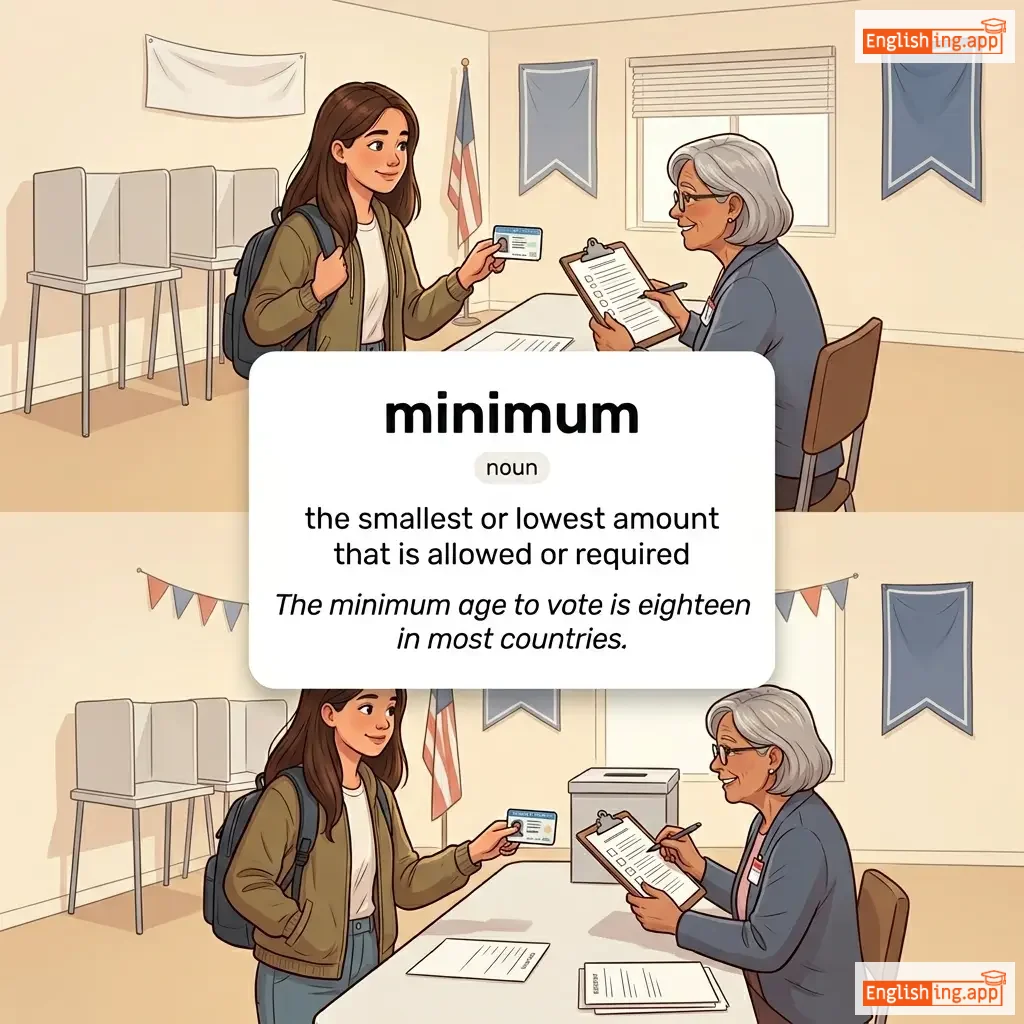
minimum definition card — visual illustration of the meaning
noun
/ˈmɪnɪməm/
সর্বনিম্ন (sorbonimno)

the smallest or lowest amount that is allowed or required

"The minimum age to vote is eighteen in most countries."

"বেশিরভাগ দেশে ভোট দেওয়ার সর্বনিম্ন বয়স আঠারো বছর।" (Beshirvog deshe vote dewar sorbonimno boyosh atharo bochor.)
noun
/ˈmaɪnɪŋ/
খনন (khonon)

the process of extracting valuable minerals or other resources from the earth

"Mining in this area has increased in recent years."

"এই এলাকায় সম্প্রতি খননকার্য বৃদ্ধি পেয়েছে।" (Ei elakay sompriti khononkarjo briddhi peyechhe.)
adjective
/ˈmɪn.ɪ.skjuːl/
ক্ষুদ্র (khudro)

Extremely small or tiny.

"The error was so miniscule that nobody noticed it."

"ভুলটি এত ক্ষুদ্র ছিল যে কেউ তা খেয়ালই করেনি।" (Bhulti eto khudro chilo je keu ta kheyaloi koreni.)
noun
/ˈmɪn.i.ən/
অনুচর (onuchar)

A follower or underling of a powerful person, especially a servile one.

"The dictator was surrounded by loyal minions who carried out his orders."

"স্বৈরশাসক বিশ্বস্ত অনুচরদের দ্বারা ঘেরা ছিল যারা তার আদেশ পালন করত।" (Shoirshashok bishwasto onuchorder dvara ghera chilo jara tar adesh palon korto.)
noun
/ˌmɪsˈkɒndʌkt/
অসদাচরণ (osodocharon)

Improper or unacceptable behavior, especially by a professional or authority figure.

"The teacher was dismissed for serious misconduct."

"শিক্ষককে গুরুতর অসদাচরণের জন্য বরখাস্ত করা হয়েছিল।" (Shikkhokke gurutor osodocharoner jonno borkhasto kora hoyechilo.)
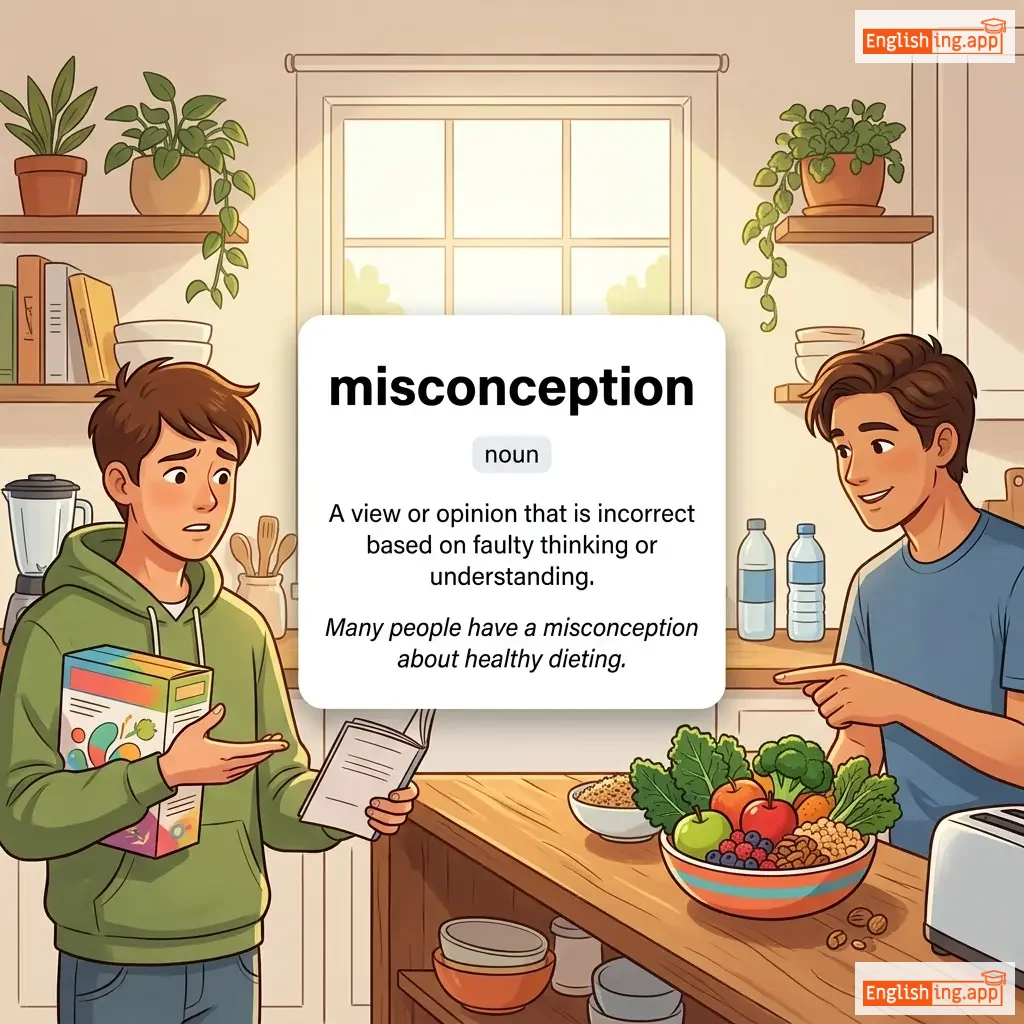
misconception definition card — visual illustration of the meaning
noun
/ˌmɪs.kənˈsep.ʃən/
ভুল ধারণা, বিভ্রান্তি, অপধারণা (bhul dharona, bibhranti, opadharana)

A view or opinion that is incorrect based on faulty thinking or understanding.

"Many people have a misconception about healthy dieting."

"অনেকের স্বাস্থ্যকর খাদ্যাভ্যাস সম্পর্কে ভুল ধারণা রয়েছে।" (Oneker shashthokor khadyabhyas somporke bhul dharona royeche.)
verb
/ˌmɪskənˈsiːv/
ভুলভাবে ধারণা করা (vulbhabe dharona kora)

To misunderstand or form an incorrect idea about something.

"He misconceived the purpose of the project."

"সে প্রকল্পের উদ্দেশ্য ভুলভাবে বুঝেছিল।" (Se prokolper uddeshyo vulbhabe bujhechilo.)
adjective
/ˈmɪstʃɪvəs/
দুষ্টুমি পূর্ণ (dustoomi purno)

Causing or showing a fondness for causing trouble in a playful way.

"She gave him a mischievous smile."

"সে তাকে দুষ্টুমি ভরা হাসি দিল।" (Se take dustoomi vora hasi dilo.)
noun
/ˈmɪstʃɪf/
দুষ্টুমি (dustoomee)

Playful misbehavior or troublemaking.

"The children were full of mischief during the party."

"পার্টির সময় বাচ্চারা দুষ্টুমিতে ভরপুর ছিল।" (Partir somoy bachchara dustoomite vorpur chhilo.)
noun
/ˌmɪsˈtʃæns/
অভাগ্য (obhaggo)

An unfortunate accident or event; bad luck.

"By mischance, he missed the last train home."

"অভাগ্যের কারণে সে শেষ ট্রেনটি মিস করল।" (Obhagger karone se shesh trenti mis korlo.)
noun
/ˈmɪsəleɪni/
সংকলন (songkolon)

A collection or mixture of various things.

"The book is a miscellany of essays and poems."

"বইটি প্রবন্ধ ও কবিতার একটি সংকলন।" (Boiti probondho o kobitar ekti songkolon.)
adjective
/ˌmɪsəˈleɪniəs/
বিবিধ (bibidho)

Consisting of a variety of different items or types.

"The drawer was filled with miscellaneous objects."

"ড্রয়ারটি বিবিধ জিনিসে পূর্ণ ছিল।" (Drawarti bibidho jinise purno chhilo.)
noun
/mɪˌsɛdʒəˈneɪʃən/
জাতিগত মিশ্র বিবাহ (jatigoto mishro bibaho)

the interbreeding of people considered to be of different racial types

"The law once prohibited miscegenation in many countries."

"একসময় অনেক দেশে মিসসেজেনেশন আইন দ্বারা নিষিদ্ধ ছিল।" (Eksomoy onek deshe miscegenation ain dara nishiddho chilo.)
noun
/ˌmɪs.bɪˈheɪ.vjər/
অশোভন বা অশালীন আচরণ; (misbehaviour)

Bad or unacceptable behavior, especially by children or in formal situations

"The student was punished for his misbehaviour in class."

"ছাত্রটি ক্লাসে তার খারাপ আচরণের জন্য শাস্তি পেয়েছিল।" (chatrati klase tar kharap achoroner jonno shasti peyechilo.)
noun
/ˌmɪsbɪˈheɪvjər/
অসদাচরণ (osodachoron)

bad or improper behavior

"The teacher punished the student for his misbehavior."

"শিক্ষক ছাত্রকে তার অসদাচরণের জন্য শাস্তি দিয়েছিলেন।" (Shikkhok chatroke tar osodachoroner jonno shasti diyechilen.)
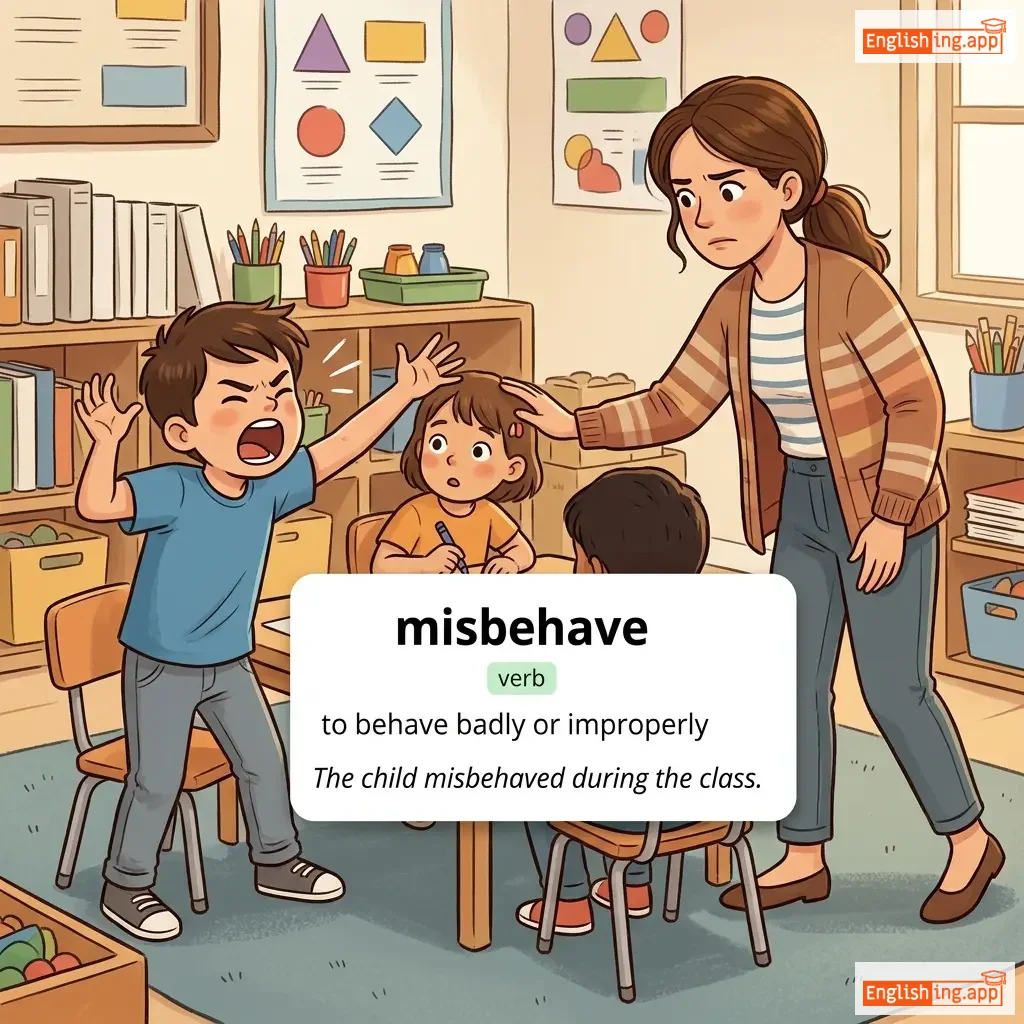
misbehave definition card — visual illustration of the meaning
verb
/ˌmɪsbɪˈheɪv/
অসদাচরণ করা (osodachoron kora)

to behave badly or improperly

"The child misbehaved during the class."

"শিশুটি ক্লাস চলাকালীন অসদাচরণ করেছিল।" (Shishuti klas cholakaline osodachoron korechilo.)
verb
/ˌmɪs.əˈtrɪb.juːt/
ভুলভাবে আরোপ করা (vulbhabe arop kora)

to incorrectly credit something, such as a work or remark, to the wrong person or source

"The quote was misattributed to Shakespeare."

"উক্তিটি ভুলভাবে শেক্সপিয়ারের নামে আরোপ করা হয়েছিল।" (Uktiti vulbhabe Shekspiarer name arop kora hoyechilo.)
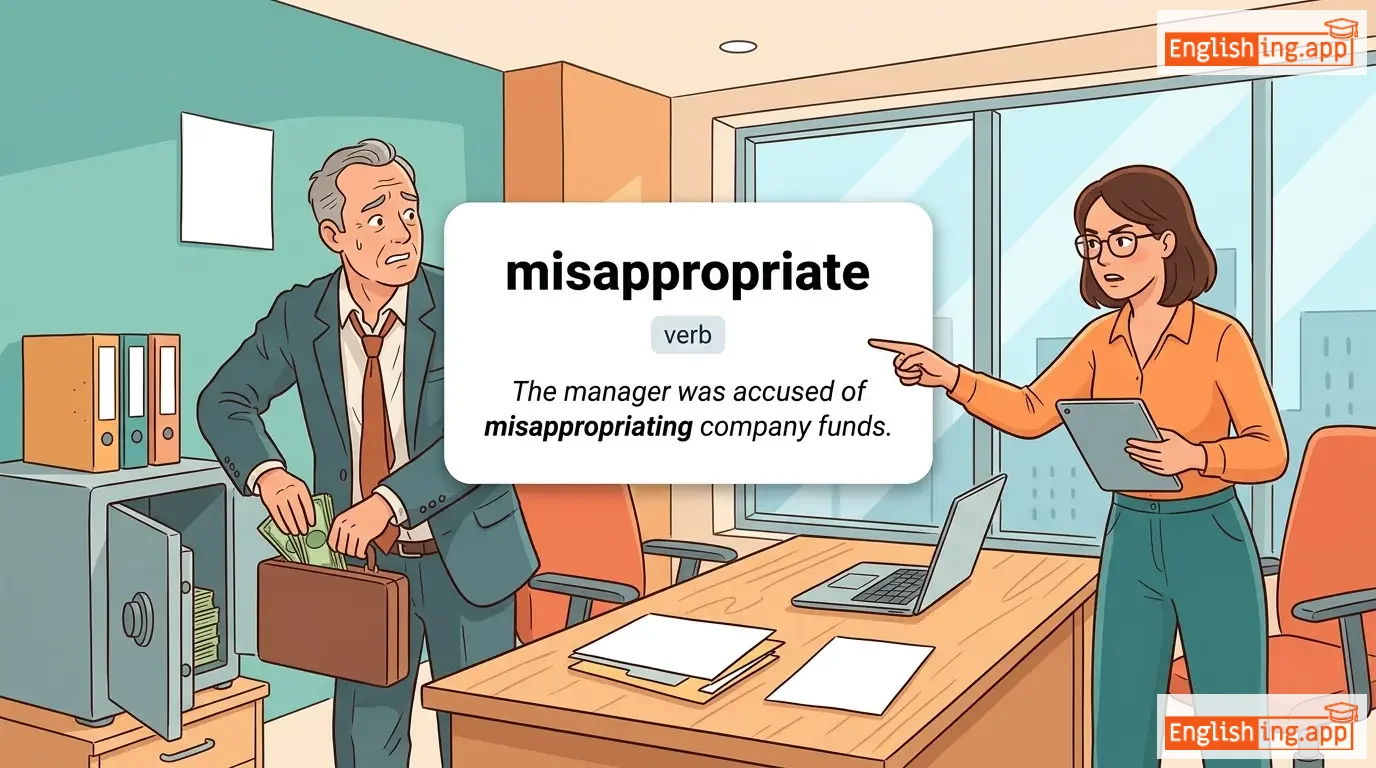
misappropriate definition card — visual illustration of the meaning
verb
/ˌmɪsəˈproʊprieɪt/
অবৈধভাবে ব্যবহার করা (obaidhobhabe byabohar kora)

to take or use something dishonestly, especially money or property, for one's own use

"The manager was accused of misappropriating company funds."

"ম্যানেজারকে কোম্পানির তহবিল অবৈধভাবে ব্যবহারের অভিযোগ আনা হয়েছিল।" (Manejerke kompanir tohbilo obaidhobhabe byaboharer abhijog ana hoyechilo.)
noun
/ˌmɪsæprɪˈhɛnʃən/
ভুল ধারণা (bhul dharana)

a mistaken belief or misunderstanding

"There is a common misapprehension about the causes of the disease."

"রোগের কারণ নিয়ে একটি সাধারণ ভুল ধারণা রয়েছে।" (Rog er karon niye ekti shadharon bhul dharana royeche.)
verb
/ˌmɪsæprɪˈhɛnd/
ভুল বোঝা (bhul boja)

to misunderstand or misinterpret something

"He misapprehended the teacher’s instructions and did the task incorrectly."

"সে শিক্ষকের নির্দেশ ভুল বুঝেছিল এবং কাজটি ভুলভাবে করেছিল।" (Se shikkhoker nirdesh bhul bujhechhilo ebong kajti bhulvabe korechhilo.)
noun
/mɪˈsænθrəpi/
মানুষবিদ্বেষ (manush bidbesh)

a general dislike, distrust, or hatred of humankind

"His misanthropy was evident in the way he avoided people."

"তার মানুষবিদ্বেষ স্পষ্ট ছিল যেভাবে তিনি মানুষকে এড়িয়ে চলতেন।" (Tar manush bidbesh sposto chilo jevabe tini manushke eriye cholten.)
adjective
/ˌmɪsənˈθrɑːpɪk/
মানুষবিদ্বেষী স্বভাবের (manush bidbeshi shvaber)

having or showing a dislike of humankind

"His misanthropic attitude made it difficult for him to make friends."

"তার মানুষবিদ্বেষী মনোভাবের কারণে তার পক্ষে বন্ধু তৈরি করা কঠিন ছিল।" (Tar manush bidbeshi monobhober karone tar pokkhe bondhu toiri kora kothin chilo.)
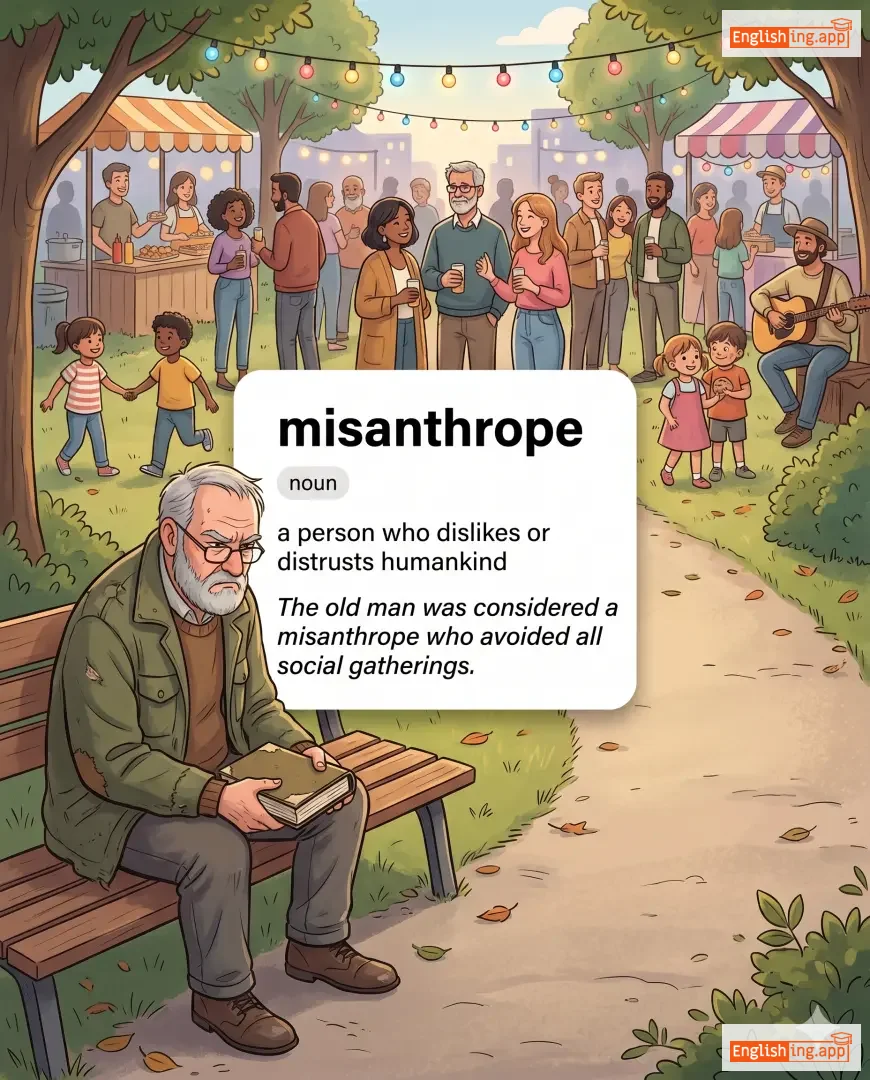
misanthrope definition card — visual illustration of the meaning
noun
/ˈmɪsənˌθroʊp/
মানুষবিদ্বেষী (manush bidbeshi)

a person who dislikes or distrusts humankind

"The old man was considered a misanthrope who avoided all social gatherings."

"বৃদ্ধ মানুষটিকে একজন মানুষবিদ্বেষী মনে করা হতো, যিনি সব সামাজিক সমাবেশ এড়িয়ে চলতেন।" (Briddho manush tike ekjon manush bidbeshi mone kora hoto, jini sob samajik somabesh eriye cholten.)
noun
/mɜːrθ/
আনন্দ (anondo)

Great joy, amusement, or laughter.

"The festival was full of mirth and laughter."

"উৎসব আনন্দ ও হাসি-খুশিতে ভরপুর ছিল।" (utsob anondo o hasi khushite vorpur chilo.)
noun
/ˌmɪsədˈvɛntʃər/
অভাগ্যজনক ঘটনা (obhaggojonok ghona)

An unlucky accident, mishap, or unfortunate event.

"He broke his leg during a skiing misadventure."

"সে স্কিইং-এর সময় একটি অভাগ্যজনক দুর্ঘটনায় তার পা ভেঙেছিল।" (se skiing er somoy ekti obhaggojonok durghotonay tar pa bhengechilo.)
noun
/ˈmɪnɪstər/
মন্ত্রী (montree)

a head of a government department; a person who leads a church

"The finance minister announced new tax policies."

"অর্থমন্ত্রী নতুন কর নীতি ঘোষণা করেছেন।" (orthomontree notun kor niti ghosona korechen.)
noun
/ˌmɪn.ɪˈstreɪ.ʃən/
সেবা (seba)

The act of providing care, assistance, or religious service.

"She recovered thanks to the kind ministrations of the nurses."

"নার্সদের আন্তরিক সেবার কারণে সে সুস্থ হয়ে উঠেছিল।" (Narsder antorik sebar karone se sustho hoye uthchhilo.)
noun
/ˈmɪn.ɪ.stri/
মন্ত্রণালয় (montronalay)

A government department headed by a minister or the work of a religious minister.

"He works at the Ministry of Education."

"সে শিক্ষা মন্ত্রণালয়ে কাজ করে।" (Se shikkha montronaloye kaj kore.)
adjective/noun
/ˈmaɪ.nər/
তুচ্ছ / অপ্রাপ্তবয়স্ক (tuchcho / o-proptoboyoshko)

less important, serious, or significant; a person under the legal age

"Luckily, the accident caused only minor injuries."

"সৌভাগ্যক্রমে, দুর্ঘটনায় শুধু সামান্য আঘাত লেগেছিল।" (Souvaggokrome, durghotonay shudhu samanjo aghat leghchilo.)
noun
/maɪˈnɔːr.ɪ.ti/
সংখ্যালঘু (songkhaloghu)

A smaller number or part, especially a group differing from the majority.

"The law aims to protect the rights of ethnic minorities."

"আইনটি জাতিগত সংখ্যালঘুদের অধিকার রক্ষা করার উদ্দেশ্যে তৈরি।" (Ainti jatigoto songkhaloghuder odhikar rokha korar uddeshe toiri.)
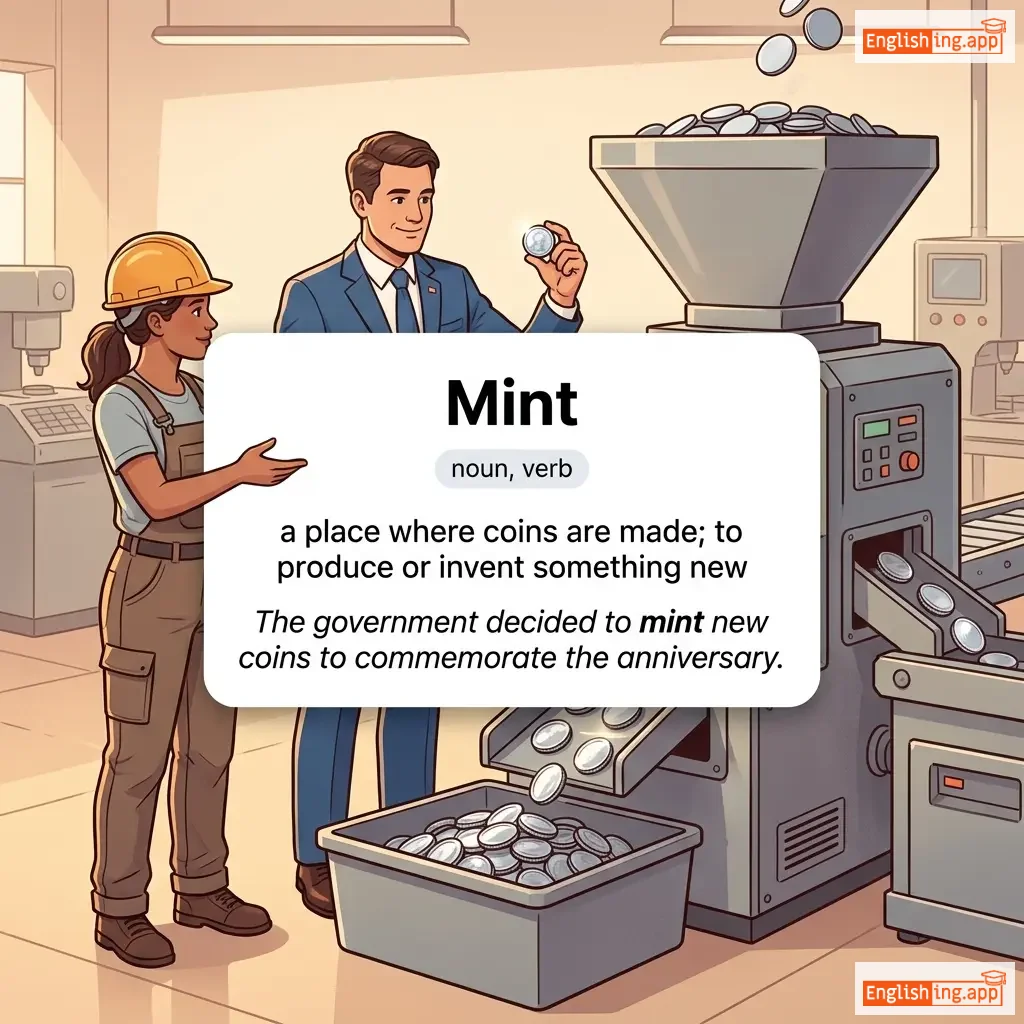
Mint definition card — visual illustration of the meaning
noun, verb
/mɪnt/
পুদিনা / টাকাশালা (pudina / takashala)

a place where coins are made; to produce or invent something new

"The government decided to mint new coins to commemorate the anniversary."

"সরকার বার্ষিকী স্মরণে নতুন মুদ্রা তৈরি করার সিদ্ধান্ত নিয়েছিল।" (Sorkar barshiki smorone notun mudra toiri korar siddhanto niechilo.)
adjective
/ˈmɪnəskjuːl/
অতিক্ষুদ্র (otikshudro)

extremely small in size or importance

"She made only a minuscule contribution to the project."

"সে প্রকল্পে শুধুমাত্র একটি অতিক্ষুদ্র অবদান রেখেছিল।" (Se proklope shudhumatro ekti otikshudro obodan rekhechilo.)
noun, adjective
/maɪˈnjuːt/ (adj), /ˈmɪnɪt/ (noun)
মিনিট / ক্ষুদ্র (minit / khudro)

a period of sixty seconds; extremely small or detailed

"He examined the painting with minute attention to detail."

"সে ছবিটি ক্ষুদ্রতম বিস্তারিত সহ পরীক্ষা করল।" (Se chobiti khudrotomo bistariyo sho porikkha korlo.)
noun
/maɪˈnjuːʃə/
ক্ষুদ্র বিবরণ (khudro biboron)

a small or trivial detail of something

"He was bored by the minutia of office paperwork."

"সে অফিসের কাগজপত্রের ক্ষুদ্র বিবরণে বিরক্ত ছিল।" (Se officer kagojpotrer khudro biborone birokt chilo.)
adverb
/maɪˈnjuːtli/
সূক্ষ্মভাবে; (shukkhobhabe)

in very small detail; extremely carefully

"The detective examined the evidence minutely."

"গোয়েন্দা প্রমাণগুলি সূক্ষ্মভাবে পরীক্ষা করলেন।" (goyenda promanguli shukkhobhabe porikha korlen)
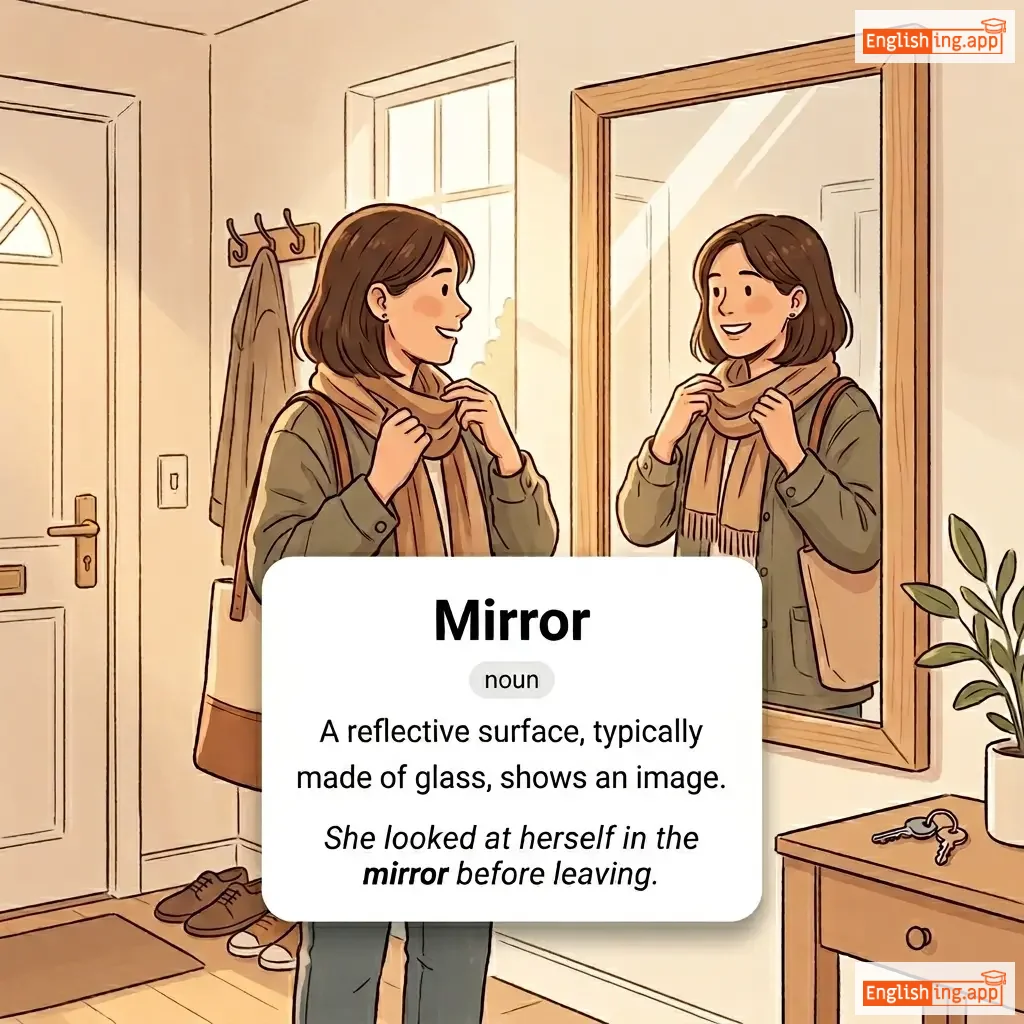
Mirror definition card — visual illustration of the meaning
noun
/ˈmɪrər/
আয়না (ayna)

A reflective surface, typically made of glass, that shows an image.

"She looked at herself in the mirror before leaving."

"বের হওয়ার আগে সে আয়নায় নিজেকে দেখল।" (Ber howar age se aynay nijeke dekhlo.)
adjective, verb (past tense/participle of mire)
/ˈmaɪərd/
জড়িয়ে পড়া (jorie pora)

Trapped or entangled in something, typically a difficult situation.

"The politician was mired in scandal."

"রাজনীতিবিদ কেলেঙ্কারিতে জড়িয়ে পড়েছিলেন।" (rajnitibid kelenkarite jorie porechilen.)
noun, verb
/ˈmaɪər/
কাদা / জটিলতা (kada / jatikota)

A stretch of swampy or boggy ground; as a verb, to entangle or involve someone in a difficult situation.

"The car was stuck in the mire after the heavy rain."

"ভারি বৃষ্টির পর গাড়িটি কাদায় আটকে গিয়েছিল।" (bari brishtir por gaditi kaday atke giyechilo.)
adjective
/mɪˈrækjələs/
অলৌকিক (oloukik)

Extraordinarily wonderful or unusual, as if by a miracle.

"Her recovery after the accident was truly miraculous."

"দুর্ঘটনার পর তার সুস্থতা সত্যিই অলৌকিক ছিল।" (Durghotonar por tar susthota sottyi oloukik chilo.)