ভোকাবুলারিসমূহ

ইংরেজি শব্দের বাংলা অর্থ | English to Bangla Word Meaning Dictionary

malfunction definition card — visual illustration of the meaning
noun/verb
mælˈfʌŋk.ʃən
ত্রুটি (truti)

A failure to function normally or satisfactorily; a defect or breakdown.

"The engine malfunctioned due to overheating."

"অতিরিক্ত গরমের কারণে ইঞ্জিন ত্রুটিপূর্ণ হয়ে গেছে।" (Otirikto gormer karone injin trutipurno hoye gechhe.)
noun
/mælˈfiːzəns/
কর্তৃপক্ষের দুর্নীতি (kortipokkher durniti)

Wrongdoing or misconduct, especially by a public official.

"The mayor was accused of malfeasance in office."

"মেয়রের বিরুদ্ধে দপ্তরে দুর্নীতির অভিযোগ আনা হয়েছিল।" (meyorer biruddhe doftore durnitir ovijog ana hoyechilo.)
adjective
/məˈlɛvələnt/
বিদ্বেষপূর্ণ (bidveshpurbo)

Having or showing a wish to do evil or harm to others.

"The malevolent glare in his eyes frightened the children."

"তার চোখের বিদ্বেষপূর্ণ দৃষ্টি শিশুদের ভয় পাইয়ে দিল।" (tar chokher bidveshpurbo drishti shishuder voy paiye dilo.)
noun
/məˈlɛvələns/
বিদ্বেষ (bidvesh)

The state or condition of being malevolent; having or showing a wish to do evil to others.

"His malevolence was clear in the cruel way he treated his rivals."

"তার বিদ্বেষ তার প্রতিদ্বন্দ্বীদের প্রতি নিষ্ঠুর আচরণে স্পষ্ট ছিল।" (tar bidvesh tar protidondhider proti nisthur acharone sposto chilo.)
adjective
/ˌmæl.əˈfɪʃ.ənt/
অশুভ (ashubho)

Doing harm or evil; having a harmful effect.

"The maleficient acts of the tyrant ruined the kingdom."

"অত্যাচারীর অশুভ কাজগুলো রাজ্যকে ধ্বংস করে দিল।" (Otyachari ashubho kajgulo rajyoke dhongsho kore dilo.)
adjective
/məˈlɛfɪsənt/
অশুভ (ashubho)

Causing harm or destruction, especially by supernatural means.

"The maleficent witch cursed the young princess."

"অশুভ ডাইনী কিশোরী রাজকন্যাকে অভিশাপ দিল।" (Ashubho daini kishori rajkonnake obhishap dilo.)
noun
/ˈmæl.əˌfæk.tər/
অপরাধী (oporadhi)

A person who commits a crime or does evil.

"The malefactor was arrested for the robbery."

"অপরাধী ডাকাতির জন্য গ্রেফতার হয়েছিল।" (Oporadhi dakatir jonno greftar hoyechilo.)
noun
/ˌmæl.əˈdɪk.ʃən/
অভিশাপ (obhishap)

A curse or the utterance of a curse.

"The witch cast a malediction upon the village."

"ডাইনী গ্রামে একটি অভিশাপ নিক্ষেপ করল।" (Daini grame ekti obhishap nikhep korlo.)
noun/adjective
/meɪl/
পুরুষ (purush)

a man or boy; relating to men or boys

"The school has more male teachers than female teachers."

"বিদ্যালয়ে মহিলা শিক্ষকের তুলনায় পুরুষ শিক্ষক বেশি।" (bidyaloye mohila shikkhoker tulonay purush shikkhok beshi.)
noun
/ˈmæl.kənˌtɛnt/
অসন্তুষ্ট ব্যক্তি (asantushto bekti)

A person who is dissatisfied or rebellious; one who is not content.

"The malcontent voiced his grievances against the government."

"অসন্তুষ্ট ব্যক্তি সরকার বিরোধী অভিযোগ প্রকাশ করেছিল।" (Asantushto bekti sarkar birohi obhijog prokash korechilo.)
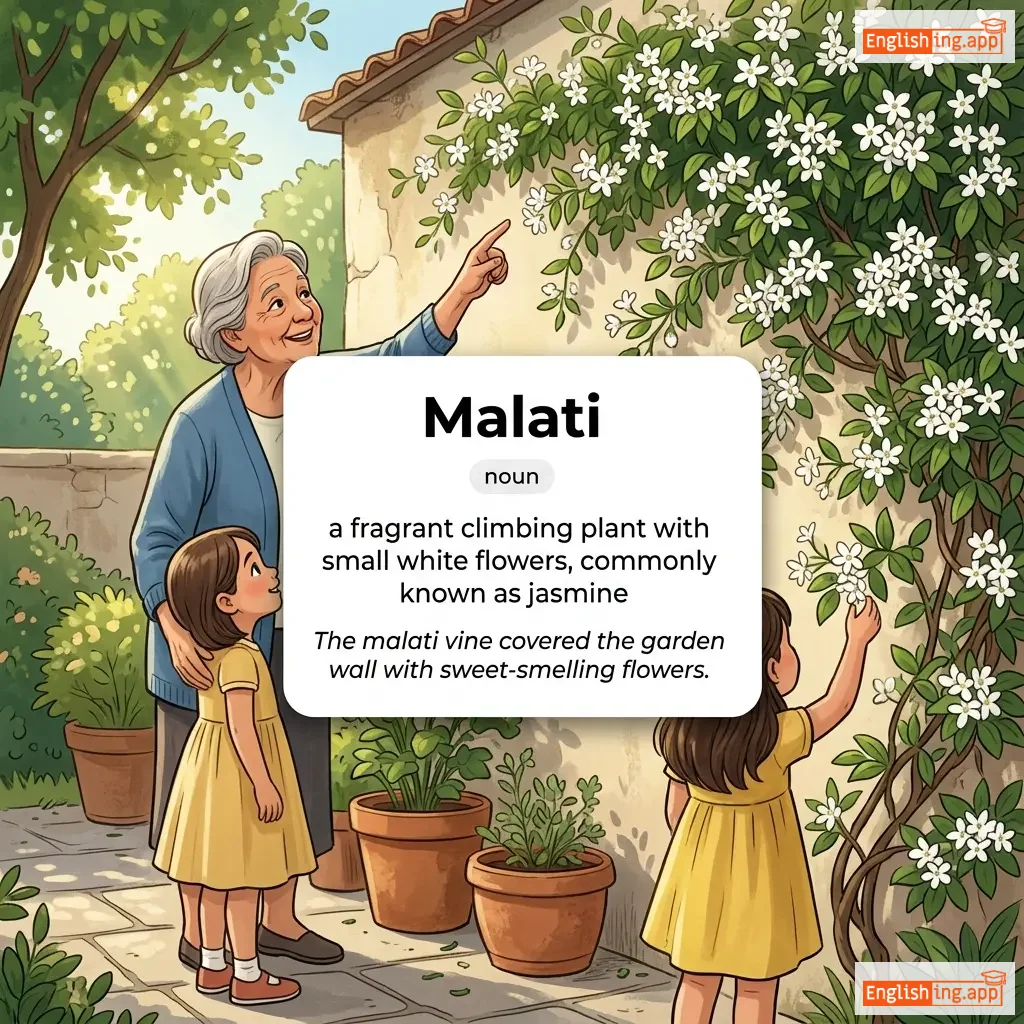
Malati definition card — visual illustration of the meaning
noun
/məˈlɑː.ti/
মালতী (malati)

a fragrant climbing plant with small white flowers, commonly known as jasmine

"The malati vine covered the garden wall with sweet-smelling flowers."

"মালতী লতা মিষ্টি সুগন্ধযুক্ত ফুল দিয়ে বাগানের দেয়াল ঢেকে দিয়েছিল।" (malati lota mishti shugondho jukto phul diye baganer deyal dheke diyechilo)
noun
/məˈlɛəriə/
ম্যালেরিয়া (malarija)

a serious infectious disease spread by mosquitoes, causing fever, chills, and sweating

"Malaria is a common disease in tropical regions."

"উষ্ণমণ্ডলীয় অঞ্চলে ম্যালেরিয়া একটি সাধারণ রোগ।" (Ushnomondoliyo onchole malerija ekti sadharon rog.)
adjective, adverb
/ˌmæləprəˈpoʊ/
অসঙ্গত (osonggoto)

inappropriate or unsuitable; at an inconvenient or inappropriate time

"His comment was malapropos during the serious discussion."

"গুরুতর আলোচনার সময় তার মন্তব্যটি ছিল অসঙ্গত।" (Gurutor alochonar somoy tar mormotti chilo osonggoto.)
noun
/ˈmæləprɒˌpɪzəm/
ভুল শব্দপ্রয়োগ (bhul shobdo proyog)

the mistaken use of a word in place of a similar-sounding one, often with amusing effect

"He is famous for his malapropism when speaking in public."

"তিনি জনসমক্ষে বক্তৃতার সময় তাঁর ভুল শব্দপ্রয়োগের জন্য বিখ্যাত।" (Tini jonsomokkhe boktritar somoy tar bhul shobdo proyoger jonno bikhkhato.)
noun
/məˈleɪz/
অসুস্থতা (osusthota)

a general feeling of discomfort, illness, or unease whose exact cause is difficult to identify

"After the long journey, she felt a general malaise."

"দীর্ঘ যাত্রার পর, সে সাধারণ এক ধরনের অসুস্থতা অনুভব করেছিল।" (Dirgho jatrar por, se sadharon ek dhoroner osusthota onubhob korechilo.)
noun
/ˈmælədi/
রোগ (rog)

a disease or disorder of the body or mind; a serious problem

"The doctor treated the malady with great care."

"ডাক্তার রোগটি খুব যত্নের সাথে চিকিৎসা করেছিলেন।" (Daktar rogti khub jotner sathe chikitsa korechilen.)
adjective
/ˌmæləˈdrɔɪt/
অদক্ষ (odokkho)

clumsy or awkward in movement or behavior

"His maladroit attempt at fixing the chair made it worse."

"চেয়ার ঠিক করার তার অদক্ষ প্রচেষ্টা এটিকে আরও খারাপ করল।" (Chair thik korar tar odokkho prochesta etike aro kharap korlo.)
noun
/ˈmeɪkɪŋ/
তৈরি করা (toiri kora)

the process of producing or constructing something

"The making of the movie took over two years."

"মুভিটি তৈরি করার প্রক্রিয়া দুই বছরের বেশি সময় নেয়।" (Movie ti toiri korar prokriya dui bochhorer beshi shomoy ney.)
noun
/ˈmeɪkʌp/
সৌন্দর্য প্রসাধনী (soundorjo prosadhoni)

cosmetics used to enhance or alter appearance

"She applied makeup before the party."

"সে পার্টির আগে মেকআপ করেছিল।" (Se partyr age makeup korechilo.)
adjective
/ˈmeɪkˌʃɪft/
অস্থায়ী ব্যবস্থা (osthayi byabostha)

used as a temporary substitute; improvised

"They used boxes as a makeshift table."

"তারা বাক্স ব্যবহার করে অস্থায়ী টেবিল বানালো।" (Tara baks byabohar kore osthayi table banalo.)
noun
/ˈmeɪkər/
স্রষ্টা (srosta)

a person or thing that makes or produces something

"He is a famous movie maker in Hollywood."

"তিনি হলিউডের একজন বিখ্যাত চলচ্চিত্র নির্মাতা।" (tini hollywood-er ekjon bikhato cholochitro nirmata.)
make definition card — visual illustration of the meaning
verb
/meɪk/
তৈরি করা (toiri kora)

to create, build, or cause something to happen

"She can make delicious cakes."

"সে সুস্বাদু কেক তৈরি করতে পারে।" (Se shushadu cake toiri korte pare.)
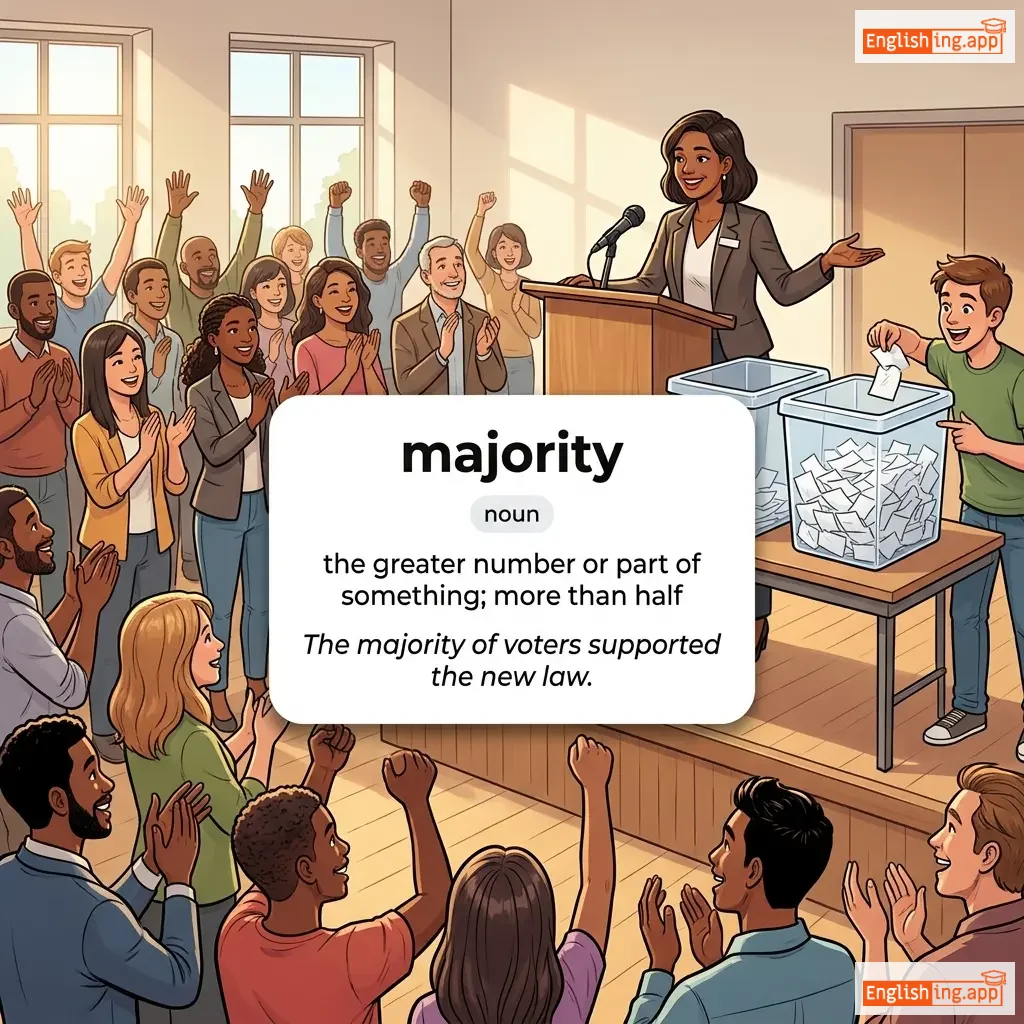
majority definition card — visual illustration of the meaning
noun
/məˈdʒɒrəti/
সংখ্যাগরিষ্ঠ (sonkhyagorishtho)

the greater number or part of something; more than half

"The majority of voters supported the new law."

"সংখ্যাগরিষ্ঠ ভোটাররা নতুন আইনকে সমর্থন করেছে।" (Sonkhyagorishtho votar ra notun ainkey somorthon koreche.)
adjective
/ˈmeɪdʒər/
গুরুত্বপূর্ণ (guruttopurno)

important, serious, or significant

"Climate change is a major concern for the world."

"জলবায়ু পরিবর্তন বিশ্বের জন্য একটি প্রধান উদ্বেগ।" (jalbayu poriborton bishwer jonno ekti pradhan udbegh.)
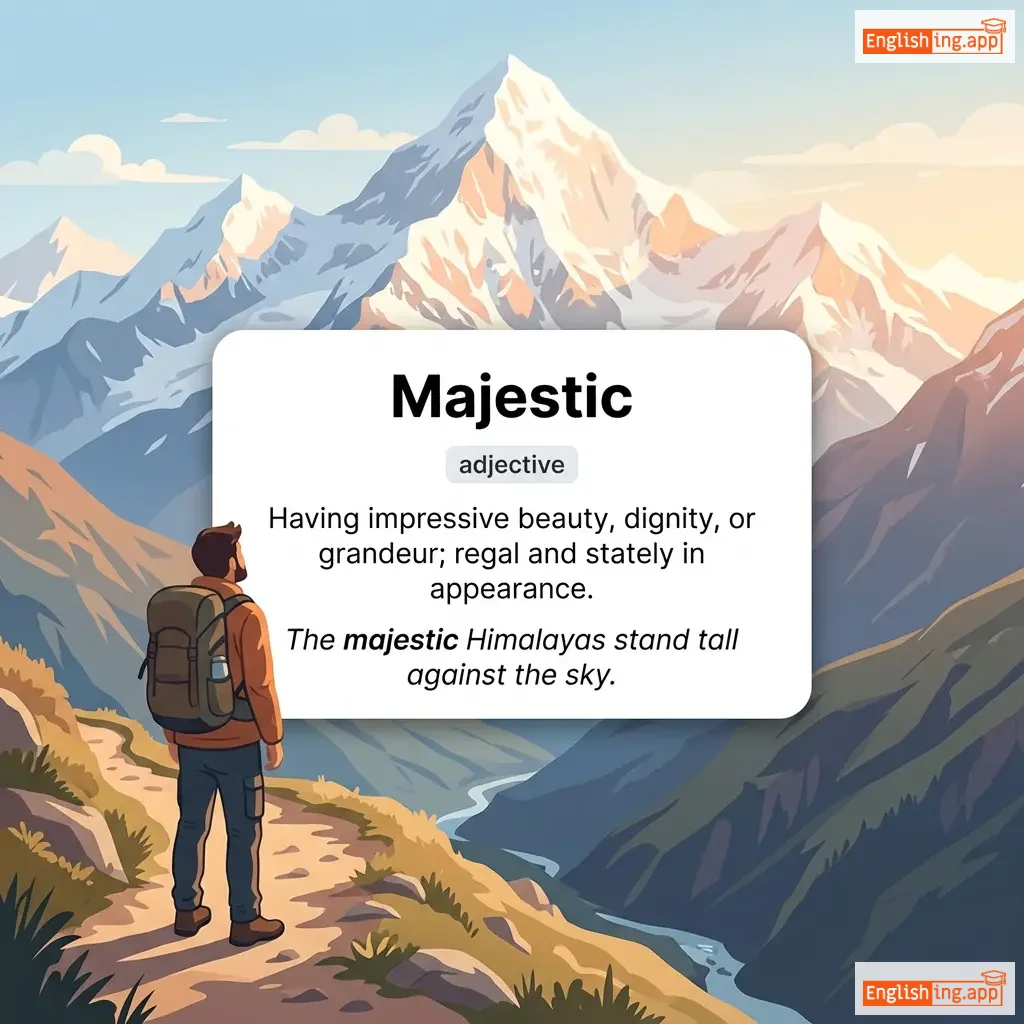
Majestic definition card — visual illustration of the meaning
adjective
məˈdʒes.tɪk
রাজকীয় (rajkiyo)

Having impressive beauty, dignity, or grandeur; regal and stately in appearance.

"The majestic Himalayas stand tall against the sky."

"মাজেস্টিক হিমালয় আকাশের পটভূমিতে উঁচু দাঁড়িয়ে আছে।" (Majestic Himaloy akasher potbhumite unchu dariye ache.)
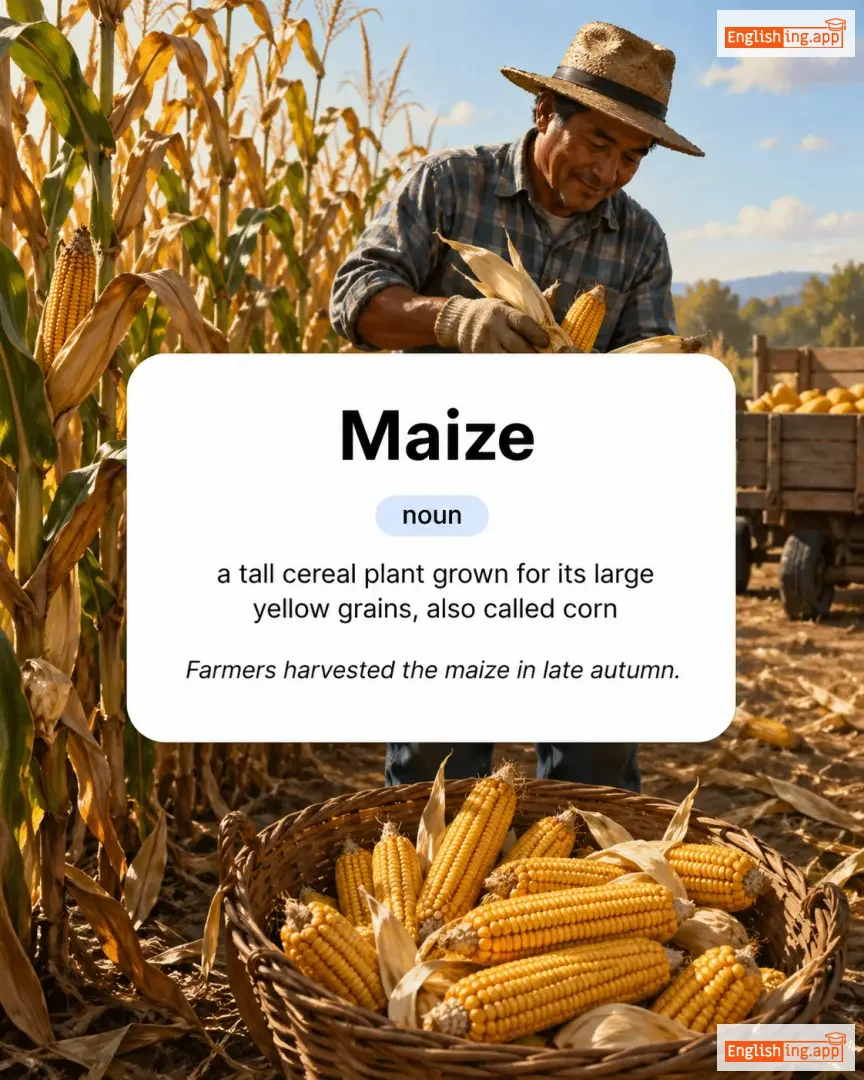
Maize definition card — visual illustration of the meaning
noun
/meɪz/
ভুট্টা (vutta)

a tall cereal plant grown for its large yellow grains, also called corn

"Farmers harvested the maize in late autumn."

"কৃষকরা দেরি শরতে ভুট্টা কাটলো।" (Krishokra deri shorote vutta katlo.)
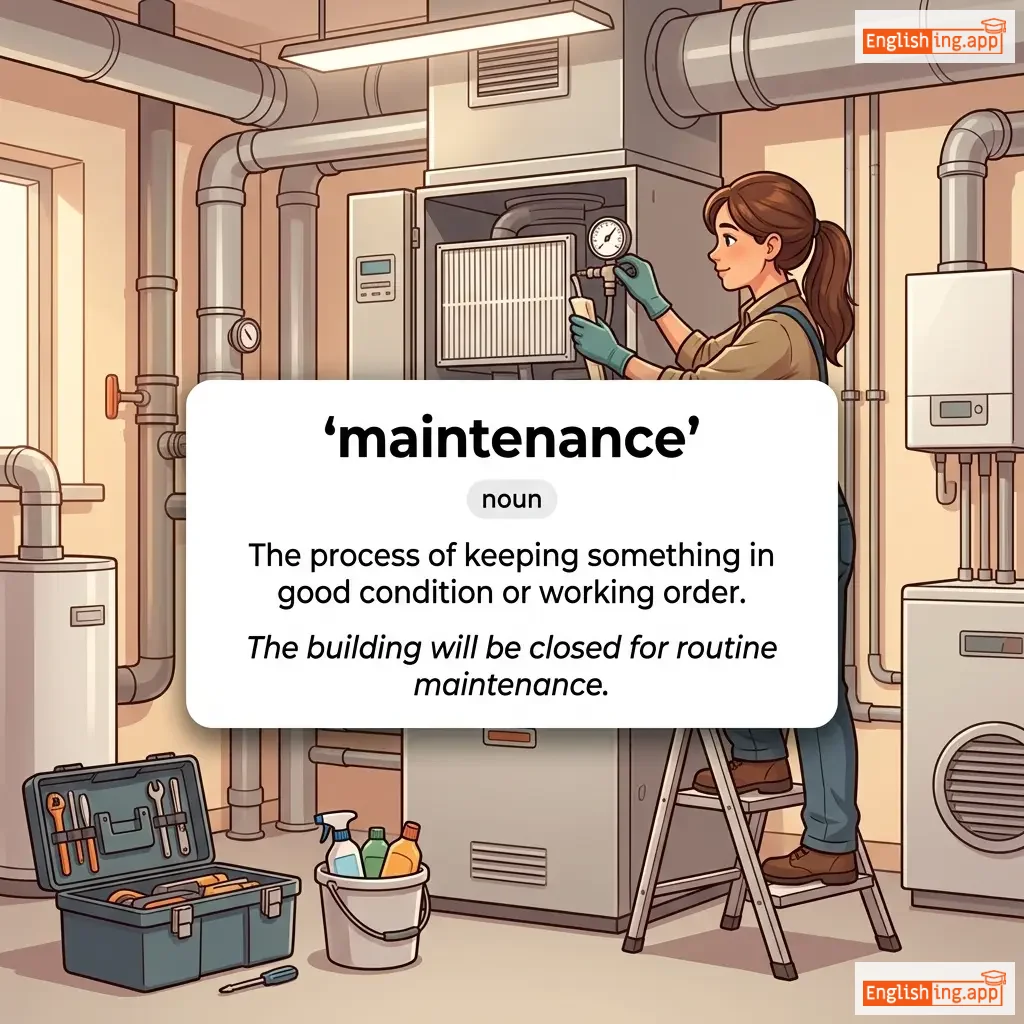
maintenance definition card — visual illustration of the meaning
noun
/ˈmeɪntənəns/
রক্ষণাবেক্ষণ (rokhnabekhon)

The process of keeping something in good condition or working order.

"The building will be closed for routine maintenance."

"ভবনটি নিয়মিত রক্ষণাবেক্ষণের জন্য বন্ধ থাকবে।" (Bhobonti niyomito rokhnabekhoner jonno bondho thakbe.)
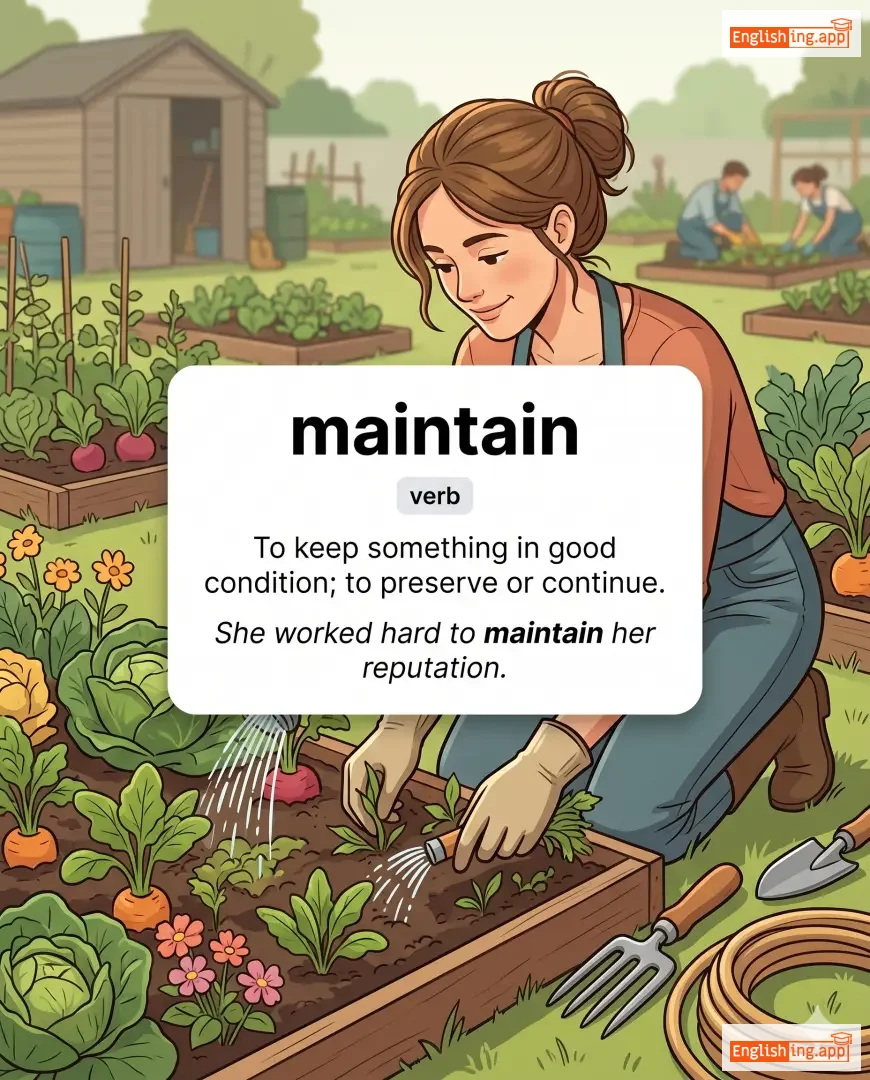
maintain definition card — visual illustration of the meaning
verb
/meɪnˈteɪn/
রক্ষা করা (rokhha kora)

To keep something in good condition; to preserve or continue.

"She worked hard to maintain her reputation."

"সে তার সুনাম বজায় রাখতে কঠোর পরিশ্রম করেছিল।" (Se tar sunam bajay rakhte kothor porishrom korechhilo.)
noun
/ˈmeɪnstriːm/
প্রধান ধারা (prodan dhara)

the ideas, attitudes, or activities that are regarded as normal or conventional; the dominant trend in opinion or fashion

"Social media has become a mainstream source of news for many people."

"সোশ্যাল মিডিয়া অনেকের জন্য খবরের একটি প্রধান উৎস হয়ে উঠেছে।" (Social media oneker jonno khoborer ekti prodan utso hoye utheche.)
adverb
/ˈmeɪnli/
প্রধানত (pradhanoto)

for the most part; chiefly

"The audience was mainly composed of students."

"শ্রোতারা প্রধানত ছাত্রদের নিয়ে গঠিত ছিল।" (shrotara pradhanoto chatrader niye gothito chhilo.)
noun
/ˈmeɪnˌlænd/
মূলভূমি (mulbhumi)

the principal landmass of a country or continent, as opposed to the surrounding islands

"The mainland of Australia is home to most of its population."

"অস্ট্রেলিয়ার মূলভূমি এর অধিকাংশ জনসংখ্যা বসবাস করে।" (Australia r mulbhumi er odhikangsho jonsongkha boshobash kore.)
adjective
/meɪn/
প্রধান (pradhan)

most important; chief in size, extent, or importance

"The main reason for his success is hard work."

"তার সাফল্যের প্রধান কারণ হলো কঠোর পরিশ্রম।" (tar safolyer pradhan karon holo kathor porishrom.)
noun
/laɪər/
প্রাচীন বাদ্যযন্ত্র (prachin badyajantro)

a stringed musical instrument of ancient Greece

"The musician played a melody on the lyre."

"সঙ্গীতশিল্পী লায়ারে একটি সুর বাজালেন।" (Songitshilpi layare ekti sur bajalen.)
noun
/lʌst/
কামনা (kamona)

a very strong sexual desire or an intense craving for something

"His mind was clouded by lust for power."

"তার মন ক্ষমতার লালসায় আচ্ছন্ন ছিল।" (tar mon khomotar lalshay achchhanno chhilo.)
noun
/ˈlʌstər/
জ্যোতি (jyoti)

a gentle sheen or soft glow, especially from a polished surface

"The diamond had a brilliant luster."

"হীরাটির উজ্জ্বল জ্যোতি ছিল।" (hiratir ujjol jyoti chhilo.)
lustrous definition card — visual illustration of the meaning
adjective
/ˈlʌstrəs/
ঝলমলে (jholmole)

having a gentle sheen or soft glow

"Her hair looked smooth and lustrous."

"তার চুল মসৃণ ও ঝলমলে দেখাচ্ছিল।" (tar chul mosrin o jholmole dekhachhilo.)
noun
/lʌɡˈʒʊəriəns/
সমৃদ্ধি (somriddhi)

abundant growth, richness, or elegance

"The garden was filled with the luxuriance of tropical plants."

"বাগানটি ছিল উষ্ণমণ্ডলীয় উদ্ভিদের সমৃদ্ধিতে ভরা।" (baganti chhilo ushnomondoliyo udvider somriddhite vora.)
adjective
/lʌɡˈʒʊəriənt/
বহুল সমৃদ্ধ (bohul somriddho)

abundant in growth or richly abundant

"The luxuriant forest was teeming with life."

"বহুল সমৃদ্ধ বনজঙ্গল জীবনে ভরপুর ছিল।" (bohul somriddho bonojongol jibone vorpur chhilo.)
verb
/lʌɡˈʒʊrieɪt/
ভোগ করা (bhog kora)

to enjoy something in a self-indulgent way; to take pleasure in great comfort

"She luxuriated in the warm bubble bath after a long day."

"একটি দীর্ঘ দিনের পর সে উষ্ণ বুদবুদ স্নানে বিলাসে মগ্ন ছিল।" (Ekti dirgho diner por se usno budbud snane bilashe magno chilo.)
adjective
/lʌɡˈʒʊəriəs/
বিলাসবহুল (bilashbohul)

extremely comfortable, elegant, or enjoyable, often involving great expense

"They stayed in a luxurious hotel during their vacation."

"তারা ছুটিতে একটি বিলাসবহুল হোটেলে অবস্থান করেছিল।" (Tara chutite ekti bilashbohul hotele obosthan korechilo.)
noun
/ˈlʌkʃəri/
বিলাসিতা (bilashita)

a state of great comfort or elegance, often involving great expense

"Staying at a five-star hotel is a luxury for most people."

"পাঁচ তারকা হোটেলে থাকা অধিকাংশ মানুষের জন্য বিলাসিতা।" (Pach tarka hotele thaka odhikansho manusher jonno bilashita.)
verb
/ˈlaɪɪŋ/
মিথ্যা বলা (mithya bola)

the act of not telling the truth

"He was caught lying about his grades."

"তার গ্রেড নিয়ে মিথ্যা বলতে গিয়ে সে ধরা পড়েছিল।" (Tar grade niye mithya bolte giye se dhora porichilo.)
noun
/meɪs/
গদা / রাজদণ্ড (gada / rajdondo)

a ceremonial staff carried as a symbol of authority or a weapon similar to a club

"The guard carried a mace as a symbol of authority."

"প্রহরী একটি রাজদণ্ড বহন করেছিল যা ক্ষমতার প্রতীক ছিল।" (Prohori ekti rajdondo bohon korechhilo ja khomotar protik chhilo.)
noun
/ˌmæk.ɪˈneɪ.ʃən/
ষড়যন্ত্র (sorojontro)

a secret plan or scheme intended to accomplish something, especially something evil

"The detective uncovered the villain's machination."

"গোয়েন্দা খলনায়কের ষড়যন্ত্র উন্মোচন করেছিল।" (Goyenda kholnayoker sorojontro unmochon korechilo.)
verb
/ˈmæk.ɪ.neɪt/
ষড়যন্ত্র করা (sorojontro kora)

to engage in plots or schemes, usually for harmful or evil purposes

"The rebels tried to machinate against the king."

"বিদ্রোহীরা রাজার বিরুদ্ধে ষড়যন্ত্র করার চেষ্টা করেছিল।" (Bidrohi ra rajar biruddhe sorojontro korar chesta korechilo.)
machiavellian definition card — visual illustration of the meaning
adjective
/ˌmækɪəˈvɛliən/
কূটনৈতিক / ষড়যন্ত্রমূলক (kutonaitik / sorojontromulok)

cunning, scheming, and unscrupulous, especially in politics or in advancing one's career

"The politician was known for his Machiavellian tactics."

"রাজনীতিবিদ তার কূটনৈতিক ষড়যন্ত্রমূলক কৌশলের জন্য পরিচিত ছিলেন।" (Rajnaitibid tar kutonaitik sorojontromulok kausholer jonno porichito chhilen.)
verb
/ˈmæsəˌreɪt/
ভিজিয়ে নরম করা (bijiye norom kora)

to soften or break up something, especially food, by soaking in liquid

"The chef macerated the fruit in wine before serving."

"শেফ পরিবেশনের আগে ফলগুলো ওয়াইনে ভিজিয়ে রেখেছিলেন।" (Shef poribeshoner age pholgulo oaine bijiye rekhechhilen.)
adjective
/məˈkɑːbrə/
ভয়ঙ্কর (bhoyonkor)

disturbing and horrifying because of involvement with or depiction of death and injury

"The horror movie had a macabre ending."

"ভৌতিক সিনেমার একটি ভয়ঙ্কর সমাপ্তি ছিল।" (Bhotik sinemar ekti bhoyonkor somapti chhilo.)
noun
/ˈluː.məˌnɛr.i/
বিখ্যাত ব্যক্তি (bikhyato bekti)

A person who inspires or influences others, especially in a particular field.

"He is considered a luminary in the world of science."

"তিনি বিজ্ঞান জগতে একজন luminary হিসেবে বিবেচিত।" (tini biggan jogote ekjon luminary hisebe bibechito.)
noun
/ˈlɪrɪk/
গানের কথা (ganer kotha)

the words of a song or a short poem that expresses personal feelings

"She memorized every lyric of her favorite song."

"সে তার প্রিয় গানের প্রতিটি লিরিক মুখস্থ করেছিল।" (Se tar priyo ganer protiti lyric mukhosto korechilo.)